

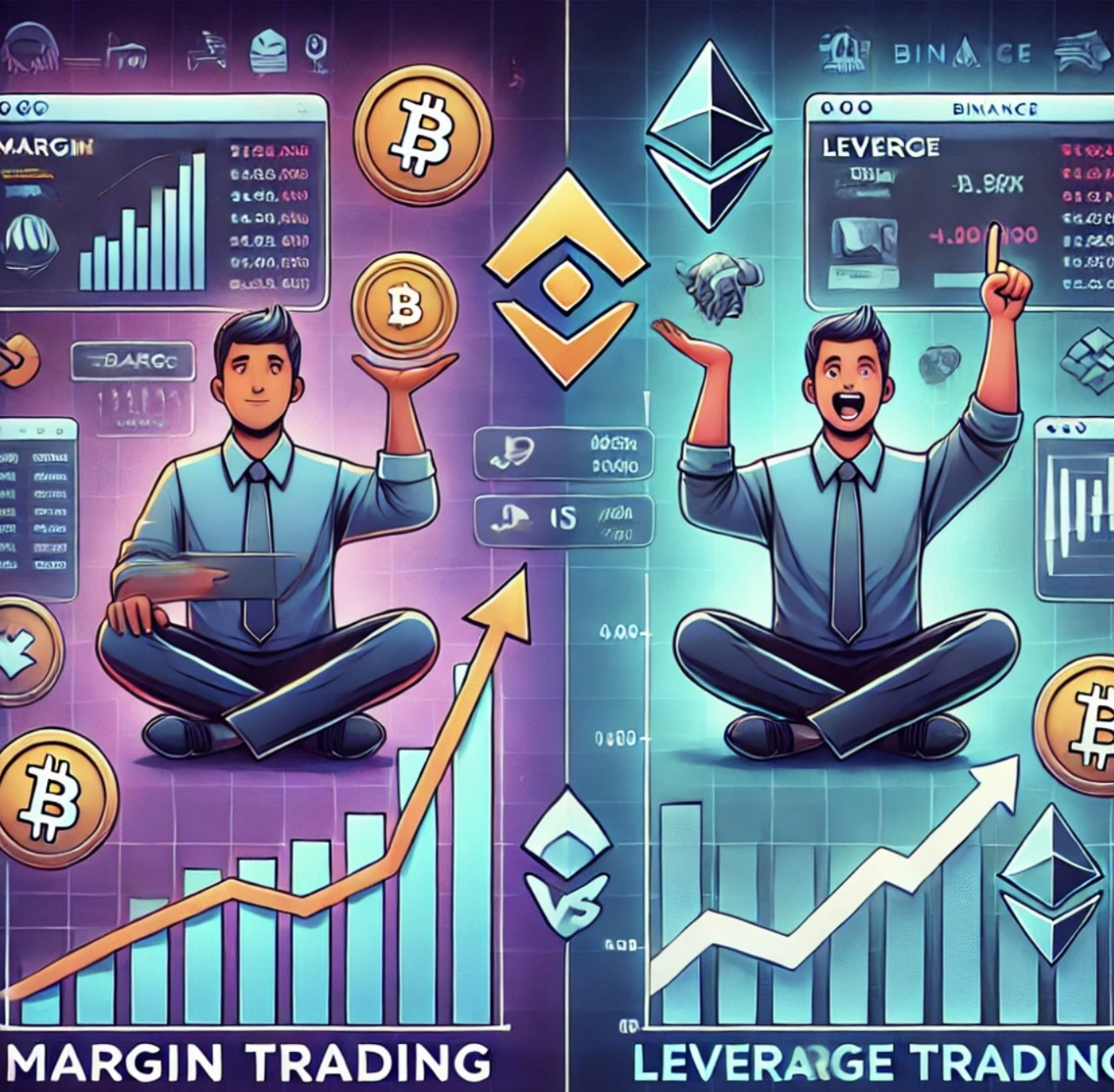
In trading on Binance, there are two important features that are often used by traders, namely margin trading and leverage trading. Although both involve borrowing to increase potential profits, there are some key differences between the two.
Key Differences:
- Margin: Focus on borrowing funds to increase trading capital.
- Leverage: Focus on increasing purchasing power or exposure by borrowing larger funds.
Trading Psychology: Which is Better?
- Margin Trading is usually more moderate than Leverage Trading. In margin trading, trader psychology is more controlled because loans are generally less compared to high leverage.
- Leverage Trading, especially with a large leverage ratio, tends to affect the psychology of traders significantly. Traders can become too emotional when facing price movements because every small movement can result in a large profit or an equally large loss. High leverage can trigger overconfidence when making a profit, or fear and panic when facing a large loss.
Psychologically, trading with lower or no leverage may be better for most traders, especially those who are inexperienced. It reduces emotional pressure and provides better control in managing risk. More skilled or experienced traders may be more comfortable with higher leverage, but they also understand the importance of risk management and discipline in trading.
1. Margin Trading
- Definition: Margin trading is the process of borrowing funds from a third party (usually a platform) to make transactions with capital greater than your account balance.
- How it works: You need to deposit a portion of the total capital required (known as margin) and the platform will lend you the rest. If the price moves as predicted, your profit can be greater, but if the price moves against you, the loss can also be more significant.
- Risk: The potential for total loss of borrowed capital is higher if the market moves against your open position. There is a risk of a margin call, where you will be asked to add funds if equity falls below a certain level.
- the margin given is only x3, x5, and x10 (x10 is only available in large coins such as $BTC $ETH $BNB ). Margin is also available long & short
Margin is usually marked x3, x5 next to the coin
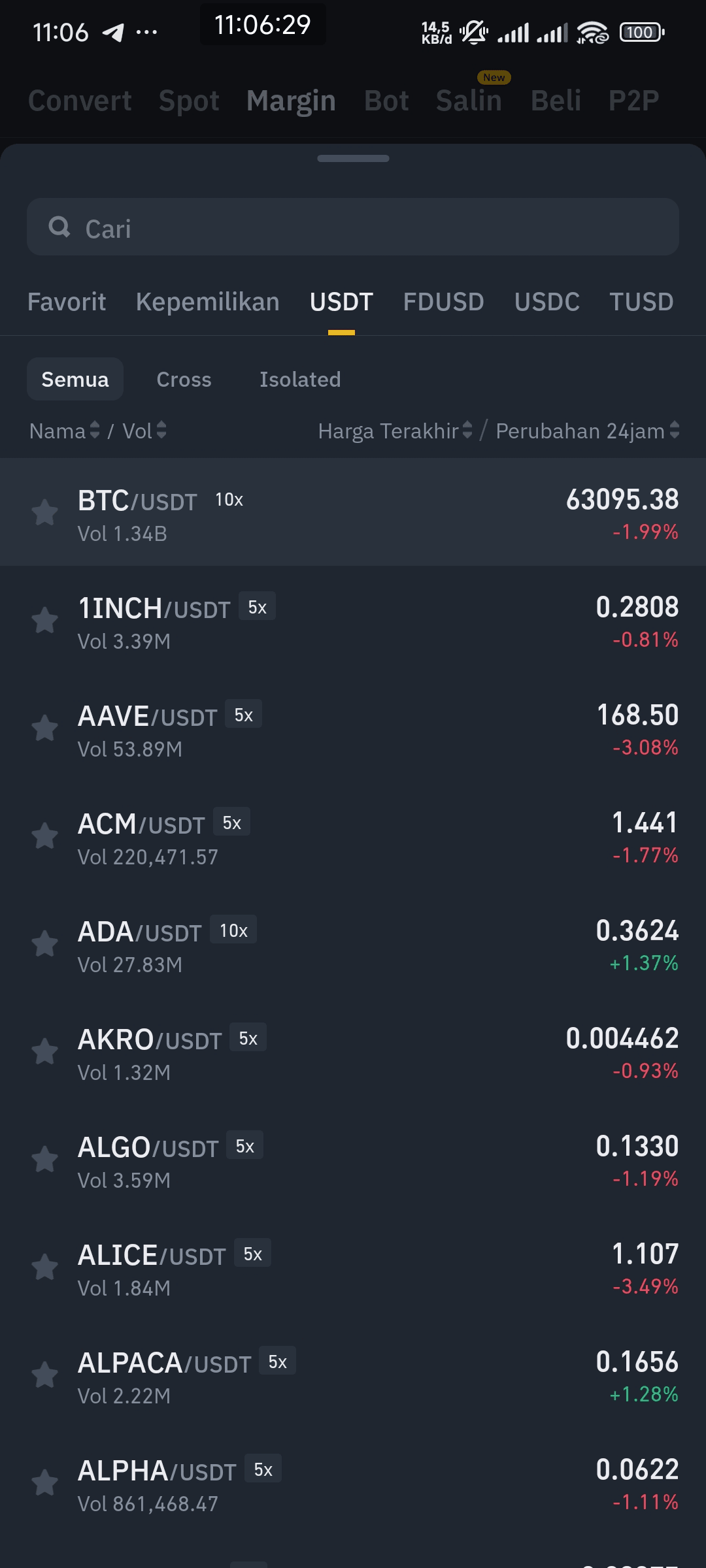
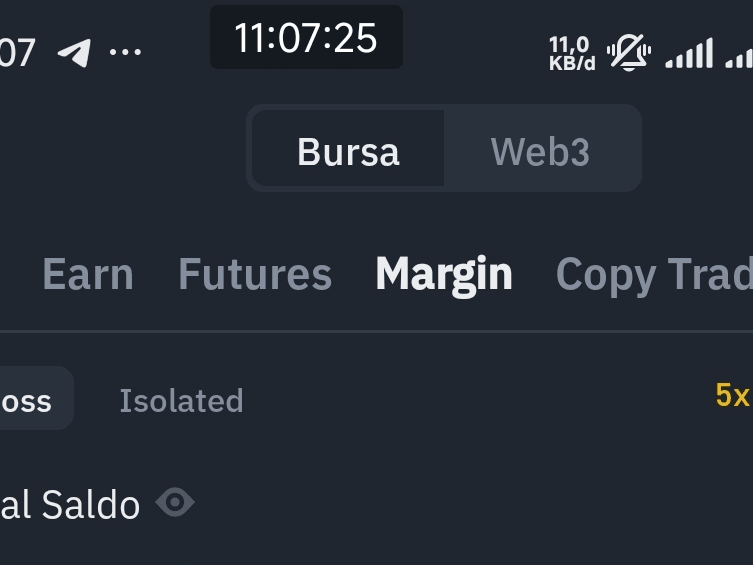
Screenshot : #binance App
2. Leverage Trading
- Definition: Leverage is the use of borrowed capital to increase exposure to a trading position without having to use all of one's own capital. Leverage is often expressed in the form of a ratio, for example 1:10 or 1:100.
Also Read: Often Lose When Trading? Let's Learn Binance Futures Trading (Part 1)
- How it works: With leverage, you only need to deposit a small portion of the total transaction value. For example, with a leverage of 1:10, for every $1 you have, you can control a position worth $10.
- Risk: The higher the leverage, the greater the potential profit, but also the greater the potential loss. With high leverage, small movements in price can lead to large profits, but also large losses, even more than the initial capital.
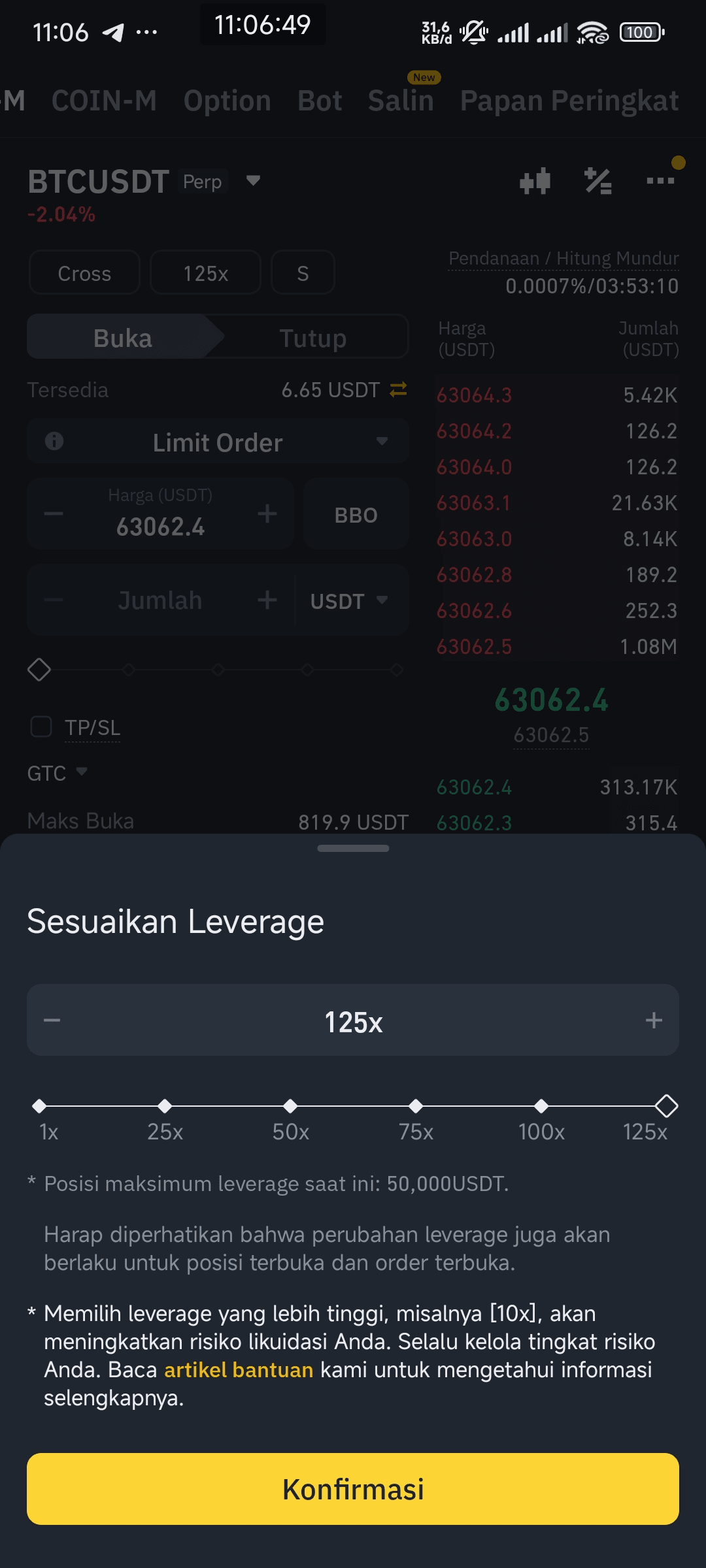
Screenshot : #binance App
Conclusion:
- Margin trading is more suitable for traders who want to take moderate risks with the potential for higher profits than the capital they have, but still within more measurable limits.
- Leverage trading allows for huge profit potential, but with commensurate risk. To maintain psychological stability in trading, lower leverage tends to be better for most traders.