

Author: CloudY, Sihan
Editor: Vincero, YL
Reviewer: Natalia
1. 2008-2012: The Genesis Era of the Crypto Industry
On November 1, 2008, a mysterious person named Satoshi Nakamoto published the article "Bitcoin: A Peer-to-Peer Electronic Cash System" in his cryptography email group, which is the Bitcoin white paper. Therefore, 2008 is known as the first year of Crypto, and the Bitcoin white paper is regarded as the "Bible" of Crypto. It opened the initial enlightenment era of the entire Crypto, allowing people to realize that the combination of cryptographic algorithms and blockchain technology can create an unprecedented digital currency - censorship-resistant, decentralized, and anonymous. On January 3 of the following year, Satoshi Nakamoto mined the Bitcoin Genesis Block on a small server in Helsinki, Finland. This day was called "Genesis Day" by Bitcoin believers. After that, the concept of Bitcoin quickly spread all over the world like a prairie fire, and the concept of "Code is Law" also spread. According to the introduction on Bitcoin.org, based on cryptographic principles and blockchain technology, Bitcoin has the durability, portability, substitutability, scarcity, divisibility and identifiability of currency. In particular, on May 22, 2010, a programmer in Florida, USA, used 10,000 bitcoins mined from his computer to buy two pizzas. This was the first recorded purchase of bitcoin as a currency, which turned the use of bitcoin as a currency from theory into reality, and the properties of bitcoin as a currency were verified and believed by people. After that, individual merchants began to accept bitcoin payments, and the world's first bitcoin online exchange MT.GOX was also established (established on July 11, 2010). With the emergence of bitcoin exchanges, bitcoin had a price to be traded as a commodity for the first time, and its price continued to grow, attracting more and more people to participate in bitcoin mining.
Especially after the US magazine "Wired" reported on Bitcoin in April 2011, the price of Bitcoin soared rapidly, became famous, and began to be talked about by people. But most people are skeptical about Bitcoin, questioning its credibility, and even saying it is a pyramid scheme, but this does not affect everyone's succession to join Bitcoin mining for profit. At the same time, the number of Bitcoin believers is also growing. They firmly believe that Bitcoin has investment value and is truly decentralized. Bitcoin will break the existing monetary system and become an unregulated real world currency, thus establishing a unified world monetary system. It was at this time that Bitcoin fundamentalism began to be respected by everyone, that is, "openness, transparency, immutability, anonymity, and decentralization." But everything has its two sides. As the popularity increased, Bitcoin began to be paid attention to and used by hackers and dark webs. Finally, under the dual influence of the Mentougou coin theft incident and the dark web "Silk Road", Bitcoin peaked in June 2011 and entered its first cold winter since its birth. In order to distinguish themselves from those who hope to profit from Bitcoin speculation and those who simply use Bitcoin for money laundering because of its anonymity, Bitcoin believers began to call themselves "Crypto Natives", meaning people who truly own and trade Bitcoin, believe in the cryptographic algorithms and blockchain technology behind Bitcoin, and advocate "Code is Law". The "Crypto Natives" of that period preached based on the idea of "fundamentalism" and gained a lot of consensus on Bitcoin worldwide. At the same time, the Bitcoin winter did not affect the "Crypto Natives" from continuing to explore the crypto world. On October 7, 2011, Bitcoin had its first follower or challenger - Litecoin (LTC), which was a key step in the crypto world from one to two.
This is the genesis era of the crypto industry. During this stage, the public first came into contact with Bitcoin and realized that it was a revolution in the existing monetary system. The "Crypto Native" of this period was a person who believed in cryptographic algorithms and owned and used Bitcoin.
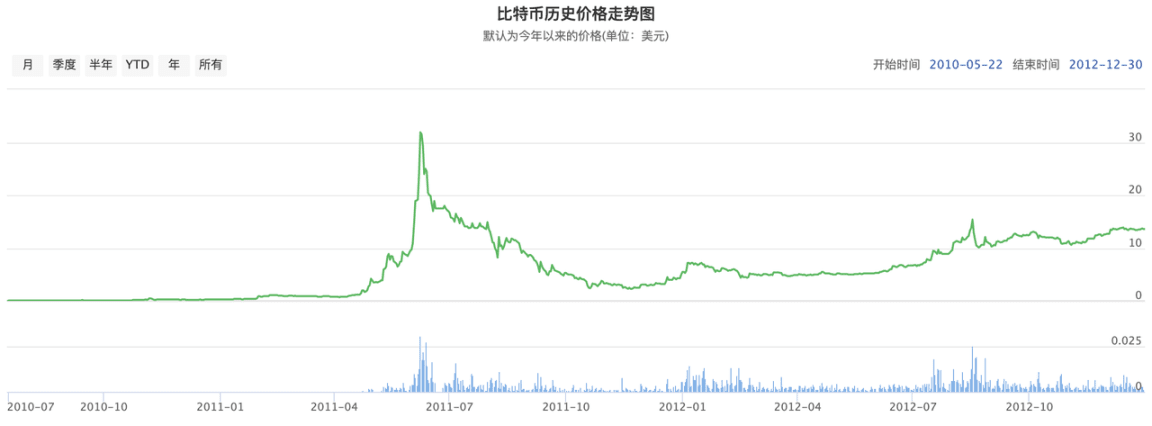
Figure 1: Bitcoin price trend chart from 2010 to 2012
Source:https://history.btc123.fans/
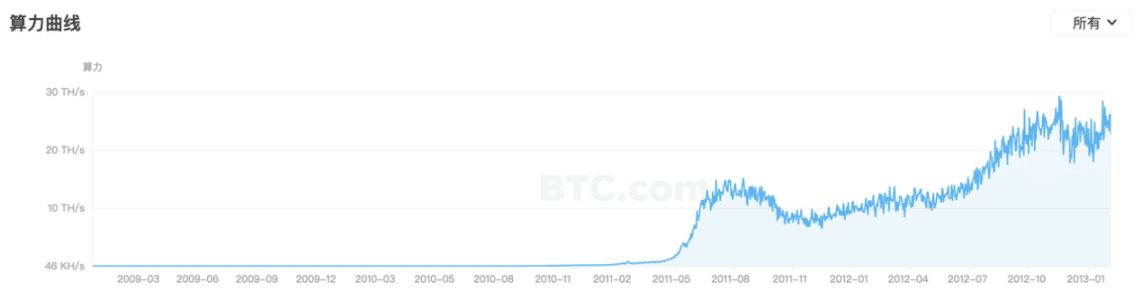
Figure 2: Bitcoin hashrate trend chart from 2009 to 2012
Source:https://explorer.btc.com/zh-CN/btc/insights-hashrate
2.2013-2015 The Enlightenment Era of Cryptocurrency
It can be seen from the Bitcoin computing power trend chart that during the cold winter of Bitcoin from 2011 to 2012, people gradually recognized the technical status of Bitcoin and began to try to participate in this "social experiment". During this period, in addition to being challenged by Litecoin to gain recognition in encryption technology, Bitcoin payments were also publicly accepted by real economy suppliers and recognized in terms of currency value. On November 28, 2012, Bitcoin ushered in its first halving. The deflationary effect reminded people of Bitcoin's value-added potential. Its unit price gradually climbed and finally returned to its peak, bringing about a three-year explosion in the encryption industry. The surge in Bitcoin prices, coupled with the mass production of ASIC mining machines and the launch of exchanges such as Coinbase, Huobi, and OKEX, gave more people the opportunity to join Bitcoin mining and let more people learn about Bitcoin and other cryptocurrencies. It was at this time that Bitcoin was given the title of "digital gold" by people. Its commodity attributes stole the limelight from its currency attributes, and the unit price of Bitcoin also lived up to expectations and exceeded the price of one ounce of gold on November 29, 2013. Due to the entry of a large number of people and funds, the early infrastructure and cognition of the crypto industry were gradually built and improved during this period. Mining machines, payment scenarios, exchanges, and financial derivatives gradually matured, and the rapid growth of Bitcoin computing power is a good proof. So people began to explore new possibilities, so various cryptocurrencies other than Bitcoin and Litecoin, such as Bitcoin Cash BCH, Ripple XRP, Dogecoin, etc., emerged. Their birth made people truly realize that cryptocurrency is not just Bitcoin, but can also be other products that use cryptography and blockchain technology, and made the concept of Crypto expand from Bitcoin to Crypto Currency in people's minds. However, it was at this time that the "Crypto Natives" had a disagreement. A considerable number of people insisted on "fundamentalism" and resolutely defended the status of native Bitcoin; while others believed that the world is developing, and Crypto should not be limited to Bitcoin, but should start with Bitcoin and end with Bitcoin.
While Bitcoin and its followers have been attracting the public's attention, another event of epoch-making significance to the crypto industry has occurred. Ethereum founder Vitalik Buterin released the first version of the Ethereum white paper and pre-sold Ether on July 24, 2014. Ethereum has a great mission since its birth, which is to change the crypto world. The emergence of smart contracts marks that the crypto industry has found its future direction in the chaos, namely the next generation of smart contracts and decentralized application platforms. As a distributed computer that cannot be shut down, Ethereum uses blockchain as ROM, realizes CPU functions through the calculations of miners, and runs smart contracts as programs. Its encryption architecture and Turing completeness have enabled a large number of emerging industries to be born and developed, and the crypto industry has also begun to gradually evolve from a simple peer-to-peer currency system to a decentralized world-class computer system.
Although the emergence of Ethereum is epoch-making, the crypto industry was still in its infancy during this period, and people had a better understanding of Bitcoin and other cryptocurrencies, and Ethereum was just one of many cryptocurrencies. Therefore, although the definition of "Crypto Native" has changed during this period, it is still generally considered to be a person who believes in the cryptocurrency system established by cryptography and blockchain technology, but it is no longer limited to Bitcoin believers, and any cryptocurrency supporter is acceptable.
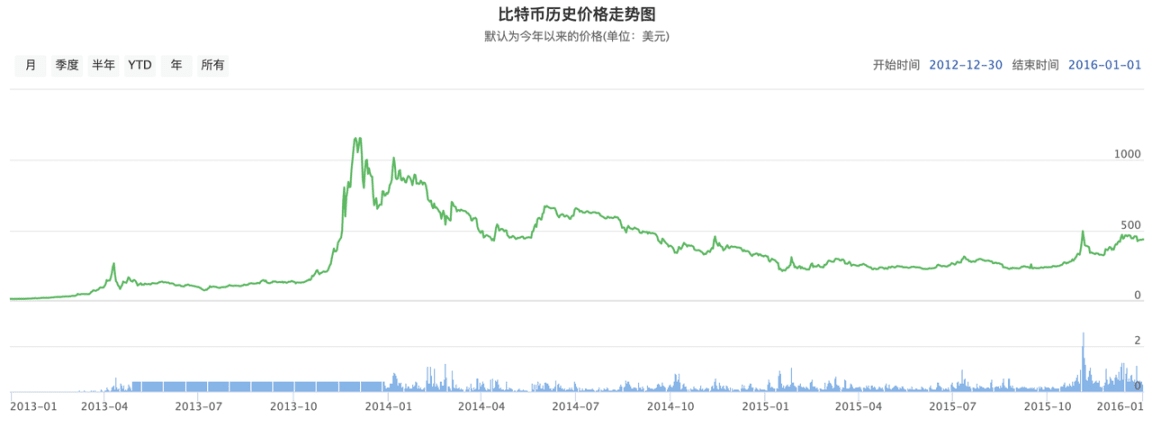
Figure 3: Bitcoin price trend chart from 2013 to 2015
Source:https://history.btc123.fans/
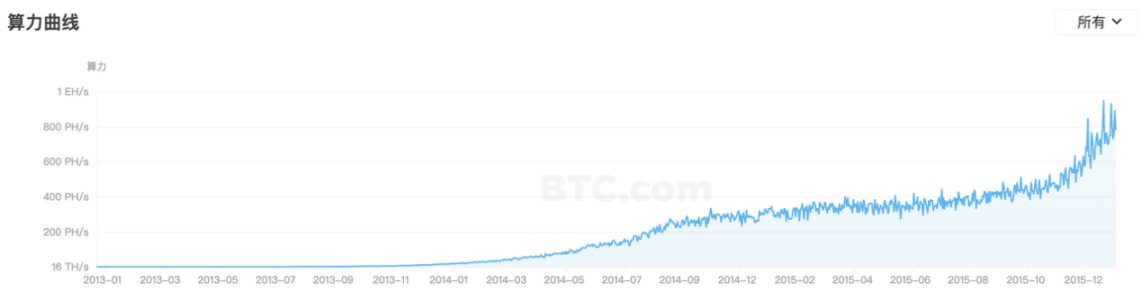
Figure 4: Bitcoin mining computing power trend chart from 2013 to 2015
Source:https://explorer.btc.com/zh-CN/bch/insights-hashrate
3. 2016-2019 Industrial Revolution in Crypto Industry
The Industrial Revolution is recognized as the development singularity of human history. Since the outbreak of the Industrial Revolution, science and technology have advanced rapidly, and productivity has increased significantly. The birth of Ethereum and smart contracts is the industrial revolution of the crypto industry. After this time scale, the scale of the industry began to expand rapidly, and more and more practitioners joined, allowing various projects to emerge. This era can develop so rapidly, on the one hand, due to the emergence of public chain tracks such as Ethereum and the exploration of the value of smart contracts, such as the emergence of new financing methods such as ICO (Initial Coin Offering) and the ecological prosperity of various on-chain DAPPs, which gradually made people realize the potential value of blockchain and the crypto industry. On the other hand, it also benefited from the development and improvement of crypto industry trading platforms represented by exchanges and related derivatives, allowing people to conduct spot and contract transactions based on various currencies, injecting vitality into cryptocurrencies.
Specifically, during this period, the infrastructure of the crypto industry has further developed, and derivatives such as contracts and loans have become more and more complete. In 2017, Binance Exchange was officially launched, and later quickly grew into the world's largest cryptocurrency exchange and even a giant in the entire crypto industry. In addition, the main theme of this era is the public chain competition that began in 2018, so 2018 is also called the first year of the public chain. The new generation of public chains represented by EOS challenged Ethereum, and competitors such as EA, ADA, NEO, BTM, etc. emerged like a tide, unfolding new stories in terms of performance, compatibility, and security.
As a challenger, the innovation of Ethereum smart contracts has brought prosperity to the entire industry: the emergence of a new financing paradigm represented by ICO means that any project or even an individual can directly issue their own tokens and allow the public to exchange their tokens with universal tokens such as BTC, ETH or stablecoins (such as USDT, USDC, DAI, etc.), which greatly reduces the financing threshold. At the same time, the explosion of the public chain track has brought initial prosperity and development to the on-chain ecology, mainly gambling and game DAPPs, and phenomenal DAPP games represented by F3D have emerged. Among them, the gambling industry has also been favored by DAPP developers during this period because its demand perfectly matches the "transparent and fair" characteristics of blockchain technology. For the first time, people have discovered that combining blockchain technology with the gambling industry is a dimensionality reduction attack on traditional gambling and related industries, and the high stimulation and conducive to drainage characteristics of gambling and games have also promoted users to open the door to the on-chain ecology.
With the rapid development of crypto exchanges and the fading of the ICO craze, IEO (Initial Exchange Offering) has gradually become one of the melodies of the new era. IEO made up for the disadvantage of ICO without supervision through the review and endorsement of the exchange, and became one of the hottest financing methods at the time, allowing a large number of platform coins to be discovered as the threshold for new listings. Therefore, the infrastructure construction represented by exchanges in the crypto industry has been further improved. At the same time, exchanges represented by Binance still represent the rise of centralized forces in the crypto industry, but to achieve complete decentralization, the process of centralization is inevitable, which is actually a manifestation of the industry's maturity.
Along with the huge changes in productivity and ecological environment, there is also an impact on people's thinking and cognition. Some disadvantages of decentralization in terms of security and efficiency have gradually emerged. In June 2016, The DAO, the largest smart contract crowdfunding project on the Ethereum public chain at the time, was hacked. When Ethereum was facing a huge crisis, founder Vitalik Buterin took a hard fork to recover most of the losses. Ethereum has since split into two chains, ETC and ETH. Most people chose ETH, but there are still a group of people who insist that Ethereum should operate in the most decentralized native way and choose to stay in ETC. This controversial approach has also left a long-term discussion about "Crypto Native" in the crypto industry: In the face of security and efficiency, how can we make the right choice between centralization and decentralization? Is the native spirit of crypto such as decentralization the only solution or ultimate solution to the crypto utopia? If not, where is the ultimate solution? How can we find a balance between efficiency and security in the native crypto spirit such as decentralization?
As early as 2014, Chang Qia, the founder of BTM, once proposed the Blockchain Trilemma, which means that blockchain technology cannot achieve decentralization, security and scalability at the same time. Generally speaking, decentralization refers to having a large number of nodes for block production and verification. The more nodes there are, the higher the degree of decentralization; security is the cost of gaining control of the network, and usually anchors real-world assets in the design of the consensus mechanism, such as the proof-of-work mechanism, which is riveted to computing power; efficiency is the number of transactions processed per second, that is, TPS. The main reason for the inefficiency of blockchain projects is that each transaction must be agreed upon on all nodes. Of course, the impossible triangle was just a summary of past blockchain technology experience at the time, and there was no strict theoretical derivation to support it. In this triangle, decentralization and the fairness it brings are the core values of the crypto industry, so early native crypto projects are often built in strict compliance with the principle of complete decentralization.
As the industry develops, practitioners gradually realize that if only complete decentralization is considered while security and efficiency are ignored, the development of the crypto industry will be full of difficulties. In the new generation of public chains represented by EOS TRON, the latest DPoS consensus mechanism at the time was adopted. Unlike the PoW of BTC and ETH at the time, which required confirmation by all chain nodes, the DPoS mechanism of EOS only required 21 super nodes to be selected through the EOS coin voting mechanism. The super nodes took turns to confirm and record transaction data and give them certain rewards. This is the latest era of public chains, which are inclined to the efficiency of public chain operation at the expense of a certain degree of decentralization. At the same time, this is also a compromise and attempt to balance the original encryption idea and efficiency.
Coincidentally, in 2018 when the on-chain ecosystem was initially booming, due to the lack of effective oracles, gambling DAPPs often used the last few digits of the block hash as a means of determining random gambling results because they could not generate true random numbers. This choice has certain centralized risks, but it was an expedient measure on the early chain to ensure the reasonable and normal operation of DAPPs. It was also one of the attempts to reasonably use centralized means to balance the feasibility and risk of projects at this stage.
At this stage, people began to gradually realize the resistance of the early idealistic encryption spirit (such as complete decentralization) in reality, and began to consciously try to achieve a balance between efficiency, security and decentralization in a technical way. The consideration and balance between these three aspects have produced different directions of blockchain technology innovation. But more problems have also followed. What is the final solution to the impossible triangle? Is the impossible triangle really impossible? The first improved steam engine of the Industrial Revolution has begun to roar, but it will take a long time of exploration and effort to build the Crystal Palace.
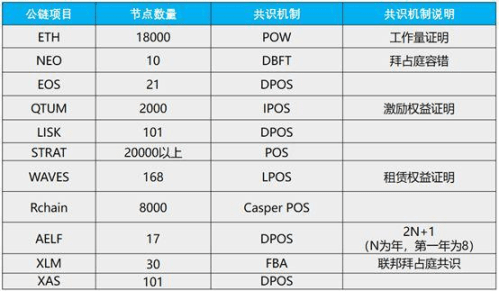
Figure 5: Overview of the consensus mechanisms of major public chains during this period
Source: Huobi Research Institute
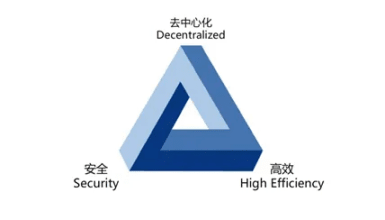
Figure 6: Blockchain Impossible Triangle
4. 2020-2022 The Age of Discovery for the Crypto Industry
After experiencing the crypto winter of 2018-2019 and the pain of the epidemic, the market ushered in the third bull market since its birth in 2020-2022, with the entry of institutional funds and loose monetary policies around the world. This time we have a bigger narrative and better innovation. In the summer of 2020, the dimensional wall of traditional finance in the decentralized world was broken. After that, the lending platform Compound took the lead in launching tokens, which were used to be issued to users as rewards in a process called liquidity mining. Subsequently, countless other protocols that imitated the concept of DeFi emerged, token prices soared, and DeFi broke out. This summer, we call it DeFi Summer. In March of the following year, the digital work "Everydays: The First 5000 Days" by American artist Beeple was finally sold at a price equivalent to about 450 million yuan. The event sounded the clarion call of the NFT trend. Subsequently, a series of NFT blue chips such as BAYC Doodles went online and quickly broke out in this environment. At the same time, due to the popularity of Axie Infinity, GameFi has also re-entered people's sight. After the initial development of the on-chain ecology in 2016-2018, with the increasingly complete underlying infrastructure conditions such as public chains and the popularity of on-chain projects such as DeFi and NFT, the on-chain ecology has finally achieved rapid development in this era. More and more professional traditional game makers have entered the crypto industry, such as Blizzard and Ubisoft, and some excellent innovative Web3.0 games such as StepN have also emerged. On the other hand, the FTX exchange, founded in 2019, has built a $40 billion business in less than three years, with a valuation of more than $26 billion. The founder Sam Bankman-Fried has become famous for this. From Alameda Research to FTX to the new generation of public chain Solana, SBF's territory is rapidly expanding, becoming one of the crypto giants on par with V God and CZ.
The crypto industry has finally gotten rid of the previous monotonous narrative and has completely entered the Age of Discovery. On-chain ecosystems represented by DEX and DeFi have exploded, and the ecosystem represented by NFT has gradually prospered and completely gone out of the circle, and the industry's market value has exploded. These phased achievements are also due to the gradual improvement of the ecosystem brought about by the construction of industry infrastructure in the past decade. The long-term cultivation has finally ushered in a temporary harvest. After learning from the experience of the previous era, the projects of this era have adopted more market-oriented solutions to problems such as the blockchain impossible triangle.
For example, the POH consensus mechanism of the public chain upstart Solana takes measures such as publicizing the list of leaders of block producers in advance. These features have gone to the extreme in the direction of Layer1 expansion at the expense of some decentralized features, and have basically touched the TPS ceiling of non-sharded public chains. Currently, Solana's 132 nodes account for 67% of the pledged shares, of which 25 nodes account for 33% of the pledged shares, which basically constitutes a monopoly of the "elite class" on the project. Secondly, Solana has very high requirements for the hardware level of the nodes. Most of the individuals running Solana nodes are giant whales or institutions and enterprises. It has achieved vertical expansion at the cost of equipment costs, which is obviously not conducive to true decentralization, but to a certain extent, it has pushed the efficiency characteristics to a new level.
Another example is the BSC chain (Binance Smart Chain). BSC is a fork version of ETH, initiated by Binance in early 2020 and officially launched in September of the same year. Backed by Binance's resources, the ecological activity has long been in the top three in the industry. Since DeFi Summer, TVL has been above 6 billion US dollars. Since the outbreak of the Ethereum ecosystem, in addition to bringing prosperity to the Ethereum ecosystem and soaring coin prices, there are also high gas fees and extremely poor user experience. Therefore, the market lacks an alternative to Ethereum, a public chain option with low gas fees and good user experience. Against this background, BSC led by Binance came into being. BSC is compatible with Ethereum Virtual Machine EVM, which allows Ethereum developers to quickly access BSC, and emphasizes low gas fees and user experience. With the support of Binance, Binance has launched a 100 million US dollar incentive plan to support its development. BSC introduces the Proof of Stake Authority (PoSA) consensus mechanism and reaches consensus by staking BNB. A total of 21 validators are required, almost all of which are controlled by Binance. This mechanism is often criticized for being too centralized, but BSC has greatly improved network efficiency.
In addition, DAO (decentralized autonomous organization) is also an exploration of various forms of decentralization in the industry. DAO is an autonomous group spontaneously established around a mission. The autonomous group shares rules for coordination and cooperation. To some extent, DAO is an off-chain form of blockchain projects. DAO often exists as a community product of a certain project. Fairness and spontaneity are the characteristics that all DAOs value, so they are more transparent than traditional companies, which greatly reduces the risk of centralized evil, but because of its spontaneity, the threshold is often lower. On the other hand, the current DAO still has many shortcomings such as lower thresholds and unclear division of responsibilities compared to traditional companies. For example, it is impossible to effectively determine the organizational form of DAO, how to ensure power dispersion and truly reflect the public opinion of the community while ensuring voting rights, and how to balance the influence of most decisions and stakeholders. The essence of these problems is actually the oldest and most difficult political problems in human history. The thinking that started in ancient Greece has never ended. With the support of blockchain technology, we hope to get better answers. At present, the specific form of DAO is still in the early stage of exploration.
In the hot NFT field, YugaLabs, the developer of the new blue chip BAYC, has the right to issue unlimited additional tokens. Although it has recently announced the destruction of the private key of the additional BAYC, we can still get a glimpse of the project's own balance and regulation of centralization and decentralization. Coincidentally, after the latest eye-catching The Saudis project started free mint, a person named RIGHTBLOCK used technical means to preemptively mint a large number of NFTs in this series during the free mint stage, and then sold a large number of NFTs in the market. After discovering this, the project party quickly locked in the user and modified the contract to transfer a large number of NFTs in the hands of the user back. They later promised to give these NFTs back to community users. The contract of this NFT project uses the EIP-2535 protocol (also called the Diamond Protocol). The project party used this protocol to rewrite the function of the contract to achieve the transfer of these NFTs. This move of the project has been controversial and was once criticized by the community as being too centralized.
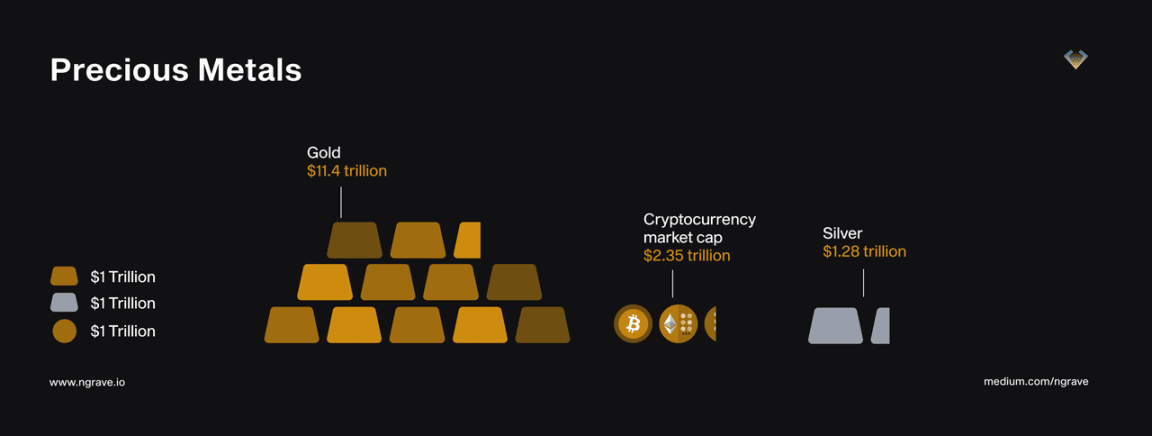
Figure 7: Comparison of the total market value of the crypto industry and the market value of precious metals in January 2021
Source:https://medium.com/ngrave/too-big-to-fail-crypto-market-size-vs-traditional-assets-eff4bb2ec529
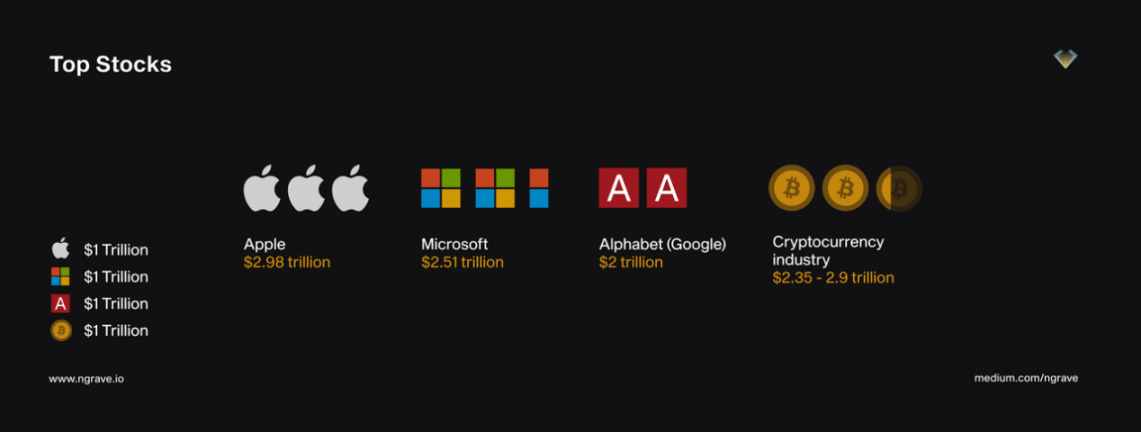
Figure 8: Comparison of the total market value of the crypto industry and top technology stocks in January 2021
Source:https://medium.com/ngrave/too-big-to-fail-crypto-market-size-vs-traditional-assets-eff4bb2ec529
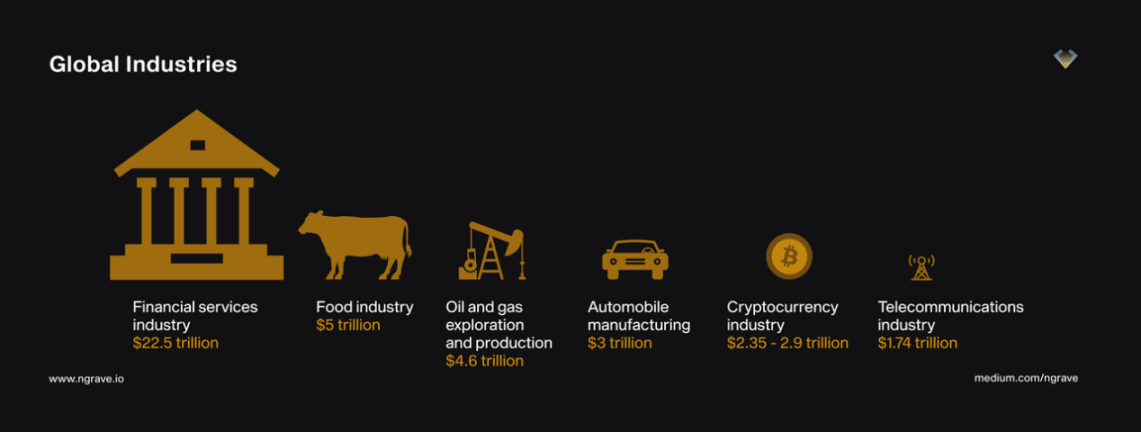
Figure 9: Comparison of the total market value of the crypto industry and the market value of various industries around the world in January 2021
Source:https://medium.com/ngrave/too-big-to-fail-crypto-market-size-vs-traditional-assets-eff4bb2ec529
The crypto industry is now in the process of transitioning from the early full compliance with the principle of decentralization to the continuous exploration of the balance between decentralization, efficiency and security. Blockchain fundamentalism believes that crypto projects must have completely decentralized features such as "anti-censorship, non-tampering, transparency, anonymity", which is the embodiment of free will. More and more other practitioners believe that value application is the ultimate goal of technology. Blockchain technology must be combined with various vertical fields to find a landing point, and ultimately promote the improvement of social organization efficiency to be valuable. They realize that the beautiful utopian vision of "fundamentalism" is beautiful, but in realizing it, it is necessary to be down-to-earth, recognize objective facts, and respect laws. This is the only way to utopia.
Thirteen years later, Bitcoin and even the crypto industry have experienced countless "deaths" and then reborn, triggering huge changes in various fields such as finance, games, and art. This is already a trillion-dollar industry, and the thousands of changes and innovations caused by it are still happening. New narratives often include changes and reforms in ideas, industry expansion, and the formation of new tracks. However, we believe that Bitcoin and various crypto technologies are just concrete manifestations of narratives, and the ideas behind these concrete manifestations are the spirit and true soul of the crypto industry, namely: fairness and justice represented by decentralization. The crypto spirit of "Crypto Native" is actually closer to a kind of human sociological and philosophical thinking. Since human history, the struggle between centralization and decentralization has never stopped. If we look back on history, we can clearly see that the entire human history is actually a history of evolution and exploration from centralization to decentralized spirit at the real and social levels. Blockchain technology is the first time in human history that there is hope to use technical means to solve such problems. This will represent the innovation of the traditional order and the establishment of new connections in the world. In the exploration of the vision of new technologies, we firmly believe that the crypto industry will be a key link in the human progress towards utopia.
In Math We Trust.