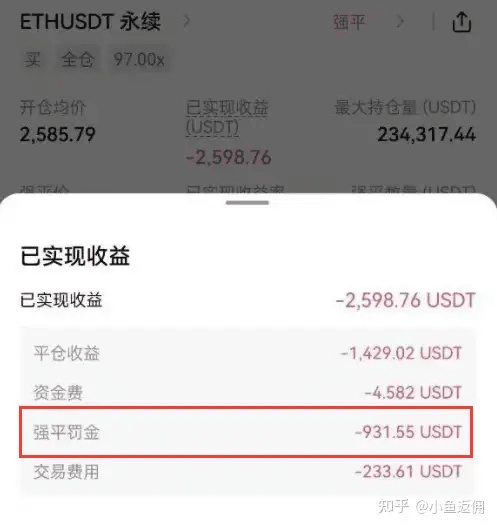
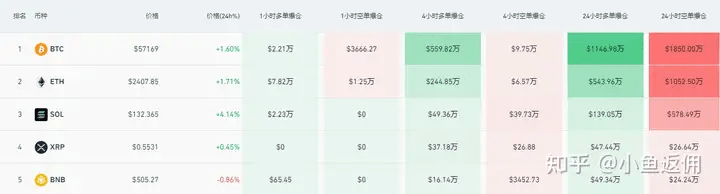
The so-called margin call means that when the loss of a position reaches a certain level and the margin is insufficient to support the position, the exchange will automatically force liquidation to protect the interests of the exchange and other traders. Margin calls can occur in the fields of virtual currency, futures, foreign exchange, and stock markets.
Why does the warehouse burst?
Why is the margin cleared? This involves another concept - contract leverage trading
The so-called leveraged contract trading is to use a small amount of funds to invest several times the original amount. Therefore, if the investment is not leveraged, there will be no liquidation.
In simple terms, adding leverage is equivalent to the exchange lending you money, so you have to bear the risk.
Borrowed money is a fulcrum that magnifies your gains and losses, just like a physical lever, so it is called "leverage."
Leveraged trading not only exists in the field of virtual currency, but also in stock and futures trading. The reason why Bitcoin has such high returns and high losses is because it has a leverage of up to 125 times.
Example:
The price of Bitcoin is 50,000. Xiaoyu takes out 500u from his account and uses 100 times leverage. The value of his position is 50,000.
When the price of Bitcoin rises by 1%, the position value is 50,500, and the profit is 500. In simple terms, with a 100x leverage, the price of the currency only needs to fluctuate by 1% to double.
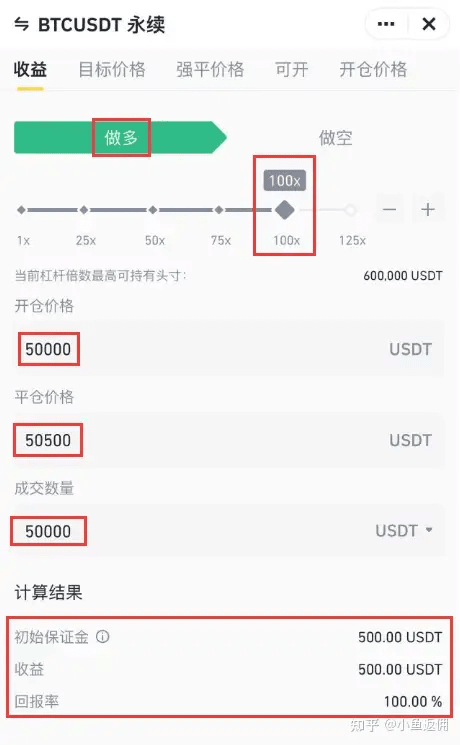
Profits and risks coexist. Leverage can increase quick profits, but it can also increase the risk of losing money.
If you use 100x leverage to go long and the price of the currency rises by 1%, the rate of return is 100%, and the principal can be doubled.
The above example is based on the calculation of 100% loss before liquidation. However, in actual transactions, each exchange calculates the liquidation loss % differently, and some exchanges calculate it as 90%. Therefore, in specific transactions, it is more accurate to directly refer to the forced liquidation price given by the exchange.
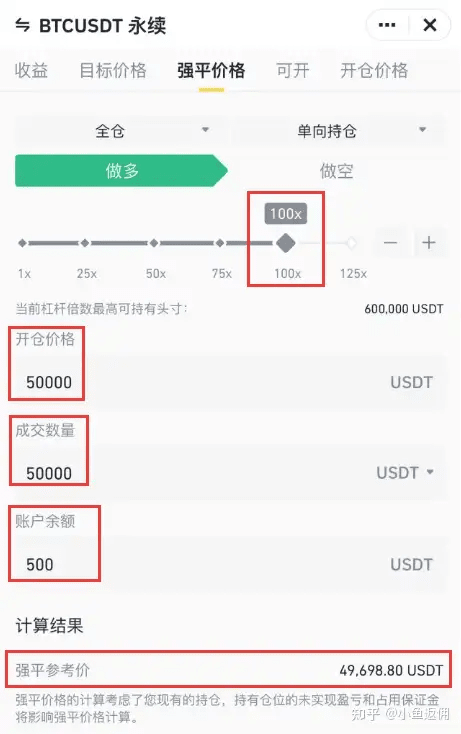
As long as you add leverage, you have to take risks!!!
Liquidation means zero assets
How to avoid the risk of liquidation
1. Avoid leveraged trading
There are many reasons for liquidation, mainly because investors are too eager for quick success and too high a leverage ratio. So to avoid liquidation, first of all, try not to choose contracts or leveraged transactions, or try to choose a smaller leverage ratio to reduce investment risks.
2. Stop loss in time
If there is a big drop, you must stop loss in time, don't be lucky, and close your position in time.
3. Avoid frequent and excessive trading
4. Be cautious when increasing your stake
After a margin call occurs, investors can add margin to ensure the normal operation of their accounts, but blindly increasing the amount in the hope of turning defeat into victory is likely to lead to failure halfway and not being able to withstand the huge losses.
5. Don’t blindly follow orders
Regardless of the type of investment, the most taboo is to blindly follow orders without understanding the market and without your own opinions. The investment market is unpredictable, and investors should ensure their own sober judgment.
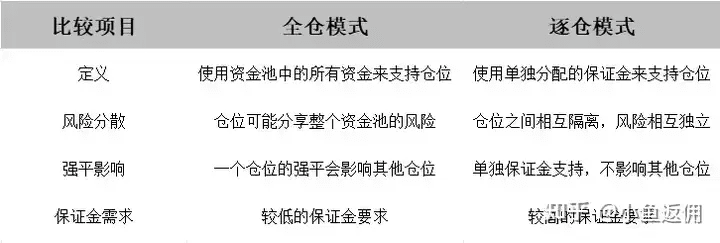
There are two trading modes in perpetual contracts
Full-margin mode / Single-margin mode
Cross Margin: In the cross margin mode, investors' margin can be used to pay for the profits and losses of all positions, that is, all assets in the user account will be used as margin for the positions. At this time, the position can be liquidated relatively late, but once the position is liquidated, all assets will be lost.
Isolated Margin: In isolated margin mode, each position has its own independent margin, which is more suitable for risk diversification. When a single position is liquidated, it will not affect other positions.
Key Tips
You must avoid liquidation. After forced liquidation in the exchange, a forced liquidation fee will be generated, which is quite high.