


"The article details what Ethereum is, distinguishing it from Bitcoin and likening it to a web 'app store.' It highlights features like smart contracts and its currency, Ether."
Getting started with Ethereum (and cryptocurrencies in general) can be a bit overwhelming, especially when faced with terms like "dApps" and "smart contracts." Think of Ethereum as an online app store. Just like Bitcoin, Ethereum involves digital currency, but it offers much more than that.
In this “app store,” developers can create and launch their own applications without any centralized control. The “currency” used to buy, sell, or operate in these applications is called Ethereum. One of the coolest features of this digital app store is “smart contracts,” which are like automated agreements or transactions. These tools have the potential to transform many industries, from banking to art.
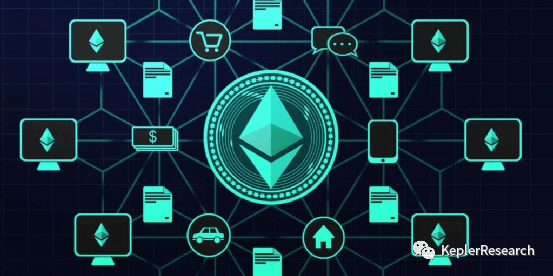
If Ethereum sounds complicated, don’t worry. In this article, we’ll break it down to help you understand what Ethereum is, its standout features, and why it’s so important.
What is Ethereum?
Bitcoin vs Ethereum: What’s the Difference?
How do Ethereum smart contracts work?
Why invest in Ethereum?
Investing in Ethereum and Ethereum futures?
What is Ethereum?
What is Ethereum?
Ethereum is a programming platform that allows people to build and use decentralized applications on the Internet. Think of it like an app store for your smartphone, where you can download various apps to help you do different things. Just as there is a system behind an app store (like iOS or Android), Ethereum operates as an "app store" for the network, powered by its unique digital currency, Ether.
When people talk about investing in Ethereum, they usually mean buying its primary digital currency, Ethereum, or ETH, just like buying Bitcoin means acquiring the cryptocurrency BTC.
Breaking it down further:
Ethereum: This is a complete programming system that allows people to make and use special online applications and automated protocols called dApps and smart contracts. You can think of it as the backbone or foundation on which everything runs.
Ether (ETH): This is Ethereum's own digital currency. If you invest, trade, or pay fees on the Ethereum platform, you are using Ether. In addition to being a form of investment, Ether is the "power source" that makes everything on Ethereum work, from running applications to sealing the protocol.
So when someone says they’re putting money into Ethereum, they’re usually buying Ether in the hope that it will increase in value over time.

Bitcoin vs Ethereum: What’s the Difference?
At first glance, Bitcoin and Ethereum are both cryptocurrencies. Although they share some similarities, they also have fundamental differences:
Origins: Bitcoin was launched in 2008 with the goal of being a decentralized digital currency, or as some call it, “digital gold.” Ethereum, on the other hand, was launched in 2015 with the vision of being more than just a currency.
Purpose: Bitcoin is primarily a medium of exchange or store of value. Ethereum, while it has its native currency, “Ether,” is more than just a cryptocurrency platform. It is a platform that supports smart contracts and decentralized applications (dApps). In short, Bitcoin provides a new way to transfer money, while Ethereum provides a new way to do business and create decentralized platforms.
Supply: Bitcoin’s supply is capped at 21 million, making it deflationary. Ethereum has no maximum supply, which makes it more flexible but introduces different economic considerations.

How do Ethereum smart contracts work?
The power of blockchain lies in its transparency and security. Because many people have copies and they always verify new pages together, it is difficult for someone to cheat or make false entries. The advantage of blockchain lies in its decentralized nature.
When information is stored across multiple nodes, it becomes tamper-proof. Any malicious activity or inconsistency can be quickly detected and corrected. While Bitcoin introduced the world to blockchain and cryptocurrency, Ethereum introduced a revolutionary concept – smart contracts. As highlighted in the following example, Ethereum enhances blockchain capabilities through its smart contracts:
Decentralized applications (dApps): Developers can build applications on Ethereum, inheriting the security and decentralization features of its blockchain.
Decentralized Autonomous Organizations (DAOs): They are like digital companies or organizations where decisions are made based on predefined rules in smart contracts with no centralized control. Governance power is distributed to token holders who vote collectively.
Digital Identity: Individuals can have a digital identity on the Ethereum blockchain, ensuring personal data is secure and returning control to the user.
Licensing and Royalties: Artists and creators can use Ethereum to ensure they are properly paid every time their work is used or sold.

Think about a traditional contract, like an agreement to buy a car. Typically, you’d involve a third party like a bank or lawyer to make sure everyone keeps their word. Imagine a digital contract that automatically does what it’s supposed to do when certain conditions are met, without the need for a middleman. That’s a smart contract! Ethereum is a platform that allows these smart contracts to run. Its own cryptocurrency, Ether, powers these contracts and ensures they run smoothly.
Ethereum has diverse advantages:
Technical advantages: The Ethereum platform allows the creation of smart contracts, which are programs that execute automatically when certain conditions are met. This feature has great potential to reshape industries from finance to art.
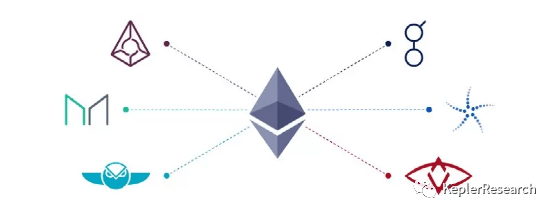
Market share: The Ethereum platform supports many other cryptocurrencies. The impact is clear when you consider that 10 of the top 20 cryptocurrencies as of September 2023 are based on or related to Ethereum.
Applications: Ethereum has a wide range of uses. In addition to cryptocurrency, it is used in decentralized finance, gaming, and major organizations looking to integrate blockchain technology.
Ethereum’s growing role
Overall, Ethereum is quickly becoming important in the digital world, with more than 4,000 applications running on its system. From finance to art, different industries are finding ways to leverage Ethereum to implement new ideas and improvements. It is reminiscent of the early internet days when everything felt new and full of possibilities. More and more people are exploring Ethereum and its currency, Ether, because of the opportunities they offer.
In short, Ethereum is more than just digital currency; it is an innovative platform that could be a big part of the future.
Note: All content represents the author's personal views only, is not investment advice, and should not be construed in any way as tax, accounting, legal, business, financial or regulatory advice. Before making any investment decision, you should seek independent legal and financial advice, including advice on tax consequences.
For more information, please follow: KeplerResearch @kepler008