
Over the past few months, many Bitcoin [BTC] holders believed that the decision on the ETF application could be the catalyst that would drive the price of Bitcoin to parabolic levels. However, this was not the case. This is because the relevant regulators chose to postpone the application until they saw fit.
Despite this, BTC’s year-to-date (YTD) performance remains impressive at 63.3%.
The scene will not change
As AMBCrypto reported earlier, the token is somewhat disappointing with a drop of 11% in the third quarter. However, NYDIG said this is not surprising given the growing concerns about a recession and rising interest rates.
Regardless of what happens currently, next year’s Bitcoin halving remains a major factor that could influence Bitcoin’s price action.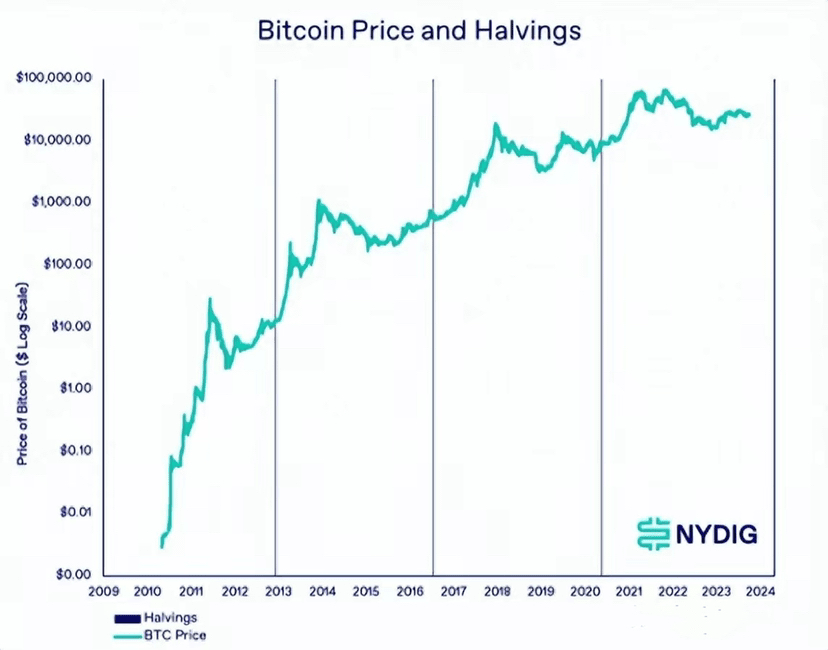
The halving will reduce the block reward from 6.25 BTC to 3.125 BTC exactly 840,000 blocks in April 2024. According to NYDIG, the halving is still an important factor from an economic perspective, noting that,
“By continually halving the supply function, Bitcoin will eventually reach a point in 2140 where it can no longer halve. This will effectively stop the number of Bitcoins from growing, which is an important part of Bitcoin’s “supply control” function.”
ETFs are also important
In terms of price, the company also mentioned that this will continue the pattern seen in previous cycles. For example, after the 2016 halving, BTC rose from $1,700 to over $15,000 a few months later.
The situation in 2012 and 2020 is not entirely different. NYDIG also mentioned that the drawdown in November 2021 is similar to what was experienced in the 2018-2019 cycle.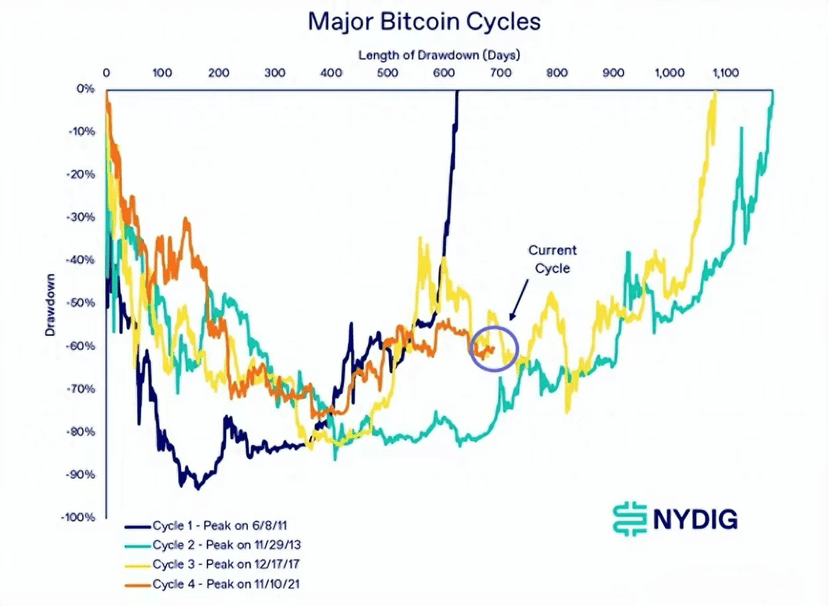
The report further added that 2023 is already showing signs of a rebound from 2019. NYDIG explained,
"While 2023 will look a lot like 2019, it will not experience such a significant correction. Nonetheless, it is important to emphasize the cyclical nature of the repeat, as Bitcoin appears to be following the path set by the previous two cycles."
Nonetheless, NYDIG noted that its insistence on the halving as a catalyst does not offset the impact that a Bitcoin ETF approval could have.
It also mentioned that the litigation between Grayscale and the SEC, as well as the final decision on the ETF application, could determine the success or failure of BTC. The report wrote,
“As we head into the fourth quarter, all eyes are on the legal proceedings and the industry’s concerted efforts to gain approval for spot Bitcoin in the U.S.”

