

Author: Guneet Kaur, Cointelegraph; Translated by: Song Xue, Golden Finance
1. The concept of long and short positions
Long and short positions represent opposing strategies used by investors and traders to speculate on price movements of the asset under consideration.
In the cryptocurrency space, the concepts of going long and short still apply to traditional financial markets. To profit from rising cryptocurrency prices, going long means buying it with the expectation that its value will rise over time.
In contrast, shorting in the cryptocurrency market means selling a cryptocurrency that you don’t actually own in anticipation of a price drop, then buying it back at a cheaper cost to close your position and profit from the price drop.
Cryptocurrency traders and investors use these strategies to navigate the highly volatile and speculative nature of digital assets and take advantage of opportunities in both bullish and bearish market conditions.
2. Basic Differences Between Long and Short Positions
In cryptocurrency trading, a long position is initiated by purchasing an asset with the hope that its price will rise, while a short position is initiated by disposing of an asset (usually a borrowed asset) with the hope that its price will fall.
Closing a position means buying an asset at a lower price to capture gains, while exiting a long position means selling the asset at a higher price to lock in profits. Entry and exit points are critical to the successful implementation of these strategies.
Understanding the difference between long and short positions in the cryptocurrency trading world is crucial to successfully navigating the volatile digital asset markets. Here is a summary of the differences between the two:
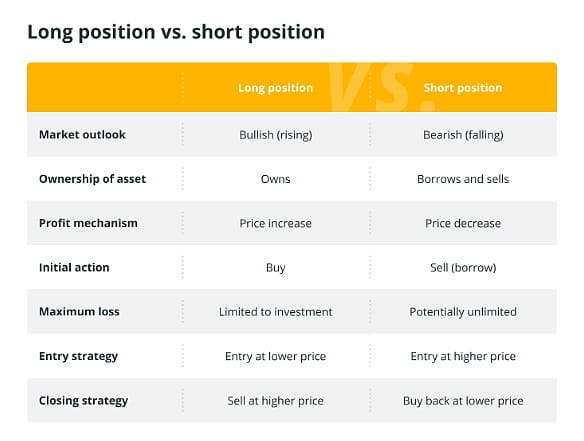
The Chinese content of the above table is as follows:
Long and short positions

3. The process of going long on cryptocurrencies
Going long on cryptocurrencies involves a strategic process of profiting from anticipated price increases.
Here is the step-by-step process:
Research and Analysis
Before making any investment, a person must carefully investigate and analyze their chosen cryptocurrency. Consider factors such as technology, market trends, historical data, and likelihood of acceptance.
Choosing a Cryptocurrency Exchange
Traders must then choose a trustworthy cryptocurrency exchange or trading platform that offers the desired cryptocurrency. They should set up an account, perform the required checks and use two-factor authentication to protect the account.
Deposit Funds
The next step after creating an account is to deposit funds into it. Depending on the platform, users can usually deposit fiat currency or other cryptocurrencies to purchase the desired tokens.
Place a buy order
The next step is to place a “buy” order on the chosen cryptocurrency platform. Users can choose the current market price or a limit order with a specific purchase price.
Monitoring and management
Once a buy order is executed, the individual owns the cryptocurrency. They should carefully monitor market developments and choose an exit strategy, which may require deciding on a price target based on technical indicators or meeting other requirements. When it is time to sell a long position and convert the cryptocurrency into their preferred currency, they can place a "sell" order.
4. Risks and potential rewards associated with long positions
Long cryptocurrency positions have the potential to generate large profits through price appreciation, but also come with significant risk of market volatility and potential losses.
Although there are certain risks, long cryptocurrency positions have the potential to yield significant gains. The opportunity to profit from price increases is the main benefit. For example, one investor made huge gains by purchasing Bitcoin (BTC) at a discount and holding on to it during its dramatic rise in value.
Long positions can give investors exposure to the growing cryptocurrency ecosystem and potentially profit from the adoption of blockchain technology. However, the risks are equally clear. Cryptocurrencies are notoriously volatile and prone to sudden price changes.
If the market turns bearish and the value of investors’ holdings drops, they could lose money. Prices can also be affected by regulatory uncertainty, security breaches, and market sentiment.
Since the cryptocurrency market is subject to long-term instability and adverse trends, maintaining a long position requires patience. Investors must conduct in-depth research, risk management, and continuous education to make wise decisions when entering a long position in cryptocurrency.
5. The process of shorting cryptocurrencies
In cryptocurrencies, shorting involves betting on a drop in price and making money from it.
Here is the step-by-step process:
Research and Analysis
Traders first thoroughly research and analyze the cryptocurrency they want to sell. They look for signs that the asset’s value may drop, such as negative news, overvaluation, or technical indicators that indicate a bearish trend.
Choose a Trading Platform
Traders choose a trusted cryptocurrency exchange or trading platform that offers margin trading or short selling alternatives for the specific cryptocurrency they want to short.
Margin Account Setup
Traders open a margin trading account on their chosen platform, complete any necessary identity verification steps, and deposit fiat currency or cryptocurrency as collateral. This collateral is necessary to protect against potential losses when holding a short position.
Borrow Cryptocurrency
To short sell cryptocurrency, a person must borrow it from an exchange or other platform user. This borrowed cryptocurrency is then sold on the open market.
Monitor and set limits
Traders carefully monitor the cryptocurrency market to watch for price changes. They set a target buyback price and place a stop-loss order to prevent further losses. They intend to buy back the borrowed cryptocurrency to close their short position at this target price.
Closing a Position
When the expected price drop of the cryptocurrency occurs, the trader closes the position by buying the borrowed cryptocurrency at a lower price, returning it to the lender and profiting from the price drop. This action marks the completion of the short position.
6. Risks and potential rewards associated with short positions
Short positions in cryptocurrencies can be rewarding by betting on falling prices, but they also carry significant risks due to market volatility, unlimited potential losses and unforeseen price increases.
Short positions in cryptocurrency trading have high profit potential, but also carry significant risks. The main benefit is the opportunity to profit from a drop in the price of a cryptocurrency. For example, if a trader accurately foresees a bearish trend and shorts a cryptocurrency like Bitcoin, they may be able to buy it back at a lower price and pocket the profit from the price difference.
However, short-term investing often comes with some significant risks. The cryptocurrency market is notorious for its high volatility, and unexpected price increases can lead to huge losses for short sellers.
There is also unlimited risk to consider, as there is no upper limit to how much prices can rise. Changes in legislation, unexpected shifts in market sentiment, or unexpectedly positive news could cause prices to rise significantly.
Short selling of cryptocurrencies requires precise timing, meticulous risk management, and constant market monitoring to successfully navigate inherent volatility and maximize potential gains while limiting losses.
VII. Tax implications related to gains and losses on long and short positions
The tax implications of gains and losses on long and short cryptocurrency holdings can be complex and vary by country.
In many countries, gains from long positions are often treated as capital gains, and capital gains taxes may be imposed when the assets are sold. Short-term gains are taxed more than long-term gains, and the tax rate often varies depending on the holding period.
Conversely, short positions may present special tax difficulties. In some countries, the act of borrowing and selling cryptocurrencies short may not immediately give rise to tax liabilities, as the short position is not closed until the borrowed assets are repurchased. Traders may experience capital gains or losses when closing a short position, depending on the difference between the sell and buy prices.
In order to understand and comply with local tax laws, cryptocurrency traders should understand the applicable cryptocurrency tax laws in a specific jurisdiction, as the tax treatment of cryptocurrency gains and losses can vary greatly from location to location. In addition, proper record keeping and reporting are essential to maintaining tax compliance in the cryptocurrency industry.