
The word “hashrate” is used to denote the unit of measurement of the power of devices that are used to mine cryptocurrency. The higher the hashrate, the more powerful the equipment. Now there is a large selection of techniques created specifically for hash decryption. One of the most famous examples are Asic miners.
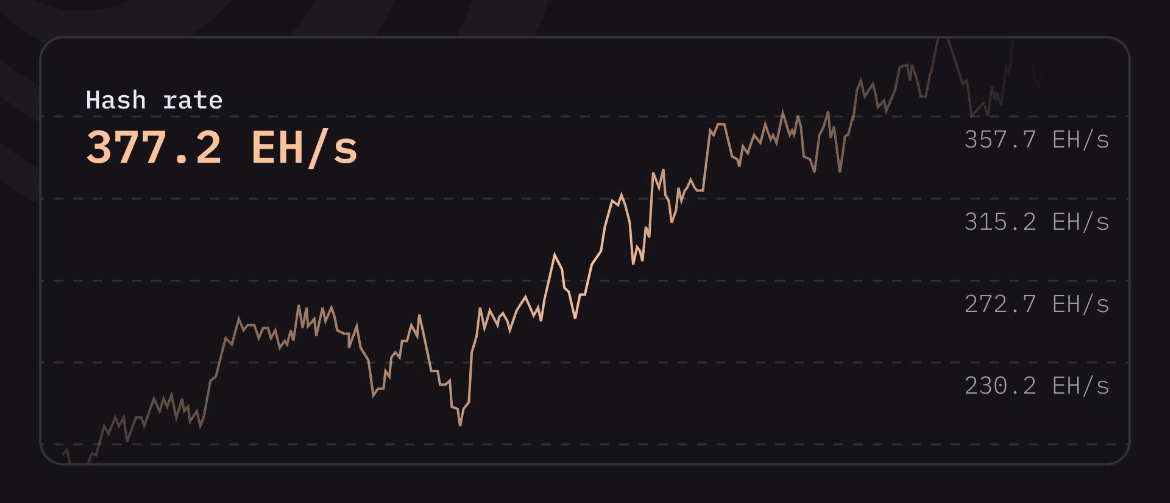
In the case of mining, power should be understood as the speed of solving a cryptographic problem. To solve one problem, you need to perform thousands of separate small operations. The hashrate figure shows how many such computational actions per second the mining equipment can produce.
The#Bitcoinhashrate is the total network computing power miners put into solving cryptographic problems to create new blocks.
Increasing the hashrate of the Bitcoin network can lead to an increase in the difficulty of mining blocks. This means that miners will need to use more powerful hardware to have a chance of mining a new block and keeping the network running.
Hashrate is measured in:
- Hash per second (H/s);
- Kilohashes per second (KH/s - 1 thousand per second);
- Megahashes per second (MH/s - 1 million per second);
- Gigahashahs per second (GH/s - 1 billion per second);
- Terahashah per second (TH/s - 1 trillion per second);
- Petahashah per second (PH/s - 1 quadrillion per second);
- Exahashahs per second (EH/s - 1 quintillion per second);
- Zattahashah per second (ZH/s - 1 sextillion per second)
To determine the computing speed, an indicator such as H/s is used. This is the number of hashes (operations) per second. The difference between the H/s of individual cryptocurrencies can be significant. Therefore, experts use clarifying designations, for example, Mega hash or Giga hash.
The next important term is mining difficulty.
Mining difficulty is a parameter that regulates how difficult it is for miners to create new blocks on the blockchain.
Difficulty is adjusted automatically every 2016 blocks (approximately every two weeks), with the goal of maintaining an average time between block creations of approximately 10 minutes. This is what Satoshi Nakamoto intended.
Thus, as the network hashrate increases, the mining difficulty also increases to maintain a constant block generation time.
Conclusion: a high hashrate and mining difficulty are considered to be an indicator of interest and trust in Bitcoin, since miners invest enormous resources in maintaining the network and ensuring its operation.
These indicators also play an important role in ensuring the security and decentralization of Bitcoin. A large number of miners contributes to an even distribution of power. For example, attackers would have to control the majority of Bitcoin's hashing power to carry out a 51% attack. This is now becoming increasingly costly and highly unlikely.
Overall, hashrate and mining difficulty are not just statistics, but important components that ensure the stability and long-term sustainability of the network.