


By Paul Veradittakit
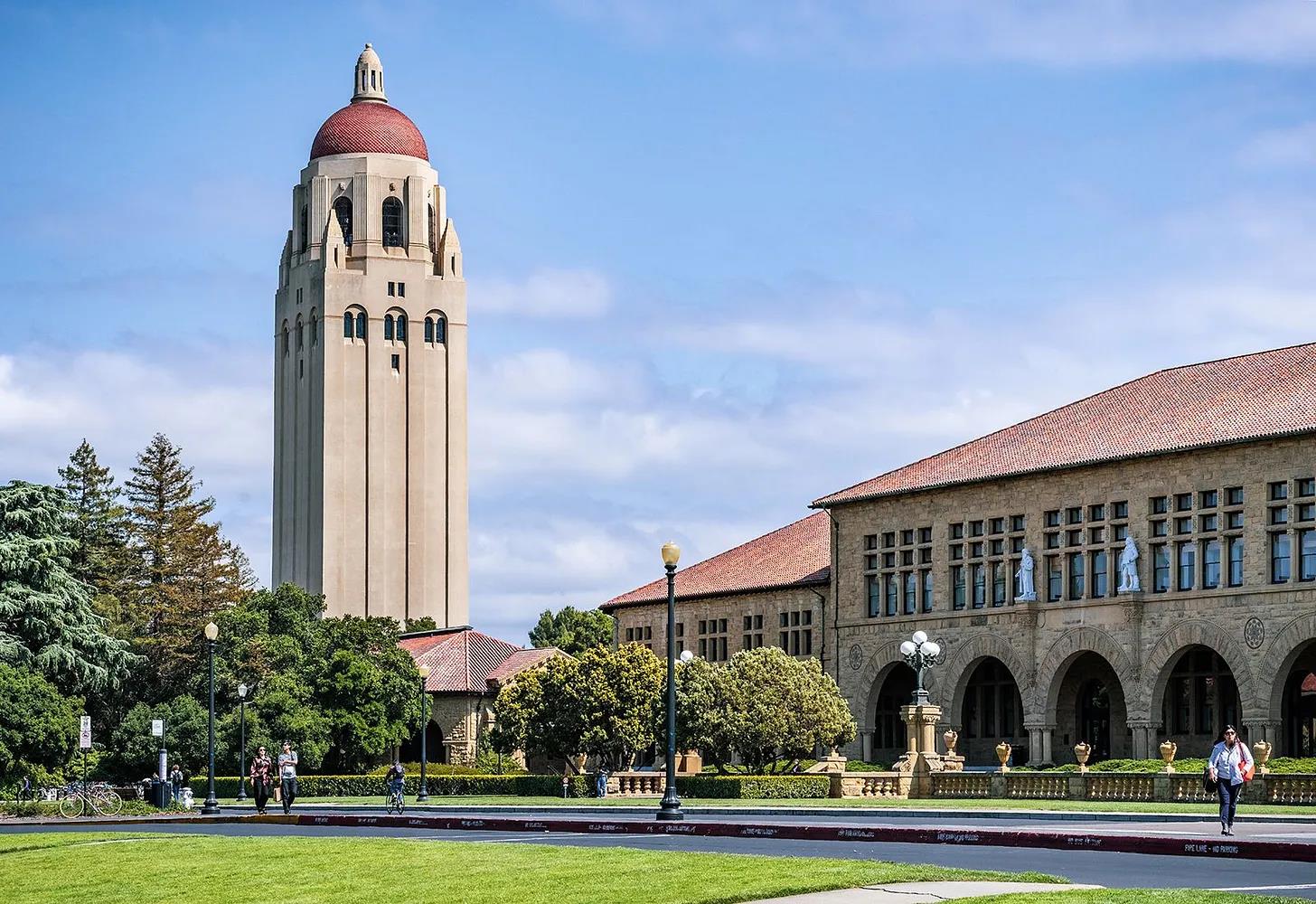
August 26th to September 1st is Stanford Blockchain Week, a week-long series of conferences, summits and events. In addition to this main academic conference, there are many other summits this year, including the Blockchain Application Stanford Summit (BASS) of the Stanford Blockchain Club, the Starknet Summit in San Francisco, and academic seminars focusing on consensus, MEV and DAO, as well as countless other side events. In this article, we will explore three key trends of the week and what this means for the development of the entire industry.
Trend 1: Optimization of zero-knowledge proof in theory and practice
Unsurprisingly, a large portion of the conference was focused on zero-knowledge proofs (ZKPs). Optimization of existing ZKP solutions was a core theme of the SBC itself, with a session discussing breakthroughs in efficient folding schemes such as HyperNova and Protostar. In addition to these, there were other academic talks focused on applying zkSNARKs to more efficient batch Merkle proofs and formal verification of ZK circuits.
Moreover, the interest in advancing ZKP research is not limited to Stanford’s academic community. During the week, several startups from the Stanford Blockchain Accelerator demonstrated new applications of zero-knowledge proofs in various fields. For example, Nexus Labs and Modulus Labs used ZKPs in verifiable computation, Ironmill and Succinct proposed use cases in new development tools and infrastructure, and Nocturne and Hinkal demonstrated applications for private transactions.
The ZKP ecosystem is gradually professionalizing, with different companies focusing on specific parts of the ZK process, whether it's connecting applications to provers, providing ZK proofs for specific verticals (such as Modulus's AI), or providing other enhanced integration tools. This specialization may indicate that the industry is gradually evolving into a modular and sophisticated process, highlighting the increasing maturity of ZKP as a technology. Of course, all of this is happening at a steady pace of academic breakthroughs (such as the new folding scheme proposed on SBC), which are opening up new use cases for the technology and creating a symbiotic relationship between ZKP theory and practice.
Trend 2: Achieving “plug and play” composability by increasing modularity
Modularity has become a hot topic and growing trend over the past few months, with different companies focusing on specific tasks in the blockchain technology stack (such as sequencing, execution, data availability, etc.) rather than having one monolithic blockchain responsible for everything. However, modularity itself is not necessarily the end goal; rather, the goal is to create a more composable technology stack, a kind of "plug and play" design space that allows developers to experiment and fine-tune the blockchain stack for any set of requirements.
This “plug and play” ethos was captured in Professor Ed Felton’s talk at BASS about Arbitrum’s Stylus, a project that aims to unify the execution environments for EVM and WASM code, allowing smart contracts and WASM code to smoothly interact with each other. This enables the creation of WASM “libraries” from which EVM contracts can call functions, allowing for a more composable development experience. Some other interesting developments in improving composability through modularity include Chainlink’s CCIP, an attempt to create industry-defined interoperability standards, and Celestia’s talk on discussing the history and future of modular blockchains.
It’s worth noting that many of the projects at Stanford driving this trend are larger and more established companies (e.g. Arbitrum, Chainlink, Celestia, Starkware) that are already at the forefront of the industry. While there are smaller companies like Stanford startup Caldera working on this trend, composability seems to be more about projects looking to establish or consolidate a leading edge in the ecosystem, trying to attract developers to their technology stack. This is a positive move for the blockchain industry as a whole, as the increased emphasis on composability through a “plug and play” approach lowers the barrier to entry for new developers, while also allowing for more customizable technology stacks for a wider range of use cases.
Trend 3: Renewed focus on the Bitcoin developer ecosystem
The third interesting trend during Stanford Blockchain Week was the renewed focus on the development and future of the world’s oldest blockchain. On the Saturday afternoon during BASS, there was a dedicated emphasis on the Bitcoin ecosystem, both from a developer and technical perspective, as well as from a cultural perspective. In addition to a presentation by Stanford professor David Tse on the Babylon Bitcoin Staking Protocol, there were multiple panels, including speakers from Ordinals, Taproot Wizards, Bitcoin Startup Labs, Bitcoin Magazine, and more, discussing the future of innovation in the Bitcoin ecosystem, especially after Ordinals.
Perhaps one of the most interesting and unique perspectives is Ordinals COO Erin Redwing’s defense of Bitcoin Ordinals art (like Raresats), arguing that if Bitcoin is “digital gold,” then the art inscribed on it through Ordinals is the equivalent of “digital jewelry,” and just as most ordinary people interact with gold indirectly through “art and jewelry,” the same can be said for Bitcoin. In addition, the cultural and technological changes brought about by Ordinals and other new projects After Ordinals, many Ethereum developers seem to have regained interest in the Bitcoin ecosystem, bringing the design, token economics, and implementation expertise of Ethereum DApps to Bitcoin to potentially revive Bitcoin’s ancient ecosystem.
However, it is too early to tell whether we are in the midst of a true "Bitcoin Renaissance". Bitcoin is a notoriously conservative ecosystem whose community is at best indifferent, or even hostile, to cultural and technological change. However, the potential development of the Bitcoin ecosystem is still worth keeping an eye on, even if only from the perspective of transaction volume and cultural acceptance.
in conclusion
The above three trends on ZK progress, composability through modularity, and the development of the Bitcoin ecosystem are far from an exhaustive description of all the research and innovation being done at Stanford. From new research in consensus mechanisms that lay the foundation for future L1 or L2, to transaction and MEV modeling techniques that may enhance analytical tools, to new cryptographic primitives, Stanford Blockchain Week showcases the diversity and vitality of this industry. Unlike many other industry summits or academic conferences, SBC and its affiliated conferences cleverly synchronize and combine industry with research, creating a vibrant alliance of startups, mature protocols, and academia, all of whom are committed to pushing the blockchain field forward and building a better decentralized future.