

Author | Huo Huo Produced by | Vernacular Blockchain (ID: hellobtc)
According to the statistics of Cailianshe Venture Capital, the total number of financings in the global Web3.0 field in November was 71, with a total financing amount of US$1.034 billion, an increase of 21.65% from the 850 million in October. Now Web3 is a hot topic in the Internet industry. From top VCs to Internet entrepreneurs, everyone is talking about it. Internationally renowned venture capital institutions such as Sequoia Capital and Goldman Sachs have begun to invest heavily early. Some people who resigned from large Internet companies have also all in Web3. Of course, these large companies themselves, such as Tencent, have also begun to enter the Web3 game field.
In fact, in the nearly trillion-dollar market in the crypto space, more than 90% of the market value is generated by top projects. Today, Vernacular Blockchain takes everyone to sort out the 10 strongest and most contributing teams in Web3...
01 Bitcoin Core Team
In 2011, Satoshi Nakamoto gave the development rights to Gavin Andresen after he disappeared. Then the Bitcoin project moved to Github and was officially named "Bitcoin Core" in 2014. The development team behind it is also called the Bitcoin Core team. On Github, since anyone can contribute to Bitcoin Core, the Core team is not a real company. It can be said to be a decentralized technology development organization that is designated by Satoshi Nakamoto to take over the components and continuously absorb new developers through the Bitcoin community. Those engaged in Bitcoin development come from professional fields such as economics, politics, cryptography, and computer science.
As the developer team that has received the most support from the Bitcoin community for a long time, Bitcoin core has been called the most talented Bitcoin development team in the world. Currently, the Core team is still focusing on the maintenance of the Bitcoin system and subsequent technical development, laying a good foundation for the future technical upgrade and development of Bitcoin.
In order to prevent centralization in technology development, the code merge submission authority of the Bitcoin core team is dispersed among five people: Wladimir J. van der Laan, Pieter Wuille, Jonas Schnelli, Marco Falke and Samuel Dobson. All merge submissions must be signed by their trusted PGP keys before they can be verified and deployed.
In addition, there are hundreds of people who have contributed to the Bitcore Core project. When the current Core maintainers believe that a developer is capable, reliable, and motivated and is qualified to be a maintainer, they will grant the developer's Github account commit permissions. Over the years, the chief maintainers are:
Satoshi Nakamoto: 2009/01/03-2011/02/23
Gavin Andresen: 2011/02/23-2014/04/07
Wladimir van der Laan: 2014/04/07 - present
The reason why the Bitcoin network has been able to develop stably to this day and become the world's most successful peer-to-peer payment system is precisely because these people have contributed technically to the Bitcoin project and worked silently behind the scenes.
02 Ethereum Core Team
Similar to the Bitcoin Core team, Ethereum’s technical development team is also decentralized. The previous article “What Happened to the 8 Founders of Ethereum?” introduced the early founders of Ethereum. The earliest Ethereum core team was composed of these people. Later, the Ethereum community continued to grow and develop, gradually attracting members from all over the world who participated with “professional skills” and joined in the construction of the Ethereum bottom layer and its ecology.
Many people have always believed that behind Ethereum is a small technical development workshop composed of Vitalik Buterin and a few friends. In fact, for a long time, the Ethereum community has maintained multiple interoperable open source execution clients, which are developed by multiple independent teams using different programming languages. It can be said that a large amount of development work of the Ethereum core team is mostly participated by these multiple teams.
There are currently eight teams working on the development of the Ethereum 2.0 client, namely ChainSafe Systems, PegaSys, Harmony, Parity Technologies, Prysmatic Labs, Sigma Prime, Status, and Trinity.
It is precisely because of these diverse clients and multiple technical teams in different directions that the network has become more powerful, diversified and decentralized. In all major upgrades of the Ethereum network (including POS mergers), they were completed by different client teams through repeated testing and adjustments on multiple test networks. They did a lot of work behind the scenes and finally submitted a satisfactory "answer sheet".
With so many powerful technical development teams backing it up, Ethereum has become the most powerful Web3 infrastructure in the world (quite possibly the only one).
03 ConsenSys
Initially, ConsenSys was just a venture capital studio. Its founder, Joseph Lubin, was one of the co-founders of Ethereum. He later helped establish the non-profit Ethereum Foundation. At the same time, he paid more attention to building the Ethereum network, established a large number of corporate relationships and soft power that could be utilized, and became a bridge for the exchange of blockchain and government values. At present, ConsenSys has successfully incubated more than 50 projects that help the growth of the Ethereum ecosystem, covering development tools, infrastructure, core components, platform applications, DeFi, DAO, NFT, storage, decentralized digital identity, venture capital, etc., including well-known infrastructure projects such as the fox wallet MetaMask and Infura. The fox wallet quickly became popular shortly after its release. Over the past six years, the MetaMask team has been committed to creating a product that is not perfect but effective enough, and it is also a trustworthy original program for developers. Through these, MetaMask has helped tens of millions of users and thousands of developers open up the world of web3. Another product, Infura, provides tools and infrastructure that enable developers to easily deploy their blockchain applications from testing to expansion. Infura can solve many pain points for blockchain developers. Some people say that ConsenSys is another Ethereum. Although this metaphor is a bit exaggerated, the importance of ConsenSys to Ethereum is undeniable, because it acts as a lobbying group, incubator and technology driver at the same time. And because ConsenSys is not only related to Ethereum, but also through government, regulatory and industry connections, it has made great contributions to the entire crypto industry.
04 Polygon
Polygon Technology, or Polygon as it is commonly known, started as a blockchain internet company in 2018. At the beginning, several founders had been working on another scalable blockchain, Matic Network. In February 2021, the team announced that Matic Network would be renamed to its current name Polygon and announced that it would become the Ethereum cross-chain center, establishing a new goal as a company that provides a large number of multi-chain services.
Polygon's product, Polygon SDK, allows for lower transaction fees, faster speeds, and supports the Ethereum Virtual Machine (EVM), so existing Ethereum applications can be migrated to it relatively easily. Therefore, in addition to an experience comparable to Ethereum, users can also enjoy high throughput and low fees. Currently, Polygon has deployed some popular decentralized financial DApps, such as Aave, 1INCH, Curve, and Sushi. Of course, there are also some native applications unique to Polygon, including QuickSwap and Slingshot, and it is also focused on providing expansion capabilities to Ethereum through a combination of zero-knowledge technologies. Today, Polygon has a strong ecosystem and can be regarded as the leader in Layere2. In addition, the project team is mainly Indian, so it is also jokingly called Indian Ethereum.
05 StarkWare
In the expansion route of Ethereum, zero-knowledge proof ZK Rollup has always been highly anticipated. Although the early zero-knowledge proof projects Zcash and Monero did a good job in privacy protection, they can only be used as a means of value storage and are difficult to carry other applications. Later star projects include StarkWare, ZKSync, Aztec, etc. Among them, StarkWare completed a $100 million Series D financing with a valuation of $8 billion in May this year, making StarkWare one of the most highly valued projects in the primary market, far exceeding the current popular Layer1 public chains Aptos and Sui. However, StarkWare was not established for a long time. It was founded in Israel in 2018. However, its team is strong and well-rounded, and is composed of world-class cryptographers and scientists: core member Eli is the former chief scientist of Zcash, a leader in pioneering innovation in the field of zero knowledge for many years, and the inventor of zk STARK. He was a professor at the Israel Institute of Technology and one of the world's most outstanding cryptography experts; CEO Uri is a serial entrepreneur with a keen business sense and fundraising negotiation skills. At present, StarkWare's product system is divided into two parts: The first is StarkEx, a ToB service. StarkEx has created a business model of scaling as a service. It has been officially launched on the Ethereum mainnet since 2020 and has achieved profitability. It has served leading customers in the industry such as dYdX, Sorare, ImmutableX, DeversiFi, etc. The second is StarkNet, a general L2, which can deploy any smart contract, unlike StarkEx, which requires customized development for specific applications. It is currently under development and testing, and it is expected that the nodes will be decentralized to the community for operation, becoming a fully decentralized version. In general, the StarkWare team is the inventor of the mainstream zero-knowledge proof technology zk SNARK and zk-STARK, and is based on the zk rollups technology adopted by STARK. Compared with optimistic rollups, zk rollups bring better user experience with its faster withdrawal time. As one of the best companies in the zk rollups field, StarkWare provides STARK technology-based solutions to the blockchain industry. Its leading expansion technology is well worth looking forward to.
06 Cosmos
Cosmos was founded by Ethan Buchman and Jae Kwon in 2014 with the goal of creating an interoperable blockchain. In the early stages, Cosmos modeled its Interchain Foundation (ICF), a non-profit organization, on Ethereum to promote the development of the ecosystem. In early 2020, founder Jae Kwon announced his resignation, followed by his core figure Zaki Manian, who also announced his resignation. This turmoil once caused its Coin ATOM to plummet. However, Cosmos is a star in the cross-chain world and is known as the "Internet of Blockchains." Interoperability and scalability are the biggest features of the Cosmos project. At the same time, there are two major innovations: First, the technical innovation Tendermint is proposed, which is a solution that packages the network and consensus layers of a blockchain into a general engine, allowing developers to focus on application development rather than complex underlying protocols, making it easy to get started;
The second is the security innovation Cosmos SDK. Its modularity and security allow developers to port any existing blockchain code base that already exists in Golang onto it, which is convenient and simple.
Therefore, although the development of the Cosmos team has been up and down, it has never forgotten its original intention since its establishment, and has been committed to solving the following problems: scalability, message transmission between different chains, sovereignty & shared security, speed improvement, etc., and has also made quite important contributions and efforts to Web3.0. But can Cosmos lower the threshold for developers, optimize user experience, and improve the value capture of ATOM? With the help of the Cosmos 2.0 upgrade, it will help to occupy a leading position in the future public chain market, but whether it can break through the public chain competition will take time to test.
07 Polkadot
In 2016, Ethereum experienced a fork crisis. The Parity team considered creating an independent sharded version of Ethereum, and Ethereum co-founder Gavin Wood realized that it would take at least 5 years, or even 5 to 10 years, for Ethereum 2.0 to become a reality, so he decided to leave Ethereum and create Polkadot from scratch.
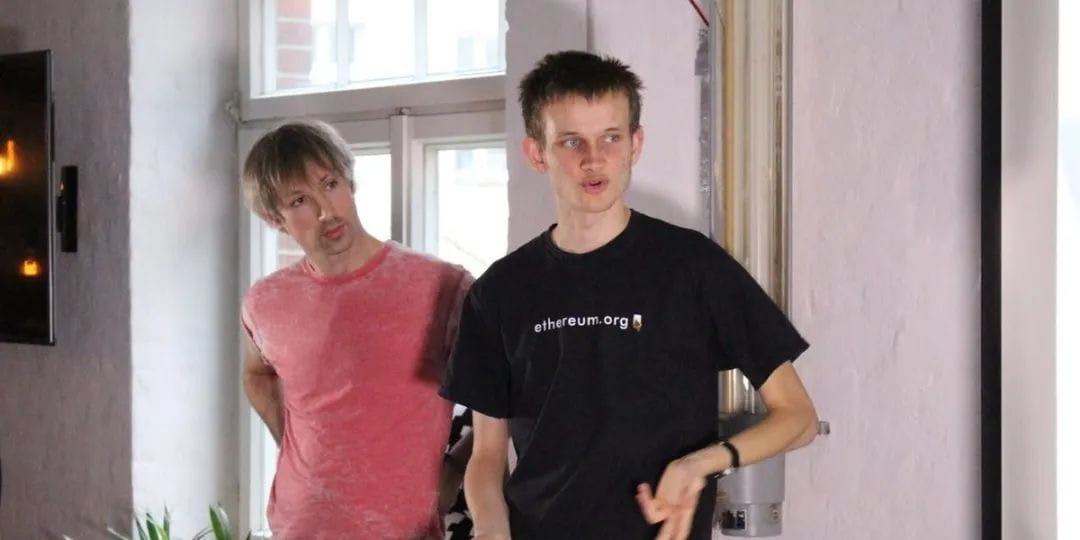
Image source network
In October 2016, the first draft of the Polkadot white paper was released. Once the Polkadot project was proposed, it attracted a lot of attention in the industry. In 2017, Polkadot's first private placement raised 485,331 ETH in just 7 days, which was worth about 144 million US dollars at the time. At that time, Polkadot was just a white paper.
Although Ethereum is known as the world's computer and can enable DeFi to flourish through smart contracts, its performance is limited and it is easy to cause network congestion due to too many contracts. Another problem is that Ethereum has gradually formed a closed ecosystem. Because when Bitcoin users cannot use the DeFi ecosystem on Ethereum, it is not good for the entire blockchain industry.
So Gavin Wood proposed such a concept: there cannot be only one Ethereum in this world. He believes that in the decentralized world of the future, there will be multiple public chains, and the public chains need to be interconnected, otherwise the isolated public chains will become "information islands", and the bridge to connect these public chains is cross-chain technology. So Polkadot brings an important function, cross-chain. By the way, when mentioning Polkadot, it and Cosmos are also called cross-chain "cross-chain duo" on the Internet. Cross-chain has jumped out of the previous thinking of a single blockchain at the design level, expanding from an ecological point to a network that can connect many ecosystems. In addition, Polkadot is a scalable heterogeneous multi-chain system, which does not provide any inherent functional applications itself. It mainly connects the protocols of each chain, maintains the effective and secure communication of the protocol, and saves these communication information. These have greatly improved scalability and interactivity under the premise of ensuring shared security.
Based on the vision of Web3.0, Polkadot also makes important contributions to Web3.0 both at the physical architecture level and the protocol level.
08 dapper labs
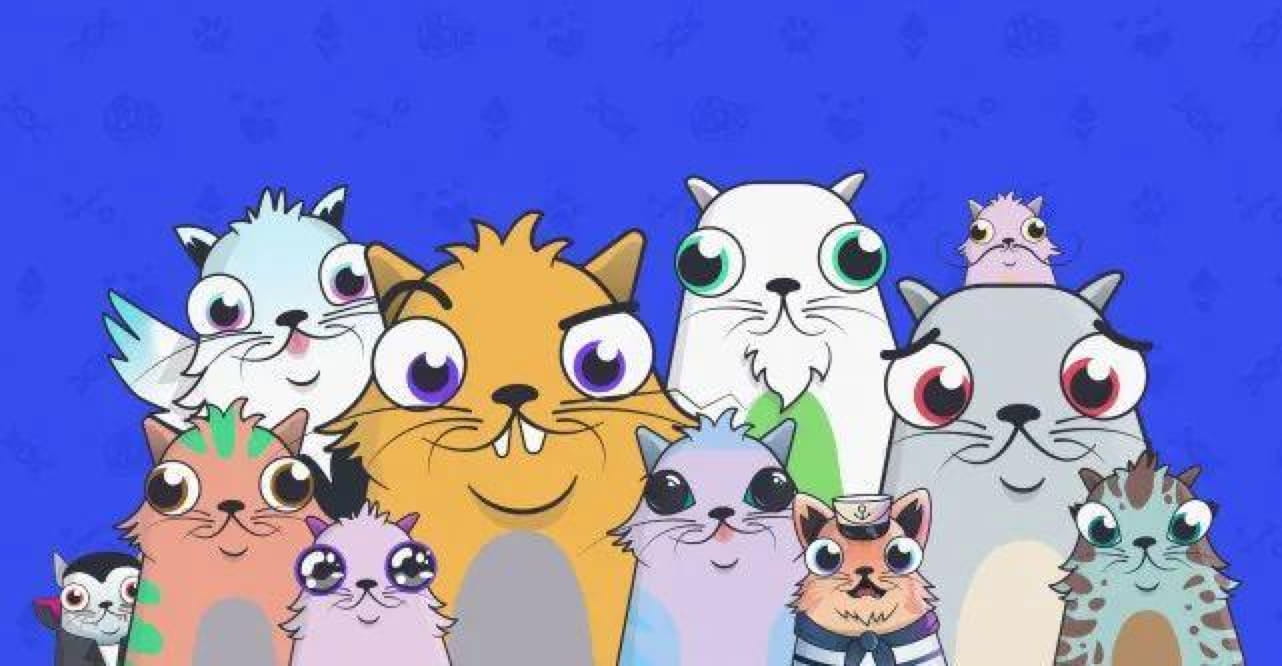
Image source network
Speaking of "CryptoKitties", this name is well-known in the industry. As soon as it was launched at the end of 2017, it blocked Ethereum. In the past two years, a series of news has been reported, including Cheese Wizard, Dapper Wallet, cooperation with NBA and UFC, huge financing, and Flow public chain. All of this is attributed to the team behind it - Dapper Labs. Looking back at the development history of Dapper Labs, every new project has refreshed the previous record. Therefore, the saying "Dapper Labs products must be high-quality" has also become popular in the circle. In fact, in the crypto industry, few teams can develop blockchains, wallets, and launch popular applications at the same time. The Dapper Labs team has completed these tasks very well. What is the magic of this team? Dapper Labs, founded in February 2018, originally intended to move towards the goal of "how to make blockchain better adopted by the mainstream population". Around this goal, Dapper Labs has achieved innovative development from users, developers, and innovative business models. The Dapper Labs team is led by Roham Gharegozlou, Dieter Shirley, and Mikhael Naayem. Roham Gharegozlou was born in Iran and has been exposed to the Internet since high school, making websites. In 2012, three years after graduating from Stanford University, he founded an Internet-related studio. Later, due to various coincidences, Roham Gharegozlou, who mined Bitcoin at home, and Mikhael Naayem, who developed his own mobile game platform (later sold to Animoca Brands), joined Roham Gharegozlou's studio. At this time, they began to realize that blockchain technology could change society and give new freedoms, so the studio began to turn to the development of encryption technology.
So in 2017, the world's first blockchain game Cryptokitties was born in this studio. Because the game was very popular after its release, the team turned the studio into Dapper Labs, which led to the subsequent exciting stories.
As Dapper Labs’ mission states: Blockchain is for you. If the blockchain industry has ushered in the era of NFT, then Dapper Labs has promoted the NFT industry.
09 Yuga Labs
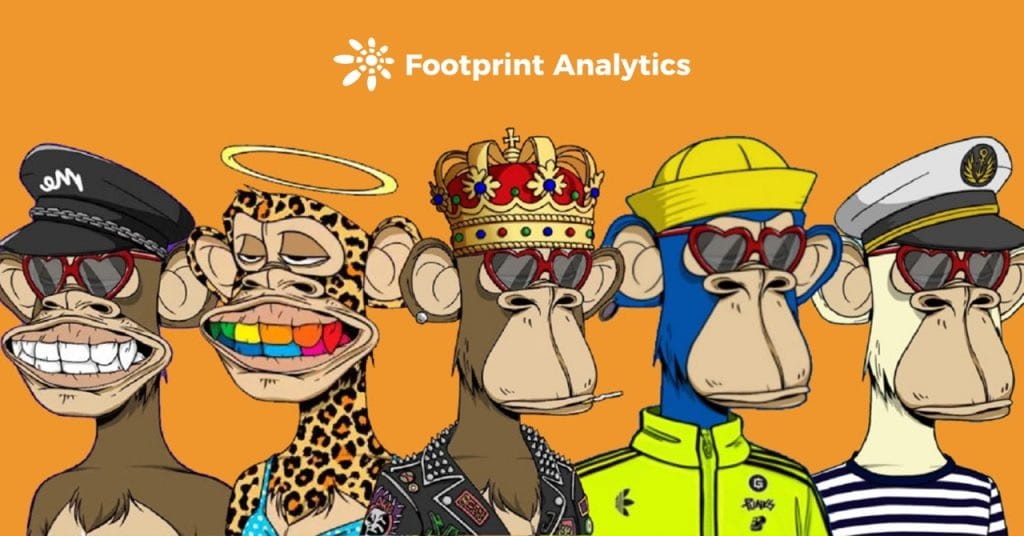
Image source network
The story behind the founding of Yuga Labs is also very simple.
Gordon Goner and Gargamel are good friends in their early 20s. They made a fortune in cryptocurrency in 2017, and then "lost everything" because of leverage, so they began to want to do something in this circle. Just before the NFT summer in early 2021, they were inspired by the works of predecessors in the circle, contacted two other engineer friends, and the four of them worked together on an ape-themed NFT project, which accidentally sold out. So on April 23, 2021, with the launch of the BAYC club, Yuga Labs was born. "Yuga" comes from a wizard in the game "The Legend of Zelda" who can turn himself and others into 2D works of art. The founder of BAYC used it as the name of the studio, implying the extraordinary creativity of the team.
After the huge success of the BAYC NFT series, Yuga Labs has also become a household name in the crypto industry. Later, BAYC's derivative project, the pet dog Bored Ape Kennel Club, was also very popular, and then BAYC derived the mutant ape Mutant Ape Yacht Club, which is still popular. As the most influential NFT project in the industry, BAYC has a symbolic significance in the history of NFT development, so many players even regard BAYC as the Ethereum in the NFT field. At the beginning of this year, Yuga Labs acquired the CryptoPunks and Meebits series IPs, which means that the two major blue-chip IPs merged and all came into one pocket. The reason why CryptoPunks developer Larva Labs expressed its willingness to sell is that it feels that Yuga Labs is better at operating and developing image projects and their community ecology than itself. The acquisition of star NFT IPs such as CryptoPunks and Meebits is just a microcosm of Yuga Labs' business operation capabilities. Yuga Labs also extends its brand-related operational capabilities further. On March 12 this year, Yuga Labs stated in a joint announcement that Yuga is building a monkey universe, and BAYC is the center of the universe. The project is called "MetaRPG", which is centered on games and aims to expand the BAYC world, and welcomes non-BAYC holders to join. In fact, BAYC has evolved from a simple JPEG NFT to a broader ecosystem because the project party has granted NFT holders special rights: including participating in various activities held by the project party, and having the right to share various services and products provided by the project party. For the team, Yuga Labs is constantly breaking through the boundaries of the NFT ecosystem. In addition to the BAYC series, Yuga Labs is also building a highly loyal product system and is preparing to promote products through influencers in various fields. The future of the monkey metaverse is worth looking forward to.
10 Axies Developer Sky Mavis
Sky Mavis was founded in Ho Chi Minh City, Vietnam in early 2018. It is a technology-focused game studio that builds the virtual world of the future and the infrastructure that makes it possible, so Sky Mavis can also be seen as an infrastructure builder. In 2017, after playing CryptoKitties for a few months, CEO Nguyen was hooked. Then he realized that he could make his own blockchain-based game. In a few months, with the help of a group of friends, Nguyen created Axie Infinity. After the Axie Infinity game became popular on the entire network, according to data from Token Terminal, Axie Infinity achieved a revenue of up to US$334 million in just 30 days, surpassing the US$231 million revenue of "Honor of Kings" in July 2021. Axie Infinity became the darling of the chain game track in digital assets at that time. In traditional games, the equipment, props, pets and gold coins we get in the game seem to belong to us. But in fact, these virtual assets belong to the game development company, and the data represented by these virtual assets are also controlled by the company. Sky Mavis tried to introduce blockchain technology into the game, making the gold coins in the game Crypto, and the equipment, props, and pets in the game NFT. The data of these digital assets are also stored on the decentralized blockchain, so players have ownership of these virtual assets. It seems that blockchain technology is simply integrated into the game, but this approach has actually changed the nature of the game itself. It can be said that Sky Mavis' success in Axie Infinity has brought new concepts to the game industry and verified new development directions. Sky Mavis not only launched a successful game Axie Infinity, but more importantly, some of its explorations have brought disruptive innovation to the entire game industry, leading to a huge change in the game industry.
11 Summary
In the 13-year life of the crypto industry, 2022 is one of the most difficult years in history. The external financial environment is in panic, and many internal events have caused a chain reaction. Only the losers can leave in exchange for a more stable future for the industry. However, with the foreshadowing of these predecessors, we can still be sure that those who continue to build will always be there. I believe that the crypto industry will only become stronger after a year of ups and downs, and will not die.
END