

Original author: Chainalysis
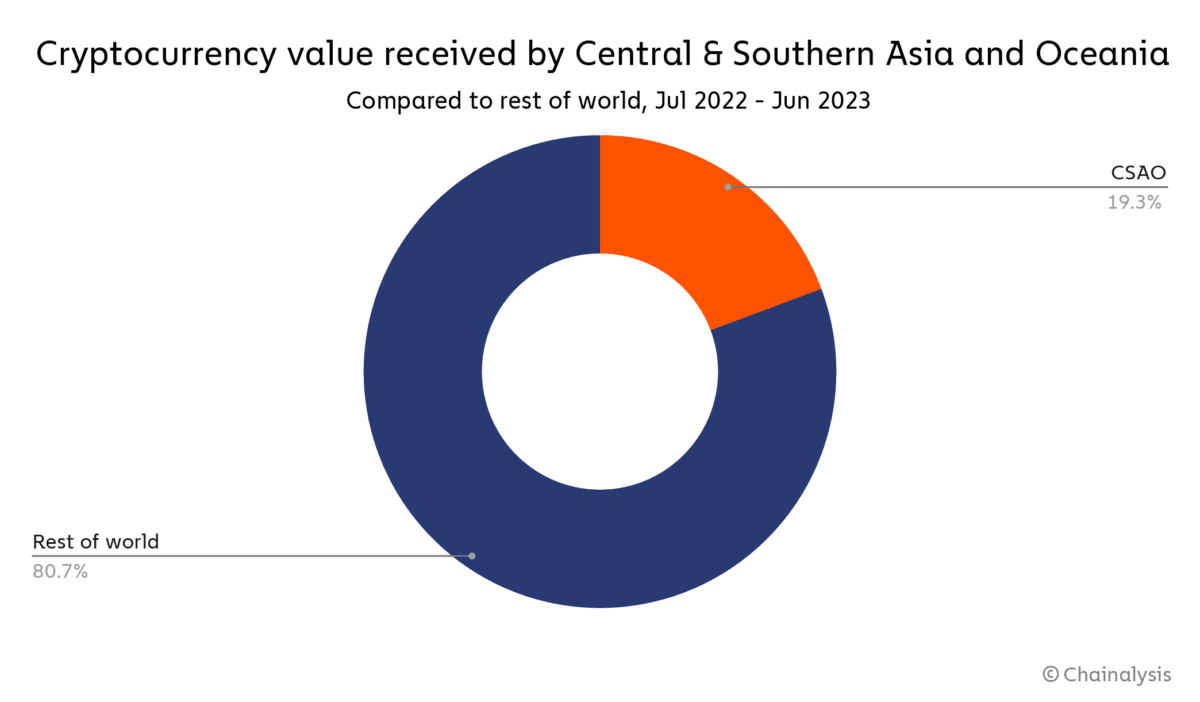
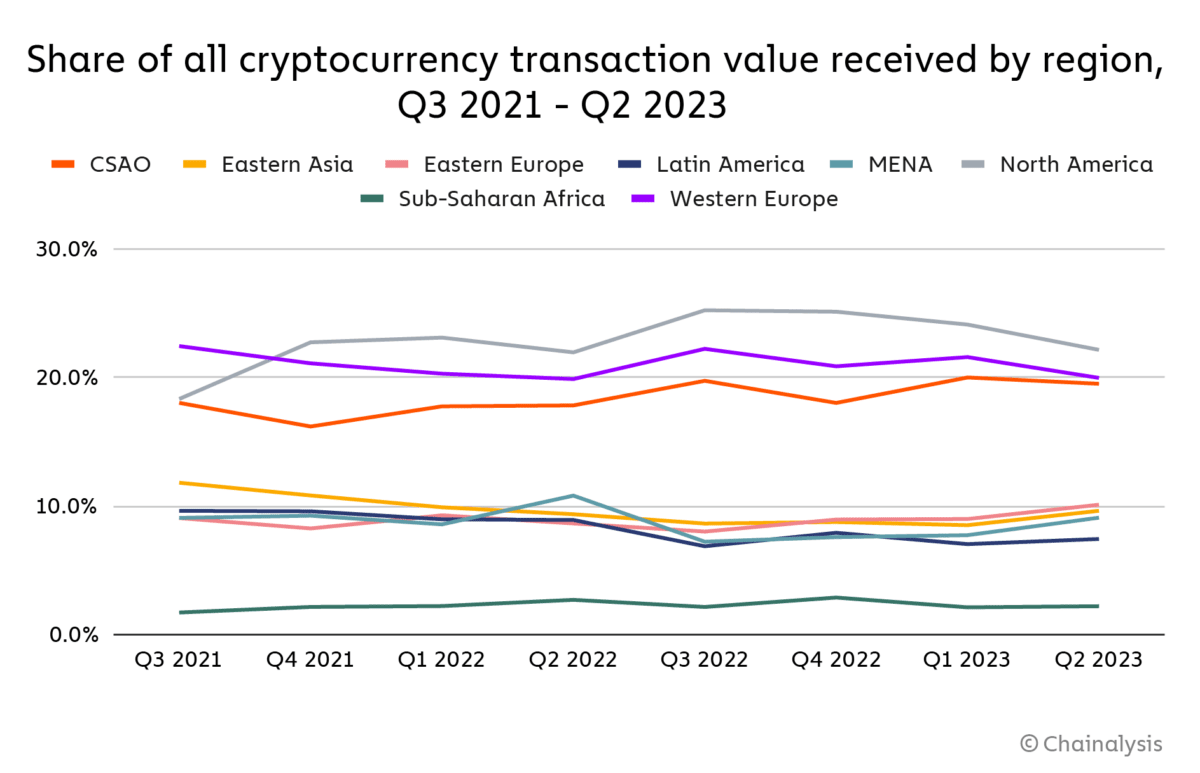
Central Asia, South Asia and Oceania (CSAO) has the most dynamic and attractive cryptocurrency markets in the world. Central Asia and Oceania is the third largest cryptocurrency market we studied by raw trading volume, behind North America and Central, Northern and Western Europe (CNWE), accounting for less than 20% of global trading volume.
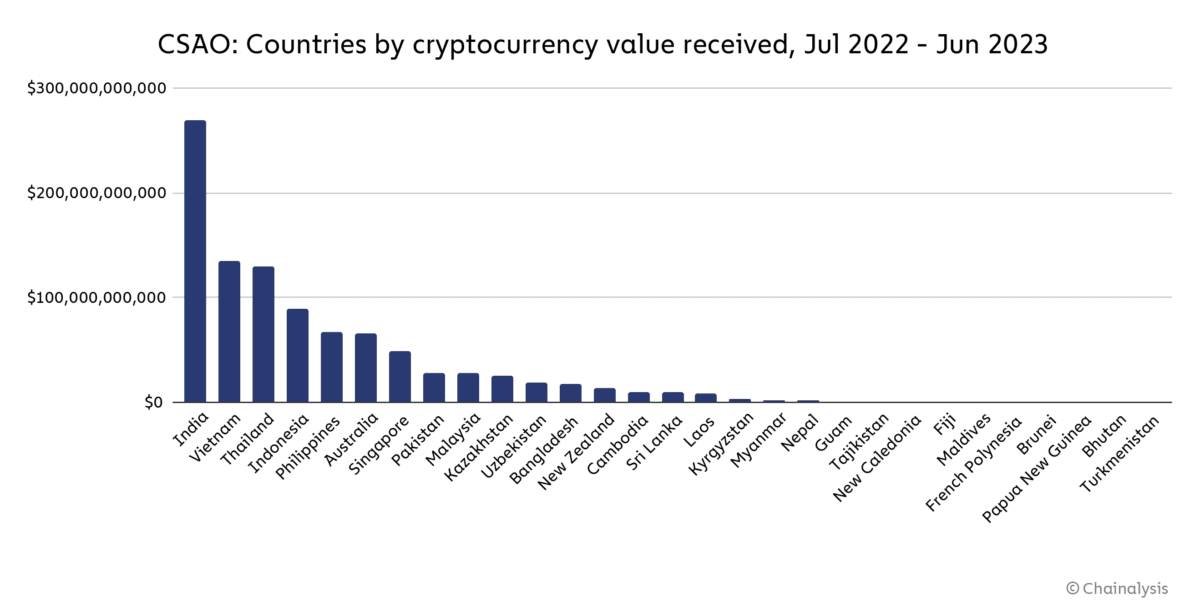
India leads the way in terms of trading volume, receiving approximately $268.9 billion in crypto assets during the study period.
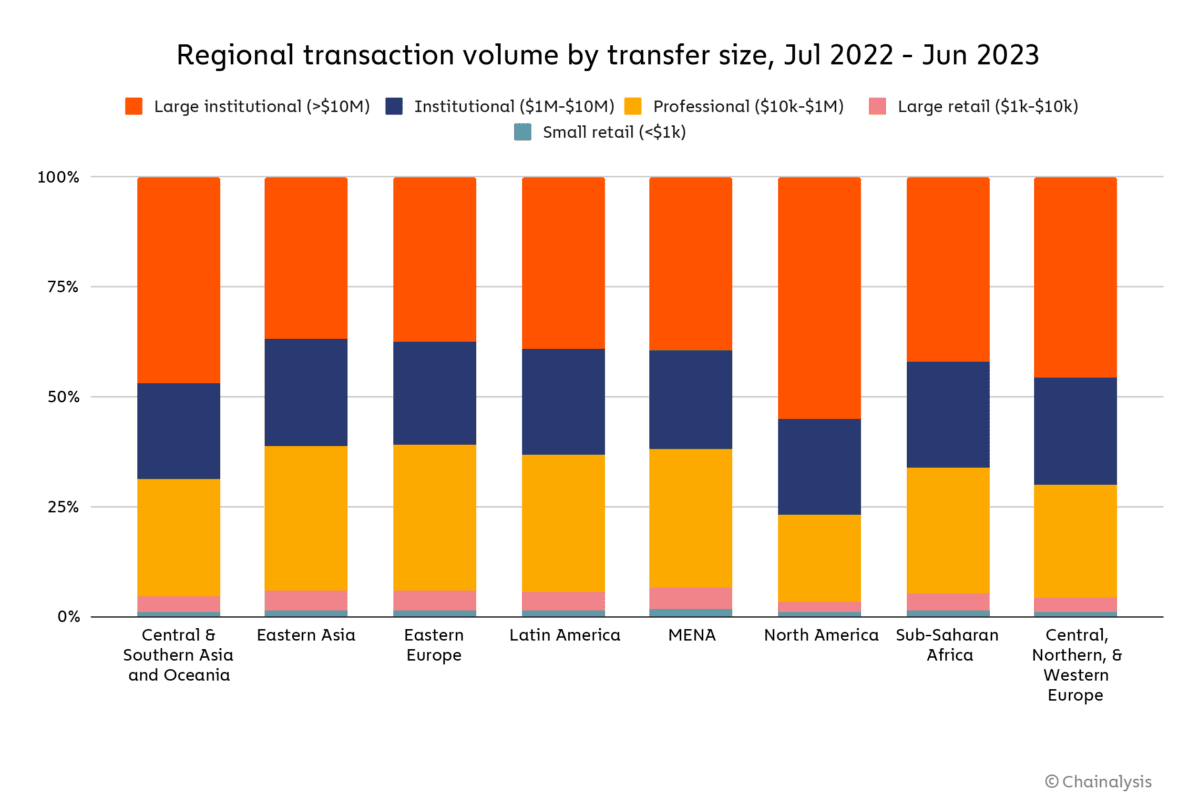
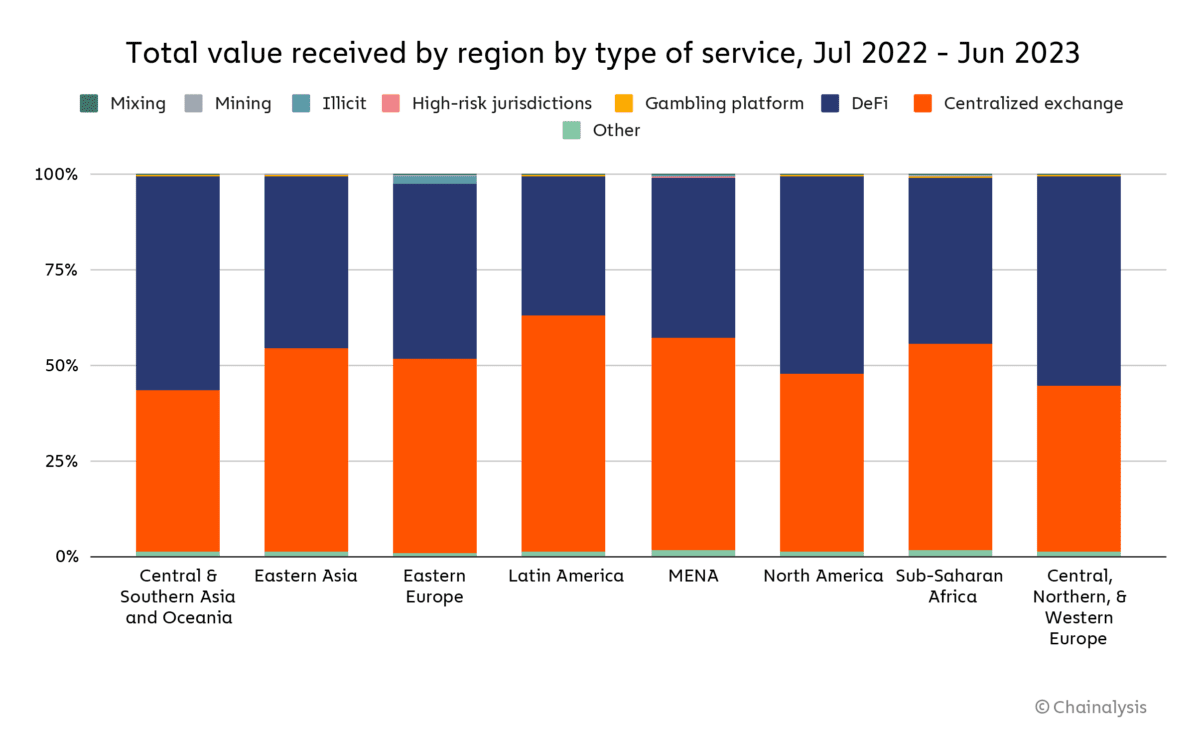
However, raw trading volume doesn't tell the whole story. When we consider purchasing power and population to measure grassroots adoption, CSAO dominates. We see this in the Global Cryptocurrency Adoption Index, with six of the top ten countries located in the region: India (1), Vietnam (3), Philippines (6), Indonesia (7), Pakistan (8) and Thailand (10). In addition, DeFi played a more important role in CSAO last year, with DeFi estimated to account for 55.8% of the region’s trading volume between July 2022 and June 2023, compared with 35.2% in the same period the previous year. Institutional adoption also appears to be on the rise in the region, with 68.8% of total transaction volume coming from transfers worth $1 million or more, compared to 57.6% in the previous period.
But importantly, CSAOs are not monolithic when it comes to cryptocurrency adoption. The factors driving cryptocurrency adoption vary across CSAO countries, which results in different usage rates for different types of cryptocurrency services. We can see this in the graph below, which shows a breakdown of network traffic for different types of cryptocurrency platforms in the CSAO countries with the highest adoption index.
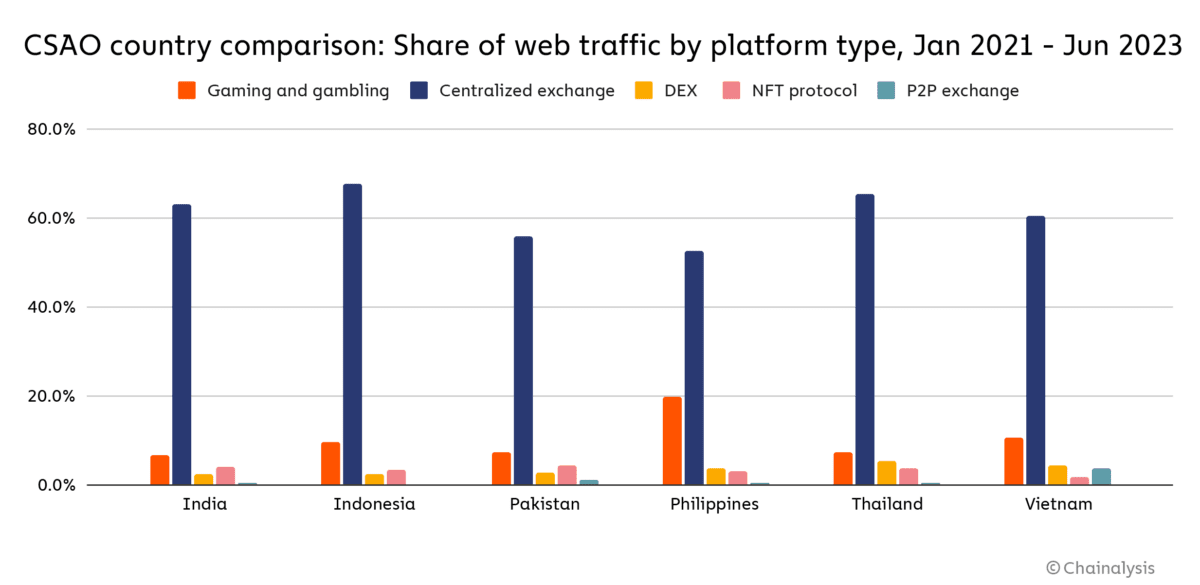
In all of these countries, centralized exchanges account for the majority of web traffic, a pattern that is also true globally. However, we see major differences elsewhere as well. For example, a large portion of the Philippines’ cryptocurrency-related web traffic goes to gaming and gambling platforms at 19.9%, with Vietnam not far behind at just 10.8%. Meanwhile, countries like Pakistan and Vietnam have a higher share of activity on P2P exchanges, which are more commonly used in emerging markets or countries with stricter capital controls.
Below, we’ll explore the different drivers of adoption in two CSAO countries, the Philippines and Pakistan, and examine how these differences lead to different usage patterns. We’ll then look at some of the latest trends in India, a country that leads the world in grassroots cryptocurrency adoption.
Axie Infinity’s craze kicks off cryptocurrency adoption in the Philippines, but what happens next?
Cryptocurrency enthusiasts have long identified the $217 billion video game industry as an area where cryptocurrencies can have a positive impact, such as allowing players to earn, buy, and sell in-game items. We’ve seen a number of ambitious projects begin to tackle this problem with varying degrees of success, and no country has welcomed these projects as much as the Philippines, where the game-to-earn game Axie Infinity has captured the country’s attention. To learn more, we spoke with Donald Lim, a veteran of the advertising and marketing field in the Philippines who has worked across multiple industries and has now entered the world of cryptocurrency as the inaugural chairman of the Philippine Blockchain Committee and the lead organizer of Philippine Blockchain Week.
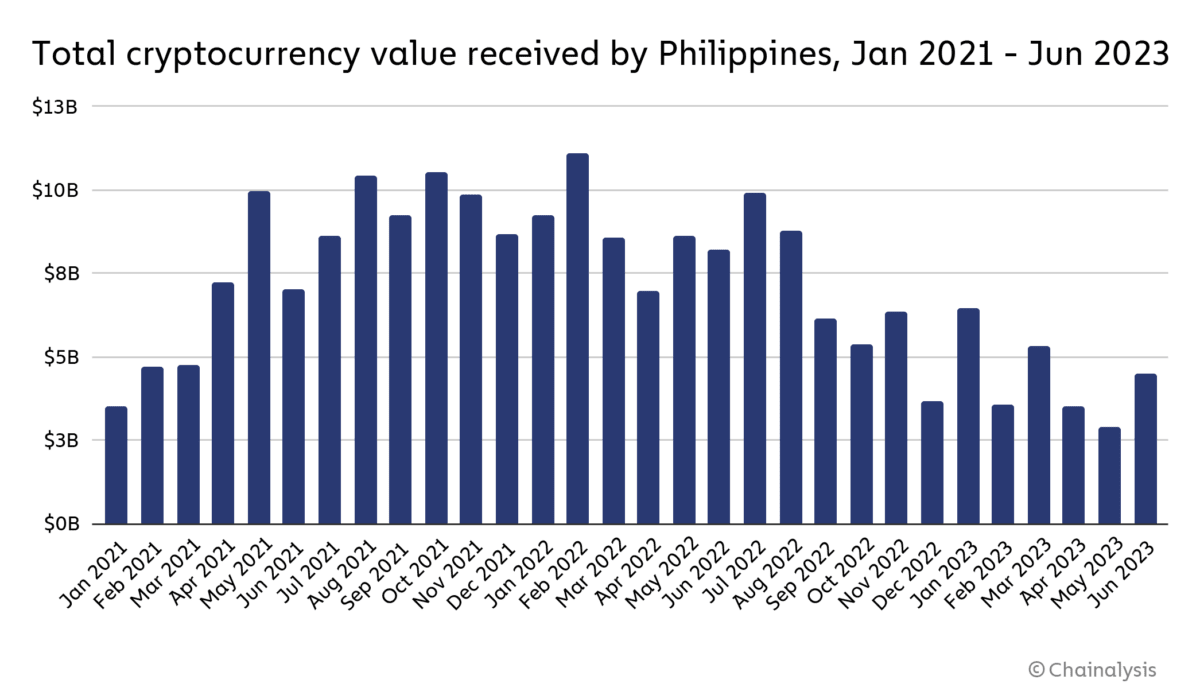
“I think Axie Infinity was the moment when crypto really came to the Philippines,” Lim said. While the game is most popular among the younger generation, Lim sees people from all walks of life playing it. “You can get on a tricycle and see the driver with his phone on top of the windshield, playing Axie — there are so many stories like this.” In fact, the Philippines accounts for the largest share of total Axie Infinity network traffic at 28.3%, and on-chain data shows that the country’s increase in cryptocurrency trading volume coincides with Axie’s growth in the summer of 2021.
What makes the Philippines so receptive to “play and earn” games like Axie Infinity? Lim has several reasons. First, the Philippines has a young, tech-savvy population that has embraced fiat digital wallets like GCash. When Axie Infinity launched and began to gain popularity, the world was in the midst of the COVID pandemic, and many people were stuck at home without jobs — Axie provided people with a way to entertain themselves and earn extra cash. It also provided people with a social outlet. “Filipinos are used to struggling to connect online and through social media because, as a country made up of many small islands, we are inherently isolated from the outside world. We are also the world’s largest exporter of human capital, and Filipinos abroad want to connect with people back home,” Lim explained. According to him, the high rate of social media usage in the Philippines made it easier for the game to go viral and reach users through strategies like influencer marketing.
Since then, both overall Axie Infinity usage and token prices have dropped significantly, and many people in the Philippines and elsewhere who have abandoned the game are not much better off financially. But the game’s success has laid the foundation for further adoption of cryptocurrencies, as many Filipinos who played the game now have wallets they can use for other purposes.
Lim believes the best way to turn initial momentum into beneficial cryptocurrency applications is for regulators and large web companies to step up. “Crypto adoption can’t just be bottom-up. Governments need to set the rules, and the largest companies need to incorporate crypto into their products.” Positive momentum is already emerging on both fronts. The Philippine government has designated a special economic zone in the Bataan region, where cryptocurrency companies that set up shop can enjoy tax incentives and operate in a regulatory sandbox designed to foster innovation. On the private sector side, Philippine Airlines recently launched a utility-driven NFT collection that entitles users to special perks, while Philippine financial services company Cebuana Lhuillier announced an integration with the Stellar Blockchain to provide faster, cheaper remittance services — critical for a country like the Philippines that receives large amounts of money from abroad.
Lim firmly believes that the Philippines has what it takes to become a leader in the cryptocurrency space. “We can be the blockchain capital of Asia. Look at the developer talent, look at all the online groups dedicated to trading and NFTs — it’s just a matter of time.”
In Pakistan, demand is driving adoption of cryptocurrencies, especially stablecoins. Despite low overall transaction volumes, Pakistan is a world leader in grassroots cryptocurrency adoption, not far behind the Philippines. But the two countries’ adoption patterns are very different. Social connections and speculation have driven many Filipinos into crypto through a “play and earn” game, while the need for wealth preservation in the face of high inflation and currency depreciation seems to be the reason why many Pakistanis are turning to crypto. We spoke to Zeeshan Ahmed, Pakistan General Manager of prominent cryptocurrency exchange Rain, to find out more. Rain operates in multiple countries in the region and currently has no commercial activities in the country as cryptocurrency trading is currently prohibited under Pakistani law, but it is working towards obtaining regulatory licenses one day.
When we asked Ahmed what’s driving cryptocurrency adoption in Pakistan, he offered some sobering statistics. “Five years ago, Pakistan’s inflation rate was 10.6%. Now, inflation is officially reported at 29.4%, but it’s actually much higher. The main spike has been in the past 16 months, with the value of the rupee falling from 178 PKR to the dollar in January 2022 to 320 PKR in August.” Unfortunately, Pakistan’s dire economic situation means savings can be eroded quickly. On top of that, there aren’t many good options for the average person to invest in the current environment. “The stock market and stock exchanges have tanked. Any gains you make are likely to be wiped out by inflation,” Ahmed explained. Pakistani citizens are also prohibited from holding physical foreign currency — it must be kept in banks. For many, this makes cryptocurrencies, and especially stablecoins, a necessity. “It’s our only safe haven option.”
It’s also important to note that on-chain data doesn’t tell the whole story of cryptocurrency adoption in a country like Pakistan. Much of the country’s transaction volume, especially acquisition of stablecoins, occurs through informal peer-to-peer marketplaces that are not easily identifiable on-chain. As a result, it’s difficult to know exactly how many people are holding or acquiring cryptocurrencies at any given time. Additionally, experts speculate that Pakistani businesses use stablecoins like USDT to import goods from abroad and hedge against inflation and currency depreciation, but this is difficult to confirm.
While cryptocurrency trading is officially banned in Pakistan, Ahmed believes that a clear regulatory framework could help make the cryptocurrency market more productive for Pakistani citizens. While the official stance has not changed, Ahmed said he senses some recent progress on that front. "Eight months ago, our regulators didn't even want to talk about cryptocurrencies. But as recently as July of this year, we presented them with a white paper on how to regulate cryptocurrencies, and they seem to be moving forward." For example, future regulation could allow Pakistanis to transfer funds from bank accounts to exchanges, which would make it easier and more cost-effective for them to acquire the digital assets they need, setting the stage for further growth.
India remains a top cryptocurrency market despite difficulties with tax laws
While other markets in the region are vibrant and can help us understand the unique drivers of cryptocurrency adoption, the largest CSAO cryptocurrency market by far is India. According to our Global Crypto Adoption Index, India leads the world in grassroots adoption, but even more impressively, it has become the world’s second-largest cryptocurrency market by raw estimated transaction volume, beating out several wealthier countries.
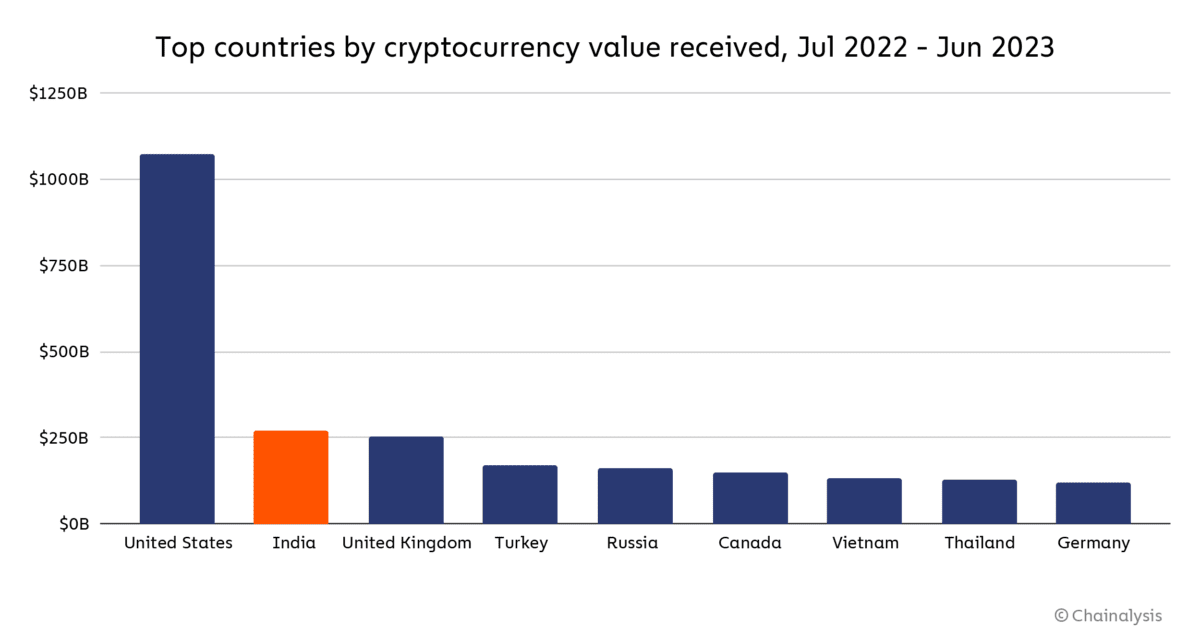
Cryptocurrency usage in India spans across several different forms of activity, with India ranking in the top ten for usage across different categories of cryptocurrency services.
Perhaps most impressive is that India has become a top cryptocurrency market despite a challenging regulatory and tax environment for the industry. Last year, regulators provided more clarity on a number of issues, such as formally ordering that its money laundering rules would apply to cryptocurrency trading. However, India’s tax rates on cryptocurrency activity are much higher than most other countries, with a 30% tax on gains — a cryptocurrency-specific rate that’s higher than the country’s tax rates on other investments, such as stocks — and a 1% tax on all transactions, also known as tax deducted at source (TDS), which means that cryptocurrency platforms must deduct the corresponding amount from users’ balances at the time of the transaction to complete the transaction.
Further corroborating recent reports, industry insiders in the region have told us that the uneven implementation of TDS could make it harder for local exchanges to compete. While every exchange operating in India must collect TDS from Indian users, many international exchanges do not do so effectively, which could attract Indian users away from exchanges that are primarily focused in India. We can see some evidence of this in the chart below, which shows an immediate surge in web traffic from India to international exchanges following the implementation of TDS in July 2022.
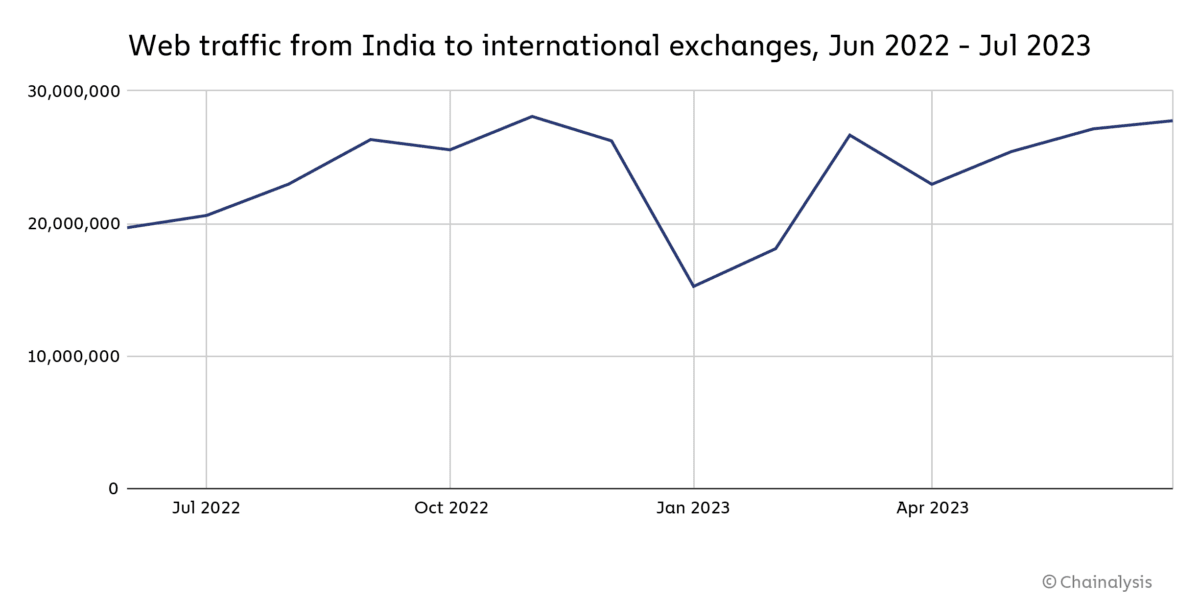
This trend highlights the importance of strictly enforcing local rules such as TDS for all exchanges operating in a particular country. Failure to do so would create an environment for regulatory arbitrage and harm the country’s native crypto industry.
However, while these issues are important, they do not seem to be curbing India’s massive demand for cryptocurrencies — and as long as the demand exists, cryptocurrencies will take hold in the world’s second-largest country.
CSAO shows cryptocurrencies can be adapted to local conditions
No region has more reason to believe that cryptocurrency is the future than CSAO, and not just because so many CSAO countries in the region rank high in grassroots adoption. It’s because these countries have broad and unique economic needs, and different cryptocurrency platforms and assets have emerged to meet those needs. In the Philippines, where many people want to speculate on new assets, earn extra cash, and connect digitally with others, “play for cash” games have taken hold. These games are an entry point into the broader digital asset economy, and now tens of thousands of Filipinos have cryptocurrency wallets that they can use for other purposes. In Pakistan, where the economic situation is even more dire — given that Pakistan’s per capita PPP is $5,680 compared to the Philippines’ $9,210, coupled with the currency devaluation we’ve described — stablecoins are providing economic relief. If the Pakistani government passes sensible cryptocurrency regulations, its existing users will form the foundation for a thriving cryptocurrency market, as we’ve seen in India. CSAO shows that cryptocurrencies can play a valuable role regardless of a country’s circumstances.