


Author: Chainalysis
Compiled by: Luffy, Foresight News
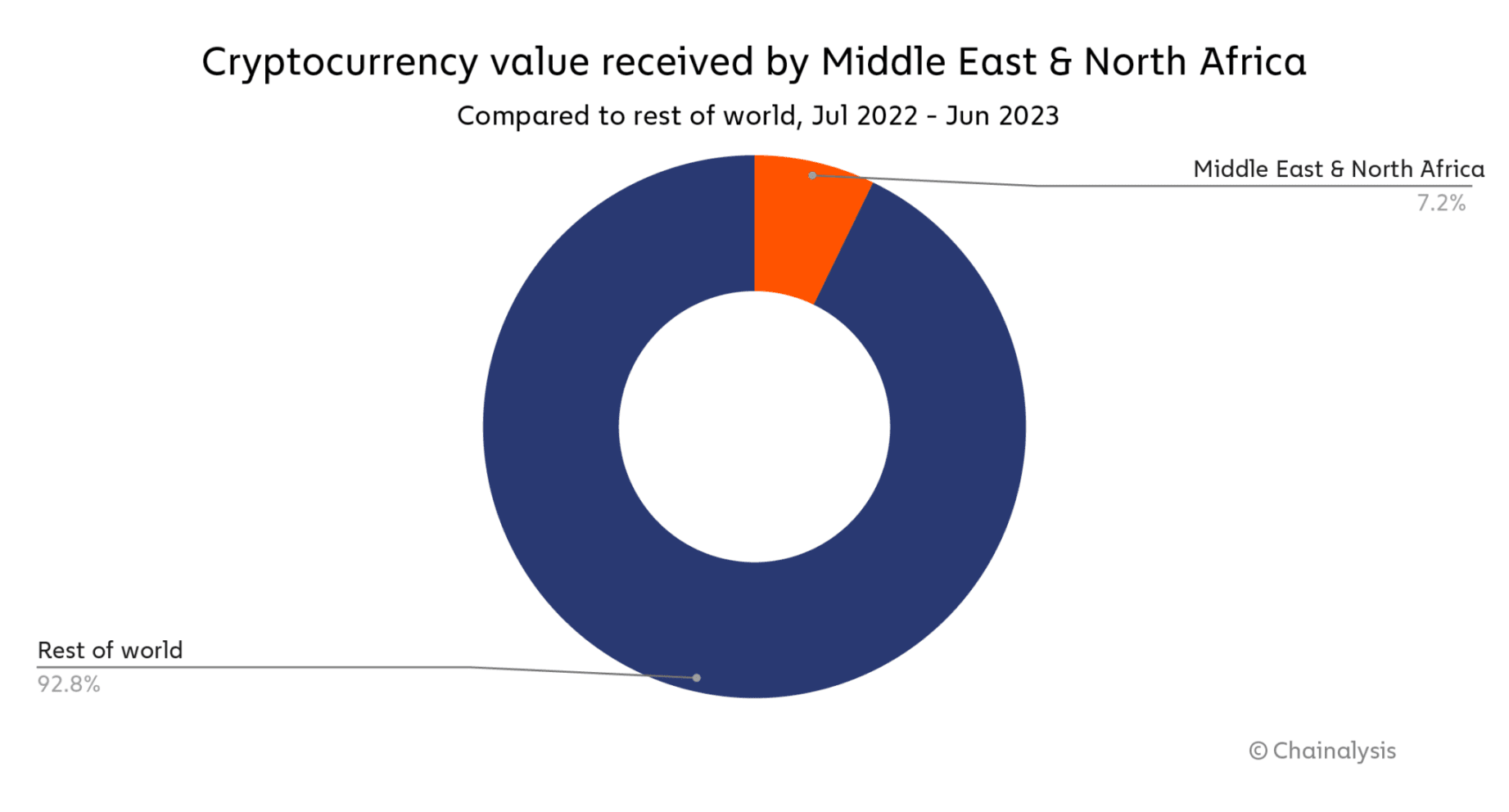
The Middle East and North Africa is the sixth largest crypto economy in our 2023 Geography of Crypto report. Between July 2022 and June 2023, the region saw an estimated $389.8 billion in on-chain transactions, accounting for nearly 7.2% of global volume.
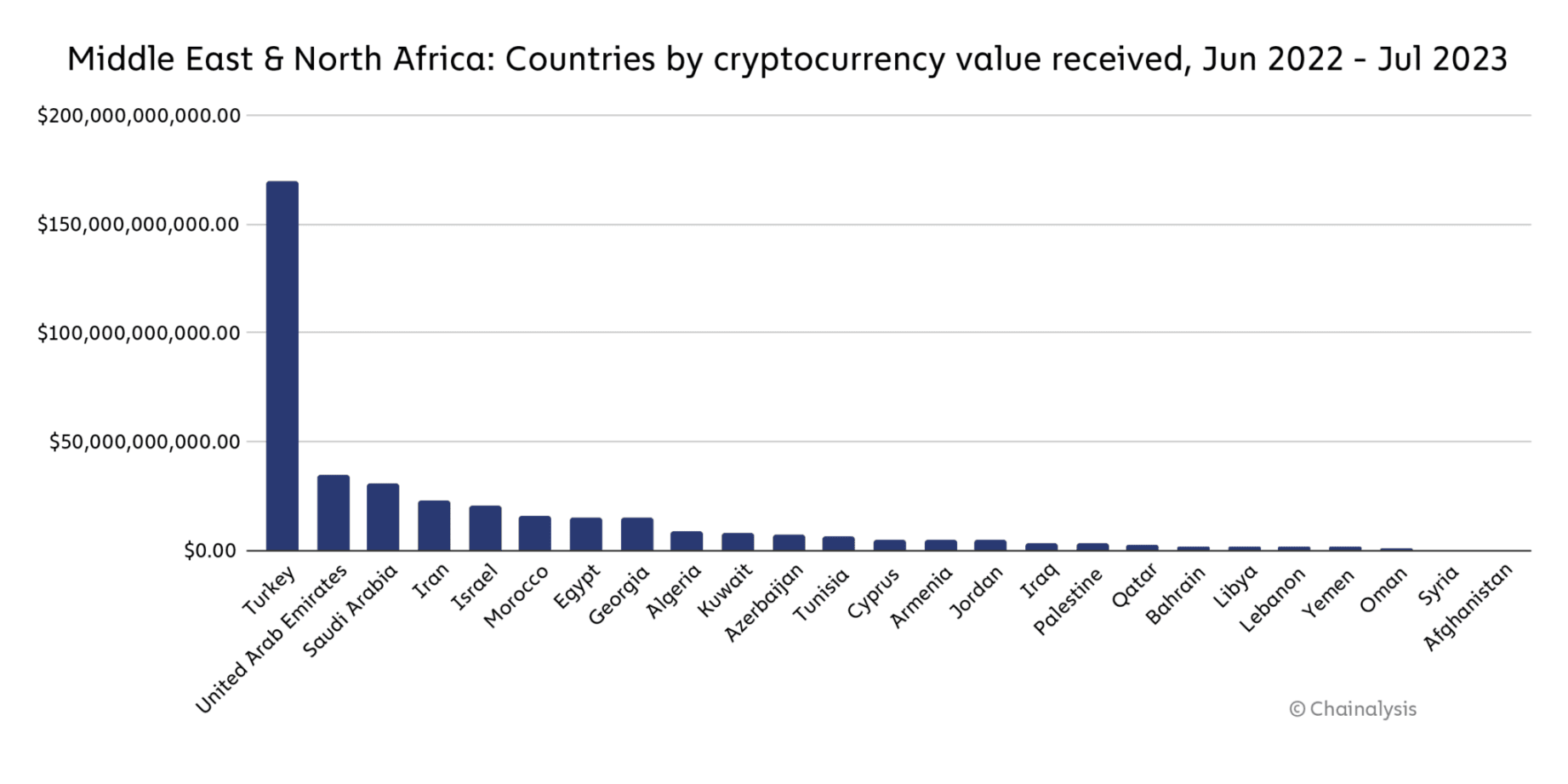
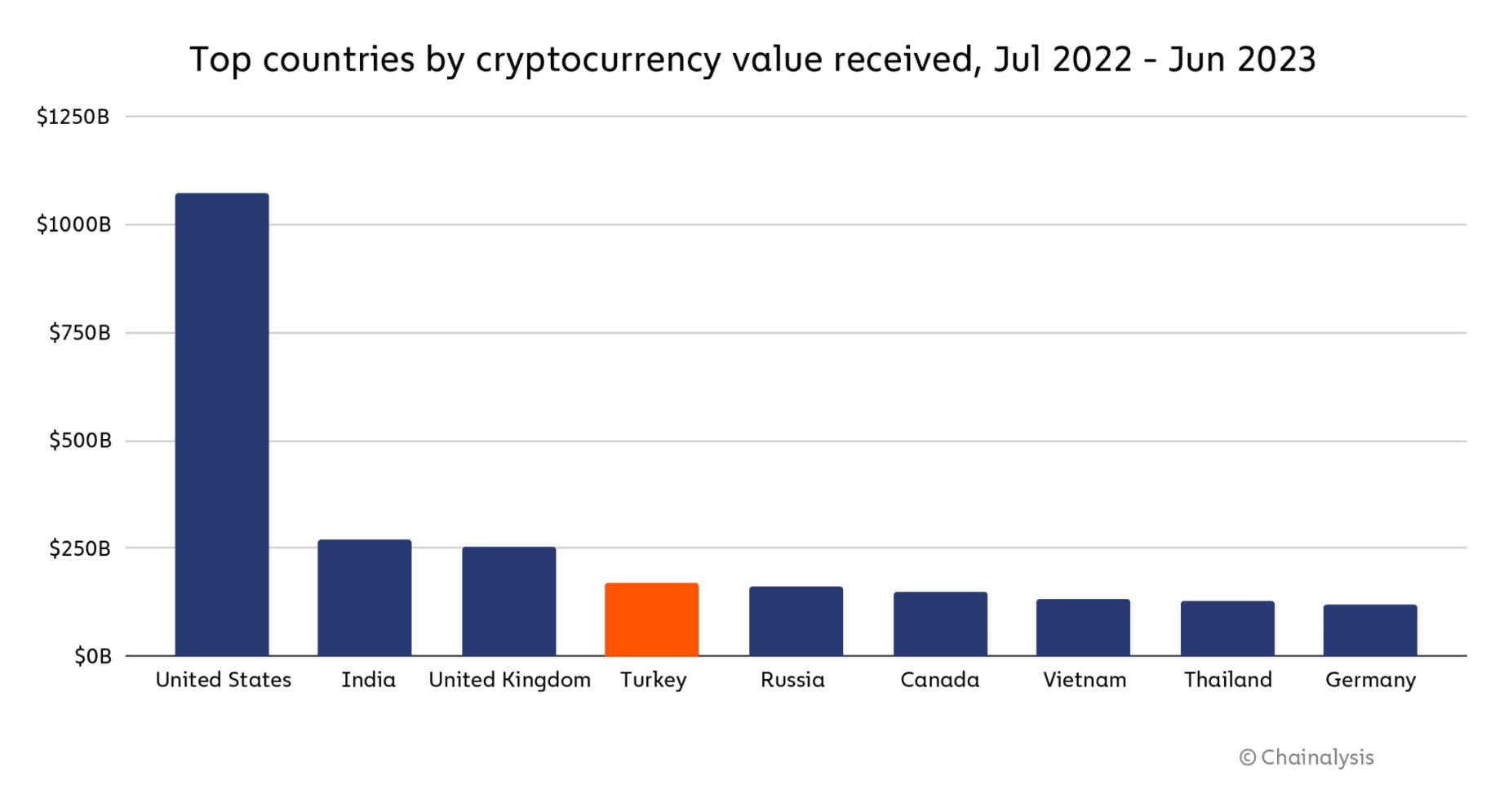
The Middle East and North Africa region has three of the top 30 countries in this year’s index: Turkey (12th), Morocco (20th), and Iran (28th). Of these, Turkey dominates in terms of transaction volume, as shown below.
Overall, MENA deal volumes are similar to other regions when broken down by deal size and platform type.
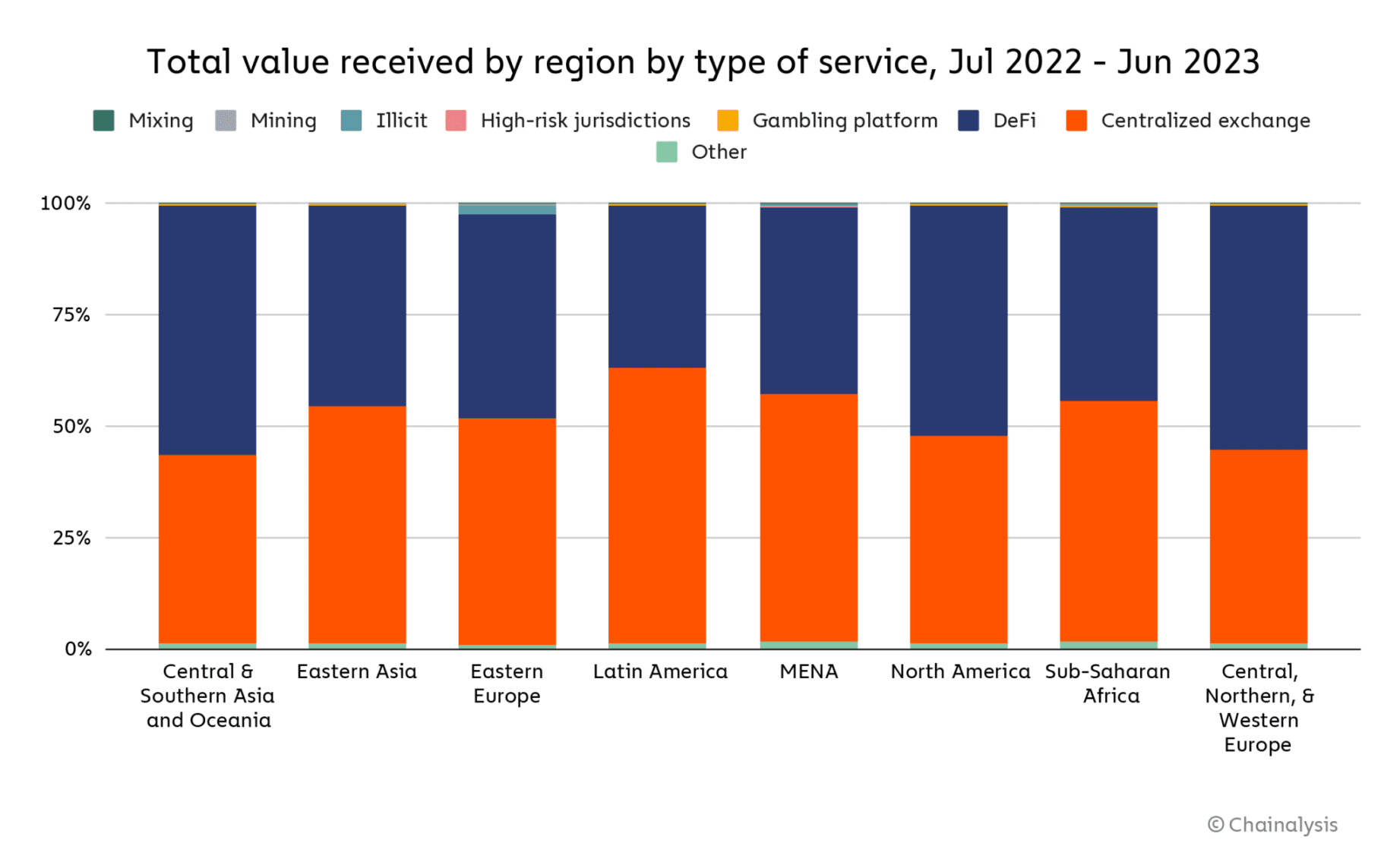
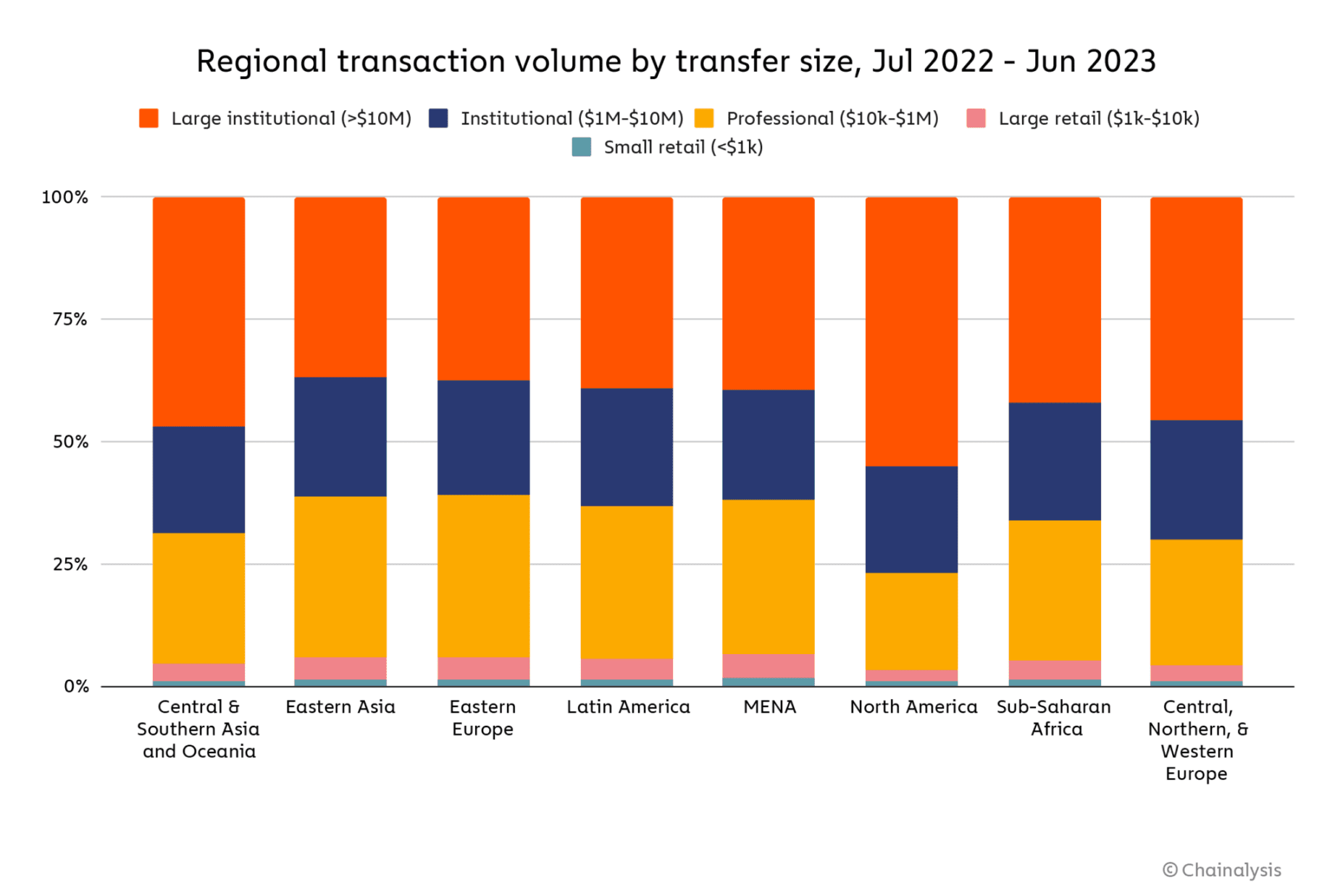
However, we see significant differences between different countries in the region. See the heat map below, which compares activity in some of the top crypto economies in the MENA region by platform type over the last year.
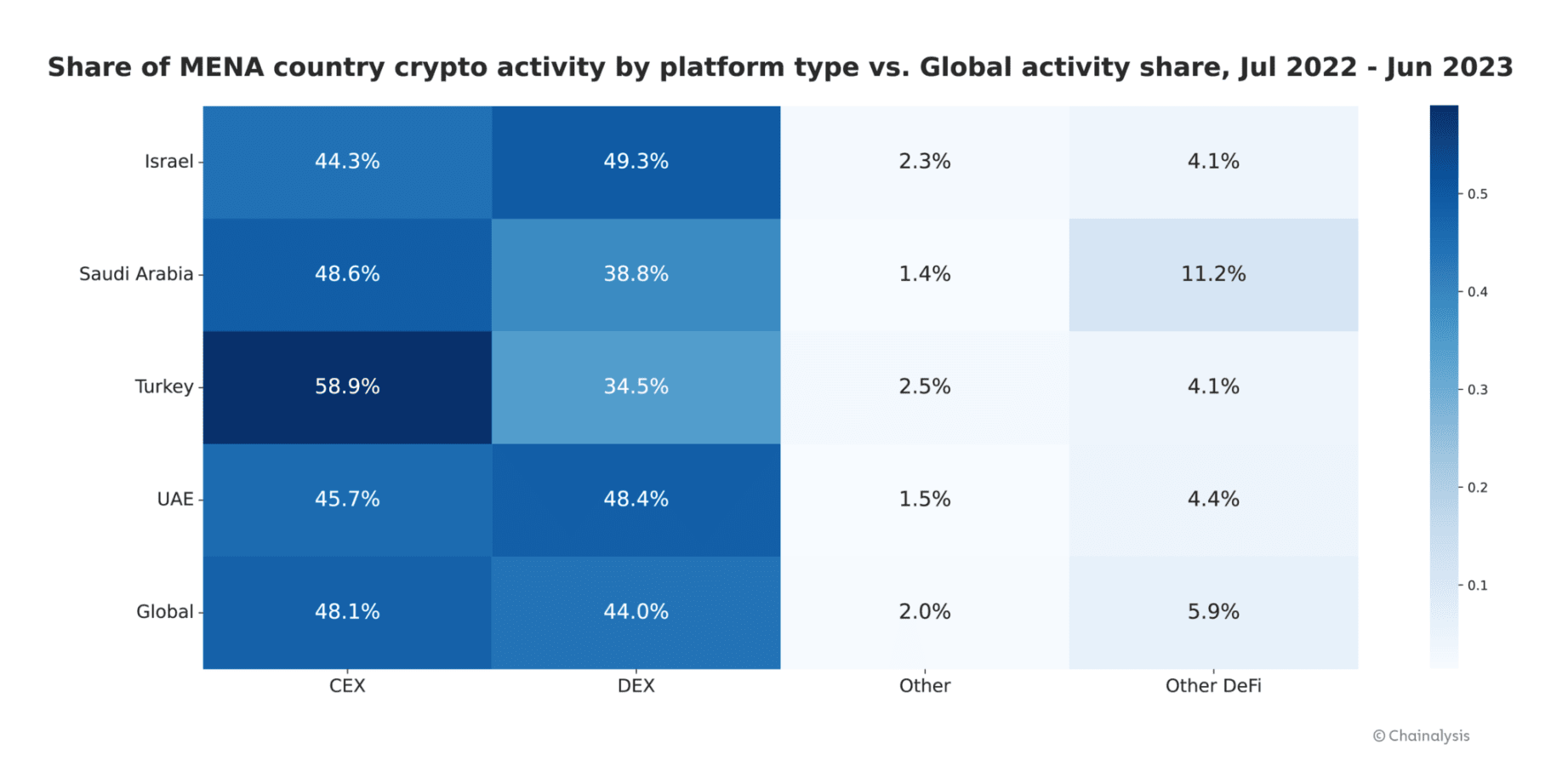
The most prominent one is the UAE. Compared to its regional neighbors, with the exception of Israel, the UAE has a much higher percentage of cryptocurrency activity conducted on DeFi. One reason for this could be that the UAE has turned itself into a world cryptocurrency hub by adopting a regulatory framework that favors innovation, allowing groundbreaking crypto platforms to better develop. These regulatory frameworks have attracted many cryptocurrency entrepreneurs and enthusiasts to the region, which could be why DeFi has seen more adoption there.
On the other hand, cryptocurrency activity in Turkey is more concentrated on centralized exchanges, as its users appear to be more focused on acquiring cryptocurrencies to combat currency devaluation. We’ll explore these trends and more below.
United Arab Emirates (UAE): How forward-thinking regulators are shaping a global crypto hub
The UAE is attracting top financiers, young tech entrepreneurs and innovative companies from around the world due to its unique innovation-friendly regulatory policies. The UAE is also a leader in adopting advanced technologies to help improve business efficiency and improve the quality of life for citizens, and this is also true for blockchain technology.
UAE regulators have been paying attention to cryptocurrencies for a long time, with Dubai, the country's most populous city, first launching a blockchain strategy in 2016. Since then, UAE regulators have been at the forefront of the industry. In 2018, Abu Dhabi established the world's first cryptocurrency regulatory framework, with the goal of establishing a forward-looking cryptocurrency regulatory framework that protects consumers while promoting innovation and ensuring that the UAE leads the cryptocurrency space. Dubai established its own Virtual Asset Regulatory Authority (VARA) in 2022, dedicated to similar goals. Earlier this year, the UAE passed further crypto regulations at the federal government level, and local regulators such as VARA have the flexibility to regulate and maintain economic free zones to attract cryptocurrency innovation.
We spoke to Akos Erzse to learn more about how regulators like VARA foster a vibrant environment for crypto businesses to operate in the UAE. Erzse is the senior manager of public policy at BitOasis, a Dubai-based cryptocurrency exchange. He praised VARA’s comprehensive regulatory framework, which was released in February 2023, saying, “VARA has brought a new impetus to forward-looking regulatory clarity in the region, attracting a large number of crypto players to the UAE.” He said that what distinguishes the VARA framework from others around the world is the specificity with which it treats different types of virtual asset services and activities. “There are different rules for staking, for brokers, for advisory services, for custodians — this makes it easier for businesses to understand the specific regulatory requirements for providing certain services.” VARA is committed to ensuring that the rules meet the needs of the industry, and Erzse cited a recent amendment to VARA as an example, which now allows custodians to stake custodial assets. “This responsiveness allows us and businesses like us to innovate quickly.”
Erzse said the UAE’s unique and dynamically evolving framework is particularly important at a time when regulatory momentum is building in other parts of the world. “There is an ongoing regulatory race between markets seeking to establish themselves as cryptocurrency hubs, while smaller markets are also developing rapidly.” The UAE’s regulatory approach allows it to attract global businesses and cryptocurrency entrepreneurs, as well as high net worth individuals who want to invest in cryptocurrencies through a regulated platform.
When asked about the future of cryptocurrencies in the UAE, Erzse expressed excitement about innovative business models such as asset tokenization. TOKO is a crypto platform focused on tokenization that recently received a license from VARA to provide such services in the UAE.
He also pointed out that remittances are an important use case for cryptocurrencies in the UAE and the wider region. "We are a remittance hub and people are certainly already using cryptocurrencies to send money home, but it will be exciting to see some dedicated products emerge within the existing regulatory framework." The fact that India, the Philippines, and Pakistan all feature in the top ten of our adoption index also bodes well for the UAE. These countries make up a large portion of the UAE's expatriate population, and the surge in cryptocurrency popularity in these countries could also be linked to the increased adoption of cryptocurrencies in the UAE.
Rising Inflation in Türkiye Boosts Crypto Adoption
In addition to ranking 12th in our Global Crypto Adoption Index, Turkey also ranks fourth in the world for cryptocurrency transaction volume (accepting approximately $170 billion in transfers last year), behind only the United States, India, and the United Kingdom.
Yasin Oral, CEO and founder of Turkish cryptocurrency exchange Paribu, noted that Turkey’s relatively high cryptocurrency adoption rate is not surprising for several reasons, such as the country’s recent macroeconomic environment and young people’s interest in innovation and technology. He explained: “The world has had a difficult year due to tight monetary policies, and Turkey has also been affected. In such a situation, individuals tend to seek alternatives such as cryptocurrencies to store value and diversify their portfolios. Related to this behavior, as each market cycle attracts new investors and adopters, more individuals and entities understand the benefits of blockchain, which ultimately leads to an increase in the level of cryptocurrency adoption.”
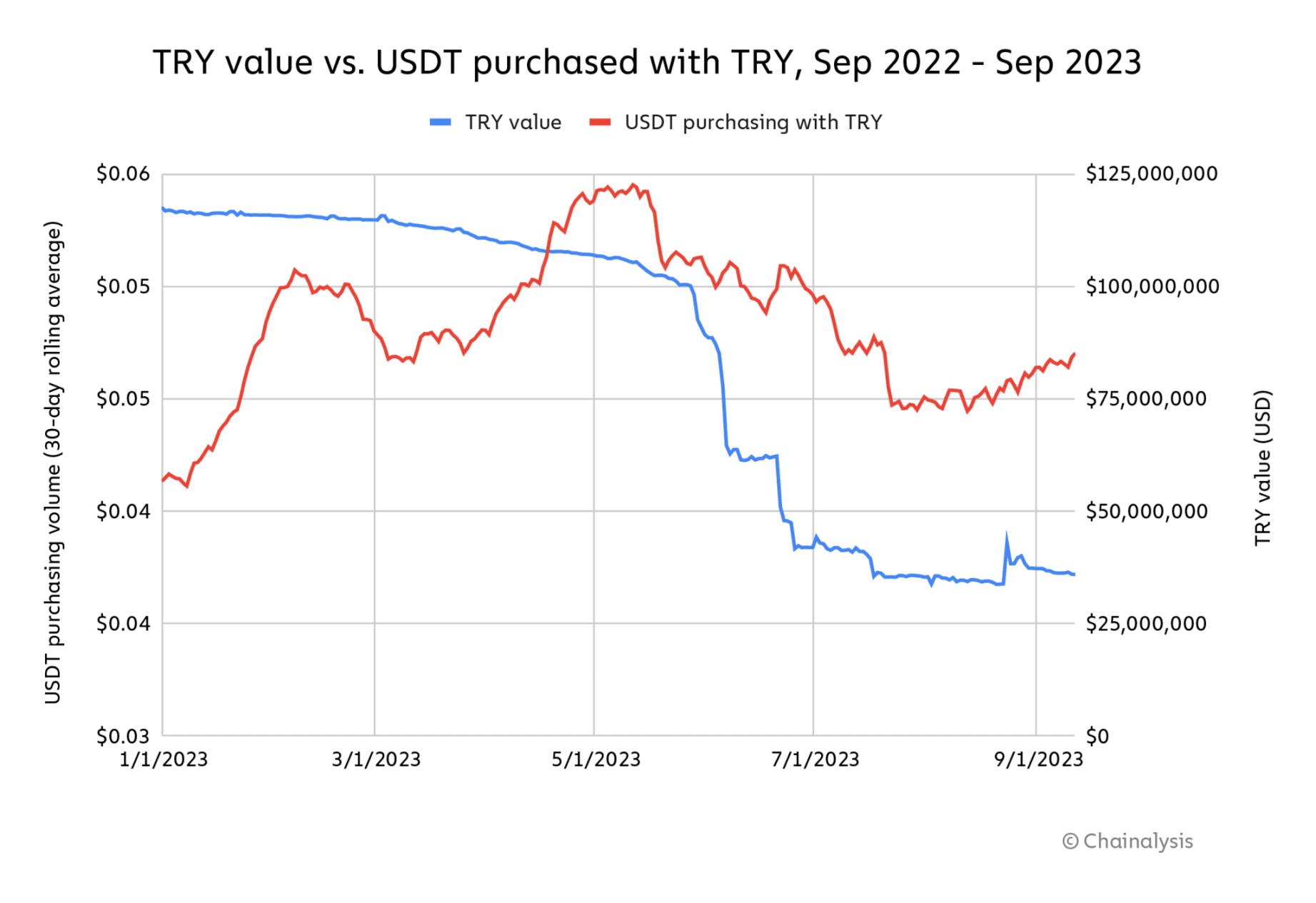
Indeed, Turkey has been facing rising inflation, with inflation approaching 60% in August 2023. Additionally, the Turkish lira plummeted in 2021 after the Turkish central bank cut interest rates by 100 basis points. The lira has not recovered since then — in fact, it hit a record low in mid-2023. We can see evidence of the depreciation of the Turkish currency driving interest in cryptocurrencies in the chart below. There was a big buying spike starting around March 30. Analysts said that the lira would fall sharply in value regardless of who won the country's May elections, and the currency was already weak at this time. After a sustained decline, USDT purchases picked up again in late July shortly after the lira hit a new low of $0.04 and people waited for the central bank's interest rate announcement. Keep in mind that we are using the 30-day average of the lira purchase data for UDST as the data, which is a bit slow to show the trend.
 Source: CryptoCompare and ExchangeRate-API
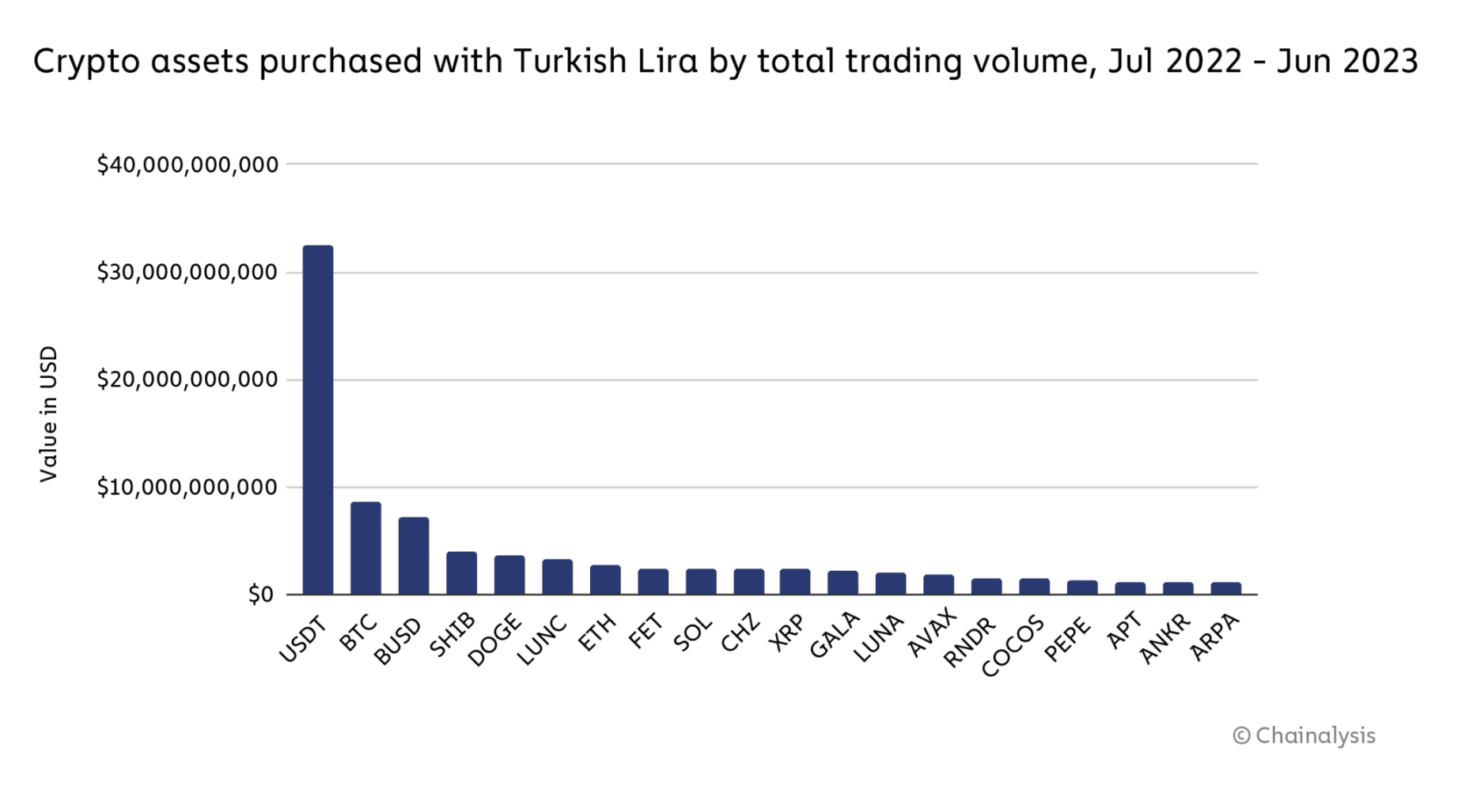
Overall, we also found that USDT is the most purchased crypto asset with Lira across global exchanges.
 Source: CryptoCompare
However, not all of Turkey’s cryptocurrency activity is focused on stablecoins. A broader analysis shows that despite an overall decline in NFT activity since mid-2022, Turkey is the country with the highest web traffic for NFT platforms in the Middle East and North Africa.
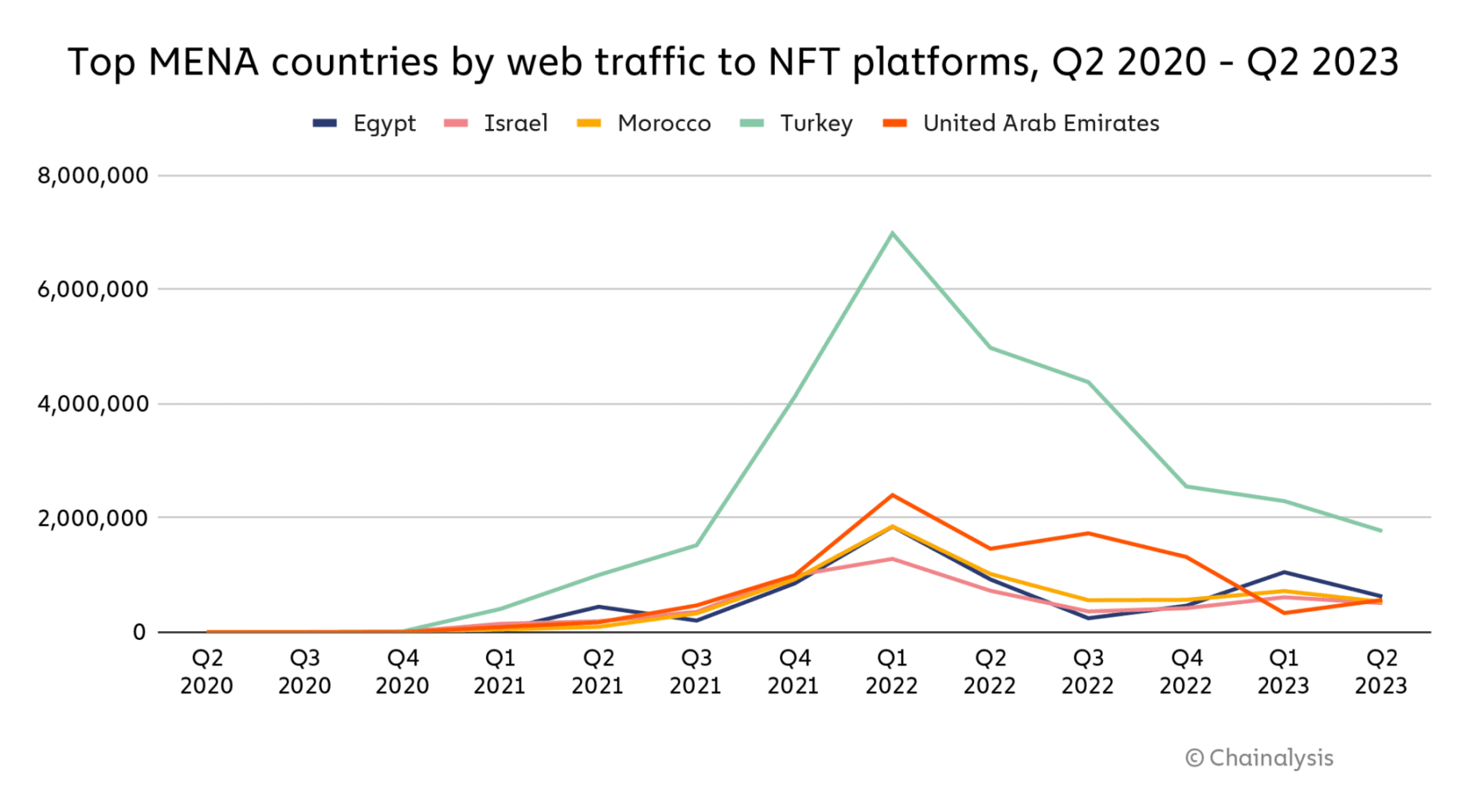
Artists like Refik Anadol, a Turkish-American entrepreneur who was one of the first to use AI to create immersive artworks, helped pioneer the NFT craze in Turkey. During this period, local crypto platforms such as Paribu attracted and supported NFT activity. The recent market turmoil may have caused NFTs to decline in popularity, but Oral believes that NFTs will play an important role in the future. "We believe that NFTs and utility tokens will be critical in defining innovative solutions in many industries such as retail, entertainment and art. Turkey will indeed become an important center for the next wave of blockchain solutions, and NFT technology will be a key component of this."
Saudi Arabia leads the world in year-on-year growth in cryptocurrency transactions
No country saw more crypto economic growth last year than Saudi Arabia, which saw a 12.0% year-over-year increase in trading volume. In fact, Saudi Arabia was one of only six countries to see year-over-year growth in trading volume during our study period.
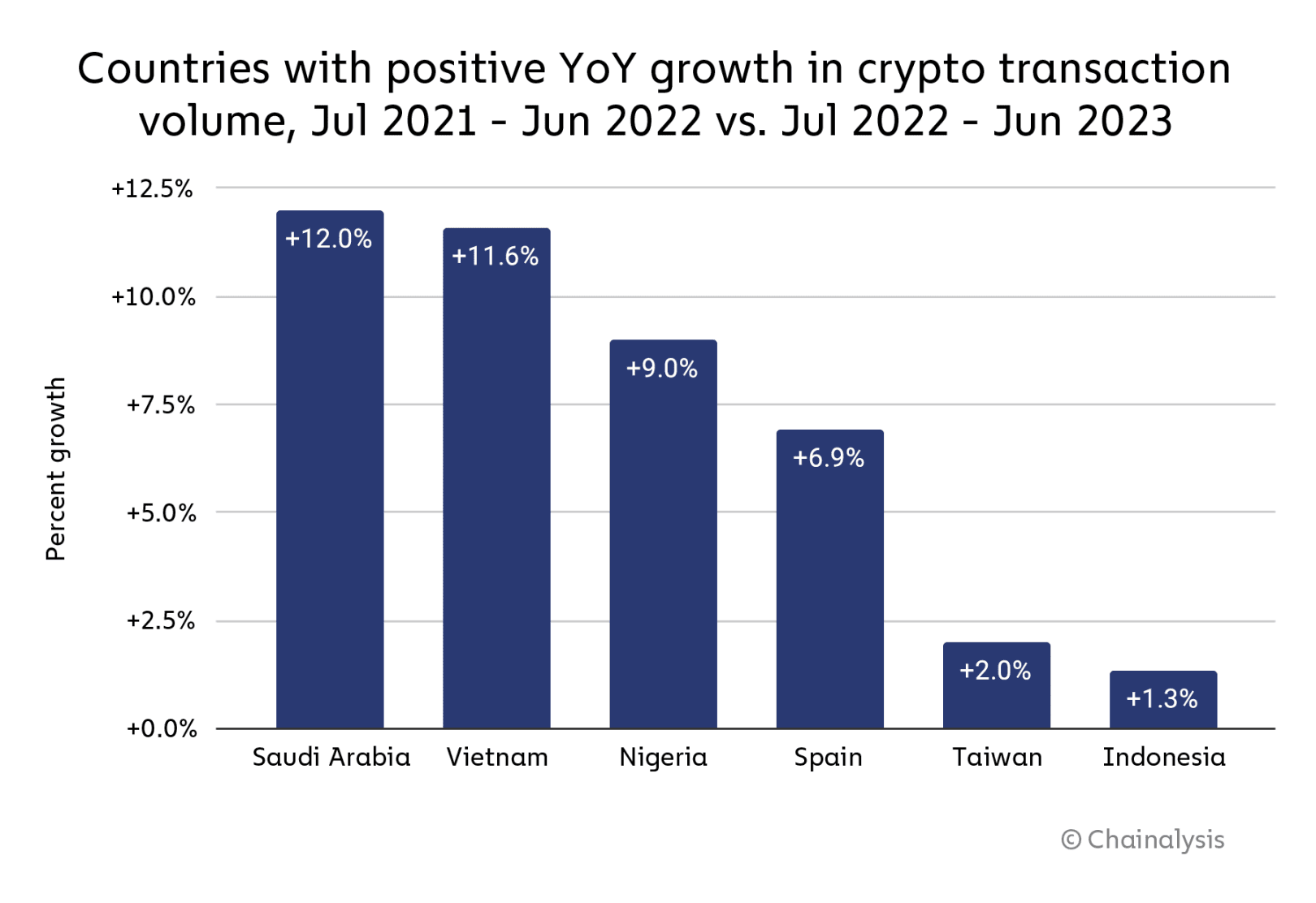
Abdulmajed Alhamzah, general manager of Saudi Arabian cryptocurrency exchange Rain, described the reasons why cryptocurrencies are attractive to Saudi users. “Retail investors tend to be the largest group turning to cryptocurrencies in search of portfolio diversification. Many already have investments in real estate, stocks, and other assets, and they are keen to invest in cryptocurrencies. They recall the transformative impact of the internet, are eager to get in on cryptocurrencies early, and anticipate significant growth in the coming years.” He also noted the increase in cryptocurrency adoption and institutional interest in the region, which makes up a large portion of Rain’s institutional clients in the region. “Many of the businesses we work with see the long-term value in cryptocurrencies. Cryptocurrencies are viewed as an asset class in their clients’ diversified portfolios.”
These positive use cases, along with the overall growth of the cryptocurrency market, may be driving the Saudi Arabian government’s interest in cryptocurrencies. In 2018, the Saudi government stated that using Bitcoin was illegal and warned about the potential risks of trading in other cryptocurrencies. But the country’s crypto market is still growing, and in September 2022, the Saudi Central Bank hired tech entrepreneur Mohsen Al Zahrani as the so-called “Crypto Sheikh” to lead the digital transformation of the central banking system. In addition, Saudi Arabia has expressed interest in diversifying its economy by fostering Web3 and blockchain gaming projects. One of the projects is a partnership with The Sandbox to explore the virtual universe. Abdulmajed sees a positive outlook, saying, “Regulators in the region are working to provide a strong regulatory framework to drive innovation in the field and, more importantly, protect user funds and protect users from potential scams.”
Future growth potential in the Middle East and North Africa region
Overall, our data and interviews with cryptocurrency companies in the Middle East and North Africa suggest that the region is embracing cryptocurrencies for a variety of reasons. In unstable countries with currency inflation, cryptocurrencies can help preserve wealth, while users in more economically stable countries such as the UAE may be more inclined to explore more cutting-edge, investment-focused use cases. The UAE also provides a valuable example of how innovative regulation and rules can enable countries to create cryptocurrency hubs that boost local economies.