
US case: regulators cannot agree
In the United States, there are two regulators that are responsible for creating the legal framework for cryptocurrencies: the Commodity Futures Trading Commission (CFTC) and the Securities and Exchange Commission (SEC). Everyone has their own answer to the question about the status of digital assets. When estimating commissions, they look at many factors, including the algorithms of the coins. Recall that there are two main algorithms:
🧑🏭Proof-of-Work (PoW) or “proof of work”. Miners are responsible for emission - they connect their equipment to the cryptocurrency network to process tasks. The reward for the miners’ work is new coins. The more equipment, the higher the profit will be. This is how Bitcoin, Litecoin and Dogecoin work.
🍕Proof-of-Stake (PoS) or “proof of share”. In PoS systems, users with the largest amount of coins earn the most. Proof-of-Stake is more environmentally friendly than PoW because it does not require a large amount of computing power. PoS is powered by Ethereum, Cardano and Solana.
Now, an important note: neither the CFTC nor the SEC has issued full-fledged instructions on determining the status of cryptocurrencies, but patterns can be found in the statements of regulators. Probably, someday each will present a single official document, but for now we are focusing on information from numerous lawsuits against crypto projects.
🏷 At the CFTC, cryptocurrency is considered a commodity. At least, the regulator classified Bitcoin, Litecoin and Ethereum into this category. The first two work on PoW, and ETH works on PoS. It is likely that the CFTC may classify other cryptocurrencies based on these algorithms as commodities.
The regulator proposes to apply to cryptocurrency the tax regime developed for goods, and to regard the actions of issuers as producers of goods. There are no rules in the United States that would oblige issuers to register tokens as goods.
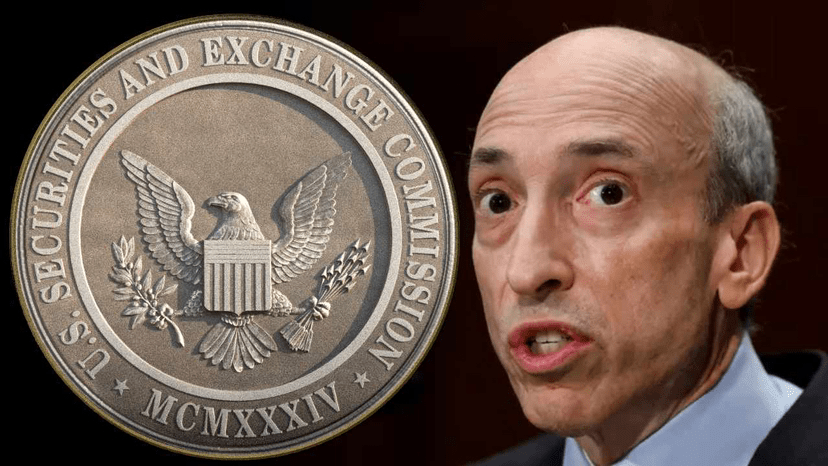
📃 The SEC believes that all cryptocurrencies except Bitcoin are securities. This means that the same rules must be applied to them as are prescribed for securities: register with the regulator and pay taxes according to a special scheme.
Recognizing a cryptocurrency as an unregistered security automatically makes it an illegal asset, transactions with which may be punishable. Here are a couple of examples:
In December 2020, the regulator brought charges against the Californian crypto project Ripple.
On December 21, 2022, the SEC charged Thor Technologies, its CEO David Chin, and former CTO Matthew Moravec with an unregistered securities offering in the form of THOR tokens.
On February 13, 2023, Binance USD (BUSD) issuer Paxos faced accusations from American regulators of illegal distribution of securities. Paxos eventually discontinued BUSD.
On March 22, 2023, the SEC announced that the cryptocurrencies Tronix (TRX) and BitTorrent (BTT) fall under the category of “securities.”
On May 17, 2023, it became known that the SEC considers the Filecoin cryptocurrency to be a security. The Commission’s assessment was reported by Grayscale, which previously planned to launch an investment trust based on the coin.
At the time of writing, the parties had not reached an agreement on any of the cases mentioned.

Logic SEC
When assessing the status of cryptocurrencies, the SEC appeals to the Howey test. It consists of four questions:
Are we talking about investing money?
Does the investor invest money in an asset with the expectation of profit?
Are we talking about investments in a common enterprise?
Is the profit the investor expects related to the activities of others?
Four positive responses give the SEC grounds to consider the asset a security.
The SEC's belief that Bitcoin is not a security, but a commodity, is based on the fact that it does not have a public project founder, but operates on Proof-of-Work. Bitcoin has no common entity to invest in, no legally certified registration, and no single issuer.
Most other crypto projects have legal founders, official representatives, registration and other bureaucratic details that make their coins securities according to SEC logic.
Who's right: CFTC or SEC?
The SEC's specialization makes it more important in matters of regulation of the digital asset market, if it is assumed that cryptocurrency is a security. The regulator sees signs of a security in the new financial instrument, and therefore believes that cryptocurrency falls within its legislative field 🤷
There is no arbitration body that could resolve a dispute between two American regulators, so each agency works in accordance with its own vision of the situation. The SEC mainly prosecutes companies for illegally issuing securities in the form of tokens. The SEC is also suing crypto exchanges for violating securities laws. In June 2023, the Commission targeted two of the largest trading platforms: Coinbase and Binance.
Members of the crypto community strongly disagree with assessing the status of coins using the Howey test, which was invented in 1946 🤯. And the SEC is confident that they have enough tools to control the crypto market. This position means that the Commission does not want to develop new tools for working with cryptocurrency.

What should companies and users do?
At the time of writing, the SEC has recognized 67 cryptocurrencies as securities, including Binance (BNB), Binance USD (BUSD), Solana (SOL), Cardano (ADA), Polygon (MATIC), Cosmos (ATOM), Axie Infinity (AXIE). The teams of these projects will have to prove that the Commission incorrectly assessed the status of their coins, or be punished. It is possible that the proceedings will drag on for many years, as happened with Ripple.
A change of jurisdiction is unlikely to help, since regulators are pursuing projects for crimes already committed in the United States.
An alternative option is for companies to simply pay a fine to the regulator (if it agrees to such a settlement of the conflict). This is what the Kraken crypto exchange did, paying $30 million. The Commission’s claims against the crypto exchange were also related to violations of the securities law.
😢 The bad news is that coins that have not yet come under the Commission’s radar risk joining the list. Apart from Bitcoin, there are no other cryptocurrencies on the market that are officially recognized as a commodity by the SEC.
🙂 The good news is that users have not yet encountered claims for using illegal assets, so regulatory proceedings do not affect them in any way.

So can cryptocurrency be considered a security?
The answer will vary from country to country and whether there is a classification of cryptocurrencies based on economic status. In some jurisdictions, regulatory authorities are still unable to agree on the status of a financial asset, and this is exactly what happened in the United States.
The problem is that once the SEC recognizes any cryptocurrency as an unregistered security, it automatically becomes an illegal asset, for which transactions can be punished.
🤔 Do you think cryptocurrency can be called a security?

