


DePIN Panorama: Exploring the Current Situation and Eight Emerging Projects
We’ve already seen DeFi Summer, NFT craze, and Metaverse mania take hold, so will the next big wave turn to DePIN?
Between 2020 and 2021, DeFi’s market capitalization surged nearly 100 times, jumping from $1.75 billion to $172.2 billion. If in the current bull market, DeFi market value increases 10 times, and DePIN reaches 50% of DeFi market value, then DePIN’s total market value is expected to exceed US$500 billion, and there is still room for at least 20 times growth. Messari estimates that DePIN’s market value will reach $3.5 trillion by 2028, indicating DePIN’s potential growth of 120 times.
Next, we will take stock of eight popular DePIN projects that have been newly launched, have not yet issued coins, or have just raised funds since 2024, revealing the future trends of this emerging field.
Depin current situation
DePIN stands for Decentralized Physical Infrastructure Network. It encourages users to share personal resources through token incentives to build infrastructure networks, including storage space, communication traffic, cloud computing, energy and other fields. To put it simply, DePIN uses a form of crowdsourcing to distribute the infrastructure originally provided by centralized companies to many users around the world.
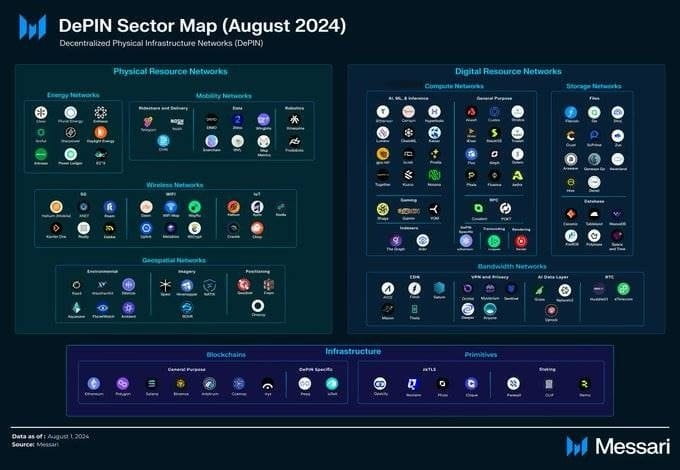
The DePIN ecosystem can be broken down into six main categories: computing, wireless, energy, artificial intelligence, services, and sensors. Within these core areas, several new narratives have emerged recently, such as the rise of decentralized gaming infrastructure (DeGIN) in computing networks, the application of AI data layers in bandwidth networks, and robotics in mobile Breakthroughs in the Internet and the demand for mobile networks in the manufacturing industry.
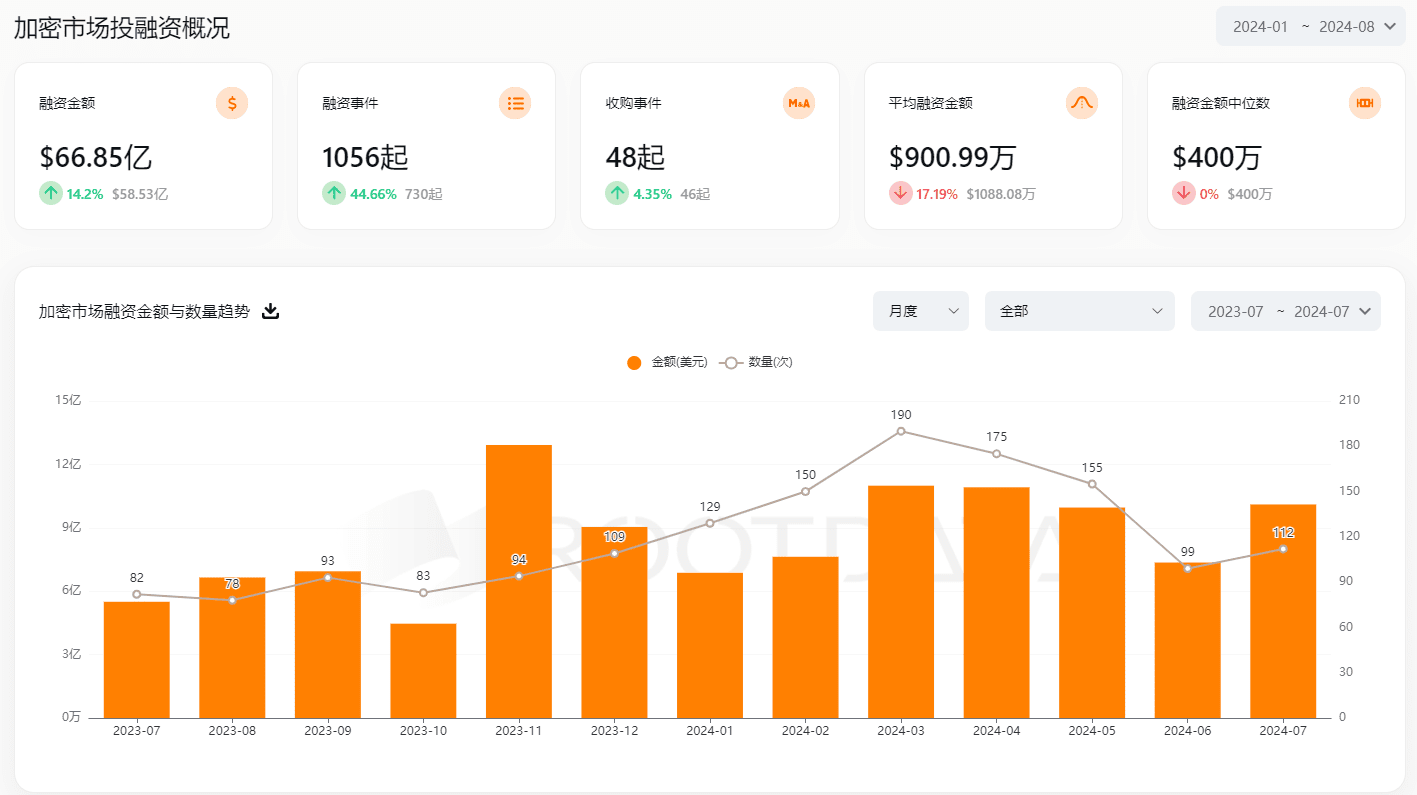
This year has seen a significant resurgence in venture capital funding for crypto projects. Global investment totaled $6.7 billion as of August 2024, according to Rootdata. In recent months, the rise of the DePIN network is demonstrating market fit similar to the early stages of the "sharing economy". These projects cover multiple areas of DePIN, each demonstrating unique application scenarios.
Investment highlights worth noting include io.net, a distributed GPU project based on Solana, which successfully raised US$20 million in its Series A financing and the token valuation reached US$1 billion; another eye-catching project is Aethir , a decentralized GPU computing node provider, raised $65 million in the first hour of its node sales. These achievements signal that the DePIN field is rapidly maturing, attracting huge investments and generating widespread attention.
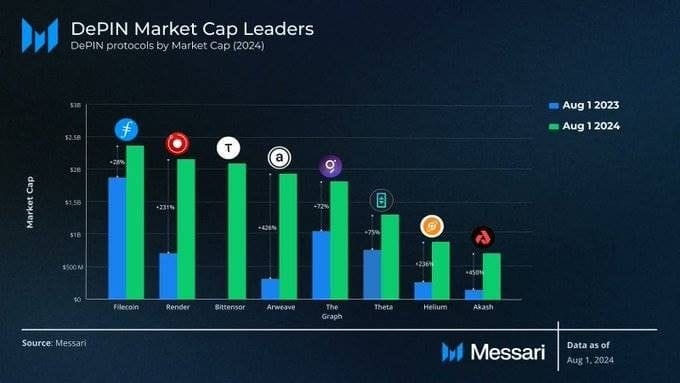 DePIN Market Capitalization at a Glance Messari
According to Messari data, the current total market value of DePIN projects has exceeded $20 billion. Among them, Filecoin leads the DePIN project, with a market value of US$2.4 billion, firmly ranking first. Following closely behind is Render Network, which ranks second with a market capitalization of $2.2 billion. Opentensor follows in third place with a market capitalization of $2.1 billion.
Of the top eight DePIN protocols ranked by market capitalization, seven belong to the DRN (Decentralized Resource Network), with the total market capitalization of these protocols reaching $12.2 billion. Helium is the only physical resource network (PRN) among the top eight, ranking seventh with a market capitalization of US$870 million. These data highlight the rapid growth and diverse investment opportunities in the DePIN space.
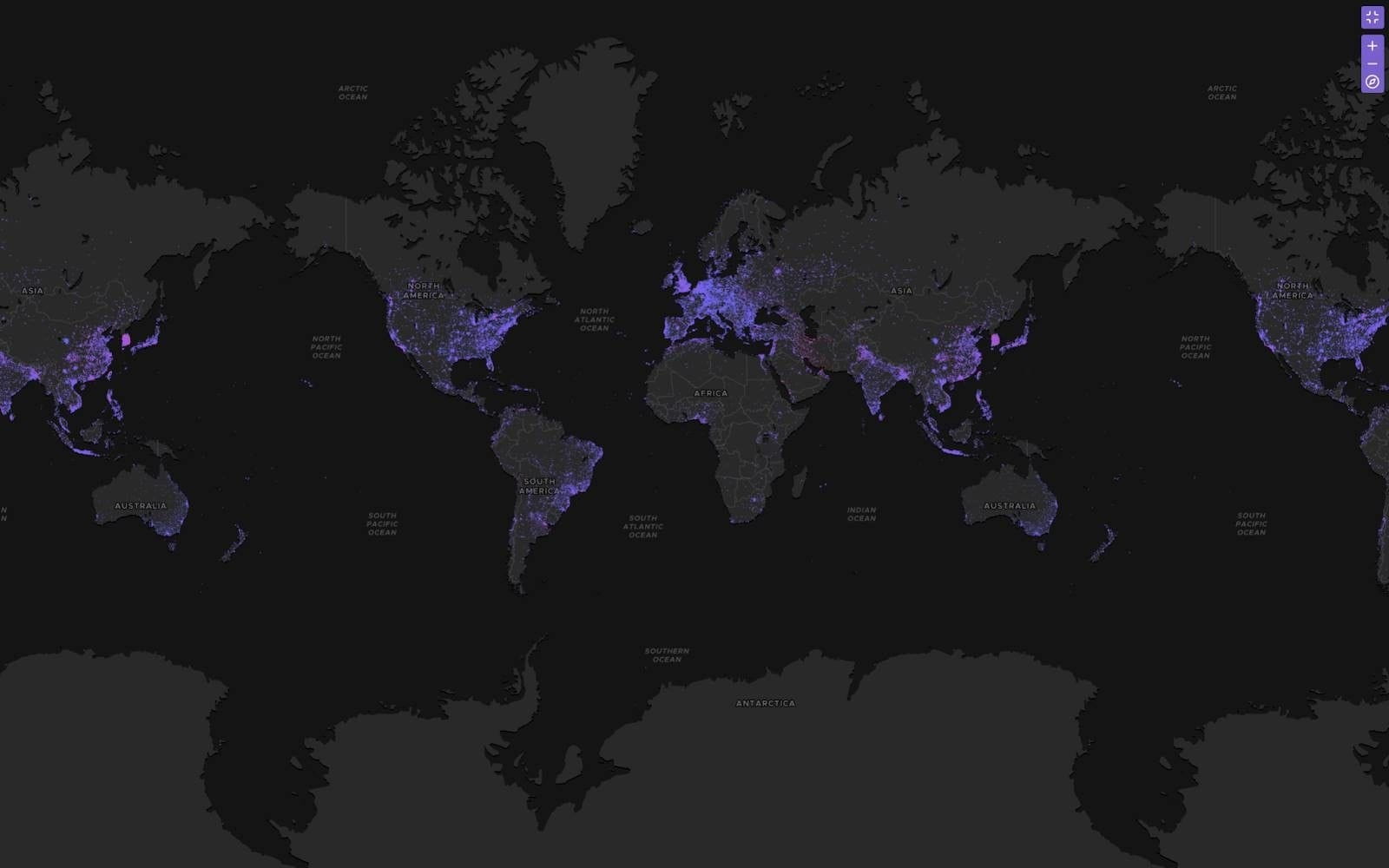 DePIN global node distribution DePINScan
At present, the total number of Depin devices is as high as 18 million, with nodes located in 195 countries and regions around the world, mainly concentrated in North America, East Asia, Southeast Asia, Europe, Africa and other places.
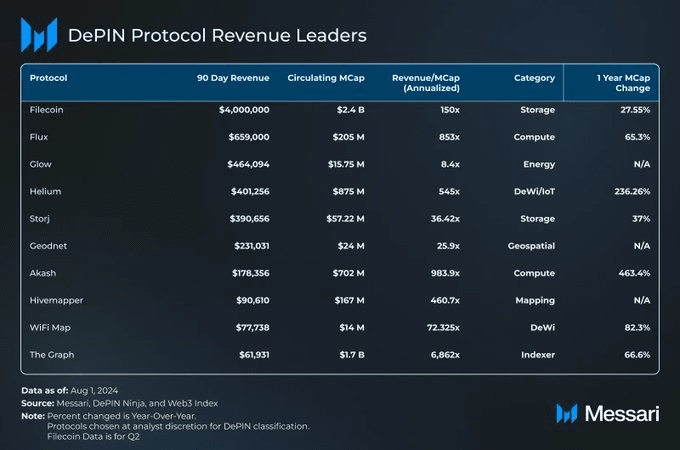 DePIN Revenue at a Glance Messari
While the market capitalization of the DePIN project continues to rise, its revenue growth has not kept pace. Currently, only the four largest DePIN protocols hold a place in the top eight ranked by revenue.
While the valuations of these projects remain very high, with FDV (future fully diluted market value) to revenue ratios as high as 3,000x, capital inflows remain strong and investors are hopeful for stronger product-market fit. The entire ecosystem has expanded to over 2,500 projects and has over 600,000 active nodes.
These data reflect the contradiction between market recognition and actual revenue in the DePIN field, while also revealing its potential and challenges for future growth.
Today, Mars Finance will take stock of eight popular projects newly launched since 2024, revealing how these cutting-edge technologies play a key role in the DePIN ecosystem. Through this inventory, you will have the opportunity to discover potential wealth codes and seize investment opportunities.
Eight popular projects
IoTeX
IoTeX is a Layer 1 blockchain compatible with the Ethereum Virtual Machine (EVM). It is committed to providing a safe and reliable environment in human-computer interaction and aims to support the Internet of Trusted Things.
By building a trustworthy IoT platform, IoTeX not only provides a decentralized network for various decentralized applications (such as Cyclone and Mimo), smart devices (such as UCam and Pebble), services (such as ioay and ioTube), and digital assets. Powered by the road, it also brings higher value and richer experience to end users.
IoTeX received another $50 million in funding in April 2024, following a total of $35 million in funding raised in 2018 and 2022. The round saw participation from top investors including Borderless Capital, Amber Group, Foresight Ventures, FutureMoney Group, SNZ, Metrics Ventures, EV3 and Waterdrip Capital.
The IoTeX team said the investment will be used primarily to drive DePIN development and ecosystem adoption through long-term staking of IOTX, IoTeX’s core token. In addition, the funds will be used together with the IoTeX Foundation and the DePINsurf Accelerator Fund to further invest in DePIN projects based on IoTeX to promote the implementation of more innovations and applications.
Currently, IoTeX has released a new version of the IoTeX 2.0 white paper. The new white paper details the platform’s composable modules, unified trust layer, and new token economics.
The plan aims to connect 100 million devices over the next 3 to 5 years and unlock trillions of dollars in value. This strategy not only signals IoTeX’s ambition to push the technology frontier and market expansion, but also demonstrates its strong determination to achieve broad impact and long-term growth.
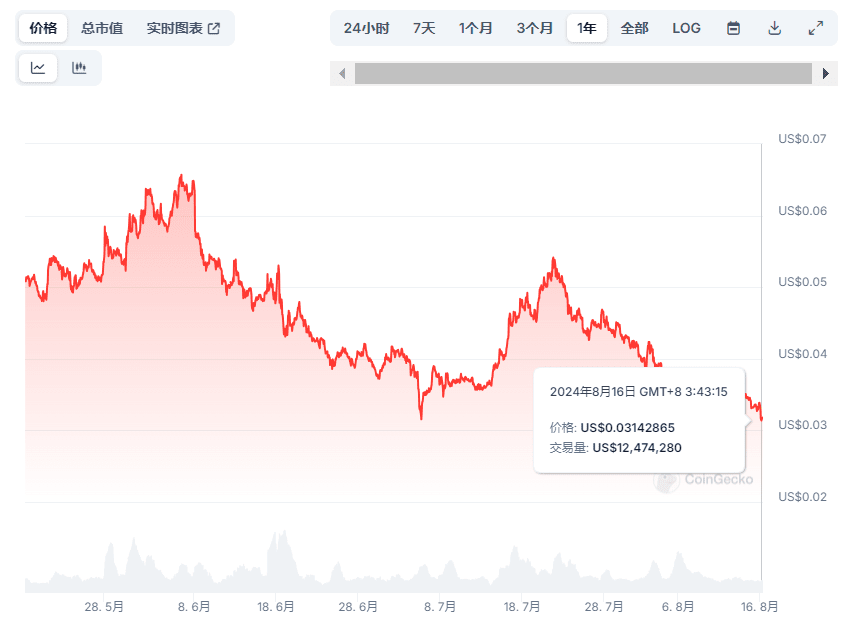
The core token of IoTeX, IOTX, is currently quoted at $0.03. In the past 7 days, the price has decreased by -9.10% and by -3.60% on the global cryptocurrency market. The OKX Web3 wallet has previously integrated IoTeX. Whether IOTX will be listed on OKX in the future and the trend of its tokens are worthy of attention!
io.net
io.net is a revolutionary decentralized computing network focused on developing, executing and scaling machine learning (ML) applications on the Solana blockchain.
It creates the world's largest GPU cluster by combining 1 million GPUs to deliver unprecedented processing power for compute-intensive tasks. io.net is unique in that it aggregates GPUs from underutilized resources, including independent data centers, crypto miners, and crypto projects like Filecoin and Render.
This form of integration forms a powerful computing platform in the Decentralized Physical Infrastructure Network (DePIN), giving engineers access to massive amounts of computing in an environment that is accessible, customizable, cost-effective, and easy to implement. ability.
In terms of financing, io.net successfully completed a US$10 million seed round last year, and this year it quickly obtained US$30 million in Series A financing. Its investment team has a luxurious lineup, providing strong financial support for the future development of the project.
At present, the architecture of io.net has begun to take shape, including core components such as IO network and IO engine. It aims to achieve efficient sharing of GPU resources in a decentralized manner and significantly improve resource utilization efficiency.
io.net executes the repurchase and destruction of $IO tokens according to a fixed set of preset procedures. The specific repurchase and destruction quantities depend on the $IO price at the time of execution.
The funds used to repurchase $IO come from the operating income of IOG (The Internet of GPUs - GPU Network). A 0.25% order booking fee is collected from the computing power buyers and computing power providers in IOG, and $ 2% handling fee for USDC hash power purchase. Increasing the scarcity of tokens by buying them back and burning them further increases the value of the tokens.
However, as an emerging project, io.net still faces some challenges in terms of technology implementation and market demand matching. Investors and followers need to pay close attention to its development trends.
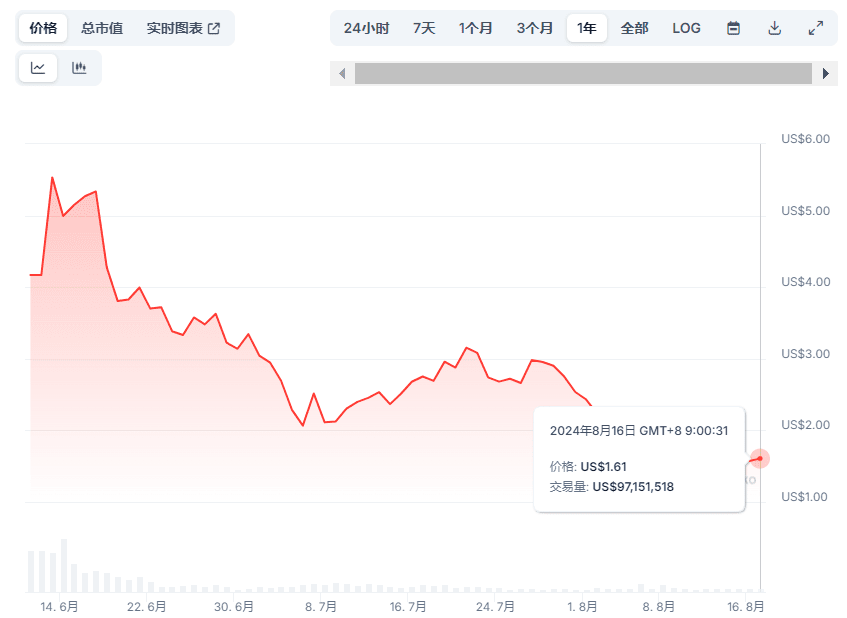
Not long ago, Bithumb, South Korea's second largest exchange, launched IO, which has been listed on many mainstream exchanges such as Binance. IO's current market value is US$150 million, FDV is US$1.28 billion, maximum supply is 8 billion, and current circulation rate is 11.88%.
They will go
Aethir is a decentralized real-time rendering network designed to bring content accessibility to the Metaverse to new levels.
By building a scalable decentralized cloud infrastructure (DCI), it enables companies, whether gaming or artificial intelligence, to deliver their products directly to global users, breaking geographical and hardware restrictions.
To date, Aethir's GPU networking and cloud services have generated over $36 million in annual revenue, which is converted into ATH tokens on a weekly basis, ensuring users have easy access to computing power. This revenue level not only surpasses most DePIN projects, but also demonstrates Aethir’s strong position in the market.
In the field of AI, Aethir’s cooperation with TensorOpera is particularly eye-catching. Leveraging Aethir's decentralized GPU infrastructure, TensorOpera successfully trained an AI model with 750 million parameters, demonstrating its power in high-performance computing.
To date, Aethir has successfully raised a total of $11.53 million in funding through its Initial DEX Offering (IDO) and other funding rounds. The public offering has raised $2.53 million, with Pre-Series A funding totaling $9 million, accounting for 78% of total funding. The financing values Aethir at up to $150 million.
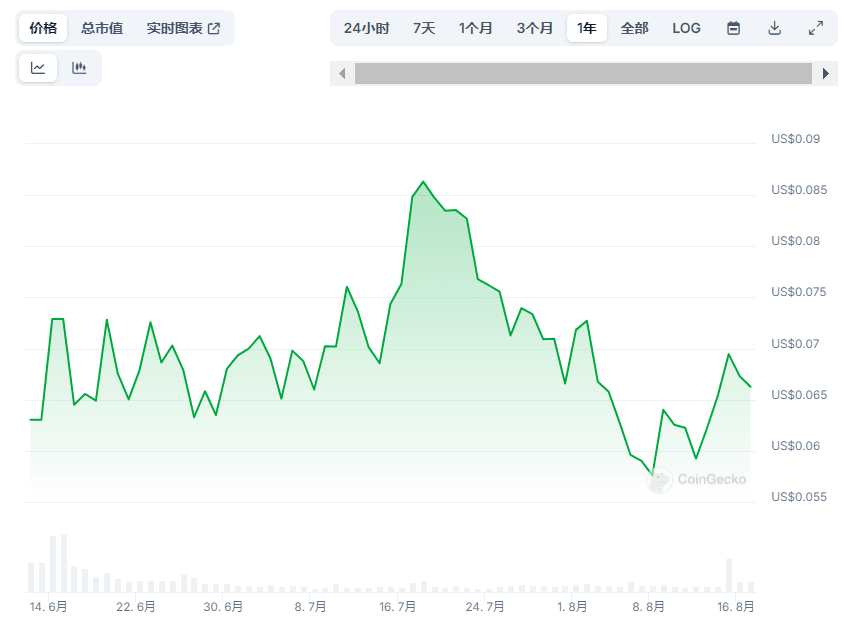
ATH's current market capitalization is US$260 million, FDV is US$2.7 billion, and its current circulation rate is 9.66%. The main trading markets are on mainstream exchanges such as OKX, Bybit, HTX, gate.io, and KuCoin, and it was recently listed on the two largest exchanges in South Korea.
Bitten Sensor
Bittensor is an open source protocol dedicated to supporting blockchain-based machine learning networks.
The protocol facilitates the collaborative training of machine learning models and rewards participants with TAO tokens based on the value of the information they contribute to the collective. Additionally, TAO tokens give users permission to extract information from the network and allow them to tailor their activities to their needs.
Bittensor's ultimate vision is to create a decentralized market platform for artificial intelligence. In this incentive-driven arena, consumers and producers can interact in a trustless, fully open and transparent environment.
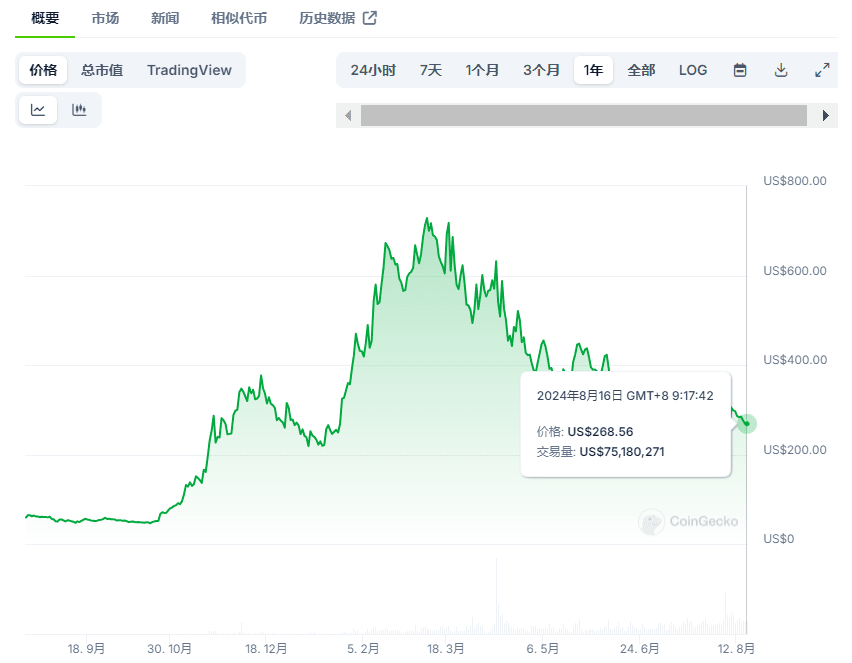
Since the end of last year, as the field of artificial intelligence has become hot, Bittensor has stood out. The price of its token TAO has soared rapidly from about US$80 in October last year. It once exceeded US$730 in March this year, and its market value once climbed to about US$4.7 billion. .
With its innovative narrative, Bittensor quickly emerged as a leader in the AI track, and once ranked among the top 30 crypto assets by market value. The Tao token price has now fallen back to $268.
However, Bittensor’s story is far from over. The ecosystem is just getting started. In 2024, as the first publicly sold AI project on CoinList, Masa announced that it will launch an LLM-based AI data subnet on Bittensor, becoming the first data subnet with tokens in the Bittensor ecosystem.
The launch of Masa marks the only new investment star in the pan-Bittensor ecosystem after TAO, an eye-catching "new currency".
DIMO Network
DIMO is a decentralized software and hardware Internet of Things (IoT) platform that allows users to create authenticated vehicle data streams to share privately with applications, which allows users to negotiate better services such as car financing and insurance .
Digital Infrastructure is building the DIMO Network, a decentralized car data protocol, and DIMO Mobile, an app that allows drivers to collect and view their own car data and collect rewards through DIMO tokens.
Alex Felix, managing partner and chief investment officer at CoinFund, will join Digital Infrastructure’s board of directors. The new funding round brings Digital Infrastructure’s total funding to $22 million.
$DIMO is an ERC-20 token on the Polygon and Ethereum blockchains with a token supply of 1,000,000,000.
$700 million in DIMO will first be allocated to the community-controlled DAO treasury. Teams and individuals who contribute to the network may receive $DIMO (and/or other cryptocurrencies accumulated in the vault) in the form of bounties or grants. However, the way most users earn tokens is through driver rewards.
The remaining $300,000,000 $DIMO has been allocated to the initial team (~224,000,000) and investment partners (~76,000,000). These allocations are locked for at least two years from the date of mainnet launch, with tokens unlocked monthly until fully unlocked three years later.
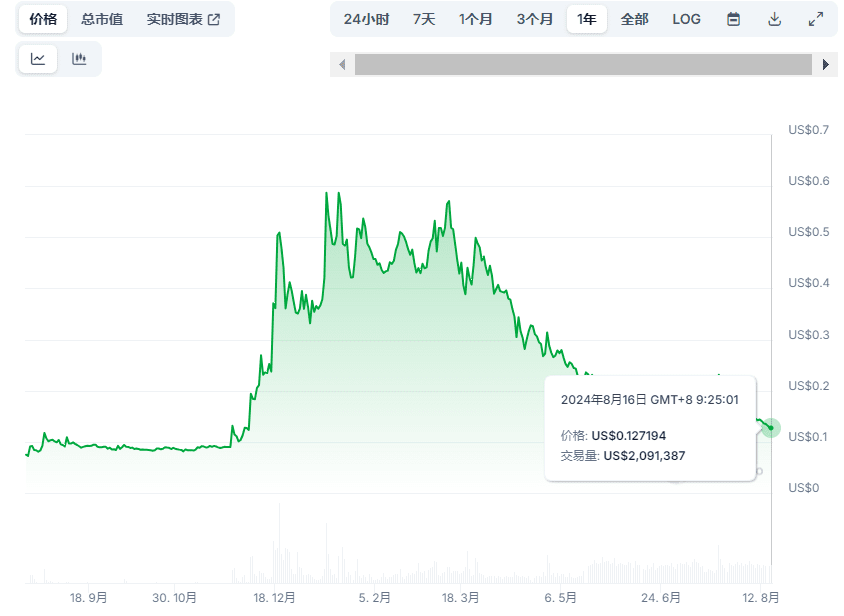
At present, the token DIMO has been listed on many exchanges such as Coinbase and Gate. The token price is $0.12 and the circulation rate is 24%.
Helium Mobile
Helium Mobile is a decentralized hotspot network from Helium that allows anyone to deploy a hotspot and instantly add dynamic coverage to the Helium mobile network.
Users can earn MOBILE rewards by expanding coverage and helping build networks.
Helium is launching a licensing program for its hotspot devices, according to its website. Helium Mobile's hotspots allow individuals or businesses to set up "mini cell towers" that transmit cell signals and pay tokens in exchange.
There are several third-party manufacturers and suppliers servicing the Helium Internet of Things (IoT) network, but Helium Mobile is currently the only provider offering equipment with cell phone coverage. Through the licensing program, Helium Mobile hopes to earn licensing fees from hotspots made elsewhere while growing its cellular network.
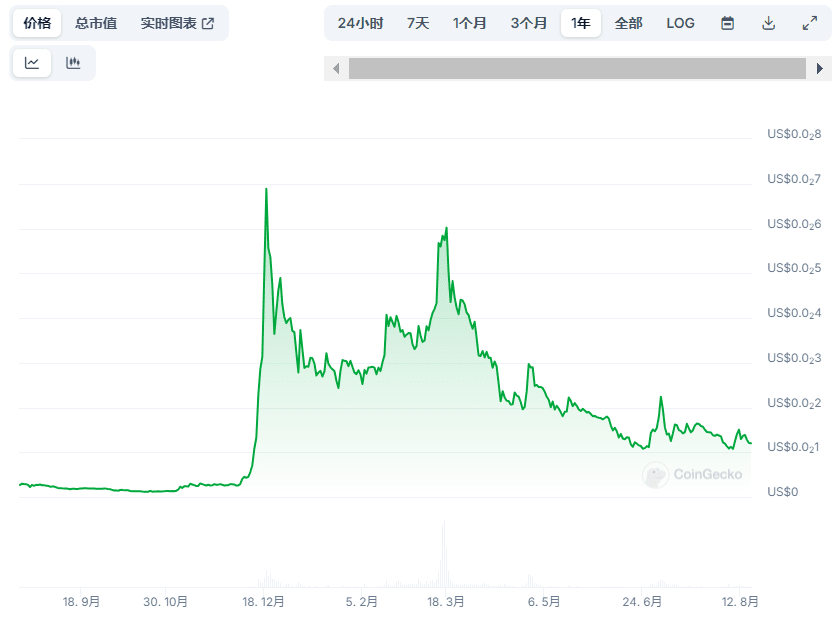
Its token Mobile experienced a crazy rise at the end of last year, rising more than 50 times at its peak. The current price is $0.001 and the circulation rate is 42%.
DAWN
Solana-based DePIN project Dawn recently raised $18 million in funding, led by Dragonfly with participation from CMT Digital, Castle Island Ventures, Wintermute Ventures, 6th Man Ventures and ParaFi. Solana also promoted it on X.
Andrena co-founder Neil Chatterjee said this round is an extension of the Series A round, structured as a Simple Agreement for Future Equity (SAFE) with token warrants. The round was "significantly oversubscribed," with an initial target of just $5 million, but it ultimately raised more funds in tranches earlier this year to allow it to successfully launch the token.
DAWN leverages the latest point-to-multipoint (PtMP) wireless technology, enabling nodes to efficiently communicate directly with multiple nodes. This allows for high-density distribution of bandwidth among many users in the network, turning each node into a micro-ISP.
Through protocols and hardware, it allows users to buy and sell network capacity in their surrounding areas, operate themselves as a network provider, and obtain revenue through DAWN nodes.
The current distribution of DAWN tokens: various network nodes (i.e., hardware facility participants) will receive 25% of the total tokens; third-party verifiers (i.e., software equipment participants) will receive 25% of the total tokens. 7%, the project treasury, team and investors occupy 20%, and the token unlocking time is unknown.
The project is still in its early stages, and you can get early point rewards by downloading a browser plug-in to act as a verification node.
Peaq network
Peaq is the Web3 network powering the Internet of Things (EoT) on Polkadot. peaq enables entrepreneurs and developers to build decentralized applications for vehicles, robots, and devices, while empowering users to manage and earn revenue as connected machines deliver goods and services.
DePIN Layer1 protocol Peaq completed a $20 million fundraising campaign via CoinList on May 17, attracting the participation of more than 14,500 community members, raising a total of more than $36 million and oversubscribing peaq’s token offering.
The event became CoinList’s largest fundraiser in more than two years with the highest amount of donations. The new funding will primarily be used to ensure peaq-based DePIN becomes an industry leader and accelerate the development of peaqosystems, while promoting various ecosystem and community initiatives.
Additionally, Peaq launched its native token PEAQ on CoinList from May 9 to May 16. However, users in the United States, Canada, China, South Korea and other regions cannot participate in this token issuance. At the same time, Peaq is actively preparing to launch the mainnet to further promote the development of its ecosystem.
Advantages of Depin
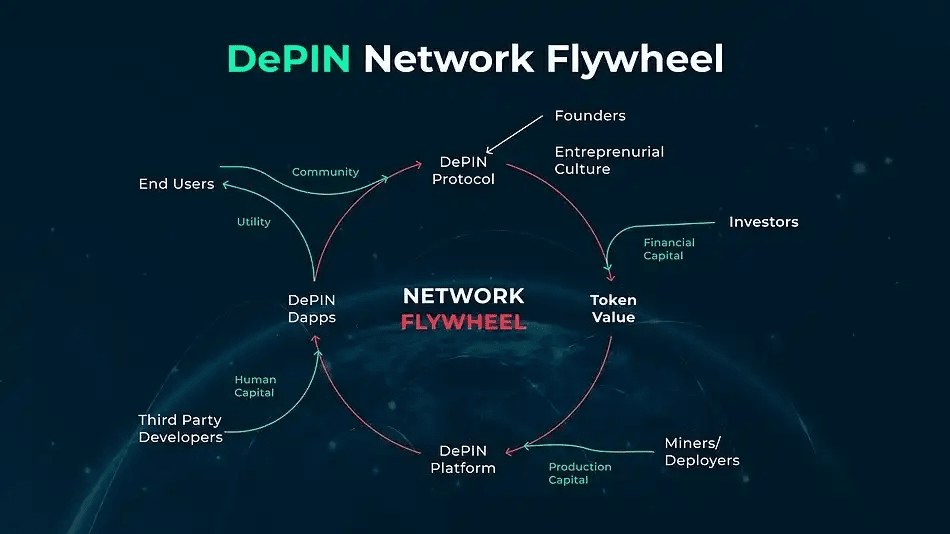 DePIN Online Growth Flywheel Coingecko
Among the eight projects we took stock of, some have already issued tokens, while others are still in the preparation stage. Each of these DePIN projects demonstrates several clear advantages over traditional centralized infrastructure providers.
First, DePIN leverages cryptographic incentives to provide a more efficient way to allocate capital for launching traditional infrastructure that is capital intensive and costly to maintain.
This mechanism not only optimizes the use of funds, but may also reduce costs to a level more acceptable to consumers. Through a decentralized approach, DePIN can mobilize resources more flexibly and reduce reliance on traditional funding models, thereby bringing more competitive services and products.
Second, the DePIN network creates a highly redundant system by distributing data and services across multiple nodes.
This distributed structure ensures that even if one node fails or has problems, the rest of the network can still run smoothly. This redundant design greatly improves the stability and reliability of the system, thereby reducing the risk of downtime and service interruption.
Finally, DePIN’s community-centric approach empowers local communities to manage their networks. This approach not only improves the management efficiency of the network, but also enables decisions on resource allocation and maintenance to be made at the grassroots level.
This means that infrastructure is viewed not just as a tool for economic profit, but as an asset that serves the overall interests of the community in the long term. The participation of local communities enhances the sense of ownership and responsibility for infrastructure while improving the efficiency of resource utilization.
Collectively, these features highlight DePIN’s huge potential to drive infrastructure innovation. Through more efficient capital utilization, enhanced system reliability and community-driven management, DePIN can not only improve the overall operational efficiency of the infrastructure, but also achieve a profound impact on the community, setting a new standard for future infrastructure development. standard.
Summarize
The rapid changes in Depin made me think of the changes in the sharing industry in the early years, from shared bicycles, shared medical care to shared mobile power supplies. The rapid influx of capital does not necessarily mean a good thing. In particular, DePIN’s capital investment is more focused on the maturity of the technology and the expansion of practical application scenarios.
Investors hope to see how decentralized technology can be implemented in the real world and bring practical benefits, which is different from the market expansion model in the early stages of the sharing economy. At the same time, Depin also faces regulatory risks in the sharing industry, such as data protection, tax compliance and labor rights and other issues. These regulatory risks may have an impact on capital investment.
The green mountains cannot cover it, and it will flow eastward after all.
DePIN's vigorous development driven by decentralized technology, despite facing challenges and uncertainties, its innovation momentum and development potential are still unstoppable and will continue to move forward!
This article is reproduced in cooperation with: Shenchao
More coverage
A new star in the field of AI is rising! Take stock of 5 potential projects worthy of attention
Are DEPIN and RWA still hot? Taking stock of the 7 potential tracks worth paying attention to in the second half of 2024