

The British Broadcasting Corporation (BBC) has arranged to release a documentary revealing the life of FTX founder Sam Bankman-Fried (widely known as SBF) in the early morning of the 26th of this month, named "The Downfall of the Crypto King."
The documentary uses in-depth investigations and conversations with former SBF partners, employees and other insiders to reveal many potential red flags that have been previously ignored by the public. Including his raunchy appearance, heavy publicity by celebrities, and the large donations he pledged to multiple charitable organizations, all of which allowed the world to turn a blind eye to the crimes he may have been involved in. And these ignored crimes further exacerbate instability and crisis in the cryptocurrency community.
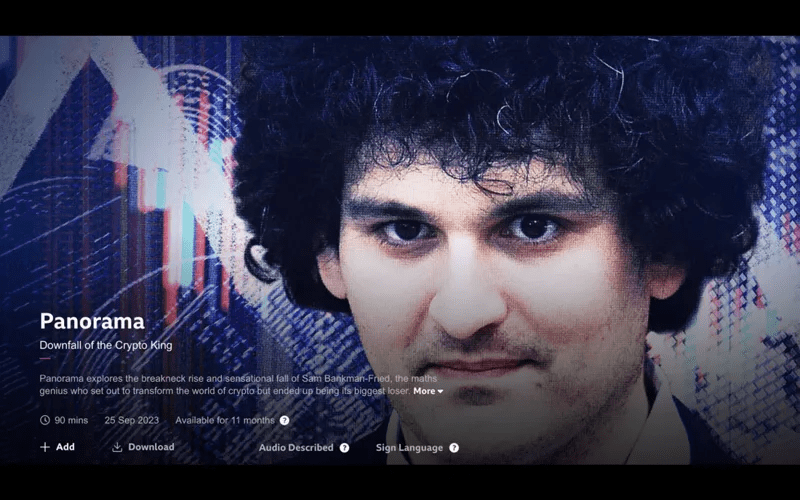 Stills from the documentary "The Fall of the Crypto King"
The documentary shows this side of SBF: He sleeps only 5 hours a night and lives with 10 roommates in the Bahamas. Although he is worth $22 billion at the age of 29, he plans to donate all his wealth to charity. He drives a Toyota Corolla for a simple reason: "I don't really need a Le Bourgeois." This is the SBF who has just become famous in the lens of NAS Daily, which is in sharp contrast to his wealth and status.
How did this seemingly ordinary and simple young man actually shake up the entire cryptocurrency market? In the following section, we will take a closer look at SBF’s life and how he went from being a potential entrepreneur to his current situation, and will also analyze the various factors and details in this process.
Sam Bankman-Fried, or SBF for short, was born on March 6, 1992 in Santa Clara County, California, USA. He is the child of two law professors at Stanford University, Barbara Fried and Joseph Bankman, and he grew up in an environment full of wisdom and scholarship. This environment had a profound impact on his later way of thinking and outlook on life, which we will explore in depth later.
In 2010, the young SBF was admitted to the Department of Physics at MIT. He said that when he first came here, he was like a "nerd" who was passionate about mathematics. In the first few years, he had considered joining the academic world and dreamed of becoming a mathematics professor. But after realizing that formal academic research was not his true passion, he began to broaden his horizons and look for a career path that was more suitable for him.
Knowing that accumulating wealth and using it for charity is an important way to gain influence, SBF chose to intern at Jane Street Capital during his junior summer vacation. Some of his friends had interned there before and gave it good reviews. Since its establishment in 1999, Jane Street has become one of the largest and most respected quantitative trading companies in the world. By 2020, the company's total securities traded reached a staggering $17 trillion.
This enjoyable summer internship experience led to a full-time job opportunity at Jane Street after graduation in 2014. This decision proved to be a perfect fit. At Jane Street, SBF was immersed in an environment full of "nerds" who were committed to coming up with and executing sharp trading strategies. He was mainly responsible for the trading of international ETFs, and this international work experience laid the foundation for his later success in the Asian crypto market.
Although SBF has always maintained an optimistic attitude, he has also been shocked by the scale and speed of his success. After leaving Jane Street in 2017, he took some time to think about future possibilities. Attracted by the cryptocurrency boom at the end of that year, he turned his focus to this emerging field.
As he delved deeper into the market, SBF's trading instincts were quickly aroused. He sensed that this was a market with the potential for huge volume and price discrepancies. His interest quickly turned into an obsession when he discovered the arbitrage opportunities that existed between the US and Asian crypto markets. Due to the difference in market demand, Bitcoin trades at a much higher price in South Korea than in other regions. This phenomenon, known as the "Kimchi Premium," can sometimes reach 50%, which looks like a rare opportunity. In theory, an investor could buy Bitcoin for $5,000 in the US and immediately sell it for $7,500 in South Korea.
Seeing this opportunity, SBF acted quickly. Together with former Google engineer and MIT alumnus Gary Wang and high school classmate Nishad Singh, who graduated from Berkeley with a degree in computer science, he raised funds to found Alameda Research, a quantitative trading company focused on cryptocurrencies, which can be said to be the Jane Street of the cryptocurrency field.
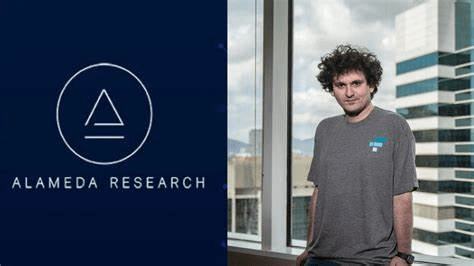 Alameda Research and SBF in their heyday
The returns from arbitrage trading in Japan were just as SBF had expected. With $200 million in capital, Alameda kept pouring it into the Bitcoin market, earning 10% or $20 million a day. But SBF wasn't satisfied. About a year later, he and his team began to think about a bigger opportunity: creating a cryptocurrency exchange.
At the end of 2018, SBF, together with Wang and Singh, began the creation of FTX Exchange, a trading platform centered on traders and serving traders. However, they faced a huge problem: the regulatory environment in the United States was not conducive to the establishment of crypto derivatives exchanges. US regulators were skeptical of this emerging asset class, especially those more speculative investments.
For example, the U.S. Securities and Exchange Commission (SEC) effectively curbed the ICO craze in early 2018 and issued a warning that it would closely monitor the dynamics of exchanges. Faced with such an environment, SBF and his team made a decision when formulating their strategy: they would establish the FTX exchange in Antigua and Barbuda.
Cryptocurrency trading platforms have become a highly competitive market, with the majority of traffic being captured by a few large exchanges. However, the emerging FTX has managed to create its own space in this red ocean through its unique competitive strategy and continuous innovation. Despite the change in location, FTX's development has not slowed down. By May 2019, the FTX exchange was officially open to the public for trading. Over the next two years, it quickly grew into a company with a valuation of $18 billion and became one of the most popular exchanges in the world.
SBF’s reputation began to rise in 2020 because he reached out to help the decentralized exchange after the founder of SushiSwap left the community, so SBF was hailed as the "savior of the crypto community" by industry insiders.
By the beginning of 2021, FTX was gradually showing signs of growth, but when the company began to show favor to the mainstream market by forming alliances with sports circles and celebrities, its popularity and trading volume increased significantly. In just a few months, FTX signed a 19-year sponsorship agreement with the Miami Heat worth $135 million and a 10-year sponsorship deal with esports club Team SoloMid worth $210 million. USD sponsorship agreement.
Not only that, sports stars such as Tom Brady, Stephen Curry and Naomi Osaka have also joined the ranks, appearing in FTX ads to promote cryptocurrencies to a growing audience. This year, a Super Bowl ad starring comedian Larry David further boosted FTX's popularity.
Along the way, the company has raised a ton of money from investors: a $1 billion Series B in July 2021, another $421 million in October 2021, and another $400 million in January 2022. That doesn’t include money raised by FTX US, a separate exchange serving U.S. users that raised its most recent round in January, which valued it at $32 billion.
With the enthusiastic support of social media influencers, FTX quickly emerged as the most convenient crypto "trading platform" with "bank-like" security. Many key opinion leaders and YouTube bloggers supporting FTX have taught the public how to "become a millionaire easily and enjoy the fruits of their labor."
 FTX sponsors League of Legends promotional poster
Soon after, FTX teamed up with a number of top entertainment stars, and its advertisements were all over major platforms, gradually entering the public eye. "If you don't trust cryptocurrency, you will lose a great opportunity." Such remarks are rampant in the online world frequented by young people.
In the physical world, many grand parties were held in the Bahamas, with many well-known DJs invited to help. Young FTX users said, "This is so cool. Anyway, they are a company that has the ability to change the world and has strong financial resources."
In this optimistic atmosphere and with the guidance of the media, FTX quickly attracted users from more than 100 countries. The "safe" way for a large number of new users to enter the market is: register - buy some FTT (FTX's platform currency) - sell when the price rises - exchange it for the legal currency of their own country, thereby realizing the appreciation of wealth in the bull market. The documentary shows how the public once revered FTX and SBF to the altar, placed great trust in FTX, and invested a lot of their funds in it.
If the script had been played out at the pace everyone expected, perhaps SBF was really the god of business, but unfortunately his luck was only short-term. An industry leader with a valuation of $32 billion and a young billionaire who actively promoted "Web3" in the U.S. Congress, everything collapsed in just five days.
Without the knowledge of his clients, SBF planned a complex financial operation. He asked FTX to lend more than $8 billion to Alameda Research (AR) to buy its own cryptocurrency FTT, thereby continuously pushing up the market value of FTT and attracting more investors. Observers in the market could only see a large fund company buying a large amount of FTT cryptocurrency, which would undoubtedly trigger other small investors and institutions in the market to follow suit.
Next, FTX lent AR the funds of its clients and investors to conduct arbitrage operations in the cryptocurrency market. Even more serious, AR also privately lent more than $500 million to SBF himself to buy Robinhood stocks.
This series of operations appears to be extremely complex and chaotic. It is a completely self-circulating method, which continuously pushes up the value of FTT while using the funds for SBF's personal investment.
The biggest problem is not regulation, but trust. SBF has a strong personal charm and is hailed by fans as the savior of cryptocurrency, attracting a lot of trust and investment.
However, the collapse of Luna coin changed the whole situation. A huge chain reaction appeared in the market in an instant, and panic quickly spread throughout the cryptocurrency market, and various cryptocurrencies began to fall sharply. As a result, the value of FTT also plummeted, and FTX's performance declined rapidly. Coupled with the overall downturn in the cryptocurrency market in 2022, AR's funds also had problems. At this critical moment, an insider broke the news that FTX's customer funds had been illegally misappropriated, which led to large-scale customer redemptions. Zhao Changpeng's remarks on Twitter further exacerbated the panic in the market, causing a run on FTX, and ultimately accelerating the collapse of FTX.
On November 11, the FTX exchange based in the Bahamas announced on Friday that more than one hundred companies, including its subsidiaries, have filed for bankruptcy protection in the United States.
As one of the world's largest cryptocurrency trading platforms, FTX, which was established only three years ago, had a valuation of $32 billion before the collapse. At the same time, SBF's name disappeared from the Bloomberg Billionaires Index, and his tens of billions of dollars in wealth evaporated in just a few days.
In addition, in December 2022, SBF was arrested in the Bahamas and is now facing criminal prosecution in the United States. The day after his arrest in the Bahamas, he was accused by the U.S. Securities and Exchange Commission (SEC) of orchestrating a series of long-term frauds.
According to a SEC lawsuit, SBF is accused of misappropriating customer funds from the early days of his cryptocurrency exchange. The funds were used to support his hedge fund company Alameda Research and were used to make various venture investments, purchase real estate, and make political donations.
The SEC further pointed out that since May 2019, Bahamas-based FTX has raised more than $1.8 billion from equity investors, of which approximately $1.1 billion came from approximately 90 U.S. investors. However, the SEC claims that these actions were conducted in secret. At the same time, SBF also failed to disclose the special treatment given to Alameda on the FTX platform, including providing virtually unlimited credit lines that were funded by the platform's customers and exempting Alameda from following certain key risk mitigation measures of FTX.
Such a huge scam seems like a huge mountain, but every grain of ash that falls weighs heavily on the victims.
Under the camera, a disappointed investor expressed his feelings. He invested $2.1 million originally intended for buying a house and his children's education into FTX.
Some other FTX users also "calmly" shared their experiences of initially believing in FTX and then betraying it in front of the camera.
The victims then turned their anger toward social media and some high-profile celebrity endorsers, saying, "They manipulated our minds and misled my investment decisions." "Can their millions of endorsement fees be refunded? Please give me back my hard-earned money."
However, when the topic turned to "why didn't anyone find out about this in advance", their words became vague and they blamed each other.
However, when the topic turned to "why didn't anyone find out about this in advance", their words became vague and they blamed each other.
Some media pointed out that FTX’s fraudulent behavior was a typical case of “misappropriating customer funds for its own use.”
With further investigation, some documents showed that "Alameda Research has not undergone any audits", and even the report contained the inaction statement "This is life". In addition, there is evidence that three years ago, FTX paid $3.3 million to a person who exposed FTX's fraud and money laundering to silence him.
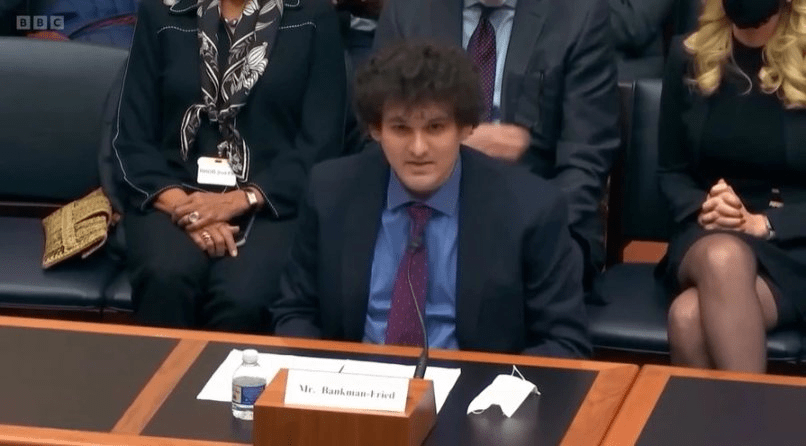 SBF on trial
2. 2018: SBF and its partners raised funds to establish Alameda Research; founded the FTX exchange and decided to set it up in Antigua and Barbuda.
3. May 2019: FTX exchange officially opens for trading; FTX grows rapidly and its valuation reaches $18 billion.
4. 2022: SBF was arrested in the Bahamas and faced criminal charges in the United States; he was accused by the U.S. Securities and Exchange Commission (SEC) of orchestrating a years-long fraud; the SEC accused SBF of misappropriating client funds to support Alameda Research and make venture investments, real estate purchases, and political donations; FTX Exchange and its affiliates filed for bankruptcy protection in the United States; SBF disappeared from the Bloomberg Billionaires Index, and his $10 billion worth disappeared within a few days.
5. 2023: SBF is negotiating with U.S. prosecutors to resolve bail differences; FTX-related investors filed a class action lawsuit against several social media influencers, seeking more than $1 billion in compensation; former FTX executive Ryan Salame pleaded guilty; the U.S. Department of Justice U.S. Trustee opposed FTX's motion to sell, pledge and hedge digital assets, and the FTX motion hearing is scheduled for September 13.
In the coming October, the judicial department will make the most important trial on the FTX case. Whether a new chapter can be opened still needs to pay close attention to the subsequent development trends.
The world of cryptocurrency has always been full of uncertainty and volatility. It has been so in the past and it is still so now. As the price of Bitcoin plummeted to its lowest point in two years, many investors and market observers were in deep confusion and worry. When FTX and its leaders who were seen as pillars of stability collapsed so quickly, many people were wondering, if FTX and its talismanic leaders could fall like this, who would be next?