

Starting from today, we will officially start learning about SMC order flow. This lesson is a warm-up lesson and also a pilot lesson. Let us first take a brief look at what order flow is and have a basic understanding of what we are going to learn next.
First, what exactly is the order flow we need to learn?
The second question is what is the cost recovery mechanism?
The third question is to survive like a fish in the trading market
Fourth, how to drill at a depth of 10,000 meters in SMC
The fifth coach learns the path and method of order flow
First of all, I would like to thank Columbus Yangyang from our technical team. He was the first to bring order flow into our technical team, gradually attracting more people in our team to learn order flow, and then spreading the whole community to learn order flow. Of course, this includes me, so I call him Columbus, just like discovering the New World.
First, what exactly is the order flow we need to learn?
First of all, the order flow we are going to learn is actually not the same as the order flow mentioned by many people in the market. They are more based on market analysis, or order flow footprint diagrams. For example, the two diagrams on the left are more common.
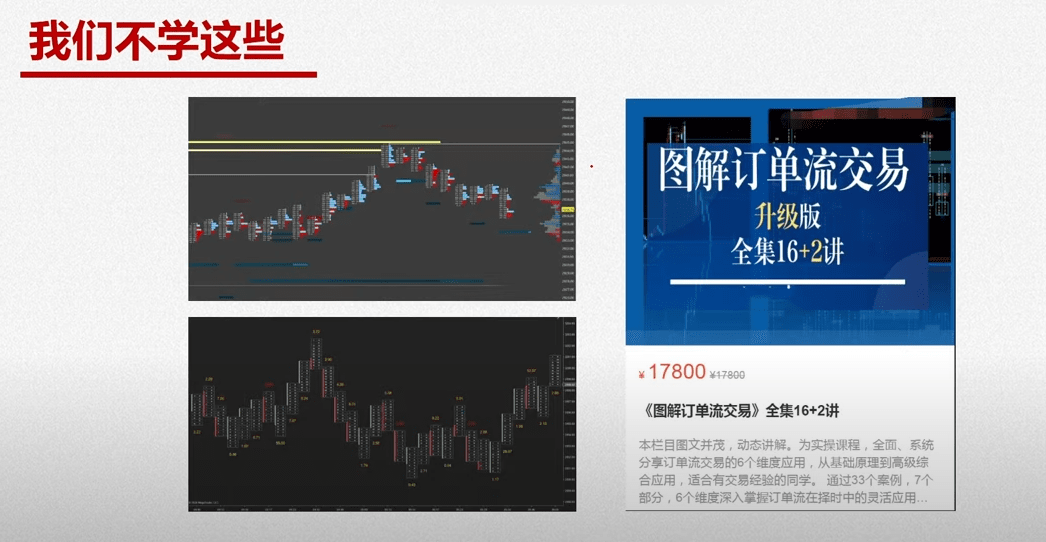
To some extent, they can also be called order flow, but this is not what we are going to learn next, including the order flow trading 16+2 on the right. I believe many people have bought this course or even seen this course, including this. It is not a direction we will learn in the future. I am not saying that these are bad. I just tell you in advance that these two are not the same thing. I have not affected anyone's interests.
The order flow we want to study is actually the concept of smart money, or SMC (Smart Money Concept), which is an extension and refinement of Wyckoff's theory. It is to think about the problem from the perspective of the main institutions or dealers. We know that there are actually only two types of traders in the market, one is retailers and the other is institutions. This is actually the concept we learned in the YTC book, which is wholesale price and retail price. However, institutions can often provide greater liquidity and also need to consume greater liquidity. What is liquidity here? You can understand it as money or orders. If he wants to buy low and buy high now, he has no chips in his hand. Does he have to find a way to buy more chips at a low price? These chips are nothing more than orders. The essence behind these orders is actually money. We call it liquidity.
So institutions are actually like sharks in the sea. What we need to do is to learn to be like the fish under the shark, that is, the remora, and follow the footsteps of the smart ones. This is the main purpose of our next study of SMC order flow.
The second question is what is the cost recovery mechanism?
Next, let's take a closer look at what the cost recovery mechanism is. Let's go back to the question just now. According to our current understanding, because most of us have studied price behavior, as a small umbrella, the most important thing is to always emphasize the trend. I often say that the trend is the sky, but in the eyes of institutions, there is actually no such thing as a trend. For them, the most important thing is only three things, that is, to ensure the transaction, control costs and risks. As retail investors, our funds are generally very small, right? Tens of thousands of dollars, hundreds of thousands of dollars, or at most a few million dollars, so it is relatively free to enter and exit, but the trading funds of institutions are very large, often large enough to affect the market, hundreds of millions of dollars, billions of dollars, or even tens of billions of dollars. So they can't enter and exit freely like retail investors. Since they can't enter and exit freely like retail investors, it is easy to cause that when the institutions buy, the market rises violently, but at this time, my compensation action has not been completed, I am still in the market, and there are not enough sell orders to take my liquidity.
The main problem is insufficient liquidity. In order to solve this problem, institutions can only go against the price trend to obtain guaranteed orders and the liquidity needed for transactions, which is S2B (Sell To Buy) or B2S (Buy To Sell). By breaking through key positions, executing retail stop-loss orders and breakthrough orders, and obtaining reverse liquidity to execute part or all of their own orders, then the entity trapped at this time is actually the institution itself, which is what we call OB, the institution's position building cost area.
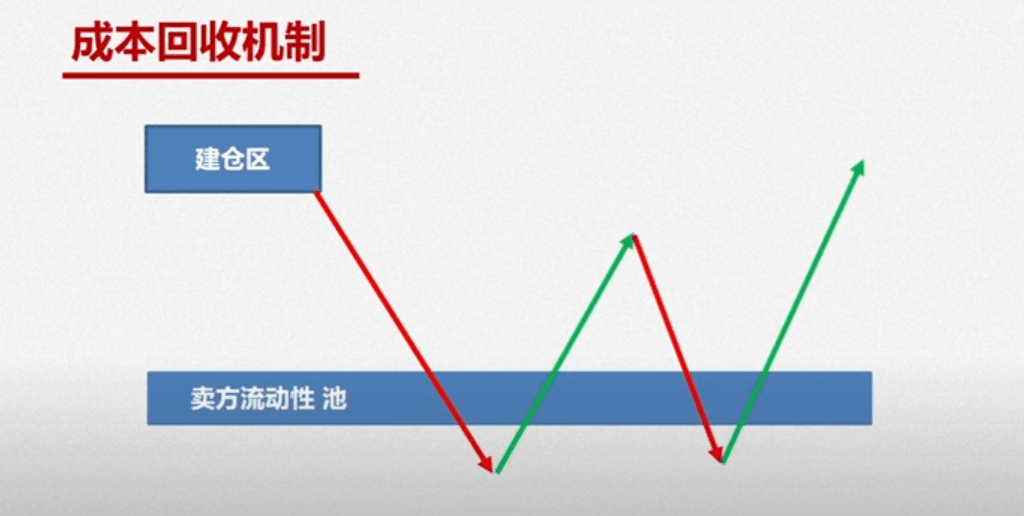
The difference is that institutions are actively trapped in order to obtain liquidity, while retail investors are passively trapped and are just victims of institutions reducing costs. Therefore, generally speaking, after retail investors are trapped, we either clear our positions and hold on, or cut our losses to protect our principal, which means we stop losses. However, institutions that actively enter the trap do not have the concept of stop losses in their minds. In most cases, they will take back the cost they paid, that is, sell part of the profit from the upper side, so that the price will come back to relieve themselves. This is the so-called cost recovery. At the same time, they can also complete part of their unfinished orders, that is, fill the gap. So what I just talked about is actually the cost recovery mechanism. You may still find it a bit abstract, a bit awkward, or even a bit too theoretical. It doesn’t matter. Let’s look at the picture now. If we now anthropomorphize a main institution, or a bunch of smart money, into a person named Zhang San.
Zhang San's original position building plan was to build a position of 100 million, but he is currently only in the upper position building area and has only completed 50 million.
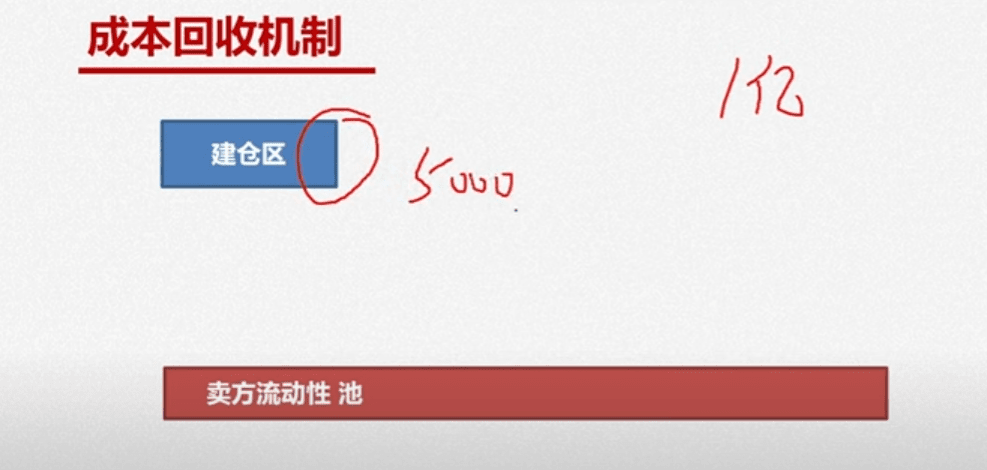
Now there is still a shortfall of 50 million, and the funds have not been fully utilized. I am still short of 50 million chips, or 50 million liquidity. What should I do at this time? Then he found that the price was lower than his position, for example, this one was 10 yuan, and this one was 8.5 yuan.
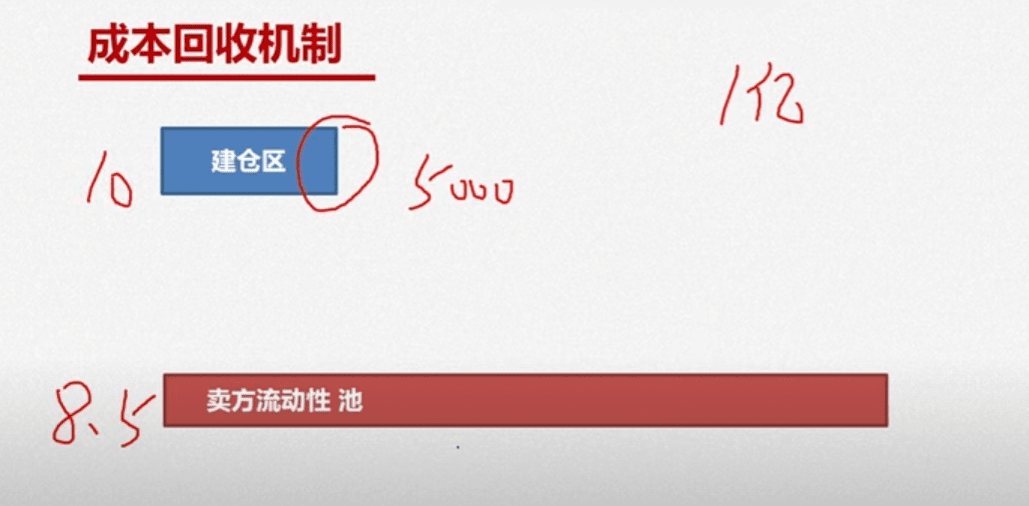
There is a lot of liquidity at 8.5 yuan, that is, orders. What are these orders? We generally think of them as sell orders. Why are they sell orders?
There are mainly two parts here. One part is the stop loss order, which is for those who are long. For example, if his long position is here, his stop loss is here. If it breaks through here, he has to sell.
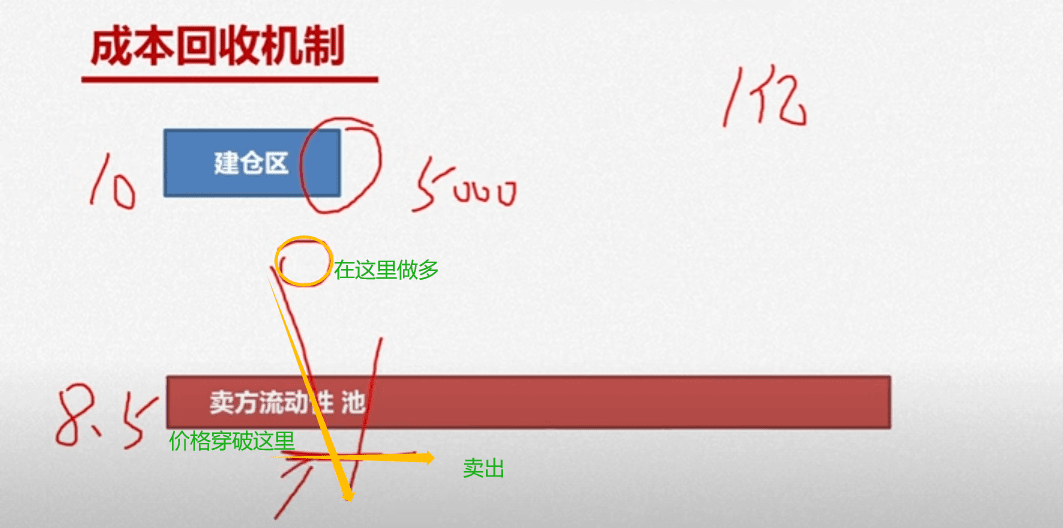
Those who are long will sell their own positions in order to close their long positions.
The second part is the breakthrough order, which is when the price breaks down, when it breaks through this position, I will break through and go short.
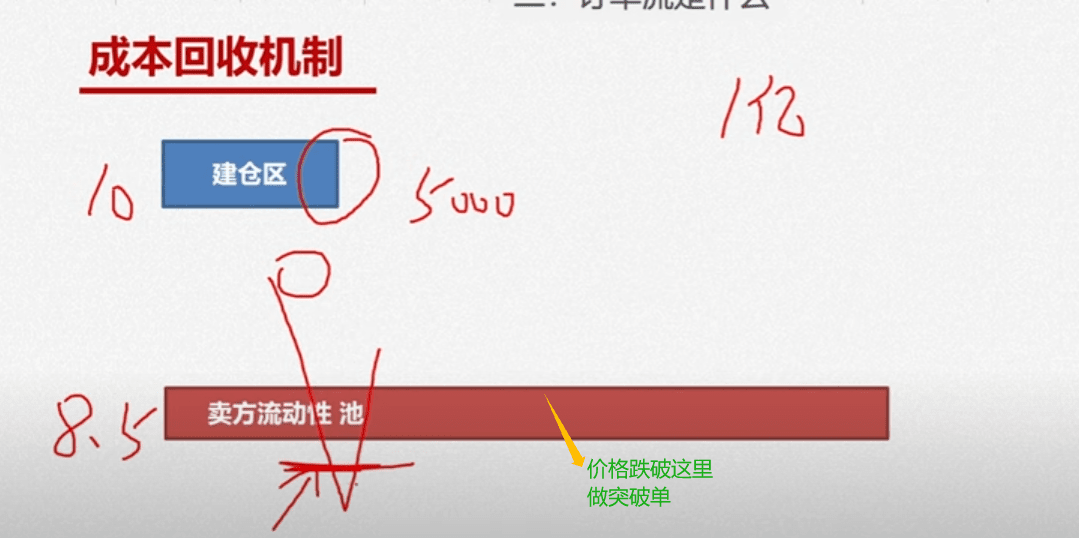
This is also what we teach often, so we mainly ambush here the stop-loss orders and breakthrough orders of our retail investors.
So at this time Zhang San will do one thing, what is it?
He clearly wanted to do a stretching action. In order to get the 50 million liquidity, he had no choice but to do a market crash. Because if he didn't sell in large quantities, the price would not fall. After he smashed the price,
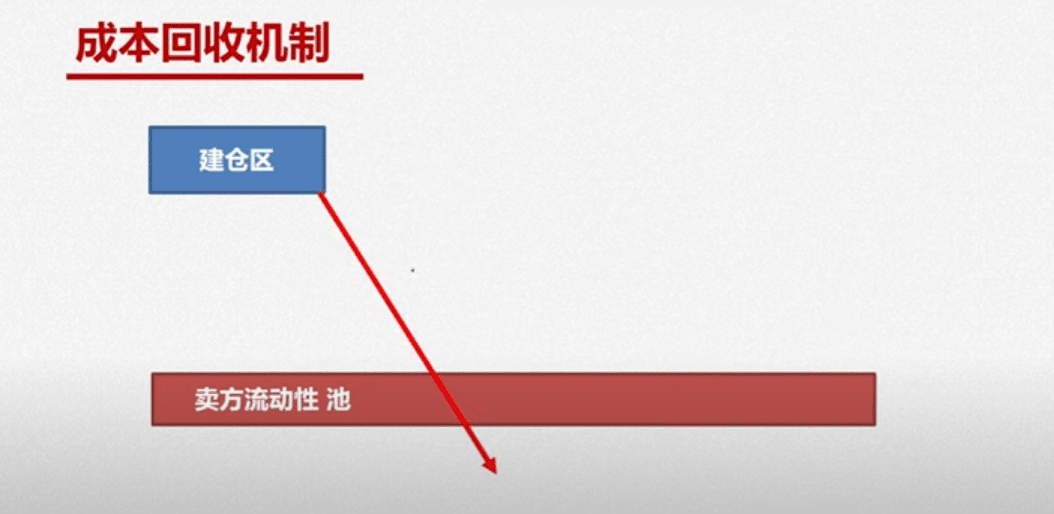
Then the original 50 million liquidity was taken by him, and then the price began to rise.
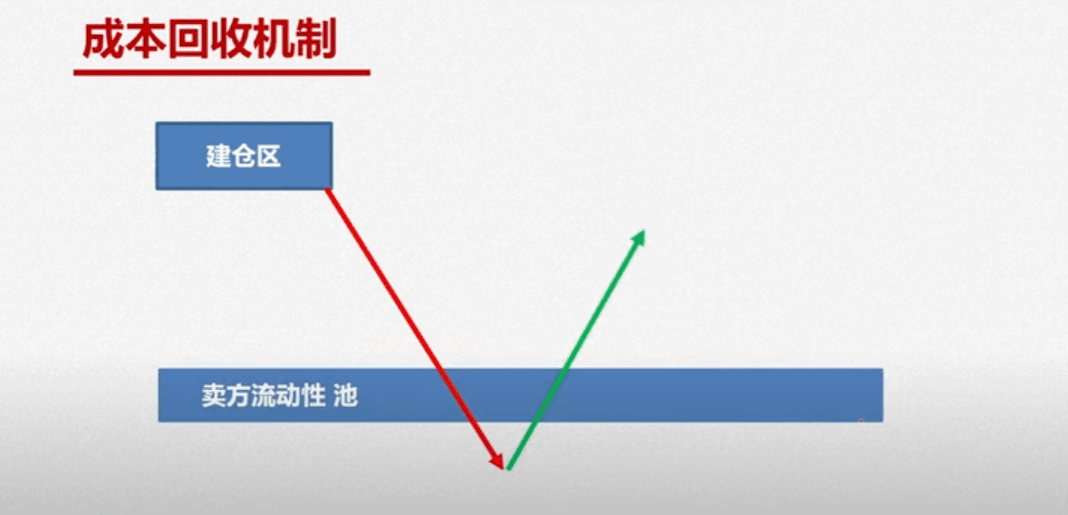
His goal is to get all the 100 million chips in his hands. Please pay attention to the liquidity of this area. The color has changed, but a problem arises at this time. What is the problem?
He obviously wants to go long, but he has a short position here. After he pushes the price up, will his short position be trapped? Think about it, is this the truth? What should he do with this trapped short position? Will he cut his losses by himself? Will he stop loss and leave? Of course not. So he will pay the cost at this time. That is, at the upper position
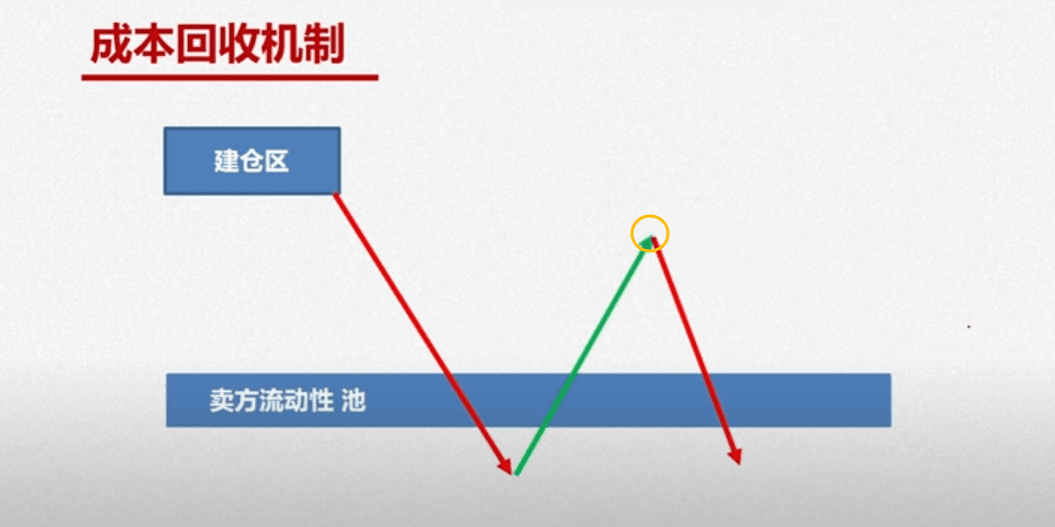
Sell part of it for profit and let the price come back. After it comes back, his short position will be released. That is, he will sell part of it for profit at this position and let the price come back to release himself. This is cost recovery.
At the same time, it is possible to obtain some additional liquidity, such as 8 million, or 10 million. Then, at this time, his 100 million US dollars in chips will be reached, his short position will be released, and the price can rise smoothly.
At this point, do you have a sense of sudden enlightenment? It doesn’t matter. Let’s take a look at two more cases:
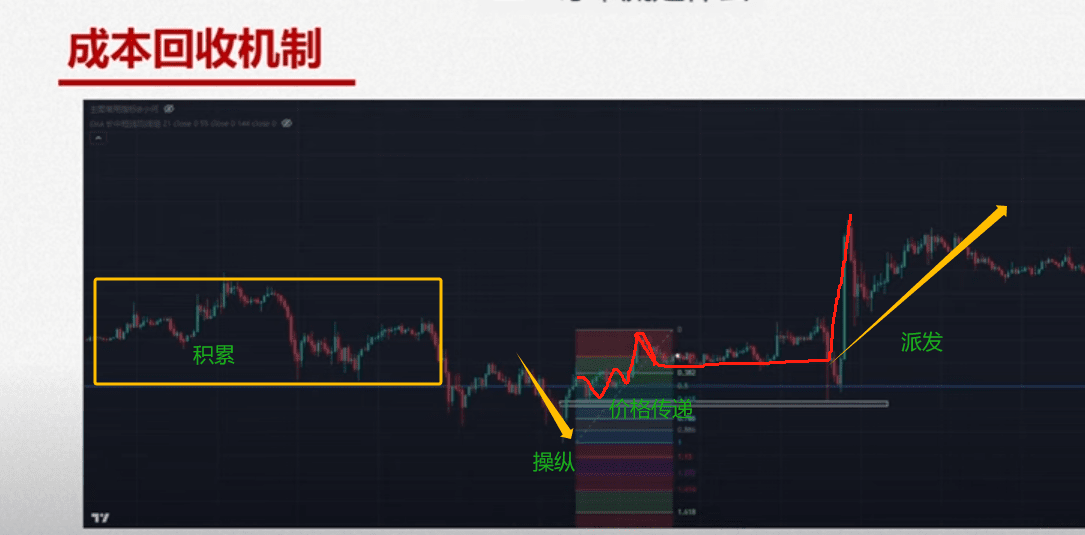
First, let's look at a long case. The left part is his position opening cost area, which I didn't capture completely due to the screenshot restriction.
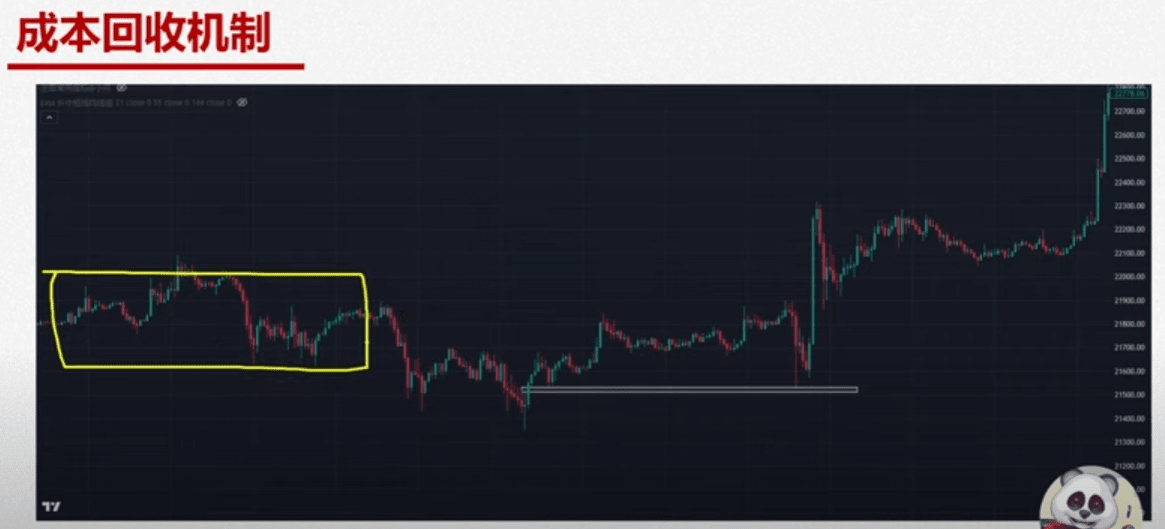
But after building the position, why did he continue to push it up?
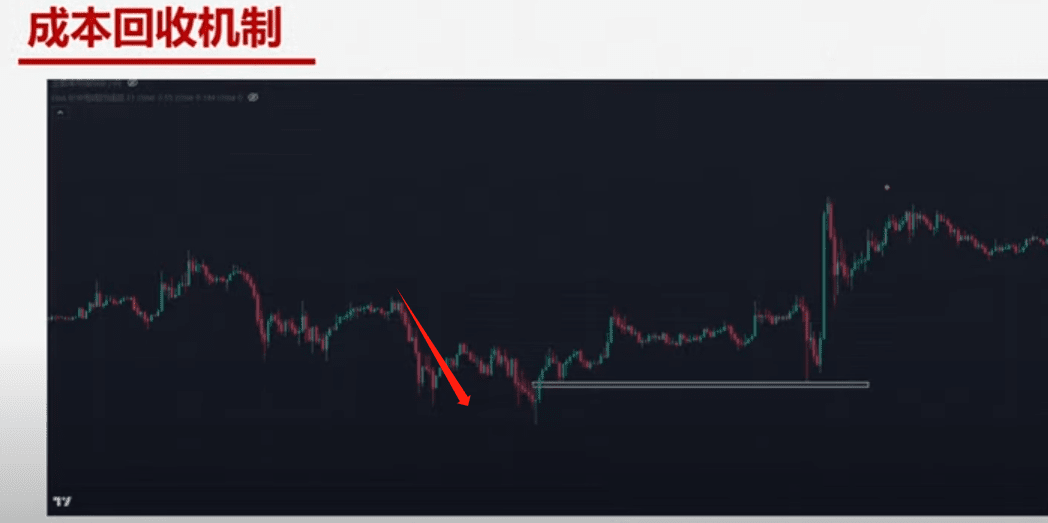
Especially at this position, it is easy to have a false break of the previous low point.
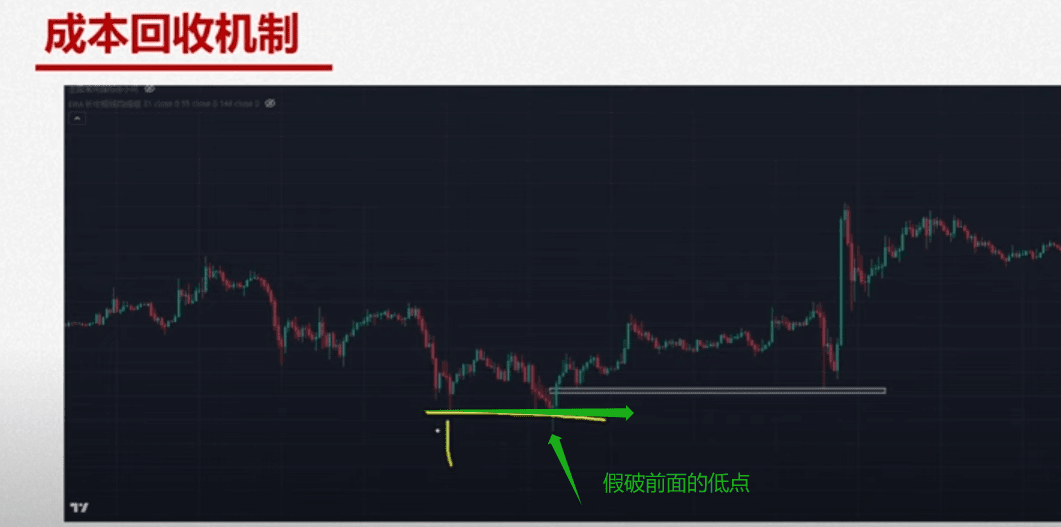
Based on what we have just learned, it is possible that there are a large number of long stop-loss orders and short breakout orders below.
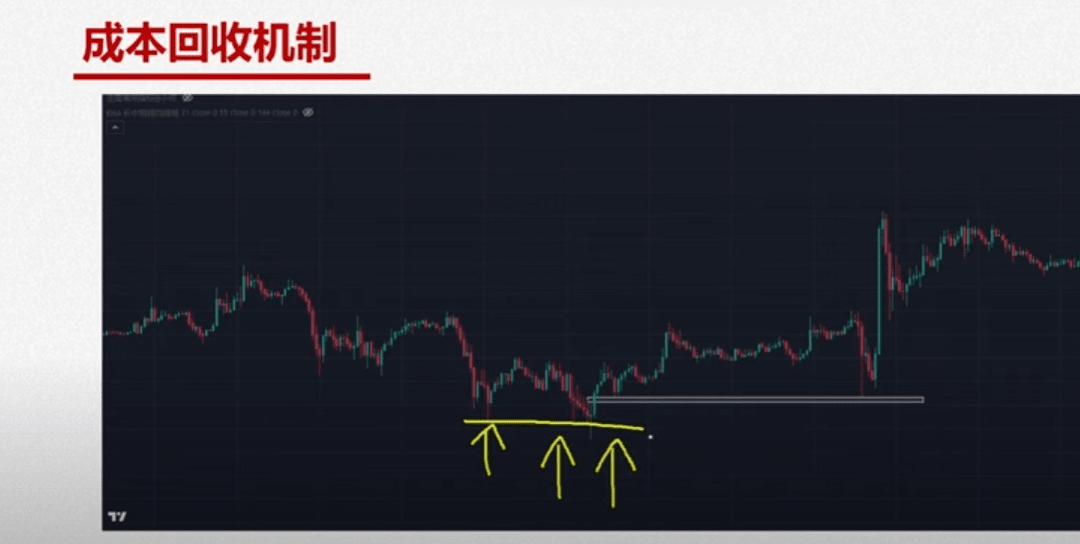
In short, it is the liquidity of the seller, so when he gets the liquidity below, the decline at this time
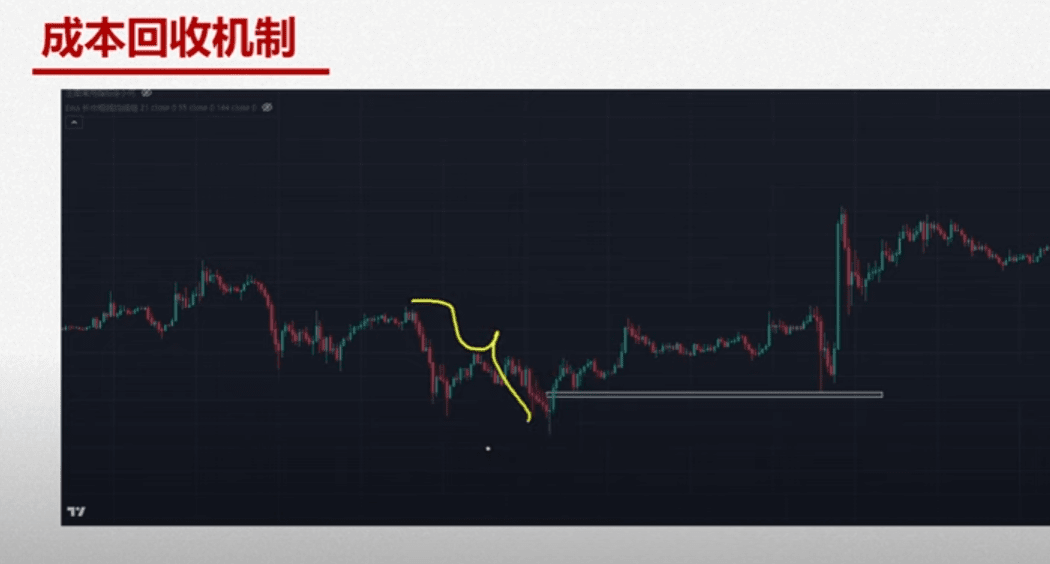
In fact, it is possible that the main force is actively seeking to be trapped, so when the price moves up for a period of time
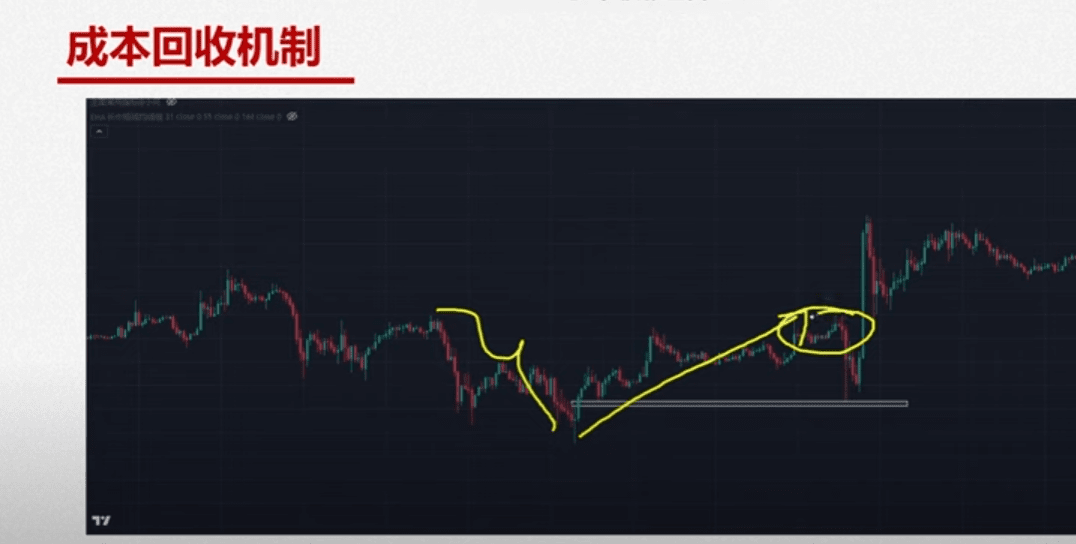
The main force will sell part of it at the upper side to let the price come back to release its short position.
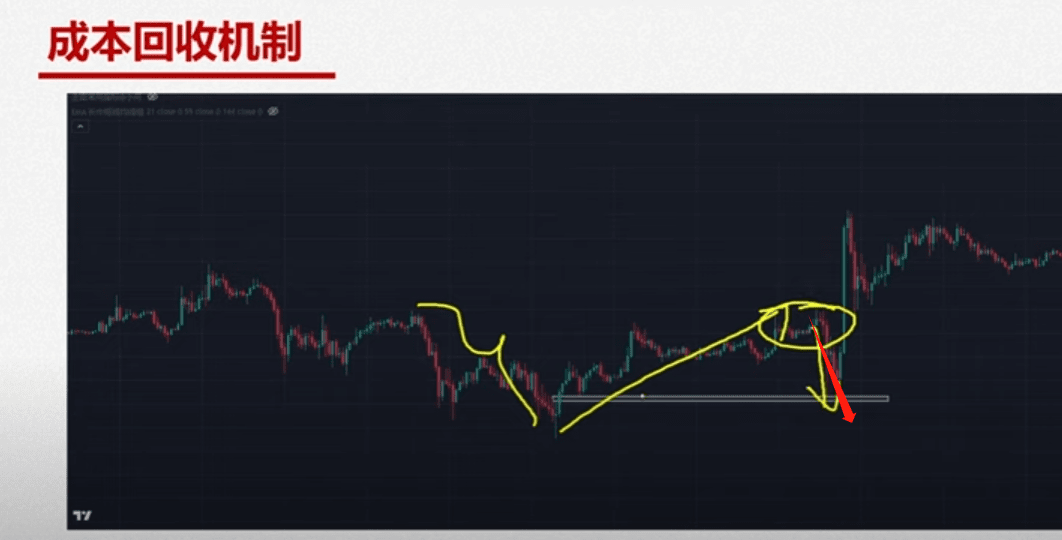
This is a good way to recover the cost, and then the price will rise without any scruples.
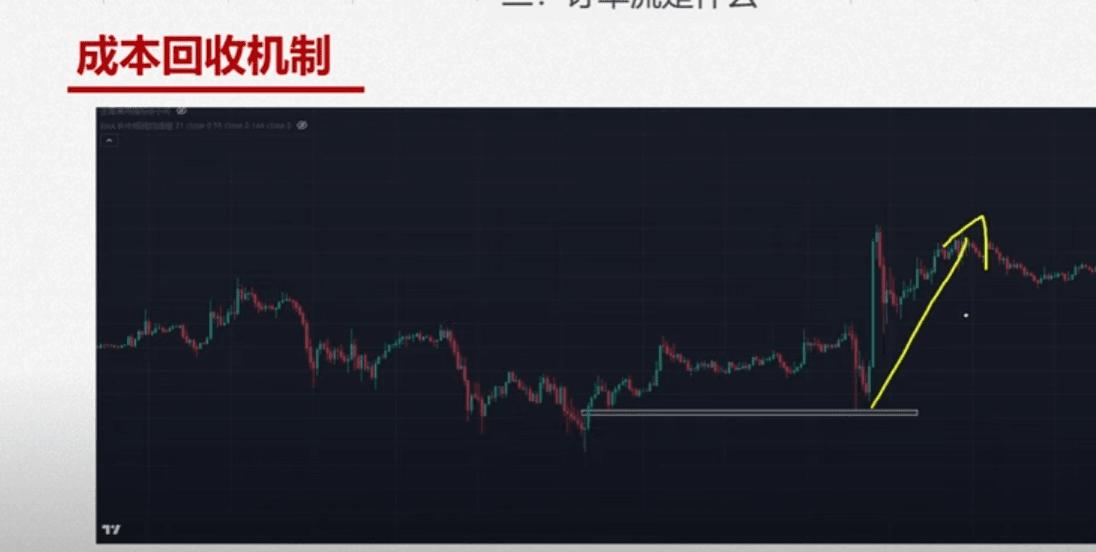
Then the position of this white box
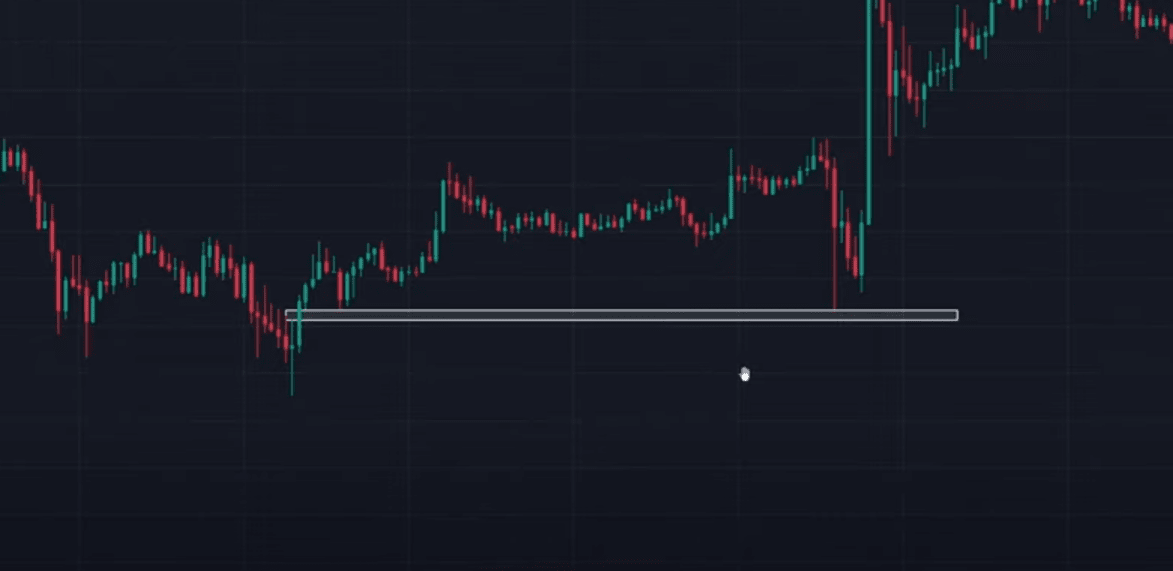
This is the reasonable value gap that we are going to learn next. I believe someone may ask at this time, how do I know that it is going downward at this time and is the action for cost recovery?
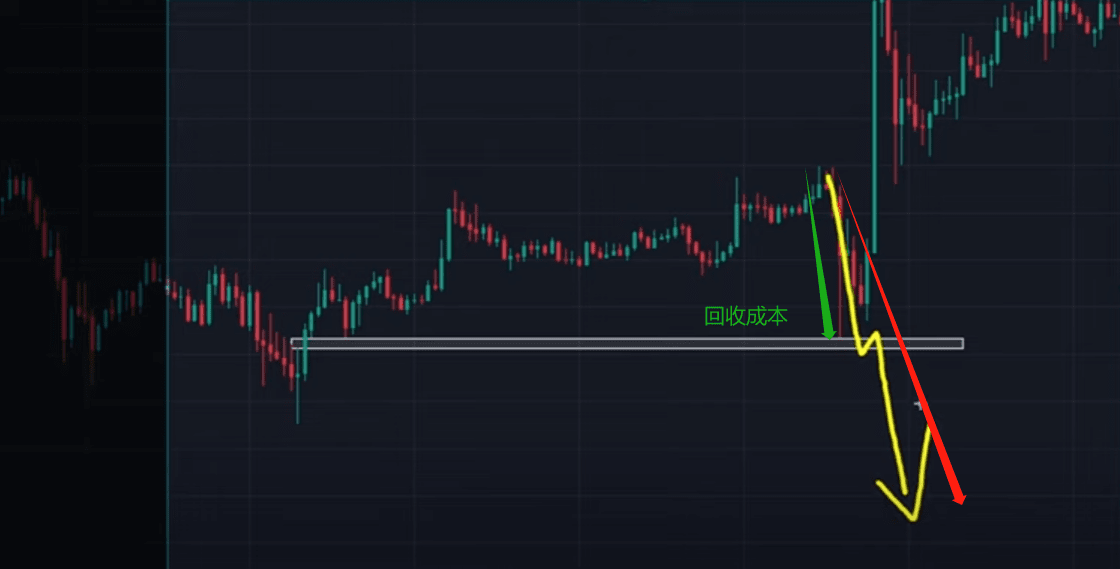
Is it possible that he is continuing to want to crash the market?
This is a very good question. If he goes up here,
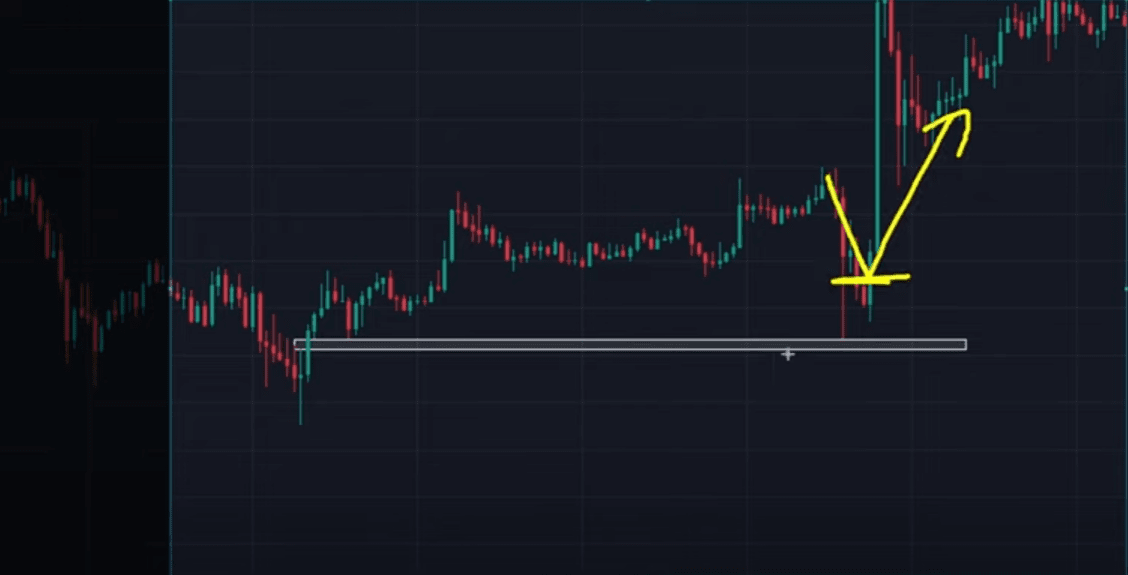
He didn't go back to the gap, he went up. What should I do?
Etc., etc
So we will use the concept of discount and premium again later.
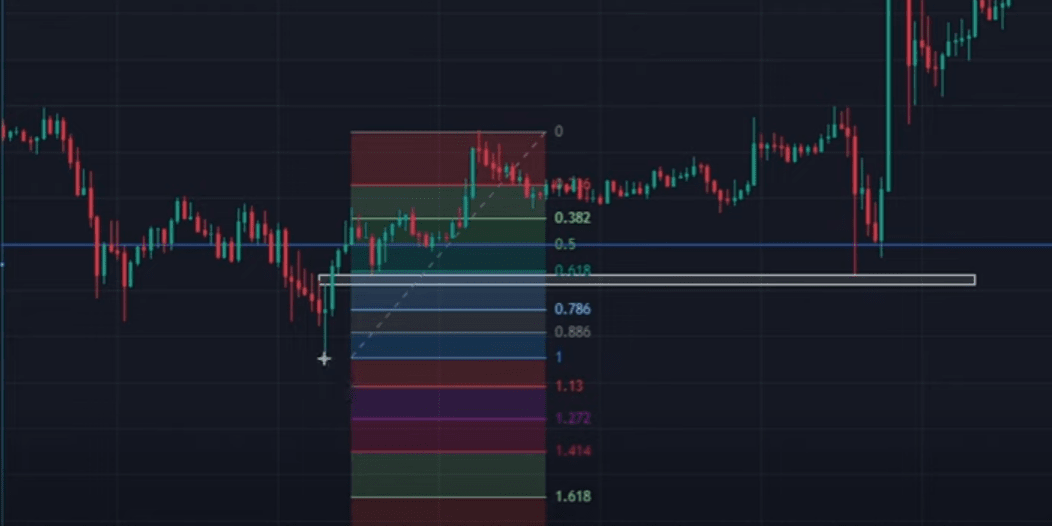
We can pull the Fibonacci line of this band and find the 0.5 position, which is the blue line.
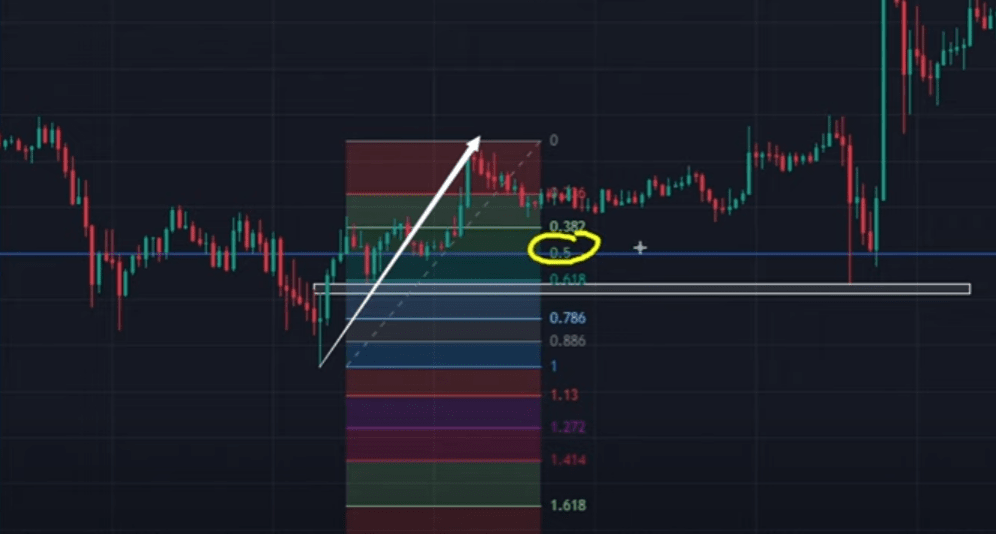
Then the prices above 0.5 are in the premium zone, and the prices below 0.5 are in the discount zone. You can regard the prices above 0.5 as the premium zone, which is the retail price and wholesale price we mentioned before. So for long positions, we only consider the entry opportunities in the discount zone, and for short positions, we only consider the entry opportunities in the premium zone. This case perfectly explains the three steps before smart trading: accumulation, manipulation, price transmission, and distribution.
Next, let’s look at a short selling case:
Similarly, here, he is actually absorbing the buyer's liquidity
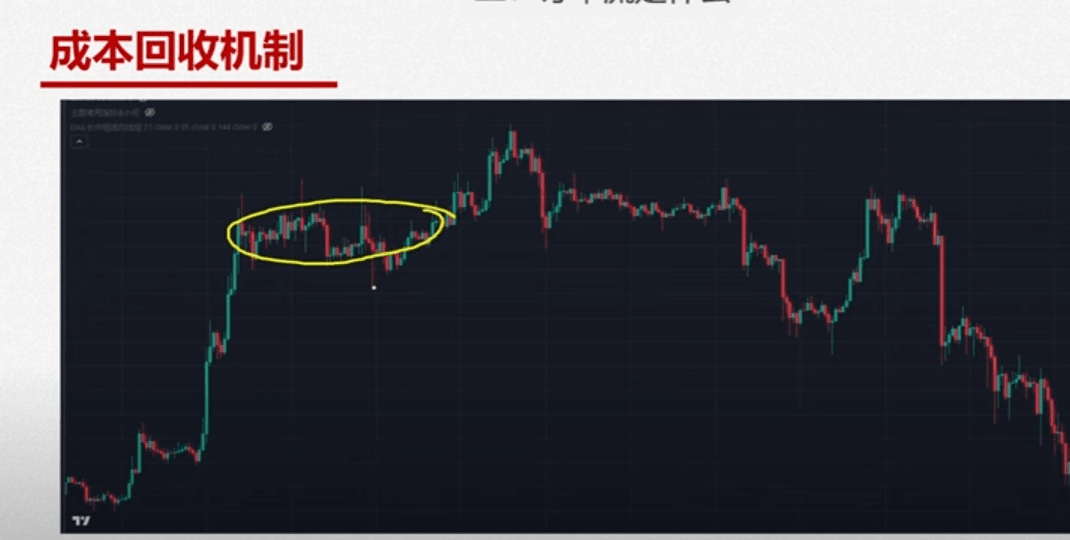
I am ready to go short, but for some reason, there are still a lot of buyers' breakout orders, or sellers' stop-loss orders, accumulated above.
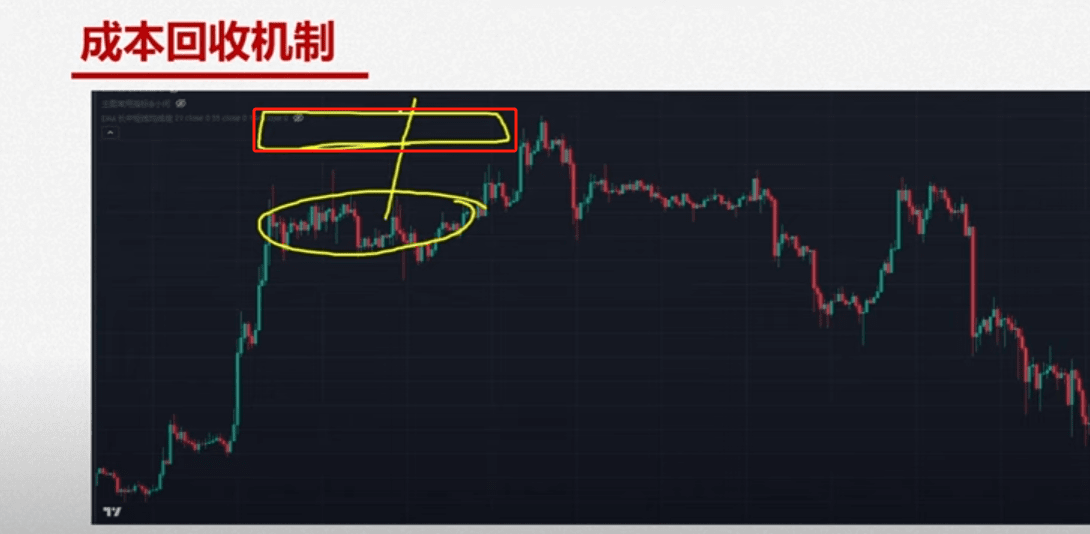
Because he needs to buy to cover his short position, so for the smart institutions that are airdropped, they will actively push the price upwards so that they can be trapped.
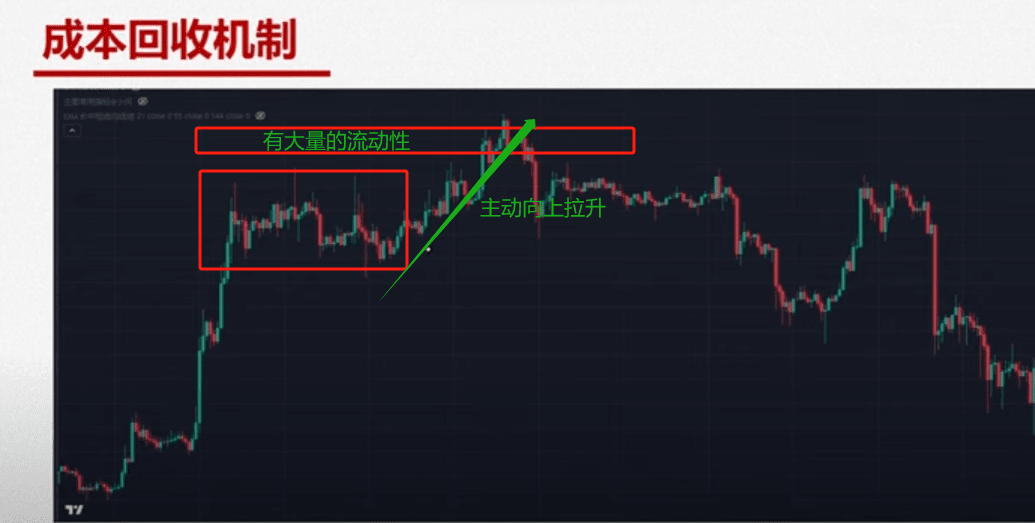
The purpose is to remove the sufficient liquidity above. After completing the purpose, turn downward and prepare to start smashing the market.
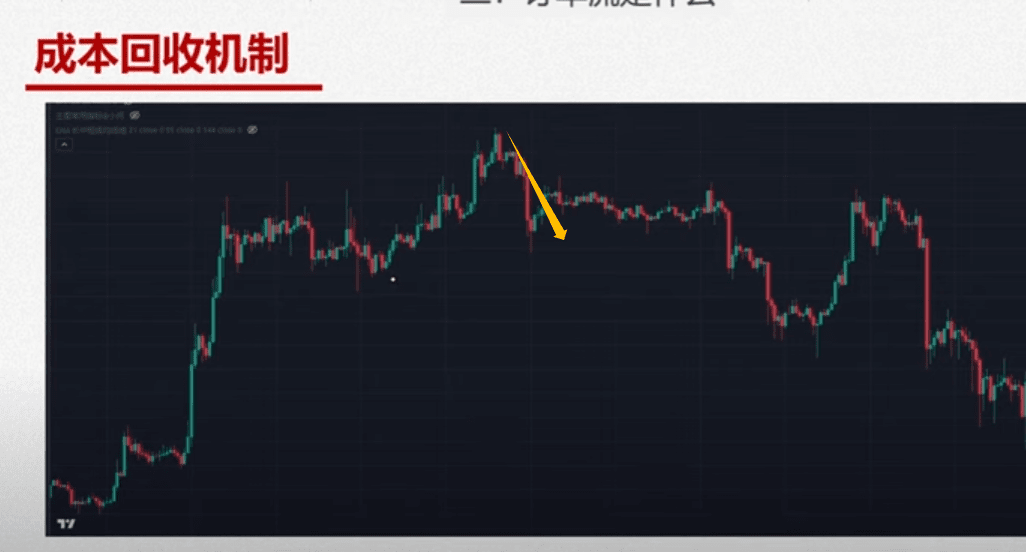
But at this time, he may still have a long order trapped? What should he do? Try to buy some more orders at the lower end, push up the price and reduce his long order. After achieving the goal, the price will fall further.
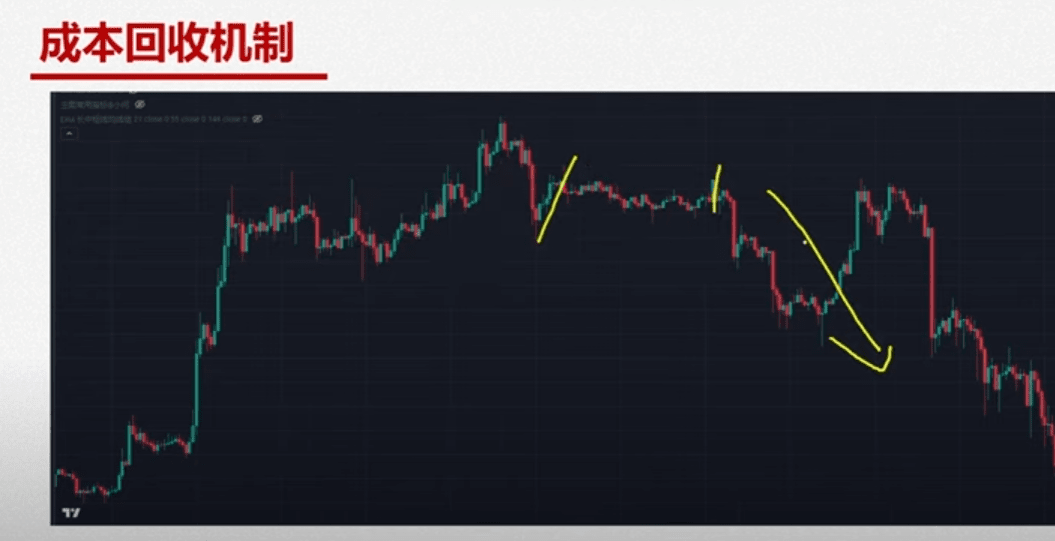
Similarly, for short selling, we only focus on the short selling opportunities in the premium area, so this blue line is the 0.5 position of the Fibonacci.
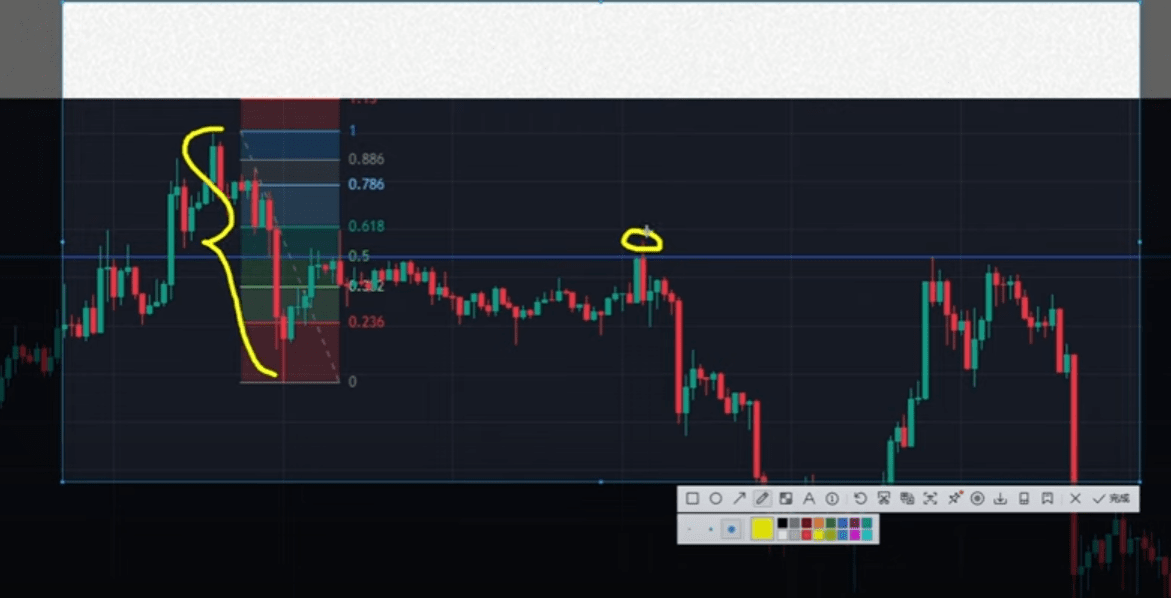
So you see, above 0.5, that’s why after we learn about order flow, many people call it needle-catching technique.
It is for this reason that there is both a winning rate and a profit and loss ratio.
In the same case, the accumulation, price transmission, and distribution after transmission to the bottom. As for who to distribute to, leave a question for you to think about, so what we need to learn and study next is what the intention of the institution is, where is the liquidity, and where is the imbalance?
How can we find these clues through naked K in the market and think about how to follow the smart money.
So you see in this screenshot of mine
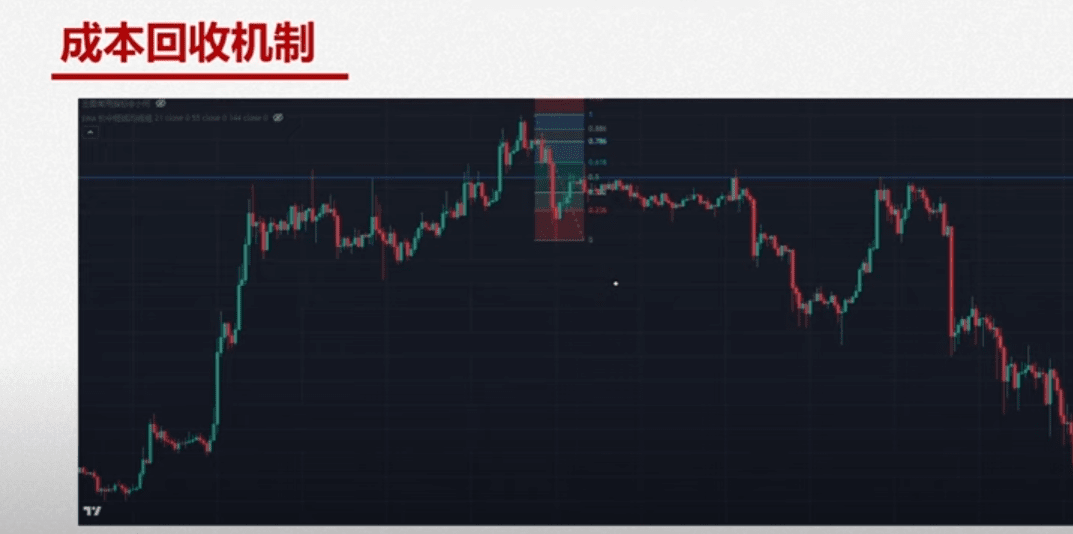
No indicators were used, only the Fibonacci, trading volume, moving average, and even EMA20 were not used. So, it seems that this is a technology that is closer to the essence of the market. At this time, some people may start to wonder in their minds, is this really the case?
You sound like you've been in an institution. I don't know but it sounds like that. But who cares? Who cares? It doesn't matter, right?
As long as you can make money, no one can prove anything, and no one can really explain what the truth of the market is.
It's like many times, the big positive line is pulled up without knowing how, and no one can explain it clearly. I used to joke in class and say, do you think it's possible that the husband and sister-in-law really ran away, and then caused something, and a positive line was pulled up because of a bad mood. Hahahaha......

That is not impossible, so how do you investigate? The truth of the market is unknown to everyone. I don’t think it matters whether you have worked in an institution or not. For example, in some more mature financial markets, it is not the United States that has the final say, nor is it Wall Street that has the final say. There are many forces around the world, so what we need to do is to survive in the trading market like a remora.
The third question is to survive like a fish in the trading market
Why do we need to live like a remora? Let's look at these two pictures.
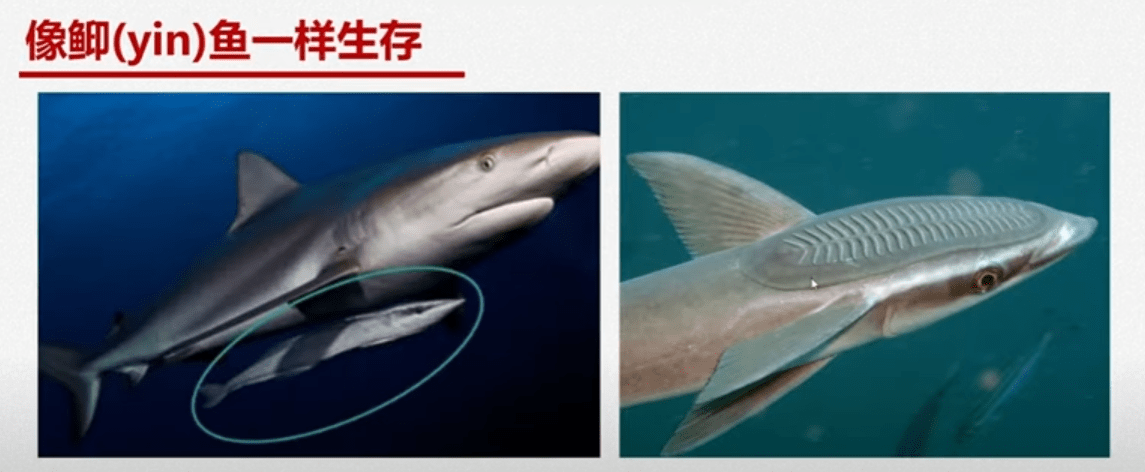
The picture on the right is a remora. You see, the biggest feature of this fish is that it has something like a shoe sole on its back. You can think of it as double-sided tape, which can stick to any object, that is, the host. This fish is also a carnivorous marine fish. Its suction cup often attaches to the bottom of a ship or other large fish to travel far away, or to obtain food. For example, it often attaches itself to sharks and eats the leftovers of sharks.

When it follows the host to the canal with abundant bait, it will take the initiative to separate from the host to take food. Then what will it do after it is full? It will attach itself to a new host and continue to move to another sea area. Its favorite thing to attach itself to is sharks, but it will also often attach itself to turtles or ships. So it is very good at taking advantage of others, and it is also very smart. This seems to be very different from the retail investors we learned before, such as Bollinger Bands, trend lines, moving averages, key positions, support levels, and pressure levels.
So starting today, we must learn to think like smart money.
Fourth, how to drill at a depth of 10,000 meters in SMC
Where does the content of this course mainly come from? The first person I want to pay tribute to is the YouTube blogger ICT. Most of the content we are going to talk about next,
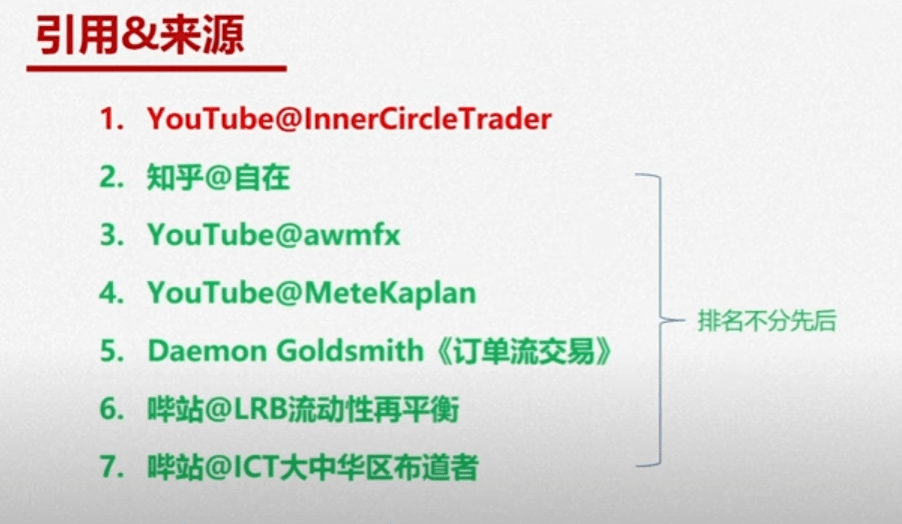
Basically, they all come from ICT, so who is ICT?
He seems to have been a programmer before, and has more than 30 years of trading experience. Although he likes to talk a lot when giving lectures, and his lectures are rather profound and difficult to understand, they are really classics. All the SMC concepts on YouTube, including all the things I list below, almost all come from him.
So the ones I listed below may be his students, directly or indirectly, but some people admit it, some do not actively admit it, and some simply do not admit it. Of course, part of our course content is based on the following video bloggers, or graphic bloggers. If you are interested, you can search for them. The ranking is in no particular order. Each one is very important. If you want to continue to delve into order flow and dig your own 10,000-meter depth after listening to our order flow course, I suggest you go directly to learn the course of the ancestor. You don't need to watch anyone else's, including the one he is still updating now. It seems that he is still tweeting and live streaming every day. There are a lot of dry goods in it, including the video updated in 2023, which still has a lot of dry goods. There are many unexpected details and usage skills. You feel that this person seems to have endless things in his mind that he has not spit out. What he shares now may be just a drop in the bucket in his mind. That's the feeling. After all, he has been deeply involved in this market for 30 years.
The fifth coach learns the path and method of order flow
So what was my learning path when I was studying?
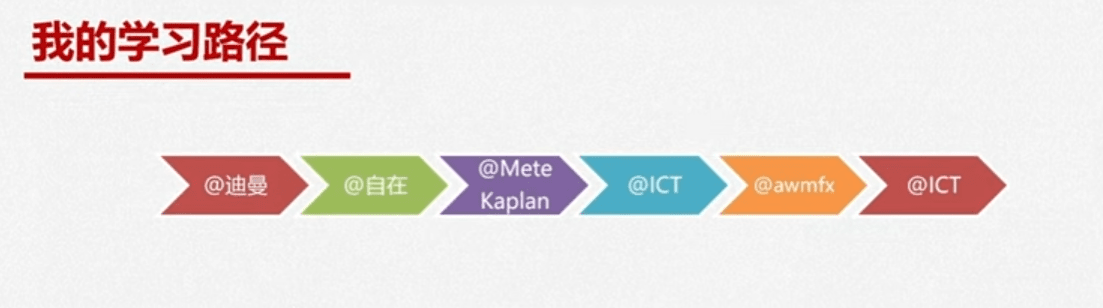
My first step was to read Diman's Order Flow Trading book, which is an entry-level book. However, this book talks more about the operating principles of institutions. Many of us read it for retail investors. I don’t understand. In fact, this book is not unfamiliar to us. It is the YTC set of books, with the book attached to it. After I couldn’t understand it, I read Zizi’s article, but it still felt a bit difficult, and then Woolen cloth? I went to watch this blogger’s video again
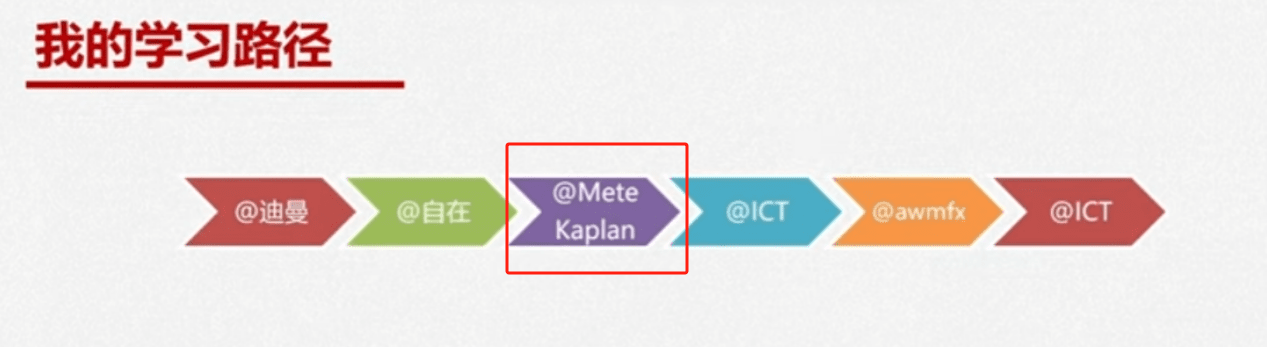
This blogger is actually the Turkish big brother we often mention. After I saw his video, I felt that I was getting better.

Then I watched the ICT course, but I couldn't get any interest in it. I didn't know what he was saying and I couldn't understand him. I just wanted to sleep because my English was very poor. I gave up after watching two episodes. Then I watched this person's video again.
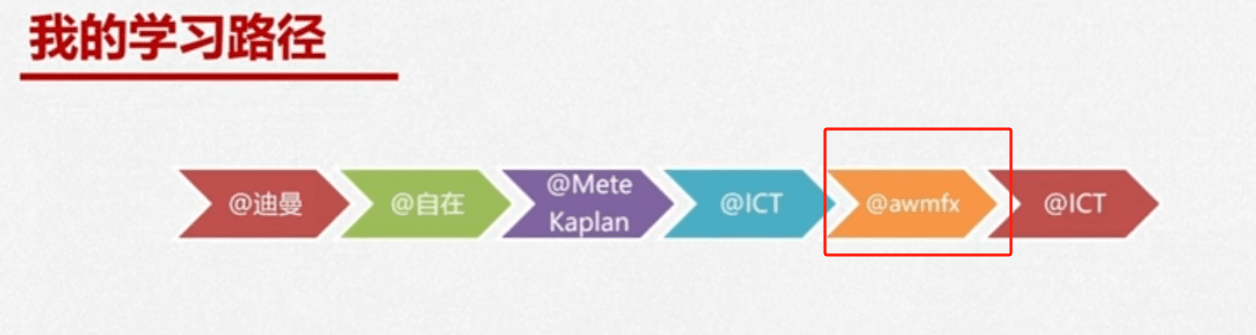
Speaking of Gongxu, this person's videos are very, very helpful to me personally. It feels like they help me open up my Ren and Du meridians. Of course, you may not have this feeling, so after watching this person's video, I turned around and watched ICT's videos, and then I read Zizai's articles. At this time, I found that I could understand them, and I felt that the order flow was really interesting. So now, I am more of a cycle between ICT and these people. Sometimes I like his videos, sometimes I like his videos, but more often I watch ICT himself. The other is my learning method.
Simply put, there are three steps
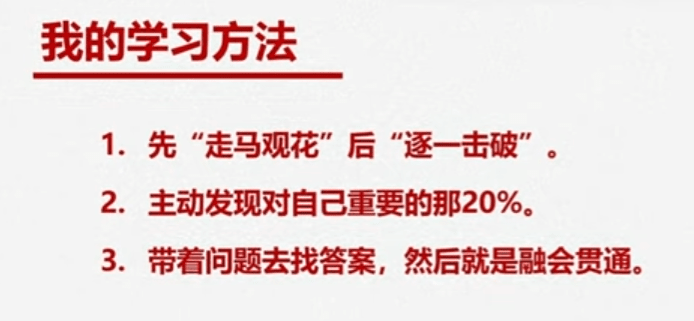
The first step is to take a quick look and then defeat them one by one. What does that mean?
I will take a quick look at the videos of these people, no matter how long or boring they are. But one thing about ICT lectures is that, for example, in a two-hour class, he may spend one hour and thirty minutes talking about nonsense, or talking about other things. These things are more about mental methods, which are actually quite useful. But if you want to quickly acquire some methodologies, one hour and thirty minutes is actually not that meaningful to you. You want to quickly extract the dry goods from those 30 minutes, so what should you do?
My habit is that I will download all the subtitles in his video first, and then I will quickly read it like reading a book.
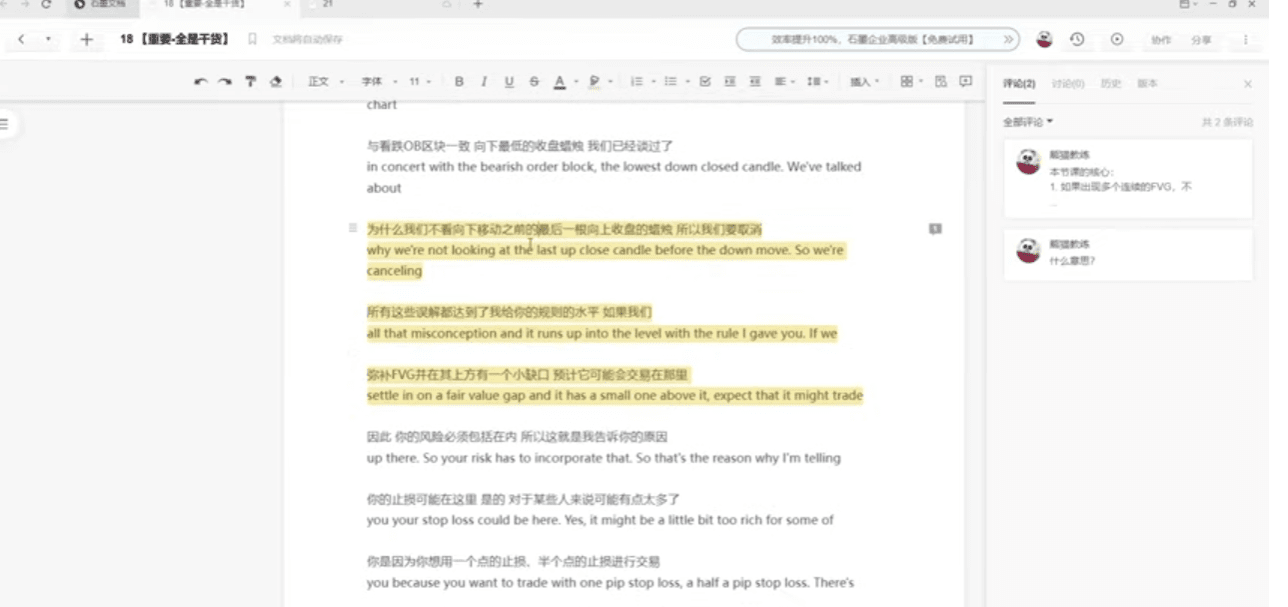
For example, if I think something is of no use to me for the time being, I will just quickly go through it, and then when I find something useful, I will mark it out, then find the progress bar, go to watch the corresponding video, and finally write down my understanding and my questions. This is a very efficient learning method for me. But no matter what, you still have to go through all of them first, take a quick look, and then which video do you think is very important, for example, this lecture is particularly important to me, I will focus on watching it several times, this is what I said about taking a quick look first and then breaking them down one by one.
The second is to proactively discover the 20% that is important to you. You will definitely encounter various problems during the learning process. At this time, you might as well take these questions and look for answers directly in articles or videos. For example, what should I do when there are multiple FVGs? Or when I find FVG in a small cycle? How should I set it up at this time?
The third one is to look for answers with questions and then to integrate them. This is my main learning method. Of course, the purpose of sharing my learning path and method is not to let you learn in the same way. I just want to say that everyone’s learning method is different, and everyone’s cognition and skills already mastered are also different, so this will lead to different learning paths and even learning notes. It’s normal. Sometimes, something that I think is very important may not be important to you because you already know it. But many times, I will not take notes on something that you think is very important, so the purpose of sharing it is only for your reference. For example, Dongzi from our technical team has never seen the supply and demand video, but it does not mean that he has not learned well.
Finally, let’s talk about practical suggestions.
First of all, what I will talk about in the future will definitely not be the original. Please note that the original here refers to ICT
First, I don’t have this ability, because it contains too much content, I think it’s even more than Abu’s, and I can’t possibly learn everything in my head 100%.
Secondly, I don't want to learn that way, because I am a human being and I have subjective initiative. I have my own existing knowledge and a stable and profitable system, including what I am teaching to everyone in the special training camp now. I let everyone practice deliberately, and it is this system that has such a high success rate. So how can I easily abandon my system and learn something new? So I don't want to learn that way. What's more important is that I have the ability to integrate knowledge. That is, when I learn new things, I will combine my existing knowledge. This has actually been reflected in the localization of any elective course we have taken before. For example, when we were studying harmonics, we combined it with 12 gold Ks, when we were studying wave theory, we also combined it with moving averages, when we were studying Wyckoff, we also combined it with the two breakthrough forces of price behavior, and when we were studying the theory of entanglement, we also combined it with the price behavior trend 2.0 and 3.0 trend growth, relative reversal and other concepts.
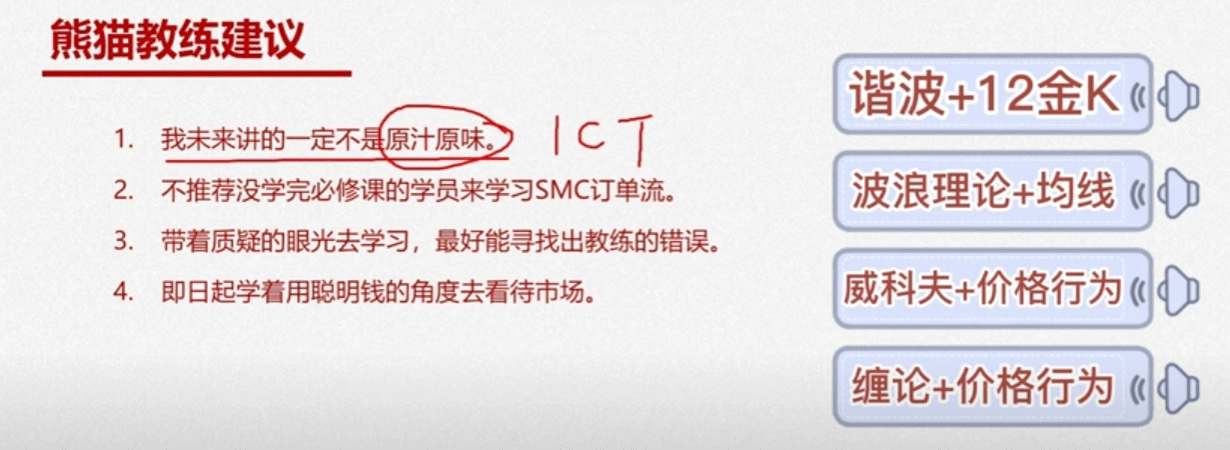
I am not interested in going deep into order flow, at least not for now. So for the next SMC order flow course, I am more responsible for leading you to the door. If you want to go deeper, you have to rely on yourself. The second point is that it is not recommended for students who have not completed the required courses to learn SMC order flow, because it still has some thresholds. If you don’t even know the basic institutions, such as higher highs and higher lows, a trend has been initiated, how to analyze from large cycles to small cycles, how prices are formed, etc. ...
If you don’t know these basic principles, it may be more difficult for you to learn his course. Therefore, I do not recommend that students who have not completed our required courses learn SMC order flow.
Third, learn with a questioning eye. It would be best if you can find out my mistakes in the subsequent teaching process. This is the best proof of your serious and independent thinking.
Article 4: From now on, learn to look at the market from the perspective of smart money. Whether we have studied price behavior, wave theory, or entanglement theory before, we have always emphasized the importance of trends. But starting from today, we must look at where the orders are and where the liquidity is. So to sum up, price behavior follows trends and order flow follows big funds. The way we look at the market in the future may undergo a qualitative change.
Finally, today I have a small assignment.
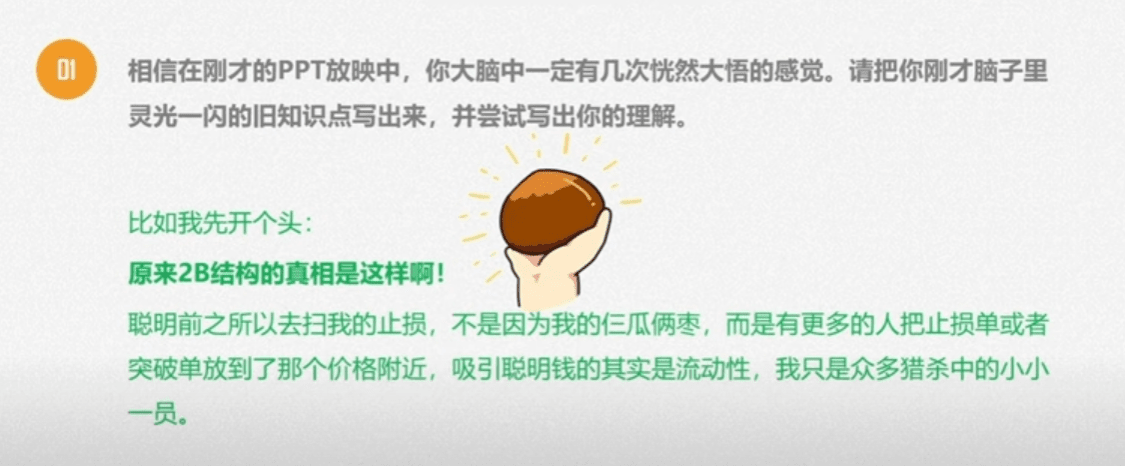
I believe that during the PPT presentation just now, you must have had several moments of sudden enlightenment in your brain. Please write down the old knowledge points that just flashed through your mind and try to write down your understanding. For example, let me give you an example. Let me start with the beginning. It turns out that the truth of the 2B structure is like this. We knew the 2B structure before. There will be one here. After a period of decline, it hits an isolated low point, and then after going up, it will break this isolated low point again, and then quickly pull up. This is the 2B pattern.
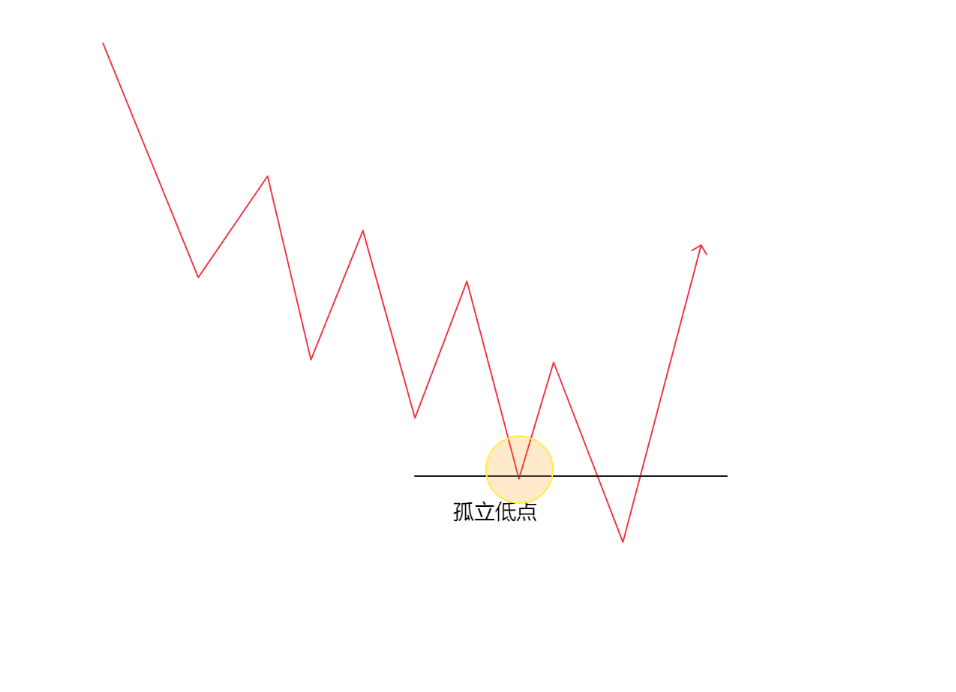
Now after learning this lesson, we found that the reason why the smart money swept my stop loss was not because of my small amount. How could he see my dozens or hundreds of U? It was that more people, like me, put stop loss orders or breakthrough orders at this position. So what attracted the smart money was actually liquidity. I was just hunted by him, that's all. For example, the long case we just cited is very clear, right? The double structure broke through and then pulled back immediately. In fact, he cared about the liquidity below.
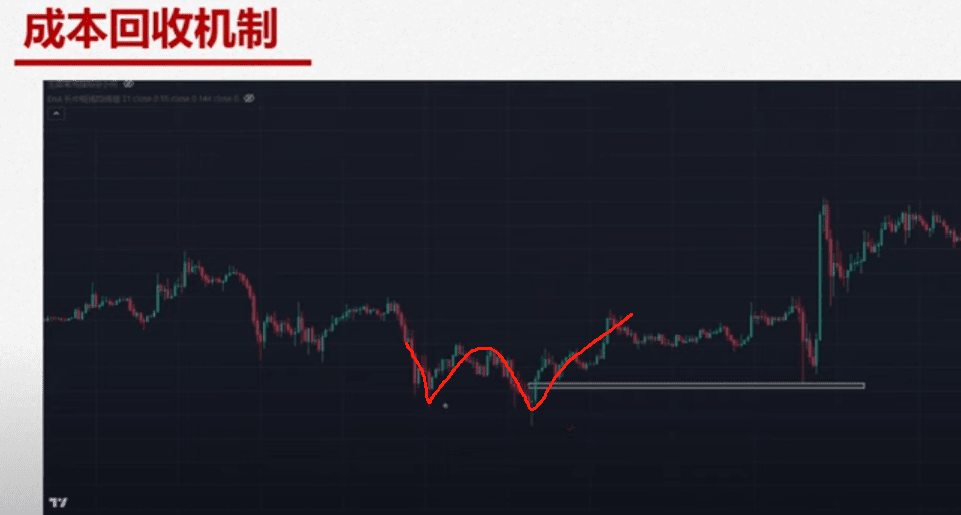
Therefore, there is a high probability that a large number of them have appeared at this position. The above is all the content of our class. Finally, thank you again for reading it carefully. Our next lecture, which is the first formal lecture, will discuss in detail the principles of liquidity, what is liquidity, why we need to master liquidity, and the importance of liquidity to our subsequent study of other content.
I am Coach Panda, who is good at explaining complex issues in a simpler way. See you in the next lecture.