

Project Overview
The track that YGG is on is the blockchain game guild track.
Due to the rise of the Gamefi track in 2021, the popularity of Axie Infinity triggered a gold-making frenzy among blockchain players. However, for most gamers in low-income countries, the configuration cost of a $600 pet, which requires three pets to start a battle, is unaffordable for many players. In this environment, the emergence of chain game guilds has greatly reduced the threshold for players to enter P2E games. Among them, the scholarship system pioneered by Yield Guild Games has led the rise of chain game guilds. The amount of financing in this track has increased significantly in 2021 and 2022.
Yield Guild Games (YGG) is a decentralized game guild built on ETH and Polygon. It pioneered the scholarship model and led to the rise of the blockchain game guild track. However, due to the current cold blockchain game track, the limitations of the scholarship model have gradually emerged. YGG has begun to invest in high-quality games rather than simply P2E games in its development path.
As of the third quarter of 2022, YGG has cooperated on 55 Gamefi projects. The game ecosystem in which it has invested has a wide coverage and rich types, which is conducive to better development when the Gamefi track explodes in the future.
In addition to investing in game assets, YGG is committed to developing the community scale of its ecosystem. By establishing SubDAO, it finds suitable communication and marketing channels in each country to expand its influence and establish exclusive communities in different countries. This strategic planning makes YGG's overall community scale have a greater advantage than other guilds in the same field.
It should be noted that, through statistics, the game assets invested by YGG have shrunk significantly throughout 2022, and its investment style has gradually turned to cautious. In the current situation where there are fewer gold-making games in the blockchain game industry, investment income will be one of the important sources of treasury income. In the future, it is necessary to continue to observe the changes in its treasury to determine whether the project can survive the future bear market stage. At the same time, if the blockchain game track does not develop well in the future, it will greatly limit the development ceiling of the project.
1. Basic Overview
1.1 Project Introduction
Yield Guild Games (YGG) is a decentralized autonomous organization (DAO) whose function is to invest in assets or tokens based on virtual worlds and blockchain games, optimize the value of assets owned by its community and achieve maximum utility.
1.2 Basic Information
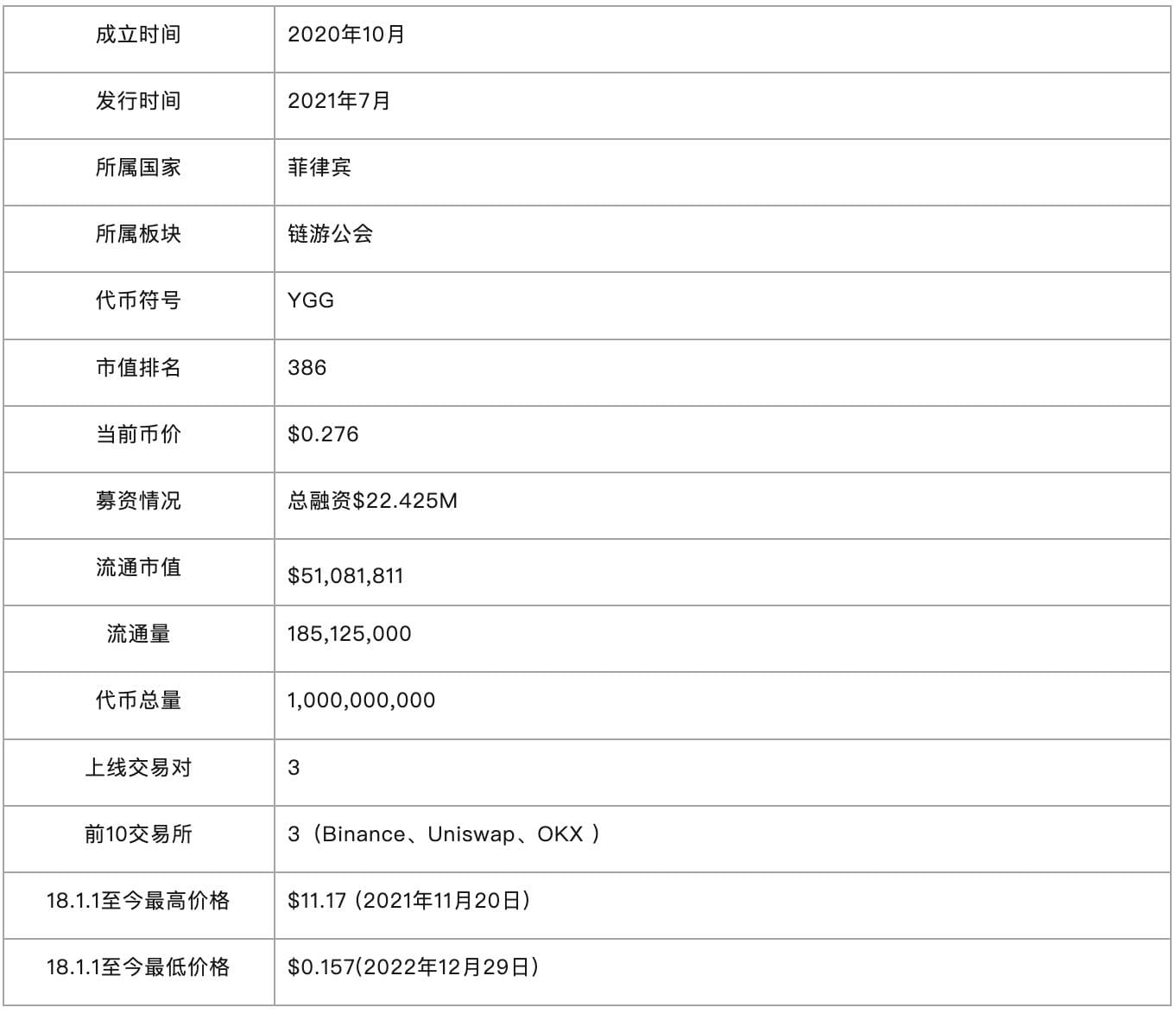
2. Project details
2.1 Team
According to its official report, the YGG team has a total of 48 people. Judging from the backgrounds of its team members, most of them have backgrounds in blockchain and traditional games, and most of them are deep participants in the Axie Infinity ecosystem.
Gabby Dizon, CEO and co-founder of YGG, has been deeply involved in mobile games since 2004 and has entered the blockchain industry since 2018. In 2014, Gabby founded Altitude Games, a game studio based in Manila, which released the blockchain game Battle Racers in 2019. Gabby Dizon is an active member of the Axie Infinity and Yearn Finance communities, and a board member of the Blockchain Game Alliance.
Beryl Li, CFO and co-founder of YGG. Beryl Li graduated from Cambridge University and has been deeply involved in the blockchain industry since 2014. She served as the chairman of the Cambridge University Cryptocurrency Association in 2016. She worked at BlackRock Asset Management and is also the co-founder of CapchainX (acquired by SMKG OTC US) and a certified financial institution consultant.
Owl of Moistness, CTO and co-founder of YGG. Has been in the blockchain industry since 2018. Owl of Moistness built breeding algorithms for Axie Infinity and many of its Discord bots, wrote smart contracts to integrate the Discord tipping system, wrapper contracts for deflationary tokens, and mining strategy contracts that meet the yVaults standard.
Alexei Udall aka Sarutobi, Head of Partnerships at YGG. Entered the blockchain industry in 2017. Has more than 5 years of experience in SaaS sales and partnerships.
Nolan Manalo aka Nate, Head of Gaming at YGG. He has been in the blockchain industry since 2016 and is an active member of the Axie Infinity community and the head coach of YGG’s esports teams on various platforms.
Advisory Team:
Anil Lulla, co-founder and COO of Delphi. Anil has a good reputation in crypto asset research and technical consulting. Delphi oversaw the token design of YGG, and Anil will also provide guidance and effective fund management before full decentralization.
Eric Arsenault, Partner at Metacartel Ventures. Eric has been a leader in the DAO space since 2018. He is a partner and investor at Metacartel Ventures and the head of the Rarible DAO ecosystem. Prior to this he worked at DAOstack, advising many of the industry’s leading DAO projects. Eric will advise YGG on DAO structures and the process of transitioning to decentralization.
2.2 Funding
YGG has completed four rounds of financing so far, with a total amount of $22.425M. The details are as follows:
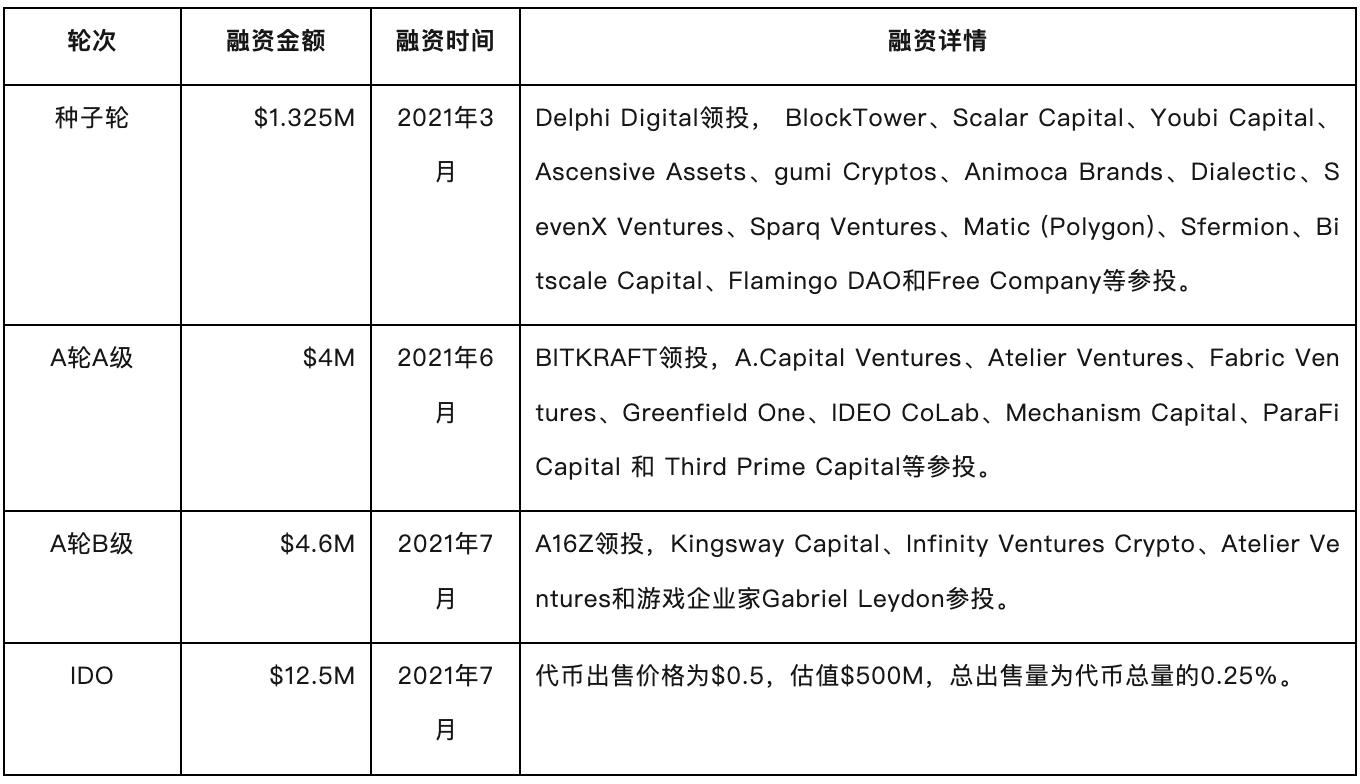
Table 2-1 YGG Financing Situation
According to the statistics of the on-chain treasury asset addresses provided by YGG, the treasury fund situation of YGG is as follows. Judging from the current team size of YGG, its overall funds are expected to support the DAO through this round of bear market.
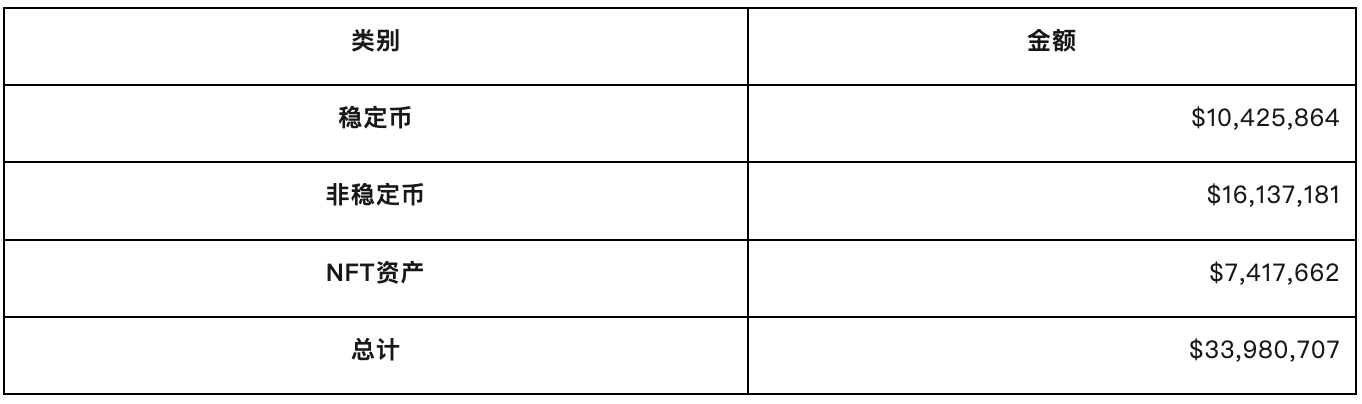
Table 2-2 YGG Treasury Assets
2.3 Code
The YGG code base is not open source.
2.4 Products
Yield Guild Games (YGG) is a decentralized game guild built on ETH and Polygon. It pioneered the scholarship model and led to the rise of the blockchain game guild track. However, due to the current cold blockchain game track, the limitations of the scholarship model have gradually emerged. YGG has begun to shift its development path to investing in high-quality games rather than pure P2E games. At the same time, it has enhanced its community influence through various strategies to expand the community scale. Therefore, we will mainly introduce the project from the perspective of YGG's investment portfolio and its community structure.
2.4.1 YGG Scholarship Model
As shown in the figure below, the scholarship system pioneered by YGG is formed by three parties: For players who lack the NFT assets required to enter the game, they can apply for a job with the guild in Discord, lend NFT assets, and spend time to earn in-game token rewards; for the guild, they need to purchase a certain amount of NFT assets to lend to players who have passed the application; for the community manager, this role needs to attract, screen, and train qualified gold-making players; the tokens earned by the players need to be shared with the guild and the community manager. The current YGG sharing ratio is 7:2:1, that is, players can obtain 70% of the income in tokens, community managers can obtain 20% of the income in tokens, and guilds can obtain 10% of the income in tokens.
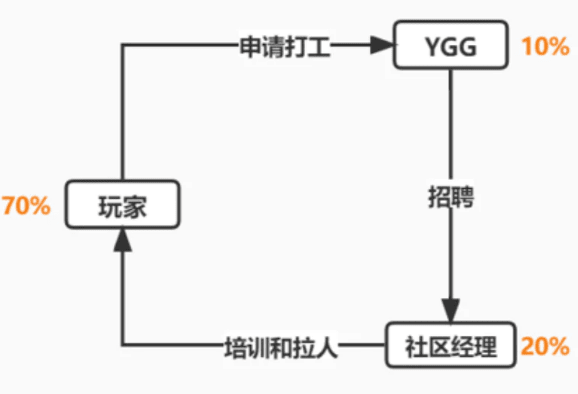
Figure 2-1 Scholarship system business process
The scholarship mechanism is essentially to help Gamefi bring in more players who mainly make money by farming. This group can help attract popularity to the game and expand the gaming community in the early stages. However, once it enters the middle and late stages, given that the design of the general token model in the current blockchain gaming track is not mature and death spiral dilemmas are everywhere, the huge number of gold-farming users will cause extremely serious damage to the game itself and will accelerate the collapse of Gamefi's economic model.
This means that the operation of the scholarship system in a single Gamefi is difficult to sustain for a long time. The guild needs to constantly look for profitable Gamefi to make a profit. During a bear market, the number of profitable Gamefi is very scarce, which will result in the guild having no income for a long time.
2.4.2 YGG DAO’s operating mechanism
YGG DAO's treasury assets (tokens, NFTs, virtual plots) are managed by the YGG Treasury, which is currently supervised by the three co-founders of the Yield Guild. These assets can only be used when two of the three co-founders sign a transaction or when the DAO community initiates a proposal to process the assets.
Another major mechanism of YGG is to create different SubDAOs, or secondary guilds, based on different regions and different games. SubDAOs are DAOs that focus on specific games or specific regions. Each SubDAO can have its own governance rules. SubDAOs will allow guilds to operate through localization. When a SubDAO is created, such as a SubDAO that focuses on games, YGG will first conduct research on the game, then buy the NFT assets in the game and put them into its treasury wallet. Finally, it will appoint managers of SubDAO to transfer NFT assets to smart contract wallets that can be controlled by SubDAO.
At the same time, YGG will also issue SubDAO tokens, such as the SubDAO created by YGG for League of Kingdoms, whose token is called YGGLOK. After the SubDAO token is issued, YGG will retain a portion of its SubDAO tokens to participate in its governance later; SubDAO token holders can vote on governance issues specific to the subDAO, giving them a say in how it operates.
From a functional perspective, as the main DAO, YGG will be more inclined to cooperate with more game companies, make investments and manage their treasury assets; most of the work of incubating and attracting traffic for specific games will be handed over to SubDAOs; at the same time, for regionalized SubDAOs, such as YGGJapan and YGGSEA, they will invest in and build communities for games in Japan and Southeast Asia respectively. SubDAOs will recruit local talents for management, regularly organize local activities, and strive to develop the localization of guilds and expand YGG's influence in various regions.
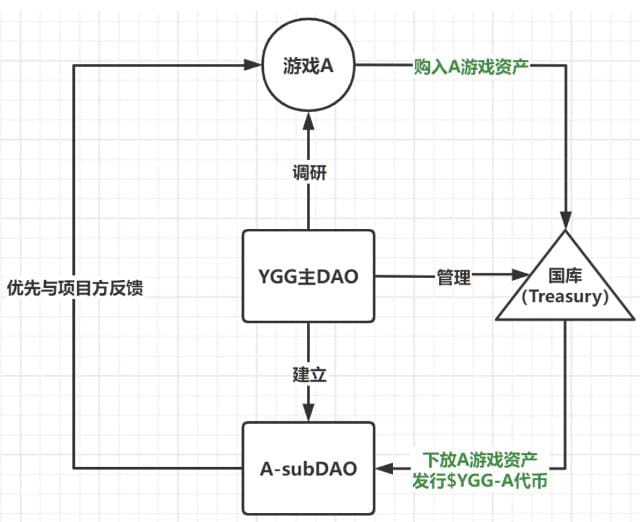
Figure 2-2 SubDAO creation flow chart
Currently, there are 12 SubDAOs under YGG, as shown below:
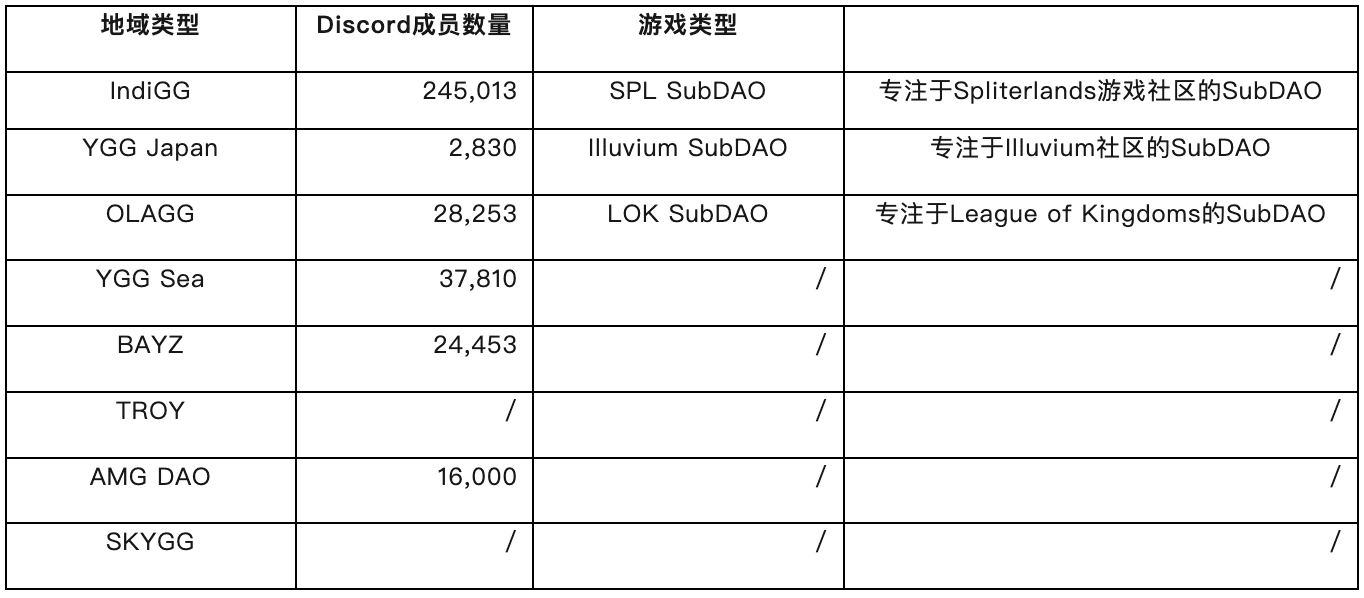
Table 2-3 SubDAO under YGG's territory
As can be seen from the table above, the total number of YGG’s SubDAO members currently exceeds 350,000. The following is an introduction to the main SubDAOs:
YGG SEA: YGG SEA is YGG's first regional SubDAO, aimed at providing community services to Southeast Asian countries outside the Philippines. At the end of 2021, YGG SWA received a total of $15M in financing. In more than a year since its establishment in November 2021, it has organized more than 1,000 online events, participated in more than 500 speaking events (including AMA, interviews, podcasts, etc.), held 4 large-scale live events in Indonesia, Vietnam, Thailand and Malaysia, and conducted 20+ roadshows in Indonesia and Singapore.
YGG Japan: YGG Japan is YGG's SubDAO focusing on the Japanese region. The DAO received $2.8M in investment led by Animoca Brands in July 2022. Currently, the DAO mainly focuses on providing development and marketing support for various IP-driven blockchain games in Japan.
BAYZ: BAYZ is YGG's SubDAO focusing on the Brazilian region. The DAO was led by YGG DAO with a $4M investment in July 2022. The DAO expanded its community influence by launching a dedicated cryptocurrency-related education and content platform website, and creating and spreading the concept of P2E on channels such as Twitch and TikTok. Currently, the DAO has more than 40 content creators, and its share of viewing time on Brazil's Web3 game Twitch exceeds 70%.
IndiGG: IndiGG is YGG’s India-focused SubDAO that builds communities by using offline and online nodes, which are described as micro-influencers or sub-communities within their guilds. Offline nodes include various college and university campuses within the IndiGG network, while online nodes are mini communities of 5,000 to 15,000 Discord users.
Ola GG: OlaGG is YGG's SubDAO focusing on Hispanic countries such as Mexico, Colombia, Argentina, etc. The founder of this SubDAO is a family office partner who manages more than 20 billion assets; the DAO received $8M in financing in June 2022.
AMG DAO: AMG DAO is YGG’s SubDAO focusing on Central and Eastern Europe. Currently, the DAO’s members are distributed in 11 countries in Europe, making it the largest gaming guild in Central Europe. In addition, Troy and SKYGG are SubDAOs focusing on Turkey and South Korea respectively.
Figure 2-4 YGG’s SubDAO layout
2.4.3 YGG’s investment portfolio
As of the third quarter of 2022, according to its YGGQ3 community report, YGG has collaborated on 55 Gamefi projects. The following is a list of its major investment projects:
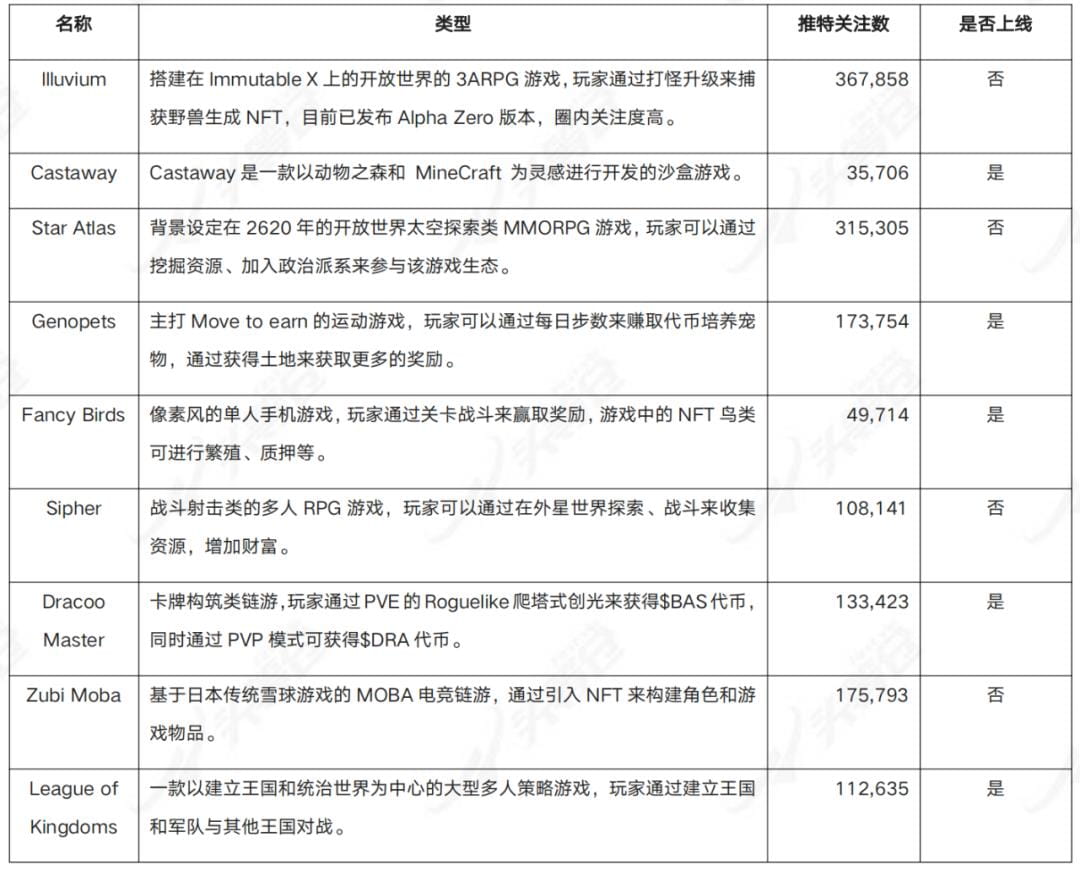
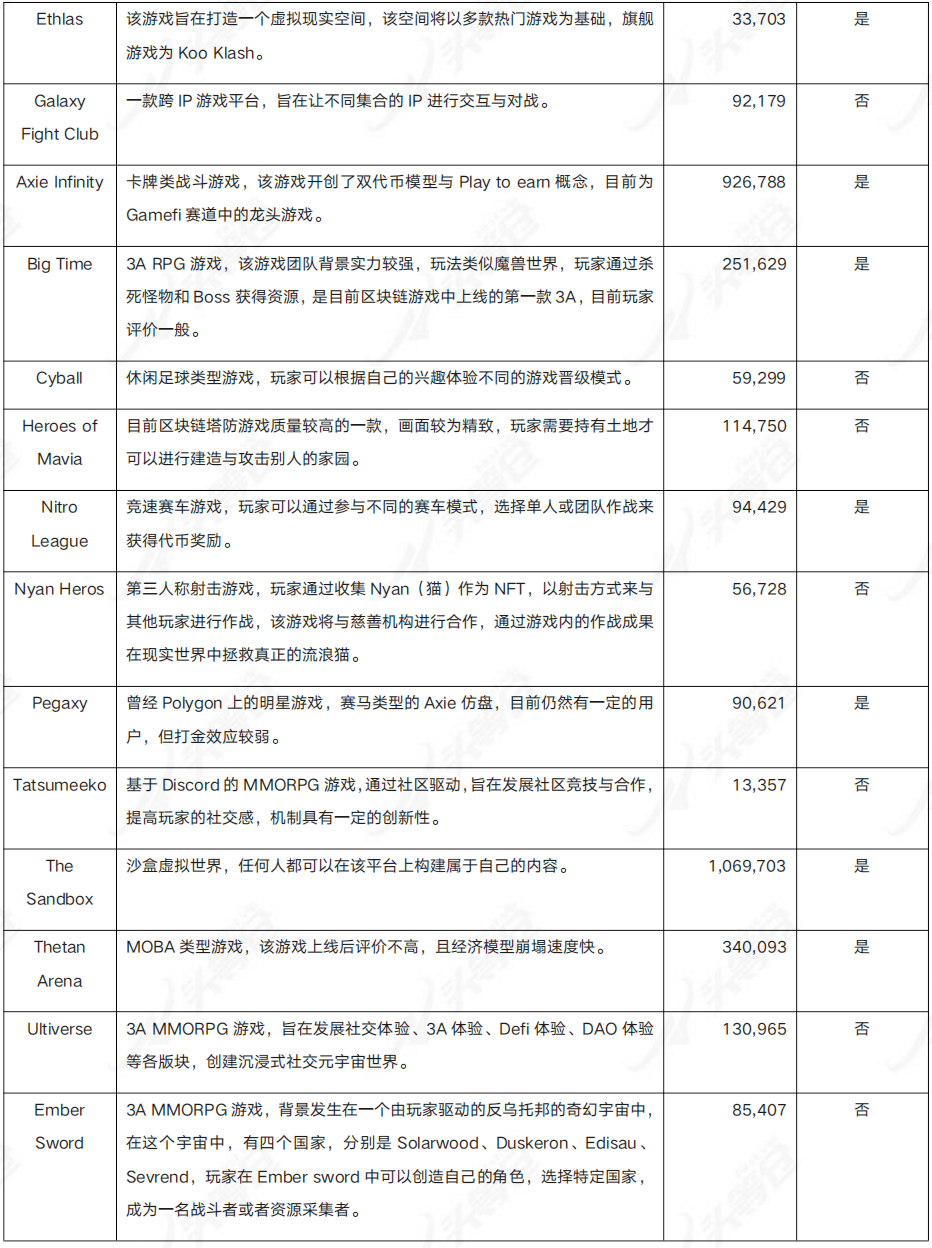
Table 2-4 List of YGG cooperation projects
2.4.4 YGG Community Operation
YGG has launched the GAP plan (Guild Development Plan) to expand the community and enhance community cohesion, and promote collaboration between community members and cooperative games. Participants need to complete the achievement tasks officially released by YGG, such as participating in cooperative games for a certain period of time; recruiting a certain number of players to join YGG, hosting high-quality streaming content, etc. to receive YGG token rewards and corresponding NFTs. This plan is one of the key directions of YGG's current development.
GAP Program Season 1 (Guild Advancement Program): Most of the achievement tasks in the first season were created by game operation managers and community marketing managers in YGGDAO; there were 45 achievement tasks in the first season, with more than 500 participants, and a total of 102,160 YGG tokens and 1,030 corresponding achievement proof NFTs were distributed. It will run from April 2022 to July, a total of 3 months.
GAP Season 2 (Guild Advancement Program): In addition to the game operations managers and community marketing managers in YGGDAO, most of the achievement tasks in the first season were created by YGG's cooperation ambassadors in their respective games. There are 116 achievement tasks in the second season, involving 13 cooperative games. The scope of achievement tasks in the second season is wider, not only related to game cooperation, but also corresponding tasks such as increasing content creation, building community tools, and recording teaching videos. There are 603 participating wallets in the second season, and a total of 225,226 YGG tokens and 2,063 corresponding achievement proof NFTs have been distributed; the second season of the GAP plan will start in September 2022 and end in December, a total of 3 months.
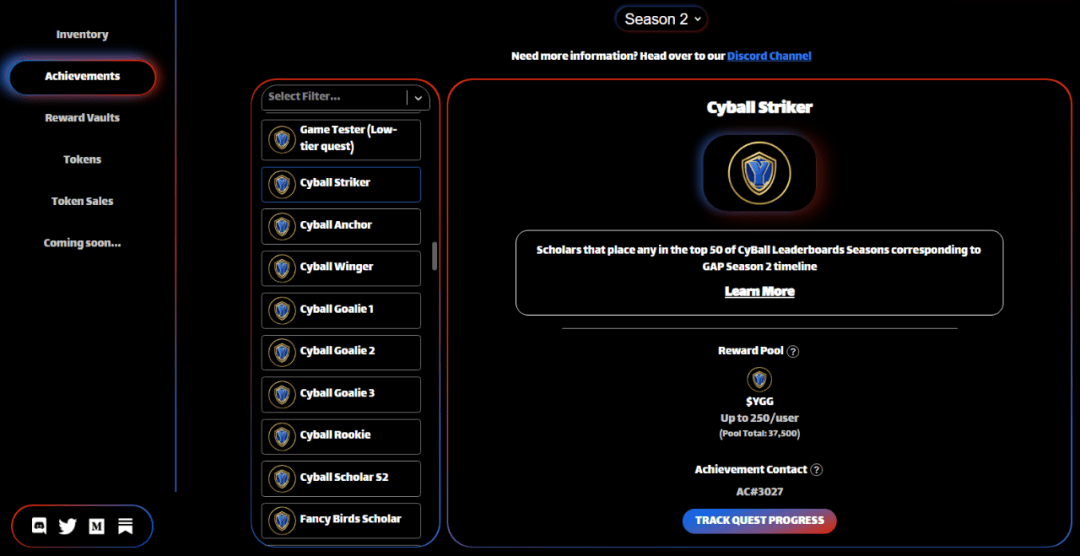
Figure 2-5 YGG achievement task planning interface
In addition to community members receiving YGG token rewards through the GAP program, YGG has also launched a Reward Vault for cooperative games to encourage players holding guild badges to pledge $YGG to obtain relevant token rewards for cooperative games. The second phase of the Reward Vault is currently open.
The first Reward Vault: lasts for 90 days, staking will be open on July 28, 2022, and rewards will be released on August 1. The Reward Vaults include two projects, Aavegotchi and Crypto Unicorns. Stakers can receive relevant token rewards of the two projects ($GHST and $RBW). After the event, a total of more than 3.5 million YGG tokens have been staked.
The second Reward Vault: lasts for 90 days, staking will be open on November 13, 2022, and rewards will be distributed until February 12, 2023. Users holding the YGG guild badge can stake YGG tokens on the Polygon Reward Vaults and receive League of Kingdoms and Thetan Arena token rewards ($THG and $LOKA).
Summarize:
As the founder of the blockchain game guild, YGG's main focus in 2021 is to promote Axie Infinity and the scholarship system it pioneered. However, with the recession of the blockchain game track in 2022, YGG began to gradually invest in high-quality games and move towards a fund model. At the same time, it is committed to incubating games, expanding the scale of its ecological community, and laying out plans to divert traffic to its cooperative games in the future.
It can be seen that by establishing SubDAO, finding suitable communication and marketing channels in each country, we can expand the popularity and influence of YGG and blockchain games, thereby establishing exclusive communities in different countries. This strategic planning is conducive to YGG's rapid expansion of its community scale when Gamefi explodes in the future.
3. Development
3.1 History
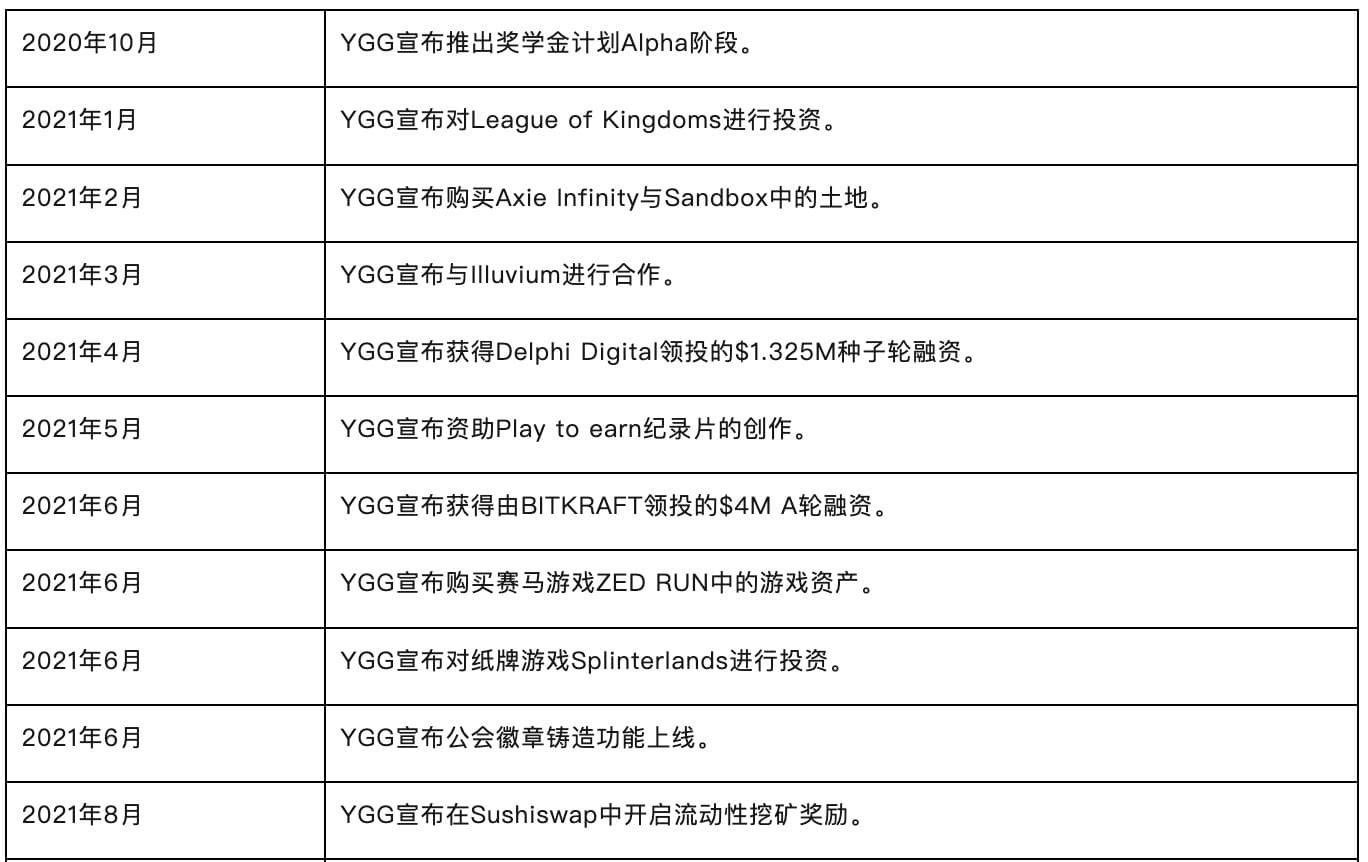
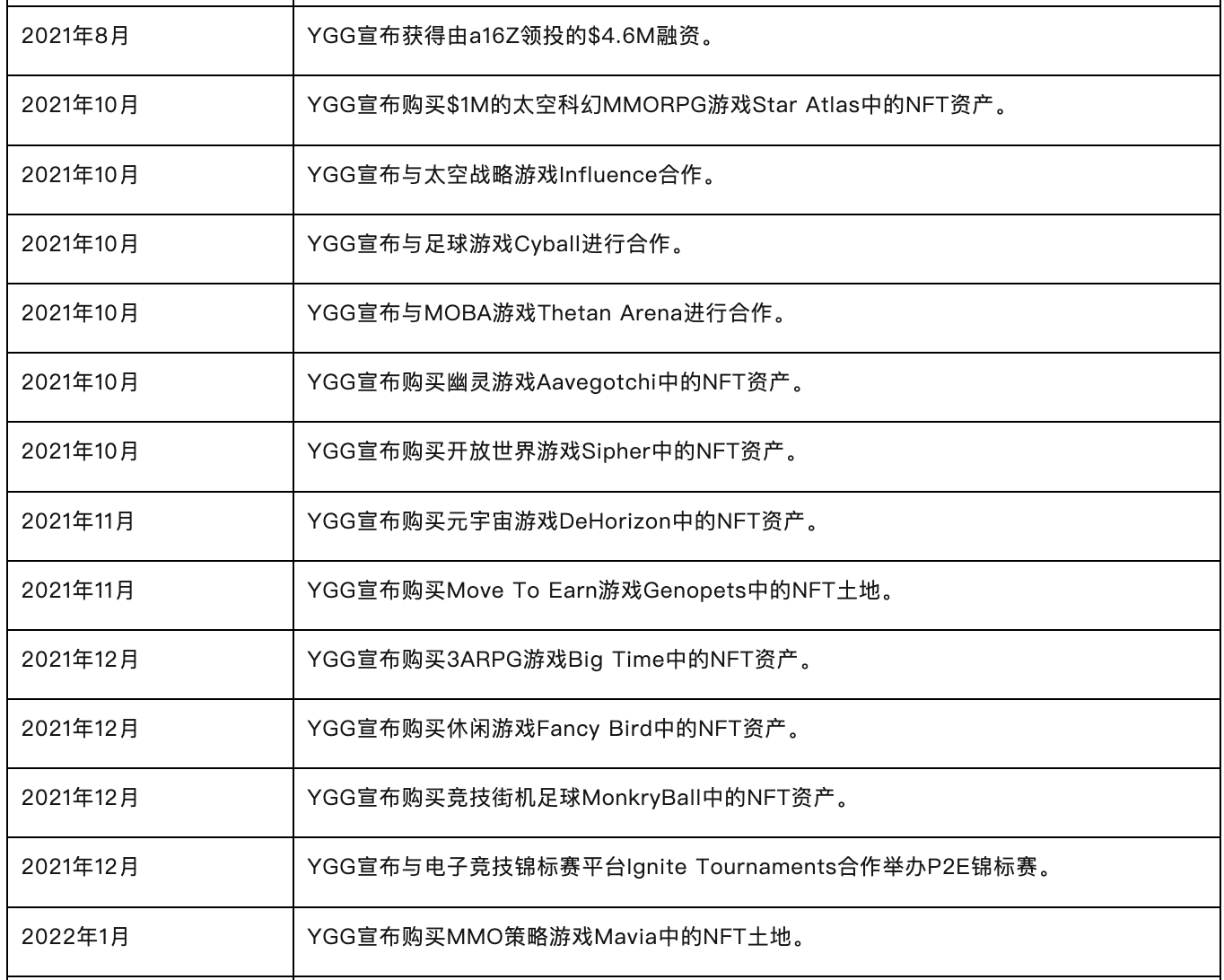
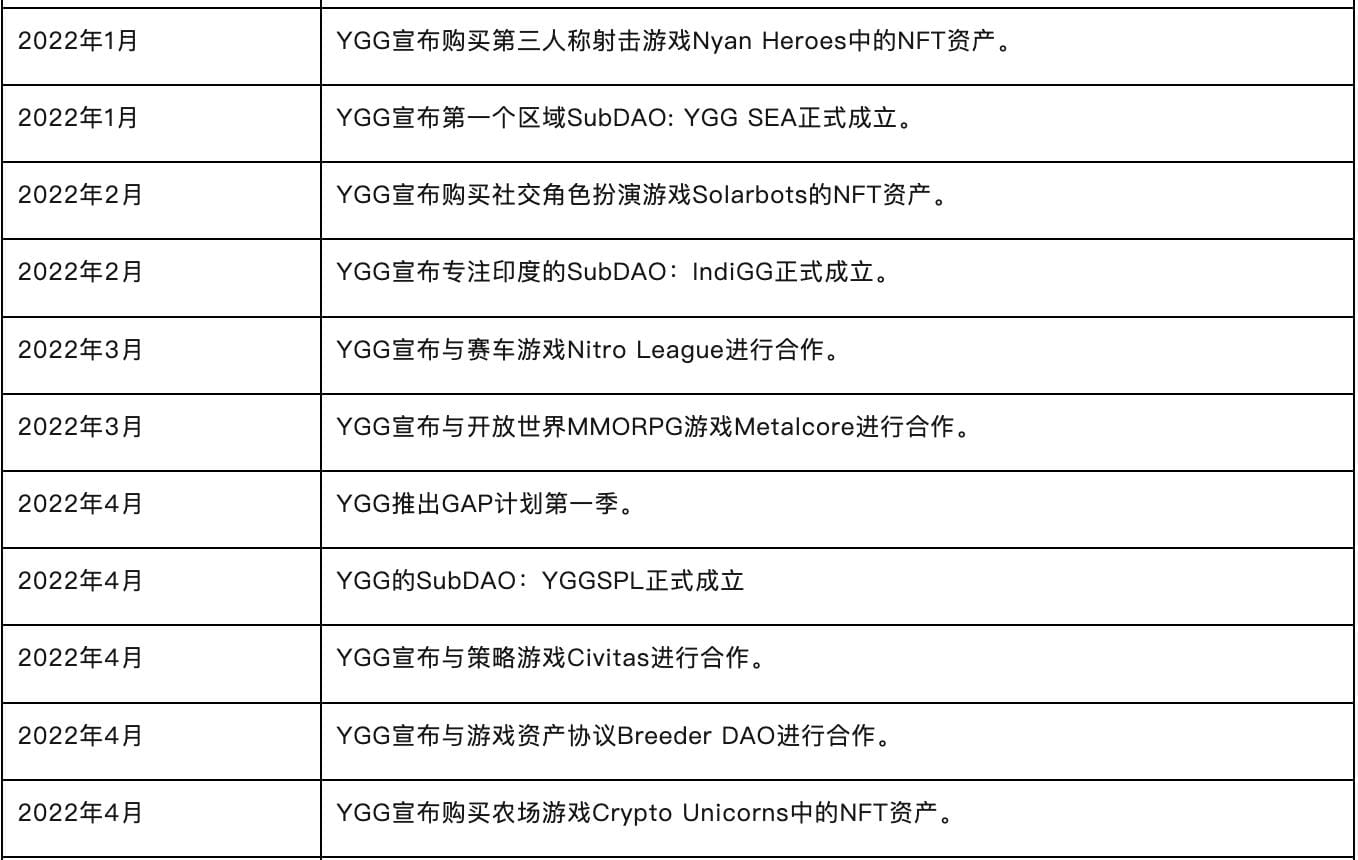
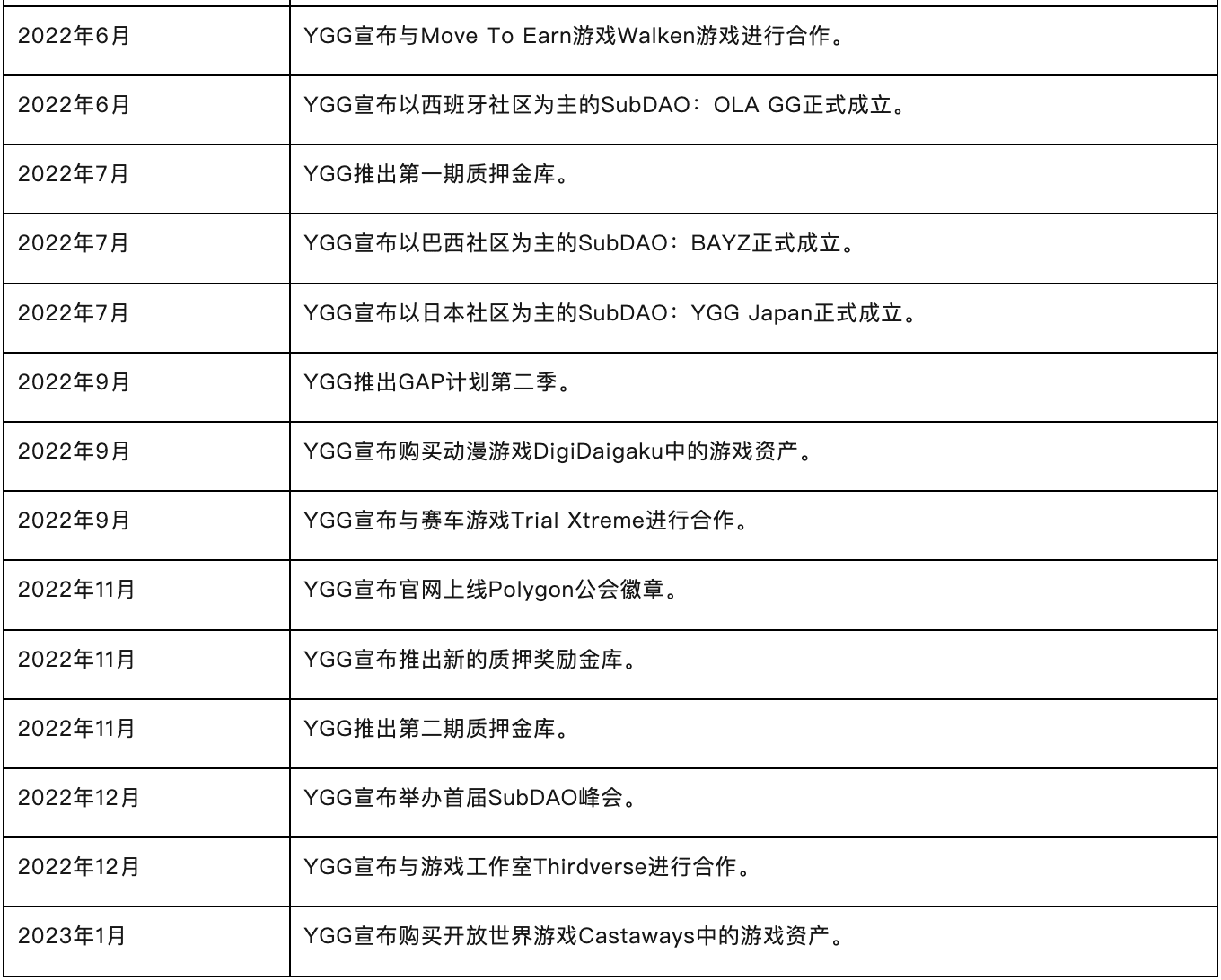
Table 3-1 YGG major events
3.2 Current situation
3.2.1 Operational Data
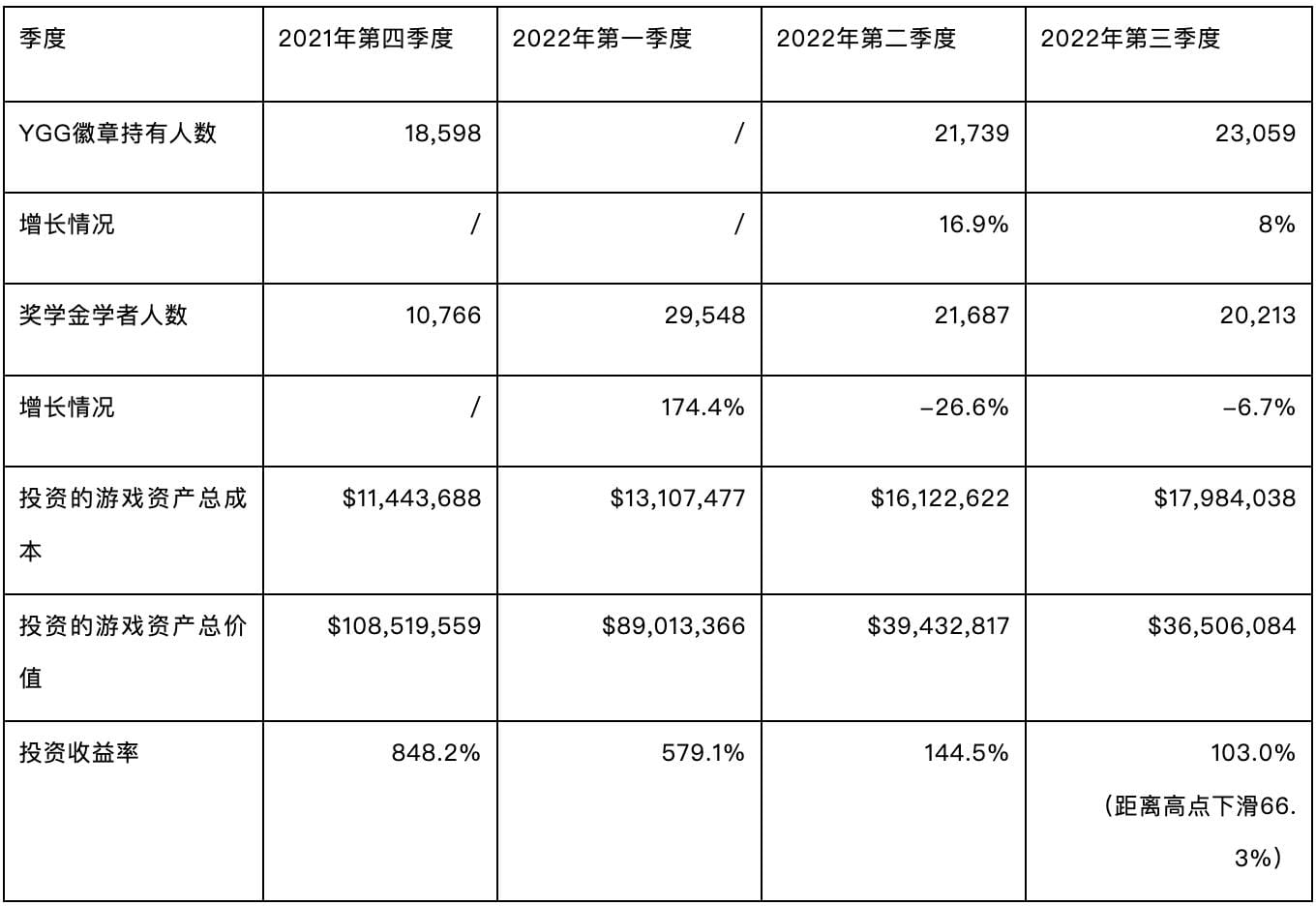
As can be seen from the above table, the number of badge holders of YGG shows a slow increasing trend, which indirectly indicates that the size of its community is also slowly increasing, but the number of scholarship recipients has experienced a decline for two quarters. The main reason is that the P2E model did not produce a hit game in the second half of 2022, so that there are no rewards under the scholarship model to attract new players to join. From the investment situation of YGG, the total value of its investment assets has dropped from over 100 million in the fourth quarter of 2021 to 30 million in the third quarter of 2022, and the overall asset value has dropped by 66.3%. It can be seen that the bear market has caused a large drawdown on its overall assets, but from the perspective of its rate of return, the decline is mainly due to the drawdown of profits, and its investment portfolio is still in a state of positive profitability as a whole.
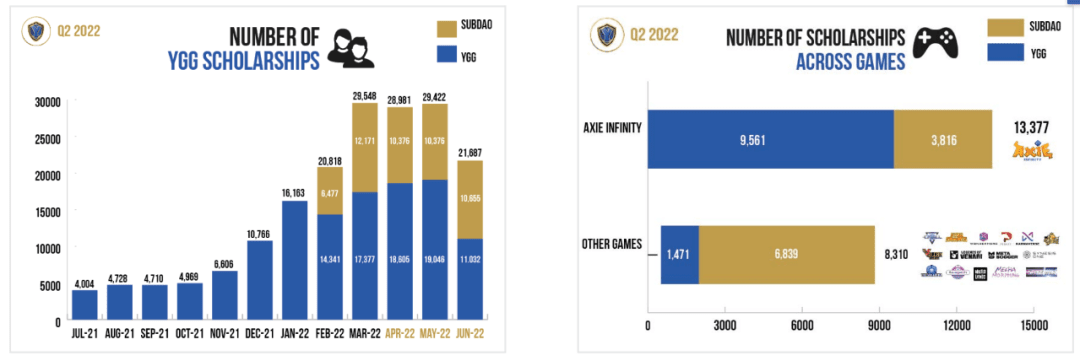
Figure 3-1 Number of scholars in the YGG Scholarship Program
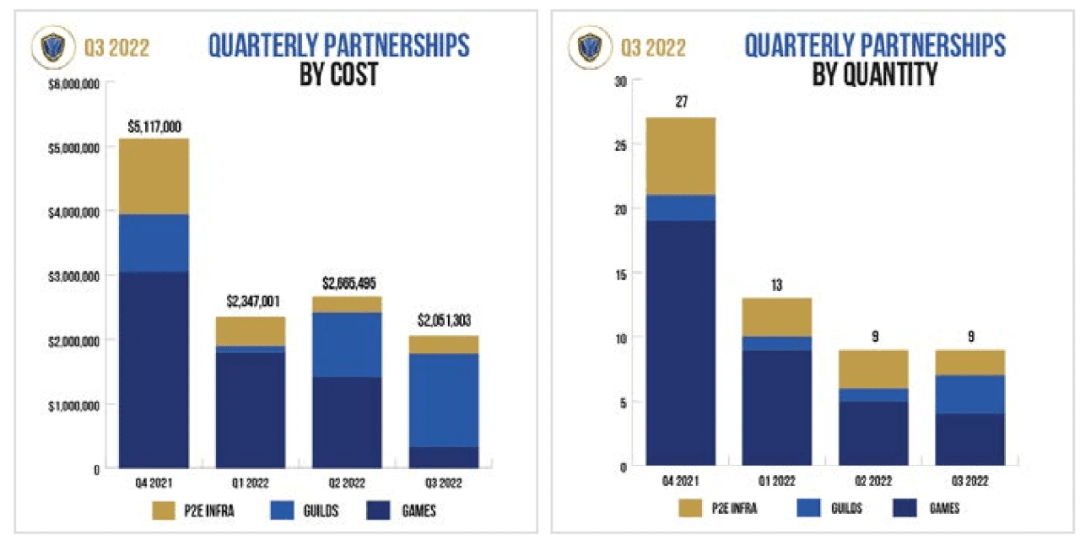
Figure 3-2 YGG investment situation
As can be seen from the above picture, the number of YGG scholarship recipients has declined since 2022, but due to the expansion of SubDAO, the overall number of scholarship scholars has remained relatively stable in the following months, but has also shown a downward trend since mid-2022; and judging from the number and amount of YGG's investments, the number and amount of games invested by YGG throughout 2022 showed a downward trend, which shows that YGG's investment style in games has gradually turned cautious during the bear market.
3.2.2 Social Media Scale
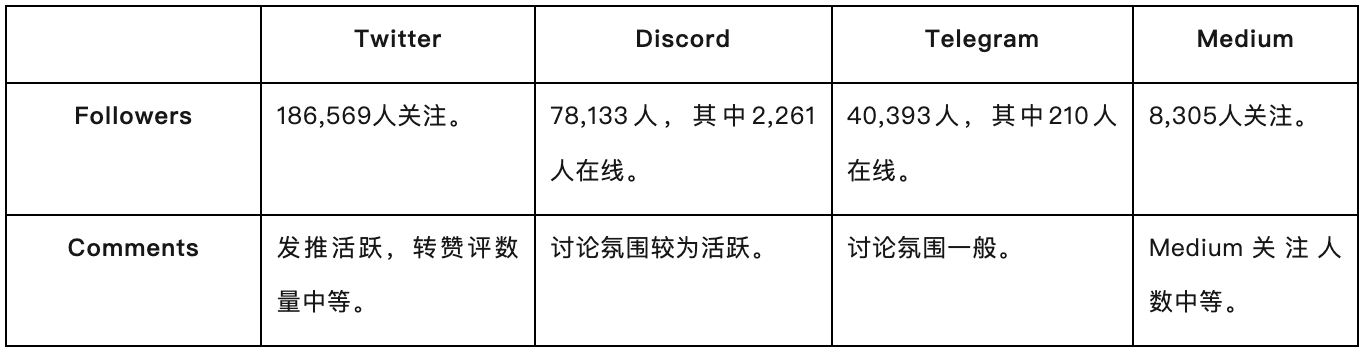
Table 3-3 YGG social media data
3.3 Future
YGG has not announced its roadmap yet.
Summarize:
YGG's community size has also been slowly increasing during the bear market, but its invested game assets have shrunk significantly throughout 2022, and its investment style has gradually turned cautious. In the current situation where there are fewer gold-making games in the blockchain game industry, investment income will be one of the important sources of treasury income. In the future, it is necessary to continue to observe the changes in its treasury to determine whether the project can survive the future bear market.
4. Economic Model
The native token of Yield Guild Games is YGG, with a total supply of 1,000,000,000.
4.1 Token Allocation
The YGG token distribution is shown in the following table:
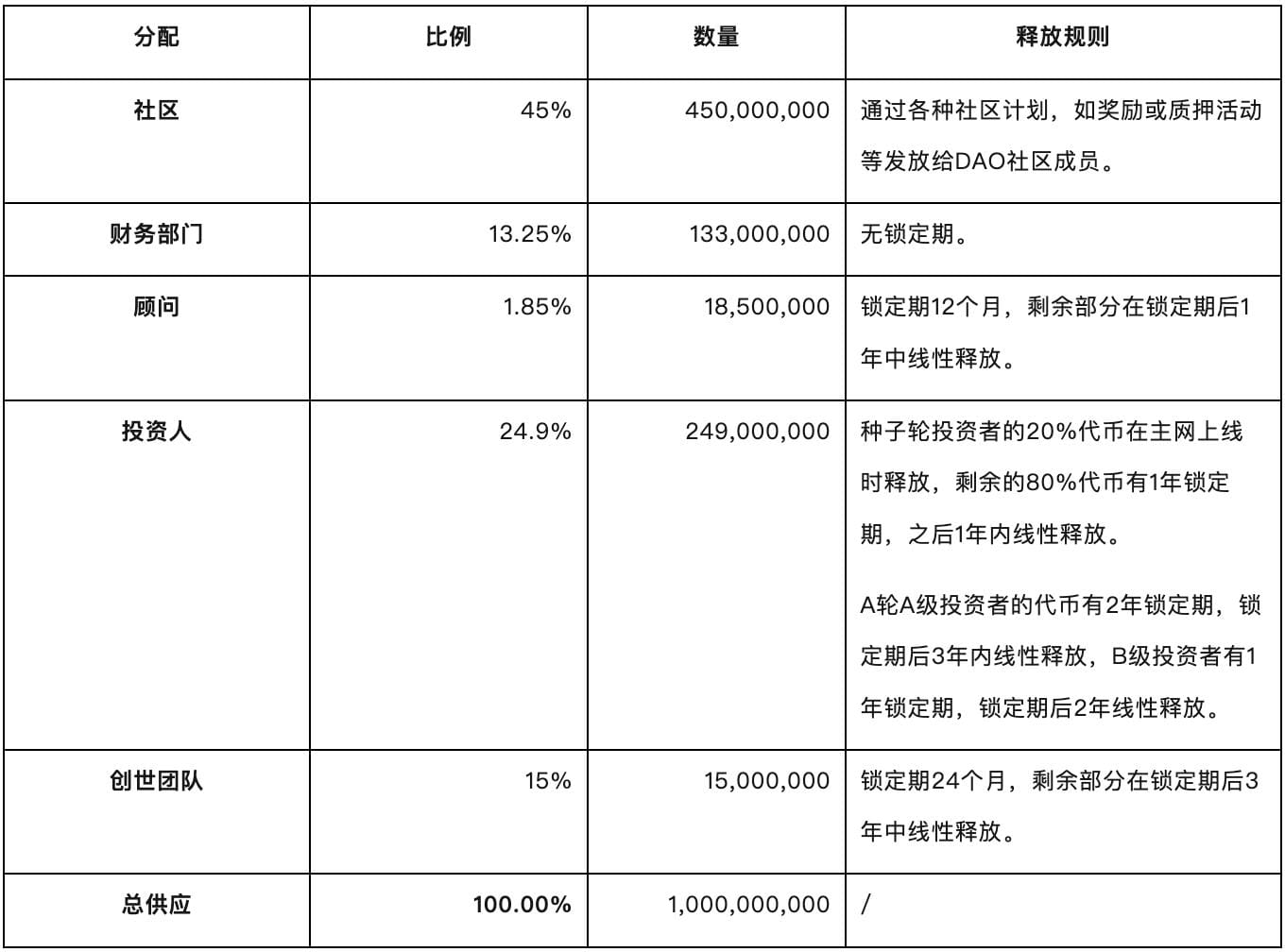
Table 4-1 YGG distribution
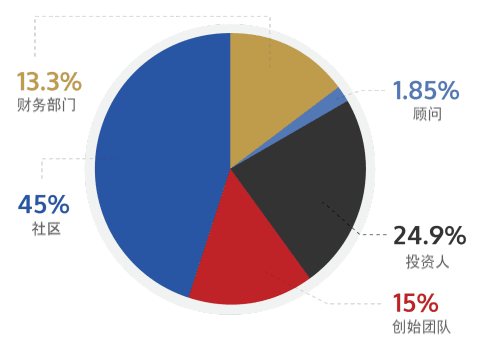
Figure 4-1 YGG token distribution details
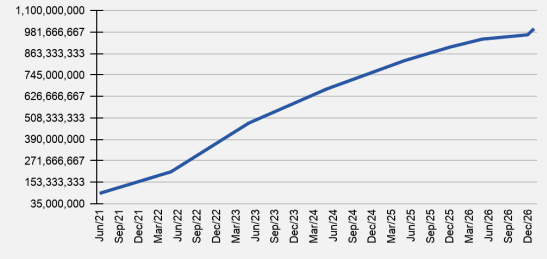
Figure 4-2 YGG token unlocking table
4.2 Coin holding address analysis
According to data from the Ethereum browser, as of January 16, 2022, YGG has 18,726 coin-holding addresses on Ethereum. YGG accounts for 91.86% of the top 10 addresses, and 98.59% of the top 100 coin-holding addresses. Most of the top 10 addresses are contract and exchange addresses. If the tokens in the contracts and exchange addresses are removed, the top 10 on-chain large addresses account for about 4.52% of the coin holdings, and the concentration of holdings is relatively low.
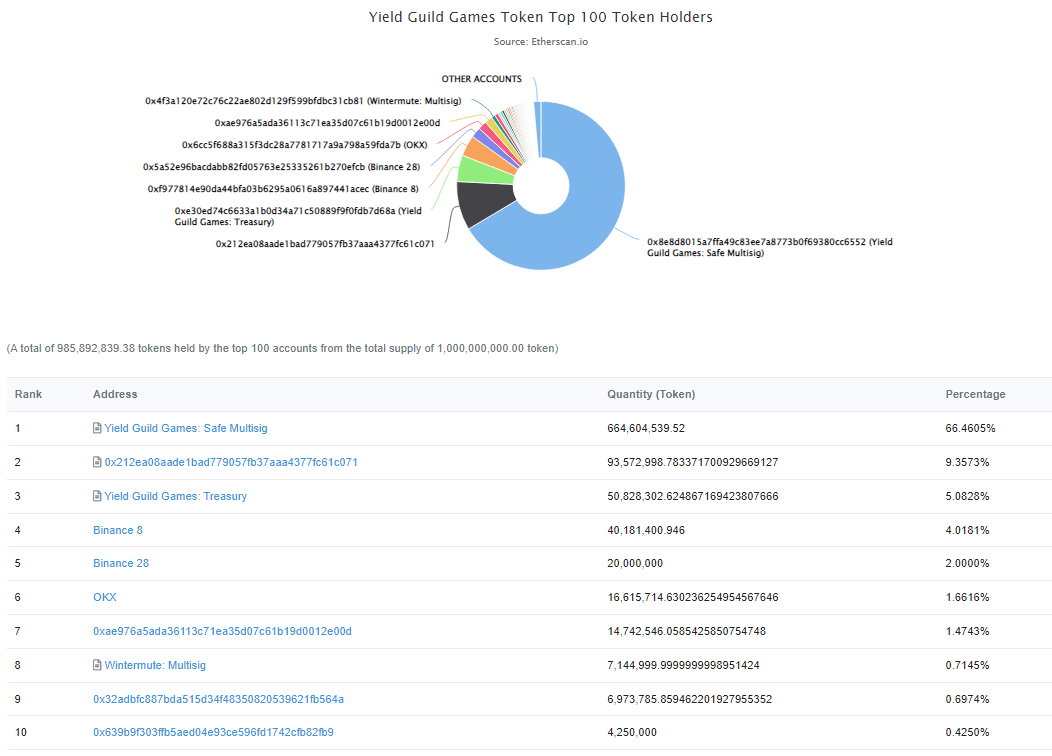
Figure 4-3 Distribution of YGG coin holding addresses
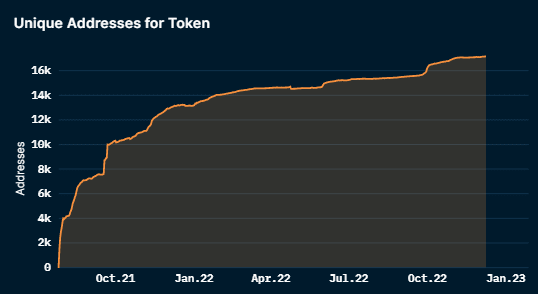
Figure 4-4 Changes in YGG currency holding addresses
Judging from the Nasan coin address data, the number of YGG's coin holding addresses increased rapidly before 2022, and maintained a slow growth trend after the second half of 2022.
4.3 Token Usage
At present, the main functions of YGG tokens are as follows:
1. Staking tokens can earn rewards in the form of related sub-DAO tokens, or tokens of game projects that cooperate with them;
2. DAO members holding YGG tokens can initiate proposal voting through its website, including but not limited to the following topics: 1) Technology; 2) Products and projects; 3) Token allocation; 4) Governance structure.
5. Competition
5.1 Industry Analysis
YGG is on the blockchain game guild track.
5.1.1 Industry Overview
In the traditional gaming world, game guilds are formed to allow players to gather and cooperate to conquer dungeons or work together to kill big bosses. For example, in World of Warcraft, top guilds often strive for the first clearance of each dungeon or the first kill of a monster. In addition to these highly cooperative guilds, traditional game guilds also focus on social interaction between players or sharing of game content, becoming the home of the gaming community.
In Web3, due to the rise of the Gamefi track in 2021, the popularity of Axie Infinity triggered a gold-making frenzy among blockchain players. However, for most gamers in low-income countries, the configuration cost of a $600 pet, which requires three pets to start a battle, is unaffordable for many players. In this environment, the emergence of chain game guilds has greatly reduced the threshold for players to enter P2E games. Among them, the scholarship system pioneered by Yield Guild Games has led to the rise of chain game guilds.
The scholarship system is one of the important mechanisms of the current blockchain game guild. As shown in the figure below, the scholarship system is formed by three parties:
For players who lack the NFT assets needed to enter the game, they can apply to work for the guild, lend NFT assets, and spend time to earn in-game token rewards; for the guild, they need to purchase a certain amount of NFT assets to lend to players who have passed the application; for the community manager, this role needs to attract, screen, and train qualified gold-earning players; the tokens earned by the players need to be shared with the guild and the community manager. Currently, YGG's sharing ratio is 7:2:1, that is, players can obtain 70% of the income in tokens, community managers can obtain 20% of the income in tokens, and guilds can obtain 10% of the income in tokens.
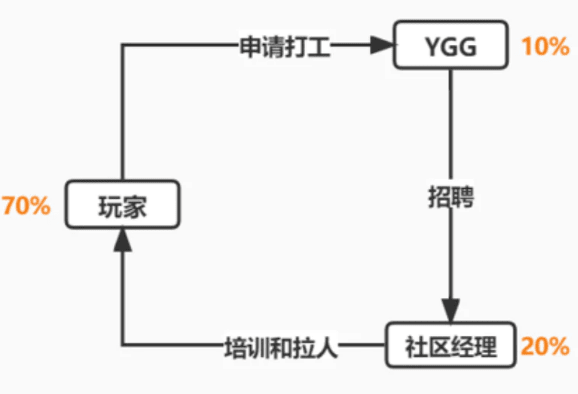
Figure 5-1 Scholarship system business process
Since Axie Infinity created a lot of profits for gold-farming players in the first half of 2021, the profit model of chain game guilds under this system has been proven to be feasible. As the YGG community grows, more and more guilds have gradually appeared in this track to explore the potential of chain game players. As can be seen from the figure below, the financing volume of chain game guilds in 2021 showed a significant upward trend. In December 2021 alone, the monthly financing amount exceeded $40M, showing an exponential growth, but the financing situation of chain game guilds in 2022 was relatively general.
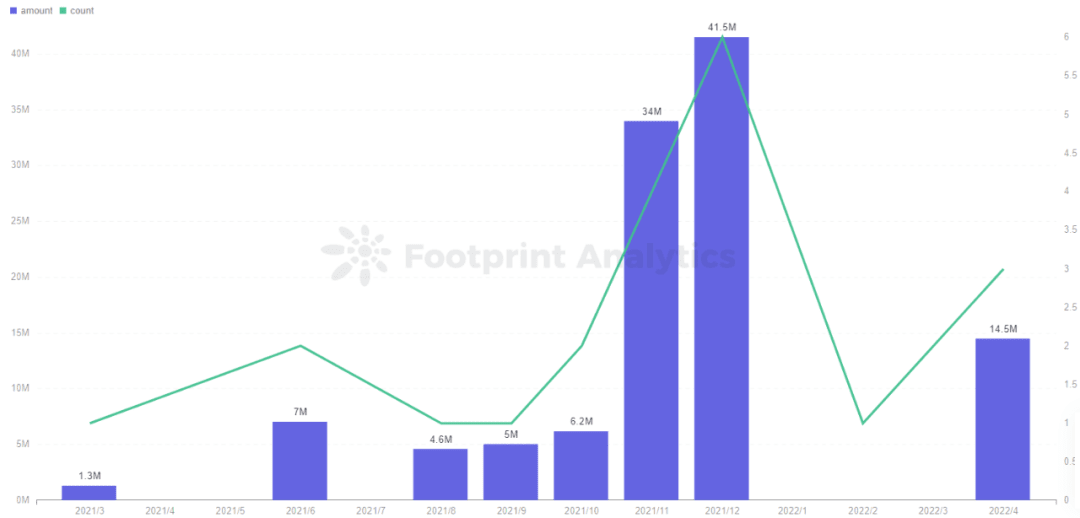
Figure 5-2 Financing of blockchain game guilds in 2021-2022
5.1.2 Characteristics of blockchain game guilds
In addition to the aforementioned blockchain games that can lower the entry threshold for players, game guilds also play an important role in guiding games to acquire new users. For example, in the scholarship system, community managers will train players on how to create wallets, how to use wallets, how to trade in DEX and other basic cryptocurrency knowledge. In this way, traditional game players can quickly get started and expand the user base of blockchain games.
With the development of blockchain game guilds in the past year, the following characteristics have gradually emerged:
1. Limitations of the scholarship mechanism: The scholarship mechanism is essentially to help Gamefi bring in more players who mainly make money. This group can help the game attract popularity and expand the game community in the early stages. However, once it enters the middle and late stages, the design of the general token model in the current blockchain game track is not mature, and death spiral dilemmas are everywhere. The huge number of gold-making users will cause extremely serious damage to the game itself and will accelerate the collapse of Gamefi's economic model.
This means that the operation of the scholarship system in a single Gamefi is difficult to sustain for a long time. The guild needs to constantly look for profitable Gamefi to make a profit. During a bear market, there are not many profitable Gamefi, which will cause the guild's income to be cyclical.
In addition, the current ordinary scholarship mechanism of blockchain game guilds only applies to P2E model games, and P2E model games are all currently in a depression stage without exception. In the long run, it is difficult to determine whether P2E model blockchain games will continue to exist or die out.
As the Gamefi track gradually matures, more and more Gamefis have begun to have their own rental systems, such as Starshark and Pegaxy; the emergence of the rental system will also squeeze the target players of the scholarship system. Once more players choose to use the rental system instead of a profit-sharing scholarship system like YGG, the income of such guilds will drop significantly.
2. The regional nature of guilds is serious: Currently, mainstream guilds are mainly distributed in Southeast Asia. For example, YGG, the largest guild in this field, has its main community players distributed in the Philippines, while GuildFi, which is committed to developing Gaas (Guild-As-a-Service), has its main community located in Thailand, and the largest blockchain game guild in Vietnam is Ancient8.
3. Future development will be more fund-based and functional: After the success of the scholarship model, guilds began to look for the next "Axie Infinity". Therefore, guilds now generally participate in the early NFT pre-sales of blockchain game projects, and are committed to obtaining a certain number of NFTs through cooperation in the early stage, in preparation for the later launch of the game;
In addition to NFT, guilds will even serve as early investors in many blockchain game projects, transforming their roles from NFT leasing intermediaries and player communities to investment funds in the blockchain game track;
In addition to the direction of fund development, some guilds are also trying to explore other development directions, such as providing data services, community services, and traffic services for cooperative projects, and providing systematic management services for the guild's scholarship system and income system, that is, developing in the direction of the functional end.
4. Highly dependent on the development of the blockchain gaming track: Whether the income of the blockchain gaming guild relies on the commission from the scholarship mechanism or the return on investment in Gamefi, both are based on the development of the blockchain gaming track. The blockchain gaming track is still in its early stages and there is a large room for growth in the future. For a gaming guild, whether it can grow with the track and ensure that the value of its investment portfolio can continue to be profitable is crucial.
5.2 Track Project
As shown in the figure below, the top 1,000 projects by market value in the blockchain game guild track are Merit Circle, Yield Guild Games, and GuildFi. Since the mechanism of Merit Circle is similar to that of YGG but not as perfect as YGG, the following will mainly compare Yield Guild Games and GuildFi.
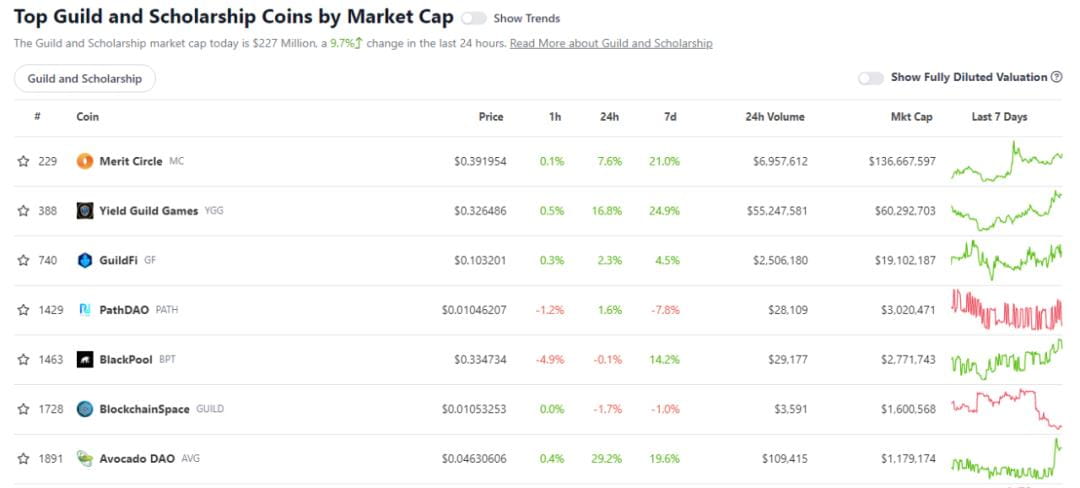
Figure 5-3 Market capitalization ranking of blockchain game guilds
5.3 Comparison of Competitive Product Elements
5.3.1 Competitive Project Mechanism
Yield Guild Games: YGG was founded by three founders who have deep experience in the mobile game industry and the blockchain game industry. It is currently the largest blockchain game guild in the crypto field. YGG has a complete scholarship system and SubDAO system. If players want to join YGG, they need to cast a YGG Guild Badge on its official website. This badge is a tool for players to enter the YGG website portal. Players will need this badge to register for scholarships, view their achievements, and participate in SubDAO token sales.
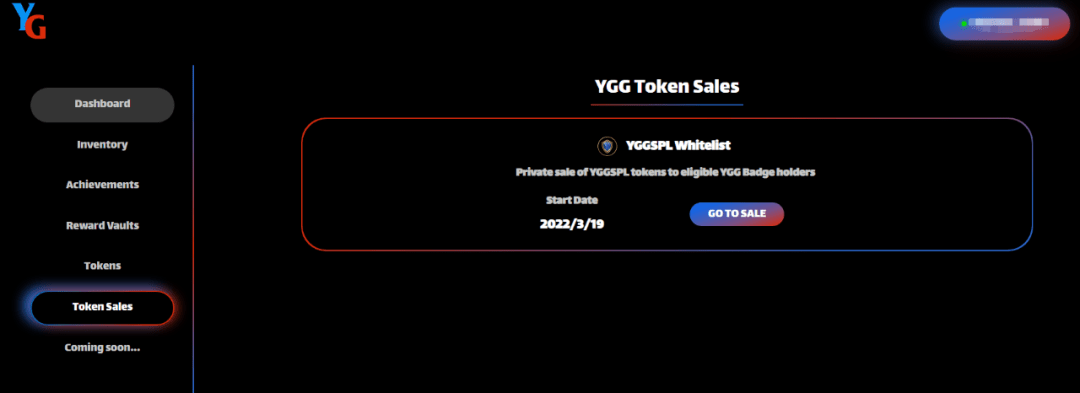
Figure 5-4 YGG official website page
In addition to the scholarship system introduced in 5.1.1, another major mechanism of YGG is to create different SubDAOs, or secondary guilds, based on different regions and different games. When a SubDAO is created, such as a game-based SubDAO, YGG will first conduct research on the game, then buy the NFT assets in the game and put them into its treasury wallet, and finally appoint managers of the SubDAO to transfer the NFT assets to the smart contract wallet that the SubDAO can control;
At the same time, YGG will also issue SubDAO tokens, such as the SubDAO created by YGG for League of Kingdoms, whose token is called YGGLOK. After the SubDAO tokens are issued, YGG will retain a portion of its SubDAO tokens in order to participate in its governance later.
From a functional perspective, as the main DAO, YGG will be more inclined to cooperate with more game companies, make investments and manage their treasury assets; most of the work of incubating and attracting traffic for specific games will be handed over to SubDAOs; at the same time, for regionalized SubDAOs, such as YGGJapan and YGGSEA, they will invest in and build communities for games in Japan and Southeast Asia respectively. SubDAOs will recruit local talents for management, regularly organize local activities, and strive to develop the localization of guilds and expand YGG's influence in various regions.
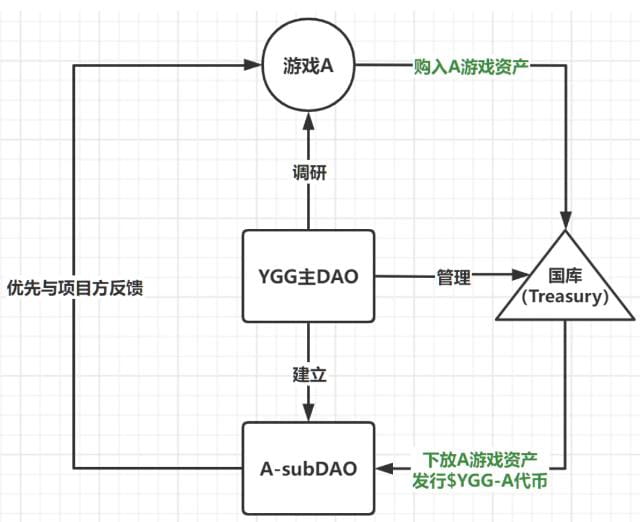
Figure 5-5 SubDAO creation flow chart
In addition, SubDAO will have independent asset management rights and scholarship commission mechanism, that is, it can set the scholarship sharing ratio for the games it manages; SubDAO's token essentially represents the basic value of its treasury assets. If the games managed by SubDAO generate a lot of revenue, YGG main DAO will also benefit because it holds its SubDAO tokens, that is, the value generated in SubDAO will eventually be accumulated in YGG's governance tokens.
Currently, YGG has 11 SubDAOs, as shown in the following table:
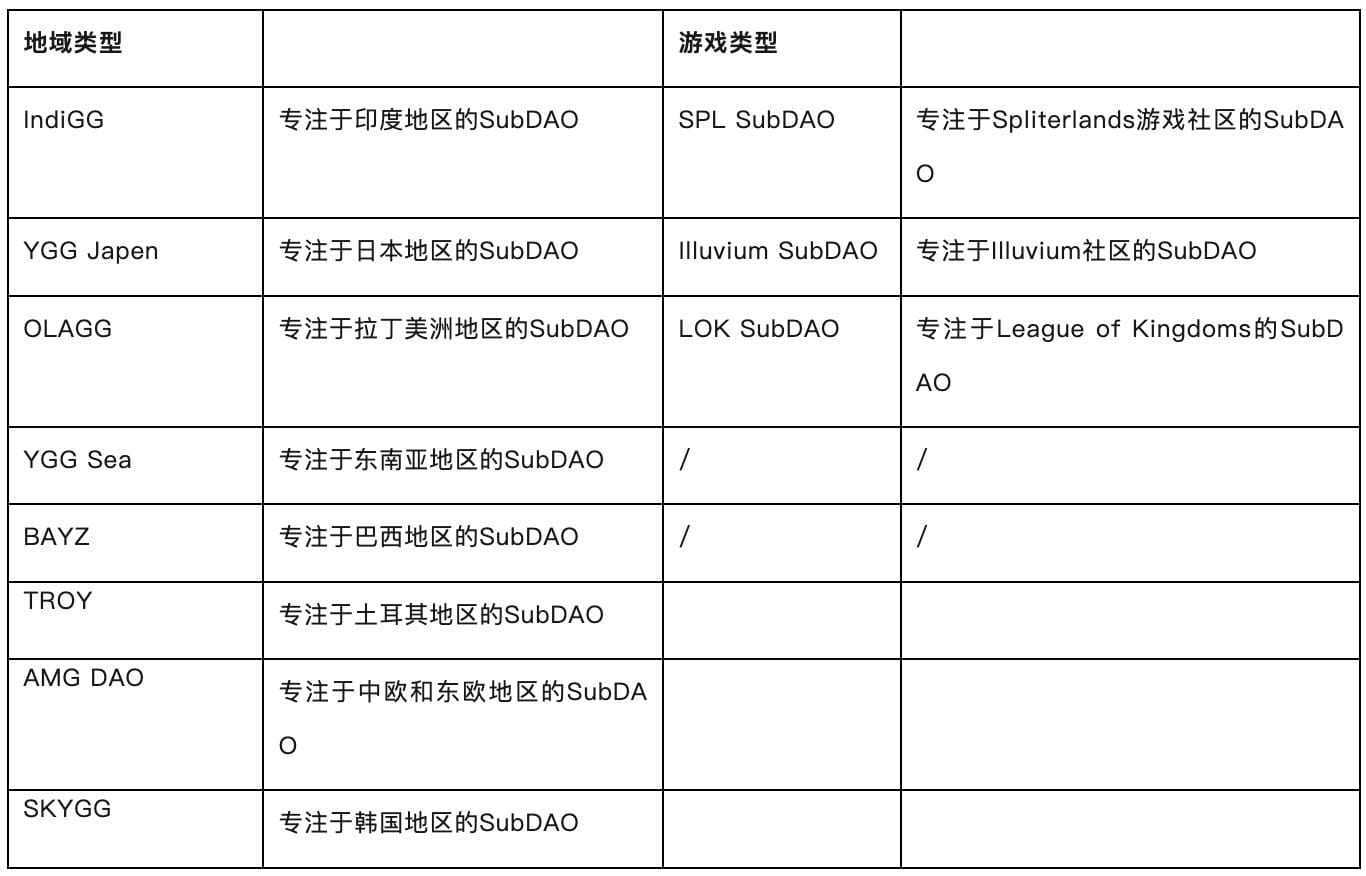
Table 5-1 SubDAO under the YGG map
5.3.2 Business Data Comparison

Table 5-2 Number of cooperative game projects
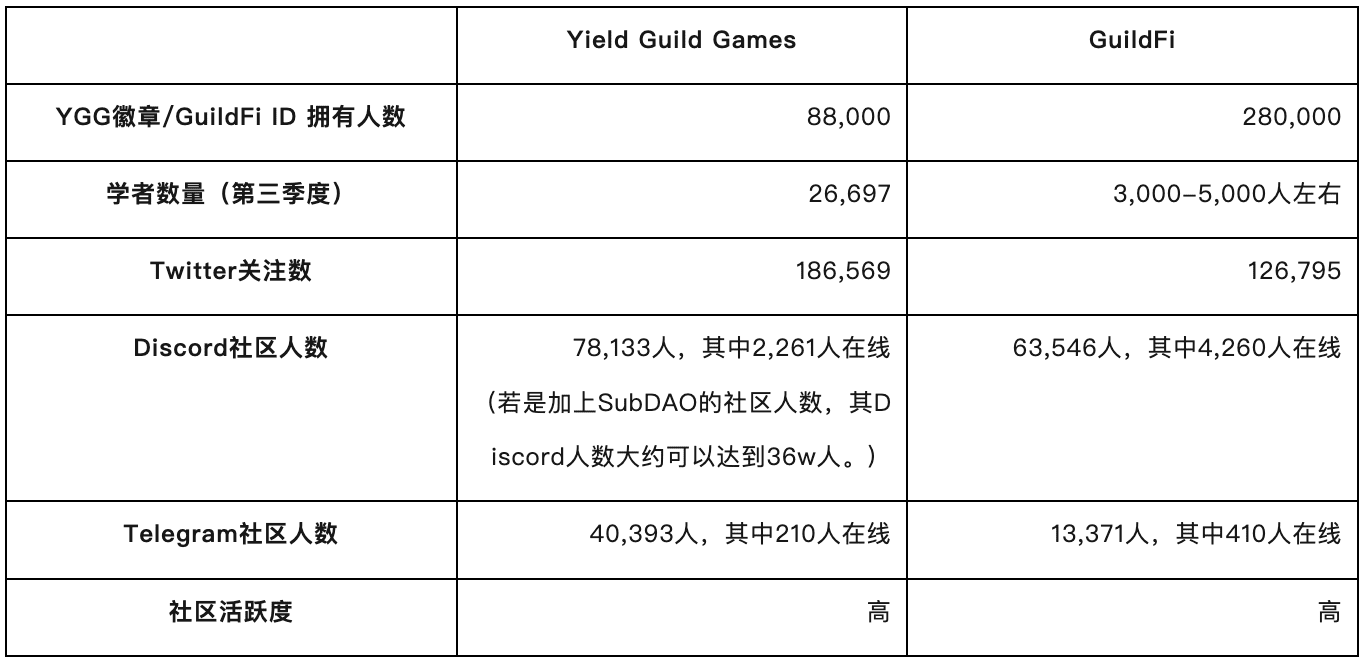
Table 5-3 Community data
From the above table, we can see that the number and quality of YGG's projects are higher than GuildFi's. On the one hand, this is because YGG's development direction is more inclined to the investment and community ends, while GuildFi is more inclined to the functional end. From the perspective of community data and community scale, the number of YGG scholars is much higher than that of GuildFi. From the perspective of its community scale, YGG has a much larger community scale under its overall ecological map than GuildFi due to the better development of its regional SubDAO. From the perspective of community activity, the community activity of both is at a high level.
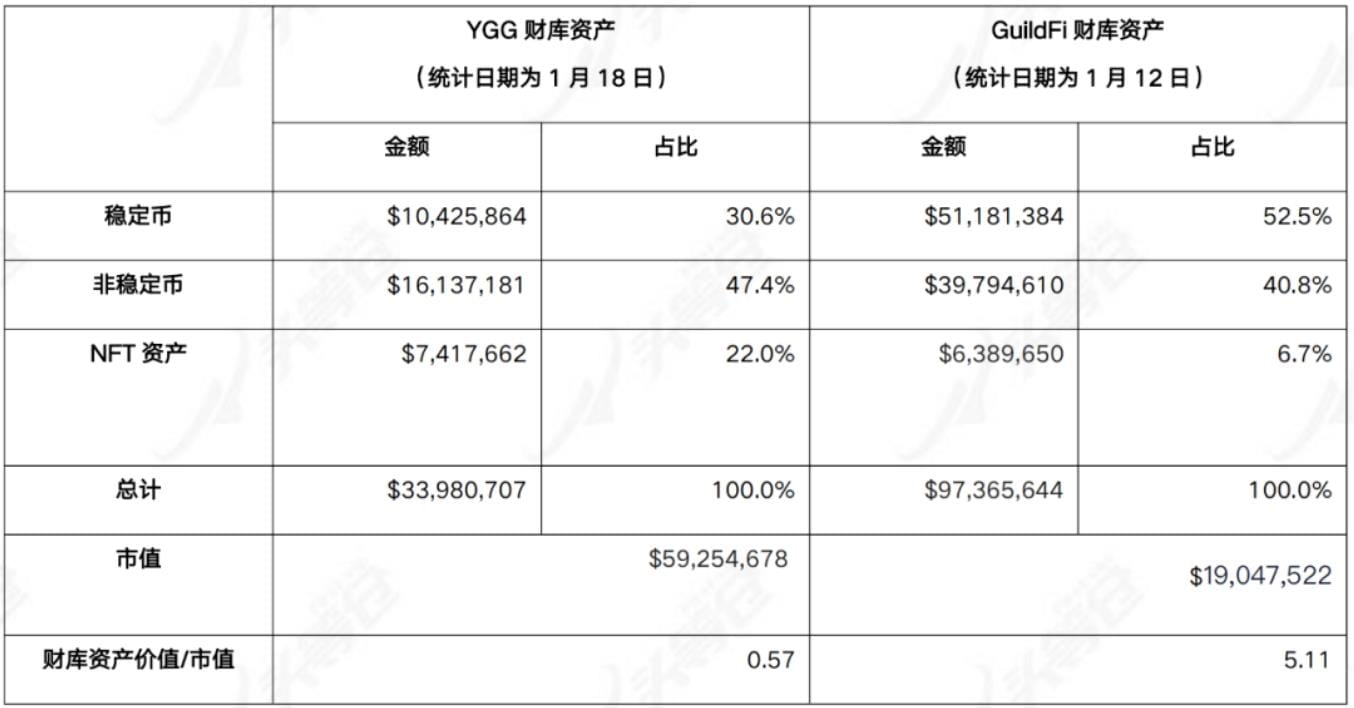
Table 5-4 Comparison of Treasury Assets
As can be seen from the above table, the vast majority of YGG's treasury assets are non-stablecoin assets, mainly YGG tokens, which account for more than 80% of non-stablecoin assets. Therefore, its overall treasury assets are greatly affected by the price of YGG tokens, while nearly half of GuildFi's assets are stablecoin assets. With such asset allocation, when facing a bear market in the crypto market, the value of YGG's treasury assets may face a significant shrinkage compared to GuildFi.
Summarize:
The scale of blockchain game guilds is not large at present. The community scale is not even comparable to the user scale of popular blockchain games. The scale of the entire track still has a lot of room for growth. After nearly a year of development, blockchain game guilds have begun to show a trend of fundization, functionalization and localization.
Among them, YGG, the leading project in this track, is committed to investing in and cooperating with early-stage high-quality blockchain games, and creating different SubDAO organizations according to different regions and game projects to expand its ecological map; and GuildFi, in addition to the basic direction of cooperating with blockchain game projects to build communities for them, is also committed to developing in the direction of the functional end, and has become a guild service platform by developing tools such as scholarship management systems, cooperative game data panels, and guild discovery, forming two different development paths with YGG;
Judging from the business data, YGG is slightly better than GuildFi in terms of community scale and the quality and quantity of cooperative games. From the perspective of community scale, YGG has a greater advantage, and the high-quality blockchain games deployed by YGG may further benefit its development in the future; and from the financial situation of the two, GuildFi's treasury situation is better than YGG. The current competition landscape in this field is not fierce, and there may be a possibility that multiple guilds will divide the market share together through different advantages in the future.
6. Risks
1) Track risk: This track is highly dependent on the development of the blockchain game track. Whether the income of the blockchain game guild relies on the commission from the scholarship mechanism or the return on investment in Gamefi, both are based on the development of the blockchain game track. If the blockchain game track does not develop well, it will greatly limit the upper limit of the track.
2) Financial risk: YGG’s treasury assets shrank significantly in the second quarter. Given the current lack of gold-making games in the blockchain industry, investment income will be one of the important sources of treasury income. In the future, we need to continue to observe changes in its treasury to determine whether the project can survive the future bear market.