

TRB has been trading at an unreasonable level recently, with the highest reaching nearly 49. Compared to contract players, the most headache for them is the fee issue. Even if they open the right direction, they may lose money instead of making any profit!
A small copycat with a market value of only 70 million yuan, the contract trading volume is almost 20 times that of the spot, and the funding rate is the highest in the entire sector for several consecutive days. This dealer is really making a lot of money.
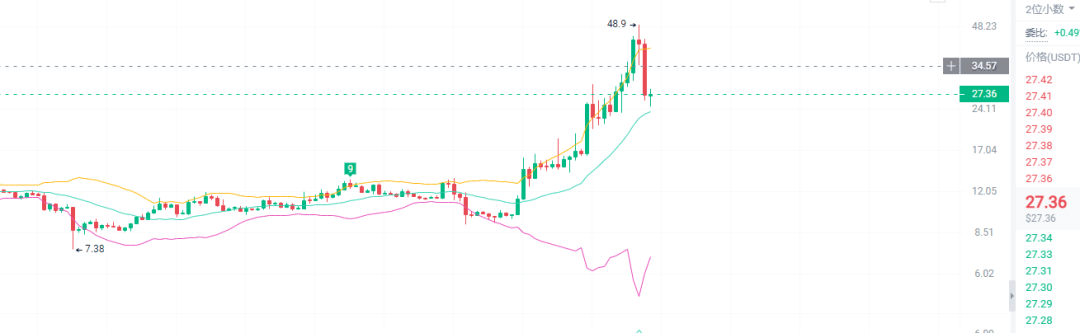
I looked at some recent data of this coin. Since the end of last month, large investors have used nearly 12 million funds to absorb the liquidity of retail investors, and then gradually established long positions with 12 million funds. The extreme capital operation has raised the funding rate of this currency in a very short period of time, and the price of the entire pool has risen, which has entered a positive cycle.
Simply put, as the contract open interest builds, the number of people entering the market to short gradually increases. A -2.5% funding rate means that for a 10,000 yuan margin and a 10x leverage, the short position needs to pay a 2,500U funding rate to the long position in a rate settlement cycle, and the largest long position on the market happens to be the dealer. This results in an increase in the settlement rate of funds received by the dealer as the number of short sellers increases. The dealer then uses the short position funds to pull up the spot market, indirectly driving up the market, causing the contract short position to gradually increase, thereby realizing a positive cycle for the dealer to achieve wealth freedom.
Currently, the contract position of this coin is still as high as 250 million US dollars, a slight decrease year-on-year. However, judging from the current funding rate of -3%, it is very likely that it will continue to rise and completely eliminate the shorts, and then fall after establishing a double top on the daily line. The reasonable advice for this coin is to just take a look and don't participate if you can.
Comparative analysis of WLD and TRB trading methods:
The current analysis may seem a bit hindsight, but everyone still needs to know the logic, at least you will know how to operate when the next TRB comes out.
WLD is completely different from the explosive altcoins represented by TRB (such as ygg, bnt, etc.). The analysis process is as follows:
Same point:
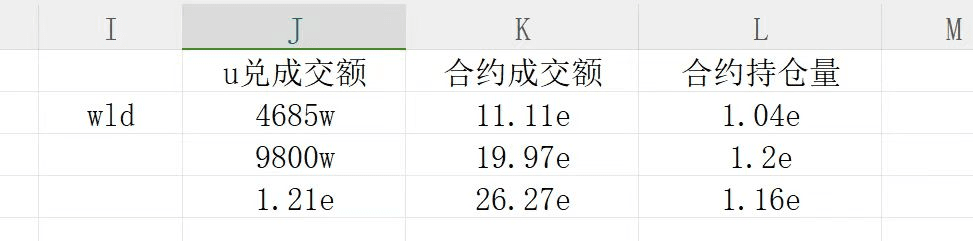
Since the pull-up, the trading volume of both contracts has grown rapidly, reaching half or even the same as the#ETHcontract trading volume
difference:
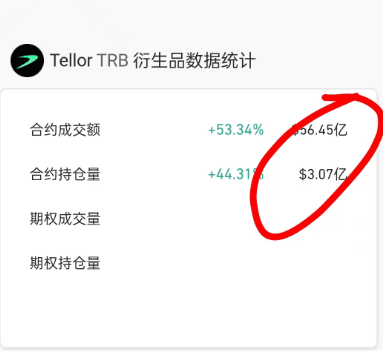
1. The market value of WLD has reached a maximum of about 200 million dollars, and the total contract holdings of the network are about 120 million dollars. The holdings: market value = 0.6:1; the market value of TRB has reached a maximum of about 75 million dollars, and the contract holdings are about 300 million dollars, and the holdings: market value = 4:1. The meaning of this ratio is that only if the holdings keep growing can the unilateral market trend continue.
2. The highest rate of WLD is only -0.03%, unlike TRB which is -0.8% and even the exchange cooperates with the market maker to adjust the funding rate to -3%.
in conclusion
1. The fee rate actually corresponds to the position size. The WLD position size did not grow much in the early stage, which means that the dealer did not build a large position in the early stage of the market manipulation. There was no growth during the market manipulation process, which means that there were not many retail investors chasing the car
2. The techniques of the altcoins represented by TRB are basically the same as the K-line trend, usually they are raised several times and then fall rapidly, and the techniques are very wild. However, the various data and indicators of WLD conflict during the pull-up process, and it is difficult to grasp the trend. My friend described WLD as: a regular K-line dealer + hot money; giving retail investors time to chase and time to run
So how do you find the next skyrocketing stock?
First of all, we need to understand the main logic, which is that the market makers and the exchange, when retail investors are afraid to buy, make money by pulling the price and selling the stocks and by earning contract fees. They are even too lazy to create narratives and good news.
Here are the key points to identify:
1. Lock in the coins listed on Binance and have a contract, because the current financial situation depends mainly on Binance, and with a contract, Binance will have more motivation to pull up the market.
2. For coins that Binance has large holdings, there is no need for DWF. Binance can complete the pull-up by itself. As for DWF, there have been too many false news recently, so it is better to use Binance's open cards.
3. The token price range remained at the bottom for a period of time.
4. Whether there are large transactions on the chain, which may be a precursor to the market maker building a position in advance and the exchange pulling the price.
5. Whether the trading volume and holdings of token contracts have changed significantly.
6. What is the specific situation of the ratio of long and short positions held by large accounts and the number of holders? If most retail investors are shorting, then this coin will have to rise.
Today's sharing ends here. Thank you very much for taking the time to read this article in your busy schedule. I hope the article is helpful to you. You can follow me and leave me comments to communicate with me.

