

Original author: Sun Yujie, senior lawyer at Shanghai Mankiw Law Firm
Recently, an old friend who has been in the cryptocurrency circle for many years consulted attorney Mankiw. He was selling virtual currency at an exchange, but was defrauded of 50,000 Tether (USDT)!
The situation is that I sold my Tether (USDT) on a well-known overseas cryptocurrency derivatives trading platform. The buyer said that he had a Hong Kong account and could only pay in Hong Kong dollars, so he asked my friend to provide his Hong Kong bank account number. So, my friend sent his Hong Kong bank account number to the buyer without thinking. After a while, he received a notification that a sum of Hong Kong dollars had been deposited into his account.
After seeing the notification, the friend thought the money had been received, so he transferred his Tether (USDT) to the address provided by the buyer without hesitation. Unexpectedly, not long after, the friend found that the Hong Kong dollars that had been deposited into his account had been withdrawn. At this point, the friend realized that he had been cheated.
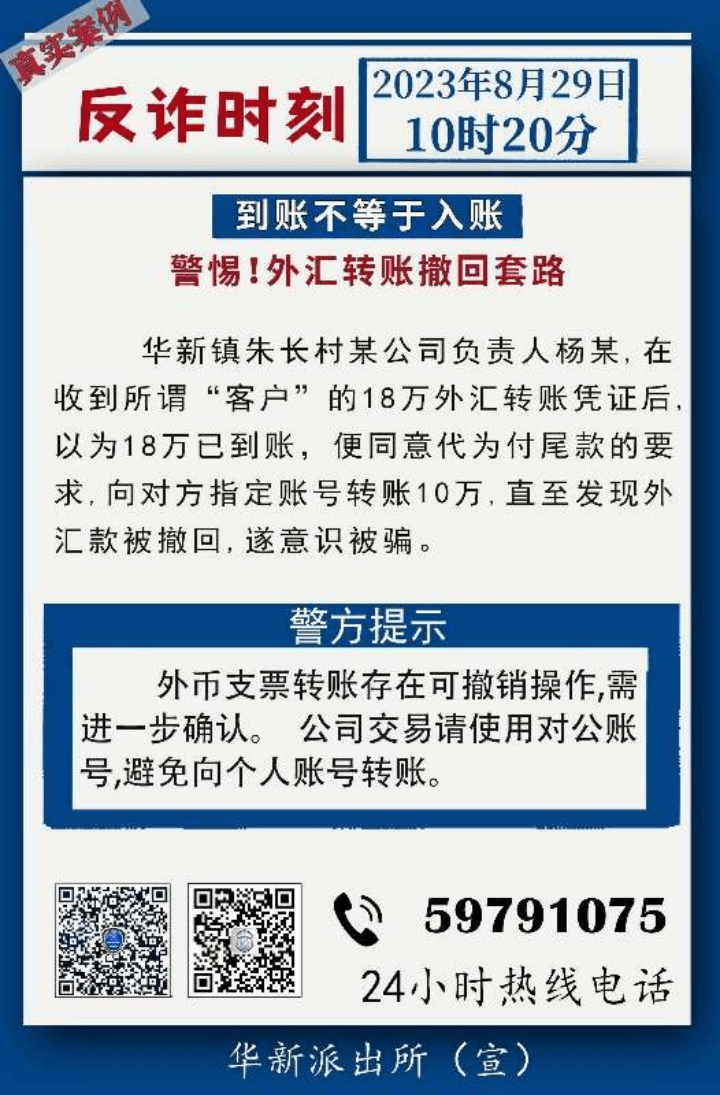
Scams like this are actually very common. According to a recent case published by Shanghai Huaxin Police Station, Yang, the head of a company, received a 180,000 yuan foreign exchange transfer voucher from a so-called "customer". He thought that the 180,000 yuan had been received, so he agreed to pay the balance on behalf of the customer and transferred 100,000 yuan to the other party's designated account. It was not until he found that the foreign exchange had been withdrawn that he realized he had been cheated.
01 What are the common tricks used in check scams?
In Hong Kong, inter-bank remittances in Hong Kong dollars can be paid by cheque. A cheque is a note issued by the drawer, which unconditionally pays a certain amount to the payee or holder of the cheque upon sight of the bank or other financial institution entrusted with handling cheque deposit business.
However, the deposit of a check in Hong Kong does not mean that the check has arrived. There is a 24-hour verification period from the deposit to the arrival of the check. During this 24-hour period, the payee will receive two SMS reminders from the bank: the first SMS notification is that the funds have been deposited, and this money is just "a number displayed on the payee's account" (also known as "pending account"), not actually owned. The second SMS notification is a reminder of the arrival of funds the next day (that is, 24 hours after the first deposit message), at which time, this money becomes the money you can actually use.
It should be emphasized that according to the operating characteristics of Hong Kong's financial system, the payee can cancel the check remittance at any time during the period from the time the check is deposited to the time it arrives in the account. Even if the payee does not cancel the check, the check may not be received due to insufficient funds, inconsistent signatures and other factors that do not meet the bank's check cashing conditions (also known as "bounced check").
In the cases published by the public security department and the incidents encountered by friends, the scammers took advantage of the fact that people, especially those from the mainland, were unfamiliar with the operation of the Hong Kong cheque system to commit fraud.
In the past two years, there are three most popular methods of fraud involving overseas check payments: one is to take advantage of the time difference to issue an invoice and then cancel it, the second is to bounce a check (empty check, etc.), and the third is to defraud the payment difference.
1. Withdrawal after invoice issuance. Just like the method used in the above scam, the scammers take advantage of the time difference and make the other party mistakenly believe that the transfer has been received, but in fact it has not arrived in the account. After the other party pays with virtual currency, they quickly withdraw it.
2. Bounced checks, such as bad checks. After a check is deposited, most banks have a freezing period (recourse period), some as long as half a year. If the check bounces later, not only will the money be returned, but also a handling fee will be paid. This scam is generally more common in foreign trade transactions.
3. Defrauding the difference in payment. This method is a more vicious means than the previous two scams. The scammer deliberately pays an extra amount of money when issuing the ticket. After the recipient mistakenly thinks that he has received the money, the scammer negotiates with the recipient in a friendly manner, saying that he accidentally paid too much and asks the recipient to return the difference.
02 Check scam targets virtual currency transactions
The learning ability and diligence of the scammers are no less than that of any newcomer in the workplace. In the new round of scams, the scammers not only target physical enterprises, but also the emerging virtual currency trading market.
Here, scammers usually pretend to be buyers, and have simple exchanges with virtual currency sellers automatically matched by the system on the trading platform to gain initial trust. Because the check payment scam requires a local Hong Kong account to be completed, they will then ask the seller to provide a local Hong Kong account. Then, taking advantage of the loophole that everyone, especially mainland friends, do not understand how the Hong Kong check 24-hour account verification system works, they will issue an "exchange ticket" for the transaction amount as agreed and deposit it into the Hong Kong account they provided. After the seller receives the first deposit notification, the scammer begins to eagerly urge the seller to transfer the virtual currency to the address specified by them. After receiving the virtual currency, they will transfer the check and use various excuses such as inconsistent signatures, incorrect amounts, etc. to withdraw the funds.
Therefore, although the above scams seem to be old tricks from many years ago, they are still "rewarding" in the emerging industry. At the same time, the scammers are also very good at protecting themselves. They are usually not Hong Kong people. After being deceived, it is extremely difficult to recover the money.
03 Attorney Mankiw’s Tips
The healthy and orderly development of the market cannot be separated from the protection of the law. At the same time, we must also enhance our awareness of prevention.
1. Be alert in daily life. Listen more, watch more, familiarize yourself with common fraud methods, and be cautious during transactions. For example, click your finger to follow our lawyer Mankiw’s WeChat public account, and learn more about the various scams in the cryptocurrency circle.
2. Pay attention to the buyer's information. When trading virtual currencies on overseas exchanges, pay attention to the seller's historical transaction order quantity, past buyers' related evaluations and platform certification. Cash settlement and other methods are preferred. Be sure to check the funds before releasing the currency; if the buyer must choose the check remittance method, the transaction time must be extended until the check is actually cashed, and the bank's available amount must be used as the basis.
3. Contact the customer to freeze the account and report to the police in time. If you are unlucky enough to encounter such a scam, don’t panic, contact the customer service staff of the exchange as soon as possible, sort out the relevant written materials, and apply to connect to the other party’s trading account; if the amount of money defrauded is large, you can also entrust a lawyer to assist in reporting to the public security organs.
Special statement:
This article is an original article from Shanghai Mankun Law Firm. It only represents the personal views of the author and does not constitute legal advice or legal opinions on specific matters. If you need to reprint the article, please contact Mankun Law Firm: