

Translation: Web3 Research Institute of Asia, Africa and Latin America Translation Team
Typesetting: green
Editor: vand

Latin America has become one of the fastest growing regions for cryptocurrency users, and life is changing for the people of Argentina as a result.
Can you imagine an ordinary Argentine mother using cryptocurrency to shop and buy necessities for her family members? Malaya Fetuccini is an ordinary housewife in Argentina. Since 2022, she has used USDC to shop in METRO and is very skilled.
At the end of every month, she would open the crypto software and check the monthly expenses bit by bit. She would even recall what she bought and why she paid through timestamps: "Daily necessities, children's tuition..." She recorded the family's expenses one by one, and also recorded the progress and changes in the blockchain industry.
This is a real scenario in Argentina, where at least 51% of Latin Americans use cryptocurrencies for shopping, according to Mastercard statistics. And between 2021 and 2022, total cryptocurrency inflows in Latin America exceeded $562 billion, a 40% increase from 2020.
We can see how much imagination and opportunities crypto assets with global attributes can bring
Monetary inflation is a pressure, but also an opportunity for crypto assets in Argentina
Central and South America have long struggled with monetary inflation, especially in the past few years, with inflation records breaking new highs.
Image source: Real-time Finance
Argentina's inflation rate was 6.6% in February, and the cumulative inflation rate in the past 12 months reached 102.5%, setting a new record high in 30 years. The information hidden behind these data is that the price increases of clothing and footwear, restaurant and hotel consumption, and food and beverages in Argentina have all exceeded 100%, double! The reasons for this are economic recession, foreign debt, fiscal deficit...
But the people living here don’t really care about how to solve inflation, but are more concerned about where the “solution” lies.
Crypto assets may be a solution to the lives of the Argentine people. Although Argentina's legal currency does not recognize any cryptocurrency and its policies are wavering, due to its decentralized and global attributes, no one can really prohibit everyone from choosing to use cryptocurrencies. This can be easily seen from the use of cryptocurrencies in Argentina.
Cryptocurrency adoption in Argentina
Survey data from Latin America shows that Argentina has one of the highest rates of cryptocurrency adoption in the region.
For example, Americas Market Intelligence (AMI) found that as of 2022, 27% of Argentine respondents "regularly" purchased cryptocurrencies, an increase of 15% from 2021, 98% of Argentines were aware of cryptocurrencies, and one in five residents planned to purchase cryptocurrencies in the future.
Image source: web3plus
Argentina is one of the fastest growing cryptocurrency markets. In fact, in a study, Argentina ranked 13th in the 2022 Global Cryptocurrency Adoption Index. Chainalysis researchers noticed that Argentina has a very high rate of stablecoin usage, which is a smart way for Argentines to avoid local currency inflation.
The report from Morning Consult also suggests that Argentines trust crypto assets more than residents of other countries.
In a 2022 survey, about 60% of Argentine respondents said they were "very" or "somewhat" confident that Bitcoin and other cryptocurrencies would perform well within 1-2 years, and most Argentines still believed that the U.S. dollar and gold were safer long-term investments than BTC.
Global Crypto becomes the solution for Argentines
Argentina's fiat currency keeps setting new inflation records. For decades, the Latin American country has been struggling with double-digit inflation rates in the Argentine Peso. The annual inflation rate of the Peso rose from 10.46% in 2010 to 42.02% in 2020. The country's inflation rate rose to a shocking 94.8% in 2022.
Most Argentines believe that their fiat currency will depreciate, with only 35% believing that the peso will maintain its value in 1-2 years, the lowest confidence score of all countries surveyed. With such low trust in the local currency, cryptocurrencies with global attributes have become a solution.
Before Crypto became popular in the country, Argentines have been relying on the U.S. dollar as an alternative to the peso. The Central Bank of Argentina (BCRA) shows that the country’s financial institutions and households have stored $230 billion worth of cash.
But the consequence of this is over-reliance on foreign exchange. The Argentine government has also tried to solve this problem, such as introducing new taxes and exchange rates. According to Argentine regulations, residents are limited to buying US dollars in banks. And starting in 2022, a 35% withholding tax will be imposed on US dollar transactions.
In order to maintain the value of its own currency, the Argentine government is not willing to support the US dollar stablecoin, but crypto is globally decentralized and cannot be banned.
Argentines are beginning to try digital currencies such as Bitcoin, Ethereum (ETH) and stablecoins. Cryptocurrencies are easier, cheaper, faster and unlimited to transfer between legal currencies. It is worth mentioning that Crypto also helps reduce the risk of buying dollars on the black market.
In addition to inflation and the new exchange rate, many Argentines are also worried about banks freezing their savings and checking accounts. For example, the Argentine government severely restricted the use of bank accounts during an economic crisis called the "Corarito." The impact of these draconian measures is still fresh in the memory of Argentine citizens. The AMI survey also showed that 46% of Argentines bought cryptocurrencies to "avoid government control."
BCRA does not welcome the US dollar, what measures have been taken against Crypto?
The Argentine government’s stance does not seem to be particularly firm, and the laws surrounding cryptocurrencies are constantly changing. Argentina does not accept BTC as legal tender, but it does not ban Crypto like we do.
Argentina has not announced a complete ban on the technology, but it is not very supportive of Crypto. However, in 2022, the Argentine government announced that it was forming a "National Blockchain Committee" to actively study cryptocurrency regulation in Argentina.
Interestingly, some cities and provinces in Argentina have adopted some policies to encourage the development of Crypto. For example, the province of Mendoza announced that it would accept taxes paid in stablecoins such as USDT. In 2022, Buenos Aires, the capital of Argentina, said it hopes to tax Crypto transactions. The Buenos Aires government also plans to run a validator node on the Ethereum 2.0 blockchain in 2023.
The province of San Luis has also strongly supported the adoption of crypto technology in recent years. They will allocate treasury funds as collateral for the new dollar-pegged stablecoin "Activo Digital San Luis de Ahorro". It will also sponsor local artists with upcoming NFT projects.
Although Argentina’s crypto policy is relatively relaxed, BCRA does not allow exchanges or banks to provide crypto services to customers. After Banco Galicia attempted to provide crypto trading services in 2022, BCRA members banned crypto transfers within traditional financial institutions.
Argentine regulators have frequently issued warnings about high-risk crypto assets. ICOs, in particular, have been strongly opposed. However, there is no law in Argentina that prohibits licensed residents and companies from mining (PoW) cryptocurrencies.
How cryptocurrency is becoming part of everyday life in Argentina
Although most Argentines buy cryptocurrencies for value investment, it does not prevent them from using digital assets in their daily lives:
Store of value investment: According to AMI survey data, more than 50% of Argentines buy crypto assets as an "inflation hedge" similar to assets such as gold. Whether Argentines buy Bitcoin, Ethereum or stablecoins, many believe that they are more likely to maintain their value than the peso.
Remittances: According to the World Bank, Argentina receives about $650 million in remittances each year. Chainalysis researchers found that more Latin American immigrants are using Bitcoin to send money to their families in their home countries. Now that Argentina can access the Bitcoin Lightning Network on apps like Strike, more Argentinian immigrants are beginning to enjoy the benefits of cross-border transactions with cryptocurrency.
Everyday shopping and taxes: More and more Argentine businesses and the government are accepting cryptocurrencies as a valid payment method. Data from AMI shows that Argentina is an important market for crypto debit and credit cards. For example, Mastercard and the Binance crypto exchange decided to jointly launch a prepaid crypto debit card across the country.
DeFi Activity: Nearly 25% of crypto transactions in Argentina occur on DeFi (decentralized finance) applications. Having already stepped into the Crypto door, more Argentines are ready to try new services, DEX (decentralized exchanges), staking pools, and crypto loans.
How Argentinians are getting into Crypto
In fact, CEX exchange services have always been the most effective way. In Argentina, such as Coinbase, Kraken and Gemini, they provide crypto services to Argentine customers. As the demand for digital currencies grows, more crypto trading intermediaries are eager to provide services in Argentina, and Strike has also announced that it will enter the Argentine market in early 2022.
In addition, many people shop on peer-to-peer trading platforms, where they match with individuals online, agree to terms, and trade directly in a similar way to Xianyu. Although CEXs and cryptocurrency apps are the most common ways for Argentines to buy cryptocurrencies, there are also physical Bitcoin ATMs in the capital, Buenos Aires.
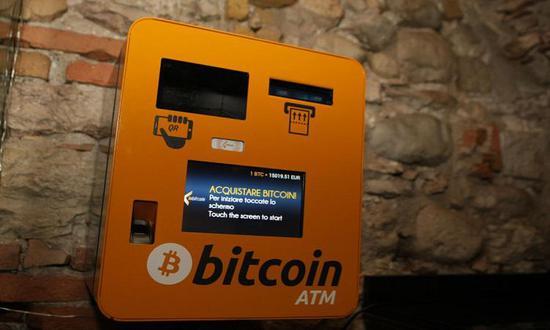
Image source: Sina Finance
summary
People in Latin American countries such as Argentina need cryptocurrencies to solve various problems. They enjoy the benefits of Crypto and become the most enthusiastic supporters of Crypto. More and more Argentines believe that BTC, ETH and stablecoins are safer options for long-term savings.
In addition, as more companies and provincial governments support stablecoin transactions, locals have more ways to use cryptocurrencies, and perhaps one day most Argentine companies will use USDC to pay employee salaries.
While it is still unclear how cryptocurrencies will affect Argentina’s future, it is clear that digital assets will play an important role in the country’s economy, and this will be seen in the next 3-5 years…