

Since 2020, the Defi business has grown rapidly, with TVL growing from US$600 million to US$37 billion, a 60-fold increase. With the rapid increase in transaction usage on the blockchain chain and the development of DeFi application scenarios, the blockchain network has become increasingly congested, and the expansion of the main network is imperative.
So why don’t either Bitcoin or Ethereum directly choose to increase the block capacity to increase the transaction carrying capacity? The reason is that when the block capacity expands, more small nodes will exit and gradually move towards centralization. Therefore, developers turned their attention to the development of Layer 2, which is built on top of the existing blockchain network to improve its efficiency. By offloading some processing to reduce network congestion and excessive costs associated with on-chain transactions, this process will not Affect the existing Layer1 block capacity and avoid centralization.
Currently, Bitcoin processes an average of 7 transactions per second, while the Ethereum network is capable of processing approximately 30 transactions per second, and by comparison, Visa processes approximately 1,700 transactions per second on average. As the number of people using both blockchains has grown over time, both Bitcoin and Ethereum have nearly reached capacity limits and require solutions to help them accommodate more users. In this article, we will delve into why Bitcoin needs Layer 2 more than Ethereum, and analyze the current obstacles and prospects of Bitcoin Layer 2.
Bitcoin VS Ethereum
Fundamental Differences between Bitcoin and Ethereum
Bitcoin is the first cryptocurrency based on blockchain technology, which gives value to data. As a peer-to-peer electronic cash system, it operates independently of any central authority. Bitcoin mainly does some simple value transfers. For example, Bob transfers a certain amount of Bitcoins to Sally at a certain time, and the only parameter that can be adjusted is the number of Bitcoins at the time of transfer.
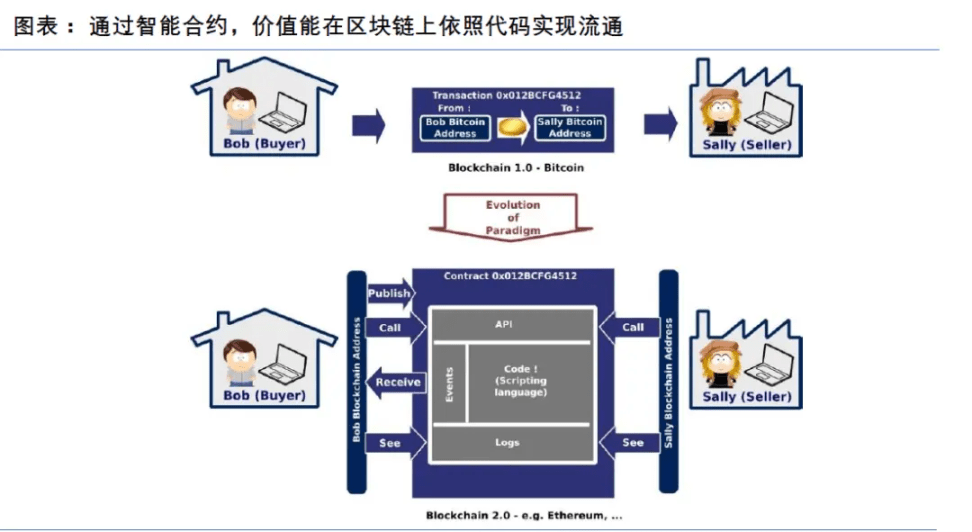
Ethereum is a decentralized, open-source distributed blockchain network powered by its native cryptocurrency, Ethereum, used to conduct transactions and interact with applications built on top of the Ethereum network. While Bitcoin uses blockchain technology for monetary transactions and allows nodes and messages to be attached to each transaction, Ethereum goes a step further and uses blockchain to create a decentralized computer. Ethereum relies on the programming language Solidity combined with blockchain technology to launch a smart contract development environment, allowing developers to perform more complex data processing, complete the development of decentralized applications, and break through the limitations of Bitcoin's simple value transfer. .
While both the Bitcoin and Ethereum networks are based on the concepts of distributed ledgers and encryption, they differ significantly in terms of technical specifications.
First of all, Bitcoin, as a digital gold equivalent, is used to store value, which is essentially a currency transaction, while the data attached to Bitcoin network transactions is only used to record transaction information. While Ethereum is used to power the Ethereum network and its applications, transactions on Ethereum can contain executable code to create smart contracts or interact with self-executing contracts and applications built using them.
Second, Bitcoin issues new tokens using the Omni layer, a platform for creating and trading currencies on the Bitcoin blockchain. The adoption of the Omni layer mainly revolves around stablecoins. Ethereum tokens are issued according to different standards, the most popular of which is the ERC-20 standard, which defines the rules for tokens on the network. The ERC-20 standard includes several features that developers must implement before launching a token. These features include providing information about the total supply of tokens, providing account balances on user addresses, and allowing funds to be transferred between addresses.
Finally, other differences between these networks include differences in consensus mechanisms, differences in the time it takes to add new blocks, and differences in the number of transactions processed per second.

Different expansion solutions
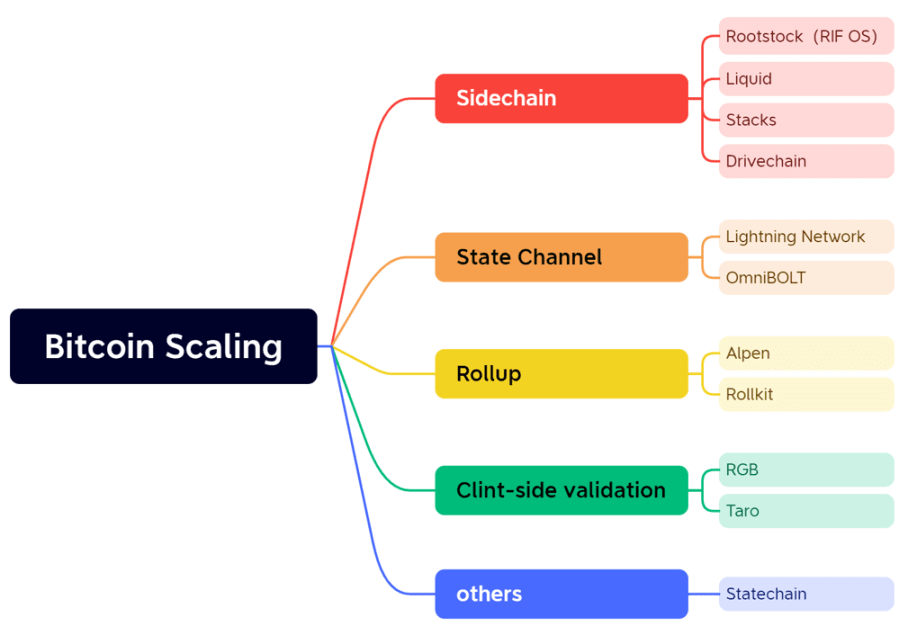
One of the current Bitcoin scaling solutions is technological improvement, which is an on-chain scaling solution. Such as 2017’s Segregated Witness (SegWit), an upgrade that “isolates” some data beyond the available space of each block propagating across the network, adding to the blockchain by removing signature data from Bitcoin transactions When certain parts of a transaction are removed from the block, which frees up space or capacity to add more transactions to the chain, the SegWit upgrade expands the block space to 4MB. The 2021 Taproot upgrade streamlines transaction processing, making it easier and faster to confirm transactions on the Bitcoin network. It also increases the number of transactions that can be processed and reduces the overall cost of transactions on the network.
Additionally, developers have been working on off-chain Layer 2 scaling solutions, starting with solutions to build a transaction layer on top of the Lightning Network’s underlying blockchain. On the Lightning Network, transactions are fast and fees are extremely low because they are sent through user-created payment channels. The Lightning Network’s user-generated payment channels are pre-funded with Bitcoin and can allow most transactions to be moved from the base blockchain to this second-layer network. These transactions will not be settled on the Bitcoin network itself, as the only transactions settled on the underlying Bitcoin blockchain are those that open and close Lightning Network payment channels. In fact, the Bitcoin side chain is to establish a parallel chain on the Bitcoin blockchain that is independent of the Bitcoin main chain but can interact with it. The side chain uses the security and stability of the main chain to build a set of Relatively independent blockchain system. On the Bitcoin side chain, users can perform various operations, such as creating new digital currencies, running smart contracts, implementing privacy protection, etc. Compared with the Bitcoin main chain, the Bitcoin side chain can provide more functions for Bitcoin and enhance the scalability and flexibility of Bitcoin.
Ethereum’s expansion plan is also divided into on-chain expansion and off-chain expansion. On-chain expansion is to improve the performance of the blockchain itself, transforming Ethereum itself to obtain better scalability; off-chain expansion is separate from the first-layer main network, without changing the existing Ethereum protocol. Achieve higher scalability.
The core of on-chain expansion is the solution to achieve the expansion effect by changing a layer of the main network protocol. This is a technical upgrade of Ethereum itself, which involves the decision-making process of Ethereum, so it requires Ethereum developers, researchers, and communities Members decide together. The current on-chain expansion mainly uses sharding (which will be gradually implemented after the Cancun upgrade in the second half of the year). The sharding chain can help spread the computing resources required to run Ethereum to a total of 64 networks, which will reduce the cost of each machine running Ethereum. Blockchain device random access memory requirements.
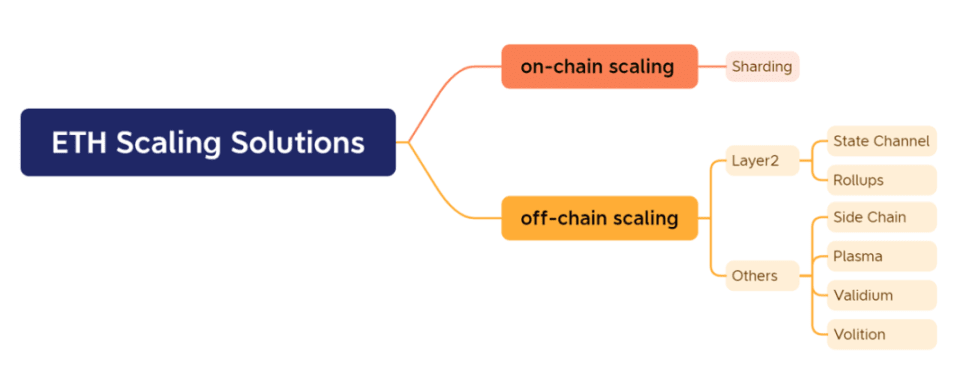
Compared with on-chain expansion of Ethereum, the ecology of off-chain expansion is richer. Off-chain expansion is to execute the transaction or processing process off-chain. It must be expanded without changing the existing main network public chain protocol. For off-chain expansion, the most critical issue is the processing of transaction data. , whether the processing of transaction data is placed on the Layer1 mainnet will affect its security. This is the difference between all off-chain expansion plans. Ethereum's off-chain scaling solution mainly uses Rollup, which relies on servers that group large numbers of transactions and then submit them directly to the Ethereum blockchain. Another layer 2 solution is called a sidechain, which is an independent network that runs in parallel with the Ethereum network, allowing users to exchange tokens from one network to another network protocol, effectively allowing them to build applications based on Ethereum, All while paying less.
Compared to Ethereum, Bitcoin needs Layer 2 to enhance its scalability
The transaction volume continues to expand and Layer 2 is urgently needed for support.
Bitcoin’s block size has always been controversial. In fact, when Bitcoin was born, there was no limit on the size of blocks, and its own data structure could reach a maximum of 32MB. At that time, the average packaged block size was 1–2KB. Some people believed that the upper limit of the blockchain was too high, which would easily lead to a waste of computing resources and make it prone to DDOS attacks. Therefore, in order to ensure the security and stability of the Bitcoin system, Satoshi Nakamoto decided to limit the block size to 1MB. Based on the calculation that each transaction accounts for 250B and an average block is generated every ten minutes, the Bitcoin network can theoretically handle up to 7 transactions per second. However, at that time, the number of Bitcoin users was small and the transaction volume was also very small, which did not cause congestion problems in the blockchain network. However, after 2013, the number of Bitcoin users became larger and larger, and the problems of Bitcoin network congestion and rising transaction fees gradually emerged.
At the beginning of 2023, the Ordinals protocol introduced a new development direction for Bitcoin, and the BRC-20 token protocol also quickly became popular. The market popularity made the Bitcoin network very crowded and the operating costs reached new heights. The fees charged for a single block of Bitcoin transactions have exceeded the block reward, proving Ordinals and BRC-20’s growing demand for block space. According to the Bitcoin Browser, the current number of unconfirmed transaction data on the Bitcoin network reaches a maximum of 504,182, and the processing speed of 7 transactions per second is obviously unable to meet user needs. At the same time, Bitcoin network transaction fees have also surged, with gas fees exceeding 500 Satoshi/byte.
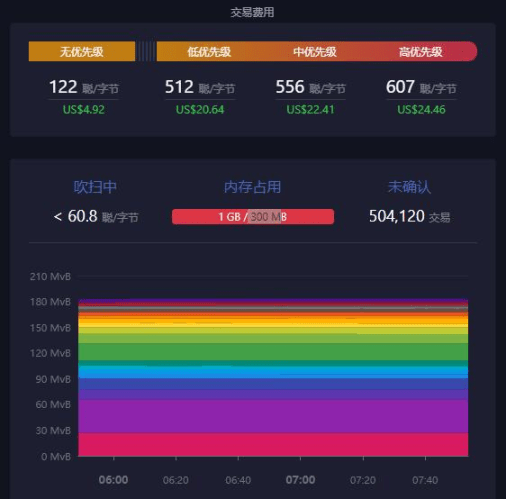
Slow transaction speeds, long transaction confirmation times, high transaction fees, and network scalability limitations have all hindered the development of the Bitcoin ecosystem at this stage. Therefore, the current development status of Bitcoin requires Layer2 as support.
Block expansion is blocked, Layer 2 is the best choice
As early as 2010, when he began to consider the block expansion plan, although the capacity was set to 1M, Satoshi Nakamoto believed that if there was a need for expansion, it would be enough to directly set the block height in the code to automatically upgrade the block capacity. After Satoshi Nakamoto retired, the development and maintenance tasks of Bitcoin were passed from Satoshi Nakamoto to Gavin. Other developers slowly joined in and developed into the current Core development team.
Later, there were disagreements within the Core development team about whether to follow Satoshi Nakamoto's plan and implement a hard fork to remove the 1M limit. Most developers feel that this limit should not be removed. The Core team believes that if the 1M limit is removed, future blocks will become larger and larger, raising the threshold for running nodes, affecting the decentralization of the system, and increasing system risks.
In the end, between security and scalability, the BTC community preferred security, and these developers proposed "SegWit + Lightning Network". In order to solve the scalability issues affecting the Lightning Network and to achieve some expansion effects, the Core development team proposed the Segregated Witness (Segwit) solution in December 2015. Subsequently, Blockstream CTO Gregory wrote the Lightning Network into the Bitcoin roadmap, forming the "Segregated Witness + Lightning Network" route. At this point, the differences between the block expansion plan promoted by Gavin and the Core developers of Blockstream, which dominates Bitcoin development, have officially formed. However, some people rejected this technical upgrade. In August 2017, the BTC hard fork derived BCH. After the hard fork, BCH raised the block limit to 8 MB, and subsequently increased it to 32 MB. The average TPS is around 120. In addition, the BCH community split again in 2018 due to differences in the technical upgrade route, and hard forked out of BSV (Bitcoin Satoshi Vision).
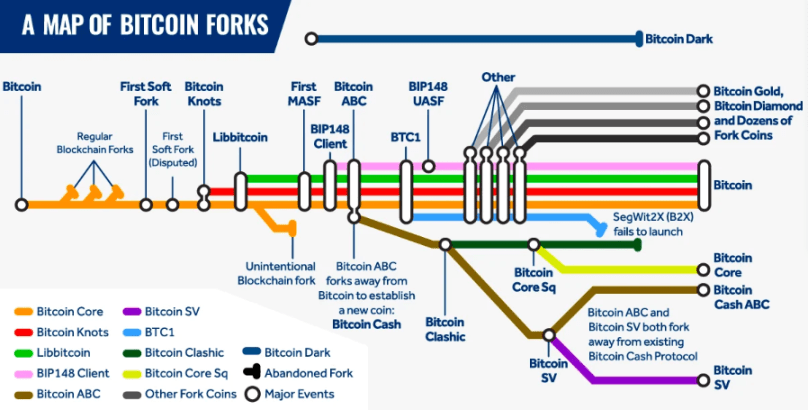
In fact, the complexity of the Bitcoin block expansion solution is high. The solution that is more accepted by the community is to build a new layer based on Bitcoin Layer 1, which is compatible with and does not affect the Bitcoin system while also solving the problem of on-chain congestion. Judging from the final result of the expansion battle, the Core faction won the final victory, and the Bitcoin block expansion was terminated. After completing Segregated Witness, Bitcoin fully developed towards Layer 2 such as Lightning Network and Sidechain.
To break the limitations of simple ledgers, it is none other than Turing-complete Layer2.
As we talked about in the first part, Ethereum breaks the limitations of Bitcoin's simple ledger and establishes a smart contract system to achieve complex value transfer. Therefore, Ethereum has been solving asset-related financial needs since its birth. Whether it is the assets it issues ERC20 (token), ERC721 (NFT), or its on-chain Defi products, such as Maker Dao, UniSwap, OpenSea, etc., they all meet meet the diverse needs of users. In particular, Ethereum has a Turing-complete virtual machine EVM, which solves the problem of settlement on the asset chain. Therefore, the EVM ecosystem supports the provision of on-chain DEX for tokens/NFTs, and has also enabled many well-known Defi applications.
The issuance and circulation of assets has always been the narrative of Ethereum before, but now it has also become the narrative of Bitcoin. As early as the emergence of Ethereum in 2014, Bitcoin had already begun to explore the business needs of issuing assets. For example, USDT, the earliest stable currency issued by the most well-known Omni Layer protocol. At that time, the world's largest encrypted stablecoin was issued on the UTXO OpReturn of the Bitcoin network. However, because OpReturn at that time only supported 80 bytes of content space, the OmniLayer protocol failed. As a result, the Bitcoin network continued to undergo technical upgrades, including the segwi upgrade and Taproot upgrade we mentioned. It is precisely because of these two technical upgrades that it provides the possibility for the subsequent development of the Bitcoin ecosystem.
Although Bitcoin’s Segregated Witness solves the scaling problem from 80 bytes to 4MB, it does not solve the problem of on-chain computing. Therefore, Bitcoin can only do the logic of issuing assets at the moment, and it is impossible to build on-chain computing applications such as AMM DEX like Ethereum, which supports on-chain computing. The performance of the assets currently issued in the Bitcoin ecosystem is indeed gratifying. For example, the number of BRC20 inscription transactions has exceeded 10 million, and the market value of Bitcoin NFT is already equivalent to that of the Ethereum market. The next thing that the Bitcoin network needs to solve is to be able to independently complete the settlement of assets like Ethereum Layer 1.
Judging from the above-mentioned off-chain expansion solutions, the current Ethereum Layer 2 only copies Ethereum Layer 1. There are no actual business problems that Layer 2 has to solve. What Ethereum Layer 2 has to solve is to reduce gas fees, especially After Ethereum sharding is implemented, it may become an additional challenge for the current Layer 2 protocol. Compared with Ethereum, Bitcoin's Layer 2 solutions are still very few. Bitcoin's non-Turing complete on-chain virtual machine can only register assets, but cannot do settlement. Therefore, Bitcoin Layer 1 must require Turing complete Bitcoin. Coin Layer2 to help it solve the settlement problem of issued assets. This is why Bitcoin needs to develop Layer 2 more than Ethereum.
Compared with the prosperity of ecosystems such as Ethereum, there are still very few projects in the Bitcoin ecosystem. Currently, the TVL market value of the entire Ethereum ecosystem reaches approximately US$26 billion, and the TVL of the Bitcoin ecosystem is approximately US$180 million. However, Bitcoin The market value of Bitcoin is nearly 600 billion U.S. dollars, and the market value of Ethereum is about 230 billion U.S. dollars. Therefore, in the long run, the development of Bitcoin Layer 2 still has considerable room for growth.
The prospect of Bitcoin Layer 2
In 2012, Colored Coins became all the rage. They took advantage of the Bitcoin blockchain and aimed to "color" a specific Bitcoin to distinguish it from other Bitcoins. The goal was to leverage Bitcoin and its existing Infrastructure conducts non-monetary transactions. Although colored coins never developed entirely independently, they inspired new technologies that are widely used today. In 2017, the SegWit (Segregated Witness) upgrade was activated, expanding the block space to 4MB, thus improving transaction throughput. Until 2018, developers gradually launched Lightning Network and Sidechains, and Bitcoin L2 entered the public eye. The 2021 Taproot upgrade brings yet another more secure, efficient, and private Bitcoin. This year, the emergence of the BRC-20 protocol has further enriched the Bitcoin-related ecosystem. In the current Bitcoin ecosystem, the more mainstream protocols include side chains and lightning networks. As the transaction volume on the Bitcoin network increases, how to allow Bitcoin to carry more transactions and ecology is the main development direction at present. Whether it is the Lightning Network, side chain or RGB protocol, the development of Bitcoin Layer 2 is also Continue to work towards compatibility with the security and scalability of the Bitcoin network.
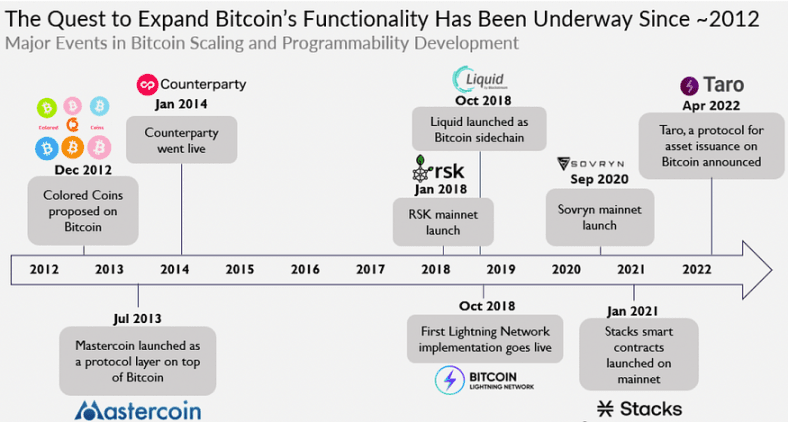
The current scale of the Bitcoin ecosystem is still far behind that of Ethereum. First, there are fewer well-known projects compared to Ethereum. Second, the user scale is not as good as Ethereum. However, as the blockchain network with the highest market value, its growth potential is Still big.
The various infrastructures of the Bitcoin ecosystem are improving day by day, attracting more and more projects and the attention of investors. Projects such as OmniBOLT and RGB protocols based on the Lightning Network will be able to gain more powerful development capabilities, and some Ethereum-compatible Bitcoin Layer2 projects will also benefit from the ecosystem. In the future, the Bitcoin ecosystem will accelerate development in areas such as payment, DeFi, and NFT, covering more tracks and users.