


Original source: Galaxy Digital
Compiled by: Kate, Marsbit
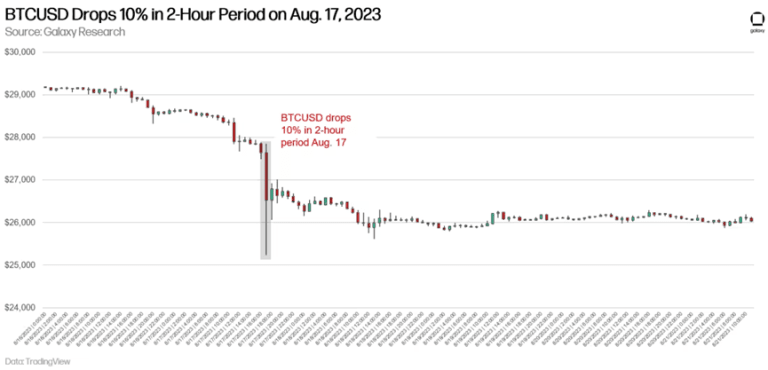
On August 18, Bitcoin experienced a major deleveraging event, with BTCUSD losing more than 10% in two hours. This downward move has awakened Bitcoin from historically low volatility.
Main points
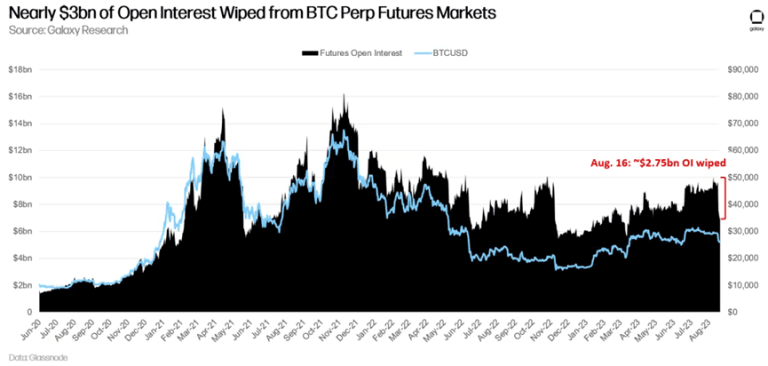
• Futures open interest saw its biggest drop since the FTX crash in November 2022, with more than $2.75 billion in open interest wiped off the Bitcoin futures market;
•Short-term holders face significant unrealized losses, which could lead to further declines in the short term;
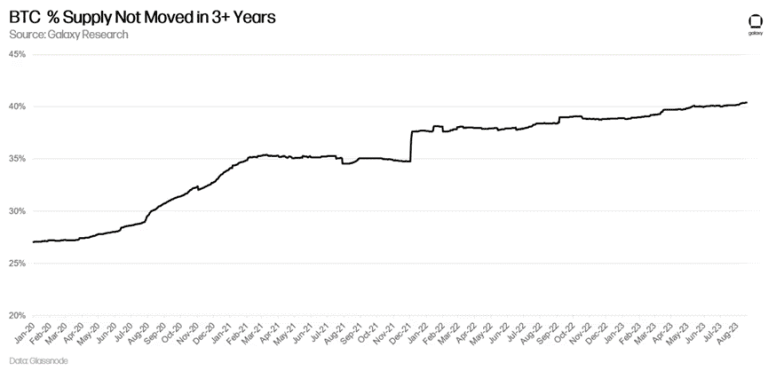
•Long-term holders continue to accumulate holdings, with more than 40% of BTC supply having been on-chain for more than 3 years, setting a record high for this metric;
•Small holders (<=10 BTC) continue to accumulate, but have not yet reached levels seen during other price declines in 2023;
•Based on technical and fundamental on-chain indicators, $25,000 is a key level to watch.
Accident Analysis
Bitcoin experienced a major repricing on August 18, losing around 10% in the hours between 4pm and 6pm ET.
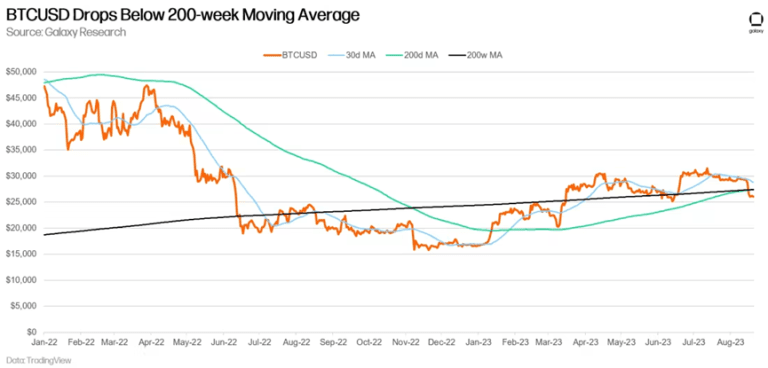
The move caused BTCUSD to fall below the 200-day and 200-week moving averages.
Open interest in the perpetual futures market fell by approximately $2.75 billion during and after the event. This is the largest Bitcoin deleveraging event since the FTX crash in early November 2022, with long positions unwinding leading to forced selling, amplifying the decline.
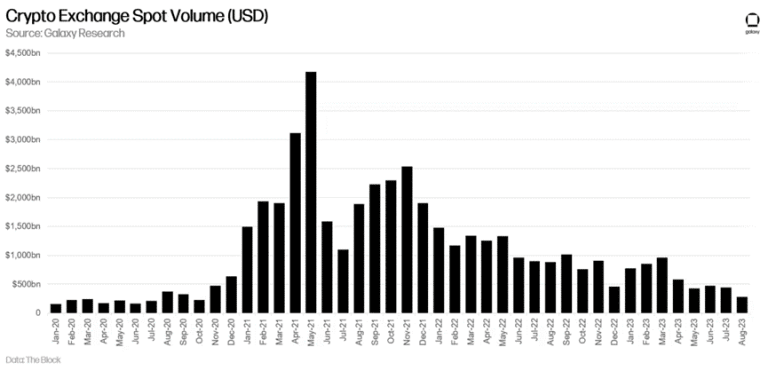
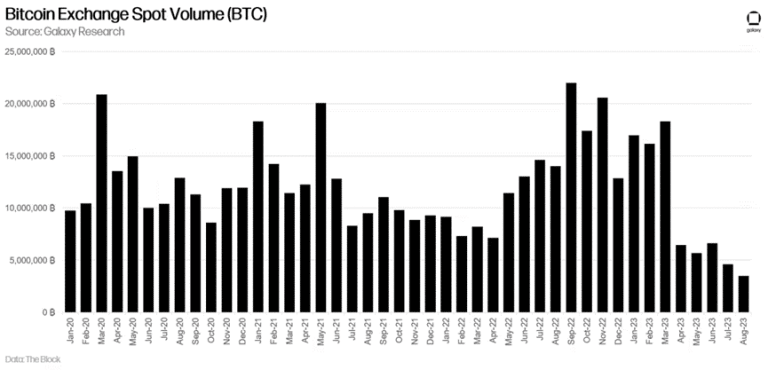
Low trading volumes on exchanges exacerbated the trend. Across all coins and major exchanges, monthly trading volume in USD is at its lowest since October 2020, before the last bull cycle began.
The move was exacerbated by sluggish exchange volume. Across all coins and major exchanges, monthly trading volumes in USD are at their lowest since October 2020. (Before the last bull market cycle started)
Looking at Bitcoin trading volumes on BTC-denominated exchanges, the recent low-volatility environment has driven Bitcoin’s monthly trading volumes to their lowest levels in at least 2.5 years. In fact, Bitcoin trading volumes have been declining month-over-month since a surge in March following the collapse of Silicon Valley Bank (with a slight exception in June when BlackRock announced its ETF filing).
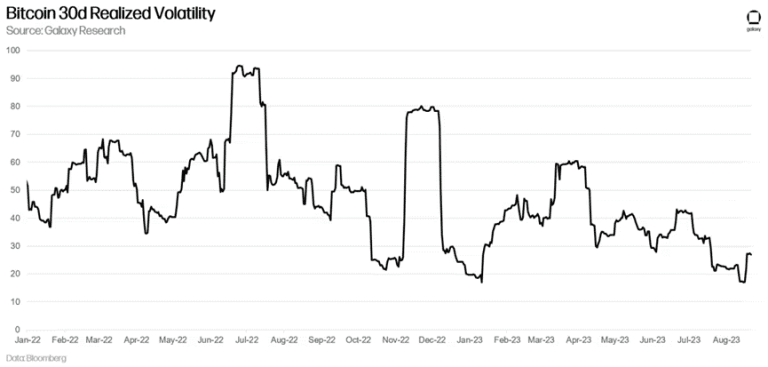
While Bitcoin remains in a low volatility environment relative to historical normals, realized volatility has increased slightly on a 30-day basis.
Take a look at Bitcoin’s supply
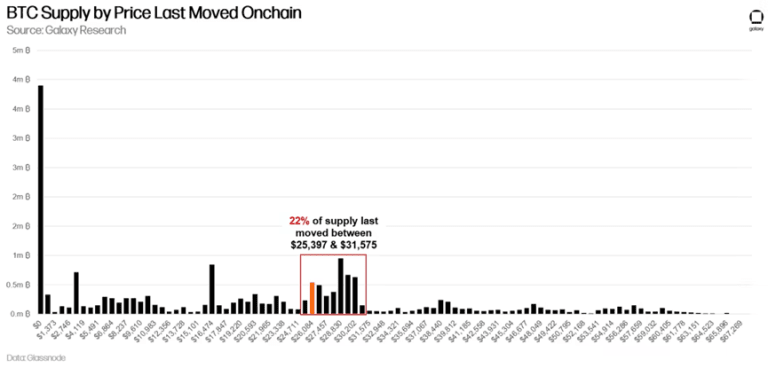
At the time of writing, Bitcoin is trading at around $26,000. $25,000 is a key level to watch as it has served as a technical support and resistance level on multiple occasions as far back as May 2022, where Thursday’s flash crash found support. This level also stands out when looking at Bitcoin supply off-chain. 22% of Bitcoin supply changed hands between $25,300 and $31,575.
In fact, the supply of Bitcoin being held at a loss by short-term holders (i.e. below the level it last moved on-chain) has reached its highest level since January. (Short-term holders are entities that hold tokens for less than 155 days).
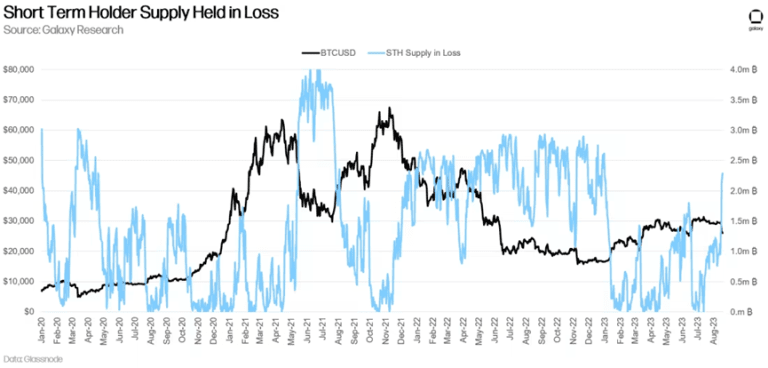
Despite this, over 60% of Bitcoin’s supply is “profitable” on-chain, meaning the last time it was on-chain the price was lower than today’s price.
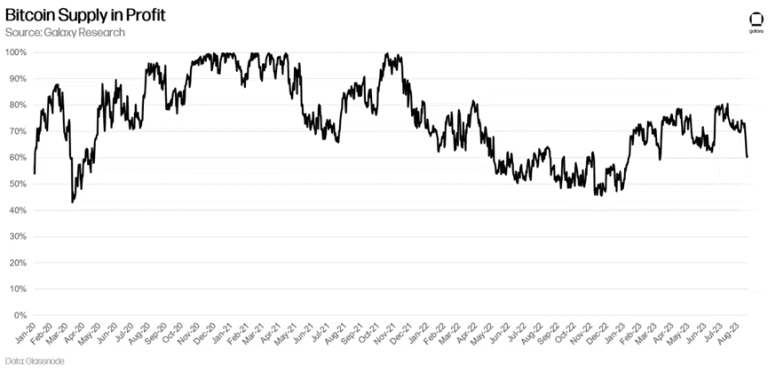
Support is still growing
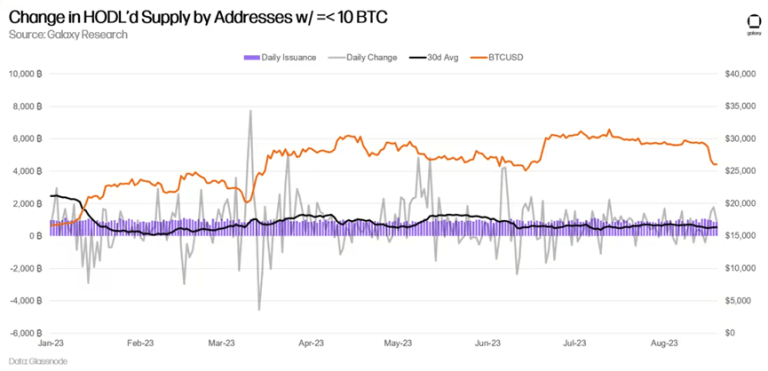
After the August 18 incident, some small addresses increased their Bitcoin holdings. Bitcoin releases around 900 newly minted BTC every day, and the accumulation of addresses with on-chain balances of 10 BTC or less has exceeded that level since Thursday. On a rolling 30-day basis, this group tends to accumulate during times of stress, with big spikes during the Silicon Valley Bank collapse and the drop to $25,000 in early June.
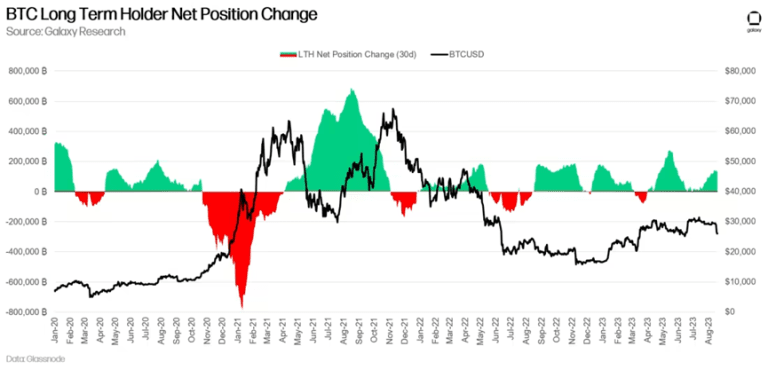
Long-term holders have been net accumulating (on a rolling 30-day basis) since March.
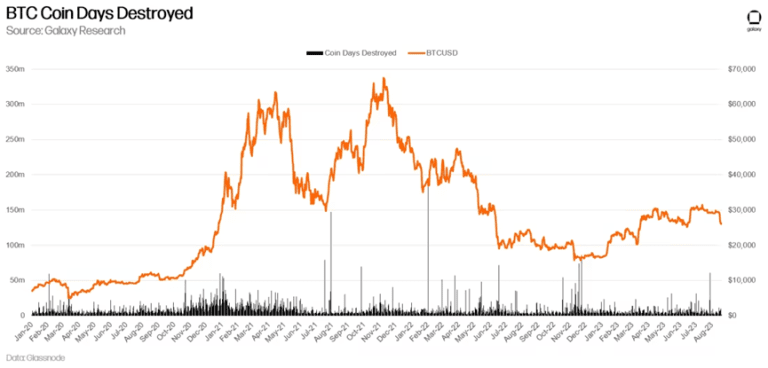
There have also been no significant number of token burn days since the deleveraging, suggesting that few older tokens are coming online and moving on-chain – further suggesting that long-term holders are not exiting long-held positions.
Finally, the proportion of Bitcoin supply that has not changed in over 3 years is hitting an all-time high of over 40%. Long-term holders continue to accumulate and hold for longer.
Catalysts for the remainder of 2023
Looking ahead to the rest of 2023, there are relatively few known catalysts, but they mostly fall into a few categories: court cases, legislation, and macroeconomics.
•Court cases. Market watchers generally view the upcoming ruling in Grayscale v. Securities and Exchange Commission (SEC) as the most imminent potential catalyst. In the case, Grayscale is seeking review of the SEC's 2022 decision to deny GBTC's conversion to an ETF, and court watchers mostly expected Grayscale to win as the judge accepted the SEC's case during oral arguments in March. Grayscale's victory is unlikely to result in approval of GBTC's conversion to an ETF, but may require the SEC to reconsider Grayscale's application. The SEC’s ruling on a motion to dismiss in the Coinbase case, as well as developments in a series of cases against Binance, could also impact markets.
•legislation. The U.S. House of Representatives is currently considering bills that would formalize the structure of crypto markets and rules for stablecoin issuance. If these bills gain enough support in the House of Representatives to force action in the Senate, the crypto market may react positively.
•Macro conditions. A further collapse in the bond market will have an adverse impact on risk assets including Bitcoin, and central banks around the world may further raise interest rates. However, certain macro outcomes, such as further problems in the banking system or downgrades by rating agencies, could provide favorable conditions for Bitcoin, as was the case following the collapse of Silicon Valley Bank in March. Finally, if central banks around the world signal an end to interest rate hikes, or even the beginning of an easing cycle, Bitcoin’s performance could improve.
These catalysts could lead to increased volatility as we enter a more active fall trading environment.
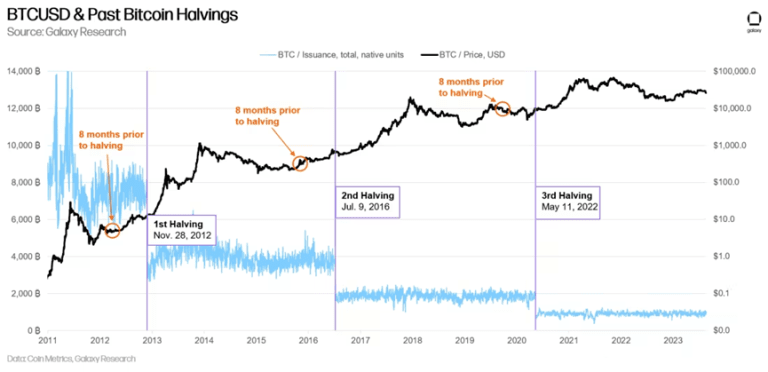
Bitcoin observers have also begun predicting the Bitcoin network's fourth halving, a four-year event in which the new issuance of Bitcoin will be cut in half, expected to happen sometime in April 2024, which is 12 months from now. Happening now about 8 months later. The first two halvings were the start of a bull market about 8 months before the halving event. The months leading up to the third halving were somewhat paradoxical for Bitcoin prices, and then the shock of the COVID crash on March 12, 2020 reset any momentum gained. Regardless, Bitcoin halving events, while their absolute impact on supply dynamics has diminished over time (and is currently objectively low), has historically led to a lack of interest in Bitcoin. Interest is renewed and precedes a major bull market. Discussions about the halving and its impact on the Bitcoin market will increase throughout the remainder of the year until next spring, which may impact positioning.
in conclusion
The rapid decline liquidated a lot of leverage in the market, causing a reset not seen since the FTX crash. In the absence of a strong narrative catalyst, near-term risks remain primarily to the downside, with $24,000 and $25,000 seen as key support levels that may be tested in the coming weeks. In fact, nearly 90% of short-term Bitcoin holdings are at an on-chain loss, which will create additional downside risk if a recovery does not occur quickly. There is little evidence that holders are concerned, with continued accumulation observed among both long-term holders and smaller addresses.
(The above content is excerpted and reprinted with permission from partner MarsBit, original text link)
Statement: The article only represents the author's personal views and opinions, and does not represent the objective views and positions of the blockchain. All contents and opinions are for reference only and do not constitute investment advice. Investors should make their own decisions and transactions, and the author and Blockchain Client will not be held responsible for any direct or indirect losses caused by investors' transactions.
This article Galaxy Digital: Bitcoin plummeted last week, holders were not frightened, 25,000 is the key support level first appeared on Blockchain.