

#technicalanalysis
technicalanalysis
27.3M views
179,612 Discussing
Hot
Latest

·
--
Bullish
SKHYNIX / USDT Bullish Reversal at Dynamic Support.❗
SK Hynix (SKHYNIX) is demonstrating textbook bullish reversal characteristics following a strong bounce from the lower demand. The Price action is reclaiming key intraday moving averages with expanding buying volume signaling a high probability expansion move toward upper resistance targets.
📊 Trade Setup & Parameters
* Position: LONG 🟢
* Entry Zone: 1328.71 – 1342.06
* Target 1 (TP1): 1395.76
* Target 2 (TP2): 1449.47
* Target 3 (TP3): 1503.17
* Stop Loss (SL): 1288.36
Bulls continue to defend structural higher lows. Maintaining price stability above the 1288.36 invalidation level preserves the broader bullish breakout structure.
⚠️ Risk Controls & Account Protection
Exercise strict capital discipline by sizing open orders to withstand market noise while preserving principal. Secure initial profits upon reaching Target 1 and immediately adjust your Stop Loss to Breakeven to maintain a risk free position.
#BinanceSquare #Semiconductors #TechStocks #Write2Earn #TechnicalAnalysis
$SKHYNIX
{future}(SKHYNIXUSDT)
$NVDA
{future}(NVDAUSDT)
$SOXL
{future}(SOXLUSDT)
SKHYNIX / USDT Bullish Reversal at Dynamic Support.❗
SK Hynix (SKHYNIX) is demonstrating textbook bullish reversal characteristics following a strong bounce from the lower demand. The Price action is reclaiming key intraday moving averages with expanding buying volume signaling a high probability expansion move toward upper resistance targets.
📊 Trade Setup & Parameters
* Position: LONG 🟢
* Entry Zone: 1328.71 – 1342.06
* Target 1 (TP1): 1395.76
* Target 2 (TP2): 1449.47
* Target 3 (TP3): 1503.17
* Stop Loss (SL): 1288.36
Bulls continue to defend structural higher lows. Maintaining price stability above the 1288.36 invalidation level preserves the broader bullish breakout structure.
⚠️ Risk Controls & Account Protection
Exercise strict capital discipline by sizing open orders to withstand market noise while preserving principal. Secure initial profits upon reaching Target 1 and immediately adjust your Stop Loss to Breakeven to maintain a risk free position.
#BinanceSquare #Semiconductors #TechStocks #Write2Earn #TechnicalAnalysis
$SKHYNIX
$NVDA
$SOXL
SK Hynix (SKHYNIX) is demonstrating textbook bullish reversal characteristics following a strong bounce from the lower demand. The Price action is reclaiming key intraday moving averages with expanding buying volume signaling a high probability expansion move toward upper resistance targets.
📊 Trade Setup & Parameters
* Position: LONG 🟢
* Entry Zone: 1328.71 – 1342.06
* Target 1 (TP1): 1395.76
* Target 2 (TP2): 1449.47
* Target 3 (TP3): 1503.17
* Stop Loss (SL): 1288.36
Bulls continue to defend structural higher lows. Maintaining price stability above the 1288.36 invalidation level preserves the broader bullish breakout structure.
⚠️ Risk Controls & Account Protection
Exercise strict capital discipline by sizing open orders to withstand market noise while preserving principal. Secure initial profits upon reaching Target 1 and immediately adjust your Stop Loss to Breakeven to maintain a risk free position.
#BinanceSquare #Semiconductors #TechStocks #Write2Earn #TechnicalAnalysis
$SKHYNIX
$NVDA
$SOXL
584


·
--
Bearish
$B 2x volume spike into a 2.8% drop — distribution pressure is still in play
My 1H bias remains bearish. Price is still printing lower highs, while the key 0.1932 swing high remains unbroken. The volume expansion around this level looks more like distribution and liquidity absorption than a confirmed reversal.
This is a counter-trend short against the bullish daily and weekly structure, so confirmation is essential.
Key setup:
- Rejection zone: 0.1930–0.1948
- First targets: 0.1879 → 0.1868
- Final target: 0.1845, with 0.1840 demand in focus if momentum accelerates
- Entry confirmation: sweep/rejection of 0.1932 followed by a 1H bearish close or LTF structure shift
- Protection: above the structure flip rather than using a fixed stop
- Invalidation: 1H close above 0.1932
Flow also supports the bearish setup: OI at $11.3M (+1.7% 24h), funding at +0.0301%, and taker ratio at 0.89x, with elevated volume and seller-dominant flow.
No chase. I want to see rejection first, then continuation.
#Binance #CryptoTrading #Altcoins #TechnicalAnalysis #B $B
{future}(BUSDT)
$B 2x volume spike into a 2.8% drop — distribution pressure is still in play
My 1H bias remains bearish. Price is still printing lower highs, while the key 0.1932 swing high remains unbroken. The volume expansion around this level looks more like distribution and liquidity absorption than a confirmed reversal.
This is a counter-trend short against the bullish daily and weekly structure, so confirmation is essential.
Key setup:
- Rejection zone: 0.1930–0.1948
- First targets: 0.1879 → 0.1868
- Final target: 0.1845, with 0.1840 demand in focus if momentum accelerates
- Entry confirmation: sweep/rejection of 0.1932 followed by a 1H bearish close or LTF structure shift
- Protection: above the structure flip rather than using a fixed stop
- Invalidation: 1H close above 0.1932
Flow also supports the bearish setup: OI at $11.3M (+1.7% 24h), funding at +0.0301%, and taker ratio at 0.89x, with elevated volume and seller-dominant flow.
No chase. I want to see rejection first, then continuation.
#Binance #CryptoTrading #Altcoins #TechnicalAnalysis #B $B
My 1H bias remains bearish. Price is still printing lower highs, while the key 0.1932 swing high remains unbroken. The volume expansion around this level looks more like distribution and liquidity absorption than a confirmed reversal.
This is a counter-trend short against the bullish daily and weekly structure, so confirmation is essential.
Key setup:
- Rejection zone: 0.1930–0.1948
- First targets: 0.1879 → 0.1868
- Final target: 0.1845, with 0.1840 demand in focus if momentum accelerates
- Entry confirmation: sweep/rejection of 0.1932 followed by a 1H bearish close or LTF structure shift
- Protection: above the structure flip rather than using a fixed stop
- Invalidation: 1H close above 0.1932
Flow also supports the bearish setup: OI at $11.3M (+1.7% 24h), funding at +0.0301%, and taker ratio at 0.89x, with elevated volume and seller-dominant flow.
No chase. I want to see rejection first, then continuation.
#Binance #CryptoTrading #Altcoins #TechnicalAnalysis #B $B
24

·
--
🚨 TRUMP Token: Key Levels to Watch! 📉🔥
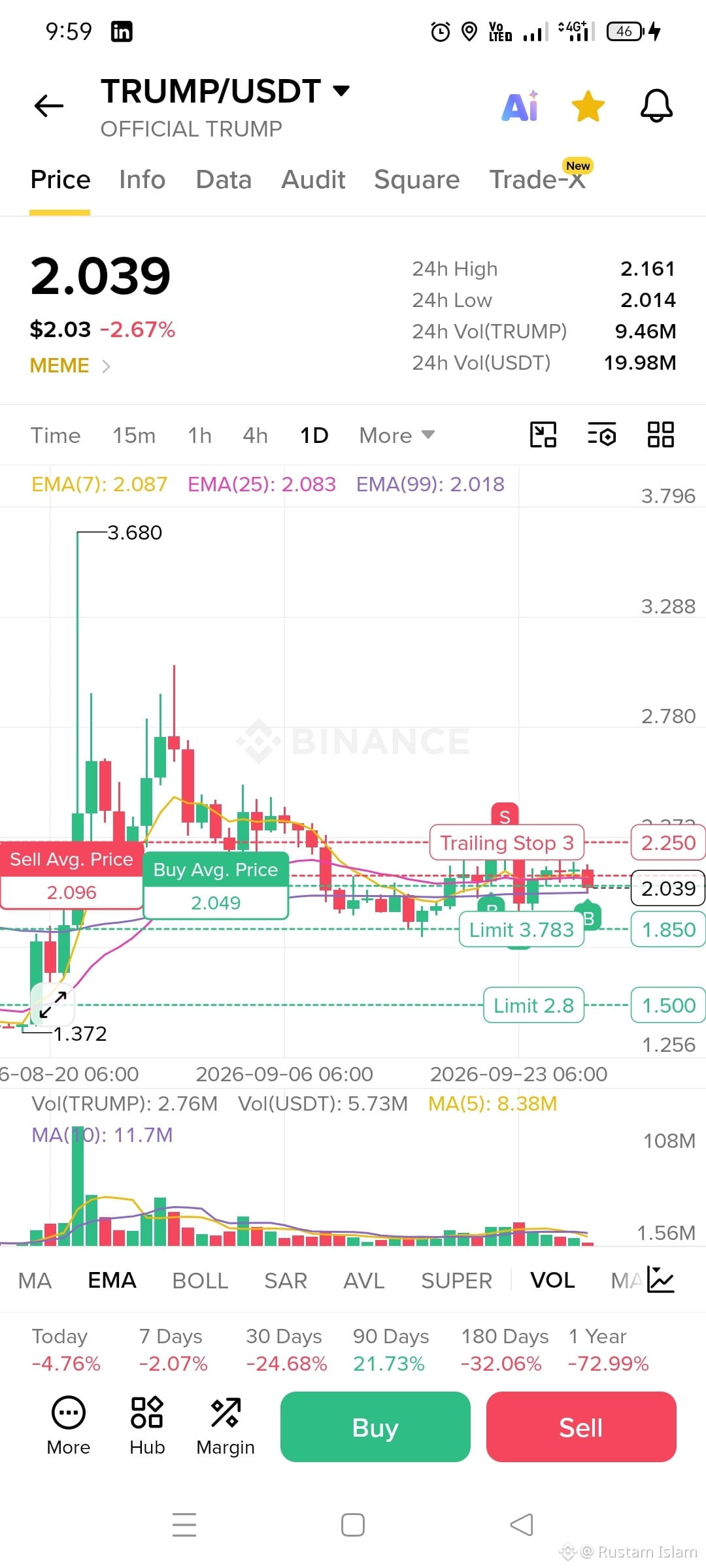
TRUMP is consolidating around $2.039 after hitting a high of $3.680. Here are the 3 major levels to track right now:
1️⃣ Resistance Zone: Needs a clean breakout above 2.08 – 2.25 to start the next bullish leg towards $2.78+.
2️⃣ Immediate Support: Holding tight near 2.018 (EMA 99 line).
3️⃣ Major Dip Support: If $2.00 breaks, watch for strong liquidity buying down at $1.850.
👉 What's your move? Are you buying the dip or waiting for a breakout above $2.08? Let us know below! 👇
#TRUMP #CryptoTrading #BinanceSquareTalks #altcoins #TechnicalAnalysis
🚨 TRUMP Token: Key Levels to Watch! 📉🔥
TRUMP is consolidating around $2.039 after hitting a high of $3.680. Here are the 3 major levels to track right now:
1️⃣ Resistance Zone: Needs a clean breakout above 2.08 – 2.25 to start the next bullish leg towards $2.78+.
2️⃣ Immediate Support: Holding tight near 2.018 (EMA 99 line).
3️⃣ Major Dip Support: If $2.00 breaks, watch for strong liquidity buying down at $1.850.
👉 What's your move? Are you buying the dip or waiting for a breakout above $2.08? Let us know below! 👇
#TRUMP #CryptoTrading #BinanceSquareTalks #altcoins #TechnicalAnalysis
TRUMP is consolidating around $2.039 after hitting a high of $3.680. Here are the 3 major levels to track right now:
1️⃣ Resistance Zone: Needs a clean breakout above 2.08 – 2.25 to start the next bullish leg towards $2.78+.
2️⃣ Immediate Support: Holding tight near 2.018 (EMA 99 line).
3️⃣ Major Dip Support: If $2.00 breaks, watch for strong liquidity buying down at $1.850.
👉 What's your move? Are you buying the dip or waiting for a breakout above $2.08? Let us know below! 👇
#TRUMP #CryptoTrading #BinanceSquareTalks #altcoins #TechnicalAnalysis
209

·
--
🚀 $CAKE Perfectly Following Technical Bullish Setup! 📈🎯
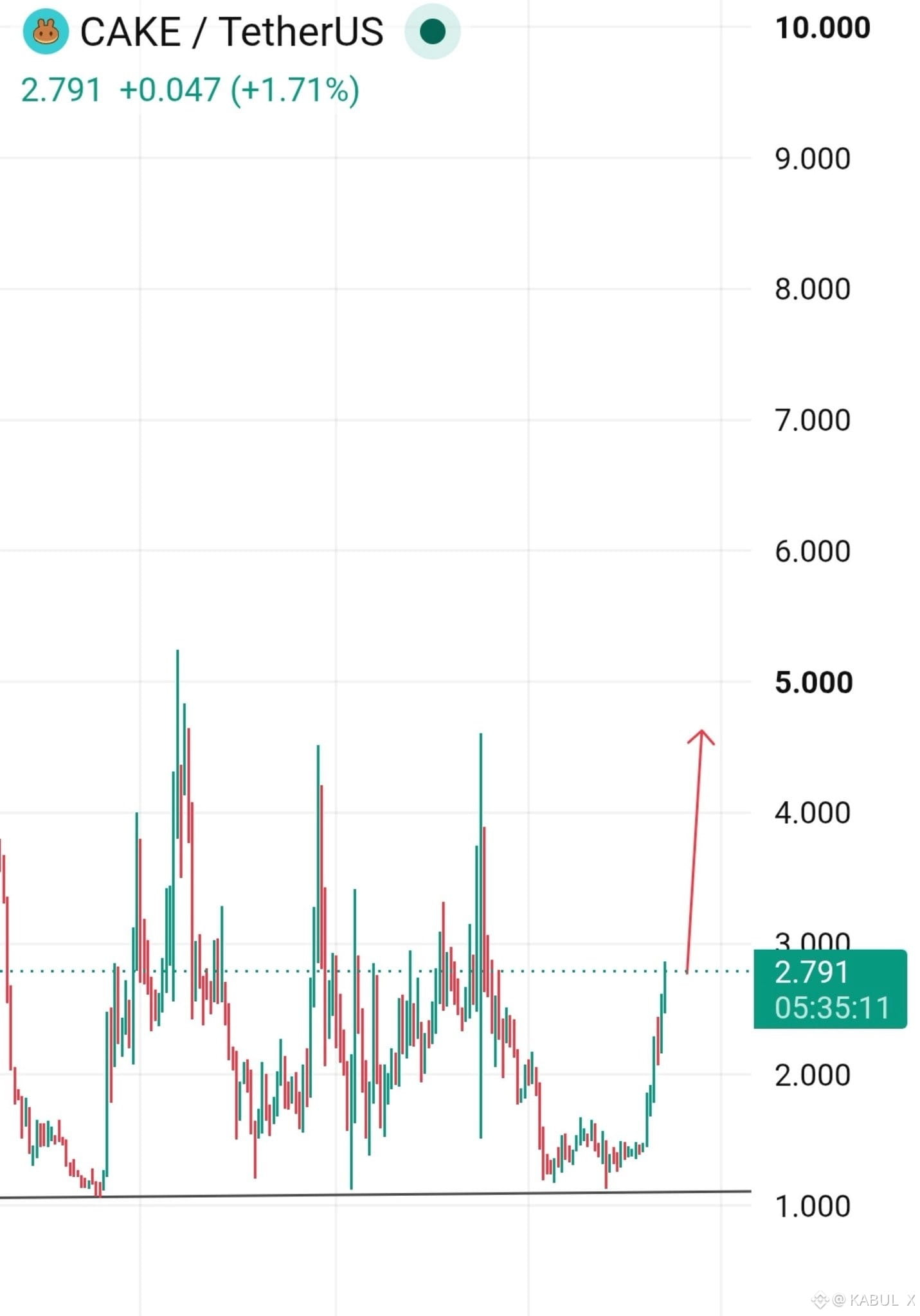
PancakeSwap ($CAKE) is delivering a clean trend continuation right off its macro support level!
📊 Key Technical Highlights:
🔹 Current Level: Trading around $2.79 after bouncing off the bottom support base.
🔹 BULLish Structure: Price action is moving strictly according to the predicted breakout trajectory.
🔹 Primary Target: The immediate upside expansion target is set toward the $5.00 zone.
💡 Solid DeFi protocols rebounding from strong bottoms often lead major altcoin rallies!
Are you holding $CAKE for the $5 target? Share your strategy below! 👇💬
$CAKE #CAKE #CryptoAnalysis #BinanceSquare #Altcoins
{future}(CAKEUSDT)
#TechnicalAnalysis
🚀 $CAKE Perfectly Following Technical Bullish Setup! 📈🎯
PancakeSwap ($CAKE ) is delivering a clean trend continuation right off its macro support level!
📊 Key Technical Highlights:
🔹 Current Level: Trading around $2.79 after bouncing off the bottom support base.
🔹 BULLish Structure: Price action is moving strictly according to the predicted breakout trajectory.
🔹 Primary Target: The immediate upside expansion target is set toward the $5.00 zone.
💡 Solid DeFi protocols rebounding from strong bottoms often lead major altcoin rallies!
Are you holding $CAKE for the $5 target? Share your strategy below! 👇💬
$CAKE #CAKE #CryptoAnalysis #BinanceSquare #Altcoins
#TechnicalAnalysis
PancakeSwap ($CAKE ) is delivering a clean trend continuation right off its macro support level!
📊 Key Technical Highlights:
🔹 Current Level: Trading around $2.79 after bouncing off the bottom support base.
🔹 BULLish Structure: Price action is moving strictly according to the predicted breakout trajectory.
🔹 Primary Target: The immediate upside expansion target is set toward the $5.00 zone.
💡 Solid DeFi protocols rebounding from strong bottoms often lead major altcoin rallies!
Are you holding $CAKE for the $5 target? Share your strategy below! 👇💬
$CAKE #CAKE #CryptoAnalysis #BinanceSquare #Altcoins
#TechnicalAnalysis
253

·
--
Bullish
DASH Price Action: Key Resistance Zone in Focus
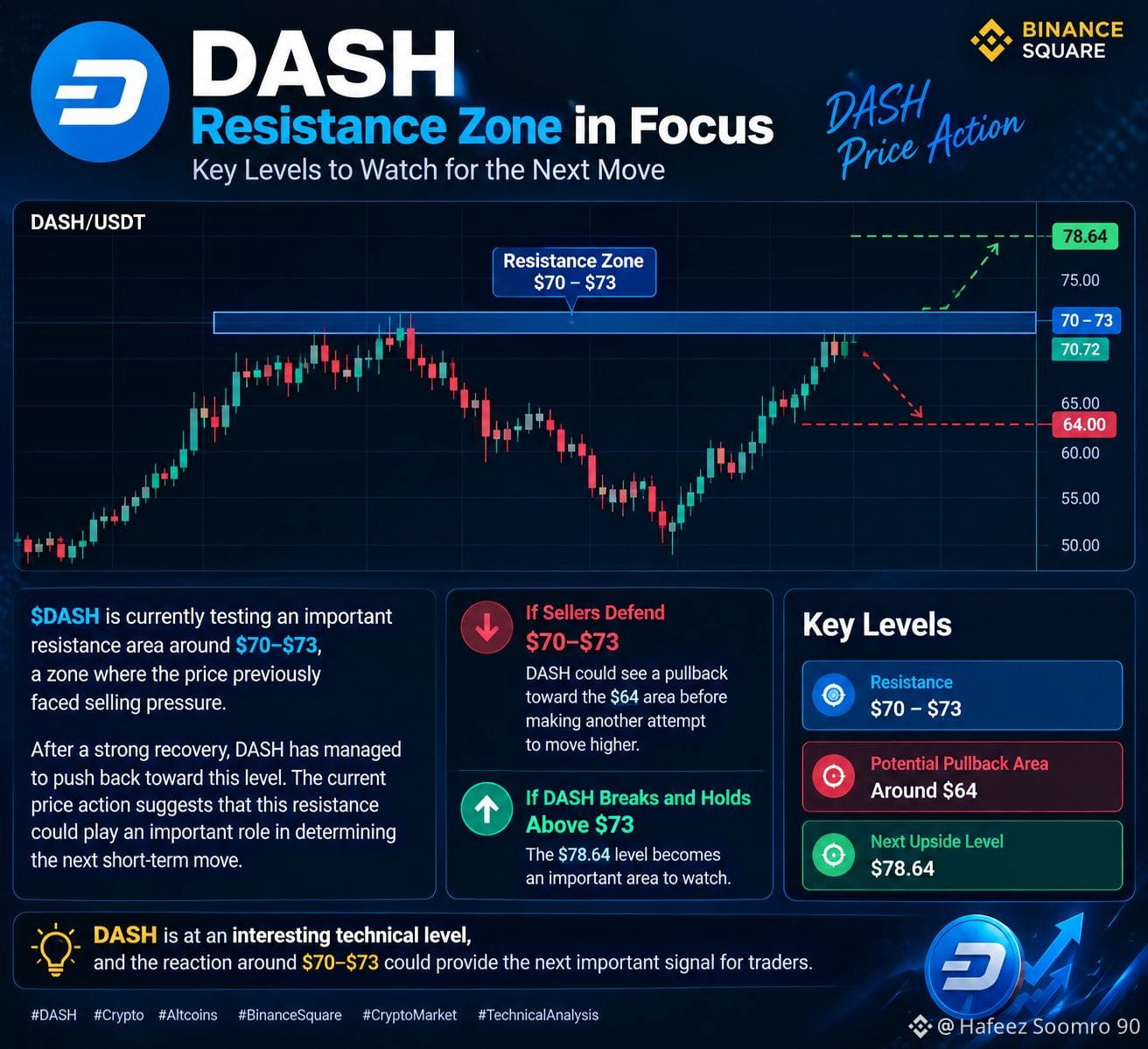
$DASH is currently testing an important resistance area around $70–$73, a zone where the price previously faced selling pressure.
After a strong recovery, $DASH has managed to push back toward this level. The current price action suggests that this resistance could play an important role in determining the next short-term move.
If sellers defend the $70–$73 zone, DASH could see a pullback toward the $64 area before making another attempt to move higher.
On the other hand, a clear breakout above $73 followed by a sustained hold could shift attention toward the $78.64 level as the next area to watch.
For now, the key levels remain:
🔹 Resistance: $70–$73
🔹 Potential pullback area: Around $64
🔹 Next upside level: $78.64
DASH is at an interesting technical level, and the reaction around $70–$73 could provide the next important signal for traders.
#DASH #Crypto_Jobs🎯 #Altcoins #TechnicalAnalysis #TechnicalAnalysis
DASH Price Action: Key Resistance Zone in Focus
$DASH is currently testing an important resistance area around $70–$73, a zone where the price previously faced selling pressure.
After a strong recovery, $DASH has managed to push back toward this level. The current price action suggests that this resistance could play an important role in determining the next short-term move.
If sellers defend the $70–$73 zone, DASH could see a pullback toward the $64 area before making another attempt to move higher.
On the other hand, a clear breakout above $73 followed by a sustained hold could shift attention toward the $78.64 level as the next area to watch.
For now, the key levels remain:
🔹 Resistance: $70–$73
🔹 Potential pullback area: Around $64
🔹 Next upside level: $78.64
DASH is at an interesting technical level, and the reaction around $70–$73 could provide the next important signal for traders.
#DASH #Crypto_Jobs🎯 #Altcoins #TechnicalAnalysis #TechnicalAnalysis
$DASH is currently testing an important resistance area around $70–$73, a zone where the price previously faced selling pressure.
After a strong recovery, $DASH has managed to push back toward this level. The current price action suggests that this resistance could play an important role in determining the next short-term move.
If sellers defend the $70–$73 zone, DASH could see a pullback toward the $64 area before making another attempt to move higher.
On the other hand, a clear breakout above $73 followed by a sustained hold could shift attention toward the $78.64 level as the next area to watch.
For now, the key levels remain:
🔹 Resistance: $70–$73
🔹 Potential pullback area: Around $64
🔹 Next upside level: $78.64
DASH is at an interesting technical level, and the reaction around $70–$73 could provide the next important signal for traders.
#DASH #Crypto_Jobs🎯 #Altcoins #TechnicalAnalysis #TechnicalAnalysis
62

·
--
$INJ 4H SUPPORT VS RESISTANCE 🔍
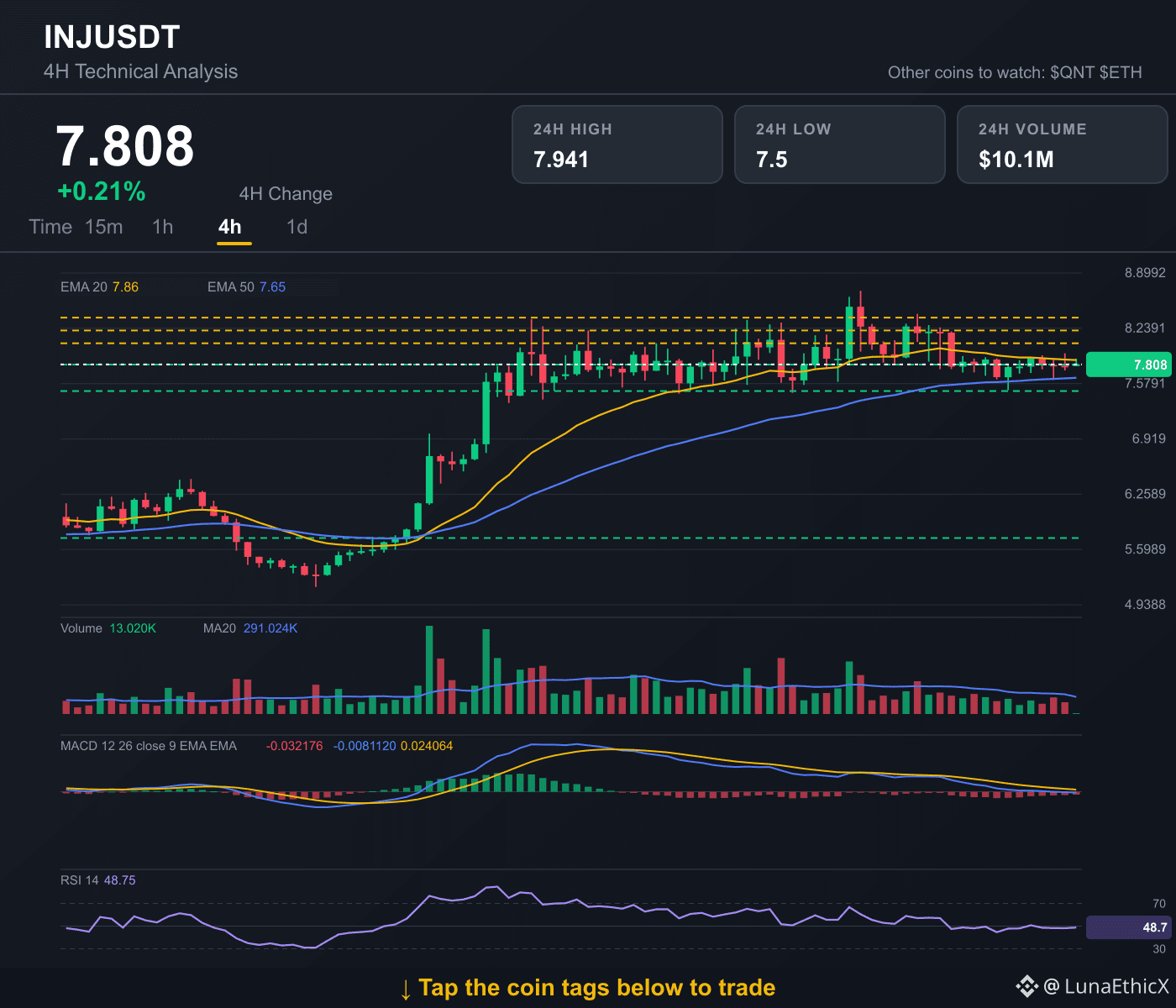
Price is currently 7.808, while EMA20 7.8604 and EMA50 7.6481 leave the trend without clean alignment. RSI at 48.75 is neutral, with MACD -0.008112 and signal 0.02406 providing the next momentum clue. Bulls may meet resistance around 8.06, 8.213 and 8.3667. Buyers may look for support around 7.806, 7.49 and 5.736.
Also tracking $QNT and $ETH without drawing conclusions yet. 📊
🚀 Ready to explore? Click the coin tags below to get started.
#TechnicalAnalysis #CryptoAnalysis #BinanceSquare
$INJ $QNT $ETH
$INJ 4H SUPPORT VS RESISTANCE 🔍
Price is currently 7.808, while EMA20 7.8604 and EMA50 7.6481 leave the trend without clean alignment. RSI at 48.75 is neutral, with MACD -0.008112 and signal 0.02406 providing the next momentum clue. Bulls may meet resistance around 8.06, 8.213 and 8.3667. Buyers may look for support around 7.806, 7.49 and 5.736.
Also tracking $QNT and $ETH without drawing conclusions yet. 📊
🚀 Ready to explore? Click the coin tags below to get started.
#TechnicalAnalysis #CryptoAnalysis #BinanceSquare
$INJ $QNT $ETH
Price is currently 7.808, while EMA20 7.8604 and EMA50 7.6481 leave the trend without clean alignment. RSI at 48.75 is neutral, with MACD -0.008112 and signal 0.02406 providing the next momentum clue. Bulls may meet resistance around 8.06, 8.213 and 8.3667. Buyers may look for support around 7.806, 7.49 and 5.736.
Also tracking $QNT and $ETH without drawing conclusions yet. 📊
🚀 Ready to explore? Click the coin tags below to get started.
#TechnicalAnalysis #CryptoAnalysis #BinanceSquare
$INJ $QNT $ETH
208

·
--
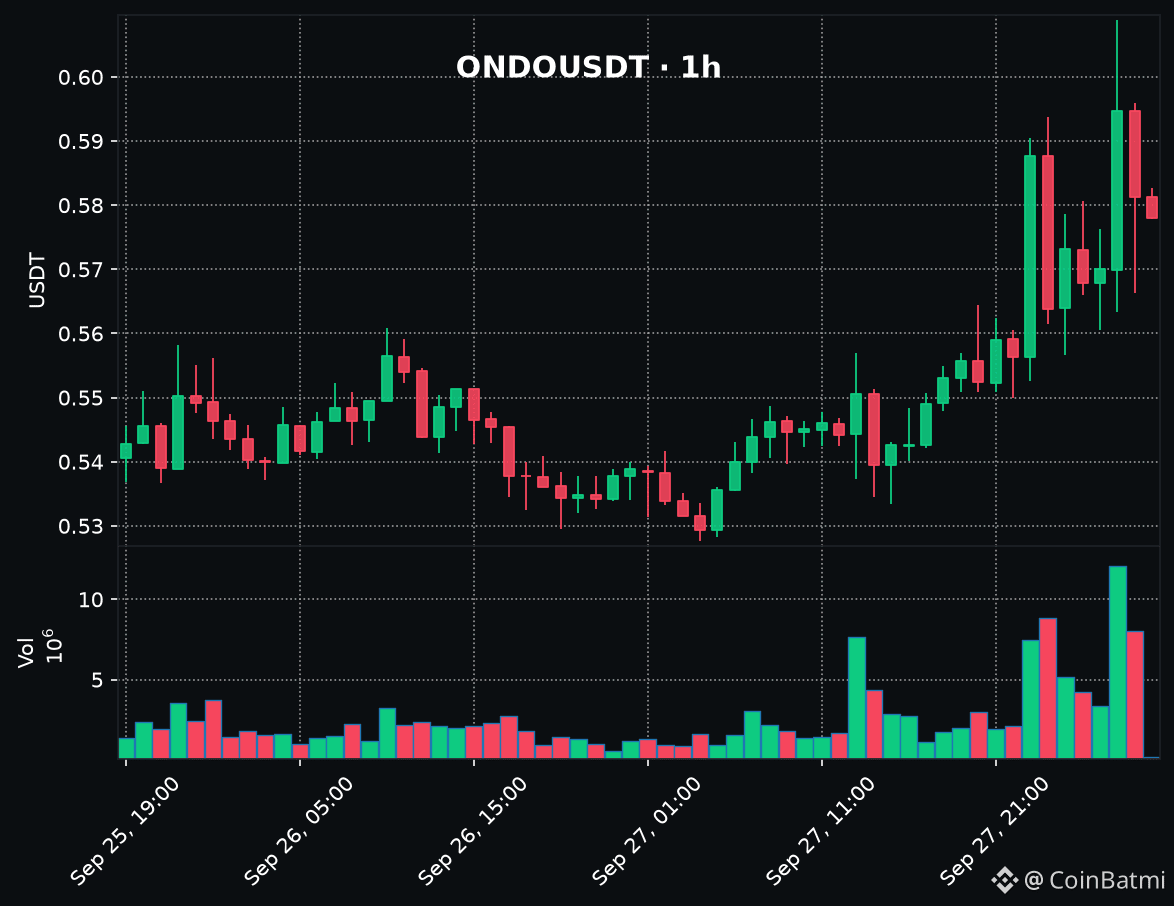
$ONDO - 7% surge tests range top at 0.6089
1h · RSI 63.4 · price 0.5794 (+7.30%)
Support 0.55
Resistance 0.6089
24h range 0.5334-0.6089
Invalidation: 1h close below 0.55
Momentum holds above the midpoint but needs a clean break of 0.6089 to extend toward 0.65.
$BTC
#TechnicalAnalysis #ONDO
$ONDO - 7% surge tests range top at 0.6089
1h · RSI 63.4 · price 0.5794 (+7.30%)
Support 0.55
Resistance 0.6089
24h range 0.5334-0.6089
Invalidation: 1h close below 0.55
Momentum holds above the midpoint but needs a clean break of 0.6089 to extend toward 0.65.
$BTC
#TechnicalAnalysis #ONDO
1h · RSI 63.4 · price 0.5794 (+7.30%)
Support 0.55
Resistance 0.6089
24h range 0.5334-0.6089
Invalidation: 1h close below 0.55
Momentum holds above the midpoint but needs a clean break of 0.6089 to extend toward 0.65.
$BTC
#TechnicalAnalysis #ONDO
3

$SOL
{future}(SOLUSDT)
🚨 $SOL USDT Technical Analysis: Extreme Oversold Zone – Potential Rebound Ahead! 📉⚡
Solana ($SOL) has experienced a sharp pullback, currently trading at $118.32 (-2.44%). The price broke below the 1H MA(99) level ($119.70) and tested the 24h low at $118.14. However, technical indicators suggest we are in a heavily oversold region where a short-term bounce can occur!
PNG
+ 1
📊 Key Technical Levels (1H Chart):
• Current Price: $118.32
• 24h Low / Immediate Support: $118.14
• Major Support Zone: $115.70 – $116.00
• Immediate Resistance: $119.70 (MA 99 Breakout point)
• Key Resistance: $120.36 (MA 7) & $122.11 (MA 25)
• RSI (6): 15.00 ⚠️ (Extreme Oversold condition, highly favorable for a relief rally!)
PNG
+ 4
💡 Trading Strategy & Setup:
• Dip Buying Zone: $117.50 – $118.30 (Look for reversal candle signals)
• Confirmation Trigger: A 1H candle close back above $119.70 will confirm a strong relief rally toward $122+.
PNG
+ 1
🎯 Profit Targets:
• Target 1: $119.70
• Target 2: $122.00
• Target 3: $124.50
PNG
+ 2
🛑 Stop Loss: $116.80
PNG
💡 Trade SOL on Binance & Save Fees!
Join my trading circle using my referral link to get 10% OFF on Trading Fees and claim exclusive cash rewards:
📲 Referral Link: https://ww..AKIP
📌 Referral ID: GRO_28502_SAKIP
⚠️ Disclaimer: Financial content for educational purposes only. Always use tight risk management!
#Solana #SOL #CryptoTrading #BinanceSquare #TechnicalAnalysis
$SOL
🚨 $SOL USDT Technical Analysis: Extreme Oversold Zone – Potential Rebound Ahead! 📉⚡
Solana ($SOL ) has experienced a sharp pullback, currently trading at $118.32 (-2.44%). The price broke below the 1H MA(99) level ($119.70) and tested the 24h low at $118.14. However, technical indicators suggest we are in a heavily oversold region where a short-term bounce can occur!
PNG
+ 1
📊 Key Technical Levels (1H Chart):
• Current Price: $118.32
• 24h Low / Immediate Support: $118.14
• Major Support Zone: $115.70 – $116.00
• Immediate Resistance: $119.70 (MA 99 Breakout point)
• Key Resistance: $120.36 (MA 7) & $122.11 (MA 25)
• RSI (6): 15.00 ⚠️ (Extreme Oversold condition, highly favorable for a relief rally!)
PNG
+ 4
💡 Trading Strategy & Setup:
• Dip Buying Zone: $117.50 – $118.30 (Look for reversal candle signals)
• Confirmation Trigger: A 1H candle close back above $119.70 will confirm a strong relief rally toward $122+.
PNG
+ 1
🎯 Profit Targets:
• Target 1: $119.70
• Target 2: $122.00
• Target 3: $124.50
PNG
+ 2
🛑 Stop Loss: $116.80
PNG
💡 Trade SOL on Binance & Save Fees!
Join my trading circle using my referral link to get 10% OFF on Trading Fees and claim exclusive cash rewards:
📲 Referral Link: https://ww..AKIP
📌 Referral ID: GRO_28502_SAKIP
⚠️ Disclaimer: Financial content for educational purposes only. Always use tight risk management!
#Solana #SOL #CryptoTrading #BinanceSquare #TechnicalAnalysis
🚨 $SOL USDT Technical Analysis: Extreme Oversold Zone – Potential Rebound Ahead! 📉⚡
Solana ($SOL ) has experienced a sharp pullback, currently trading at $118.32 (-2.44%). The price broke below the 1H MA(99) level ($119.70) and tested the 24h low at $118.14. However, technical indicators suggest we are in a heavily oversold region where a short-term bounce can occur!
PNG
+ 1
📊 Key Technical Levels (1H Chart):
• Current Price: $118.32
• 24h Low / Immediate Support: $118.14
• Major Support Zone: $115.70 – $116.00
• Immediate Resistance: $119.70 (MA 99 Breakout point)
• Key Resistance: $120.36 (MA 7) & $122.11 (MA 25)
• RSI (6): 15.00 ⚠️ (Extreme Oversold condition, highly favorable for a relief rally!)
PNG
+ 4
💡 Trading Strategy & Setup:
• Dip Buying Zone: $117.50 – $118.30 (Look for reversal candle signals)
• Confirmation Trigger: A 1H candle close back above $119.70 will confirm a strong relief rally toward $122+.
PNG
+ 1
🎯 Profit Targets:
• Target 1: $119.70
• Target 2: $122.00
• Target 3: $124.50
PNG
+ 2
🛑 Stop Loss: $116.80
PNG
💡 Trade SOL on Binance & Save Fees!
Join my trading circle using my referral link to get 10% OFF on Trading Fees and claim exclusive cash rewards:
📲 Referral Link: https://ww..AKIP
📌 Referral ID: GRO_28502_SAKIP
⚠️ Disclaimer: Financial content for educational purposes only. Always use tight risk management!
#Solana #SOL #CryptoTrading #BinanceSquare #TechnicalAnalysis
1
41

·
--
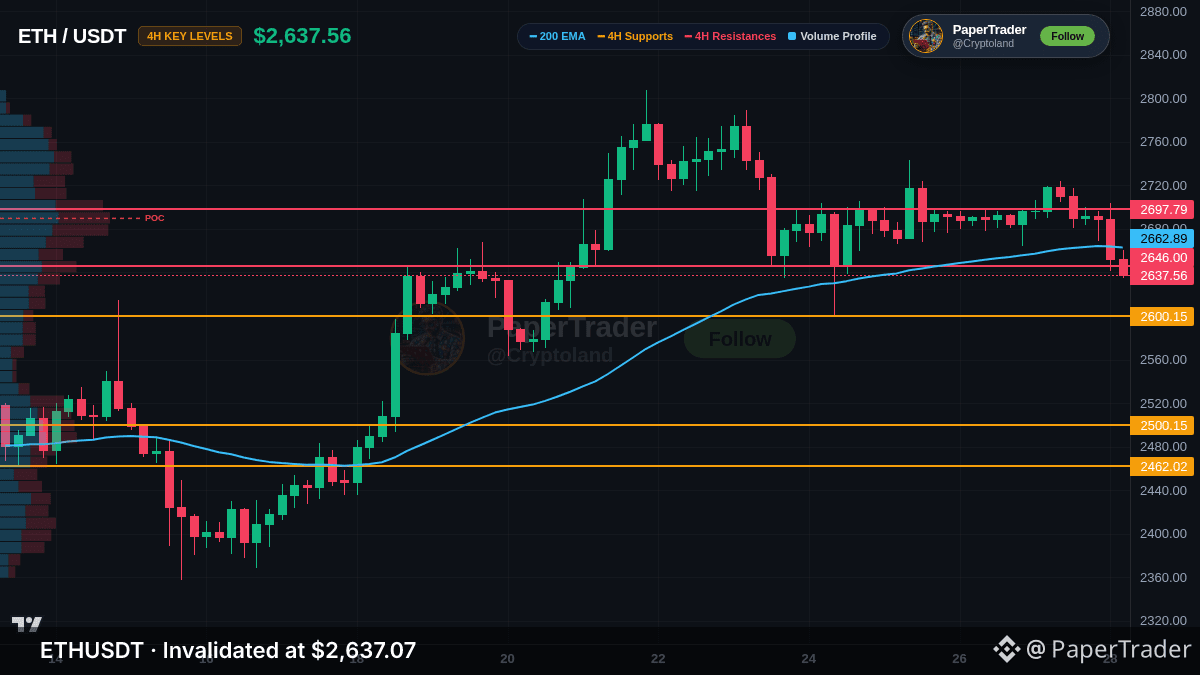
$ETH 4H setup: invalidated, idea closed
The invalidation level kept the loss defined when the bull flag failed. The idea got the retest wrong, as support did not hold on the four hour chart.
→ entry $2,681.62 · invalidation $2,638.00
→ closed at $2,637.07, -1.7% on paper
What sign would have warned you the flag was weakening?
#TechnicalAnalysis #PaperTrading
Sharing my read, not advice. DYOR.
$ETH 4H setup: invalidated, idea closed
The invalidation level kept the loss defined when the bull flag failed. The idea got the retest wrong, as support did not hold on the four hour chart.
→ entry $2,681.62 · invalidation $2,638.00
→ closed at $2,637.07, -1.7% on paper
What sign would have warned you the flag was weakening?
#TechnicalAnalysis #PaperTrading
Sharing my read, not advice. DYOR.
The invalidation level kept the loss defined when the bull flag failed. The idea got the retest wrong, as support did not hold on the four hour chart.
→ entry $2,681.62 · invalidation $2,638.00
→ closed at $2,637.07, -1.7% on paper
What sign would have warned you the flag was weakening?
#TechnicalAnalysis #PaperTrading
Sharing my read, not advice. DYOR.
15
·
--
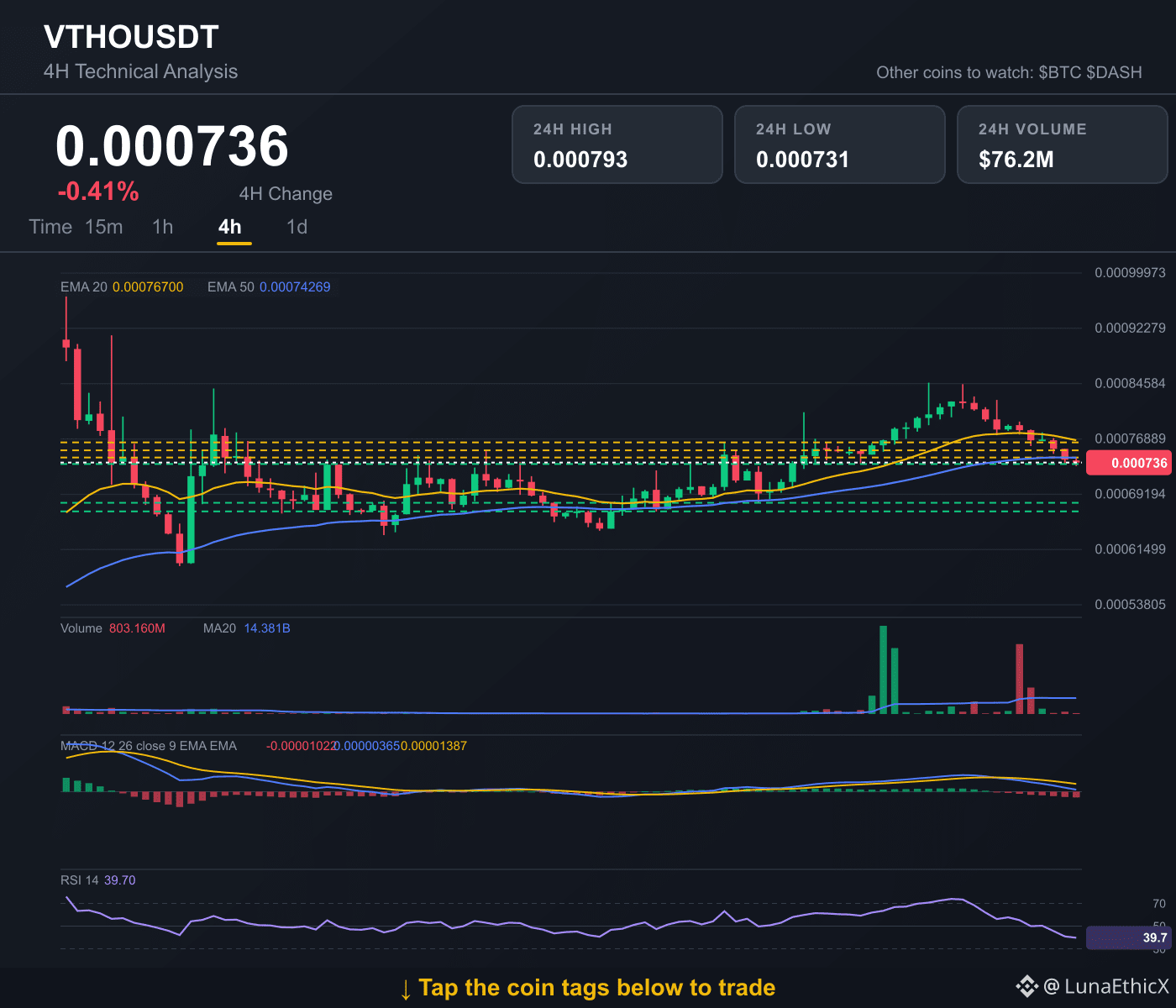
$VTHO 4H TECHNICAL CROSSROADS 👀
At 0.000736, the relationship with EMA20 0.000767 and EMA50 0.00074269 keeps the technical structure mixed. RSI at 39.7 remains weak, with MACD 0.00000365 trailing its 0.00001387 signal line, though histogram momentum is fading. Resistance sits at 0.000743, 0.000753 and 0.000764. The main support levels sit at 0.000734, 0.00068 and 0.000668.
Also tracking $BTC and $DASH without drawing conclusions yet. 📊
🔥 Want a closer look? Open the coin tags below.
#TechnicalAnalysis #CryptoAnalysis #BinanceSquare
$VTHO $BTC $DASH
$VTHO 4H TECHNICAL CROSSROADS 👀
At 0.000736, the relationship with EMA20 0.000767 and EMA50 0.00074269 keeps the technical structure mixed. RSI at 39.7 remains weak, with MACD 0.00000365 trailing its 0.00001387 signal line, though histogram momentum is fading. Resistance sits at 0.000743, 0.000753 and 0.000764. The main support levels sit at 0.000734, 0.00068 and 0.000668.
Also tracking $BTC and $DASH without drawing conclusions yet. 📊
🔥 Want a closer look? Open the coin tags below.
#TechnicalAnalysis #CryptoAnalysis #BinanceSquare
$VTHO $BTC $DASH
At 0.000736, the relationship with EMA20 0.000767 and EMA50 0.00074269 keeps the technical structure mixed. RSI at 39.7 remains weak, with MACD 0.00000365 trailing its 0.00001387 signal line, though histogram momentum is fading. Resistance sits at 0.000743, 0.000753 and 0.000764. The main support levels sit at 0.000734, 0.00068 and 0.000668.
Also tracking $BTC and $DASH without drawing conclusions yet. 📊
🔥 Want a closer look? Open the coin tags below.
#TechnicalAnalysis #CryptoAnalysis #BinanceSquare
$VTHO $BTC $DASH
49

Technical Breakdown: BTC Holds $83K Support as ETH Targets Breakdown Resistance!📊 Technical Breakdown: BTC Holds $83K Support as ETH Targets Breakdown Resistance! 🎯
Welcome back Traders! 🧠⚡
Let’s dive straight into the chart structure and key technical levels for $BTC and $ETH today.
🟢 Bitcoin (BTC/USDT) Analysis
Bitcoin experienced short-term profit-taking after touching $85,200+ and is currently retesting its major breakout support level:
Support Zone: $82,000 – $83,300. As long as daily candles close above this range, the macro structure remains bullish.Resistance Zone: $85,500 – $87,000. A clean breakout here clears the path toward the $90,000 milestone!Indicator Note: Daily RSI is normalizing from high levels, giving momentum room to reset for the next move up.
🔵 Ethereum (ETH/USDT) Analysis
Ethereum is consolidating in a tight range alongside Bitcoin:
Support Zone: $2,600 – $2,620.Resistance Zone: $2,720 – $2,750. Reclaiming $2,750 with high volume could trigger fresh altcoin momentum.
📍 Summary Matrix:
Coin Current Range Key Support Key Resistance Trend
BTC $83,800 – $84,500 $83,000 $87,000 Bullish Consolidation
ETH $2,650 – $2,705 $2,600 $2,750 Neutral / Rangebound
📊 Are you buying the dips or waiting for a breakout confirmation?
#TechnicalAnalysis #BTC #ETH #TradingStrategy #Binance
Technical Breakdown: BTC Holds $83K Support as ETH Targets Breakdown Resistance!
📊 Technical Breakdown: BTC Holds $83K Support as ETH Targets Breakdown Resistance! 🎯
Welcome back Traders! 🧠⚡
Let’s dive straight into the chart structure and key technical levels for $BTC and $ETH today.
🟢 Bitcoin (BTC/USDT) Analysis
Bitcoin experienced short-term profit-taking after touching $85,200+ and is currently retesting its major breakout support level:
Support Zone: $82,000 – $83,300. As long as daily candles close above this range, the macro structure remains bullish.Resistance Zone: $85,500 – $87,000. A clean breakout here clears the path toward the $90,000 milestone!Indicator Note: Daily RSI is normalizing from high levels, giving momentum room to reset for the next move up.
🔵 Ethereum (ETH/USDT) Analysis
Ethereum is consolidating in a tight range alongside Bitcoin:
Support Zone: $2,600 – $2,620.Resistance Zone: $2,720 – $2,750. Reclaiming $2,750 with high volume could trigger fresh altcoin momentum.
📍 Summary Matrix:
Coin Current Range Key Support Key Resistance Trend
BTC $83,800 – $84,500 $83,000 $87,000 Bullish Consolidation
ETH $2,650 – $2,705 $2,600 $2,750 Neutral / Rangebound
📊 Are you buying the dips or waiting for a breakout confirmation?
#TechnicalAnalysis #BTC #ETH #TradingStrategy #Binance
Welcome back Traders! 🧠⚡
Let’s dive straight into the chart structure and key technical levels for $BTC and $ETH today.
🟢 Bitcoin (BTC/USDT) Analysis
Bitcoin experienced short-term profit-taking after touching $85,200+ and is currently retesting its major breakout support level:
Support Zone: $82,000 – $83,300. As long as daily candles close above this range, the macro structure remains bullish.Resistance Zone: $85,500 – $87,000. A clean breakout here clears the path toward the $90,000 milestone!Indicator Note: Daily RSI is normalizing from high levels, giving momentum room to reset for the next move up.
🔵 Ethereum (ETH/USDT) Analysis
Ethereum is consolidating in a tight range alongside Bitcoin:
Support Zone: $2,600 – $2,620.Resistance Zone: $2,720 – $2,750. Reclaiming $2,750 with high volume could trigger fresh altcoin momentum.
📍 Summary Matrix:
Coin Current Range Key Support Key Resistance Trend
BTC $83,800 – $84,500 $83,000 $87,000 Bullish Consolidation
ETH $2,650 – $2,705 $2,600 $2,750 Neutral / Rangebound
📊 Are you buying the dips or waiting for a breakout confirmation?
#TechnicalAnalysis #BTC #ETH #TradingStrategy #Binance
49

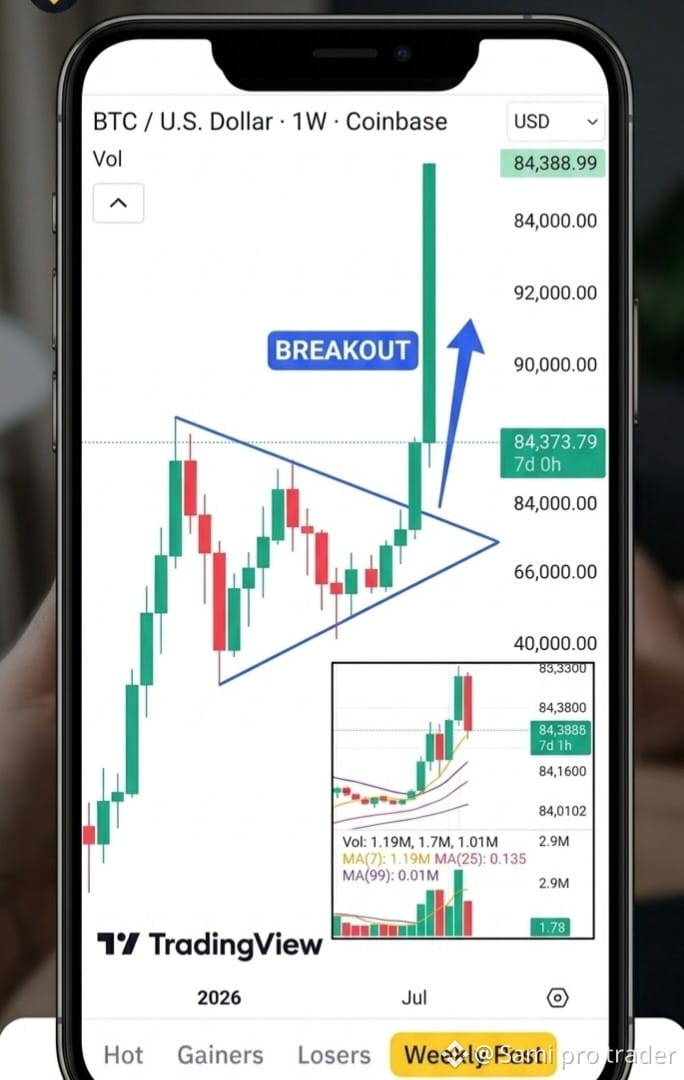
📊 $BTC Weekly Chart Analysis: Bullish Breakout in Play! 🚀
Bitcoin ($BTC) is showing exceptional strength on the Weekly (1W) timeframe, currently trading around $84,370!
Key Technical Levels from the Chart:
Current Level: ~$84,373
Key Support Zone: $80,000 - $82,800
Major Resistance Ahead: $90,000 - $98,000
The weekly candle has cleanly broken out above the local swing resistance (~$82.8k). As long as $BTC closes and holds above the $80k mark on the weekly timeframe, the macro structure remains firmly bullish with eyes set on $90,000+ next!
What is your price target for $BTC by the end of this month? Drop it below! 👇
#Bitcoin #BTC #CryptoAnalysis #BinanceSquare #TechnicalAnalysis
📊 $BTC Weekly Chart Analysis: Bullish Breakout in Play! 🚀
Bitcoin ($BTC ) is showing exceptional strength on the Weekly (1W) timeframe, currently trading around $84,370!
Key Technical Levels from the Chart:
Current Level: ~$84,373
Key Support Zone: $80,000 - $82,800
Major Resistance Ahead: $90,000 - $98,000
The weekly candle has cleanly broken out above the local swing resistance (~$82.8k). As long as $BTC closes and holds above the $80k mark on the weekly timeframe, the macro structure remains firmly bullish with eyes set on $90,000+ next!
What is your price target for $BTC by the end of this month? Drop it below! 👇
#Bitcoin #BTC #CryptoAnalysis #BinanceSquare #TechnicalAnalysis
Bitcoin ($BTC ) is showing exceptional strength on the Weekly (1W) timeframe, currently trading around $84,370!
Key Technical Levels from the Chart:
Current Level: ~$84,373
Key Support Zone: $80,000 - $82,800
Major Resistance Ahead: $90,000 - $98,000
The weekly candle has cleanly broken out above the local swing resistance (~$82.8k). As long as $BTC closes and holds above the $80k mark on the weekly timeframe, the macro structure remains firmly bullish with eyes set on $90,000+ next!
What is your price target for $BTC by the end of this month? Drop it below! 👇
#Bitcoin #BTC #CryptoAnalysis #BinanceSquare #TechnicalAnalysis
2
209

·
--
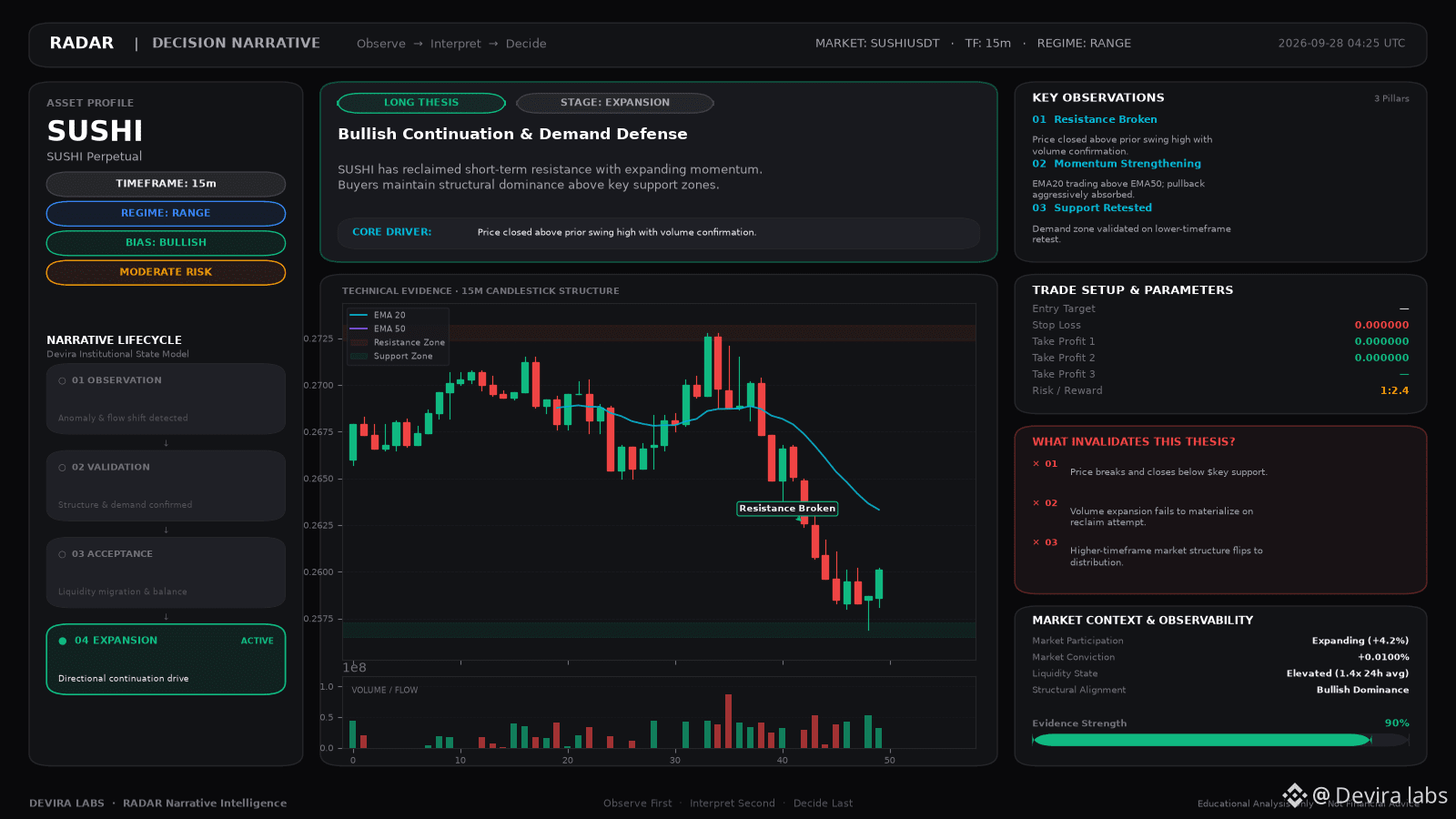
SUSHIUSDT currently in a RANGE phase, trading between 0.2565 and 0.2672. Price is consolidating near 0.2595, with support at 0.2565 and resistance at 0.2637/0.2672. Bullish scenario requires breakout above 0.2637 with volume confirmation. Bearish scenario if price fails to hold 0.2565. Risk: breakout failure or false signals. Always manage risk independently. #MarketStructure #TechnicalAnalysis
$SUSHI
#RADAR
SUSHIUSDT currently in a RANGE phase, trading between 0.2565 and 0.2672. Price is consolidating near 0.2595, with support at 0.2565 and resistance at 0.2637/0.2672. Bullish scenario requires breakout above 0.2637 with volume confirmation. Bearish scenario if price fails to hold 0.2565. Risk: breakout failure or false signals. Always manage risk independently. #MarketStructure #TechnicalAnalysis
$SUSHI
#RADAR
$SUSHI
#RADAR
36

·
--
Bearish
MUBARAK is losing momentum after its recent rally. Is another pullback coming? 👀
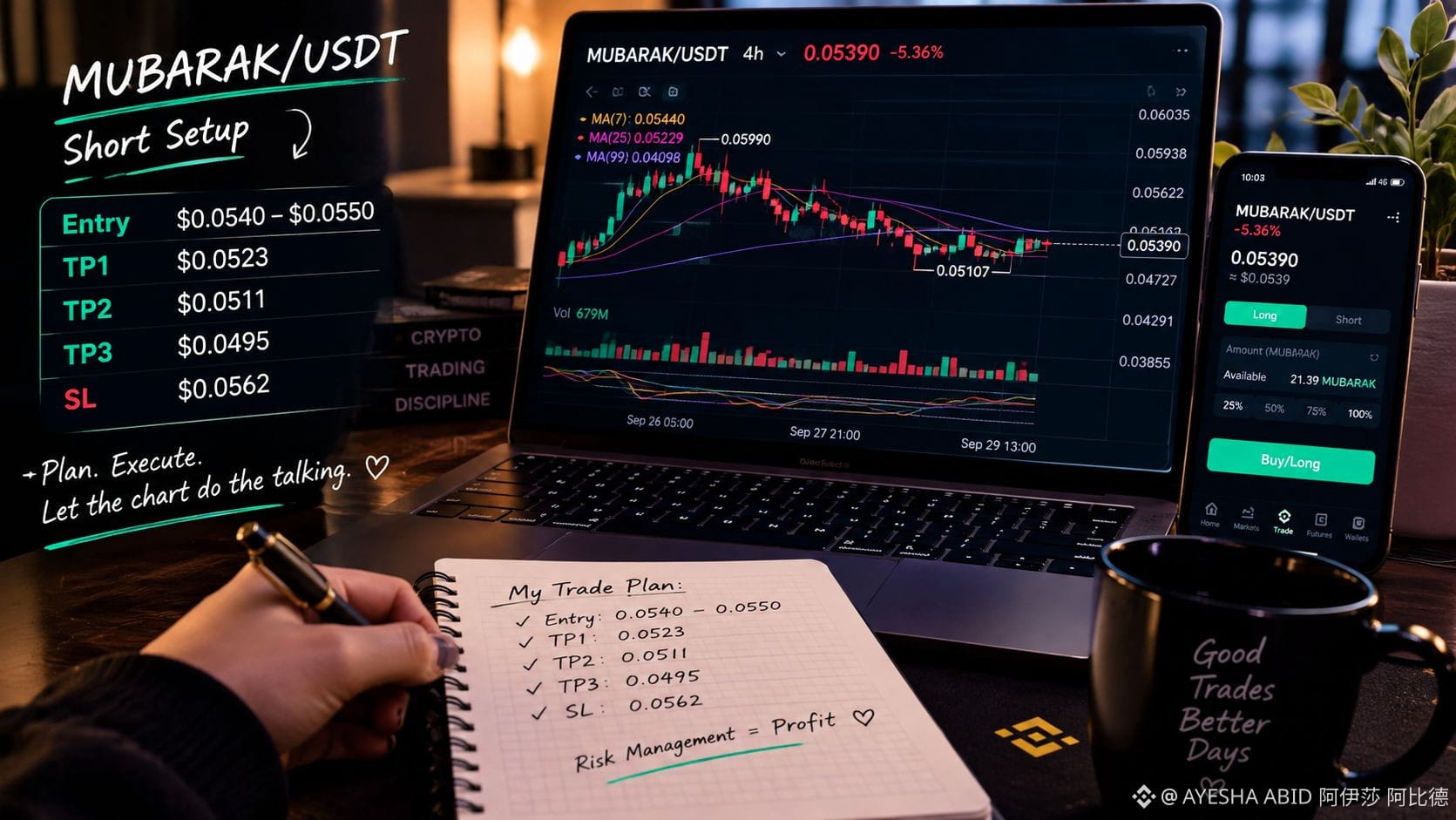
$MUBARAK is trading near $0.053, with recent market data showing selling pressure after a sharp move toward $0.088 earlier this month. The latest 4H chart shows price slipping from the $0.059 area. In your screenshot, MA(7) is at $0.0540, MA(25) at $0.05229, and MA(99) at $0.04098. This puts short-term momentum under pressure, while $0.0511 remains an important support to watch. A weak rebound could invite more selling, but support holding may bring buyers back.
$MUBARAK SHORT SETUP
{future}(MUBARAKUSDT)
Entry: $0.0540–$0.0550
TP1: $0.0523
TP2: $0.0511
TP3: $0.0495
SL: $0.0562
My Take: I would wait for rejection near resistance rather than shorting after an extended drop. A strong 4H close above $0.0562 would invalidate this setup. Meme coins can move sharply, so manage position size carefully.
Would you wait for a resistance rejection or a bounce from support?
#ChinaMayLetAlibabaByteDanceBuyNvidiaChips #CryptoTrading #TechnicalAnalysis
MUBARAK is losing momentum after its recent rally. Is another pullback coming? 👀
$MUBARAK is trading near $0.053, with recent market data showing selling pressure after a sharp move toward $0.088 earlier this month. The latest 4H chart shows price slipping from the $0.059 area. In your screenshot, MA(7) is at $0.0540, MA(25) at $0.05229, and MA(99) at $0.04098. This puts short-term momentum under pressure, while $0.0511 remains an important support to watch. A weak rebound could invite more selling, but support holding may bring buyers back.
$MUBARAK SHORT SETUP
Entry: $0.0540–$0.0550
TP1: $0.0523
TP2: $0.0511
TP3: $0.0495
SL: $0.0562
My Take: I would wait for rejection near resistance rather than shorting after an extended drop. A strong 4H close above $0.0562 would invalidate this setup. Meme coins can move sharply, so manage position size carefully.
Would you wait for a resistance rejection or a bounce from support?
#ChinaMayLetAlibabaByteDanceBuyNvidiaChips #CryptoTrading #TechnicalAnalysis
$MUBARAK is trading near $0.053, with recent market data showing selling pressure after a sharp move toward $0.088 earlier this month. The latest 4H chart shows price slipping from the $0.059 area. In your screenshot, MA(7) is at $0.0540, MA(25) at $0.05229, and MA(99) at $0.04098. This puts short-term momentum under pressure, while $0.0511 remains an important support to watch. A weak rebound could invite more selling, but support holding may bring buyers back.
$MUBARAK SHORT SETUP
Entry: $0.0540–$0.0550
TP1: $0.0523
TP2: $0.0511
TP3: $0.0495
SL: $0.0562
My Take: I would wait for rejection near resistance rather than shorting after an extended drop. A strong 4H close above $0.0562 would invalidate this setup. Meme coins can move sharply, so manage position size carefully.
Would you wait for a resistance rejection or a bounce from support?
#ChinaMayLetAlibabaByteDanceBuyNvidiaChips #CryptoTrading #TechnicalAnalysis
253

📉 $QNT / USDT Technical AlertAfter a massive pump to $374.50, #QNT is currently consolidating around $254. Strong selling pressure noticed as price dropped below MA(7) & MA(25) on 15m chart. 🔹 Resistance: $261 - $268
🔹 Support: $224 - $225 ⚠️ High volatility! Keep tight stop-losses if trading perps. What's your view—Bounce or further Breakdown? 🤔$QNT T #cryptotrading #Binance e #TechnicalAnalysis
📉 $QNT / USDT Technical AlertAfter a massive pump to $374.50, #QNT is currently consolidating around $254. Strong selling pressure noticed as price dropped below MA(7) & MA(25) on 15m chart. 🔹 Resistance: $261 - $268
🔹 Support: $224 - $225 ⚠️ High volatility! Keep tight stop-losses if trading perps. What's your view—Bounce or further Breakdown? 🤔$QNT T #cryptotrading #Binance e #TechnicalAnalysis
🔹 Support: $224 - $225 ⚠️ High volatility! Keep tight stop-losses if trading perps. What's your view—Bounce or further Breakdown? 🤔$QNT T #cryptotrading #Binance e #TechnicalAnalysis
247
·
--
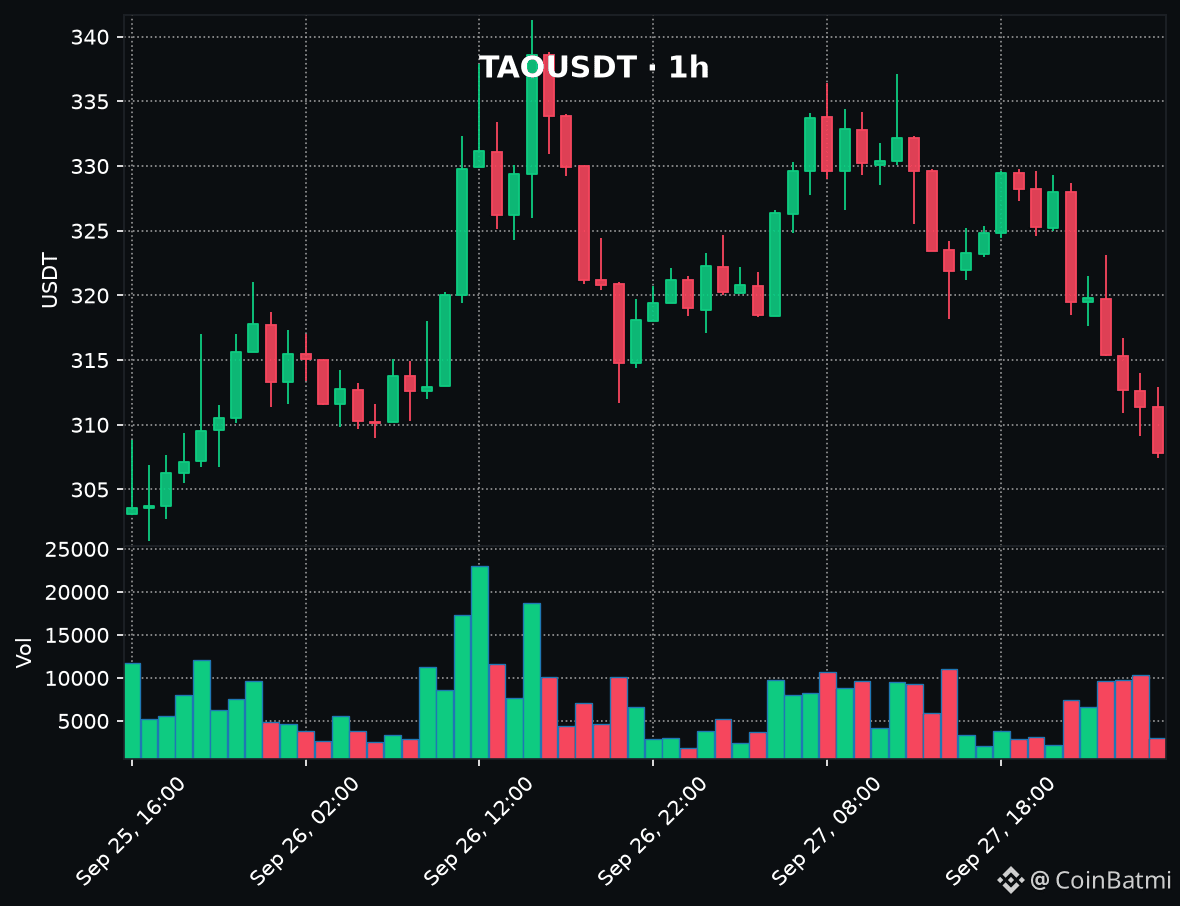
$TAO - RSI 24.6 on the 1h screams capitulation, not continuation
1h · RSI 24.6 · price 307.7 (-4.08%)
Support 307.4
Resistance 329.8
24h range 307.4-337.1
Invalidation: 1h close below 307.4 confirms breakdown
The oversold bounce probability is high here, but a clean 1h close under 307.4 flips the script to lower lows.
$BTC
#TechnicalAnalysis #TAO
$TAO - RSI 24.6 on the 1h screams capitulation, not continuation
1h · RSI 24.6 · price 307.7 (-4.08%)
Support 307.4
Resistance 329.8
24h range 307.4-337.1
Invalidation: 1h close below 307.4 confirms breakdown
The oversold bounce probability is high here, but a clean 1h close under 307.4 flips the script to lower lows.
$BTC
#TechnicalAnalysis #TAO
1h · RSI 24.6 · price 307.7 (-4.08%)
Support 307.4
Resistance 329.8
24h range 307.4-337.1
Invalidation: 1h close below 307.4 confirms breakdown
The oversold bounce probability is high here, but a clean 1h close under 307.4 flips the script to lower lows.
$BTC
#TechnicalAnalysis #TAO
218

·
--
Bearish
$ZEC Technical Analysis - Privacy King on Fire* 🔒
*Price:* ∼$1,574 - $1,662 (+8.6% 24h, +15.5% 7d, +104% 30d)
Testing ATH zone $1,676 - $1,697 hit Sept 23-27.
*Trend: Strongly Bullish*
- Price >> 20D ($1,327), 50D ($944), 200D ($554). Perfect bull alignment.
- Overall rating: *Buy* (7/8 MAs Buy)
*Momentum:*
- RSI (14): 64-69 (daily) / 77 (weekly) - approaching overbought, but not broken yet
- MACD: +174, bullish momentum intact
- ADX: 60.3 - very strong trend
- Volume: $1.35B - breakout volume confirms
*Key Levels:*
- Resistance: $1,650-$1,684 (triple top) -> $1,809 -> $2,127 (Fib 127.2%)
- Support: $1,500-$1,550 (psych) -> $1,430-$1,475 (megaphone low) -> $1,300
*Driver:* Spot ETF inflows + Grayscale Zcash ETF near $1B. Institutional bid, not just retail.
*Verdict:* Uptrend intact above $1,500. Break + close above $1,684 opens $1,809. RSI overheating, so expect volatility. Don't short strength, wait for dip to $1,500 zone.
#ZEC #Zcash #TechnicalAnalysis #CoinMarketCapCompletesCoinglassAcquisition #BinanceSquare #Altcoins #trading
{spot}(ZECUSDT)
$ZEC Technical Analysis - Privacy King on Fire* 🔒
*Price:* ∼$1,574 - $1,662 (+8.6% 24h, +15.5% 7d, +104% 30d)
Testing ATH zone $1,676 - $1,697 hit Sept 23-27.
*Trend: Strongly Bullish*
- Price >> 20D ($1,327), 50D ($944), 200D ($554). Perfect bull alignment.
- Overall rating: *Buy* (7/8 MAs Buy)
*Momentum:*
- RSI (14): 64-69 (daily) / 77 (weekly) - approaching overbought, but not broken yet
- MACD: +174, bullish momentum intact
- ADX: 60.3 - very strong trend
- Volume: $1.35B - breakout volume confirms
*Key Levels:*
- Resistance: $1,650-$1,684 (triple top) -> $1,809 -> $2,127 (Fib 127.2%)
- Support: $1,500-$1,550 (psych) -> $1,430-$1,475 (megaphone low) -> $1,300
*Driver:* Spot ETF inflows + Grayscale Zcash ETF near $1B. Institutional bid, not just retail.
*Verdict:* Uptrend intact above $1,500. Break + close above $1,684 opens $1,809. RSI overheating, so expect volatility. Don't short strength, wait for dip to $1,500 zone.
#ZEC #Zcash #TechnicalAnalysis #CoinMarketCapCompletesCoinglassAcquisition #BinanceSquare #Altcoins #trading
*Price:* ∼$1,574 - $1,662 (+8.6% 24h, +15.5% 7d, +104% 30d)
Testing ATH zone $1,676 - $1,697 hit Sept 23-27.
*Trend: Strongly Bullish*
- Price >> 20D ($1,327), 50D ($944), 200D ($554). Perfect bull alignment.
- Overall rating: *Buy* (7/8 MAs Buy)
*Momentum:*
- RSI (14): 64-69 (daily) / 77 (weekly) - approaching overbought, but not broken yet
- MACD: +174, bullish momentum intact
- ADX: 60.3 - very strong trend
- Volume: $1.35B - breakout volume confirms
*Key Levels:*
- Resistance: $1,650-$1,684 (triple top) -> $1,809 -> $2,127 (Fib 127.2%)
- Support: $1,500-$1,550 (psych) -> $1,430-$1,475 (megaphone low) -> $1,300
*Driver:* Spot ETF inflows + Grayscale Zcash ETF near $1B. Institutional bid, not just retail.
*Verdict:* Uptrend intact above $1,500. Break + close above $1,684 opens $1,809. RSI overheating, so expect volatility. Don't short strength, wait for dip to $1,500 zone.
#ZEC #Zcash #TechnicalAnalysis #CoinMarketCapCompletesCoinglassAcquisition #BinanceSquare #Altcoins #trading
41

·
--
Silver $XAG
{future}(XAGUSDT)
— Technical View 📊
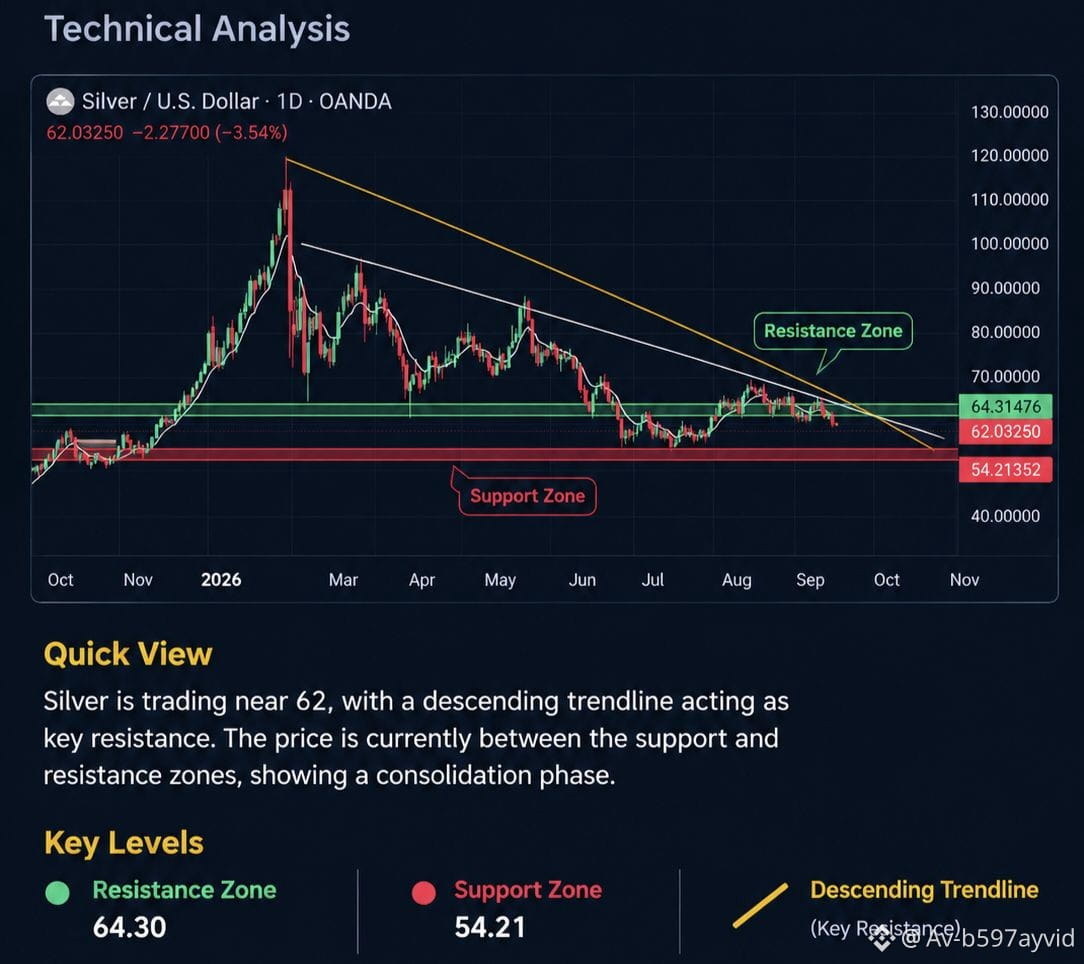
The price is near 62, with 64.30 resistance and 54.21 support.
again silver is not stable and today's almost -3.50% sharp down $XAG
i suggest wait for levels The descending trendline remains a key level to watch.
Educational content only.
#XAGUSD #Silve r #TechnicalAnalysis #BinanceSquare
Silver $XAG
— Technical View 📊
The price is near 62, with 64.30 resistance and 54.21 support.
again silver is not stable and today's almost -3.50% sharp down $XAG
i suggest wait for levels The descending trendline remains a key level to watch.
Educational content only.
#XAGUSD #Silve r #TechnicalAnalysis #BinanceSquare
— Technical View 📊
The price is near 62, with 64.30 resistance and 54.21 support.
again silver is not stable and today's almost -3.50% sharp down $XAG
i suggest wait for levels The descending trendline remains a key level to watch.
Educational content only.
#XAGUSD #Silve r #TechnicalAnalysis #BinanceSquare
203
·
--
Gold $XAU
{future}(XAUUSDT)
Technical View 📊
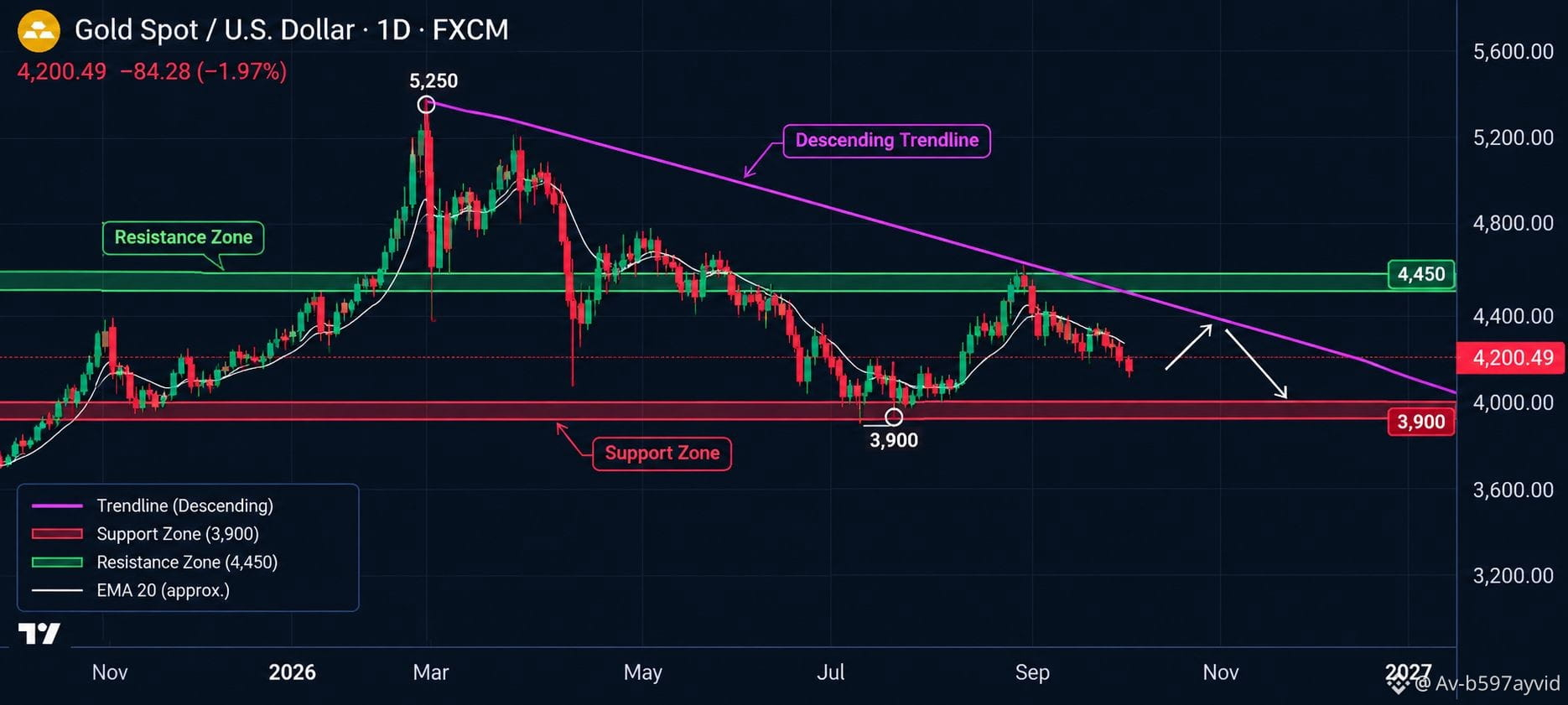
Gold is trading near 4,200, with 3,900 support and 4,450 resistance on the chart. $XAU -2% down Today ,The descending trendline remains an important level to watch.
wait for the best time and best level for the buy
Educational analysis only.
$XAU
#XAUUSD #TechnicalAnalysis #BinanceSquare
Gold $XAU
Technical View 📊
Gold is trading near 4,200, with 3,900 support and 4,450 resistance on the chart. $XAU -2% down Today ,The descending trendline remains an important level to watch.
wait for the best time and best level for the buy
Educational analysis only.
$XAU
#XAUUSD #TechnicalAnalysis #BinanceSquare
Technical View 📊
Gold is trading near 4,200, with 3,900 support and 4,450 resistance on the chart. $XAU -2% down Today ,The descending trendline remains an important level to watch.
wait for the best time and best level for the buy
Educational analysis only.
$XAU
#XAUUSD #TechnicalAnalysis #BinanceSquare
290

Strong Bullish Momentum: On-Chain Analysis for BTW and IRYS
Both Bitway (BTW) and Irys (IRYS) are displaying strong bullish sentiment with impressive price action and healthy technical structures on the charts. Below is a detailed breakdown of the key metrics and technical highlights for both assets.
1. Bitway (BTW/USDT) Analysis
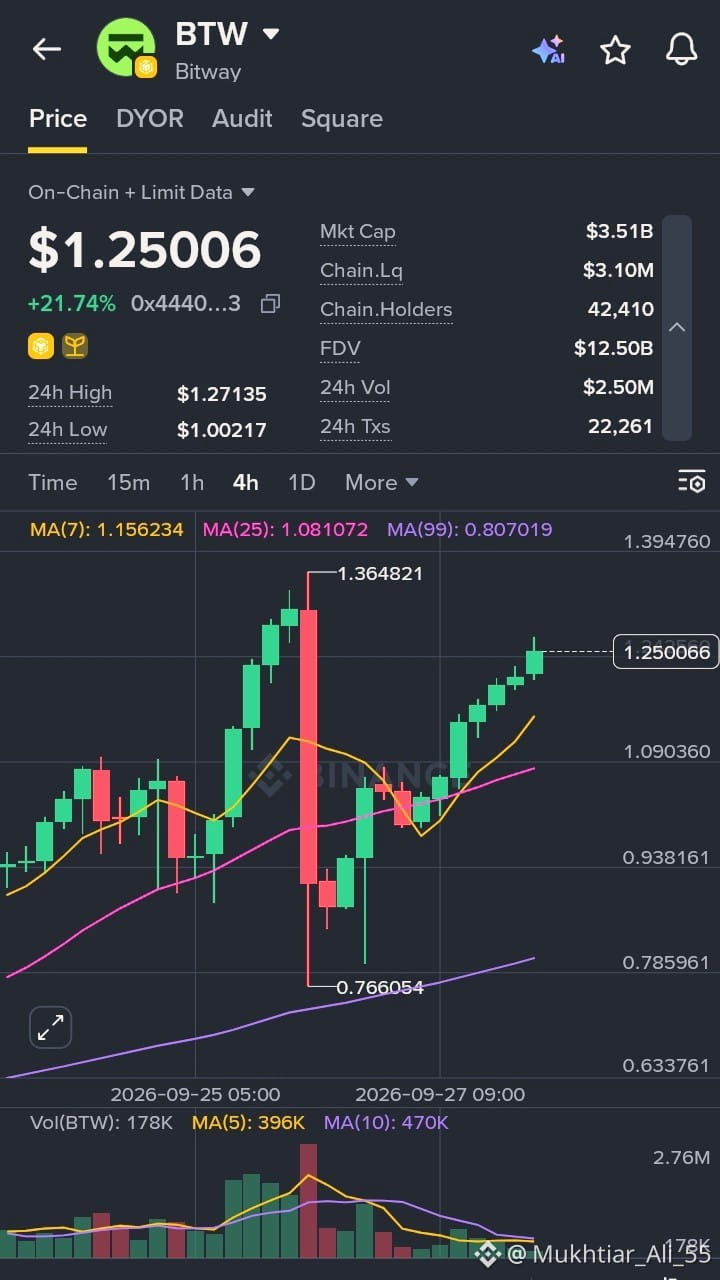
Current Price: $1.25006 (+21.74%)
24h High / Low: $1.27135 / $1.00217
Market Capitalization: $3.51B
Fully Diluted Valuation (FDV): $12.50B
On-Chain Liquidity: $3.10M
24h Volume / Transactions: $2.50M | 22,261 txs
Holders: 42,410
Technical Observations
Moving Averages Alignment: The price is trading well above its short-term and medium-term moving averages—MA(7) at $1.156, MA(25) at $1.081, and MA(99) at $0.807—confirming a solid upward trend.
Recovery & Momentum: Following a sharp pullback to the $0.766 support level, BTW staged a strong recovery, steadily forming higher highs and higher lows back toward its recent peak near $1.364.
2. Irys (IRYS/USDT) Analysis
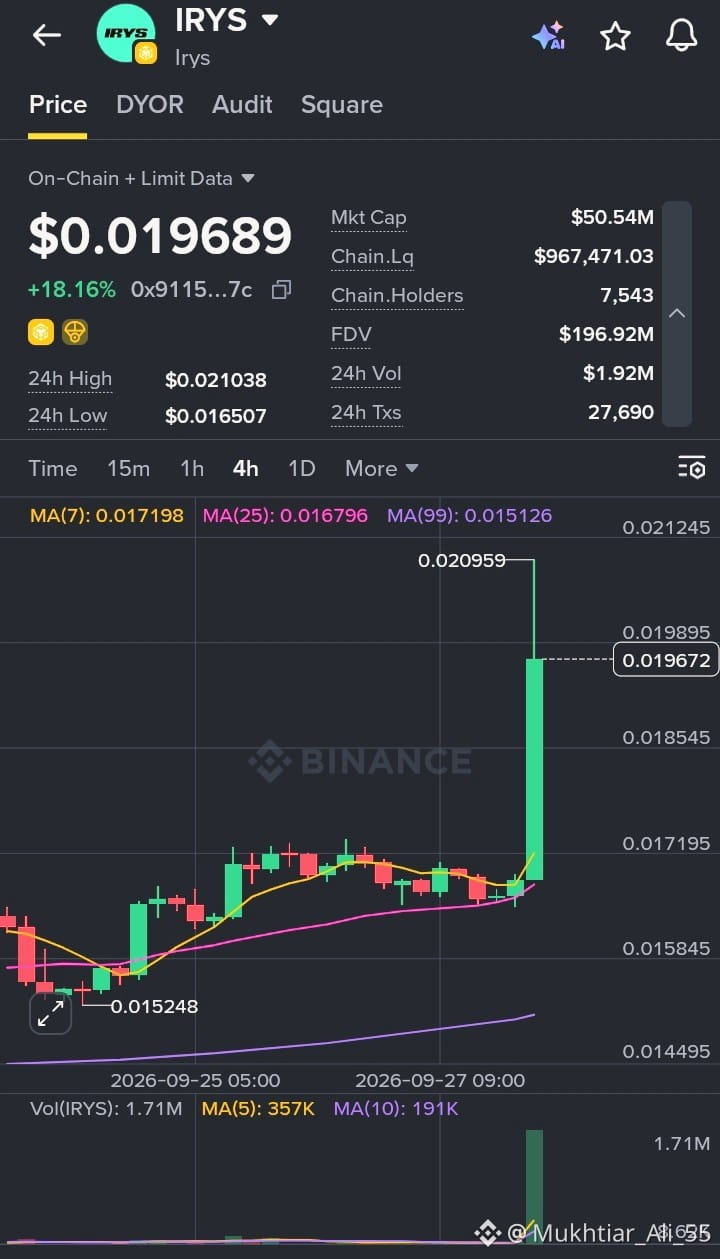
Current Price: $0.019689 (+18.16%)
24h High / Low: $0.021038 / $0.016507
Market Capitalization: $50.54M
Fully Diluted Valuation (FDV): $196.92M
On-Chain Liquidity: $967,471.03
24h Volume / Transactions: $1.92M | 27,690 txs
Holders: 7,543
Technical Observations
Volume Expansion: IRYS experienced a massive single-candle breakout driven by high trading volume ($1.71M in recent period volume), pushing the price sharply above its consolidation range.
Trend Confirmation: The breakout pushed the price significantly above the MA(7) ($0.01719), MA(25) ($0.01679), and MA(99) ($0.01512), demonstrating strong buyer conviction.
Key Takeaway
Both tokens are demonstrating robust volume-backed upward momentum. Traders should keep an eye on key resistance levels near recent local highs ($1.364 for BTW and $0.0210 for IRYS) while managing risk around their respective short-term moving average supports.
#CryptoAnalysis #Bitway #IRYS #CryptoTrading #TechnicalAnalysis
$BTW
{future}(BTWUSDT)
$IRYS
{future}(IRYSUSDT)
Strong Bullish Momentum: On-Chain Analysis for BTW and IRYS
Both Bitway (BTW) and Irys (IRYS) are displaying strong bullish sentiment with impressive price action and healthy technical structures on the charts. Below is a detailed breakdown of the key metrics and technical highlights for both assets.
1. Bitway (BTW/USDT) Analysis
Current Price: $1.25006 (+21.74%)
24h High / Low: $1.27135 / $1.00217
Market Capitalization: $3.51B
Fully Diluted Valuation (FDV): $12.50B
On-Chain Liquidity: $3.10M
24h Volume / Transactions: $2.50M | 22,261 txs
Holders: 42,410
Technical Observations
Moving Averages Alignment: The price is trading well above its short-term and medium-term moving averages—MA(7) at $1.156, MA(25) at $1.081, and MA(99) at $0.807—confirming a solid upward trend.
Recovery & Momentum: Following a sharp pullback to the $0.766 support level, BTW staged a strong recovery, steadily forming higher highs and higher lows back toward its recent peak near $1.364.
2. Irys (IRYS/USDT) Analysis
Current Price: $0.019689 (+18.16%)
24h High / Low: $0.021038 / $0.016507
Market Capitalization: $50.54M
Fully Diluted Valuation (FDV): $196.92M
On-Chain Liquidity: $967,471.03
24h Volume / Transactions: $1.92M | 27,690 txs
Holders: 7,543
Technical Observations
Volume Expansion: IRYS experienced a massive single-candle breakout driven by high trading volume ($1.71M in recent period volume), pushing the price sharply above its consolidation range.
Trend Confirmation: The breakout pushed the price significantly above the MA(7) ($0.01719), MA(25) ($0.01679), and MA(99) ($0.01512), demonstrating strong buyer conviction.
Key Takeaway
Both tokens are demonstrating robust volume-backed upward momentum. Traders should keep an eye on key resistance levels near recent local highs ($1.364 for BTW and $0.0210 for IRYS) while managing risk around their respective short-term moving average supports.
#CryptoAnalysis #Bitway #IRYS #CryptoTrading #TechnicalAnalysis
$BTW
$IRYS
Both Bitway (BTW) and Irys (IRYS) are displaying strong bullish sentiment with impressive price action and healthy technical structures on the charts. Below is a detailed breakdown of the key metrics and technical highlights for both assets.
1. Bitway (BTW/USDT) Analysis
Current Price: $1.25006 (+21.74%)
24h High / Low: $1.27135 / $1.00217
Market Capitalization: $3.51B
Fully Diluted Valuation (FDV): $12.50B
On-Chain Liquidity: $3.10M
24h Volume / Transactions: $2.50M | 22,261 txs
Holders: 42,410
Technical Observations
Moving Averages Alignment: The price is trading well above its short-term and medium-term moving averages—MA(7) at $1.156, MA(25) at $1.081, and MA(99) at $0.807—confirming a solid upward trend.
Recovery & Momentum: Following a sharp pullback to the $0.766 support level, BTW staged a strong recovery, steadily forming higher highs and higher lows back toward its recent peak near $1.364.
2. Irys (IRYS/USDT) Analysis
Current Price: $0.019689 (+18.16%)
24h High / Low: $0.021038 / $0.016507
Market Capitalization: $50.54M
Fully Diluted Valuation (FDV): $196.92M
On-Chain Liquidity: $967,471.03
24h Volume / Transactions: $1.92M | 27,690 txs
Holders: 7,543
Technical Observations
Volume Expansion: IRYS experienced a massive single-candle breakout driven by high trading volume ($1.71M in recent period volume), pushing the price sharply above its consolidation range.
Trend Confirmation: The breakout pushed the price significantly above the MA(7) ($0.01719), MA(25) ($0.01679), and MA(99) ($0.01512), demonstrating strong buyer conviction.
Key Takeaway
Both tokens are demonstrating robust volume-backed upward momentum. Traders should keep an eye on key resistance levels near recent local highs ($1.364 for BTW and $0.0210 for IRYS) while managing risk around their respective short-term moving average supports.
#CryptoAnalysis #Bitway #IRYS #CryptoTrading #TechnicalAnalysis
$BTW
$IRYS
187
Log in to explore more content
Join global crypto users on Binance Square
⚡️ Get latest and useful information about crypto.
💬 Trusted by the world’s largest crypto exchange.
👍 Discover real insights from verified creators.
Email / Phone number
Trending Topics
1
#FedProposesPaymentStablecoinRules
0 views
2 Discussing
2
#ChinaMayLetAlibabaByteDanceBuyNvidiaChips
1,734 views
126 Discussing
3
#USChinaRelease$30BTariffCutProductLists
143 views
13 Discussing
4
#SKoreaFSCConsidersVirtualAssetMarketMaker
2,959 views
133 Discussing
5
#ChinaIndustrialProfitGrowthSlowsFourthMonth
3,703 views
151 Discussing
6
#BitwiseFilesFinalNEARSpotETFProspectus
112,420 views
1,670 Discussing
7
#BitgetHackerMoves$83MStolenXRP
38,566 views
176 Discussing
8
#SOLSpotETFWeeklyInflow$188M
24,527 views
139 Discussing
9
#DogecoinETFsPostBiggestWeekSinceLaunch
65,533 views
1,095 Discussing
10
#StrategyStriveAdd2305BitcoinThisWeek
163,409 views
2,356 Discussing