
#stablecoin
stablecoin
3.9M views
17,414 Discussing
Hot
Latest

BIG MOVE 🚨
Ripple stablecoin chief sees $13 trillion corporate treasury opportunity for RLUSD.
Payments and capital markets are driving growth for Ripple's $2.4 billion digital dollar as it looks to bring RLUSD to Europe under...
$XRP +2.13%
{spot}(XRPUSDT)
My take: short-term noise either way, but worth keeping on the radar if it starts moving volume across other majors too.
Watching the chart on this one. HOLD, buy more, or stay away? 👇
#BinanceSquare #WriteToEarn #XRPUSDT🚨 #stablecoin #Crypto #CryptoNewss
BIG MOVE 🚨
Ripple stablecoin chief sees $13 trillion corporate treasury opportunity for RLUSD.
Payments and capital markets are driving growth for Ripple's $2.4 billion digital dollar as it looks to bring RLUSD to Europe under...
$XRP +2.13%
My take: short-term noise either way, but worth keeping on the radar if it starts moving volume across other majors too.
Watching the chart on this one. HOLD, buy more, or stay away? 👇
#BinanceSquare #WriteToEarn #XRPUSDT🚨 #stablecoin #Crypto #CryptoNewss
Ripple stablecoin chief sees $13 trillion corporate treasury opportunity for RLUSD.
Payments and capital markets are driving growth for Ripple's $2.4 billion digital dollar as it looks to bring RLUSD to Europe under...
$XRP +2.13%
My take: short-term noise either way, but worth keeping on the radar if it starts moving volume across other majors too.
Watching the chart on this one. HOLD, buy more, or stay away? 👇
#BinanceSquare #WriteToEarn #XRPUSDT🚨 #stablecoin #Crypto #CryptoNewss
1
341

🚨 $USDC FACES POLITICAL HEADWIND AS REPUBLICANS SPLIT ON CLARITY ACT 💥
📊 The Senate impasse injects fresh uncertainty into stable‑coin yields, prompting smart‑money to reassess liquidity pools. 🦈 With only 53 GOP votes, any cross‑party drift could throttle the Clarity Act, tightening regulatory bandwidth for community banks and potentially capping $USDC inflows. ⚡ Market makers are already tightening spreads as the “weaponized” enforcement narrative gains traction, hinting at a short‑term demand dip.
💡 Institutional eyes will watch the next floor vote for a decisive liquidity sweep—will $USDC hold its premium or concede to tighter capital controls? 🤔
⚠️ Not financial advice. Always manage your risk. 🛡️
🏷️ #USDC #Stablecoin #Regulation #Crypto
🔥 🦈
🚨 $USDC FACES POLITICAL HEADWIND AS REPUBLICANS SPLIT ON CLARITY ACT 💥
📊 The Senate impasse injects fresh uncertainty into stable‑coin yields, prompting smart‑money to reassess liquidity pools. 🦈 With only 53 GOP votes, any cross‑party drift could throttle the Clarity Act, tightening regulatory bandwidth for community banks and potentially capping $USDC inflows. ⚡ Market makers are already tightening spreads as the “weaponized” enforcement narrative gains traction, hinting at a short‑term demand dip.
💡 Institutional eyes will watch the next floor vote for a decisive liquidity sweep—will $USDC hold its premium or concede to tighter capital controls? 🤔
⚠️ Not financial advice. Always manage your risk. 🛡️
🏷️ #USDC #Stablecoin #Regulation #Crypto
🔥 🦈
📊 The Senate impasse injects fresh uncertainty into stable‑coin yields, prompting smart‑money to reassess liquidity pools. 🦈 With only 53 GOP votes, any cross‑party drift could throttle the Clarity Act, tightening regulatory bandwidth for community banks and potentially capping $USDC inflows. ⚡ Market makers are already tightening spreads as the “weaponized” enforcement narrative gains traction, hinting at a short‑term demand dip.
💡 Institutional eyes will watch the next floor vote for a decisive liquidity sweep—will $USDC hold its premium or concede to tighter capital controls? 🤔
⚠️ Not financial advice. Always manage your risk. 🛡️
🏷️ #USDC #Stablecoin #Regulation #Crypto
🔥 🦈
6

·
--
📰 Clearer Rules Could Boost Stablecoin Adoption
Clearer regulations in the U.S. and Europe are increasing institutional confidence in stablecoins. Faster transactions, lower costs, and growing demand could push stablecoins further into mainstream payments.
#Stablecoin #Crypto #Binance
📰 Clearer Rules Could Boost Stablecoin Adoption
Clearer regulations in the U.S. and Europe are increasing institutional confidence in stablecoins. Faster transactions, lower costs, and growing demand could push stablecoins further into mainstream payments.
#Stablecoin #Crypto #Binance
Clearer regulations in the U.S. and Europe are increasing institutional confidence in stablecoins. Faster transactions, lower costs, and growing demand could push stablecoins further into mainstream payments.
#Stablecoin #Crypto #Binance

84

·
--
Bullish
💰 #RLUSDSupplyHitsRecord$2.442B
RLUSD supply has reached a new record.
Could stablecoin growth bring more liquidity into crypto? 👀
#Crypto #Stablecoin #Binance $BTC
💰 #RLUSDSupplyHitsRecord$2.442B
RLUSD supply has reached a new record.
Could stablecoin growth bring more liquidity into crypto? 👀
#Crypto #Stablecoin #Binance $BTC
RLUSD supply has reached a new record.
Could stablecoin growth bring more liquidity into crypto? 👀
#Crypto #Stablecoin #Binance $BTC
34

💰 THE NEXT CRYPTO BATTLE MAY NOT BE $BTC VS $ETH
It could be:
STABLECOINS vs TRADITIONAL BANKING
Stablecoin infrastructure is moving deeper into mainstream payments.
And Coinbase + Moov recently announced an expansion aimed at bringing stablecoin payment capabilities to more than 1,000 U.S. community banks and credit unions.
Think about that.
Crypto isn't only about trading anymore.
Could stablecoins become the biggest real-world crypto use case?
YES or NO?
#stablecoin #crypto #USDC✅ #blockchain
💰 THE NEXT CRYPTO BATTLE MAY NOT BE $BTC VS $ETH
It could be:
STABLECOINS vs TRADITIONAL BANKING
Stablecoin infrastructure is moving deeper into mainstream payments.
And Coinbase + Moov recently announced an expansion aimed at bringing stablecoin payment capabilities to more than 1,000 U.S. community banks and credit unions.
Think about that.
Crypto isn't only about trading anymore.
Could stablecoins become the biggest real-world crypto use case?
YES or NO?
#stablecoin #crypto #USDC✅ #blockchain
It could be:
STABLECOINS vs TRADITIONAL BANKING
Stablecoin infrastructure is moving deeper into mainstream payments.
And Coinbase + Moov recently announced an expansion aimed at bringing stablecoin payment capabilities to more than 1,000 U.S. community banks and credit unions.
Think about that.
Crypto isn't only about trading anymore.
Could stablecoins become the biggest real-world crypto use case?
YES or NO?
#stablecoin #crypto #USDC✅ #blockchain

27

$USDT TODAY
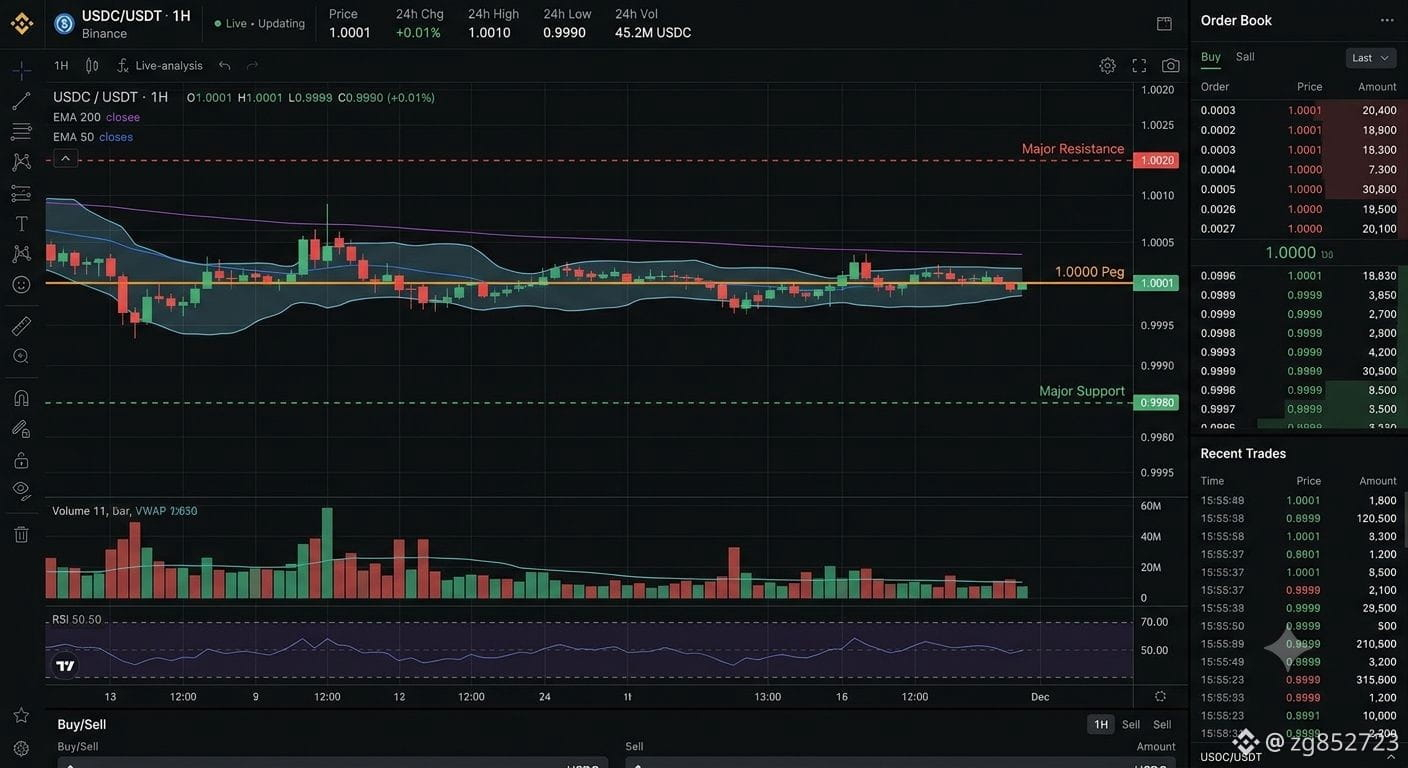
$USDC # is holding very close to its $1 peg, showing stable demand and strong liquidity across crypto markets. With a market cap above $183B, Tether remains a major source of trading liquidity.
#USDT #Tether r #Stablecoin #Crypto
$USDT TODAY
$USDC # is holding very close to its $1 peg, showing stable demand and strong liquidity across crypto markets. With a market cap above $183B, Tether remains a major source of trading liquidity.
#USDT #Tether r #Stablecoin #Crypto
$USDC # is holding very close to its $1 peg, showing stable demand and strong liquidity across crypto markets. With a market cap above $183B, Tether remains a major source of trading liquidity.
#USDT #Tether r #Stablecoin #Crypto
1
157

·
--
$USDC remains a key stablecoin for traders and digital payments, offering a dollar-linked asset designed for stability and fast on-chain transfers. Its expanding utility keeps it relevant across the crypto ecosystem.
#USDC #Stablecoin #crypto
{spot}(USDCUSDT)
$USDC remains a key stablecoin for traders and digital payments, offering a dollar-linked asset designed for stability and fast on-chain transfers. Its expanding utility keeps it relevant across the crypto ecosystem.
#USDC #Stablecoin #crypto
#USDC #Stablecoin #crypto
74

{spot}(USD1USDT)
$USD1 is emerging as a notable stablecoin, designed to maintain a 1:1 value with the U.S. dollar.
Built to bridge traditional finance and digital assets, it focuses on stability, liquidity, and compliance.
With growing ecosystem adoption, USD1 could become an important player in the stablecoin market.
#USD1
#Stablecoin
$USD1 is emerging as a notable stablecoin, designed to maintain a 1:1 value with the U.S. dollar.
Built to bridge traditional finance and digital assets, it focuses on stability, liquidity, and compliance.
With growing ecosystem adoption, USD1 could become an important player in the stablecoin market.
#USD1
#Stablecoin
Built to bridge traditional finance and digital assets, it focuses on stability, liquidity, and compliance.
With growing ecosystem adoption, USD1 could become an important player in the stablecoin market.
#USD1
#Stablecoin

93


Article
: US Bank Just Took Payments On Chain🚨 A major bank just made a move into crypto. 🇺🇸
US Bank completed its first live cross border payment using its own stablecoin, USBDC. 💰
The message is clear:
Banking is slowly moving on chain. 🔗🌍
Could stablecoins reshape global payments? 👀🔥
$XLM $IOST $KAT
#Stablecoin
{spot}(IOSTUSDT)
{spot}(KATUSDT)
{spot}(XLMUSDT)
#Crypto #Blockchain
: US Bank Just Took Payments On Chain
🚨 A major bank just made a move into crypto. 🇺🇸
US Bank completed its first live cross border payment using its own stablecoin, USBDC. 💰
The message is clear:
Banking is slowly moving on chain. 🔗🌍
Could stablecoins reshape global payments? 👀🔥
$XLM $IOST $KAT
#Stablecoin
#Crypto #Blockchain
US Bank completed its first live cross border payment using its own stablecoin, USBDC. 💰
The message is clear:
Banking is slowly moving on chain. 🔗🌍
Could stablecoins reshape global payments? 👀🔥
$XLM $IOST $KAT
#Stablecoin
#Crypto #Blockchain
445

·
--
Bullish
#usbankcompletescrossborderpaymentpilotonstellar
🚨 U.S. Bank Tests Stablecoin Payments on Stellar
U.S. Bank has completed a live cross-border payment using its USBDC stablecoin on the Stellar blockchain, moving value between its North American and European entities.
🔥 This is a meaningful institutional step for blockchain-based payments and could strengthen the adoption case for Stellar and stablecoins.
Trading View: BUY 🟢
Question: Could more banks adopting public blockchains accelerate Stellar’s growth? "CLICK ON THE BELOW YELLOW COIN TAG TO GO TO DESIRED TRADING PAGE TO GET BENEFIT TRADE"$ADA $XLM $XRP
{spot}(XRPUSDT)
{spot}(XLMUSDT)
{spot}(ADAUSDT)
#stellar #stablecoin
#usbankcompletescrossborderpaymentpilotonstellar
🚨 U.S. Bank Tests Stablecoin Payments on Stellar
U.S. Bank has completed a live cross-border payment using its USBDC stablecoin on the Stellar blockchain, moving value between its North American and European entities.
🔥 This is a meaningful institutional step for blockchain-based payments and could strengthen the adoption case for Stellar and stablecoins.
Trading View: BUY 🟢
Question: Could more banks adopting public blockchains accelerate Stellar’s growth? "CLICK ON THE BELOW YELLOW COIN TAG TO GO TO DESIRED TRADING PAGE TO GET BENEFIT TRADE"$ADA $XLM $XRP
#stellar #stablecoin
🚨 U.S. Bank Tests Stablecoin Payments on Stellar
U.S. Bank has completed a live cross-border payment using its USBDC stablecoin on the Stellar blockchain, moving value between its North American and European entities.
🔥 This is a meaningful institutional step for blockchain-based payments and could strengthen the adoption case for Stellar and stablecoins.
Trading View: BUY 🟢
Question: Could more banks adopting public blockchains accelerate Stellar’s growth? "CLICK ON THE BELOW YELLOW COIN TAG TO GO TO DESIRED TRADING PAGE TO GET BENEFIT TRADE"$ADA $XLM $XRP
#stellar #stablecoin

1
277

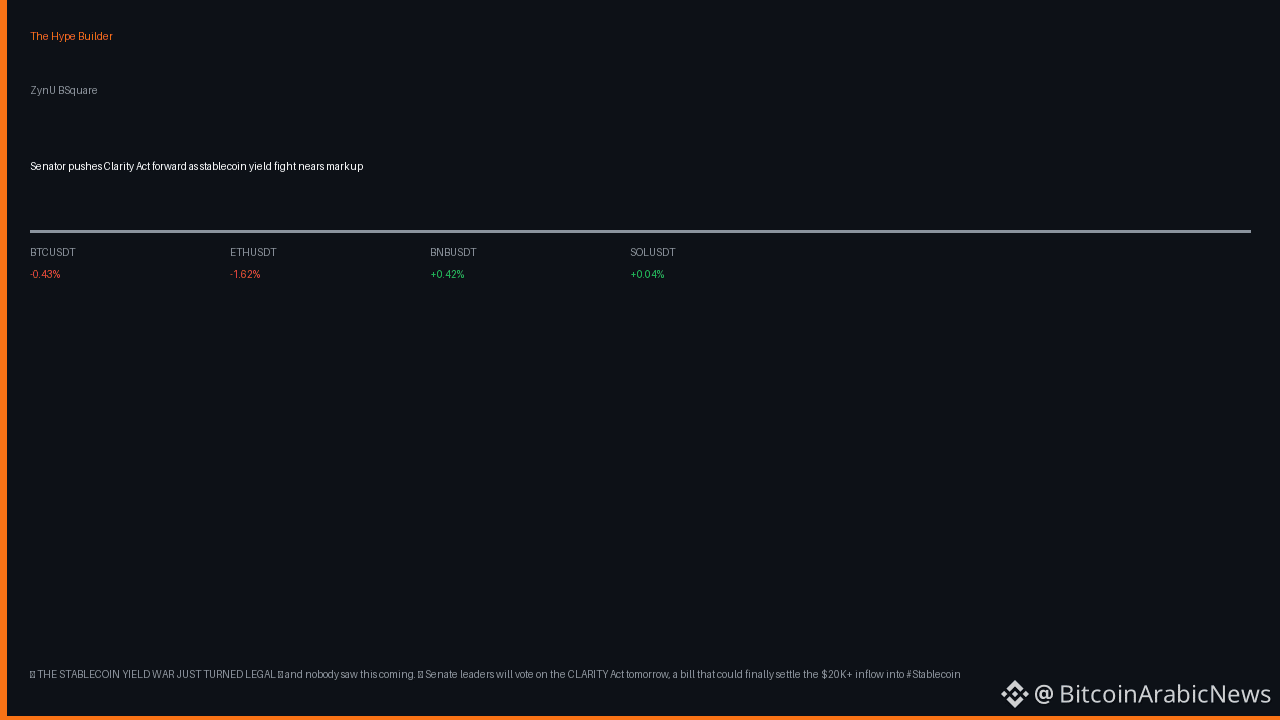
🔥 THE STABLECOIN YIELD WAR JUST TURNED LEGAL – and nobody saw this coming.
📊 Senate leaders will vote on the CLARITY Act tomorrow, a bill that could finally settle the $20K+ inflow into #Stablecoin narratives while the crypto market roars with a Greed index of 63. Meanwhile BTC is hovering at $77,211 with $738M 24‑h volume and a bullish MACD crossover, and ETH sits at $2,526, RSI 56.9, also bullish. Smart money is already piling into #SOL, where three wallets added a combined +5.44% on‑chain, signaling the next big migration.
💡 If the Act locks down stablecoin yields, traders will chase higher‑return assets – expect #BNB at $731 and #SOL at $102 to surge as liquidity hunts yield elsewhere, potentially sparking a fresh rally across altcoins.
❓ Are you positioning for the post‑CLARITY breakout or waiting for the market to grind down?
🔥 THE STABLECOIN YIELD WAR JUST TURNED LEGAL – and nobody saw this coming.
📊 Senate leaders will vote on the CLARITY Act tomorrow, a bill that could finally settle the $20K+ inflow into #Stablecoin narratives while the crypto market roars with a Greed index of 63. Meanwhile BTC is hovering at $77,211 with $738M 24‑h volume and a bullish MACD crossover, and ETH sits at $2,526, RSI 56.9, also bullish. Smart money is already piling into #SOL, where three wallets added a combined +5.44% on‑chain, signaling the next big migration.
💡 If the Act locks down stablecoin yields, traders will chase higher‑return assets – expect #BNB at $731 and #SOL at $102 to surge as liquidity hunts yield elsewhere, potentially sparking a fresh rally across altcoins.
❓ Are you positioning for the post‑CLARITY breakout or waiting for the market to grind down?
📊 Senate leaders will vote on the CLARITY Act tomorrow, a bill that could finally settle the $20K+ inflow into #Stablecoin narratives while the crypto market roars with a Greed index of 63. Meanwhile BTC is hovering at $77,211 with $738M 24‑h volume and a bullish MACD crossover, and ETH sits at $2,526, RSI 56.9, also bullish. Smart money is already piling into #SOL, where three wallets added a combined +5.44% on‑chain, signaling the next big migration.
💡 If the Act locks down stablecoin yields, traders will chase higher‑return assets – expect #BNB at $731 and #SOL at $102 to surge as liquidity hunts yield elsewhere, potentially sparking a fresh rally across altcoins.
❓ Are you positioning for the post‑CLARITY breakout or waiting for the market to grind down?
27

🚀 $PYUSDx HITS $100M AUM, PAYPAL POWERED LAUNCHPAD ON MOONPAY 🟢
🦈 The PayPal‑linked launchpad is now live on MoonPay, pulling in institutional appetite like a tide. 📊 $100 million in stablecoin assets under management signals that smart money is locking liquidity into a USD‑pegged vessel, prepping for the next wave of on‑ramp demand. ⚡ With the ecosystem’s bridge now humming, expect tighter spreads and a surge in cross‑border flow as traders hunt the fresh supply.
🌊 This infusion creates a fresh order block that could act as a magnet for future bullish pressure. Are you positioning to ride the liquidity swell or waiting for the next catalyst to flip the script? 💬👇
⚠️ Not financial advice. Always manage your risk. 🛡️
🏷️ #PYUSD #Stablecoin #Liquidity #Crypto
🔥 💎
🚀 $PYUSDx HITS $100M AUM, PAYPAL POWERED LAUNCHPAD ON MOONPAY 🟢
🦈 The PayPal‑linked launchpad is now live on MoonPay, pulling in institutional appetite like a tide. 📊 $100 million in stablecoin assets under management signals that smart money is locking liquidity into a USD‑pegged vessel, prepping for the next wave of on‑ramp demand. ⚡ With the ecosystem’s bridge now humming, expect tighter spreads and a surge in cross‑border flow as traders hunt the fresh supply.
🌊 This infusion creates a fresh order block that could act as a magnet for future bullish pressure. Are you positioning to ride the liquidity swell or waiting for the next catalyst to flip the script? 💬👇
⚠️ Not financial advice. Always manage your risk. 🛡️
🏷️ #PYUSD #Stablecoin #Liquidity #Crypto
🔥 💎
🦈 The PayPal‑linked launchpad is now live on MoonPay, pulling in institutional appetite like a tide. 📊 $100 million in stablecoin assets under management signals that smart money is locking liquidity into a USD‑pegged vessel, prepping for the next wave of on‑ramp demand. ⚡ With the ecosystem’s bridge now humming, expect tighter spreads and a surge in cross‑border flow as traders hunt the fresh supply.
🌊 This infusion creates a fresh order block that could act as a magnet for future bullish pressure. Are you positioning to ride the liquidity swell or waiting for the next catalyst to flip the script? 💬👇
⚠️ Not financial advice. Always manage your risk. 🛡️
🏷️ #PYUSD #Stablecoin #Liquidity #Crypto
🔥 💎


32

🔴 $USDP FACES IMPENDING DELISTING – MARKET REACTION IN PLAY! 🚨
The top‑tier exchange announced it will cease trading $USDP at 11:00 on Sep 24 2026, effectively pulling the plug on the stablecoin.
Liquidity hunters are already sweeping the order book, and the sudden supply vacuum could trigger a sharp sell‑off across paired markets. 📊 Volume spikes and a tightening spread hint that smart money 🦈 is exiting fast. ⚡ Expect heightened volatility on related pairs as traders scramble to re‑price the missing peg.
💬 How are you reallocating your exposure now that $USDP is on the chopping block?
⚠️ Not financial advice. Always manage your risk. 🛡️
🏷️ #USDP #Delist #Stablecoin #Crypto
🚀 🔥
🔴 $USDP FACES IMPENDING DELISTING – MARKET REACTION IN PLAY! 🚨
The top‑tier exchange announced it will cease trading $USDP at 11:00 on Sep 24 2026, effectively pulling the plug on the stablecoin.
Liquidity hunters are already sweeping the order book, and the sudden supply vacuum could trigger a sharp sell‑off across paired markets. 📊 Volume spikes and a tightening spread hint that smart money 🦈 is exiting fast. ⚡ Expect heightened volatility on related pairs as traders scramble to re‑price the missing peg.
💬 How are you reallocating your exposure now that $USDP is on the chopping block?
⚠️ Not financial advice. Always manage your risk. 🛡️
🏷️ #USDP #Delist #Stablecoin #Crypto
🚀 🔥
The top‑tier exchange announced it will cease trading $USDP at 11:00 on Sep 24 2026, effectively pulling the plug on the stablecoin.
Liquidity hunters are already sweeping the order book, and the sudden supply vacuum could trigger a sharp sell‑off across paired markets. 📊 Volume spikes and a tightening spread hint that smart money 🦈 is exiting fast. ⚡ Expect heightened volatility on related pairs as traders scramble to re‑price the missing peg.
💬 How are you reallocating your exposure now that $USDP is on the chopping block?
⚠️ Not financial advice. Always manage your risk. 🛡️
🏷️ #USDP #Delist #Stablecoin #Crypto
🚀 🔥
77

·
--
USDC on-chain transaction volume surpasses $1 trillion! Is stablecoins becoming “digital dollars”?
A highly worth-noting data point has emerged: USDC’s cumulative on-chain transaction volume has already surpassed $1 trillion.
What’s reflected here goes beyond just crypto market trading demand—stablecoins are being used at a rapidly expanding scale in payments, DeFi, cross-border settlement, and on-chain capital flow.
According to Circle data, USDC’s on-chain transaction volume reached $1.48 trillion in Q2 2026, up 151% year over year.
$1 trillion is just a number, but the significance behind it may be even greater:
Stablecoins are gradually evolving from “trading tools” into an important piece of infrastructure connecting traditional finance with on-chain economies.
#USDC #stablecoin #crypto
#USDC链上交易量突破100万亿美元
USDC on-chain transaction volume surpasses $1 trillion! Is stablecoins becoming “digital dollars”?
A highly worth-noting data point has emerged: USDC’s cumulative on-chain transaction volume has already surpassed $1 trillion.
What’s reflected here goes beyond just crypto market trading demand—stablecoins are being used at a rapidly expanding scale in payments, DeFi, cross-border settlement, and on-chain capital flow.
According to Circle data, USDC’s on-chain transaction volume reached $1.48 trillion in Q2 2026, up 151% year over year.
$1 trillion is just a number, but the significance behind it may be even greater:
Stablecoins are gradually evolving from “trading tools” into an important piece of infrastructure connecting traditional finance with on-chain economies.
#USDC #stablecoin #crypto
#USDC链上交易量突破100万亿美元
A highly worth-noting data point has emerged: USDC’s cumulative on-chain transaction volume has already surpassed $1 trillion.
What’s reflected here goes beyond just crypto market trading demand—stablecoins are being used at a rapidly expanding scale in payments, DeFi, cross-border settlement, and on-chain capital flow.
According to Circle data, USDC’s on-chain transaction volume reached $1.48 trillion in Q2 2026, up 151% year over year.
$1 trillion is just a number, but the significance behind it may be even greater:
Stablecoins are gradually evolving from “trading tools” into an important piece of infrastructure connecting traditional finance with on-chain economies.
#USDC #stablecoin #crypto
#USDC链上交易量突破100万亿美元
2
50

🚨 WTO chief says regulatory fragmentation suppresses stabilitycoin international financial applications 🧠
📊 | $BTC | $ETH | $BNB |
- Please follow, like, and comment to share your views 📈
- The World Trade Organization says regulatory fragmentation has left stablecoins accounting for only about 3% of global payments.
- Stablecoins could reduce trade-financing frictions and improve cross-border payment efficiency.
- At present, the lack of a unified regulatory framework limits their widespread adoption in the international financial system.
- The WTO calls on countries to coordinate regulation to promote the compliant development of stablecoins. 🔥
- Market sentiment is somewhat bullish, and short-term price movements in stablecoin-related assets are expected to trend upward.
- If regulations converge, stablecoin usage may rise rapidly, boosting on-chain liquidity.
- Regulatory oversight remains fragmented, which may cause funds to continue flowing toward traditional fiat payment channels.
- Large whale accounts have started accumulating stablecoins, indicating that smart money is positioning early.
- What do you think the outlook for stablecoins in cross-border payments will be after regulation becomes unified?
- Welcome to follow our upcoming analysis—looking forward to your comments and engagement.
#Crypto #Stablecoin #Whales #Finance #Blockchain
🚨 WTO chief says regulatory fragmentation suppresses stabilitycoin international financial applications 🧠
📊 | $BTC | $ETH | $BNB |
- Please follow, like, and comment to share your views 📈
- The World Trade Organization says regulatory fragmentation has left stablecoins accounting for only about 3% of global payments.
- Stablecoins could reduce trade-financing frictions and improve cross-border payment efficiency.
- At present, the lack of a unified regulatory framework limits their widespread adoption in the international financial system.
- The WTO calls on countries to coordinate regulation to promote the compliant development of stablecoins. 🔥
- Market sentiment is somewhat bullish, and short-term price movements in stablecoin-related assets are expected to trend upward.
- If regulations converge, stablecoin usage may rise rapidly, boosting on-chain liquidity.
- Regulatory oversight remains fragmented, which may cause funds to continue flowing toward traditional fiat payment channels.
- Large whale accounts have started accumulating stablecoins, indicating that smart money is positioning early.
- What do you think the outlook for stablecoins in cross-border payments will be after regulation becomes unified?
- Welcome to follow our upcoming analysis—looking forward to your comments and engagement.
#Crypto #Stablecoin #Whales #Finance #Blockchain
📊 | $BTC | $ETH | $BNB |
- Please follow, like, and comment to share your views 📈
- The World Trade Organization says regulatory fragmentation has left stablecoins accounting for only about 3% of global payments.
- Stablecoins could reduce trade-financing frictions and improve cross-border payment efficiency.
- At present, the lack of a unified regulatory framework limits their widespread adoption in the international financial system.
- The WTO calls on countries to coordinate regulation to promote the compliant development of stablecoins. 🔥
- Market sentiment is somewhat bullish, and short-term price movements in stablecoin-related assets are expected to trend upward.
- If regulations converge, stablecoin usage may rise rapidly, boosting on-chain liquidity.
- Regulatory oversight remains fragmented, which may cause funds to continue flowing toward traditional fiat payment channels.
- Large whale accounts have started accumulating stablecoins, indicating that smart money is positioning early.
- What do you think the outlook for stablecoins in cross-border payments will be after regulation becomes unified?
- Welcome to follow our upcoming analysis—looking forward to your comments and engagement.
#Crypto #Stablecoin #Whales #Finance #Blockchain
150
🚨 Industry groups urge 《Clarity Act》 to tighten stablecoin restrictions 🧠
📊 | $BTC | $ETH | $BNB |
- Please watch, like, and share your views. 📈
- Eight major industry associations jointly call for the 《Clarity Act》 to impose stricter limits on stablecoins.
- They are concerned that excluding interest-based rewards will lead to deposits leaving banks.
- Outflows could weaken banks’ ability to lend.
- The proposal aims to prevent stablecoins from becoming a potential systemic risk. 🔥
- In the short term, the market may face downside pressure and increased volatility.
- If regulation tightens, whales may sell off or accumulate at lower levels.
- Outflows from banks may also result in tighter credit, further suppressing demand for crypto assets.
- It’s expected that this week, major coins such as Bitcoin will remain in weak, range-bound trading.
- What long-term impact do you think stricter stablecoin regulation will have on the crypto ecosystem?
- Feel free to keep following our in-depth analysis and leave your thoughts.
#Crypto #Stablecoin #Regulation #Whales #Market
🚨 Industry groups urge 《Clarity Act》 to tighten stablecoin restrictions 🧠
📊 | $BTC | $ETH | $BNB |
- Please watch, like, and share your views. 📈
- Eight major industry associations jointly call for the 《Clarity Act》 to impose stricter limits on stablecoins.
- They are concerned that excluding interest-based rewards will lead to deposits leaving banks.
- Outflows could weaken banks’ ability to lend.
- The proposal aims to prevent stablecoins from becoming a potential systemic risk. 🔥
- In the short term, the market may face downside pressure and increased volatility.
- If regulation tightens, whales may sell off or accumulate at lower levels.
- Outflows from banks may also result in tighter credit, further suppressing demand for crypto assets.
- It’s expected that this week, major coins such as Bitcoin will remain in weak, range-bound trading.
- What long-term impact do you think stricter stablecoin regulation will have on the crypto ecosystem?
- Feel free to keep following our in-depth analysis and leave your thoughts.
#Crypto #Stablecoin #Regulation #Whales #Market
📊 | $BTC | $ETH | $BNB |
- Please watch, like, and share your views. 📈
- Eight major industry associations jointly call for the 《Clarity Act》 to impose stricter limits on stablecoins.
- They are concerned that excluding interest-based rewards will lead to deposits leaving banks.
- Outflows could weaken banks’ ability to lend.
- The proposal aims to prevent stablecoins from becoming a potential systemic risk. 🔥
- In the short term, the market may face downside pressure and increased volatility.
- If regulation tightens, whales may sell off or accumulate at lower levels.
- Outflows from banks may also result in tighter credit, further suppressing demand for crypto assets.
- It’s expected that this week, major coins such as Bitcoin will remain in weak, range-bound trading.
- What long-term impact do you think stricter stablecoin regulation will have on the crypto ecosystem?
- Feel free to keep following our in-depth analysis and leave your thoughts.
#Crypto #Stablecoin #Regulation #Whales #Market
195

Are traditional banks truly afraid of money flowing into crypto, or is this a move to tighten liquidity ahead of a new law?
The fact that eight major banking associations in the US are actively lobbying the Senate to tighten stablecoin reward programs before the vote on the Clarity Act shows that the battle to protect deposit flows is heating up. They worry that users will withdraw capital en masse into stablecoins to earn returns from bond yields rather than accepting low savings interest rates.
From a money-flow perspective, stablecoins are the market’s “oxygen tank” for liquidity. If reward channels are choked off, new capital could slow down—but for big players, this is also a golden opportunity to manufacture FUD to hunt liquidity and accumulate more underlying assets like $BTC.
As of the time of writing, $BTC đ is holding at 78,816.8 USD (+1.89% in 24h). The market hasn’t reacted negatively yet, but the risk of a “whipsaw” that sweeps liquidity on both sides when leaked backroom news hits is extremely high. Guys trading futures right now—absolutely don’t fomo on the headlines; be patient and watch how the money flow responds, and always put risk management first!
In this zone, do you go LONG or SHORT on $BTC? Tap $BTC below and let’s look at the chart together! 👇
#Stablecoin #PhápLý #Bitcoin #BTC
Are traditional banks truly afraid of money flowing into crypto, or is this a move to tighten liquidity ahead of a new law?
The fact that eight major banking associations in the US are actively lobbying the Senate to tighten stablecoin reward programs before the vote on the Clarity Act shows that the battle to protect deposit flows is heating up. They worry that users will withdraw capital en masse into stablecoins to earn returns from bond yields rather than accepting low savings interest rates.
From a money-flow perspective, stablecoins are the market’s “oxygen tank” for liquidity. If reward channels are choked off, new capital could slow down—but for big players, this is also a golden opportunity to manufacture FUD to hunt liquidity and accumulate more underlying assets like $BTC .
As of the time of writing, $BTC đ is holding at 78,816.8 USD (+1.89% in 24h). The market hasn’t reacted negatively yet, but the risk of a “whipsaw” that sweeps liquidity on both sides when leaked backroom news hits is extremely high. Guys trading futures right now—absolutely don’t fomo on the headlines; be patient and watch how the money flow responds, and always put risk management first!
In this zone, do you go LONG or SHORT on $BTC ? Tap $BTC below and let’s look at the chart together! 👇
#Stablecoin #PhápLý #Bitcoin #BTC
The fact that eight major banking associations in the US are actively lobbying the Senate to tighten stablecoin reward programs before the vote on the Clarity Act shows that the battle to protect deposit flows is heating up. They worry that users will withdraw capital en masse into stablecoins to earn returns from bond yields rather than accepting low savings interest rates.
From a money-flow perspective, stablecoins are the market’s “oxygen tank” for liquidity. If reward channels are choked off, new capital could slow down—but for big players, this is also a golden opportunity to manufacture FUD to hunt liquidity and accumulate more underlying assets like $BTC .
As of the time of writing, $BTC đ is holding at 78,816.8 USD (+1.89% in 24h). The market hasn’t reacted negatively yet, but the risk of a “whipsaw” that sweeps liquidity on both sides when leaked backroom news hits is extremely high. Guys trading futures right now—absolutely don’t fomo on the headlines; be patient and watch how the money flow responds, and always put risk management first!
In this zone, do you go LONG or SHORT on $BTC ? Tap $BTC below and let’s look at the chart together! 👇
#Stablecoin #PhápLý #Bitcoin #BTC

133
🚨 The Senate Reviews the “Clear Act” 📈 Banks Tighten Limits on Stablecoin Rewards 🧠
📊 | $BTC | $ETH | $BNB |
- Please follow, like, and comment to discuss market developments together. 📈
- On Monday, eight major bank groups jointly requested stricter caps on stablecoin rewards.
- The proposal aims to limit how crypto platforms use high rewards to attract users.
- The bill will be discussed further when the Senate reviews the “Clear Act.”
- This move intensifies the ongoing standoff between banks and the crypto industry in Congress. 🔥
- If regulation tightens and stablecoin rewards decline, it could cause a short-term pullback in related token prices.
- Regulatory uncertainty may trigger panic-driven market volatility, with downward pressure expected in the short term.
- Recently, large holders have been distributing tokens or accumulating at low levels, suggesting whales are profiting from the volatility.
- In the near term, market sentiment remains bearish; consider focusing on risk management and volatility-trading opportunities.
- What long-term impact do you think tighter regulation will have on the stablecoin ecosystem?
- Stay tuned for our in-depth analysis—we look forward to your comments and shares.
- #Crypto #Stablecoin #Whales #Banking #Market
🚨 The Senate Reviews the “Clear Act” 📈 Banks Tighten Limits on Stablecoin Rewards 🧠
📊 | $BTC | $ETH | $BNB |
- Please follow, like, and comment to discuss market developments together. 📈
- On Monday, eight major bank groups jointly requested stricter caps on stablecoin rewards.
- The proposal aims to limit how crypto platforms use high rewards to attract users.
- The bill will be discussed further when the Senate reviews the “Clear Act.”
- This move intensifies the ongoing standoff between banks and the crypto industry in Congress. 🔥
- If regulation tightens and stablecoin rewards decline, it could cause a short-term pullback in related token prices.
- Regulatory uncertainty may trigger panic-driven market volatility, with downward pressure expected in the short term.
- Recently, large holders have been distributing tokens or accumulating at low levels, suggesting whales are profiting from the volatility.
- In the near term, market sentiment remains bearish; consider focusing on risk management and volatility-trading opportunities.
- What long-term impact do you think tighter regulation will have on the stablecoin ecosystem?
- Stay tuned for our in-depth analysis—we look forward to your comments and shares.
- #Crypto #Stablecoin #Whales #Banking #Market
📊 | $BTC | $ETH | $BNB |
- Please follow, like, and comment to discuss market developments together. 📈
- On Monday, eight major bank groups jointly requested stricter caps on stablecoin rewards.
- The proposal aims to limit how crypto platforms use high rewards to attract users.
- The bill will be discussed further when the Senate reviews the “Clear Act.”
- This move intensifies the ongoing standoff between banks and the crypto industry in Congress. 🔥
- If regulation tightens and stablecoin rewards decline, it could cause a short-term pullback in related token prices.
- Regulatory uncertainty may trigger panic-driven market volatility, with downward pressure expected in the short term.
- Recently, large holders have been distributing tokens or accumulating at low levels, suggesting whales are profiting from the volatility.
- In the near term, market sentiment remains bearish; consider focusing on risk management and volatility-trading opportunities.
- What long-term impact do you think tighter regulation will have on the stablecoin ecosystem?
- Stay tuned for our in-depth analysis—we look forward to your comments and shares.
- #Crypto #Stablecoin #Whales #Banking #Market
256

·
--
🚨 21 financial institutions plan to earn DEFI yield with US dollar stablecoins 🧠
📊 | $BTC | $ETH | $BNB |
- Follow, like, and comment to learn more about crypto market trends 📈
- Katana CEO Matt Fisher said that 21 financial institutions plan to launch US dollar stablecoins in the first half of 2027, which can generate yield through DeFi protocols.
- However, holders must bear the risks that are not covered by the issuing bank.
- The proposal highlights that returns and risks coexist.
- The market has a cautious view of this. 🔥
- Because returns and risks coexist, institutional positions may become more cautious, and a pullback could occur in the short term.
- Institutional “whales” may accumulate at lower levels, temporarily easing selling pressure.
- If DeFi yields are realized, market expectations for the return rate may increase, and volatility could rise in the short term.
- It is expected that in the coming weeks, the market will continue to face downward pressure and volatility will increase.
- Do you think the DeFi yield from US dollar stablecoins is worth taking on the additional risk?
- Follow us for real-time crypto market analysis and insights
#Stablecoin #DeFi #Whales #CryptoMarkets #Yield
🚨 21 financial institutions plan to earn DEFI yield with US dollar stablecoins 🧠
📊 | $BTC | $ETH | $BNB |
- Follow, like, and comment to learn more about crypto market trends 📈
- Katana CEO Matt Fisher said that 21 financial institutions plan to launch US dollar stablecoins in the first half of 2027, which can generate yield through DeFi protocols.
- However, holders must bear the risks that are not covered by the issuing bank.
- The proposal highlights that returns and risks coexist.
- The market has a cautious view of this. 🔥
- Because returns and risks coexist, institutional positions may become more cautious, and a pullback could occur in the short term.
- Institutional “whales” may accumulate at lower levels, temporarily easing selling pressure.
- If DeFi yields are realized, market expectations for the return rate may increase, and volatility could rise in the short term.
- It is expected that in the coming weeks, the market will continue to face downward pressure and volatility will increase.
- Do you think the DeFi yield from US dollar stablecoins is worth taking on the additional risk?
- Follow us for real-time crypto market analysis and insights
#Stablecoin #DeFi #Whales #CryptoMarkets #Yield
📊 | $BTC | $ETH | $BNB |
- Follow, like, and comment to learn more about crypto market trends 📈
- Katana CEO Matt Fisher said that 21 financial institutions plan to launch US dollar stablecoins in the first half of 2027, which can generate yield through DeFi protocols.
- However, holders must bear the risks that are not covered by the issuing bank.
- The proposal highlights that returns and risks coexist.
- The market has a cautious view of this. 🔥
- Because returns and risks coexist, institutional positions may become more cautious, and a pullback could occur in the short term.
- Institutional “whales” may accumulate at lower levels, temporarily easing selling pressure.
- If DeFi yields are realized, market expectations for the return rate may increase, and volatility could rise in the short term.
- It is expected that in the coming weeks, the market will continue to face downward pressure and volatility will increase.
- Do you think the DeFi yield from US dollar stablecoins is worth taking on the additional risk?
- Follow us for real-time crypto market analysis and insights
#Stablecoin #DeFi #Whales #CryptoMarkets #Yield
7

$USDC remains a key stablecoin for traders seeking stability in volatile markets. Its strong liquidity and dollar-pegged design make it useful for moving funds while staying on-chain.
#USDC" #crypto #stablecoin
{spot}(USDCUSDT)
$USDC remains a key stablecoin for traders seeking stability in volatile markets. Its strong liquidity and dollar-pegged design make it useful for moving funds while staying on-chain.
#USDC" #crypto #stablecoin
#USDC" #crypto #stablecoin

39
Log in to explore more content
Join global crypto users on Binance Square
⚡️ Get latest and useful information about crypto.
💬 Trusted by the world’s largest crypto exchange.
👍 Discover real insights from verified creators.
Email / Phone number
Trending Topics
1
#BitcoinReboundsTo$79K
29,436 views
244 Discussing
2
#USDCOnChainVolumeTops$100Trillion
179 views
9 Discussing
3
#BitcoinSpotETFsNetInflow$160M
1,028 views
60 Discussing
4
#SouthKoreaCryptoTaxDelayPetitionTops50000
21,121 views
651 Discussing
5
#SolanaTransactionV1GoesLiveOnMainnet
14,688 views
432 Discussing
6
#RussianCentralBankFlagsCryptoAsFinancialRisk
11,281 views
363 Discussing
7
#GrayscalePutsXRPAt26.11%InAdvisorPortfolio
26,835 views
488 Discussing
8
#PhiladelphiaSemiconductorIndexFalls5.9%
11,153 views
303 Discussing
9
#SECChairUrgesCongressToAdvanceClarityAct
26,036 views
329 Discussing
10
#FedHikeOddsRiseTo89%
129,699 views
1,372 Discussing