

#rob
rob
7,313 views
439 Discussing
Hot
Latest

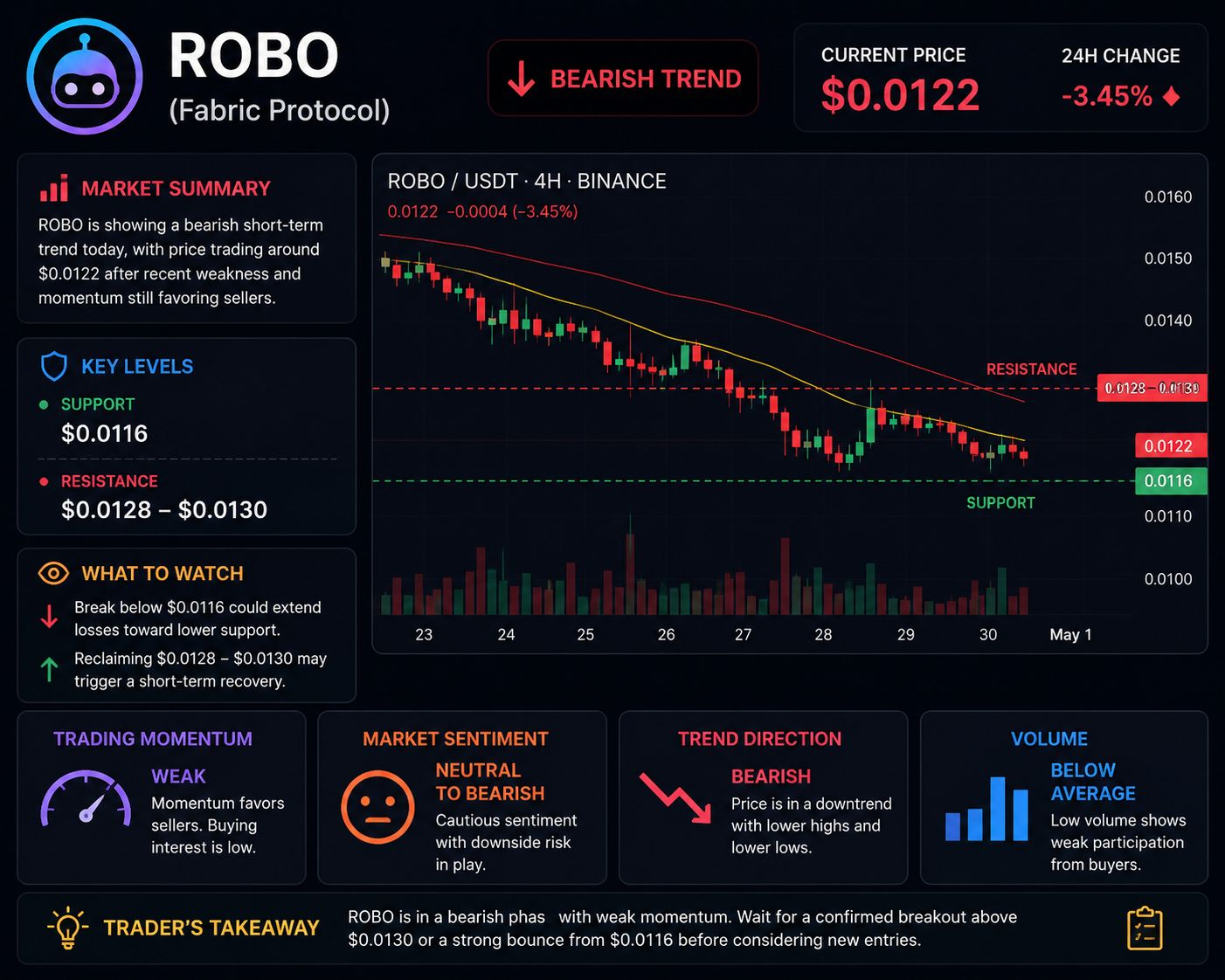
$ROBO (Fabric Protocol) is showing a bearish short-term trend today, with price trading around $0.0122 after recent weakness and momentum still favoring sellers. Key support is near $0.0116, while resistance sits around $0.0128–$0.0130; a break below support could extend losses, while reclaiming resistance may trigger a short-term recovery. Trading momentum remains cautious with relatively weak buying interest, and overall market sentiment is neutral-to-bearish, so traders should wait for a confirmed breakout or bounce before entering new positions.
#robo #ROB
{future}(ROBOUSDT)
$ROBO (Fabric Protocol) is showing a bearish short-term trend today, with price trading around $0.0122 after recent weakness and momentum still favoring sellers. Key support is near $0.0116, while resistance sits around $0.0128–$0.0130; a break below support could extend losses, while reclaiming resistance may trigger a short-term recovery. Trading momentum remains cautious with relatively weak buying interest, and overall market sentiment is neutral-to-bearish, so traders should wait for a confirmed breakout or bounce before entering new positions.
#robo #ROB
#robo #ROB
1
2
444

ALERT 🚨 Sei Network ($SEI) surges as order blocks confirm bullish momentum, volume spikes, and growing adoption of its low latency layer 1. Robonomics ($ROBO) gains traction with new IoT finance protocols, boosting liquidity and investor confidence. Baby Token ($BABY) sees explosive trading activity, signaling innovation and a vibrant ecosystem. All three present compelling buy opportunities 🚀📈💰 #SeiNetwork #Rob
ALERT 🚨 Sei Network ($SEI ) surges as order blocks confirm bullish momentum, volume spikes, and growing adoption of its low latency layer 1. Robonomics ($ROBO ) gains traction with new IoT finance protocols, boosting liquidity and investor confidence. Baby Token ($BABY ) sees explosive trading activity, signaling innovation and a vibrant ecosystem. All three present compelling buy opportunities 🚀📈💰 #SeiNetwork #Rob
171

·
--

Article
AI Meets Blockchain: The $ROBO VisionThe synergy between @Fabric_Foundation and $ROBO is impressive. Combining blockchain transparency with intelligent automation opens new possibilities for developers and creators. This is the kind of long-term project Web3 truly needs.
#ROB #BlockAILayoffs #XCryptoBanMistake #USCitizensMiddleEastEvacuation #IranConfirmsKhameneiIsDead $GOOGLon $NVDAon
AI Meets Blockchain: The $ROBO Vision
The synergy between @Fabric_Foundation and $ROBO is impressive. Combining blockchain transparency with intelligent automation opens new possibilities for developers and creators. This is the kind of long-term project Web3 truly needs.
#ROB #BlockAILayoffs #XCryptoBanMistake #USCitizensMiddleEastEvacuation #IranConfirmsKhameneiIsDead $GOOGLon $NVDAon
#ROB #BlockAILayoffs #XCryptoBanMistake #USCitizensMiddleEastEvacuation #IranConfirmsKhameneiIsDead $GOOGLon $NVDAon
2
103

·
--
Bullish
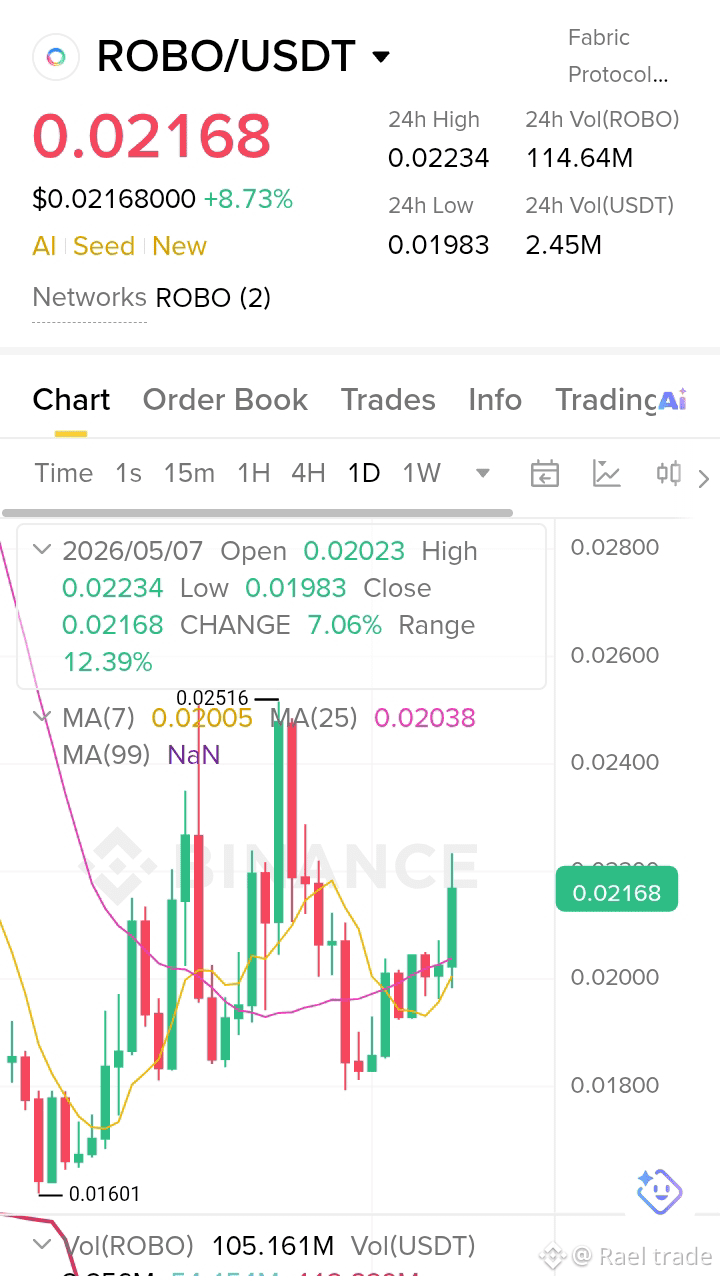
$ROBO is $0.0217307 per (ROBO / USD) with a current market cap of $48.5M USD. 24-hour trading volume is $50.8M USD. ROBO to USD price is updated in real-time. Fabric Protocol is +8.97% in the last 24 hours with a circulating supply of 2.2B.#ROB $ROBO
{future}(ROBOUSDT)
$ROBO is $0.0217307 per (ROBO / USD) with a current market cap of $48.5M USD. 24-hour trading volume is $50.8M USD. ROBO to USD price is updated in real-time. Fabric Protocol is +8.97% in the last 24 hours with a circulating supply of 2.2B.#ROB $ROBO
1
56

·
--
$ROBO
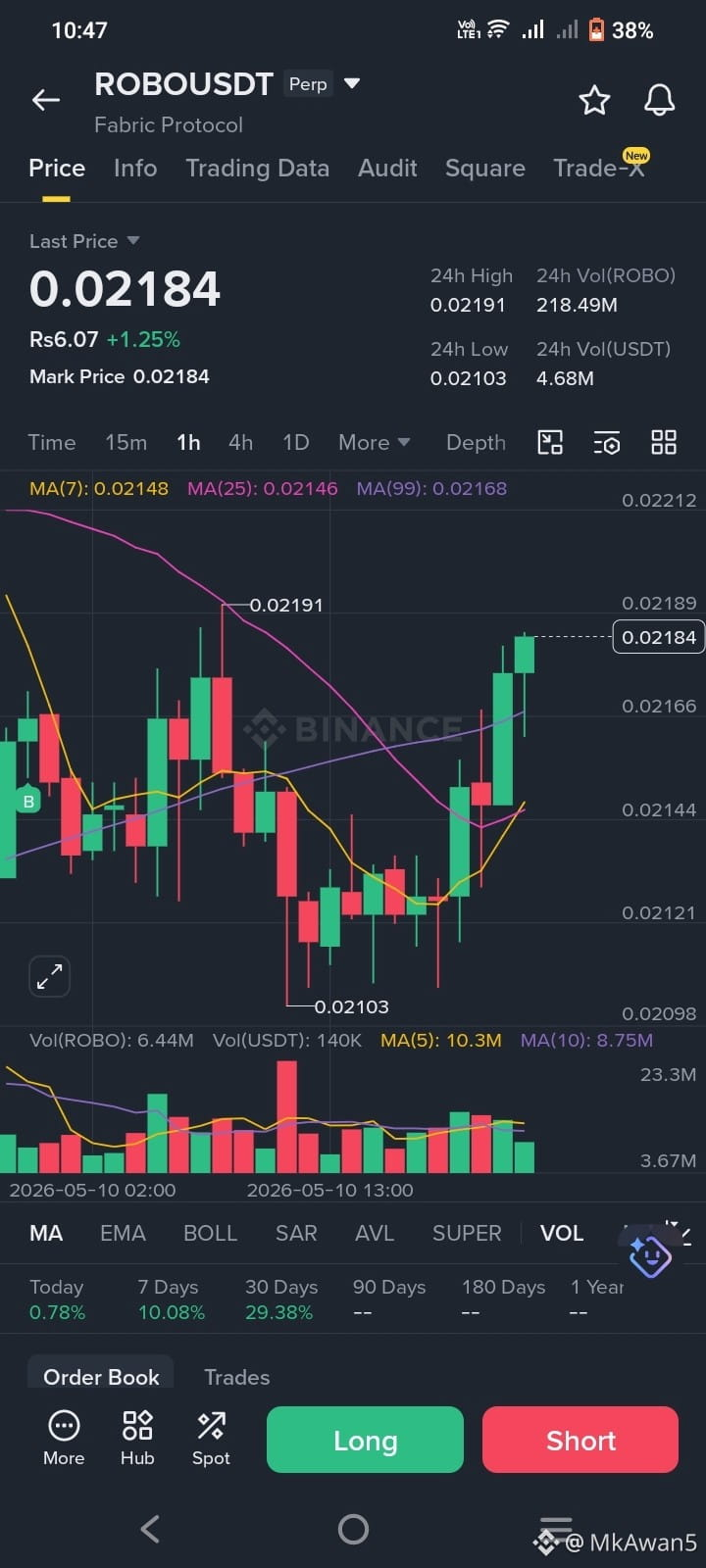
I opened a Rob contract long position on Binance, relying on the holographic symbol and number cognitive system, confirming the bullish trend from the dimensions of symbols, numbers, and logic, with the direction validated by the market. After the price increased, I set a trailing stop profit according to the system rules, allowing room for market fluctuations while automatically locking in profits and avoiding pullbacks. Ultimately, I successfully secured the gains, relying entirely on the system execution rather than subjective judgment, achieving steady profits. #rob @FabricFND
$ROBO
I opened a Rob contract long position on Binance, relying on the holographic symbol and number cognitive system, confirming the bullish trend from the dimensions of symbols, numbers, and logic, with the direction validated by the market. After the price increased, I set a trailing stop profit according to the system rules, allowing room for market fluctuations while automatically locking in profits and avoiding pullbacks. Ultimately, I successfully secured the gains, relying entirely on the system execution rather than subjective judgment, achieving steady profits. #rob @Fabric Foundation
I opened a Rob contract long position on Binance, relying on the holographic symbol and number cognitive system, confirming the bullish trend from the dimensions of symbols, numbers, and logic, with the direction validated by the market. After the price increased, I set a trailing stop profit according to the system rules, allowing room for market fluctuations while automatically locking in profits and avoiding pullbacks. Ultimately, I successfully secured the gains, relying entirely on the system execution rather than subjective judgment, achieving steady profits. #rob @Fabric Foundation
1
86

·
--
Bullish
$ROBO
{future}(ROBOUSDT)
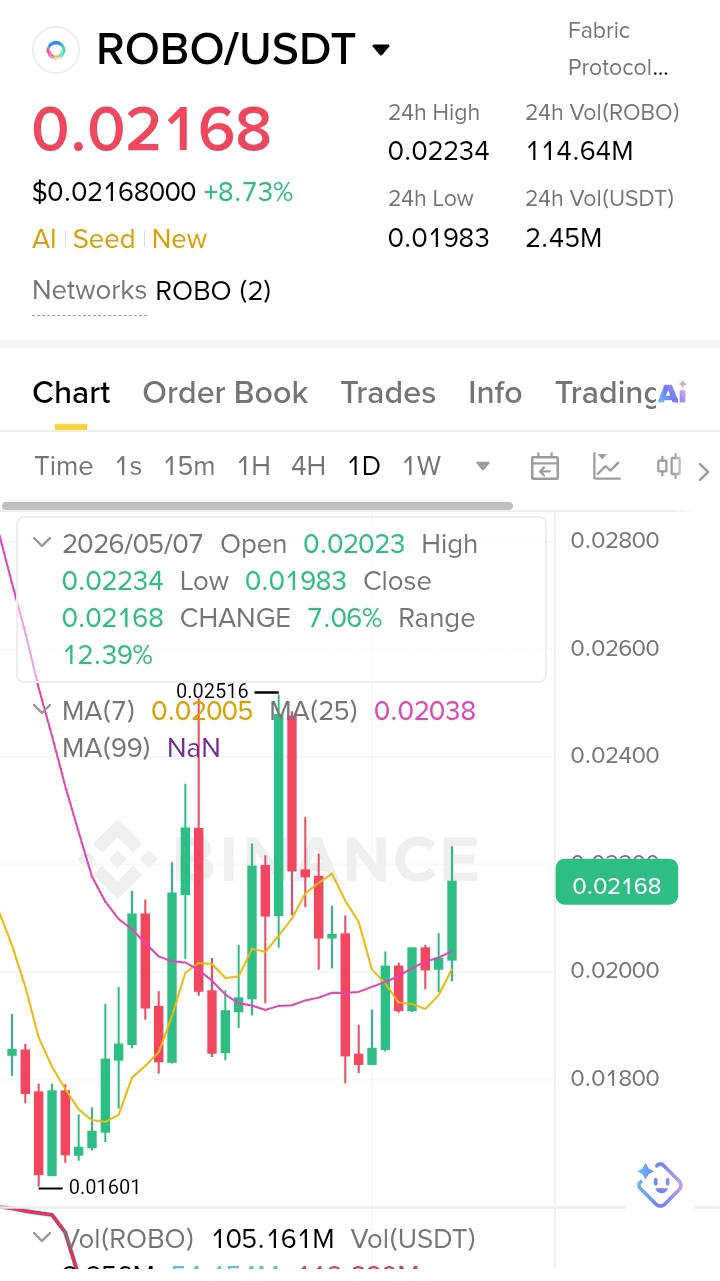
Fabric Protocol is priced at $0.021737 per ROBO, with a circulating supply of 2.23B ROBO, resulting in a total market capitalisation of $48.50M.
Over the past 24 hours, the trading volume for Fabric Protocol has increased by $4.64B, representing a 91.2054% rise. Moreover, ROBO worth $50.86M has been traded in the last day. #ROB $ROBO
$ROBO
Fabric Protocol is priced at $0.021737 per ROBO, with a circulating supply of 2.23B ROBO, resulting in a total market capitalisation of $48.50M.
Over the past 24 hours, the trading volume for Fabric Protocol has increased by $4.64B, representing a 91.2054% rise. Moreover, ROBO worth $50.86M has been traded in the last day. #ROB $ROBO
Fabric Protocol is priced at $0.021737 per ROBO, with a circulating supply of 2.23B ROBO, resulting in a total market capitalisation of $48.50M.
Over the past 24 hours, the trading volume for Fabric Protocol has increased by $4.64B, representing a 91.2054% rise. Moreover, ROBO worth $50.86M has been traded in the last day. #ROB $ROBO
1
66
Log in to explore more content
Join global crypto users on Binance Square
⚡️ Get latest and useful information about crypto.
💬 Trusted by the world’s largest crypto exchange.
👍 Discover real insights from verified creators.
Email / Phone number
Trending Topics
1
#FedMinutesFocusOnOctoberPause
373,017 views
2,334 Discussing
2
#VitalikWarnsAICouldWeakenCryptographySecurity
1,027 views
111 Discussing
3
#XRPSpotETFsHold$1.7BWeeklyInflowsSlow
296 views
19 Discussing
4
#FrenchHillUrgesCLARITYActPassageInLameDuck
3,760 views
164 Discussing
5
#EthereumSpotETFRecords$161MNetOutflows
131 views
14 Discussing
6
#IMFGrantsWaiverForElSalvadorBitcoinBreach
10,768 views
288 Discussing
7
#BinanceLaunchesBinanceIntelligence
1.3M views
7,198 Discussing
8
#EvernorthDelaysNasdaqDebutToOct12
58,218 views
565 Discussing
9
#RobinhoodAdds$25MInBitcoinToBalanceSheet
18,523 views
106 Discussing
10
#SP500AndNasdaqHitRecordHighs
59,348 views
737 Discussing