

#quantumcomputing
quantumcomputing
225,720 views
1,459 Discussing
Hot
Latest

🚨 QUANTUM THREAT vs BITCOIN: THE ULTIMATE CRYPTO APOCALYPSE? ⚛️💥
Are quantum supercomputers preparing to bypass standard elliptic curve cryptography (ECDSA) and crack private keys open? While quantum threats sound like science fiction, protocol developers are actively testing post-quantum signature schemes (like SHRINCS and ML-DSA) to protect core blockchains before the shift happens. 🛡️
📊 THE REALITY: HYPED CRASH OR CRITICAL UPGRADE?
1️⃣ The Vulnerability: Quantum computing specifically targets public-key cryptography—meaning legacy idle addresses without upgraded output schemes could face real risks if left unmigrated.
2️⃣ The Solution: Quantum-agile architectures and hash-based signatures are being drafted to patch existing networks via simple soft forks.
3️⃣ Smart Money View: Institutions view quantum advancement as a necessary evolution trigger for Web3 security rather than an immediate market killer.
💡 WHALE LESSON: Don't panic sell on speculative headlines. Focus on protocol agility and upgrade progress! 🎒
👇 CAST YOUR VOTE BELOW:
Will Quantum Computing destroy legacy crypto security before major chains migrate to post-quantum standards?
#QuantumComputing #Bitcoin #PostQuantum #BinanceSquare #CryptoSecurity #SmartMoney
🚨 QUANTUM THREAT vs BITCOIN: THE ULTIMATE CRYPTO APOCALYPSE? ⚛️💥
Are quantum supercomputers preparing to bypass standard elliptic curve cryptography (ECDSA) and crack private keys open? While quantum threats sound like science fiction, protocol developers are actively testing post-quantum signature schemes (like SHRINCS and ML-DSA) to protect core blockchains before the shift happens. 🛡️
📊 THE REALITY: HYPED CRASH OR CRITICAL UPGRADE?
1️⃣ The Vulnerability: Quantum computing specifically targets public-key cryptography—meaning legacy idle addresses without upgraded output schemes could face real risks if left unmigrated.
2️⃣ The Solution: Quantum-agile architectures and hash-based signatures are being drafted to patch existing networks via simple soft forks.
3️⃣ Smart Money View: Institutions view quantum advancement as a necessary evolution trigger for Web3 security rather than an immediate market killer.
💡 WHALE LESSON: Don't panic sell on speculative headlines. Focus on protocol agility and upgrade progress! 🎒
👇 CAST YOUR VOTE BELOW:
Will Quantum Computing destroy legacy crypto security before major chains migrate to post-quantum standards?
#QuantumComputing #Bitcoin #PostQuantum #BinanceSquare #CryptoSecurity #SmartMoney
Are quantum supercomputers preparing to bypass standard elliptic curve cryptography (ECDSA) and crack private keys open? While quantum threats sound like science fiction, protocol developers are actively testing post-quantum signature schemes (like SHRINCS and ML-DSA) to protect core blockchains before the shift happens. 🛡️
📊 THE REALITY: HYPED CRASH OR CRITICAL UPGRADE?
1️⃣ The Vulnerability: Quantum computing specifically targets public-key cryptography—meaning legacy idle addresses without upgraded output schemes could face real risks if left unmigrated.
2️⃣ The Solution: Quantum-agile architectures and hash-based signatures are being drafted to patch existing networks via simple soft forks.
3️⃣ Smart Money View: Institutions view quantum advancement as a necessary evolution trigger for Web3 security rather than an immediate market killer.
💡 WHALE LESSON: Don't panic sell on speculative headlines. Focus on protocol agility and upgrade progress! 🎒
👇 CAST YOUR VOTE BELOW:
Will Quantum Computing destroy legacy crypto security before major chains migrate to post-quantum standards?
#QuantumComputing #Bitcoin #PostQuantum #BinanceSquare #CryptoSecurity #SmartMoney
A) Yes,
67%
B) No,
0%
C) Pure FUD,
33%
D) Only old/abandoned wallets
0%
3 votes • Voting closed
1
239

Bitcoin has a problem that price charts can’t show.
European financial watchdogs have raised a fresh warning about quantum computing and blockchain security.
The concern: if quantum computers eventually become powerful enough, some older Bitcoin addresses with already-exposed public keys could be more vulnerable than newer addresses.
Something worth learning:
Bitcoin isn’t protected by one giant “password.” It relies on cryptography that lets you prove ownership with a private key without revealing that key. Quantum computing matters because sufficiently advanced machines could challenge some of the mathematical assumptions behind today’s cryptography.
But that machine doesn't exist today. The real challenge is upgrading security before the technology gets there.
Crypto usually talks about the next cycle.
This is about whether the technology is ready for the next decade.
#Bitcoin #QuantumComputing #BlockchainSecurity #BTC #CryptoEducation #CryptoNews
Bitcoin has a problem that price charts can’t show.
European financial watchdogs have raised a fresh warning about quantum computing and blockchain security.
The concern: if quantum computers eventually become powerful enough, some older Bitcoin addresses with already-exposed public keys could be more vulnerable than newer addresses.
Something worth learning:
Bitcoin isn’t protected by one giant “password.” It relies on cryptography that lets you prove ownership with a private key without revealing that key. Quantum computing matters because sufficiently advanced machines could challenge some of the mathematical assumptions behind today’s cryptography.
But that machine doesn't exist today. The real challenge is upgrading security before the technology gets there.
Crypto usually talks about the next cycle.
This is about whether the technology is ready for the next decade.
#Bitcoin #QuantumComputing #BlockchainSecurity #BTC #CryptoEducation #CryptoNews
European financial watchdogs have raised a fresh warning about quantum computing and blockchain security.
The concern: if quantum computers eventually become powerful enough, some older Bitcoin addresses with already-exposed public keys could be more vulnerable than newer addresses.
Something worth learning:
Bitcoin isn’t protected by one giant “password.” It relies on cryptography that lets you prove ownership with a private key without revealing that key. Quantum computing matters because sufficiently advanced machines could challenge some of the mathematical assumptions behind today’s cryptography.
But that machine doesn't exist today. The real challenge is upgrading security before the technology gets there.
Crypto usually talks about the next cycle.
This is about whether the technology is ready for the next decade.
#Bitcoin #QuantumComputing #BlockchainSecurity #BTC #CryptoEducation #CryptoNews
68

·
--
AI is crushing it! In a public competition, AI slashed quantum-safe Bitcoin costs from $320 to just $67! Quantum threat ain't a big deal anymore, tech is advancing fast! #量子计算 #AI加密 $BTC
AI is crushing it! In a public competition, AI slashed quantum-safe Bitcoin costs from $320 to just $67! Quantum threat ain't a big deal anymore, tech is advancing fast! #QuantumComputing #AICrypto $BTC
AI is crushing it! In a public competition, AI slashed quantum-safe Bitcoin costs from $320 to just $67! Quantum threat ain't a big deal anymore, tech is advancing fast! #量子计算 #AI加密 $BTC
AI is crushing it! In a public competition, AI slashed quantum-safe Bitcoin costs from $320 to just $67! Quantum threat ain't a big deal anymore, tech is advancing fast! #QuantumComputing #AICrypto $BTC
AI is crushing it! In a public competition, AI slashed quantum-safe Bitcoin costs from $320 to just $67! Quantum threat ain't a big deal anymore, tech is advancing fast! #QuantumComputing #AICrypto $BTC
Luiscosta77:
baik temanku
1
79


·
--
Verified
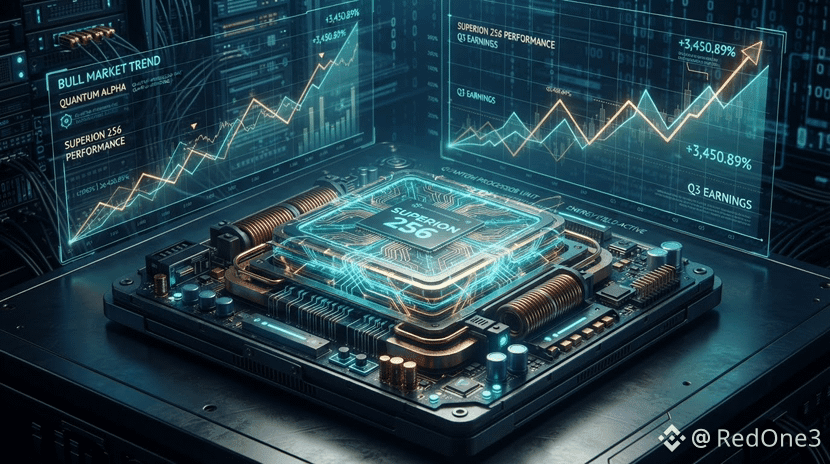
$IONQ stock skyrocketed 12.42% in a single trading session! 🚀⚡
The primary driver behind this surge is a major technological breakthrough in fault-tolerant quantum computing: the successful demonstration of the industry's first End-to-End Real-Time Quantum Error Correction Decoder! ⚛️🔬
Here is a quick breakdown of what is fueling this quantum rally: 👇
1. Industry-First Real-Time Quantum Error Decoder 🔓
• Solving Quantum's Biggest Bottleneck: Physical qubits are highly sensitive to noise. IonQ proved that a single, standard CPU can manage error decoding continuously in real-time without slowing down quantum operations. 🧠⚙️
• Extreme Efficiency & Scale: Tested on benchmark circuits simulating 408 logical qubits and over 31.5 million quantum operations, the decoder added a minimal 0.02% in extra runtime overhead. 📊⚡
• Validates the "Walking Cat" Roadmap: Confirms that classical hardware requirements do not need to scale exponentially as quantum systems grow, establishing a clear path toward commercial platforms controlling thousands of qubits. 🛣️✨
2. Supporting Commercial & Strategic Drivers 📈
• Massive Guidance Raise: Revenue guidance for 2026 was boosted to $450M–$460M (up from $280M–$290M) following the completion of its $1.8B acquisition of semiconductor foundry SkyWater Technology. 💰🏢
• Next-Gen Superion 256 Platform: Fabrication of its 256-qubit system compressed chip design cycles from 9 months down to 2 months, with customer deliveries scheduled for 2027. ⏰💻
• Enterprise & Institutional Validation: Joint research successes with NVIDIA, Oak Ridge National Lab, and Synopsys demonstrated up to 14.6% simulation-time reductions in complex engineering workflows. 🤝🤝
Quantum computing is moving rapidly from theoretical labs to commercial scale! 🔮🌐
#IonQ #QuantumComputing #IONQ #NVIDIA .
$IONQ stock skyrocketed 12.42% in a single trading session! 🚀⚡
The primary driver behind this surge is a major technological breakthrough in fault-tolerant quantum computing: the successful demonstration of the industry's first End-to-End Real-Time Quantum Error Correction Decoder! ⚛️🔬
Here is a quick breakdown of what is fueling this quantum rally: 👇
1. Industry-First Real-Time Quantum Error Decoder 🔓
• Solving Quantum's Biggest Bottleneck: Physical qubits are highly sensitive to noise. IonQ proved that a single, standard CPU can manage error decoding continuously in real-time without slowing down quantum operations. 🧠⚙️
• Extreme Efficiency & Scale: Tested on benchmark circuits simulating 408 logical qubits and over 31.5 million quantum operations, the decoder added a minimal 0.02% in extra runtime overhead. 📊⚡
• Validates the "Walking Cat" Roadmap: Confirms that classical hardware requirements do not need to scale exponentially as quantum systems grow, establishing a clear path toward commercial platforms controlling thousands of qubits. 🛣️✨
2. Supporting Commercial & Strategic Drivers 📈
• Massive Guidance Raise: Revenue guidance for 2026 was boosted to $450M–$460M (up from $280M–$290M) following the completion of its $1.8B acquisition of semiconductor foundry SkyWater Technology. 💰🏢
• Next-Gen Superion 256 Platform: Fabrication of its 256-qubit system compressed chip design cycles from 9 months down to 2 months, with customer deliveries scheduled for 2027. ⏰💻
• Enterprise & Institutional Validation: Joint research successes with NVIDIA, Oak Ridge National Lab, and Synopsys demonstrated up to 14.6% simulation-time reductions in complex engineering workflows. 🤝🤝
Quantum computing is moving rapidly from theoretical labs to commercial scale! 🔮🌐
#IonQ #QuantumComputing #IONQ #NVIDIA .
The primary driver behind this surge is a major technological breakthrough in fault-tolerant quantum computing: the successful demonstration of the industry's first End-to-End Real-Time Quantum Error Correction Decoder! ⚛️🔬
Here is a quick breakdown of what is fueling this quantum rally: 👇
1. Industry-First Real-Time Quantum Error Decoder 🔓
• Solving Quantum's Biggest Bottleneck: Physical qubits are highly sensitive to noise. IonQ proved that a single, standard CPU can manage error decoding continuously in real-time without slowing down quantum operations. 🧠⚙️
• Extreme Efficiency & Scale: Tested on benchmark circuits simulating 408 logical qubits and over 31.5 million quantum operations, the decoder added a minimal 0.02% in extra runtime overhead. 📊⚡
• Validates the "Walking Cat" Roadmap: Confirms that classical hardware requirements do not need to scale exponentially as quantum systems grow, establishing a clear path toward commercial platforms controlling thousands of qubits. 🛣️✨
2. Supporting Commercial & Strategic Drivers 📈
• Massive Guidance Raise: Revenue guidance for 2026 was boosted to $450M–$460M (up from $280M–$290M) following the completion of its $1.8B acquisition of semiconductor foundry SkyWater Technology. 💰🏢
• Next-Gen Superion 256 Platform: Fabrication of its 256-qubit system compressed chip design cycles from 9 months down to 2 months, with customer deliveries scheduled for 2027. ⏰💻
• Enterprise & Institutional Validation: Joint research successes with NVIDIA, Oak Ridge National Lab, and Synopsys demonstrated up to 14.6% simulation-time reductions in complex engineering workflows. 🤝🤝
Quantum computing is moving rapidly from theoretical labs to commercial scale! 🔮🌐
#IonQ #QuantumComputing #IONQ #NVIDIA .

1
262
·
--
EU financial regulators warn: quantum computing is becoming an imminent threat to blockchain encryption! Especially those Bitcoin addresses whose public keys have been exposed online—the security risks are worrying. It’s time to discuss upgrading encryption technology, otherwise quantum computers may break the current security, and your $BTC may be at risk!
EU financial watchdogs are sounding the alarm: quantum computing poses an imminent threat to blockchain encryption! Those Bitcoin addresses with exposed public keys are particularly vulnerable. Time to talk about upgrading our encryption tech before quantum computers break current security and put your $BTC at risk! #QuantumComputing #BlockchainSecurity
EU financial regulators warn: quantum computing is becoming an imminent threat to blockchain encryption! Especially those Bitcoin addresses whose public keys have been exposed online—the security risks are worrying. It’s time to discuss upgrading encryption technology, otherwise quantum computers may break the current security, and your $BTC may be at risk!
EU financial watchdogs are sounding the alarm: quantum computing poses an imminent threat to blockchain encryption! Those Bitcoin addresses with exposed public keys are particularly vulnerable. Time to talk about upgrading our encryption tech before quantum computers break current security and put your $BTC at risk! #QuantumComputing #BlockchainSecurity
EU financial watchdogs are sounding the alarm: quantum computing poses an imminent threat to blockchain encryption! Those Bitcoin addresses with exposed public keys are particularly vulnerable. Time to talk about upgrading our encryption tech before quantum computers break current security and put your $BTC at risk! #QuantumComputing #BlockchainSecurity
235

·
--
Great guys, everyone! Let’s “dissect” this super hot news together:
---
🔥 **Is the “Quantum Doomsday” risk with Bitcoin coming closer? HOT news: the “life preserver” suddenly gets CHEAPER unexpectedly!** 🔥
Welcome, everyone, to a deep perspective on the market from an in-depth KOL! Today we have an extremely important piece of news, related to the future security of Bitcoin itself—the precious gem of the Crypto world.
What’s real here? Let’s go over the key points:
* **StarkWare "cuts price" quantum security solution:** A week-long optimization challenge has helped significantly reduce the costs for preparing quantum-resistant Bitcoin transactions.
* **Record-low costs: down 79%:** Specifically, the estimated GPU cost to prepare a test Bitcoin transaction capable of withstanding threats from quantum computers has dropped to **below 67 USD!**
* **An important step toward the "last line of defense":** This is considered a strategic move, making Bitcoin’s “final defense” solution against quantum computer cracking power feasible and more “breathable” cost-wise.
---
**Personal take from the KOL:**
For all the HODL-ers and long-term investors, this is extremely positive news! Not only does it show the Crypto community’s proactiveness in dealing with future threats (like quantum computers), it also confirms Bitcoin’s resilience and adaptability. Even though it may not directly affect the price $BTC in the short term, it strengthens confidence in Bitcoin’s core value and the “endurance” of the king of Crypto. A protective move for a solid future!
---
What do you think about this news? Is the quantum era truly a real threat in the near future? Share your perspective in the comments below! 👇
And don’t forget to hit **Follow** the channel so you don’t miss my deep analyses and hot updates!
#CryptoNews #TrendingNews #Bitcoin #QuantumComputing #BảoMậtCrypto $BTC
Great guys, everyone! Let’s “dissect” this super hot news together:
---
🔥 **Is the “Quantum Doomsday” risk with Bitcoin coming closer? HOT news: the “life preserver” suddenly gets CHEAPER unexpectedly!** 🔥
Welcome, everyone, to a deep perspective on the market from an in-depth KOL! Today we have an extremely important piece of news, related to the future security of Bitcoin itself—the precious gem of the Crypto world.
What’s real here? Let’s go over the key points:
* **StarkWare "cuts price" quantum security solution:** A week-long optimization challenge has helped significantly reduce the costs for preparing quantum-resistant Bitcoin transactions.
* **Record-low costs: down 79%:** Specifically, the estimated GPU cost to prepare a test Bitcoin transaction capable of withstanding threats from quantum computers has dropped to **below 67 USD!**
* **An important step toward the "last line of defense":** This is considered a strategic move, making Bitcoin’s “final defense” solution against quantum computer cracking power feasible and more “breathable” cost-wise.
---
**Personal take from the KOL:**
For all the HODL-ers and long-term investors, this is extremely positive news! Not only does it show the Crypto community’s proactiveness in dealing with future threats (like quantum computers), it also confirms Bitcoin’s resilience and adaptability. Even though it may not directly affect the price $BTC in the short term, it strengthens confidence in Bitcoin’s core value and the “endurance” of the king of Crypto. A protective move for a solid future!
---
What do you think about this news? Is the quantum era truly a real threat in the near future? Share your perspective in the comments below! 👇
And don’t forget to hit **Follow** the channel so you don’t miss my deep analyses and hot updates!
#CryptoNews #TrendingNews #Bitcoin #QuantumComputing #BảoMậtCrypto $BTC
---
🔥 **Is the “Quantum Doomsday” risk with Bitcoin coming closer? HOT news: the “life preserver” suddenly gets CHEAPER unexpectedly!** 🔥
Welcome, everyone, to a deep perspective on the market from an in-depth KOL! Today we have an extremely important piece of news, related to the future security of Bitcoin itself—the precious gem of the Crypto world.
What’s real here? Let’s go over the key points:
* **StarkWare "cuts price" quantum security solution:** A week-long optimization challenge has helped significantly reduce the costs for preparing quantum-resistant Bitcoin transactions.
* **Record-low costs: down 79%:** Specifically, the estimated GPU cost to prepare a test Bitcoin transaction capable of withstanding threats from quantum computers has dropped to **below 67 USD!**
* **An important step toward the "last line of defense":** This is considered a strategic move, making Bitcoin’s “final defense” solution against quantum computer cracking power feasible and more “breathable” cost-wise.
---
**Personal take from the KOL:**
For all the HODL-ers and long-term investors, this is extremely positive news! Not only does it show the Crypto community’s proactiveness in dealing with future threats (like quantum computers), it also confirms Bitcoin’s resilience and adaptability. Even though it may not directly affect the price $BTC in the short term, it strengthens confidence in Bitcoin’s core value and the “endurance” of the king of Crypto. A protective move for a solid future!
---
What do you think about this news? Is the quantum era truly a real threat in the near future? Share your perspective in the comments below! 👇
And don’t forget to hit **Follow** the channel so you don’t miss my deep analyses and hot updates!
#CryptoNews #TrendingNews #Bitcoin #QuantumComputing #BảoMậtCrypto $BTC
204
·
--
Bitcoin post-quantum solution costs down 79%! StarkWare, through optimization, has slashed quantum-secure Bitcoin transaction costs to below $67—this “last line of defense” is finally affordable. In the quantum era, Bitcoin wallets are safer than ever!
Bitcoin's quantum-resistant solution just got 79% cheaper! StarkWare's optimization slashes costs to under $67, making this "last resort" protection wallet-friendly. Quantum era? Bitcoin's got you covered.
#QuantumComputing #BitcoinSecurity $BTC $STARK
Bitcoin post-quantum solution costs down 79%! StarkWare, through optimization, has slashed quantum-secure Bitcoin transaction costs to below $67—this “last line of defense” is finally affordable. In the quantum era, Bitcoin wallets are safer than ever!
Bitcoin's quantum-resistant solution just got 79% cheaper! StarkWare's optimization slashes costs to under $67, making this "last resort" protection wallet-friendly. Quantum era? Bitcoin's got you covered.
#QuantumComputing #BitcoinSecurity $BTC $STARK
Bitcoin's quantum-resistant solution just got 79% cheaper! StarkWare's optimization slashes costs to under $67, making this "last resort" protection wallet-friendly. Quantum era? Bitcoin's got you covered.
#QuantumComputing #BitcoinSecurity $BTC $STARK
392
·
--
Could quantum computers really threaten Bitcoin's future? Experts point out that practical quantum computers may become a reality in the near future. What changes would this bring to the crypto world? #量子计算 #未来展望 $BTC
Could quantum computers actually threaten Bitcoin's future? Expert Shinobi explores why viable quantum computing might be possible sooner than we think. What does this mean for crypto? #quantumcomputing #futureofcrypto $BTC
Could quantum computers really threaten Bitcoin's future? Experts point out that practical quantum computers may become a reality in the near future. What changes would this bring to the crypto world? #量子计算 #未来展望 $BTC
Could quantum computers actually threaten Bitcoin's future? Expert Shinobi explores why viable quantum computing might be possible sooner than we think. What does this mean for crypto? #quantumcomputing #futureofcrypto $BTC
Could quantum computers actually threaten Bitcoin's future? Expert Shinobi explores why viable quantum computing might be possible sooner than we think. What does this mean for crypto? #quantumcomputing #futureofcrypto $BTC
161
·
--
EU watchdogs warn: quantum computers could crack cryptocurrencies! Regulators say the development of quantum computing may threaten blockchain security. The Bitcoin team is evaluating migration plans, while Ethereum plans to complete quantum-resistant upgrades by 2029. The crypto world faces new challenges, and the two major mainstream coins have already begun taking action. $BTC $ETH #QuantumComputing #CryptoSecurity
EU watchdogs are sounding the alarm: quantum computers could crack crypto! Regulators warn quantum computing threatens blockchain security. Bitcoin devs are evaluating migration plans while Ethereum aims to complete quantum-resistant upgrades by 2029. The crypto world faces a new challenge, and major coins are already taking action. $BTC $ETH #QuantumComputing #CryptoSecurity
EU watchdogs warn: quantum computers could crack cryptocurrencies! Regulators say the development of quantum computing may threaten blockchain security. The Bitcoin team is evaluating migration plans, while Ethereum plans to complete quantum-resistant upgrades by 2029. The crypto world faces new challenges, and the two major mainstream coins have already begun taking action. $BTC $ETH #QuantumComputing #CryptoSecurity
EU watchdogs are sounding the alarm: quantum computers could crack crypto! Regulators warn quantum computing threatens blockchain security. Bitcoin devs are evaluating migration plans while Ethereum aims to complete quantum-resistant upgrades by 2029. The crypto world faces a new challenge, and major coins are already taking action. $BTC $ETH #QuantumComputing #CryptoSecurity
EU watchdogs are sounding the alarm: quantum computers could crack crypto! Regulators warn quantum computing threatens blockchain security. Bitcoin devs are evaluating migration plans while Ethereum aims to complete quantum-resistant upgrades by 2029. The crypto world faces a new challenge, and major coins are already taking action. $BTC $ETH #QuantumComputing #CryptoSecurity
409

·
--
💥 KEVIN O’LEARY SEES $1M BITCOIN — BUT QUANTUM SECURITY IS THE CATCH
Kevin O’Leary says Bitcoin can eventually reach $1 million, but he sees quantum computing as a major condition for that thesis.
Speaking at Avalanche Summit in New York, O’Leary argued that institutions may remain cautious about making Bitcoin a core holding until the industry addresses the theoretical risk that sufficiently powerful quantum computers could break the cryptographic algorithms securing Bitcoin wallets.
No quantum computer capable of such an attack exists today, and estimates for when that capability could emerge range from the early 2030s to never.
For O’Leary, solving the quantum threat could remove a major source of institutional uncertainty around Bitcoin.
#BTC #quantumcomputing #CryptoSecurity #CryptoNews
#ThuyBNB
$BTC $BNB $NEAR
💥 KEVIN O’LEARY SEES $1M BITCOIN — BUT QUANTUM SECURITY IS THE CATCH
Kevin O’Leary says Bitcoin can eventually reach $1 million, but he sees quantum computing as a major condition for that thesis.
Speaking at Avalanche Summit in New York, O’Leary argued that institutions may remain cautious about making Bitcoin a core holding until the industry addresses the theoretical risk that sufficiently powerful quantum computers could break the cryptographic algorithms securing Bitcoin wallets.
No quantum computer capable of such an attack exists today, and estimates for when that capability could emerge range from the early 2030s to never.
For O’Leary, solving the quantum threat could remove a major source of institutional uncertainty around Bitcoin.
#BTC #quantumcomputing #CryptoSecurity #CryptoNews
#ThuyBNB
$BTC $BNB $NEAR
Kevin O’Leary says Bitcoin can eventually reach $1 million, but he sees quantum computing as a major condition for that thesis.
Speaking at Avalanche Summit in New York, O’Leary argued that institutions may remain cautious about making Bitcoin a core holding until the industry addresses the theoretical risk that sufficiently powerful quantum computers could break the cryptographic algorithms securing Bitcoin wallets.
No quantum computer capable of such an attack exists today, and estimates for when that capability could emerge range from the early 2030s to never.
For O’Leary, solving the quantum threat could remove a major source of institutional uncertainty around Bitcoin.
#BTC #quantumcomputing #CryptoSecurity #CryptoNews
#ThuyBNB
$BTC $BNB $NEAR

220

·
--
⚡ Bitcoin Could Reach $1 Million if Quantum Threat Resolved, Says Kevin O’Leary
📌 Key Highlights:
• Kevin O’Leary projects Bitcoin at $1 million contingent on overcoming quantum‑computing risks that threaten current cryptographic security.
• He cites the need for post‑quantum cryptography upgrades as the critical catalyst for this valuation leap.
• O’Leary has shifted focus away from Ethereum, citing its slower adaptation to quantum resilience and regulatory uncertainty.
📊 Market Takeaway:
The narrative fuels bullish sentiment for Bitcoin while underscoring the urgency of quantum‑resilient upgrades, potentially driving institutional interest in long‑term Bitcoin exposure.
#QuantumComputing #BitcoinFuture #CryptoInnovation $BTC
⚡ Bitcoin Could Reach $1 Million if Quantum Threat Resolved, Says Kevin O’Leary
📌 Key Highlights:
• Kevin O’Leary projects Bitcoin at $1 million contingent on overcoming quantum‑computing risks that threaten current cryptographic security.
• He cites the need for post‑quantum cryptography upgrades as the critical catalyst for this valuation leap.
• O’Leary has shifted focus away from Ethereum, citing its slower adaptation to quantum resilience and regulatory uncertainty.
📊 Market Takeaway:
The narrative fuels bullish sentiment for Bitcoin while underscoring the urgency of quantum‑resilient upgrades, potentially driving institutional interest in long‑term Bitcoin exposure.
#QuantumComputing #BitcoinFuture #CryptoInnovation $BTC
📌 Key Highlights:
• Kevin O’Leary projects Bitcoin at $1 million contingent on overcoming quantum‑computing risks that threaten current cryptographic security.
• He cites the need for post‑quantum cryptography upgrades as the critical catalyst for this valuation leap.
• O’Leary has shifted focus away from Ethereum, citing its slower adaptation to quantum resilience and regulatory uncertainty.
📊 Market Takeaway:
The narrative fuels bullish sentiment for Bitcoin while underscoring the urgency of quantum‑resilient upgrades, potentially driving institutional interest in long‑term Bitcoin exposure.
#QuantumComputing #BitcoinFuture #CryptoInnovation $BTC

1
5

·
--
🚨 BITCOIN QUANTUM ROADMAP
Bitcoin’s path toward quantum resistance is becoming clearer, with two key proposals gaining attention.
🔹 BIP-360 introduces P2MR to reduce long-term public-key exposure and create a path toward quantum-resistant signatures.
🔹 Blockstream Research’s SHRINCS is a SHA-256-based signature scheme designed to support that future upgrade path.
The technology is promising, but SHRINCS still needs a formal security proof and independent review before it can be considered fully mature. 🔐₿
#Bitcoin #BTC #QuantumComputing #Crypto $NVDAB $BTC $BRT.US
🚨 BITCOIN QUANTUM ROADMAP
Bitcoin’s path toward quantum resistance is becoming clearer, with two key proposals gaining attention.
🔹 BIP-360 introduces P2MR to reduce long-term public-key exposure and create a path toward quantum-resistant signatures.
🔹 Blockstream Research’s SHRINCS is a SHA-256-based signature scheme designed to support that future upgrade path.
The technology is promising, but SHRINCS still needs a formal security proof and independent review before it can be considered fully mature. 🔐₿
#Bitcoin #BTC #QuantumComputing #Crypto $NVDAB $BTC $BRT.US
Bitcoin’s path toward quantum resistance is becoming clearer, with two key proposals gaining attention.
🔹 BIP-360 introduces P2MR to reduce long-term public-key exposure and create a path toward quantum-resistant signatures.
🔹 Blockstream Research’s SHRINCS is a SHA-256-based signature scheme designed to support that future upgrade path.
The technology is promising, but SHRINCS still needs a formal security proof and independent review before it can be considered fully mature. 🔐₿
#Bitcoin #BTC #QuantumComputing #Crypto $NVDAB $BTC $BRT.US

1
174

AI AGENTS JUST ACCELERATED THE QUANTUM THREAT TO BITCOIN BY A MASSIVE EIGHTY SIX PERCENT. While everyone is staring at the incoming CPI data and wondering which way the market will wiggle, a massive tech shift is happening in the background. Decrypt reports that AI agents have optimized quantum attack benchmarks against $BTC encryption, slicing the estimated effort or time needed by a staggering 86 percent. This is a wake up call for post-quantum cryptography. 🚀 AI is proving to be a double-edged sword, supercharging quantum research faster than we expected. 🔐 Bitcoin developers are already working on quantum-resistant upgrades, but the timeline just got much tighter. 📊 Meanwhile, the market remains shaky today but onchain metrics suggest some crazy volatility is brewing for the weekend. Honestly, we need to start taking quantum resistance seriously way sooner than we thought. #Bitcoin #QuantumComputing #AI #Write2Earn
AI AGENTS JUST ACCELERATED THE QUANTUM THREAT TO BITCOIN BY A MASSIVE EIGHTY SIX PERCENT. While everyone is staring at the incoming CPI data and wondering which way the market will wiggle, a massive tech shift is happening in the background. Decrypt reports that AI agents have optimized quantum attack benchmarks against $BTC encryption, slicing the estimated effort or time needed by a staggering 86 percent. This is a wake up call for post-quantum cryptography. 🚀 AI is proving to be a double-edged sword, supercharging quantum research faster than we expected. 🔐 Bitcoin developers are already working on quantum-resistant upgrades, but the timeline just got much tighter. 📊 Meanwhile, the market remains shaky today but onchain metrics suggest some crazy volatility is brewing for the weekend. Honestly, we need to start taking quantum resistance seriously way sooner than we thought. #Bitcoin #QuantumComputing #AI #Write2Earn

44
·
--
The shadow of a quantum computing army has already loomed over the encrypted world! The U.S. is pouring $300 million to advance quantum hardware, while both the $BTC and $ETH post-quantum migration plans are targeting the critical window of 2029. Although the quantum threat hasn’t truly arrived yet, this race against time has already begun. For market conditions, in the long run, it may be beneficial for blockchain projects that have already laid the groundwork with post-quantum algorithms. In the crypto world, security is king! #QuantumComputing #CryptoSecurity
The shadow of a quantum computing army has already loomed over the encrypted world! The U.S. is pouring $300 million to advance quantum hardware, while both the $BTC and $ETH post-quantum migration plans are targeting the critical window of 2029. Although the quantum threat hasn’t truly arrived yet, this race against time has already begun. For market conditions, in the long run, it may be beneficial for blockchain projects that have already laid the groundwork with post-quantum algorithms. In the crypto world, security is king! #QuantumComputing #CryptoSecurity
67

·
--
News | Launch of TuringQ Gen3 for Optical Quantum Computing
TuringQ (Turing Quantum) announced the launch of TuringQ Gen3, a large-scale optical quantum computer that is scalable at the chip level. It combines quantum light sources, photon processing, single-photon detection, and hybrid quantum-classical computing.
The platform aims to reach computing resources at the level of thousands of photons and millions of patterns, while exploring applications in artificial intelligence and foundation models.
📌 Cipher Vault: a new step in the race to develop quantum computing and connect it with AI applications.
#QuantumComputing #AI #Technology #China
News | Launch of TuringQ Gen3 for Optical Quantum Computing
TuringQ (Turing Quantum) announced the launch of TuringQ Gen3, a large-scale optical quantum computer that is scalable at the chip level. It combines quantum light sources, photon processing, single-photon detection, and hybrid quantum-classical computing.
The platform aims to reach computing resources at the level of thousands of photons and millions of patterns, while exploring applications in artificial intelligence and foundation models.
📌 Cipher Vault: a new step in the race to develop quantum computing and connect it with AI applications.
#QuantumComputing #AI #Technology #China
TuringQ (Turing Quantum) announced the launch of TuringQ Gen3, a large-scale optical quantum computer that is scalable at the chip level. It combines quantum light sources, photon processing, single-photon detection, and hybrid quantum-classical computing.
The platform aims to reach computing resources at the level of thousands of photons and millions of patterns, while exploring applications in artificial intelligence and foundation models.
📌 Cipher Vault: a new step in the race to develop quantum computing and connect it with AI applications.
#QuantumComputing #AI #Technology #China
2
5
Quantum clock is ticking. Researchers have just made a major breakthrough that could impact the long-term security of both $BTC and $ETH. According to a new report from The Block, scientists managed to cut the quantum computing resource benchmark needed for a key cryptographic attack in half. Here is what you need to know about this development:
1️⃣ Researchers drastically reduced the estimated quantum resources needed to target the core cryptographic operations of major networks.
2️⃣ The new benchmark is actually less than half of what Google previously estimated, although they did use different measurement methods.
3️⃣ While we are still years away from actual quantum computers capable of doing this, the gap is closing faster than many expected.
Security devs must stay one step ahead of the tech. We expect post-quantum security updates to become a hot topic soon.
#QuantumComputing #CryptoSecurity #Write2Earn
Quantum clock is ticking. Researchers have just made a major breakthrough that could impact the long-term security of both $BTC and $ETH . According to a new report from The Block, scientists managed to cut the quantum computing resource benchmark needed for a key cryptographic attack in half. Here is what you need to know about this development:
1️⃣ Researchers drastically reduced the estimated quantum resources needed to target the core cryptographic operations of major networks.
2️⃣ The new benchmark is actually less than half of what Google previously estimated, although they did use different measurement methods.
3️⃣ While we are still years away from actual quantum computers capable of doing this, the gap is closing faster than many expected.
Security devs must stay one step ahead of the tech. We expect post-quantum security updates to become a hot topic soon.
#QuantumComputing #CryptoSecurity #Write2Earn
1️⃣ Researchers drastically reduced the estimated quantum resources needed to target the core cryptographic operations of major networks.
2️⃣ The new benchmark is actually less than half of what Google previously estimated, although they did use different measurement methods.
3️⃣ While we are still years away from actual quantum computers capable of doing this, the gap is closing faster than many expected.
Security devs must stay one step ahead of the tech. We expect post-quantum security updates to become a hot topic soon.
#QuantumComputing #CryptoSecurity #Write2Earn

64
Cutting a major security timeline exactly in half. Imagine beating Google's best quantum calculation by 50% using a mix of human brains and AI agents. That is exactly what researchers just did, drastically reducing the estimated time it would take for quantum computers to threaten major blockchains like $BTC and $ETH. Are we actually ready for the quantum era sooner than we thought?
🔹 Researchers teamed up with AI to beat Google's March benchmark on Shor's algorithm.
🔹 The estimate for a quantum attack on crypto security has been slashed by 50%.
🔹 This adds a lot of urgency to the transition toward quantum-resistant cryptography.
I guess it is time for devs to speed up those network upgrades because the future is coming fast. What do you think, should we start worrying yet?
#Bitcoin #QuantumComputing #CryptoSecurity #Write2Earn
Cutting a major security timeline exactly in half. Imagine beating Google's best quantum calculation by 50% using a mix of human brains and AI agents. That is exactly what researchers just did, drastically reducing the estimated time it would take for quantum computers to threaten major blockchains like $BTC and $ETH . Are we actually ready for the quantum era sooner than we thought?
🔹 Researchers teamed up with AI to beat Google's March benchmark on Shor's algorithm.
🔹 The estimate for a quantum attack on crypto security has been slashed by 50%.
🔹 This adds a lot of urgency to the transition toward quantum-resistant cryptography.
I guess it is time for devs to speed up those network upgrades because the future is coming fast. What do you think, should we start worrying yet?
#Bitcoin #QuantumComputing #CryptoSecurity #Write2Earn
🔹 Researchers teamed up with AI to beat Google's March benchmark on Shor's algorithm.
🔹 The estimate for a quantum attack on crypto security has been slashed by 50%.
🔹 This adds a lot of urgency to the transition toward quantum-resistant cryptography.
I guess it is time for devs to speed up those network upgrades because the future is coming fast. What do you think, should we start worrying yet?
#Bitcoin #QuantumComputing #CryptoSecurity #Write2Earn

45

AI agents have significantly lowered the resource requirements for potential quantum attacks on Bitcoin through the ECDSA.Fail challenge.
#BitcoinSecurity #QuantumComputing
AI agents have significantly lowered the resource requirements for potential quantum attacks on Bitcoin through the ECDSA.Fail challenge.
#BitcoinSecurity #QuantumComputing
#BitcoinSecurity #QuantumComputing
27
·
--
What on earth is quantum computing? This quantum special-issue article explains, in a straightforward way, the difference between quantum computing and traditional computing—along with the potential impact on the cryptocurrency industry. In theory, quantum computers could break the encryption algorithms used by today’s blockchains, posing a potential threat to the security of crypto assets like Bitcoin. But don’t panic— the industry is already developing quantum-resistant solutions! In the long run, projects that are first to achieve quantum resistance could see a significant value revaluation.
$BTC #量子计算 #区块链安全
Quantum computing explained in simple terms! This article breaks down how quantum computing differs from traditional computing and the potential impact on crypto. In theory, quantum computers could crack current blockchain encryption, posing a threat to assets like Bitcoin's security. But don't panic—the industry is already developing quantum-resistant solutions! Projects that first achieve quantum resistance could see significant value revaluation in the long run.
$BTC #QuantumComputing #BlockchainSecurity
What on earth is quantum computing? This quantum special-issue article explains, in a straightforward way, the difference between quantum computing and traditional computing—along with the potential impact on the cryptocurrency industry. In theory, quantum computers could break the encryption algorithms used by today’s blockchains, posing a potential threat to the security of crypto assets like Bitcoin. But don’t panic— the industry is already developing quantum-resistant solutions! In the long run, projects that are first to achieve quantum resistance could see a significant value revaluation.
$BTC #量子计算 #区块链安全
Quantum computing explained in simple terms! This article breaks down how quantum computing differs from traditional computing and the potential impact on crypto. In theory, quantum computers could crack current blockchain encryption, posing a threat to assets like Bitcoin's security. But don't panic—the industry is already developing quantum-resistant solutions! Projects that first achieve quantum resistance could see significant value revaluation in the long run.
$BTC #QuantumComputing #BlockchainSecurity
$BTC #量子计算 #区块链安全
Quantum computing explained in simple terms! This article breaks down how quantum computing differs from traditional computing and the potential impact on crypto. In theory, quantum computers could crack current blockchain encryption, posing a threat to assets like Bitcoin's security. But don't panic—the industry is already developing quantum-resistant solutions! Projects that first achieve quantum resistance could see significant value revaluation in the long run.
$BTC #QuantumComputing #BlockchainSecurity
112
🚀 Ethereum is officially racing against the quantum clock!
The Ethereum Foundation has announced a strict 2029 deadline to implement quantum resistance across the network. As quantum computing advances, securing the blockchain's cryptography has become an immediate, top-priority focus.
⚡ **The 2029 Deadline**: Upcoming protocol upgrades will now be evaluated based on how well they prepare $ETH for the quantum era.
🔐 **Securing Cryptography**: The goal is to protect the network before any quantum computer capable of breaking current encryption methods emerges.
🛠️ **Future-Proofing**: This strategic shift puts quantum-proof algorithms at the very center of Ethereum's long-term development roadmap.
This proactive stance highlights Ethereum's commitment to remaining the most secure global settlement layer in the Web3 space.
$ETH $BTC #Ethereum #QuantumComputing #CryptoSecurity #Write2Earn
🚀 Ethereum is officially racing against the quantum clock!
The Ethereum Foundation has announced a strict 2029 deadline to implement quantum resistance across the network. As quantum computing advances, securing the blockchain's cryptography has become an immediate, top-priority focus.
⚡ **The 2029 Deadline**: Upcoming protocol upgrades will now be evaluated based on how well they prepare $ETH for the quantum era.
🔐 **Securing Cryptography**: The goal is to protect the network before any quantum computer capable of breaking current encryption methods emerges.
🛠️ **Future-Proofing**: This strategic shift puts quantum-proof algorithms at the very center of Ethereum's long-term development roadmap.
This proactive stance highlights Ethereum's commitment to remaining the most secure global settlement layer in the Web3 space.
$ETH $BTC #Ethereum #QuantumComputing #CryptoSecurity #Write2Earn
The Ethereum Foundation has announced a strict 2029 deadline to implement quantum resistance across the network. As quantum computing advances, securing the blockchain's cryptography has become an immediate, top-priority focus.
⚡ **The 2029 Deadline**: Upcoming protocol upgrades will now be evaluated based on how well they prepare $ETH for the quantum era.
🔐 **Securing Cryptography**: The goal is to protect the network before any quantum computer capable of breaking current encryption methods emerges.
🛠️ **Future-Proofing**: This strategic shift puts quantum-proof algorithms at the very center of Ethereum's long-term development roadmap.
This proactive stance highlights Ethereum's commitment to remaining the most secure global settlement layer in the Web3 space.
$ETH $BTC #Ethereum #QuantumComputing #CryptoSecurity #Write2Earn
40
Log in to explore more content
Join global crypto users on Binance Square
⚡️ Get latest and useful information about crypto.
💬 Trusted by the world’s largest crypto exchange.
👍 Discover real insights from verified creators.
Email / Phone number
Trending Topics
1
#BitgetHackerMoves$83MStolenXRP
1,510 views
33 Discussing
2
#SOLSpotETFWeeklyInflow$188M
949 views
40 Discussing
3
#StrategyStriveAdd2305BitcoinThisWeek
35,868 views
975 Discussing
4
#TrumpRejectsIranHormuzReopening
37,322 views
775 Discussing
5
#CircleTetherFreezeBitgetHackerWallet
52,334 views
819 Discussing
6
#SECSaysTokenBuybacksNotAutoSecurities
25,953 views
450 Discussing
7
#ChinaUSAgreeOn$30BTariffCut
1,512 views
31 Discussing
8
#CoinMarketCapCompletesCoinglassAcquisition
42,510 views
590 Discussing
9
#CircleMints500MUSDCOnSolana
224,710 views
3,211 Discussing
10
#PolymarketBankFailureBetsDrawFDICConcern
191,509 views
2,429 Discussing