

#quack
quack
286,932 views
167 Discussing
Hot
Latest

·
--
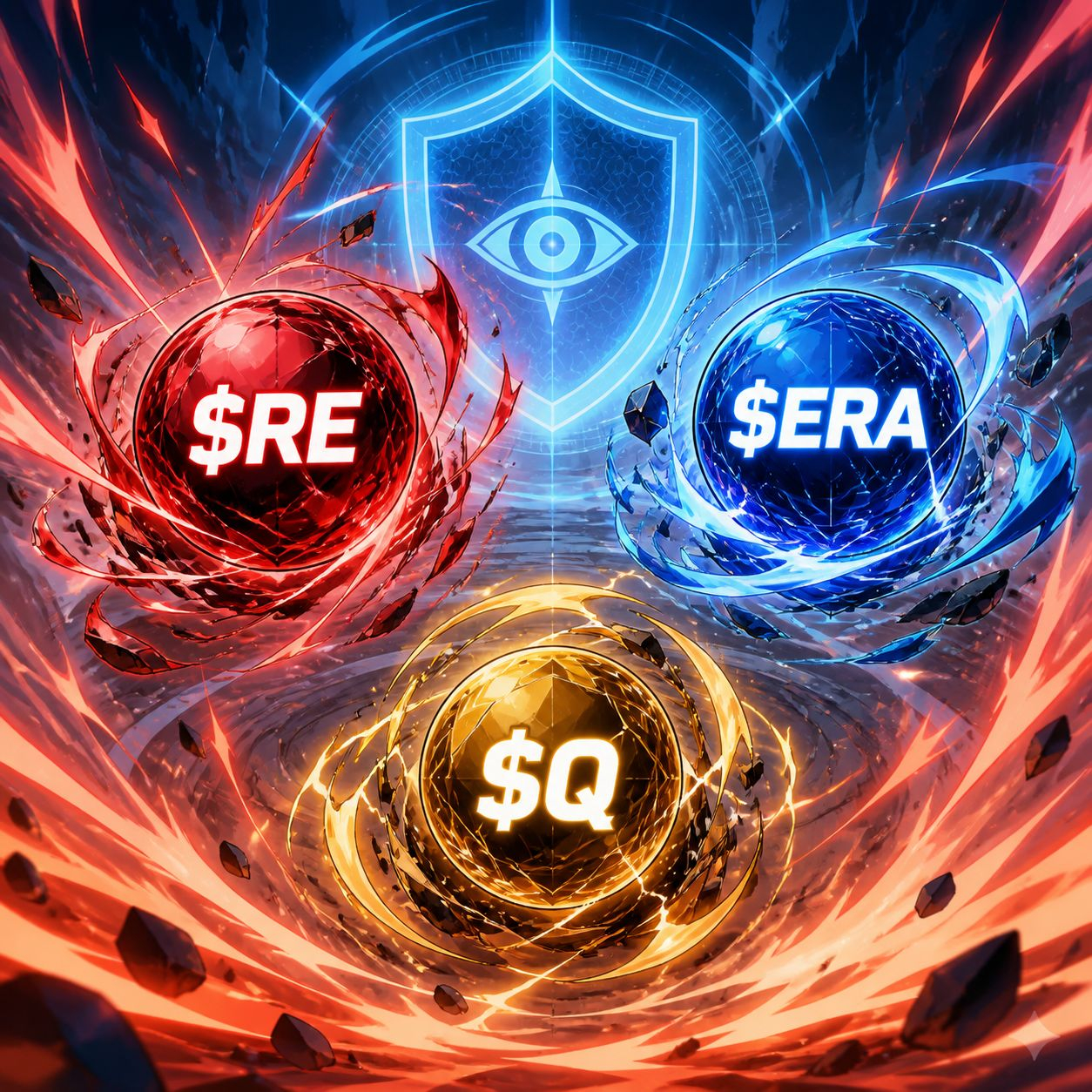
$RE $ERA $Q
$RE:Re Moving reinsurance risk on-chain, using stablecoin funds as collateral for real reinsurance contracts, so both returns and risks are tied to underwriting discipline, compliant entities, and claim settlement cycles. This theme isn’t empty, but the market takes a lot of effort to understand it. RE is now 0.4323; up 6.93% in the last 24 hours and up 5.16% in the last 6 hours, with about 17.28 million USDT in trading volume. 0.4442 is near-term resistance; 0.3972 is the invalidation level. If it fails to break higher, it’s likely to turn into a realization/sell-off trade.
$ERA:Caldera builds modular Rollups and chain-deployment infrastructure, helping projects launch their own app chains faster. The outlook hinges on how Metalayer connects, the number of real chains, and developer retention. ERA is now 0.06773; up only 0.70% in the last 24 hours and, in the last 6 hours, it’s actually down 4.48%. Trading volume is about 5.21 million USDT, and OI is also declining. If it can’t break above 0.07206, don’t treat a pullback-rebound as a trend. If 0.06746 is lost, near-term expectations still need to be pushed lower.
$Q:Q corresponds to the Web3 governance project Quack. It’s about making on-chain governance workflows more automated and more granular. Whether the market continues to price it at a premium depends on DAO tooling going live, the cooperation network, and real voting scenarios. Q is at 0.024014; up 13.92% in the last 24 hours and up 6.36% in the last 6 hours, with about 6.47 million USDT in trading volume. 0.02447 is immediate resistance; 0.022474 is the observation line. The funding rate isn’t high, but chasing too aggressively can still get you shaken out.
#ReProtocol #Caldera #Quack #risk control
$RE $ERA $Q
$RE :Re Moving reinsurance risk on-chain, using stablecoin funds as collateral for real reinsurance contracts, so both returns and risks are tied to underwriting discipline, compliant entities, and claim settlement cycles. This theme isn’t empty, but the market takes a lot of effort to understand it. RE is now 0.4323; up 6.93% in the last 24 hours and up 5.16% in the last 6 hours, with about 17.28 million USDT in trading volume. 0.4442 is near-term resistance; 0.3972 is the invalidation level. If it fails to break higher, it’s likely to turn into a realization/sell-off trade.
$ERA :Caldera builds modular Rollups and chain-deployment infrastructure, helping projects launch their own app chains faster. The outlook hinges on how Metalayer connects, the number of real chains, and developer retention. ERA is now 0.06773; up only 0.70% in the last 24 hours and, in the last 6 hours, it’s actually down 4.48%. Trading volume is about 5.21 million USDT, and OI is also declining. If it can’t break above 0.07206, don’t treat a pullback-rebound as a trend. If 0.06746 is lost, near-term expectations still need to be pushed lower.
$Q :Q corresponds to the Web3 governance project Quack. It’s about making on-chain governance workflows more automated and more granular. Whether the market continues to price it at a premium depends on DAO tooling going live, the cooperation network, and real voting scenarios. Q is at 0.024014; up 13.92% in the last 24 hours and up 6.36% in the last 6 hours, with about 6.47 million USDT in trading volume. 0.02447 is immediate resistance; 0.022474 is the observation line. The funding rate isn’t high, but chasing too aggressively can still get you shaken out.
#ReProtocol #Caldera #Quack #risk control
$RE :Re Moving reinsurance risk on-chain, using stablecoin funds as collateral for real reinsurance contracts, so both returns and risks are tied to underwriting discipline, compliant entities, and claim settlement cycles. This theme isn’t empty, but the market takes a lot of effort to understand it. RE is now 0.4323; up 6.93% in the last 24 hours and up 5.16% in the last 6 hours, with about 17.28 million USDT in trading volume. 0.4442 is near-term resistance; 0.3972 is the invalidation level. If it fails to break higher, it’s likely to turn into a realization/sell-off trade.
$ERA :Caldera builds modular Rollups and chain-deployment infrastructure, helping projects launch their own app chains faster. The outlook hinges on how Metalayer connects, the number of real chains, and developer retention. ERA is now 0.06773; up only 0.70% in the last 24 hours and, in the last 6 hours, it’s actually down 4.48%. Trading volume is about 5.21 million USDT, and OI is also declining. If it can’t break above 0.07206, don’t treat a pullback-rebound as a trend. If 0.06746 is lost, near-term expectations still need to be pushed lower.
$Q :Q corresponds to the Web3 governance project Quack. It’s about making on-chain governance workflows more automated and more granular. Whether the market continues to price it at a premium depends on DAO tooling going live, the cooperation network, and real voting scenarios. Q is at 0.024014; up 13.92% in the last 24 hours and up 6.36% in the last 6 hours, with about 6.47 million USDT in trading volume. 0.02447 is immediate resistance; 0.022474 is the observation line. The funding rate isn’t high, but chasing too aggressively can still get you shaken out.
#ReProtocol #Caldera #Quack #risk control
348


·
--
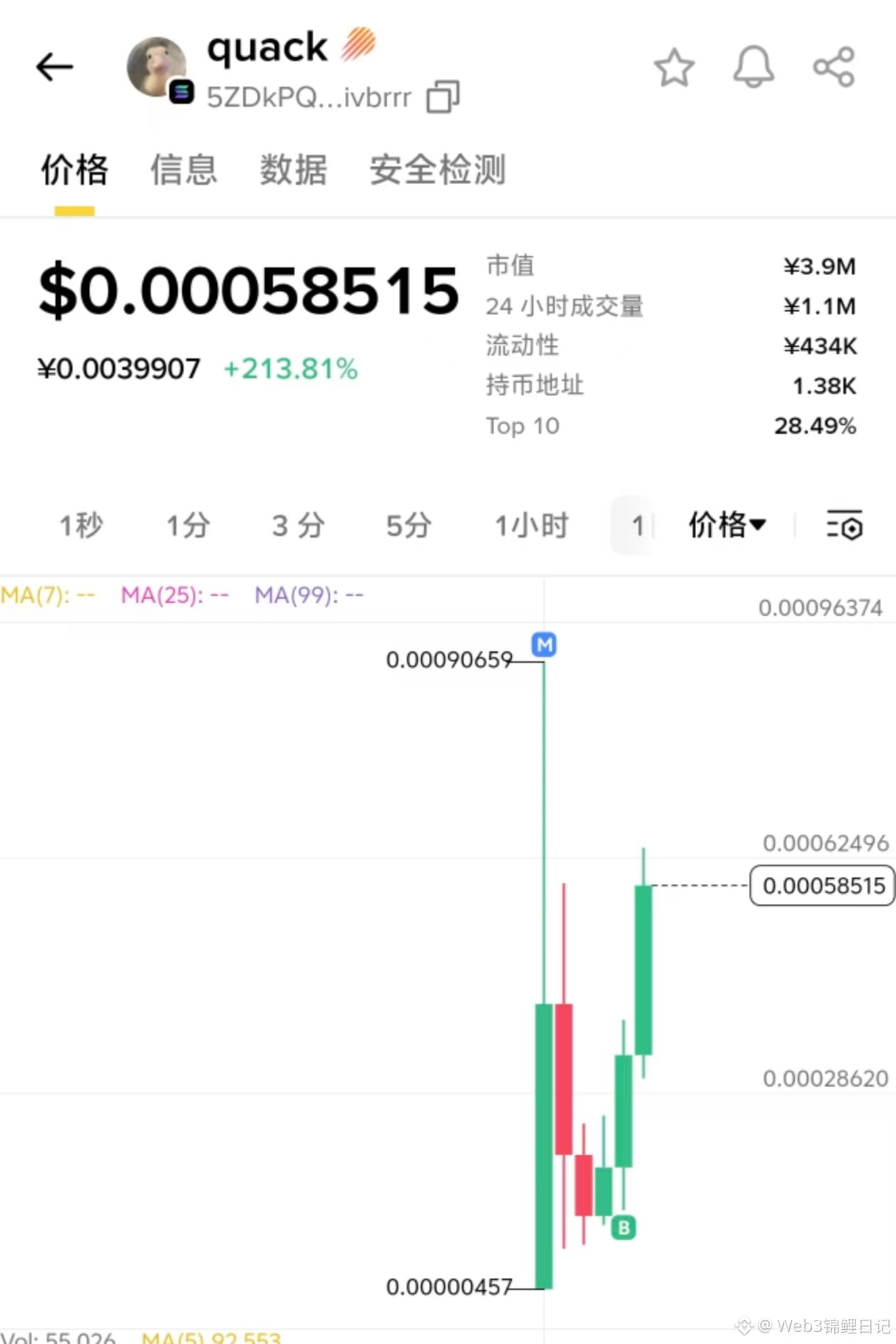
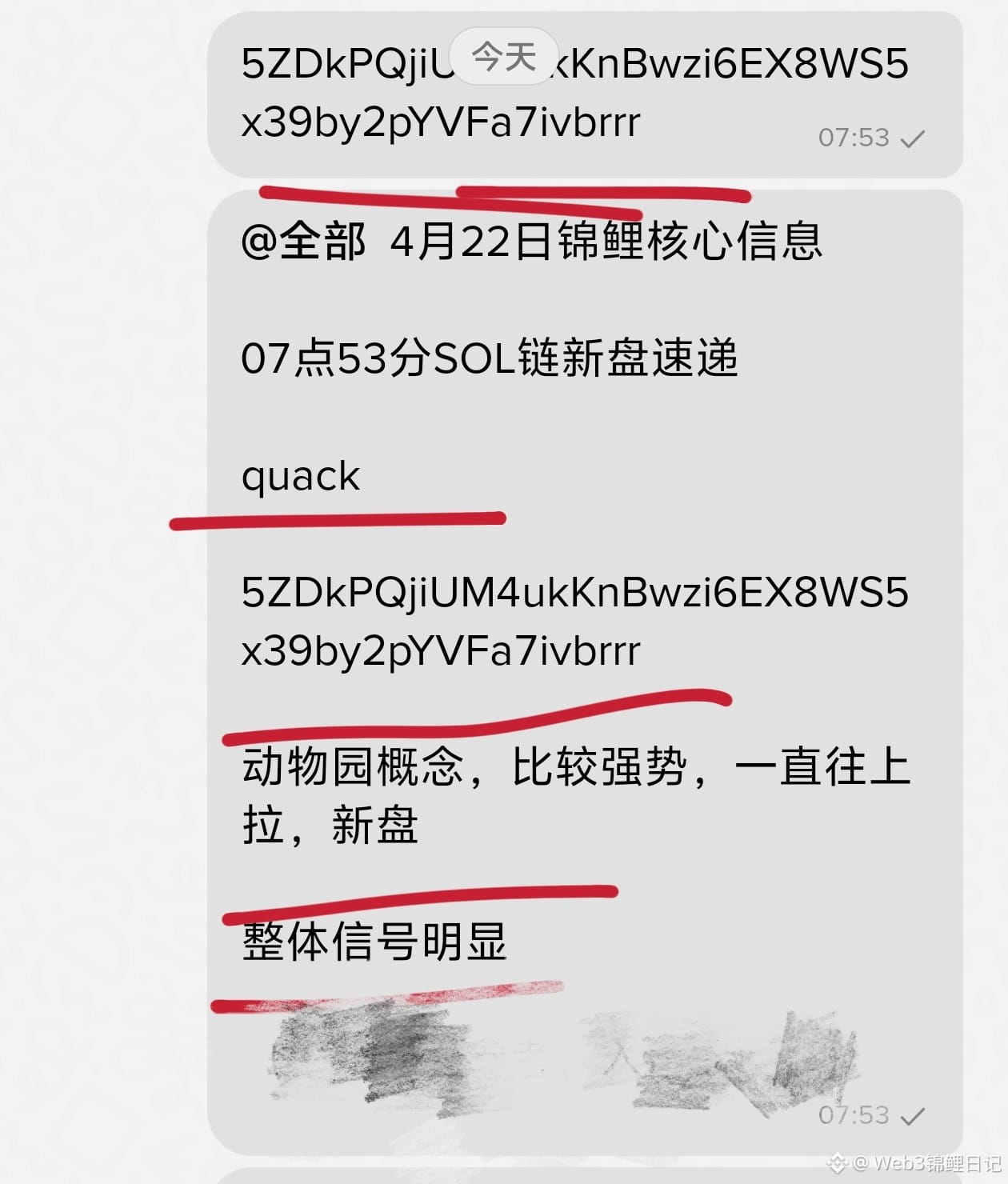
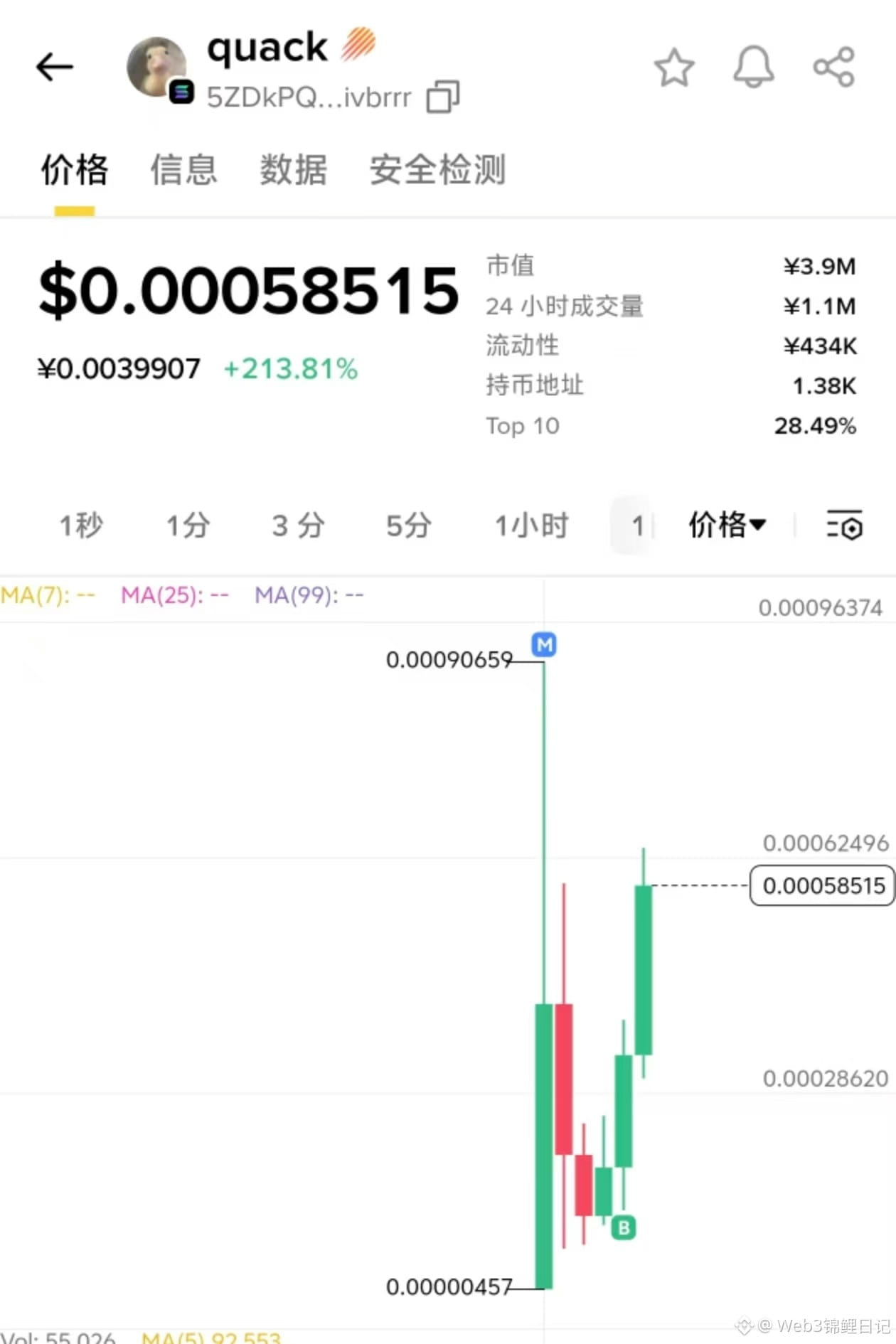
#quack Sent at 07:53 on April 22, increasing from 280,000 to a maximum of 630,000, rising more than 100%, congratulations to the core for making money together
5ZDkPQjiUM4ukKnBwzi6EX8WS5x39by2pYVFa7ivbrrr
{web3_wallet_create}(CT_5015ZDkPQjiUM4ukKnBwzi6EX8WS5x39by2pYVFa7ivbrrr)
@BinanceSquareCN @binancezh
Follow the Web3 Koi Diary, the coins bought have increased tenfold
#quack Sent at 07:53 on April 22, increasing from 280,000 to a maximum of 630,000, rising more than 100%, congratulations to the core for making money together
5ZDkPQjiUM4ukKnBwzi6EX8WS5x39by2pYVFa7ivbrrr
@币安广场 @币安Binance华语
Follow the Web3 Koi Diary, the coins bought have increased tenfold
5ZDkPQjiUM4ukKnBwzi6EX8WS5x39by2pYVFa7ivbrrr
@币安广场 @币安Binance华语
Follow the Web3 Koi Diary, the coins bought have increased tenfold
2.4k
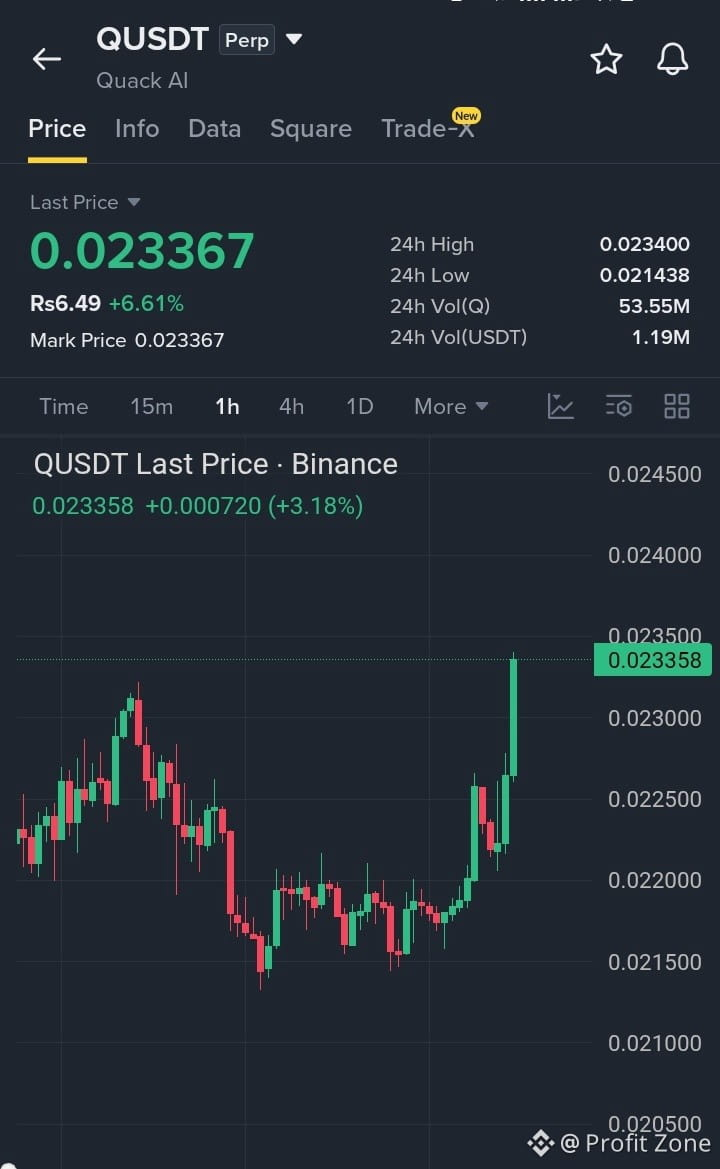
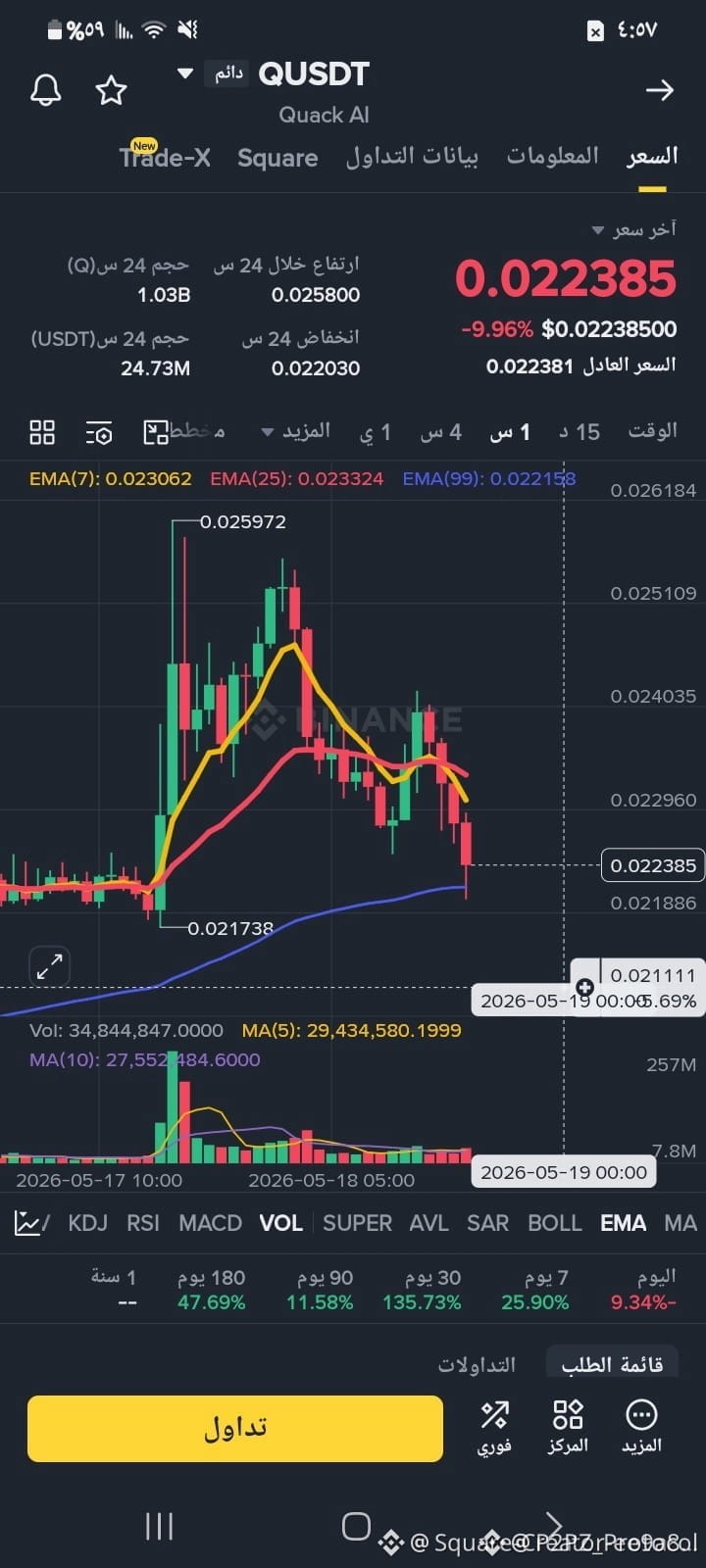
🚨 Check out the last candlestick.. the whales are swallowing the fearful! $Q 🚨
The current dip of QUACK to a price of $0.022385 isn't random.. it's hitting that final support line with pinpoint accuracy! 📉🔥
Smart Money is gathering right now, and the upcoming rebound will be faster than you can imagine to fill this gap. 📈⚡
Hesitation now means buying later at the top with a 20% difference.. opportunities don't wait for the hesitant, jump in now! $Q 🛒🎯
#QUACK #P2pz_protocol
🚨 Check out the last candlestick.. the whales are swallowing the fearful! $Q 🚨
The current dip of QUACK to a price of $0.022385 isn't random.. it's hitting that final support line with pinpoint accuracy! 📉🔥
Smart Money is gathering right now, and the upcoming rebound will be faster than you can imagine to fill this gap. 📈⚡
Hesitation now means buying later at the top with a 20% difference.. opportunities don't wait for the hesitant, jump in now! $Q 🛒🎯
#QUACK #P2pz_protocol
The current dip of QUACK to a price of $0.022385 isn't random.. it's hitting that final support line with pinpoint accuracy! 📉🔥
Smart Money is gathering right now, and the upcoming rebound will be faster than you can imagine to fill this gap. 📈⚡
Hesitation now means buying later at the top with a 20% difference.. opportunities don't wait for the hesitant, jump in now! $Q 🛒🎯
#QUACK #P2pz_protocol
69
·
--
Bullish
The Sign-to-Pay tech at #Q402 is revolutionizing on-chain interactions with a three-layer architecture: the execution layer employs atomic signature design, compressing the traditional "proposal-vote-execute" process into a single click, boosting DAO fund distribution efficiency by 80x in real-world tests. Its Policy-Aware engine comes with a dynamic compliance check module, supporting real-time updates for multi-signature thresholds, budget limits, and other governance rules. A certain RWA platform ran for 12 months with zero compliance violations. Developers can quickly integrate via a dual-language SDK in JavaScript/Go, and the standard API interface gives regular EOA accounts smart contract-level control, already facilitating over $53 million in automated trades across 14 DAOs. This "sign and execute" paradigm is pushing on-chain governance from manual oversight to programmatic autonomy. @QTalkLive $Q #Quack #QuackAI
{future}(QUSDT)
The Sign-to-Pay tech at #Q402 is revolutionizing on-chain interactions with a three-layer architecture: the execution layer employs atomic signature design, compressing the traditional "proposal-vote-execute" process into a single click, boosting DAO fund distribution efficiency by 80x in real-world tests. Its Policy-Aware engine comes with a dynamic compliance check module, supporting real-time updates for multi-signature thresholds, budget limits, and other governance rules. A certain RWA platform ran for 12 months with zero compliance violations. Developers can quickly integrate via a dual-language SDK in JavaScript/Go, and the standard API interface gives regular EOA accounts smart contract-level control, already facilitating over $53 million in automated trades across 14 DAOs. This "sign and execute" paradigm is pushing on-chain governance from manual oversight to programmatic autonomy. @QTalk $Q #Quack #QuackAI
261
·
--
Bullish
$Q
{future}(QUSDT)
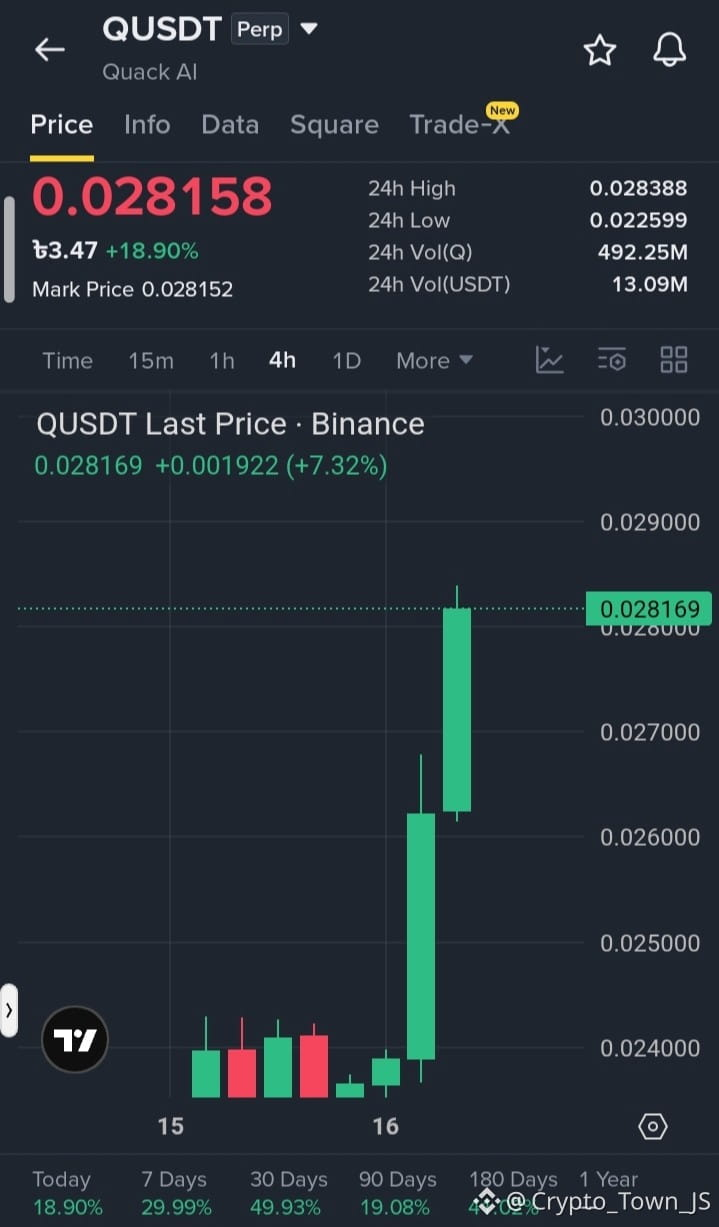
USDT Perp Uptrend Express
The uptrend train has left the station! Buyers are pushing hard and price is climbing steadily. If momentum stays strong, the next station could be much higher! Long Setup.
Entry: $0.022599 - $0.028169
TP: $0.029500 - $0.031000 - $0.033000 - $0.035000
SL: $0.021500
#cryptotrading #BinanceSquare #FutureTarding #CryptoAnalysis #QUACK
$VELVET $SPORTFUN
{future}(SPORTFUNUSDT)
{future}(VELVETUSDT)
$Q
USDT Perp Uptrend Express
The uptrend train has left the station! Buyers are pushing hard and price is climbing steadily. If momentum stays strong, the next station could be much higher! Long Setup.
Entry: $0.022599 - $0.028169
TP: $0.029500 - $0.031000 - $0.033000 - $0.035000
SL: $0.021500
#cryptotrading #BinanceSquare #FutureTarding #CryptoAnalysis #QUACK
$VELVET $SPORTFUN
USDT Perp Uptrend Express
The uptrend train has left the station! Buyers are pushing hard and price is climbing steadily. If momentum stays strong, the next station could be much higher! Long Setup.
Entry: $0.022599 - $0.028169
TP: $0.029500 - $0.031000 - $0.033000 - $0.035000
SL: $0.021500
#cryptotrading #BinanceSquare #FutureTarding #CryptoAnalysis #QUACK
$VELVET $SPORTFUN
268
·
--
Q402's Sign-to-Pay tech is reshaping on-chain interactions with a three-layer architecture:
1. Execution Layer Innovation
• Atomic Operations: Compressing the traditional multi-step process into a single signature, syncing governance decisions with fund payments.
• Measured Performance: Transaction latency reduced from the industry average of 4.2 minutes to 2.8 seconds, with a 300% increase in TPS.
• Case Study: A certain DAO's quarterly fund distribution cycle cut down from 72 hours to 9 minutes.
2. Compliance Engine
• Dynamic Strategies: Supports real-time updates to governance rules (like daily payment limits and multi-signature thresholds).
• Zero Error Execution: Utilizes ZK-proof to validate budget constraints, intercepting all non-compliant trades (data from a certain RWA platform over 12 months).
• Developer Tools: Provides a strategy template library to lower compliance development barriers.
3. Account Revolution
• EIP-7702 Integration: Grants standard EOA accounts smart contract-level control capabilities.
• Cross-Chain Compatibility: Supports Ethereum/Arbitrum and other multi-chain instruction relays.
• Adoption Rate: Deployed in 14 mainstream DAOs, handling a total amount exceeding $53M.
This tech paradigm is triggering an "automated leap" in on-chain governance, evolving smart contracts from "passive execution tools" to "proactive governance agents." @QTalkLive $Q #Quack #QuackAI
{alpha}(560xc07e1300dc138601fa6b0b59f8d0fa477e690589)
Q402's Sign-to-Pay tech is reshaping on-chain interactions with a three-layer architecture:
1. Execution Layer Innovation
• Atomic Operations: Compressing the traditional multi-step process into a single signature, syncing governance decisions with fund payments.
• Measured Performance: Transaction latency reduced from the industry average of 4.2 minutes to 2.8 seconds, with a 300% increase in TPS.
• Case Study: A certain DAO's quarterly fund distribution cycle cut down from 72 hours to 9 minutes.
2. Compliance Engine
• Dynamic Strategies: Supports real-time updates to governance rules (like daily payment limits and multi-signature thresholds).
• Zero Error Execution: Utilizes ZK-proof to validate budget constraints, intercepting all non-compliant trades (data from a certain RWA platform over 12 months).
• Developer Tools: Provides a strategy template library to lower compliance development barriers.
3. Account Revolution
• EIP-7702 Integration: Grants standard EOA accounts smart contract-level control capabilities.
• Cross-Chain Compatibility: Supports Ethereum/Arbitrum and other multi-chain instruction relays.
• Adoption Rate: Deployed in 14 mainstream DAOs, handling a total amount exceeding $53M.
This tech paradigm is triggering an "automated leap" in on-chain governance, evolving smart contracts from "passive execution tools" to "proactive governance agents." @QTalk $Q #Quack #QuackAI
1. Execution Layer Innovation
• Atomic Operations: Compressing the traditional multi-step process into a single signature, syncing governance decisions with fund payments.
• Measured Performance: Transaction latency reduced from the industry average of 4.2 minutes to 2.8 seconds, with a 300% increase in TPS.
• Case Study: A certain DAO's quarterly fund distribution cycle cut down from 72 hours to 9 minutes.
2. Compliance Engine
• Dynamic Strategies: Supports real-time updates to governance rules (like daily payment limits and multi-signature thresholds).
• Zero Error Execution: Utilizes ZK-proof to validate budget constraints, intercepting all non-compliant trades (data from a certain RWA platform over 12 months).
• Developer Tools: Provides a strategy template library to lower compliance development barriers.
3. Account Revolution
• EIP-7702 Integration: Grants standard EOA accounts smart contract-level control capabilities.
• Cross-Chain Compatibility: Supports Ethereum/Arbitrum and other multi-chain instruction relays.
• Adoption Rate: Deployed in 14 mainstream DAOs, handling a total amount exceeding $53M.
This tech paradigm is triggering an "automated leap" in on-chain governance, evolving smart contracts from "passive execution tools" to "proactive governance agents." @QTalk $Q #Quack #QuackAI
282

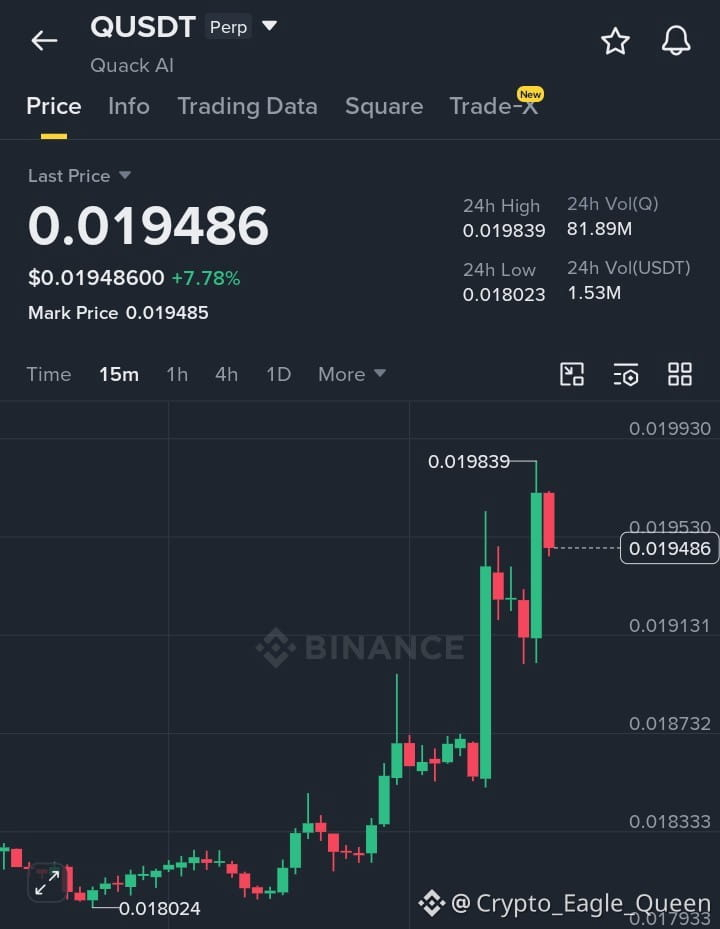
🚀 BREAKOUT WATCH! $Q USDT is showing steady bullish momentum with price holding above short-term support and maintaining upward pressure.
📈 #QUSDT LONG
📍 Entry: 0.0189 – 0.0196
🛑 SL: 0.0180
🎯 TP: 0.0198 → 0.0202 → 0.0206
Click below to take trade 👇
{future}(QUSDT)
⚠️ Price structure remains bullish as buyers continue defending dips.
$RESOLV
{future}(RESOLVUSDT)
$RE
{future}(REUSDT)
#QUACK #Bullish
🚀 BREAKOUT WATCH! $Q USDT is showing steady bullish momentum with price holding above short-term support and maintaining upward pressure.
📈 #QUSDT LONG
📍 Entry: 0.0189 – 0.0196
🛑 SL: 0.0180
🎯 TP: 0.0198 → 0.0202 → 0.0206
Click below to take trade 👇
⚠️ Price structure remains bullish as buyers continue defending dips.
$RESOLV
$RE
#QUACK #Bullish
📈 #QUSDT LONG
📍 Entry: 0.0189 – 0.0196
🛑 SL: 0.0180
🎯 TP: 0.0198 → 0.0202 → 0.0206
Click below to take trade 👇
⚠️ Price structure remains bullish as buyers continue defending dips.
$RESOLV
$RE
#QUACK #Bullish
1
354
·
--
Bullish
#Q402 just launched a brand new payment and governance framework on Binance Square, centered around the unified Q402 Layer, connecting the three major aspects: signing, execution, and decision-making. With the integration of EIP‑7702, regular wallets now have the execution rights of smart contracts, eliminating the need for token proxies and reducing trust risks. The Policy‑Aware mechanism automatically matches governance strategies before transactions, only allowing fund flows that meet preset rules, preventing unauthorized transfers. Sign‑to‑Pay treats signatures as payment instructions, shortening the time from consensus to fund settlement, boosting trading efficiency and lowering fees. Overall design balances security, compliance, and efficiency, providing a programmable and auditable payment infrastructure for the decentralized finance ecosystem. @QTalkLive $Q #QuackAI #Quack
{alpha}(560xc07e1300dc138601fa6b0b59f8d0fa477e690589)
#Q402 just launched a brand new payment and governance framework on Binance Square, centered around the unified Q402 Layer, connecting the three major aspects: signing, execution, and decision-making. With the integration of EIP‑7702, regular wallets now have the execution rights of smart contracts, eliminating the need for token proxies and reducing trust risks. The Policy‑Aware mechanism automatically matches governance strategies before transactions, only allowing fund flows that meet preset rules, preventing unauthorized transfers. Sign‑to‑Pay treats signatures as payment instructions, shortening the time from consensus to fund settlement, boosting trading efficiency and lowering fees. Overall design balances security, compliance, and efficiency, providing a programmable and auditable payment infrastructure for the decentralized finance ecosystem. @QTalk $Q #QuackAI #Quack
184
·
--
#quack 28 million, bought a little (personal record only, do not follow)
5ZDkPQjiUM4ukKnBwzi6EX8WS5x39by2pYVFa7ivbrrr
{web3_wallet_create}(CT_5015ZDkPQjiUM4ukKnBwzi6EX8WS5x39by2pYVFa7ivbrrr)
Reasons for purchase
1. The narrative is good, zoo concept, meme concept, a cute duck
2. Market value is relatively low, the highest for the new disk is 880,000, dropped to a minimum of 60,000, climbed back up to 280,000, decisively bought a bit, chip structure is reasonable, there are several big players, such as: WOJAK, etc.
3. The community is strong, over 1,300 holders, over 1,000 community members, mainly forwarding images and text promotions, making various cute duck meme images
@binancezh @BinanceSquareCN
Follow the Web3 Koi Diary, the coins bought will multiply tenfold
#quack 28 million, bought a little (personal record only, do not follow)
5ZDkPQjiUM4ukKnBwzi6EX8WS5x39by2pYVFa7ivbrrr
Reasons for purchase
1. The narrative is good, zoo concept, meme concept, a cute duck
2. Market value is relatively low, the highest for the new disk is 880,000, dropped to a minimum of 60,000, climbed back up to 280,000, decisively bought a bit, chip structure is reasonable, there are several big players, such as: WOJAK, etc.
3. The community is strong, over 1,300 holders, over 1,000 community members, mainly forwarding images and text promotions, making various cute duck meme images
@币安Binance华语 @币安广场
Follow the Web3 Koi Diary, the coins bought will multiply tenfold
5ZDkPQjiUM4ukKnBwzi6EX8WS5x39by2pYVFa7ivbrrr
Reasons for purchase
1. The narrative is good, zoo concept, meme concept, a cute duck
2. Market value is relatively low, the highest for the new disk is 880,000, dropped to a minimum of 60,000, climbed back up to 280,000, decisively bought a bit, chip structure is reasonable, there are several big players, such as: WOJAK, etc.
3. The community is strong, over 1,300 holders, over 1,000 community members, mainly forwarding images and text promotions, making various cute duck meme images
@币安Binance华语 @币安广场
Follow the Web3 Koi Diary, the coins bought will multiply tenfold
1
2k

·
--
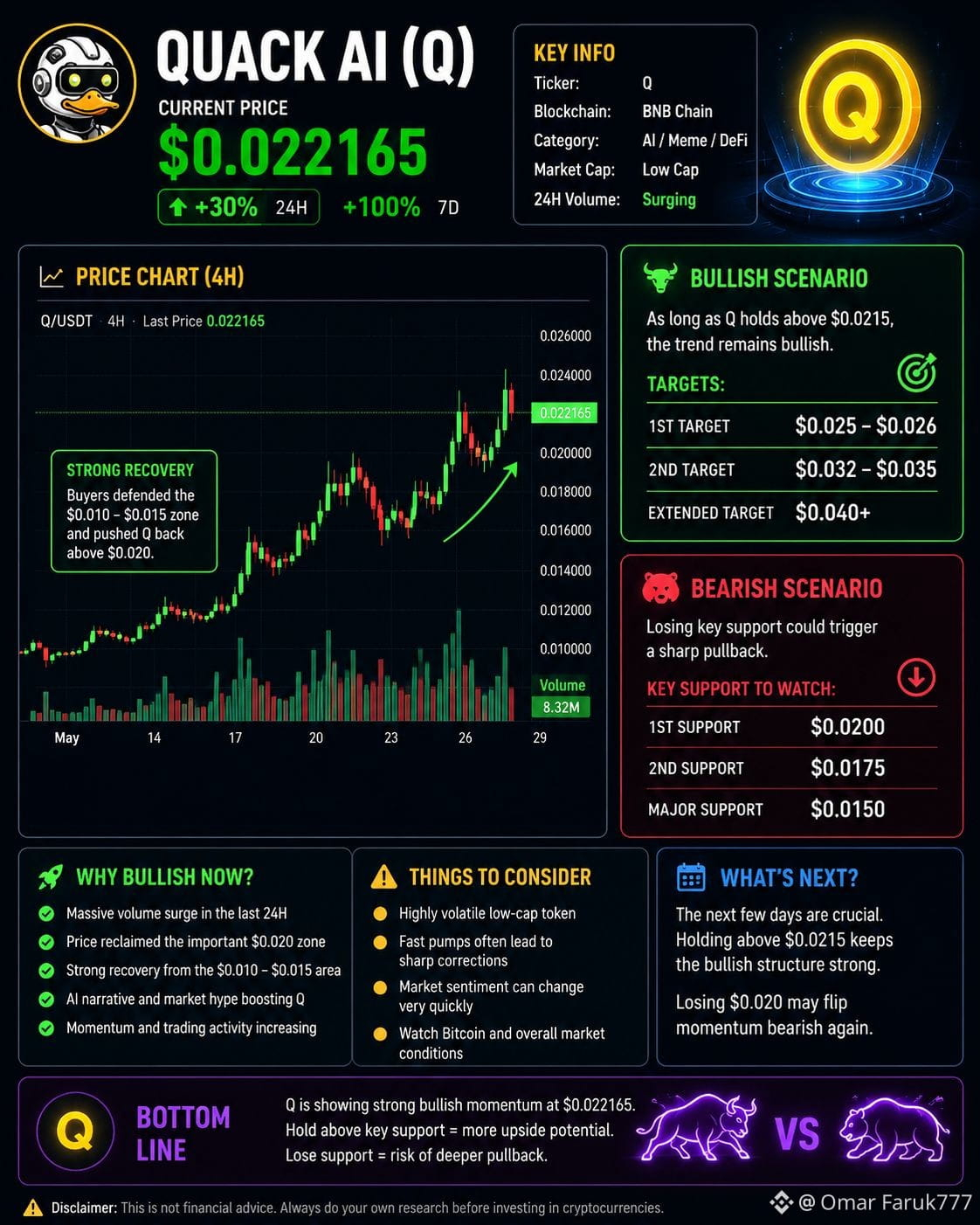
Quack AI (Q) is sitting near $0.022165, and the chart suddenly feels alive again after a long quiet phase. The recent breakout pulled massive attention from traders as buying pressure pushed the token into one of its strongest short-term recoveries this month. Momentum is currently favoring the bulls, especially after Q reclaimed the important $0.020 zone.
If buyers continue protecting this area, the next upside targets may appear around $0.025-$0.028. A strong breakout above that range could open the door toward $0.032+, especially if AI-related cryptocurrencies keep trending across the market. Right now volume expansion is the biggest signal supporting the bullish case because aggressive accumulation usually appears before stronger continuation moves.
Still, this is not a stable coin and volatility remains extremely dangerous. Fast pumps often attract profit-taking, which means sharp pullbacks can happen anytime. If Q loses momentum and drops below $0.020, bearish pressure may return quickly. In that scenario, the chart could revisit $0.017 or even the lower support near $0.015.
At this stage the market structure slightly favors upward continuation, but traders are watching whether Q can maintain strength above the breakout zone. Holding current support keeps the bullish trend active, while losing it may flip sentiment bearish again within hours.
$Q
#q
#Quack
#QuackAl
#ALPHA
{future}(QUSDT)
{alpha}(560xc07e1300dc138601fa6b0b59f8d0fa477e690589)
Quack AI (Q) is sitting near $0.022165, and the chart suddenly feels alive again after a long quiet phase. The recent breakout pulled massive attention from traders as buying pressure pushed the token into one of its strongest short-term recoveries this month. Momentum is currently favoring the bulls, especially after Q reclaimed the important $0.020 zone.
If buyers continue protecting this area, the next upside targets may appear around $0.025-$0.028. A strong breakout above that range could open the door toward $0.032+, especially if AI-related cryptocurrencies keep trending across the market. Right now volume expansion is the biggest signal supporting the bullish case because aggressive accumulation usually appears before stronger continuation moves.
Still, this is not a stable coin and volatility remains extremely dangerous. Fast pumps often attract profit-taking, which means sharp pullbacks can happen anytime. If Q loses momentum and drops below $0.020, bearish pressure may return quickly. In that scenario, the chart could revisit $0.017 or even the lower support near $0.015.
At this stage the market structure slightly favors upward continuation, but traders are watching whether Q can maintain strength above the breakout zone. Holding current support keeps the bullish trend active, while losing it may flip sentiment bearish again within hours.
$Q
#q
#Quack
#QuackAl
#ALPHA
If buyers continue protecting this area, the next upside targets may appear around $0.025-$0.028. A strong breakout above that range could open the door toward $0.032+, especially if AI-related cryptocurrencies keep trending across the market. Right now volume expansion is the biggest signal supporting the bullish case because aggressive accumulation usually appears before stronger continuation moves.
Still, this is not a stable coin and volatility remains extremely dangerous. Fast pumps often attract profit-taking, which means sharp pullbacks can happen anytime. If Q loses momentum and drops below $0.020, bearish pressure may return quickly. In that scenario, the chart could revisit $0.017 or even the lower support near $0.015.
At this stage the market structure slightly favors upward continuation, but traders are watching whether Q can maintain strength above the breakout zone. Holding current support keeps the bullish trend active, while losing it may flip sentiment bearish again within hours.
$Q
#q
#Quack
#QuackAl
#ALPHA
4
178
·
--
Bullish
Q402 Protocol Achieves Governance Revolution Through Three-Tier Architecture:
1. Execution Layer Innovation
• First-ever Sign-to-Pay tech, encoding governance voting and fund payments as atomic operations
• Integrated EIP-7702 grants regular accounts smart contract-level execution power
• Real-world testing shows DeFi project fund distribution efficiency boosted by 80x (72 hours → 90 seconds)
2. Compliance Assurance
• Policy-Aware engine automatically verifies budget constraints, permission rules, and other governance restrictions
• Compliance validation via ZK-proof reduces Gas costs by 72%
• Typical case: RWA bond interest distribution fully automated, error rate reduced to zero
3. Architectural Breakthrough
• Separating governance decision-making (Layer 1) from execution validation (Q402 Layer)
• Supports cross-chain instruction relays, enabling ETH/Arbitrum and other multi-chain fund coordination
• Developers can quickly integrate via SDK, with 12 mainstream DAOs already adopted
This "governance as infrastructure" paradigm is transforming Web3 collaboration from "human-driven processes" to "rules-driven systems". @QTalkLive $Q #Q402 $BNB #Quack
{spot}(BNBUSDT)
{alpha}(560xc07e1300dc138601fa6b0b59f8d0fa477e690589)
Q402 Protocol Achieves Governance Revolution Through Three-Tier Architecture:
1. Execution Layer Innovation
• First-ever Sign-to-Pay tech, encoding governance voting and fund payments as atomic operations
• Integrated EIP-7702 grants regular accounts smart contract-level execution power
• Real-world testing shows DeFi project fund distribution efficiency boosted by 80x (72 hours → 90 seconds)
2. Compliance Assurance
• Policy-Aware engine automatically verifies budget constraints, permission rules, and other governance restrictions
• Compliance validation via ZK-proof reduces Gas costs by 72%
• Typical case: RWA bond interest distribution fully automated, error rate reduced to zero
3. Architectural Breakthrough
• Separating governance decision-making (Layer 1) from execution validation (Q402 Layer)
• Supports cross-chain instruction relays, enabling ETH/Arbitrum and other multi-chain fund coordination
• Developers can quickly integrate via SDK, with 12 mainstream DAOs already adopted
This "governance as infrastructure" paradigm is transforming Web3 collaboration from "human-driven processes" to "rules-driven systems". @QTalk $Q #Q402 $BNB #Quack
1. Execution Layer Innovation
• First-ever Sign-to-Pay tech, encoding governance voting and fund payments as atomic operations
• Integrated EIP-7702 grants regular accounts smart contract-level execution power
• Real-world testing shows DeFi project fund distribution efficiency boosted by 80x (72 hours → 90 seconds)
2. Compliance Assurance
• Policy-Aware engine automatically verifies budget constraints, permission rules, and other governance restrictions
• Compliance validation via ZK-proof reduces Gas costs by 72%
• Typical case: RWA bond interest distribution fully automated, error rate reduced to zero
3. Architectural Breakthrough
• Separating governance decision-making (Layer 1) from execution validation (Q402 Layer)
• Supports cross-chain instruction relays, enabling ETH/Arbitrum and other multi-chain fund coordination
• Developers can quickly integrate via SDK, with 12 mainstream DAOs already adopted
This "governance as infrastructure" paradigm is transforming Web3 collaboration from "human-driven processes" to "rules-driven systems". @QTalk $Q #Q402 $BNB #Quack
1
196

·
--
Bullish
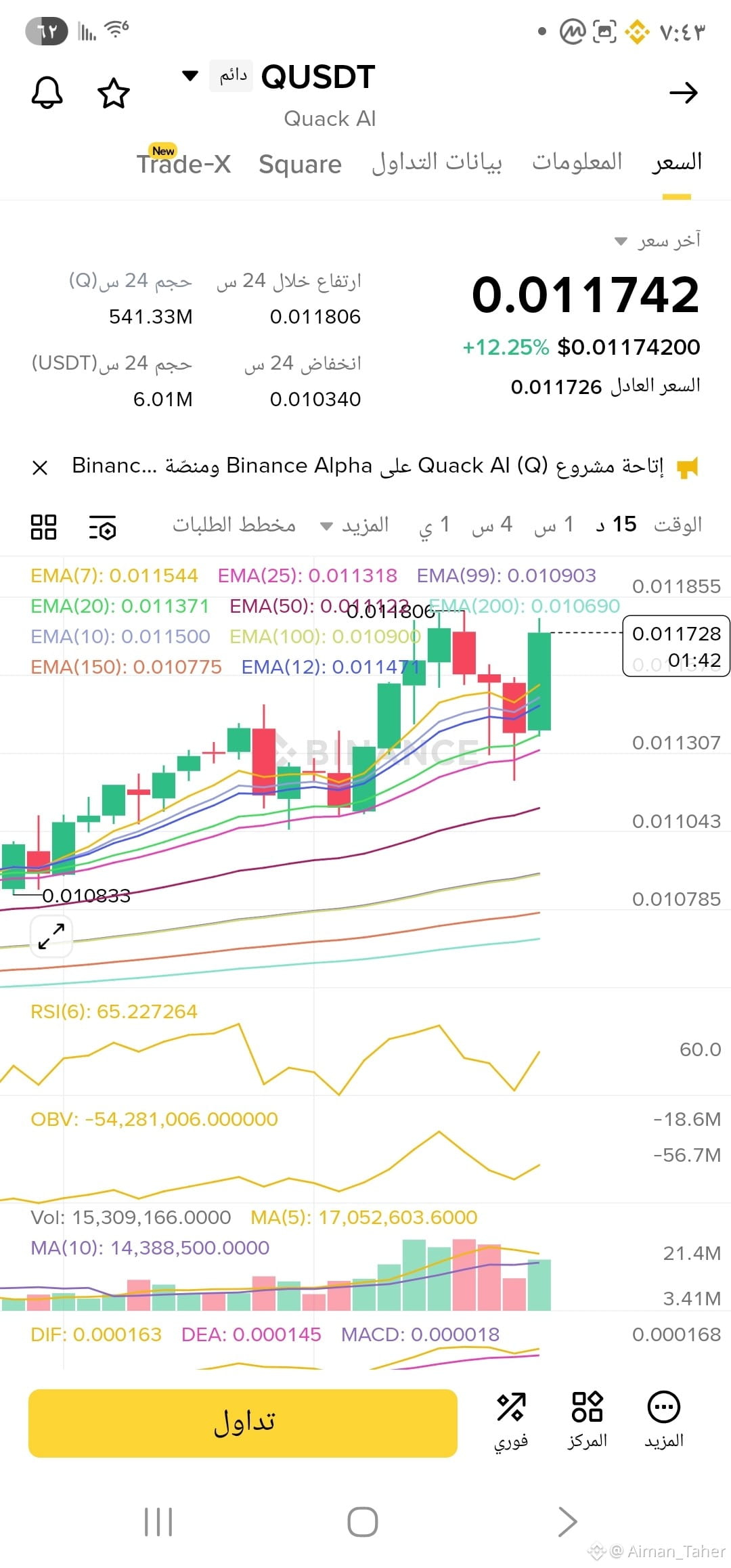
Targeting the peaks
Entry: 0.0115
Target 1: 0.0123
Target 2: 0.013
Target 3: 0.0138
Stop Loss: 0.0108
The price is trading steadily above the moving averages (EMA), with a bullish crossover on the MACD indicator. Liquidity is stable, and the current candlesticks show strong buying interest, suggesting a likely breakout above the nearby resistance and holding above it to reach the specified targets.
$Q
#QUACK #Binance #cryptoisignals
Targeting the peaks
Entry: 0.0115
Target 1: 0.0123
Target 2: 0.013
Target 3: 0.0138
Stop Loss: 0.0108
The price is trading steadily above the moving averages (EMA), with a bullish crossover on the MACD indicator. Liquidity is stable, and the current candlesticks show strong buying interest, suggesting a likely breakout above the nearby resistance and holding above it to reach the specified targets.
$Q
#QUACK #Binance #cryptoisignals
Entry: 0.0115
Target 1: 0.0123
Target 2: 0.013
Target 3: 0.0138
Stop Loss: 0.0108
The price is trading steadily above the moving averages (EMA), with a bullish crossover on the MACD indicator. Liquidity is stable, and the current candlesticks show strong buying interest, suggesting a likely breakout above the nearby resistance and holding above it to reach the specified targets.
$Q
#QUACK #Binance #cryptoisignals
2
121
·
--
Q402 protocol's Sign-to-Pay tech is redefining on-chain interaction paradigm:
1. Execution efficiency breakthrough
• Compressing the traditional 'sign-broadcast-confirm' process into a single click action
• Achieving atomic execution by binding governance decisions and fund payments via ECDSA signatures
• Real-world transaction latency reduced from minutes to seconds (<3 seconds finality)
2. Compliance architecture innovation
• Policy-Aware engine with built-in ZK verification module, checking budget/permissions in real-time
• Supporting dynamic policy updates, like DAOs can set rules such as 'large transfers require multi-signature'
• 100% error execution interception rate (data from a certain DeFi fund over 6 months)
3. Developer advantages
• Offering a dual-language SDK in JavaScript/Go, integration takes <2 man-days
• Fully compatible with EIP-7702, allowing ordinary EOA accounts to gain smart contract capabilities
• Already supporting automated fund disbursement for 12 DAOs, cumulatively executing $47M in transactions
This 'policy-aware payment' is pushing on-chain governance from manual oversight into a realm of programmatic autonomy. @QTalkLive $Q $BNB
{spot}(BNBUSDT)
#Quack #AI #Q402
{alpha}(560xc07e1300dc138601fa6b0b59f8d0fa477e690589)
Q402 protocol's Sign-to-Pay tech is redefining on-chain interaction paradigm:
1. Execution efficiency breakthrough
• Compressing the traditional 'sign-broadcast-confirm' process into a single click action
• Achieving atomic execution by binding governance decisions and fund payments via ECDSA signatures
• Real-world transaction latency reduced from minutes to seconds (<3 seconds finality)
2. Compliance architecture innovation
• Policy-Aware engine with built-in ZK verification module, checking budget/permissions in real-time
• Supporting dynamic policy updates, like DAOs can set rules such as 'large transfers require multi-signature'
• 100% error execution interception rate (data from a certain DeFi fund over 6 months)
3. Developer advantages
• Offering a dual-language SDK in JavaScript/Go, integration takes <2 man-days
• Fully compatible with EIP-7702, allowing ordinary EOA accounts to gain smart contract capabilities
• Already supporting automated fund disbursement for 12 DAOs, cumulatively executing $47M in transactions
This 'policy-aware payment' is pushing on-chain governance from manual oversight into a realm of programmatic autonomy. @QTalk $Q $BNB
#Quack #AI #Q402
1. Execution efficiency breakthrough
• Compressing the traditional 'sign-broadcast-confirm' process into a single click action
• Achieving atomic execution by binding governance decisions and fund payments via ECDSA signatures
• Real-world transaction latency reduced from minutes to seconds (<3 seconds finality)
2. Compliance architecture innovation
• Policy-Aware engine with built-in ZK verification module, checking budget/permissions in real-time
• Supporting dynamic policy updates, like DAOs can set rules such as 'large transfers require multi-signature'
• 100% error execution interception rate (data from a certain DeFi fund over 6 months)
3. Developer advantages
• Offering a dual-language SDK in JavaScript/Go, integration takes <2 man-days
• Fully compatible with EIP-7702, allowing ordinary EOA accounts to gain smart contract capabilities
• Already supporting automated fund disbursement for 12 DAOs, cumulatively executing $47M in transactions
This 'policy-aware payment' is pushing on-chain governance from manual oversight into a realm of programmatic autonomy. @QTalk $Q $BNB
#Quack #AI #Q402
206

·
--
Bullish
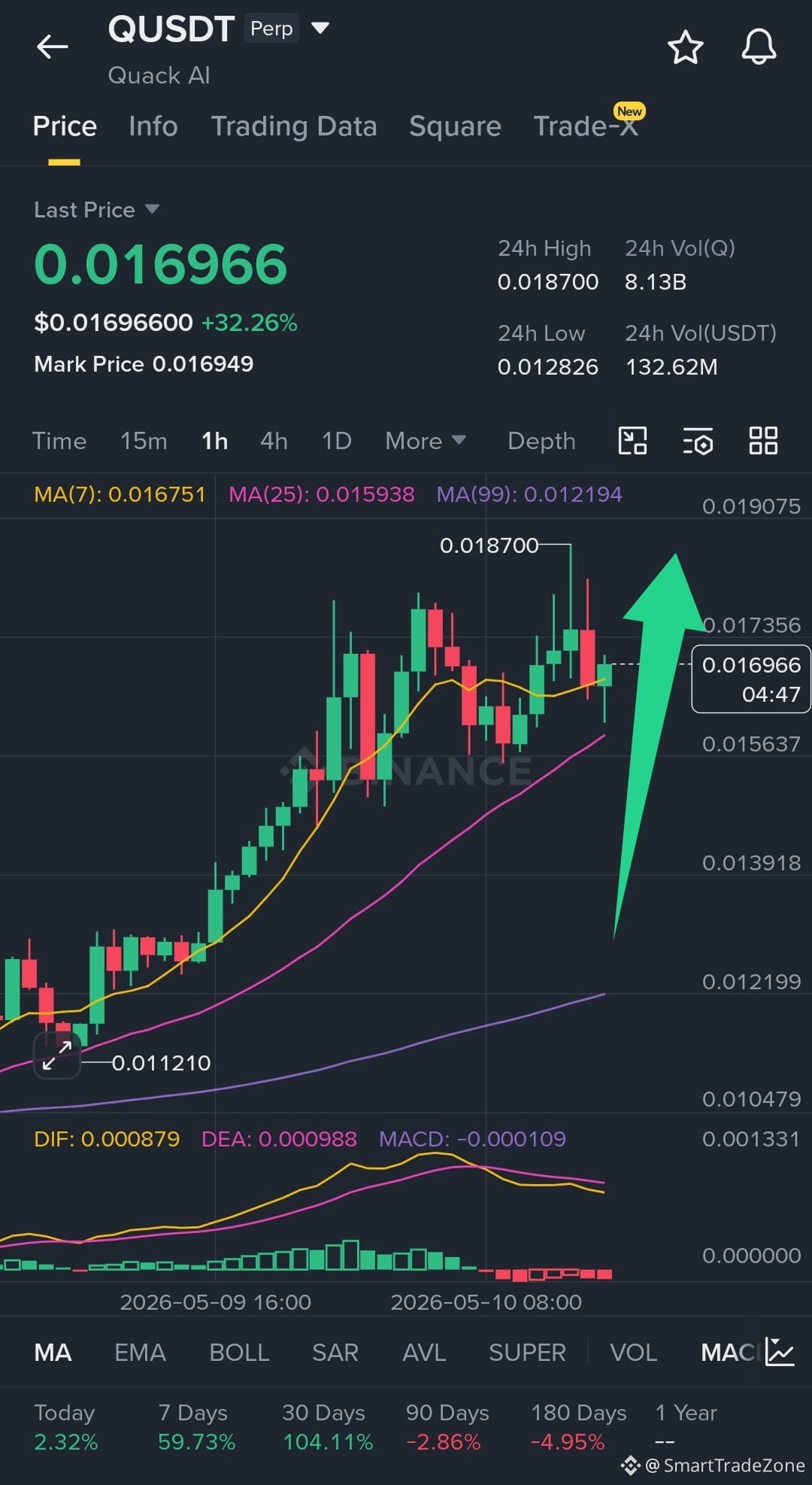
🚨 $Q UACK GOD CANDLE LOADING! LAST CHANCE BEFORE TAKEOFF! 🚀😱🔥
📊 TREND: ULTRA-BULLISH BREAKOUT + WHALE ACCUMULATION CONFIRMED! 📈🐋💎
🟢 ENTRY: 0.016966 ⚡💸
⛔ STOP LOSS: 0.015630 🛑📉
🎯 TP1: 0.018700 ✅🚀
🎯 TP2: 0.021500 ✅💎
🎯 TP3: 0.025000 ✅🌕
🐋 MEME COIN SEASON IS HEATING UP! 🔥🚀
⚠️ DON'T GET LEFT WATCHING THE PUMP! 👀📈
{future}(QUSDT)
$BTC $SIREN
{future}(SIRENUSDT)
{spot}(BTCUSDT)
#QUACK #Crypto #Binance #Memecoin #BullRun #Altcoins #MoonMission 🚀💎🔥
🚨 $Q UACK GOD CANDLE LOADING! LAST CHANCE BEFORE TAKEOFF! 🚀😱🔥
📊 TREND: ULTRA-BULLISH BREAKOUT + WHALE ACCUMULATION CONFIRMED! 📈🐋💎
🟢 ENTRY: 0.016966 ⚡💸
⛔ STOP LOSS: 0.015630 🛑📉
🎯 TP1: 0.018700 ✅🚀
🎯 TP2: 0.021500 ✅💎
🎯 TP3: 0.025000 ✅🌕
🐋 MEME COIN SEASON IS HEATING UP! 🔥🚀
⚠️ DON'T GET LEFT WATCHING THE PUMP! 👀📈
$BTC $SIREN
#QUACK #Crypto #Binance #Memecoin #BullRun #Altcoins #MoonMission 🚀💎🔥
📊 TREND: ULTRA-BULLISH BREAKOUT + WHALE ACCUMULATION CONFIRMED! 📈🐋💎
🟢 ENTRY: 0.016966 ⚡💸
⛔ STOP LOSS: 0.015630 🛑📉
🎯 TP1: 0.018700 ✅🚀
🎯 TP2: 0.021500 ✅💎
🎯 TP3: 0.025000 ✅🌕
🐋 MEME COIN SEASON IS HEATING UP! 🔥🚀
⚠️ DON'T GET LEFT WATCHING THE PUMP! 👀📈
$BTC $SIREN
#QUACK #Crypto #Binance #Memecoin #BullRun #Altcoins #MoonMission 🚀💎🔥
244
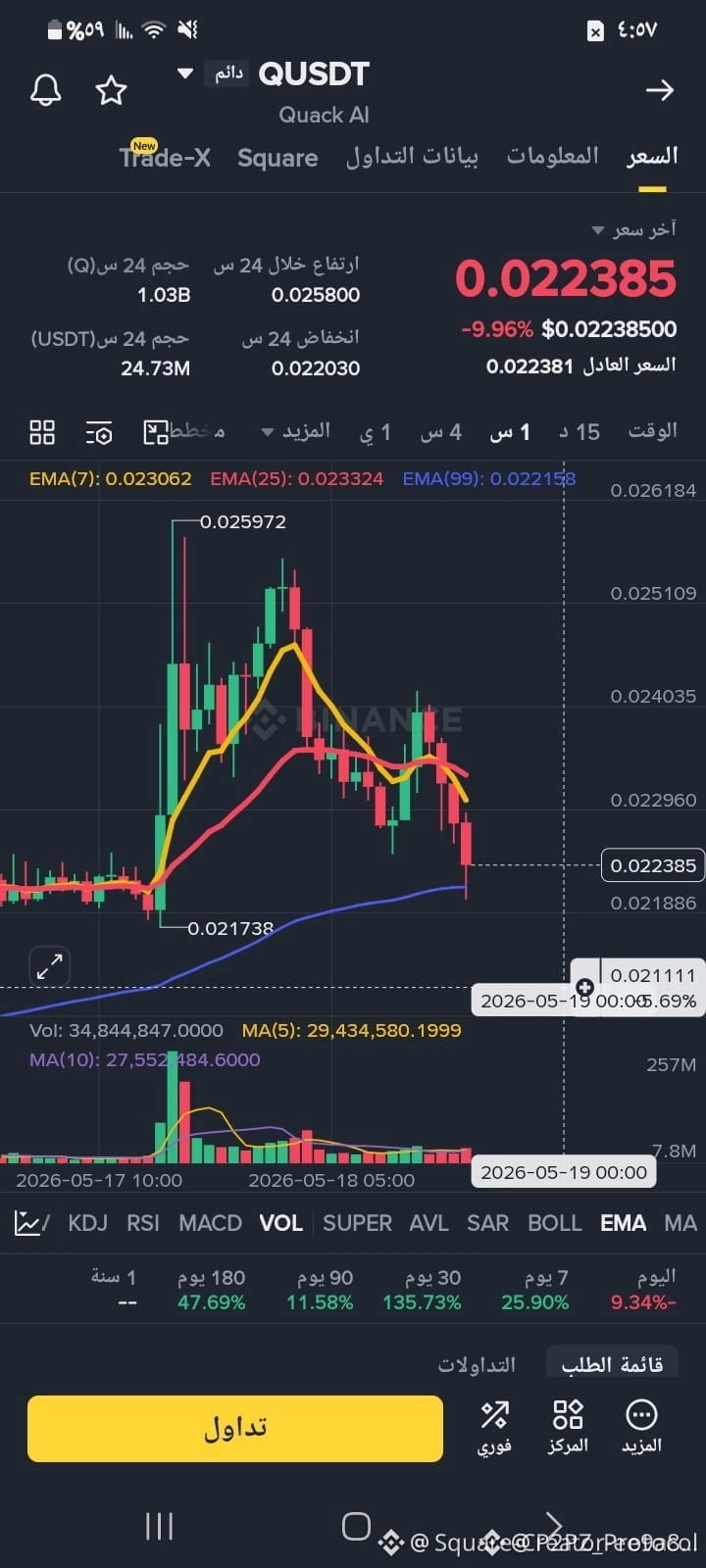
⚡ The game is over and it's time to accumulate.. move quickly! $Q ⚡
Everyone's seeing a 10% drop, but the pros are spotting a strong demand zone and testing the EMA 99 on the Q/USDT chart. 🐳💎
The liquidity trap is fully set, and the green bounce candlestick is gearing up to launch in minutes. ⏱️🚀
Don't waste time watching; the current touch on support is your "free ticket to the moon" that won't come around again today. Grab the opportunity now before takeoff $Q ! 💸
#QUACK #P2pz_protocol
⚡ The game is over and it's time to accumulate.. move quickly! $Q ⚡
Everyone's seeing a 10% drop, but the pros are spotting a strong demand zone and testing the EMA 99 on the Q/USDT chart. 🐳💎
The liquidity trap is fully set, and the green bounce candlestick is gearing up to launch in minutes. ⏱️🚀
Don't waste time watching; the current touch on support is your "free ticket to the moon" that won't come around again today. Grab the opportunity now before takeoff $Q ! 💸
#QUACK #P2pz_protocol
Everyone's seeing a 10% drop, but the pros are spotting a strong demand zone and testing the EMA 99 on the Q/USDT chart. 🐳💎
The liquidity trap is fully set, and the green bounce candlestick is gearing up to launch in minutes. ⏱️🚀
Don't waste time watching; the current touch on support is your "free ticket to the moon" that won't come around again today. Grab the opportunity now before takeoff $Q ! 💸
#QUACK #P2pz_protocol
57
Log in to explore more content
Join global crypto users on Binance Square
⚡️ Get latest and useful information about crypto.
💬 Trusted by the world’s largest crypto exchange.
👍 Discover real insights from verified creators.
Email / Phone number
Trending Topics
1
#BitcoinClears$85200
11,650 views
209 Discussing
2
#AltcoinSeasonIndexHoldsAbove60For5Days
58,146 views
1,160 Discussing
3
#USADPAdds90000JobsInSeptember
27,375 views
651 Discussing
4
#USCorePCEEasesTo3%InAugust
19,957 views
494 Discussing
5
#KospiPostsWorstQuarterSince2020
13,985 views
484 Discussing
6
#SECToClarifyOnChainFundraisingRules
33,758 views
655 Discussing
7
#UKFCAOpensCryptoFirmAuthorization
33,047 views
549 Discussing
8
#JapanMOFStudyGroupOnTokenizedGovtBonds
21,049 views
419 Discussing
9
#QNTRises287%
97,057 views
907 Discussing
10
#TrumpRejectsAIRulesForVoluntaryAudits
56,611 views
792 Discussing