

#protocol
protocol
59,219 views
316 Discussing
Hot
Latest
·
--
Bearish
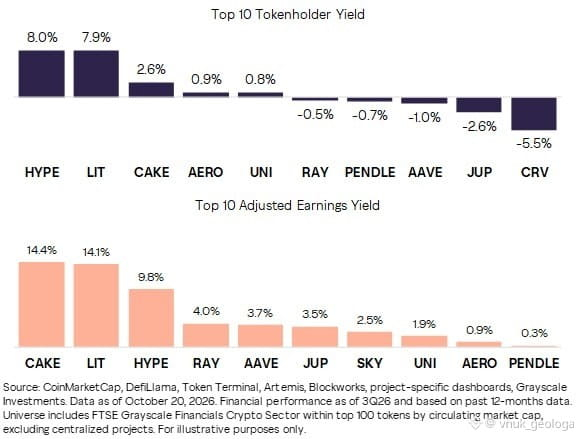
💸 Which crypto protocols generate the highest returns for token holders?
Grayscale has compared crypto protocols based on payouts to holders and returns, accounting for supply dilution.
In terms of returns for token holders, the leaders are:
• HYPE ($HYPE )— 8%;
• LIT ($LITKEY )— 7.9%;
• CAKE ($CAKE ) — 2.6%.
This metric factors in staking rewards and buybacks, net of new token issuance. Notably, there are even negative figures within the top ten.
In terms of returns relative to market capitalization—adjusted for dilution—the leaders are CAKE (14.4%), LIT (14.1%), and HYPE (9.8%).
#NewsAboutCrypto #protocol
💸 Which crypto protocols generate the highest returns for token holders?
Grayscale has compared crypto protocols based on payouts to holders and returns, accounting for supply dilution.
In terms of returns for token holders, the leaders are:
• HYPE ($HYPE )— 8%;
• LIT ($LITKEY )— 7.9%;
• CAKE ($CAKE ) — 2.6%.
This metric factors in staking rewards and buybacks, net of new token issuance. Notably, there are even negative figures within the top ten.
In terms of returns relative to market capitalization—adjusted for dilution—the leaders are CAKE (14.4%), LIT (14.1%), and HYPE (9.8%).
#NewsAboutCrypto #protocol
Grayscale has compared crypto protocols based on payouts to holders and returns, accounting for supply dilution.
In terms of returns for token holders, the leaders are:
• HYPE ($HYPE )— 8%;
• LIT ($LITKEY )— 7.9%;
• CAKE ($CAKE ) — 2.6%.
This metric factors in staking rewards and buybacks, net of new token issuance. Notably, there are even negative figures within the top ten.
In terms of returns relative to market capitalization—adjusted for dilution—the leaders are CAKE (14.4%), LIT (14.1%), and HYPE (9.8%).
#NewsAboutCrypto #protocol
3
657

·
--
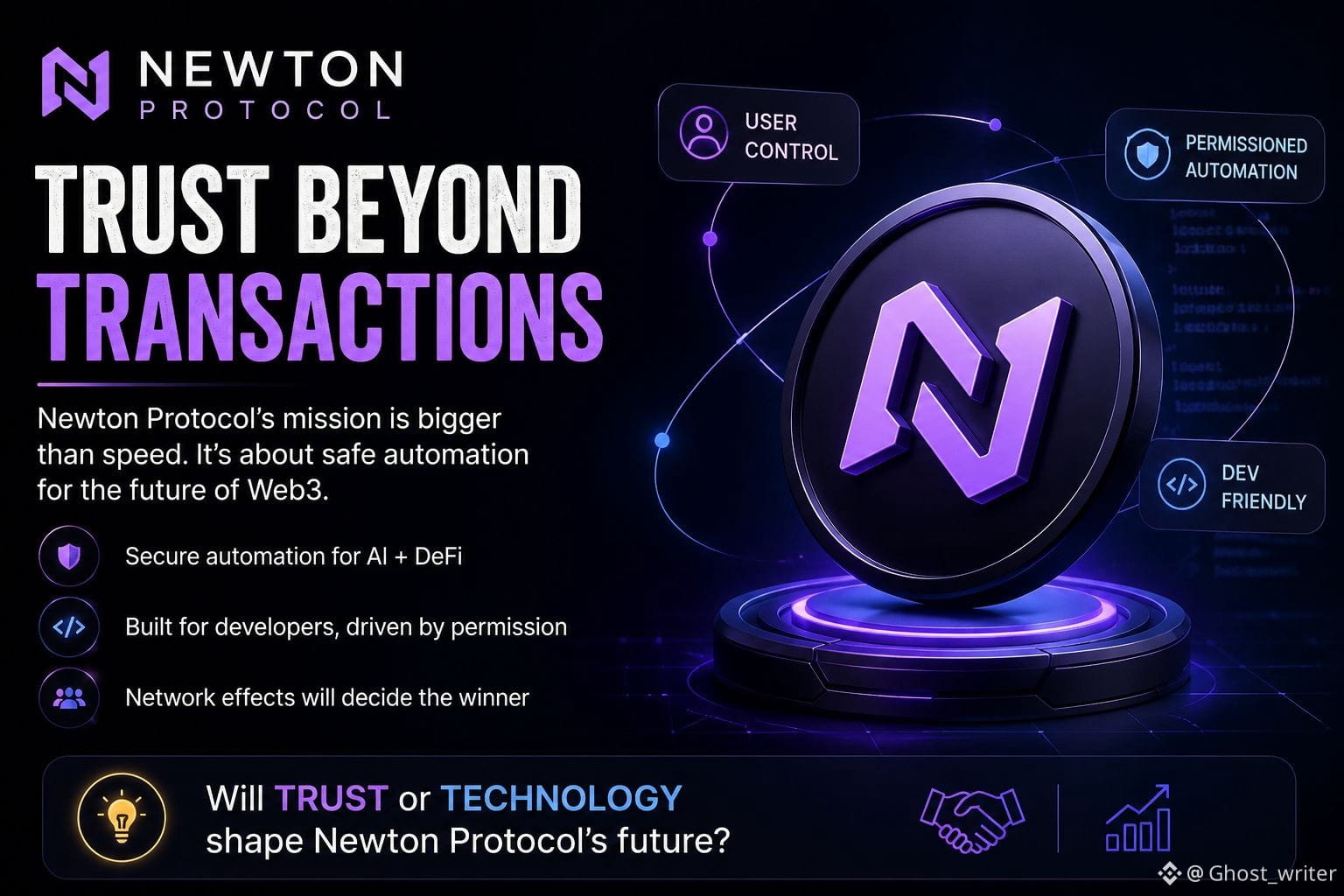
I’ve been looking at #Newt , and one thing stands out to me: it is trying to solve a trust problem, not just a scaling problem.
Many crypto projects focus on making transactions faster or cheaper. Newton Protocol seems to ask a different question: how can users safely let software act on their behalf without giving away full control? That idea feels more practical as AI tools become part of everyday crypto activity.
What interests me most is the developer side. A #protocol like this only becomes useful if builders actually create reliable automation that users want to use. Technology alone doesn't create a network effect. Developers need incentives, users need confidence, and liquidity has to follow real activity instead of temporary rewards.
I also think there is a challenge that people don't talk about enough. Automation increases convenience, but it also increases responsibility. If users rely on autonomous agents, they will expect transparent permissions, clear security guarantees, and simple ways to revoke access. That is much harder than writing smart contracts.
From an investor's perspective, I’m less interested in short-term hype and more interested in whether #NewtonProtocol can attract a community that keeps building after the initial attention fades.
Sustainable usage usually tells a more honest story than token price.
For me, the real test isn't whether @NewtonProtocol introduces new technology. It's whether developers and users trust it enough to make it part of their daily crypto workflow. Do you think trust or technology will be the bigger factor in its long-term adoption?
#newt $NEWT
I’ve been looking at #Newt , and one thing stands out to me: it is trying to solve a trust problem, not just a scaling problem.
Many crypto projects focus on making transactions faster or cheaper. Newton Protocol seems to ask a different question: how can users safely let software act on their behalf without giving away full control? That idea feels more practical as AI tools become part of everyday crypto activity.
What interests me most is the developer side. A #protocol like this only becomes useful if builders actually create reliable automation that users want to use. Technology alone doesn't create a network effect. Developers need incentives, users need confidence, and liquidity has to follow real activity instead of temporary rewards.
I also think there is a challenge that people don't talk about enough. Automation increases convenience, but it also increases responsibility. If users rely on autonomous agents, they will expect transparent permissions, clear security guarantees, and simple ways to revoke access. That is much harder than writing smart contracts.
From an investor's perspective, I’m less interested in short-term hype and more interested in whether #NewtonProtocol can attract a community that keeps building after the initial attention fades.
Sustainable usage usually tells a more honest story than token price.
For me, the real test isn't whether @NewtonProtocol introduces new technology. It's whether developers and users trust it enough to make it part of their daily crypto workflow. Do you think trust or technology will be the bigger factor in its long-term adoption?
#newt $NEWT
Many crypto projects focus on making transactions faster or cheaper. Newton Protocol seems to ask a different question: how can users safely let software act on their behalf without giving away full control? That idea feels more practical as AI tools become part of everyday crypto activity.
What interests me most is the developer side. A #protocol like this only becomes useful if builders actually create reliable automation that users want to use. Technology alone doesn't create a network effect. Developers need incentives, users need confidence, and liquidity has to follow real activity instead of temporary rewards.
I also think there is a challenge that people don't talk about enough. Automation increases convenience, but it also increases responsibility. If users rely on autonomous agents, they will expect transparent permissions, clear security guarantees, and simple ways to revoke access. That is much harder than writing smart contracts.
From an investor's perspective, I’m less interested in short-term hype and more interested in whether #NewtonProtocol can attract a community that keeps building after the initial attention fades.
Sustainable usage usually tells a more honest story than token price.
For me, the real test isn't whether @NewtonProtocol introduces new technology. It's whether developers and users trust it enough to make it part of their daily crypto workflow. Do you think trust or technology will be the bigger factor in its long-term adoption?
#newt $NEWT
2
2
98

·
--
Another cross-chain security incident has occurred 💥
Maya Protocol was attacked, and the hacker exploited a vulnerability to transfer $BTC and other assets from its cross-chain transaction network
The vulnerability may be related to the liquidity pool verification mechanism. Cross-chain bridges/cross-chain DEXs are always hackers’ favorite cash machines
Now the speed at which funds are moving on-chain is increasing, so security protections must keep up
In the next phase of the crypto industry, we must not only pursue faster transactions, but build a safer ecosystem
Without security, all liquidity is just castles in the air
#protocol
Another cross-chain security incident has occurred 💥
Maya Protocol was attacked, and the hacker exploited a vulnerability to transfer $BTC and other assets from its cross-chain transaction network
The vulnerability may be related to the liquidity pool verification mechanism. Cross-chain bridges/cross-chain DEXs are always hackers’ favorite cash machines
Now the speed at which funds are moving on-chain is increasing, so security protections must keep up
In the next phase of the crypto industry, we must not only pursue faster transactions, but build a safer ecosystem
Without security, all liquidity is just castles in the air
#protocol
Maya Protocol was attacked, and the hacker exploited a vulnerability to transfer $BTC and other assets from its cross-chain transaction network
The vulnerability may be related to the liquidity pool verification mechanism. Cross-chain bridges/cross-chain DEXs are always hackers’ favorite cash machines
Now the speed at which funds are moving on-chain is increasing, so security protections must keep up
In the next phase of the crypto industry, we must not only pursue faster transactions, but build a safer ecosystem
Without security, all liquidity is just castles in the air
#protocol

141


Article
Is Newton Protocol an important step toward the future of decentralized AI?$NEWT
In the past few months, we’ve heard a lot about combining artificial intelligence with blockchain. But most of the current solutions are centralized and rely on servers from large companies. That’s where @NewtonProtocol comes in.
Newton Protocol builds infrastructure that allows “AI Agents” to operate independently and in a decentralized way on-chain. The idea is simple: instead of doing the task yourself, you let an AI agent carry it out on your behalf and handle smart contracts and other protocols.
Is Newton Protocol an important step toward the future of decentralized AI?
$NEWT
In the past few months, we’ve heard a lot about combining artificial intelligence with blockchain. But most of the current solutions are centralized and rely on servers from large companies. That’s where @NewtonProtocol comes in.
Newton Protocol builds infrastructure that allows “AI Agents” to operate independently and in a decentralized way on-chain. The idea is simple: instead of doing the task yourself, you let an AI agent carry it out on your behalf and handle smart contracts and other protocols.
In the past few months, we’ve heard a lot about combining artificial intelligence with blockchain. But most of the current solutions are centralized and rely on servers from large companies. That’s where @NewtonProtocol comes in.
Newton Protocol builds infrastructure that allows “AI Agents” to operate independently and in a decentralized way on-chain. The idea is simple: instead of doing the task yourself, you let an AI agent carry it out on your behalf and handle smart contracts and other protocols.

10USDTهدية
From بينانس يا ناس
2
29

·
--
Bullish
PROTOCOL 🌐
Protocol is one of the most important foundations of blockchain technology and digital communication systems. A protocol is a set of rules, standards, and instructions that allow networks, devices, and blockchain systems to communicate securely and efficiently. In the cryptocurrency industry, protocols help maintain order, security, transparency, and smooth operation across decentralized ecosystems.
IB☆CRYPT believes protocols represent structure, stability, and intelligent system design in the digital world. Without protocols, blockchain networks would not function properly because there would be no clear method for validating transactions, sharing data, or maintaining network security.
Different blockchain projects use different protocols to achieve unique goals such as faster transaction speed, stronger scalability, lower fees, and improved decentralization. Bitcoin, Ethereum, Solana, and many other networks operate using advanced protocols designed to support their blockchain ecosystems effectively.
Protocols also create trust between participants in decentralized systems. They ensure that every transaction follows specific rules, making networks more secure, transparent, and reliable for users globally. Developers continue improving blockchain protocols to support future innovation and mass adoption.
IB☆CRYPT stands for intelligence, discipline, and technological advancement. Understanding blockchain protocols helps investors, developers, and innovators build stronger systems and make smarter decisions in the crypto industry.
The future of blockchain depends heavily on strong and adaptive protocols capable of supporting global digital transformation and financial innovation.
Build smart systems. Follow strong foundations. Shape the future.
IB☆CRYPT 🚀#protocol
PROTOCOL 🌐
Protocol is one of the most important foundations of blockchain technology and digital communication systems. A protocol is a set of rules, standards, and instructions that allow networks, devices, and blockchain systems to communicate securely and efficiently. In the cryptocurrency industry, protocols help maintain order, security, transparency, and smooth operation across decentralized ecosystems.
IB☆CRYPT believes protocols represent structure, stability, and intelligent system design in the digital world. Without protocols, blockchain networks would not function properly because there would be no clear method for validating transactions, sharing data, or maintaining network security.
Different blockchain projects use different protocols to achieve unique goals such as faster transaction speed, stronger scalability, lower fees, and improved decentralization. Bitcoin, Ethereum, Solana, and many other networks operate using advanced protocols designed to support their blockchain ecosystems effectively.
Protocols also create trust between participants in decentralized systems. They ensure that every transaction follows specific rules, making networks more secure, transparent, and reliable for users globally. Developers continue improving blockchain protocols to support future innovation and mass adoption.
IB☆CRYPT stands for intelligence, discipline, and technological advancement. Understanding blockchain protocols helps investors, developers, and innovators build stronger systems and make smarter decisions in the crypto industry.
The future of blockchain depends heavily on strong and adaptive protocols capable of supporting global digital transformation and financial innovation.
Build smart systems. Follow strong foundations. Shape the future.
IB☆CRYPT 🚀#protocol
Protocol is one of the most important foundations of blockchain technology and digital communication systems. A protocol is a set of rules, standards, and instructions that allow networks, devices, and blockchain systems to communicate securely and efficiently. In the cryptocurrency industry, protocols help maintain order, security, transparency, and smooth operation across decentralized ecosystems.
IB☆CRYPT believes protocols represent structure, stability, and intelligent system design in the digital world. Without protocols, blockchain networks would not function properly because there would be no clear method for validating transactions, sharing data, or maintaining network security.
Different blockchain projects use different protocols to achieve unique goals such as faster transaction speed, stronger scalability, lower fees, and improved decentralization. Bitcoin, Ethereum, Solana, and many other networks operate using advanced protocols designed to support their blockchain ecosystems effectively.
Protocols also create trust between participants in decentralized systems. They ensure that every transaction follows specific rules, making networks more secure, transparent, and reliable for users globally. Developers continue improving blockchain protocols to support future innovation and mass adoption.
IB☆CRYPT stands for intelligence, discipline, and technological advancement. Understanding blockchain protocols helps investors, developers, and innovators build stronger systems and make smarter decisions in the crypto industry.
The future of blockchain depends heavily on strong and adaptive protocols capable of supporting global digital transformation and financial innovation.
Build smart systems. Follow strong foundations. Shape the future.
IB☆CRYPT 🚀#protocol
1
117
🟢🔥 NEAR PROTOCOL (NEAR): WHAT CAN FUEL A NEW ALL-TIME HIGH?
The $NEAR is in the $4.5 region, with strong volume. The project has been positioning itself in areas such as AI, Chain Abstraction, and cross-chain transactions.
📌 1. ARTIFICIAL INTELLIGENCE
NEAR is focusing on the agent economy, connecting AI and blockchain. NEAR AI also provides infrastructure for confidential model execution.
📌 2. CHAIN ABSTRACTION
The technology allows users and applications to interact with different blockchains without directly dealing with the complexity of each network. NEAR claims it will unify liquidity across 35+ chains.
📌 3. NEAR INTENTS
The protocol lets users and agents define the desired outcome, while the infrastructure executes operations across different networks.
📌 4. SCALABILITY
Dynamic Resharding enables adding shards as demand grows, keeping pace with the expansion of Intents and the agent economy.
📌 5. INSTITUTIONAL INTEREST
Bitwise’s ETP linked to NEAR has surpassed $100 million, although that does not necessarily mean $100 million in new inflows.
🔥 MAIN CATALYSTS
🤖 AI and agents
🌐 Chain Abstraction
🔄 NEAR Intents
🔐 Confidential computing
🏦 Institutional interest
⚡ Scalability
NEAR’s differentiator is the combination of blockchain + AI + interoperability.
🚀 If adoption of Intents, AI agents, and Chain Abstraction continues to grow, ecosystem usage could increase and create new catalysts for NEAR.
⚠️ Risk: technological growth does not guarantee price appreciation. Competition, adoption, tokenomics, and market conditions remain important.
📌 CONCLUSION: the NEAR thesis involves AI + Intents + Chain Abstraction + scalability + privacy + institutional adoption, but these factors do not guarantee a rally.
⚠️ Not financial advice. Cryptoassets are highly volatile and carry significant risk. Do your own research and invest only what you can afford to lose.
#near #nearprotocol #protocol #etf
🟢🔥 NEAR PROTOCOL (NEAR): WHAT CAN FUEL A NEW ALL-TIME HIGH?
The $NEAR is in the $4.5 region, with strong volume. The project has been positioning itself in areas such as AI, Chain Abstraction, and cross-chain transactions.
📌 1. ARTIFICIAL INTELLIGENCE
NEAR is focusing on the agent economy, connecting AI and blockchain. NEAR AI also provides infrastructure for confidential model execution.
📌 2. CHAIN ABSTRACTION
The technology allows users and applications to interact with different blockchains without directly dealing with the complexity of each network. NEAR claims it will unify liquidity across 35+ chains.
📌 3. NEAR INTENTS
The protocol lets users and agents define the desired outcome, while the infrastructure executes operations across different networks.
📌 4. SCALABILITY
Dynamic Resharding enables adding shards as demand grows, keeping pace with the expansion of Intents and the agent economy.
📌 5. INSTITUTIONAL INTEREST
Bitwise’s ETP linked to NEAR has surpassed $100 million, although that does not necessarily mean $100 million in new inflows.
🔥 MAIN CATALYSTS
🤖 AI and agents
🌐 Chain Abstraction
🔄 NEAR Intents
🔐 Confidential computing
🏦 Institutional interest
⚡ Scalability
NEAR’s differentiator is the combination of blockchain + AI + interoperability.
🚀 If adoption of Intents, AI agents, and Chain Abstraction continues to grow, ecosystem usage could increase and create new catalysts for NEAR.
⚠️ Risk: technological growth does not guarantee price appreciation. Competition, adoption, tokenomics, and market conditions remain important.
📌 CONCLUSION: the NEAR thesis involves AI + Intents + Chain Abstraction + scalability + privacy + institutional adoption, but these factors do not guarantee a rally.
⚠️ Not financial advice. Cryptoassets are highly volatile and carry significant risk. Do your own research and invest only what you can afford to lose.
#near #nearprotocol #protocol #etf
The $NEAR is in the $4.5 region, with strong volume. The project has been positioning itself in areas such as AI, Chain Abstraction, and cross-chain transactions.
📌 1. ARTIFICIAL INTELLIGENCE
NEAR is focusing on the agent economy, connecting AI and blockchain. NEAR AI also provides infrastructure for confidential model execution.
📌 2. CHAIN ABSTRACTION
The technology allows users and applications to interact with different blockchains without directly dealing with the complexity of each network. NEAR claims it will unify liquidity across 35+ chains.
📌 3. NEAR INTENTS
The protocol lets users and agents define the desired outcome, while the infrastructure executes operations across different networks.
📌 4. SCALABILITY
Dynamic Resharding enables adding shards as demand grows, keeping pace with the expansion of Intents and the agent economy.
📌 5. INSTITUTIONAL INTEREST
Bitwise’s ETP linked to NEAR has surpassed $100 million, although that does not necessarily mean $100 million in new inflows.
🔥 MAIN CATALYSTS
🤖 AI and agents
🌐 Chain Abstraction
🔄 NEAR Intents
🔐 Confidential computing
🏦 Institutional interest
⚡ Scalability
NEAR’s differentiator is the combination of blockchain + AI + interoperability.
🚀 If adoption of Intents, AI agents, and Chain Abstraction continues to grow, ecosystem usage could increase and create new catalysts for NEAR.
⚠️ Risk: technological growth does not guarantee price appreciation. Competition, adoption, tokenomics, and market conditions remain important.
📌 CONCLUSION: the NEAR thesis involves AI + Intents + Chain Abstraction + scalability + privacy + institutional adoption, but these factors do not guarantee a rally.
⚠️ Not financial advice. Cryptoassets are highly volatile and carry significant risk. Do your own research and invest only what you can afford to lose.
#near #nearprotocol #protocol #etf
4
676


Article
The Evolution of Scalability: Exploring Bedrock 2.0**The landscape of decentralized protocols is shifting rapidly, and the latest iteration of Bedrock—Bedrock 2.0—is setting a new standard for efficiency and network integrity.
By refining the core architecture, Bedrock 2.0 is addressing critical bottlenecks that have long hampered throughput in similar protocols. Key improvements include:
* **Optimized Consensus Mechanism:** Reducing latency while maintaining decentralization.
* **Enhanced Interoperability:** Seamless integration across multi-chain ecosystems.
* **Developer-First Tooling:** Lowering the barrier to entry for dApp builders.
For those tracking the intersection of performance and security, this upgrade represents a significant maturation point for the project. I’m keen to see how these adjustments influence TVL and broader ecosystem adoption in the coming quarters.
What are your thoughts on the shift in protocol architecture? Let’s discuss in the comments.
#Bedrock #Blockchain #DeFi #ProtocolUpdate #Web3Tech
### Option 2: Engaging & Hype-Driven (Best for X / Twitter)
Bedrock 2.0 is officially here, and it’s a game-changer. 🚀
If you’ve been following the development, you know the focus has been on one thing: **Efficiency at scale.**
The new protocol upgrades aren't just incremental—they represent a fundamental rewrite of how we handle [Insert specific feature, e.g., cross-chain liquidity / transaction finality].
Why this matters:
✅ Faster block finality
✅ Lowered operational overhead
✅ Increased security layers
The roadmap is aggressive, and the community sentiment is building. Whether you are a validator, a dev, or just a protocol enthusiast, now is the time to dive into the documentation.
Check out the latest breakdown here: [Insert Link]
#Bedrock2 #Crypto #DeFi #Scalability #Innovation
### Option 3: Short & Punchy (Best for Telegram / Discord)
**Bedrock 2.0: The Deep Dive** 💎
The wait is over. Bedrock 2.0 is live, bringing massive performance upgrades to the protocol.
Highlights:
* Upgraded throughput metrics.
* More robust security architecture.
* Streamlined user experience for cross-chain interactions.
If you’re building on or investing in the ecosystem, this update is critical. Review the full specs and how it impacts the current roadmap here: [Insert Link]
Let’s keep building. 🛠️
#Bedrock #Protocol #Blockchain $BR
Would you like me to incorporate specific technical details or performance metrics into these posts to make them more tailored to a particular audience segment?
The Evolution of Scalability: Exploring Bedrock 2.0**
The landscape of decentralized protocols is shifting rapidly, and the latest iteration of Bedrock—Bedrock 2.0—is setting a new standard for efficiency and network integrity.
By refining the core architecture, Bedrock 2.0 is addressing critical bottlenecks that have long hampered throughput in similar protocols. Key improvements include:
* **Optimized Consensus Mechanism:** Reducing latency while maintaining decentralization.
* **Enhanced Interoperability:** Seamless integration across multi-chain ecosystems.
* **Developer-First Tooling:** Lowering the barrier to entry for dApp builders.
For those tracking the intersection of performance and security, this upgrade represents a significant maturation point for the project. I’m keen to see how these adjustments influence TVL and broader ecosystem adoption in the coming quarters.
What are your thoughts on the shift in protocol architecture? Let’s discuss in the comments.
#Bedrock #Blockchain #DeFi #ProtocolUpdate #Web3Tech
### Option 2: Engaging & Hype-Driven (Best for X / Twitter)
Bedrock 2.0 is officially here, and it’s a game-changer. 🚀
If you’ve been following the development, you know the focus has been on one thing: **Efficiency at scale.**
The new protocol upgrades aren't just incremental—they represent a fundamental rewrite of how we handle [Insert specific feature, e.g., cross-chain liquidity / transaction finality].
Why this matters:
✅ Faster block finality
✅ Lowered operational overhead
✅ Increased security layers
The roadmap is aggressive, and the community sentiment is building. Whether you are a validator, a dev, or just a protocol enthusiast, now is the time to dive into the documentation.
Check out the latest breakdown here: [Insert Link]
#Bedrock2 #Crypto #DeFi #Scalability #Innovation
### Option 3: Short & Punchy (Best for Telegram / Discord)
**Bedrock 2.0: The Deep Dive** 💎
The wait is over. Bedrock 2.0 is live, bringing massive performance upgrades to the protocol.
Highlights:
* Upgraded throughput metrics.
* More robust security architecture.
* Streamlined user experience for cross-chain interactions.
If you’re building on or investing in the ecosystem, this update is critical. Review the full specs and how it impacts the current roadmap here: [Insert Link]
Let’s keep building. 🛠️
#Bedrock #Protocol #Blockchain $BR
Would you like me to incorporate specific technical details or performance metrics into these posts to make them more tailored to a particular audience segment?
By refining the core architecture, Bedrock 2.0 is addressing critical bottlenecks that have long hampered throughput in similar protocols. Key improvements include:
* **Optimized Consensus Mechanism:** Reducing latency while maintaining decentralization.
* **Enhanced Interoperability:** Seamless integration across multi-chain ecosystems.
* **Developer-First Tooling:** Lowering the barrier to entry for dApp builders.
For those tracking the intersection of performance and security, this upgrade represents a significant maturation point for the project. I’m keen to see how these adjustments influence TVL and broader ecosystem adoption in the coming quarters.
What are your thoughts on the shift in protocol architecture? Let’s discuss in the comments.
#Bedrock #Blockchain #DeFi #ProtocolUpdate #Web3Tech
### Option 2: Engaging & Hype-Driven (Best for X / Twitter)
Bedrock 2.0 is officially here, and it’s a game-changer. 🚀
If you’ve been following the development, you know the focus has been on one thing: **Efficiency at scale.**
The new protocol upgrades aren't just incremental—they represent a fundamental rewrite of how we handle [Insert specific feature, e.g., cross-chain liquidity / transaction finality].
Why this matters:
✅ Faster block finality
✅ Lowered operational overhead
✅ Increased security layers
The roadmap is aggressive, and the community sentiment is building. Whether you are a validator, a dev, or just a protocol enthusiast, now is the time to dive into the documentation.
Check out the latest breakdown here: [Insert Link]
#Bedrock2 #Crypto #DeFi #Scalability #Innovation
### Option 3: Short & Punchy (Best for Telegram / Discord)
**Bedrock 2.0: The Deep Dive** 💎
The wait is over. Bedrock 2.0 is live, bringing massive performance upgrades to the protocol.
Highlights:
* Upgraded throughput metrics.
* More robust security architecture.
* Streamlined user experience for cross-chain interactions.
If you’re building on or investing in the ecosystem, this update is critical. Review the full specs and how it impacts the current roadmap here: [Insert Link]
Let’s keep building. 🛠️
#Bedrock #Protocol #Blockchain $BR
Would you like me to incorporate specific technical details or performance metrics into these posts to make them more tailored to a particular audience segment?
56
·
--

Article
Compound returns with a $52 million plan: Is it leading the new wave of institutional DeFi? 💼📈After years of meme and small-cap coin dominance, one of the oldest #protocol #defi protocols is returning to the spotlight with an ambitious plan. ✔️Compound, the pioneer of decentralized lending on Ethereum$ETH , has announced a $52 million development plan and a complete leadership overhaul, with a clear strategic shift toward institutional finance and real-world assets ($RWA ).
Compound returns with a $52 million plan: Is it leading the new wave of institutional DeFi? 💼📈
After years of meme and small-cap coin dominance, one of the oldest #protocol #defi protocols is returning to the spotlight with an ambitious plan. ✔️Compound, the pioneer of decentralized lending on Ethereum$ETH , has announced a $52 million development plan and a complete leadership overhaul, with a clear strategic shift toward institutional finance and real-world assets ($RWA ).
193

·
--
Article
The Gap Between "Sent" and "Settled"I've spent a chunk of the last few weeks reading through DeFi vault documentation, and there's a pattern that used to bother me: a vault curator writes down a set of rules somewhere — a doc, a tweet, a governance forum post — and the smart contract itself has no idea any of that exists. The rules live in a promise. The code just executes. If the curator changes their mind, gets compromised, or simply gets it wrong, nothing in the contract stops the transaction from going through anyway.
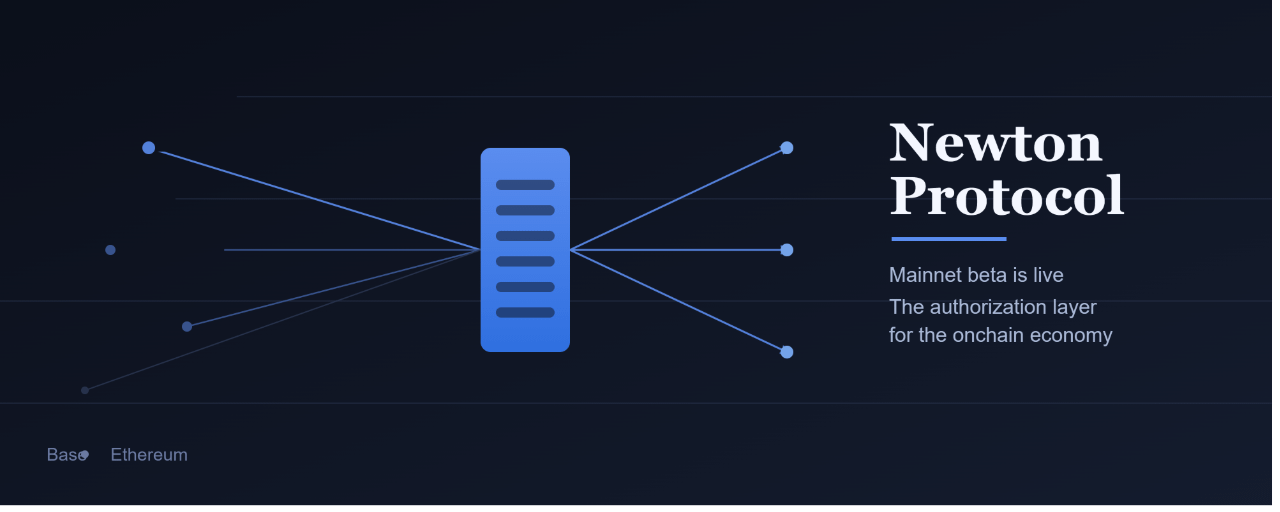
That's the gap Newton Protocol is built around, and its mainnet beta, live since June 23 on Base and Ethereum, is the first real attempt I've seen at closing it at the contract level instead of the documentation level. The comparison that made it click for me is one the team itself uses: card networks don't move money, they authorize it before it moves. Newton is trying to be that authorization step for onchain transactions — sitting between the moment someone initiates a transfer and the moment it settles, checking it against a policy, and only letting it clear if it passes.
What kept me reading past the pitch was the operator design. Instead of one server deciding whether a transaction is compliant, Newton runs this through a network of independent operators secured by restaked ETH through EigenLayer. Each operator receives the same transaction and the same policy, pulls in whatever data that policy calls for, and evaluates it on its own. As Newton scales beyond beta, authorization is meant to require agreement from a sufficient number of independent operators, not just one. If an operator signs off on a wrong answer, it can be challenged during a dispute window with a zero-knowledge fraud proof, and it loses part of its staked capital. That's an actual financial cost for being wrong, which is a different kind of guarantee than "trust our bot."
The first product running on top of this is Vaults, and Magic Labs shipped VaultKit alongside the beta so curators aren't writing authorization logic from scratch. Instead, they compose policies out of existing data sources: Chainalysis for sanctions and contract risk, RedStone for price feeds, Credora for collateral and risk ratings, vaults.fyi for vault health data, Webacy for wallet reputation. A policy can lean on one of these or several, and Newton checks all of it at the exact moment a withdrawal or rebalance would otherwise go through. Euler is among the protocols already integrated.
I'd stop short of calling this solved. It's beta, it's live on two chains so far, and a policy is only as good as whoever writes it and whatever data it trusts. But framing authorization as something a contract enforces, rather than something a curator promises, is the actual shift here — the same problem traditional finance dealt with decades ago through clearinghouses, just without a single company sitting in the middle doing the checking. $NEWT is the network's native token, used for staking and governance as the system decentralizes further.
If you're a curator or an allocator, the docs and the Newton Explorer are worth checking yourself before taking any of this secondhand.
Written as part of a content collaboration with @NewtonProtocol . #Newt #DEFİ #protocol
The Gap Between "Sent" and "Settled"
I've spent a chunk of the last few weeks reading through DeFi vault documentation, and there's a pattern that used to bother me: a vault curator writes down a set of rules somewhere — a doc, a tweet, a governance forum post — and the smart contract itself has no idea any of that exists. The rules live in a promise. The code just executes. If the curator changes their mind, gets compromised, or simply gets it wrong, nothing in the contract stops the transaction from going through anyway.
That's the gap Newton Protocol is built around, and its mainnet beta, live since June 23 on Base and Ethereum, is the first real attempt I've seen at closing it at the contract level instead of the documentation level. The comparison that made it click for me is one the team itself uses: card networks don't move money, they authorize it before it moves. Newton is trying to be that authorization step for onchain transactions — sitting between the moment someone initiates a transfer and the moment it settles, checking it against a policy, and only letting it clear if it passes.
What kept me reading past the pitch was the operator design. Instead of one server deciding whether a transaction is compliant, Newton runs this through a network of independent operators secured by restaked ETH through EigenLayer. Each operator receives the same transaction and the same policy, pulls in whatever data that policy calls for, and evaluates it on its own. As Newton scales beyond beta, authorization is meant to require agreement from a sufficient number of independent operators, not just one. If an operator signs off on a wrong answer, it can be challenged during a dispute window with a zero-knowledge fraud proof, and it loses part of its staked capital. That's an actual financial cost for being wrong, which is a different kind of guarantee than "trust our bot."
The first product running on top of this is Vaults, and Magic Labs shipped VaultKit alongside the beta so curators aren't writing authorization logic from scratch. Instead, they compose policies out of existing data sources: Chainalysis for sanctions and contract risk, RedStone for price feeds, Credora for collateral and risk ratings, vaults.fyi for vault health data, Webacy for wallet reputation. A policy can lean on one of these or several, and Newton checks all of it at the exact moment a withdrawal or rebalance would otherwise go through. Euler is among the protocols already integrated.
I'd stop short of calling this solved. It's beta, it's live on two chains so far, and a policy is only as good as whoever writes it and whatever data it trusts. But framing authorization as something a contract enforces, rather than something a curator promises, is the actual shift here — the same problem traditional finance dealt with decades ago through clearinghouses, just without a single company sitting in the middle doing the checking. $NEWT is the network's native token, used for staking and governance as the system decentralizes further.
If you're a curator or an allocator, the docs and the Newton Explorer are worth checking yourself before taking any of this secondhand.
Written as part of a content collaboration with @NewtonProtocol . #Newt #DEFİ #protocol
That's the gap Newton Protocol is built around, and its mainnet beta, live since June 23 on Base and Ethereum, is the first real attempt I've seen at closing it at the contract level instead of the documentation level. The comparison that made it click for me is one the team itself uses: card networks don't move money, they authorize it before it moves. Newton is trying to be that authorization step for onchain transactions — sitting between the moment someone initiates a transfer and the moment it settles, checking it against a policy, and only letting it clear if it passes.
What kept me reading past the pitch was the operator design. Instead of one server deciding whether a transaction is compliant, Newton runs this through a network of independent operators secured by restaked ETH through EigenLayer. Each operator receives the same transaction and the same policy, pulls in whatever data that policy calls for, and evaluates it on its own. As Newton scales beyond beta, authorization is meant to require agreement from a sufficient number of independent operators, not just one. If an operator signs off on a wrong answer, it can be challenged during a dispute window with a zero-knowledge fraud proof, and it loses part of its staked capital. That's an actual financial cost for being wrong, which is a different kind of guarantee than "trust our bot."
The first product running on top of this is Vaults, and Magic Labs shipped VaultKit alongside the beta so curators aren't writing authorization logic from scratch. Instead, they compose policies out of existing data sources: Chainalysis for sanctions and contract risk, RedStone for price feeds, Credora for collateral and risk ratings, vaults.fyi for vault health data, Webacy for wallet reputation. A policy can lean on one of these or several, and Newton checks all of it at the exact moment a withdrawal or rebalance would otherwise go through. Euler is among the protocols already integrated.
I'd stop short of calling this solved. It's beta, it's live on two chains so far, and a policy is only as good as whoever writes it and whatever data it trusts. But framing authorization as something a contract enforces, rather than something a curator promises, is the actual shift here — the same problem traditional finance dealt with decades ago through clearinghouses, just without a single company sitting in the middle doing the checking. $NEWT is the network's native token, used for staking and governance as the system decentralizes further.
If you're a curator or an allocator, the docs and the Newton Explorer are worth checking yourself before taking any of this secondhand.
Written as part of a content collaboration with @NewtonProtocol . #Newt #DEFİ #protocol
2
1
119
·
--

Article
What changed in the DeFi sector?In the early days #defi , many projects focused on offering very high returns to attract liquidity.
But experience showed that high returns can be caused by inflated supply or temporary incentives—not by real revenue.
Therefore, the most experienced investors started focusing on more important indicators, such as:
✔️Real trading volume.
What changed in the DeFi sector?
In the early days #defi , many projects focused on offering very high returns to attract liquidity.
But experience showed that high returns can be caused by inflated supply or temporary incentives—not by real revenue.
Therefore, the most experienced investors started focusing on more important indicators, such as:
✔️Real trading volume.
But experience showed that high returns can be caused by inflated supply or temporary incentives—not by real revenue.
Therefore, the most experienced investors started focusing on more important indicators, such as:
✔️Real trading volume.
108
·
--
✅ Coin $RE is linked to the RE#protocol project, which is a protocol aiming to bring reinsurance into the world of #blockchain
✴️The project idea is based on connecting liquidity from stablecoins to well-structured and fully covered reinsurance opportunities.
✔️The coin operates on network #etherreum , with a total supply of 1 billion $RE .
🔶The circulating supply is approximately 160 million RE.
Its price ranges roughly between $0.59 and $0.60 depending on the platform and time.
✔️It is considered one of the promising projects of $RWA because it is tied to a real and massive market.
{spot}(REUSDT)
✅ Coin $RE is linked to the RE#protocol project, which is a protocol aiming to bring reinsurance into the world of #blockchain
✴️The project idea is based on connecting liquidity from stablecoins to well-structured and fully covered reinsurance opportunities.
✔️The coin operates on network #etherreum , with a total supply of 1 billion $RE .
🔶The circulating supply is approximately 160 million RE.
Its price ranges roughly between $0.59 and $0.60 depending on the platform and time.
✔️It is considered one of the promising projects of $RWA because it is tied to a real and massive market.
✴️The project idea is based on connecting liquidity from stablecoins to well-structured and fully covered reinsurance opportunities.
✔️The coin operates on network #etherreum , with a total supply of 1 billion $RE .
🔶The circulating supply is approximately 160 million RE.
Its price ranges roughly between $0.59 and $0.60 depending on the platform and time.
✔️It is considered one of the promising projects of $RWA because it is tied to a real and massive market.
1
150

·
--
Cardano Pumps as Network Moves to Further Decentralize Development
Input Output is handing its core infrastructure to outside teams as ADA gets a lift from an imminent protocol upgrade.
This development highlights how quickly the digital-asset landscape continues to evolve, with market participants weighing the potential impact on liquidity, sentiment, and adoption across the ecosystem.
Analysts note that shifts like this often ripple through the broader market as institutional and retail players reassess positioning. On-chain activity and capital flows tend to react fast to such headlines.
Whether this marks a lasting trend or a short-term move remains to be seen, but it underscores the growing intersection of technology, regulation, and finance shaping the crypto space today.
What's your take on this? 👇
#Cardano #Protocol #Pumps
Cardano Pumps as Network Moves to Further Decentralize Development
Input Output is handing its core infrastructure to outside teams as ADA gets a lift from an imminent protocol upgrade.
This development highlights how quickly the digital-asset landscape continues to evolve, with market participants weighing the potential impact on liquidity, sentiment, and adoption across the ecosystem.
Analysts note that shifts like this often ripple through the broader market as institutional and retail players reassess positioning. On-chain activity and capital flows tend to react fast to such headlines.
Whether this marks a lasting trend or a short-term move remains to be seen, but it underscores the growing intersection of technology, regulation, and finance shaping the crypto space today.
What's your take on this? 👇
#Cardano #Protocol #Pumps
Input Output is handing its core infrastructure to outside teams as ADA gets a lift from an imminent protocol upgrade.
This development highlights how quickly the digital-asset landscape continues to evolve, with market participants weighing the potential impact on liquidity, sentiment, and adoption across the ecosystem.
Analysts note that shifts like this often ripple through the broader market as institutional and retail players reassess positioning. On-chain activity and capital flows tend to react fast to such headlines.
Whether this marks a lasting trend or a short-term move remains to be seen, but it underscores the growing intersection of technology, regulation, and finance shaping the crypto space today.
What's your take on this? 👇
#Cardano #Protocol #Pumps
67

#newt $NEWT
@NewtonProtocol https://www.binance.com/en/square/profile/newtonprotocol
this was something that i wasnt heared before but when i heared i really loved it its so much good you guys can check it out this is really a goo thing ..... you're still right there?... what are you doing? go and check it out with so many offers thanks to #protocol $NEWT for this
#newt $NEWT
@NewtonProtocol https://www.binance.com/en/square/profile/newtonprotocol
this was something that i wasnt heared before but when i heared i really loved it its so much good you guys can check it out this is really a goo thing ..... you're still right there?... what are you doing? go and check it out with so many offers thanks to #protocol $NEWT for this
@NewtonProtocol https://www.binance.com/en/square/profile/newtonprotocol
this was something that i wasnt heared before but when i heared i really loved it its so much good you guys can check it out this is really a goo thing ..... you're still right there?... what are you doing? go and check it out with so many offers thanks to #protocol $NEWT for this
17

·
--
$NEAR structure remains resilient above the 200 EMA. RSI reflects growing strength as volume confirms a solid base at support. 📊🚀 #NEAR #Protocol
$NEAR structure remains resilient above the 200 EMA. RSI reflects growing strength as volume confirms a solid base at support. 📊🚀 #NEAR #Protocol
33

·
--
Bearish
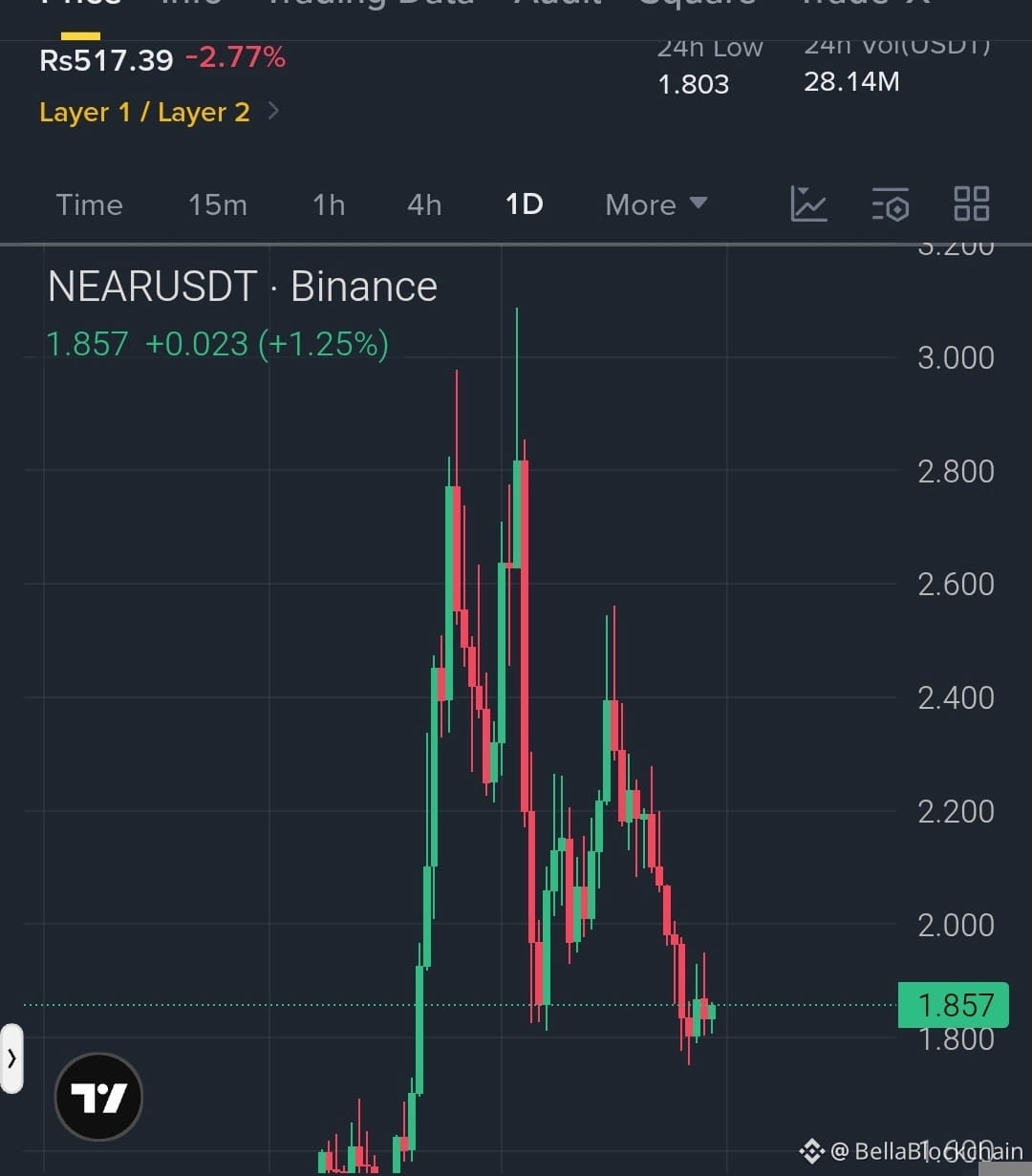
$NEAR in 1000016855.jpg highlights a strong consolidation phase following a deeper market correction. The asset has successfully established a double-bottom structure near the 1.800 support zone and is currently showing signs of a bullish reversal, with the daily candle printing positive gains up to 1.857. Backed by a solid 24-hour trading volume of 28.14M, the current price action signals that selling pressure is exhausting, clearing the path for buyers to drive momentum back toward previous high-liquidity resistance levels.
* Target 1: 2.150
* Target 2: 2.500
* Target 3: 2.850
#NEAR #Protocol #Crypto
$NEAR
{future}(NEARUSDT)
$NEAR in 1000016855.jpg highlights a strong consolidation phase following a deeper market correction. The asset has successfully established a double-bottom structure near the 1.800 support zone and is currently showing signs of a bullish reversal, with the daily candle printing positive gains up to 1.857. Backed by a solid 24-hour trading volume of 28.14M, the current price action signals that selling pressure is exhausting, clearing the path for buyers to drive momentum back toward previous high-liquidity resistance levels.
* Target 1: 2.150
* Target 2: 2.500
* Target 3: 2.850
#NEAR #Protocol #Crypto
$NEAR
* Target 1: 2.150
* Target 2: 2.500
* Target 3: 2.850
#NEAR #Protocol #Crypto
$NEAR
1
82
·
--
Article
AAVE Is the DeFi lending giant returning to the top?In recent days, it has drawn attention $AAVE after a strong jump exceeding 64% over a week, then moving into a healthy consolidation phase above new support levels, while liquidity and whale interest remained clearly in the background.Why does traded AAVE matter to traders?Because it is one of the largest decentralized lending protocols in the market #protocol .Because it benefited from a strong revaluation wave for the sector #defi .
AAVE Is the DeFi lending giant returning to the top?
In recent days, it has drawn attention $AAVE after a strong jump exceeding 64% over a week, then moving into a healthy consolidation phase above new support levels, while liquidity and whale interest remained clearly in the background.Why does traded AAVE matter to traders?Because it is one of the largest decentralized lending protocols in the market #protocol .Because it benefited from a strong revaluation wave for the sector #defi .
1
156
·
--

Article
Arbitrum (ARB) draws attention again with the Elara upgrade.Returns to the spotlight after a wave of positive developments at the protocol#protocol and ecosystem level, most notably the upgrade, and progress along #ZK , as well as increased activity in some Orbit chains such as the Robinhood Chain. These factors reinforce the idea that $ARB is not merely a speculative token#Token , but an asset tied to important infrastructure within the Layer 2 ecosystem on Ethereum #Ethereum .
Arbitrum (ARB) draws attention again with the Elara upgrade.
Returns to the spotlight after a wave of positive developments at the protocol#protocol and ecosystem level, most notably the upgrade, and progress along #ZK , as well as increased activity in some Orbit chains such as the Robinhood Chain. These factors reinforce the idea that $ARB is not merely a speculative token#Token , but an asset tied to important infrastructure within the Layer 2 ecosystem on Ethereum #Ethereum .
207

⚙️ Adam Back supports operational Covenant codes as a "final soft fork" for Bitcoin
Adam Back, a cryptography pioneer, pointed to operational Covenant codes as a potential upgrade for the Bitcoin protocol. This proposed modification aims to improve protocol stability and reduce the need for frequent future updates.
━━━━━━━━━━━━━━
📊 Impact: 📈 High
🏷️ BITCOIN
#Bitcoin #SoftFork #Protocol #Blockchain #AdamBack
📰 Source: cryptobriefing.com
⚙️ Adam Back supports operational Covenant codes as a "final soft fork" for Bitcoin
Adam Back, a cryptography pioneer, pointed to operational Covenant codes as a potential upgrade for the Bitcoin protocol. This proposed modification aims to improve protocol stability and reduce the need for frequent future updates.
━━━━━━━━━━━━━━
📊 Impact: 📈 High
🏷️ BITCOIN
#Bitcoin #SoftFork #Protocol #Blockchain #AdamBack
📰 Source: cryptobriefing.com
Adam Back, a cryptography pioneer, pointed to operational Covenant codes as a potential upgrade for the Bitcoin protocol. This proposed modification aims to improve protocol stability and reduce the need for frequent future updates.
━━━━━━━━━━━━━━
📊 Impact: 📈 High
🏷️ BITCOIN
#Bitcoin #SoftFork #Protocol #Blockchain #AdamBack
📰 Source: cryptobriefing.com
59

·
--
Bullish
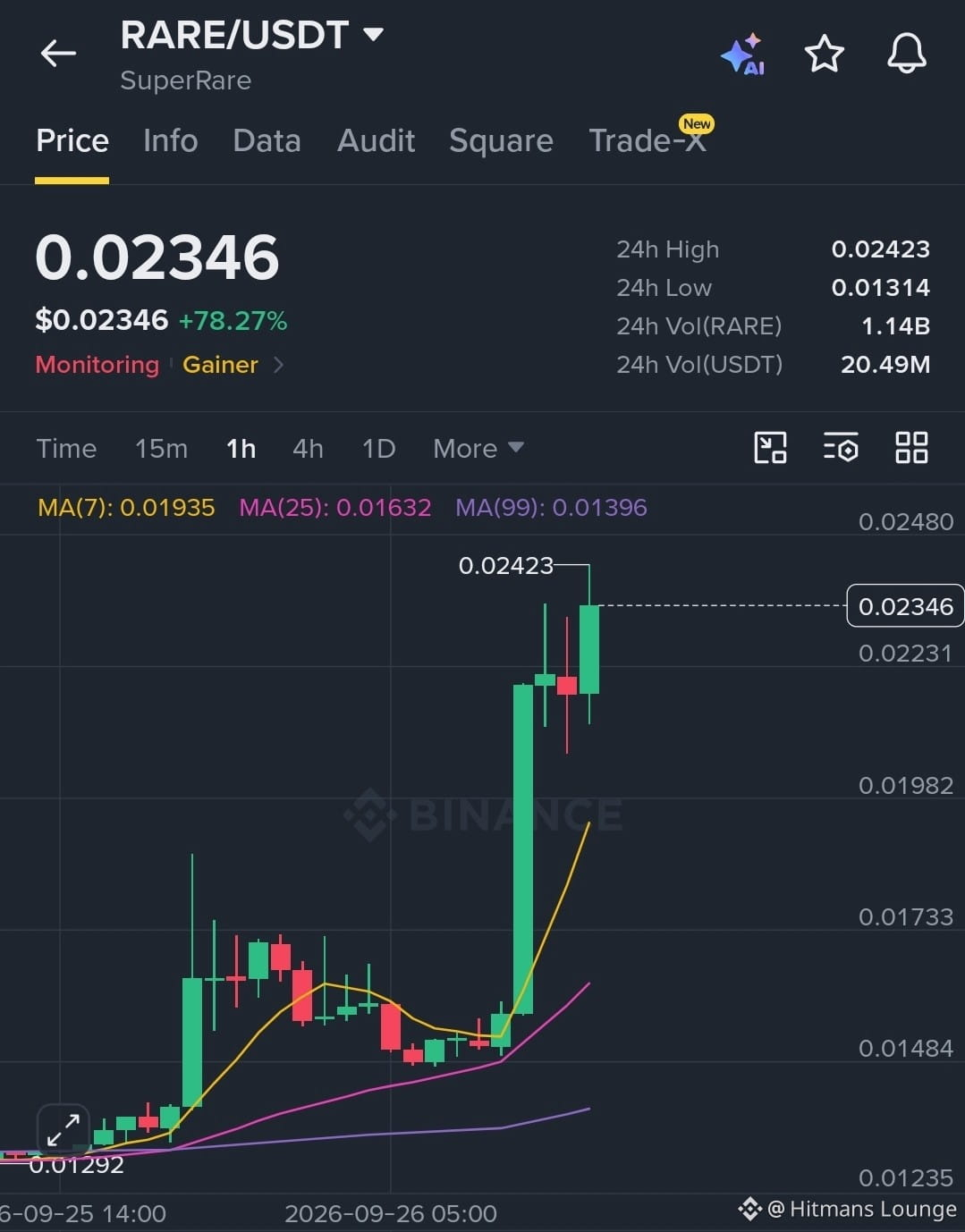
$RARE /USDT — 🟢 LONG · Conf 70%
📍 Entry: 0.0234 – 0.0235
🛑 SL: 0.0131
🎯 TP1: 0.0246
✅ TP2: 0.0256
🏆 TP3: 0.0270
Price has broken out +78.27% from the 0.01292 base with the current candle consolidating just below the 0.02423 high — MA7 (0.01935) is steeply rising from far below, confirming the move is fresh, but the wide SL reflects the volatility reality of a low-cap with this kind of range.
$RARE : SuperRare is a curated 1/1 NFT art marketplace where RARE governs curation and treasury decisions — protocol revenue is entirely dependent on NFT art market volumes, which remain well below 2021–22 peaks, and this move appears momentum-driven rather than fundamental.
Is a +78% single-day move in RARE tracking any verifiable increase in SuperRare platform volume or new artist onboarding, or is it purely a low-float token riding the broader NFT narrative rotation?
#RARE #SuperRare #NFT #Platform #Protocol
{future}(RAREUSDT)
$RARE /USDT — 🟢 LONG · Conf 70%
📍 Entry: 0.0234 – 0.0235
🛑 SL: 0.0131
🎯 TP1: 0.0246
✅ TP2: 0.0256
🏆 TP3: 0.0270
Price has broken out +78.27% from the 0.01292 base with the current candle consolidating just below the 0.02423 high — MA7 (0.01935) is steeply rising from far below, confirming the move is fresh, but the wide SL reflects the volatility reality of a low-cap with this kind of range.
$RARE : SuperRare is a curated 1/1 NFT art marketplace where RARE governs curation and treasury decisions — protocol revenue is entirely dependent on NFT art market volumes, which remain well below 2021–22 peaks, and this move appears momentum-driven rather than fundamental.
Is a +78% single-day move in RARE tracking any verifiable increase in SuperRare platform volume or new artist onboarding, or is it purely a low-float token riding the broader NFT narrative rotation?
#RARE #SuperRare #NFT #Platform #Protocol
📍 Entry: 0.0234 – 0.0235
🛑 SL: 0.0131
🎯 TP1: 0.0246
✅ TP2: 0.0256
🏆 TP3: 0.0270
Price has broken out +78.27% from the 0.01292 base with the current candle consolidating just below the 0.02423 high — MA7 (0.01935) is steeply rising from far below, confirming the move is fresh, but the wide SL reflects the volatility reality of a low-cap with this kind of range.
$RARE : SuperRare is a curated 1/1 NFT art marketplace where RARE governs curation and treasury decisions — protocol revenue is entirely dependent on NFT art market volumes, which remain well below 2021–22 peaks, and this move appears momentum-driven rather than fundamental.
Is a +78% single-day move in RARE tracking any verifiable increase in SuperRare platform volume or new artist onboarding, or is it purely a low-float token riding the broader NFT narrative rotation?
#RARE #SuperRare #NFT #Platform #Protocol

1
356

·
--
CAN $NEAR SHATTER ITS ALL-TIME HIGH AND TRIGGER THE NEXT L1 EXPLOSION? 🚀 💥
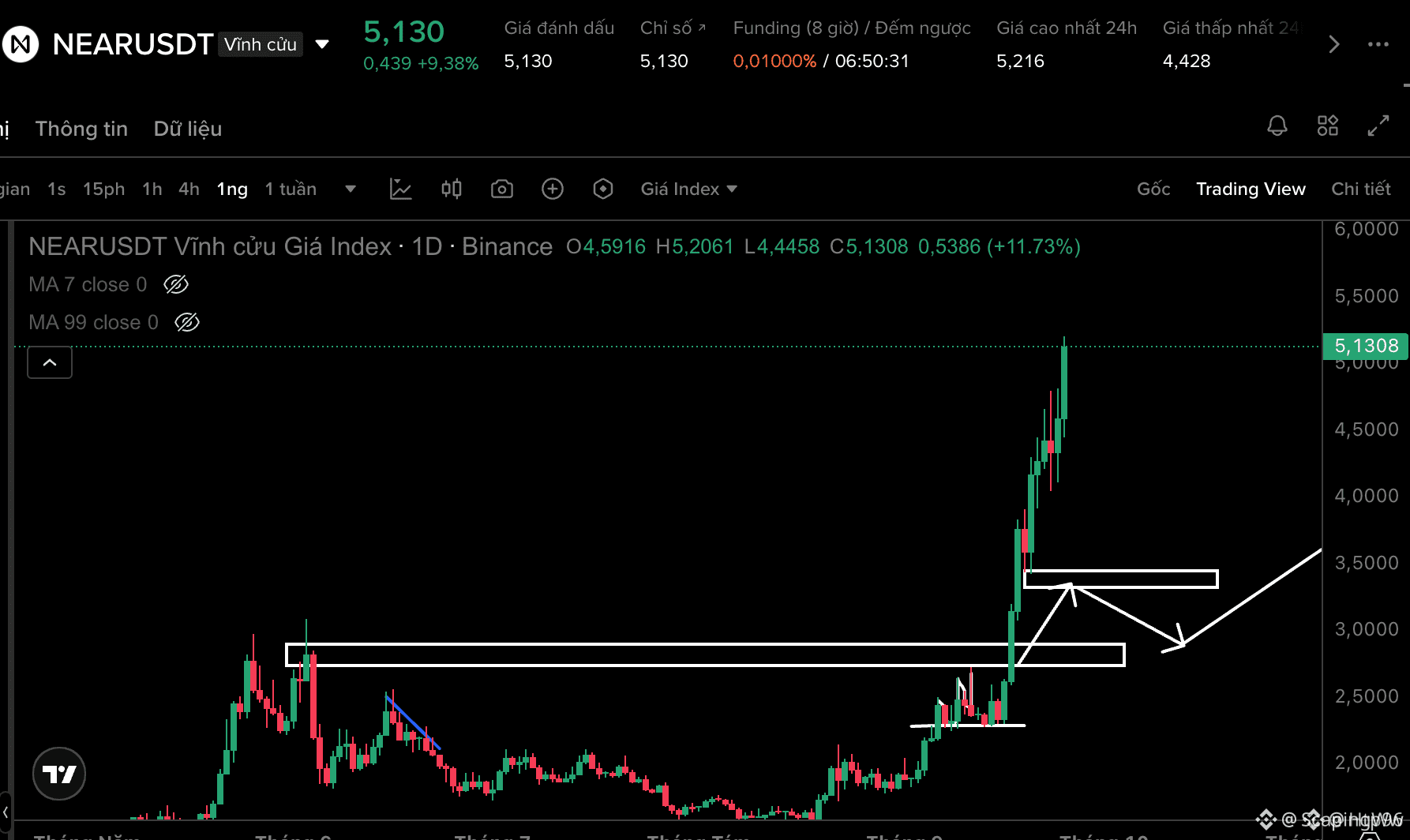
Layer-1 momentum is quietly coiling under the surface as market structure shifts away from speculative noise back toward fundamental execution. 🌊 $NEAR continues to consolidate above vital long-term reclaims, absorbing sell-side pressure while smart money positions quietly for the macro expansion phase. 📊
With developer activity accelerating and chain metrics building a solid base, the runway toward peak valuation is looking less like a distant dream and more like a high-conviction momentum play. 💡 Are you accumulating $NEAR during this structure flip or waiting for the official breakout confirmation above resistance? 👇
⚠️ Not financial advice. Always manage your risk. 🛡️
🏷️ #NEAR #Protocol #Crypto #BullRun #Layer1
🎯 🚀
CAN $NEAR SHATTER ITS ALL-TIME HIGH AND TRIGGER THE NEXT L1 EXPLOSION? 🚀 💥
Layer-1 momentum is quietly coiling under the surface as market structure shifts away from speculative noise back toward fundamental execution. 🌊 $NEAR continues to consolidate above vital long-term reclaims, absorbing sell-side pressure while smart money positions quietly for the macro expansion phase. 📊
With developer activity accelerating and chain metrics building a solid base, the runway toward peak valuation is looking less like a distant dream and more like a high-conviction momentum play. 💡 Are you accumulating $NEAR during this structure flip or waiting for the official breakout confirmation above resistance? 👇
⚠️ Not financial advice. Always manage your risk. 🛡️
🏷️ #NEAR #Protocol #Crypto #BullRun #Layer1
🎯 🚀
Layer-1 momentum is quietly coiling under the surface as market structure shifts away from speculative noise back toward fundamental execution. 🌊 $NEAR continues to consolidate above vital long-term reclaims, absorbing sell-side pressure while smart money positions quietly for the macro expansion phase. 📊
With developer activity accelerating and chain metrics building a solid base, the runway toward peak valuation is looking less like a distant dream and more like a high-conviction momentum play. 💡 Are you accumulating $NEAR during this structure flip or waiting for the official breakout confirmation above resistance? 👇
⚠️ Not financial advice. Always manage your risk. 🛡️
🏷️ #NEAR #Protocol #Crypto #BullRun #Layer1
🎯 🚀
47
Log in to explore more content
Join global crypto users on Binance Square
⚡️ Get latest and useful information about crypto.
💬 Trusted by the world’s largest crypto exchange.
👍 Discover real insights from verified creators.
Email / Phone number
Trending Topics
1
#BinancePick
2.6M views
141,866 Discussing
2
#EarningsSeason
5M views
24,385 Discussing
3
#FranklinTempletonFilesForTwoDividendToBitcoinETFs
2,034 views
111 Discussing
4
#StrategyMSTRSurpassesNasdaqInMarketCap
2,387 views
104 Discussing
5
#CanadaProposesStablecoinRedemptionWithin3BusinessDays
103 views
13 Discussing
6
#ElectrumWalletBugLetRogueServersStealFunds
8,951 views
240 Discussing
7
#ArgentineCourtDismissesLIBRACaseAgainstMilei
19,084 views
320 Discussing
8
#SKHynixReportedlyPlansSpecialDividendFromKioxiaStakeSale
3,158 views
48 Discussing
9
#KeystoneWebsiteBreachExposesBuyersShippingAddresses
1,688 views
41 Discussing
10
#USQ3GDPAndSeptemberPCEDueNextWeek
96,688 views
1,135 Discussing