
#paypay
paypay
4,858 views
88 Discussing
Hot
Latest

·
--
1、Background: 7&i Strategic Adjustment Sends a New Signal
According to Bloomberg, 7-Eleven’s parent company, 7&i Holdings, is moving forward with plans to sell part of its equity to SoftBank Group and PayPay. The core of this move is not merely fundraising; it reflects 7&i’s intention to reallocate resources across retail, payments, and digital services. As a convenience-store giant, 7&i has long relied on its offline store network, supply-chain efficiency, and high-frequency consumption scenarios. However, in the current environment—marked by shifts in consumption patterns, the widespread adoption of digital payments, and upgrades in membership operations—traditional retail advantages alone can no longer sustain long-term growth elasticity.
SoftBank and PayPay represent capabilities in communications, tech investment, digital payments, and user ecosystems, respectively. By yielding some future control rights, 7&i indicates it values forming synergy with key partners more than strictly preserving independent operating boundaries. Such changes also reflect that large consumer companies are shifting from “asset-control” models to “ecosystem-synergy” models.
2、Analysis: Three Layers of Logic Behind the Equity Sale
First is the value of a digital payments gateway. Convenience stores are a typical high-frequency, low-amount consumption setting, naturally well-suited for mobile payments, points, membership benefits, coupons, and financial services layered together. If PayPay can be more deeply integrated with the 7-Eleven store system, it may improve payment penetration and increase user stickiness. Meanwhile, 7&i can leverage payment data to enhance user profiling, inventory management, and marketing efficiency.
Second is strategic synergy within the SoftBank ecosystem. SoftBank not only has capital strength, but also has deployments in communications, internet services, and AI-related initiatives. For 7&i, bringing in partners like this can help drive store digitalization, unmanned devices, intelligent replenishment, ad placements, and the commercialization of data. In retail, future competition will not just be about the number of stores, but about competing capabilities in data, efficiency, and user reach.
Third is management’s response to pressure from capital markets. Recently, global retail asset valuations have diverged significantly. Investors are paying more attention to asset returns, cash-flow quality, and business focus. Selling part of the equity can unlock asset value, and it can also signal that management is willing to optimize its structure and improve efficiency. The trade-off is that future decisions will need to balance the demands of more strategic shareholders.
3、Impact: Retail, Payments, and the Digital Economy Accelerate Their Convergence
For 7&i, the short-term effects may include improving its capital structure and strengthening expectations for collaboration with technology platforms. Over the medium to long term, the outcome will depend on whether synergy can truly be implemented. If cooperation remains limited to the capital level, market reaction may be limited. If it can integrate payments, membership, supply chains, and store operations into a unified system, the per-store efficiency and user value of 7-Eleven are likely to improve.
For SoftBank and PayPay, the convenience-store environment is an important entry point for expanding digital financial ecosystems. Offline, high-frequency transactions can help offset the slowdown in pure online traffic growth, and they also create richer scenarios for advertising, credit, points, and local-life services to develop on payment platforms.
For investors and observers of the crypto market, what is worth watching in this case is not a “convenience-store concept,” but the ongoing real-world business bet on digital infrastructure. Payment networks, data assets, user identities, and offline consumption scenarios are being repriced. With the development of stablecoins, on-chain payments, and traditional electronic wallets, retail payments in the future may further evolve toward lower cost, more real-time execution, and greater openness.
Overall, this adjustment by 7&i shows the pragmatic choices made by traditional retail giants in the face of a new cycle: sacrificing some control in exchange for ecosystem resources, technical capabilities, and growth potential. The key variable is whether collaboration can deliver actual operational improvements—not whether it merely remains a capital-market story.📌
#零售数字化 #PayPay #BinanceSquare
1、Background: 7&i Strategic Adjustment Sends a New Signal
According to Bloomberg, 7-Eleven’s parent company, 7&i Holdings, is moving forward with plans to sell part of its equity to SoftBank Group and PayPay. The core of this move is not merely fundraising; it reflects 7&i’s intention to reallocate resources across retail, payments, and digital services. As a convenience-store giant, 7&i has long relied on its offline store network, supply-chain efficiency, and high-frequency consumption scenarios. However, in the current environment—marked by shifts in consumption patterns, the widespread adoption of digital payments, and upgrades in membership operations—traditional retail advantages alone can no longer sustain long-term growth elasticity.
SoftBank and PayPay represent capabilities in communications, tech investment, digital payments, and user ecosystems, respectively. By yielding some future control rights, 7&i indicates it values forming synergy with key partners more than strictly preserving independent operating boundaries. Such changes also reflect that large consumer companies are shifting from “asset-control” models to “ecosystem-synergy” models.
2、Analysis: Three Layers of Logic Behind the Equity Sale
First is the value of a digital payments gateway. Convenience stores are a typical high-frequency, low-amount consumption setting, naturally well-suited for mobile payments, points, membership benefits, coupons, and financial services layered together. If PayPay can be more deeply integrated with the 7-Eleven store system, it may improve payment penetration and increase user stickiness. Meanwhile, 7&i can leverage payment data to enhance user profiling, inventory management, and marketing efficiency.
Second is strategic synergy within the SoftBank ecosystem. SoftBank not only has capital strength, but also has deployments in communications, internet services, and AI-related initiatives. For 7&i, bringing in partners like this can help drive store digitalization, unmanned devices, intelligent replenishment, ad placements, and the commercialization of data. In retail, future competition will not just be about the number of stores, but about competing capabilities in data, efficiency, and user reach.
Third is management’s response to pressure from capital markets. Recently, global retail asset valuations have diverged significantly. Investors are paying more attention to asset returns, cash-flow quality, and business focus. Selling part of the equity can unlock asset value, and it can also signal that management is willing to optimize its structure and improve efficiency. The trade-off is that future decisions will need to balance the demands of more strategic shareholders.
3、Impact: Retail, Payments, and the Digital Economy Accelerate Their Convergence
For 7&i, the short-term effects may include improving its capital structure and strengthening expectations for collaboration with technology platforms. Over the medium to long term, the outcome will depend on whether synergy can truly be implemented. If cooperation remains limited to the capital level, market reaction may be limited. If it can integrate payments, membership, supply chains, and store operations into a unified system, the per-store efficiency and user value of 7-Eleven are likely to improve.
For SoftBank and PayPay, the convenience-store environment is an important entry point for expanding digital financial ecosystems. Offline, high-frequency transactions can help offset the slowdown in pure online traffic growth, and they also create richer scenarios for advertising, credit, points, and local-life services to develop on payment platforms.
For investors and observers of the crypto market, what is worth watching in this case is not a “convenience-store concept,” but the ongoing real-world business bet on digital infrastructure. Payment networks, data assets, user identities, and offline consumption scenarios are being repriced. With the development of stablecoins, on-chain payments, and traditional electronic wallets, retail payments in the future may further evolve toward lower cost, more real-time execution, and greater openness.
Overall, this adjustment by 7&i shows the pragmatic choices made by traditional retail giants in the face of a new cycle: sacrificing some control in exchange for ecosystem resources, technical capabilities, and growth potential. The key variable is whether collaboration can deliver actual operational improvements—not whether it merely remains a capital-market story.📌
#零售数字化 #PayPay #BinanceSquare
According to Bloomberg, 7-Eleven’s parent company, 7&i Holdings, is moving forward with plans to sell part of its equity to SoftBank Group and PayPay. The core of this move is not merely fundraising; it reflects 7&i’s intention to reallocate resources across retail, payments, and digital services. As a convenience-store giant, 7&i has long relied on its offline store network, supply-chain efficiency, and high-frequency consumption scenarios. However, in the current environment—marked by shifts in consumption patterns, the widespread adoption of digital payments, and upgrades in membership operations—traditional retail advantages alone can no longer sustain long-term growth elasticity.
SoftBank and PayPay represent capabilities in communications, tech investment, digital payments, and user ecosystems, respectively. By yielding some future control rights, 7&i indicates it values forming synergy with key partners more than strictly preserving independent operating boundaries. Such changes also reflect that large consumer companies are shifting from “asset-control” models to “ecosystem-synergy” models.
2、Analysis: Three Layers of Logic Behind the Equity Sale
First is the value of a digital payments gateway. Convenience stores are a typical high-frequency, low-amount consumption setting, naturally well-suited for mobile payments, points, membership benefits, coupons, and financial services layered together. If PayPay can be more deeply integrated with the 7-Eleven store system, it may improve payment penetration and increase user stickiness. Meanwhile, 7&i can leverage payment data to enhance user profiling, inventory management, and marketing efficiency.
Second is strategic synergy within the SoftBank ecosystem. SoftBank not only has capital strength, but also has deployments in communications, internet services, and AI-related initiatives. For 7&i, bringing in partners like this can help drive store digitalization, unmanned devices, intelligent replenishment, ad placements, and the commercialization of data. In retail, future competition will not just be about the number of stores, but about competing capabilities in data, efficiency, and user reach.
Third is management’s response to pressure from capital markets. Recently, global retail asset valuations have diverged significantly. Investors are paying more attention to asset returns, cash-flow quality, and business focus. Selling part of the equity can unlock asset value, and it can also signal that management is willing to optimize its structure and improve efficiency. The trade-off is that future decisions will need to balance the demands of more strategic shareholders.
3、Impact: Retail, Payments, and the Digital Economy Accelerate Their Convergence
For 7&i, the short-term effects may include improving its capital structure and strengthening expectations for collaboration with technology platforms. Over the medium to long term, the outcome will depend on whether synergy can truly be implemented. If cooperation remains limited to the capital level, market reaction may be limited. If it can integrate payments, membership, supply chains, and store operations into a unified system, the per-store efficiency and user value of 7-Eleven are likely to improve.
For SoftBank and PayPay, the convenience-store environment is an important entry point for expanding digital financial ecosystems. Offline, high-frequency transactions can help offset the slowdown in pure online traffic growth, and they also create richer scenarios for advertising, credit, points, and local-life services to develop on payment platforms.
For investors and observers of the crypto market, what is worth watching in this case is not a “convenience-store concept,” but the ongoing real-world business bet on digital infrastructure. Payment networks, data assets, user identities, and offline consumption scenarios are being repriced. With the development of stablecoins, on-chain payments, and traditional electronic wallets, retail payments in the future may further evolve toward lower cost, more real-time execution, and greater openness.
Overall, this adjustment by 7&i shows the pragmatic choices made by traditional retail giants in the face of a new cycle: sacrificing some control in exchange for ecosystem resources, technical capabilities, and growth potential. The key variable is whether collaboration can deliver actual operational improvements—not whether it merely remains a capital-market story.📌
#零售数字化 #PayPay #BinanceSquare
11


·
--
🚨 A major step from Binance's partner in Japan!
PayPay, which owns a 40% stake in Binance Japan, aims to raise up to $1.1 billion through an initial public offering on the NASDAQ stock exchange.
The potential offering reflects the company's ambition to expand and enhance its presence in global markets, especially with the growing institutional interest in the digital assets and fintech sectors.
The entry of an entity linked to the Binance ecosystem into NASDAQ could be seen as an additional signal of the continued integration of the crypto sector with traditional financial markets.
#PayPay #Binance #NASDAQ #اكتتاب_عام #Crypto
#أسواق_عالمية
🚨 A major step from Binance's partner in Japan!
PayPay, which owns a 40% stake in Binance Japan, aims to raise up to $1.1 billion through an initial public offering on the NASDAQ stock exchange.
The potential offering reflects the company's ambition to expand and enhance its presence in global markets, especially with the growing institutional interest in the digital assets and fintech sectors.
The entry of an entity linked to the Binance ecosystem into NASDAQ could be seen as an additional signal of the continued integration of the crypto sector with traditional financial markets.
#PayPay #Binance #NASDAQ #اكتتاب_عام #Crypto
#أسواق_عالمية
PayPay, which owns a 40% stake in Binance Japan, aims to raise up to $1.1 billion through an initial public offering on the NASDAQ stock exchange.
The potential offering reflects the company's ambition to expand and enhance its presence in global markets, especially with the growing institutional interest in the digital assets and fintech sectors.
The entry of an entity linked to the Binance ecosystem into NASDAQ could be seen as an additional signal of the continued integration of the crypto sector with traditional financial markets.
#PayPay #Binance #NASDAQ #اكتتاب_عام #Crypto
#أسواق_عالمية
4
3.2k

·
--
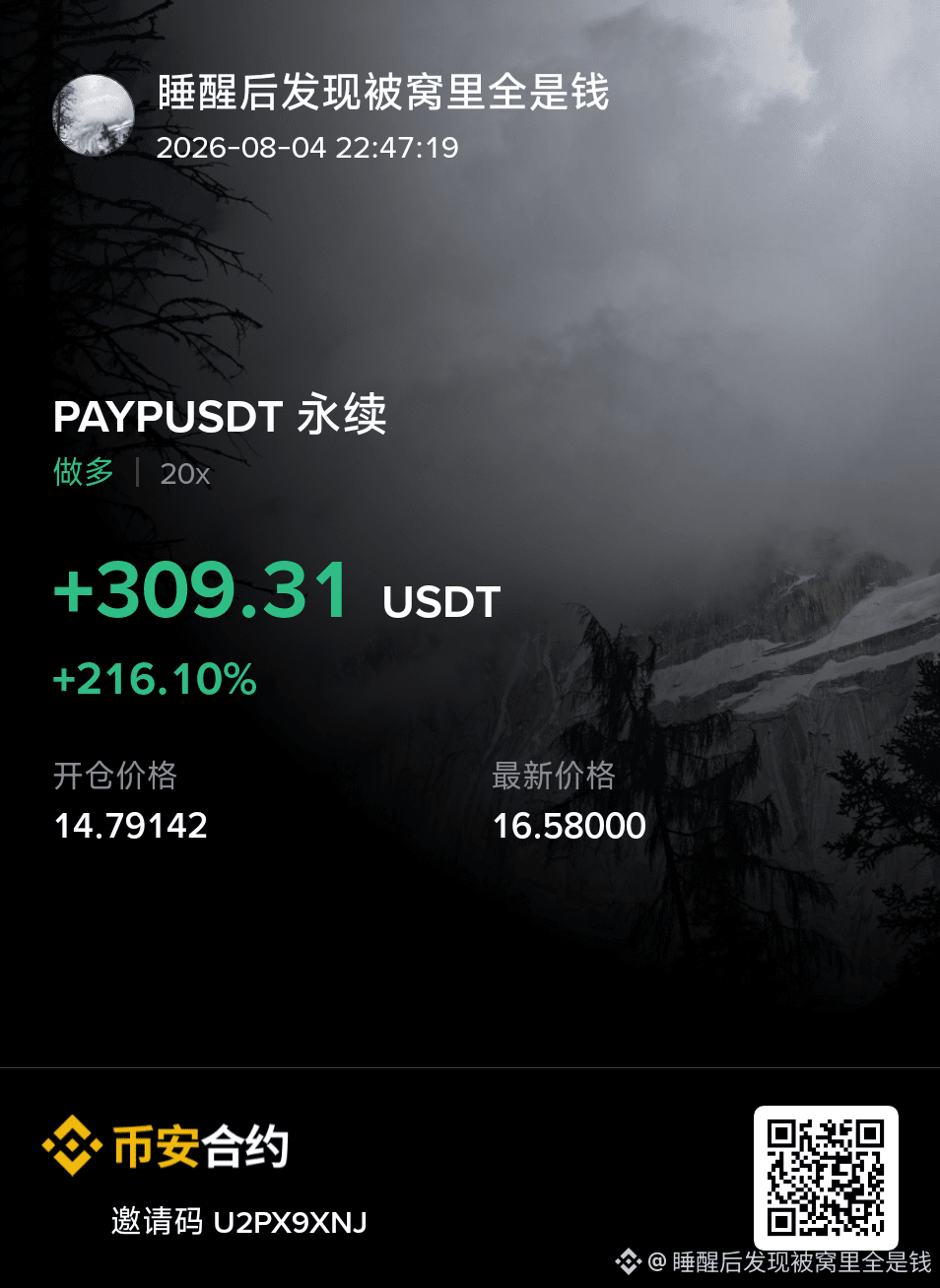
I’ve held this position for more than two months. Keep holding—let the profits soar #paypay
I’ve held this position for more than two months. Keep holding—let the profits soar #paypay
My Futures Portfolio
2 / 200
Minimum 10USDT
7D PNL
-237.64
USDT
7D ROI
-8.56%
AUM
$5200.69
Win Rate
11.11%
78
Log in to explore more content
Join global crypto users on Binance Square
⚡️ Get latest and useful information about crypto.
💬 Trusted by the world’s largest crypto exchange.
👍 Discover real insights from verified creators.
Email / Phone number
Trending Topics
1
#FedRateWatch
698,649 views
3,329 Discussing
2
#ArgentinaCommitsToOECDCryptoReportingBy2029
0 views
7 Discussing
3
#EthereumFallsBelow$2400
1,091 views
37 Discussing
4
#USSenateBlocksClarityAct
7,298 views
211 Discussing
5
#BitcoinSlidesTo$76000
30,353 views
142 Discussing
6
#BitcoinReboundsTo$79K
65,050 views
417 Discussing
7
#StrategyMarketCapPassesFord
51,738 views
807 Discussing
8
#ClarityActOddsHalveOnPolymarket
85,471 views
716 Discussing
9
#US30YTreasuryYieldTops5.40%
44,906 views
463 Discussing
10
#BessentEndorsesFinalClarityActDraft
67,270 views
841 Discussing