
#orbitaldatacenters
orbitaldatacenters
385 views
4 Discussing
Hot
Latest

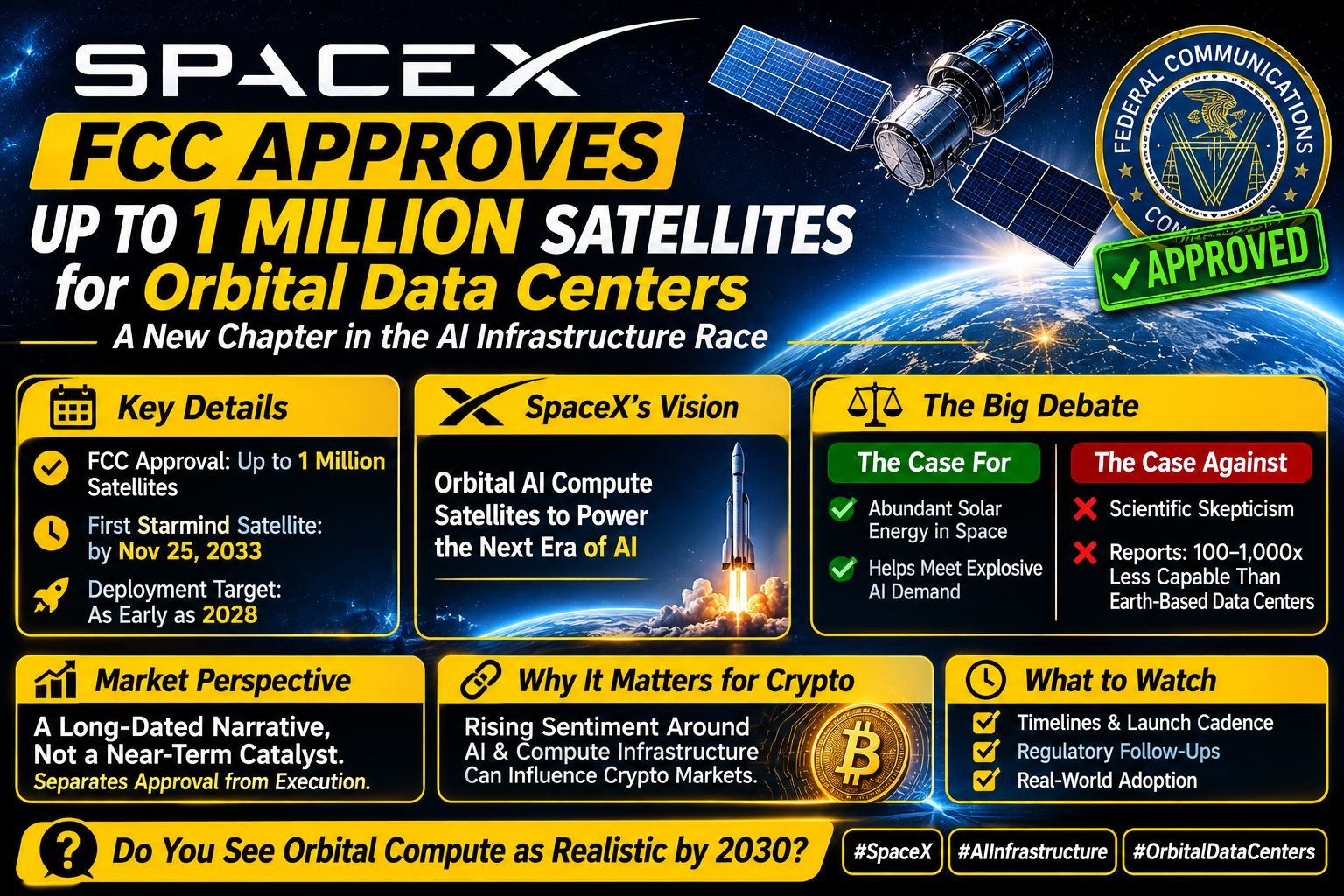
#CouldSpaceX’sOrbitalDataCentersBoostAIChipDemand? The FCC has approved SpaceX's plan for up to one million satellites designed to work as orbital data centers, and the AI infrastructure conversation just got a new chapter.
The approval came on Wednesday and it is conditional. SpaceX must deploy and operate its first Starmind satellite by November 25, 2033, or forfeit the authorization. In its IPO filing, SpaceX said it expects to begin deploying orbital AI compute satellites as early as 2028. The American Astronomical Society, Viasat and Amazon's Kuiper Systems had urged the regulator to deny the request.
The case for it is simple. AI demand is pushing power, land and permitting to their limits, and supporters argue space offers abundant solar energy. The case against is just as real. Scientists have voiced skepticism, and SpaceX's first compute satellite design is reportedly 100 to 1,000 times less capable than current Earth-based data centers.
From a market view, this is a long-dated narrative rather than a near-term catalyst. Traders should separate approval from execution. For crypto, the relevant link is sentiment toward AI and compute infrastructure, which has been volatile this week.
Timelines, launch cadence and regulatory follow-ups matter more than headlines.
Do you see orbital compute as realistic by 2030?
#SpaceX #AIInfrastructure #OrbitalDataCenters
Your tag was cut off, so I assumed it is about whether orbital data centers could be viable. If it ends differently, send the full tag and I will adjust.
$PORTAL
{future}(PORTALUSDT)
$BULLA
{future}(BULLAUSDT)
$HAEDAL
{future}(HAEDALUSDT)
#CouldSpaceX’sOrbitalDataCentersBoostAIChipDemand? The FCC has approved SpaceX's plan for up to one million satellites designed to work as orbital data centers, and the AI infrastructure conversation just got a new chapter.
The approval came on Wednesday and it is conditional. SpaceX must deploy and operate its first Starmind satellite by November 25, 2033, or forfeit the authorization. In its IPO filing, SpaceX said it expects to begin deploying orbital AI compute satellites as early as 2028. The American Astronomical Society, Viasat and Amazon's Kuiper Systems had urged the regulator to deny the request.
The case for it is simple. AI demand is pushing power, land and permitting to their limits, and supporters argue space offers abundant solar energy. The case against is just as real. Scientists have voiced skepticism, and SpaceX's first compute satellite design is reportedly 100 to 1,000 times less capable than current Earth-based data centers.
From a market view, this is a long-dated narrative rather than a near-term catalyst. Traders should separate approval from execution. For crypto, the relevant link is sentiment toward AI and compute infrastructure, which has been volatile this week.
Timelines, launch cadence and regulatory follow-ups matter more than headlines.
Do you see orbital compute as realistic by 2030?
#SpaceX #AIInfrastructure #OrbitalDataCenters
Your tag was cut off, so I assumed it is about whether orbital data centers could be viable. If it ends differently, send the full tag and I will adjust.
$PORTAL
$BULLA
$HAEDAL
69

·
--

Article
Marsh’s Patton Kline Sees Insurance Opportunity In Orbital Data CentersPatton Kline, the leader of CNBC's Marsh U.S. aviation and space practice, highlighted a significant growth opportunity for insurers in the emerging field of orbital data centers. He pointed out that insurers currently focusing solely on terrestrial assets could be missing a major chance as technology companies increasingly explore and develop infrastructure in space.
Kline noted that there are approximately 30 insurers worldwide specialized in space coverage, with annual premiums estimated between $500 million and $750 million. However, he emphasized that this figure is far below what would likely be necessary to fully insure the expanding and more complex ecosystem of orbital data centers, which are poised to become critical for data storage, processing, and communication.
The development of orbital data centers is driven by the increasing demand for high-capacity, low-latency data solutions, especially as more companies venture into space-based operations. This shift presents a fresh set of risks and challenges that traditional insurers may not be fully equipped to handle, creating a potential market gap for specialized space coverage.
Kline's insights suggest that insurers who recognize and adapt to this emerging sector could unlock substantial growth opportunities. As the space economy expands, the need for tailored insurance products to cover assets in orbit will likely grow, potentially transforming the space insurance market and encouraging more investment and innovation in space infrastructure.
More details are available in the official Binance Square post. #SpaceInsurance #OrbitalDataCenters #SpaceEconomy
Marsh’s Patton Kline Sees Insurance Opportunity In Orbital Data Centers
Patton Kline, the leader of CNBC's Marsh U.S. aviation and space practice, highlighted a significant growth opportunity for insurers in the emerging field of orbital data centers. He pointed out that insurers currently focusing solely on terrestrial assets could be missing a major chance as technology companies increasingly explore and develop infrastructure in space.
Kline noted that there are approximately 30 insurers worldwide specialized in space coverage, with annual premiums estimated between $500 million and $750 million. However, he emphasized that this figure is far below what would likely be necessary to fully insure the expanding and more complex ecosystem of orbital data centers, which are poised to become critical for data storage, processing, and communication.
The development of orbital data centers is driven by the increasing demand for high-capacity, low-latency data solutions, especially as more companies venture into space-based operations. This shift presents a fresh set of risks and challenges that traditional insurers may not be fully equipped to handle, creating a potential market gap for specialized space coverage.
Kline's insights suggest that insurers who recognize and adapt to this emerging sector could unlock substantial growth opportunities. As the space economy expands, the need for tailored insurance products to cover assets in orbit will likely grow, potentially transforming the space insurance market and encouraging more investment and innovation in space infrastructure.
More details are available in the official Binance Square post. #SpaceInsurance #OrbitalDataCenters #SpaceEconomy
40
Log in to explore more content
Join global crypto users on Binance Square
⚡️ Get latest and useful information about crypto.
💬 Trusted by the world’s largest crypto exchange.
👍 Discover real insights from verified creators.
Email / Phone number
Trending Topics
1
#CanMarketsReboundAfterThanksgiving?
372,613 views
2,959 Discussing
2
#EvolveAtBinanceBlockchainWeek
1.1M views
12,980 Discussing
3
#XRPLedgerVaultGets29Votes
15,714 views
193 Discussing
4
#SwitzerlandApproves57JurisdictionsForCryptoDataExchange
3,055 views
12 Discussing
5
#CouldSpaceX’sOrbitalDataCentersBoostAIChipDemand?
154,945 views
1,586 Discussing
6
#EthereumGlamsterdamKeepsStorageFeeChange
379 views
9 Discussing
7
#Nasdaq100FiveDayAvgIntradayVolatilityHits3.8%
36,681 views
409 Discussing
8
#ASEANPlus3ToFormCrossBorderPaymentsCryptoWorkingGroup
9,076 views
23 Discussing
9
#ZcashDevelopersUrgeZECMoveToIronwood
76,364 views
399 Discussing
10
#MoneroFalls13%OnDelistings
15 views
1 Discussing