
#opengreadient
opengreadient
3,187 views
68 Discussing
Hot
Latest

·
--
#opg $OPG
I am really excited to explore what @OpenGradient is building! The innovative approach they are taking with @OpenGradient Chat is truly impressive and represents a significant step forward in the ecosystem. I am definitely keeping a close watch on the $OPG token as the project continues to develop and gain momentum. It is fascinating to see how they are integrating advanced features to enhance user interaction and decentralized communication. Everyone should definitely check out #OPG to see the potential of this project firsthand!
$OPG #OpenGreadient
@OpenGradient
#opg $OPG
I am really excited to explore what @OpenGradient is building! The innovative approach they are taking with @OpenGradient Chat is truly impressive and represents a significant step forward in the ecosystem. I am definitely keeping a close watch on the $OPG token as the project continues to develop and gain momentum. It is fascinating to see how they are integrating advanced features to enhance user interaction and decentralized communication. Everyone should definitely check out #OPG to see the potential of this project firsthand!
$OPG #OpenGreadient
@OpenGradient
I am really excited to explore what @OpenGradient is building! The innovative approach they are taking with @OpenGradient Chat is truly impressive and represents a significant step forward in the ecosystem. I am definitely keeping a close watch on the $OPG token as the project continues to develop and gain momentum. It is fascinating to see how they are integrating advanced features to enhance user interaction and decentralized communication. Everyone should definitely check out #OPG to see the potential of this project firsthand!
$OPG #OpenGreadient
@OpenGradient
66

OPG/USDT 4H Market Analysis by Professor Ghulam Abbas#OPG
#OpenGreadient
#Binance
#texhnicalanalysis
The 4-hour chart of OPG/USDT shows that the market is still under bearish pressure after failing to hold above the recent swing high of $0.1828. A series of strong red candles pushed the price down toward $0.1223, where buyers finally stepped in and prevented further losses. This suggests that the current area is acting as an important short-term support zone.
At the time of analysis, OPG is trading around $0.1253. Although the overall trend remains bearish, selling momentum appears to be slowing. The recent candles have become smaller, indicating that sellers are losing strength while buyers are gradually trying to regain control.
From a technical perspective, the price is trading below the 7 EMA ($0.1274), 25 EMA ($0.1405), and 99 EMA ($0.1579). This confirms that the broader trend is still negative, and any upward move should be viewed as a recovery unless the price breaks above these resistance levels with strong trading volume.
The KDJ indicator is recovering from the oversold region, which often signals that a short-term rebound may be developing. However, confirmation will only come if buyers manage to push the price above the immediate resistance near $0.128–$0.132.
The key support remains between $0.1220 and $0.1200. Holding this level could allow OPG to rebound toward $0.132 and potentially $0.140. On the other hand, if sellers break below $0.1220 with strong volume, the next downside target may lie around $0.118–$0.115.
Overall, traders should remain patient. The chart suggests that OPG is attempting to build a base after a sharp decline, but a confirmed trend reversal has not yet occurred. Waiting for a breakout above resistance or a strong bullish confirmation candle would provide a safer trading opportunity.
Analysis by Professor Ghulam Abbas 📊🚀
This analysis is for educational purposes only and should not be considered financial advice.
OPG/USDT 4H Market Analysis by Professor Ghulam Abbas
#OPG
#OpenGreadient
#Binance
#texhnicalanalysis
The 4-hour chart of OPG/USDT shows that the market is still under bearish pressure after failing to hold above the recent swing high of $0.1828. A series of strong red candles pushed the price down toward $0.1223, where buyers finally stepped in and prevented further losses. This suggests that the current area is acting as an important short-term support zone.
At the time of analysis, OPG is trading around $0.1253. Although the overall trend remains bearish, selling momentum appears to be slowing. The recent candles have become smaller, indicating that sellers are losing strength while buyers are gradually trying to regain control.
From a technical perspective, the price is trading below the 7 EMA ($0.1274), 25 EMA ($0.1405), and 99 EMA ($0.1579). This confirms that the broader trend is still negative, and any upward move should be viewed as a recovery unless the price breaks above these resistance levels with strong trading volume.
The KDJ indicator is recovering from the oversold region, which often signals that a short-term rebound may be developing. However, confirmation will only come if buyers manage to push the price above the immediate resistance near $0.128–$0.132.
The key support remains between $0.1220 and $0.1200. Holding this level could allow OPG to rebound toward $0.132 and potentially $0.140. On the other hand, if sellers break below $0.1220 with strong volume, the next downside target may lie around $0.118–$0.115.
Overall, traders should remain patient. The chart suggests that OPG is attempting to build a base after a sharp decline, but a confirmed trend reversal has not yet occurred. Waiting for a breakout above resistance or a strong bullish confirmation candle would provide a safer trading opportunity.
Analysis by Professor Ghulam Abbas 📊🚀
This analysis is for educational purposes only and should not be considered financial advice.
#OpenGreadient
#Binance
#texhnicalanalysis
The 4-hour chart of OPG/USDT shows that the market is still under bearish pressure after failing to hold above the recent swing high of $0.1828. A series of strong red candles pushed the price down toward $0.1223, where buyers finally stepped in and prevented further losses. This suggests that the current area is acting as an important short-term support zone.
At the time of analysis, OPG is trading around $0.1253. Although the overall trend remains bearish, selling momentum appears to be slowing. The recent candles have become smaller, indicating that sellers are losing strength while buyers are gradually trying to regain control.
From a technical perspective, the price is trading below the 7 EMA ($0.1274), 25 EMA ($0.1405), and 99 EMA ($0.1579). This confirms that the broader trend is still negative, and any upward move should be viewed as a recovery unless the price breaks above these resistance levels with strong trading volume.
The KDJ indicator is recovering from the oversold region, which often signals that a short-term rebound may be developing. However, confirmation will only come if buyers manage to push the price above the immediate resistance near $0.128–$0.132.
The key support remains between $0.1220 and $0.1200. Holding this level could allow OPG to rebound toward $0.132 and potentially $0.140. On the other hand, if sellers break below $0.1220 with strong volume, the next downside target may lie around $0.118–$0.115.
Overall, traders should remain patient. The chart suggests that OPG is attempting to build a base after a sharp decline, but a confirmed trend reversal has not yet occurred. Waiting for a breakout above resistance or a strong bullish confirmation candle would provide a safer trading opportunity.
Analysis by Professor Ghulam Abbas 📊🚀
This analysis is for educational purposes only and should not be considered financial advice.
1
2
51

·
--
#opg $OPG
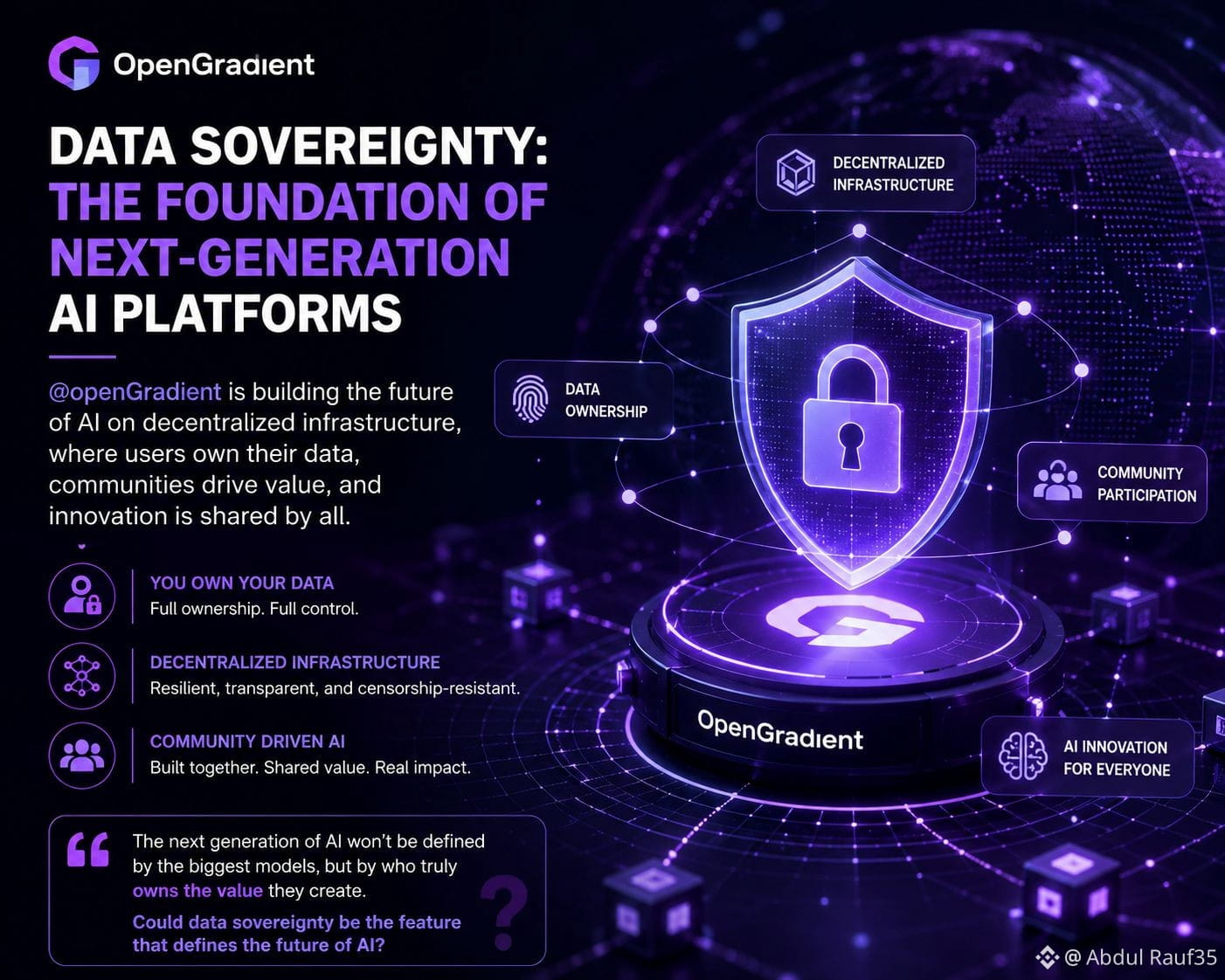
I've been thinking a lot about how AI evolves, and @openGradient stands out because it treats data sovereignty as a foundation rather than an afterthought. When users have greater ownership and verifiable control over their data, AI can become both more trustworthy and more collaborative.
To me, @openGradient shows how decentralized infrastructure and Web3 incentives can align innovation with community participation instead of relying only on centralized control. The next generation of AI may not be defined by the biggest models, but by who truly owns the value they create. Could data sovereignty become the feature that defines the future of AI?
#OpenGreadient $OPG @OpenGradient
#opg $OPG
I've been thinking a lot about how AI evolves, and @openGradient stands out because it treats data sovereignty as a foundation rather than an afterthought. When users have greater ownership and verifiable control over their data, AI can become both more trustworthy and more collaborative.
To me, @openGradient shows how decentralized infrastructure and Web3 incentives can align innovation with community participation instead of relying only on centralized control. The next generation of AI may not be defined by the biggest models, but by who truly owns the value they create. Could data sovereignty become the feature that defines the future of AI?
#OpenGreadient $OPG @OpenGradient
I've been thinking a lot about how AI evolves, and @openGradient stands out because it treats data sovereignty as a foundation rather than an afterthought. When users have greater ownership and verifiable control over their data, AI can become both more trustworthy and more collaborative.
To me, @openGradient shows how decentralized infrastructure and Web3 incentives can align innovation with community participation instead of relying only on centralized control. The next generation of AI may not be defined by the biggest models, but by who truly owns the value they create. Could data sovereignty become the feature that defines the future of AI?
#OpenGreadient $OPG @OpenGradient
4
2
101

·
--
Bullish
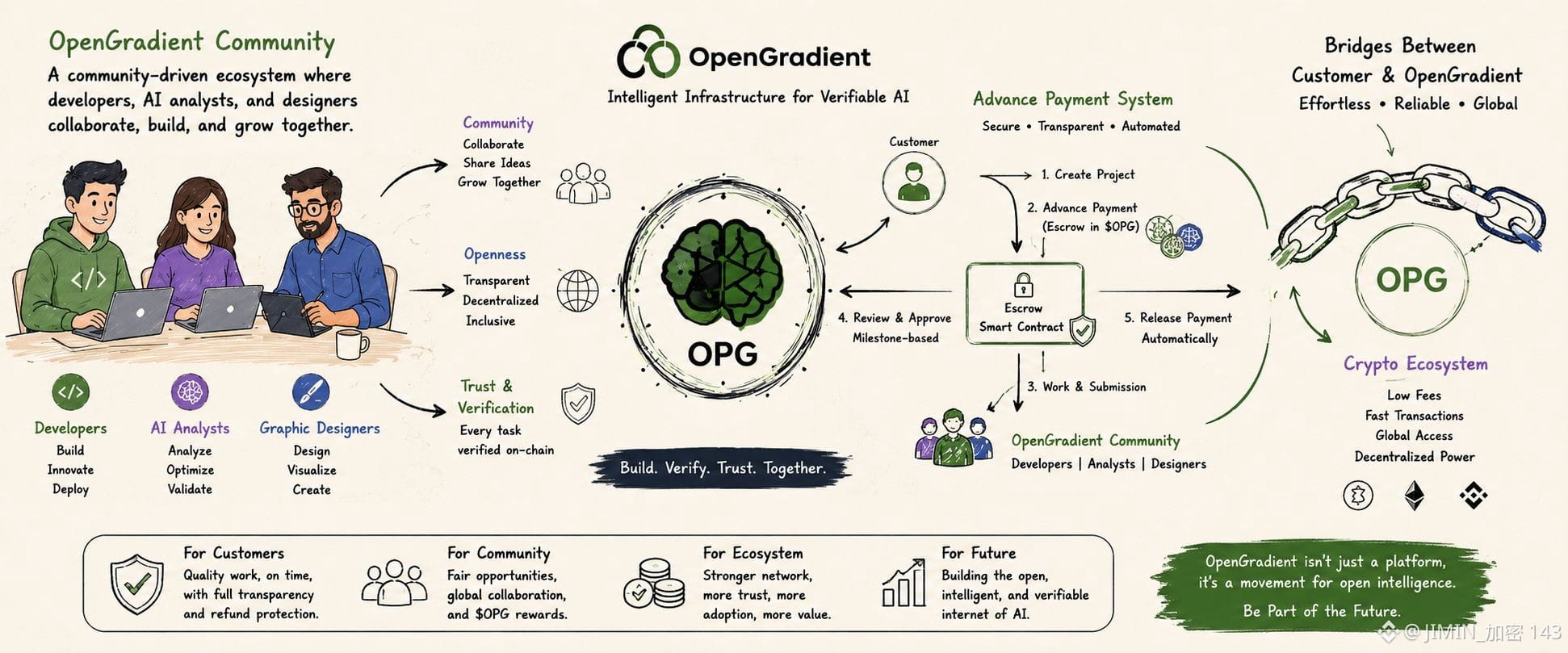
$OPG Artificial intelligence is gradually entering a phase where reliability matters as much as capability. Whether AI is used in research, finance, education, or digital applications, confidence in the underlying computation is becoming increasingly important. This shift is encouraging the development of infrastructure that focuses on transparency alongside performance.
An open gradient is contributing to this direction by building a decentralized environment where AI workloads can be executed with an emphasis on verification. Instead of depending entirely on centralized services, the network explores ways to help participants validate that computations were carried out as intended. This approach can strengthen trust between developers, application builders, infrastructure providers, and end users.
An open ecosystem also creates opportunities for broader collaboration.@OpenGradient Independent contributors can participate in supporting compute resources, developing applications, and expanding the network, helping reduce dependence on a single organization. As decentralized technologies continue to evolve, this model may encourage greater resilience while supporting innovation across multiple industries.
The future of AI is likely to be shaped not only by increasingly capable models but also by the systems that make those models trustworthy and transparent. Infrastructure designed around openness, verification, and accessibility could become an important foundation for next-generation applications. Open gradient represents an effort to explore that vision, supporting an ecosystem where confidence is built into the technology itself rather than relying solely on reputation or centralized control.
#opg $OPG #OpenGreadient @OpenGradient $OPG #opgblockchain
{spot}(OPGUSDT)
$OPG Artificial intelligence is gradually entering a phase where reliability matters as much as capability. Whether AI is used in research, finance, education, or digital applications, confidence in the underlying computation is becoming increasingly important. This shift is encouraging the development of infrastructure that focuses on transparency alongside performance.
An open gradient is contributing to this direction by building a decentralized environment where AI workloads can be executed with an emphasis on verification. Instead of depending entirely on centralized services, the network explores ways to help participants validate that computations were carried out as intended. This approach can strengthen trust between developers, application builders, infrastructure providers, and end users.
An open ecosystem also creates opportunities for broader collaboration.@OpenGradient Independent contributors can participate in supporting compute resources, developing applications, and expanding the network, helping reduce dependence on a single organization. As decentralized technologies continue to evolve, this model may encourage greater resilience while supporting innovation across multiple industries.
The future of AI is likely to be shaped not only by increasingly capable models but also by the systems that make those models trustworthy and transparent. Infrastructure designed around openness, verification, and accessibility could become an important foundation for next-generation applications. Open gradient represents an effort to explore that vision, supporting an ecosystem where confidence is built into the technology itself rather than relying solely on reputation or centralized control.
#opg $OPG #OpenGreadient @OpenGradient $OPG #opgblockchain
An open gradient is contributing to this direction by building a decentralized environment where AI workloads can be executed with an emphasis on verification. Instead of depending entirely on centralized services, the network explores ways to help participants validate that computations were carried out as intended. This approach can strengthen trust between developers, application builders, infrastructure providers, and end users.
An open ecosystem also creates opportunities for broader collaboration.@OpenGradient Independent contributors can participate in supporting compute resources, developing applications, and expanding the network, helping reduce dependence on a single organization. As decentralized technologies continue to evolve, this model may encourage greater resilience while supporting innovation across multiple industries.
The future of AI is likely to be shaped not only by increasingly capable models but also by the systems that make those models trustworthy and transparent. Infrastructure designed around openness, verification, and accessibility could become an important foundation for next-generation applications. Open gradient represents an effort to explore that vision, supporting an ecosystem where confidence is built into the technology itself rather than relying solely on reputation or centralized control.
#opg $OPG #OpenGreadient @OpenGradient $OPG #opgblockchain
55
25
553

·
--
$BTC $OPG @OpenGradient #OpenGreadient I've been eyeing the OPG in my hands for half a year now, looking to stack more and run validation nodes. The TEE hardware threshold and technical costs are quite the hurdle; parting ways with it feels like a loss, but I'm also worried about missing out on the explosive gains from the AI inference race. That feeling of "holding onto chips but not being able to play" is something I believe a lot of early players can relate to. After personally running through the OPG delegated staking introduced by @OpenGradient , I really touched on the core pain point it aims to address: turning tokens into "liquid money" instead of dead weight locked in wallets.
This new delegation mechanism isn’t just about slapping a node in and calling it a day. The platform's validator admission criteria combines TEE hardware authentication, historical accuracy rates, online duration, and commission rates across multiple dimensions—not just looking at who has the biggest stake to take the lead. This design effectively filters out the opportunistic nodes. When I choose validators, the on-chain proof submission frequency and penalty records are crystal clear, showing that the team has solid risk control measures in network security.
However, the risks are evident. If the real demand for AI inference falls short of expectations, leading to a drop in on-chain call volumes, a mass unlocking of delegated OPG would undoubtedly increase short-term circulation. Let’s not forget that there are still a lot of tokens being released in the long term from the ecosystem pool, and when you pile on the selling pressure from staking unlocks, the price volatility risk is very real and looming. Every delegator should do their math on this.
The 10% staking reward pool may seem like a safety net for holders, and the linear release design can help stabilize long-term confidence and avoid a mass exit. But it can also make some players let down their guard, thinking "there's income to back it up" and ignoring the inherent high uncertainty of the AI infrastructure itself. I’ve always felt that this kind of staking is merely a tool for token circulation and network security, not a guaranteed profit piggy bank.
In my view, the OpenGradient design is genuinely an optimization that stands with both holders and developers, rather than just a flashy gimmick. It not only activates the liquidity of idle tokens but also provides real-world scenarios for OPG in inference payments, model monetization, and validator incentives—over 2 million inferences have already run on-chain, which is real demand, not just PPT numbers. Even with the potential risk of unlocking selling pressure, as long as one manages the delegation ratio rationally and avoids betting on a single validator, it’s a solid positive optimization for both players and the entire network.
$BTC $OPG @OpenGradient #OpenGreadient I've been eyeing the OPG in my hands for half a year now, looking to stack more and run validation nodes. The TEE hardware threshold and technical costs are quite the hurdle; parting ways with it feels like a loss, but I'm also worried about missing out on the explosive gains from the AI inference race. That feeling of "holding onto chips but not being able to play" is something I believe a lot of early players can relate to. After personally running through the OPG delegated staking introduced by @OpenGradient , I really touched on the core pain point it aims to address: turning tokens into "liquid money" instead of dead weight locked in wallets.
This new delegation mechanism isn’t just about slapping a node in and calling it a day. The platform's validator admission criteria combines TEE hardware authentication, historical accuracy rates, online duration, and commission rates across multiple dimensions—not just looking at who has the biggest stake to take the lead. This design effectively filters out the opportunistic nodes. When I choose validators, the on-chain proof submission frequency and penalty records are crystal clear, showing that the team has solid risk control measures in network security.
However, the risks are evident. If the real demand for AI inference falls short of expectations, leading to a drop in on-chain call volumes, a mass unlocking of delegated OPG would undoubtedly increase short-term circulation. Let’s not forget that there are still a lot of tokens being released in the long term from the ecosystem pool, and when you pile on the selling pressure from staking unlocks, the price volatility risk is very real and looming. Every delegator should do their math on this.
The 10% staking reward pool may seem like a safety net for holders, and the linear release design can help stabilize long-term confidence and avoid a mass exit. But it can also make some players let down their guard, thinking "there's income to back it up" and ignoring the inherent high uncertainty of the AI infrastructure itself. I’ve always felt that this kind of staking is merely a tool for token circulation and network security, not a guaranteed profit piggy bank.
In my view, the OpenGradient design is genuinely an optimization that stands with both holders and developers, rather than just a flashy gimmick. It not only activates the liquidity of idle tokens but also provides real-world scenarios for OPG in inference payments, model monetization, and validator incentives—over 2 million inferences have already run on-chain, which is real demand, not just PPT numbers. Even with the potential risk of unlocking selling pressure, as long as one manages the delegation ratio rationally and avoids betting on a single validator, it’s a solid positive optimization for both players and the entire network.
This new delegation mechanism isn’t just about slapping a node in and calling it a day. The platform's validator admission criteria combines TEE hardware authentication, historical accuracy rates, online duration, and commission rates across multiple dimensions—not just looking at who has the biggest stake to take the lead. This design effectively filters out the opportunistic nodes. When I choose validators, the on-chain proof submission frequency and penalty records are crystal clear, showing that the team has solid risk control measures in network security.
However, the risks are evident. If the real demand for AI inference falls short of expectations, leading to a drop in on-chain call volumes, a mass unlocking of delegated OPG would undoubtedly increase short-term circulation. Let’s not forget that there are still a lot of tokens being released in the long term from the ecosystem pool, and when you pile on the selling pressure from staking unlocks, the price volatility risk is very real and looming. Every delegator should do their math on this.
The 10% staking reward pool may seem like a safety net for holders, and the linear release design can help stabilize long-term confidence and avoid a mass exit. But it can also make some players let down their guard, thinking "there's income to back it up" and ignoring the inherent high uncertainty of the AI infrastructure itself. I’ve always felt that this kind of staking is merely a tool for token circulation and network security, not a guaranteed profit piggy bank.
In my view, the OpenGradient design is genuinely an optimization that stands with both holders and developers, rather than just a flashy gimmick. It not only activates the liquidity of idle tokens but also provides real-world scenarios for OPG in inference payments, model monetization, and validator incentives—over 2 million inferences have already run on-chain, which is real demand, not just PPT numbers. Even with the potential risk of unlocking selling pressure, as long as one manages the delegation ratio rationally and avoids betting on a single validator, it’s a solid positive optimization for both players and the entire network.
127

·
--
Bullish
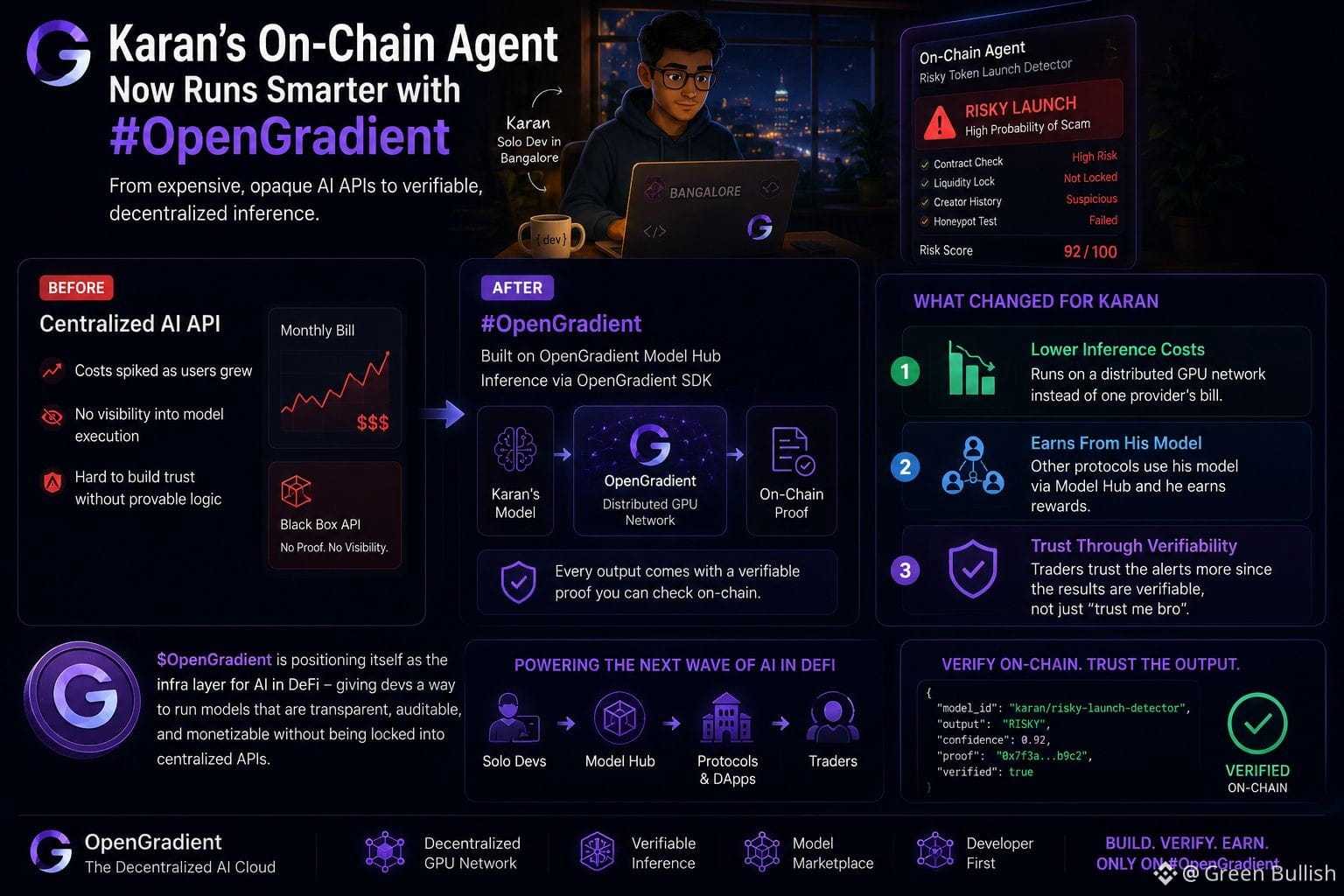
My friend Karan, a solo dev in Bangalore, was building an on-chain agent that flags risky token launches for traders.
He started with a centralized AI API. It was fine at first, but as soon as his agent got more users, the costs spiked and he had zero visibility into whether the model was actually running what he uploaded. Hard to build trust when you can’t prove it.
He switched to #OpenGreadient
He pushed his detection model to the Model Hub and runs inference through the SDK. Now every output comes with a proof you can check on-chain, so anyone using his agent can verify the logic wasn’t changed behind the scenes.
What changed for him
1. Inference costs dropped because it runs on a distributed GPU network instead of one provider’s bill.
2. Other protocols started pulling his model for their own dashboards and he earns rewards for it.
3. Traders trust the alerts more since the results are verifiable, not just “trust me bro”.
$OpenGradient is positioning itself as the infra layer for AI in DeFi - giving devs a way to run models that are transparent, auditable, and monetizable without being locked into centralized APIs. #opg $OPG
My friend Karan, a solo dev in Bangalore, was building an on-chain agent that flags risky token launches for traders.
He started with a centralized AI API. It was fine at first, but as soon as his agent got more users, the costs spiked and he had zero visibility into whether the model was actually running what he uploaded. Hard to build trust when you can’t prove it.
He switched to #OpenGreadient
He pushed his detection model to the Model Hub and runs inference through the SDK. Now every output comes with a proof you can check on-chain, so anyone using his agent can verify the logic wasn’t changed behind the scenes.
What changed for him
1. Inference costs dropped because it runs on a distributed GPU network instead of one provider’s bill.
2. Other protocols started pulling his model for their own dashboards and he earns rewards for it.
3. Traders trust the alerts more since the results are verifiable, not just “trust me bro”.
$OpenGradient is positioning itself as the infra layer for AI in DeFi - giving devs a way to run models that are transparent, auditable, and monetizable without being locked into centralized APIs. #opg $OPG
He started with a centralized AI API. It was fine at first, but as soon as his agent got more users, the costs spiked and he had zero visibility into whether the model was actually running what he uploaded. Hard to build trust when you can’t prove it.
He switched to #OpenGreadient
He pushed his detection model to the Model Hub and runs inference through the SDK. Now every output comes with a proof you can check on-chain, so anyone using his agent can verify the logic wasn’t changed behind the scenes.
What changed for him
1. Inference costs dropped because it runs on a distributed GPU network instead of one provider’s bill.
2. Other protocols started pulling his model for their own dashboards and he earns rewards for it.
3. Traders trust the alerts more since the results are verifiable, not just “trust me bro”.
$OpenGradient is positioning itself as the infra layer for AI in DeFi - giving devs a way to run models that are transparent, auditable, and monetizable without being locked into centralized APIs. #opg $OPG
77

#opg $OPG
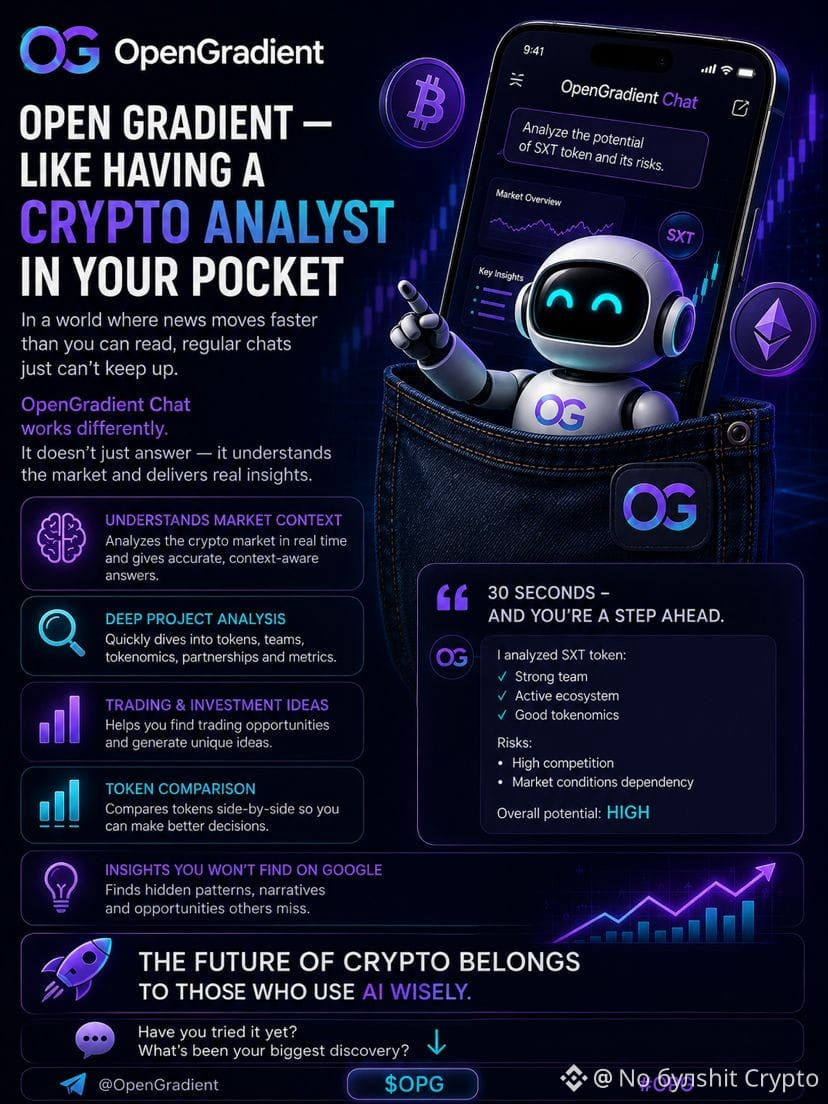
🤖 OpenGradient - it's like having a pocket crypto analyst.
In today's fast-paced world, where news drops faster than you can read it, traditional chats just can't keep up.
OpenGradient Chat works differently. It doesn't just give you dry answers - it understands market context, quickly analyzes the market, compares tokens, and helps you find those hidden insights.
It's especially awesome when you need a quick take on a new token or to check if a certain idea is worth your time. For me, it's like having a full-fledged team member.
The future of crypto belongs to those who leverage AI wisely. OpenGradient is leading the charge.
Have you tried using it yet?
#OPG #OpenGreadient
{future}(OPGUSDT)
#opg $OPG
🤖 OpenGradient - it's like having a pocket crypto analyst.
In today's fast-paced world, where news drops faster than you can read it, traditional chats just can't keep up.
OpenGradient Chat works differently. It doesn't just give you dry answers - it understands market context, quickly analyzes the market, compares tokens, and helps you find those hidden insights.
It's especially awesome when you need a quick take on a new token or to check if a certain idea is worth your time. For me, it's like having a full-fledged team member.
The future of crypto belongs to those who leverage AI wisely. OpenGradient is leading the charge.
Have you tried using it yet?
#OPG #OpenGreadient
🤖 OpenGradient - it's like having a pocket crypto analyst.
In today's fast-paced world, where news drops faster than you can read it, traditional chats just can't keep up.
OpenGradient Chat works differently. It doesn't just give you dry answers - it understands market context, quickly analyzes the market, compares tokens, and helps you find those hidden insights.
It's especially awesome when you need a quick take on a new token or to check if a certain idea is worth your time. For me, it's like having a full-fledged team member.
The future of crypto belongs to those who leverage AI wisely. OpenGradient is leading the charge.
Have you tried using it yet?
#OPG #OpenGreadient
3
96


·
--
Article
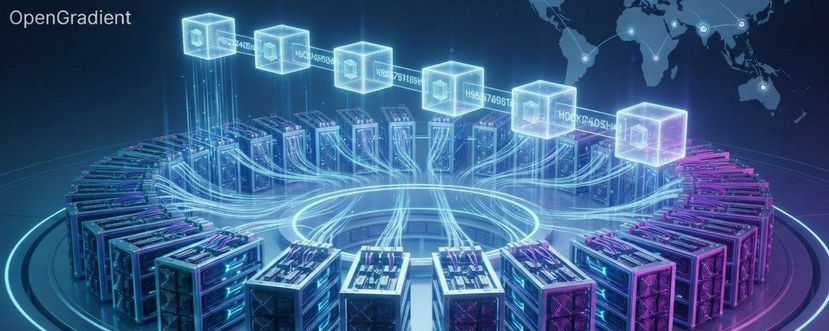
Why OpenGradient Could Be the Next Blockchain Revolution, And Why GPU Miners Should Take NoteAfter diving deep into the technical architecture of OpenGradient, I’ve come to a striking realization: we are likely standing at the threshold of a major turning point for the entire blockchain industry.
Most projects in this space focus on simple transactions or asset speculation. OpenGradient, however, is aiming for something far more foundational. They are building a decentralized, verifiable infrastructure for AI. By tackling the "black box" nature of artificial intelligence through Zero-Knowledge Machine Learning (zkML) and Trusted Execution Environments (TEEs), they are essentially trying to make AI honest, auditable, and transparent.
Why This Is a Paradigm Shift
If OpenGradient succeeds in its goals, we won't just see another dApp; we will witness a fundamental shift in how trust is constructed in the digital age. Imagine an internet where AI decision making whether in finance, law, or healthcare can be mathematically verified on the blockchain.
We are moving past the era of trust me and into the era of verify me. For anyone who believes in the true promise of Web3, this is the kind of breakthrough that makes the wait worthwhile.
A Call to Action for the GPU Mining Community
What I find most fascinating and perhaps the most overlooked aspect of this project is its alignment with the hardware community.
For a long time, GPU miners have been a backbone of the decentralized world. With the shift in consensus mechanisms for major chains, many of these powerful GPU farms have been searching for their next true utility. OpenGradient isn’t just a project that requires computational power; it is a project that needs the distributed hardware base that miners have spent years building.
If OpenGradient truly becomes the decentralized engine for AI inference, it presents a massive opportunity for GPU miners to pivot from traditional mining to providing the high-performance compute resources required for verifiable AI. Supporting this project isn't just about token price; it’s about repurposing one of the most powerful distributed networks in history to power the next generation of global intelligence.
My Take
I’m rarely this optimistic about a protocol's long-term vision, but OpenGradient feels different. The backing from heavyweights like a16z and NVIDIA speaks to the seriousness of their ambition. But for me, it’s about the convergence: when you align the need for verifiable AI with the vast, underutilized potential of global GPU power, you create a recipe for a massive, structural industry upgrade.
If this team delivers on their roadmap, we aren’t just looking at a crypto trend. We are looking at the essential infrastructure of the future. It’s a vision that deserves the support of the developer community, the investors, and crucially the GPU miners who have the hardware to make this dream a reality.
Does this version hit the right note for you, especially regarding the connection to the mining community?
@OpenGradient #OpenGreadient #OPG #miners $OPG
Why OpenGradient Could Be the Next Blockchain Revolution, And Why GPU Miners Should Take Note
After diving deep into the technical architecture of OpenGradient, I’ve come to a striking realization: we are likely standing at the threshold of a major turning point for the entire blockchain industry.
Most projects in this space focus on simple transactions or asset speculation. OpenGradient, however, is aiming for something far more foundational. They are building a decentralized, verifiable infrastructure for AI. By tackling the "black box" nature of artificial intelligence through Zero-Knowledge Machine Learning (zkML) and Trusted Execution Environments (TEEs), they are essentially trying to make AI honest, auditable, and transparent.
Why This Is a Paradigm Shift
If OpenGradient succeeds in its goals, we won't just see another dApp; we will witness a fundamental shift in how trust is constructed in the digital age. Imagine an internet where AI decision making whether in finance, law, or healthcare can be mathematically verified on the blockchain.
We are moving past the era of trust me and into the era of verify me. For anyone who believes in the true promise of Web3, this is the kind of breakthrough that makes the wait worthwhile.
A Call to Action for the GPU Mining Community
What I find most fascinating and perhaps the most overlooked aspect of this project is its alignment with the hardware community.
For a long time, GPU miners have been a backbone of the decentralized world. With the shift in consensus mechanisms for major chains, many of these powerful GPU farms have been searching for their next true utility. OpenGradient isn’t just a project that requires computational power; it is a project that needs the distributed hardware base that miners have spent years building.
If OpenGradient truly becomes the decentralized engine for AI inference, it presents a massive opportunity for GPU miners to pivot from traditional mining to providing the high-performance compute resources required for verifiable AI. Supporting this project isn't just about token price; it’s about repurposing one of the most powerful distributed networks in history to power the next generation of global intelligence.
My Take
I’m rarely this optimistic about a protocol's long-term vision, but OpenGradient feels different. The backing from heavyweights like a16z and NVIDIA speaks to the seriousness of their ambition. But for me, it’s about the convergence: when you align the need for verifiable AI with the vast, underutilized potential of global GPU power, you create a recipe for a massive, structural industry upgrade.
If this team delivers on their roadmap, we aren’t just looking at a crypto trend. We are looking at the essential infrastructure of the future. It’s a vision that deserves the support of the developer community, the investors, and crucially the GPU miners who have the hardware to make this dream a reality.
Does this version hit the right note for you, especially regarding the connection to the mining community?
@OpenGradient #OpenGreadient #OPG #miners $OPG
Most projects in this space focus on simple transactions or asset speculation. OpenGradient, however, is aiming for something far more foundational. They are building a decentralized, verifiable infrastructure for AI. By tackling the "black box" nature of artificial intelligence through Zero-Knowledge Machine Learning (zkML) and Trusted Execution Environments (TEEs), they are essentially trying to make AI honest, auditable, and transparent.
Why This Is a Paradigm Shift
If OpenGradient succeeds in its goals, we won't just see another dApp; we will witness a fundamental shift in how trust is constructed in the digital age. Imagine an internet where AI decision making whether in finance, law, or healthcare can be mathematically verified on the blockchain.
We are moving past the era of trust me and into the era of verify me. For anyone who believes in the true promise of Web3, this is the kind of breakthrough that makes the wait worthwhile.
A Call to Action for the GPU Mining Community
What I find most fascinating and perhaps the most overlooked aspect of this project is its alignment with the hardware community.
For a long time, GPU miners have been a backbone of the decentralized world. With the shift in consensus mechanisms for major chains, many of these powerful GPU farms have been searching for their next true utility. OpenGradient isn’t just a project that requires computational power; it is a project that needs the distributed hardware base that miners have spent years building.
If OpenGradient truly becomes the decentralized engine for AI inference, it presents a massive opportunity for GPU miners to pivot from traditional mining to providing the high-performance compute resources required for verifiable AI. Supporting this project isn't just about token price; it’s about repurposing one of the most powerful distributed networks in history to power the next generation of global intelligence.
My Take
I’m rarely this optimistic about a protocol's long-term vision, but OpenGradient feels different. The backing from heavyweights like a16z and NVIDIA speaks to the seriousness of their ambition. But for me, it’s about the convergence: when you align the need for verifiable AI with the vast, underutilized potential of global GPU power, you create a recipe for a massive, structural industry upgrade.
If this team delivers on their roadmap, we aren’t just looking at a crypto trend. We are looking at the essential infrastructure of the future. It’s a vision that deserves the support of the developer community, the investors, and crucially the GPU miners who have the hardware to make this dream a reality.
Does this version hit the right note for you, especially regarding the connection to the mining community?
@OpenGradient #OpenGreadient #OPG #miners $OPG
1
97

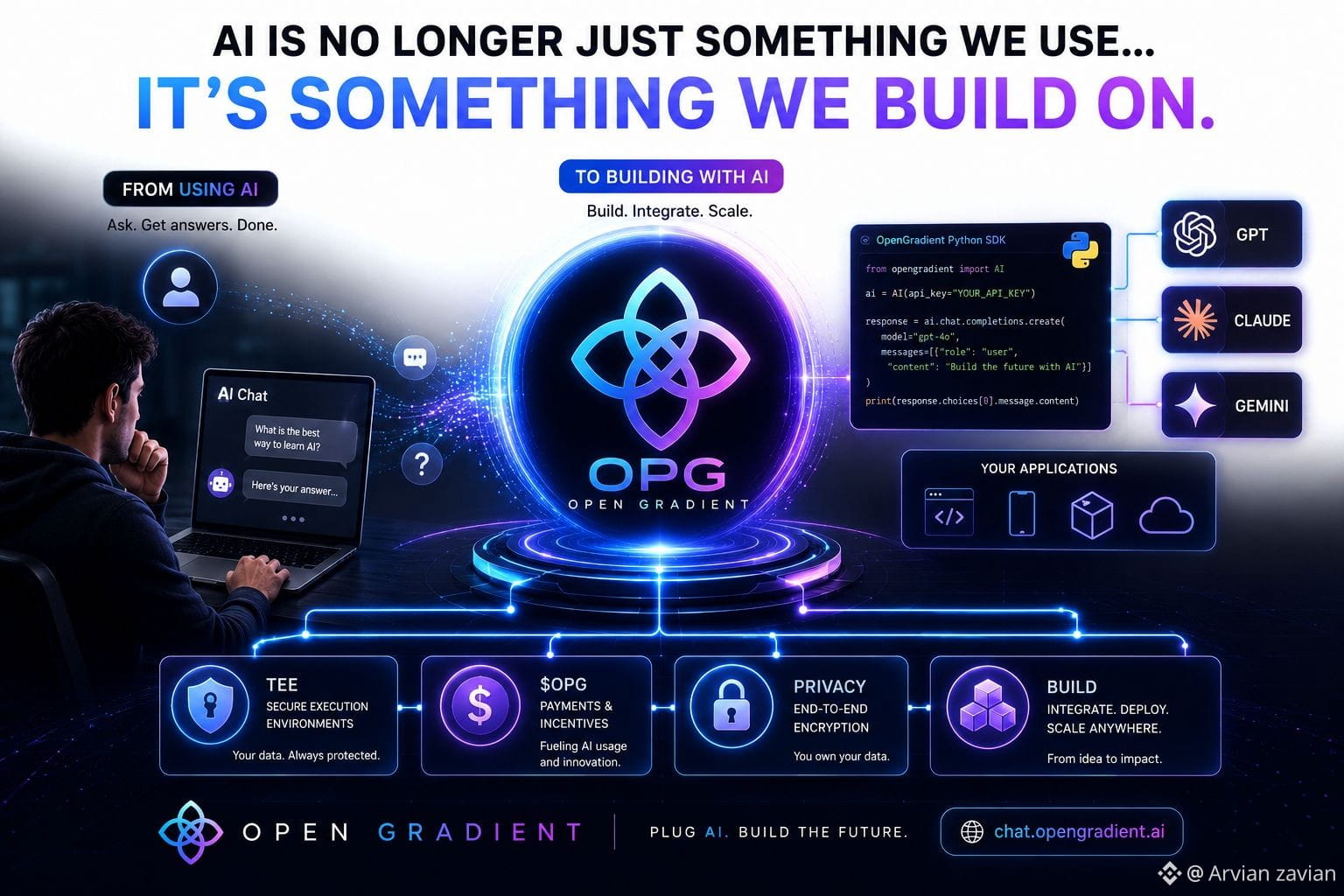
I used to think AI was just a simple chat tool where you ask questions and get answers instantly.
But when I looked into OpenGradient Python SDK, it changed how I see AI completely.
It’s not just about using AI anymore — developers can actually plug models like GPT, Claude, or Gemini directly into their own applications with simple code. So instead of just talking to AI, you can actually build with it.
What I find more interesting is how everything is getting connected. AI usage, payments through OPG, and privacy through secure execution environments like TEE are becoming part of one system.
It feels less like a single tool and more like a full infrastructure layer being built quietly in the background.
Maybe the bigger shift is this — AI is no longer just something we use… it’s something we build on.
Try it here: https://chat.opengradient.ai
@OpenGradient
#OpenGreadient
#OPG
$OPG
{spot}(OPGUSDT)
$SYN
{spot}(SYNUSDT)
$UB
{future}(UBUSDT)
I used to think AI was just a simple chat tool where you ask questions and get answers instantly.
But when I looked into OpenGradient Python SDK, it changed how I see AI completely.
It’s not just about using AI anymore — developers can actually plug models like GPT, Claude, or Gemini directly into their own applications with simple code. So instead of just talking to AI, you can actually build with it.
What I find more interesting is how everything is getting connected. AI usage, payments through OPG, and privacy through secure execution environments like TEE are becoming part of one system.
It feels less like a single tool and more like a full infrastructure layer being built quietly in the background.
Maybe the bigger shift is this — AI is no longer just something we use… it’s something we build on.
Try it here: https://chat.opengradient.ai
@OpenGradient
#OpenGreadient
#OPG
$OPG
$SYN
$UB
But when I looked into OpenGradient Python SDK, it changed how I see AI completely.
It’s not just about using AI anymore — developers can actually plug models like GPT, Claude, or Gemini directly into their own applications with simple code. So instead of just talking to AI, you can actually build with it.
What I find more interesting is how everything is getting connected. AI usage, payments through OPG, and privacy through secure execution environments like TEE are becoming part of one system.
It feels less like a single tool and more like a full infrastructure layer being built quietly in the background.
Maybe the bigger shift is this — AI is no longer just something we use… it’s something we build on.
Try it here: https://chat.opengradient.ai
@OpenGradient
#OpenGreadient
#OPG
$OPG
$SYN
$UB
123
55
1.2k

·
--
Bullish
#OpenGreadient
$OPG
@OpenGradient
I’ve been playing around with OpenGradient Chat for the past couple of days, and honestly.
The architecture behind it is exactly what the AI space needs right now.
Most people are just looking at which LLM is faster or smarter, but nobody is talking about data privacy.
Every time you type a sensitive question or paste some proprietary code into standard AI tools. You are literally handing that data over to train their next model.
What @OpenGradient is doing with their chat platform is completely changing the game.
Instead of just trusting a corporate privacy policy.
They’ve built a system that uses TEEs (Trusted Execution Environments) and Oblivious HTTP so you can actually verify that your data isn't being logged or tied to your IP.
Plus, having ChatGPT, Claude, and Gemini all in a single workspace where you can switch mid-chat is incredibly convenient.
It's great to see a project focusing on the infrastructure layer of decentralized intelligence rather than just building another generic wrapper.
Definitely keeping a close eye on how the utility for $OPG expands as more developers tap into their verifiable compute network.
#OPG
$OPG
@OpenGradient
#OpenGreadient
$OPG
@OpenGradient
I’ve been playing around with OpenGradient Chat for the past couple of days, and honestly.
The architecture behind it is exactly what the AI space needs right now.
Most people are just looking at which LLM is faster or smarter, but nobody is talking about data privacy.
Every time you type a sensitive question or paste some proprietary code into standard AI tools. You are literally handing that data over to train their next model.
What @OpenGradient is doing with their chat platform is completely changing the game.
Instead of just trusting a corporate privacy policy.
They’ve built a system that uses TEEs (Trusted Execution Environments) and Oblivious HTTP so you can actually verify that your data isn't being logged or tied to your IP.
Plus, having ChatGPT, Claude, and Gemini all in a single workspace where you can switch mid-chat is incredibly convenient.
It's great to see a project focusing on the infrastructure layer of decentralized intelligence rather than just building another generic wrapper.
Definitely keeping a close eye on how the utility for $OPG expands as more developers tap into their verifiable compute network.
#OPG
$OPG
@OpenGradient
$OPG
@OpenGradient
I’ve been playing around with OpenGradient Chat for the past couple of days, and honestly.
The architecture behind it is exactly what the AI space needs right now.
Most people are just looking at which LLM is faster or smarter, but nobody is talking about data privacy.
Every time you type a sensitive question or paste some proprietary code into standard AI tools. You are literally handing that data over to train their next model.
What @OpenGradient is doing with their chat platform is completely changing the game.
Instead of just trusting a corporate privacy policy.
They’ve built a system that uses TEEs (Trusted Execution Environments) and Oblivious HTTP so you can actually verify that your data isn't being logged or tied to your IP.
Plus, having ChatGPT, Claude, and Gemini all in a single workspace where you can switch mid-chat is incredibly convenient.
It's great to see a project focusing on the infrastructure layer of decentralized intelligence rather than just building another generic wrapper.
Definitely keeping a close eye on how the utility for $OPG expands as more developers tap into their verifiable compute network.
#OPG
$OPG
@OpenGradient
74

·
--
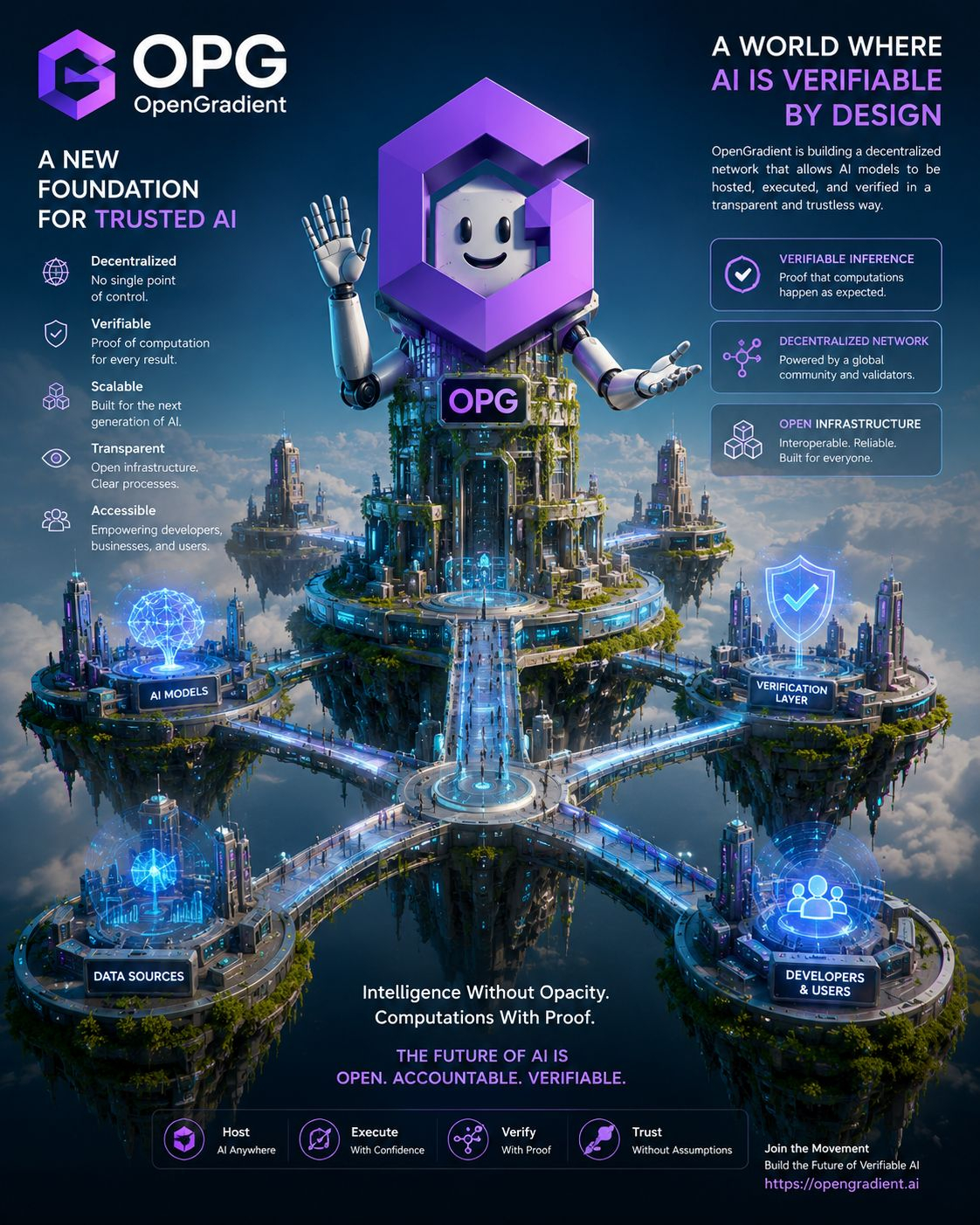
$OPG ,OpenGradient is building native on-chain AI inference, designed to deliver seamless and scalable inference secured by state-of-the-art cryptography. The OpenGradient Network is an EVM blockchain network that is a composable execution layer for on-chain AI. The network features access to scalable and secure model inference, allowing developers to seamlessly leverage AI models in composable smart contracts to create powerful decentralized applications and enable new use-cases.@OpenGradient #OpenGreadient .
$OPG ,OpenGradient is building native on-chain AI inference, designed to deliver seamless and scalable inference secured by state-of-the-art cryptography. The OpenGradient Network is an EVM blockchain network that is a composable execution layer for on-chain AI. The network features access to scalable and secure model inference, allowing developers to seamlessly leverage AI models in composable smart contracts to create powerful decentralized applications and enable new use-cases.@OpenGradient #OpenGreadient .
4
1
90
·
--
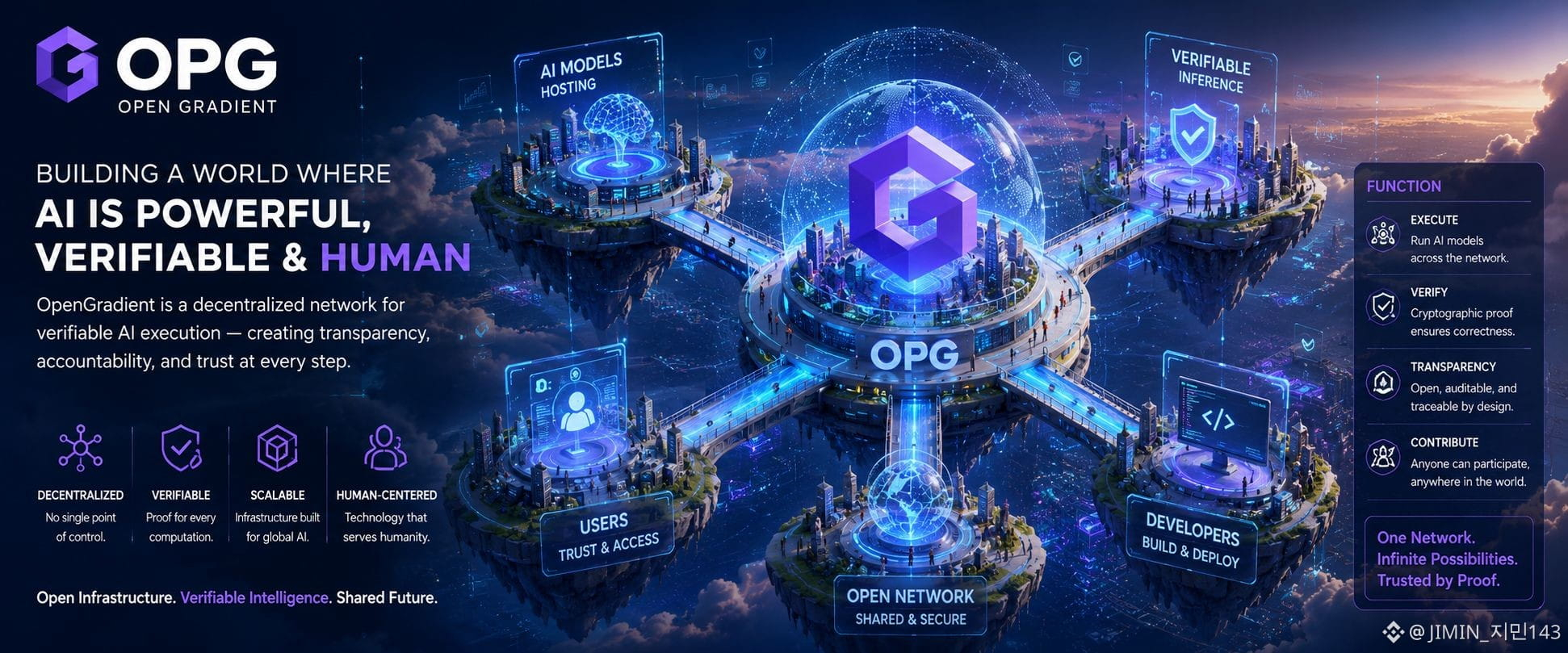
The conversation around artificial intelligence often focuses on model capabilities, benchmarks, and performance improvements. While these areas are important, Open gradient highlights another critical question: how can users verify that an AI system is functioning as intended? Rather than treating trust as an assumption, the project seeks to make it a measurable part of the AI experience.
The Open gradient is developing a decentralized network designed to support AI execution while providing mechanisms that help verify computational processes.$OPG This approach aims to reduce reliance on opaque systems and create greater transparency around how AI-generated outputs are produced. In a world where AI applications continue to expand, the ability to verify computations could become an increasingly valuable feature.
The project also represents a broader shift in thinking about AI infrastructure. Instead of concentrating solely on building more advanced models,@OpenGradient Open gradient focuses on creating the framework that allows intelligence to operate in an open, accountable, and scalable manner. This infrastructure-first perspective recognizes that trust, transparency, and accessibility are becoming essential components of AI adoption.
As organizations and individuals rely more heavily on machine intelligence, expectations around accountability will likely continue to grow. Open Gradient's vision suggests a future where AI systems can provide not only useful outputs but also confidence in the processes that generated them. If successful, this model could contribute to a more transparent and resilient AI ecosystem that balances innovation with trust.#opg $OPG #OpenGreadient $OPG
The conversation around artificial intelligence often focuses on model capabilities, benchmarks, and performance improvements. While these areas are important, Open gradient highlights another critical question: how can users verify that an AI system is functioning as intended? Rather than treating trust as an assumption, the project seeks to make it a measurable part of the AI experience.
The Open gradient is developing a decentralized network designed to support AI execution while providing mechanisms that help verify computational processes.$OPG This approach aims to reduce reliance on opaque systems and create greater transparency around how AI-generated outputs are produced. In a world where AI applications continue to expand, the ability to verify computations could become an increasingly valuable feature.
The project also represents a broader shift in thinking about AI infrastructure. Instead of concentrating solely on building more advanced models,@OpenGradient Open gradient focuses on creating the framework that allows intelligence to operate in an open, accountable, and scalable manner. This infrastructure-first perspective recognizes that trust, transparency, and accessibility are becoming essential components of AI adoption.
As organizations and individuals rely more heavily on machine intelligence, expectations around accountability will likely continue to grow. Open Gradient's vision suggests a future where AI systems can provide not only useful outputs but also confidence in the processes that generated them. If successful, this model could contribute to a more transparent and resilient AI ecosystem that balances innovation with trust.#opg $OPG #OpenGreadient $OPG
The Open gradient is developing a decentralized network designed to support AI execution while providing mechanisms that help verify computational processes.$OPG This approach aims to reduce reliance on opaque systems and create greater transparency around how AI-generated outputs are produced. In a world where AI applications continue to expand, the ability to verify computations could become an increasingly valuable feature.
The project also represents a broader shift in thinking about AI infrastructure. Instead of concentrating solely on building more advanced models,@OpenGradient Open gradient focuses on creating the framework that allows intelligence to operate in an open, accountable, and scalable manner. This infrastructure-first perspective recognizes that trust, transparency, and accessibility are becoming essential components of AI adoption.
As organizations and individuals rely more heavily on machine intelligence, expectations around accountability will likely continue to grow. Open Gradient's vision suggests a future where AI systems can provide not only useful outputs but also confidence in the processes that generated them. If successful, this model could contribute to a more transparent and resilient AI ecosystem that balances innovation with trust.#opg $OPG #OpenGreadient $OPG
78
30
487
·
--
Tell me about OpenGradient and NVIDIA
@OpenGradient
OpenGradient is a privacy-focused chat application that allows users to interact with AI models while protecting their identity and data. It uses several advanced technologies to ensure privacy:
Requests go through an OHTTP relay that removes the user's IP address before forwarding to a gateway running in an AWS Nitro Trusted Execution Environment (TEE). This means the relay sees the user's IP but not what they asked, while the gateway sees the prompt content but not the IP.
The gateway processes prompts in plaintext within sealed enclave memory that even the OpenGradient operator cannot access or log. Conversations are not persisted.
The model provider (in this case, NVIDIA) receives an anonymized request without any identifying user information. So while NVIDIA does see the prompt contents, they don't know who sent it.
Chat history is encrypted client-side in the user's browser and locked to a key stored only on their device. OpenGradient's servers never store conversation data.
Each response from the AI is#OpenGreadient cryptographically signed by the enclave, allowing users to verify its authenticity.$OPG .
Tell me about OpenGradient and NVIDIA
@OpenGradient
OpenGradient is a privacy-focused chat application that allows users to interact with AI models while protecting their identity and data. It uses several advanced technologies to ensure privacy:
Requests go through an OHTTP relay that removes the user's IP address before forwarding to a gateway running in an AWS Nitro Trusted Execution Environment (TEE). This means the relay sees the user's IP but not what they asked, while the gateway sees the prompt content but not the IP.
The gateway processes prompts in plaintext within sealed enclave memory that even the OpenGradient operator cannot access or log. Conversations are not persisted.
The model provider (in this case, NVIDIA) receives an anonymized request without any identifying user information. So while NVIDIA does see the prompt contents, they don't know who sent it.
Chat history is encrypted client-side in the user's browser and locked to a key stored only on their device. OpenGradient's servers never store conversation data.
Each response from the AI is#OpenGreadient cryptographically signed by the enclave, allowing users to verify its authenticity.$OPG .
@OpenGradient
OpenGradient is a privacy-focused chat application that allows users to interact with AI models while protecting their identity and data. It uses several advanced technologies to ensure privacy:
Requests go through an OHTTP relay that removes the user's IP address before forwarding to a gateway running in an AWS Nitro Trusted Execution Environment (TEE). This means the relay sees the user's IP but not what they asked, while the gateway sees the prompt content but not the IP.
The gateway processes prompts in plaintext within sealed enclave memory that even the OpenGradient operator cannot access or log. Conversations are not persisted.
The model provider (in this case, NVIDIA) receives an anonymized request without any identifying user information. So while NVIDIA does see the prompt contents, they don't know who sent it.
Chat history is encrypted client-side in the user's browser and locked to a key stored only on their device. OpenGradient's servers never store conversation data.
Each response from the AI is#OpenGreadient cryptographically signed by the enclave, allowing users to verify its authenticity.$OPG .

3
138

·
--
#opg $OPG
openGradient (OPG)is building the future of decentralised AI by combining blockchain technology with powerful AI solutions, the project aims to create an open and innovative ecosystem where developers and users can benefit from transparent and scalable AI infrastructure
#OpenGreadient
$OPG
{spot}(OPGUSDT)
#opg $OPG
openGradient (OPG)is building the future of decentralised AI by combining blockchain technology with powerful AI solutions, the project aims to create an open and innovative ecosystem where developers and users can benefit from transparent and scalable AI infrastructure
#OpenGreadient
$OPG
openGradient (OPG)is building the future of decentralised AI by combining blockchain technology with powerful AI solutions, the project aims to create an open and innovative ecosystem where developers and users can benefit from transparent and scalable AI infrastructure
#OpenGreadient
$OPG
1
95

#opg $OPG
To be honest, I was surprised when I dug into OpenGradient OPG. I’ve seen 50+ “AI x Web3” pitches this year and 49 of them still end with “and then we call an oracle”.
The real problem is simple. Today’s smart contracts are dumb. They can’t run a model. So every “AI dApp” outsources thinking off-chain, then drags the answer back on-chain with a proof. That’s not intelligence inside the chain. That’s intelligence standing next to it, waiting for a callback.
What OpenGradient actually does is different. It’s building a decentralized network designed to host, run, and verify AI models at scale. Not just store weights. Actually inference. The model runs as part of the network, and the output can be verified by other nodes.
Instead of forcing Solidity to do ML, they treat inference like a network service. Developers submit a task, the network routes it to nodes that can run it, and the result comes back with cryptographic verification. So you get trust without centralizing everything on one GPU cluster.
If models can live and run on-chain infrastructure, the whole game changes. Autonomous agents that actually reason before they transact. DeFi strategies that adapt to market conditions without a human in the loop. Gaming NPCs that aren’t just if-else scripts. Right now we’re missing that because verification is expensive and hosting is centralized.
My take after reading their research: They’re not wrapping OpenAI with a token. They’re attacking the root bottleneck - where does the compute happen and who verifies it. That’s the harder problem. Adoption is still unproven, sure. But at least they’re not pretending an API call is “on-chain AI”.
Question for you: If smart contracts could actually run and verify models natively, what’s the first app you’d build that’s impossible today?
@OpenGradient #OpenGreadient
#opg $OPG
To be honest, I was surprised when I dug into OpenGradient OPG. I’ve seen 50+ “AI x Web3” pitches this year and 49 of them still end with “and then we call an oracle”.
The real problem is simple. Today’s smart contracts are dumb. They can’t run a model. So every “AI dApp” outsources thinking off-chain, then drags the answer back on-chain with a proof. That’s not intelligence inside the chain. That’s intelligence standing next to it, waiting for a callback.
What OpenGradient actually does is different. It’s building a decentralized network designed to host, run, and verify AI models at scale. Not just store weights. Actually inference. The model runs as part of the network, and the output can be verified by other nodes.
Instead of forcing Solidity to do ML, they treat inference like a network service. Developers submit a task, the network routes it to nodes that can run it, and the result comes back with cryptographic verification. So you get trust without centralizing everything on one GPU cluster.
If models can live and run on-chain infrastructure, the whole game changes. Autonomous agents that actually reason before they transact. DeFi strategies that adapt to market conditions without a human in the loop. Gaming NPCs that aren’t just if-else scripts. Right now we’re missing that because verification is expensive and hosting is centralized.
My take after reading their research: They’re not wrapping OpenAI with a token. They’re attacking the root bottleneck - where does the compute happen and who verifies it. That’s the harder problem. Adoption is still unproven, sure. But at least they’re not pretending an API call is “on-chain AI”.
Question for you: If smart contracts could actually run and verify models natively, what’s the first app you’d build that’s impossible today?
@OpenGradient #OpenGreadient
To be honest, I was surprised when I dug into OpenGradient OPG. I’ve seen 50+ “AI x Web3” pitches this year and 49 of them still end with “and then we call an oracle”.
The real problem is simple. Today’s smart contracts are dumb. They can’t run a model. So every “AI dApp” outsources thinking off-chain, then drags the answer back on-chain with a proof. That’s not intelligence inside the chain. That’s intelligence standing next to it, waiting for a callback.
What OpenGradient actually does is different. It’s building a decentralized network designed to host, run, and verify AI models at scale. Not just store weights. Actually inference. The model runs as part of the network, and the output can be verified by other nodes.
Instead of forcing Solidity to do ML, they treat inference like a network service. Developers submit a task, the network routes it to nodes that can run it, and the result comes back with cryptographic verification. So you get trust without centralizing everything on one GPU cluster.
If models can live and run on-chain infrastructure, the whole game changes. Autonomous agents that actually reason before they transact. DeFi strategies that adapt to market conditions without a human in the loop. Gaming NPCs that aren’t just if-else scripts. Right now we’re missing that because verification is expensive and hosting is centralized.
My take after reading their research: They’re not wrapping OpenAI with a token. They’re attacking the root bottleneck - where does the compute happen and who verifies it. That’s the harder problem. Adoption is still unproven, sure. But at least they’re not pretending an API call is “on-chain AI”.
Question for you: If smart contracts could actually run and verify models natively, what’s the first app you’d build that’s impossible today?
@OpenGradient #OpenGreadient

8
7
279

·
--
#opg $OPG
I tried OpenGradient Chat today on Binance Square; their AI is fast and understands technical questions well. Project $OPG looks solid for the future and the #OPG points are motivating to keep going. @OpenGradient thanks for the daily updates.
#OpenGreadient
#OPG
#opg $OPG
I tried OpenGradient Chat today on Binance Square; their AI is fast and understands technical questions well. Project $OPG looks solid for the future and the #OPG points are motivating to keep going. @OpenGradient thanks for the daily updates.
#OpenGreadient
#OPG
I tried OpenGradient Chat today on Binance Square; their AI is fast and understands technical questions well. Project $OPG looks solid for the future and the #OPG points are motivating to keep going. @OpenGradient thanks for the daily updates.
#OpenGreadient
#OPG
21

#opg $OPG
The OpenGradient project continues to solidify its position as one of the leading decentralized AI infrastructure projects. It offers a specialized network for running AI models and verifying their results transparently and audibly via the blockchain. Stay updated with the latest news, updates, and developments at @OpenGradient with the token OPG$
#OpenGreadient
#opg $OPG
The OpenGradient project continues to solidify its position as one of the leading decentralized AI infrastructure projects. It offers a specialized network for running AI models and verifying their results transparently and audibly via the blockchain. Stay updated with the latest news, updates, and developments at @OpenGradient with the token OPG$
#OpenGreadient
The OpenGradient project continues to solidify its position as one of the leading decentralized AI infrastructure projects. It offers a specialized network for running AI models and verifying their results transparently and audibly via the blockchain. Stay updated with the latest news, updates, and developments at @OpenGradient with the token OPG$
#OpenGreadient
17
·
--
#opg $OPG
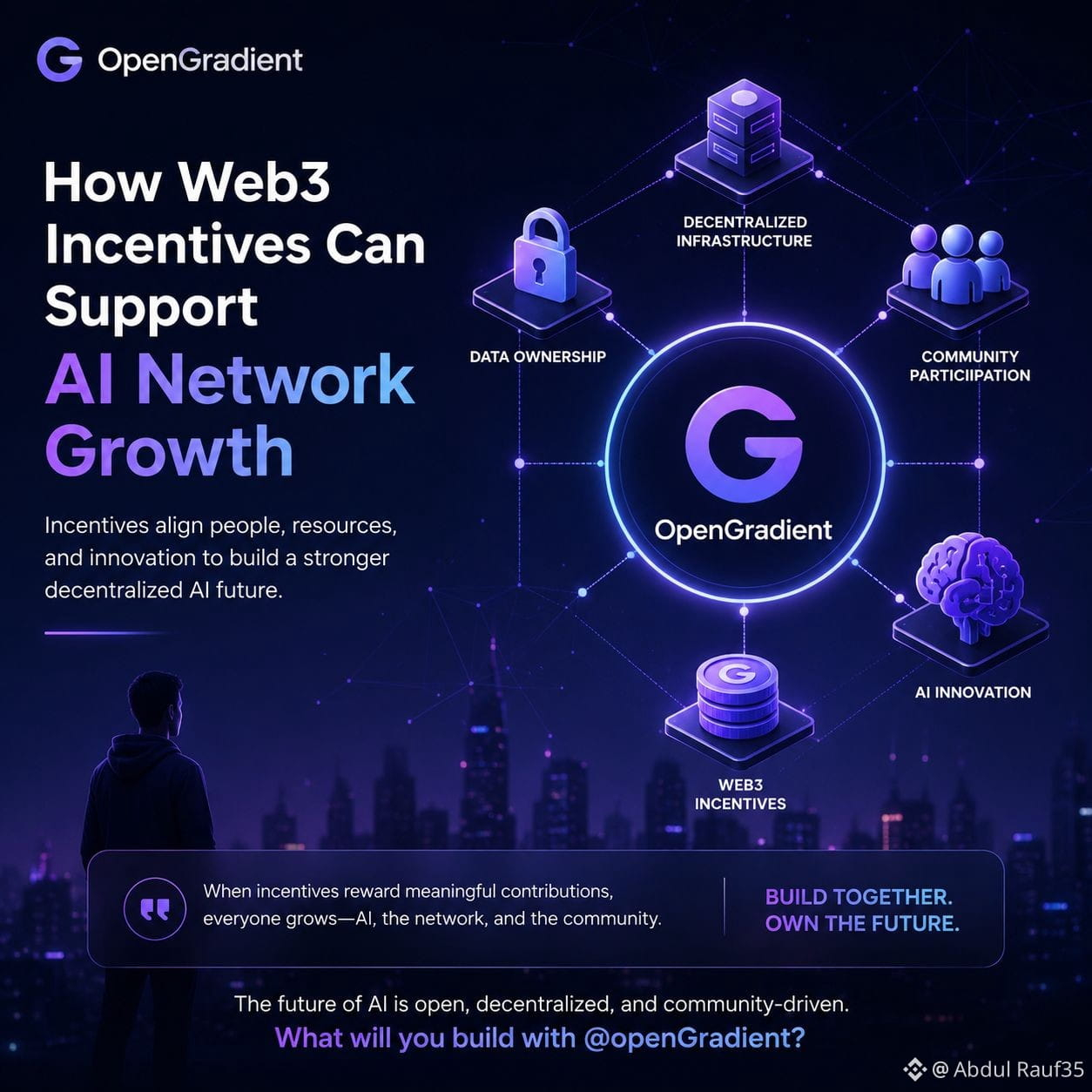
I think the next wave of AI growth will depend as much on incentives as on model quality. @openGradient shows how Web3 can encourage builders, node operators, and contributors to strengthen AI infrastructure while preserving transparency and data ownership.
What stands out to me about @openGradient is the idea that participants can help expand the network because incentives reward meaningful contributions instead of relying only on centralized platforms. Could this alignment between community and technology become the foundation for more trustworthy AI ecosystems?
#OpenGreadient $OPG @OpenGradient
#opg $OPG
I think the next wave of AI growth will depend as much on incentives as on model quality. @openGradient shows how Web3 can encourage builders, node operators, and contributors to strengthen AI infrastructure while preserving transparency and data ownership.
What stands out to me about @openGradient is the idea that participants can help expand the network because incentives reward meaningful contributions instead of relying only on centralized platforms. Could this alignment between community and technology become the foundation for more trustworthy AI ecosystems?
#OpenGreadient $OPG @OpenGradient
I think the next wave of AI growth will depend as much on incentives as on model quality. @openGradient shows how Web3 can encourage builders, node operators, and contributors to strengthen AI infrastructure while preserving transparency and data ownership.
What stands out to me about @openGradient is the idea that participants can help expand the network because incentives reward meaningful contributions instead of relying only on centralized platforms. Could this alignment between community and technology become the foundation for more trustworthy AI ecosystems?
#OpenGreadient $OPG @OpenGradient
12
3
92
#opg $OPG
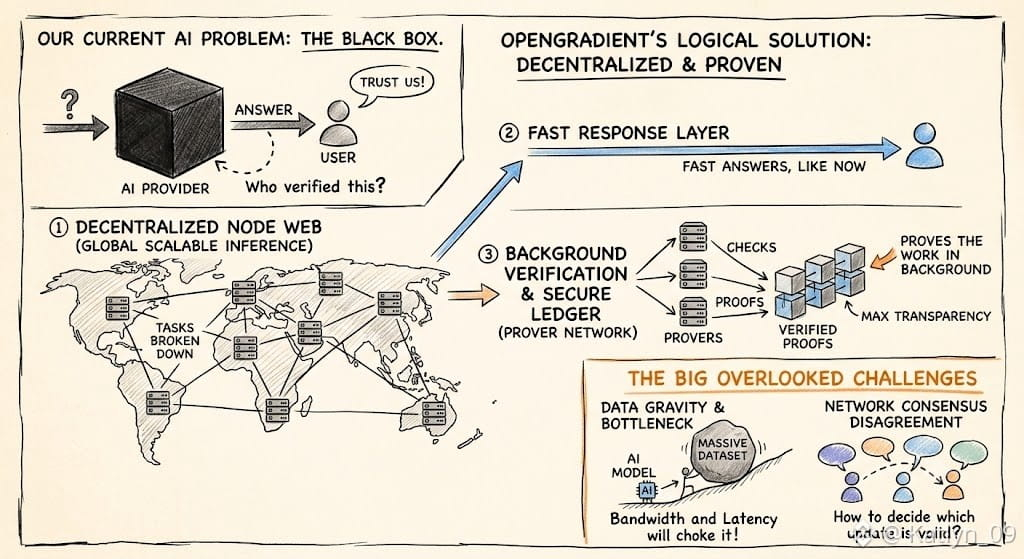
The way we handle AI right now feels like blindly trusting a black box. When you ask an AI a question, you just have to take the provider's word that it used the right model and didn't tweak the answer. I’ve been looking into OpenGradient lately, and it flips this entire dynamic on its head.
Instead of relying on corporate promises, think of a setup where AI tasks are broken down and handled by a global, decentralized web of computers. What stands out to me isn't just that it hosts and runs these models at scale, but that it actually proves the work. By separating the heavy lifting of running the AI from the actual verification process, you get fast responses while a secure ledger confirms the computation in the background. It brings a level of transparency we haven't seen before.
But looking at this open intelligence model raises a massive, overlooked question: how do we deal with the data gravity problem? If AI models are scattered across a global decentralized infrastructure, moving massive datasets around to train or fine-tune them becomes a huge logistical bottleneck. Bandwidth costs and latency could choke the system before it even starts. Plus, if we are aiming for a truly open network, who decides which model updates are valid when independent nodes disagree on a learning path?
Shifting AI from a centralized monopoly to an open, verifiable ecosystem is an exciting concept, but solving how data actually flows through it will be the real test.
@OpenGradient #OpenGreadient
#opg $OPG
The way we handle AI right now feels like blindly trusting a black box. When you ask an AI a question, you just have to take the provider's word that it used the right model and didn't tweak the answer. I’ve been looking into OpenGradient lately, and it flips this entire dynamic on its head.
Instead of relying on corporate promises, think of a setup where AI tasks are broken down and handled by a global, decentralized web of computers. What stands out to me isn't just that it hosts and runs these models at scale, but that it actually proves the work. By separating the heavy lifting of running the AI from the actual verification process, you get fast responses while a secure ledger confirms the computation in the background. It brings a level of transparency we haven't seen before.
But looking at this open intelligence model raises a massive, overlooked question: how do we deal with the data gravity problem? If AI models are scattered across a global decentralized infrastructure, moving massive datasets around to train or fine-tune them becomes a huge logistical bottleneck. Bandwidth costs and latency could choke the system before it even starts. Plus, if we are aiming for a truly open network, who decides which model updates are valid when independent nodes disagree on a learning path?
Shifting AI from a centralized monopoly to an open, verifiable ecosystem is an exciting concept, but solving how data actually flows through it will be the real test.
@OpenGradient #OpenGreadient
The way we handle AI right now feels like blindly trusting a black box. When you ask an AI a question, you just have to take the provider's word that it used the right model and didn't tweak the answer. I’ve been looking into OpenGradient lately, and it flips this entire dynamic on its head.
Instead of relying on corporate promises, think of a setup where AI tasks are broken down and handled by a global, decentralized web of computers. What stands out to me isn't just that it hosts and runs these models at scale, but that it actually proves the work. By separating the heavy lifting of running the AI from the actual verification process, you get fast responses while a secure ledger confirms the computation in the background. It brings a level of transparency we haven't seen before.
But looking at this open intelligence model raises a massive, overlooked question: how do we deal with the data gravity problem? If AI models are scattered across a global decentralized infrastructure, moving massive datasets around to train or fine-tune them becomes a huge logistical bottleneck. Bandwidth costs and latency could choke the system before it even starts. Plus, if we are aiming for a truly open network, who decides which model updates are valid when independent nodes disagree on a learning path?
Shifting AI from a centralized monopoly to an open, verifiable ecosystem is an exciting concept, but solving how data actually flows through it will be the real test.
@OpenGradient #OpenGreadient
17
9
397


Article
OPG$OPG
{future}(OPGUSDT)
I’ll be honest—I’m exhausted. Not from the charts. Not from the volatility. Not even from watching people draw 47 trendlines on the same candle.
I’m exhausted from pretending that AI outputs are somehow “trustworthy” just because they arrive in a confident tone. 😏
Think about it. We obsess over verifying oracles, validating signatures, and auditing smart contracts down to the last line of code. Yet when an AI gives us a complex answer, we basically shrug and say, “Looks smart enough.”
The process goes something like this:
🤖 Send prompt.
🤖 Receive answer.
🤖 Pray.
That’s not verification. That’s gambling with better branding.
It’s like ordering a mystery meal in complete darkness and only turning on the lights after you’ve already swallowed. Sure, it might be fine. Or it might explain why your stomach is making blockchain noises.
And somehow we’ve normalized this.
We’ve built systems that move capital based on sentiment scores generated by a single model. We ignore hallucinations because speed is alpha. We celebrate automation while quietly accepting that nobody can fully explain how the conclusion was reached.
Then along comes OpenGradient, essentially saying, “What if we actually proved the inference happened the way we claim it did?”
Crazy concept, I know.
The promise isn’t just AI. It’s verifiable AI. Every inference cryptographically anchored instead of wrapped in a blanket of trust-me-bro economics.
And then there’s persistent context.
Most AI systems treat every conversation like a first date. No memory. No continuity. No accountability.
OpenGradient wants models that remember prior reasoning, validate it against new information, and produce outputs that come with their own audit trail—as if every answer arrives carrying a notarized birth certificate. 📜😂
Now here’s the uncomfortable part.
If every inference becomes verifiable, we lose our favorite excuse.
No more blaming the oracle.
No more blaming the model.
No more blaming the black box.
At some point, the only thing left to question is our own judgment.
And honestly? That’s far more terrifying than any hallucinating AI.
Because a transparent mirror doesn’t just reveal the machine.
It reveals the person staring into it. 🪞
#OpenGreadient
OPG
$OPG
I’ll be honest—I’m exhausted. Not from the charts. Not from the volatility. Not even from watching people draw 47 trendlines on the same candle.
I’m exhausted from pretending that AI outputs are somehow “trustworthy” just because they arrive in a confident tone. 😏
Think about it. We obsess over verifying oracles, validating signatures, and auditing smart contracts down to the last line of code. Yet when an AI gives us a complex answer, we basically shrug and say, “Looks smart enough.”
The process goes something like this:
🤖 Send prompt.
🤖 Receive answer.
🤖 Pray.
That’s not verification. That’s gambling with better branding.
It’s like ordering a mystery meal in complete darkness and only turning on the lights after you’ve already swallowed. Sure, it might be fine. Or it might explain why your stomach is making blockchain noises.
And somehow we’ve normalized this.
We’ve built systems that move capital based on sentiment scores generated by a single model. We ignore hallucinations because speed is alpha. We celebrate automation while quietly accepting that nobody can fully explain how the conclusion was reached.
Then along comes OpenGradient, essentially saying, “What if we actually proved the inference happened the way we claim it did?”
Crazy concept, I know.
The promise isn’t just AI. It’s verifiable AI. Every inference cryptographically anchored instead of wrapped in a blanket of trust-me-bro economics.
And then there’s persistent context.
Most AI systems treat every conversation like a first date. No memory. No continuity. No accountability.
OpenGradient wants models that remember prior reasoning, validate it against new information, and produce outputs that come with their own audit trail—as if every answer arrives carrying a notarized birth certificate. 📜😂
Now here’s the uncomfortable part.
If every inference becomes verifiable, we lose our favorite excuse.
No more blaming the oracle.
No more blaming the model.
No more blaming the black box.
At some point, the only thing left to question is our own judgment.
And honestly? That’s far more terrifying than any hallucinating AI.
Because a transparent mirror doesn’t just reveal the machine.
It reveals the person staring into it. 🪞
#OpenGreadient
I’ll be honest—I’m exhausted. Not from the charts. Not from the volatility. Not even from watching people draw 47 trendlines on the same candle.
I’m exhausted from pretending that AI outputs are somehow “trustworthy” just because they arrive in a confident tone. 😏
Think about it. We obsess over verifying oracles, validating signatures, and auditing smart contracts down to the last line of code. Yet when an AI gives us a complex answer, we basically shrug and say, “Looks smart enough.”
The process goes something like this:
🤖 Send prompt.
🤖 Receive answer.
🤖 Pray.
That’s not verification. That’s gambling with better branding.
It’s like ordering a mystery meal in complete darkness and only turning on the lights after you’ve already swallowed. Sure, it might be fine. Or it might explain why your stomach is making blockchain noises.
And somehow we’ve normalized this.
We’ve built systems that move capital based on sentiment scores generated by a single model. We ignore hallucinations because speed is alpha. We celebrate automation while quietly accepting that nobody can fully explain how the conclusion was reached.
Then along comes OpenGradient, essentially saying, “What if we actually proved the inference happened the way we claim it did?”
Crazy concept, I know.
The promise isn’t just AI. It’s verifiable AI. Every inference cryptographically anchored instead of wrapped in a blanket of trust-me-bro economics.
And then there’s persistent context.
Most AI systems treat every conversation like a first date. No memory. No continuity. No accountability.
OpenGradient wants models that remember prior reasoning, validate it against new information, and produce outputs that come with their own audit trail—as if every answer arrives carrying a notarized birth certificate. 📜😂
Now here’s the uncomfortable part.
If every inference becomes verifiable, we lose our favorite excuse.
No more blaming the oracle.
No more blaming the model.
No more blaming the black box.
At some point, the only thing left to question is our own judgment.
And honestly? That’s far more terrifying than any hallucinating AI.
Because a transparent mirror doesn’t just reveal the machine.
It reveals the person staring into it. 🪞
#OpenGreadient
53
Log in to explore more content
Join global crypto users on Binance Square
⚡️ Get latest and useful information about crypto.
💬 Trusted by the world’s largest crypto exchange.
👍 Discover real insights from verified creators.
Email / Phone number
Trending Topics
1
#FedRateWatch
1.1M views
5,491 Discussing
2
#ZcashRises6%
4,143 views
134 Discussing
3
#XRPSinks10%
1,633 views
91 Discussing
4
#BitcoinETFsShed$450M
310 views
30 Discussing
5
#CircleOpensArcMainnet
1,255 views
60 Discussing
6
#ZcashHoldersBackNU7Upgrade
10,011 views
225 Discussing
7
#MSTRTradingVolumeSurpassesMorganStanley
13,079 views
414 Discussing
8
#BitcoinFalls4%
29,550 views
689 Discussing
9
#SKHynixInTalksToMakeMemoryChipsInUS
13,822 views
289 Discussing
10
#OpenAIDiscussesNewFundingAt$1.2TValuation
3,175 views
47 Discussing