

#grvr
grvr
1,029 views
9 Discussing
Hot
Latest

·
--
Deconstructing the Privacy Backbone of a Hybrid DEX: Why I’m Watching GRVT’s Asynchronous Settlement Black Box
In the perpetual contracts arena, only the points spreadsheet is still alive. You farm volume, hedge, and exploit funding-rate arbitrage—treating leverage like a free lunch while you bleed on the edge of the blade. But I’ve been staring at @GRVT’s on-chain contracts for a while. After digging through their technical documents before the mainnet launch, I found that on the eve of TGE, the narrative shifted from a “points-farming game” to “settlement infrastructure.”
Most people only see GRVT laying down nodes on zkSync and Season 2 points running wild. But there’s an underlying design in the whitepaper that hasn’t really been chewed through: an asynchronous privacy settlement routing engine. Don’t get intimidated by the long name. In plain terms, it’s “a black box that stuffs Wall Street’s matching hall into a smart contract.”
Previously, when we opened positions on dYdX or GMX, we were basically clinging to the credibility of an off-chain orderer—betting it wouldn’t become the next FTX. But GRVT breaks that logic. Once you deposit margin into the MPC wallet, the system doesn’t mechanically wait for on-chain confirmations. Instead, it matches off-chain through the engine at sub-millisecond speed, then compresses batches of transactions into a zero-knowledge proof using ZK Validium, automatically routing them to on-chain settlement. It’s like you hand over orders, and they turn into a settlement butler that never sleeps for 24 hours—routing positions with microsecond precision to where capital efficiency is highest.
That’s also why GRVT’s current positioning isn’t just a “points-farming machine.” It’s more like a capital flow dispatch board. In an era where funding rates across the network are being compressed and volume-farming ROI falls to 5–25%, if you insist on smashing your head into high yields, the outcome is often that your principal gets wiped out in one pot. GRVT’s approach—handing sovereignty to the algorithm and encapsulating complex strategies into the underlying layer—is a pragmatic step forward.
Of course, sending assets into the hybrid architecture’s “privacy tunnel” means you have to take on more complicated smart contract composition risks (and yes, that part deserves venting): the more complex the architecture, the easier it is for the permissioned “black box” of the off-chain engine to go haywire. Whether the Bermuda license can really cover the off-chain engine’s room to do harm is still a big question mark. But at least, it’s not telling those empty points stories anymore.
GRVT’s evolution, at its core, is about taming transaction capital—from a chaotic “blindly chase profit” state—into the mathematical logic of “condition-triggered” execution. @grvt_io #grvr $BTC
Deconstructing the Privacy Backbone of a Hybrid DEX: Why I’m Watching GRVT’s Asynchronous Settlement Black Box
In the perpetual contracts arena, only the points spreadsheet is still alive. You farm volume, hedge, and exploit funding-rate arbitrage—treating leverage like a free lunch while you bleed on the edge of the blade. But I’ve been staring at @GRVT’s on-chain contracts for a while. After digging through their technical documents before the mainnet launch, I found that on the eve of TGE, the narrative shifted from a “points-farming game” to “settlement infrastructure.”
Most people only see GRVT laying down nodes on zkSync and Season 2 points running wild. But there’s an underlying design in the whitepaper that hasn’t really been chewed through: an asynchronous privacy settlement routing engine. Don’t get intimidated by the long name. In plain terms, it’s “a black box that stuffs Wall Street’s matching hall into a smart contract.”
Previously, when we opened positions on dYdX or GMX, we were basically clinging to the credibility of an off-chain orderer—betting it wouldn’t become the next FTX. But GRVT breaks that logic. Once you deposit margin into the MPC wallet, the system doesn’t mechanically wait for on-chain confirmations. Instead, it matches off-chain through the engine at sub-millisecond speed, then compresses batches of transactions into a zero-knowledge proof using ZK Validium, automatically routing them to on-chain settlement. It’s like you hand over orders, and they turn into a settlement butler that never sleeps for 24 hours—routing positions with microsecond precision to where capital efficiency is highest.
That’s also why GRVT’s current positioning isn’t just a “points-farming machine.” It’s more like a capital flow dispatch board. In an era where funding rates across the network are being compressed and volume-farming ROI falls to 5–25%, if you insist on smashing your head into high yields, the outcome is often that your principal gets wiped out in one pot. GRVT’s approach—handing sovereignty to the algorithm and encapsulating complex strategies into the underlying layer—is a pragmatic step forward.
Of course, sending assets into the hybrid architecture’s “privacy tunnel” means you have to take on more complicated smart contract composition risks (and yes, that part deserves venting): the more complex the architecture, the easier it is for the permissioned “black box” of the off-chain engine to go haywire. Whether the Bermuda license can really cover the off-chain engine’s room to do harm is still a big question mark. But at least, it’s not telling those empty points stories anymore.
GRVT’s evolution, at its core, is about taming transaction capital—from a chaotic “blindly chase profit” state—into the mathematical logic of “condition-triggered” execution. @grvt_io #grvr $BTC
In the perpetual contracts arena, only the points spreadsheet is still alive. You farm volume, hedge, and exploit funding-rate arbitrage—treating leverage like a free lunch while you bleed on the edge of the blade. But I’ve been staring at @GRVT’s on-chain contracts for a while. After digging through their technical documents before the mainnet launch, I found that on the eve of TGE, the narrative shifted from a “points-farming game” to “settlement infrastructure.”
Most people only see GRVT laying down nodes on zkSync and Season 2 points running wild. But there’s an underlying design in the whitepaper that hasn’t really been chewed through: an asynchronous privacy settlement routing engine. Don’t get intimidated by the long name. In plain terms, it’s “a black box that stuffs Wall Street’s matching hall into a smart contract.”
Previously, when we opened positions on dYdX or GMX, we were basically clinging to the credibility of an off-chain orderer—betting it wouldn’t become the next FTX. But GRVT breaks that logic. Once you deposit margin into the MPC wallet, the system doesn’t mechanically wait for on-chain confirmations. Instead, it matches off-chain through the engine at sub-millisecond speed, then compresses batches of transactions into a zero-knowledge proof using ZK Validium, automatically routing them to on-chain settlement. It’s like you hand over orders, and they turn into a settlement butler that never sleeps for 24 hours—routing positions with microsecond precision to where capital efficiency is highest.
That’s also why GRVT’s current positioning isn’t just a “points-farming machine.” It’s more like a capital flow dispatch board. In an era where funding rates across the network are being compressed and volume-farming ROI falls to 5–25%, if you insist on smashing your head into high yields, the outcome is often that your principal gets wiped out in one pot. GRVT’s approach—handing sovereignty to the algorithm and encapsulating complex strategies into the underlying layer—is a pragmatic step forward.
Of course, sending assets into the hybrid architecture’s “privacy tunnel” means you have to take on more complicated smart contract composition risks (and yes, that part deserves venting): the more complex the architecture, the easier it is for the permissioned “black box” of the off-chain engine to go haywire. Whether the Bermuda license can really cover the off-chain engine’s room to do harm is still a big question mark. But at least, it’s not telling those empty points stories anymore.
GRVT’s evolution, at its core, is about taming transaction capital—from a chaotic “blindly chase profit” state—into the mathematical logic of “condition-triggered” execution. @grvt_io #grvr $BTC
142

·
--
One of the interesting directions for the development of the crypto market is the combination of the convenience of traditional trading platforms and the advantages of blockchain.@grvt_io is working exactly in this direction, offering a modern approach to trading digital assets.It’s interesting to watch how the project expands its capabilities and attracts new users... #grvr
One of the interesting directions for the development of the crypto market is the combination of the convenience of traditional trading platforms and the advantages of blockchain.@grvt_io is working exactly in this direction, offering a modern approach to trading digital assets.It’s interesting to watch how the project expands its capabilities and attracts new users... #grvr
104

·
--
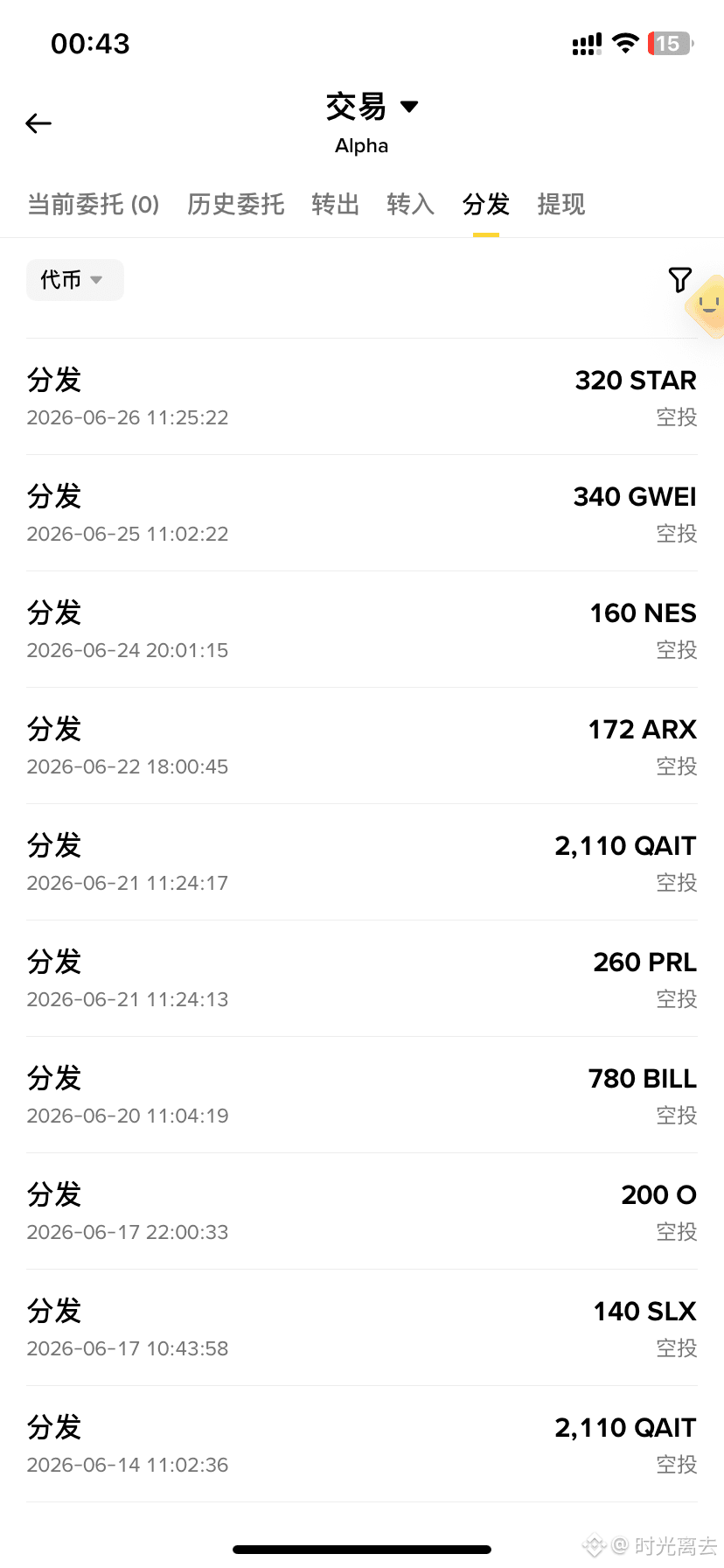
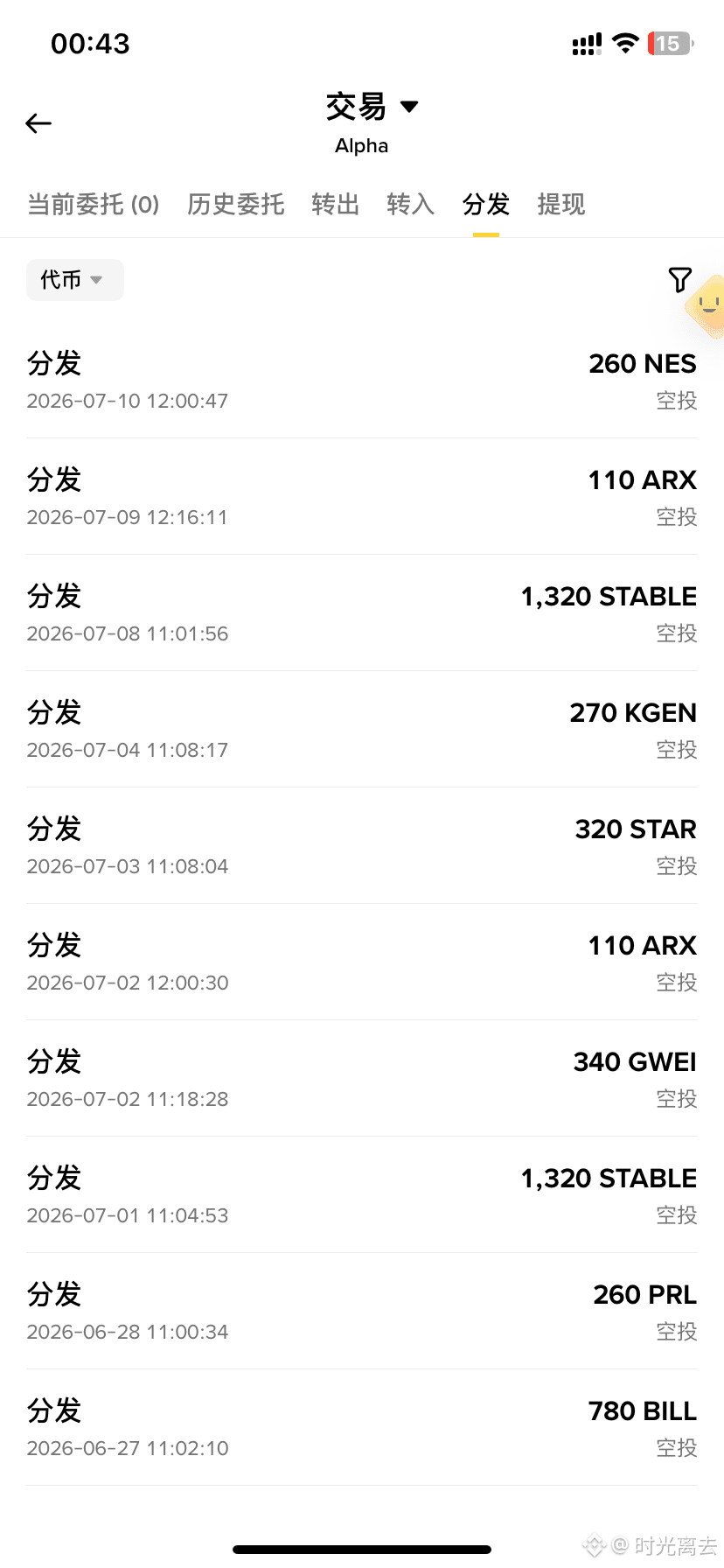
#grvr Binance Wallet tasks have just been released today. Basically, you just blindly rush into it.
Now I’m doing the Alpha with the trading race—basically you take whatever you can get. You must do the wallet tasks. This time there are 50,000 spots, and each person gets about $8. It’s another delicious meal—pork knuckle rice.
In a bear market, make money whenever you can, no matter how much. Earning something is better than losing money. Save your ammo and wait for the right opportunity.
#grvr Binance Wallet tasks have just been released today. Basically, you just blindly rush into it.
Now I’m doing the Alpha with the trading race—basically you take whatever you can get. You must do the wallet tasks. This time there are 50,000 spots, and each person gets about $8. It’s another delicious meal—pork knuckle rice.
In a bear market, make money whenever you can, no matter how much. Earning something is better than losing money. Save your ammo and wait for the right opportunity.
Now I’m doing the Alpha with the trading race—basically you take whatever you can get. You must do the wallet tasks. This time there are 50,000 spots, and each person gets about $8. It’s another delicious meal—pork knuckle rice.
In a bear market, make money whenever you can, no matter how much. Earning something is better than losing money. Save your ammo and wait for the right opportunity.
5
7
1.5k
Log in to explore more content
Join global crypto users on Binance Square
⚡️ Get latest and useful information about crypto.
💬 Trusted by the world’s largest crypto exchange.
👍 Discover real insights from verified creators.
Email / Phone number
Trending Topics
1
#MetaMaskExitsLidoValidatorsAfterSecurityIncident
13,769 views
384 Discussing
2
#MicronBeatsEarningsLiftsGuidance
13,003 views
330 Discussing
3
#CFTCSubmitsTwoEventContractRulesToWhiteHouse
11,825 views
317 Discussing
4
#BitcoinClears$85200
28,248 views
301 Discussing
5
#AltcoinSeasonIndexHoldsAbove60For5Days
139,322 views
1,798 Discussing
6
#USADPAdds90000JobsInSeptember
63,729 views
1,041 Discussing
7
#USCorePCEEasesTo3%InAugust
44,028 views
707 Discussing
8
#KospiPostsWorstQuarterSince2020
25,095 views
593 Discussing
9
#SECToClarifyOnChainFundraisingRules
62,769 views
793 Discussing
10
#UKFCAOpensCryptoFirmAuthorization
58,477 views
656 Discussing