
#ethetfs
ethetfs
39.1M views
21,188 Discussing
Join the dynamic community of Ethereum-based exchange-traded funds. This hashtag connects investors and blockchain advocates who are exploring the fusion of traditional finance and decentralized technologies. Engage in discussions about investment strategies, market trends, and the future potential of Ethereum ETFs.
Hot
Latest


·
--
Grayscale Withdraws Ethereum Futures ETF Application From SECAccording to PANews, Grayscale, a cryptocurrency asset management company, has submitted a notice to the U.S. Securities and Exchange Commission (SEC) on May 7th to withdraw its Ethereum (ETH) futures ETF application. The SEC was originally scheduled to make a final decision on Grayscale's Ethereum futures ETF on May 30th. Grayscale initially submitted the 19b-4 application for the Ethereum futures ETF on September 19, 2023. If approved, the ETF would have been listed on the New York Stock Exchange.
Grayscale Withdraws Ethereum Futures ETF Application From SEC
According to PANews, Grayscale, a cryptocurrency asset management company, has submitted a notice to the U.S. Securities and Exchange Commission (SEC) on May 7th to withdraw its Ethereum (ETH) futures ETF application. The SEC was originally scheduled to make a final decision on Grayscale's Ethereum futures ETF on May 30th. Grayscale initially submitted the 19b-4 application for the Ethereum futures ETF on September 19, 2023. If approved, the ETF would have been listed on the New York Stock Exchange.
12
1
16
16.3k


·
--
🔥 Ethereum captures funds' attention
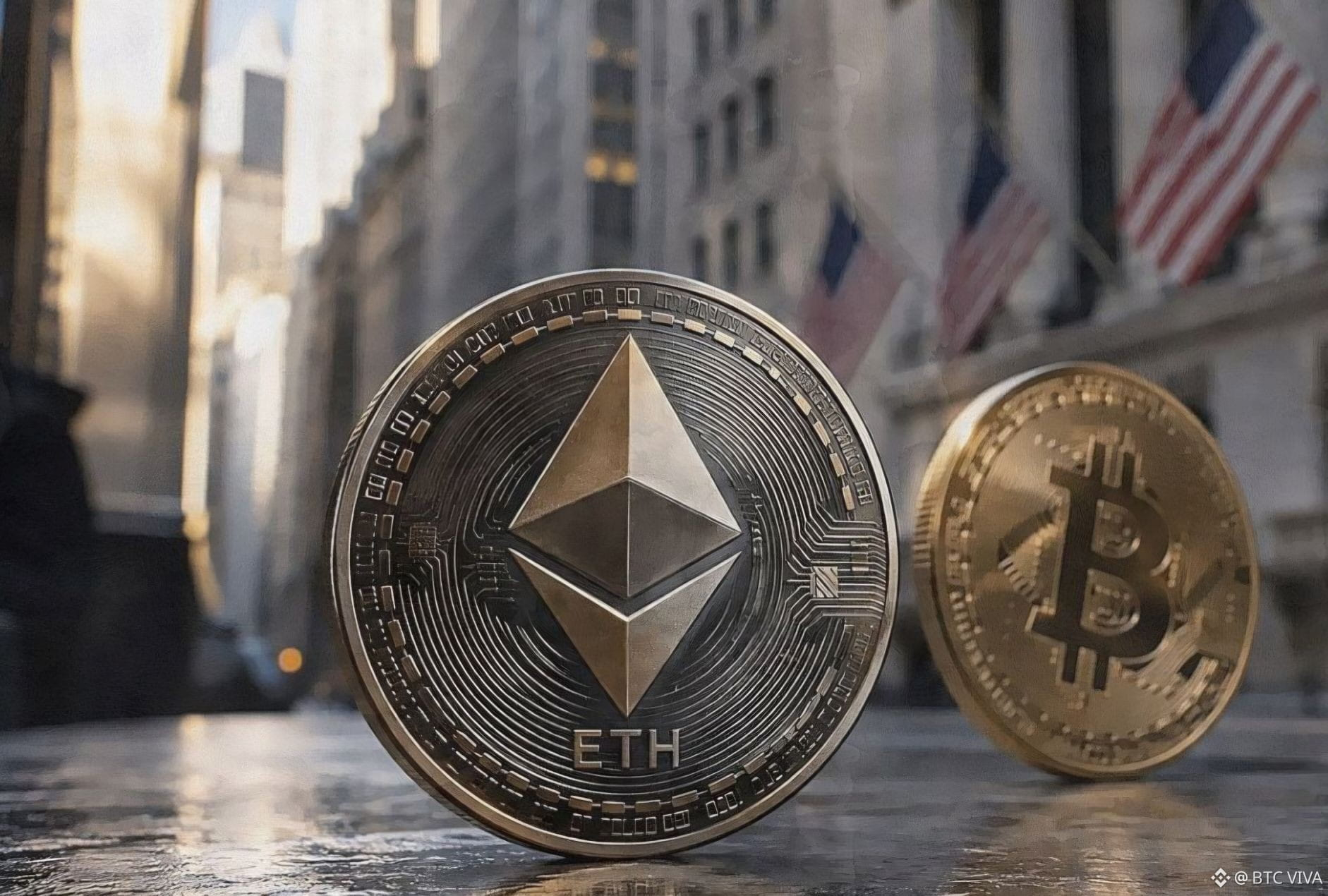
Between September 8 and 11, US Bitcoin ETFs saw outflows of $462.7 million, while Ethereum ETFs recorded gains.
📊 On September 11, spot Ethereum ETFs attracted $216.4 million, with weekly inflows reaching approximately $197 million.
This may indicate a temporary reallocation of institutional capital ahead of the Federal Reserve's decision.
#SECReceivesGrayscaleLitecoinTrustETFFiling
#US10YearTreasuryYieldNears5%
#ETHETFS #ETFvsBTC
$ETH
{spot}(ETHUSDT)
$BTC
{spot}(BTCUSDT)
🔥 Ethereum captures funds' attention
Between September 8 and 11, US Bitcoin ETFs saw outflows of $462.7 million, while Ethereum ETFs recorded gains.
📊 On September 11, spot Ethereum ETFs attracted $216.4 million, with weekly inflows reaching approximately $197 million.
This may indicate a temporary reallocation of institutional capital ahead of the Federal Reserve's decision.
#SECReceivesGrayscaleLitecoinTrustETFFiling
#US10YearTreasuryYieldNears5%
#ETHETFS #ETFvsBTC
$ETH
$BTC
Between September 8 and 11, US Bitcoin ETFs saw outflows of $462.7 million, while Ethereum ETFs recorded gains.
📊 On September 11, spot Ethereum ETFs attracted $216.4 million, with weekly inflows reaching approximately $197 million.
This may indicate a temporary reallocation of institutional capital ahead of the Federal Reserve's decision.
#SECReceivesGrayscaleLitecoinTrustETFFiling
#US10YearTreasuryYieldNears5%
#ETHETFS #ETFvsBTC
$ETH
$BTC
5
196

·
--
Verified
🚨 $ETH ETF DEMAND IS BACK!
Ethereum is getting fresh institutional attention 👀
📊 BlackRock’s ETHA reportedly saw around $149M in inflows on Sept. 11.
After ETH’s strong rally, the big question now is:
🔥 Can ETF demand push ETH toward another breakout?
Bullish or bearish on $ETH next? 👇
#EtherRalliesAsBearishBetsLiquidate #US10YearTreasuryYieldNears5% #ETHETFS #Binance
{spot}(ETHUSDT)
Bullish🟢
Bearish🔴
🚨 $ETH ETF DEMAND IS BACK!
Ethereum is getting fresh institutional attention 👀
📊 BlackRock’s ETHA reportedly saw around $149M in inflows on Sept. 11.
After ETH’s strong rally, the big question now is:
🔥 Can ETF demand push ETH toward another breakout?
Bullish or bearish on $ETH next? 👇
#EtherRalliesAsBearishBetsLiquidate #US10YearTreasuryYieldNears5% #ETHETFS #Binance
Bullish🟢
Bearish🔴
Ethereum is getting fresh institutional attention 👀
📊 BlackRock’s ETHA reportedly saw around $149M in inflows on Sept. 11.
After ETH’s strong rally, the big question now is:
🔥 Can ETF demand push ETH toward another breakout?
Bullish or bearish on $ETH next? 👇
#EtherRalliesAsBearishBetsLiquidate #US10YearTreasuryYieldNears5% #ETHETFS #Binance
Bullish🟢
Bearish🔴
BULLISH🟢
BEARISH🔴
4 day(s) left
ETH-2.50%
ETHAETF-3.69%
112

#ETHETFS
Ethereum moves back above 2,500 $ with ETF support
Fact: spot Ethereum ETFs attracted about $141.4 million on September 4, while ETH broke above 2,500 $ in the same move. The flows were led notably by BlackRock and Fidelity products. �
The Coin Republic +2
Why it matters: ETH is starting to participate in the rebound instead of remaining solely behind Bitcoin. This improves the backdrop for major altcoins, but confirmation still needs to hold for several sessions.
To watch:
support: 2,500 $ ;
secondary support: 2,400 $ ;
relative indicator: ETH/BTC.
Hypothesis: a hold above 2,500 $ combined with a rise in ETH/BTC would be a signal of a more durable rotation toward Ethereum. Without that, the move may remain only a catch-up rally.
#ETHETFS
Ethereum moves back above 2,500 $ with ETF support
Fact: spot Ethereum ETFs attracted about $141.4 million on September 4, while ETH broke above 2,500 $ in the same move. The flows were led notably by BlackRock and Fidelity products. �
The Coin Republic +2
Why it matters: ETH is starting to participate in the rebound instead of remaining solely behind Bitcoin. This improves the backdrop for major altcoins, but confirmation still needs to hold for several sessions.
To watch:
support: 2,500 $ ;
secondary support: 2,400 $ ;
relative indicator: ETH/BTC.
Hypothesis: a hold above 2,500 $ combined with a rise in ETH/BTC would be a signal of a more durable rotation toward Ethereum. Without that, the move may remain only a catch-up rally.
Ethereum moves back above 2,500 $ with ETF support
Fact: spot Ethereum ETFs attracted about $141.4 million on September 4, while ETH broke above 2,500 $ in the same move. The flows were led notably by BlackRock and Fidelity products. �
The Coin Republic +2
Why it matters: ETH is starting to participate in the rebound instead of remaining solely behind Bitcoin. This improves the backdrop for major altcoins, but confirmation still needs to hold for several sessions.
To watch:
support: 2,500 $ ;
secondary support: 2,400 $ ;
relative indicator: ETH/BTC.
Hypothesis: a hold above 2,500 $ combined with a rise in ETH/BTC would be a signal of a more durable rotation toward Ethereum. Without that, the move may remain only a catch-up rally.
89

·
--
{spot}(ETHUSDT)
$ETH $ETHW $ETH
📰 Today's Big Ethereum News (Sep 4, 2026)
ETH surged ~5–6%, breaking above $2,500, hitting multi-month highs. US spot ETH ETFs drew $141M+ net inflows in a single day — a strong institutional signal. Short liquidations hit $82M, squeezing bearish positions.
What's driving it?
- Fed's Christopher Waller signaled patience on rate hikes → risk assets rallied
- Weaker US jobs data reinforced dovish macro sentiment
- No protocol-specific news — momentum is macro + institutional inflow driven
🧭 "CEO" Perspective
Since there's no CEO, co-founder Vitalik Buterin and Foundation leadership frame this as:
- Validation of Ethereum's institutional maturity — ETF flows show it's becoming a mainstream allocation
- Near-term: cautious optimism — price action is macro-sensitive; key resistance at $2,550–$2,600
- Long-term focus unchanged — scaling (Glamsterdam/Hegotá upgrades), quantum security, and real-world asset adoption remain the priority
⚡ Quick Take
This rally is liquidity-driven, not supply-driven — watch whether ETF inflows sustain post-Fed meeting (Sep 15–16). If momentum holds, $2,600 is next; a hawkish Fed could see retracement to $2,350 .
#ETHETFS #trandingcoins #Toptrader #bignewz
$ETH $ETHW $ETH
📰 Today's Big Ethereum News (Sep 4, 2026)
ETH surged ~5–6%, breaking above $2,500, hitting multi-month highs. US spot ETH ETFs drew $141M+ net inflows in a single day — a strong institutional signal. Short liquidations hit $82M, squeezing bearish positions.
What's driving it?
- Fed's Christopher Waller signaled patience on rate hikes → risk assets rallied
- Weaker US jobs data reinforced dovish macro sentiment
- No protocol-specific news — momentum is macro + institutional inflow driven
🧭 "CEO" Perspective
Since there's no CEO, co-founder Vitalik Buterin and Foundation leadership frame this as:
- Validation of Ethereum's institutional maturity — ETF flows show it's becoming a mainstream allocation
- Near-term: cautious optimism — price action is macro-sensitive; key resistance at $2,550–$2,600
- Long-term focus unchanged — scaling (Glamsterdam/Hegotá upgrades), quantum security, and real-world asset adoption remain the priority
⚡ Quick Take
This rally is liquidity-driven, not supply-driven — watch whether ETF inflows sustain post-Fed meeting (Sep 15–16). If momentum holds, $2,600 is next; a hawkish Fed could see retracement to $2,350 .
#ETHETFS #trandingcoins #Toptrader #bignewz
📰 Today's Big Ethereum News (Sep 4, 2026)
ETH surged ~5–6%, breaking above $2,500, hitting multi-month highs. US spot ETH ETFs drew $141M+ net inflows in a single day — a strong institutional signal. Short liquidations hit $82M, squeezing bearish positions.
What's driving it?
- Fed's Christopher Waller signaled patience on rate hikes → risk assets rallied
- Weaker US jobs data reinforced dovish macro sentiment
- No protocol-specific news — momentum is macro + institutional inflow driven
🧭 "CEO" Perspective
Since there's no CEO, co-founder Vitalik Buterin and Foundation leadership frame this as:
- Validation of Ethereum's institutional maturity — ETF flows show it's becoming a mainstream allocation
- Near-term: cautious optimism — price action is macro-sensitive; key resistance at $2,550–$2,600
- Long-term focus unchanged — scaling (Glamsterdam/Hegotá upgrades), quantum security, and real-world asset adoption remain the priority
⚡ Quick Take
This rally is liquidity-driven, not supply-driven — watch whether ETF inflows sustain post-Fed meeting (Sep 15–16). If momentum holds, $2,600 is next; a hawkish Fed could see retracement to $2,350 .
#ETHETFS #trandingcoins #Toptrader #bignewz

97

🔥 ETH ETF DEMAND REMAINS STRONG
Ethereum has maintained strong momentum after its August rally, with ETF demand continuing to support investor interest.
Now traders are watching whether ETH can maintain its strength and continue the broader recovery.
📈 Is Ethereum ready for another move higher?
#Ethereum #ETHETFS
{spot}(ETHUSDT)
#Crypto #EthereumETF #CryptoNews #Trading
🔥 ETH ETF DEMAND REMAINS STRONG
Ethereum has maintained strong momentum after its August rally, with ETF demand continuing to support investor interest.
Now traders are watching whether ETH can maintain its strength and continue the broader recovery.
📈 Is Ethereum ready for another move higher?
#Ethereum #ETHETFS
#Crypto #EthereumETF #CryptoNews #Trading
Ethereum has maintained strong momentum after its August rally, with ETF demand continuing to support investor interest.
Now traders are watching whether ETH can maintain its strength and continue the broader recovery.
📈 Is Ethereum ready for another move higher?
#Ethereum #ETHETFS
#Crypto #EthereumETF #CryptoNews #Trading

49

·
--
I’m not reading Friday’s ETF data as “institutions are leaving crypto.”
Bitcoin ETFs had $201.9M in net outflows on Aug. 28, ending a 9-day inflow streak.
But here’s what caught my attention:
ETH, XRP and SOL ETFs still attracted money.
Combined, they pulled in roughly $145M
CryptoSlate
So maybe the more interesting question isn’t:
“Are institutions selling crypto?”
It’s:
“Are they becoming more selective?”
Personally, I’m watching $ETH here.
If BTC ETF outflows continue while ETH keeps attracting institutional money, that divergence could become much more interesting than another BTC price prediction.
🟢 $ETH — institutional rotation is real
🔴 $BTC — one bad ETF day means nothing
If you could hold only ONE for the next week, which one would you choose — $BTC or $ETH?
One choice. Defend it. 👇
$ETH
{spot}(ETHUSDT)
#Ethereum #ETH #crypto #ETHETFS
I’m not reading Friday’s ETF data as “institutions are leaving crypto.”
Bitcoin ETFs had $201.9M in net outflows on Aug. 28, ending a 9-day inflow streak.
But here’s what caught my attention:
ETH, XRP and SOL ETFs still attracted money.
Combined, they pulled in roughly $145M
CryptoSlate
So maybe the more interesting question isn’t:
“Are institutions selling crypto?”
It’s:
“Are they becoming more selective?”
Personally, I’m watching $ETH here.
If BTC ETF outflows continue while ETH keeps attracting institutional money, that divergence could become much more interesting than another BTC price prediction.
🟢 $ETH — institutional rotation is real
🔴 $BTC — one bad ETF day means nothing
If you could hold only ONE for the next week, which one would you choose — $BTC or $ETH ?
One choice. Defend it. 👇
$ETH
#Ethereum #ETH #crypto #ETHETFS
Bitcoin ETFs had $201.9M in net outflows on Aug. 28, ending a 9-day inflow streak.
But here’s what caught my attention:
ETH, XRP and SOL ETFs still attracted money.
Combined, they pulled in roughly $145M
CryptoSlate
So maybe the more interesting question isn’t:
“Are institutions selling crypto?”
It’s:
“Are they becoming more selective?”
Personally, I’m watching $ETH here.
If BTC ETF outflows continue while ETH keeps attracting institutional money, that divergence could become much more interesting than another BTC price prediction.
🟢 $ETH — institutional rotation is real
🔴 $BTC — one bad ETF day means nothing
If you could hold only ONE for the next week, which one would you choose — $BTC or $ETH ?
One choice. Defend it. 👇
$ETH
#Ethereum #ETH #crypto #ETHETFS
1
122

·
--
Bullish
$ETH Absorbing Geopolitical Volatility and Awaiting Legislative Decisiveness: ETH Performance and Operating Framework
Date: 10 July 2026
The digital asset market is going through a quiet sorting and consolidation phase after the immediate geopolitical concerns that recently unsettled the markets begin to fade. In this landscape, Ethereum (ETH) is leading a relatively stable movement supported by the growth of Layer 2 (L2) solutions and rising attention to the regulatory environment in Washington.
Price Performance and Instant Liquidity Today
ETH moved today, Friday 10 July 2026, in a slightly positive trajectory that reflects buyers’ desire to protect current levels:
Spot Price Movement: The coin rose by 1.02% over the past 24 hours, and the token is currently trading around the $1,750 level.
Liquidity and Market Value: Ethereum’s total market capitalization held steady at the $211.22 billion mark, accounting for a market dominance of 9.36% of the total crypto market, with active daily trading volume nearing $7.58 billion.
{future}(ETHUSDT)
$ETH #ETH #ETHETFsApproved #ETHETFS #ETH🔥🔥🔥🔥🔥🔥
{spot}(ETHUSDT)
$ETH Absorbing Geopolitical Volatility and Awaiting Legislative Decisiveness: ETH Performance and Operating Framework
Date: 10 July 2026
The digital asset market is going through a quiet sorting and consolidation phase after the immediate geopolitical concerns that recently unsettled the markets begin to fade. In this landscape, Ethereum (ETH) is leading a relatively stable movement supported by the growth of Layer 2 (L2) solutions and rising attention to the regulatory environment in Washington.
Price Performance and Instant Liquidity Today
ETH moved today, Friday 10 July 2026, in a slightly positive trajectory that reflects buyers’ desire to protect current levels:
Spot Price Movement: The coin rose by 1.02% over the past 24 hours, and the token is currently trading around the $1,750 level.
Liquidity and Market Value: Ethereum’s total market capitalization held steady at the $211.22 billion mark, accounting for a market dominance of 9.36% of the total crypto market, with active daily trading volume nearing $7.58 billion.
$ETH #ETH #ETHETFsApproved #ETHETFS #ETH🔥🔥🔥🔥🔥🔥
Date: 10 July 2026
The digital asset market is going through a quiet sorting and consolidation phase after the immediate geopolitical concerns that recently unsettled the markets begin to fade. In this landscape, Ethereum (ETH) is leading a relatively stable movement supported by the growth of Layer 2 (L2) solutions and rising attention to the regulatory environment in Washington.
Price Performance and Instant Liquidity Today
ETH moved today, Friday 10 July 2026, in a slightly positive trajectory that reflects buyers’ desire to protect current levels:
Spot Price Movement: The coin rose by 1.02% over the past 24 hours, and the token is currently trading around the $1,750 level.
Liquidity and Market Value: Ethereum’s total market capitalization held steady at the $211.22 billion mark, accounting for a market dominance of 9.36% of the total crypto market, with active daily trading volume nearing $7.58 billion.
$ETH #ETH #ETHETFsApproved #ETHETFS #ETH🔥🔥🔥🔥🔥🔥
185

Disputed
Breaking News: -
Ethereum funds see record inflows
🔹 Event: ETH ETFs have pulled in over $450 million in just two days.
📈 Impact: Anticipated rise in prices of assets within the Ethereum ecosystem, especially L2 projects and DeFi tokens.
⚠️ Tip: The focus is gradually shifting from meme coins to solid infrastructure projects.
#BTC走势分析 #ETHETFsApproved #ETHETFS
Breaking News: -
Ethereum funds see record inflows
🔹 Event: ETH ETFs have pulled in over $450 million in just two days.
📈 Impact: Anticipated rise in prices of assets within the Ethereum ecosystem, especially L2 projects and DeFi tokens.
⚠️ Tip: The focus is gradually shifting from meme coins to solid infrastructure projects.
#BTC走势分析 #ETHETFsApproved #ETHETFS
Ethereum funds see record inflows
🔹 Event: ETH ETFs have pulled in over $450 million in just two days.
📈 Impact: Anticipated rise in prices of assets within the Ethereum ecosystem, especially L2 projects and DeFi tokens.
⚠️ Tip: The focus is gradually shifting from meme coins to solid infrastructure projects.
#BTC走势分析 #ETHETFsApproved #ETHETFS
1
207
·
--
$ETH Ethereum ($ETH$) price movements accelerate today Tuesday toward an uptrend, as the price managed to register a notable rise, reaching levels between $1,925 and $1,940 USD (equivalent to approximately 18,000 to 18,150 Moroccan dirhams). This strong recovery is driven by the return of buying flows and the restoration of traders’ confidence at the start of midweek trading.
Key data and indicators driving Ethereum today:
Breaking nearby resistance barriers: Bulls pushed the price to surpass key resistance lines at $1,880 and $1,900, eliminating short-term negative pressure and enabling the construction of new upward momentum to reclaim targeted levels.
Increased institutional activity: This rise is supported by a notable increase in daily trading volumes and capital inflows through exchange-traded funds ($ETFs$) and decentralized finance protocols ($DeFi$), highlighting growing investment interest in major digital assets.
Technical indicators stability: The Relative Strength Index ($RSI$) shows a steadily rising positive movement toward buying zones, alongside Bitcoin remaining stable above its main support areas, giving the altcoin market greater room to move higher.
$ETH #ETH #ETHETFsApproved #ETHETFS #ETH🔥🔥🔥🔥🔥🔥
{future}(ETHUSDT)
{spot}(ETHUSDT)
$ETH Ethereum ($ETH $) price movements accelerate today Tuesday toward an uptrend, as the price managed to register a notable rise, reaching levels between $1,925 and $1,940 USD (equivalent to approximately 18,000 to 18,150 Moroccan dirhams). This strong recovery is driven by the return of buying flows and the restoration of traders’ confidence at the start of midweek trading.
Key data and indicators driving Ethereum today:
Breaking nearby resistance barriers: Bulls pushed the price to surpass key resistance lines at $1,880 and $1,900, eliminating short-term negative pressure and enabling the construction of new upward momentum to reclaim targeted levels.
Increased institutional activity: This rise is supported by a notable increase in daily trading volumes and capital inflows through exchange-traded funds ($ETFs$) and decentralized finance protocols ($DeFi$), highlighting growing investment interest in major digital assets.
Technical indicators stability: The Relative Strength Index ($RSI$) shows a steadily rising positive movement toward buying zones, alongside Bitcoin remaining stable above its main support areas, giving the altcoin market greater room to move higher.
$ETH #ETH #ETHETFsApproved #ETHETFS #ETH🔥🔥🔥🔥🔥🔥
Key data and indicators driving Ethereum today:
Breaking nearby resistance barriers: Bulls pushed the price to surpass key resistance lines at $1,880 and $1,900, eliminating short-term negative pressure and enabling the construction of new upward momentum to reclaim targeted levels.
Increased institutional activity: This rise is supported by a notable increase in daily trading volumes and capital inflows through exchange-traded funds ($ETFs$) and decentralized finance protocols ($DeFi$), highlighting growing investment interest in major digital assets.
Technical indicators stability: The Relative Strength Index ($RSI$) shows a steadily rising positive movement toward buying zones, alongside Bitcoin remaining stable above its main support areas, giving the altcoin market greater room to move higher.
$ETH #ETH #ETHETFsApproved #ETHETFS #ETH🔥🔥🔥🔥🔥🔥

107

$BTC and $ETH ETFs are seeing strong inflows.
$BTC
Both ETFs have maintained a multi-day positive inflow streak.
This shows that investors are putting money back into the crypto market.
Institutional interest in Bitcoin and Ethereum appears to be growing again.
Could these inflows be a signal of the next crypto rally?
However, market volatility is still high.
So, investors should not make decisions based only on ETF inflows.
What do you think — will BTC and ETH move higher next?
#BTCBULISH #ETHETFS #SenateTalksDelayCLARITYActVote #DowFalls464Points
{spot}(BTCUSDT)
{spot}(ETHUSDT)
$BTC and $ETH ETFs are seeing strong inflows.
$BTC
Both ETFs have maintained a multi-day positive inflow streak.
This shows that investors are putting money back into the crypto market.
Institutional interest in Bitcoin and Ethereum appears to be growing again.
Could these inflows be a signal of the next crypto rally?
However, market volatility is still high.
So, investors should not make decisions based only on ETF inflows.
What do you think — will BTC and ETH move higher next?
#BTCBULISH #ETHETFS #SenateTalksDelayCLARITYActVote #DowFalls464Points
$BTC
Both ETFs have maintained a multi-day positive inflow streak.
This shows that investors are putting money back into the crypto market.
Institutional interest in Bitcoin and Ethereum appears to be growing again.
Could these inflows be a signal of the next crypto rally?
However, market volatility is still high.
So, investors should not make decisions based only on ETF inflows.
What do you think — will BTC and ETH move higher next?
#BTCBULISH #ETHETFS #SenateTalksDelayCLARITYActVote #DowFalls464Points
115

$ETH ETF INFLOWS SURGE - CAN PRICE BREAK $2,000 🔥
Entry: 1,865 🔥
Target: 2,000 🚀
Stop Loss: 1,800 ⚠️
US spot ETH ETFs just posted a second straight week of net positive flows, pulling in $105.4M as total AUM nears $10B. BlackRock's ETHA continues to lead. Price is trading around $1,865 with a short-term bullish structure of higher highs and higher lows since early August.
The $1,900 resistance is the immediate hurdle — a clean break above it opens the path to the $2,000 psychological level. Below, $1,800 remains the key support bulls must defend. Do you think ETF momentum is enough to drive a breakout, or will we consolidate longer before a clear trend emerges?
Not financial advice. Always manage your risk.
#ETH #ETHETFs #Crypto #TechnicalAnalysis
🔥
$ETH ETF INFLOWS SURGE - CAN PRICE BREAK $2,000 🔥
Entry: 1,865 🔥
Target: 2,000 🚀
Stop Loss: 1,800 ⚠️
US spot ETH ETFs just posted a second straight week of net positive flows, pulling in $105.4M as total AUM nears $10B. BlackRock's ETHA continues to lead. Price is trading around $1,865 with a short-term bullish structure of higher highs and higher lows since early August.
The $1,900 resistance is the immediate hurdle — a clean break above it opens the path to the $2,000 psychological level. Below, $1,800 remains the key support bulls must defend. Do you think ETF momentum is enough to drive a breakout, or will we consolidate longer before a clear trend emerges?
Not financial advice. Always manage your risk.
#ETH #ETHETFs #Crypto #TechnicalAnalysis
🔥
Entry: 1,865 🔥
Target: 2,000 🚀
Stop Loss: 1,800 ⚠️
US spot ETH ETFs just posted a second straight week of net positive flows, pulling in $105.4M as total AUM nears $10B. BlackRock's ETHA continues to lead. Price is trading around $1,865 with a short-term bullish structure of higher highs and higher lows since early August.
The $1,900 resistance is the immediate hurdle — a clean break above it opens the path to the $2,000 psychological level. Below, $1,800 remains the key support bulls must defend. Do you think ETF momentum is enough to drive a breakout, or will we consolidate longer before a clear trend emerges?
Not financial advice. Always manage your risk.
#ETH #ETHETFs #Crypto #TechnicalAnalysis
🔥
ETH-2.50%
ETHAETF-3.69%
122

{spot}(BNBUSDT)
{spot}(ETHUSDT)
Deep Dive
1. Binance Ecosystem – Momentum Leader
Overview: This theme centers on Binance's dominant market position, with $BNB as its core asset. The ecosystem's market cap grew +24.84% over 30 days, supported by Binance surpassing 323 million users and securing $14.8B in net inflows in Q3 2025. Social buzz highlights "BNB Season" and outperformance versus SOL.
What it means: The narrative reflects a flight to quality and liquidity, with Binance's scale acting as a safe haven. Its deflationary token burn and expanding utility underpin sustained demand.
2. SEC/CFTC Digital Commodities – Early Uptrend
Overview: This regulatory narrative surged after the SEC and CFTC's March 2026 joint rule classified 16 assets ($BTC , $ETH , SOL, XRP, etc.) as digital commodities. The category's market cap is up +28.48% in 30 days, with volume spiking +96.98% in 24 hours. The immediate catalyst is the CLARITY Act procedural vote on September 15, with odds surging to 69%.
What it means: The classification derisks ETFs for SOL, XRP, and others, unlocking a new wave of institutional products. It marks a pivotal shift from regulation by enforcement to a rules-based framework.
Watch for: The outcome of the CLARITY Act vote and subsequent ETF filing announcements.
Conclusion
The current landscape is defined by a powerful combination of regulatory tailwinds and ecosystem strength, driving a risk-on rotation into large-cap assets. Watch whether the CLARITY Act passes tomorrow to confirm if this regulatory repricing has further room to run.#FedHikeOddsRiseTo89% #ETHETFS #AvalancheIntegratesIntoUAEPassDigitalVault #bnb一輩子
Deep Dive
1. Binance Ecosystem – Momentum Leader
Overview: This theme centers on Binance's dominant market position, with $BNB as its core asset. The ecosystem's market cap grew +24.84% over 30 days, supported by Binance surpassing 323 million users and securing $14.8B in net inflows in Q3 2025. Social buzz highlights "BNB Season" and outperformance versus SOL.
What it means: The narrative reflects a flight to quality and liquidity, with Binance's scale acting as a safe haven. Its deflationary token burn and expanding utility underpin sustained demand.
2. SEC/CFTC Digital Commodities – Early Uptrend
Overview: This regulatory narrative surged after the SEC and CFTC's March 2026 joint rule classified 16 assets ($BTC , $ETH , SOL, XRP, etc.) as digital commodities. The category's market cap is up +28.48% in 30 days, with volume spiking +96.98% in 24 hours. The immediate catalyst is the CLARITY Act procedural vote on September 15, with odds surging to 69%.
What it means: The classification derisks ETFs for SOL, XRP, and others, unlocking a new wave of institutional products. It marks a pivotal shift from regulation by enforcement to a rules-based framework.
Watch for: The outcome of the CLARITY Act vote and subsequent ETF filing announcements.
Conclusion
The current landscape is defined by a powerful combination of regulatory tailwinds and ecosystem strength, driving a risk-on rotation into large-cap assets. Watch whether the CLARITY Act passes tomorrow to confirm if this regulatory repricing has further room to run.#FedHikeOddsRiseTo89% #ETHETFS #AvalancheIntegratesIntoUAEPassDigitalVault #bnb一輩子
1. Binance Ecosystem – Momentum Leader
Overview: This theme centers on Binance's dominant market position, with $BNB as its core asset. The ecosystem's market cap grew +24.84% over 30 days, supported by Binance surpassing 323 million users and securing $14.8B in net inflows in Q3 2025. Social buzz highlights "BNB Season" and outperformance versus SOL.
What it means: The narrative reflects a flight to quality and liquidity, with Binance's scale acting as a safe haven. Its deflationary token burn and expanding utility underpin sustained demand.
2. SEC/CFTC Digital Commodities – Early Uptrend
Overview: This regulatory narrative surged after the SEC and CFTC's March 2026 joint rule classified 16 assets ($BTC , $ETH , SOL, XRP, etc.) as digital commodities. The category's market cap is up +28.48% in 30 days, with volume spiking +96.98% in 24 hours. The immediate catalyst is the CLARITY Act procedural vote on September 15, with odds surging to 69%.
What it means: The classification derisks ETFs for SOL, XRP, and others, unlocking a new wave of institutional products. It marks a pivotal shift from regulation by enforcement to a rules-based framework.
Watch for: The outcome of the CLARITY Act vote and subsequent ETF filing announcements.
Conclusion
The current landscape is defined by a powerful combination of regulatory tailwinds and ecosystem strength, driving a risk-on rotation into large-cap assets. Watch whether the CLARITY Act passes tomorrow to confirm if this regulatory repricing has further room to run.#FedHikeOddsRiseTo89% #ETHETFS #AvalancheIntegratesIntoUAEPassDigitalVault #bnb一輩子
99

·
--
🚨 $3.7B is back! Crypto ETFs are seeing a wave of fund inflows
BlackRock’s IBIT recorded net inflows of about $3.7B this quarter, and AUM has returned to around $62.6B. For the U.S. spot market #BTCETF , cumulative inflows over the past three weeks were about $3.8B, directly narrowing this year’s cumulative net outflow to roughly $1.0B
#ETHETFS is also starting to follow the inflow. On September 4, total inflows were 10,330 $ETH , including a daily inflow of 29,600 ETH into BlackRock’s ETHA.
$BTC , along with ETH ETF capital, is also warming up in tandem. After a period of quiet, institutional buying is returning
If this round of inflows can be sustained, the market may soon need to re-price institutional demand again
🚨 $3.7B is back! Crypto ETFs are seeing a wave of fund inflows
BlackRock’s IBIT recorded net inflows of about $3.7B this quarter, and AUM has returned to around $62.6B. For the U.S. spot market #BTCETF , cumulative inflows over the past three weeks were about $3.8B, directly narrowing this year’s cumulative net outflow to roughly $1.0B
#ETHETFS is also starting to follow the inflow. On September 4, total inflows were 10,330 $ETH , including a daily inflow of 29,600 ETH into BlackRock’s ETHA.
$BTC , along with ETH ETF capital, is also warming up in tandem. After a period of quiet, institutional buying is returning
If this round of inflows can be sustained, the market may soon need to re-price institutional demand again
BlackRock’s IBIT recorded net inflows of about $3.7B this quarter, and AUM has returned to around $62.6B. For the U.S. spot market #BTCETF , cumulative inflows over the past three weeks were about $3.8B, directly narrowing this year’s cumulative net outflow to roughly $1.0B
#ETHETFS is also starting to follow the inflow. On September 4, total inflows were 10,330 $ETH , including a daily inflow of 29,600 ETH into BlackRock’s ETHA.
$BTC , along with ETH ETF capital, is also warming up in tandem. After a period of quiet, institutional buying is returning
If this round of inflows can be sustained, the market may soon need to re-price institutional demand again

186

·
--
Bullish
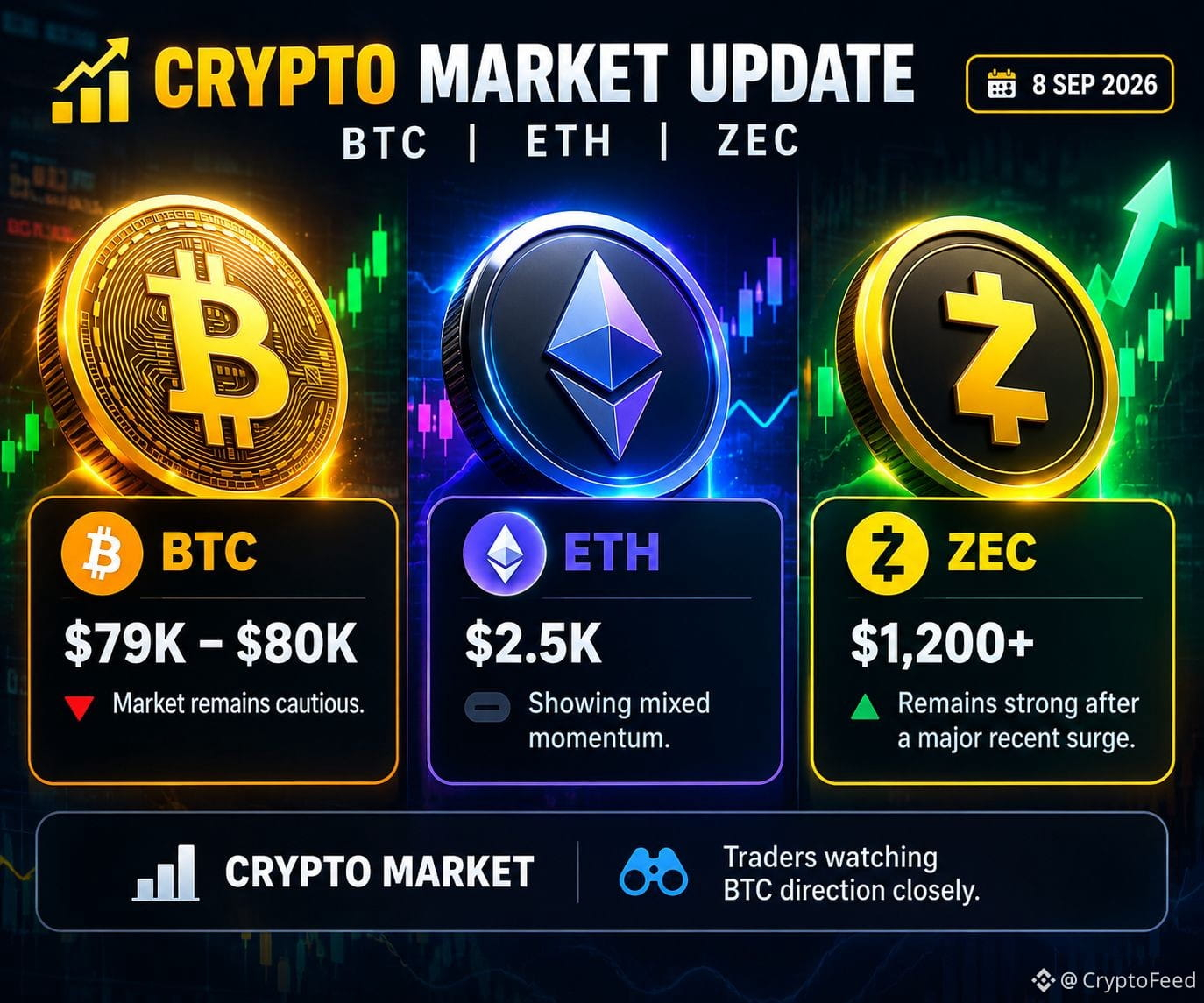
#BTC $79k 😯
#ETHETFS $2500
#zec
BTC: Bitcoin around $79K–$80K; spot BTC ETFs saw about $987M inflows last week, showing renewed institutional interest. �
♦ ETH: Ethereum is trading near $2,500, with recent attention on Ethereum development and potential leveraged-position volatility. �
⚡ ZEC: Zcash has surged dramatically, recently reaching around $1,249, its highest level since 2016, while ETF demand has helped drive attention. �
📊 Market: BTC/ETH remain relatively steady while ZEC is currently one of the strongest major altcoin stories. �
KuCoin +1
KuCoin +1
KuCoin +1
KuCoin
#BTC $79k 😯
#ETHETFS $2500
#zec
BTC: Bitcoin around $79K–$80K; spot BTC ETFs saw about $987M inflows last week, showing renewed institutional interest. �
♦ ETH: Ethereum is trading near $2,500, with recent attention on Ethereum development and potential leveraged-position volatility. �
⚡ ZEC: Zcash has surged dramatically, recently reaching around $1,249, its highest level since 2016, while ETF demand has helped drive attention. �
📊 Market: BTC/ETH remain relatively steady while ZEC is currently one of the strongest major altcoin stories. �
KuCoin +1
KuCoin +1
KuCoin +1
KuCoin
#ETHETFS $2500
#zec
BTC: Bitcoin around $79K–$80K; spot BTC ETFs saw about $987M inflows last week, showing renewed institutional interest. �
♦ ETH: Ethereum is trading near $2,500, with recent attention on Ethereum development and potential leveraged-position volatility. �
⚡ ZEC: Zcash has surged dramatically, recently reaching around $1,249, its highest level since 2016, while ETF demand has helped drive attention. �
📊 Market: BTC/ETH remain relatively steady while ZEC is currently one of the strongest major altcoin stories. �
KuCoin +1
KuCoin +1
KuCoin +1
KuCoin
123

·
--
Bullish
Bitcoin (BTC): Consider looking for long positions if the key resistance level is broken. Exercise caution regarding the use of stop-loss orders.
Ethereum (ETH): A "buy-on-dip" strategy within the support zone could be effective while ETF inflows remain positive.
BNB & Altcoins: Volatility tends to be high during Launchpool announcements; therefore, it is advisable to trade with proper risk management and profit-taking strategies.
#BNBLUNCPOOL #BTC #ETHETFS
Bitcoin (BTC): Consider looking for long positions if the key resistance level is broken. Exercise caution regarding the use of stop-loss orders.
Ethereum (ETH): A "buy-on-dip" strategy within the support zone could be effective while ETF inflows remain positive.
BNB & Altcoins: Volatility tends to be high during Launchpool announcements; therefore, it is advisable to trade with proper risk management and profit-taking strategies.
#BNBLUNCPOOL #BTC #ETHETFS
Ethereum (ETH): A "buy-on-dip" strategy within the support zone could be effective while ETF inflows remain positive.
BNB & Altcoins: Volatility tends to be high during Launchpool announcements; therefore, it is advisable to trade with proper risk management and profit-taking strategies.
#BNBLUNCPOOL #BTC #ETHETFS
51

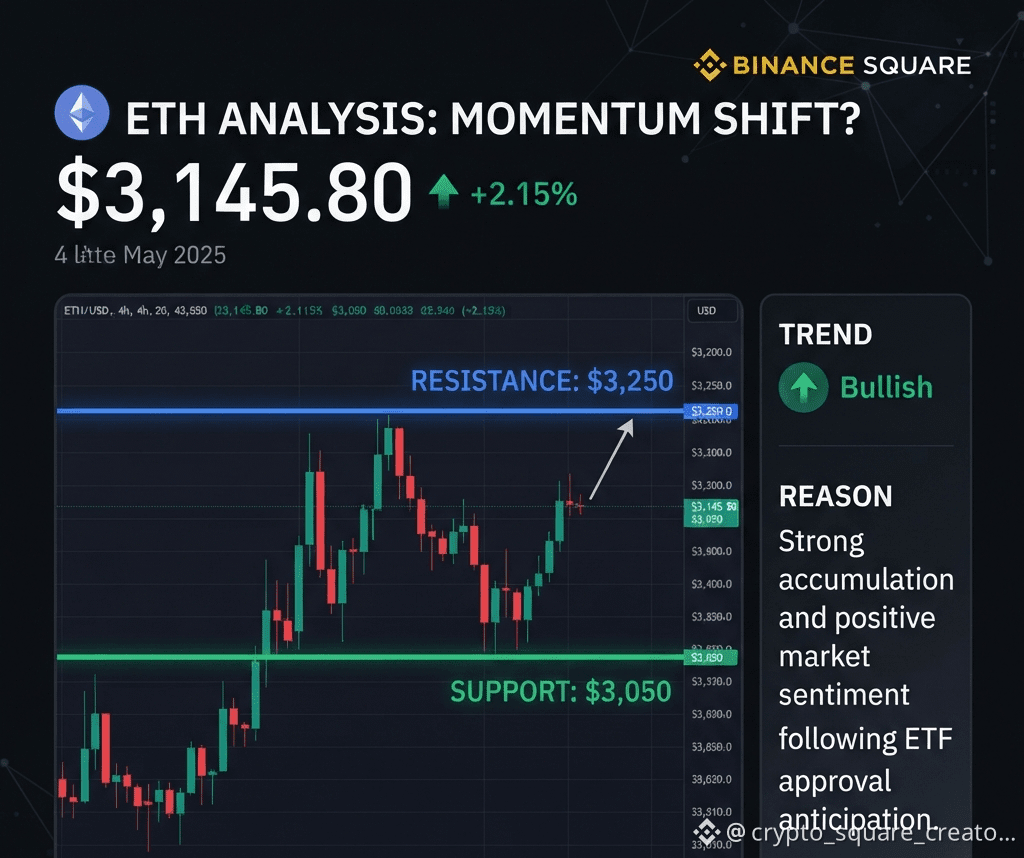
$ETH BREAKOUT: NEXT STOP FOR THE BULLS? 🚀
Ethereum is trading at $2,512, showing a Bullish trend structure on the daily charts.
Key Support: $2,438 (0.618 Fibonacci level)
Key Resistance: $2,550 (recent rejection ceiling)
Why is ETH moving? Prices are consolidating constructively near multi-week highs following strong institutional ETF inflows and a successful trendline breakout.
Can ETH break past $2,550 this week? Let us know your thoughts below! 👇
#EthereumNews #ETHETFS #CryptoAnalysis #BinanceSquare #Altcoins #BullRun #Trading
Not financial advice.$ETH
{spot}(ETHUSDT)
$ETH BREAKOUT: NEXT STOP FOR THE BULLS? 🚀
Ethereum is trading at $2,512, showing a Bullish trend structure on the daily charts.
Key Support: $2,438 (0.618 Fibonacci level)
Key Resistance: $2,550 (recent rejection ceiling)
Why is ETH moving? Prices are consolidating constructively near multi-week highs following strong institutional ETF inflows and a successful trendline breakout.
Can ETH break past $2,550 this week? Let us know your thoughts below! 👇
#EthereumNews #ETHETFS #CryptoAnalysis #BinanceSquare #Altcoins #BullRun #Trading
Not financial advice.$ETH
Ethereum is trading at $2,512, showing a Bullish trend structure on the daily charts.
Key Support: $2,438 (0.618 Fibonacci level)
Key Resistance: $2,550 (recent rejection ceiling)
Why is ETH moving? Prices are consolidating constructively near multi-week highs following strong institutional ETF inflows and a successful trendline breakout.
Can ETH break past $2,550 this week? Let us know your thoughts below! 👇
#EthereumNews #ETHETFS #CryptoAnalysis #BinanceSquare #Altcoins #BullRun #Trading
Not financial advice.$ETH
51

·
--
$ETH #ETH🔥🔥🔥🔥🔥🔥 #ETHETFS If, after Bitcoin in the crypto market, there is any coin that is the most powerful and important, then it is $ETH (Ethereum). It is not just one cryptocurrency, but a whole blockchain ecosystem on which much of the world’s digital system runs.
3 main features of ETH:
Smart Contracts & dApps: Decentralized finance (DeFi), NFT marketplaces, and most digital apps work on the Ethereum blockchain itself.
Layer-2 Networks: Thanks to second-layer solutions like Arbitrum and Optimism, transactions on ETH are now faster and cheaper.
Institutional Interest: Major financial institutions around the world are continuously showing interest in ETH, and because of its Spot ETF, significant private and institutional capital is flowing into it.
Market Outlook:
Whenever the crypto market sees momentum in Altcoins, it is this $ETH that first leads the market forward. For long-term investors, it is a strong and excellent option.
#ETH #Ethereum #CryptoAnalysis #BinanceSquare #ETH🔥🔥🔥🔥🔥🔥
$ETH #ETH🔥🔥🔥🔥🔥🔥 #ETHETFS If, after Bitcoin in the crypto market, there is any coin that is the most powerful and important, then it is $ETH (Ethereum). It is not just one cryptocurrency, but a whole blockchain ecosystem on which much of the world’s digital system runs.
3 main features of ETH:
Smart Contracts & dApps: Decentralized finance (DeFi), NFT marketplaces, and most digital apps work on the Ethereum blockchain itself.
Layer-2 Networks: Thanks to second-layer solutions like Arbitrum and Optimism, transactions on ETH are now faster and cheaper.
Institutional Interest: Major financial institutions around the world are continuously showing interest in ETH, and because of its Spot ETF, significant private and institutional capital is flowing into it.
Market Outlook:
Whenever the crypto market sees momentum in Altcoins, it is this $ETH that first leads the market forward. For long-term investors, it is a strong and excellent option.
#ETH #Ethereum #CryptoAnalysis #BinanceSquare #ETH🔥🔥🔥🔥🔥🔥
3 main features of ETH:
Smart Contracts & dApps: Decentralized finance (DeFi), NFT marketplaces, and most digital apps work on the Ethereum blockchain itself.
Layer-2 Networks: Thanks to second-layer solutions like Arbitrum and Optimism, transactions on ETH are now faster and cheaper.
Institutional Interest: Major financial institutions around the world are continuously showing interest in ETH, and because of its Spot ETF, significant private and institutional capital is flowing into it.
Market Outlook:
Whenever the crypto market sees momentum in Altcoins, it is this $ETH that first leads the market forward. For long-term investors, it is a strong and excellent option.
#ETH #Ethereum #CryptoAnalysis #BinanceSquare #ETH🔥🔥🔥🔥🔥🔥

50

·
--
Bullish
$ETH is trading around $2,490, with momentum still positive after reclaiming the $2,500 area. ETF inflows and rising stablecoin activity support the bullish setup, but profit-taking could create short-term volatility.
Bias: Bullish above $2,450; a clean break above $2,500 could open the way toward higher levels.
{spot}(ETHUSDT)
$SOL is around $109, up strongly over the past 24 hours. Short-term support sits near $106–107, while $114–115 is the key resistance zone. Holding above $107 keeps the recovery structure intact.
Bias: Bullish above $107; breakout above $115 could strengthen the next upside move.
#ETHETFS #solana
$ETH is trading around $2,490, with momentum still positive after reclaiming the $2,500 area. ETF inflows and rising stablecoin activity support the bullish setup, but profit-taking could create short-term volatility.
Bias: Bullish above $2,450; a clean break above $2,500 could open the way toward higher levels.
$SOL is around $109, up strongly over the past 24 hours. Short-term support sits near $106–107, while $114–115 is the key resistance zone. Holding above $107 keeps the recovery structure intact.
Bias: Bullish above $107; breakout above $115 could strengthen the next upside move.
#ETHETFS #solana
Bias: Bullish above $2,450; a clean break above $2,500 could open the way toward higher levels.
$SOL is around $109, up strongly over the past 24 hours. Short-term support sits near $106–107, while $114–115 is the key resistance zone. Holding above $107 keeps the recovery structure intact.
Bias: Bullish above $107; breakout above $115 could strengthen the next upside move.
#ETHETFS #solana
45

$ETH Latest Analysis: Testing Key Levels and Seeking a Direction
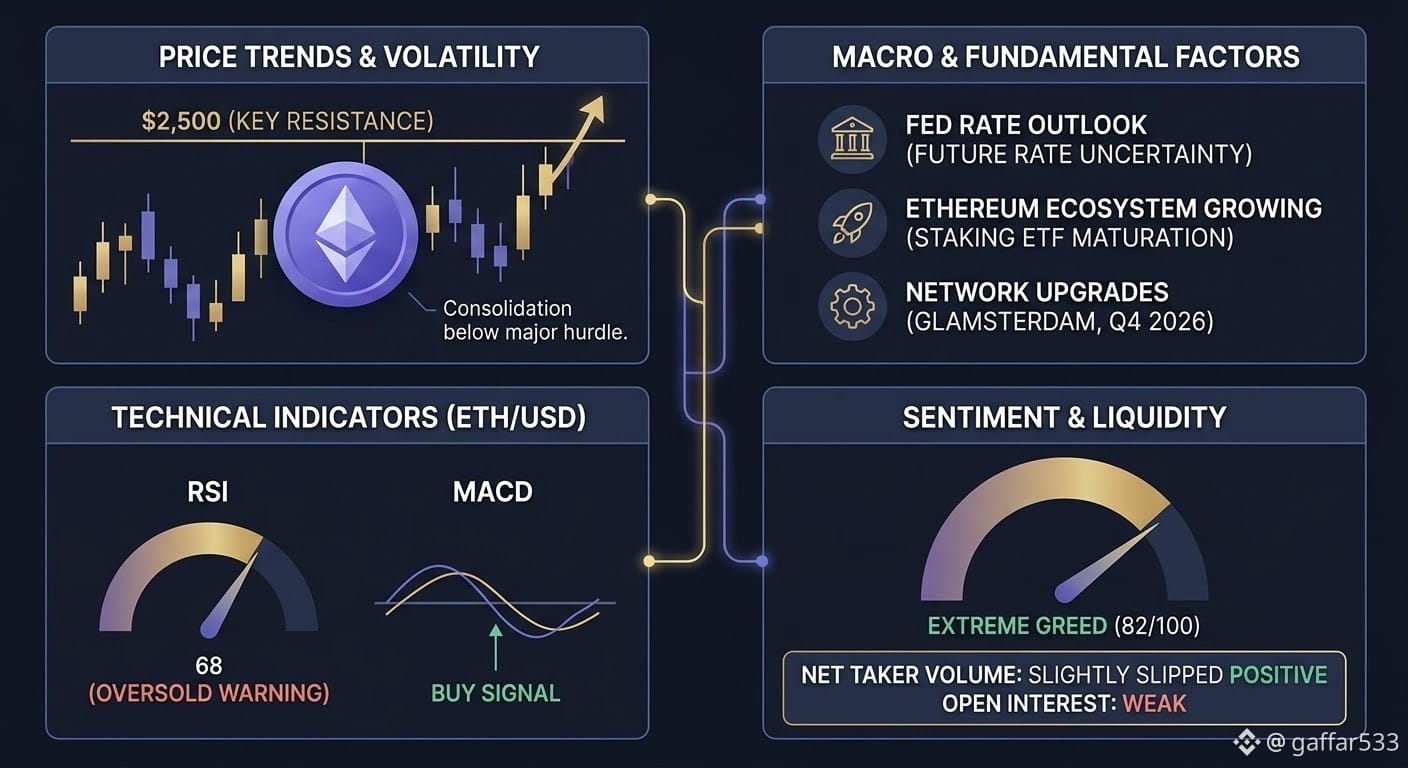
As of late August 2026, Ethereum is navigating a critical juncture. After recent volatility, the price is consolidating just below a significant resistance zone, around $2,500. This period of sideways movement follows a larger weekly breakout that has shifted the near-term outlook from cautious to cautiously bullish.
Key Technical Observations:
Resistance at $2,500: The most important immediate milestone. Multiple technical and psychological factors align at this level. A decisive, high-volume close above it could trigger a strong leg up, potentially targeting $2,800 or higher.
Support at $2,431 & $1,927: Should a pullback occur, the $2,431 level (a prior key indicator) acts as the first line of defense. Below that, the $1,927 area (near the 100-day moving average) provides significant structural support.
Mixed Indicators: Recent technical reads, including the MACD, suggest a 'buy' signal, while others like the RSI hint that the asset might be temporarily 'overbought', calling for patience.
Macro and Fundamental Factors:
While Bitcoin recently stole the spotlight by breaching $80,000, Ethereum is benefiting from its own ecosystem maturation. Recent rebrands of ETH ETFs to highlight staking yield and international progress in ETF regulation (e.g., Thailand) are long-term positives, signaling growing institutional demand. Furthermore, the constant evolution of the network, including the upcoming Glamsterdam upgrade, keeps the narrative of continuous improvement alive.
Outlook:
Ethereum is in a wait-and-see phase. We anticipate increased volatility around the $2,500 test. Traders should watch for a confirmation break with strong volume. The market sentiment is leaning bullish, but profit-taking or a fail at key resistance remains a risk.
Ethereum (ETH) Market Context Diagram
(Note: This diagram is for illustrative purposes and does not represent real-time data.)
{spot}(ETHUSDT)
#Ethereum #ETH🔥🔥🔥🔥🔥🔥 #ETHETFS
$ETH Latest Analysis: Testing Key Levels and Seeking a Direction
As of late August 2026, Ethereum is navigating a critical juncture. After recent volatility, the price is consolidating just below a significant resistance zone, around $2,500. This period of sideways movement follows a larger weekly breakout that has shifted the near-term outlook from cautious to cautiously bullish.
Key Technical Observations:
Resistance at $2,500: The most important immediate milestone. Multiple technical and psychological factors align at this level. A decisive, high-volume close above it could trigger a strong leg up, potentially targeting $2,800 or higher.
Support at $2,431 & $1,927: Should a pullback occur, the $2,431 level (a prior key indicator) acts as the first line of defense. Below that, the $1,927 area (near the 100-day moving average) provides significant structural support.
Mixed Indicators: Recent technical reads, including the MACD, suggest a 'buy' signal, while others like the RSI hint that the asset might be temporarily 'overbought', calling for patience.
Macro and Fundamental Factors:
While Bitcoin recently stole the spotlight by breaching $80,000, Ethereum is benefiting from its own ecosystem maturation. Recent rebrands of ETH ETFs to highlight staking yield and international progress in ETF regulation (e.g., Thailand) are long-term positives, signaling growing institutional demand. Furthermore, the constant evolution of the network, including the upcoming Glamsterdam upgrade, keeps the narrative of continuous improvement alive.
Outlook:
Ethereum is in a wait-and-see phase. We anticipate increased volatility around the $2,500 test. Traders should watch for a confirmation break with strong volume. The market sentiment is leaning bullish, but profit-taking or a fail at key resistance remains a risk.
Ethereum (ETH) Market Context Diagram
(Note: This diagram is for illustrative purposes and does not represent real-time data.)
#Ethereum #ETH🔥🔥🔥🔥🔥🔥 #ETHETFS
As of late August 2026, Ethereum is navigating a critical juncture. After recent volatility, the price is consolidating just below a significant resistance zone, around $2,500. This period of sideways movement follows a larger weekly breakout that has shifted the near-term outlook from cautious to cautiously bullish.
Key Technical Observations:
Resistance at $2,500: The most important immediate milestone. Multiple technical and psychological factors align at this level. A decisive, high-volume close above it could trigger a strong leg up, potentially targeting $2,800 or higher.
Support at $2,431 & $1,927: Should a pullback occur, the $2,431 level (a prior key indicator) acts as the first line of defense. Below that, the $1,927 area (near the 100-day moving average) provides significant structural support.
Mixed Indicators: Recent technical reads, including the MACD, suggest a 'buy' signal, while others like the RSI hint that the asset might be temporarily 'overbought', calling for patience.
Macro and Fundamental Factors:
While Bitcoin recently stole the spotlight by breaching $80,000, Ethereum is benefiting from its own ecosystem maturation. Recent rebrands of ETH ETFs to highlight staking yield and international progress in ETF regulation (e.g., Thailand) are long-term positives, signaling growing institutional demand. Furthermore, the constant evolution of the network, including the upcoming Glamsterdam upgrade, keeps the narrative of continuous improvement alive.
Outlook:
Ethereum is in a wait-and-see phase. We anticipate increased volatility around the $2,500 test. Traders should watch for a confirmation break with strong volume. The market sentiment is leaning bullish, but profit-taking or a fail at key resistance remains a risk.
Ethereum (ETH) Market Context Diagram
(Note: This diagram is for illustrative purposes and does not represent real-time data.)
#Ethereum #ETH🔥🔥🔥🔥🔥🔥 #ETHETFS
79

1
79
Log in to explore more content
Join global crypto users on Binance Square
⚡️ Get latest and useful information about crypto.
💬 Trusted by the world’s largest crypto exchange.
👍 Discover real insights from verified creators.
Email / Phone number
Related Coins
Trending Topics
1
#FedRateWatch
105,613 views
653 Discussing
2
#BitcoinReboundsTo$79K
39,954 views
315 Discussing
3
#StrategyMarketCapPassesFord
0 views
0 Discussing
4
#ClarityActOddsHalveOnPolymarket
0 views
0 Discussing
5
#US30YTreasuryYieldTops5.40%
309 views
45 Discussing
6
#BessentEndorsesFinalClarityActDraft
10,569 views
277 Discussing
7
#ZamaOpens16ConfidentialMorphoVaults
5,079 views
148 Discussing
8
#USDCOnChainVolumeTops$100Trillion
823 views
31 Discussing
9
#BitcoinSpotETFsNetInflow$160M
1,752 views
81 Discussing
10
#SouthKoreaCryptoTaxDelayPetitionTops50000
33,024 views
845 Discussing