

#cryptomacro
cryptomacro
395,509 views
1,889 Discussing
Hot
Latest

·
--
INSTITUTIONAL EXPANSION TARGETS POINT $BTC TOWARD UNCHARTED MACRO LIQUIDITY POOLS 📈 🦈
Macro market structure suggests the next multi-quarter expansion will aggressively target upper liquidity imbalances. When high-timeframe order blocks resolve their consolidation phases, institutional capital rotates systematically from $BTC into high-beta assets like $ETH and $BNB . 🌊
The projected ranges reflect classic structural extension targets rather than mere speculation, clearing overhead fair value gaps across historical cycles. 📊 Sustained quarterly closes above current distribution ranges will dictate whether order flow accelerates toward the upper boundary of these projections. 💡
🤔 Which macro price target aligns closest with your cycle structure mapping?
⚠️ Not financial advice. Always manage your risk. 🛡️
🏷️ #BTC #MarketStructure #SmartMoney #CryptoMacro
🎯 🦈
INSTITUTIONAL EXPANSION TARGETS POINT $BTC TOWARD UNCHARTED MACRO LIQUIDITY POOLS 📈 🦈
Macro market structure suggests the next multi-quarter expansion will aggressively target upper liquidity imbalances. When high-timeframe order blocks resolve their consolidation phases, institutional capital rotates systematically from $BTC into high-beta assets like $ETH and $BNB . 🌊
The projected ranges reflect classic structural extension targets rather than mere speculation, clearing overhead fair value gaps across historical cycles. 📊 Sustained quarterly closes above current distribution ranges will dictate whether order flow accelerates toward the upper boundary of these projections. 💡
🤔 Which macro price target aligns closest with your cycle structure mapping?
⚠️ Not financial advice. Always manage your risk. 🛡️
🏷️ #BTC #MarketStructure #SmartMoney #CryptoMacro
🎯 🦈
Macro market structure suggests the next multi-quarter expansion will aggressively target upper liquidity imbalances. When high-timeframe order blocks resolve their consolidation phases, institutional capital rotates systematically from $BTC into high-beta assets like $ETH and $BNB . 🌊
The projected ranges reflect classic structural extension targets rather than mere speculation, clearing overhead fair value gaps across historical cycles. 📊 Sustained quarterly closes above current distribution ranges will dictate whether order flow accelerates toward the upper boundary of these projections. 💡
🤔 Which macro price target aligns closest with your cycle structure mapping?
⚠️ Not financial advice. Always manage your risk. 🛡️
🏷️ #BTC #MarketStructure #SmartMoney #CryptoMacro
🎯 🦈
3

Japanese equity markets faced intense selling pressure today as the Nikkei 225 index extended its downward trend, plunging by 5% during the session.
A single-day drop of this magnitude in a major global benchmark reflects mounting anxieties among global investors. Sharp corrections in Tokyo typically signal widespread unwinding of yen carry trades or rising fears over export-reliant economic growth.
The resulting risk-off sentiment quickly rippled across traditional financial markets, lifting safe-haven demand for sovereign bonds and pushing down broader risk assets. Equity routs of this scale often trigger margin calls and liquidity squeezes that cross international borders.
For the crypto sector, widespread equity liquidations generally exert short-term downward pressure on $BTC and major altcoins as institutional players reduce exposure. However, if macroeconomic turmoil forces central banks toward monetary accommodation, digital assets could see renewed medium-term capital inflows.
#Nikkei225 #GlobalMarkets #CryptoMacro
Japanese equity markets faced intense selling pressure today as the Nikkei 225 index extended its downward trend, plunging by 5% during the session.
A single-day drop of this magnitude in a major global benchmark reflects mounting anxieties among global investors. Sharp corrections in Tokyo typically signal widespread unwinding of yen carry trades or rising fears over export-reliant economic growth.
The resulting risk-off sentiment quickly rippled across traditional financial markets, lifting safe-haven demand for sovereign bonds and pushing down broader risk assets. Equity routs of this scale often trigger margin calls and liquidity squeezes that cross international borders.
For the crypto sector, widespread equity liquidations generally exert short-term downward pressure on $BTC and major altcoins as institutional players reduce exposure. However, if macroeconomic turmoil forces central banks toward monetary accommodation, digital assets could see renewed medium-term capital inflows.
#Nikkei225 #GlobalMarkets #CryptoMacro
A single-day drop of this magnitude in a major global benchmark reflects mounting anxieties among global investors. Sharp corrections in Tokyo typically signal widespread unwinding of yen carry trades or rising fears over export-reliant economic growth.
The resulting risk-off sentiment quickly rippled across traditional financial markets, lifting safe-haven demand for sovereign bonds and pushing down broader risk assets. Equity routs of this scale often trigger margin calls and liquidity squeezes that cross international borders.
For the crypto sector, widespread equity liquidations generally exert short-term downward pressure on $BTC and major altcoins as institutional players reduce exposure. However, if macroeconomic turmoil forces central banks toward monetary accommodation, digital assets could see renewed medium-term capital inflows.
#Nikkei225 #GlobalMarkets #CryptoMacro
69

·
--
Sovereign debt levels are hitting generational highs across the G7. The US, Japan, and Europe are all running deficits that can only be resolved through one of three paths: growth, austerity, or currency debasement. History suggests debasement is the path of least political resistance.
This is quietly reshaping the $BTC thesis — not as a speculative asset, but as a non-sovereign reserve asset.
Gold has played this role for centuries. But gold has friction: physical settlement, storage costs, opaque custody. BTC runs on open rails, settles in minutes, and can be verified by anyone. For sovereign wealth funds and central banks exploring diversification, the "non-sovereign hard asset" frame is more compelling than the "digital gold" meme.
El Salvador made headlines. But the more durable signal is quieter — asset managers adding BTC as a fiat-hedge overlay rather than a risk-on trade, and treasury desks treating it the same way they treat gold allocations: slow, policy-constrained, long-duration.
The correlation to equities that traders obsess over is a short-term phenomenon driven by margin calls and liquidity cascades. The structural correlation to currency debasement narratives is what institutional allocators are watching.
$ETH adds a wrinkle: productive hard assets. Staking yield on top of a deflationary base layer creates a carry component that gold never had.
Watch sovereign balance sheets. Not as macro doom content — as a directional signal for which assets get reclassified as reserves over the next decade.
#Bitcoin #CryptoMacro #DigitalAssets #BTC #MacroInvesting
Sovereign debt levels are hitting generational highs across the G7. The US, Japan, and Europe are all running deficits that can only be resolved through one of three paths: growth, austerity, or currency debasement. History suggests debasement is the path of least political resistance.
This is quietly reshaping the $BTC thesis — not as a speculative asset, but as a non-sovereign reserve asset.
Gold has played this role for centuries. But gold has friction: physical settlement, storage costs, opaque custody. BTC runs on open rails, settles in minutes, and can be verified by anyone. For sovereign wealth funds and central banks exploring diversification, the "non-sovereign hard asset" frame is more compelling than the "digital gold" meme.
El Salvador made headlines. But the more durable signal is quieter — asset managers adding BTC as a fiat-hedge overlay rather than a risk-on trade, and treasury desks treating it the same way they treat gold allocations: slow, policy-constrained, long-duration.
The correlation to equities that traders obsess over is a short-term phenomenon driven by margin calls and liquidity cascades. The structural correlation to currency debasement narratives is what institutional allocators are watching.
$ETH adds a wrinkle: productive hard assets. Staking yield on top of a deflationary base layer creates a carry component that gold never had.
Watch sovereign balance sheets. Not as macro doom content — as a directional signal for which assets get reclassified as reserves over the next decade.
#Bitcoin #CryptoMacro #DigitalAssets #BTC #MacroInvesting
This is quietly reshaping the $BTC thesis — not as a speculative asset, but as a non-sovereign reserve asset.
Gold has played this role for centuries. But gold has friction: physical settlement, storage costs, opaque custody. BTC runs on open rails, settles in minutes, and can be verified by anyone. For sovereign wealth funds and central banks exploring diversification, the "non-sovereign hard asset" frame is more compelling than the "digital gold" meme.
El Salvador made headlines. But the more durable signal is quieter — asset managers adding BTC as a fiat-hedge overlay rather than a risk-on trade, and treasury desks treating it the same way they treat gold allocations: slow, policy-constrained, long-duration.
The correlation to equities that traders obsess over is a short-term phenomenon driven by margin calls and liquidity cascades. The structural correlation to currency debasement narratives is what institutional allocators are watching.
$ETH adds a wrinkle: productive hard assets. Staking yield on top of a deflationary base layer creates a carry component that gold never had.
Watch sovereign balance sheets. Not as macro doom content — as a directional signal for which assets get reclassified as reserves over the next decade.
#Bitcoin #CryptoMacro #DigitalAssets #BTC #MacroInvesting
56
·
--
Sovereign nations are quietly exploring Bitcoin as a reserve asset — and the math makes more sense than most people admit.
For centuries, reserve assets required three properties: scarcity you cannot manufacture, portability across borders without counterparty permission, and divisibility for precise settlement. Gold satisfied two of those. The US dollar satisfied portability through network effects. Bitcoin satisfies all three simultaneously — and adds a fourth: cryptographic verifiability at zero cost.
El Salvador made the first formal move. Then Bhutan revealed silent mining reserves. Several sovereign wealth funds have acknowledged exploratory positions. The United States, following its Strategic Bitcoin Reserve executive order in 2025, legitimized the concept at the highest institutional level. What was fringe in 2020 is now a policy design choice.
The critical distinction from ETF inflows: sovereign reserves are never sold for quarterly performance targets. They sit at the base of a balance sheet as a long-duration insurance position. That kind of demand does not rotate — it accumulates quietly and disappears from the tradable float permanently.
For price structure, the implication is a slow-moving but structural floor that rises each cycle as more sovereign balance sheets absorb supply. Not a short-term catalyst — a decade-long bid building under the market.
Bitcoin is not replacing gold. It is qualifying for the same conversation at a much earlier stage of adoption.
$BTC $ETH $BNB
#Bitcoin #CryptoMacro #SovereignAdoption #DigitalGold #BinanceSquare
Sovereign nations are quietly exploring Bitcoin as a reserve asset — and the math makes more sense than most people admit.
For centuries, reserve assets required three properties: scarcity you cannot manufacture, portability across borders without counterparty permission, and divisibility for precise settlement. Gold satisfied two of those. The US dollar satisfied portability through network effects. Bitcoin satisfies all three simultaneously — and adds a fourth: cryptographic verifiability at zero cost.
El Salvador made the first formal move. Then Bhutan revealed silent mining reserves. Several sovereign wealth funds have acknowledged exploratory positions. The United States, following its Strategic Bitcoin Reserve executive order in 2025, legitimized the concept at the highest institutional level. What was fringe in 2020 is now a policy design choice.
The critical distinction from ETF inflows: sovereign reserves are never sold for quarterly performance targets. They sit at the base of a balance sheet as a long-duration insurance position. That kind of demand does not rotate — it accumulates quietly and disappears from the tradable float permanently.
For price structure, the implication is a slow-moving but structural floor that rises each cycle as more sovereign balance sheets absorb supply. Not a short-term catalyst — a decade-long bid building under the market.
Bitcoin is not replacing gold. It is qualifying for the same conversation at a much earlier stage of adoption.
$BTC $ETH $BNB
#Bitcoin #CryptoMacro #SovereignAdoption #DigitalGold #BinanceSquare
For centuries, reserve assets required three properties: scarcity you cannot manufacture, portability across borders without counterparty permission, and divisibility for precise settlement. Gold satisfied two of those. The US dollar satisfied portability through network effects. Bitcoin satisfies all three simultaneously — and adds a fourth: cryptographic verifiability at zero cost.
El Salvador made the first formal move. Then Bhutan revealed silent mining reserves. Several sovereign wealth funds have acknowledged exploratory positions. The United States, following its Strategic Bitcoin Reserve executive order in 2025, legitimized the concept at the highest institutional level. What was fringe in 2020 is now a policy design choice.
The critical distinction from ETF inflows: sovereign reserves are never sold for quarterly performance targets. They sit at the base of a balance sheet as a long-duration insurance position. That kind of demand does not rotate — it accumulates quietly and disappears from the tradable float permanently.
For price structure, the implication is a slow-moving but structural floor that rises each cycle as more sovereign balance sheets absorb supply. Not a short-term catalyst — a decade-long bid building under the market.
Bitcoin is not replacing gold. It is qualifying for the same conversation at a much earlier stage of adoption.
$BTC $ETH $BNB
#Bitcoin #CryptoMacro #SovereignAdoption #DigitalGold #BinanceSquare
96

·
--
Why the Upcoming CPI Print Matters So Much for $BNB Liquidity
Whenever a major macro release like US Consumer Price Index (CPI & Core CPI YoY/MoM) (Release Window: 12:30 UTC (6:00 PM IST) — Bureau of Labor Statistics) comes onto the radar, social media turns into a guessing game. On my desk, I prefer to ignore the noise and focus strictly on the actual macro numbers driving institutional liquidity across BNB near 743 and BTC.
Here is the exact macro setup going into the print:
• Previous official data: Headline CPI: 2.5% YoY | Core CPI: 3.2% YoY (0.2% MoM)
• Current Wall Street consensus: Consensus Forecast: 2.4% YoY | Core CPI: 3.1% YoY (0.2% MoM)
• Implied orderbook volatility window: ±3.2% to ±5.5% intraday 1h implied volatility across BTC and ETH orderbooks
The two variables I am tracking most closely right now are headline cpi yoy & mom vs consensus forecast and core cpi shelter & supercore services sticky inflation components. Inverse DXY & US 10Y Treasury Yield reaction; softer CPI Historically expands Spot BTC ETF inflows.
Historically, the first 5 to 15 minutes after a CPI release are dominated by algorithmic liquidity sweeps on both sides of the book. Instead of front-running the headline number, I am watching how the Dollar Index (DXY), US 2Y/10Y yields, and spot ETF orderflow on BNB absorb the move once the initial wick settles.
What is your game plan for this CPI window — staying flat until the macro dust clears or tracking spot inflows live? Let me know in the comments 👇
#BinanceSquare #CryptoMacro
Why the Upcoming CPI Print Matters So Much for $BNB Liquidity
Whenever a major macro release like US Consumer Price Index (CPI & Core CPI YoY/MoM) (Release Window: 12:30 UTC (6:00 PM IST) — Bureau of Labor Statistics) comes onto the radar, social media turns into a guessing game. On my desk, I prefer to ignore the noise and focus strictly on the actual macro numbers driving institutional liquidity across BNB near 743 and BTC.
Here is the exact macro setup going into the print:
• Previous official data: Headline CPI: 2.5% YoY | Core CPI: 3.2% YoY (0.2% MoM)
• Current Wall Street consensus: Consensus Forecast: 2.4% YoY | Core CPI: 3.1% YoY (0.2% MoM)
• Implied orderbook volatility window: ±3.2% to ±5.5% intraday 1h implied volatility across BTC and ETH orderbooks
The two variables I am tracking most closely right now are headline cpi yoy & mom vs consensus forecast and core cpi shelter & supercore services sticky inflation components. Inverse DXY & US 10Y Treasury Yield reaction; softer CPI Historically expands Spot BTC ETF inflows.
Historically, the first 5 to 15 minutes after a CPI release are dominated by algorithmic liquidity sweeps on both sides of the book. Instead of front-running the headline number, I am watching how the Dollar Index (DXY), US 2Y/10Y yields, and spot ETF orderflow on BNB absorb the move once the initial wick settles.
What is your game plan for this CPI window — staying flat until the macro dust clears or tracking spot inflows live? Let me know in the comments 👇
#BinanceSquare #CryptoMacro
Whenever a major macro release like US Consumer Price Index (CPI & Core CPI YoY/MoM) (Release Window: 12:30 UTC (6:00 PM IST) — Bureau of Labor Statistics) comes onto the radar, social media turns into a guessing game. On my desk, I prefer to ignore the noise and focus strictly on the actual macro numbers driving institutional liquidity across BNB near 743 and BTC.
Here is the exact macro setup going into the print:
• Previous official data: Headline CPI: 2.5% YoY | Core CPI: 3.2% YoY (0.2% MoM)
• Current Wall Street consensus: Consensus Forecast: 2.4% YoY | Core CPI: 3.1% YoY (0.2% MoM)
• Implied orderbook volatility window: ±3.2% to ±5.5% intraday 1h implied volatility across BTC and ETH orderbooks
The two variables I am tracking most closely right now are headline cpi yoy & mom vs consensus forecast and core cpi shelter & supercore services sticky inflation components. Inverse DXY & US 10Y Treasury Yield reaction; softer CPI Historically expands Spot BTC ETF inflows.
Historically, the first 5 to 15 minutes after a CPI release are dominated by algorithmic liquidity sweeps on both sides of the book. Instead of front-running the headline number, I am watching how the Dollar Index (DXY), US 2Y/10Y yields, and spot ETF orderflow on BNB absorb the move once the initial wick settles.
What is your game plan for this CPI window — staying flat until the macro dust clears or tracking spot inflows live? Let me know in the comments 👇
#BinanceSquare #CryptoMacro
1
1
·
--
The Federal Reserve liquidity cycle is one of crypto's most underappreciated macro drivers.
When real rates rise, every risk asset faces the same headwind: the discount rate on future cash flows increases. But crypto — especially $BTC — faces a sharper version of this. Bitcoin has no dividends, no earnings, no coupon. Its present value is almost entirely a function of future demand discounted by the opportunity cost of holding it.
This makes BTC unusually sensitive to rate inflection points — not the rate level itself, but the moment when the direction changes.
The mechanism works through two channels:
1. **Liquidity expansion.** Rate cuts expand the global dollar supply. That marginal liquidity needs to find a home. Historically, risk assets — and crypto disproportionately — absorb early-cycle liquidity surpluses before mainstream narratives catch up.
2. **Dollar weakening.** A Fed pivot tends to soften the dollar index (DXY). Bitcoin has a documented inverse relationship with dollar strength. Weaker DXY has historically preceded BTC outperformance.
The cycle is not mechanical — timing lags vary widely. But the framework explains why $ETH and $SOL often accelerate after a pivot lag of weeks, not immediately: the real-economy transmission takes time, but crypto markets front-run it.
Watch M2 money supply trends, the DXY direction, and global central bank balance sheet expansion together. Price is the last thing to confirm what liquidity already started.
Macro precedes narrative. Narrative precedes price.
#Bitcoin #CryptoMacro #BinanceSquare #Crypto #RateCuts
The Federal Reserve liquidity cycle is one of crypto's most underappreciated macro drivers.
When real rates rise, every risk asset faces the same headwind: the discount rate on future cash flows increases. But crypto — especially $BTC — faces a sharper version of this. Bitcoin has no dividends, no earnings, no coupon. Its present value is almost entirely a function of future demand discounted by the opportunity cost of holding it.
This makes BTC unusually sensitive to rate inflection points — not the rate level itself, but the moment when the direction changes.
The mechanism works through two channels:
1. **Liquidity expansion.** Rate cuts expand the global dollar supply. That marginal liquidity needs to find a home. Historically, risk assets — and crypto disproportionately — absorb early-cycle liquidity surpluses before mainstream narratives catch up.
2. **Dollar weakening.** A Fed pivot tends to soften the dollar index (DXY). Bitcoin has a documented inverse relationship with dollar strength. Weaker DXY has historically preceded BTC outperformance.
The cycle is not mechanical — timing lags vary widely. But the framework explains why $ETH and $SOL often accelerate after a pivot lag of weeks, not immediately: the real-economy transmission takes time, but crypto markets front-run it.
Watch M2 money supply trends, the DXY direction, and global central bank balance sheet expansion together. Price is the last thing to confirm what liquidity already started.
Macro precedes narrative. Narrative precedes price.
#Bitcoin #CryptoMacro #BinanceSquare #Crypto #RateCuts
When real rates rise, every risk asset faces the same headwind: the discount rate on future cash flows increases. But crypto — especially $BTC — faces a sharper version of this. Bitcoin has no dividends, no earnings, no coupon. Its present value is almost entirely a function of future demand discounted by the opportunity cost of holding it.
This makes BTC unusually sensitive to rate inflection points — not the rate level itself, but the moment when the direction changes.
The mechanism works through two channels:
1. **Liquidity expansion.** Rate cuts expand the global dollar supply. That marginal liquidity needs to find a home. Historically, risk assets — and crypto disproportionately — absorb early-cycle liquidity surpluses before mainstream narratives catch up.
2. **Dollar weakening.** A Fed pivot tends to soften the dollar index (DXY). Bitcoin has a documented inverse relationship with dollar strength. Weaker DXY has historically preceded BTC outperformance.
The cycle is not mechanical — timing lags vary widely. But the framework explains why $ETH and $SOL often accelerate after a pivot lag of weeks, not immediately: the real-economy transmission takes time, but crypto markets front-run it.
Watch M2 money supply trends, the DXY direction, and global central bank balance sheet expansion together. Price is the last thing to confirm what liquidity already started.
Macro precedes narrative. Narrative precedes price.
#Bitcoin #CryptoMacro #BinanceSquare #Crypto #RateCuts
185

·
--
The U.S. Department of Labor just reported that September’s CPI rose 3.7% year over year, slightly above market expectations of 3.6%. After the inflation data came in, Treasury yields went on a roller-coaster ride, surging before pulling back. The 2-year Treasury yield first climbed to a two-week high, then turned lower across the board.
The data sparked widespread discussion because, although inflation was higher than expected, the broader trend of cooling remains intact. Traders’ expectations of a near-term Fed rate hike briefly jumped from 22% to 40%, then quickly fell back to around 33%, as bulls and bears fiercely battled it out.
Traditional financial markets are currently caught between incoming data and officials’ remarks. On the one hand, CPI showed some stickiness; on the other, several Fed officials have recently said they are in no hurry to tighten further. This has made the direction of the U.S. dollar index and Treasury yields difficult to predict.
For crypto markets, sharp swings in macroeconomic expectations mean the liquidity outlook is unlikely to become clear in the near term. Core assets such as $BTC are still digesting macroeconomic uncertainty amid choppy trading. Going forward, it will be important to watch the flow of funds as rate-hike expectations play out.
#CPIWatch #InterestRates #CryptoMacro
The U.S. Department of Labor just reported that September’s CPI rose 3.7% year over year, slightly above market expectations of 3.6%. After the inflation data came in, Treasury yields went on a roller-coaster ride, surging before pulling back. The 2-year Treasury yield first climbed to a two-week high, then turned lower across the board.
The data sparked widespread discussion because, although inflation was higher than expected, the broader trend of cooling remains intact. Traders’ expectations of a near-term Fed rate hike briefly jumped from 22% to 40%, then quickly fell back to around 33%, as bulls and bears fiercely battled it out.
Traditional financial markets are currently caught between incoming data and officials’ remarks. On the one hand, CPI showed some stickiness; on the other, several Fed officials have recently said they are in no hurry to tighten further. This has made the direction of the U.S. dollar index and Treasury yields difficult to predict.
For crypto markets, sharp swings in macroeconomic expectations mean the liquidity outlook is unlikely to become clear in the near term. Core assets such as $BTC are still digesting macroeconomic uncertainty amid choppy trading. Going forward, it will be important to watch the flow of funds as rate-hike expectations play out.
#CPIWatch #InterestRates #CryptoMacro
The data sparked widespread discussion because, although inflation was higher than expected, the broader trend of cooling remains intact. Traders’ expectations of a near-term Fed rate hike briefly jumped from 22% to 40%, then quickly fell back to around 33%, as bulls and bears fiercely battled it out.
Traditional financial markets are currently caught between incoming data and officials’ remarks. On the one hand, CPI showed some stickiness; on the other, several Fed officials have recently said they are in no hurry to tighten further. This has made the direction of the U.S. dollar index and Treasury yields difficult to predict.
For crypto markets, sharp swings in macroeconomic expectations mean the liquidity outlook is unlikely to become clear in the near term. Core assets such as $BTC are still digesting macroeconomic uncertainty amid choppy trading. Going forward, it will be important to watch the flow of funds as rate-hike expectations play out.
#CPIWatch #InterestRates #CryptoMacro
2

🌊 SMART MONEY REVEALS ON-CHAIN LIQUIDITY IS EXPANDING THE ENTIRE $BTC MACRO PIE! 📈
💡 Institutional heavyweights are confirming that on-chain perpetual liquidity is not cannibalizing centralized venues—it is unlocking an entirely fresh tier of global capital. 📊 With both trading environments expanding simultaneously, the market boundary is being pushed outward rather than fighting over stale scraps, priming the landscape for strong tailwinds over the next 6 to 12 months.
🔍 The old passive playbook is dead as smart capital positions for infrastructure that bridges real-world liquidity on-chain. 💬 Are you seeing decentralized execution capture the real momentum this cycle, or do traditional order books still reign supreme? 👇
⚠️ Not financial advice. Always manage your risk. 🛡️
🏷️ #BTC #MarketStructure #CryptoMacro #OrderFlow
🎯 🦈
🌊 SMART MONEY REVEALS ON-CHAIN LIQUIDITY IS EXPANDING THE ENTIRE $BTC MACRO PIE! 📈
💡 Institutional heavyweights are confirming that on-chain perpetual liquidity is not cannibalizing centralized venues—it is unlocking an entirely fresh tier of global capital. 📊 With both trading environments expanding simultaneously, the market boundary is being pushed outward rather than fighting over stale scraps, priming the landscape for strong tailwinds over the next 6 to 12 months.
🔍 The old passive playbook is dead as smart capital positions for infrastructure that bridges real-world liquidity on-chain. 💬 Are you seeing decentralized execution capture the real momentum this cycle, or do traditional order books still reign supreme? 👇
⚠️ Not financial advice. Always manage your risk. 🛡️
🏷️ #BTC #MarketStructure #CryptoMacro #OrderFlow
🎯 🦈
💡 Institutional heavyweights are confirming that on-chain perpetual liquidity is not cannibalizing centralized venues—it is unlocking an entirely fresh tier of global capital. 📊 With both trading environments expanding simultaneously, the market boundary is being pushed outward rather than fighting over stale scraps, priming the landscape for strong tailwinds over the next 6 to 12 months.
🔍 The old passive playbook is dead as smart capital positions for infrastructure that bridges real-world liquidity on-chain. 💬 Are you seeing decentralized execution capture the real momentum this cycle, or do traditional order books still reign supreme? 👇
⚠️ Not financial advice. Always manage your risk. 🛡️
🏷️ #BTC #MarketStructure #CryptoMacro #OrderFlow
🎯 🦈
7

·
--
Bullish
The hashtag #CPIWatch has become an indispensable barometer for anyone operating in the cryptocurrency market. It follows the release of the U.S. Consumer Price Index (CPI), the main indicator of inflation in the United States.
In the crypto world, inflation is no longer an isolated figure from the traditional economy. When CPI comes in higher than expected, expectations of higher interest rates gain strength, draining liquidity and putting pressure on risk assets such as Bitcoin. On the other hand, a weaker CPI tends to ease market conditions, fueling rallies and increasing risk appetite.
Following #CPIWatch means understanding that the price on the screen depends not only on the chart or the code, but also on global macroeconomic decisions.
My opinion: At the end of the day, those who try to guess the CPI are often swallowed up by the volatility of the first minute; risk management and patience remain the keys to success.
Suggested hashtags for the post:
$AAPLB $BTC $OSMO
#CryptoMacro
#tradingStrategy
#Bitcoin
The hashtag #CPIWatch has become an indispensable barometer for anyone operating in the cryptocurrency market. It follows the release of the U.S. Consumer Price Index (CPI), the main indicator of inflation in the United States.
In the crypto world, inflation is no longer an isolated figure from the traditional economy. When CPI comes in higher than expected, expectations of higher interest rates gain strength, draining liquidity and putting pressure on risk assets such as Bitcoin. On the other hand, a weaker CPI tends to ease market conditions, fueling rallies and increasing risk appetite.
Following #CPIWatch means understanding that the price on the screen depends not only on the chart or the code, but also on global macroeconomic decisions.
My opinion: At the end of the day, those who try to guess the CPI are often swallowed up by the volatility of the first minute; risk management and patience remain the keys to success.
Suggested hashtags for the post:
$AAPLB $BTC $OSMO
#CryptoMacro
#tradingStrategy
#Bitcoin
In the crypto world, inflation is no longer an isolated figure from the traditional economy. When CPI comes in higher than expected, expectations of higher interest rates gain strength, draining liquidity and putting pressure on risk assets such as Bitcoin. On the other hand, a weaker CPI tends to ease market conditions, fueling rallies and increasing risk appetite.
Following #CPIWatch means understanding that the price on the screen depends not only on the chart or the code, but also on global macroeconomic decisions.
My opinion: At the end of the day, those who try to guess the CPI are often swallowed up by the volatility of the first minute; risk management and patience remain the keys to success.
Suggested hashtags for the post:
$AAPLB $BTC $OSMO
#CryptoMacro
#tradingStrategy
#Bitcoin
2
912
·
--
The most powerful force in crypto has nothing to do with blockchains.
It is global dollar liquidity.
When central banks expand M2 money supply — cutting rates, running QE, relaxing reserve requirements — capital flows into risk assets. Crypto, being the most reflexive risk asset on earth, amplifies that move.
When liquidity contracts, crypto leads the drawdown.
This is why 2021 peaked almost exactly when global M2 peaked. Why late 2022 marked the trough when the Fed tightening cycle was near full force. The halvings, narratives, and protocol upgrades are amplifiers — not the engine.
The engine is monetary plumbing.
Five things worth tracking:
→ Global M2 money supply trend (expanding or contracting?)
→ Real yields — negative real rates push capital to scarce assets like $BTC
→ Dollar index (DXY) — a weakening dollar historically correlates with crypto strength
→ Fed balance sheet trajectory
→ Cross-border capital flow restrictions in major EM economies driving stablecoin volume on $ETH and $BNB rails
Crypto is not an island. It breathes with the global monetary system.
The builders focus on code. The traders focus on charts. The edge goes to whoever tracks the liquidity cycle first.
$BTC $ETH $BNB
#Bitcoin #CryptoMacro #GlobalLiquidity #DeFi #CryptoInsights
The most powerful force in crypto has nothing to do with blockchains.
It is global dollar liquidity.
When central banks expand M2 money supply — cutting rates, running QE, relaxing reserve requirements — capital flows into risk assets. Crypto, being the most reflexive risk asset on earth, amplifies that move.
When liquidity contracts, crypto leads the drawdown.
This is why 2021 peaked almost exactly when global M2 peaked. Why late 2022 marked the trough when the Fed tightening cycle was near full force. The halvings, narratives, and protocol upgrades are amplifiers — not the engine.
The engine is monetary plumbing.
Five things worth tracking:
→ Global M2 money supply trend (expanding or contracting?)
→ Real yields — negative real rates push capital to scarce assets like $BTC
→ Dollar index (DXY) — a weakening dollar historically correlates with crypto strength
→ Fed balance sheet trajectory
→ Cross-border capital flow restrictions in major EM economies driving stablecoin volume on $ETH and $BNB rails
Crypto is not an island. It breathes with the global monetary system.
The builders focus on code. The traders focus on charts. The edge goes to whoever tracks the liquidity cycle first.
$BTC $ETH $BNB
#Bitcoin #CryptoMacro #GlobalLiquidity #DeFi #CryptoInsights
It is global dollar liquidity.
When central banks expand M2 money supply — cutting rates, running QE, relaxing reserve requirements — capital flows into risk assets. Crypto, being the most reflexive risk asset on earth, amplifies that move.
When liquidity contracts, crypto leads the drawdown.
This is why 2021 peaked almost exactly when global M2 peaked. Why late 2022 marked the trough when the Fed tightening cycle was near full force. The halvings, narratives, and protocol upgrades are amplifiers — not the engine.
The engine is monetary plumbing.
Five things worth tracking:
→ Global M2 money supply trend (expanding or contracting?)
→ Real yields — negative real rates push capital to scarce assets like $BTC
→ Dollar index (DXY) — a weakening dollar historically correlates with crypto strength
→ Fed balance sheet trajectory
→ Cross-border capital flow restrictions in major EM economies driving stablecoin volume on $ETH and $BNB rails
Crypto is not an island. It breathes with the global monetary system.
The builders focus on code. The traders focus on charts. The edge goes to whoever tracks the liquidity cycle first.
$BTC $ETH $BNB
#Bitcoin #CryptoMacro #GlobalLiquidity #DeFi #CryptoInsights
36
·
--
The DXY and crypto have a relationship most traders feel but few actually map.
When the dollar strengthens, risk assets globally face headwinds. Capital flows back into dollar-denominated safe havens, reducing the marginal bid for speculative assets — including $BTC, $ETH, and $SOL. The inverse is also true: a weakening DXY has historically preceded and accompanied crypto bull runs, as dollar liquidity conditions loosen and investors reach for higher-returning alternatives.
This is not a perfect correlation. It breaks during idiosyncratic crypto events (exchange collapses, ETF approvals, halving cycles). But as a macro overlay, the DXY deserves a place in any serious crypto framework.
The key mechanic: when the Fed pivots — or signals a pivot — the dollar typically softens. That softening coincides with a global expansion of risk appetite. Crypto sits at the high-beta end of that spectrum. Stablecoin supply starts expanding. Exchange inflows pick up. Leverage quietly rebuilds.
The practical edge: instead of watching crypto prices obsessively, watch real yields, dollar index trend, and global M2 expansion signals. These move first. Crypto prices follow.
Macro does not predict the timing. But it sets the temperature of the room every trade happens in.
$BTC $ETH $SOL
#CryptoMacro #Bitcoin #DXY #CryptoInvesting #MarketCycle
The DXY and crypto have a relationship most traders feel but few actually map.
When the dollar strengthens, risk assets globally face headwinds. Capital flows back into dollar-denominated safe havens, reducing the marginal bid for speculative assets — including $BTC , $ETH , and $SOL . The inverse is also true: a weakening DXY has historically preceded and accompanied crypto bull runs, as dollar liquidity conditions loosen and investors reach for higher-returning alternatives.
This is not a perfect correlation. It breaks during idiosyncratic crypto events (exchange collapses, ETF approvals, halving cycles). But as a macro overlay, the DXY deserves a place in any serious crypto framework.
The key mechanic: when the Fed pivots — or signals a pivot — the dollar typically softens. That softening coincides with a global expansion of risk appetite. Crypto sits at the high-beta end of that spectrum. Stablecoin supply starts expanding. Exchange inflows pick up. Leverage quietly rebuilds.
The practical edge: instead of watching crypto prices obsessively, watch real yields, dollar index trend, and global M2 expansion signals. These move first. Crypto prices follow.
Macro does not predict the timing. But it sets the temperature of the room every trade happens in.
$BTC $ETH $SOL
#CryptoMacro #Bitcoin #DXY #CryptoInvesting #MarketCycle
When the dollar strengthens, risk assets globally face headwinds. Capital flows back into dollar-denominated safe havens, reducing the marginal bid for speculative assets — including $BTC , $ETH , and $SOL . The inverse is also true: a weakening DXY has historically preceded and accompanied crypto bull runs, as dollar liquidity conditions loosen and investors reach for higher-returning alternatives.
This is not a perfect correlation. It breaks during idiosyncratic crypto events (exchange collapses, ETF approvals, halving cycles). But as a macro overlay, the DXY deserves a place in any serious crypto framework.
The key mechanic: when the Fed pivots — or signals a pivot — the dollar typically softens. That softening coincides with a global expansion of risk appetite. Crypto sits at the high-beta end of that spectrum. Stablecoin supply starts expanding. Exchange inflows pick up. Leverage quietly rebuilds.
The practical edge: instead of watching crypto prices obsessively, watch real yields, dollar index trend, and global M2 expansion signals. These move first. Crypto prices follow.
Macro does not predict the timing. But it sets the temperature of the room every trade happens in.
$BTC $ETH $SOL
#CryptoMacro #Bitcoin #DXY #CryptoInvesting #MarketCycle
1
134
·
--
The master variable most crypto traders ignore isn’t on a blockchain.
It’s global dollar liquidity.
Every major $BTC bull run since 2013 has overlapped with periods of expanding global M2 money supply, Fed balance sheet growth, or a weakening dollar index. Every brutal bear market has coincided with dollar strength and liquidity contraction.
Here’s the mechanism:
When central banks expand balance sheets and rates fall, institutional capital hunts yield. Risk assets — equities, credit, crypto — all get bid. Crypto, sitting at the far end of the risk spectrum, gets bid hardest. $ETH and risk-on alts amplify the move further.
When liquidity contracts — QT, rate hikes, dollar spike — the same chain unwinds in reverse. Crypto liquidates first, fastest, hardest.
This means the most important chart a crypto investor can watch isn’t price. It’s the direction of global M2 and the dollar index.
M2 inflecting upward with DXY topping → crypto tailwind building.
M2 plateauing with DXY rising → watch your position sizes.
Crypto doesn’t create its own liquidity. It absorbs the world’s excess liquidity more efficiently than any other asset class.
Understand the liquidity cycle. Everything else is noise.
$BTC $ETH $SOL
#Bitcoin #CryptoMacro #LiquidityCycle #DollarIndex #CryptoInsights
The master variable most crypto traders ignore isn’t on a blockchain.
It’s global dollar liquidity.
Every major $BTC bull run since 2013 has overlapped with periods of expanding global M2 money supply, Fed balance sheet growth, or a weakening dollar index. Every brutal bear market has coincided with dollar strength and liquidity contraction.
Here’s the mechanism:
When central banks expand balance sheets and rates fall, institutional capital hunts yield. Risk assets — equities, credit, crypto — all get bid. Crypto, sitting at the far end of the risk spectrum, gets bid hardest. $ETH and risk-on alts amplify the move further.
When liquidity contracts — QT, rate hikes, dollar spike — the same chain unwinds in reverse. Crypto liquidates first, fastest, hardest.
This means the most important chart a crypto investor can watch isn’t price. It’s the direction of global M2 and the dollar index.
M2 inflecting upward with DXY topping → crypto tailwind building.
M2 plateauing with DXY rising → watch your position sizes.
Crypto doesn’t create its own liquidity. It absorbs the world’s excess liquidity more efficiently than any other asset class.
Understand the liquidity cycle. Everything else is noise.
$BTC $ETH $SOL
#Bitcoin #CryptoMacro #LiquidityCycle #DollarIndex #CryptoInsights
It’s global dollar liquidity.
Every major $BTC bull run since 2013 has overlapped with periods of expanding global M2 money supply, Fed balance sheet growth, or a weakening dollar index. Every brutal bear market has coincided with dollar strength and liquidity contraction.
Here’s the mechanism:
When central banks expand balance sheets and rates fall, institutional capital hunts yield. Risk assets — equities, credit, crypto — all get bid. Crypto, sitting at the far end of the risk spectrum, gets bid hardest. $ETH and risk-on alts amplify the move further.
When liquidity contracts — QT, rate hikes, dollar spike — the same chain unwinds in reverse. Crypto liquidates first, fastest, hardest.
This means the most important chart a crypto investor can watch isn’t price. It’s the direction of global M2 and the dollar index.
M2 inflecting upward with DXY topping → crypto tailwind building.
M2 plateauing with DXY rising → watch your position sizes.
Crypto doesn’t create its own liquidity. It absorbs the world’s excess liquidity more efficiently than any other asset class.
Understand the liquidity cycle. Everything else is noise.
$BTC $ETH $SOL
#Bitcoin #CryptoMacro #LiquidityCycle #DollarIndex #CryptoInsights
136

South Korea’s Customs Service released the latest trade data on October 11. Total exports in the first 10 days of October surged 102.0% year over year, with semiconductor exports soaring 170.9%. Imports rose 65.5% over the same period, and the trade surplus came in at $3.8 billion, pointing to strong fundamentals.
As a key leading indicator of the global technology cycle, South Korea’s chip exports more than doubled, far exceeding market expectations. This not only confirms that demand for global AI hardware and data center computing power is still accelerating, but also dispels concerns about the semiconductor industry peaking, as evidenced by the underlying data.
Although the KOSPI and SK Hynix saw some short-term profit-taking in the morning session, strong macroeconomic fundamentals are providing a solid foundation for global risk assets. Meanwhile, spot gold is holding near $4,200, indicating that while investors are allocating to safe-haven assets, they remain bullish on high-growth sectors.
The robust global buildout of computing infrastructure is a material tailwind for crypto markets, particularly AI tokens and high-performance-computing blockchain projects. Ample industry capital and a recovery in risk appetite could drive funds to spill over from traditional technology sectors into crypto assets such as $BTC.📈
#GlobalTrade #Semiconductors #CryptoMacro
South Korea’s Customs Service released the latest trade data on October 11. Total exports in the first 10 days of October surged 102.0% year over year, with semiconductor exports soaring 170.9%. Imports rose 65.5% over the same period, and the trade surplus came in at $3.8 billion, pointing to strong fundamentals.
As a key leading indicator of the global technology cycle, South Korea’s chip exports more than doubled, far exceeding market expectations. This not only confirms that demand for global AI hardware and data center computing power is still accelerating, but also dispels concerns about the semiconductor industry peaking, as evidenced by the underlying data.
Although the KOSPI and SK Hynix saw some short-term profit-taking in the morning session, strong macroeconomic fundamentals are providing a solid foundation for global risk assets. Meanwhile, spot gold is holding near $4,200, indicating that while investors are allocating to safe-haven assets, they remain bullish on high-growth sectors.
The robust global buildout of computing infrastructure is a material tailwind for crypto markets, particularly AI tokens and high-performance-computing blockchain projects. Ample industry capital and a recovery in risk appetite could drive funds to spill over from traditional technology sectors into crypto assets such as $BTC .📈
#GlobalTrade #Semiconductors #CryptoMacro
As a key leading indicator of the global technology cycle, South Korea’s chip exports more than doubled, far exceeding market expectations. This not only confirms that demand for global AI hardware and data center computing power is still accelerating, but also dispels concerns about the semiconductor industry peaking, as evidenced by the underlying data.
Although the KOSPI and SK Hynix saw some short-term profit-taking in the morning session, strong macroeconomic fundamentals are providing a solid foundation for global risk assets. Meanwhile, spot gold is holding near $4,200, indicating that while investors are allocating to safe-haven assets, they remain bullish on high-growth sectors.
The robust global buildout of computing infrastructure is a material tailwind for crypto markets, particularly AI tokens and high-performance-computing blockchain projects. Ample industry capital and a recovery in risk appetite could drive funds to spill over from traditional technology sectors into crypto assets such as $BTC .📈
#GlobalTrade #Semiconductors #CryptoMacro
282

·
--
$BTC is currently acting like a mirror reflection of traditional equities.
When global trade policy jolts the markets, $ETH and the rest of the sector move in lockstep because institutional capital treats them as one single risk bucket. Crypto assets are drifting on macro tides rather than their own merit. Unlike stocks, we have no circuit breakers to stop the bleeding when the panic starts.
$BTC #CryptoMacro #MarketDynamics #Web3
$BTC is currently acting like a mirror reflection of traditional equities.
When global trade policy jolts the markets, $ETH and the rest of the sector move in lockstep because institutional capital treats them as one single risk bucket. Crypto assets are drifting on macro tides rather than their own merit. Unlike stocks, we have no circuit breakers to stop the bleeding when the panic starts.
$BTC #CryptoMacro #MarketDynamics #Web3
When global trade policy jolts the markets, $ETH and the rest of the sector move in lockstep because institutional capital treats them as one single risk bucket. Crypto assets are drifting on macro tides rather than their own merit. Unlike stocks, we have no circuit breakers to stop the bleeding when the panic starts.
$BTC #CryptoMacro #MarketDynamics #Web3
106
·
--
Bitcoin has an identity crisis that never gets resolved — is it a risk asset or a safe haven?
In 2020 it crashed 50% alongside equities in the COVID selloff. In 2022 it tracked the Nasdaq lower as the Fed hiked rates. By that logic, it is pure risk-on beta.
But zoom out. In the decade of global QE, money printing, and currency debasement, $BTC compounded faster than any traditional hedge. Its supply cap is cryptographically enforced — no central bank can override it. That is a property no gold bar or Treasury bond shares.
The honest answer: Bitcoin behaves as a risk asset in the short run and a macro hedge in the long run.
Short-term traders get forced liquidations, correlated drawdowns, and sentiment-driven volatility. Long-term holders get a fixed-supply asset outside the traditional financial system, appreciating as the global fiat base expands.
This dual nature is not a bug. It reflects two different buyer types occupying the same asset. Leveraged speculators set the short-term price. Long-duration savers set the long-term floor.
As $ETH and $BNB mature into yield-bearing settlement layers, and as institutional custodians anchor larger supply fractions, the short-term correlation to equities will likely compress — the same evolution gold went through from 1970 to 1990.
The question is not which identity Bitcoin has. It is which timeframe you are operating on.
$BTC $ETH $BNB
#Bitcoin #CryptoMacro #BTC #DigitalAssets #CryptoInsight
Bitcoin has an identity crisis that never gets resolved — is it a risk asset or a safe haven?
In 2020 it crashed 50% alongside equities in the COVID selloff. In 2022 it tracked the Nasdaq lower as the Fed hiked rates. By that logic, it is pure risk-on beta.
But zoom out. In the decade of global QE, money printing, and currency debasement, $BTC compounded faster than any traditional hedge. Its supply cap is cryptographically enforced — no central bank can override it. That is a property no gold bar or Treasury bond shares.
The honest answer: Bitcoin behaves as a risk asset in the short run and a macro hedge in the long run.
Short-term traders get forced liquidations, correlated drawdowns, and sentiment-driven volatility. Long-term holders get a fixed-supply asset outside the traditional financial system, appreciating as the global fiat base expands.
This dual nature is not a bug. It reflects two different buyer types occupying the same asset. Leveraged speculators set the short-term price. Long-duration savers set the long-term floor.
As $ETH and $BNB mature into yield-bearing settlement layers, and as institutional custodians anchor larger supply fractions, the short-term correlation to equities will likely compress — the same evolution gold went through from 1970 to 1990.
The question is not which identity Bitcoin has. It is which timeframe you are operating on.
$BTC $ETH $BNB
#Bitcoin #CryptoMacro #BTC #DigitalAssets #CryptoInsight
In 2020 it crashed 50% alongside equities in the COVID selloff. In 2022 it tracked the Nasdaq lower as the Fed hiked rates. By that logic, it is pure risk-on beta.
But zoom out. In the decade of global QE, money printing, and currency debasement, $BTC compounded faster than any traditional hedge. Its supply cap is cryptographically enforced — no central bank can override it. That is a property no gold bar or Treasury bond shares.
The honest answer: Bitcoin behaves as a risk asset in the short run and a macro hedge in the long run.
Short-term traders get forced liquidations, correlated drawdowns, and sentiment-driven volatility. Long-term holders get a fixed-supply asset outside the traditional financial system, appreciating as the global fiat base expands.
This dual nature is not a bug. It reflects two different buyer types occupying the same asset. Leveraged speculators set the short-term price. Long-duration savers set the long-term floor.
As $ETH and $BNB mature into yield-bearing settlement layers, and as institutional custodians anchor larger supply fractions, the short-term correlation to equities will likely compress — the same evolution gold went through from 1970 to 1990.
The question is not which identity Bitcoin has. It is which timeframe you are operating on.
$BTC $ETH $BNB
#Bitcoin #CryptoMacro #BTC #DigitalAssets #CryptoInsight
45
·
--
Fiscal dominance is quietly becoming Bitcoin's strongest long-term macro argument.
Most governments in the developed world are running persistent deficits — not because of emergencies, but as a structural baseline. Debt-to-GDP ratios are at generational highs. The political math of cutting spending or raising taxes is harder than printing money or suppressing rates.
This is fiscal dominance: when the size of the debt load starts dictating monetary policy instead of inflation or employment targets. Central banks lose independence not with a press release — they lose it gradually, through bond market pressure and political reality.
For investors, the implication is uncomfortable: the traditional 60/40 bond allocation assumes bonds protect during equity drawdowns. But if the next crisis is a fiscal one — a slow sovereign confidence erosion — bonds and equities may fall together. The hedge that was supposed to protect you becomes correlated to the problem.
$BTC doesn't care about sovereign balance sheets. Its issuance schedule is written in code, not budget negotiations. There's no committee that can vote to extend it. No election cycle that makes debasement politically convenient.
That credibility gap — between promises printed on fiat and rules enforced by math — is what institutional allocators are quietly repricing.
Treasury adoption of $BTC alongside $ETH smart contract settlement growth tells a cleaner story than any single price chart. The case for crypto isn't just returns — in a fiscal dominance world, it's optionality on a different monetary operating system.
#Bitcoin #CryptoMacro #FiscalPolicy #DigitalAssets #BinanceSquare
Fiscal dominance is quietly becoming Bitcoin's strongest long-term macro argument.
Most governments in the developed world are running persistent deficits — not because of emergencies, but as a structural baseline. Debt-to-GDP ratios are at generational highs. The political math of cutting spending or raising taxes is harder than printing money or suppressing rates.
This is fiscal dominance: when the size of the debt load starts dictating monetary policy instead of inflation or employment targets. Central banks lose independence not with a press release — they lose it gradually, through bond market pressure and political reality.
For investors, the implication is uncomfortable: the traditional 60/40 bond allocation assumes bonds protect during equity drawdowns. But if the next crisis is a fiscal one — a slow sovereign confidence erosion — bonds and equities may fall together. The hedge that was supposed to protect you becomes correlated to the problem.
$BTC doesn't care about sovereign balance sheets. Its issuance schedule is written in code, not budget negotiations. There's no committee that can vote to extend it. No election cycle that makes debasement politically convenient.
That credibility gap — between promises printed on fiat and rules enforced by math — is what institutional allocators are quietly repricing.
Treasury adoption of $BTC alongside $ETH smart contract settlement growth tells a cleaner story than any single price chart. The case for crypto isn't just returns — in a fiscal dominance world, it's optionality on a different monetary operating system.
#Bitcoin #CryptoMacro #FiscalPolicy #DigitalAssets #BinanceSquare
Most governments in the developed world are running persistent deficits — not because of emergencies, but as a structural baseline. Debt-to-GDP ratios are at generational highs. The political math of cutting spending or raising taxes is harder than printing money or suppressing rates.
This is fiscal dominance: when the size of the debt load starts dictating monetary policy instead of inflation or employment targets. Central banks lose independence not with a press release — they lose it gradually, through bond market pressure and political reality.
For investors, the implication is uncomfortable: the traditional 60/40 bond allocation assumes bonds protect during equity drawdowns. But if the next crisis is a fiscal one — a slow sovereign confidence erosion — bonds and equities may fall together. The hedge that was supposed to protect you becomes correlated to the problem.
$BTC doesn't care about sovereign balance sheets. Its issuance schedule is written in code, not budget negotiations. There's no committee that can vote to extend it. No election cycle that makes debasement politically convenient.
That credibility gap — between promises printed on fiat and rules enforced by math — is what institutional allocators are quietly repricing.
Treasury adoption of $BTC alongside $ETH smart contract settlement growth tells a cleaner story than any single price chart. The case for crypto isn't just returns — in a fiscal dominance world, it's optionality on a different monetary operating system.
#Bitcoin #CryptoMacro #FiscalPolicy #DigitalAssets #BinanceSquare
26

🚨October Trend Shift: Why the $87.5K Open is Bitcoin’s Most Critical Level Right NowHistorically, October is known to be a powerhouse month for the digital asset ecosystem, averaging roughly an 18.7% monthly upside since 2013. However, as we kick off the first week of October 2026, the institutional order book is facing its first major structural test.
The primary target the market is fighting for right now is the 2026 yearly open price of $87,570.
OCTOBER MACRO RESISTANCE
[ $87,570 Yearly Open ]
▲
│ (Bulls pushing range highs)
│
Current Price Action
⚖️ The Bond Market vs. Crypto Liquidity
Savvy market participants are currently shifting their focus away from simple chart patterns to watch the global macro landscape. This Wednesday's upcoming 10-year note auction and the impending Federal Reserve meeting minutes are driving the broader narrative.
If treasury yields begin to stabilize, expectations for easier monetary conditions will likely send high-beta assets into an aggressive breakout window. Technology indices and digital markets are starting to price in this forward-looking relaxation of tightening conditions.
🗺️ How to Position Your Capital
* Establish Key Ranges: Watch for clean daily candle closes above $87K to validate building structural strength.
* Avoid Over-leveraging: The impending macro data drops are prime targets for liquidity sweeps designed to flush out retail futures positions. Use strict risk mitigation protocols.
What is your directional bias as we challenge this major yearly resistance line? Let me know your trade setups below!
#bitcoin #CryptoMacro #TechnicalAnalysis #TradingInsights
🚨October Trend Shift: Why the $87.5K Open is Bitcoin’s Most Critical Level Right Now
Historically, October is known to be a powerhouse month for the digital asset ecosystem, averaging roughly an 18.7% monthly upside since 2013. However, as we kick off the first week of October 2026, the institutional order book is facing its first major structural test.
The primary target the market is fighting for right now is the 2026 yearly open price of $87,570.
OCTOBER MACRO RESISTANCE
[ $87,570 Yearly Open ]
▲
│ (Bulls pushing range highs)
│
Current Price Action
⚖️ The Bond Market vs. Crypto Liquidity
Savvy market participants are currently shifting their focus away from simple chart patterns to watch the global macro landscape. This Wednesday's upcoming 10-year note auction and the impending Federal Reserve meeting minutes are driving the broader narrative.
If treasury yields begin to stabilize, expectations for easier monetary conditions will likely send high-beta assets into an aggressive breakout window. Technology indices and digital markets are starting to price in this forward-looking relaxation of tightening conditions.
🗺️ How to Position Your Capital
* Establish Key Ranges: Watch for clean daily candle closes above $87K to validate building structural strength.
* Avoid Over-leveraging: The impending macro data drops are prime targets for liquidity sweeps designed to flush out retail futures positions. Use strict risk mitigation protocols.
What is your directional bias as we challenge this major yearly resistance line? Let me know your trade setups below!
#bitcoin #CryptoMacro #TechnicalAnalysis #TradingInsights
The primary target the market is fighting for right now is the 2026 yearly open price of $87,570.
OCTOBER MACRO RESISTANCE
[ $87,570 Yearly Open ]
▲
│ (Bulls pushing range highs)
│
Current Price Action
⚖️ The Bond Market vs. Crypto Liquidity
Savvy market participants are currently shifting their focus away from simple chart patterns to watch the global macro landscape. This Wednesday's upcoming 10-year note auction and the impending Federal Reserve meeting minutes are driving the broader narrative.
If treasury yields begin to stabilize, expectations for easier monetary conditions will likely send high-beta assets into an aggressive breakout window. Technology indices and digital markets are starting to price in this forward-looking relaxation of tightening conditions.
🗺️ How to Position Your Capital
* Establish Key Ranges: Watch for clean daily candle closes above $87K to validate building structural strength.
* Avoid Over-leveraging: The impending macro data drops are prime targets for liquidity sweeps designed to flush out retail futures positions. Use strict risk mitigation protocols.
What is your directional bias as we challenge this major yearly resistance line? Let me know your trade setups below!
#bitcoin #CryptoMacro #TechnicalAnalysis #TradingInsights
114

Article
⚡ FinCEN Drops Wallet Rules as Institutional Capital Anchors $BTC$BTC continues to hold resilient structural support as institutional integration deepens, even while restrictive sovereign yields impose high hurdle rates across risk assets.
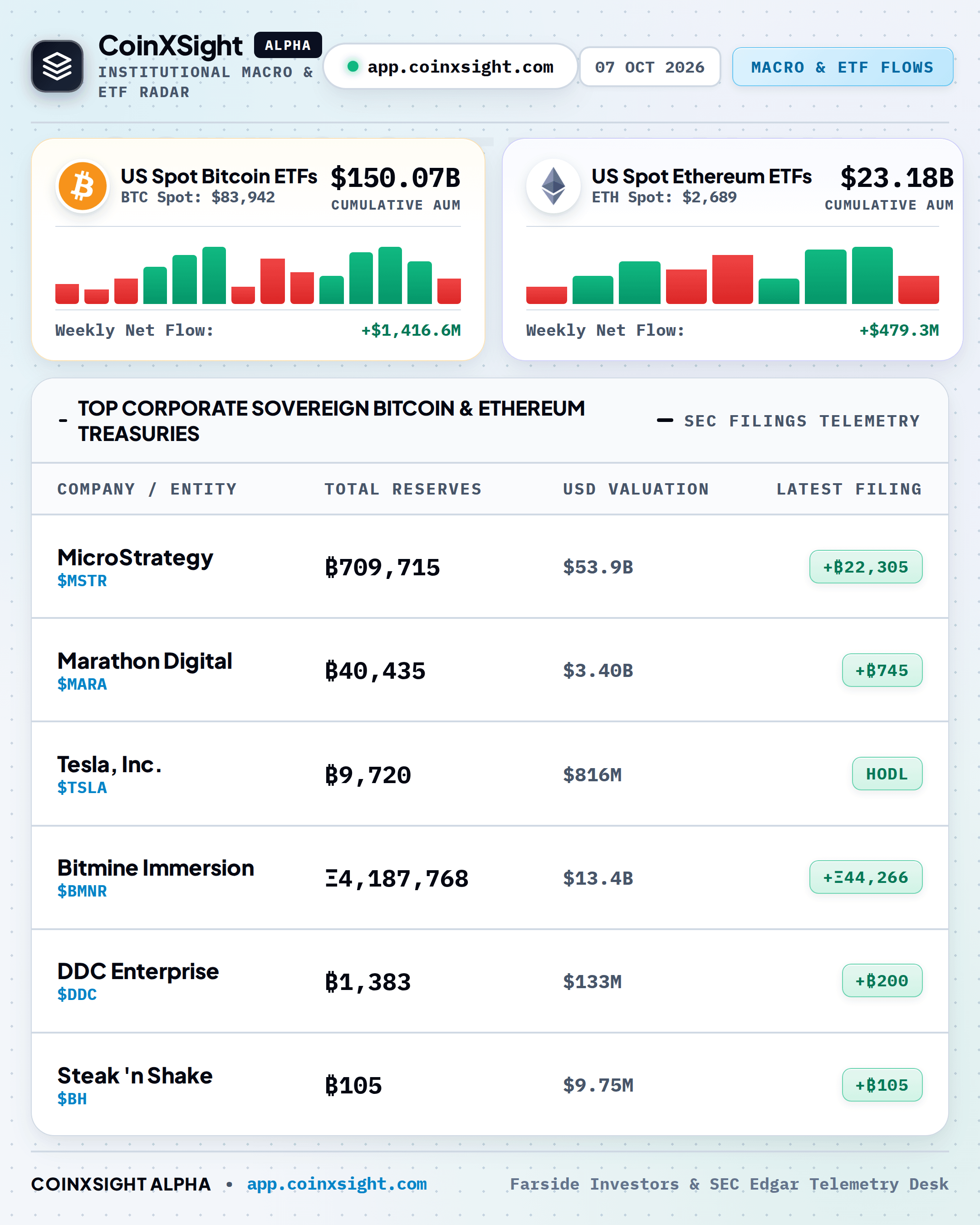
Major regulatory friction is lifting after FinCEN formally withdrew proposed unhosted wallet reporting mandates and mixing surveillance rules. This administrative shift removes a persistent overhang for qualified custodians, institutional self-custody architectures, and regulated spot ETF execution pipes.
🔹 MACRO CATALYST: INSTITUTIONAL RAILS OVER SPECULATION
While high benchmark rates anchor broad financial conditions, baseline crypto liquidity remains exceptionally durable. Sovereign validation is expanding, highlighted by the UK HM Treasury piloting its first digitally native sovereign bond with major banking conglomerates. Institutional capital is deliberately concentrating into tier-one base layers and regulated infrastructure, bypassing redundant consumer execution layers facing rising operating costs.
🔹 TELEMETRY & MICROSTRUCTURE
CoinXSight desk telemetry reflects disciplined order-book absorption rather than forced liquidation:
• $BTC prints at $85,532.00 (-0.48% over 24h) with volume reaching $1.06B, steadily absorbing overhead supply.
• $ETH holds at $2,696.50 (-0.83% over 24h) with $622.54M in daily volume as settlement rails clear stablecoin throughput.
• $SOL trades at $120.56 (-0.45% over 24h) with $174.41M in 24h volume.
• Proprietary news synthesis confidence sits at 78.0/100, reflecting constructive institutional positioning.
With broader equity benchmarks printing cycle highs, suppressed volatility points to orderly rotation. Instead of indiscriminate speculative beta, capital is rewarding functional utility and established liquidity venues.
🔹 TRADING RISKS TO MONITOR
• Duration Drag: Prolonged yield spikes could restrict capital allocations and temporarily mute ETF inflow velocity.
• Execution Layer Atrophy: Capital rationalization across venture-backed secondary rollups could drive collateral liquidations.
• Regulatory Settlement Friction: Ongoing legal battles surrounding unilateral stablecoin balance freezes present localized settlement risks.
Risk Warning: Cryptocurrency trading carries substantial risk. This quantitative brief is for informational purposes only.
Data & Telemetry: CoinXSight Intelligence Hub | Follow on Binance Square for daily alpha.
#BinanceSquare #CryptoMacro #Bitcoin
⚡ FinCEN Drops Wallet Rules as Institutional Capital Anchors $BTC
$BTC continues to hold resilient structural support as institutional integration deepens, even while restrictive sovereign yields impose high hurdle rates across risk assets.

Major regulatory friction is lifting after FinCEN formally withdrew proposed unhosted wallet reporting mandates and mixing surveillance rules. This administrative shift removes a persistent overhang for qualified custodians, institutional self-custody architectures, and regulated spot ETF execution pipes.
🔹 MACRO CATALYST: INSTITUTIONAL RAILS OVER SPECULATION
While high benchmark rates anchor broad financial conditions, baseline crypto liquidity remains exceptionally durable. Sovereign validation is expanding, highlighted by the UK HM Treasury piloting its first digitally native sovereign bond with major banking conglomerates. Institutional capital is deliberately concentrating into tier-one base layers and regulated infrastructure, bypassing redundant consumer execution layers facing rising operating costs.
🔹 TELEMETRY & MICROSTRUCTURE
CoinXSight desk telemetry reflects disciplined order-book absorption rather than forced liquidation:
• $BTC prints at $85,532.00 (-0.48% over 24h) with volume reaching $1.06B, steadily absorbing overhead supply.
• $ETH holds at $2,696.50 (-0.83% over 24h) with $622.54M in daily volume as settlement rails clear stablecoin throughput.
• $SOL trades at $120.56 (-0.45% over 24h) with $174.41M in 24h volume.
• Proprietary news synthesis confidence sits at 78.0/100, reflecting constructive institutional positioning.
With broader equity benchmarks printing cycle highs, suppressed volatility points to orderly rotation. Instead of indiscriminate speculative beta, capital is rewarding functional utility and established liquidity venues.
🔹 TRADING RISKS TO MONITOR
• Duration Drag: Prolonged yield spikes could restrict capital allocations and temporarily mute ETF inflow velocity.
• Execution Layer Atrophy: Capital rationalization across venture-backed secondary rollups could drive collateral liquidations.
• Regulatory Settlement Friction: Ongoing legal battles surrounding unilateral stablecoin balance freezes present localized settlement risks.
Risk Warning: Cryptocurrency trading carries substantial risk. This quantitative brief is for informational purposes only.
Data & Telemetry: CoinXSight Intelligence Hub | Follow on Binance Square for daily alpha.
#BinanceSquare #CryptoMacro #Bitcoin

Major regulatory friction is lifting after FinCEN formally withdrew proposed unhosted wallet reporting mandates and mixing surveillance rules. This administrative shift removes a persistent overhang for qualified custodians, institutional self-custody architectures, and regulated spot ETF execution pipes.
🔹 MACRO CATALYST: INSTITUTIONAL RAILS OVER SPECULATION
While high benchmark rates anchor broad financial conditions, baseline crypto liquidity remains exceptionally durable. Sovereign validation is expanding, highlighted by the UK HM Treasury piloting its first digitally native sovereign bond with major banking conglomerates. Institutional capital is deliberately concentrating into tier-one base layers and regulated infrastructure, bypassing redundant consumer execution layers facing rising operating costs.
🔹 TELEMETRY & MICROSTRUCTURE
CoinXSight desk telemetry reflects disciplined order-book absorption rather than forced liquidation:
• $BTC prints at $85,532.00 (-0.48% over 24h) with volume reaching $1.06B, steadily absorbing overhead supply.
• $ETH holds at $2,696.50 (-0.83% over 24h) with $622.54M in daily volume as settlement rails clear stablecoin throughput.
• $SOL trades at $120.56 (-0.45% over 24h) with $174.41M in 24h volume.
• Proprietary news synthesis confidence sits at 78.0/100, reflecting constructive institutional positioning.
With broader equity benchmarks printing cycle highs, suppressed volatility points to orderly rotation. Instead of indiscriminate speculative beta, capital is rewarding functional utility and established liquidity venues.
🔹 TRADING RISKS TO MONITOR
• Duration Drag: Prolonged yield spikes could restrict capital allocations and temporarily mute ETF inflow velocity.
• Execution Layer Atrophy: Capital rationalization across venture-backed secondary rollups could drive collateral liquidations.
• Regulatory Settlement Friction: Ongoing legal battles surrounding unilateral stablecoin balance freezes present localized settlement risks.
Risk Warning: Cryptocurrency trading carries substantial risk. This quantitative brief is for informational purposes only.
Data & Telemetry: CoinXSight Intelligence Hub | Follow on Binance Square for daily alpha.
#BinanceSquare #CryptoMacro #Bitcoin
94

Article
THE 85K TRAPLINE 1 — Shocking hook: BTC stuck below 87K — is the trap closing?
BODY — 3 key points in bullet points:
• BTC is stuck below 87K despite rebounding from 83.5K: ETFs saw +$649M in outflows in one day and +$1B for the week. Institutions are exiting BEFORE retail enters.
• Toxic macro: CPI +3.8%, PPI +6%, 10Y at 5.28%, hawkish Fed. Liquidity is shrinking, not coming back. ETH is bleeding below 2.7K.
• Fear & Greed jumps from 39 (fear) to 71 (greed) in 48h. A classic divergence before a fake breakout. Liquidations ($121M-187M) are clearing out long leverage. This isn't a rally — it's a trap.
THE 85K TRAP
LINE 1 — Shocking hook: BTC stuck below 87K — is the trap closing?
BODY — 3 key points in bullet points:
• BTC is stuck below 87K despite rebounding from 83.5K: ETFs saw +$649M in outflows in one day and +$1B for the week. Institutions are exiting BEFORE retail enters.
• Toxic macro: CPI +3.8%, PPI +6%, 10Y at 5.28%, hawkish Fed. Liquidity is shrinking, not coming back. ETH is bleeding below 2.7K.
• Fear & Greed jumps from 39 (fear) to 71 (greed) in 48h. A classic divergence before a fake breakout. Liquidations ($121M-187M) are clearing out long leverage. This isn't a rally — it's a trap.
BODY — 3 key points in bullet points:
• BTC is stuck below 87K despite rebounding from 83.5K: ETFs saw +$649M in outflows in one day and +$1B for the week. Institutions are exiting BEFORE retail enters.
• Toxic macro: CPI +3.8%, PPI +6%, 10Y at 5.28%, hawkish Fed. Liquidity is shrinking, not coming back. ETH is bleeding below 2.7K.
• Fear & Greed jumps from 39 (fear) to 71 (greed) in 48h. A classic divergence before a fake breakout. Liquidations ($121M-187M) are clearing out long leverage. This isn't a rally — it's a trap.
120
Article
⚡ Regulatory De-Escalation Clears Path for Institutional $BTC AbsorptionInstitutional balance sheets and regulatory pivots are realigning digital asset liquidity, setting up critical positioning across $BTC, $ETH, and $SOL. Macro headwinds from persistent sovereign bond yields continue to test speculative risk, yet structural tailwinds are shifting in favor of prime spot absorption.
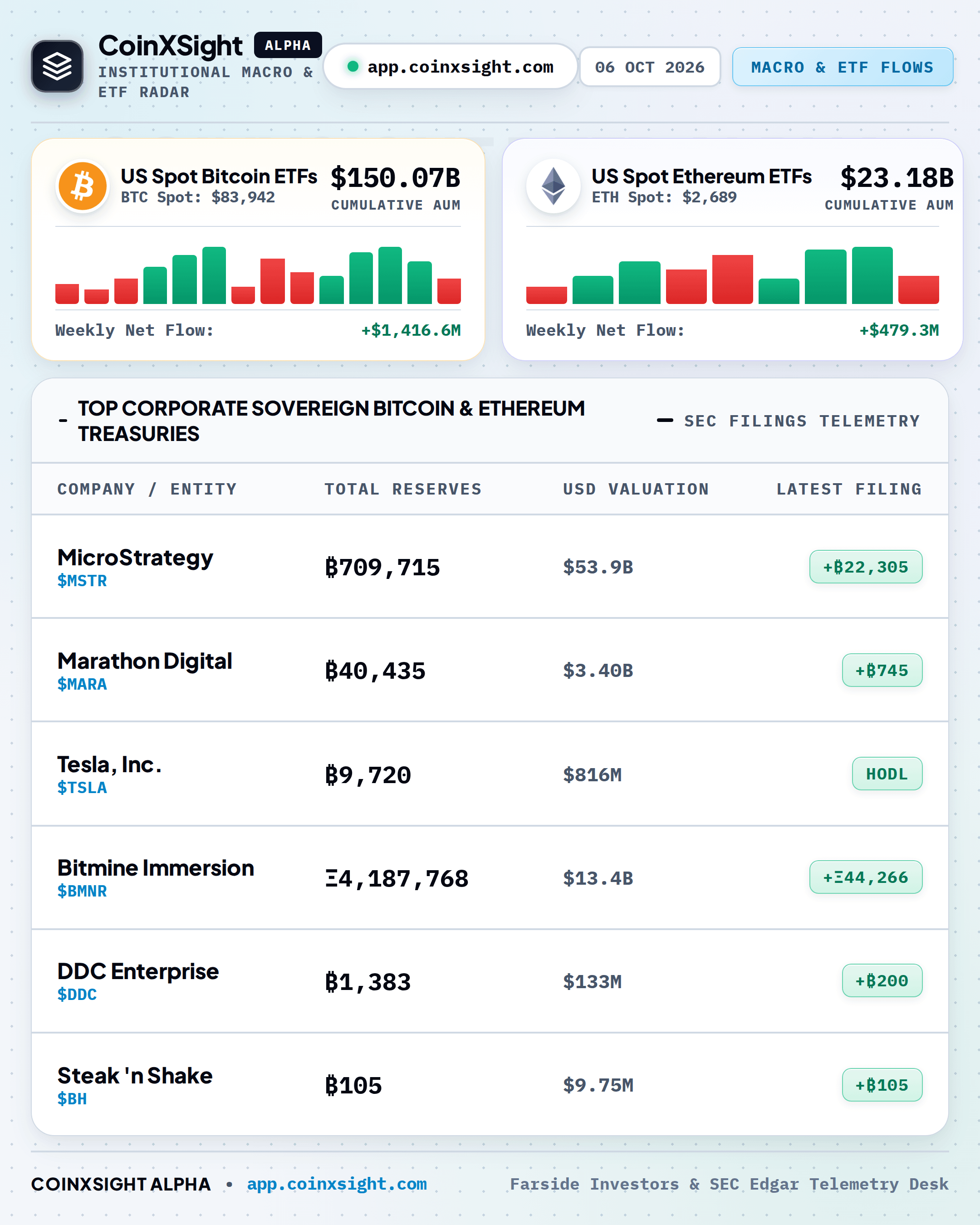
🔹 REGULATORY DE-ESCALATION ANCHORS THE DESK
The formal withdrawal of FinCEN unhosted wallet recordkeeping restrictions removes a multi-year regulatory headwind for institutional custodians, self-custody infrastructure, and tier-one prime brokers. Combined with progressive oversight architectures under consideration by the CFTC and softening sovereign employment prints, macroeconomic expectations are pivoting away from further policy tightening. Although elevated sovereign debt yields maintain persistent hurdle rates for broad market beta, corporate balance sheet expansion and institutional spot conduits establish durable buy-side absorption against macro duration drag.
🔹 VERIFIED MARKET TELEMETRY
Proprietary desk data reflects balanced leverage and controlled spot distribution across primary conduits:
• BTC spot price trades at $85,944.76, down -0.76% across $1.38B in 24-hour volume.
• ETH consolidates at $2,719.47, recording a -0.31% shift alongside $718.17M in volume.
• SOL hovers at $121.09, registering -0.13% on $189.22M in 24-hour volume.
• Total derivatives open interest stands at $7.91B with a balanced funding rate of +0.0053%.
• News synthesis confidence score prints at 82.0/100.
🔹 STRATEGIC TRADING NARRATIVE
With neutral funding rates and disciplined open interest, derivatives positioning reflects structural accumulation rather than unhedged leverage. Immediate capital flows continue concentrating in core blue-chip liquidity conduits, while broader market beta faces selective bifurcation. Tactical traders should monitor potential sovereign yield spikes and overhead order-book resistance that could provoke cascading long liquidations before programmatic monetary accommodation fully materializes.
Data & Telemetry: CoinXSight Intelligence Hub | Follow on Binance Square for daily alpha.
Risk Warning: Cryptocurrency trading carries substantial risk. This quantitative brief is for informational purposes only.
#BinanceSquare #CryptoMacro #CoinXSight
⚡ Regulatory De-Escalation Clears Path for Institutional $BTC Absorption
Institutional balance sheets and regulatory pivots are realigning digital asset liquidity, setting up critical positioning across $BTC , $ETH , and $SOL . Macro headwinds from persistent sovereign bond yields continue to test speculative risk, yet structural tailwinds are shifting in favor of prime spot absorption.

🔹 REGULATORY DE-ESCALATION ANCHORS THE DESK
The formal withdrawal of FinCEN unhosted wallet recordkeeping restrictions removes a multi-year regulatory headwind for institutional custodians, self-custody infrastructure, and tier-one prime brokers. Combined with progressive oversight architectures under consideration by the CFTC and softening sovereign employment prints, macroeconomic expectations are pivoting away from further policy tightening. Although elevated sovereign debt yields maintain persistent hurdle rates for broad market beta, corporate balance sheet expansion and institutional spot conduits establish durable buy-side absorption against macro duration drag.
🔹 VERIFIED MARKET TELEMETRY
Proprietary desk data reflects balanced leverage and controlled spot distribution across primary conduits:
• BTC spot price trades at $85,944.76, down -0.76% across $1.38B in 24-hour volume.
• ETH consolidates at $2,719.47, recording a -0.31% shift alongside $718.17M in volume.
• SOL hovers at $121.09, registering -0.13% on $189.22M in 24-hour volume.
• Total derivatives open interest stands at $7.91B with a balanced funding rate of +0.0053%.
• News synthesis confidence score prints at 82.0/100.
🔹 STRATEGIC TRADING NARRATIVE
With neutral funding rates and disciplined open interest, derivatives positioning reflects structural accumulation rather than unhedged leverage. Immediate capital flows continue concentrating in core blue-chip liquidity conduits, while broader market beta faces selective bifurcation. Tactical traders should monitor potential sovereign yield spikes and overhead order-book resistance that could provoke cascading long liquidations before programmatic monetary accommodation fully materializes.
Data & Telemetry: CoinXSight Intelligence Hub | Follow on Binance Square for daily alpha.
Risk Warning: Cryptocurrency trading carries substantial risk. This quantitative brief is for informational purposes only.
#BinanceSquare #CryptoMacro #CoinXSight

🔹 REGULATORY DE-ESCALATION ANCHORS THE DESK
The formal withdrawal of FinCEN unhosted wallet recordkeeping restrictions removes a multi-year regulatory headwind for institutional custodians, self-custody infrastructure, and tier-one prime brokers. Combined with progressive oversight architectures under consideration by the CFTC and softening sovereign employment prints, macroeconomic expectations are pivoting away from further policy tightening. Although elevated sovereign debt yields maintain persistent hurdle rates for broad market beta, corporate balance sheet expansion and institutional spot conduits establish durable buy-side absorption against macro duration drag.
🔹 VERIFIED MARKET TELEMETRY
Proprietary desk data reflects balanced leverage and controlled spot distribution across primary conduits:
• BTC spot price trades at $85,944.76, down -0.76% across $1.38B in 24-hour volume.
• ETH consolidates at $2,719.47, recording a -0.31% shift alongside $718.17M in volume.
• SOL hovers at $121.09, registering -0.13% on $189.22M in 24-hour volume.
• Total derivatives open interest stands at $7.91B with a balanced funding rate of +0.0053%.
• News synthesis confidence score prints at 82.0/100.
🔹 STRATEGIC TRADING NARRATIVE
With neutral funding rates and disciplined open interest, derivatives positioning reflects structural accumulation rather than unhedged leverage. Immediate capital flows continue concentrating in core blue-chip liquidity conduits, while broader market beta faces selective bifurcation. Tactical traders should monitor potential sovereign yield spikes and overhead order-book resistance that could provoke cascading long liquidations before programmatic monetary accommodation fully materializes.
Data & Telemetry: CoinXSight Intelligence Hub | Follow on Binance Square for daily alpha.
Risk Warning: Cryptocurrency trading carries substantial risk. This quantitative brief is for informational purposes only.
#BinanceSquare #CryptoMacro #CoinXSight
99
Log in to explore more content
Join global crypto users on Binance Square
⚡️ Get latest and useful information about crypto.
💬 Trusted by the world’s largest crypto exchange.
👍 Discover real insights from verified creators.
Email / Phone number
Trending Topics
1
#AustraliaProposesCryptoTransactionReportingLaw
258 views
48 Discussing
2
#SolanaAlpenglowUpgradeToActivateOnOct21
2,326 views
90 Discussing
3
#USSeptemberPPIRisesTo6.3%
1,671 views
79 Discussing
4
#RussiaToBanDirectCryptoP2PTradesFromJuly2027
1,299 views
46 Discussing
5
#MSCIFinalizesRulesThatCouldExcludeStrategy
579 views
38 Discussing
6
#CrossRiverIntegratesRLUSDIntoCoreBanking
897 views
24 Discussing
7
#LedgerUnveilsAtomCryptoWalletSmartphone
13 views
7 Discussing
8
#FarcasterAcquiredByBalajisNetworkSchool
9 views
2 Discussing
9
#WarshPushesToScaleBackForwardGuidanceAndDotPlot
236,805 views
1,200 Discussing
10
#SpotBitcoinETFsShed$261M
85,450 views
169 Discussing