
#cowprotocol
cowprotocol
143,388 views
217 Discussing
Hot
Latest

·
--
Bullish
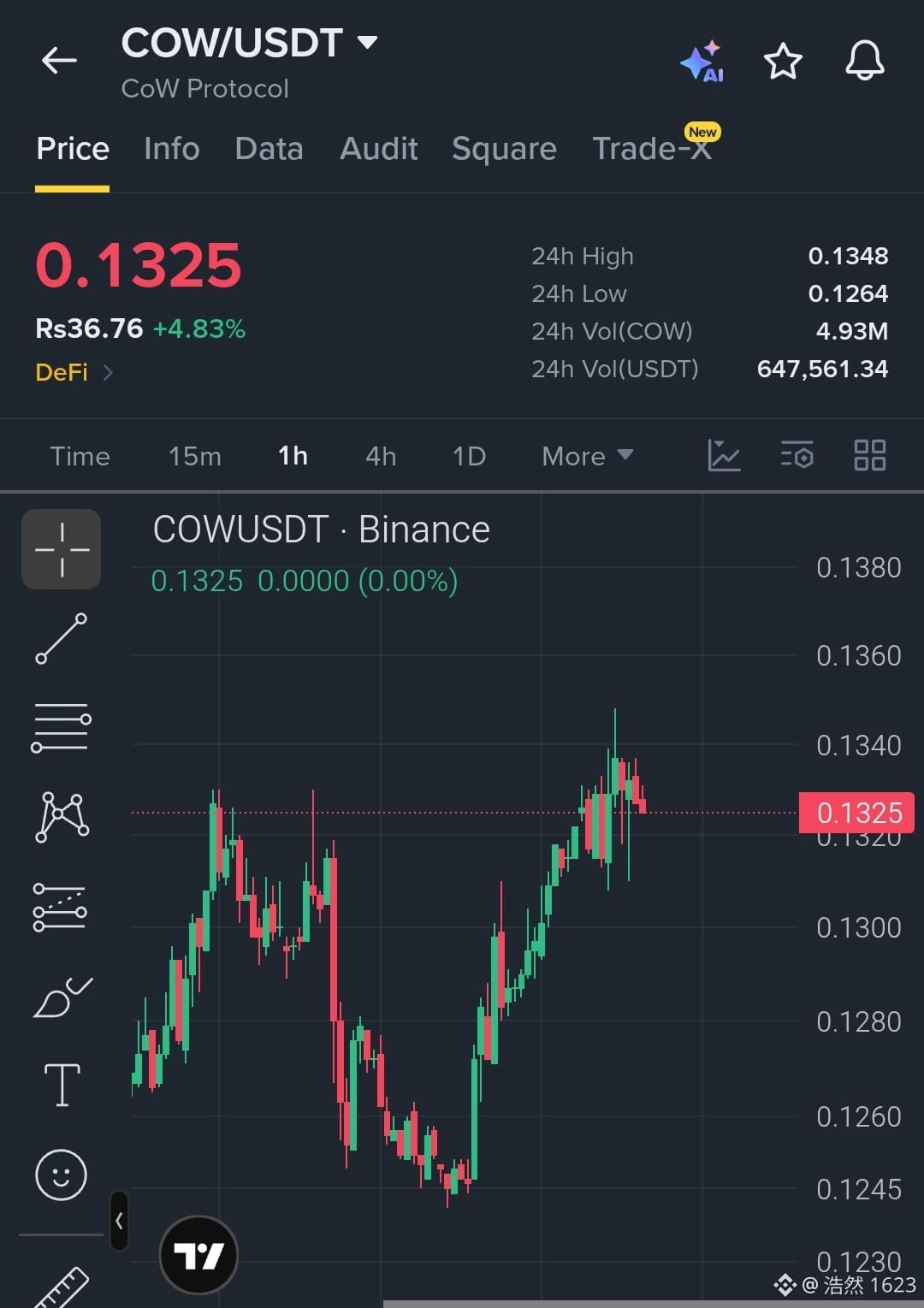
$COW is showing a steady recovery trend on the 1h chart, currently trading around 0.1325 with a 24h gain of +4.83%. After forming a strong bottom near the 0.1245–0.1260 support area, price pushed upward to mark a recent high of 0.1348. Bulls are holding the higher low, suggesting potential for another impulse movement to clear local overhead resistance levels.
Target 1: 0.1348 Target 2: 0.1360 Target 3: 0.1380
#COW #CoWProtocol #CryptoAnalysis
$TUT
{future}(TUTUSDT)
$ZEC
{future}(ZECUSDT)
{future}(COWUSDT)
$COW is showing a steady recovery trend on the 1h chart, currently trading around 0.1325 with a 24h gain of +4.83%. After forming a strong bottom near the 0.1245–0.1260 support area, price pushed upward to mark a recent high of 0.1348. Bulls are holding the higher low, suggesting potential for another impulse movement to clear local overhead resistance levels.
Target 1: 0.1348 Target 2: 0.1360 Target 3: 0.1380
#COW #CoWProtocol #CryptoAnalysis
$TUT
$ZEC
Target 1: 0.1348 Target 2: 0.1360 Target 3: 0.1380
#COW #CoWProtocol #CryptoAnalysis
$TUT
$ZEC
1
347


·
--
CoW Protocol is the #1 intent-based DEX by volume — and most people still don't know its name.
23.5% market share in intent-based trading. $44K+ in daily protocol revenue, up 340% in a day.
Real batch-auction tech that protects traders from MEV — quietly one of DeFi's best-built products.
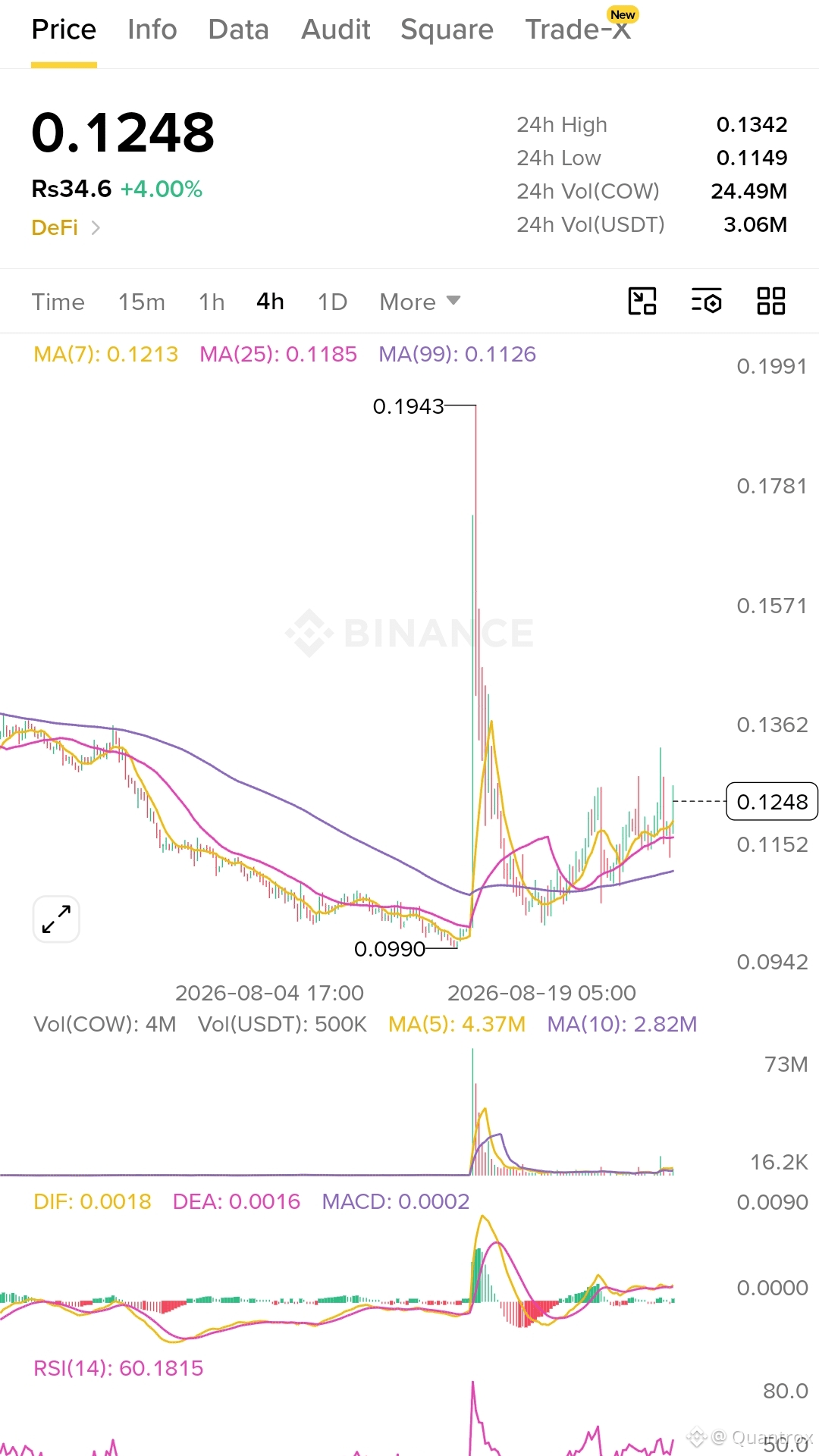
$0.099 → $0.194 spike → now $0.125, cooling off from overbought. Solid fundamentals, choppy chart.
#COW $COW #CoWProtocol #DeFi #Crypto
CoW Protocol is the #1 intent-based DEX by volume — and most people still don't know its name.
23.5% market share in intent-based trading. $44K+ in daily protocol revenue, up 340% in a day.
Real batch-auction tech that protects traders from MEV — quietly one of DeFi's best-built products.
$0.099 → $0.194 spike → now $0.125, cooling off from overbought. Solid fundamentals, choppy chart.
#COW $COW #CoWProtocol #DeFi #Crypto
23.5% market share in intent-based trading. $44K+ in daily protocol revenue, up 340% in a day.
Real batch-auction tech that protects traders from MEV — quietly one of DeFi's best-built products.
$0.099 → $0.194 spike → now $0.125, cooling off from overbought. Solid fundamentals, choppy chart.
#COW $COW #CoWProtocol #DeFi #Crypto
264
·
--
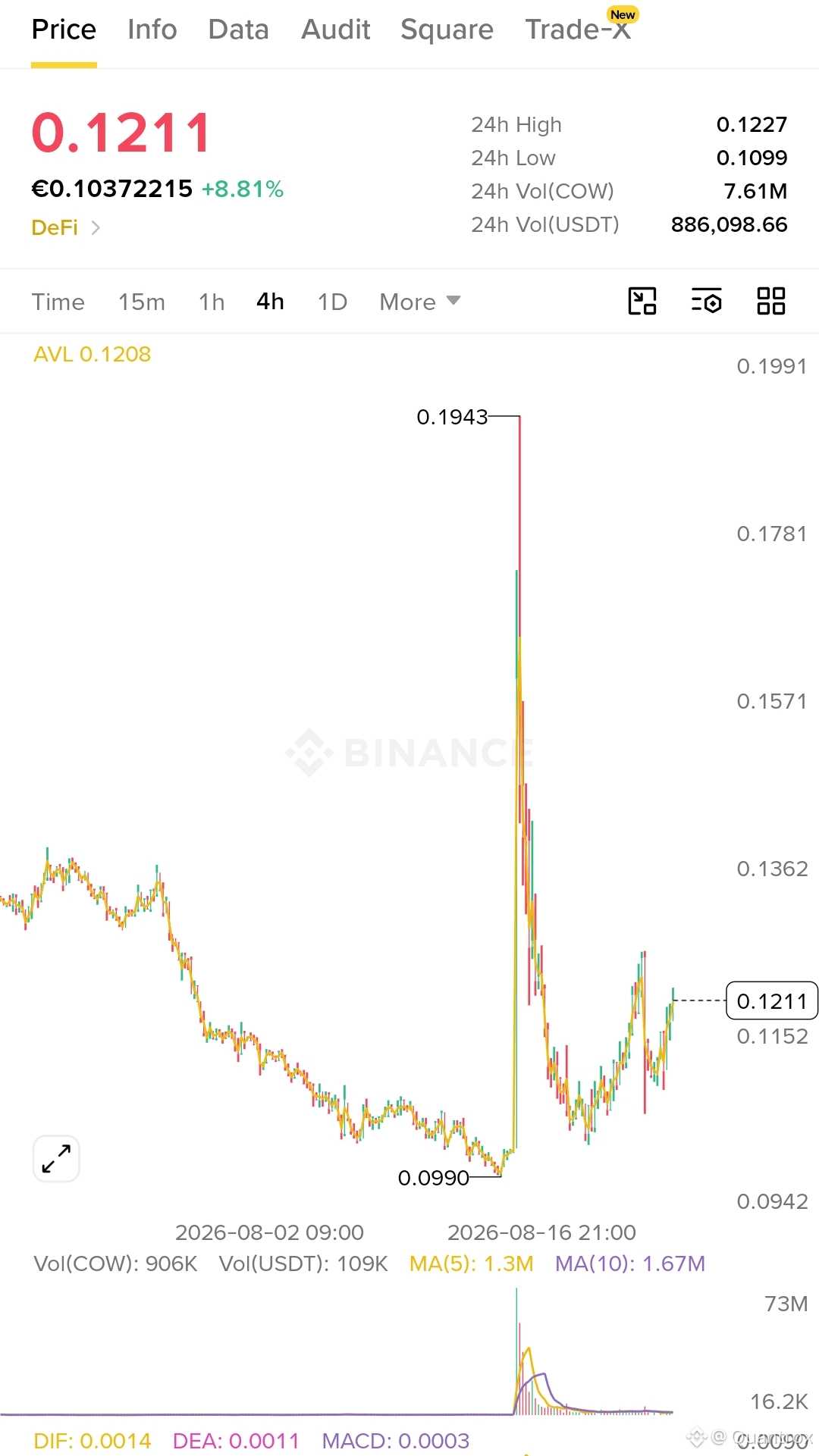
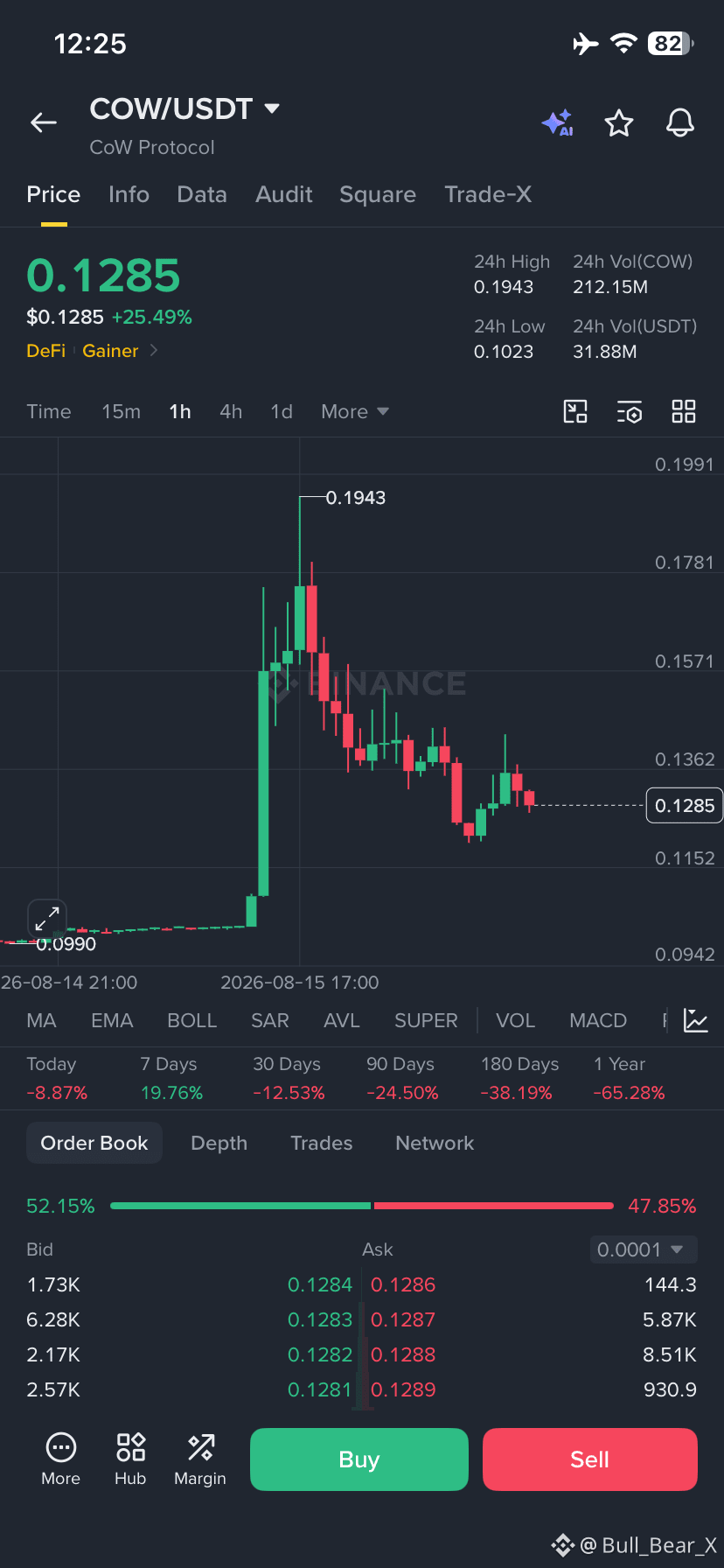
$COW 50% crash may have been the setup. 👀
That $0.1943 spike got wiped out almost instantly.
Now price is quietly rebuilding…
$0.1152 is the level I’m watching.
Hold it → higher retest.
Lose it → $0.0990 could be next.
Fakeout… or comeback?
#COW #CowProtocol #Crypto #DeFi
$COW 50% crash may have been the setup. 👀
That $0.1943 spike got wiped out almost instantly.
Now price is quietly rebuilding…
$0.1152 is the level I’m watching.
Hold it → higher retest.
Lose it → $0.0990 could be next.
Fakeout… or comeback?
#COW #CowProtocol #Crypto #DeFi
That $0.1943 spike got wiped out almost instantly.
Now price is quietly rebuilding…
$0.1152 is the level I’m watching.
Hold it → higher retest.
Lose it → $0.0990 could be next.
Fakeout… or comeback?
#COW #CowProtocol #Crypto #DeFi
528

·
--
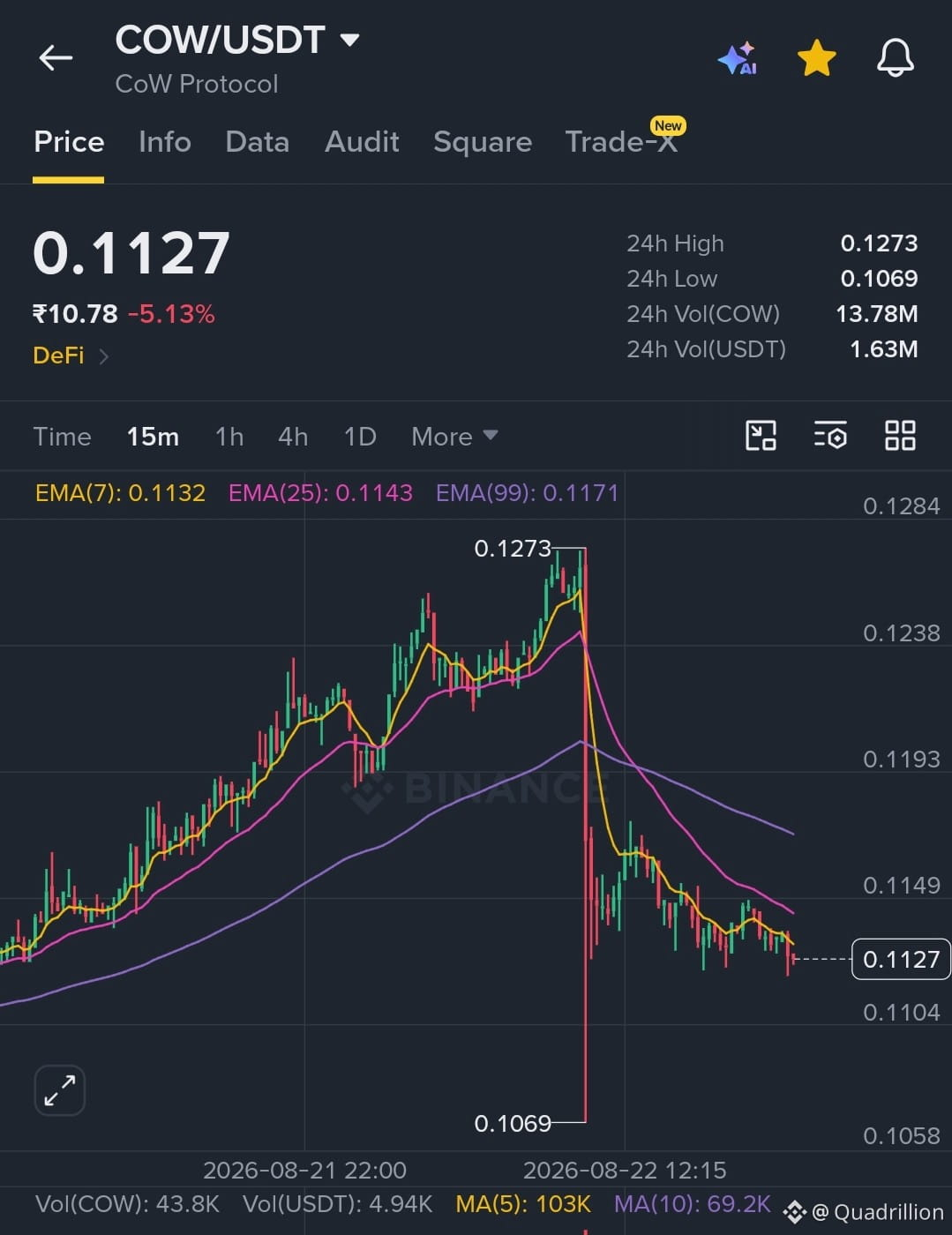
Crazy flash wick on $COW ! 📉⚡
After tapping a local top at $0.1273,$COW suffered a sharp liquidation dump down to $0.1069.
The price has settled around $0.1127 (-5.13%), but is struggling below all short-term EMAs (7, 25, and 99).
💬 Are you buying this dip or waiting for a confirmed trend reversal? Drop your take below! 👇
#COW #CoWProtocol #CryptoVolatility #BinanceSquare #DeFi
Crazy flash wick on $COW ! 📉⚡
After tapping a local top at $0.1273,$COW suffered a sharp liquidation dump down to $0.1069.
The price has settled around $0.1127 (-5.13%), but is struggling below all short-term EMAs (7, 25, and 99).
💬 Are you buying this dip or waiting for a confirmed trend reversal? Drop your take below! 👇
#COW #CoWProtocol #CryptoVolatility #BinanceSquare #DeFi
After tapping a local top at $0.1273,$COW suffered a sharp liquidation dump down to $0.1069.
The price has settled around $0.1127 (-5.13%), but is struggling below all short-term EMAs (7, 25, and 99).
💬 Are you buying this dip or waiting for a confirmed trend reversal? Drop your take below! 👇
#COW #CoWProtocol #CryptoVolatility #BinanceSquare #DeFi
1
144
·
--
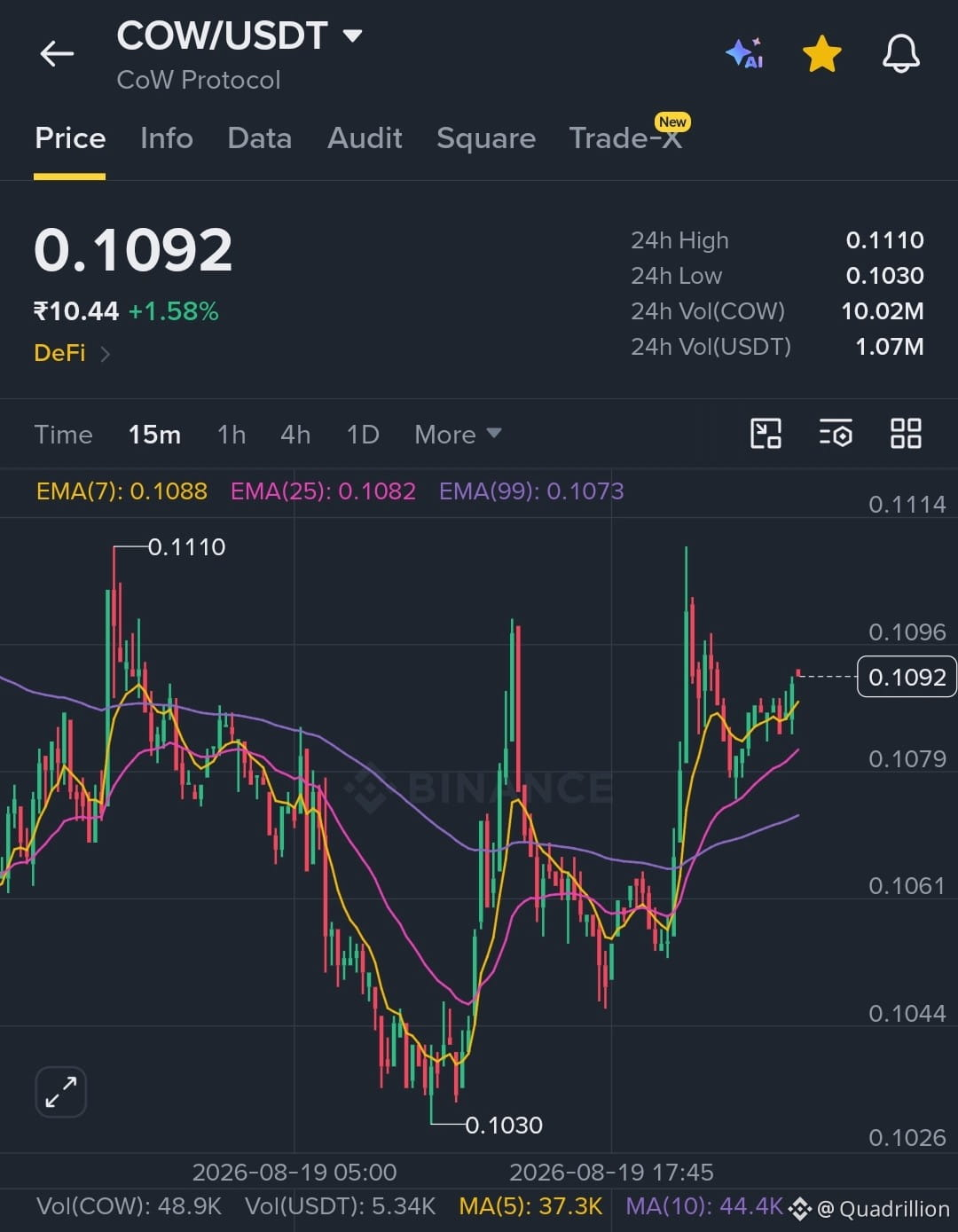
$COW is showing steady strength and gearing up for a breakout! 🚀 After bouncing cleanly from the $0.1030 low, it is consolidating right at $0.1092, eyeing the 24h high of $0.1110. All short-term EMAs on the 15m chart are curling upward. Are we breaking past $0.11 next? Drop your thoughts below! 👇🔥 #COW #CoWProtocol #BinanceSquare
$COW is showing steady strength and gearing up for a breakout! 🚀 After bouncing cleanly from the $0.1030 low, it is consolidating right at $0.1092, eyeing the 24h high of $0.1110. All short-term EMAs on the 15m chart are curling upward. Are we breaking past $0.11 next? Drop your thoughts below! 👇🔥 #COW #CoWProtocol #BinanceSquare
1
194

·
--
🐮 COWUSDT — a small coin, but the moves can be big 🔥
COW is currently interesting specifically from the perspective of technical trading.
The price is in a zone where it’s important to see who will take the initiative:
🟢 Breakout + consolidation + volume → a potential upside impulse 🚀
🔴 Rejection from resistance → possible pullback to support 📉
⚠️ With such assets, it’s especially important to control leverage—volatility can quickly increase both profit and loss.
👀 We’re adding COW to the watchlist.
$COW
#COW #CoWProtocol #crypto #trading #Binance
{future}(COWUSDT)
🐮 COWUSDT — a small coin, but the moves can be big 🔥
COW is currently interesting specifically from the perspective of technical trading.
The price is in a zone where it’s important to see who will take the initiative:
🟢 Breakout + consolidation + volume → a potential upside impulse 🚀
🔴 Rejection from resistance → possible pullback to support 📉
⚠️ With such assets, it’s especially important to control leverage—volatility can quickly increase both profit and loss.
👀 We’re adding COW to the watchlist.
$COW
#COW #CoWProtocol #crypto #trading #Binance
COW is currently interesting specifically from the perspective of technical trading.
The price is in a zone where it’s important to see who will take the initiative:
🟢 Breakout + consolidation + volume → a potential upside impulse 🚀
🔴 Rejection from resistance → possible pullback to support 📉
⚠️ With such assets, it’s especially important to control leverage—volatility can quickly increase both profit and loss.
👀 We’re adding COW to the watchlist.
$COW
#COW #CoWProtocol #crypto #trading #Binance
64

·
--
Bullish
🐮 $COW Protocol: The Quiet DeFi Play to Watch
$COW isn’t just another ticker.
CoW Protocol is focused on improving DEX trading through better execution and MEV-aware trading infrastructure.
As DeFi keeps evolving, projects solving real trading problems deserve attention. 👀
📊 COW
🔹 DeFi infrastructure
🔹 Smart trade execution
🔹 MEV-aware design
🔹 Worth keeping on the watchlist
Not financial advice. DYOR.
#COWscalp #CoWProtocol #DeFi: #Crypto #BinanceSquareBTC
🐮 $COW Protocol: The Quiet DeFi Play to Watch
$COW isn’t just another ticker.
CoW Protocol is focused on improving DEX trading through better execution and MEV-aware trading infrastructure.
As DeFi keeps evolving, projects solving real trading problems deserve attention. 👀
📊 COW
🔹 DeFi infrastructure
🔹 Smart trade execution
🔹 MEV-aware design
🔹 Worth keeping on the watchlist
Not financial advice. DYOR.
#COWscalp #CoWProtocol #DeFi: #Crypto #BinanceSquareBTC
$COW isn’t just another ticker.
CoW Protocol is focused on improving DEX trading through better execution and MEV-aware trading infrastructure.
As DeFi keeps evolving, projects solving real trading problems deserve attention. 👀
📊 COW
🔹 DeFi infrastructure
🔹 Smart trade execution
🔹 MEV-aware design
🔹 Worth keeping on the watchlist
Not financial advice. DYOR.
#COWscalp #CoWProtocol #DeFi: #Crypto #BinanceSquareBTC
2
347
·
--
Bearish
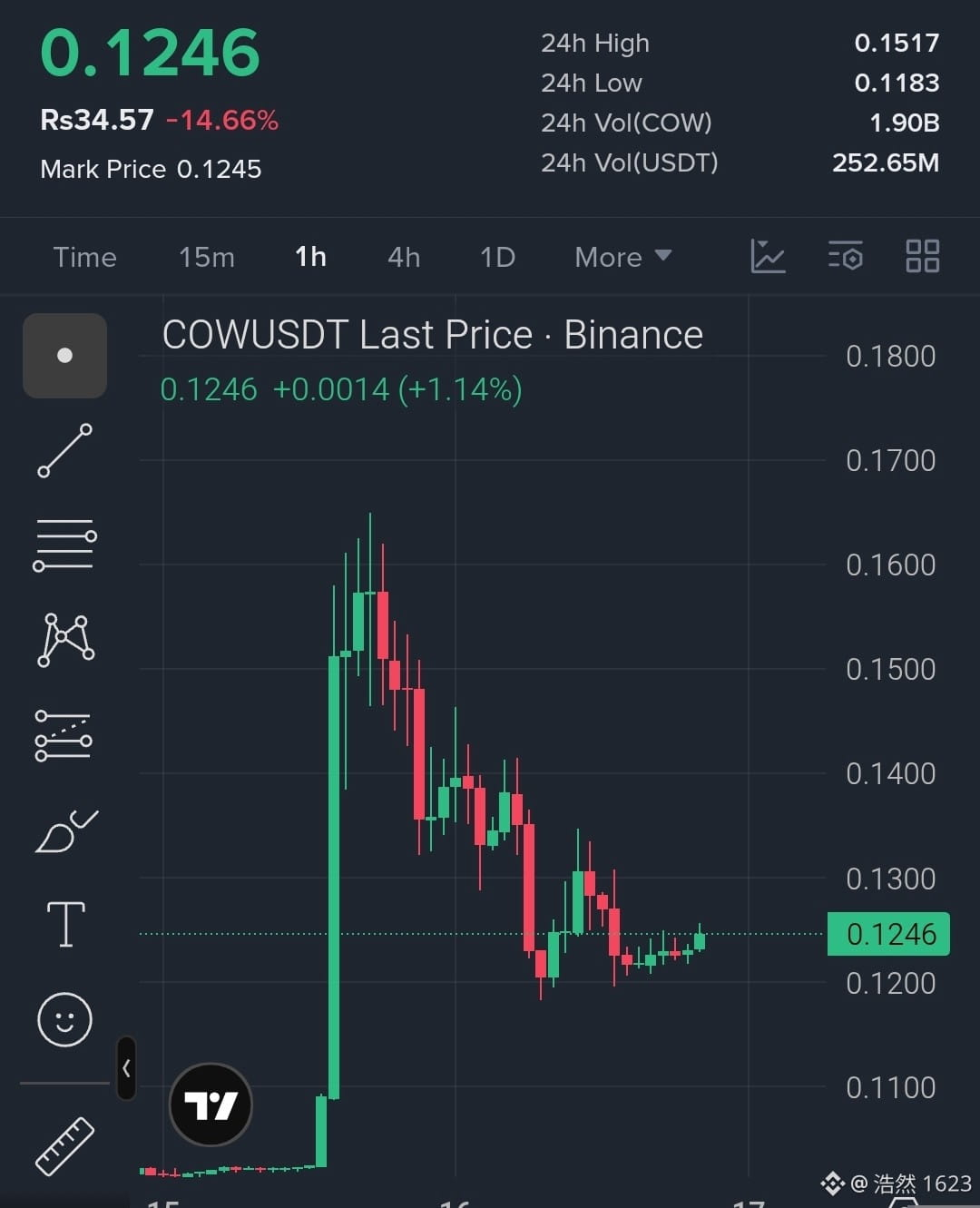
$COW is currently stabilizing on the 1-hour chart around 0.1246 after a major move and subsequent cool-off from its high of 0.1517. Price action has settled into a tight consolidation phase near the 0.1180–0.1200 support floor, showing signs that seller momentum is diminishing. A sustained breakout above the immediate resistance level at 0.1300 will confirm a bullish reversal and trigger a push toward higher liquidity pools.
Target 1: 0.1320 Target 2: 0.1410 Target 3: 0.1500
#COW #CoWProtocol #Binance #Crypto #Trading
$GIGGLE
{future}(GIGGLEUSDT)
$DEXE
{future}(DEXEUSDT)
{future}(COWUSDT)
$COW is currently stabilizing on the 1-hour chart around 0.1246 after a major move and subsequent cool-off from its high of 0.1517. Price action has settled into a tight consolidation phase near the 0.1180–0.1200 support floor, showing signs that seller momentum is diminishing. A sustained breakout above the immediate resistance level at 0.1300 will confirm a bullish reversal and trigger a push toward higher liquidity pools.
Target 1: 0.1320 Target 2: 0.1410 Target 3: 0.1500
#COW #CoWProtocol #Binance #Crypto #Trading
$GIGGLE
$DEXE
Target 1: 0.1320 Target 2: 0.1410 Target 3: 0.1500
#COW #CoWProtocol #Binance #Crypto #Trading
$GIGGLE
$DEXE
1
603

·
--
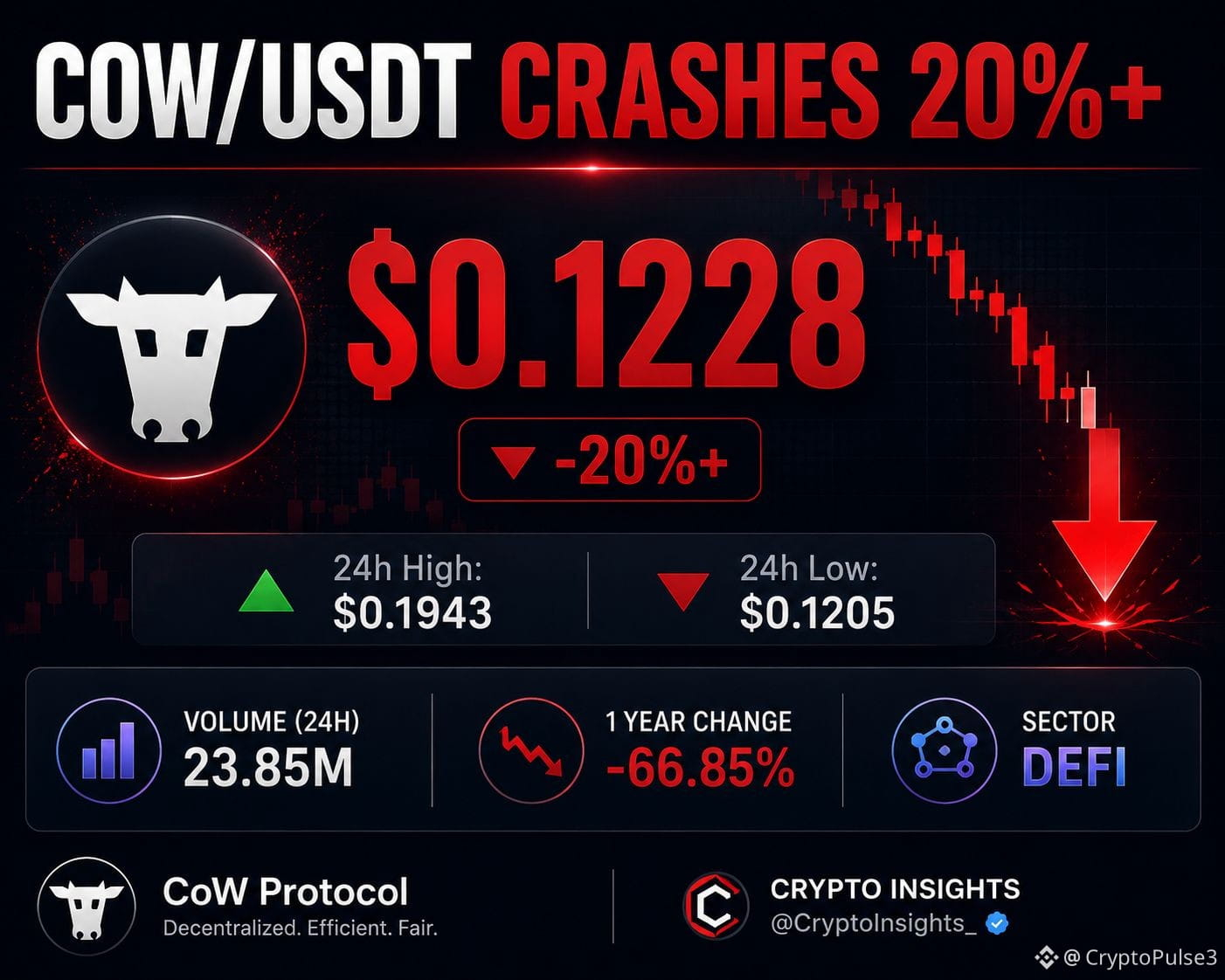
CoW Protocol (COW) is under heavy selling pressure today, plunging over 20% in 24 hours to trade at $0.1228. The token has now shed nearly 67% of its value over the past year, with the 24h low touching $0.1205 against a high of $0.1943. Trading volume remains active at 23.85M USDT, signaling continued market interest despite the steep correction. Analysts are watching key support levels closely as bearish momentum persists across the DeFi sector.
Caption:
COW/USDT tumbles 20%+ 🐮📉 — DeFi bears take control!
Key Points:
📉 24h Price Drop: -20.72% (now at $0.1228)
🔻 1-Year Performance: -66.85%
💰 24h Trading Volume: 23.85M USDT
⚠️ Support Test: Price near 24h low of $0.1205
#COW #CoWProtocol #USDT
$BTC $COW $ETH
CoW Protocol (COW) is under heavy selling pressure today, plunging over 20% in 24 hours to trade at $0.1228. The token has now shed nearly 67% of its value over the past year, with the 24h low touching $0.1205 against a high of $0.1943. Trading volume remains active at 23.85M USDT, signaling continued market interest despite the steep correction. Analysts are watching key support levels closely as bearish momentum persists across the DeFi sector.
Caption:
COW/USDT tumbles 20%+ 🐮📉 — DeFi bears take control!
Key Points:
📉 24h Price Drop: -20.72% (now at $0.1228)
🔻 1-Year Performance: -66.85%
💰 24h Trading Volume: 23.85M USDT
⚠️ Support Test: Price near 24h low of $0.1205
#COW #CoWProtocol #USDT
$BTC $COW $ETH
Caption:
COW/USDT tumbles 20%+ 🐮📉 — DeFi bears take control!
Key Points:
📉 24h Price Drop: -20.72% (now at $0.1228)
🔻 1-Year Performance: -66.85%
💰 24h Trading Volume: 23.85M USDT
⚠️ Support Test: Price near 24h low of $0.1205
#COW #CoWProtocol #USDT
$BTC $COW $ETH
58

·
--
🐮 COW/USDT | Market Watch$COW $DUSK $BTC
COW has been showing strong momentum, but the latest move is getting stretched. Recent analysis puts COW around $0.16, with $0.20 as a key resistance and $0.11 as an important support zone.
📈 Bullish: Break above $0.20 → momentum could accelerate.
📉 Bearish: Lose $0.11 → deeper pullback risk.
💡 Tip: Don’t chase a pump—wait for confirmation.
#COW #cowusdt #CoWProtocol #altcoins
🐮 COW/USDT | Market Watch$COW $DUSK $BTC
COW has been showing strong momentum, but the latest move is getting stretched. Recent analysis puts COW around $0.16, with $0.20 as a key resistance and $0.11 as an important support zone.
📈 Bullish: Break above $0.20 → momentum could accelerate.
📉 Bearish: Lose $0.11 → deeper pullback risk.
💡 Tip: Don’t chase a pump—wait for confirmation.
#COW #cowusdt #CoWProtocol #altcoins
COW has been showing strong momentum, but the latest move is getting stretched. Recent analysis puts COW around $0.16, with $0.20 as a key resistance and $0.11 as an important support zone.
📈 Bullish: Break above $0.20 → momentum could accelerate.
📉 Bearish: Lose $0.11 → deeper pullback risk.
💡 Tip: Don’t chase a pump—wait for confirmation.
#COW #cowusdt #CoWProtocol #altcoins
1
70

·
--
The plaza topic says COW rose 55.77% in a 24-hour window. On the same candlestick, it just exhaled profits downward from near the daily peak. Is this the realization of an “utility” narrative, or has the heat already been drawn out first?
Let’s break down the wording first. The topic numbers correspond to the surge window—roughly rebounding from around 0.10 to about 0.16. In Binance’s COWUSDT daily chart, the market opened on August 15 at about 0.102, spiked intraday to 0.1943, and closed at 0.141. Trading volume then suddenly expanded to about $27.78 million, whereas the previous few days were only in the hundreds of thousands. By the rolling 24-hour window as of August 16, it has flipped to a decline of about 21.5%, with the latest price around 0.1236 and that day’s low around 0.1205. The “green topic” and the current price aren’t on the same frame.
【Who is it】
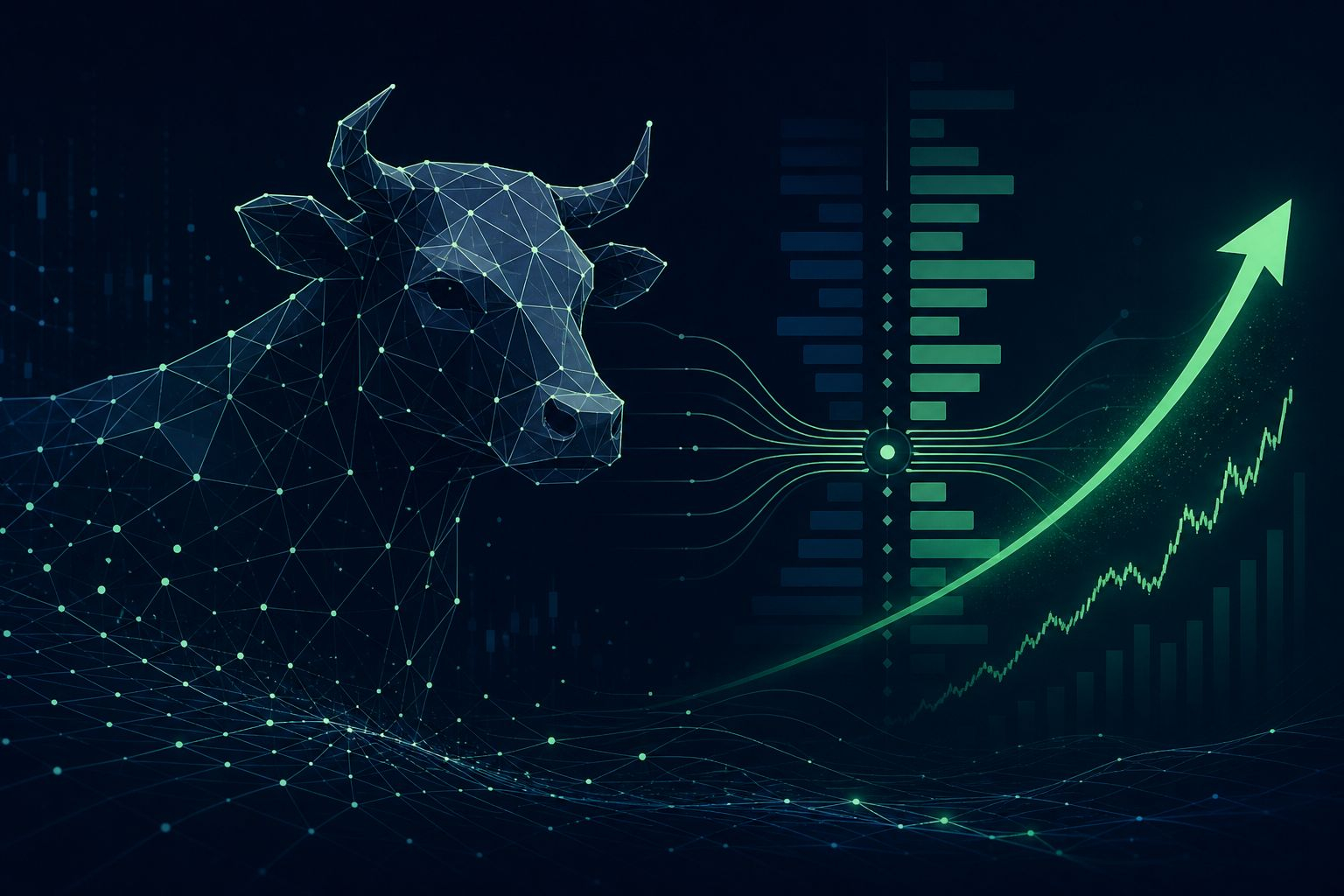
(For the structure diagram, see the cover and the accompanying images in the body; compare it with the blue line oscillations and the Fib dashed lines on the right.)
COW is the governance token of CoW Protocol. The protocol performs intention-based trading and batch matching, emphasizing MEV protection and reducing slippage losses. This isn’t the same line as the similarly named movie meme. Don’t see the “bull” character and automatically assume you’ve matched the meaning.
【Why it suddenly blew up】
The public catalyst comes from Lido. Around August 14, NEST’s automatic buyback mechanism went live on mainnet. The rule is roughly: once staking revenue exceeds an annualized baseline of about $40 million, half of the surplus gets bought via CoW Swap—daily cap about $50,000, and an annual rolling cap of about $10 million. The repurchased LDO goes into the DAO treasury. Both media coverage and project explanations write the execution layer as being through CoW Swap. The market reads it as: a big protocol routes a continuous order flow into the intent-matching layer, and the utility narrative gets “lit up.”
Volume is tougher than slogans. On August 15’s daily candle, both price and trading volume “exploded” together. After that, whether a second DAO reuses the same pathway—if yes, that’s more worth watching than a single-day percentage spike.
【How to trade this setup】
Don’t translate the topic’s percentage gain directly into a mindless chase. The 55.77% move in the surge window has already happened. What we have now looks more like profit-taking after the peak.
You can structure your observation into three tiers—only look at daily or 4-hour closes.
First, for defense: watch 0.12 down to 0.10. Around 0.12 is where the pullback formed in this leg, and 0.10 is the platform before the breakout. If 0.10 is lost consecutively, the upside structure will be significantly discounted.
Second, for the mean-reversion pullback resistance: first look at 0.14 to 0.15, then at the sentiment highs around 0.16 to 0.19. Only if it holds above 0.14 should we talk about a second leg up.
Third, for narrative runway: watch whether trading volume can stay above the million-dollar level, and whether NEST truly places orders day by day. Repurchases have a daily cap—this single buyer can’t hold the infinite market-cap fantasy by itself.
Are you waiting for the retest of 0.12 to 0.10 to talk, or do you insist on chasing a second pulse above 0.14? Answer with “wait for the retest” or “chase the pulse.”
$COW $BTC #COW #CoWProtocol #Lido
Captain Dragonfly|A finance blogger who likes analyzing data and candlestick charts.
Not investment advice. The percentage change varies by window; before placing any order, verify the latest market conditions and contracts yourself.
The plaza topic says COW rose 55.77% in a 24-hour window. On the same candlestick, it just exhaled profits downward from near the daily peak. Is this the realization of an “utility” narrative, or has the heat already been drawn out first?
Let’s break down the wording first. The topic numbers correspond to the surge window—roughly rebounding from around 0.10 to about 0.16. In Binance’s COWUSDT daily chart, the market opened on August 15 at about 0.102, spiked intraday to 0.1943, and closed at 0.141. Trading volume then suddenly expanded to about $27.78 million, whereas the previous few days were only in the hundreds of thousands. By the rolling 24-hour window as of August 16, it has flipped to a decline of about 21.5%, with the latest price around 0.1236 and that day’s low around 0.1205. The “green topic” and the current price aren’t on the same frame.
【Who is it】
(For the structure diagram, see the cover and the accompanying images in the body; compare it with the blue line oscillations and the Fib dashed lines on the right.)
COW is the governance token of CoW Protocol. The protocol performs intention-based trading and batch matching, emphasizing MEV protection and reducing slippage losses. This isn’t the same line as the similarly named movie meme. Don’t see the “bull” character and automatically assume you’ve matched the meaning.
【Why it suddenly blew up】
The public catalyst comes from Lido. Around August 14, NEST’s automatic buyback mechanism went live on mainnet. The rule is roughly: once staking revenue exceeds an annualized baseline of about $40 million, half of the surplus gets bought via CoW Swap—daily cap about $50,000, and an annual rolling cap of about $10 million. The repurchased LDO goes into the DAO treasury. Both media coverage and project explanations write the execution layer as being through CoW Swap. The market reads it as: a big protocol routes a continuous order flow into the intent-matching layer, and the utility narrative gets “lit up.”
Volume is tougher than slogans. On August 15’s daily candle, both price and trading volume “exploded” together. After that, whether a second DAO reuses the same pathway—if yes, that’s more worth watching than a single-day percentage spike.
【How to trade this setup】
Don’t translate the topic’s percentage gain directly into a mindless chase. The 55.77% move in the surge window has already happened. What we have now looks more like profit-taking after the peak.
You can structure your observation into three tiers—only look at daily or 4-hour closes.
First, for defense: watch 0.12 down to 0.10. Around 0.12 is where the pullback formed in this leg, and 0.10 is the platform before the breakout. If 0.10 is lost consecutively, the upside structure will be significantly discounted.
Second, for the mean-reversion pullback resistance: first look at 0.14 to 0.15, then at the sentiment highs around 0.16 to 0.19. Only if it holds above 0.14 should we talk about a second leg up.
Third, for narrative runway: watch whether trading volume can stay above the million-dollar level, and whether NEST truly places orders day by day. Repurchases have a daily cap—this single buyer can’t hold the infinite market-cap fantasy by itself.
Are you waiting for the retest of 0.12 to 0.10 to talk, or do you insist on chasing a second pulse above 0.14? Answer with “wait for the retest” or “chase the pulse.”
$COW $BTC #COW #CoWProtocol #Lido
Captain Dragonfly|A finance blogger who likes analyzing data and candlestick charts.
Not investment advice. The percentage change varies by window; before placing any order, verify the latest market conditions and contracts yourself.
Let’s break down the wording first. The topic numbers correspond to the surge window—roughly rebounding from around 0.10 to about 0.16. In Binance’s COWUSDT daily chart, the market opened on August 15 at about 0.102, spiked intraday to 0.1943, and closed at 0.141. Trading volume then suddenly expanded to about $27.78 million, whereas the previous few days were only in the hundreds of thousands. By the rolling 24-hour window as of August 16, it has flipped to a decline of about 21.5%, with the latest price around 0.1236 and that day’s low around 0.1205. The “green topic” and the current price aren’t on the same frame.
【Who is it】
(For the structure diagram, see the cover and the accompanying images in the body; compare it with the blue line oscillations and the Fib dashed lines on the right.)
COW is the governance token of CoW Protocol. The protocol performs intention-based trading and batch matching, emphasizing MEV protection and reducing slippage losses. This isn’t the same line as the similarly named movie meme. Don’t see the “bull” character and automatically assume you’ve matched the meaning.
【Why it suddenly blew up】
The public catalyst comes from Lido. Around August 14, NEST’s automatic buyback mechanism went live on mainnet. The rule is roughly: once staking revenue exceeds an annualized baseline of about $40 million, half of the surplus gets bought via CoW Swap—daily cap about $50,000, and an annual rolling cap of about $10 million. The repurchased LDO goes into the DAO treasury. Both media coverage and project explanations write the execution layer as being through CoW Swap. The market reads it as: a big protocol routes a continuous order flow into the intent-matching layer, and the utility narrative gets “lit up.”
Volume is tougher than slogans. On August 15’s daily candle, both price and trading volume “exploded” together. After that, whether a second DAO reuses the same pathway—if yes, that’s more worth watching than a single-day percentage spike.
【How to trade this setup】
Don’t translate the topic’s percentage gain directly into a mindless chase. The 55.77% move in the surge window has already happened. What we have now looks more like profit-taking after the peak.
You can structure your observation into three tiers—only look at daily or 4-hour closes.
First, for defense: watch 0.12 down to 0.10. Around 0.12 is where the pullback formed in this leg, and 0.10 is the platform before the breakout. If 0.10 is lost consecutively, the upside structure will be significantly discounted.
Second, for the mean-reversion pullback resistance: first look at 0.14 to 0.15, then at the sentiment highs around 0.16 to 0.19. Only if it holds above 0.14 should we talk about a second leg up.
Third, for narrative runway: watch whether trading volume can stay above the million-dollar level, and whether NEST truly places orders day by day. Repurchases have a daily cap—this single buyer can’t hold the infinite market-cap fantasy by itself.
Are you waiting for the retest of 0.12 to 0.10 to talk, or do you insist on chasing a second pulse above 0.14? Answer with “wait for the retest” or “chase the pulse.”
$COW $BTC #COW #CoWProtocol #Lido
Captain Dragonfly|A finance blogger who likes analyzing data and candlestick charts.
Not investment advice. The percentage change varies by window; before placing any order, verify the latest market conditions and contracts yourself.
140
·
--
🐮 COW — a new impulse is being prepared? 🔥
COW is currently in an area where sellers and buyers are trying to wrest control for themselves.
After prolonged pressure, it will be especially interesting to see how price reacts near the nearest resistance 👀
🚀 A breakout + consolidation above it could open the way for a new upward move.
❌ And if buyers can’t hold the price, a return to the nearest support is quite possible.
🎯 Right now, the most interesting thing for COW is precisely a confirmed breakout.
No guessing the direction — we’ll wait to see who takes the liquidity first. 🐂🐻
$COW
#COW #CoWProtocol #crypto #Trading
{future}(COWUSDT)
🐮 COW — a new impulse is being prepared? 🔥
COW is currently in an area where sellers and buyers are trying to wrest control for themselves.
After prolonged pressure, it will be especially interesting to see how price reacts near the nearest resistance 👀
🚀 A breakout + consolidation above it could open the way for a new upward move.
❌ And if buyers can’t hold the price, a return to the nearest support is quite possible.
🎯 Right now, the most interesting thing for COW is precisely a confirmed breakout.
No guessing the direction — we’ll wait to see who takes the liquidity first. 🐂🐻
$COW
#COW #CoWProtocol #crypto #Trading
COW is currently in an area where sellers and buyers are trying to wrest control for themselves.
After prolonged pressure, it will be especially interesting to see how price reacts near the nearest resistance 👀
🚀 A breakout + consolidation above it could open the way for a new upward move.
❌ And if buyers can’t hold the price, a return to the nearest support is quite possible.
🎯 Right now, the most interesting thing for COW is precisely a confirmed breakout.
No guessing the direction — we’ll wait to see who takes the liquidity first. 🐂🐻
$COW
#COW #CoWProtocol #crypto #Trading
77

·
--
🚨 $COW — +56% PUMP… NOW THE REAL TEST BEGINS 👀🐻
COW just exploded more than 50% in 24H, with trading activity jumping massively.
After a move this aggressive, I'm not chasing the green candles.
I'm watching the next resistance zone:
🔴 SHORT: 0.165 – 0.170
🛑 SL: 0.178
🎯 TP1: 0.155
🔥 TP2: 0.145
💎 TP3: 0.135
The setup:
Pump → resistance → rejection → pullback.
If buyers push COW above $0.178 and hold, the short idea is invalid.
🐻 Profit-taking next… or does COW have another leg up?
#COW #CoWProtocol #Binance #WriteToEarn
🚨 $COW — +56% PUMP… NOW THE REAL TEST BEGINS 👀🐻
COW just exploded more than 50% in 24H, with trading activity jumping massively.
After a move this aggressive, I'm not chasing the green candles.
I'm watching the next resistance zone:
🔴 SHORT: 0.165 – 0.170
🛑 SL: 0.178
🎯 TP1: 0.155
🔥 TP2: 0.145
💎 TP3: 0.135
The setup:
Pump → resistance → rejection → pullback.
If buyers push COW above $0.178 and hold, the short idea is invalid.
🐻 Profit-taking next… or does COW have another leg up?
#COW #CoWProtocol #Binance #WriteToEarn
COW just exploded more than 50% in 24H, with trading activity jumping massively.
After a move this aggressive, I'm not chasing the green candles.
I'm watching the next resistance zone:
🔴 SHORT: 0.165 – 0.170
🛑 SL: 0.178
🎯 TP1: 0.155
🔥 TP2: 0.145
💎 TP3: 0.135
The setup:
Pump → resistance → rejection → pullback.
If buyers push COW above $0.178 and hold, the short idea is invalid.
🐻 Profit-taking next… or does COW have another leg up?
#COW #CoWProtocol #Binance #WriteToEarn
39

·
--
Bearish
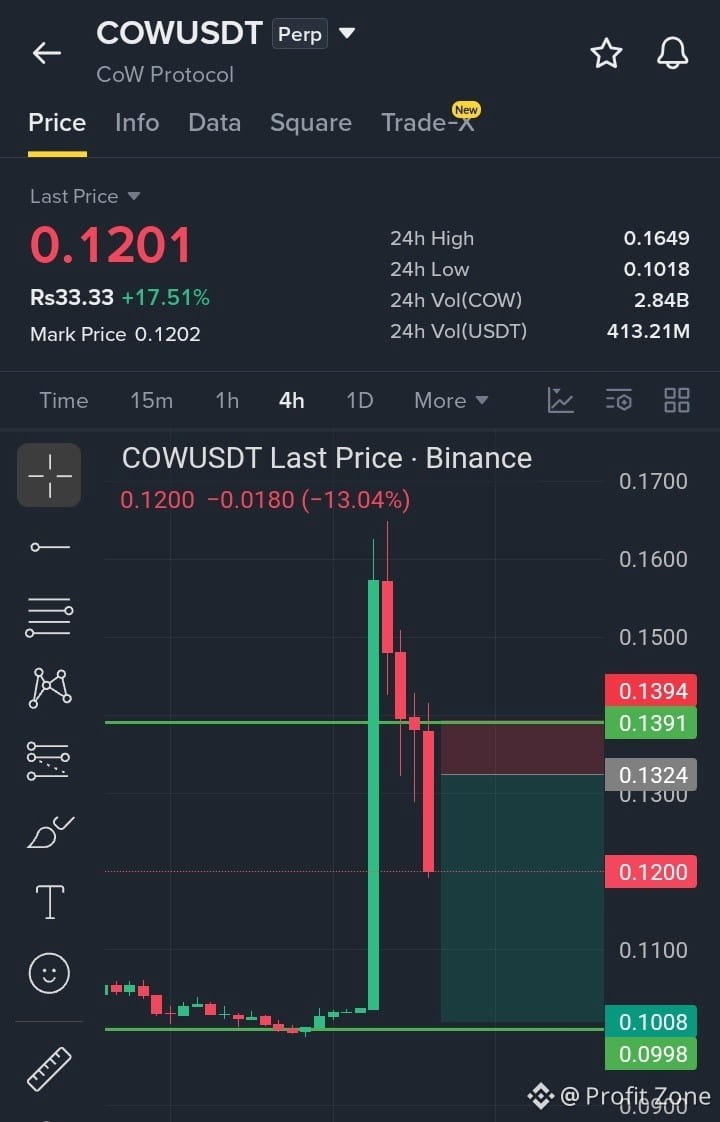
$COW is showing strong volatility after a 17%+ daily move, but the pullback from 0.1649 needs confirmation. Holding 0.1200 could support a recovery toward the nearby resistance levels.
Entry: 0.1160–0.1210
TP1: 0.1324
TP2: 0.1394
TP3: 0.1500
SL: 0.1080
#COW #CoWProtocol #Binance
{future}(COWUSDT)
$TUT
{spot}(TUTUSDT)
$DEXE
{future}(DEXEUSDT)
$COW is showing strong volatility after a 17%+ daily move, but the pullback from 0.1649 needs confirmation. Holding 0.1200 could support a recovery toward the nearby resistance levels.
Entry: 0.1160–0.1210
TP1: 0.1324
TP2: 0.1394
TP3: 0.1500
SL: 0.1080
#COW #CoWProtocol #Binance
$TUT
$DEXE
Entry: 0.1160–0.1210
TP1: 0.1324
TP2: 0.1394
TP3: 0.1500
SL: 0.1080
#COW #CoWProtocol #Binance
$TUT
$DEXE
3
752

·
--
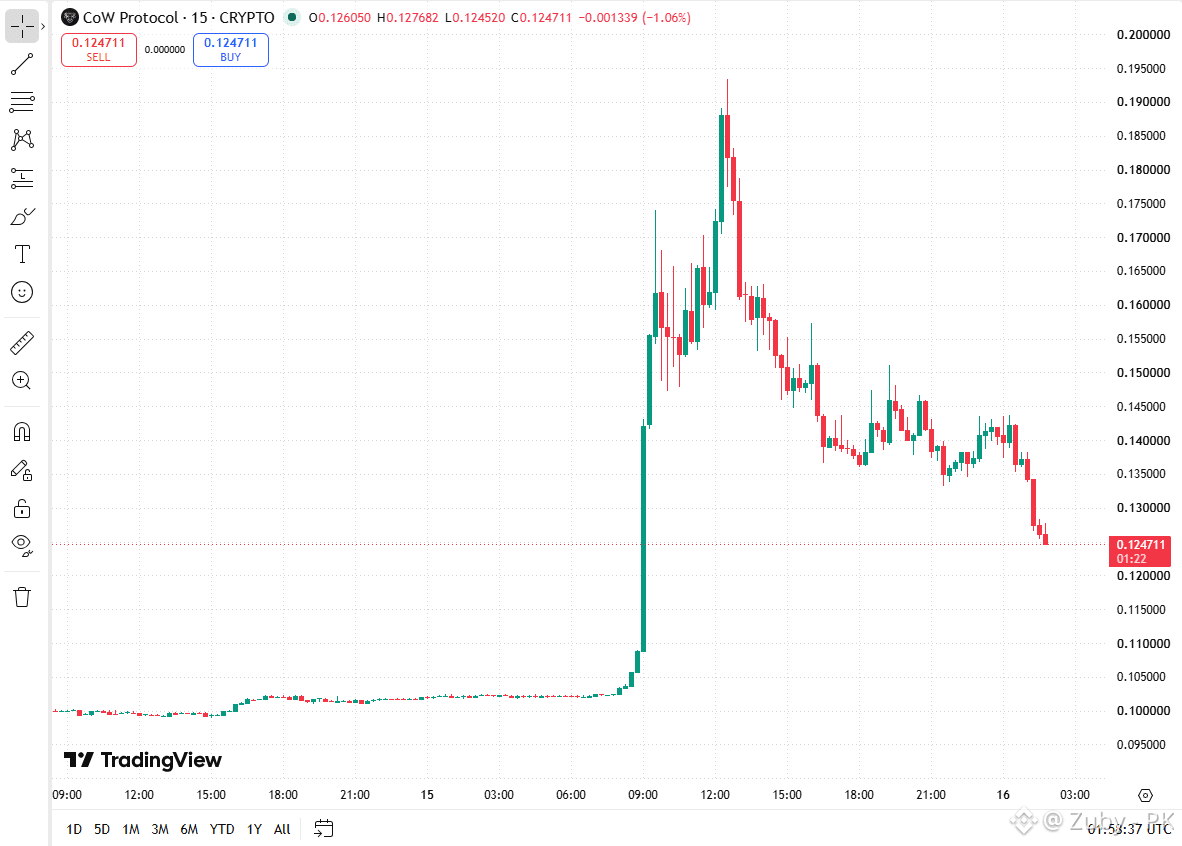
📈 Today's Trending Altcoin Analysis: 🐮 CoW Protocol At A Glance
🔹Price: $0.1267
🔻 -7.08% 1h
📈 +24.21% 24h
🔹24h Volume: $177.96M
🔹CEX: $174.77M
🔹DEX: $3.18M
🔹Supply: 575M circulating / 1B max (Deflationary)
📉 Price Extremes
🔹ATH: $1.21 (Dec 2024) | -89.50% down
🔹ATL: $0.04017 (Nov 2022) | +215.34% up
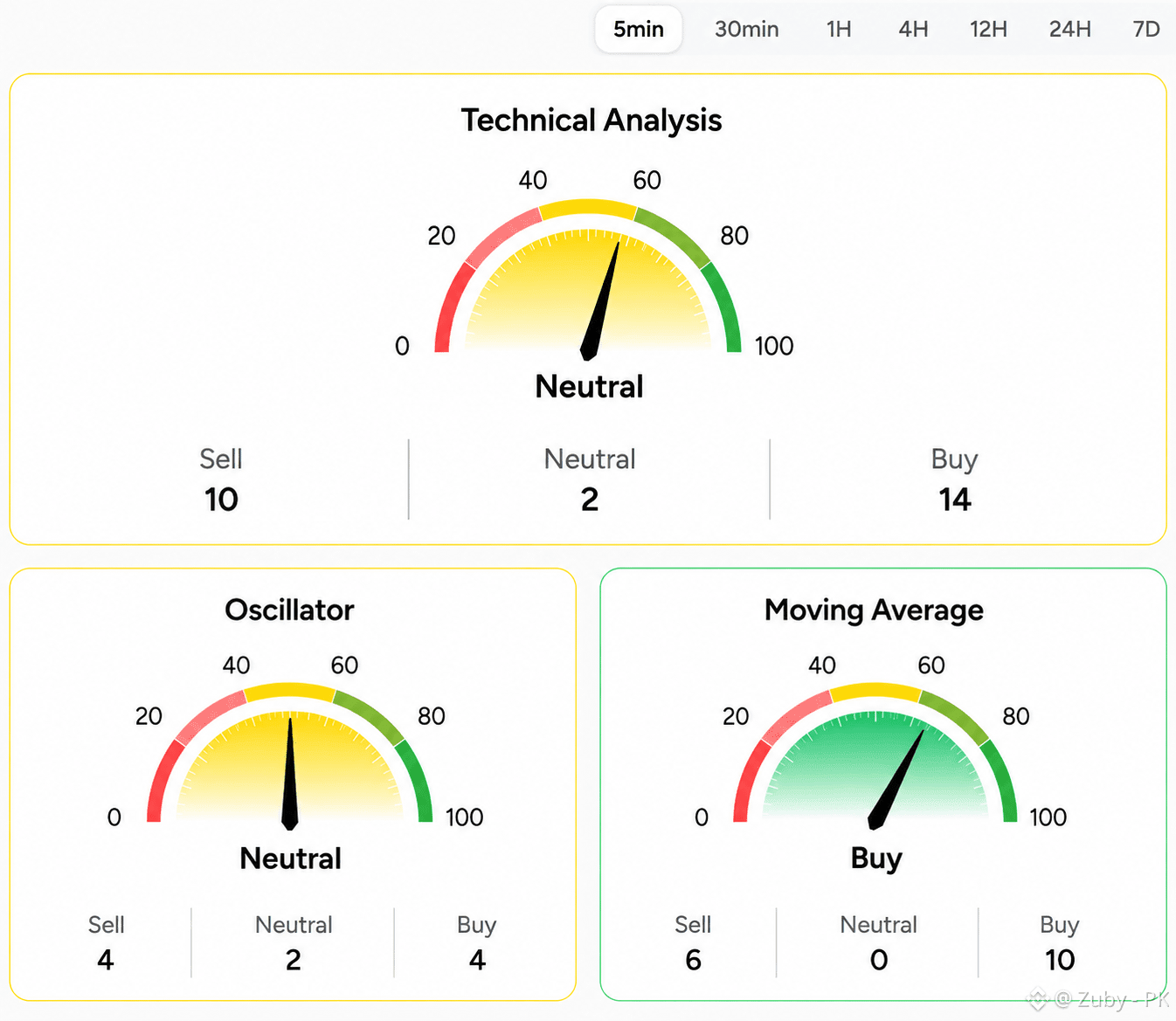
📊 Technicals & Indicators
🔹Trends: Bearish crossovers on short, medium, and long-term SMAs (50-day SMA: $0.1290 | 200-day SMA: $0.17)
🔹Momentum: Volatility 7.50% | RSI 72.74 (Neutral) | MACD -0.0059 (Slight pressure)
🔹Signals: Stochastic K 33.7 (Bull zone) | ROC 9.26 | MFI 92.17 (High participation)
🔊 Not financial advice. High volatility. Trade with risk management. DYOR ⚠️
#CoWProtocol #COWToken #CoWProtocolAnalysis #COWPriceAnalysist #CryptoTechnicalAnalysis
$COW
{spot}(COWUSDT)
📈 Today's Trending Altcoin Analysis: 🐮 CoW Protocol At A Glance
🔹Price: $0.1267
🔻 -7.08% 1h
📈 +24.21% 24h
🔹24h Volume: $177.96M
🔹CEX: $174.77M
🔹DEX: $3.18M
🔹Supply: 575M circulating / 1B max (Deflationary)
📉 Price Extremes
🔹ATH: $1.21 (Dec 2024) | -89.50% down
🔹ATL: $0.04017 (Nov 2022) | +215.34% up
📊 Technicals & Indicators
🔹Trends: Bearish crossovers on short, medium, and long-term SMAs (50-day SMA: $0.1290 | 200-day SMA: $0.17)
🔹Momentum: Volatility 7.50% | RSI 72.74 (Neutral) | MACD -0.0059 (Slight pressure)
🔹Signals: Stochastic K 33.7 (Bull zone) | ROC 9.26 | MFI 92.17 (High participation)
🔊 Not financial advice. High volatility. Trade with risk management. DYOR ⚠️
#CoWProtocol #COWToken #CoWProtocolAnalysis #COWPriceAnalysist #CryptoTechnicalAnalysis
$COW
🔹Price: $0.1267
🔻 -7.08% 1h
📈 +24.21% 24h
🔹24h Volume: $177.96M
🔹CEX: $174.77M
🔹DEX: $3.18M
🔹Supply: 575M circulating / 1B max (Deflationary)
📉 Price Extremes
🔹ATH: $1.21 (Dec 2024) | -89.50% down
🔹ATL: $0.04017 (Nov 2022) | +215.34% up
📊 Technicals & Indicators
🔹Trends: Bearish crossovers on short, medium, and long-term SMAs (50-day SMA: $0.1290 | 200-day SMA: $0.17)
🔹Momentum: Volatility 7.50% | RSI 72.74 (Neutral) | MACD -0.0059 (Slight pressure)
🔹Signals: Stochastic K 33.7 (Bull zone) | ROC 9.26 | MFI 92.17 (High participation)
🔊 Not financial advice. High volatility. Trade with risk management. DYOR ⚠️
#CoWProtocol #COWToken #CoWProtocolAnalysis #COWPriceAnalysist #CryptoTechnicalAnalysis
$COW
4
329

·
--
Navigating the decentralized finance landscape can sometimes feel like walking through a minefield of high gas fees, slippage, and predatory MEV bots. This is where CoW Protocol steps in as a game-changer for smart traders.
CoW Protocol is a meta-DEX aggregator that has pioneered the intent-based trading model. Instead of executing trades instantly on a single liquidity pool, users sign an order expressing their intent to trade. These orders are then grouped into batch auctions.
The protocol gets its name from Coincidence of Wants. If Alice wants to trade ETH for USDC, and Bob wants to trade USDC for ETH, CoW Protocol matches them directly. By settling peer-to-peer, users bypass external liquidity providers, saving on fees and avoiding slippage.
For trades that cannot be matched directly, CoW Protocol utilizes an open network of Solvers. These Solvers compete to find the best possible routing path across various DEXs. This competition ensures that users always receive the most optimal price.
One of CoW Protocol's biggest selling points is its robust MEV protection. Because orders are batched and executed at a uniform clearing price, frontrunning and sandwich attacks are virtually eliminated. Additionally, users enjoy gasless trading. You do not need ETH in your wallet to pay for gas; instead, gas fees are seamlessly deducted from the target sell token, and you only pay if your trade actually executes.
As the crypto industry shifts toward intent-centric architectures, CoW Protocol stands out as a mature, battle-tested solution. With its native token COW gaining significant traction and integration across major platforms, the protocol is cementing its place as a cornerstone of modern DeFi infrastructure. If you are tired of losing value to invisible fees and frontrunners, it might be time to let the Solvers do the heavy lifting for you.
#CoWProtocol #DeFi #CryptoTrading
Navigating the decentralized finance landscape can sometimes feel like walking through a minefield of high gas fees, slippage, and predatory MEV bots. This is where CoW Protocol steps in as a game-changer for smart traders.
CoW Protocol is a meta-DEX aggregator that has pioneered the intent-based trading model. Instead of executing trades instantly on a single liquidity pool, users sign an order expressing their intent to trade. These orders are then grouped into batch auctions.
The protocol gets its name from Coincidence of Wants. If Alice wants to trade ETH for USDC, and Bob wants to trade USDC for ETH, CoW Protocol matches them directly. By settling peer-to-peer, users bypass external liquidity providers, saving on fees and avoiding slippage.
For trades that cannot be matched directly, CoW Protocol utilizes an open network of Solvers. These Solvers compete to find the best possible routing path across various DEXs. This competition ensures that users always receive the most optimal price.
One of CoW Protocol's biggest selling points is its robust MEV protection. Because orders are batched and executed at a uniform clearing price, frontrunning and sandwich attacks are virtually eliminated. Additionally, users enjoy gasless trading. You do not need ETH in your wallet to pay for gas; instead, gas fees are seamlessly deducted from the target sell token, and you only pay if your trade actually executes.
As the crypto industry shifts toward intent-centric architectures, CoW Protocol stands out as a mature, battle-tested solution. With its native token COW gaining significant traction and integration across major platforms, the protocol is cementing its place as a cornerstone of modern DeFi infrastructure. If you are tired of losing value to invisible fees and frontrunners, it might be time to let the Solvers do the heavy lifting for you.
#CoWProtocol #DeFi #CryptoTrading
CoW Protocol is a meta-DEX aggregator that has pioneered the intent-based trading model. Instead of executing trades instantly on a single liquidity pool, users sign an order expressing their intent to trade. These orders are then grouped into batch auctions.
The protocol gets its name from Coincidence of Wants. If Alice wants to trade ETH for USDC, and Bob wants to trade USDC for ETH, CoW Protocol matches them directly. By settling peer-to-peer, users bypass external liquidity providers, saving on fees and avoiding slippage.
For trades that cannot be matched directly, CoW Protocol utilizes an open network of Solvers. These Solvers compete to find the best possible routing path across various DEXs. This competition ensures that users always receive the most optimal price.
One of CoW Protocol's biggest selling points is its robust MEV protection. Because orders are batched and executed at a uniform clearing price, frontrunning and sandwich attacks are virtually eliminated. Additionally, users enjoy gasless trading. You do not need ETH in your wallet to pay for gas; instead, gas fees are seamlessly deducted from the target sell token, and you only pay if your trade actually executes.
As the crypto industry shifts toward intent-centric architectures, CoW Protocol stands out as a mature, battle-tested solution. With its native token COW gaining significant traction and integration across major platforms, the protocol is cementing its place as a cornerstone of modern DeFi infrastructure. If you are tired of losing value to invisible fees and frontrunners, it might be time to let the Solvers do the heavy lifting for you.
#CoWProtocol #DeFi #CryptoTrading
168
·
--
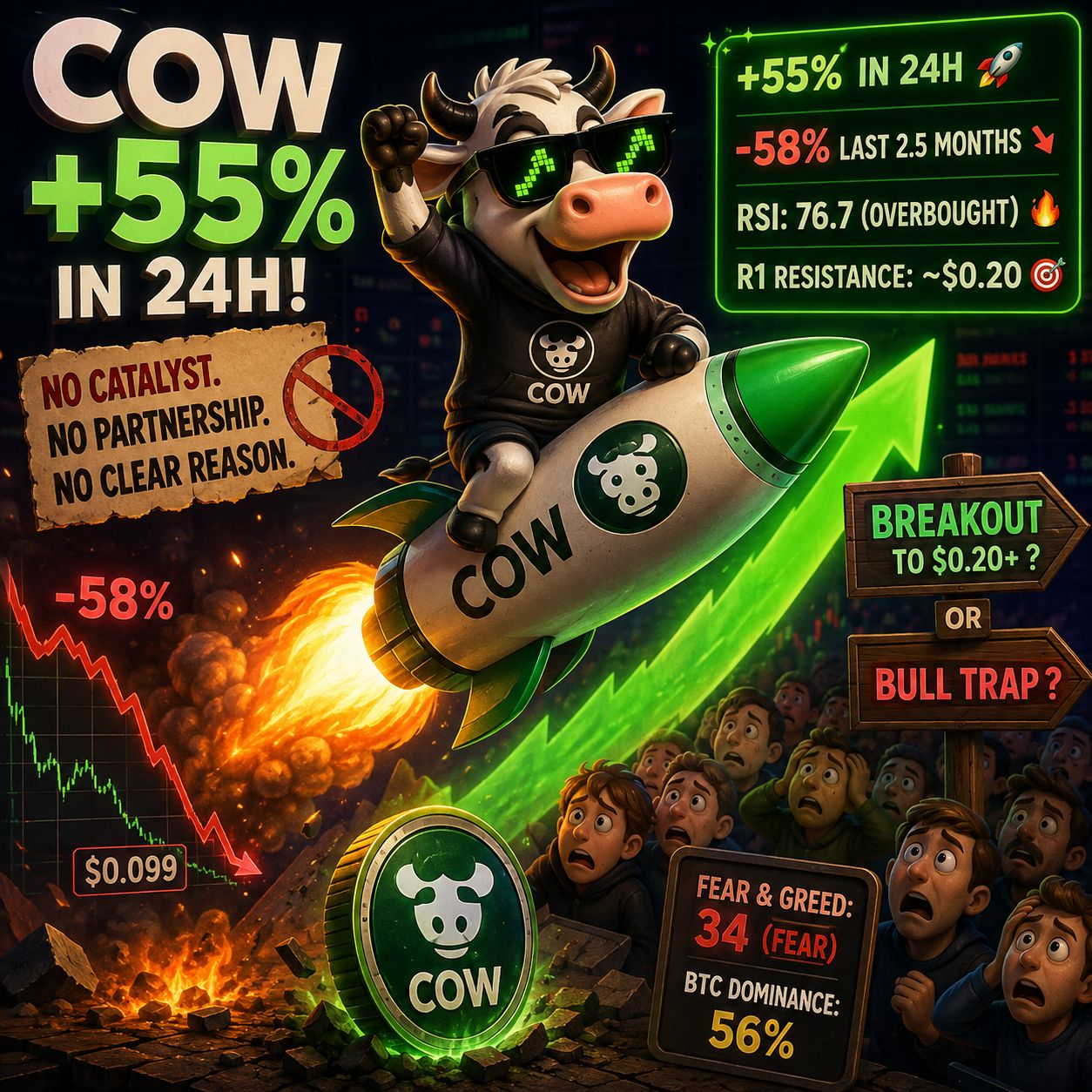
#cowrises55.77%in24h
COW just jumped 55% in 24 hours.
But here’s the strange part: nobody can clearly point to a major catalyst.
The move comes after COW lost roughly 58% over 2.5 months, falling to around $0.099 before rebounding toward $0.16.
Now look at the numbers:
🚀 +55% in 24h
📉 -58% during the prior selloff
🔥 RSI: 76.7 — deeply overbought
🎯 R1 resistance: ~$0.20
That creates a paradox.
COW is showing explosive momentum while the broader market remains cautious, with Fear & Greed around 34 and BTC dominance near 56%.
No major partnership.
No obvious tokenomics catalyst.
No clear fundamental event explaining the move.
So what are we actually watching?
A genuine trend reversal — or a momentum trap forming after a brutal selloff?
The real signal isn't the +55%.
It’s what COW does after the first wave of FOMO disappears.
Bull trap or the start of something bigger? 👀
#COWProtocol $COW $BTC
{future}(BTCUSDT)
{future}(COWUSDT)
#cowrises55.77%in24h
COW just jumped 55% in 24 hours.
But here’s the strange part: nobody can clearly point to a major catalyst.
The move comes after COW lost roughly 58% over 2.5 months, falling to around $0.099 before rebounding toward $0.16.
Now look at the numbers:
🚀 +55% in 24h
📉 -58% during the prior selloff
🔥 RSI: 76.7 — deeply overbought
🎯 R1 resistance: ~$0.20
That creates a paradox.
COW is showing explosive momentum while the broader market remains cautious, with Fear & Greed around 34 and BTC dominance near 56%.
No major partnership.
No obvious tokenomics catalyst.
No clear fundamental event explaining the move.
So what are we actually watching?
A genuine trend reversal — or a momentum trap forming after a brutal selloff?
The real signal isn't the +55%.
It’s what COW does after the first wave of FOMO disappears.
Bull trap or the start of something bigger? 👀
#COWProtocol $COW $BTC
COW just jumped 55% in 24 hours.
But here’s the strange part: nobody can clearly point to a major catalyst.
The move comes after COW lost roughly 58% over 2.5 months, falling to around $0.099 before rebounding toward $0.16.
Now look at the numbers:
🚀 +55% in 24h
📉 -58% during the prior selloff
🔥 RSI: 76.7 — deeply overbought
🎯 R1 resistance: ~$0.20
That creates a paradox.
COW is showing explosive momentum while the broader market remains cautious, with Fear & Greed around 34 and BTC dominance near 56%.
No major partnership.
No obvious tokenomics catalyst.
No clear fundamental event explaining the move.
So what are we actually watching?
A genuine trend reversal — or a momentum trap forming after a brutal selloff?
The real signal isn't the +55%.
It’s what COW does after the first wave of FOMO disappears.
Bull trap or the start of something bigger? 👀
#COWProtocol $COW $BTC
7
1
17
20.8k

·
--
🦈 $COW PUMPED 36% — THE REAL STORY IS SITTING BELOW THE GREEN CANDLE 💥
Entry: 0.139 ⚡
Target: 0.1943 🚀
Stop Loss: 0.099 ⚠️
📊 That 36% green candle isn't happening in a vacuum. COW ground lower for months from the $0.28 zone, bottoming near $0.099 before this spike. Daily structure still shows an unbroken downtrend — this is a bounce, not a breakout yet.
⚡ Velocity is the tell. RSI(14) on the 4H jumped from the 40s to 68.06 in a single window — fast capital, not patient accumulation. Volume is real at ~$21.45M, but the $0.1011–$0.1943 range screams volatility, not stability.
Chasing 36% moves off multi-month lows near RSI 68 is a momentum bet, not fundamental conviction. Without a confirmed catalyst, the sharpest traders wait for the retest. 💬 Anyone holding a catalyst for this move, or is it just rotation into the most beaten-down names?
⚠️ Not financial advice. Always manage your risk. 🛡️
🏷️ #COW #CoWProtocol #Altcoin #TechnicalAnalysis
🔍 🦈
🦈 $COW PUMPED 36% — THE REAL STORY IS SITTING BELOW THE GREEN CANDLE 💥
Entry: 0.139 ⚡
Target: 0.1943 🚀
Stop Loss: 0.099 ⚠️
📊 That 36% green candle isn't happening in a vacuum. COW ground lower for months from the $0.28 zone, bottoming near $0.099 before this spike. Daily structure still shows an unbroken downtrend — this is a bounce, not a breakout yet.
⚡ Velocity is the tell. RSI(14) on the 4H jumped from the 40s to 68.06 in a single window — fast capital, not patient accumulation. Volume is real at ~$21.45M, but the $0.1011–$0.1943 range screams volatility, not stability.
Chasing 36% moves off multi-month lows near RSI 68 is a momentum bet, not fundamental conviction. Without a confirmed catalyst, the sharpest traders wait for the retest. 💬 Anyone holding a catalyst for this move, or is it just rotation into the most beaten-down names?
⚠️ Not financial advice. Always manage your risk. 🛡️
🏷️ #COW #CoWProtocol #Altcoin #TechnicalAnalysis
🔍 🦈
Entry: 0.139 ⚡
Target: 0.1943 🚀
Stop Loss: 0.099 ⚠️
📊 That 36% green candle isn't happening in a vacuum. COW ground lower for months from the $0.28 zone, bottoming near $0.099 before this spike. Daily structure still shows an unbroken downtrend — this is a bounce, not a breakout yet.
⚡ Velocity is the tell. RSI(14) on the 4H jumped from the 40s to 68.06 in a single window — fast capital, not patient accumulation. Volume is real at ~$21.45M, but the $0.1011–$0.1943 range screams volatility, not stability.
Chasing 36% moves off multi-month lows near RSI 68 is a momentum bet, not fundamental conviction. Without a confirmed catalyst, the sharpest traders wait for the retest. 💬 Anyone holding a catalyst for this move, or is it just rotation into the most beaten-down names?
⚠️ Not financial advice. Always manage your risk. 🛡️
🏷️ #COW #CoWProtocol #Altcoin #TechnicalAnalysis
🔍 🦈
58

#COW Protocol is a decentralized trading protocol designed to improve DeFi swaps through MEV protection and batch auctions. It helps users find better execution prices by matching trades directly when possible, reducing unnecessary slippage and protecting traders from common MEV strategies. The COW token supports governance and ecosystem participation, making CoW Protocol an important player in decentralized, user-focused trading.
#COW #CoWProtocol #DeFi #Crypto #DEX #MEV
$COW
{future}(COWUSDT)
$COMP
{future}(COMPUSDT)
$C
{future}(CUSDT)
#COW Protocol is a decentralized trading protocol designed to improve DeFi swaps through MEV protection and batch auctions. It helps users find better execution prices by matching trades directly when possible, reducing unnecessary slippage and protecting traders from common MEV strategies. The COW token supports governance and ecosystem participation, making CoW Protocol an important player in decentralized, user-focused trading.
#COW #CoWProtocol #DeFi #Crypto #DEX #MEV
$COW
$COMP
$C
#COW #CoWProtocol #DeFi #Crypto #DEX #MEV
$COW
$COMP
$C
226

·
--
Bullish
🟢 $COW
{future}(COWUSDT)
Short Liquidation Alert
💰 Liquidated Amount:
$2.5032K
📍 Liquidation Price:
$0.1516 (BINANCE)
━━━━━━━━━━━━━━
📊 Trade Outlook
🎯 Target:
$0.1568
📥 Entry Zone:
$0.15290–$0.15330
📈 Take Profit:
$0.15520
🛑 Stop Loss:
$0.15090
━━━━━━━━━━━━━━
⚡ ELITE TRADE INSIGHT ⚡
Shorts being forced out around this level can reinforce buying momentum and expose liquidity above the liquidation zone. A confirmed hold above entry would strengthen the setup, but disciplined risk management remains essential.
#COW
#CoWProtocol
#defi
🟢 $COW
Short Liquidation Alert
💰 Liquidated Amount:
$2.5032K
📍 Liquidation Price:
$0.1516 (BINANCE)
━━━━━━━━━━━━━━
📊 Trade Outlook
🎯 Target:
$0.1568
📥 Entry Zone:
$0.15290–$0.15330
📈 Take Profit:
$0.15520
🛑 Stop Loss:
$0.15090
━━━━━━━━━━━━━━
⚡ ELITE TRADE INSIGHT ⚡
Shorts being forced out around this level can reinforce buying momentum and expose liquidity above the liquidation zone. A confirmed hold above entry would strengthen the setup, but disciplined risk management remains essential.
#COW
#CoWProtocol
#defi
Short Liquidation Alert
💰 Liquidated Amount:
$2.5032K
📍 Liquidation Price:
$0.1516 (BINANCE)
━━━━━━━━━━━━━━
📊 Trade Outlook
🎯 Target:
$0.1568
📥 Entry Zone:
$0.15290–$0.15330
📈 Take Profit:
$0.15520
🛑 Stop Loss:
$0.15090
━━━━━━━━━━━━━━
⚡ ELITE TRADE INSIGHT ⚡
Shorts being forced out around this level can reinforce buying momentum and expose liquidity above the liquidation zone. A confirmed hold above entry would strengthen the setup, but disciplined risk management remains essential.
#COW
#CoWProtocol
#defi
62
Log in to explore more content
Join global crypto users on Binance Square
⚡️ Get latest and useful information about crypto.
💬 Trusted by the world’s largest crypto exchange.
👍 Discover real insights from verified creators.
Email / Phone number
Trending Topics
1
#FedRateWatch
698,649 views
3,329 Discussing
2
#ArgentinaCommitsToOECDCryptoReportingBy2029
0 views
2 Discussing
3
#EthereumFallsBelow$2400
1,059 views
37 Discussing
4
#USSenateBlocksClarityAct
6,336 views
204 Discussing
5
#BitcoinSlidesTo$76000
30,353 views
142 Discussing
6
#BitcoinReboundsTo$79K
65,050 views
417 Discussing
7
#StrategyMarketCapPassesFord
51,738 views
807 Discussing
8
#ClarityActOddsHalveOnPolymarket
85,471 views
716 Discussing
9
#US30YTreasuryYieldTops5.40%
44,365 views
461 Discussing
10
#BessentEndorsesFinalClarityActDraft
67,270 views
841 Discussing