
#base
base
928,450 views
3,984 Discussing
Hot
Latest

·
--
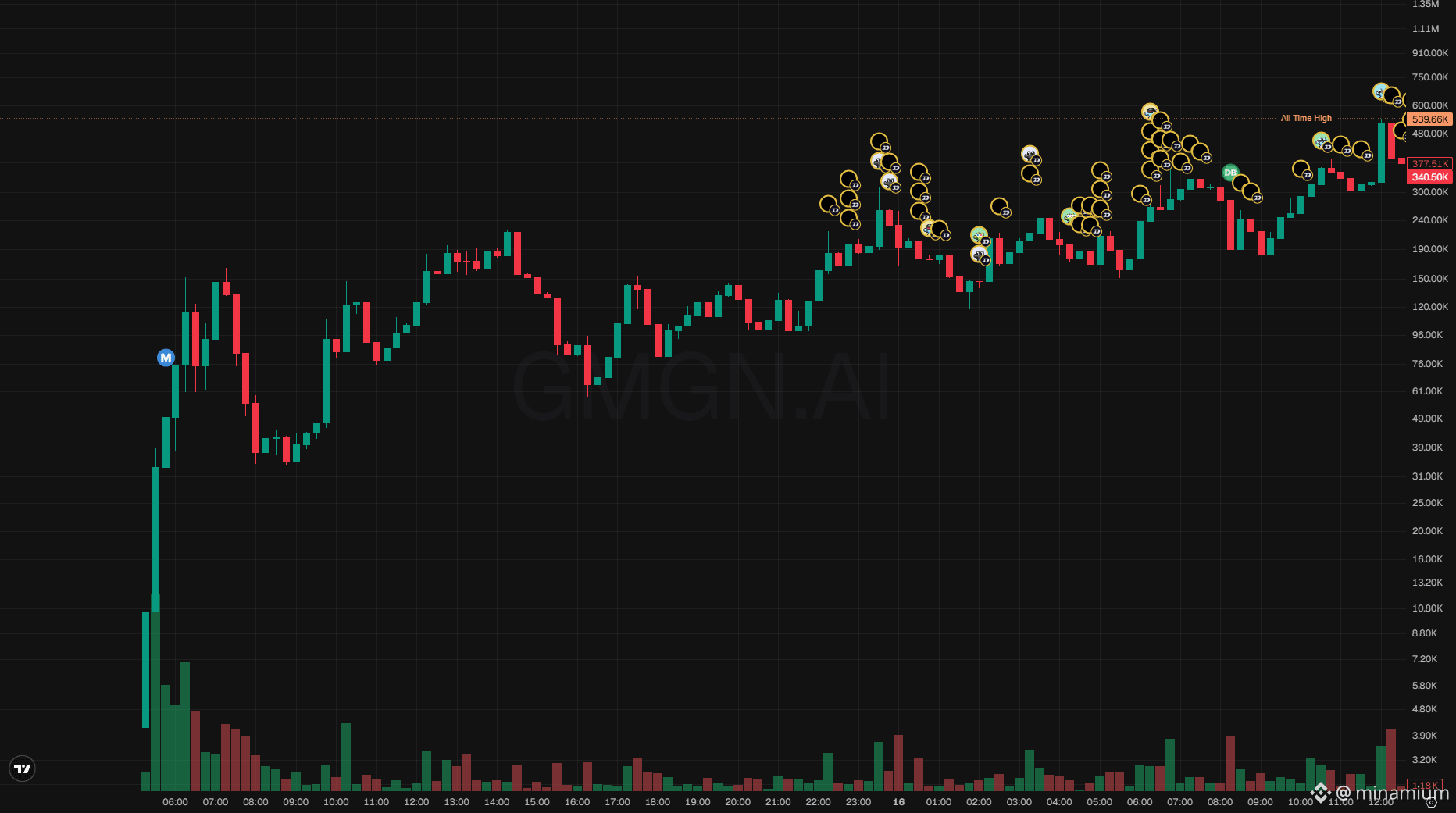
🟦 $BRAINARM - #BASE play
0xb2000000000000000000005a0c125da6cf531d01
mcap: $341K
brain armstrong remixes coinbase ceo brian armstrong's name by swapping in brain like he's the mastermind of the whole us crypto game. they dropped this meme play on his own base chain as a nod to the guy who made onboarding millions possible. dyor
https://gmgn.ai/base/token/0xb2000000000000000000005a0c125da6cf531d01
https://t.me/GMGN_base_bot?start=0xb2000000000000000000005a0c125da6cf531d01
🟦 $BRAINARM - #BASE play
0xb2000000000000000000005a0c125da6cf531d01
mcap: $341K
brain armstrong remixes coinbase ceo brian armstrong's name by swapping in brain like he's the mastermind of the whole us crypto game. they dropped this meme play on his own base chain as a nod to the guy who made onboarding millions possible. dyor
https://gmgn.ai/base/token/0xb2000000000000000000005a0c125da6cf531d01
https://t.me/GMGN_base_bot?start=0xb2000000000000000000005a0c125da6cf531d01
0xb2000000000000000000005a0c125da6cf531d01
mcap: $341K
brain armstrong remixes coinbase ceo brian armstrong's name by swapping in brain like he's the mastermind of the whole us crypto game. they dropped this meme play on his own base chain as a nod to the guy who made onboarding millions possible. dyor
https://gmgn.ai/base/token/0xb2000000000000000000005a0c125da6cf531d01
https://t.me/GMGN_base_bot?start=0xb2000000000000000000005a0c125da6cf531d01
1

·
--
Vanar has completed the VANRY token migration: the contracts on Ethereum and Polygon are now paused, and token trading continues only on Base; Vanar L1 will also gradually shut down starting on September 18.
The project will now fully shift focus to Base, with an emphasis on Foundry, its AI organization, and its economic system. Foundry is planned to launch on October 1.
For holders, the most important thing right now is to confirm which chain your assets are on and the migration path going forward—do not continue to treat the old-chain contracts as usable entry points. This is also a typical Layer 1 contraction: giving up the narrative of an independent chain and moving to Base to obtain liquidity and user access. The execution schedule going forward is what to watch.
#Vanar #Base
Vanar has completed the VANRY token migration: the contracts on Ethereum and Polygon are now paused, and token trading continues only on Base; Vanar L1 will also gradually shut down starting on September 18.
The project will now fully shift focus to Base, with an emphasis on Foundry, its AI organization, and its economic system. Foundry is planned to launch on October 1.
For holders, the most important thing right now is to confirm which chain your assets are on and the migration path going forward—do not continue to treat the old-chain contracts as usable entry points. This is also a typical Layer 1 contraction: giving up the narrative of an independent chain and moving to Base to obtain liquidity and user access. The execution schedule going forward is what to watch.
#Vanar #Base
The project will now fully shift focus to Base, with an emphasis on Foundry, its AI organization, and its economic system. Foundry is planned to launch on October 1.
For holders, the most important thing right now is to confirm which chain your assets are on and the migration path going forward—do not continue to treat the old-chain contracts as usable entry points. This is also a typical Layer 1 contraction: giving up the narrative of an independent chain and moving to Base to obtain liquidity and user access. The execution schedule going forward is what to watch.
#Vanar #Base
5

Vanar officially completes VANRY token migration: Ethereum and Polygon contracts are now paused. Currently, $VANRY trading continues only on Base; its native L1 will be gradually shut down starting September 18.
This is not a routine technical maintenance—it’s a full-scale shift of the project to Base: resources will be consolidated into Foundry, the AI organization, and its economic system. Foundry is planned to launch on October 1.
Holders should pay special attention to the status of old-chain contracts and the migration entry points to avoid placing orders or waiting for funds in a network that has already been paused. In the short term, shutting down L1 will bring migration pains; whether it can open up new space in the long run depends on whether Foundry can successfully accommodate users, AI applications, and real transaction demand after launch.
#Vanar #Base #AI
Vanar officially completes VANRY token migration: Ethereum and Polygon contracts are now paused. Currently, $VANRY trading continues only on Base; its native L1 will be gradually shut down starting September 18.
This is not a routine technical maintenance—it’s a full-scale shift of the project to Base: resources will be consolidated into Foundry, the AI organization, and its economic system. Foundry is planned to launch on October 1.
Holders should pay special attention to the status of old-chain contracts and the migration entry points to avoid placing orders or waiting for funds in a network that has already been paused. In the short term, shutting down L1 will bring migration pains; whether it can open up new space in the long run depends on whether Foundry can successfully accommodate users, AI applications, and real transaction demand after launch.
#Vanar #Base #AI
This is not a routine technical maintenance—it’s a full-scale shift of the project to Base: resources will be consolidated into Foundry, the AI organization, and its economic system. Foundry is planned to launch on October 1.
Holders should pay special attention to the status of old-chain contracts and the migration entry points to avoid placing orders or waiting for funds in a network that has already been paused. In the short term, shutting down L1 will bring migration pains; whether it can open up new space in the long run depends on whether Foundry can successfully accommodate users, AI applications, and real transaction demand after launch.
#Vanar #Base #AI
5

·
--
Vanar announces that the VANRY token migration has been completed. Old contracts on Ethereum and Polygon have been paused; for now, token trading continues only on Base. Meanwhile, Vanar L1 will be gradually shut down on September 18, as the project formally and fully shifts to the Base ecosystem.
The next focus will be on Foundry, the AI organization, and its economic system. Foundry is planned to launch on October 1. Users who still hold assets on the old chain or are using the old contracts should confirm the migration and asset arrangements as soon as possible to avoid operational delays after the contract pauses and L1 closure.
This is also a sign that the AI infrastructure project is gathering into a highly active ecosystem: reducing the burden of maintaining its own underlying infrastructure and concentrating resources on application scenarios and economic models. After the migration, the liquidity situation, Foundry’s launch performance, and growth in Base ecosystem users are all worth monitoring continuously.
#Vanar #Base #AI
Vanar announces that the VANRY token migration has been completed. Old contracts on Ethereum and Polygon have been paused; for now, token trading continues only on Base. Meanwhile, Vanar L1 will be gradually shut down on September 18, as the project formally and fully shifts to the Base ecosystem.
The next focus will be on Foundry, the AI organization, and its economic system. Foundry is planned to launch on October 1. Users who still hold assets on the old chain or are using the old contracts should confirm the migration and asset arrangements as soon as possible to avoid operational delays after the contract pauses and L1 closure.
This is also a sign that the AI infrastructure project is gathering into a highly active ecosystem: reducing the burden of maintaining its own underlying infrastructure and concentrating resources on application scenarios and economic models. After the migration, the liquidity situation, Foundry’s launch performance, and growth in Base ecosystem users are all worth monitoring continuously.
#Vanar #Base #AI
The next focus will be on Foundry, the AI organization, and its economic system. Foundry is planned to launch on October 1. Users who still hold assets on the old chain or are using the old contracts should confirm the migration and asset arrangements as soon as possible to avoid operational delays after the contract pauses and L1 closure.
This is also a sign that the AI infrastructure project is gathering into a highly active ecosystem: reducing the burden of maintaining its own underlying infrastructure and concentrating resources on application scenarios and economic models. After the migration, the liquidity situation, Foundry’s launch performance, and growth in Base ecosystem users are all worth monitoring continuously.
#Vanar #Base #AI
5
Vanar Announces Completion of VANRY Token Migration: Old Contracts on Ethereum and Polygon Have Been Paused, and Token Trading Continues Only on Base for Now. Meanwhile, Vanar L1 will be gradually shut down starting September 18, with all project resources fully redirected to the Base ecosystem.
The next focus is Foundry, AI organizations, and their economic system. Foundry is planned to go live on October 1. For users who still hold assets on the old chain, they should confirm the migration and holding channels as soon as possible to avoid restrictions on operations after the contracts are paused.
This is another sign that an AI infrastructure project is shrinking its in-house blockchain development and betting on the Ethereum Layer 2 ecosystem. In the short term, keep an eye on post-migration liquidity and trading depth; in the long run, see whether Foundry can truly deliver real application scenarios for AI organizations.
#Vanar #Base #AI
Vanar Announces Completion of VANRY Token Migration: Old Contracts on Ethereum and Polygon Have Been Paused, and Token Trading Continues Only on Base for Now. Meanwhile, Vanar L1 will be gradually shut down starting September 18, with all project resources fully redirected to the Base ecosystem.
The next focus is Foundry, AI organizations, and their economic system. Foundry is planned to go live on October 1. For users who still hold assets on the old chain, they should confirm the migration and holding channels as soon as possible to avoid restrictions on operations after the contracts are paused.
This is another sign that an AI infrastructure project is shrinking its in-house blockchain development and betting on the Ethereum Layer 2 ecosystem. In the short term, keep an eye on post-migration liquidity and trading depth; in the long run, see whether Foundry can truly deliver real application scenarios for AI organizations.
#Vanar #Base #AI
The next focus is Foundry, AI organizations, and their economic system. Foundry is planned to go live on October 1. For users who still hold assets on the old chain, they should confirm the migration and holding channels as soon as possible to avoid restrictions on operations after the contracts are paused.
This is another sign that an AI infrastructure project is shrinking its in-house blockchain development and betting on the Ethereum Layer 2 ecosystem. In the short term, keep an eye on post-migration liquidity and trading depth; in the long run, see whether Foundry can truly deliver real application scenarios for AI organizations.
#Vanar #Base #AI
6

·
--
Vanar officially confirms that the VANRY token migration has been completed. The old contracts on Ethereum and Polygon are now paused, and on-chain transactions have been transferred to Base. Meanwhile, Vanar L1 will be gradually shut down starting September 18, with the project fully shifting to the Base ecosystem.
The next focus is Foundry, the AI organization, and its economic system. Foundry is planned to launch on October 1. For holders, the most critical short-term task is to confirm that your assets have been migrated to Base—do not continue recharging or sending to the old contracts on Ethereum or Polygon. In the long run, it will depend on whether Vanar can convert the Base traffic and low gas into real application activity, truly turning the AI infrastructure narrative into active usage. The wrap-up phase of a migration is often a point of both risk and expectation re-pricing, so it’s advisable to verify on-chain assets first, then pay attention to the actual data after new features go live.
#Vanar #Base #AI
Vanar officially confirms that the VANRY token migration has been completed. The old contracts on Ethereum and Polygon are now paused, and on-chain transactions have been transferred to Base. Meanwhile, Vanar L1 will be gradually shut down starting September 18, with the project fully shifting to the Base ecosystem.
The next focus is Foundry, the AI organization, and its economic system. Foundry is planned to launch on October 1. For holders, the most critical short-term task is to confirm that your assets have been migrated to Base—do not continue recharging or sending to the old contracts on Ethereum or Polygon. In the long run, it will depend on whether Vanar can convert the Base traffic and low gas into real application activity, truly turning the AI infrastructure narrative into active usage. The wrap-up phase of a migration is often a point of both risk and expectation re-pricing, so it’s advisable to verify on-chain assets first, then pay attention to the actual data after new features go live.
#Vanar #Base #AI
The next focus is Foundry, the AI organization, and its economic system. Foundry is planned to launch on October 1. For holders, the most critical short-term task is to confirm that your assets have been migrated to Base—do not continue recharging or sending to the old contracts on Ethereum or Polygon. In the long run, it will depend on whether Vanar can convert the Base traffic and low gas into real application activity, truly turning the AI infrastructure narrative into active usage. The wrap-up phase of a migration is often a point of both risk and expectation re-pricing, so it’s advisable to verify on-chain assets first, then pay attention to the actual data after new features go live.
#Vanar #Base #AI
7

·
--
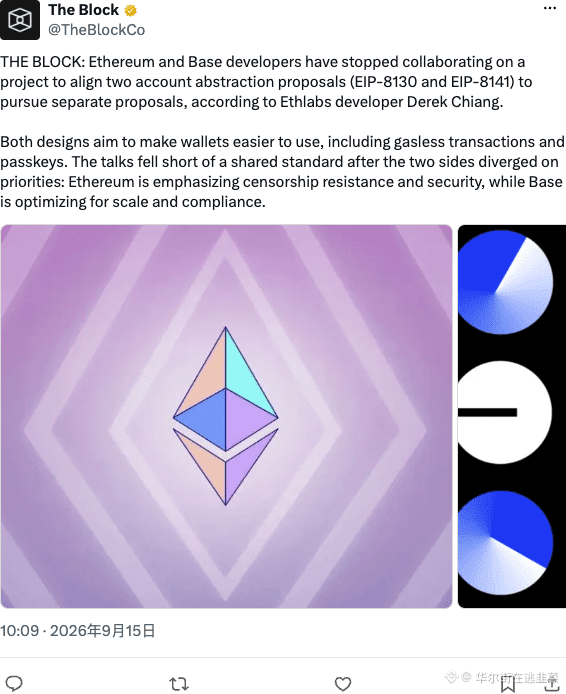
Ethereum and Base developers are no longer working together on account abstraction—EIP-8130 and EIP-8141 are taking separate paths. The goal was to make wallets easier to use, but now the roadmap is split, so don’t expect a unified standard to land anytime soon. Infrastructure fragmentation is a drag on the ecosystem, not a boon.
$ETH #Ethereum #Base #AccountAbstraction
Ethereum and Base developers are no longer working together on account abstraction—EIP-8130 and EIP-8141 are taking separate paths. The goal was to make wallets easier to use, but now the roadmap is split, so don’t expect a unified standard to land anytime soon. Infrastructure fragmentation is a drag on the ecosystem, not a boon.
$ETH #Ethereum #Base #AccountAbstraction
$ETH #Ethereum #Base #AccountAbstraction
49

·
--
On account abstraction, Base and Ethereum L1 didn’t reach an agreement: according to ZeroDev founder Derek Chiang, the two sides finished coordinating a unified proposal last week and are now moving forward separately—on the Base/OP Stack side, they are pursuing EIP-8130 (already tested on Vibenet), while L1 is working on EIP-8141 (Frame Transactions, planned to follow the Hegotá upgrade). Both aim to move gas sponsorship, passkeys, batch transactions, and other features from the “plugin” layer of ERC-4337 down into the protocol itself. But L2 is more focused on scalability and cost (8130 says it can save about 63% gas for certain transfers compared with the maximum possible under 4337), while L1 is more focused on censorship resistance, value capture, and post-quantum scalability. In the future, developers may need to choose standards depending on the chain, and wallet and cross-chain experiences may become a bit fragmented—but that might not necessarily be a bad thing: everyone runs their own race and whoever gets it working first wins. $ETH #Base #Account abstraction
On account abstraction, Base and Ethereum L1 didn’t reach an agreement: according to ZeroDev founder Derek Chiang, the two sides finished coordinating a unified proposal last week and are now moving forward separately—on the Base/OP Stack side, they are pursuing EIP-8130 (already tested on Vibenet), while L1 is working on EIP-8141 (Frame Transactions, planned to follow the Hegotá upgrade). Both aim to move gas sponsorship, passkeys, batch transactions, and other features from the “plugin” layer of ERC-4337 down into the protocol itself. But L2 is more focused on scalability and cost (8130 says it can save about 63% gas for certain transfers compared with the maximum possible under 4337), while L1 is more focused on censorship resistance, value capture, and post-quantum scalability. In the future, developers may need to choose standards depending on the chain, and wallet and cross-chain experiences may become a bit fragmented—but that might not necessarily be a bad thing: everyone runs their own race and whoever gets it working first wins. $ETH #Base #Account abstraction
204
·
--
The Ethereum Account Abstraction standard has split. Ethlabs researcher Derek Chiang revealed that Base-led EIP-8130 and Ethereum L1-led EIP-8141 (Frame Transactions), coordinated to work together, broke down last week; both sides will now push different proposals.
The core disagreement isn’t just technical details, but priority: L1 places greater emphasis on censorship resistance, privacy, and post-quantum capabilities; L2s such as Base prioritize high throughput, compliance, and customization. Any shared standard would have required at least one side to give way on core goals, but they ultimately couldn’t reach agreement.
In the short term, the most direct pressure will fall on wallet developers. The same account experience may need to be adapted to different chains and standards; ordinary users may also feel more noticeable “invisible barriers” between chains.
Going forward, there are essentially two paths: either establish a coordination mechanism that covers more stakeholders and jointly govern shared resources like the EVM; or accept that L1 and L2 fragmentation is inevitable, and shift to masking underlying differences at the wallet and application layers.
This EIP dispute, on the surface, is a fight over standards; in reality, it’s a dispute over which matters more—the Ethereum roadmap or the ecosystem’s value. Developers betting too early on a single standard may be less wise than preserving modular adaptability.
#以太坊 #Base #Account Abstraction
The Ethereum Account Abstraction standard has split. Ethlabs researcher Derek Chiang revealed that Base-led EIP-8130 and Ethereum L1-led EIP-8141 (Frame Transactions), coordinated to work together, broke down last week; both sides will now push different proposals.
The core disagreement isn’t just technical details, but priority: L1 places greater emphasis on censorship resistance, privacy, and post-quantum capabilities; L2s such as Base prioritize high throughput, compliance, and customization. Any shared standard would have required at least one side to give way on core goals, but they ultimately couldn’t reach agreement.
In the short term, the most direct pressure will fall on wallet developers. The same account experience may need to be adapted to different chains and standards; ordinary users may also feel more noticeable “invisible barriers” between chains.
Going forward, there are essentially two paths: either establish a coordination mechanism that covers more stakeholders and jointly govern shared resources like the EVM; or accept that L1 and L2 fragmentation is inevitable, and shift to masking underlying differences at the wallet and application layers.
This EIP dispute, on the surface, is a fight over standards; in reality, it’s a dispute over which matters more—the Ethereum roadmap or the ecosystem’s value. Developers betting too early on a single standard may be less wise than preserving modular adaptability.
#以太坊 #Base #Account Abstraction
The core disagreement isn’t just technical details, but priority: L1 places greater emphasis on censorship resistance, privacy, and post-quantum capabilities; L2s such as Base prioritize high throughput, compliance, and customization. Any shared standard would have required at least one side to give way on core goals, but they ultimately couldn’t reach agreement.
In the short term, the most direct pressure will fall on wallet developers. The same account experience may need to be adapted to different chains and standards; ordinary users may also feel more noticeable “invisible barriers” between chains.
Going forward, there are essentially two paths: either establish a coordination mechanism that covers more stakeholders and jointly govern shared resources like the EVM; or accept that L1 and L2 fragmentation is inevitable, and shift to masking underlying differences at the wallet and application layers.
This EIP dispute, on the surface, is a fight over standards; in reality, it’s a dispute over which matters more—the Ethereum roadmap or the ecosystem’s value. Developers betting too early on a single standard may be less wise than preserving modular adaptability.
#以太坊 #Base #Account Abstraction
75
Ethereum account abstraction standard forked. Ethlabs researcher Derek Chiang said that Base-led EIP-8130 and L1-led EIP-8141 (Frame Transactions) stopped collaborating last week, and both roadmaps will move forward on their own.
The disagreement isn’t only in code-level details, but in value ordering: L1 puts censorship resistance, privacy, and post-quantum protection first; L2s like Base prioritize throughput, compliance, and customizability. To find a single set of standards that satisfies both sides, one party would inevitably have to give up on its core goals—if they can’t agree, that’s not surprising.
In the short term, the cost will fall on wallet developers: the same user experience may need to be adapted to different AA semantics across different chains. Looking longer term, either a broader EVM shared governance mechanism needs to be established, or we must acknowledge that L1/L2 fragmentation will persist and shift competition toward wallets and applications that can hide underlying differences.
For everyday users, the underlying standards may not matter much—but which wallet can operate seamlessly across chains will become more important.#以太坊 #Base #account abstraction
Ethereum account abstraction standard forked. Ethlabs researcher Derek Chiang said that Base-led EIP-8130 and L1-led EIP-8141 (Frame Transactions) stopped collaborating last week, and both roadmaps will move forward on their own.
The disagreement isn’t only in code-level details, but in value ordering: L1 puts censorship resistance, privacy, and post-quantum protection first; L2s like Base prioritize throughput, compliance, and customizability. To find a single set of standards that satisfies both sides, one party would inevitably have to give up on its core goals—if they can’t agree, that’s not surprising.
In the short term, the cost will fall on wallet developers: the same user experience may need to be adapted to different AA semantics across different chains. Looking longer term, either a broader EVM shared governance mechanism needs to be established, or we must acknowledge that L1/L2 fragmentation will persist and shift competition toward wallets and applications that can hide underlying differences.
For everyday users, the underlying standards may not matter much—but which wallet can operate seamlessly across chains will become more important.#以太坊 #Base #account abstraction
The disagreement isn’t only in code-level details, but in value ordering: L1 puts censorship resistance, privacy, and post-quantum protection first; L2s like Base prioritize throughput, compliance, and customizability. To find a single set of standards that satisfies both sides, one party would inevitably have to give up on its core goals—if they can’t agree, that’s not surprising.
In the short term, the cost will fall on wallet developers: the same user experience may need to be adapted to different AA semantics across different chains. Looking longer term, either a broader EVM shared governance mechanism needs to be established, or we must acknowledge that L1/L2 fragmentation will persist and shift competition toward wallets and applications that can hide underlying differences.
For everyday users, the underlying standards may not matter much—but which wallet can operate seamlessly across chains will become more important.#以太坊 #Base #account abstraction
61
#以太坊 account abstraction standard forked.
Ethlabs researcher Derek Chiang disclosed that Base-led EIP-8130 and Ethereum L1-led EIP-8141 (Frame Transactions) officially ended their collaboration last week, and both sides will pursue different approaches.
The disagreement isn’t just about technical details: L1 places more value on censorship resistance, privacy, and quantum-resistance capabilities; while L2s like Base prioritize high throughput, compliance, and customizability. To form a shared standard, one side inevitably has to give ground on core objectives—but they ultimately couldn’t reach an agreement.
In the short term, the cost of fragmentation will fall on wallet developers, and the same AA experience may need to be adapted to different chains’ standards. In the long run, there are two paths: either build a coordination mechanism that covers more stakeholders and jointly govern shared resources like the EVM; or accept that the split between L1 and L2 is inevitable and shift competition toward wallets and applications that can mask underlying differences.
At its core, the standards dispute is a clash of security philosophies and business routes. For ordinary users, whoever can make cross-chain operations seamless is the one that may truly win.
#Base # account abstraction
#以太坊 account abstraction standard forked.
Ethlabs researcher Derek Chiang disclosed that Base-led EIP-8130 and Ethereum L1-led EIP-8141 (Frame Transactions) officially ended their collaboration last week, and both sides will pursue different approaches.
The disagreement isn’t just about technical details: L1 places more value on censorship resistance, privacy, and quantum-resistance capabilities; while L2s like Base prioritize high throughput, compliance, and customizability. To form a shared standard, one side inevitably has to give ground on core objectives—but they ultimately couldn’t reach an agreement.
In the short term, the cost of fragmentation will fall on wallet developers, and the same AA experience may need to be adapted to different chains’ standards. In the long run, there are two paths: either build a coordination mechanism that covers more stakeholders and jointly govern shared resources like the EVM; or accept that the split between L1 and L2 is inevitable and shift competition toward wallets and applications that can mask underlying differences.
At its core, the standards dispute is a clash of security philosophies and business routes. For ordinary users, whoever can make cross-chain operations seamless is the one that may truly win.
#Base # account abstraction
Ethlabs researcher Derek Chiang disclosed that Base-led EIP-8130 and Ethereum L1-led EIP-8141 (Frame Transactions) officially ended their collaboration last week, and both sides will pursue different approaches.
The disagreement isn’t just about technical details: L1 places more value on censorship resistance, privacy, and quantum-resistance capabilities; while L2s like Base prioritize high throughput, compliance, and customizability. To form a shared standard, one side inevitably has to give ground on core objectives—but they ultimately couldn’t reach an agreement.
In the short term, the cost of fragmentation will fall on wallet developers, and the same AA experience may need to be adapted to different chains’ standards. In the long run, there are two paths: either build a coordination mechanism that covers more stakeholders and jointly govern shared resources like the EVM; or accept that the split between L1 and L2 is inevitable and shift competition toward wallets and applications that can mask underlying differences.
At its core, the standards dispute is a clash of security philosophies and business routes. For ordinary users, whoever can make cross-chain operations seamless is the one that may truly win.
#Base # account abstraction
3

·
--
$AERO
{future}(AEROUSDT)
— DeFi Activity on Base
AERO is the native token associated with Aerodrome, a major decentralized exchange ecosystem on Base.
Base has become an important environment for on-chain applications, and decentralized exchanges are a key part of that infrastructure. AERO therefore offers exposure to an interesting combination of DeFi, liquidity, and Layer 2 growth.
#AERO #Base #DeFi #BinanceSquare
$AERO
— DeFi Activity on Base
AERO is the native token associated with Aerodrome, a major decentralized exchange ecosystem on Base.
Base has become an important environment for on-chain applications, and decentralized exchanges are a key part of that infrastructure. AERO therefore offers exposure to an interesting combination of DeFi, liquidity, and Layer 2 growth.
#AERO #Base #DeFi #BinanceSquare
— DeFi Activity on Base
AERO is the native token associated with Aerodrome, a major decentralized exchange ecosystem on Base.
Base has become an important environment for on-chain applications, and decentralized exchanges are a key part of that infrastructure. AERO therefore offers exposure to an interesting combination of DeFi, liquidity, and Layer 2 growth.
#AERO #Base #DeFi #BinanceSquare
35

·
--
I just saw a number today: on the Base chain, a tokenized stocks DEX—daily trading volume has broken $100 million.
I think this is being underestimated. While everyone is arguing about the market, there’s a group of people actively moving stocks on-chain.
Just think about what that means. In the past, on-chain only worked for cryptocurrencies. Now the boundary of what you can touch on-chain is expanding outward. It’s not a one-step, overnight breakthrough—it’s that direction slowly becoming clearer.
To be honest, I’ve always been half-skeptical about the narrative of tokenized stocks. Compliance is a big issue. Liquidity is a big issue. One regulatory call can upend the whole venue. But look at it from another angle: the demand is real. Traditional markets have limited trading hours, high entry barriers, and plenty of cross-border hassle. On-chain, it’s 7×24, and it’s globally accessible. As long as the demand is real, supply will find a way—sooner or later.
For people building on-chain products, this matters a hundred times more than short-term market movements. It reminds me of one thing: don’t just focus on whether things are up or down today—watch which way the boundaries of the infrastructure are expanding.
I don’t want to talk too much about the market today. Before the FOMC results come out, anything you say is just noise.
#Base #Web3 #RWA #FuturaKey #On-chain Finance
I just saw a number today: on the Base chain, a tokenized stocks DEX—daily trading volume has broken $100 million.
I think this is being underestimated. While everyone is arguing about the market, there’s a group of people actively moving stocks on-chain.
Just think about what that means. In the past, on-chain only worked for cryptocurrencies. Now the boundary of what you can touch on-chain is expanding outward. It’s not a one-step, overnight breakthrough—it’s that direction slowly becoming clearer.
To be honest, I’ve always been half-skeptical about the narrative of tokenized stocks. Compliance is a big issue. Liquidity is a big issue. One regulatory call can upend the whole venue. But look at it from another angle: the demand is real. Traditional markets have limited trading hours, high entry barriers, and plenty of cross-border hassle. On-chain, it’s 7×24, and it’s globally accessible. As long as the demand is real, supply will find a way—sooner or later.
For people building on-chain products, this matters a hundred times more than short-term market movements. It reminds me of one thing: don’t just focus on whether things are up or down today—watch which way the boundaries of the infrastructure are expanding.
I don’t want to talk too much about the market today. Before the FOMC results come out, anything you say is just noise.
#Base #Web3 #RWA #FuturaKey #On-chain Finance
I think this is being underestimated. While everyone is arguing about the market, there’s a group of people actively moving stocks on-chain.
Just think about what that means. In the past, on-chain only worked for cryptocurrencies. Now the boundary of what you can touch on-chain is expanding outward. It’s not a one-step, overnight breakthrough—it’s that direction slowly becoming clearer.
To be honest, I’ve always been half-skeptical about the narrative of tokenized stocks. Compliance is a big issue. Liquidity is a big issue. One regulatory call can upend the whole venue. But look at it from another angle: the demand is real. Traditional markets have limited trading hours, high entry barriers, and plenty of cross-border hassle. On-chain, it’s 7×24, and it’s globally accessible. As long as the demand is real, supply will find a way—sooner or later.
For people building on-chain products, this matters a hundred times more than short-term market movements. It reminds me of one thing: don’t just focus on whether things are up or down today—watch which way the boundaries of the infrastructure are expanding.
I don’t want to talk too much about the market today. Before the FOMC results come out, anything you say is just noise.
#Base #Web3 #RWA #FuturaKey #On-chain Finance
30

·
--
Tokenized U.S. Stocks on Base: Daily Trading Volume Hits $100M in 26 DaysThe real pain point isn’t the phrase “trading stocks on-chain,” but the speed.
Token Terminal data shows that on Base, the daily DEX trading volume for tokenized stocks has reached about $100 million, setting a new high. Jesse Pollak, the founder of Base, put it even more bluntly: from zero to this scale took about 26 days.
Take another look at the structure. Over the past 30 days, total trading volume was about $730.9 million; of this, Aerodrome accounted for about $557.1 million, nearly 76%. Uniswap v4 was about $139.3 million. Liquidity isn’t evenly spread out—the main battleground is highly concentrated.
My take: this isn’t another piece about a “hot RWA concept.” It’s more like answering a much colder question—after U.S. stocks get tokenized and put on-chain, is anyone actually turning them over. The numbers provide a stage-by-stage answer: yes, and turnover is accelerating.
Tokenized U.S. Stocks on Base: Daily Trading Volume Hits $100M in 26 Days
The real pain point isn’t the phrase “trading stocks on-chain,” but the speed.
Token Terminal data shows that on Base, the daily DEX trading volume for tokenized stocks has reached about $100 million, setting a new high. Jesse Pollak, the founder of Base, put it even more bluntly: from zero to this scale took about 26 days.
Take another look at the structure. Over the past 30 days, total trading volume was about $730.9 million; of this, Aerodrome accounted for about $557.1 million, nearly 76%. Uniswap v4 was about $139.3 million. Liquidity isn’t evenly spread out—the main battleground is highly concentrated.
My take: this isn’t another piece about a “hot RWA concept.” It’s more like answering a much colder question—after U.S. stocks get tokenized and put on-chain, is anyone actually turning them over. The numbers provide a stage-by-stage answer: yes, and turnover is accelerating.
Token Terminal data shows that on Base, the daily DEX trading volume for tokenized stocks has reached about $100 million, setting a new high. Jesse Pollak, the founder of Base, put it even more bluntly: from zero to this scale took about 26 days.
Take another look at the structure. Over the past 30 days, total trading volume was about $730.9 million; of this, Aerodrome accounted for about $557.1 million, nearly 76%. Uniswap v4 was about $139.3 million. Liquidity isn’t evenly spread out—the main battleground is highly concentrated.
My take: this isn’t another piece about a “hot RWA concept.” It’s more like answering a much colder question—after U.S. stocks get tokenized and put on-chain, is anyone actually turning them over. The numbers provide a stage-by-stage answer: yes, and turnover is accelerating.
597

·
--
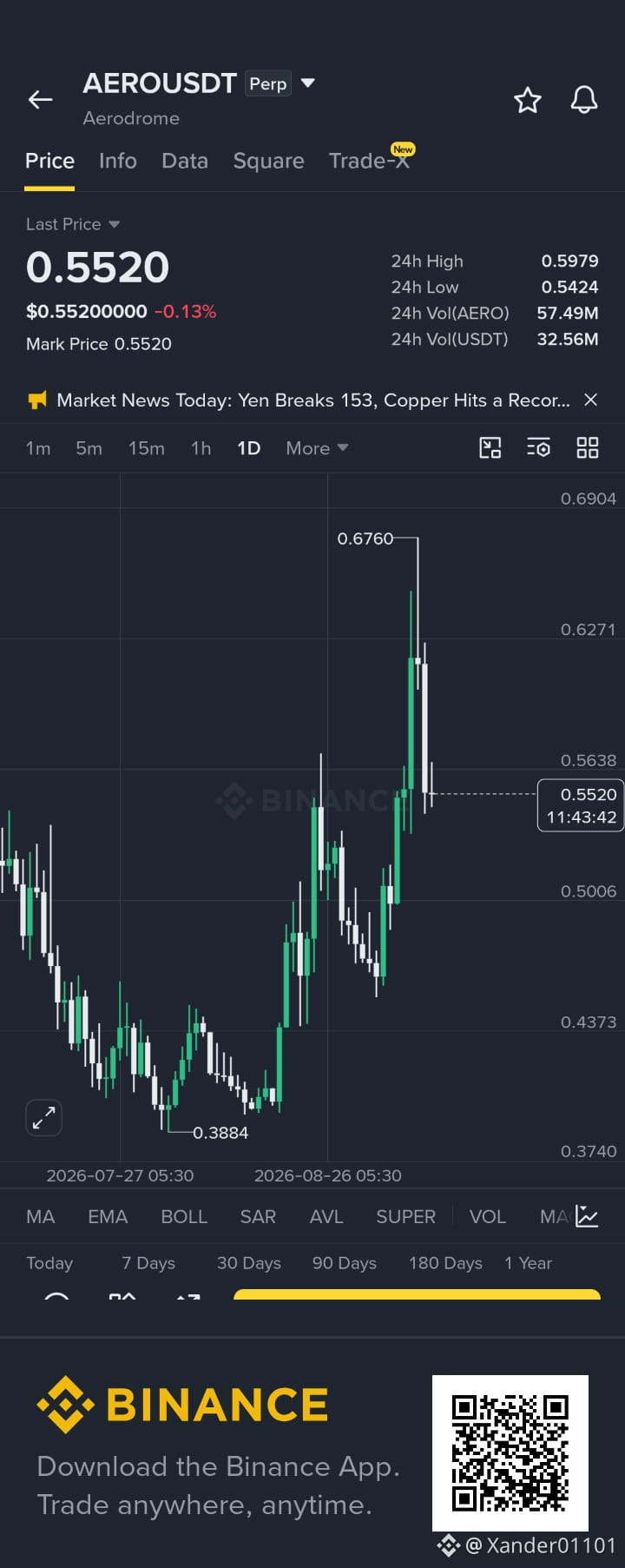
Aerodrome doesn't get talked about as much as some of the newer Base tokens, but it quietly might be the most important piece of infrastructure on the chain. $AERO is up close to 17% today, trading near $0.63 with $165M+ in volume.
Some context on why this matters beyond the daily candle:
🌊 Aerodrome handled 54% of all BTC-USD volume across EVM based DEXs in July, more than every other EVM DEX combined. It's quietly become the main venue for Bitcoin liquidity outside centralized exchanges
🐋 On chain data shows whales accumulating AERO in size over the past few weeks, alongside chatter about the protocol powering liquidity for institutional grade RWA and FX products
💰 Revenue from trading fees flows back to vote locked AERO holders, and a chunk gets used for buybacks, so growing volume has a direct line to token demand
None of this is a guarantee the pump continues. AERO is still down more than 70% from its 2024 all time high, and DeFi tokens can chop sideways for a long time even with solid fundamentals underneath. This looks more like a slow accumulation story than an explosive one, which honestly might be the more interesting setup.
Are you looking at $AERO as the quiet infrastructure play on Base, or does it need a bigger catalyst to get your attention? 👇
NFA. DYOR before trading any token.
#Aero #Base #Binance
{future}(AEROUSDT)
Aerodrome doesn't get talked about as much as some of the newer Base tokens, but it quietly might be the most important piece of infrastructure on the chain. $AERO is up close to 17% today, trading near $0.63 with $165M+ in volume.
Some context on why this matters beyond the daily candle:
🌊 Aerodrome handled 54% of all BTC-USD volume across EVM based DEXs in July, more than every other EVM DEX combined. It's quietly become the main venue for Bitcoin liquidity outside centralized exchanges
🐋 On chain data shows whales accumulating AERO in size over the past few weeks, alongside chatter about the protocol powering liquidity for institutional grade RWA and FX products
💰 Revenue from trading fees flows back to vote locked AERO holders, and a chunk gets used for buybacks, so growing volume has a direct line to token demand
None of this is a guarantee the pump continues. AERO is still down more than 70% from its 2024 all time high, and DeFi tokens can chop sideways for a long time even with solid fundamentals underneath. This looks more like a slow accumulation story than an explosive one, which honestly might be the more interesting setup.
Are you looking at $AERO as the quiet infrastructure play on Base, or does it need a bigger catalyst to get your attention? 👇
NFA. DYOR before trading any token.
#Aero #Base #Binance
Some context on why this matters beyond the daily candle:
🌊 Aerodrome handled 54% of all BTC-USD volume across EVM based DEXs in July, more than every other EVM DEX combined. It's quietly become the main venue for Bitcoin liquidity outside centralized exchanges
🐋 On chain data shows whales accumulating AERO in size over the past few weeks, alongside chatter about the protocol powering liquidity for institutional grade RWA and FX products
💰 Revenue from trading fees flows back to vote locked AERO holders, and a chunk gets used for buybacks, so growing volume has a direct line to token demand
None of this is a guarantee the pump continues. AERO is still down more than 70% from its 2024 all time high, and DeFi tokens can chop sideways for a long time even with solid fundamentals underneath. This looks more like a slow accumulation story than an explosive one, which honestly might be the more interesting setup.
Are you looking at $AERO as the quiet infrastructure play on Base, or does it need a bigger catalyst to get your attention? 👇
NFA. DYOR before trading any token.
#Aero #Base #Binance
101
·
--
$AERO.US
{stock_us}(AERO.US)
is connected to the Base ecosystem and decentralized exchange activity. Its market interest can increase when trading activity across Base becomes stronger. Traders are watching volume and liquidity as the DeFi sector develops.
#AERO #Base #DeFi #BinanceSquare
$AERO.US
is connected to the Base ecosystem and decentralized exchange activity. Its market interest can increase when trading activity across Base becomes stronger. Traders are watching volume and liquidity as the DeFi sector develops.
#AERO #Base #DeFi #BinanceSquare
is connected to the Base ecosystem and decentralized exchange activity. Its market interest can increase when trading activity across Base becomes stronger. Traders are watching volume and liquidity as the DeFi sector develops.
#AERO #Base #DeFi #BinanceSquare
AEROUS-0.27%
1
5

🚨 BREAKING: HUNTER BIDEN ENTERS THE MEMECOIN WAR 👀
$SUI
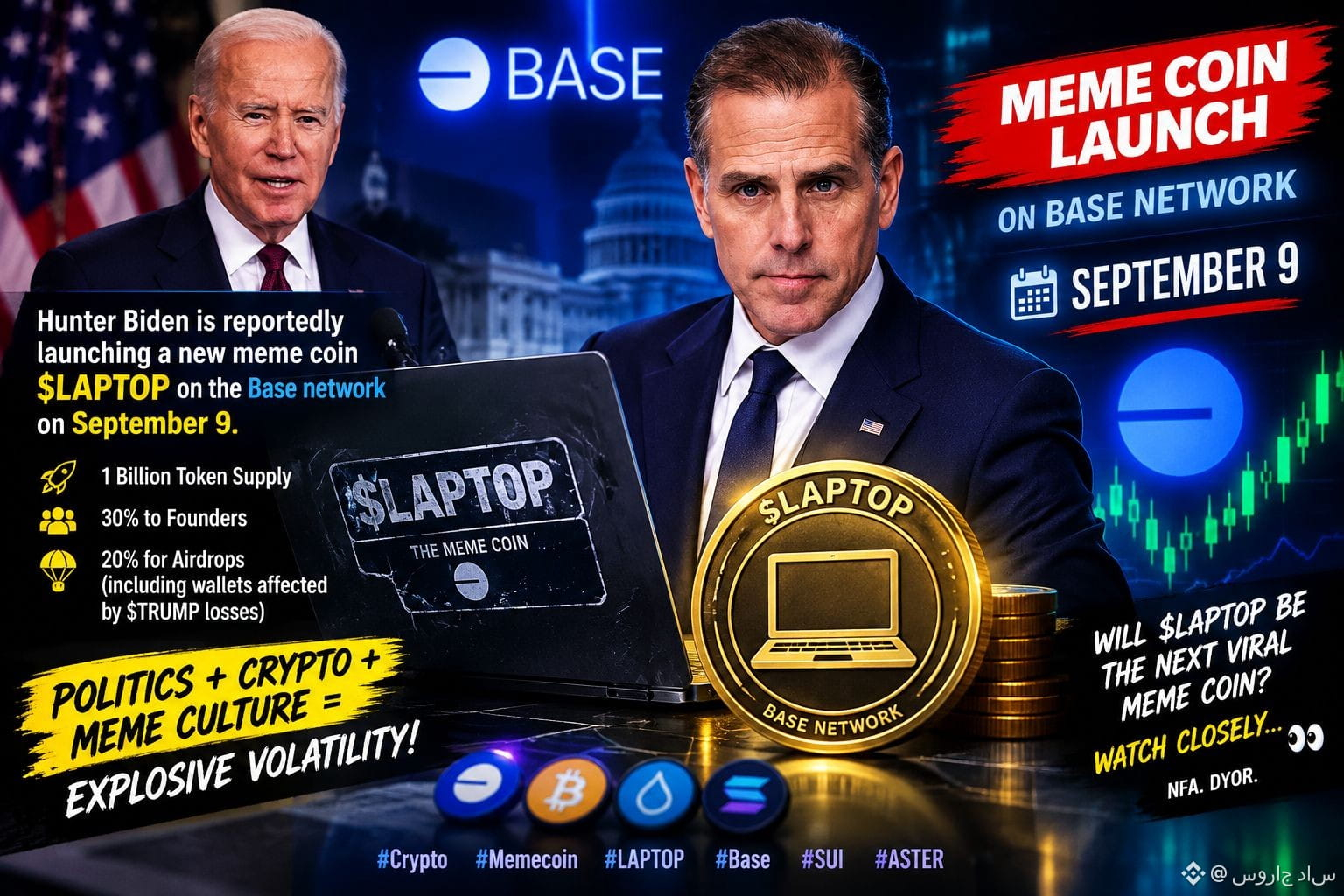
Hunter Biden is reportedly launching a new meme coin, $LAPTOP, on Coinbase’s Base network today, September 9.
The token takes its name from the infamous laptop controversy and is already creating major buzz across Crypto Twitter. The project reportedly has a 1 billion token supply, with 30% allocated to founders and another 20% planned for airdrops, including wallets affected by $TRUMP losses.
But here’s the twist: crypto traders are already divided, with some calling it a massive attention play while others are warning about extreme meme-coin volatility.
🔥 Politics + Crypto + Meme Culture = Potentially Explosive Volatility.
Will $LAPTOP become the next viral political memecoin—or fade after the hype?
Watch closely. 👀
NFA. DYOR.
{spot}(SUIUSDT)
{future}(LABUSDT)
{spot}(TRUMPUSDT)
#Memecoin #LAPTOP #Base #SUI #ASTER
🚨 BREAKING: HUNTER BIDEN ENTERS THE MEMECOIN WAR 👀
$SUI
Hunter Biden is reportedly launching a new meme coin, $LAPTOP, on Coinbase’s Base network today, September 9.
The token takes its name from the infamous laptop controversy and is already creating major buzz across Crypto Twitter. The project reportedly has a 1 billion token supply, with 30% allocated to founders and another 20% planned for airdrops, including wallets affected by $TRUMP losses.
But here’s the twist: crypto traders are already divided, with some calling it a massive attention play while others are warning about extreme meme-coin volatility.
🔥 Politics + Crypto + Meme Culture = Potentially Explosive Volatility.
Will $LAPTOP become the next viral political memecoin—or fade after the hype?
Watch closely. 👀
NFA. DYOR.
#Memecoin #LAPTOP #Base #SUI #ASTER
$SUI
Hunter Biden is reportedly launching a new meme coin, $LAPTOP, on Coinbase’s Base network today, September 9.
The token takes its name from the infamous laptop controversy and is already creating major buzz across Crypto Twitter. The project reportedly has a 1 billion token supply, with 30% allocated to founders and another 20% planned for airdrops, including wallets affected by $TRUMP losses.
But here’s the twist: crypto traders are already divided, with some calling it a massive attention play while others are warning about extreme meme-coin volatility.
🔥 Politics + Crypto + Meme Culture = Potentially Explosive Volatility.
Will $LAPTOP become the next viral political memecoin—or fade after the hype?
Watch closely. 👀
NFA. DYOR.
#Memecoin #LAPTOP #Base #SUI #ASTER
140

$BRETT — Brett remains one of the better-known meme assets on Base. Traders are watching liquidity and speculative volume for momentum changes.
{future}(BRETTUSDT)
$TOSHI — Toshi continues to attract attention within the Base ecosystem. Short-term traders are watching volume expansion and market structure.
{future}(TOSHIUSDT)
$AERO — Aerodrome remains a major Base DeFi token. Activity across Base can influence liquidity and trading interest in AERO.
{spot}(AEROUSDT)
#BRETT #TOSHI #AERO #Base #CryptoTrading
$BRETT — Brett remains one of the better-known meme assets on Base. Traders are watching liquidity and speculative volume for momentum changes.
$TOSHI — Toshi continues to attract attention within the Base ecosystem. Short-term traders are watching volume expansion and market structure.
$AERO — Aerodrome remains a major Base DeFi token. Activity across Base can influence liquidity and trading interest in AERO.
#BRETT #TOSHI #AERO #Base #CryptoTrading
$TOSHI — Toshi continues to attract attention within the Base ecosystem. Short-term traders are watching volume expansion and market structure.
$AERO — Aerodrome remains a major Base DeFi token. Activity across Base can influence liquidity and trading interest in AERO.
#BRETT #TOSHI #AERO #Base #CryptoTrading

91

·
--
Verified
#aerosurges17%in24hours
AERO Just Jumped 17% — But the Bigger Story Is What It's Becoming
AERO just jumped roughly 17% in 24 hours.
But the pump itself isn't the most interesting part.
The bigger story is that AERO may be getting repriced for utility — not just speculation.
Tenor OTC recently added AERO as accepted collateral for fixed-rate lending.
That matters because AERO is gaining another use case beyond simply trading, liquidity provision and governance.
Then there's the second catalyst:
Tokenized-stock activity on Base is accelerating.
Trading volume for tokenized equities reportedly surpassed $250M in just two weeks, with Aerodrome serving as an important liquidity venue within the Base ecosystem.
And the numbers are hard to ignore:
→ AERO: +17–20% in 24h
→ 24h volume: ~$161M
→ Volume growth: +303%
→ Market cap: ~$600M+
But here's the twist:
This doesn't automatically mean every dollar of tokenized-stock volume becomes value for AERO holders.
The real question is whether growing financial activity on Base can translate into durable liquidity demand and fee generation for Aerodrome.
That's a much bigger thesis than “AERO pumped.”
Technically, the breakout also has a clear test.
$0.603 is the level I'd watch.
Hold above it, and the breakout structure remains interesting.
Lose it, and the move could start looking more like a momentum spike than a structural repricing.
Because the interesting question isn't:
“Can AERO pump again?”
It's:
“Is Base's growing on-chain financial activity starting to create durable value for the liquidity layer underneath it?”
That distinction could matter more than the 17% candle.
Market commentary only.
$AERO
{future}(AEROUSDT)
#Aerodrome #Base #DeFi
#aerosurges17%in24hours
AERO Just Jumped 17% — But the Bigger Story Is What It's Becoming
AERO just jumped roughly 17% in 24 hours.
But the pump itself isn't the most interesting part.
The bigger story is that AERO may be getting repriced for utility — not just speculation.
Tenor OTC recently added AERO as accepted collateral for fixed-rate lending.
That matters because AERO is gaining another use case beyond simply trading, liquidity provision and governance.
Then there's the second catalyst:
Tokenized-stock activity on Base is accelerating.
Trading volume for tokenized equities reportedly surpassed $250M in just two weeks, with Aerodrome serving as an important liquidity venue within the Base ecosystem.
And the numbers are hard to ignore:
→ AERO: +17–20% in 24h
→ 24h volume: ~$161M
→ Volume growth: +303%
→ Market cap: ~$600M+
But here's the twist:
This doesn't automatically mean every dollar of tokenized-stock volume becomes value for AERO holders.
The real question is whether growing financial activity on Base can translate into durable liquidity demand and fee generation for Aerodrome.
That's a much bigger thesis than “AERO pumped.”
Technically, the breakout also has a clear test.
$0.603 is the level I'd watch.
Hold above it, and the breakout structure remains interesting.
Lose it, and the move could start looking more like a momentum spike than a structural repricing.
Because the interesting question isn't:
“Can AERO pump again?”
It's:
“Is Base's growing on-chain financial activity starting to create durable value for the liquidity layer underneath it?”
That distinction could matter more than the 17% candle.
Market commentary only.
$AERO
#Aerodrome #Base #DeFi
AERO Just Jumped 17% — But the Bigger Story Is What It's Becoming
AERO just jumped roughly 17% in 24 hours.
But the pump itself isn't the most interesting part.
The bigger story is that AERO may be getting repriced for utility — not just speculation.
Tenor OTC recently added AERO as accepted collateral for fixed-rate lending.
That matters because AERO is gaining another use case beyond simply trading, liquidity provision and governance.
Then there's the second catalyst:
Tokenized-stock activity on Base is accelerating.
Trading volume for tokenized equities reportedly surpassed $250M in just two weeks, with Aerodrome serving as an important liquidity venue within the Base ecosystem.
And the numbers are hard to ignore:
→ AERO: +17–20% in 24h
→ 24h volume: ~$161M
→ Volume growth: +303%
→ Market cap: ~$600M+
But here's the twist:
This doesn't automatically mean every dollar of tokenized-stock volume becomes value for AERO holders.
The real question is whether growing financial activity on Base can translate into durable liquidity demand and fee generation for Aerodrome.
That's a much bigger thesis than “AERO pumped.”
Technically, the breakout also has a clear test.
$0.603 is the level I'd watch.
Hold above it, and the breakout structure remains interesting.
Lose it, and the move could start looking more like a momentum spike than a structural repricing.
Because the interesting question isn't:
“Can AERO pump again?”
It's:
“Is Base's growing on-chain financial activity starting to create durable value for the liquidity layer underneath it?”
That distinction could matter more than the 17% candle.
Market commentary only.
$AERO
#Aerodrome #Base #DeFi

589

·
--
Verified
📰 Hunter Biden will launch the Meme coin LAPTOP on the Base network on September 9. The name comes from the laptop that pulled him into years of political turmoil. After the report was published, he posted a 32-second teaser on X himself within about four minutes—basically confirming it personally.
🔥 The way this coin works is also pretty straightforward: total supply is 1 billion coins. 20% is allocated for an air drop, and 2% is reserved for addresses that previously lost money on the TRUMP coin. There are about 1.48 million wallets that meet the tagged criteria, with an aggregate unrealized loss of $3.81 billion. Turns out even loss experience can be used as a precise condition for distribution.
Honestly, this is already more than just borrowing a political figure’s name to ride the hype. 30% of the tokens will be tied to 30 real-world events—things like whether Trump will be impeached, whether the Democrats can win future elections, and so on. If an event happens, the corresponding portion is burned; if it doesn’t, it’s donated to charities.
💡 Hunter himself has debts of roughly $14 million to $17 million, and he’s turned the “laptop” that attacked him back then into a token—then redirected the blame toward Trump’s camp. In any case, political stances, old scandals, and election outcomes can all be converted into a tradable set of mechanics.
🤔 Will the TRUMP-loss addresses actually risk getting involved with LAPTOP for the air drop, or will it just be another round of political traffic bait?
#LAPTOP #Meme币 #Base #加密市场
📰 Hunter Biden will launch the Meme coin LAPTOP on the Base network on September 9. The name comes from the laptop that pulled him into years of political turmoil. After the report was published, he posted a 32-second teaser on X himself within about four minutes—basically confirming it personally.
🔥 The way this coin works is also pretty straightforward: total supply is 1 billion coins. 20% is allocated for an air drop, and 2% is reserved for addresses that previously lost money on the TRUMP coin. There are about 1.48 million wallets that meet the tagged criteria, with an aggregate unrealized loss of $3.81 billion. Turns out even loss experience can be used as a precise condition for distribution.
Honestly, this is already more than just borrowing a political figure’s name to ride the hype. 30% of the tokens will be tied to 30 real-world events—things like whether Trump will be impeached, whether the Democrats can win future elections, and so on. If an event happens, the corresponding portion is burned; if it doesn’t, it’s donated to charities.
💡 Hunter himself has debts of roughly $14 million to $17 million, and he’s turned the “laptop” that attacked him back then into a token—then redirected the blame toward Trump’s camp. In any case, political stances, old scandals, and election outcomes can all be converted into a tradable set of mechanics.
🤔 Will the TRUMP-loss addresses actually risk getting involved with LAPTOP for the air drop, or will it just be another round of political traffic bait?
#LAPTOP #Meme币 #Base #加密市场
🔥 The way this coin works is also pretty straightforward: total supply is 1 billion coins. 20% is allocated for an air drop, and 2% is reserved for addresses that previously lost money on the TRUMP coin. There are about 1.48 million wallets that meet the tagged criteria, with an aggregate unrealized loss of $3.81 billion. Turns out even loss experience can be used as a precise condition for distribution.
Honestly, this is already more than just borrowing a political figure’s name to ride the hype. 30% of the tokens will be tied to 30 real-world events—things like whether Trump will be impeached, whether the Democrats can win future elections, and so on. If an event happens, the corresponding portion is burned; if it doesn’t, it’s donated to charities.
💡 Hunter himself has debts of roughly $14 million to $17 million, and he’s turned the “laptop” that attacked him back then into a token—then redirected the blame toward Trump’s camp. In any case, political stances, old scandals, and election outcomes can all be converted into a tradable set of mechanics.
🤔 Will the TRUMP-loss addresses actually risk getting involved with LAPTOP for the air drop, or will it just be another round of political traffic bait?
#LAPTOP #Meme币 #Base #加密市场

1.3k
Log in to explore more content
Join global crypto users on Binance Square
⚡️ Get latest and useful information about crypto.
💬 Trusted by the world’s largest crypto exchange.
👍 Discover real insights from verified creators.
Email / Phone number
Trending Topics
1
#HKMAPlansWholesaleCBDCByYearEnd
509 views
62 Discussing
2
#NEARSurges26%Past$3.45
6,191 views
69 Discussing
3
#BOJHikesRatesTo31YearHigh
15,534 views
464 Discussing
4
#ChainlinkPowersBottomlinePaymentPlatform
19,177 views
479 Discussing
5
#DtcpayCompletes$25MSeriesA
413 views
22 Discussing
6
#InjectiveLaunchesINJOnSolana
1,739 views
82 Discussing
7
#StellarActivatesProtocol28At211TPS
26,413 views
599 Discussing
8
#SECGrantsInnovationExemptionForTokenizedStocks
21,688 views
462 Discussing
9
#XRPGains3%AsRippleAddsMPPSupport
19,626 views
360 Discussing
10
#SPGlobalToAcquireOpenZeppelin
10,884 views
225 Discussing