
#agentpay
agentpay
1,348 views
10 Discussing
Hot
Latest

"Looks like we're trading in our trusty crypto wallets for some high-tech, AI-powered ones Mastercard just unveiled Agent Pay for Machines, allowing autonomous AI agents to transact with stablecoins – and we're not just talking about your granny's Robo-Friday grocery runs #AgentPay #StablecoinRevolution #CryptoForReal
The alpha's in the agent itself: this infrastructure will enable high-volume, low-value payments, making it perfect for autonomous smart vending machines, parking garages, and other IoT-enabled devices. Imagine being able to grab a snack with just your smart fridge's approval – no cash needed. The AI payments game is changing, and it's about to get a whole lot smarter
Punchline: we're talking seamless microtransactions with AI-powered wallets, folks. Who needs human confirmation when a machine can just send the stablecoins itself? Will we see AI-driven crypto adoption boom in the next year?"
The alpha's in the agent itself: this infrastructure will enable high-volume, low-value payments, making it perfect for autonomous smart vending machines, parking garages, and other IoT-enabled devices. Imagine being able to grab a snack with just your smart fridge's approval – no cash needed. The AI payments game is changing, and it's about to get a whole lot smarter
Punchline: we're talking seamless microtransactions with AI-powered wallets, folks. Who needs human confirmation when a machine can just send the stablecoins itself? Will we see AI-driven crypto adoption boom in the next year?"

Partly True
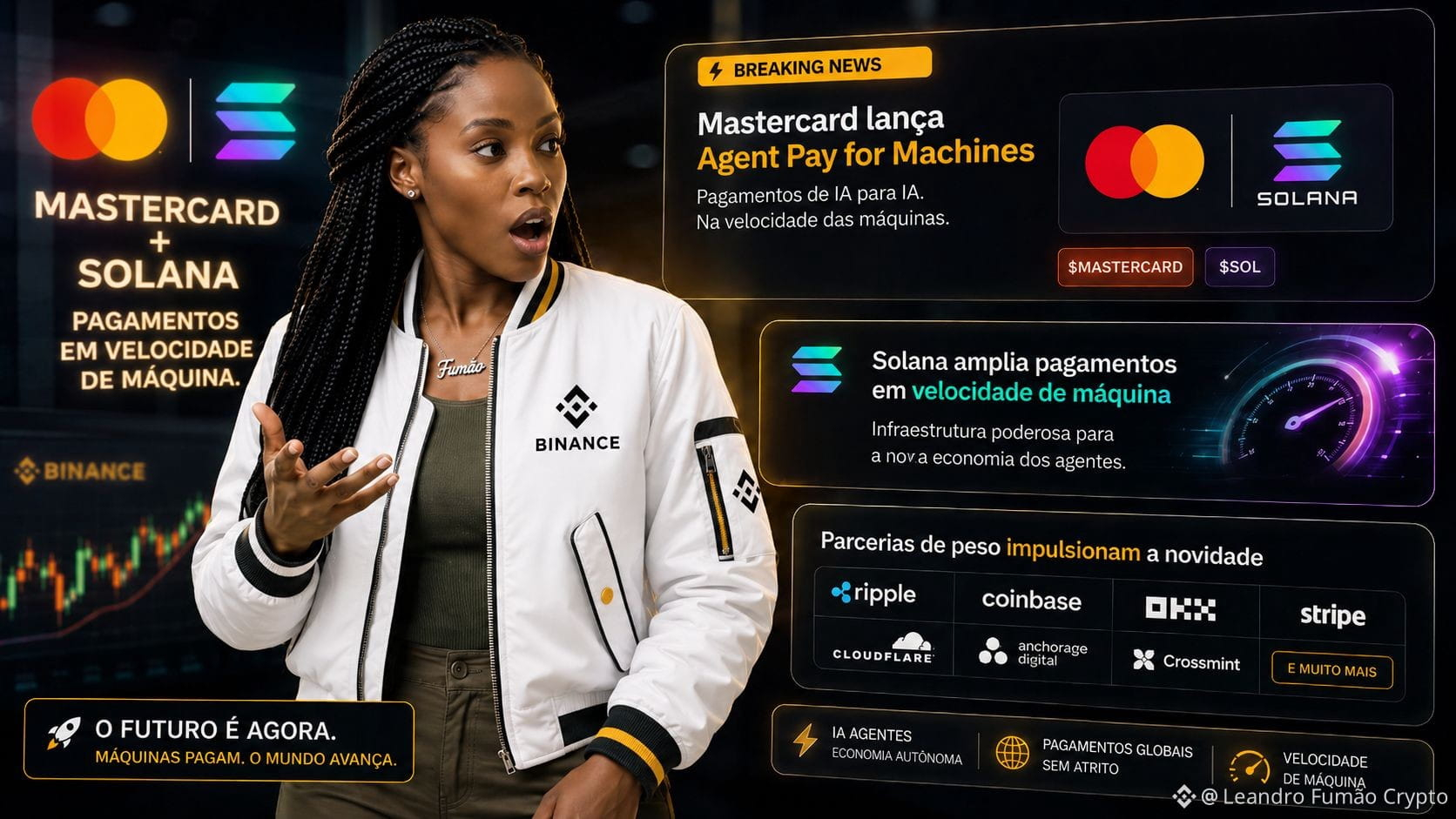
🤖💳🚀 THE AGE OF MACHINES ⋙ MASTERCARD LAUNCHES "AGENT PAY" ON SOLANA WITH RIPPLE AND STRIPE... 🌟
The international financial infrastructure has just crossed the ultimate frontier of systemic automation. According to official announcements from Mastercard and Solana, the "Mastercard Agent Pay for Machines" program has been globally launched, a payment architecture designed exclusively to allow Artificial Intelligence agents to conduct autonomous financial transactions at massive scale and machine speed, operating under predefined spending limits.
This move validates programmable blockchains as the official monetary rails of the AI economy.
📌 The Anatomy of the Alliance Between Giants
⚡ The Choice of Solana▸ $SOL ▸ Mastercard selected the Solana network as the priority settlement layer due to its unique capacity to process high-frequency parallel transactions with negligible fees.
💼 The Heavyweight Consortium: The partner ecosystem revealed by the card brand includes the biggest players in the global Web3 infrastructure, highlighting Ripple▸ $XRP , Polygon▸ $POL , Aave, Coinbase, Stripe, and Alchemy.
⚙️ Automation Without Intermediaries: The technology allows an AI to hire servers, pay for code audits, or settle customs billing completely independently of the slow legacy banking rails.
💡 MY ANALYSIS
Those trading under the rigidity of macroeconomic fundamentals understand the axiom▸ Retail is still debating whether cryptocurrencies have real utility, but Mastercard and Stripe already recognize that robots and AI agents don’t open accounts with traditional banks. It’s a marvelous irony to note that while western central banks try to push rigid fiat currencies, the world’s largest payment corporations are migrating to the programmable liquidity of Web3.
💡 Always do your own research before investing in any crypto project.
#Mastercard #solana #Ripple💰 #AgentPay
The international financial infrastructure has just crossed the ultimate frontier of systemic automation. According to official announcements from Mastercard and Solana, the "Mastercard Agent Pay for Machines" program has been globally launched, a payment architecture designed exclusively to allow Artificial Intelligence agents to conduct autonomous financial transactions at massive scale and machine speed, operating under predefined spending limits.
This move validates programmable blockchains as the official monetary rails of the AI economy.
📌 The Anatomy of the Alliance Between Giants
⚡ The Choice of Solana▸ $SOL ▸ Mastercard selected the Solana network as the priority settlement layer due to its unique capacity to process high-frequency parallel transactions with negligible fees.
💼 The Heavyweight Consortium: The partner ecosystem revealed by the card brand includes the biggest players in the global Web3 infrastructure, highlighting Ripple▸ $XRP , Polygon▸ $POL , Aave, Coinbase, Stripe, and Alchemy.
⚙️ Automation Without Intermediaries: The technology allows an AI to hire servers, pay for code audits, or settle customs billing completely independently of the slow legacy banking rails.
💡 MY ANALYSIS
Those trading under the rigidity of macroeconomic fundamentals understand the axiom▸ Retail is still debating whether cryptocurrencies have real utility, but Mastercard and Stripe already recognize that robots and AI agents don’t open accounts with traditional banks. It’s a marvelous irony to note that while western central banks try to push rigid fiat currencies, the world’s largest payment corporations are migrating to the programmable liquidity of Web3.
💡 Always do your own research before investing in any crypto project.
#Mastercard #solana #Ripple💰 #AgentPay
Log in to explore more content