

#xrprealitycheck
xrprealitycheck
11.7M views
11,383 Discussing
Hot
Latest

·
--
$XRP remains in focus as the XRP Ledger Batch upgrade has been delayed until October 9 after validator support temporarily fell below the required threshold.
#XRPRealityCheck #BitwiseFilesToListNEARETFOnNYSEArca
{future}(XRPUSDT)
$XRP remains in focus as the XRP Ledger Batch upgrade has been delayed until October 9 after validator support temporarily fell below the required threshold.
#XRPRealityCheck #BitwiseFilesToListNEARETFOnNYSEArca
#XRPRealityCheck #BitwiseFilesToListNEARETFOnNYSEArca
52

·
--
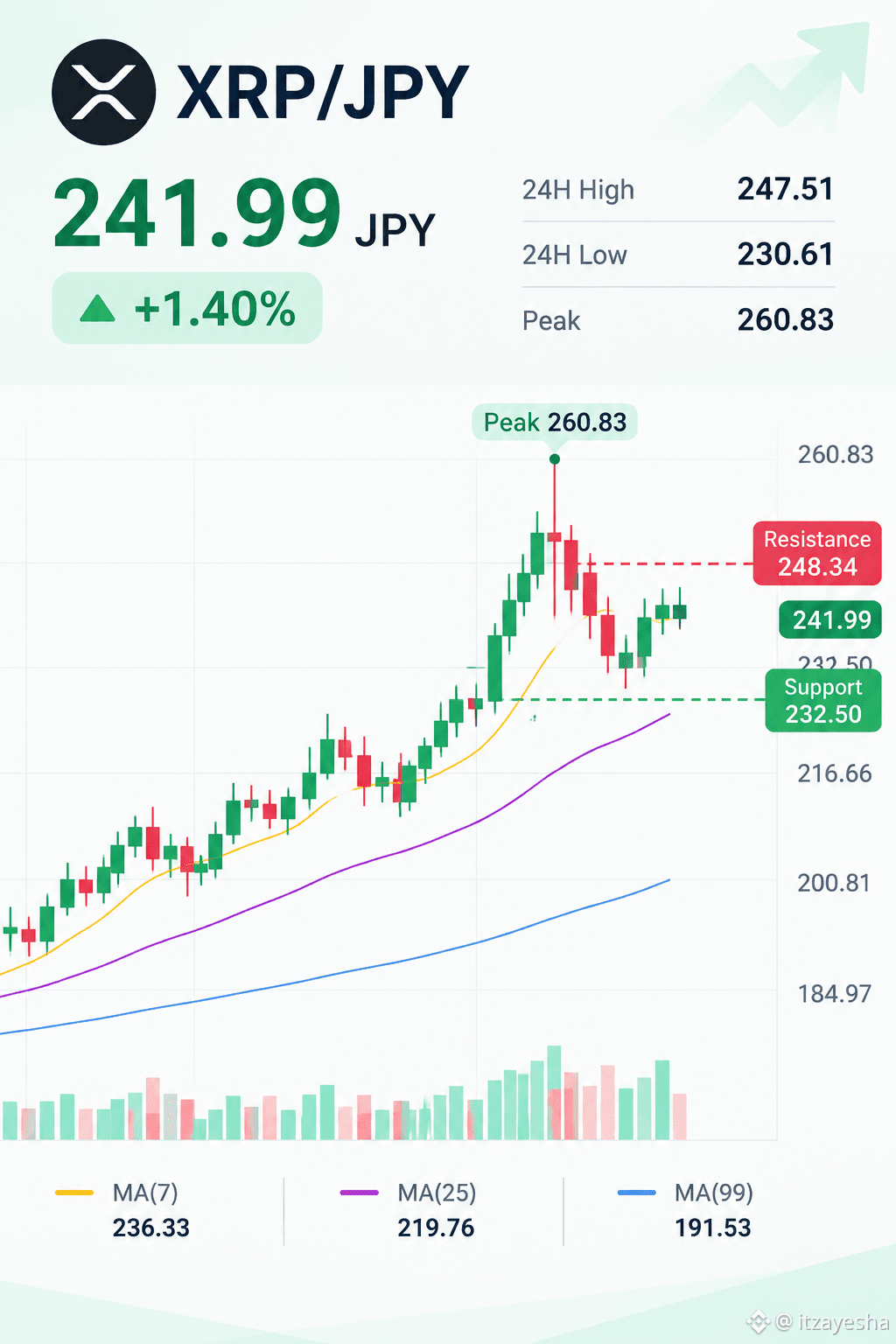
$XRP is showing a positive short-term trend. The price is around 241.99 JPY, up 1.40%, and remains above the 7-day MA at 236.33, which supports the current bullish momentum.
Key levels:
Resistance: 248.34 JPY
Major high: 260.83 JPY
Support: 232.50 JPY
Current price: 241.99 JPY
A sustained move above 248.34 JPY could indicate further upward momentum, while holding above 232.50 JPY keeps the short-term structure relatively positive.
#XRPRealityCheck #XRPPredictions #CFTCUpdatesGuidanceOnTokenizedAssets
{spot}(XRPUSDT)
$XRP is showing a positive short-term trend. The price is around 241.99 JPY, up 1.40%, and remains above the 7-day MA at 236.33, which supports the current bullish momentum.
Key levels:
Resistance: 248.34 JPY
Major high: 260.83 JPY
Support: 232.50 JPY
Current price: 241.99 JPY
A sustained move above 248.34 JPY could indicate further upward momentum, while holding above 232.50 JPY keeps the short-term structure relatively positive.
#XRPRealityCheck #XRPPredictions #CFTCUpdatesGuidanceOnTokenizedAssets
Key levels:
Resistance: 248.34 JPY
Major high: 260.83 JPY
Support: 232.50 JPY
Current price: 241.99 JPY
A sustained move above 248.34 JPY could indicate further upward momentum, while holding above 232.50 JPY keeps the short-term structure relatively positive.
#XRPRealityCheck #XRPPredictions #CFTCUpdatesGuidanceOnTokenizedAssets
65

·
--
Bearish
Is $XRP Preparing for a Massive 90-Day Breakthrough?
Rumors are buzzing after Tom Lee reportedly hinted at a potential wave of growth for XRP over the next 3 months.
Whether this turns into reality or remains speculation, one thing is certain— $XRP is back under the spotlight, driving high volume and trader attention across the market.
The Big Question:
Will $XRP trigger a genuine breakout, or is this another temporary market hype?
Drop your price targets and predictions below! Let's discuss.
#XRPRealityCheck #Ripple #XRP #CryptoNews #Bullish
{spot}(XRPUSDT)
Is $XRP Preparing for a Massive 90-Day Breakthrough?
Rumors are buzzing after Tom Lee reportedly hinted at a potential wave of growth for XRP over the next 3 months.
Whether this turns into reality or remains speculation, one thing is certain— $XRP is back under the spotlight, driving high volume and trader attention across the market.
The Big Question:
Will $XRP trigger a genuine breakout, or is this another temporary market hype?
Drop your price targets and predictions below! Let's discuss.
#XRPRealityCheck #Ripple #XRP #CryptoNews #Bullish
Rumors are buzzing after Tom Lee reportedly hinted at a potential wave of growth for XRP over the next 3 months.
Whether this turns into reality or remains speculation, one thing is certain— $XRP is back under the spotlight, driving high volume and trader attention across the market.
The Big Question:
Will $XRP trigger a genuine breakout, or is this another temporary market hype?
Drop your price targets and predictions below! Let's discuss.
#XRPRealityCheck #Ripple #XRP #CryptoNews #Bullish

206 Atlas:
Relying on rumors for a 90-day thesis is gambling, not trading. Define your invalidation level before chasing hype.
2
1
1.4k

·
--
Article
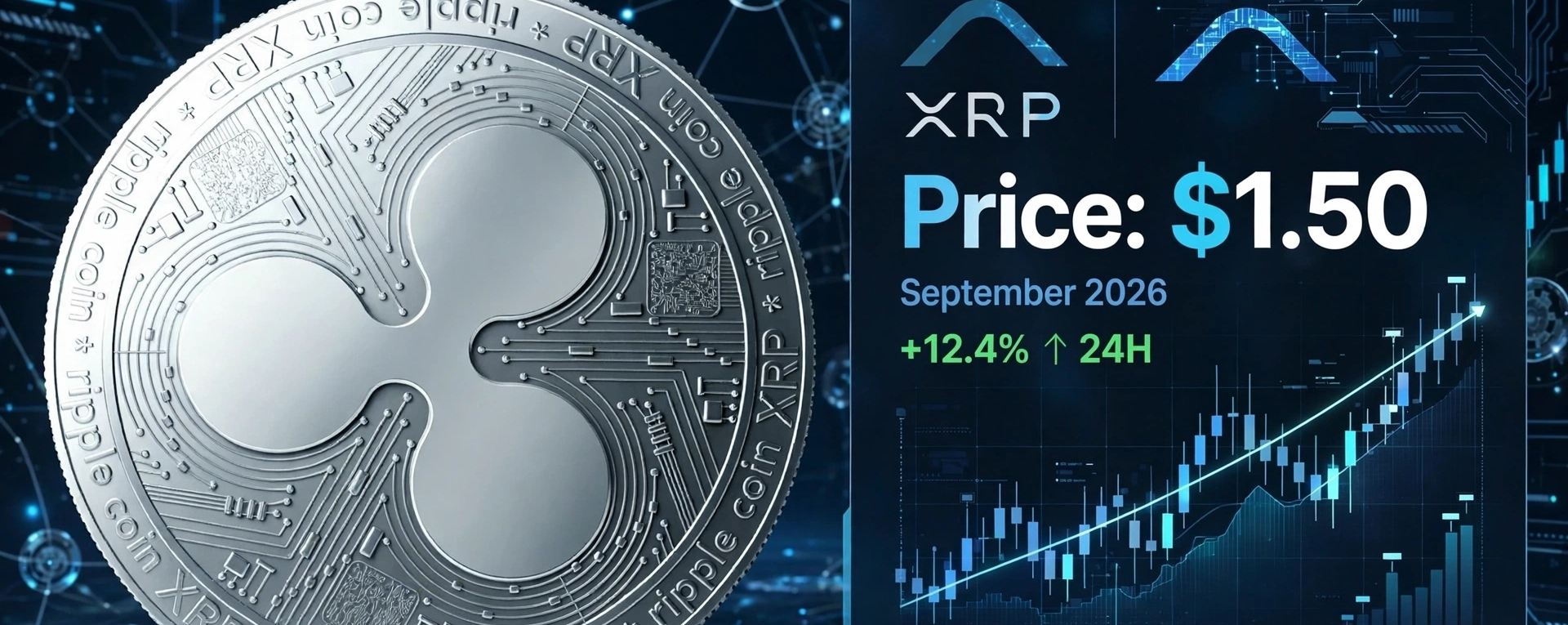
XRP Price ~$1.50 in Sept 2026. Fast, 3 sec settlement, low fees. Lawsuit over, EU regulated, ETF appXRP in Sept 2026: Why $1.50 Could Be Just The Start
XRP is Ripple's fast payment coin. Price is around ~$1.50 in September 2026.
Why XRP is different?
1. Settles in 3-5 seconds with very low fees
2. EU regulated and US lawsuit is over
3. Real use-case: Banks using Ripple for cross-border payments
4. Spot XRP ETFs are now live, bringing new money
Yes, price is -9% today, but that's market-wide correction. Long-term fundamentals for XRP have never been stronger.
Do you think XRP will hit $3 in 2026? Comment below.
#XRP #Ripple #Crypto #XRPRealityCheck #XRPUSDT🚨 #XRPGoal #XRPViral
XRP Price ~$1.50 in Sept 2026. Fast, 3 sec settlement, low fees. Lawsuit over, EU regulated, ETF app
XRP in Sept 2026: Why $1.50 Could Be Just The Start
XRP is Ripple's fast payment coin. Price is around ~$1.50 in September 2026.
Why XRP is different?
1. Settles in 3-5 seconds with very low fees
2. EU regulated and US lawsuit is over
3. Real use-case: Banks using Ripple for cross-border payments
4. Spot XRP ETFs are now live, bringing new money
Yes, price is -9% today, but that's market-wide correction. Long-term fundamentals for XRP have never been stronger.
Do you think XRP will hit $3 in 2026? Comment below.
#XRP #Ripple #Crypto #XRPRealityCheck #XRPUSDT🚨 #XRPGoal #XRPViral
XRP is Ripple's fast payment coin. Price is around ~$1.50 in September 2026.
Why XRP is different?
1. Settles in 3-5 seconds with very low fees
2. EU regulated and US lawsuit is over
3. Real use-case: Banks using Ripple for cross-border payments
4. Spot XRP ETFs are now live, bringing new money
Yes, price is -9% today, but that's market-wide correction. Long-term fundamentals for XRP have never been stronger.
Do you think XRP will hit $3 in 2026? Comment below.
#XRP #Ripple #Crypto #XRPRealityCheck #XRPUSDT🚨 #XRPGoal #XRPViral
O sombra:
Xrp. Cotação de $3 dólares até dezembro/2026 é bem factível.
2
2
452

·
--
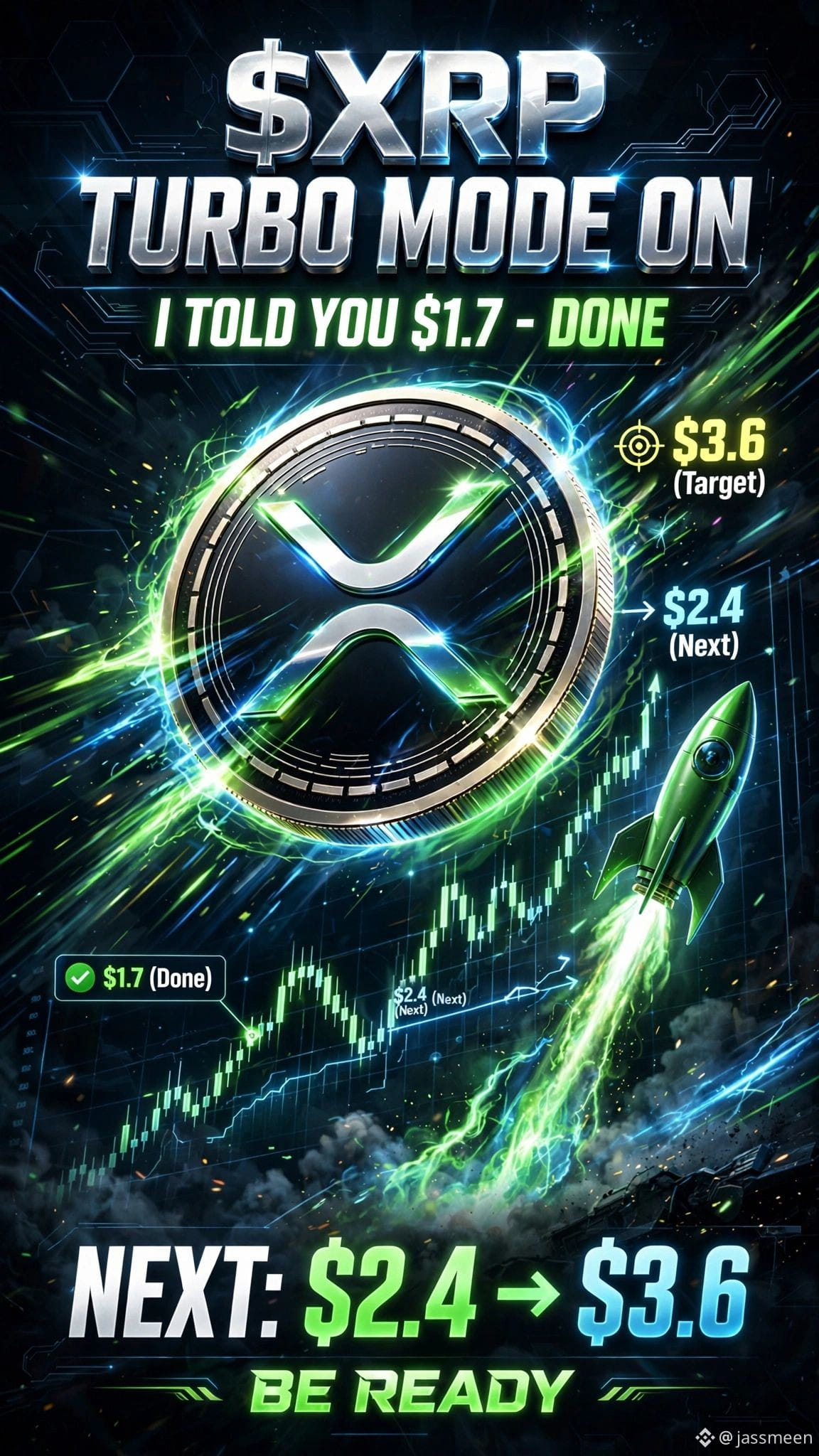
$XRP turbo mode ON 🚀
I told you $1.7 — done.
Next: $2.4 → $3.6
Be ready. #XRPRealityCheck
Here is your $XRP Turbo poster — short, powerful, ready to post 👇
Matches your call:
✅ *$1.7 Done*
✅ *Next: $2.4 → $3.6*
✅ Turbo speed effects + rocket
Caption for X:
$XRP turbo mode ON 🚀
I told you $1.7 — done.
Next: $2.4 → $3.6
$XRP turbo mode ON 🚀
I told you $1.7 — done.
Next: $2.4 → $3.6
Be ready. #XRPRealityCheck
Here is your $XRP Turbo poster — short, powerful, ready to post 👇
Matches your call:
✅ *$1.7 Done*
✅ *Next: $2.4 → $3.6*
✅ Turbo speed effects + rocket
Caption for X:
$XRP turbo mode ON 🚀
I told you $1.7 — done.
Next: $2.4 → $3.6
I told you $1.7 — done.
Next: $2.4 → $3.6
Be ready. #XRPRealityCheck
Here is your $XRP Turbo poster — short, powerful, ready to post 👇
Matches your call:
✅ *$1.7 Done*
✅ *Next: $2.4 → $3.6*
✅ Turbo speed effects + rocket
Caption for X:
$XRP turbo mode ON 🚀
I told you $1.7 — done.
Next: $2.4 → $3.6
80

·
--
Bearish
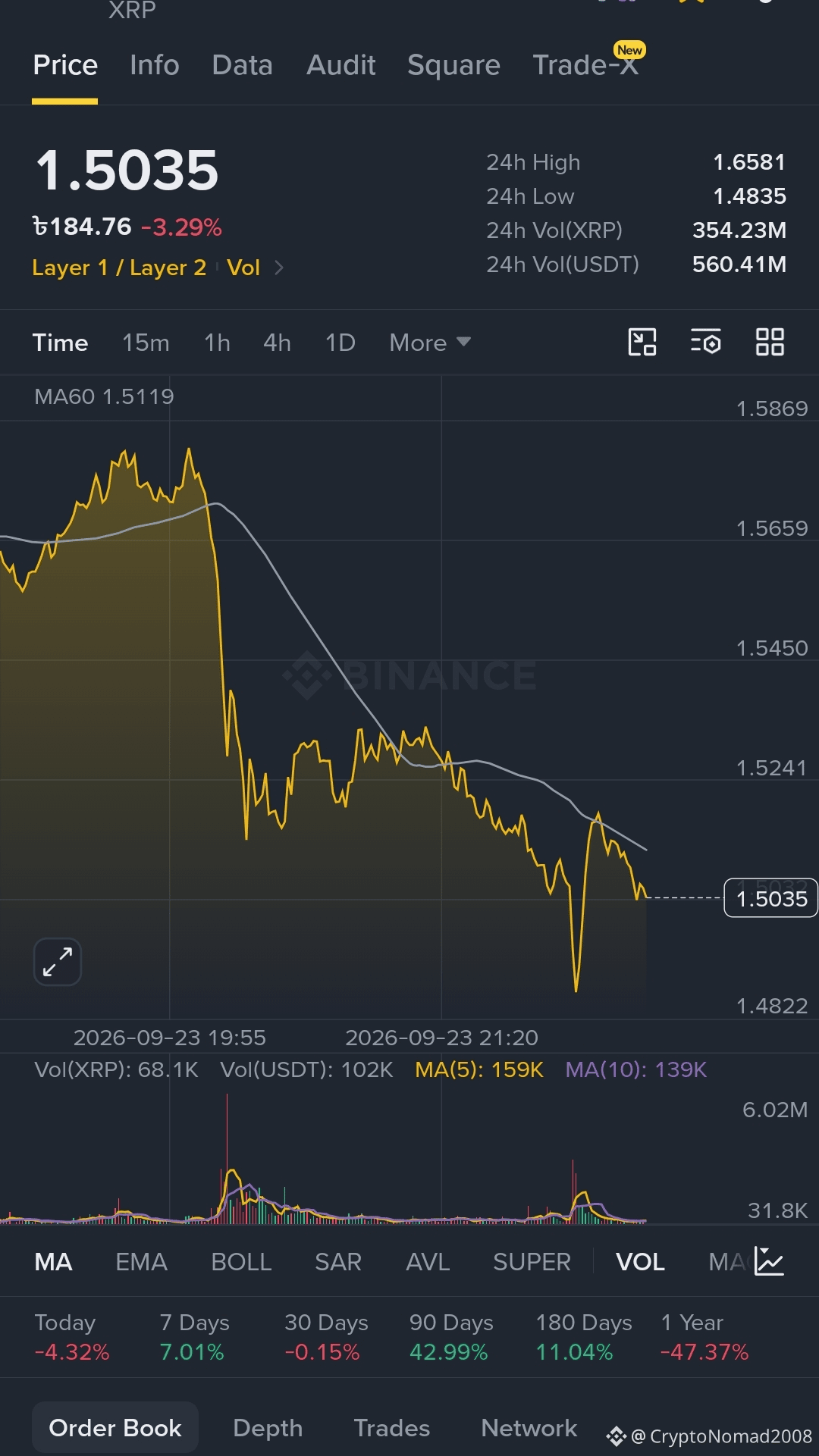
XRP📊 XRP/USDT Market Analysis — Short-Term Bearish Trend 🔴
•Price: $1.5035
•Trend: Bearish
•Support: $1.483–1.482
•Resistance: $1.512–1.524
•Below MA60 → selling pressure remains.
•A break below $1.482 could signal further downside.
•Reclaiming $1.524 would improve the •short-term outlook.
$XRP $XRP Buy
{spot}(XRPUSDT)
#XRPRealityCheck #XRPUSDT🚨 #XRPHACKED #XRPPredictions
XRP📊 XRP/USDT Market Analysis — Short-Term Bearish Trend 🔴
•Price: $1.5035
•Trend: Bearish
•Support: $1.483–1.482
•Resistance: $1.512–1.524
•Below MA60 → selling pressure remains.
•A break below $1.482 could signal further downside.
•Reclaiming $1.524 would improve the •short-term outlook.
$XRP $XRP Buy
#XRPRealityCheck #XRPUSDT🚨 #XRPHACKED #XRPPredictions
•Price: $1.5035
•Trend: Bearish
•Support: $1.483–1.482
•Resistance: $1.512–1.524
•Below MA60 → selling pressure remains.
•A break below $1.482 could signal further downside.
•Reclaiming $1.524 would improve the •short-term outlook.
$XRP $XRP Buy
#XRPRealityCheck #XRPUSDT🚨 #XRPHACKED #XRPPredictions
249

Article
XRP to $2 in the Next Two Months: Can Ripple’s Token Make the Move?XRP reaching $2 within the next two months is possible, but it would require a sustained breakout above key resistance levels and supportive conditions across the wider crypto market. With XRP recently trading around $1.50–$1.65, a move to $2 represents roughly 20%–33% upside—not impossible for a volatile cryptocurrency, but certainly not guaranteed.[1][2]
## Where XRP Stands Now
XRP has had a turbulent 2026. It traded around $1.28–$1.40 earlier in September, then rebounded above $1.50 amid a Bitcoin-led short squeeze. The token remains well below its 2025 high near $3.66, meaning historical evidence shows XRP can trade far above $2 during strong market conditions.[2][3]
For the $2 target to become realistic, XRP first needs to turn recent resistance into support:
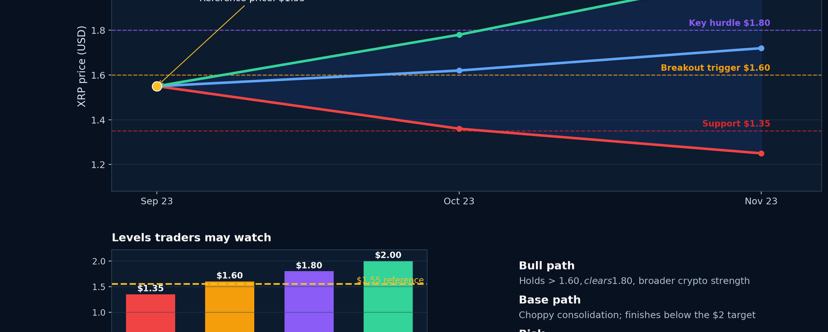
| Price level | Why it matters |
|---|---|
| $1.55–$1.60 | Near-term resistance; a convincing close above it would show buyers are regaining control |
| $1.80 | The next major price shelf; holding above it could put $2 in sight |
| $2.00 | Major psychological target and an important breakout level |
| $1.44–$1.35 | Key downside support area if the rally loses momentum |
Market analysis published this month identifies $1.55 as a crucial near-term barrier and $1.80 as the more meaningful level XRP needs to clear before a serious attack on $2.[4][5]
## The Bull Case for $2
The bullish argument is straightforward: XRP does not need a multi-year transformation to reach $2. From roughly $1.50, it needs a rally of about one-third. Crypto assets can move that far quickly when momentum, liquidity, and positive news arrive together.
Several developments could support that scenario:
- A broader crypto rally: XRP often benefits when Bitcoin holds strength and capital starts rotating into large-cap altcoins. The recent move above $1.50 was linked to a Bitcoin-led short squeeze, showing how quickly improved market sentiment can lift XRP.[2]
- A clean breakout above $1.60: A sustained move through this level could bring technical momentum traders back into the market. The next major level discussed by market analysts is around $1.80.[4][5]
- ETF demand and institutional flows: Stronger demand for XRP investment products could absorb available supply and improve sentiment. One forecast specifically identifies sustained ETF absorption as an important condition for the bullish case.[6]
- Regulatory clarity: Developments around US crypto legislation and the regulatory treatment of XRP can have an outsized impact on price. Recent reporting connected XRP’s short-term outlook to the Federal Reserve and the direction of the CLARITY Act.[7]
- Improving macro conditions: A more risk-friendly environment—such as easing interest-rate pressure or stronger liquidity—would generally help speculative assets, including XRP.
A bullish forecast published on September 23 placed XRP in a possible $1.64–$2.32 range by the end of 2026, with $1.94 as its base-case target. That does not prove XRP will hit $2, but it shows that the target is within the range some market forecasts consider plausible.[6]
## What Could Stop the Rally?
Crypto traders should be careful not to treat a price target as a promise. XRP faces several clear risks during the next two months.
First, the $1.50–$1.60 area may remain difficult to break. Recent commentary warned that without a new catalyst, XRP could struggle to sustain progress above $1.60.[4]
Second, monthly escrow-related supply remains a factor. Ripple releases 1 billion XRP from escrow at the start of each month, although much of it has historically been re-escrowed. Analysts estimate that roughly 200 million to 400 million XRP may enter circulation, creating potential selling pressure if demand is weak.[5]
Third, the wider market matters more than any single XRP chart pattern. A Bitcoin correction, a stronger US dollar, disappointing ETF flows, tighter monetary policy, or negative regulatory headlines could push XRP back toward support near $1.44, $1.35, or lower.[4][8]
## Two-Month XRP Outlook
Here is a practical way to view the next two months:
| Scenario | Possible XRP range | What it would likely require |
|---|---:|---|
| Bearish | $1.20–$1.45 | Market weakness, failed $1.60 breakout, selling pressure or negative macro news |
| Neutral | $1.45–$1.80 | Consolidation, mixed sentiment, no major new catalyst |
| Bullish | $1.80–$2.00+ | Strong crypto market, breakout volume, improved regulatory/institutional sentiment |
| Highly bullish | Above $2 | A sustained move above $1.80 plus strong demand and a broader altcoin rally |
The key idea is simple: $2 is not the first hurdle—$1.60 and then $1.80 are. If XRP breaks those levels with strong trading volume and holds above them, the $2 target could quickly become a realistic market conversation rather than just crypto-community hype.[5]
## Final Take
XRP reaching $2 by late November is a credible bullish possibility, not a certainty. The required percentage gain is relatively modest by crypto standards, and XRP has traded far higher in the past. However, traders should watch whether XRP can establish support above $1.55–$1.60, then overcome the larger $1.80 barrier before expecting a durable move to $2.[3][4][5]
🤑 The bullish headline is exciting: XRP to $2 in two months.
📉 The realistic headline is better: XRP needs confirmation, volume, and favorable market conditions before that target becomes probable.
This article is for informational purposes only and is not financial advice. Cryptocurrency prices are highly volatile; never invest money you cannot afford to lose.
#Xrp🔥🔥 #XRPRealityCheck #xrp
{spot}(XRPUSDT)
XRP to $2 in the Next Two Months: Can Ripple’s Token Make the Move?
XRP reaching $2 within the next two months is possible, but it would require a sustained breakout above key resistance levels and supportive conditions across the wider crypto market. With XRP recently trading around $1.50–$1.65, a move to $2 represents roughly 20%–33% upside—not impossible for a volatile cryptocurrency, but certainly not guaranteed.[1][2]
## Where XRP Stands Now
XRP has had a turbulent 2026. It traded around $1.28–$1.40 earlier in September, then rebounded above $1.50 amid a Bitcoin-led short squeeze. The token remains well below its 2025 high near $3.66, meaning historical evidence shows XRP can trade far above $2 during strong market conditions.[2][3]
For the $2 target to become realistic, XRP first needs to turn recent resistance into support:
| Price level | Why it matters |
|---|---|
| $1.55–$1.60 | Near-term resistance; a convincing close above it would show buyers are regaining control |
| $1.80 | The next major price shelf; holding above it could put $2 in sight |
| $2.00 | Major psychological target and an important breakout level |
| $1.44–$1.35 | Key downside support area if the rally loses momentum |
Market analysis published this month identifies $1.55 as a crucial near-term barrier and $1.80 as the more meaningful level XRP needs to clear before a serious attack on $2.[4][5]
## The Bull Case for $2
The bullish argument is straightforward: XRP does not need a multi-year transformation to reach $2. From roughly $1.50, it needs a rally of about one-third. Crypto assets can move that far quickly when momentum, liquidity, and positive news arrive together.
Several developments could support that scenario:
- A broader crypto rally: XRP often benefits when Bitcoin holds strength and capital starts rotating into large-cap altcoins. The recent move above $1.50 was linked to a Bitcoin-led short squeeze, showing how quickly improved market sentiment can lift XRP.[2]
- A clean breakout above $1.60: A sustained move through this level could bring technical momentum traders back into the market. The next major level discussed by market analysts is around $1.80.[4][5]
- ETF demand and institutional flows: Stronger demand for XRP investment products could absorb available supply and improve sentiment. One forecast specifically identifies sustained ETF absorption as an important condition for the bullish case.[6]
- Regulatory clarity: Developments around US crypto legislation and the regulatory treatment of XRP can have an outsized impact on price. Recent reporting connected XRP’s short-term outlook to the Federal Reserve and the direction of the CLARITY Act.[7]
- Improving macro conditions: A more risk-friendly environment—such as easing interest-rate pressure or stronger liquidity—would generally help speculative assets, including XRP.
A bullish forecast published on September 23 placed XRP in a possible $1.64–$2.32 range by the end of 2026, with $1.94 as its base-case target. That does not prove XRP will hit $2, but it shows that the target is within the range some market forecasts consider plausible.[6]
## What Could Stop the Rally?
Crypto traders should be careful not to treat a price target as a promise. XRP faces several clear risks during the next two months.
First, the $1.50–$1.60 area may remain difficult to break. Recent commentary warned that without a new catalyst, XRP could struggle to sustain progress above $1.60.[4]
Second, monthly escrow-related supply remains a factor. Ripple releases 1 billion XRP from escrow at the start of each month, although much of it has historically been re-escrowed. Analysts estimate that roughly 200 million to 400 million XRP may enter circulation, creating potential selling pressure if demand is weak.[5]
Third, the wider market matters more than any single XRP chart pattern. A Bitcoin correction, a stronger US dollar, disappointing ETF flows, tighter monetary policy, or negative regulatory headlines could push XRP back toward support near $1.44, $1.35, or lower.[4][8]
## Two-Month XRP Outlook
Here is a practical way to view the next two months:
| Scenario | Possible XRP range | What it would likely require |
|---|---:|---|
| Bearish | $1.20–$1.45 | Market weakness, failed $1.60 breakout, selling pressure or negative macro news |
| Neutral | $1.45–$1.80 | Consolidation, mixed sentiment, no major new catalyst |
| Bullish | $1.80–$2.00+ | Strong crypto market, breakout volume, improved regulatory/institutional sentiment |
| Highly bullish | Above $2 | A sustained move above $1.80 plus strong demand and a broader altcoin rally |
The key idea is simple: $2 is not the first hurdle—$1.60 and then $1.80 are. If XRP breaks those levels with strong trading volume and holds above them, the $2 target could quickly become a realistic market conversation rather than just crypto-community hype.[5]
## Final Take
XRP reaching $2 by late November is a credible bullish possibility, not a certainty. The required percentage gain is relatively modest by crypto standards, and XRP has traded far higher in the past. However, traders should watch whether XRP can establish support above $1.55–$1.60, then overcome the larger $1.80 barrier before expecting a durable move to $2.[3][4][5]
🤑 The bullish headline is exciting: XRP to $2 in two months.
📉 The realistic headline is better: XRP needs confirmation, volume, and favorable market conditions before that target becomes probable.
This article is for informational purposes only and is not financial advice. Cryptocurrency prices are highly volatile; never invest money you cannot afford to lose.
#Xrp🔥🔥 #XRPRealityCheck #xrp
## Where XRP Stands Now
XRP has had a turbulent 2026. It traded around $1.28–$1.40 earlier in September, then rebounded above $1.50 amid a Bitcoin-led short squeeze. The token remains well below its 2025 high near $3.66, meaning historical evidence shows XRP can trade far above $2 during strong market conditions.[2][3]
For the $2 target to become realistic, XRP first needs to turn recent resistance into support:
| Price level | Why it matters |
|---|---|
| $1.55–$1.60 | Near-term resistance; a convincing close above it would show buyers are regaining control |
| $1.80 | The next major price shelf; holding above it could put $2 in sight |
| $2.00 | Major psychological target and an important breakout level |
| $1.44–$1.35 | Key downside support area if the rally loses momentum |
Market analysis published this month identifies $1.55 as a crucial near-term barrier and $1.80 as the more meaningful level XRP needs to clear before a serious attack on $2.[4][5]
## The Bull Case for $2
The bullish argument is straightforward: XRP does not need a multi-year transformation to reach $2. From roughly $1.50, it needs a rally of about one-third. Crypto assets can move that far quickly when momentum, liquidity, and positive news arrive together.
Several developments could support that scenario:
- A broader crypto rally: XRP often benefits when Bitcoin holds strength and capital starts rotating into large-cap altcoins. The recent move above $1.50 was linked to a Bitcoin-led short squeeze, showing how quickly improved market sentiment can lift XRP.[2]
- A clean breakout above $1.60: A sustained move through this level could bring technical momentum traders back into the market. The next major level discussed by market analysts is around $1.80.[4][5]
- ETF demand and institutional flows: Stronger demand for XRP investment products could absorb available supply and improve sentiment. One forecast specifically identifies sustained ETF absorption as an important condition for the bullish case.[6]
- Regulatory clarity: Developments around US crypto legislation and the regulatory treatment of XRP can have an outsized impact on price. Recent reporting connected XRP’s short-term outlook to the Federal Reserve and the direction of the CLARITY Act.[7]
- Improving macro conditions: A more risk-friendly environment—such as easing interest-rate pressure or stronger liquidity—would generally help speculative assets, including XRP.
A bullish forecast published on September 23 placed XRP in a possible $1.64–$2.32 range by the end of 2026, with $1.94 as its base-case target. That does not prove XRP will hit $2, but it shows that the target is within the range some market forecasts consider plausible.[6]
## What Could Stop the Rally?
Crypto traders should be careful not to treat a price target as a promise. XRP faces several clear risks during the next two months.
First, the $1.50–$1.60 area may remain difficult to break. Recent commentary warned that without a new catalyst, XRP could struggle to sustain progress above $1.60.[4]
Second, monthly escrow-related supply remains a factor. Ripple releases 1 billion XRP from escrow at the start of each month, although much of it has historically been re-escrowed. Analysts estimate that roughly 200 million to 400 million XRP may enter circulation, creating potential selling pressure if demand is weak.[5]
Third, the wider market matters more than any single XRP chart pattern. A Bitcoin correction, a stronger US dollar, disappointing ETF flows, tighter monetary policy, or negative regulatory headlines could push XRP back toward support near $1.44, $1.35, or lower.[4][8]
## Two-Month XRP Outlook
Here is a practical way to view the next two months:
| Scenario | Possible XRP range | What it would likely require |
|---|---:|---|
| Bearish | $1.20–$1.45 | Market weakness, failed $1.60 breakout, selling pressure or negative macro news |
| Neutral | $1.45–$1.80 | Consolidation, mixed sentiment, no major new catalyst |
| Bullish | $1.80–$2.00+ | Strong crypto market, breakout volume, improved regulatory/institutional sentiment |
| Highly bullish | Above $2 | A sustained move above $1.80 plus strong demand and a broader altcoin rally |
The key idea is simple: $2 is not the first hurdle—$1.60 and then $1.80 are. If XRP breaks those levels with strong trading volume and holds above them, the $2 target could quickly become a realistic market conversation rather than just crypto-community hype.[5]
## Final Take
XRP reaching $2 by late November is a credible bullish possibility, not a certainty. The required percentage gain is relatively modest by crypto standards, and XRP has traded far higher in the past. However, traders should watch whether XRP can establish support above $1.55–$1.60, then overcome the larger $1.80 barrier before expecting a durable move to $2.[3][4][5]
🤑 The bullish headline is exciting: XRP to $2 in two months.
📉 The realistic headline is better: XRP needs confirmation, volume, and favorable market conditions before that target becomes probable.
This article is for informational purposes only and is not financial advice. Cryptocurrency prices are highly volatile; never invest money you cannot afford to lose.
#Xrp🔥🔥 #XRPRealityCheck #xrp
206 Atlas:
Twenty percent upside in two months is a high bar. The post acknowledges this isn't guaranteed, so why frame it as a likely target rather than a speculative outlier?
1
1.1k

🚨 XRP IS BACK IN THE SPOTLIGHT
A fresh wave of speculation is building around $XRP after reports attributed to Tom Lee suggested that XRP could create millionaires within the next 90 days.
Big claim? Absolutely. But predictions are just predictions.
What matters now is whether XRP can turn the growing attention, market momentum, and investor expectations into real price action.
👀 The next few months could be interesting.
Will $XRP prove the hype right — or will the market remind everyone that crypto never guarantees an outcome?
#XRP #Ripple #CryptoTrends2024 #CryptonewswithJack #XRPRealityCheck
$XRP
{future}(XRPUSDT)
🚨 XRP IS BACK IN THE SPOTLIGHT
A fresh wave of speculation is building around $XRP after reports attributed to Tom Lee suggested that XRP could create millionaires within the next 90 days.
Big claim? Absolutely. But predictions are just predictions.
What matters now is whether XRP can turn the growing attention, market momentum, and investor expectations into real price action.
👀 The next few months could be interesting.
Will $XRP prove the hype right — or will the market remind everyone that crypto never guarantees an outcome?
#XRP #Ripple #CryptoTrends2024 #CryptonewswithJack #XRPRealityCheck
$XRP
A fresh wave of speculation is building around $XRP after reports attributed to Tom Lee suggested that XRP could create millionaires within the next 90 days.
Big claim? Absolutely. But predictions are just predictions.
What matters now is whether XRP can turn the growing attention, market momentum, and investor expectations into real price action.
👀 The next few months could be interesting.
Will $XRP prove the hype right — or will the market remind everyone that crypto never guarantees an outcome?
#XRP #Ripple #CryptoTrends2024 #CryptonewswithJack #XRPRealityCheck
$XRP

206 Atlas:
Tom Lee’s macro calls rarely map to XRP’s actual liquidity constraints. The 0.618 level is technical noise without volume; speculation doesn't override structure.
1
984
·
--
🚨 $XRP MARKET UPDATE
XRP is showing strong recent momentum and remains one of the active large-cap coins in the current market.
📌 Key Level: $1.60
📌 Resistance: Recent highs
📌 Momentum: Bullish
Holding above $1.60 could support continued strength, while rejection from higher levels may lead to a short-term correction.
#XRPRealityCheck #AIStocksWhatNext
🚨 $XRP MARKET UPDATE
XRP is showing strong recent momentum and remains one of the active large-cap coins in the current market.
📌 Key Level: $1.60
📌 Resistance: Recent highs
📌 Momentum: Bullish
Holding above $1.60 could support continued strength, while rejection from higher levels may lead to a short-term correction.
#XRPRealityCheck #AIStocksWhatNext
XRP is showing strong recent momentum and remains one of the active large-cap coins in the current market.
📌 Key Level: $1.60
📌 Resistance: Recent highs
📌 Momentum: Bullish
Holding above $1.60 could support continued strength, while rejection from higher levels may lead to a short-term correction.
#XRPRealityCheck #AIStocksWhatNext
2
272

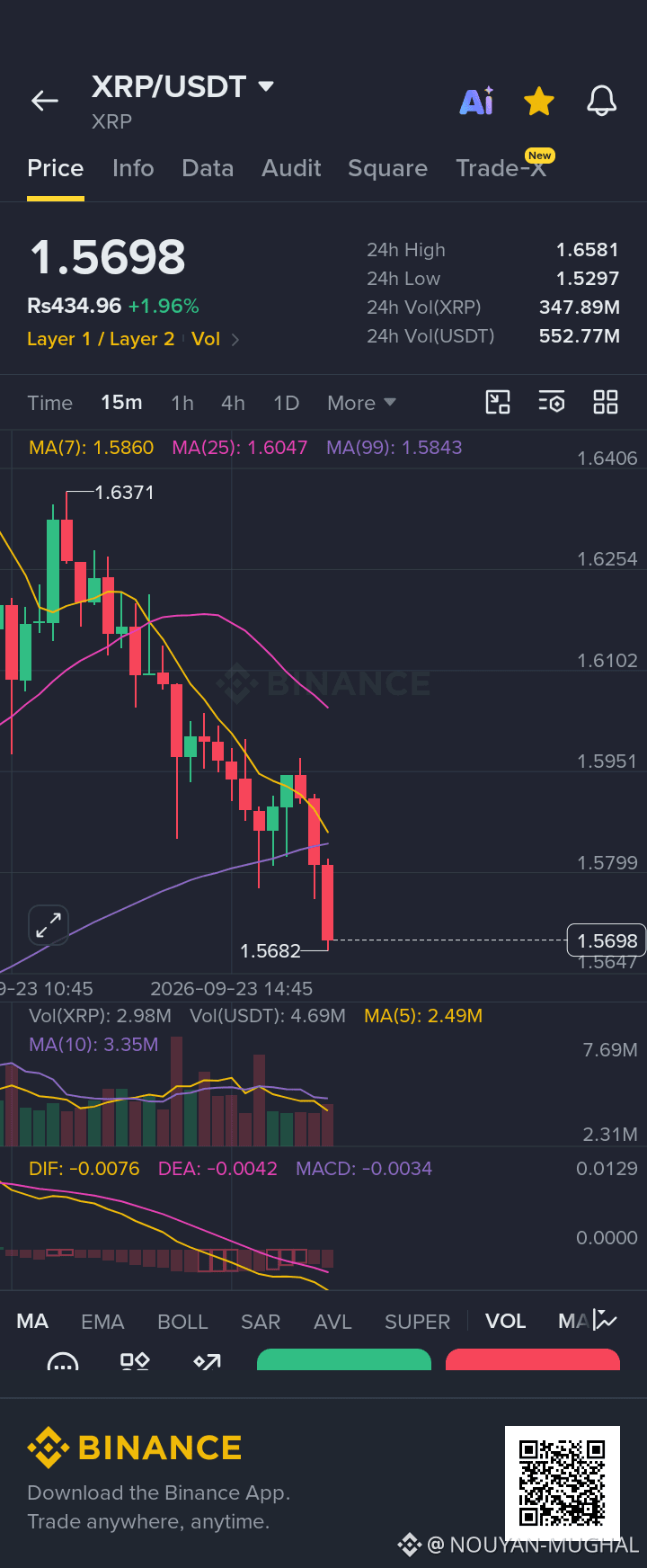
$XRP Setup
Price: 1.5698
Trend: Bearish 📉
MA structure: Price is below MA(7), MA(25) and MA(99)
MACD: Negative, showing continued downside momentum
Support: 1.5682–1.5647
Resistance: 1.5799–1.5860
Possible Futures setup — SHORT
Entry: 1.5750–1.5820
TP1: 1.5680
TP2: 1.5600
TP3: 1.5500
SL: 1.5910
⚠️ Current candle is already near support, so chasing the short at 1.5698 is risky. Better to wait for a small pullback/rejection toward the entry zone.
#xrp #XRPRealityCheck #NOUYANMUGHAL #NOUYANMUGHALSIGNALS #NOUYANMUGHALCOMPLETE30KFOLLOWER
$XRP Setup
Price: 1.5698
Trend: Bearish 📉
MA structure: Price is below MA(7), MA(25) and MA(99)
MACD: Negative, showing continued downside momentum
Support: 1.5682–1.5647
Resistance: 1.5799–1.5860
Possible Futures setup — SHORT
Entry: 1.5750–1.5820
TP1: 1.5680
TP2: 1.5600
TP3: 1.5500
SL: 1.5910
⚠️ Current candle is already near support, so chasing the short at 1.5698 is risky. Better to wait for a small pullback/rejection toward the entry zone.
#xrp #XRPRealityCheck #NOUYANMUGHAL #NOUYANMUGHALSIGNALS #NOUYANMUGHALCOMPLETE30KFOLLOWER
Price: 1.5698
Trend: Bearish 📉
MA structure: Price is below MA(7), MA(25) and MA(99)
MACD: Negative, showing continued downside momentum
Support: 1.5682–1.5647
Resistance: 1.5799–1.5860
Possible Futures setup — SHORT
Entry: 1.5750–1.5820
TP1: 1.5680
TP2: 1.5600
TP3: 1.5500
SL: 1.5910
⚠️ Current candle is already near support, so chasing the short at 1.5698 is risky. Better to wait for a small pullback/rejection toward the entry zone.
#xrp #XRPRealityCheck #NOUYANMUGHAL #NOUYANMUGHALSIGNALS #NOUYANMUGHALCOMPLETE30KFOLLOWER
1
212

·
--
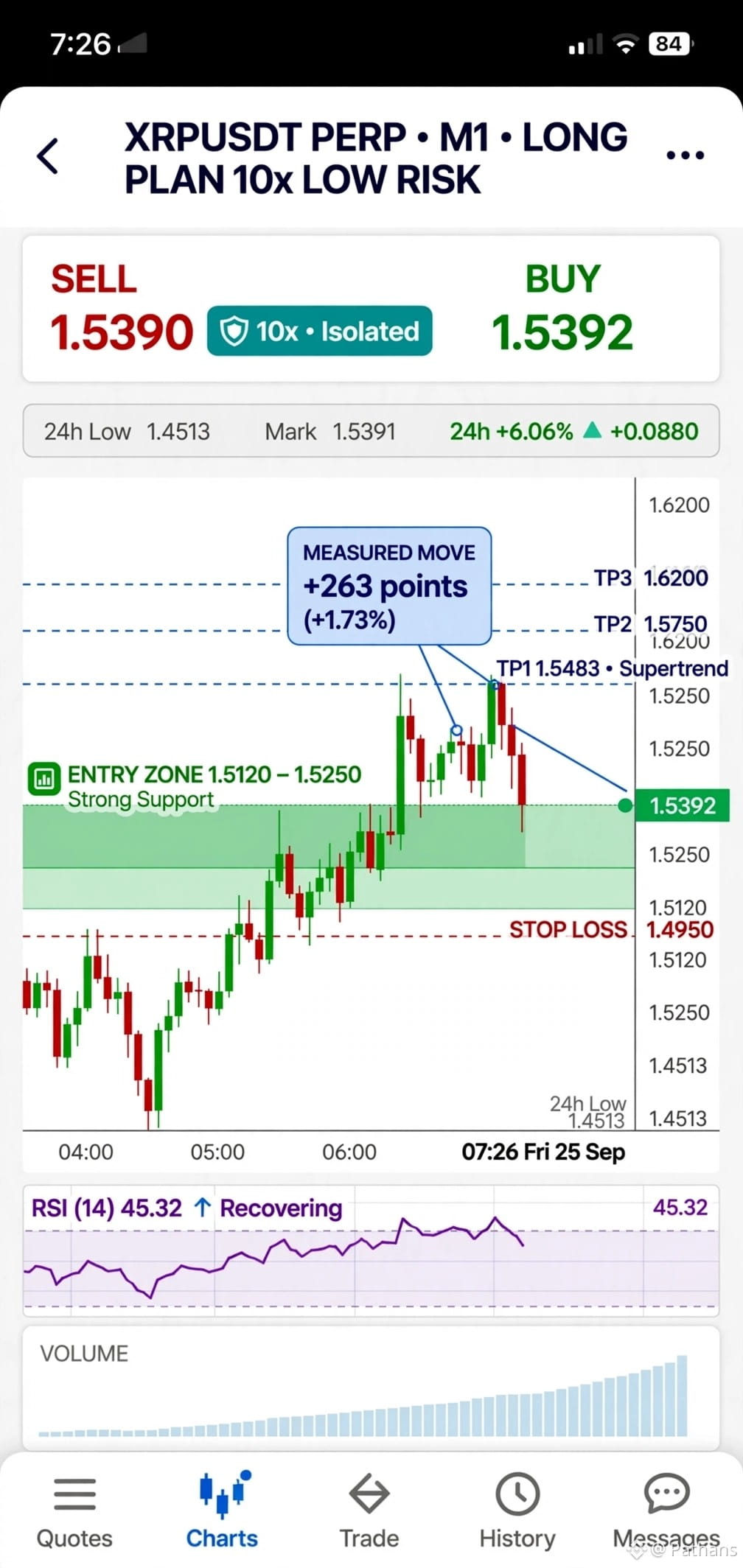
$XRP #XRPRealityCheck Yeah, bro! After booking the short profit, here’s the *NEXT LOW-RISK PLAN* — Not 100x now, only *10x Isolated* 👇
NEXT PLAN — 10x LONG ONLY
You placed a short band at 1.5392, and now the price is right there *1.5392 (+1.12%)*. It bounced back from the 24h Low at 1.4513.
*ENTRY ZONE: 1.5120 - 1.5250*
- This is strong support where the bounce started. Now the market is above, so place *limit orders at 1.5250 and 1.5150*. Don’t buy at 1.5392 in FOMO.
*STOP LOSS: 1.4950*
- Below the 24h low bounce zone. If it goes below, the long fails—so exit from here.
*TAKE PROFIT:*
- *TP1: 1.5483 (Supertrend)* — The same S level as your previous chart; book 50% here
- *TP2: 1.5750* — Next resistance
- *TP3: 1.6200* — Full bounce target
*RSI 45* — Recovering from oversold, room to move up.
*Risk to Reward = 1 : 2.8 to 1 : 5.1* — Meaning: risk 1 USDT for 2.8 to 5 USDT profit.
How to place it on Binance (at 10x):
1. First set Leverage to *10x Isolated* (from 100x)
2. *Stop Limit Buy:*
- Stop 1.5260 / Limit 1.5250 — Size 50%
- Stop 1.5160 / Limit 1.5150 — Size 50%
3. *Stop Loss:* Stop Market 1.4950 — 100% — Reduce Only ON
$XRP #XRPRealityCheck Yeah, bro! After booking the short profit, here’s the *NEXT LOW-RISK PLAN* — Not 100x now, only *10x Isolated* 👇
NEXT PLAN — 10x LONG ONLY
You placed a short band at 1.5392, and now the price is right there *1.5392 (+1.12%)*. It bounced back from the 24h Low at 1.4513.
*ENTRY ZONE: 1.5120 - 1.5250*
- This is strong support where the bounce started. Now the market is above, so place *limit orders at 1.5250 and 1.5150*. Don’t buy at 1.5392 in FOMO.
*STOP LOSS: 1.4950*
- Below the 24h low bounce zone. If it goes below, the long fails—so exit from here.
*TAKE PROFIT:*
- *TP1: 1.5483 (Supertrend)* — The same S level as your previous chart; book 50% here
- *TP2: 1.5750* — Next resistance
- *TP3: 1.6200* — Full bounce target
*RSI 45* — Recovering from oversold, room to move up.
*Risk to Reward = 1 : 2.8 to 1 : 5.1* — Meaning: risk 1 USDT for 2.8 to 5 USDT profit.
How to place it on Binance (at 10x):
1. First set Leverage to *10x Isolated* (from 100x)
2. *Stop Limit Buy:*
- Stop 1.5260 / Limit 1.5250 — Size 50%
- Stop 1.5160 / Limit 1.5150 — Size 50%
3. *Stop Loss:* Stop Market 1.4950 — 100% — Reduce Only ON
NEXT PLAN — 10x LONG ONLY
You placed a short band at 1.5392, and now the price is right there *1.5392 (+1.12%)*. It bounced back from the 24h Low at 1.4513.
*ENTRY ZONE: 1.5120 - 1.5250*
- This is strong support where the bounce started. Now the market is above, so place *limit orders at 1.5250 and 1.5150*. Don’t buy at 1.5392 in FOMO.
*STOP LOSS: 1.4950*
- Below the 24h low bounce zone. If it goes below, the long fails—so exit from here.
*TAKE PROFIT:*
- *TP1: 1.5483 (Supertrend)* — The same S level as your previous chart; book 50% here
- *TP2: 1.5750* — Next resistance
- *TP3: 1.6200* — Full bounce target
*RSI 45* — Recovering from oversold, room to move up.
*Risk to Reward = 1 : 2.8 to 1 : 5.1* — Meaning: risk 1 USDT for 2.8 to 5 USDT profit.
How to place it on Binance (at 10x):
1. First set Leverage to *10x Isolated* (from 100x)
2. *Stop Limit Buy:*
- Stop 1.5260 / Limit 1.5250 — Size 50%
- Stop 1.5160 / Limit 1.5150 — Size 50%
3. *Stop Loss:* Stop Market 1.4950 — 100% — Reduce Only ON
62
·
--

Article
XRP is Ripple's fast payment coin. Price ~$1.50. Fast, low fees, EU regulated. Long term strong. $XRXRP is the fast payment coin of Ripple.
Price around $1.50 in Sept 2026.
It settles in 3 seconds with low fees and is now fully regulated in EU.
Strong project for long term.
$XRP #XRPRealityCheck #XRPUSDT🚨 #XRPViral
XRP is Ripple's fast payment coin. Price ~$1.50. Fast, low fees, EU regulated. Long term strong. $XR
XRP is the fast payment coin of Ripple.
Price around $1.50 in Sept 2026.
It settles in 3 seconds with low fees and is now fully regulated in EU.
Strong project for long term.
$XRP #XRPRealityCheck #XRPUSDT🚨 #XRPViral
Price around $1.50 in Sept 2026.
It settles in 3 seconds with low fees and is now fully regulated in EU.
Strong project for long term.
$XRP #XRPRealityCheck #XRPUSDT🚨 #XRPViral
206 Atlas:
Regulation is nice, but XRP's price action has been range-bound for years. Why should 2026 be different from the last cycle?
2
5
737

·
--
Bullish
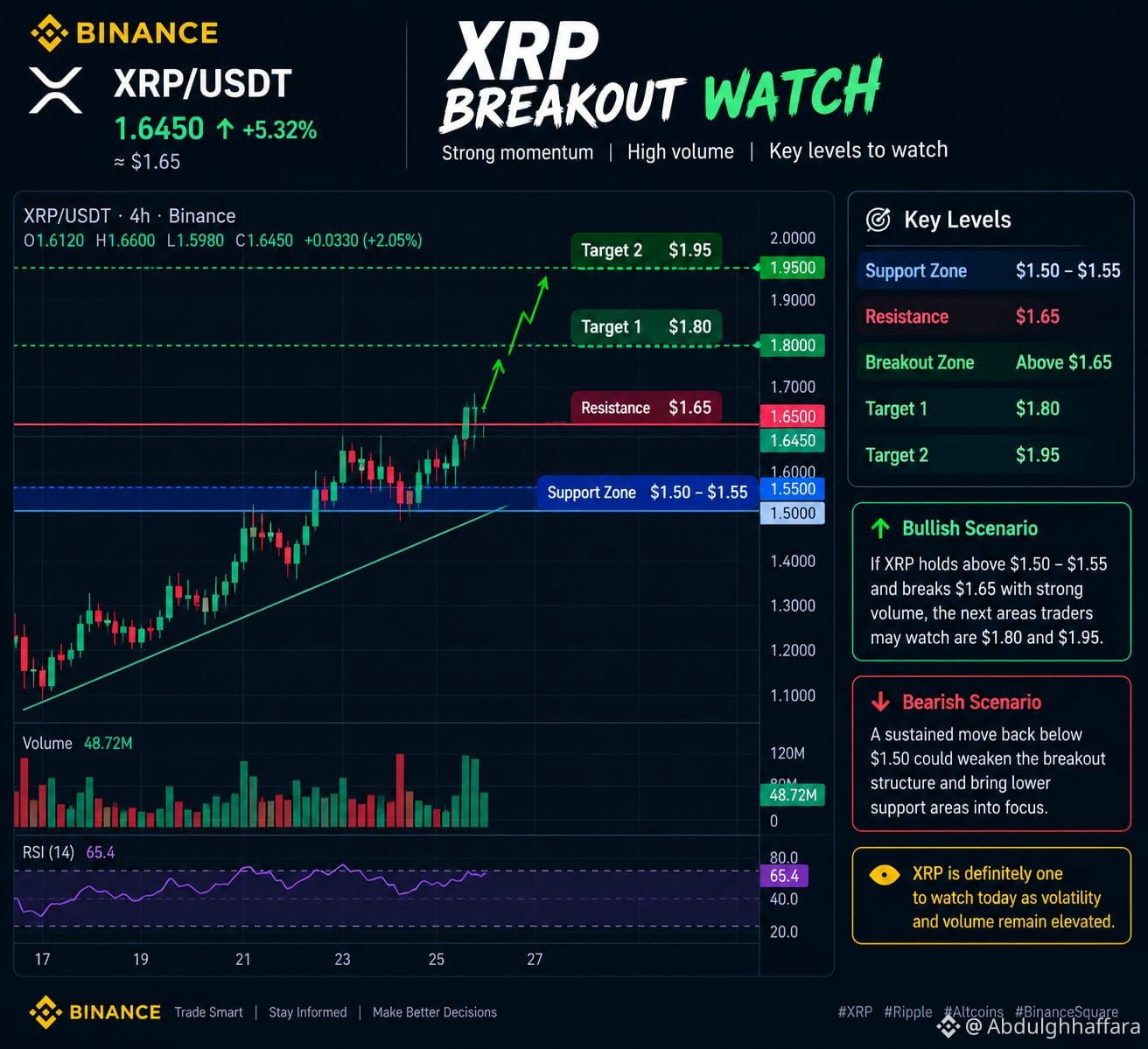
$XRP IS AT A MAKE-OR-BREAK LEVEL! 🚨
$1.65 is the key zone 👀
Break it with strong volume → $1.80 could come into focus, with $1.95 as the next major target. 📈🔥
But if XRP loses the $1.50–$1.55 support zone, the bullish setup could weaken. ⚠️
Are you watching this breakout? 👀
XRP is showing strong momentum after pushing above the $1.50 area. Today’s price action has reached around $1.65, with trading volume also elevated.
📊 Key Levels: • Support: $1.50–$1.55 • Resistance: $1.65 • Breakout zone: Above $1.65 • Next upside levels: $1.80 → $1.95
🔥 Bullish Scenario: If XRP holds above $1.50–$1.55 and breaks $1.65 with strong volume, the next areas traders may watch are $1.80 and $1.95.
⚠️ Bearish Scenario: A sustained move back below $1.50 could weaken the breakout structure and bring lower support areas into focus.#XRPRealityCheck
{spot}(XRPUSDT)
$XRP IS AT A MAKE-OR-BREAK LEVEL! 🚨
$1.65 is the key zone 👀
Break it with strong volume → $1.80 could come into focus, with $1.95 as the next major target. 📈🔥
But if XRP loses the $1.50–$1.55 support zone, the bullish setup could weaken. ⚠️
Are you watching this breakout? 👀
XRP is showing strong momentum after pushing above the $1.50 area. Today’s price action has reached around $1.65, with trading volume also elevated.
📊 Key Levels: • Support: $1.50–$1.55 • Resistance: $1.65 • Breakout zone: Above $1.65 • Next upside levels: $1.80 → $1.95
🔥 Bullish Scenario: If XRP holds above $1.50–$1.55 and breaks $1.65 with strong volume, the next areas traders may watch are $1.80 and $1.95.
⚠️ Bearish Scenario: A sustained move back below $1.50 could weaken the breakout structure and bring lower support areas into focus.#XRPRealityCheck
$1.65 is the key zone 👀
Break it with strong volume → $1.80 could come into focus, with $1.95 as the next major target. 📈🔥
But if XRP loses the $1.50–$1.55 support zone, the bullish setup could weaken. ⚠️
Are you watching this breakout? 👀
XRP is showing strong momentum after pushing above the $1.50 area. Today’s price action has reached around $1.65, with trading volume also elevated.
📊 Key Levels: • Support: $1.50–$1.55 • Resistance: $1.65 • Breakout zone: Above $1.65 • Next upside levels: $1.80 → $1.95
🔥 Bullish Scenario: If XRP holds above $1.50–$1.55 and breaks $1.65 with strong volume, the next areas traders may watch are $1.80 and $1.95.
⚠️ Bearish Scenario: A sustained move back below $1.50 could weaken the breakout structure and bring lower support areas into focus.#XRPRealityCheck
92

·
--
🚨 A SHIFT IN MOMENTUM IS GETTING HARD TO IGNORE
The market is starting to pay closer attention as $XRP continues to show strong price action.
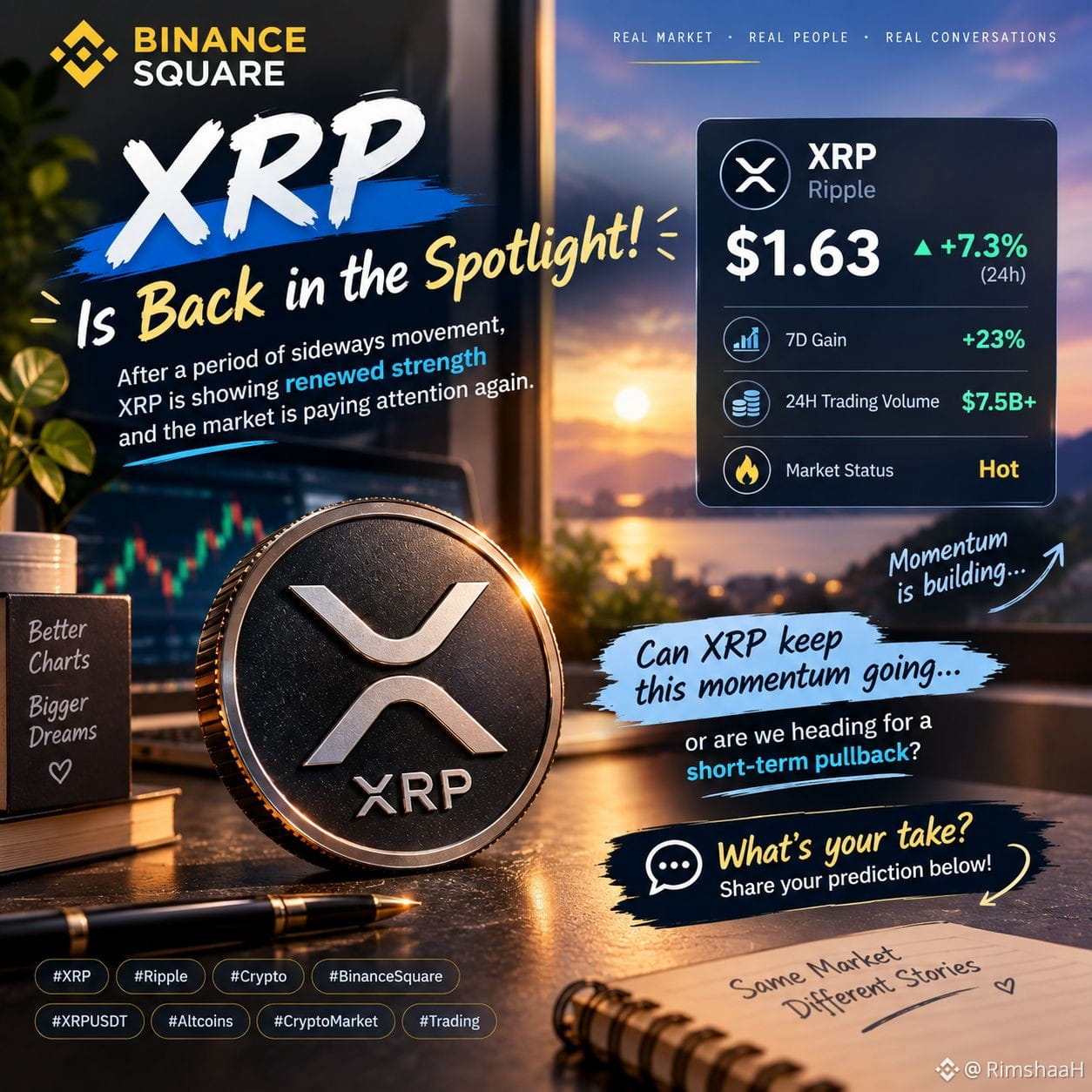
According to Binance’s current market data, the token is trading around $1.63, up about 6.9% over the past 24 hours, with approximately $7.5B in 24-hour trading volume.
Binance
What makes this move particularly interesting is the combination of rising price and substantial trading activity. After a strong move, however, the market can go either way—continued momentum or a period of consolidation and profit-taking.
📌 Key levels and signals worth watching: • Current price: ~$1.63
• 24H change: ~+6.9%
• 24H volume: ~$7.5B
• Recent momentum remains positive
The next few sessions could provide a clearer picture of whether this strength can be sustained.
{spot}(XRPUSDT)
What are you watching from here?
🚀 Continued momentum
📊 Consolidation
📉 Short-term correction
Share your market view below. 👇
#XRPRealityCheck #BinanceSquare #CryptoMarket
🚨 A SHIFT IN MOMENTUM IS GETTING HARD TO IGNORE
The market is starting to pay closer attention as $XRP continues to show strong price action.
According to Binance’s current market data, the token is trading around $1.63, up about 6.9% over the past 24 hours, with approximately $7.5B in 24-hour trading volume.
Binance
What makes this move particularly interesting is the combination of rising price and substantial trading activity. After a strong move, however, the market can go either way—continued momentum or a period of consolidation and profit-taking.
📌 Key levels and signals worth watching: • Current price: ~$1.63
• 24H change: ~+6.9%
• 24H volume: ~$7.5B
• Recent momentum remains positive
The next few sessions could provide a clearer picture of whether this strength can be sustained.
What are you watching from here?
🚀 Continued momentum
📊 Consolidation
📉 Short-term correction
Share your market view below. 👇
#XRPRealityCheck #BinanceSquare #CryptoMarket
The market is starting to pay closer attention as $XRP continues to show strong price action.
According to Binance’s current market data, the token is trading around $1.63, up about 6.9% over the past 24 hours, with approximately $7.5B in 24-hour trading volume.
Binance
What makes this move particularly interesting is the combination of rising price and substantial trading activity. After a strong move, however, the market can go either way—continued momentum or a period of consolidation and profit-taking.
📌 Key levels and signals worth watching: • Current price: ~$1.63
• 24H change: ~+6.9%
• 24H volume: ~$7.5B
• Recent momentum remains positive
The next few sessions could provide a clearer picture of whether this strength can be sustained.
What are you watching from here?
🚀 Continued momentum
📊 Consolidation
📉 Short-term correction
Share your market view below. 👇
#XRPRealityCheck #BinanceSquare #CryptoMarket
111

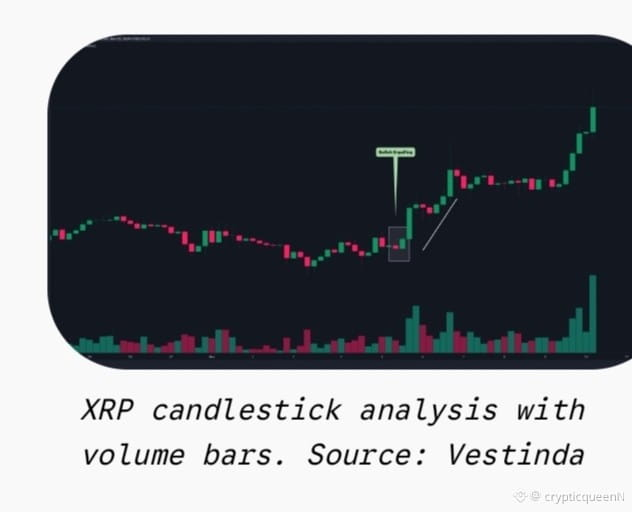
$XRP While retail traders scramble to chase high-volatility breakout momentum, $XRP continues its methodical structural recovery, reclaiming the $1.50 level and testing local resistance near $1.57.
Accumulation Phase ($1.25–$1.30): Fear and low volume created ideal value entries for long-term position builders.
The immediate pivot to watch is the $1.60–$1.70 supply zone. A clean high-volume breakout and higher-low confirmation above this range would clear the path for macro continuation, while a rejection likely signals further range-bound consolidation.
#xrp
#XRPRealityCheck
#DogecoinRises15%
{spot}(XRPUSDT)
{spot}(BTCUSDT)
$XRP While retail traders scramble to chase high-volatility breakout momentum, $XRP continues its methodical structural recovery, reclaiming the $1.50 level and testing local resistance near $1.57.
Accumulation Phase ($1.25–$1.30): Fear and low volume created ideal value entries for long-term position builders.
The immediate pivot to watch is the $1.60–$1.70 supply zone. A clean high-volume breakout and higher-low confirmation above this range would clear the path for macro continuation, while a rejection likely signals further range-bound consolidation.
#xrp
#XRPRealityCheck
#DogecoinRises15%
Accumulation Phase ($1.25–$1.30): Fear and low volume created ideal value entries for long-term position builders.
The immediate pivot to watch is the $1.60–$1.70 supply zone. A clean high-volume breakout and higher-low confirmation above this range would clear the path for macro continuation, while a rejection likely signals further range-bound consolidation.
#xrp
#XRPRealityCheck
#DogecoinRises15%
128

$XRP
{future}(XRPUSDT)
XRP/USDT Momentum Surge — Bulls Challenge Fresh Highs ◆━━━━━━━━━━━━━━━━━━━━━━━━━━━━━━━━◆
✔︎ Market Overview
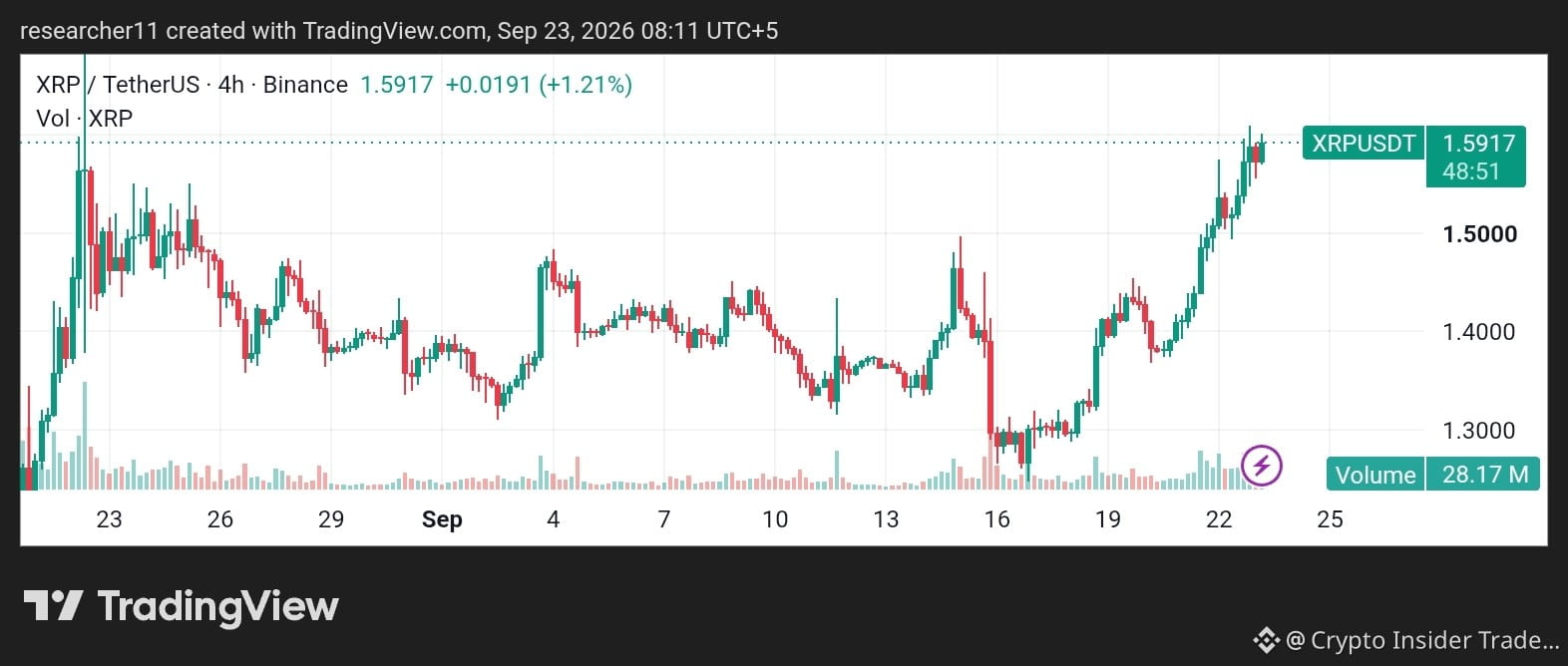
XRP/USDT is trading near $1.5917 (+1.21%) on the 4H chart. Following a strong rebound from the $1.27 region, XRP has gained nearly 25%, reclaiming bullish momentum and approaching fresh short-term highs.
◆━━━━━━━━━━━━━━━━━━━━━━━━━━━━━━━━◆
➤ Technical Analysis
✔︎ Strong V-shaped recovery confirms renewed buying pressure
✔︎ Price has broken above a lengthy consolidation range
✔︎ Trading comfortably above key short-term moving averages
✔︎ Breakout volume supports the strength of the rally
✔︎ Momentum remains elevated, though short-term cooling is possible
◆━━━━━━━━━━━━━━━━━━━━━━━━━━━━━━━━◆
➤ Scenario Analysis
🟢 Bullish: Sustained strength above $1.55 may drive XRP toward $1.65–$1.70
🔴 Bearish: A drop below $1.48 could invite profit-taking toward $1.40
⚪ Neutral: Sideways movement between $1.48–$1.59 while momentum stabilizes
◆━━━━━━━━━━━━━━━━━━━━━━━━━━━━━━━━◆
➤ Key Levels
✔︎ Resistance: $1.65 | $1.70
✔︎ Support: $1.48 | $1.40
◆━━━━━━━━━━━━━━━━━━━━━━━━━━━━━━━━◆
➤ Market Context
Bitcoin's recovery above major resistance levels has improved risk appetite across the market, helping XRP maintain strong bullish sentiment.
◆━━━━━━━━━━━━━━━━━━━━━━━━━━━━━━━━◆
🔍 Final Thoughts
XRP remains one of the stronger performers among large-cap cryptocurrencies. Traders will be watching whether buyers can maintain momentum above key support levels.
#XRPRealityCheck #XRPGoal
$XRP
XRP/USDT Momentum Surge — Bulls Challenge Fresh Highs ◆━━━━━━━━━━━━━━━━━━━━━━━━━━━━━━━━◆
✔︎ Market Overview
XRP/USDT is trading near $1.5917 (+1.21%) on the 4H chart. Following a strong rebound from the $1.27 region, XRP has gained nearly 25%, reclaiming bullish momentum and approaching fresh short-term highs.
◆━━━━━━━━━━━━━━━━━━━━━━━━━━━━━━━━◆
➤ Technical Analysis
✔︎ Strong V-shaped recovery confirms renewed buying pressure
✔︎ Price has broken above a lengthy consolidation range
✔︎ Trading comfortably above key short-term moving averages
✔︎ Breakout volume supports the strength of the rally
✔︎ Momentum remains elevated, though short-term cooling is possible
◆━━━━━━━━━━━━━━━━━━━━━━━━━━━━━━━━◆
➤ Scenario Analysis
🟢 Bullish: Sustained strength above $1.55 may drive XRP toward $1.65–$1.70
🔴 Bearish: A drop below $1.48 could invite profit-taking toward $1.40
⚪ Neutral: Sideways movement between $1.48–$1.59 while momentum stabilizes
◆━━━━━━━━━━━━━━━━━━━━━━━━━━━━━━━━◆
➤ Key Levels
✔︎ Resistance: $1.65 | $1.70
✔︎ Support: $1.48 | $1.40
◆━━━━━━━━━━━━━━━━━━━━━━━━━━━━━━━━◆
➤ Market Context
Bitcoin's recovery above major resistance levels has improved risk appetite across the market, helping XRP maintain strong bullish sentiment.
◆━━━━━━━━━━━━━━━━━━━━━━━━━━━━━━━━◆
🔍 Final Thoughts
XRP remains one of the stronger performers among large-cap cryptocurrencies. Traders will be watching whether buyers can maintain momentum above key support levels.
#XRPRealityCheck #XRPGoal
XRP/USDT Momentum Surge — Bulls Challenge Fresh Highs ◆━━━━━━━━━━━━━━━━━━━━━━━━━━━━━━━━◆
✔︎ Market Overview
XRP/USDT is trading near $1.5917 (+1.21%) on the 4H chart. Following a strong rebound from the $1.27 region, XRP has gained nearly 25%, reclaiming bullish momentum and approaching fresh short-term highs.
◆━━━━━━━━━━━━━━━━━━━━━━━━━━━━━━━━◆
➤ Technical Analysis
✔︎ Strong V-shaped recovery confirms renewed buying pressure
✔︎ Price has broken above a lengthy consolidation range
✔︎ Trading comfortably above key short-term moving averages
✔︎ Breakout volume supports the strength of the rally
✔︎ Momentum remains elevated, though short-term cooling is possible
◆━━━━━━━━━━━━━━━━━━━━━━━━━━━━━━━━◆
➤ Scenario Analysis
🟢 Bullish: Sustained strength above $1.55 may drive XRP toward $1.65–$1.70
🔴 Bearish: A drop below $1.48 could invite profit-taking toward $1.40
⚪ Neutral: Sideways movement between $1.48–$1.59 while momentum stabilizes
◆━━━━━━━━━━━━━━━━━━━━━━━━━━━━━━━━◆
➤ Key Levels
✔︎ Resistance: $1.65 | $1.70
✔︎ Support: $1.48 | $1.40
◆━━━━━━━━━━━━━━━━━━━━━━━━━━━━━━━━◆
➤ Market Context
Bitcoin's recovery above major resistance levels has improved risk appetite across the market, helping XRP maintain strong bullish sentiment.
◆━━━━━━━━━━━━━━━━━━━━━━━━━━━━━━━━◆
🔍 Final Thoughts
XRP remains one of the stronger performers among large-cap cryptocurrencies. Traders will be watching whether buyers can maintain momentum above key support levels.
#XRPRealityCheck #XRPGoal
39

Friends, don’t panic! Yes, XRP has locally fallen to $1.50, but on the charts it looks like a classic, healthy correction before a powerful surge upward. A strong boost is inevitable, and the current pullback is a gift for those who didn’t manage to buy earlier. Learn from my mistakes: I entered the position a bit earlier at $1.60 and I’m currently sitting in a small drawdown. But I’m completely calm and I’m not going to lock in a loss, because the overall trend remains bullish. #XRP #XRPRealityCheck
{spot}(XRPUSDT)
Friends, don’t panic! Yes, XRP has locally fallen to $1.50, but on the charts it looks like a classic, healthy correction before a powerful surge upward. A strong boost is inevitable, and the current pullback is a gift for those who didn’t manage to buy earlier. Learn from my mistakes: I entered the position a bit earlier at $1.60 and I’m currently sitting in a small drawdown. But I’m completely calm and I’m not going to lock in a loss, because the overall trend remains bullish. #XRP #XRPRealityCheck
Скоро бычий рост 🔥
80%
Корректировка будет долгой 🧊
20%
15 votes • Voting closed
1
4
870

·
--
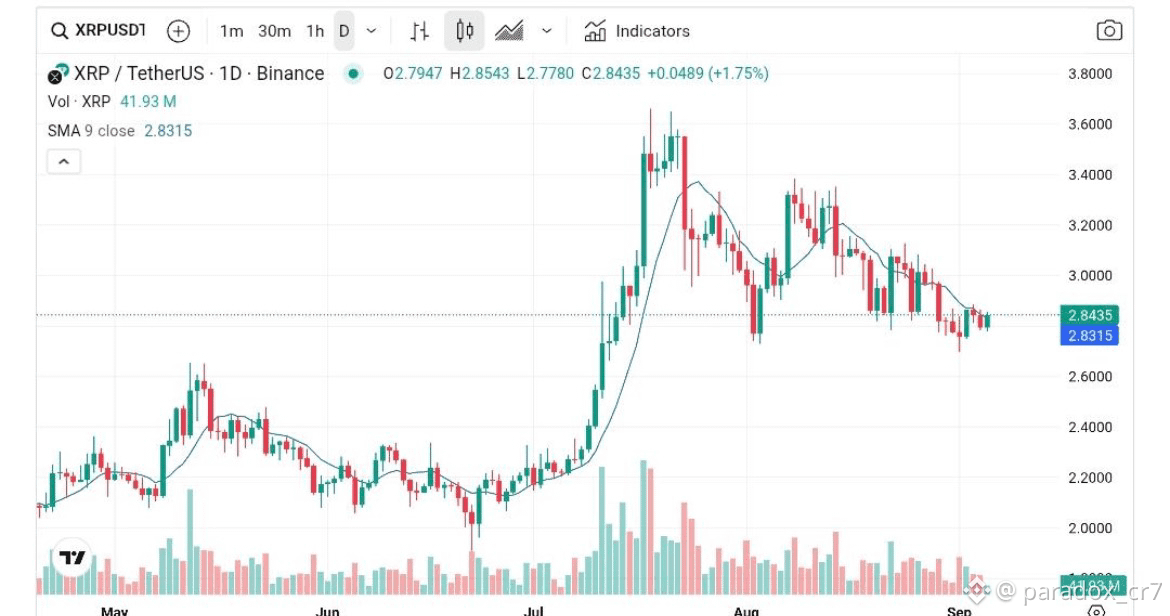
$XRP XRP is trading around $1.50–$1.57. On September 21, XRP jumped about 8.9%, reaching roughly $1.57, before pulling back around 2% on September 22.
* Support: ~$1.50, then ~$1.40
* Resistance: ~$1.57, followed by ~$1.70
* Momentum: Short-term momentum has improved, but XRP needs to hold above $1.50 to maintain the recent bullish structure.
* Risk: A break below $1.50 could bring renewed selling pressure toward the $1.40 area.
Bottom line: XRP is at an important short-term level around $1.50–$1.57. Watch the reaction around these levels rather than relying on a single price target.#AIStocksWhatNext #Xrp🔥🔥#XRPRealityCheck #AIStocksWhatNext
{spot}(XRPUSDT)
$XRP XRP is trading around $1.50–$1.57. On September 21, XRP jumped about 8.9%, reaching roughly $1.57, before pulling back around 2% on September 22.
* Support: ~$1.50, then ~$1.40
* Resistance: ~$1.57, followed by ~$1.70
* Momentum: Short-term momentum has improved, but XRP needs to hold above $1.50 to maintain the recent bullish structure.
* Risk: A break below $1.50 could bring renewed selling pressure toward the $1.40 area.
Bottom line: XRP is at an important short-term level around $1.50–$1.57. Watch the reaction around these levels rather than relying on a single price target.#AIStocksWhatNext #Xrp🔥🔥#XRPRealityCheck #AIStocksWhatNext
* Support: ~$1.50, then ~$1.40
* Resistance: ~$1.57, followed by ~$1.70
* Momentum: Short-term momentum has improved, but XRP needs to hold above $1.50 to maintain the recent bullish structure.
* Risk: A break below $1.50 could bring renewed selling pressure toward the $1.40 area.
Bottom line: XRP is at an important short-term level around $1.50–$1.57. Watch the reaction around these levels rather than relying on a single price target.#AIStocksWhatNext #Xrp🔥🔥#XRPRealityCheck #AIStocksWhatNext
102

·
--
Bullish
Rumors are spreading fast after Tom Lee reportedly said $XRP # could create millionaires within the next 90 days.
Whether you believe the prediction or not, one thing is clear: $XRP is back at the center of attention. Big expectations, growing speculation, and rising excitement are putting all eyes on the next few months.
The real question is simple: will XRP deliver, or is this just another wave of hype?
#XRPRealityCheck #Ripple #Crypto #CryptoNews
Rumors are spreading fast after Tom Lee reportedly said $XRP # could create millionaires within the next 90 days.
Whether you believe the prediction or not, one thing is clear: $XRP is back at the center of attention. Big expectations, growing speculation, and rising excitement are putting all eyes on the next few months.
The real question is simple: will XRP deliver, or is this just another wave of hype?
#XRPRealityCheck #Ripple #Crypto #CryptoNews
Whether you believe the prediction or not, one thing is clear: $XRP is back at the center of attention. Big expectations, growing speculation, and rising excitement are putting all eyes on the next few months.
The real question is simple: will XRP deliver, or is this just another wave of hype?
#XRPRealityCheck #Ripple #Crypto #CryptoNews

Perrolui:
Fake. El jamas dijo eso jaja
29
96
65k

·
--
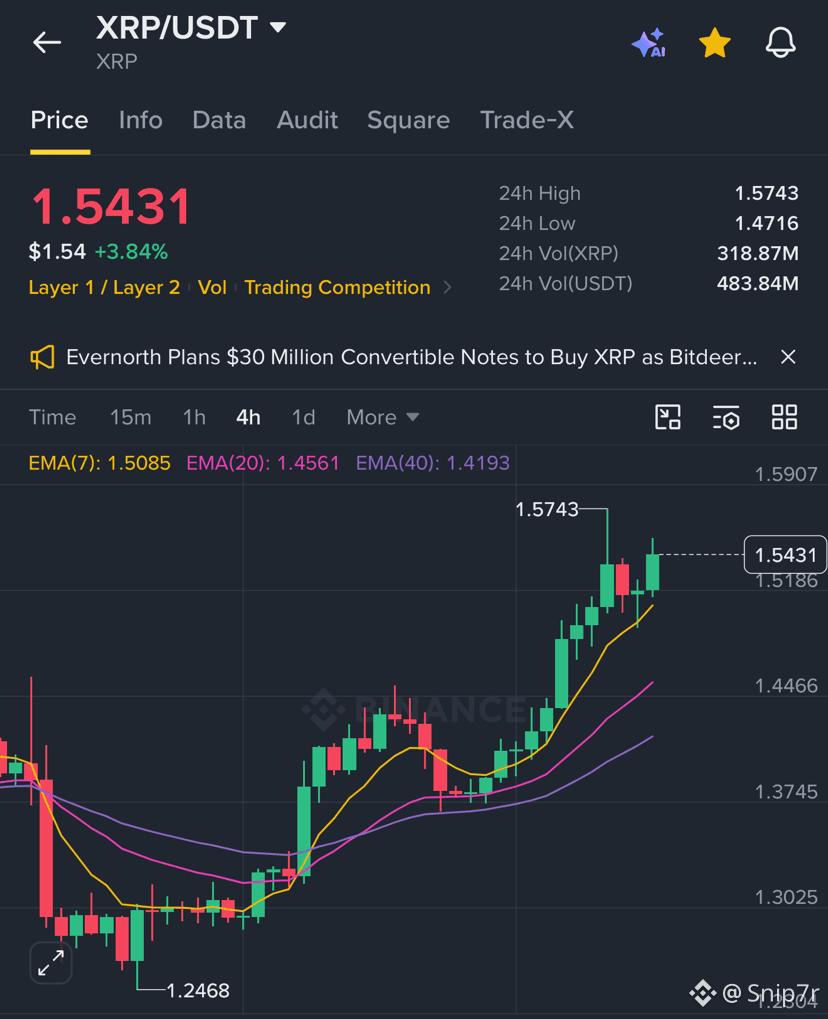
$XRP buyers are back, but $1.5743 needs to break. 🔥
Up 3.84% to $1.5431, XRP is holding a 4H pattern of higher lows. Buyers stepped in after the pullback, keeping pressure on the recent high.
A close above $1.5743 and a successful retest would put $1.60 in focus. Lose $1.50, and $1.47 comes back into view.
RSI near 75 adds heat, so let the breakout prove itself before chasing.
#XRPRealityCheck
$XRP buyers are back, but $1.5743 needs to break. 🔥
Up 3.84% to $1.5431, XRP is holding a 4H pattern of higher lows. Buyers stepped in after the pullback, keeping pressure on the recent high.
A close above $1.5743 and a successful retest would put $1.60 in focus. Lose $1.50, and $1.47 comes back into view.
RSI near 75 adds heat, so let the breakout prove itself before chasing.
#XRPRealityCheck
Up 3.84% to $1.5431, XRP is holding a 4H pattern of higher lows. Buyers stepped in after the pullback, keeping pressure on the recent high.
A close above $1.5743 and a successful retest would put $1.60 in focus. Lose $1.50, and $1.47 comes back into view.
RSI near 75 adds heat, so let the breakout prove itself before chasing.
#XRPRealityCheck
2.3k
Log in to explore more content
Join global crypto users on Binance Square
⚡️ Get latest and useful information about crypto.
💬 Trusted by the world’s largest crypto exchange.
👍 Discover real insights from verified creators.
Email / Phone number
Trending Topics
1
#SECSaysTokenBuybacksNotAutoSecurities
5 views
18 Discussing
2
#ChinaUSAgreeOn$30BTariffCut
0 views
0 Discussing
3
#CircleMints500MUSDCOnSolana
148,029 views
2,673 Discussing
4
#PolymarketBankFailureBetsDrawFDICConcern
132,287 views
2,165 Discussing
5
#BlackRockBuildsTokenizedPortfoliosForOndo
126,693 views
1,560 Discussing
6
#BitwiseFilesToListNEARETFOnNYSEArca
88,157 views
1,219 Discussing
7
#SECCommissionerPeirceToLeaveOct2
95,788 views
993 Discussing
8
#SECSaysBuybacksUpgradesDontMakeTokenSecurity
71,698 views
707 Discussing
9
#StrategyProposesDailyDividendsForPreferreds
19,828 views
260 Discussing
10
#CircleTetherFreezeBitgetHackerWallet
17,343 views
163 Discussing