
#tradingdiscipline
tradingdiscipline
639,594 views
2,327 Discussing
Hot
Latest

Chasing rapid momentum spikes often leads traders to confuse high price velocity with directional certainty. When an asset like BTCUSDT climbs to $80,491.93—traversing a wide 24-hour range between $75,736.38 and $81,196.01—the underlying risk parameters shift significantly.
Emotional responses typically trigger impulsive entries as prices near daily highs. In contrast, a structured risk process scales position sizes downward or extends invalidation distances to account for the wider operational span. Matching exposure to actual volatility boundaries prevents sudden market swings from breaking a trading plan.
#RiskManagement #TradingDiscipline
65

·
--

Article
# 𝐓𝐡𝐞 𝐁𝐢𝐠𝐠𝐞𝐬𝐭 𝐓𝐫𝐚𝐩 𝐈𝐧 𝐓𝐫𝐚𝐝ing# 𝐓𝐡𝐞 𝐁𝐢𝐠𝐠𝐞𝐬𝐭 𝐓𝐫𝐚𝐩 𝐈𝐧 𝐓𝐫𝐚𝐝𝐢𝐧𝐠: 𝐎𝐯𝐞𝐫𝐜𝐨𝐧𝐟𝐢𝐝𝐞𝐧𝐜𝐞, 𝐇𝐢𝐠𝐡 𝐋𝐞𝐯𝐞𝐫𝐚𝐠𝐞, 𝐀𝐧𝐝 𝐓𝐡𝐞 𝐈𝐥𝐥𝐮𝐬𝐢𝐨𝐧 𝐎𝐟 𝐂𝐚𝐭𝐜𝐡𝐢𝐧𝐠 𝐄𝐯𝐞𝐫𝐲 𝐌𝐚𝐫𝐤𝐞𝐭 𝐌𝐨𝐯𝐞
There is an interesting pattern in financial markets that deserves more attention.
Many traders enter the market with the intention of making money, but somewhere along the way, they become obsessed with making money quickly. They start believing that every dip is a buying opportunity, every rally is a chance to open a long position, and every correction is an opportunity to short.
Eventually, trading stops being a process of probability, discipline, and risk management. It becomes a competition against the market.
And that is where many accounts begin to suffer.
Let's discuss why this happens, what research tells us, and how traders can approach the market more intelligently.
## 𝟏. 𝐎𝐯𝐞𝐫𝐜𝐨𝐧𝐟𝐢𝐝𝐞𝐧𝐜𝐞: 𝐖𝐡𝐞𝐧 𝐂𝐨𝐧𝐟𝐢𝐝𝐞𝐧𝐜𝐞 𝐁𝐞𝐜𝐨𝐦𝐞𝐬 𝐘𝐨𝐮𝐫 𝐁𝐢𝐠𝐠𝐞𝐬𝐭 𝐄𝐧𝐞𝐦𝐲
One profitable trade can teach a trader an extremely dangerous lesson: that they understand the market better than they actually do.
After a few successful trades, some traders begin increasing their position sizes, ignoring their original strategies, and taking setups without proper confirmation.
They stop asking:
• What is the probability of this trade succeeding?
• Where is my invalidation level?
• How much can I afford to lose?
• What happens if the market moves against me?
Instead, they start thinking:
"I know the market is going up."
But markets do not reward certainty. They reward sound decisions made under uncertainty.
Research supports this concern.
In a well-known study, *Trading Is Hazardous to Your Wealth* (2000), researchers Brad Barber and Terrance Odean examined 66,465 brokerage households. The most active traders earned an annual return of 11.4%, while the market returned 17.9% during the study period.
The researchers identified overconfidence as one possible explanation for excessive trading and weaker performance.
The lesson is not that trading is always unprofitable. It is that believing you have an edge does not automatically mean you actually have one.
## 𝟐. 𝐇𝐢𝐠𝐡 𝐋𝐞𝐯𝐞𝐫𝐚𝐠𝐞: 𝐖𝐡𝐞𝐧 𝐀 𝐒𝐦𝐚𝐥𝐥 𝐌𝐚𝐫𝐤𝐞𝐭 𝐌𝐨𝐯𝐞 𝐁𝐞𝐜𝐨𝐦𝐞𝐬 𝐀 𝐁𝐢𝐠 𝐀𝐜𝐜𝐨𝐮𝐧𝐭 𝐋𝐨𝐬𝐬
Leverage is one of the most misunderstood tools in cryptocurrency trading.
Some traders believe that using 20x, 50x, or even 100x leverage is a shortcut to building wealth.
But leverage does not improve the quality of your trading decision. It simply magnifies the financial consequences of that decision.
Consider a simple example:
Imagine a trader has $100 and opens a $1,000 position using 10x leverage.
• A 1% favorable price movement produces approximately $10 in gross profit.
• A 1% unfavorable movement produces approximately $10 in gross loss.
• A 5% unfavorable movement represents approximately 50% of the initial $100 margin.
These figures exclude fees, funding payments, maintenance margin, and liquidation mechanics.
Now imagine the same trader uses 50x leverage.
A 2% adverse price movement represents approximately 100% of the initial margin in a simplified calculation.
This is why even a relatively ordinary market fluctuation can become financially devastating for a highly leveraged trader.
The Commodity Futures Trading Commission (CFTC) has repeatedly warned that leverage amplifies both profits and losses in virtual currency derivatives.
𝐑𝐞𝐦𝐞𝐦𝐛𝐞𝐫: 𝐋𝐞𝐯𝐞𝐫𝐚𝐠𝐞 𝐜𝐚𝐧 𝐢𝐧𝐜𝐫𝐞𝐚𝐬𝐞 𝐲𝐨𝐮𝐫 𝐞𝐱𝐩𝐨𝐬𝐮𝐫𝐞, 𝐛𝐮𝐭 𝐢𝐭 𝐜𝐚𝐧𝐧𝐨𝐭 𝐢𝐧𝐜𝐫𝐞𝐚𝐬𝐞 𝐲𝐨𝐮𝐫 𝐚𝐜𝐜𝐮𝐫𝐚𝐜𝐲.
## 𝟑. 𝐓𝐡𝐞 𝐄𝐯𝐞𝐫𝐲-𝐃𝐢𝐩-𝐈𝐬-𝐀-𝐁𝐮𝐲 𝐌𝐢𝐧𝐝𝐬𝐞𝐭
One of the most common mistakes in crypto trading is assuming that every significant price decline represents an opportunity to buy.
Let's consider Bitcoin.
Imagine BTC falls from $100,000 to $95,000.
A trader immediately assumes that the market has discounted enough and opens a long position.
But what if the price falls further to $90,000?
The trader buys again.
Then it falls to $85,000.
Now the trader is emotionally attached to the position, starts defending the original decision, and may increase exposure to recover previous losses.
The problem is not necessarily buying the dip.
The problem is buying without understanding why the dip is happening.
There is a fundamental difference between:
• A healthy correction during an established uptrend.
• A breakdown of an important support level.
• A change in market structure.
• A liquidity-driven temporary movement.
• A genuine shift in market sentiment.
A falling price is not automatically cheap.
Sometimes a dip is an opportunity. Sometimes it is the beginning of a deeper correction.
The same logic applies to shorting every market rally.
A price increase does not automatically mean the market is overbought or ready to reverse.
𝐓𝐫𝐚𝐝𝐞 𝐭𝐡𝐞 𝐬𝐭𝐫𝐮𝐜𝐭𝐮𝐫𝐞, 𝐧𝐨𝐭 𝐲𝐨𝐮𝐫 𝐞𝐱𝐩𝐞𝐜𝐭𝐚𝐭𝐢𝐨𝐧.
## 𝟒. 𝐓𝐡𝐞 𝐌𝐚𝐫𝐤𝐞𝐭 𝐃𝐨𝐞𝐬 𝐍𝐨𝐭 𝐂𝐚𝐫𝐞 𝐀𝐛𝐨𝐮𝐭 𝐘𝐨𝐮𝐫 𝐄𝐧𝐭𝐫𝐲
This is an important psychological concept.
A trader enters a long position at $100 and believes the asset should move to $110.
Instead, the price drops to $96.
Rather than accepting that the trade may be wrong, the trader starts searching for reasons to justify holding the position.
They may say:
"The market is manipulating retail traders."
"Whales are collecting liquidity."
"It will recover after this candle."
Sometimes these explanations may describe genuine market dynamics. But without evidence, they become excuses for refusing to accept risk.
The market does not know your entry price.
It does not know your liquidation level.
It does not care how much money you have invested.
And it certainly does not have an obligation to bring the price back to your entry.
A professional trader must be willing to admit that a trade is invalidated.
𝐀 𝐬𝐦𝐚𝐥𝐥 𝐜𝐨𝐧𝐭𝐫𝐨𝐥𝐥𝐞𝐝 𝐥𝐨𝐬𝐬 𝐢𝐬 𝐨𝐟𝐭𝐞𝐧 𝐟𝐚𝐫 𝐛𝐞𝐭𝐭𝐞𝐫 𝐭𝐡𝐚𝐧 𝐚 𝐥𝐚𝐫𝐠𝐞 𝐥𝐨𝐬𝐬 𝐜𝐚𝐮𝐬𝐞𝐝 𝐛𝐲 𝐞𝐠𝐨.
## 𝟓. 𝐖𝐡𝐚𝐭 𝐃𝐨𝐞𝐬 𝐀𝐜𝐭𝐮𝐚𝐥 𝐑𝐞𝐬𝐞𝐚𝐫𝐜𝐡 𝐒𝐚𝐲 𝐀𝐛𝐨𝐮𝐭 𝐂𝐫𝐲𝐩𝐭𝐨 𝐓𝐫𝐚𝐝𝐢𝐧𝐠?
The problem is not merely theoretical.
A Bank for International Settlements (BIS) working paper published in 2022 examined retail crypto adoption across 95 countries.
Its estimates suggested that approximately 73–81% of retail crypto investors had likely lost money on their initial Bitcoin investment.
Another BIS Bulletin, published in February 2023, examined crypto shocks and retail losses. It found that a majority of crypto app users in nearly all economies had made losses on their Bitcoin holdings during the period studied.
These findings should be understood in their historical context. They do not establish that every trader loses money, nor do they prove that leverage alone caused those losses.
However, they highlight something important:
Entering the cryptocurrency market is easy. Consistently managing risk and remaining profitable is considerably harder.
The difference between participating in a market and becoming a disciplined trader is enormous.
## 𝟔. 𝐓𝐡𝐞 𝐏𝐫𝐨𝐟𝐢𝐭 𝐓𝐫𝐚𝐩: 𝐖𝐡𝐲 𝐑𝐞𝐜𝐨𝐯𝐞𝐫𝐢𝐧𝐠 𝐋𝐨𝐬𝐬𝐞𝐬 𝐈𝐬 𝐇𝐚𝐫𝐝𝐞𝐫 𝐓𝐡𝐚𝐧 𝐘𝐨𝐮 𝐓𝐡𝐢𝐧𝐤
Many traders underestimate how difficult it is to recover from significant losses.
Let's look at the mathematics.
Imagine you start with $1,000.
If you lose 10%, your capital becomes $900. You now need an 11.11% gain to return to $1,000.
If you lose 20%, your capital becomes $800. You need a 25% gain to recover.
If you lose 50%, your capital becomes $500. You now need a 100% gain just to break even.
Here is the important point:
| Capital loss | Gain needed to recover |
|---|---:|
| 10% | 11.11% |
| 20% | 25% |
| 30% | 42.86% |
| 40% | 66.67% |
| 50% | 100% |
| 70% | 233.33% |
This is why capital preservation is not a boring part of trading.
It is one of the most important parts.
A trader who protects their capital maintains the ability to participate in future opportunities.
A trader who repeatedly destroys their capital eventually loses that flexibility.
## 𝟕. 𝐓𝐡𝐞 𝐒𝐦𝐚𝐫𝐭𝐞𝐫 𝐀𝐩𝐩𝐫𝐨𝐚𝐜𝐡: 𝐂𝐚𝐥𝐜𝐮𝐥𝐚𝐭𝐞𝐝 𝐑𝐢𝐬𝐤 𝐎𝐯𝐞𝐫 𝐀𝐠𝐠𝐫𝐞𝐬𝐬𝐢𝐯𝐞 𝐆𝐫𝐨𝐰𝐭𝐡
If the objective is long-term trading success, the focus should shift from how much money can be made on one trade to how consistently risk can be managed across many trades.
Here are some practical principles.
𝐀. 𝐑𝐢𝐬𝐤 𝐚 𝐒𝐦𝐚𝐥𝐥 𝐏𝐨𝐫𝐭𝐢𝐨𝐧 𝐎𝐟 𝐘𝐨𝐮𝐫 𝐂𝐚𝐩𝐢𝐭𝐚𝐥
For example, a trader with a $1,000 account might choose to risk only 1% per trade, meaning a maximum planned loss of $10.
This does not mean using $10 as the entire position size.
Position size must be calculated according to the distance between entry and stop-loss.
The objective is to prevent one incorrect decision from damaging the entire account.
𝐁. 𝐒𝐭𝐨𝐩 𝐓𝐫𝐲𝐢𝐧𝐠 𝐓𝐨 𝐂𝐚𝐭𝐜𝐡 𝐄𝐯𝐞𝐫𝐲 𝐌𝐨𝐯𝐞
You do not need to trade every Bitcoin candle.
You do not need to buy every dip.
You do not need to short every rally.
Sometimes the most intelligent decision is to remain in cash and wait for a setup that matches your strategy.
𝐂. 𝐔𝐬𝐞 𝐒𝐭𝐫𝐮𝐜𝐭𝐮𝐫𝐞 𝐀𝐧𝐝 𝐂𝐨𝐧𝐟𝐢𝐫𝐦𝐚𝐭𝐢𝐨𝐧
Before entering a trade, understand:
• The overall market trend.
• Important support and resistance levels.
• Volume and liquidity conditions.
• Market structure and potential invalidation.
• Your entry, stop-loss, and profit target.
• Whether the potential reward justifies the risk.
A trade should have a reason beyond simply believing that the price has moved far enough.
𝐃. 𝐀𝐯𝐨𝐢𝐝 𝐑𝐞𝐯𝐞𝐧𝐠𝐞 𝐓𝐫𝐚𝐝𝐢𝐧𝐠
After a loss, some traders immediately open another position to recover their money.
This creates a dangerous cycle:
Loss → Frustration → Bigger Position → Another Loss → Panic → More Risk.
The solution is simple in principle but difficult in practice: accept the loss, review the decision, and return only when a valid setup appears.
𝐄. 𝐌𝐞𝐚𝐬𝐮𝐫𝐞 𝐏𝐞𝐫𝐟𝐨𝐫𝐦𝐚𝐧𝐜𝐞 𝐎𝐯𝐞𝐫 𝐌𝐚𝐧𝐲 𝐓𝐫𝐚𝐝𝐞𝐬
One winning trade does not make someone a professional.
One losing trade does not make someone a failure.
What matters is whether your strategy has a positive expectancy over a sufficiently large sample of trades, after trading fees, funding costs, slippage, and other expenses.
A trader should evaluate the quality of their decisions, not just the outcome of an individual trade.
## 𝟖. 𝐓𝐡𝐞 𝐏𝐨𝐰𝐞𝐫 𝐎𝐟 𝐒𝐦𝐚𝐥𝐥 𝐀𝐧𝐝 𝐂𝐨𝐧𝐬𝐢𝐬𝐭𝐞𝐧𝐭 𝐏𝐫𝐨𝐠𝐫𝐞𝐬𝐬
Consider two hypothetical traders.
Trader A has $1,000 and wants to double the account quickly. They use aggressive leverage, trade frequently, and risk a substantial portion of their capital on every position.
Trader B also has $1,000 but focuses on capital preservation, reasonable position sizing, and carefully selected setups.
Trader B might make less money during a strong market rally.
But when volatility increases, the difference in risk management becomes clear.
Trader A may experience a liquidation or a major drawdown.
Trader B still has capital available to participate when the next opportunity develops.
This does not mean conservative trading guarantees profits. No trading strategy can guarantee that.
It means that controlling downside risk gives a trader a better chance of remaining active over the long term.
The objective is not to become rich from one trade.
The objective is to develop a repeatable process that can survive different market conditions.
## 𝟗. 𝐒𝐨𝐦𝐞 𝐓𝐫𝐚𝐝𝐢𝐧𝐠 𝐏𝐫𝐢𝐧𝐜𝐢𝐩𝐥𝐞𝐬 𝐖𝐨𝐫𝐭𝐡 𝐑𝐞𝐦𝐞𝐦𝐛𝐞𝐫𝐢𝐧𝐠
Here are a few principles every trader should consider:
1. Never confuse a strong opinion with a high-probability trade.
2. Never increase leverage simply because you want to recover a loss.
3. Never enter a position without knowing where your trade becomes invalid.
4. Never assume that a market correction must immediately reverse.
5. Never allow one trade to determine your financial future.
6. Never mistake frequent trading for productive trading.
7. Never let greed decide your position size.
8. Always understand the risks before using futures or margin.
9. Keep a trading journal and learn from both profitable and losing trades.
10. Understand that sometimes doing nothing is the best trading decision.
## 𝐅𝐢𝐧𝐚𝐥 𝐓𝐡𝐨𝐮𝐠𝐡𝐭: 𝐓𝐡𝐞 𝐌𝐚𝐫𝐤𝐞𝐭 𝐖𝐢𝐥𝐥 𝐀𝐥𝐰𝐚𝐲𝐬 𝐏𝐫𝐨𝐯𝐢𝐝𝐞 𝐀𝐧𝐨𝐭𝐡𝐞𝐫 𝐎𝐩𝐩𝐨𝐫𝐭𝐮𝐧𝐢𝐭𝐲
The cryptocurrency market operates around the clock. Bitcoin will have another correction, another rally, another breakout, and another period of uncertainty.
There is no reason to force a trade simply because the market is moving.
The real challenge is controlling your own behavior when the market becomes unpredictable.
Overconfidence encourages unnecessary risk. Greed encourages excessive leverage. Fear encourages emotional exits. And the desire to recover losses encourages even worse decisions.
Successful trading requires something much more valuable than predicting every market movement: patience, discipline, probability-based thinking, and capital preservation.
As a principle worth remembering:
"𝐘𝐨𝐮 𝐝𝐨 𝐧𝐨𝐭 𝐧𝐞𝐞𝐝 𝐭𝐨 𝐰𝐢𝐧 𝐞𝐯𝐞𝐫𝐲 𝐭𝐫𝐚𝐝𝐞. 𝐘𝐨𝐮 𝐧𝐞𝐞𝐝 𝐭𝐨 𝐦𝐚𝐤𝐞 𝐬𝐮𝐫𝐞 𝐭𝐡𝐚𝐭 𝐧𝐨 𝐬𝐢𝐧𝐠𝐥𝐞 𝐭𝐫𝐚𝐝𝐞 𝐜𝐚𝐧 𝐞𝐧𝐝 𝐲𝐨𝐮𝐫 𝐣𝐨𝐮𝐫𝐧𝐞𝐲."
Take calculated risks. Protect your capital. Learn from your mistakes. Build consistency step by step.
Because in trading, survival is not separate from success. It is a prerequisite for it.
#cryptouniverseofficial #bitcoin #BinanceSquareFamily #TradingDiscipline sdt $ETH
{future}(ETHUSDT)
$BTC
{future}(BTCUSDT)
$SPCX.US
{stock_us}(SPCX.US)
# 𝐓𝐡𝐞 𝐁𝐢𝐠𝐠𝐞𝐬𝐭 𝐓𝐫𝐚𝐩 𝐈𝐧 𝐓𝐫𝐚𝐝ing
# 𝐓𝐡𝐞 𝐁𝐢𝐠𝐠𝐞𝐬𝐭 𝐓𝐫𝐚𝐩 𝐈𝐧 𝐓𝐫𝐚𝐝𝐢𝐧𝐠: 𝐎𝐯𝐞𝐫𝐜𝐨𝐧𝐟𝐢𝐝𝐞𝐧𝐜𝐞, 𝐇𝐢𝐠𝐡 𝐋𝐞𝐯𝐞𝐫𝐚𝐠𝐞, 𝐀𝐧𝐝 𝐓𝐡𝐞 𝐈𝐥𝐥𝐮𝐬𝐢𝐨𝐧 𝐎𝐟 𝐂𝐚𝐭𝐜𝐡𝐢𝐧𝐠 𝐄𝐯𝐞𝐫𝐲 𝐌𝐚𝐫𝐤𝐞𝐭 𝐌𝐨𝐯𝐞
There is an interesting pattern in financial markets that deserves more attention.
Many traders enter the market with the intention of making money, but somewhere along the way, they become obsessed with making money quickly. They start believing that every dip is a buying opportunity, every rally is a chance to open a long position, and every correction is an opportunity to short.
Eventually, trading stops being a process of probability, discipline, and risk management. It becomes a competition against the market.
And that is where many accounts begin to suffer.
Let's discuss why this happens, what research tells us, and how traders can approach the market more intelligently.
## 𝟏. 𝐎𝐯𝐞𝐫𝐜𝐨𝐧𝐟𝐢𝐝𝐞𝐧𝐜𝐞: 𝐖𝐡𝐞𝐧 𝐂𝐨𝐧𝐟𝐢𝐝𝐞𝐧𝐜𝐞 𝐁𝐞𝐜𝐨𝐦𝐞𝐬 𝐘𝐨𝐮𝐫 𝐁𝐢𝐠𝐠𝐞𝐬𝐭 𝐄𝐧𝐞𝐦𝐲
One profitable trade can teach a trader an extremely dangerous lesson: that they understand the market better than they actually do.
After a few successful trades, some traders begin increasing their position sizes, ignoring their original strategies, and taking setups without proper confirmation.
They stop asking:
• What is the probability of this trade succeeding?
• Where is my invalidation level?
• How much can I afford to lose?
• What happens if the market moves against me?
Instead, they start thinking:
"I know the market is going up."
But markets do not reward certainty. They reward sound decisions made under uncertainty.
Research supports this concern.
In a well-known study, *Trading Is Hazardous to Your Wealth* (2000), researchers Brad Barber and Terrance Odean examined 66,465 brokerage households. The most active traders earned an annual return of 11.4%, while the market returned 17.9% during the study period.
The researchers identified overconfidence as one possible explanation for excessive trading and weaker performance.
The lesson is not that trading is always unprofitable. It is that believing you have an edge does not automatically mean you actually have one.
## 𝟐. 𝐇𝐢𝐠𝐡 𝐋𝐞𝐯𝐞𝐫𝐚𝐠𝐞: 𝐖𝐡𝐞𝐧 𝐀 𝐒𝐦𝐚𝐥𝐥 𝐌𝐚𝐫𝐤𝐞𝐭 𝐌𝐨𝐯𝐞 𝐁𝐞𝐜𝐨𝐦𝐞𝐬 𝐀 𝐁𝐢𝐠 𝐀𝐜𝐜𝐨𝐮𝐧𝐭 𝐋𝐨𝐬𝐬
Leverage is one of the most misunderstood tools in cryptocurrency trading.
Some traders believe that using 20x, 50x, or even 100x leverage is a shortcut to building wealth.
But leverage does not improve the quality of your trading decision. It simply magnifies the financial consequences of that decision.
Consider a simple example:
Imagine a trader has $100 and opens a $1,000 position using 10x leverage.
• A 1% favorable price movement produces approximately $10 in gross profit.
• A 1% unfavorable movement produces approximately $10 in gross loss.
• A 5% unfavorable movement represents approximately 50% of the initial $100 margin.
These figures exclude fees, funding payments, maintenance margin, and liquidation mechanics.
Now imagine the same trader uses 50x leverage.
A 2% adverse price movement represents approximately 100% of the initial margin in a simplified calculation.
This is why even a relatively ordinary market fluctuation can become financially devastating for a highly leveraged trader.
The Commodity Futures Trading Commission (CFTC) has repeatedly warned that leverage amplifies both profits and losses in virtual currency derivatives.
𝐑𝐞𝐦𝐞𝐦𝐛𝐞𝐫: 𝐋𝐞𝐯𝐞𝐫𝐚𝐠𝐞 𝐜𝐚𝐧 𝐢𝐧𝐜𝐫𝐞𝐚𝐬𝐞 𝐲𝐨𝐮𝐫 𝐞𝐱𝐩𝐨𝐬𝐮𝐫𝐞, 𝐛𝐮𝐭 𝐢𝐭 𝐜𝐚𝐧𝐧𝐨𝐭 𝐢𝐧𝐜𝐫𝐞𝐚𝐬𝐞 𝐲𝐨𝐮𝐫 𝐚𝐜𝐜𝐮𝐫𝐚𝐜𝐲.
## 𝟑. 𝐓𝐡𝐞 𝐄𝐯𝐞𝐫𝐲-𝐃𝐢𝐩-𝐈𝐬-𝐀-𝐁𝐮𝐲 𝐌𝐢𝐧𝐝𝐬𝐞𝐭
One of the most common mistakes in crypto trading is assuming that every significant price decline represents an opportunity to buy.
Let's consider Bitcoin.
Imagine BTC falls from $100,000 to $95,000.
A trader immediately assumes that the market has discounted enough and opens a long position.
But what if the price falls further to $90,000?
The trader buys again.
Then it falls to $85,000.
Now the trader is emotionally attached to the position, starts defending the original decision, and may increase exposure to recover previous losses.
The problem is not necessarily buying the dip.
The problem is buying without understanding why the dip is happening.
There is a fundamental difference between:
• A healthy correction during an established uptrend.
• A breakdown of an important support level.
• A change in market structure.
• A liquidity-driven temporary movement.
• A genuine shift in market sentiment.
A falling price is not automatically cheap.
Sometimes a dip is an opportunity. Sometimes it is the beginning of a deeper correction.
The same logic applies to shorting every market rally.
A price increase does not automatically mean the market is overbought or ready to reverse.
𝐓𝐫𝐚𝐝𝐞 𝐭𝐡𝐞 𝐬𝐭𝐫𝐮𝐜𝐭𝐮𝐫𝐞, 𝐧𝐨𝐭 𝐲𝐨𝐮𝐫 𝐞𝐱𝐩𝐞𝐜𝐭𝐚𝐭𝐢𝐨𝐧.
## 𝟒. 𝐓𝐡𝐞 𝐌𝐚𝐫𝐤𝐞𝐭 𝐃𝐨𝐞𝐬 𝐍𝐨𝐭 𝐂𝐚𝐫𝐞 𝐀𝐛𝐨𝐮𝐭 𝐘𝐨𝐮𝐫 𝐄𝐧𝐭𝐫𝐲
This is an important psychological concept.
A trader enters a long position at $100 and believes the asset should move to $110.
Instead, the price drops to $96.
Rather than accepting that the trade may be wrong, the trader starts searching for reasons to justify holding the position.
They may say:
"The market is manipulating retail traders."
"Whales are collecting liquidity."
"It will recover after this candle."
Sometimes these explanations may describe genuine market dynamics. But without evidence, they become excuses for refusing to accept risk.
The market does not know your entry price.
It does not know your liquidation level.
It does not care how much money you have invested.
And it certainly does not have an obligation to bring the price back to your entry.
A professional trader must be willing to admit that a trade is invalidated.
𝐀 𝐬𝐦𝐚𝐥𝐥 𝐜𝐨𝐧𝐭𝐫𝐨𝐥𝐥𝐞𝐝 𝐥𝐨𝐬𝐬 𝐢𝐬 𝐨𝐟𝐭𝐞𝐧 𝐟𝐚𝐫 𝐛𝐞𝐭𝐭𝐞𝐫 𝐭𝐡𝐚𝐧 𝐚 𝐥𝐚𝐫𝐠𝐞 𝐥𝐨𝐬𝐬 𝐜𝐚𝐮𝐬𝐞𝐝 𝐛𝐲 𝐞𝐠𝐨.
## 𝟓. 𝐖𝐡𝐚𝐭 𝐃𝐨𝐞𝐬 𝐀𝐜𝐭𝐮𝐚𝐥 𝐑𝐞𝐬𝐞𝐚𝐫𝐜𝐡 𝐒𝐚𝐲 𝐀𝐛𝐨𝐮𝐭 𝐂𝐫𝐲𝐩𝐭𝐨 𝐓𝐫𝐚𝐝𝐢𝐧𝐠?
The problem is not merely theoretical.
A Bank for International Settlements (BIS) working paper published in 2022 examined retail crypto adoption across 95 countries.
Its estimates suggested that approximately 73–81% of retail crypto investors had likely lost money on their initial Bitcoin investment.
Another BIS Bulletin, published in February 2023, examined crypto shocks and retail losses. It found that a majority of crypto app users in nearly all economies had made losses on their Bitcoin holdings during the period studied.
These findings should be understood in their historical context. They do not establish that every trader loses money, nor do they prove that leverage alone caused those losses.
However, they highlight something important:
Entering the cryptocurrency market is easy. Consistently managing risk and remaining profitable is considerably harder.
The difference between participating in a market and becoming a disciplined trader is enormous.
## 𝟔. 𝐓𝐡𝐞 𝐏𝐫𝐨𝐟𝐢𝐭 𝐓𝐫𝐚𝐩: 𝐖𝐡𝐲 𝐑𝐞𝐜𝐨𝐯𝐞𝐫𝐢𝐧𝐠 𝐋𝐨𝐬𝐬𝐞𝐬 𝐈𝐬 𝐇𝐚𝐫𝐝𝐞𝐫 𝐓𝐡𝐚𝐧 𝐘𝐨𝐮 𝐓𝐡𝐢𝐧𝐤
Many traders underestimate how difficult it is to recover from significant losses.
Let's look at the mathematics.
Imagine you start with $1,000.
If you lose 10%, your capital becomes $900. You now need an 11.11% gain to return to $1,000.
If you lose 20%, your capital becomes $800. You need a 25% gain to recover.
If you lose 50%, your capital becomes $500. You now need a 100% gain just to break even.
Here is the important point:
| Capital loss | Gain needed to recover |
|---|---:|
| 10% | 11.11% |
| 20% | 25% |
| 30% | 42.86% |
| 40% | 66.67% |
| 50% | 100% |
| 70% | 233.33% |
This is why capital preservation is not a boring part of trading.
It is one of the most important parts.
A trader who protects their capital maintains the ability to participate in future opportunities.
A trader who repeatedly destroys their capital eventually loses that flexibility.
## 𝟕. 𝐓𝐡𝐞 𝐒𝐦𝐚𝐫𝐭𝐞𝐫 𝐀𝐩𝐩𝐫𝐨𝐚𝐜𝐡: 𝐂𝐚𝐥𝐜𝐮𝐥𝐚𝐭𝐞𝐝 𝐑𝐢𝐬𝐤 𝐎𝐯𝐞𝐫 𝐀𝐠𝐠𝐫𝐞𝐬𝐬𝐢𝐯𝐞 𝐆𝐫𝐨𝐰𝐭𝐡
If the objective is long-term trading success, the focus should shift from how much money can be made on one trade to how consistently risk can be managed across many trades.
Here are some practical principles.
𝐀. 𝐑𝐢𝐬𝐤 𝐚 𝐒𝐦𝐚𝐥𝐥 𝐏𝐨𝐫𝐭𝐢𝐨𝐧 𝐎𝐟 𝐘𝐨𝐮𝐫 𝐂𝐚𝐩𝐢𝐭𝐚𝐥
For example, a trader with a $1,000 account might choose to risk only 1% per trade, meaning a maximum planned loss of $10.
This does not mean using $10 as the entire position size.
Position size must be calculated according to the distance between entry and stop-loss.
The objective is to prevent one incorrect decision from damaging the entire account.
𝐁. 𝐒𝐭𝐨𝐩 𝐓𝐫𝐲𝐢𝐧𝐠 𝐓𝐨 𝐂𝐚𝐭𝐜𝐡 𝐄𝐯𝐞𝐫𝐲 𝐌𝐨𝐯𝐞
You do not need to trade every Bitcoin candle.
You do not need to buy every dip.
You do not need to short every rally.
Sometimes the most intelligent decision is to remain in cash and wait for a setup that matches your strategy.
𝐂. 𝐔𝐬𝐞 𝐒𝐭𝐫𝐮𝐜𝐭𝐮𝐫𝐞 𝐀𝐧𝐝 𝐂𝐨𝐧𝐟𝐢𝐫𝐦𝐚𝐭𝐢𝐨𝐧
Before entering a trade, understand:
• The overall market trend.
• Important support and resistance levels.
• Volume and liquidity conditions.
• Market structure and potential invalidation.
• Your entry, stop-loss, and profit target.
• Whether the potential reward justifies the risk.
A trade should have a reason beyond simply believing that the price has moved far enough.
𝐃. 𝐀𝐯𝐨𝐢𝐝 𝐑𝐞𝐯𝐞𝐧𝐠𝐞 𝐓𝐫𝐚𝐝𝐢𝐧𝐠
After a loss, some traders immediately open another position to recover their money.
This creates a dangerous cycle:
Loss → Frustration → Bigger Position → Another Loss → Panic → More Risk.
The solution is simple in principle but difficult in practice: accept the loss, review the decision, and return only when a valid setup appears.
𝐄. 𝐌𝐞𝐚𝐬𝐮𝐫𝐞 𝐏𝐞𝐫𝐟𝐨𝐫𝐦𝐚𝐧𝐜𝐞 𝐎𝐯𝐞𝐫 𝐌𝐚𝐧𝐲 𝐓𝐫𝐚𝐝𝐞𝐬
One winning trade does not make someone a professional.
One losing trade does not make someone a failure.
What matters is whether your strategy has a positive expectancy over a sufficiently large sample of trades, after trading fees, funding costs, slippage, and other expenses.
A trader should evaluate the quality of their decisions, not just the outcome of an individual trade.
## 𝟖. 𝐓𝐡𝐞 𝐏𝐨𝐰𝐞𝐫 𝐎𝐟 𝐒𝐦𝐚𝐥𝐥 𝐀𝐧𝐝 𝐂𝐨𝐧𝐬𝐢𝐬𝐭𝐞𝐧𝐭 𝐏𝐫𝐨𝐠𝐫𝐞𝐬𝐬
Consider two hypothetical traders.
Trader A has $1,000 and wants to double the account quickly. They use aggressive leverage, trade frequently, and risk a substantial portion of their capital on every position.
Trader B also has $1,000 but focuses on capital preservation, reasonable position sizing, and carefully selected setups.
Trader B might make less money during a strong market rally.
But when volatility increases, the difference in risk management becomes clear.
Trader A may experience a liquidation or a major drawdown.
Trader B still has capital available to participate when the next opportunity develops.
This does not mean conservative trading guarantees profits. No trading strategy can guarantee that.
It means that controlling downside risk gives a trader a better chance of remaining active over the long term.
The objective is not to become rich from one trade.
The objective is to develop a repeatable process that can survive different market conditions.
## 𝟗. 𝐒𝐨𝐦𝐞 𝐓𝐫𝐚𝐝𝐢𝐧𝐠 𝐏𝐫𝐢𝐧𝐜𝐢𝐩𝐥𝐞𝐬 𝐖𝐨𝐫𝐭𝐡 𝐑𝐞𝐦𝐞𝐦𝐛𝐞𝐫𝐢𝐧𝐠
Here are a few principles every trader should consider:
1. Never confuse a strong opinion with a high-probability trade.
2. Never increase leverage simply because you want to recover a loss.
3. Never enter a position without knowing where your trade becomes invalid.
4. Never assume that a market correction must immediately reverse.
5. Never allow one trade to determine your financial future.
6. Never mistake frequent trading for productive trading.
7. Never let greed decide your position size.
8. Always understand the risks before using futures or margin.
9. Keep a trading journal and learn from both profitable and losing trades.
10. Understand that sometimes doing nothing is the best trading decision.
## 𝐅𝐢𝐧𝐚𝐥 𝐓𝐡𝐨𝐮𝐠𝐡𝐭: 𝐓𝐡𝐞 𝐌𝐚𝐫𝐤𝐞𝐭 𝐖𝐢𝐥𝐥 𝐀𝐥𝐰𝐚𝐲𝐬 𝐏𝐫𝐨𝐯𝐢𝐝𝐞 𝐀𝐧𝐨𝐭𝐡𝐞𝐫 𝐎𝐩𝐩𝐨𝐫𝐭𝐮𝐧𝐢𝐭𝐲
The cryptocurrency market operates around the clock. Bitcoin will have another correction, another rally, another breakout, and another period of uncertainty.
There is no reason to force a trade simply because the market is moving.
The real challenge is controlling your own behavior when the market becomes unpredictable.
Overconfidence encourages unnecessary risk. Greed encourages excessive leverage. Fear encourages emotional exits. And the desire to recover losses encourages even worse decisions.
Successful trading requires something much more valuable than predicting every market movement: patience, discipline, probability-based thinking, and capital preservation.
As a principle worth remembering:
"𝐘𝐨𝐮 𝐝𝐨 𝐧𝐨𝐭 𝐧𝐞𝐞𝐝 𝐭𝐨 𝐰𝐢𝐧 𝐞𝐯𝐞𝐫𝐲 𝐭𝐫𝐚𝐝𝐞. 𝐘𝐨𝐮 𝐧𝐞𝐞𝐝 𝐭𝐨 𝐦𝐚𝐤𝐞 𝐬𝐮𝐫𝐞 𝐭𝐡𝐚𝐭 𝐧𝐨 𝐬𝐢𝐧𝐠𝐥𝐞 𝐭𝐫𝐚𝐝𝐞 𝐜𝐚𝐧 𝐞𝐧𝐝 𝐲𝐨𝐮𝐫 𝐣𝐨𝐮𝐫𝐧𝐞𝐲."
Take calculated risks. Protect your capital. Learn from your mistakes. Build consistency step by step.
Because in trading, survival is not separate from success. It is a prerequisite for it.
#cryptouniverseofficial #bitcoin #BinanceSquareFamily #TradingDiscipline sdt $ETH
$BTC
$SPCX.US
2
954

🚨 $BNB SHORT INVALIDATED AT RESISTANCE — DISCIPLINE OVER EGO EVERY SINGLE TIME! 🛑
Entry: 704.30 ⚡
Stop Loss: 710.50 🛑
Buyers broke right through key resistance at 704.30 and swept our stop at 710.50 with serious momentum. 📊 When market structure flips against your thesis, true edge lies in taking the small loss cleanly without moving stops or emotional coping.
The order book shifted dynamically as demand absorbed seller liquidity at the highs. 🔍 Preserving capital on invalidated setups is what funds your winning runs when the next clean breakout strikes. 💬
How do you react when a level invalidates — do you accept the stop cleanly or fight the tape? 👇
⚠️ Not financial advice. Always manage your risk. 🛡️
🏷️ #BNB #RiskManagement #CryptoTrading #TradingDiscipline
🛡️ 💎
8

·
--
Bullish
$BTC Success in trading isn't just about making profits; it's also about knowing how to protect and retain them.
If you don't maintain proper trading discipline, you'll find that no matter how much profit you make throughout the day, your account may still end up in a loss by the end of it.
Overtrading, entering trades out of greed, and repeatedly trading to recover losses—these mistakes often wipe out the profits you've already earned.
Without discipline, it's impossible to sustain profits. Start by controlling your emotions, following proper risk management, and sticking to your trading plan.
#TradingDiscipline #TradingPsychology #RiskManagement #CryptoTrading #TradingTips
$BNB
$PEPE
{spot}(BTCUSDT)
{spot}(BNBUSDT)
{spot}(PEPEUSDT)
$BTC Success in trading isn't just about making profits; it's also about knowing how to protect and retain them.
If you don't maintain proper trading discipline, you'll find that no matter how much profit you make throughout the day, your account may still end up in a loss by the end of it.
Overtrading, entering trades out of greed, and repeatedly trading to recover losses—these mistakes often wipe out the profits you've already earned.
Without discipline, it's impossible to sustain profits. Start by controlling your emotions, following proper risk management, and sticking to your trading plan.
#TradingDiscipline #TradingPsychology #RiskManagement #CryptoTrading #TradingTips
$BNB
$PEPE

Abuche Ibrahim:
yeah well said! 🤝
7
4
15
5.3k

·
--
Article
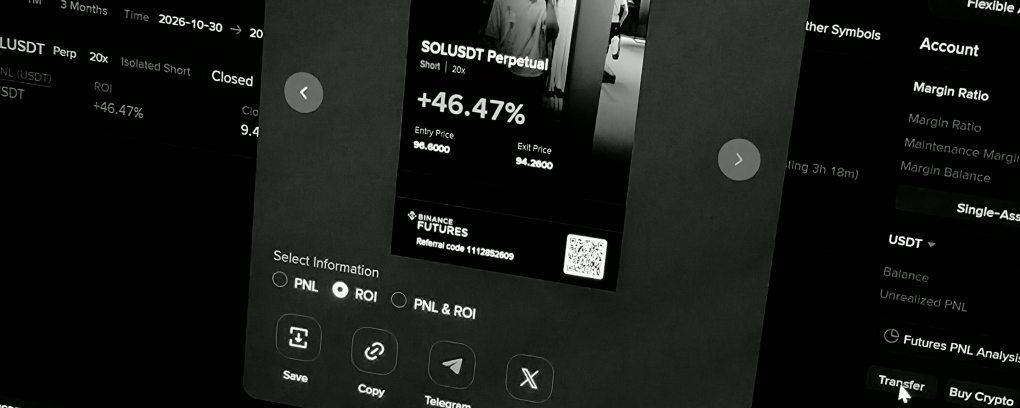
Trading Is Easy to Learn, But Difficult to Master. 🧠One of the biggest lessons I've learned as a trader is that having a good strategy doesn't guarantee success.
You can understand market structure, liquidity, SMC, footprint charts and technical analysis, but without proper psychology and discipline, it's difficult to become consistent.
Here are a few things I'm learning along my trading journey:
- Control emotions: Don't let fear and greed make your decisions.
- Accept losses: Every losing trade is part of trading. Don't try to recover immediately.
- Avoid overtrading: Not every market movement is an opportunity.
- Follow your plan: Trust your setup instead of changing your rules after every loss.
- Be patient: Protecting capital is more important than chasing profits.
I'm still learning, improving and working on my discipline every day.
My goal is not to win every trade. My goal is to become a consistently disciplined trader.
What do you think is the biggest challenge in trading: Strategy, Psychology or Discipline?
#TradingPsychology #TradingDiscipline #cryptotrading #BinanceSquare
Trading Is Easy to Learn, But Difficult to Master. 🧠
One of the biggest lessons I've learned as a trader is that having a good strategy doesn't guarantee success.
You can understand market structure, liquidity, SMC, footprint charts and technical analysis, but without proper psychology and discipline, it's difficult to become consistent.
Here are a few things I'm learning along my trading journey:
- Control emotions: Don't let fear and greed make your decisions.
- Accept losses: Every losing trade is part of trading. Don't try to recover immediately.
- Avoid overtrading: Not every market movement is an opportunity.
- Follow your plan: Trust your setup instead of changing your rules after every loss.
- Be patient: Protecting capital is more important than chasing profits.
I'm still learning, improving and working on my discipline every day.
My goal is not to win every trade. My goal is to become a consistently disciplined trader.
What do you think is the biggest challenge in trading: Strategy, Psychology or Discipline?
#TradingPsychology #TradingDiscipline #cryptotrading #BinanceSquare
2
164
·
--
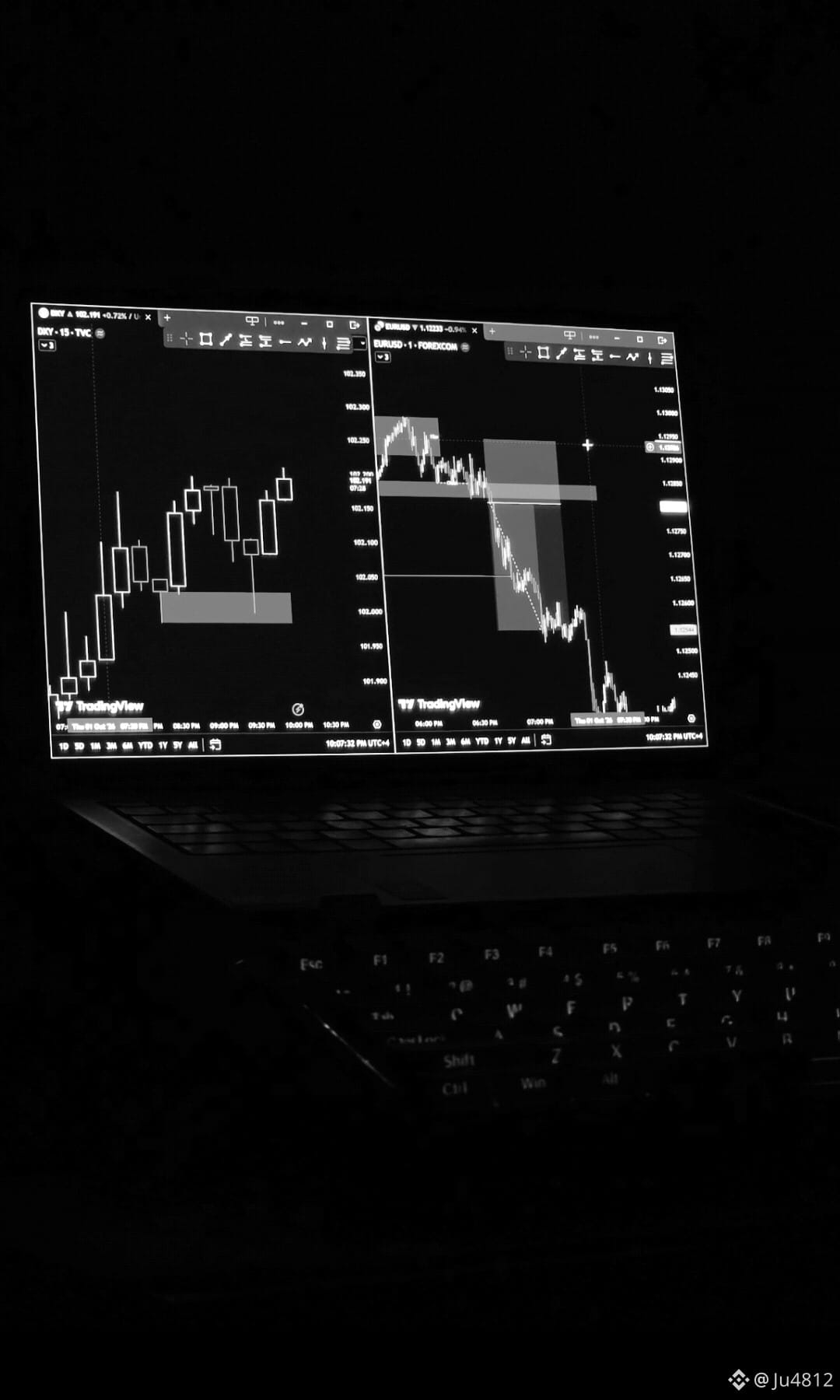
The market doesn't reward the trader who takes the most trades. It rewards the trader who knows when NOT to trade.
Patience, discipline and risk management matter more than finding a perfect entry.
I'm here to keep learning, studying market behaviour and improving one trade at a time.
No shortcuts. No guaranteed profits. Just continuous improvement.
#CryptoTrading #TradingPsychology #BinanceSquare #TradingDiscipline
1
92

·
--
Chronicle of a Disciplined Trader - Special Episode: When the Storm Shakes the Giants 📉
On October 29, the crypto world experienced an unprecedented shock when Binance was hit by a major security incident, resulting in billions of dollars being drained from its wallets. Faced with news like this, panic often spreads among impulsive investors.
But as traders trained in discipline and self-control, how should we interpret the situation?
Stay calm amid the noise: A technical incident or a large-scale hack is a reminder that markets and platforms always carry technological risks. The swift response from issuers and the platform to freeze some of the funds and ensure users' security shows how important ecosystem resilience is.
Protect your capital above all: This is exactly why we advocate rigor. Never put all your eggs in one basket, secure your investments, and always keep a long-term perspective.
Stay focused on what matters: Storms pass, but the fundamentals of analysis and risk management remain our shield.
At NelkiCash, we don't tremble when the market shakes: we analyze, adapt, and stay the course with discipline.
And you, how did you react when you heard the news? Tell me in the comments 👇
$BTC #NelkiCash #BinanceSquare #CryptoTrading #Bitcoin #TradingDiscipline

91

Trade review on $ETH:
Closed out our buy position at $2264.4200 (+16.00% ROI). I was feeling bullish as volume picked up from support, and price hit target without much resistance.
My rule: never let a winning trade turn into an emotional gamble. Take the win, reset your charts, and wait for the next clean setup.
How is your trading session going today: caught any solid runners or sitting in cash? Let's discuss below.
#ETH #TradingDiscipline #BinanceSquare #Crypto
Trade review on $ETH :
Closed out our buy position at $2264.4200 (+16.00% ROI). I was feeling bullish as volume picked up from support, and price hit target without much resistance.
My rule: never let a winning trade turn into an emotional gamble. Take the win, reset your charts, and wait for the next clean setup.
How is your trading session going today: caught any solid runners or sitting in cash? Let's discuss below.
#ETH #TradingDiscipline #BinanceSquare #Crypto
20
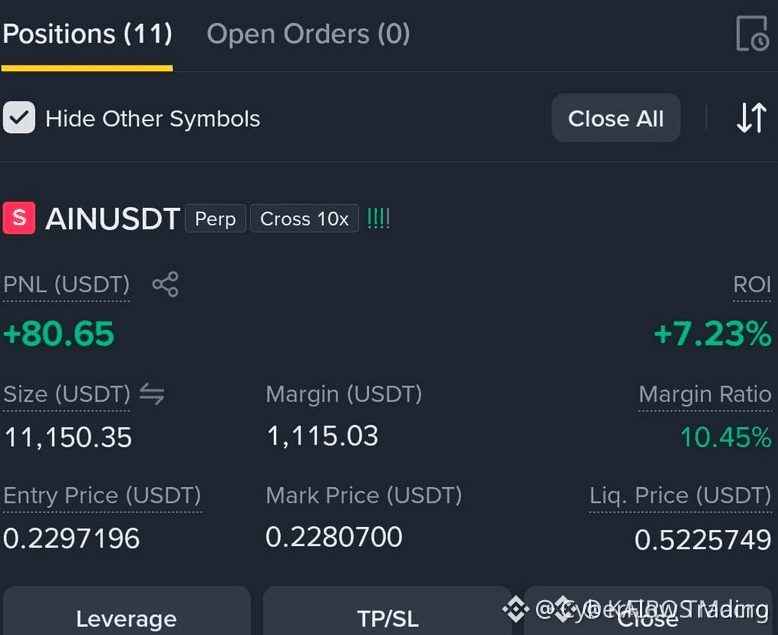
🚨 $AIN WICKS INTO OBLIVION AS AGGRESSIVE SHORT LIQUIDITY GETS SWEPT CLEAN! ⚡
Stepping in front of $AIN with a short order proved how ruthless market momentum can be when buyers aggressively hunt resting liquidity. 🌊 That sudden vertical spike immediately reminded me that the tape shows zero mercy to anyone neglecting hard invalidation levels.
Managing exposure during violent intraday squeezes separates survival from catastrophe. 💡 When a setup flips against your thesis in seconds, strict execution discipline is the only shield that protects trading capital. 💬 Did you catch the upside expansion on $AIN , or did this sudden liquidity sweep leave you sweating your positions? 👇
⚠️ Not financial advice. Always manage your risk. 🛡️
🏷️ #AIN #ShortSqueeze #PriceAction #TradingDiscipline
⚡ 🦈
14
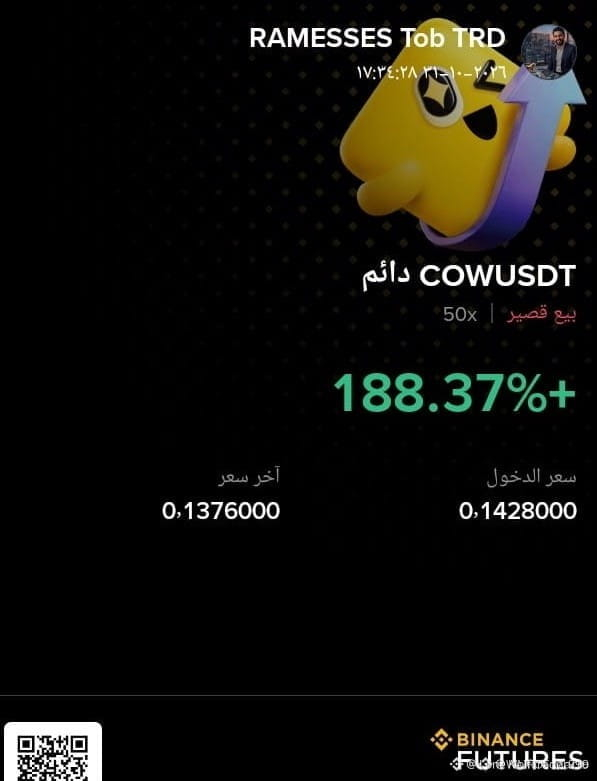
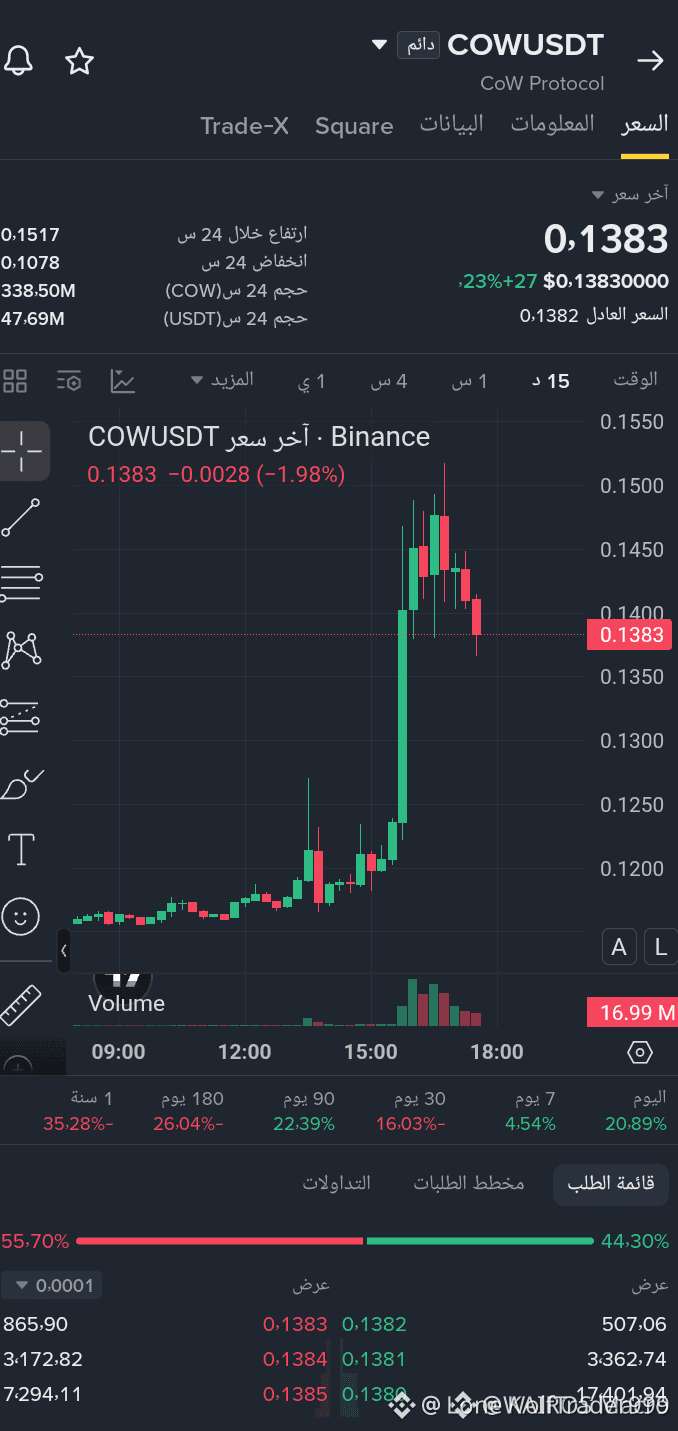
💥 $COW SMASHES THROUGH EVERY TARGET AFTER BRUTAL LIQUIDITY SHAKEOUTS! 🎯
The order books tested nerves as wicked intraday swings tried to shake out convicted hands right before expansion. ⚡
When volatility spikes, second-guessing your plan is easy, but respecting the trade thesis and execution framework paid out cleanly as every target got tagged. 💡
Discipline separates those who collect profits from those who get chopped out at the bottom. 💬 Did you hold through the turbulence to ring the register, or did the shakeout push you to the sidelines? 👇
⚠️ Not financial advice. Always manage your risk. 🛡️
🏷️ #COW #TakeProfit #Altcoins #TradingDiscipline
🎯 💎
1

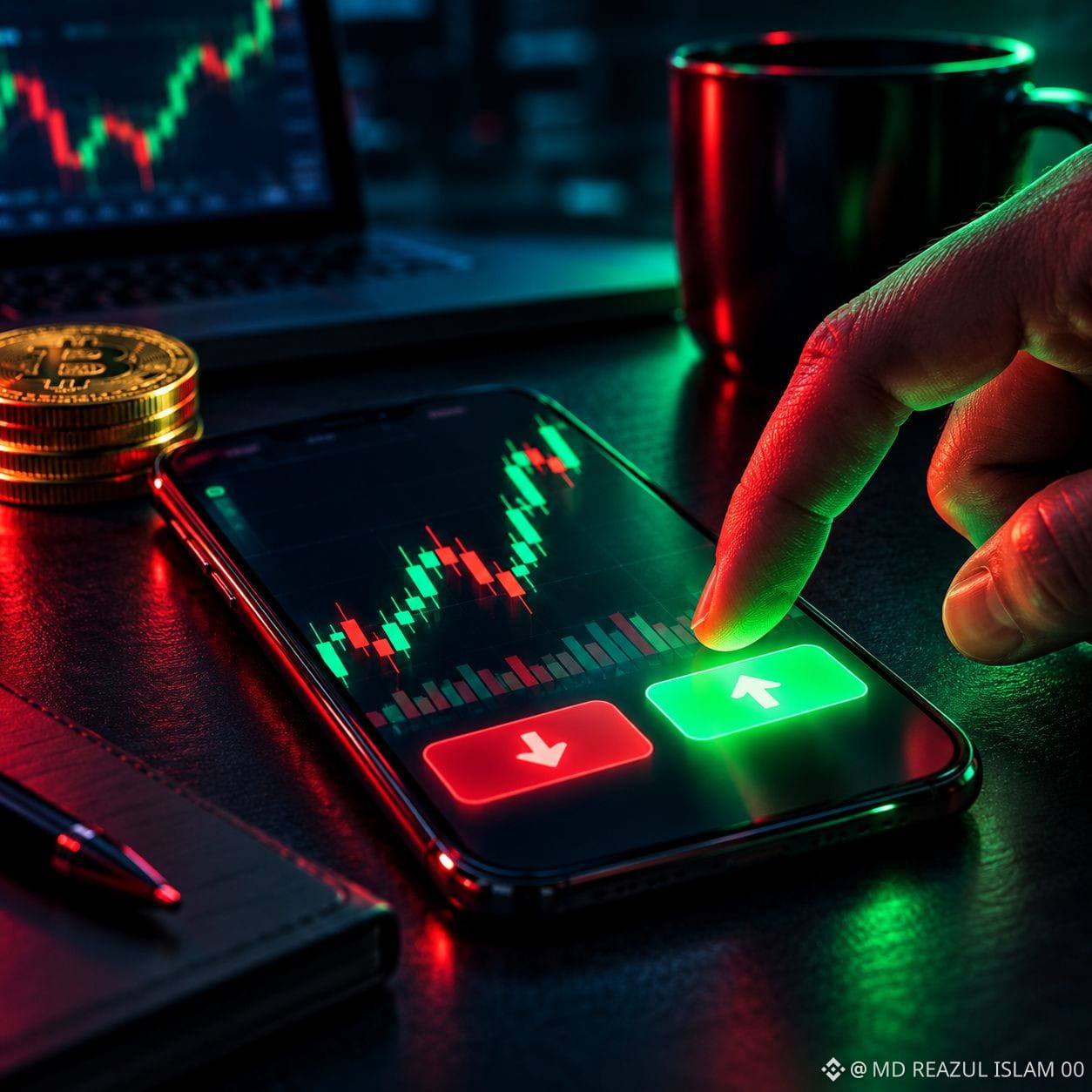
One emotional trade can destroy weeks of hard work. ⚠️
I've learned something important about crypto:
Fear makes you sell too early.
Greed makes you hold too long.
FOMO makes you enter at the worst time.
Revenge trading makes everything worse.
The market doesn't care about your emotions.
That's why having a plan matters more than chasing every green candle.
Be honest: Have you ever entered a trade just because you were afraid of missing out (FOMO)?
#Crypto #TradingTips #FOMO #BinanceSquare #TradingDiscipline
1
79
·
--
Bullish
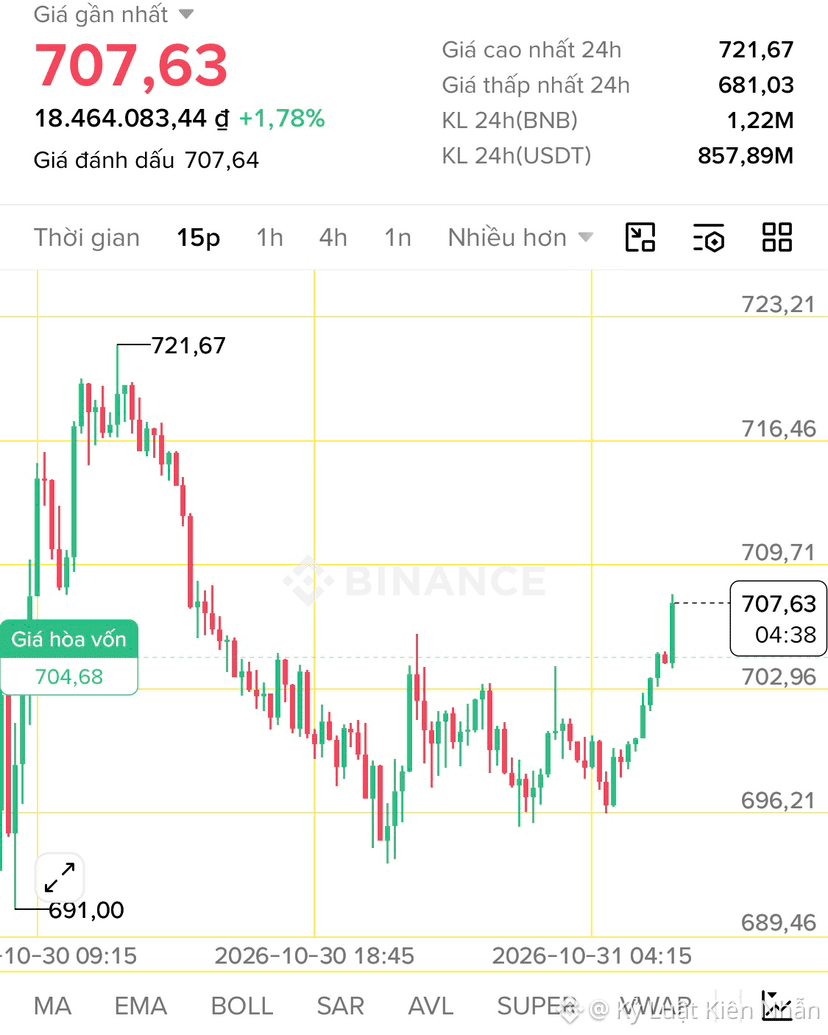
Small orders need discipline too
I used to sometimes be careless with small-volume orders.
I thought that if I got it wrong, the loss wouldn’t be significant, so there was no need to follow my plan too strictly.
But careless habits can carry over to larger trades too. I’m working on sticking to my principles, whether my position is large or small.
$BNB
Do you agree that discipline should start with the little things? Share your thoughts!
#TradingDiscipline
#BinancePick
#Binance
1
1
211

·
--
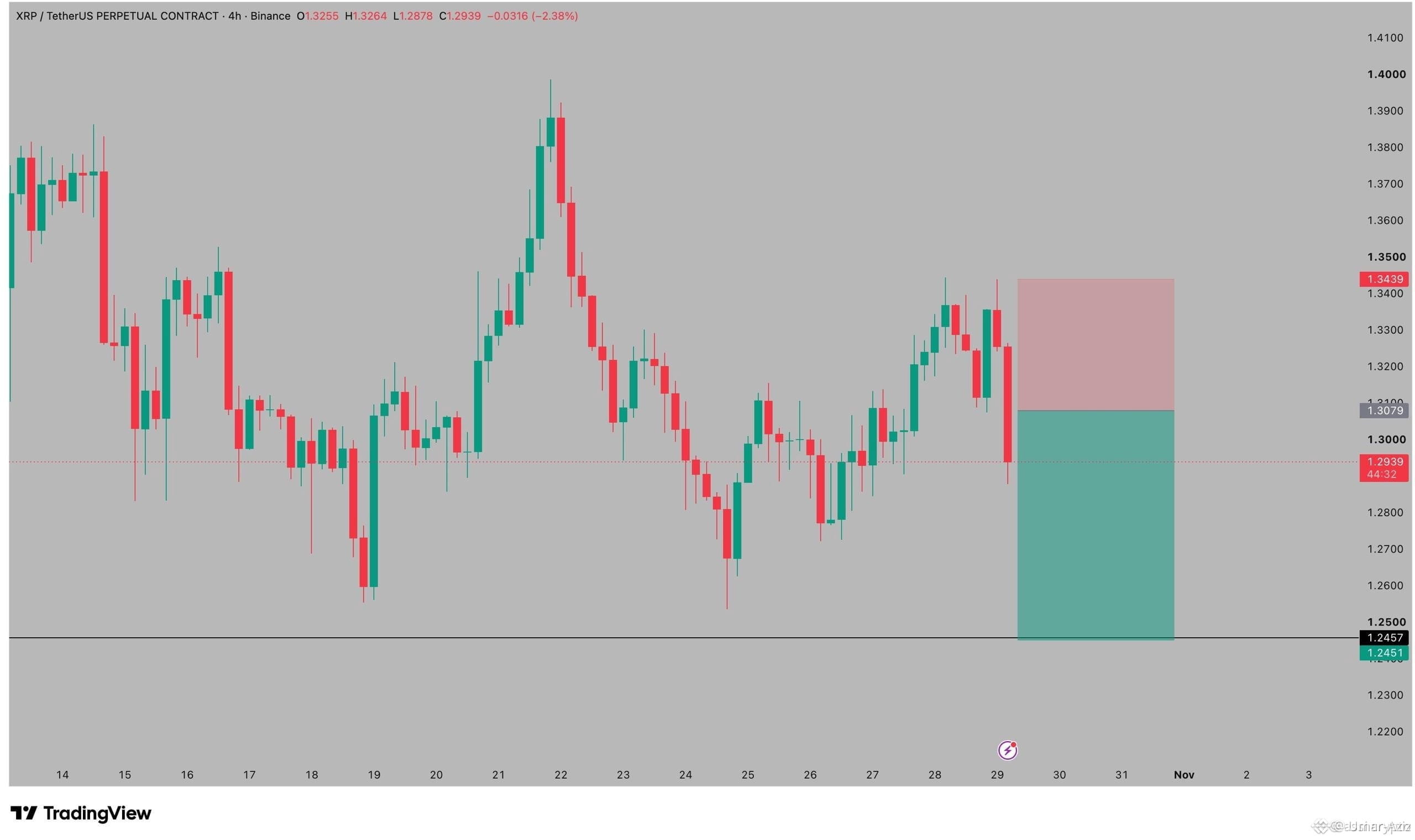
🎯 $XRP /USDT — TARGET ACHIEVED! 📉🔥
Another setup played out in the expected direction! XRP reached our projected target, delivering a great trading opportunity.
📊 A reminder for every trader:
✅ Follow your trading strategy.
✅ Secure profits when appropriate.
✅ Always use a stop-loss.
✅ Never let emotions control your decisions.
💡 Consistency is built through discipline, not luck.
🤝 Stay focused. Trade smart. Manage your risk!
#xrp #XRPUSDT #targethit #cryptotrading #BinanceSquare #TradingDiscipline
{spot}(XRPUSDT)
🎯 $XRP /USDT — TARGET ACHIEVED! 📉🔥
Another setup played out in the expected direction! XRP reached our projected target, delivering a great trading opportunity.
📊 A reminder for every trader:
✅ Follow your trading strategy.
✅ Secure profits when appropriate.
✅ Always use a stop-loss.
✅ Never let emotions control your decisions.
💡 Consistency is built through discipline, not luck.
🤝 Stay focused. Trade smart. Manage your risk!
#xrp #XRPUSDT #targethit #cryptotrading #BinanceSquare #TradingDiscipline
1
94

·
--
Bearish
#TradingDiscipline 📉🔥
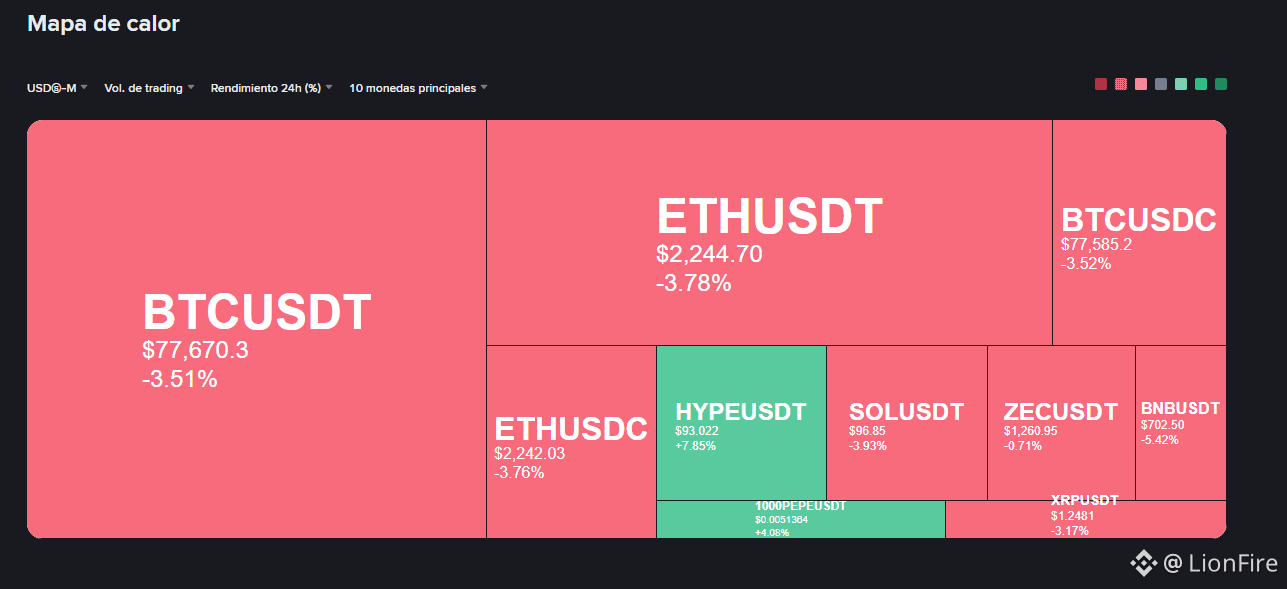
💥 The massive purge that swept the board and exposed the dangers of excessive leverage 📊⚡
The recent volatility storm, combined with information tensions across the ecosystem, spared no one. The derivatives market experienced one of its most violent jolts, triggering a historic cascade of wiped-out positions and an unforgiving purge of speculators.
🔍 1. Anatomy of the market massacre:
The cost of overleveraging: Excessive bullish bets were ruthlessly swept away within hours as prices broke through critical support levels, triggering a domino effect of automatic liquidations.
Liquidity vacuum: The speed of the drop shattered order books, showing that trading without room to maneuver during moments of systemic panic is a sure path to wiping out a trading account.
🧠 2. Tactical insight and trading discipline:
Leverage is a precision tool, never a casino bet. When the market shakes the board like this, it’s a stark reminder of why meticulous risk management and prudent use of margin are an investor’s only real defenses.
💡 Value opportunities are built with capital intact and a cool head, never by chasing the market after a mass liquidation. Stay disciplined and always trade with an unbreakable risk management plan! 🧠⚡
57
Not every trade needs to be taken
I used to be afraid of sitting out of the market because I thought that not placing a trade meant missing out on money.
After entering trades without a plan and taking losses, I finally understood that opportunities are plentiful, but capital and composure are limited.
Not trading when things aren’t clear is a valuable lesson too.
$BTC
If you’re also learning to be patient, leave a comment!
#TradingDiscipline
{future}(BTCUSDT)
Not every trade needs to be taken
I used to be afraid of sitting out of the market because I thought that not placing a trade meant missing out on money.
After entering trades without a plan and taking losses, I finally understood that opportunities are plentiful, but capital and composure are limited.
Not trading when things aren’t clear is a valuable lesson too.
$BTC
If you’re also learning to be patient, leave a comment!
#TradingDiscipline
1
395

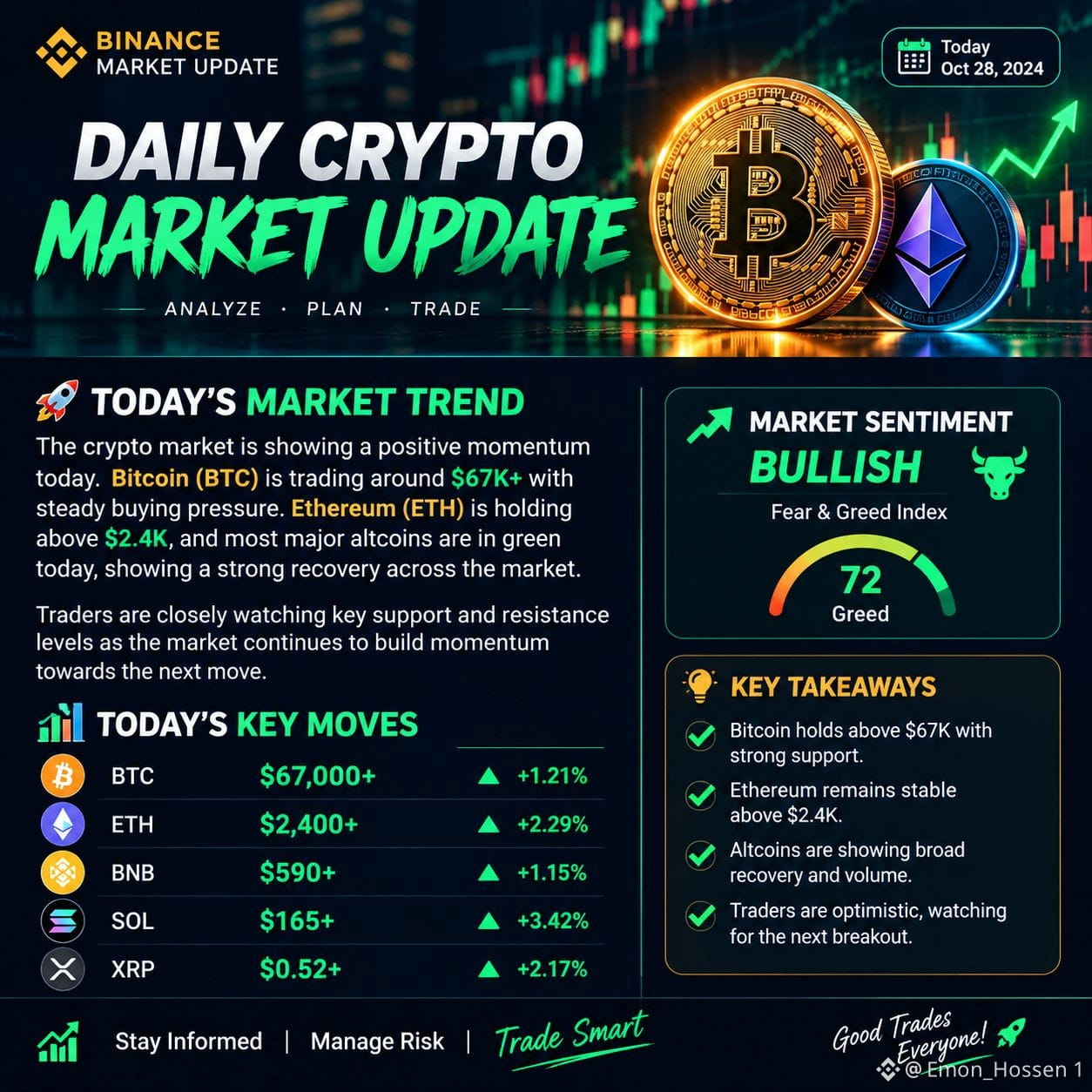
🚀 DAILY CRYPTO MARKET UPDATE 📊
🌍 October 29, 2026
📈 MARKET TREND: STAY ALERT & TRADE SMART! 🐂🐻
The crypto market continues to present opportunities for traders and investors. Bitcoin (BTC), Ethereum (ETH), and major altcoins remain key assets to watch as market participants monitor price action, trading volume, and important support and resistance levels.
📊 TODAY'S MARKET FOCUS
🟠 Bitcoin (BTC): Watch key support and resistance zones for potential breakout opportunities.
🔵 Ethereum (ETH): Monitor price momentum, volume, and important technical levels.
🟢 Altcoins: Look for strong volume and confirmed price action before entering any trade.
💡 SMART TRADING STRATEGY
✅ Analyze the market before entering a position.
✅ Follow price action and volume confirmation.
✅ Always use proper risk management.
✅ Avoid emotional trading and FOMO.
✅ Protect your capital and stay disciplined.
🎯 REMEMBER: The market doesn't reward impatience. Consistency, discipline, and risk management are essential for long-term success.
📌 Stay Informed | Manage Risk | Trade Smart
🔥 TRADE WITH VISION. GROW WITH DISCIPLINE. 🚀
💬 What's your market outlook today — BULLISH 🐂 or BEARISH 🐻?
#CryptoMarket #Bitcoin #Ethereum #CryptoTrading #MarketUpdate #TechnicalAnalysis #RiskManagement #Binance #TradingDiscipline
User-a283a6ae:
Follow
5
24

·
--
Bullish
💎 YOUR NEXT BIG ADVANTAGE MAY BE PATIENCE.
Not every market move deserves a trade.
Not every trending token deserves your money.
Not every prediction will be correct.
Learn to wait for confirmation, check the facts, and protect your capital.
Build knowledge before chasing profits. Consistency matters more than excitement.
🔥 If you believe discipline is more powerful than luck, comment “DISCIPLINE” below!
Follow for more crypto education, market discussions, and risk-management tips.
#CryptoCommunity #TradingDiscipline #Bitcoin #BinanceSquare

26

·
--
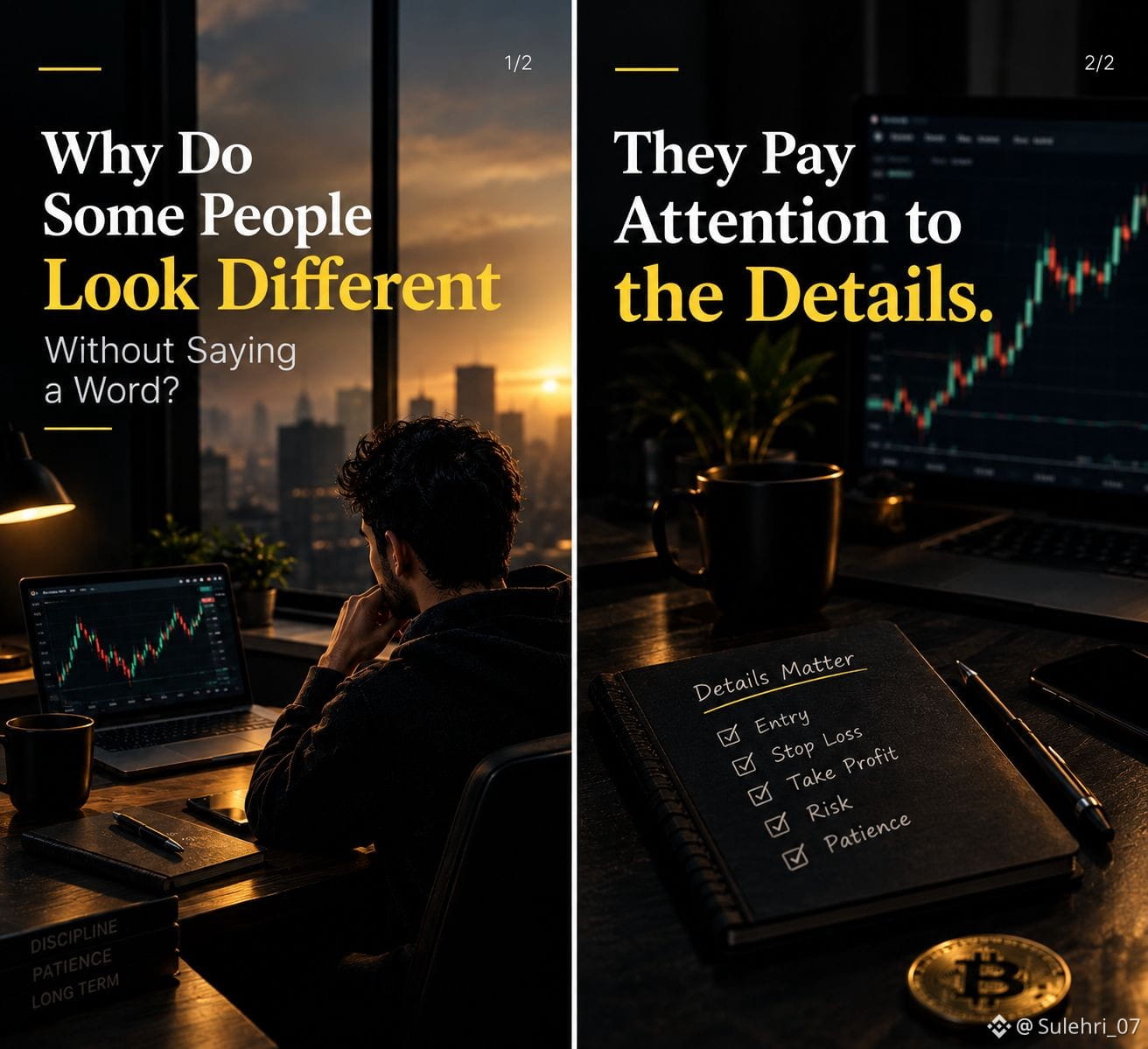
The difference is in the details. 📊
A good trade isn't just about finding an entry. It's about knowing your risk before you enter.
▪️ Entry
▪️ Stop-loss
▪️ Take-profit
▪️ Risk management
▪️ Patience
Your goal isn't to win every trade. It's to follow a process that protects you when you're wrong.
What matters most in your trading: Strategy, Discipline, or Risk Management? 👇
#CryptoTrading #bitcoin #tradingpsychology #RiskManagement #TradingDiscipline
119
When prices push toward a session high, the urge to chase momentum often overrides structural planning. For instance, Bitcoin currently changes hands at $80,507.49, traversing a 24-hour range from $79,506.00 to $80,836.01. Entering positions near a daily peak without a pre-calculated invalidation point exposes capital to unnecessary downside drag if the move stalls.
A measurable risk framework replaces this emotional impulse by anchoring position size directly to distance from structural support, rather than reacting to incoming price velocity. Defining maximum allowable capital loss per setup beforehand ensures that predetermined rules dictate execution parameters, not psychological comfort during fast market phases.
#RiskManagement #TradingDiscipline
52

·
--
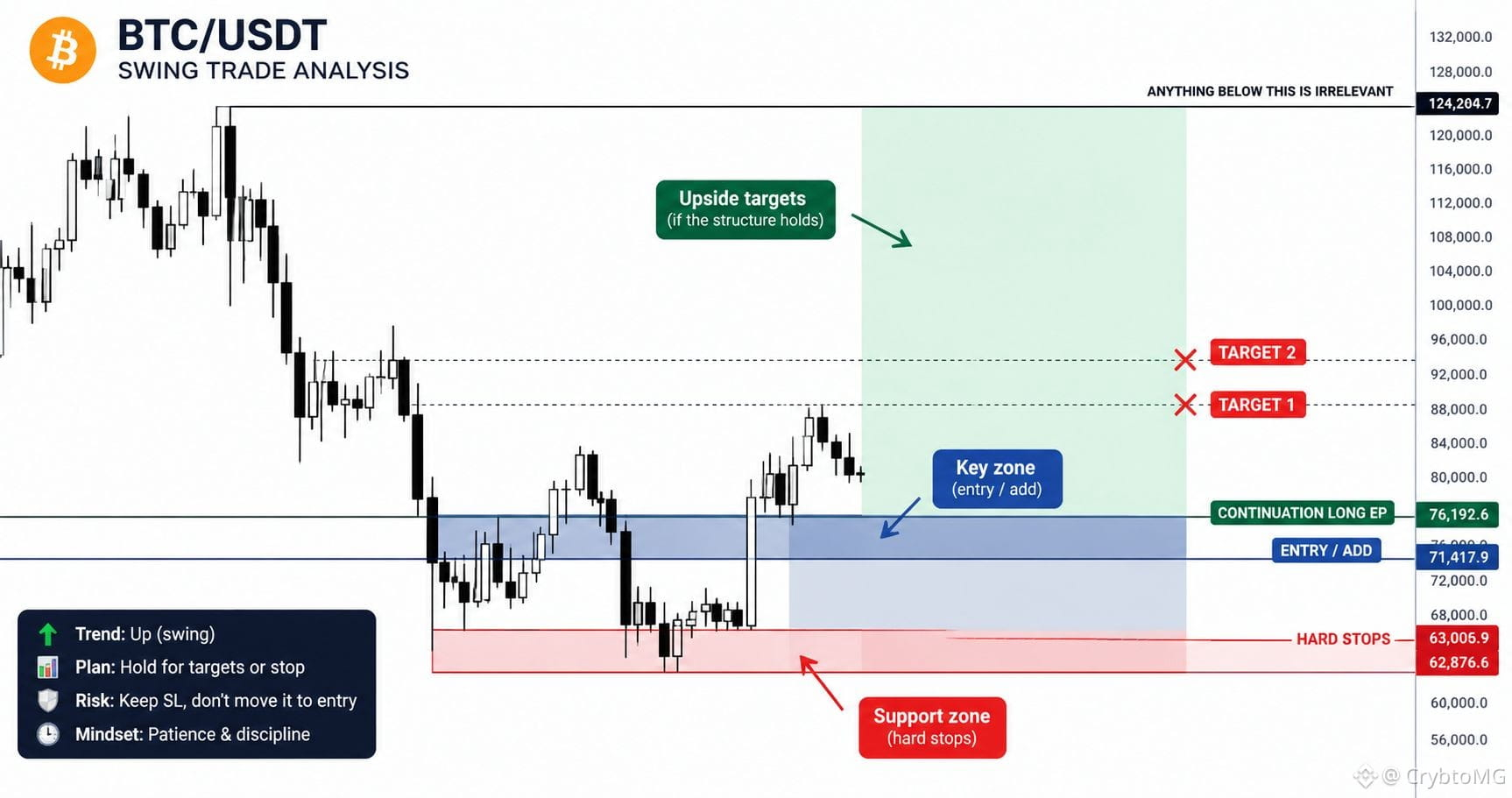
BTC Swing Trading: Patience Over Noise
I’m still holding my BTC long from $76.4K, and my plan remains unchanged for now.
Swing trading isn’t always exciting. Sometimes it means sitting through slow price action, extended ranges, and shifts in market sentiment without reacting to every move.
For me, the key questions are simple:
Has the market structure changed?
Is my original trading setup still valid?
Am I following my risk management plan?
I have a defined stop-loss and target. I’ll let the trade play out according to those levels rather than making emotional decisions based on short-term noise.
That doesn’t mean ignoring new information. If the setup becomes invalid, reassessing the plan is part of disciplined trading too.
Patience matters, but so does knowing when the evidence has changed.
How do you approach swing trades during long, sideways market conditions?
#Bitcoin #BTC #TradingDiscipline
1
24
Log in to explore more content
Join global crypto users on Binance Square
⚡️ Get latest and useful information about crypto.
💬 Trusted by the world’s largest crypto exchange.
👍 Discover real insights from verified creators.
Email / Phone number
Trending Topics
1
#BinanceReopensWithdrawalsForMoreAssets
599,182 views
2,836 Discussing
2
#BTCRebounds80K
119,787 views
1,183 Discussing
3
#Binance98PercentReplenished
63,484 views
822 Discussing
4
#ADPUSPrivateEmployersAdd86000JobsInOctober
5,698 views
92 Discussing
5
#USMidterms-WhatAreMarketsExpecting?
424,579 views
2,318 Discussing
6
#USOctoberNFP-AreRateCutsStillPossible
435,164 views
3,034 Discussing
7
#TRUMPFalls18.1%In24HoursToRecordLow
4,346 views
57 Discussing
8
#USClearsSingleStockPerpetualFutures
5,344 views
104 Discussing
9
#GrayscaleSaysJPMorganAddsBitcoinTo2027LongTermAssumptions
4 views
4 Discussing
10
#HongKongPlansGoldTokensTiedTo400OunceBars
305 views
3 Discussing