
#tapeout
tapeout
1,518 views
36 Discussing
Hot
Latest

·
--
I've never worked with DIY electronic hardware before. I wanted to learn about TapeOut and explore whether it could be applied to hardware.
I decided to start with the simplest thing: I bought my first ESP32 development board. I connected it to Grokbot and gave it a try. First, I asked it to read me a TechOut daily news briefing, and got it working. Next, I'll see if it can give me scheduled briefings.
I've never worked with this kind of thing before, so I'd really appreciate any tips from the experts here.
#TapeOut #ElectronicsDIY
I've never worked with DIY electronic hardware before. I wanted to learn about TapeOut and explore whether it could be applied to hardware.
I decided to start with the simplest thing: I bought my first ESP32 development board. I connected it to Grokbot and gave it a try. First, I asked it to read me a TechOut daily news briefing, and got it working. Next, I'll see if it can give me scheduled briefings.
I've never worked with this kind of thing before, so I'd really appreciate any tips from the experts here.
#TapeOut #ElectronicsDIY
I decided to start with the simplest thing: I bought my first ESP32 development board. I connected it to Grokbot and gave it a try. First, I asked it to read me a TechOut daily news briefing, and got it working. Next, I'll see if it can give me scheduled briefings.
I've never worked with this kind of thing before, so I'd really appreciate any tips from the experts here.
#TapeOut #ElectronicsDIY
54
·
--
After learning from the development experiences shared by experts like @zhuoning293 and @NetLayerLabs, I tried building a robot strategy simulation system based on logic gate circuits.
TapeRover is a simulation testing project developed under the TapeOut protocol.
I did all the work myself—from web design, map creation, logic gate circuits, and simulation scenarios to design rules, test parameters, rule validation, and smart contract deployment—with the help of AI, of course. It took nearly a month, and even the logo design took six days.
The logo is beautifully designed: a mechanical leopard with an embedded circuit, an electric gaze, a commanding presence, and a strong sense of technology and power.
What is TapeRover?
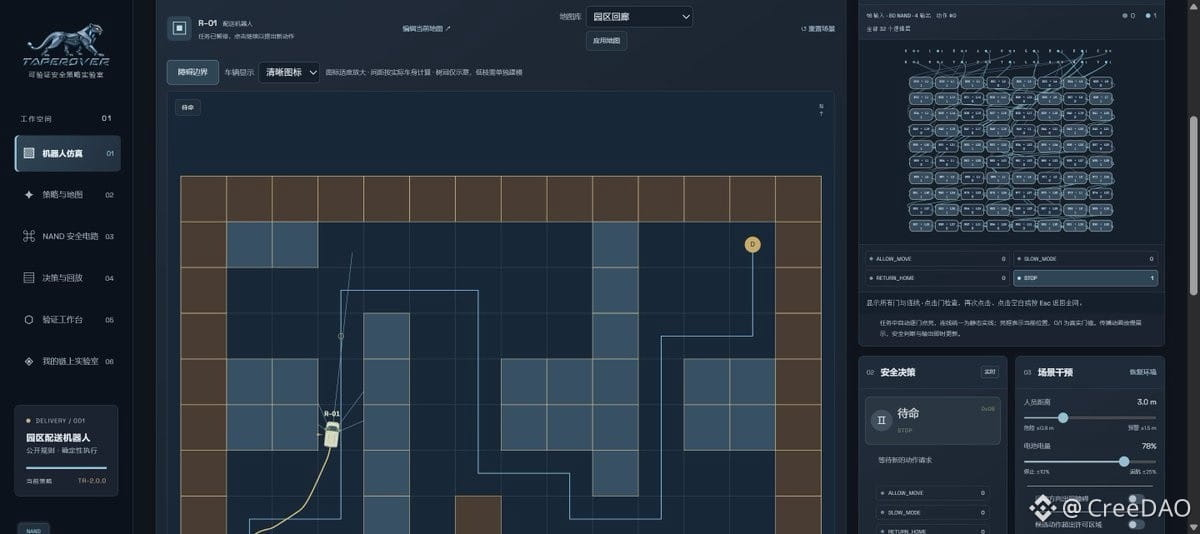
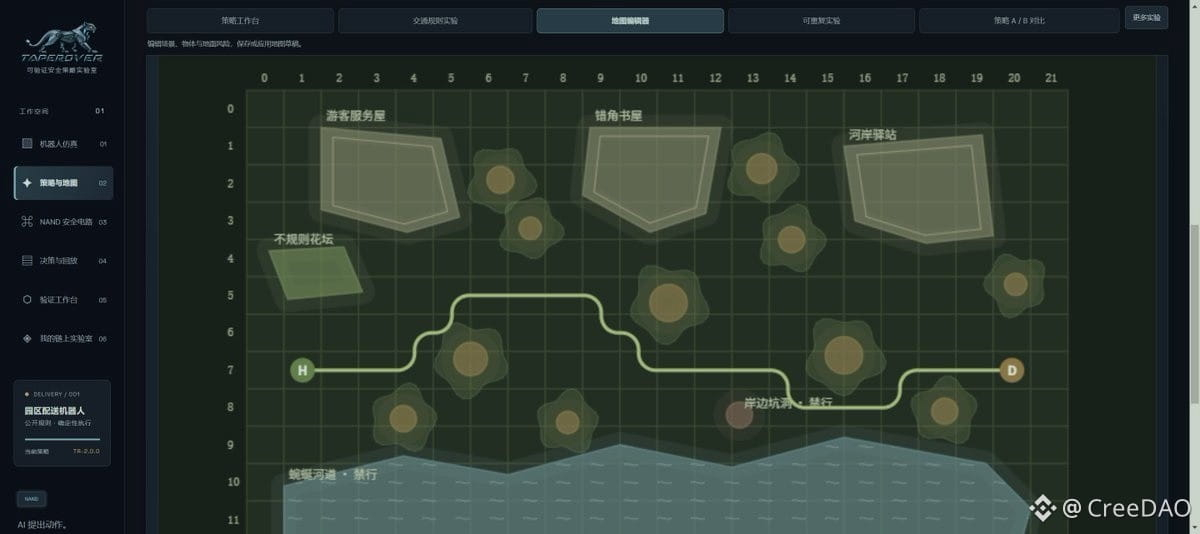
TapeRover is a laboratory for verifiable robot safety strategies. For now, its main character is a small delivery vehicle navigating a campus in a web browser. Users can choose or edit maps, simulate complex road conditions such as curves, narrow roads, potholes, and standing water, set conditions such as stationary or moving obstacles, pedestrians, and battery levels, and then observe the vehicle move forward, slow down, return to base, or stop.
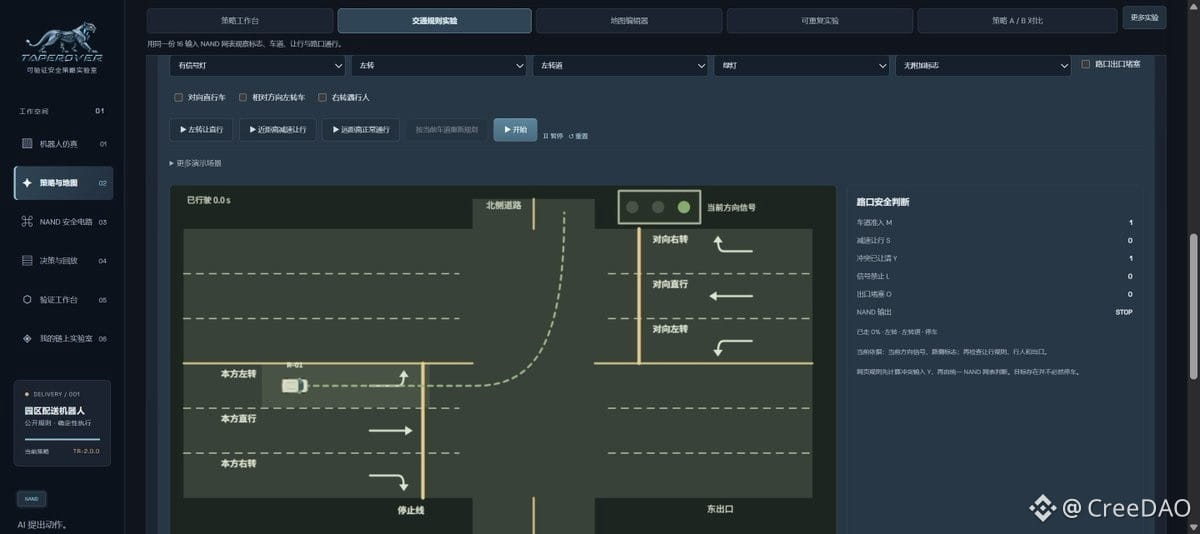
Traffic scenarios can also demonstrate some basic right-of-way rules, such as traffic lights, pedestrians at crosswalks, stop-and-yield rules, speed limits, and no-entry and no-turn signs. Depending on the scenario, the page displays whether the vehicle should proceed, slow down, or stop. These are structured simulation inputs on a web page, not automatic recognition of real-world road signs or comprehensive verification of traffic laws.
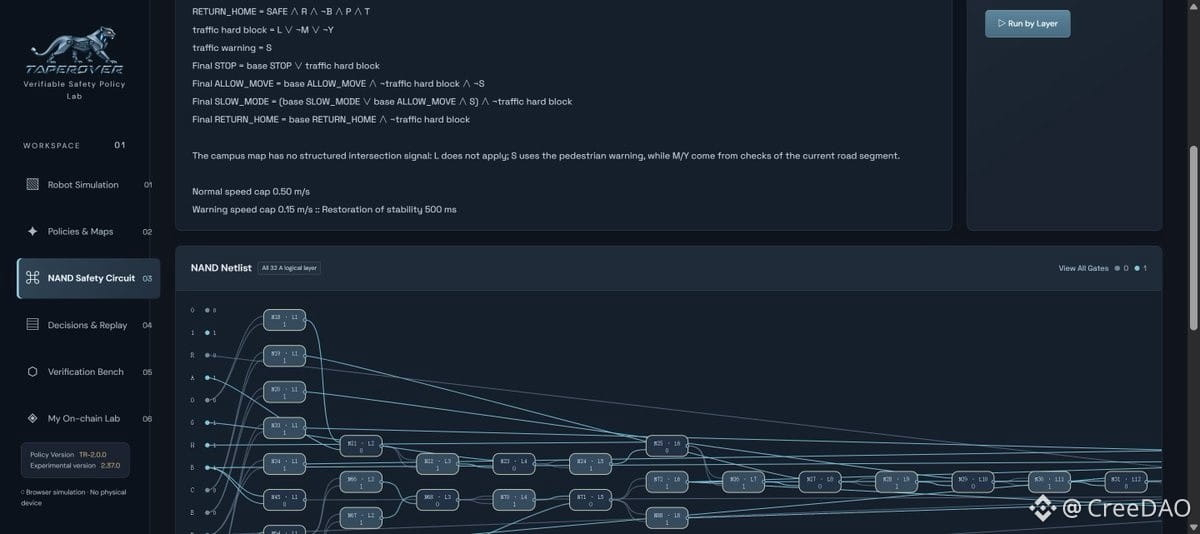
It also has a special feature: safety rules are encoded as circuits made up of NAND logic gates. When the vehicle carries out a task, the page displays the circuit inputs, the state of each gate, and the final output. So after seeing “the vehicle stopped,” users can ask: Which condition triggered the stop? Did this decision follow the rules published in advance?
The current project also provides tools for strategy comparison, decision replay, and verification. Users can run two sets of parameters in the same scenario and compare the results, or check whether the rules behave consistently across different input combinations.
What can it be used for?
Learning robot safety rules. Beginners can use the map and vehicle to understand concepts such as obstacle avoidance, emergency stops, and returning to base when the battery is low. It’s more intuitive than looking at formulas alone.
Simulating complex road conditions and basic traffic rules. Change road conditions, traffic lights, and right-of-way requirements in scenarios involving curves, obstacles, and intersections, and observe when the vehicle proceeds, slows down, or stops.
Designing and comparing strategies. Developers can change the map, vehicle dimensions, or rule parameters, observe how the vehicle performs under different conditions, and use playback records to discuss why a particular decision was made.
Testing ideas before buying hardware. You can run experiments in a web browser without a development board, sensors, or motors. The project also provides device-side C rules and test materials for cross-checking on a computer. Hardware can be added gradually later when building a low-speed toy car or educational robot.
Demonstrating verifiable on-chain circuits. Users can submit a safety netlist to a supported on-chain lab, then read back the circuit record and compare it with the rules used on the web page. Here, “tapeout” means submitting an on-chain circuit record, not manufacturing a physical chip.
What application scenarios can you explore?
· Desktop toy cars or educational robots.
· Digital twins for campus delivery or indoor inspection.
· Research into motion authorization for mobile devices.
· Verifiable strategy experimentation platforms.
For example, a research group can use it to discuss how a campus delivery vehicle should respond to pedestrians; developers can use the same test data to compare the outputs of the web-based rules with those of a computer program. Hardware enthusiasts can use it to connect an ESP-32 development board and build a self-driving toy car.
However, real vehicles still need reliable sensors, braking systems, physical emergency stops, and on-site testing. A correct decision on a web page does not by itself prove that a physical vehicle is safe on real roads.
The website can now be used to create your own on-chain lab, develop your own strategies and parameters, and submit a tapeout. I’ll upload it to DeWeb in a few days.
Official website:
https://taperover.vercel.app/
#TapeOut #TapeRover
After learning from the development experiences shared by experts like @zhuoning293 and @NetLayerLabs, I tried building a robot strategy simulation system based on logic gate circuits.
TapeRover is a simulation testing project developed under the TapeOut protocol.
I did all the work myself—from web design, map creation, logic gate circuits, and simulation scenarios to design rules, test parameters, rule validation, and smart contract deployment—with the help of AI, of course. It took nearly a month, and even the logo design took six days.
The logo is beautifully designed: a mechanical leopard with an embedded circuit, an electric gaze, a commanding presence, and a strong sense of technology and power.
What is TapeRover?
TapeRover is a laboratory for verifiable robot safety strategies. For now, its main character is a small delivery vehicle navigating a campus in a web browser. Users can choose or edit maps, simulate complex road conditions such as curves, narrow roads, potholes, and standing water, set conditions such as stationary or moving obstacles, pedestrians, and battery levels, and then observe the vehicle move forward, slow down, return to base, or stop.
Traffic scenarios can also demonstrate some basic right-of-way rules, such as traffic lights, pedestrians at crosswalks, stop-and-yield rules, speed limits, and no-entry and no-turn signs. Depending on the scenario, the page displays whether the vehicle should proceed, slow down, or stop. These are structured simulation inputs on a web page, not automatic recognition of real-world road signs or comprehensive verification of traffic laws.
It also has a special feature: safety rules are encoded as circuits made up of NAND logic gates. When the vehicle carries out a task, the page displays the circuit inputs, the state of each gate, and the final output. So after seeing “the vehicle stopped,” users can ask: Which condition triggered the stop? Did this decision follow the rules published in advance?
The current project also provides tools for strategy comparison, decision replay, and verification. Users can run two sets of parameters in the same scenario and compare the results, or check whether the rules behave consistently across different input combinations.
What can it be used for?
Learning robot safety rules. Beginners can use the map and vehicle to understand concepts such as obstacle avoidance, emergency stops, and returning to base when the battery is low. It’s more intuitive than looking at formulas alone.
Simulating complex road conditions and basic traffic rules. Change road conditions, traffic lights, and right-of-way requirements in scenarios involving curves, obstacles, and intersections, and observe when the vehicle proceeds, slows down, or stops.
Designing and comparing strategies. Developers can change the map, vehicle dimensions, or rule parameters, observe how the vehicle performs under different conditions, and use playback records to discuss why a particular decision was made.
Testing ideas before buying hardware. You can run experiments in a web browser without a development board, sensors, or motors. The project also provides device-side C rules and test materials for cross-checking on a computer. Hardware can be added gradually later when building a low-speed toy car or educational robot.
Demonstrating verifiable on-chain circuits. Users can submit a safety netlist to a supported on-chain lab, then read back the circuit record and compare it with the rules used on the web page. Here, “tapeout” means submitting an on-chain circuit record, not manufacturing a physical chip.
What application scenarios can you explore?
· Desktop toy cars or educational robots.
· Digital twins for campus delivery or indoor inspection.
· Research into motion authorization for mobile devices.
· Verifiable strategy experimentation platforms.
For example, a research group can use it to discuss how a campus delivery vehicle should respond to pedestrians; developers can use the same test data to compare the outputs of the web-based rules with those of a computer program. Hardware enthusiasts can use it to connect an ESP-32 development board and build a self-driving toy car.
However, real vehicles still need reliable sensors, braking systems, physical emergency stops, and on-site testing. A correct decision on a web page does not by itself prove that a physical vehicle is safe on real roads.
The website can now be used to create your own on-chain lab, develop your own strategies and parameters, and submit a tapeout. I’ll upload it to DeWeb in a few days.
Official website:
https://taperover.vercel.app/
#TapeOut #TapeRover
TapeRover is a simulation testing project developed under the TapeOut protocol.
I did all the work myself—from web design, map creation, logic gate circuits, and simulation scenarios to design rules, test parameters, rule validation, and smart contract deployment—with the help of AI, of course. It took nearly a month, and even the logo design took six days.
The logo is beautifully designed: a mechanical leopard with an embedded circuit, an electric gaze, a commanding presence, and a strong sense of technology and power.
What is TapeRover?
TapeRover is a laboratory for verifiable robot safety strategies. For now, its main character is a small delivery vehicle navigating a campus in a web browser. Users can choose or edit maps, simulate complex road conditions such as curves, narrow roads, potholes, and standing water, set conditions such as stationary or moving obstacles, pedestrians, and battery levels, and then observe the vehicle move forward, slow down, return to base, or stop.
Traffic scenarios can also demonstrate some basic right-of-way rules, such as traffic lights, pedestrians at crosswalks, stop-and-yield rules, speed limits, and no-entry and no-turn signs. Depending on the scenario, the page displays whether the vehicle should proceed, slow down, or stop. These are structured simulation inputs on a web page, not automatic recognition of real-world road signs or comprehensive verification of traffic laws.
It also has a special feature: safety rules are encoded as circuits made up of NAND logic gates. When the vehicle carries out a task, the page displays the circuit inputs, the state of each gate, and the final output. So after seeing “the vehicle stopped,” users can ask: Which condition triggered the stop? Did this decision follow the rules published in advance?
The current project also provides tools for strategy comparison, decision replay, and verification. Users can run two sets of parameters in the same scenario and compare the results, or check whether the rules behave consistently across different input combinations.
What can it be used for?
Learning robot safety rules. Beginners can use the map and vehicle to understand concepts such as obstacle avoidance, emergency stops, and returning to base when the battery is low. It’s more intuitive than looking at formulas alone.
Simulating complex road conditions and basic traffic rules. Change road conditions, traffic lights, and right-of-way requirements in scenarios involving curves, obstacles, and intersections, and observe when the vehicle proceeds, slows down, or stops.
Designing and comparing strategies. Developers can change the map, vehicle dimensions, or rule parameters, observe how the vehicle performs under different conditions, and use playback records to discuss why a particular decision was made.
Testing ideas before buying hardware. You can run experiments in a web browser without a development board, sensors, or motors. The project also provides device-side C rules and test materials for cross-checking on a computer. Hardware can be added gradually later when building a low-speed toy car or educational robot.
Demonstrating verifiable on-chain circuits. Users can submit a safety netlist to a supported on-chain lab, then read back the circuit record and compare it with the rules used on the web page. Here, “tapeout” means submitting an on-chain circuit record, not manufacturing a physical chip.
What application scenarios can you explore?
· Desktop toy cars or educational robots.
· Digital twins for campus delivery or indoor inspection.
· Research into motion authorization for mobile devices.
· Verifiable strategy experimentation platforms.
For example, a research group can use it to discuss how a campus delivery vehicle should respond to pedestrians; developers can use the same test data to compare the outputs of the web-based rules with those of a computer program. Hardware enthusiasts can use it to connect an ESP-32 development board and build a self-driving toy car.
However, real vehicles still need reliable sensors, braking systems, physical emergency stops, and on-site testing. A correct decision on a web page does not by itself prove that a physical vehicle is safe on real roads.
The website can now be used to create your own on-chain lab, develop your own strategies and parameters, and submit a tapeout. I’ll upload it to DeWeb in a few days.
Official website:
https://taperover.vercel.app/
#TapeOut #TapeRover
51
·
--
I sent out a red packet yesterday and gained 50 followers?
This red packet is really handy. It’s built on the TapeOut protocol.
Try your luck: each red packet contains a random amount, and it’s first come, first served.
On-chain transfers: once claimed, the funds go directly to the claimant’s wallet.
Verifiable: each red packet has a verification page listing the claim records and transaction hashes.
#TapeOut #链上红包 #tapexo https://twitter.com/GKCDAO/status/2116842158607286325
I sent out a red packet yesterday and gained 50 followers?
This red packet is really handy. It’s built on the TapeOut protocol.
Try your luck: each red packet contains a random amount, and it’s first come, first served.
On-chain transfers: once claimed, the funds go directly to the claimant’s wallet.
Verifiable: each red packet has a verification page listing the claim records and transaction hashes.
#TapeOut #链上红包 #tapexo https://twitter.com/GKCDAO/status/2116842158607286325
This red packet is really handy. It’s built on the TapeOut protocol.
Try your luck: each red packet contains a random amount, and it’s first come, first served.
On-chain transfers: once claimed, the funds go directly to the claimant’s wallet.
Verifiable: each red packet has a verification page listing the claim records and transaction hashes.
#TapeOut #链上红包 #tapexo https://twitter.com/GKCDAO/status/2116842158607286325
71
·
--
This idea is really interesting — helping users manage permissions for circuit containers, authorizing others to help you develop and then deploy the DeWEB website into the container.
Leaving everything else aside, when choosing a project, you should first look at its LOGO. The LOGO design of this project is very beautiful; did they hire a professional designer?
#TapeKey #TapeOut
Quote:
Hi everyone! We'd like to introduce TapeKey, its product, and our vision for the future. @Blonskr @TapeOutWorld
TapeKey is a circuit container access and key management tool built for the TapeOut ecosystem.
https://twitter.com/tapekeyofficial/status/2115741330144178333
This idea is really interesting — helping users manage permissions for circuit containers, authorizing others to help you develop and then deploy the DeWEB website into the container.
Leaving everything else aside, when choosing a project, you should first look at its LOGO. The LOGO design of this project is very beautiful; did they hire a professional designer?
#TapeKey #TapeOut
Quote:
Hi everyone! We'd like to introduce TapeKey, its product, and our vision for the future. @Blonskr @TapeOutWorld
TapeKey is a circuit container access and key management tool built for the TapeOut ecosystem.
https://twitter.com/tapekeyofficial/status/2115741330144178333
Leaving everything else aside, when choosing a project, you should first look at its LOGO. The LOGO design of this project is very beautiful; did they hire a professional designer?
#TapeKey #TapeOut
Quote:
Hi everyone! We'd like to introduce TapeKey, its product, and our vision for the future. @Blonskr @TapeOutWorld
TapeKey is a circuit container access and key management tool built for the TapeOut ecosystem.
https://twitter.com/tapekeyofficial/status/2115741330144178333
73

I’ve been added to the Chinese Community Building Group by BruceBlue and the TapeOutCF Community Foundation. Thanks 🙏
A few things I’ve built in the TapeOut ecosystem are open source:
· tapeout-harvester: automatically claims BEM rewards; stops if something goes wrong instead of forcing through
· Agent Firewall: runs a rules check before an AI wallet signs
· FabX Miner Desk: a read-only dashboard for FabX miners to check their entry costs
I especially agree with this line from the Foundation’s post: whether the code runs and whether anyone uses it should count more than followers and holdings. Onward, building~
#TapeOut #AI钱包 #OpenSource
I’ve been added to the Chinese Community Building Group by BruceBlue and the TapeOutCF Community Foundation. Thanks 🙏
A few things I’ve built in the TapeOut ecosystem are open source:
· tapeout-harvester: automatically claims BEM rewards; stops if something goes wrong instead of forcing through
· Agent Firewall: runs a rules check before an AI wallet signs
· FabX Miner Desk: a read-only dashboard for FabX miners to check their entry costs
I especially agree with this line from the Foundation’s post: whether the code runs and whether anyone uses it should count more than followers and holdings. Onward, building~
#TapeOut #AI钱包 #OpenSource
A few things I’ve built in the TapeOut ecosystem are open source:
· tapeout-harvester: automatically claims BEM rewards; stops if something goes wrong instead of forcing through
· Agent Firewall: runs a rules check before an AI wallet signs
· FabX Miner Desk: a read-only dashboard for FabX miners to check their entry costs
I especially agree with this line from the Foundation’s post: whether the code runs and whether anyone uses it should count more than followers and holdings. Onward, building~
#TapeOut #AI钱包 #OpenSource
77
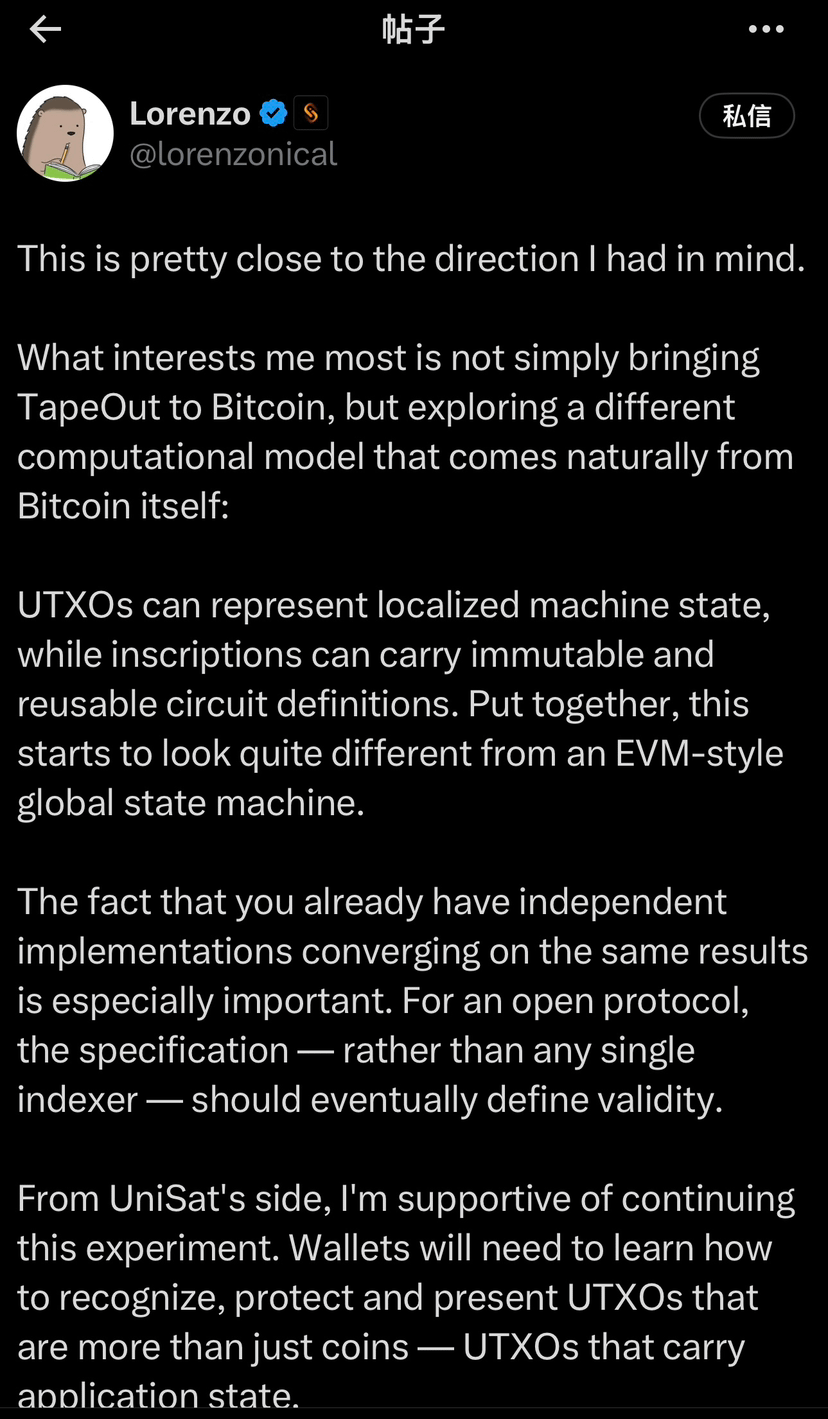
This experiment by BruceBlue is pretty interesting: it inscribes TapeOut circuit definitions onto Bitcoin, like inscriptions, and stores the state at each step of the circuit in UTXOs controlled by their holders. An off-chain indexing program handles the computation and verification—no tokens are issued, and Bitcoin’s rules aren’t changed.
The question he raised really resonates with me: how should a wallet display a “dynamic UTXO”?
Anyone who’s used inscriptions and runes knows the biggest risk is that your wallet won’t recognize your assets. When sending or making change, it might accidentally spend them as ordinary UTXOs. UCO built coin-selection safeguards against accidental spending and a state-query interface into its toolkit from the outset. That’s the right approach.
It’s still only running in a test environment for now. Once the wallet layer is integrated, I’d like to be among the first to try it.
#BTC #铭文 #TapeOut
This experiment by BruceBlue is pretty interesting: it inscribes TapeOut circuit definitions onto Bitcoin, like inscriptions, and stores the state at each step of the circuit in UTXOs controlled by their holders. An off-chain indexing program handles the computation and verification—no tokens are issued, and Bitcoin’s rules aren’t changed.
The question he raised really resonates with me: how should a wallet display a “dynamic UTXO”?
Anyone who’s used inscriptions and runes knows the biggest risk is that your wallet won’t recognize your assets. When sending or making change, it might accidentally spend them as ordinary UTXOs. UCO built coin-selection safeguards against accidental spending and a state-query interface into its toolkit from the outset. That’s the right approach.
It’s still only running in a test environment for now. Once the wallet layer is integrated, I’d like to be among the first to try it.
#BTC #铭文 #TapeOut
The question he raised really resonates with me: how should a wallet display a “dynamic UTXO”?
Anyone who’s used inscriptions and runes knows the biggest risk is that your wallet won’t recognize your assets. When sending or making change, it might accidentally spend them as ordinary UTXOs. UCO built coin-selection safeguards against accidental spending and a state-query interface into its toolkit from the outset. That’s the right approach.
It’s still only running in a test environment for now. Once the wallet layer is integrated, I’d like to be among the first to try it.
#BTC #铭文 #TapeOut
186

·
--
Verified
A small project in the Fractal Bitcoin ecosystem #Tapeout
An open-source experimental protocol running on Fractal Bitcoin
🔸 Project: @TapeFractal
🔸 Chain: Fractal Bitcoin (FB)
🔸 Activity: Free mint, open to the public
🔸 Time: October 27, 20:00 (Beijing time)
🔸 Official website: Link in the original post
This is a free public mint. The screenshot shows a supply of 10,000,000.
A free mint doesn’t mean there are absolutely no costs. Be sure to set aside gas, watch out for risks, and don’t approve permissions carelessly.
A small project in the Fractal Bitcoin ecosystem #Tapeout
An open-source experimental protocol running on Fractal Bitcoin
🔸 Project: @TapeFractal
🔸 Chain: Fractal Bitcoin (FB)
🔸 Activity: Free mint, open to the public
🔸 Time: October 27, 20:00 (Beijing time)
🔸 Official website: Link in the original post
This is a free public mint. The screenshot shows a supply of 10,000,000.
A free mint doesn’t mean there are absolutely no costs. Be sure to set aside gas, watch out for risks, and don’t approve permissions carelessly.
An open-source experimental protocol running on Fractal Bitcoin
🔸 Project: @TapeFractal
🔸 Chain: Fractal Bitcoin (FB)
🔸 Activity: Free mint, open to the public
🔸 Time: October 27, 20:00 (Beijing time)
🔸 Official website: Link in the original post
This is a free public mint. The screenshot shows a supply of 10,000,000.
A free mint doesn’t mean there are absolutely no costs. Be sure to set aside gas, watch out for risks, and don’t approve permissions carelessly.
124

·
--
Bullish
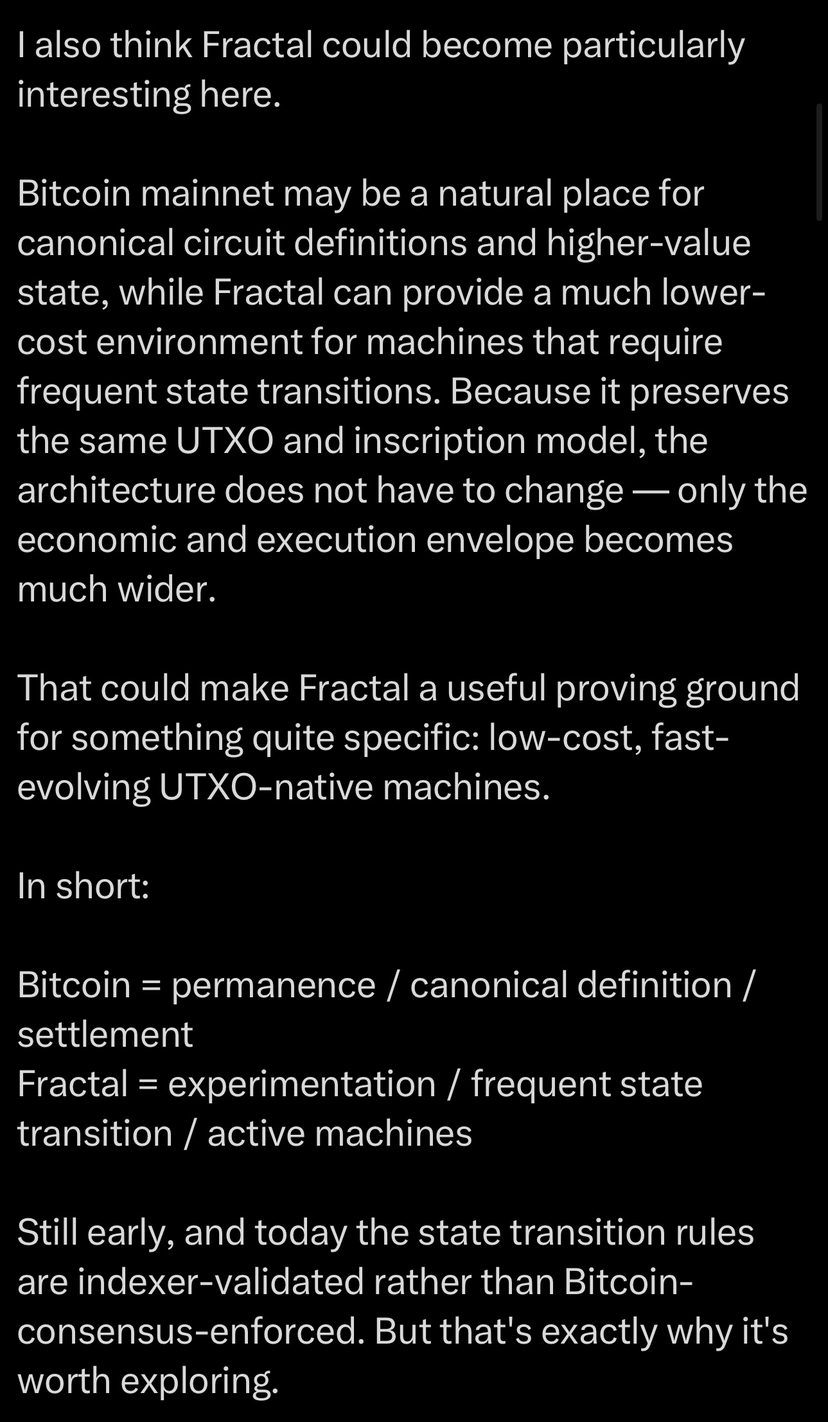
Here’s my take on Lorenzo’s reply to TapeOut, summed up in terms retail investors can understand.
What he sees potential in is using UTXOs to carry application state, and inscriptions to store fixed computational rules. If different teams can follow the same standards and get the same results, protocols like these may be able to break free from dependence on a single indexer.
If everything runs on the Bitcoin mainnet, costs and how frequently things can run will both be limited.
The Bitcoin mainnet is better suited to storing long-term rules, important state, and final settlements. Parts that need frequent updates can run on Fractal. Since both use the same UTXO and inscription model, developers won’t need to switch to a completely different architecture, which should also make testing and experimentation much cheaper.
UniSat’s position is also clear: it’s willing to continue supporting this experiment. Wallets will still need to recognize, protect, and display UTXOs that carry application state.
At this stage, that support mainly means coordination on wallets and infrastructure. It doesn’t mean UniSat endorses every token and application.
My take on this post is simple.
Protocols and applications—especially those that need frequent state updates—can start by running on Fractal. Bitcoin stores the important rules and results, while Fractal provides a lower-cost environment that can run more frequently.
What Fractal currently lacks is applications that run continuously. If developers, wallets, indexers, and users actually come on board, FB may have a chance to move from “having the technology” to “being used.”
#bitcoin #fractal #TapeOut
Here’s my take on Lorenzo’s reply to TapeOut, summed up in terms retail investors can understand.
What he sees potential in is using UTXOs to carry application state, and inscriptions to store fixed computational rules. If different teams can follow the same standards and get the same results, protocols like these may be able to break free from dependence on a single indexer.
If everything runs on the Bitcoin mainnet, costs and how frequently things can run will both be limited.
The Bitcoin mainnet is better suited to storing long-term rules, important state, and final settlements. Parts that need frequent updates can run on Fractal. Since both use the same UTXO and inscription model, developers won’t need to switch to a completely different architecture, which should also make testing and experimentation much cheaper.
UniSat’s position is also clear: it’s willing to continue supporting this experiment. Wallets will still need to recognize, protect, and display UTXOs that carry application state.
At this stage, that support mainly means coordination on wallets and infrastructure. It doesn’t mean UniSat endorses every token and application.
My take on this post is simple.
Protocols and applications—especially those that need frequent state updates—can start by running on Fractal. Bitcoin stores the important rules and results, while Fractal provides a lower-cost environment that can run more frequently.
What Fractal currently lacks is applications that run continuously. If developers, wallets, indexers, and users actually come on board, FB may have a chance to move from “having the technology” to “being used.”
#bitcoin #fractal #TapeOut
What he sees potential in is using UTXOs to carry application state, and inscriptions to store fixed computational rules. If different teams can follow the same standards and get the same results, protocols like these may be able to break free from dependence on a single indexer.
If everything runs on the Bitcoin mainnet, costs and how frequently things can run will both be limited.
The Bitcoin mainnet is better suited to storing long-term rules, important state, and final settlements. Parts that need frequent updates can run on Fractal. Since both use the same UTXO and inscription model, developers won’t need to switch to a completely different architecture, which should also make testing and experimentation much cheaper.
UniSat’s position is also clear: it’s willing to continue supporting this experiment. Wallets will still need to recognize, protect, and display UTXOs that carry application state.
At this stage, that support mainly means coordination on wallets and infrastructure. It doesn’t mean UniSat endorses every token and application.
My take on this post is simple.
Protocols and applications—especially those that need frequent state updates—can start by running on Fractal. Bitcoin stores the important rules and results, while Fractal provides a lower-cost environment that can run more frequently.
What Fractal currently lacks is applications that run continuously. If developers, wallets, indexers, and users actually come on board, FB may have a chance to move from “having the technology” to “being used.”
#bitcoin #fractal #TapeOut
牛佰腩
·
--
Unisat founder Lorenzo's statement on UCO is essentially redefining Fractal's role:
• Bitcoin mainnet: carries standard circuit definitions and high-value, low-frequency state, serving as the final settlement layer and trusted anchor
• Fractal: retains a fully consistent UTXO + inscription model, but provides a lower-cost, higher-frequency state transition environment for the experimentation and iteration of active Machines
This means Fractal's value no longer depends solely on asset issuance, but on whether it can support real state evolution demands. Once this kind of UTXO-native computation begins to migrate, block space usage, indexer activity, and wallet adaptation complexity will all rise accordingly, thereby creating sustained demand for using $FB, rather than just a speculative narrative.
It is still at the indexer verification stage for now, and the consensus layer has not yet enforced it, but the architectural compatibility has already left a clear path for future migration.
Unisat's continued development still gives hope for $FB.
#brc20
• Bitcoin mainnet: carries standard circuit definitions and high-value, low-frequency state, serving as the final settlement layer and trusted anchor
• Fractal: retains a fully consistent UTXO + inscription model, but provides a lower-cost, higher-frequency state transition environment for the experimentation and iteration of active Machines
This means Fractal's value no longer depends solely on asset issuance, but on whether it can support real state evolution demands. Once this kind of UTXO-native computation begins to migrate, block space usage, indexer activity, and wallet adaptation complexity will all rise accordingly, thereby creating sustained demand for using $FB, rather than just a speculative narrative.
It is still at the indexer verification stage for now, and the consensus layer has not yet enforced it, but the architectural compatibility has already left a clear path for future migration.
Unisat's continued development still gives hope for $FB.
#brc20
132


·
--
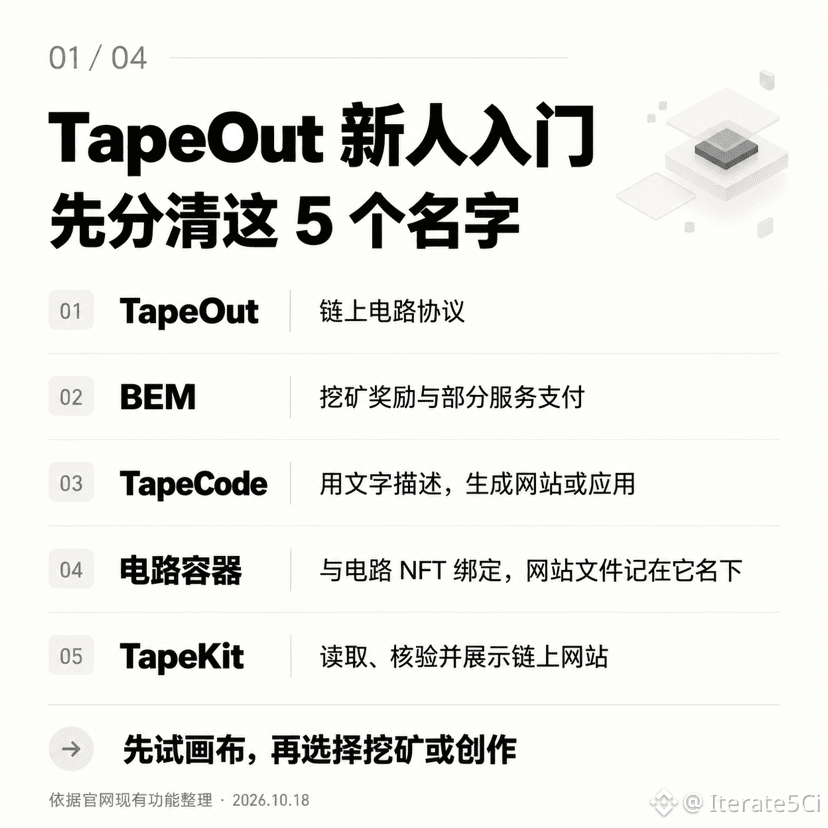
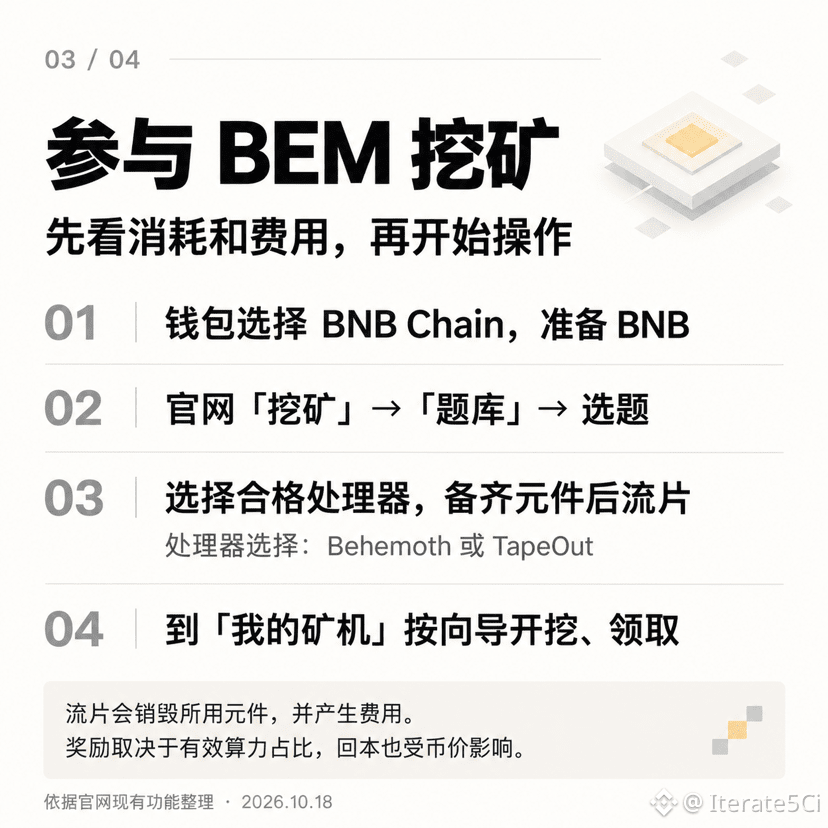
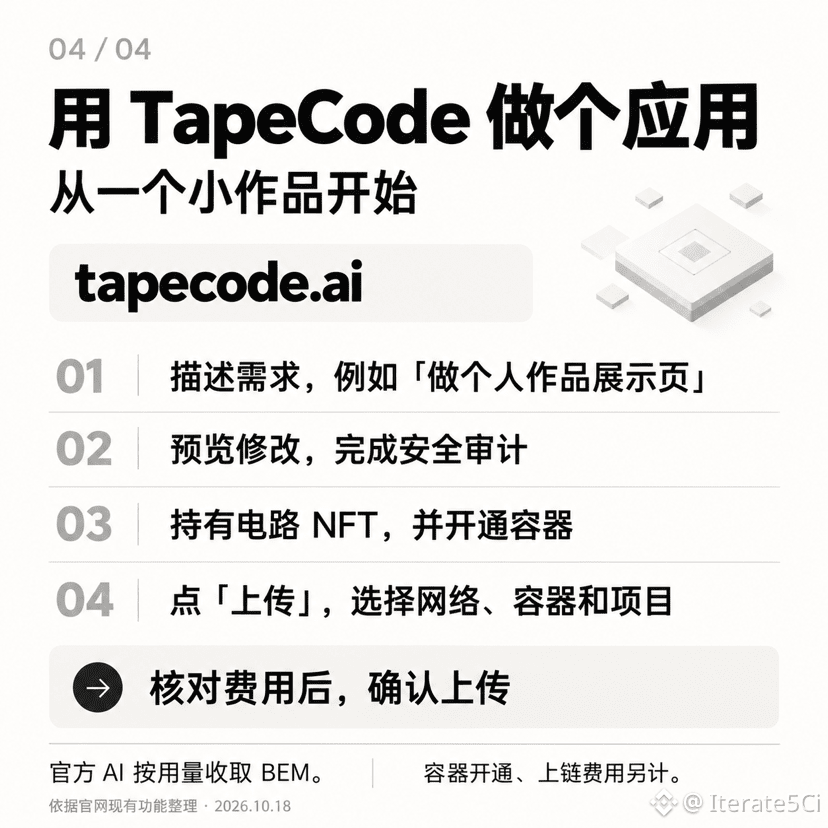
For those just getting started with TapeOut, here are 4 beginner-friendly diagrams👇
Circuits, BEM, containers… These names might seem a little confusing, but we can learn about them as we explore.
First, click “4-bit Adder” on the canvas, change two numbers, and see how it calculates the result. This step is free. If you’re interested, follow along with the diagrams and give it a try. If anything’s unclear, ask in the comments~
Website: tapeout.net
Created by: tapecode.ai
#TapeOut #BEM
For those just getting started with TapeOut, here are 4 beginner-friendly diagrams👇
Circuits, BEM, containers… These names might seem a little confusing, but we can learn about them as we explore.
First, click “4-bit Adder” on the canvas, change two numbers, and see how it calculates the result. This step is free. If you’re interested, follow along with the diagrams and give it a try. If anything’s unclear, ask in the comments~
Website: tapeout.net
Created by: tapecode.ai
#TapeOut #BEM
Circuits, BEM, containers… These names might seem a little confusing, but we can learn about them as we explore.
First, click “4-bit Adder” on the canvas, change two numbers, and see how it calculates the result. This step is free. If you’re interested, follow along with the diagrams and give it a try. If anything’s unclear, ask in the comments~
Website: tapeout.net
Created by: tapecode.ai
#TapeOut #BEM

3
334

·
--
Talk about the two days’ hot #Tapeout project.
People have no direct interest here—I didn’t buy any crystal transistors, and I also didn’t buy $BEM. But when I encounter something I don’t understand, I’m used to instinctively pua myself: “If you can’t even understand this, what else can you do?”
However, I’m extremely lazy. So I chose a seemingly “research-based” method that, in reality, is still something I don’t fully understand: hand it over to AI.
This is basically the same approach as how, on social media, you see some piece of knowledge—ignore whether you really get it, just hit favorite/mark it, and you’ve already learned the “point.”
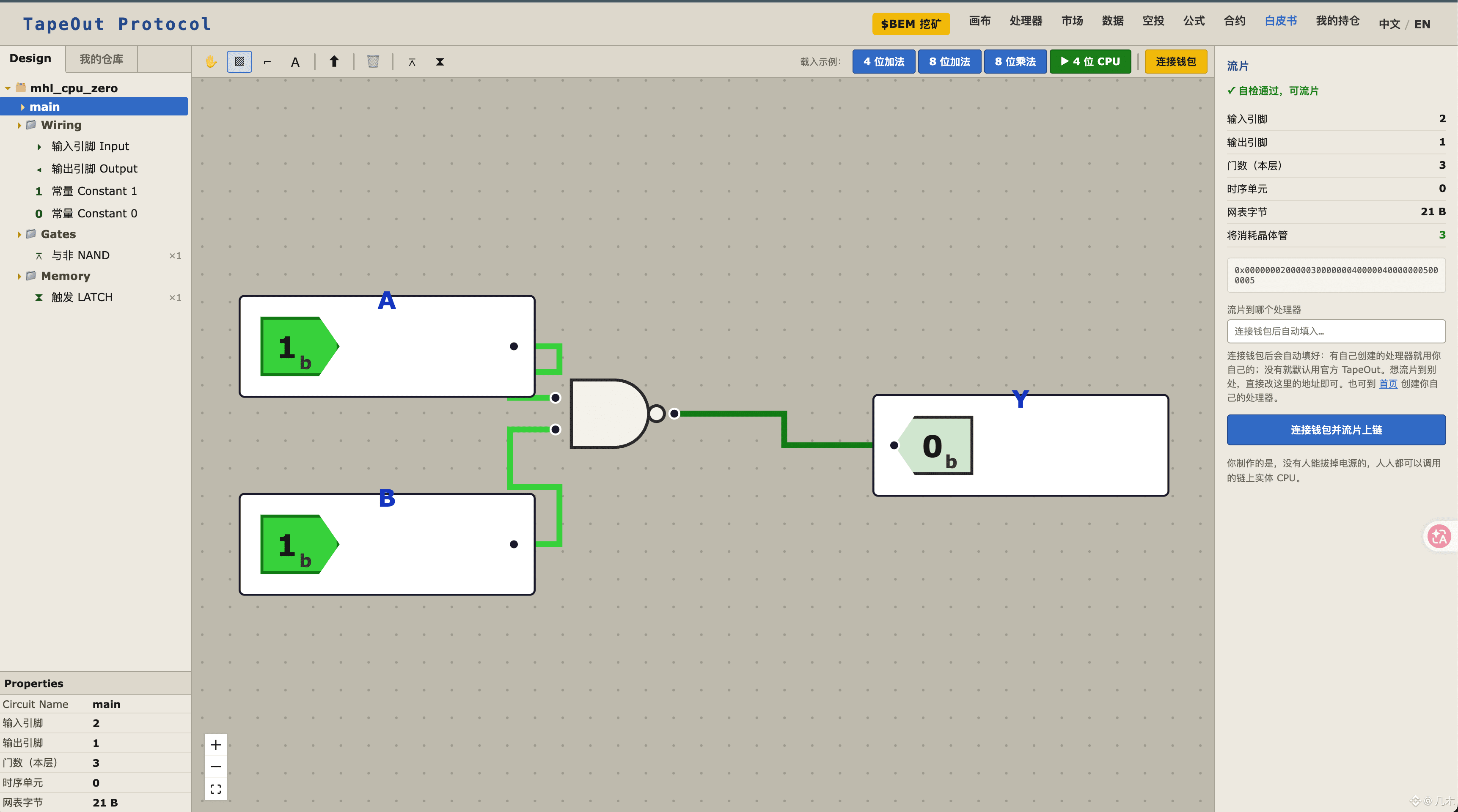
After reading the feedback AI gave me, I think I roughly get what’s going on. It’s like a LEGO-brick game: you arrange and combine parts to build various “roads.” If your road can reach the destination accurately while keeping the route the shortest and with the fewest bends, then you get bonus Buffs that help you dig up more BEM tokens, and then sell them for money. Building roads consumes parts, and parts cost money to buy.
So from this angle, it’s still an investment—mining—getting ROI or making money. But that doesn’t imply any value judgment. In crypto, even pure “air coins” can be traded, and they’re even easier to trade.
On the other hand, it’s interesting that this building process is a competition. You struggle to come up with the most optimal road, and then a day later someone else builds a road that’s even better than yours—you can hardly not feel compelled to surpass them, and that’s when the competition really starts.
I asked ChatGPT to try to find optimal roads for a few problems within a limited number of parts, and see if it could get first place on the leaderboard. The 100U/month version of ChatGPT ran over 60% of its usage and still didn’t succeed. Over the whole run, it spent close to 20 hours in total. I manually paused it today. I give up.
That’s my Tapeout experience above.
Talk about the two days’ hot #Tapeout project.
People have no direct interest here—I didn’t buy any crystal transistors, and I also didn’t buy $BEM. But when I encounter something I don’t understand, I’m used to instinctively pua myself: “If you can’t even understand this, what else can you do?”
However, I’m extremely lazy. So I chose a seemingly “research-based” method that, in reality, is still something I don’t fully understand: hand it over to AI.
This is basically the same approach as how, on social media, you see some piece of knowledge—ignore whether you really get it, just hit favorite/mark it, and you’ve already learned the “point.”
After reading the feedback AI gave me, I think I roughly get what’s going on. It’s like a LEGO-brick game: you arrange and combine parts to build various “roads.” If your road can reach the destination accurately while keeping the route the shortest and with the fewest bends, then you get bonus Buffs that help you dig up more BEM tokens, and then sell them for money. Building roads consumes parts, and parts cost money to buy.
So from this angle, it’s still an investment—mining—getting ROI or making money. But that doesn’t imply any value judgment. In crypto, even pure “air coins” can be traded, and they’re even easier to trade.
On the other hand, it’s interesting that this building process is a competition. You struggle to come up with the most optimal road, and then a day later someone else builds a road that’s even better than yours—you can hardly not feel compelled to surpass them, and that’s when the competition really starts.
I asked ChatGPT to try to find optimal roads for a few problems within a limited number of parts, and see if it could get first place on the leaderboard. The 100U/month version of ChatGPT ran over 60% of its usage and still didn’t succeed. Over the whole run, it spent close to 20 hours in total. I manually paused it today. I give up.
That’s my Tapeout experience above.
People have no direct interest here—I didn’t buy any crystal transistors, and I also didn’t buy $BEM. But when I encounter something I don’t understand, I’m used to instinctively pua myself: “If you can’t even understand this, what else can you do?”
However, I’m extremely lazy. So I chose a seemingly “research-based” method that, in reality, is still something I don’t fully understand: hand it over to AI.
This is basically the same approach as how, on social media, you see some piece of knowledge—ignore whether you really get it, just hit favorite/mark it, and you’ve already learned the “point.”
After reading the feedback AI gave me, I think I roughly get what’s going on. It’s like a LEGO-brick game: you arrange and combine parts to build various “roads.” If your road can reach the destination accurately while keeping the route the shortest and with the fewest bends, then you get bonus Buffs that help you dig up more BEM tokens, and then sell them for money. Building roads consumes parts, and parts cost money to buy.
So from this angle, it’s still an investment—mining—getting ROI or making money. But that doesn’t imply any value judgment. In crypto, even pure “air coins” can be traded, and they’re even easier to trade.
On the other hand, it’s interesting that this building process is a competition. You struggle to come up with the most optimal road, and then a day later someone else builds a road that’s even better than yours—you can hardly not feel compelled to surpass them, and that’s when the competition really starts.
I asked ChatGPT to try to find optimal roads for a few problems within a limited number of parts, and see if it could get first place on the leaderboard. The 100U/month version of ChatGPT ran over 60% of its usage and still didn’t succeed. Over the whole run, it spent close to 20 hours in total. I manually paused it today. I give up.
That’s my Tapeout experience above.

1
1
1.8k

·
--
📰 A 16-year-old developer brings the idea of “making chips” onto the blockchain.
TapeOut was initiated by Blonskr on August 15, 2026. The earliest result on BNB Chain was a 4-bit on-chain CPU—Behemoth. Its performance obviously can’t compare to real-world processors, but this machine proves at least one thing: digital circuits can be built on-chain step by step starting from the most basic logic gates.
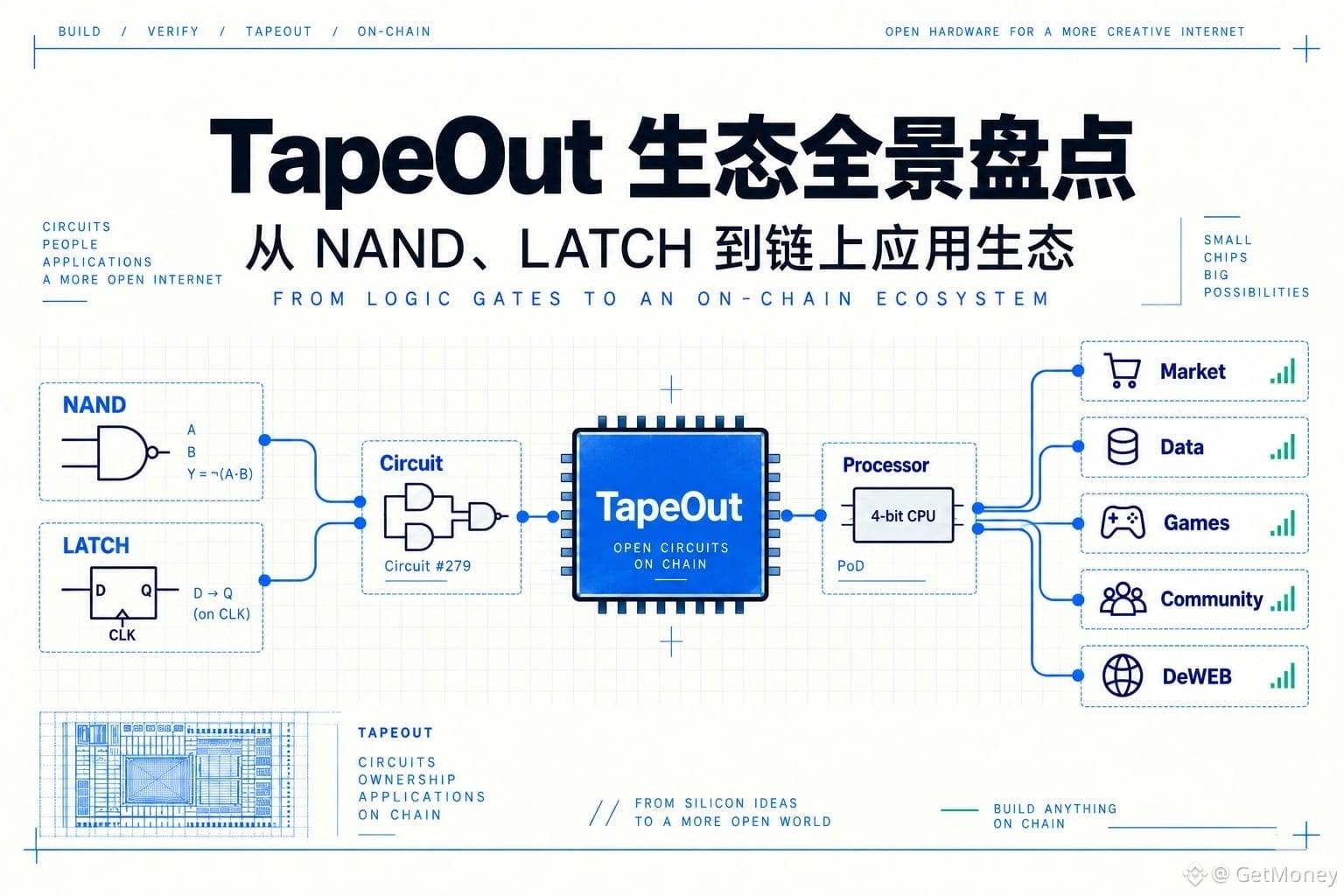
🔥 TapeOut’s core building blocks are simple: NAND handles logical computation, while LATCH is responsible for storing state. Users can drag these components into the Canvas, wire them up, run tests, and then “tape out” the finalized design to ultimately generate a Circuit NFT.
This NFT isn’t just a normal image—it’s a concrete circuit netlist that records the input, logic processing, and output rules. After that, other developers can treat the completed Circuit as a black-box module and keep calling it. In other words: someone builds an adder first, and then later builders don’t have to start from dozens of NANDs again—they can simply continue assembling.
💡 What makes this gameplay truly interesting is that it turns basic components, Circuits, Processors, and applications into an on-chain toolkit that can be endlessly combined. On August 21, 2026, TapeOut opened PoD mining and also launched the token BEM, with a total supply of 21 million. Rewards are controlled by the Proof of Design mechanism.
PoD doesn’t reward raw computing power—it rewards the ability of developers to design circuits, contribute components, and pass verification. The raw materials are NAND and LATCH; the Circuit is the product. PoD verifies and incentivizes, and BEM carries the rewards. Honestly, it’s far more interesting than viewing it as a mining project alone.
🤔 Do you think TapeOut will stay in the geek-experiment stage, or will it truly attract more developers to build on-chain machines together?
#TapeOut #BEM #链上硬件 #ProofOfDesign
📰 A 16-year-old developer brings the idea of “making chips” onto the blockchain.
TapeOut was initiated by Blonskr on August 15, 2026. The earliest result on BNB Chain was a 4-bit on-chain CPU—Behemoth. Its performance obviously can’t compare to real-world processors, but this machine proves at least one thing: digital circuits can be built on-chain step by step starting from the most basic logic gates.
🔥 TapeOut’s core building blocks are simple: NAND handles logical computation, while LATCH is responsible for storing state. Users can drag these components into the Canvas, wire them up, run tests, and then “tape out” the finalized design to ultimately generate a Circuit NFT.
This NFT isn’t just a normal image—it’s a concrete circuit netlist that records the input, logic processing, and output rules. After that, other developers can treat the completed Circuit as a black-box module and keep calling it. In other words: someone builds an adder first, and then later builders don’t have to start from dozens of NANDs again—they can simply continue assembling.
💡 What makes this gameplay truly interesting is that it turns basic components, Circuits, Processors, and applications into an on-chain toolkit that can be endlessly combined. On August 21, 2026, TapeOut opened PoD mining and also launched the token BEM, with a total supply of 21 million. Rewards are controlled by the Proof of Design mechanism.
PoD doesn’t reward raw computing power—it rewards the ability of developers to design circuits, contribute components, and pass verification. The raw materials are NAND and LATCH; the Circuit is the product. PoD verifies and incentivizes, and BEM carries the rewards. Honestly, it’s far more interesting than viewing it as a mining project alone.
🤔 Do you think TapeOut will stay in the geek-experiment stage, or will it truly attract more developers to build on-chain machines together?
#TapeOut #BEM #链上硬件 #ProofOfDesign
TapeOut was initiated by Blonskr on August 15, 2026. The earliest result on BNB Chain was a 4-bit on-chain CPU—Behemoth. Its performance obviously can’t compare to real-world processors, but this machine proves at least one thing: digital circuits can be built on-chain step by step starting from the most basic logic gates.
🔥 TapeOut’s core building blocks are simple: NAND handles logical computation, while LATCH is responsible for storing state. Users can drag these components into the Canvas, wire them up, run tests, and then “tape out” the finalized design to ultimately generate a Circuit NFT.
This NFT isn’t just a normal image—it’s a concrete circuit netlist that records the input, logic processing, and output rules. After that, other developers can treat the completed Circuit as a black-box module and keep calling it. In other words: someone builds an adder first, and then later builders don’t have to start from dozens of NANDs again—they can simply continue assembling.
💡 What makes this gameplay truly interesting is that it turns basic components, Circuits, Processors, and applications into an on-chain toolkit that can be endlessly combined. On August 21, 2026, TapeOut opened PoD mining and also launched the token BEM, with a total supply of 21 million. Rewards are controlled by the Proof of Design mechanism.
PoD doesn’t reward raw computing power—it rewards the ability of developers to design circuits, contribute components, and pass verification. The raw materials are NAND and LATCH; the Circuit is the product. PoD verifies and incentivizes, and BEM carries the rewards. Honestly, it’s far more interesting than viewing it as a mining project alone.
🤔 Do you think TapeOut will stay in the geek-experiment stage, or will it truly attract more developers to build on-chain machines together?
#TapeOut #BEM #链上硬件 #ProofOfDesign
34

·
--
Let’s #TapeOut !@Blonskr
Don’t envy others @bitcoin2themars
They have what we have; and what they don’t have, we have too!
The 3-minute 25-second “Tapeout History”, made with Opus 5.5 just now—from xxx to xxxx... No more to say; just watch for yourself 💁♀️💁♀️💁♀️
Hey @VitalikButerin sir
Maybe this is what you’ve been searching so hard for
@cz_binance @heyibinance @zakk_okx
#tapeout #claude #bnbchain #okx
Let’s #TapeOut !@Blonskr
Don’t envy others @bitcoin2themars
They have what we have; and what they don’t have, we have too!
The 3-minute 25-second “Tapeout History”, made with Opus 5.5 just now—from xxx to xxxx... No more to say; just watch for yourself 💁♀️💁♀️💁♀️
Hey @VitalikButerin sir
Maybe this is what you’ve been searching so hard for
@cz_binance @heyibinance @zakk_okx
#tapeout #claude #bnbchain #okx
Don’t envy others @bitcoin2themars
They have what we have; and what they don’t have, we have too!
The 3-minute 25-second “Tapeout History”, made with Opus 5.5 just now—from xxx to xxxx... No more to say; just watch for yourself 💁♀️💁♀️💁♀️
Hey @VitalikButerin sir
Maybe this is what you’ve been searching so hard for
@cz_binance @heyibinance @zakk_okx
#tapeout #claude #bnbchain #okx
85

·
--
Article
TapeOut and BEM shareTapeOut indeed doesn't magically create new physical computing power. At the foundation, it's still the CPUs of the BSC nodes that execute it—and nobody needs to evade that.
But the question is: whether a protocol has value does not depend on whether it invented new transistors.
Ethereum also didn't create new CPUs, Uniswap didn't create new dollars, and GitHub didn't create new code execution capability. What they created are new ways of organization, property relationships, validation methods, and collaboration mechanisms.
What TapeOut truly does is not “replacing real-world CPUs with NAND.”
TapeOut and BEM share
TapeOut indeed doesn't magically create new physical computing power. At the foundation, it's still the CPUs of the BSC nodes that execute it—and nobody needs to evade that.
But the question is: whether a protocol has value does not depend on whether it invented new transistors.
Ethereum also didn't create new CPUs, Uniswap didn't create new dollars, and GitHub didn't create new code execution capability. What they created are new ways of organization, property relationships, validation methods, and collaboration mechanisms.
What TapeOut truly does is not “replacing real-world CPUs with NAND.”
But the question is: whether a protocol has value does not depend on whether it invented new transistors.
Ethereum also didn't create new CPUs, Uniswap didn't create new dollars, and GitHub didn't create new code execution capability. What they created are new ways of organization, property relationships, validation methods, and collaboration mechanisms.
What TapeOut truly does is not “replacing real-world CPUs with NAND.”
1
107
·
--
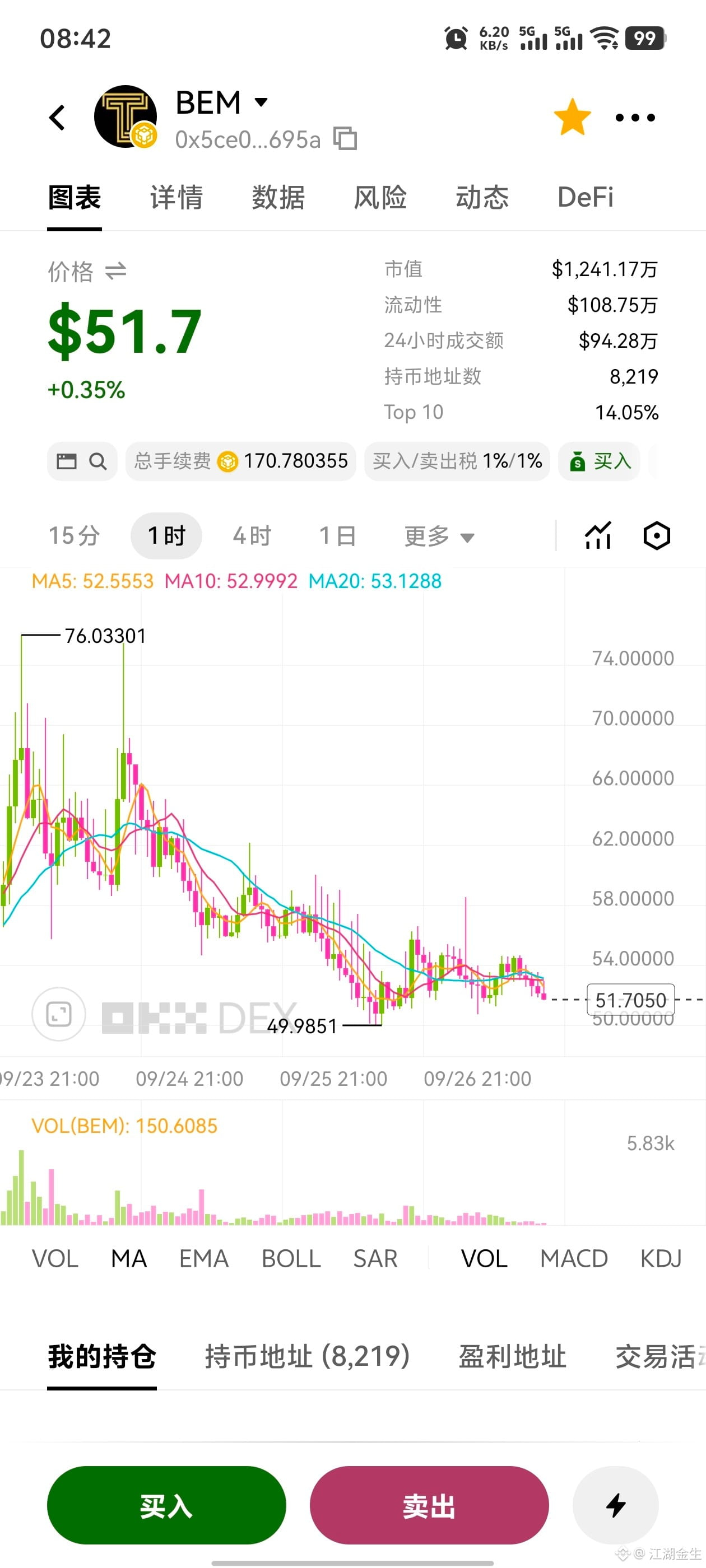
TapeOut Midday Briefing. But why is this giant beast's belly so round?
#TapeOut https://twitter.com/btc1668899/status/2117116015901597940
TapeOut Midday Briefing. But why is this giant beast's belly so round?
#TapeOut https://twitter.com/btc1668899/status/2117116015901597940
#TapeOut https://twitter.com/btc1668899/status/2117116015901597940
64


·
--
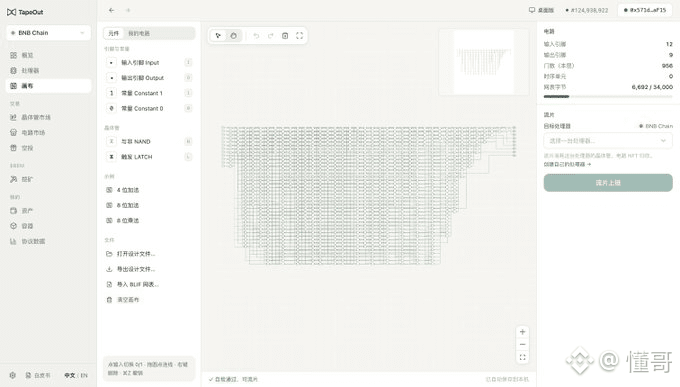
Come on, Bem! The new TapeOut official website is almost ready to meet everyone! Also, there are desktop client versions for Mac and Windows. #Bem #Tapeout
Come on, Bem! The new TapeOut official website is almost ready to meet everyone! Also, there are desktop client versions for Mac and Windows. #Bem #Tapeout
1
122
·
--
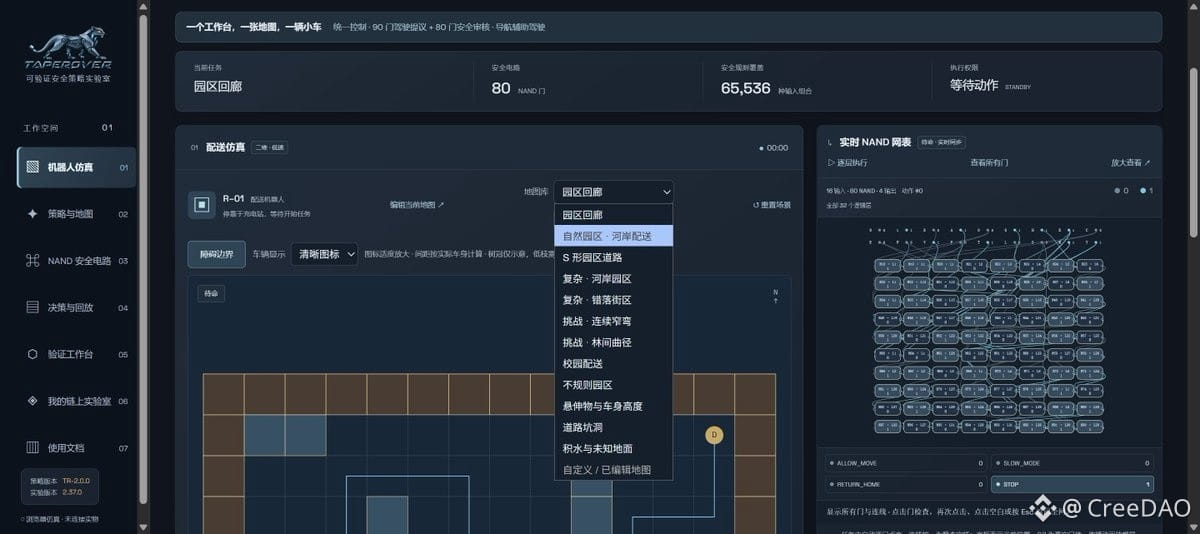
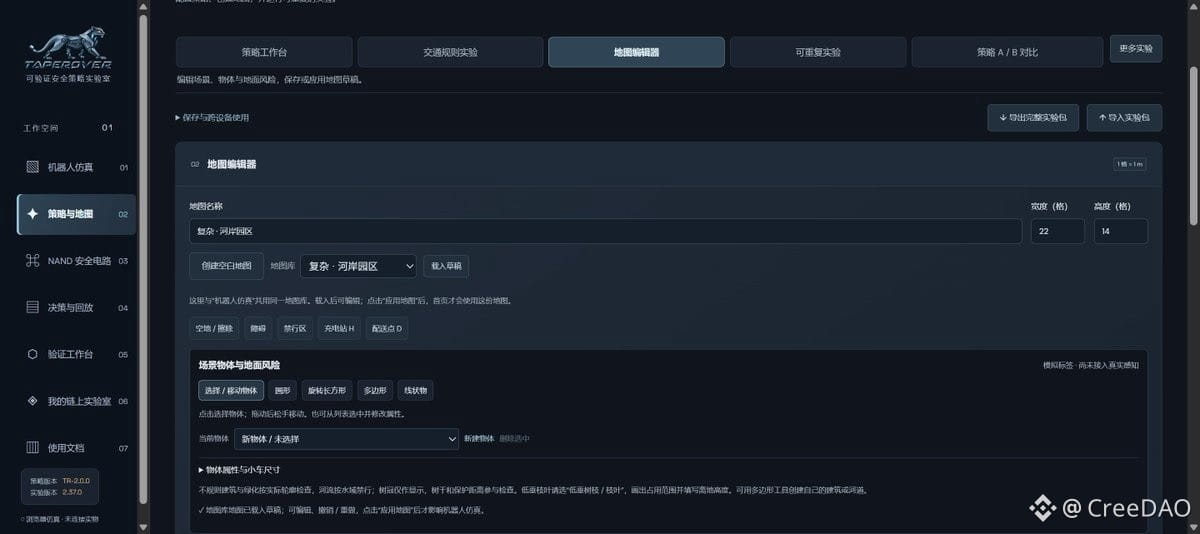
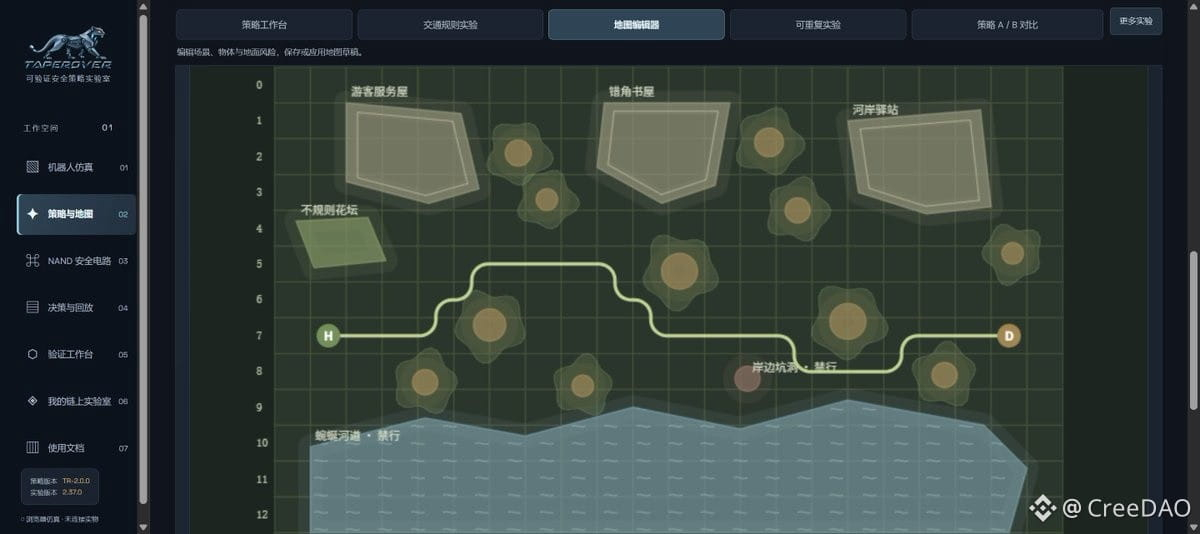
Try another map; you can also create your own.
Maps include obstacles, trees, rivers, low-lying terrain, and hanging branches.
https://taperover.vercel.app/
#TapeOut #TapeRover
Try another map; you can also create your own.
Maps include obstacles, trees, rivers, low-lying terrain, and hanging branches.
https://taperover.vercel.app/
#TapeOut #TapeRover
Maps include obstacles, trees, rivers, low-lying terrain, and hanging branches.
https://taperover.vercel.app/
#TapeOut #TapeRover
68
·
--
How is there a little dog among the guests? How did it sneak in?
#TapeOut
https://twitter.com/OKXWallet_CN/status/2117964603800056288
How is there a little dog among the guests? How did it sneak in?
#TapeOut
https://twitter.com/OKXWallet_CN/status/2117964603800056288
#TapeOut
https://twitter.com/OKXWallet_CN/status/2117964603800056288

39
Log in to explore more content
Join global crypto users on Binance Square
⚡️ Get latest and useful information about crypto.
💬 Trusted by the world’s largest crypto exchange.
👍 Discover real insights from verified creators.
Email / Phone number
Trending Topics
1
#JobsReportRaisesHikeOdds
600,412 views
3,759 Discussing
2
#CPITestsDecemberRateOutlook
198,357 views
1,413 Discussing
3
#US Data Center Rules May Constrain AI Expansion
84,043 views
239 Discussing
4
#ARKPlans14ThematicETFsCoveringAIAndTokenizedMarkets
5,307 views
75 Discussing
5
#WillAnthropicListOnTime
188,394 views
1,589 Discussing
6
#WillUS-IranTensionsBoostSafe-HavenDemand?
94,876 views
674 Discussing
7
#BitcoinETFsSee$412MNetOutflows
18,435 views
81 Discussing
8
#HKSFCPlansToRestrictCryptoAndExchangeTerms
75,636 views
654 Discussing
9
#TradFiForBeginners
106,949 views
1,161 Discussing
10
#FinCENAndFedWithdraw$250CryptoTransferProposal
11,043 views
19 Discussing