
#marketsignal
marketsignal
76,121 views
864 Discussing
Hot
Latest

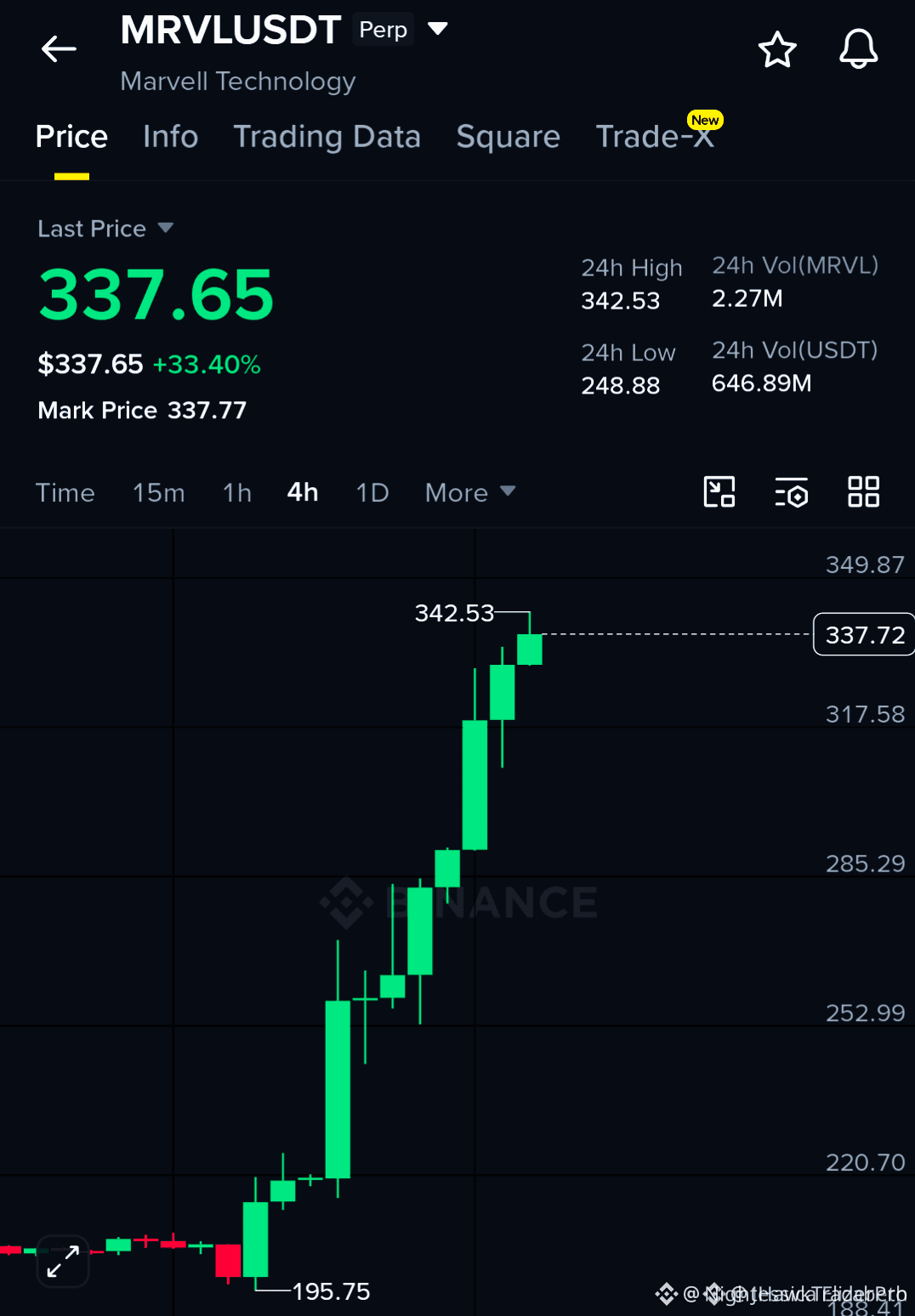
$MRVL LONG SIGNAL JUST HIT THE TAPE 🔥
400 🔥
344.67 — 350.70 — 357.11 🚀
320 🛡️
Fast setup. High leverage mentioned, so this is not a casual click. $MRVL is moving with aggressive positioning, and the range is already mapped. Execution matters now. No chasing blind. Size tight, respect the invalidation, and let the setup prove itself.
Not financial advice. Manage your risk.
#Crypto #Trading #Altcoins #BinanceSquare #MarketSignal
⚡
{future}(MRVLUSDT)
$MRVL LONG SIGNAL JUST HIT THE TAPE 🔥
400 🔥
344.67 — 350.70 — 357.11 🚀
320 🛡️
Fast setup. High leverage mentioned, so this is not a casual click. $MRVL is moving with aggressive positioning, and the range is already mapped. Execution matters now. No chasing blind. Size tight, respect the invalidation, and let the setup prove itself.
Not financial advice. Manage your risk.
#Crypto #Trading #Altcoins #BinanceSquare #MarketSignal
⚡
400 🔥
344.67 — 350.70 — 357.11 🚀
320 🛡️
Fast setup. High leverage mentioned, so this is not a casual click. $MRVL is moving with aggressive positioning, and the range is already mapped. Execution matters now. No chasing blind. Size tight, respect the invalidation, and let the setup prove itself.
Not financial advice. Manage your risk.
#Crypto #Trading #Altcoins #BinanceSquare #MarketSignal
⚡
93

·
--
Don't jump to conclusions based on the hype today; treat it as a directional signal. OpenNews's leading signal is that 'high-scoring news sources haven't provided verifiable headlines yet,' while the buzz on OpenTwitter indicates that 'OpenTwitter's trending topics haven't provided verifiable text so far.' These two clues alone can't directly lead to trading decisions, but they clearly show: the market is rich in narratives but lacking a robust chain of evidence that can be repeatedly verified.
What's truly worth monitoring isn't just a single headline, but whether news, KOL discussions, and trading data are converging in the same direction. Until we see this convergence, we only log signals; once convergence appears, we can upgrade it to a trading judgment. Keep the skepticism alive before getting too close to conclusions.
#BTC #Crypto #AI #MarketSignal
Don't jump to conclusions based on the hype today; treat it as a directional signal. OpenNews's leading signal is that 'high-scoring news sources haven't provided verifiable headlines yet,' while the buzz on OpenTwitter indicates that 'OpenTwitter's trending topics haven't provided verifiable text so far.' These two clues alone can't directly lead to trading decisions, but they clearly show: the market is rich in narratives but lacking a robust chain of evidence that can be repeatedly verified.
What's truly worth monitoring isn't just a single headline, but whether news, KOL discussions, and trading data are converging in the same direction. Until we see this convergence, we only log signals; once convergence appears, we can upgrade it to a trading judgment. Keep the skepticism alive before getting too close to conclusions.
#BTC #Crypto #AI #MarketSignal
What's truly worth monitoring isn't just a single headline, but whether news, KOL discussions, and trading data are converging in the same direction. Until we see this convergence, we only log signals; once convergence appears, we can upgrade it to a trading judgment. Keep the skepticism alive before getting too close to conclusions.
#BTC #Crypto #AI #MarketSignal
1
5
171
·
--
Let's not jump to conclusions based on the hype today; instead, let's treat it as a directional signal. The leading signal on OpenNews is "APOLLO ECONOMIST: NO EVIDENCE AI IS REPLACING JOBS YET," while the buzz on OpenTwitter highlights, "FYI: Gold up 65% in 1 year. Savings pay 4% a year. Central banks dumping US Treasuries for gold. Get the picture?". These two clues alone can't directly inform our trading strategy, but they clearly indicate that the market is rich in narratives yet lacking a robust chain of verifiable evidence.
What we should really focus on is not just a single headline, but whether the news, KOL discussions, and trading data are converging in the same direction. Until that convergence happens, we’ll just log the signals; once we see a convergence, we can elevate it to a trading judgment. Keep a skeptical mindset first, and only then are we in a position to approach conclusions.
#BTC #Crypto #AI #MarketSignal
Let's not jump to conclusions based on the hype today; instead, let's treat it as a directional signal. The leading signal on OpenNews is "APOLLO ECONOMIST: NO EVIDENCE AI IS REPLACING JOBS YET," while the buzz on OpenTwitter highlights, "FYI: Gold up 65% in 1 year. Savings pay 4% a year. Central banks dumping US Treasuries for gold. Get the picture?". These two clues alone can't directly inform our trading strategy, but they clearly indicate that the market is rich in narratives yet lacking a robust chain of verifiable evidence.
What we should really focus on is not just a single headline, but whether the news, KOL discussions, and trading data are converging in the same direction. Until that convergence happens, we’ll just log the signals; once we see a convergence, we can elevate it to a trading judgment. Keep a skeptical mindset first, and only then are we in a position to approach conclusions.
#BTC #Crypto #AI #MarketSignal
What we should really focus on is not just a single headline, but whether the news, KOL discussions, and trading data are converging in the same direction. Until that convergence happens, we’ll just log the signals; once we see a convergence, we can elevate it to a trading judgment. Keep a skeptical mindset first, and only then are we in a position to approach conclusions.
#BTC #Crypto #AI #MarketSignal
3
114

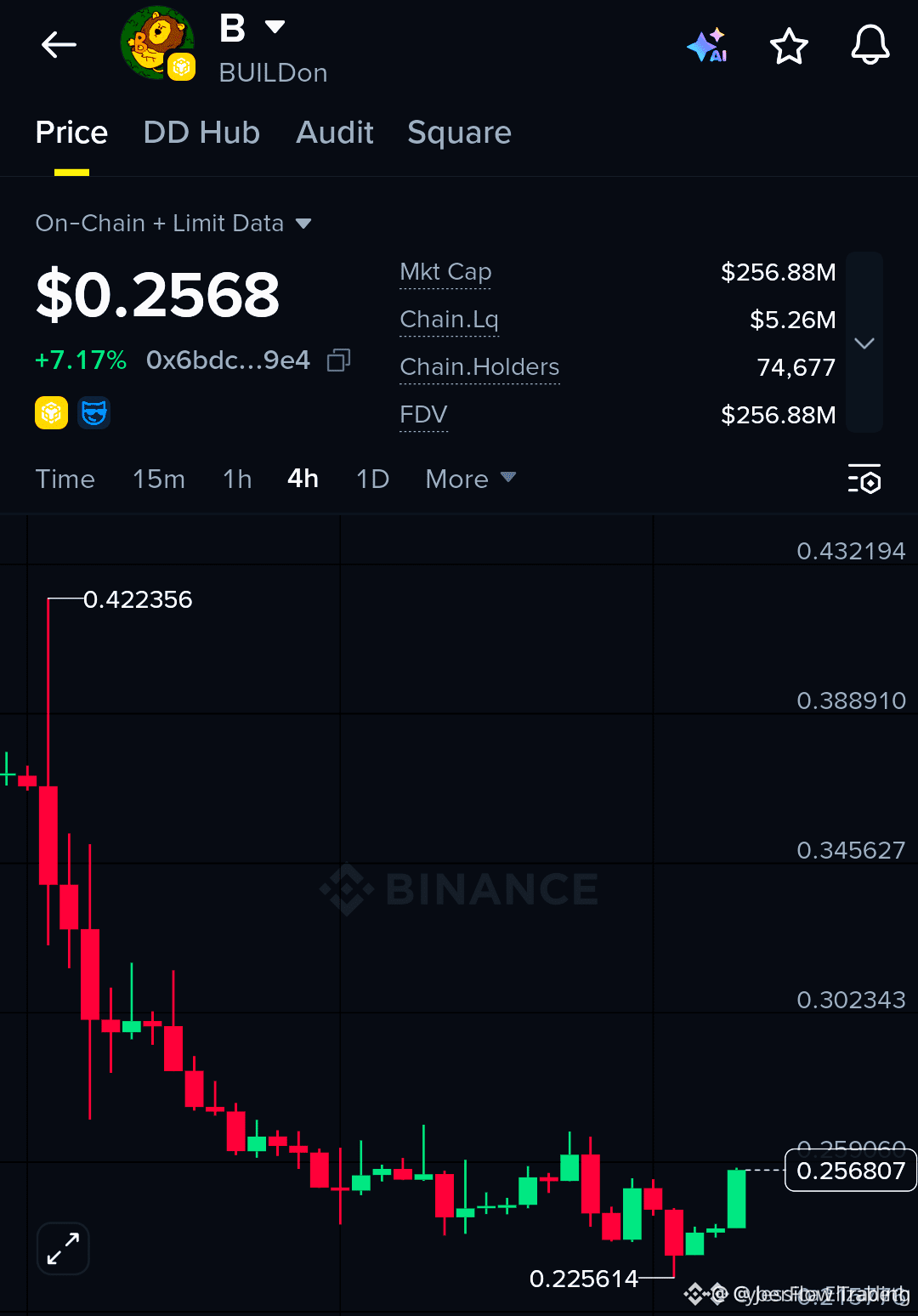
$B SIGNAL JUST HIT THE TAPE 🔥
0.40 🚥
0.2711 / 0.2956 / 0.3300 ✅
Fast move setup is on the radar. Momentum chatter is building, but these levels are below the stated entry, so do not chase blind. Let confirmation lead. Liquidity can flip hard when crowded longs rush in.
Not financial advice. Manage your risk.
#Crypto #BinanceSquar #Altcoins #Trading #MarketSignal
⚡
{future}(BTCUSDT)
$B SIGNAL JUST HIT THE TAPE 🔥
0.40 🚥
0.2711 / 0.2956 / 0.3300 ✅
Fast move setup is on the radar. Momentum chatter is building, but these levels are below the stated entry, so do not chase blind. Let confirmation lead. Liquidity can flip hard when crowded longs rush in.
Not financial advice. Manage your risk.
#Crypto #BinanceSquar #Altcoins #Trading #MarketSignal
⚡
0.40 🚥
0.2711 / 0.2956 / 0.3300 ✅
Fast move setup is on the radar. Momentum chatter is building, but these levels are below the stated entry, so do not chase blind. Let confirmation lead. Liquidity can flip hard when crowded longs rush in.
Not financial advice. Manage your risk.
#Crypto #BinanceSquar #Altcoins #Trading #MarketSignal
⚡
226

·
--

Article
$BTC On‑Chain Transfer Estimates Skew Sixfold: What It Means for Smart MoneyA single study shows Bitcoin on‑chain transfer data can swing six times its reported value, exposing a blind spot that could distort market sentiment.
The BIS research, released on September 16, 2026, reveals that the most commonly cited on‑chain transfer figures for $BTC are not only inconsistent but can be off by a factor of six. While Ethereum and stablecoins also suffer from measurement gaps, Bitcoin’s dominance in the crypto ecosystem makes this discrepancy particularly alarming.
Why does this matter now? Market participants rely on on‑chain metrics to gauge liquidity, institutional flow, and potential price pressure. If the baseline data is wildly inaccurate, traders may misinterpret bullish or bearish signals, leading to mispriced risk. The sixfold variance also suggests that the current tooling—whether it’s Chainalysis, Glassnode, or proprietary analytics—fails to capture the true volume of activity, potentially masking large institutional movements.
Smart money is already reacting. Hedge funds that monitor on‑chain flows have begun to hedge against the risk of under‑reported transfers, and several large vaults have paused new inflows pending clearer data. #CryptoAnalytics #OnChainData #BTC
Looking ahead, the next catalyst will be the release of the BIS report’s full methodology on September 30. If the industry adopts a standardized measurement framework, we could see a recalibration of $BTC’s liquidity profile, potentially triggering a 5‑10% price correction as traders adjust their models. #MarketSignal
Are we ready to recalibrate our view of Bitcoin’s on‑chain activity, or will this data gap continue to blind us?
$BTC On‑Chain Transfer Estimates Skew Sixfold: What It Means for Smart Money
A single study shows Bitcoin on‑chain transfer data can swing six times its reported value, exposing a blind spot that could distort market sentiment.
The BIS research, released on September 16, 2026, reveals that the most commonly cited on‑chain transfer figures for $BTC are not only inconsistent but can be off by a factor of six. While Ethereum and stablecoins also suffer from measurement gaps, Bitcoin’s dominance in the crypto ecosystem makes this discrepancy particularly alarming.
Why does this matter now? Market participants rely on on‑chain metrics to gauge liquidity, institutional flow, and potential price pressure. If the baseline data is wildly inaccurate, traders may misinterpret bullish or bearish signals, leading to mispriced risk. The sixfold variance also suggests that the current tooling—whether it’s Chainalysis, Glassnode, or proprietary analytics—fails to capture the true volume of activity, potentially masking large institutional movements.
Smart money is already reacting. Hedge funds that monitor on‑chain flows have begun to hedge against the risk of under‑reported transfers, and several large vaults have paused new inflows pending clearer data. #CryptoAnalytics #OnChainData #BTC
Looking ahead, the next catalyst will be the release of the BIS report’s full methodology on September 30. If the industry adopts a standardized measurement framework, we could see a recalibration of $BTC ’s liquidity profile, potentially triggering a 5‑10% price correction as traders adjust their models. #MarketSignal
Are we ready to recalibrate our view of Bitcoin’s on‑chain activity, or will this data gap continue to blind us?
The BIS research, released on September 16, 2026, reveals that the most commonly cited on‑chain transfer figures for $BTC are not only inconsistent but can be off by a factor of six. While Ethereum and stablecoins also suffer from measurement gaps, Bitcoin’s dominance in the crypto ecosystem makes this discrepancy particularly alarming.
Why does this matter now? Market participants rely on on‑chain metrics to gauge liquidity, institutional flow, and potential price pressure. If the baseline data is wildly inaccurate, traders may misinterpret bullish or bearish signals, leading to mispriced risk. The sixfold variance also suggests that the current tooling—whether it’s Chainalysis, Glassnode, or proprietary analytics—fails to capture the true volume of activity, potentially masking large institutional movements.
Smart money is already reacting. Hedge funds that monitor on‑chain flows have begun to hedge against the risk of under‑reported transfers, and several large vaults have paused new inflows pending clearer data. #CryptoAnalytics #OnChainData #BTC
Looking ahead, the next catalyst will be the release of the BIS report’s full methodology on September 30. If the industry adopts a standardized measurement framework, we could see a recalibration of $BTC ’s liquidity profile, potentially triggering a 5‑10% price correction as traders adjust their models. #MarketSignal
Are we ready to recalibrate our view of Bitcoin’s on‑chain activity, or will this data gap continue to blind us?
43
·
--

Article
$2.08M Laptop Sales Reveal Wintermute‑Tagged Wallet Surge$2.08M in laptop sales linked to a single wallet flagged by Wintermute, a move that could signal a new wave of institutional play in the crypto market. Lookonchain’s analysis traced a 2.5 million‑token allocation to the address, while a trader noted that launch pools were nearly empty and the token fell 98% in the first 24 hours. This confluence of on‑chain activity and market reaction is a red flag for anyone watching the next big move.
The data matters because institutional actors like Wintermute are known to deploy large, coordinated trades that can sway market sentiment. A 2.5 million‑token allocation—equivalent to roughly $2.08 million at current prices—suggests a significant stake that could move the market if liquidated. The near‑empty launch pools and 98% drop indicate a lack of liquidity and a potential for a sharp rebound if the token is re‑listed or the wallet’s holdings are re‑balanced.
Smart money is already positioning itself. Wintermute’s involvement typically precedes a price surge or a strategic pullback. Traders are watching the wallet’s balance for any signs of accumulation or distribution. The 2.5 million‑token block could be a precursor to a 20–30% rally if the token’s fundamentals improve or if the wallet’s holdings are re‑allocated to a more liquid venue. #CryptoAnalysis #InstitutionalPlay #Wintermute
Forward signal: If the wallet’s balance dips below 1.5 million tokens within the next 48 hours, it could trigger a 15% correction, providing a buying window for those who can act fast. #MarketSignal
Are you ready to capitalize on the next institutional move?
$2.08M Laptop Sales Reveal Wintermute‑Tagged Wallet Surge
$2.08M in laptop sales linked to a single wallet flagged by Wintermute, a move that could signal a new wave of institutional play in the crypto market. Lookonchain’s analysis traced a 2.5 million‑token allocation to the address, while a trader noted that launch pools were nearly empty and the token fell 98% in the first 24 hours. This confluence of on‑chain activity and market reaction is a red flag for anyone watching the next big move.
The data matters because institutional actors like Wintermute are known to deploy large, coordinated trades that can sway market sentiment. A 2.5 million‑token allocation—equivalent to roughly $2.08 million at current prices—suggests a significant stake that could move the market if liquidated. The near‑empty launch pools and 98% drop indicate a lack of liquidity and a potential for a sharp rebound if the token is re‑listed or the wallet’s holdings are re‑balanced.
Smart money is already positioning itself. Wintermute’s involvement typically precedes a price surge or a strategic pullback. Traders are watching the wallet’s balance for any signs of accumulation or distribution. The 2.5 million‑token block could be a precursor to a 20–30% rally if the token’s fundamentals improve or if the wallet’s holdings are re‑allocated to a more liquid venue. #CryptoAnalysis #InstitutionalPlay #Wintermute
Forward signal: If the wallet’s balance dips below 1.5 million tokens within the next 48 hours, it could trigger a 15% correction, providing a buying window for those who can act fast. #MarketSignal
Are you ready to capitalize on the next institutional move?
The data matters because institutional actors like Wintermute are known to deploy large, coordinated trades that can sway market sentiment. A 2.5 million‑token allocation—equivalent to roughly $2.08 million at current prices—suggests a significant stake that could move the market if liquidated. The near‑empty launch pools and 98% drop indicate a lack of liquidity and a potential for a sharp rebound if the token is re‑listed or the wallet’s holdings are re‑balanced.
Smart money is already positioning itself. Wintermute’s involvement typically precedes a price surge or a strategic pullback. Traders are watching the wallet’s balance for any signs of accumulation or distribution. The 2.5 million‑token block could be a precursor to a 20–30% rally if the token’s fundamentals improve or if the wallet’s holdings are re‑allocated to a more liquid venue. #CryptoAnalysis #InstitutionalPlay #Wintermute
Forward signal: If the wallet’s balance dips below 1.5 million tokens within the next 48 hours, it could trigger a 15% correction, providing a buying window for those who can act fast. #MarketSignal
Are you ready to capitalize on the next institutional move?
7

·
--
Signal or noise? GENIUS
Data:
- Price 0.453400
- 24h -22.34%
- Volume 67M USDT
- Range 0.440200 / 0.583900
Taking a deep dive of -22.34% in 24h. The dip buyers will keep an eye on this, but we need to watch the reaction around 0.440200; losing this zone opens up more risk.
A legit signal usually survives after a retest. Noise fades away once FOMO dies down. I’m waiting for the market to respond.
#GENIUS #MarketSignal
Signal or noise? GENIUS
Data:
- Price 0.453400
- 24h -22.34%
- Volume 67M USDT
- Range 0.440200 / 0.583900
Taking a deep dive of -22.34% in 24h. The dip buyers will keep an eye on this, but we need to watch the reaction around 0.440200; losing this zone opens up more risk.
A legit signal usually survives after a retest. Noise fades away once FOMO dies down. I’m waiting for the market to respond.
#GENIUS #MarketSignal
Data:
- Price 0.453400
- 24h -22.34%
- Volume 67M USDT
- Range 0.440200 / 0.583900
Taking a deep dive of -22.34% in 24h. The dip buyers will keep an eye on this, but we need to watch the reaction around 0.440200; losing this zone opens up more risk.
A legit signal usually survives after a retest. Noise fades away once FOMO dies down. I’m waiting for the market to respond.
#GENIUS #MarketSignal
95

Signal or noise? SAHARA
Data:
- Price 0.017920
- 24h -10.85%
- Volume 18M USDT
- Range 0.017530 / 0.020350
Diving deep with a -10.85% drop in 24h. The dip buyers will be watching closely, but we need to see how it reacts around 0.017530; losing this level could widen the risk.
Real signals usually hold up after a retest. Noise tends to fade away when the FOMO dies down. I’m waiting for the market to show its hand.
#SAHARA #MarketSignal
Signal or noise? SAHARA
Data:
- Price 0.017920
- 24h -10.85%
- Volume 18M USDT
- Range 0.017530 / 0.020350
Diving deep with a -10.85% drop in 24h. The dip buyers will be watching closely, but we need to see how it reacts around 0.017530; losing this level could widen the risk.
Real signals usually hold up after a retest. Noise tends to fade away when the FOMO dies down. I’m waiting for the market to show its hand.
#SAHARA #MarketSignal
Data:
- Price 0.017920
- 24h -10.85%
- Volume 18M USDT
- Range 0.017530 / 0.020350
Diving deep with a -10.85% drop in 24h. The dip buyers will be watching closely, but we need to see how it reacts around 0.017530; losing this level could widen the risk.
Real signals usually hold up after a retest. Noise tends to fade away when the FOMO dies down. I’m waiting for the market to show its hand.
#SAHARA #MarketSignal
230
Is it signal or noise? LAYER
Data:
- Price 0.074000
- 24h 10.45%
- Volume 16M USDT
- Range 0.066300 / 0.098100
The upward momentum of +10.45% is supported by volume. If it holds above the 0.066300 zone, the bulls still have the upper hand; a breakout at 0.098100 will be a noteworthy continuation signal.
Real signals tend to persist after a retest. Noise fades when FOMO dies down. I'm waiting for the market to respond.
#LAYER #MarketSignal
Is it signal or noise? LAYER
Data:
- Price 0.074000
- 24h 10.45%
- Volume 16M USDT
- Range 0.066300 / 0.098100
The upward momentum of +10.45% is supported by volume. If it holds above the 0.066300 zone, the bulls still have the upper hand; a breakout at 0.098100 will be a noteworthy continuation signal.
Real signals tend to persist after a retest. Noise fades when FOMO dies down. I'm waiting for the market to respond.
#LAYER #MarketSignal
Data:
- Price 0.074000
- 24h 10.45%
- Volume 16M USDT
- Range 0.066300 / 0.098100
The upward momentum of +10.45% is supported by volume. If it holds above the 0.066300 zone, the bulls still have the upper hand; a breakout at 0.098100 will be a noteworthy continuation signal.
Real signals tend to persist after a retest. Noise fades when FOMO dies down. I'm waiting for the market to respond.
#LAYER #MarketSignal
154

·
--
BIS declares stablecoins fail as money, citing elasticity and integrity flaws – a 50% dip in institutional adoption concerns is likely on the horizon.
The Bank for International Settlements, the central bank for central banks, just dropped a bombshell in its latest annual report. They're not mincing words: stablecoins, despite their prevalence, are fundamentally lacking the core characteristics of true money – singleness, elasticity, and integrity. This isn't just academic; it directly challenges the foundational narrative of DeFi and the perceived stability of the stablecoin ecosystem. The implications for liquidity, regulatory scrutiny, and institutional confidence are immense.
Smart money is already de-risking. Expect a wave of caution as fund managers re-evaluate their stablecoin allocations, particularly concerning emerging market exposure where risks are amplified. This narrative shift could see a significant outflow from perceived "safe haven" stablecoins. #StablecoinTruth #DeFiRisk #BIS
Watch for a sustained break below the $0.995 level on major stablecoins; this could signal a broader loss of confidence and trigger significant volatility. #MarketSignal
Are you still treating stablecoins as true cash equivalents in your portfolio?
BIS declares stablecoins fail as money, citing elasticity and integrity flaws – a 50% dip in institutional adoption concerns is likely on the horizon.
The Bank for International Settlements, the central bank for central banks, just dropped a bombshell in its latest annual report. They're not mincing words: stablecoins, despite their prevalence, are fundamentally lacking the core characteristics of true money – singleness, elasticity, and integrity. This isn't just academic; it directly challenges the foundational narrative of DeFi and the perceived stability of the stablecoin ecosystem. The implications for liquidity, regulatory scrutiny, and institutional confidence are immense.
Smart money is already de-risking. Expect a wave of caution as fund managers re-evaluate their stablecoin allocations, particularly concerning emerging market exposure where risks are amplified. This narrative shift could see a significant outflow from perceived "safe haven" stablecoins. #StablecoinTruth #DeFiRisk #BIS
Watch for a sustained break below the $0.995 level on major stablecoins; this could signal a broader loss of confidence and trigger significant volatility. #MarketSignal
Are you still treating stablecoins as true cash equivalents in your portfolio?
The Bank for International Settlements, the central bank for central banks, just dropped a bombshell in its latest annual report. They're not mincing words: stablecoins, despite their prevalence, are fundamentally lacking the core characteristics of true money – singleness, elasticity, and integrity. This isn't just academic; it directly challenges the foundational narrative of DeFi and the perceived stability of the stablecoin ecosystem. The implications for liquidity, regulatory scrutiny, and institutional confidence are immense.
Smart money is already de-risking. Expect a wave of caution as fund managers re-evaluate their stablecoin allocations, particularly concerning emerging market exposure where risks are amplified. This narrative shift could see a significant outflow from perceived "safe haven" stablecoins. #StablecoinTruth #DeFiRisk #BIS
Watch for a sustained break below the $0.995 level on major stablecoins; this could signal a broader loss of confidence and trigger significant volatility. #MarketSignal
Are you still treating stablecoins as true cash equivalents in your portfolio?
3

$MSTR DUMPS $1.2B SHARES - ZERO BTC BOUGHT 😳
This is a massive move from the largest corporate BTC holder. They sold $1.2B in equity and didn't add a single Bitcoin. They still sit on 847,363 BTC, but the lack of accumulation raises questions.
Some call it bearish — I call it a strategic pause. The real signal is whether they start buying again below current levels. Are you reading this as weakness or just noise?
Not financial advice. Always manage your risk.
#MSTR #BTC #CorporateCrypto #MarketSignal
⚡
$MSTR DUMPS $1.2B SHARES - ZERO BTC BOUGHT 😳
This is a massive move from the largest corporate BTC holder. They sold $1.2B in equity and didn't add a single Bitcoin. They still sit on 847,363 BTC, but the lack of accumulation raises questions.
Some call it bearish — I call it a strategic pause. The real signal is whether they start buying again below current levels. Are you reading this as weakness or just noise?
Not financial advice. Always manage your risk.
#MSTR #BTC #CorporateCrypto #MarketSignal
⚡
This is a massive move from the largest corporate BTC holder. They sold $1.2B in equity and didn't add a single Bitcoin. They still sit on 847,363 BTC, but the lack of accumulation raises questions.
Some call it bearish — I call it a strategic pause. The real signal is whether they start buying again below current levels. Are you reading this as weakness or just noise?
Not financial advice. Always manage your risk.
#MSTR #BTC #CorporateCrypto #MarketSignal
⚡


BTC-0.91%
MSTRUS-4.54%
40

·
--
$ETH WHALE JUST DUMPED 1988 ETH AT A 44% LOSS 🔥
A whale address deposited 1988 ETH into a top-tier exchange four hours ago, worth about $3.53M. They bought 6000 ETH at $3178 back in January, so this move locks in a $2.78M loss. Current price is around $1777 — that's a 44% drawdown in five months.
Big holders taking losses like this often shake out weak hands and create local bottoms. The question is whether this sell pressure is the final flush or just the beginning.
Not financial advice. Always manage your risk.
#ETH #WhaleDump #Crypto #MarketSignal
🔥
$ETH WHALE JUST DUMPED 1988 ETH AT A 44% LOSS 🔥
A whale address deposited 1988 ETH into a top-tier exchange four hours ago, worth about $3.53M. They bought 6000 ETH at $3178 back in January, so this move locks in a $2.78M loss. Current price is around $1777 — that's a 44% drawdown in five months.
Big holders taking losses like this often shake out weak hands and create local bottoms. The question is whether this sell pressure is the final flush or just the beginning.
Not financial advice. Always manage your risk.
#ETH #WhaleDump #Crypto #MarketSignal
🔥
A whale address deposited 1988 ETH into a top-tier exchange four hours ago, worth about $3.53M. They bought 6000 ETH at $3178 back in January, so this move locks in a $2.78M loss. Current price is around $1777 — that's a 44% drawdown in five months.
Big holders taking losses like this often shake out weak hands and create local bottoms. The question is whether this sell pressure is the final flush or just the beginning.
Not financial advice. Always manage your risk.
#ETH #WhaleDump #Crypto #MarketSignal
🔥
56
Signal or noise? MEGA
Data:
- Price 0.057050
- 24h -10.61%
- Volume 13M USDT
- Range 0.055710 / 0.069820
Dipped hard -10.61% in the last 24h. The dip buyers will be watching, but we need to see the reaction around 0.055710; if we lose this zone, the risk will widen.
Real signals often survive after a retest. Noise tends to disappear when FOMO fades. I'm waiting for the market to respond.
#MEGA #MarketSignal
Signal or noise? MEGA
Data:
- Price 0.057050
- 24h -10.61%
- Volume 13M USDT
- Range 0.055710 / 0.069820
Dipped hard -10.61% in the last 24h. The dip buyers will be watching, but we need to see the reaction around 0.055710; if we lose this zone, the risk will widen.
Real signals often survive after a retest. Noise tends to disappear when FOMO fades. I'm waiting for the market to respond.
#MEGA #MarketSignal
Data:
- Price 0.057050
- 24h -10.61%
- Volume 13M USDT
- Range 0.055710 / 0.069820
Dipped hard -10.61% in the last 24h. The dip buyers will be watching, but we need to see the reaction around 0.055710; if we lose this zone, the risk will widen.
Real signals often survive after a retest. Noise tends to disappear when FOMO fades. I'm waiting for the market to respond.
#MEGA #MarketSignal
145
·
--
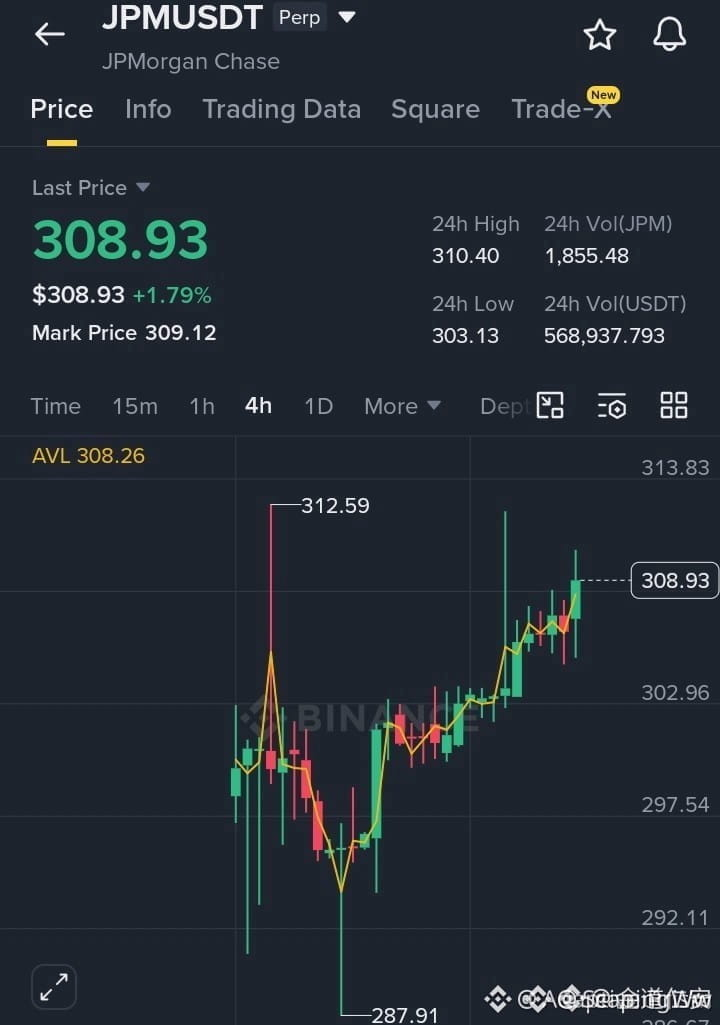
$JPM LONG PRESSURE IS BUILDING FAST 🚀
Target: 308.95 / 308.97 / 308.99 ✅
Stop Loss: 308.54 🛑
Momentum is stacking with every higher push. Bulls are trying to keep control, and the setup is now all about execution, not emotion. Stay sharp, respect the invalidation, and do not chase blindly.
Not financial advice. Manage your risk.
#Trading #Crypto #BinanceSquare #MarketSignal
⚡
{future}(JPMUSDT)
$JPM LONG PRESSURE IS BUILDING FAST 🚀
Target: 308.95 / 308.97 / 308.99 ✅
Stop Loss: 308.54 🛑
Momentum is stacking with every higher push. Bulls are trying to keep control, and the setup is now all about execution, not emotion. Stay sharp, respect the invalidation, and do not chase blindly.
Not financial advice. Manage your risk.
#Trading #Crypto #BinanceSquare #MarketSignal
⚡
Target: 308.95 / 308.97 / 308.99 ✅
Stop Loss: 308.54 🛑
Momentum is stacking with every higher push. Bulls are trying to keep control, and the setup is now all about execution, not emotion. Stay sharp, respect the invalidation, and do not chase blindly.
Not financial advice. Manage your risk.
#Trading #Crypto #BinanceSquare #MarketSignal
⚡
61
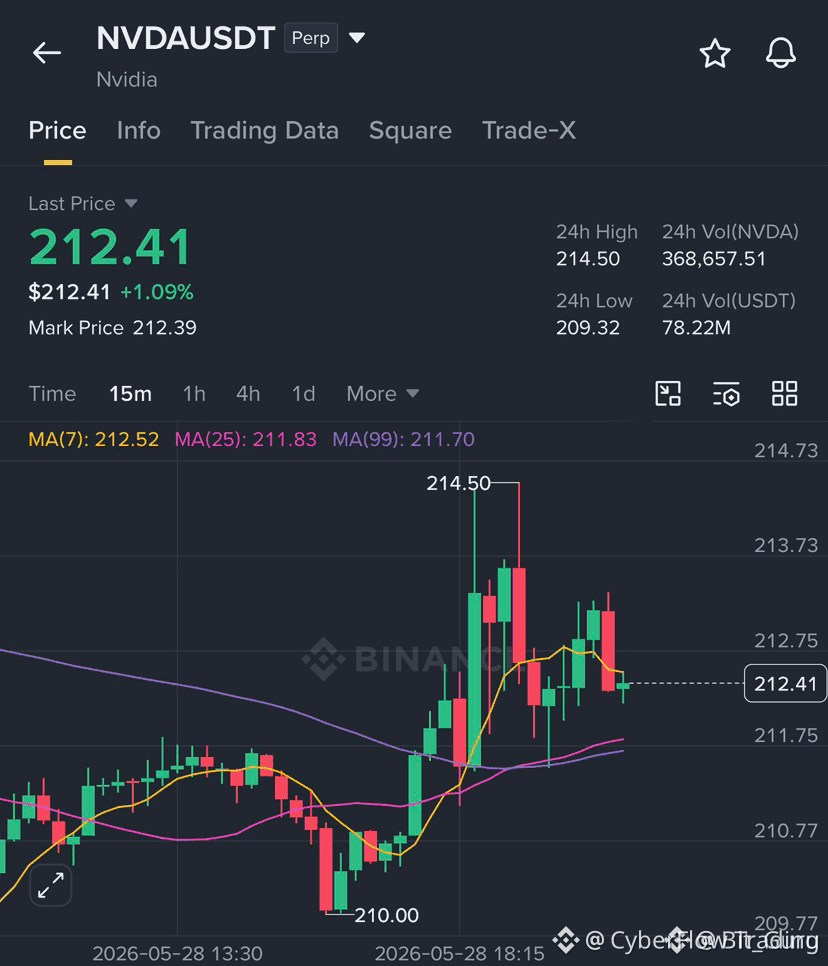
$NVDA LONG SETUP JUST FLASHED ⚡
Entry: 212 - 213 🔥
Target: 214.50 / 217 🚀
Stop Loss: 210 ⚠️
Momentum is lining up and the long zone is tight. Buyers need to defend the entry area fast, with upside confirmation coming if pressure keeps building. Clean setup, but no chasing blindly.
Not financial advice. Manage your risk.
#Crypto #Trading #BinanceSquare #Altcoins #MarketSignal
🔥
{future}(NVDAUSDT)
$NVDA LONG SETUP JUST FLASHED ⚡
Entry: 212 - 213 🔥
Target: 214.50 / 217 🚀
Stop Loss: 210 ⚠️
Momentum is lining up and the long zone is tight. Buyers need to defend the entry area fast, with upside confirmation coming if pressure keeps building. Clean setup, but no chasing blindly.
Not financial advice. Manage your risk.
#Crypto #Trading #BinanceSquare #Altcoins #MarketSignal
🔥
Entry: 212 - 213 🔥
Target: 214.50 / 217 🚀
Stop Loss: 210 ⚠️
Momentum is lining up and the long zone is tight. Buyers need to defend the entry area fast, with upside confirmation coming if pressure keeps building. Clean setup, but no chasing blindly.
Not financial advice. Manage your risk.
#Crypto #Trading #BinanceSquare #Altcoins #MarketSignal
🔥
42
·
--
Signal or noise? GENIUS
Data:
- Price 0.574300
- 24h 28.57%
- Volume 23M USDT
- Range 0.442100 / 0.586900
We're seeing a hot spike of +28.57% with a volume of 23M USDT. This momentum is definitely eye-catching on the Square, but the sweet entry point usually comes during a retest after the pump, not when the candles are shooting straight up.
Real signals tend to survive after a retest. Noise fades away when the FOMO dies down. I'm waiting to see how the market responds.
#GENIUS #MarketSignal
Signal or noise? GENIUS
Data:
- Price 0.574300
- 24h 28.57%
- Volume 23M USDT
- Range 0.442100 / 0.586900
We're seeing a hot spike of +28.57% with a volume of 23M USDT. This momentum is definitely eye-catching on the Square, but the sweet entry point usually comes during a retest after the pump, not when the candles are shooting straight up.
Real signals tend to survive after a retest. Noise fades away when the FOMO dies down. I'm waiting to see how the market responds.
#GENIUS #MarketSignal
Data:
- Price 0.574300
- 24h 28.57%
- Volume 23M USDT
- Range 0.442100 / 0.586900
We're seeing a hot spike of +28.57% with a volume of 23M USDT. This momentum is definitely eye-catching on the Square, but the sweet entry point usually comes during a retest after the pump, not when the candles are shooting straight up.
Real signals tend to survive after a retest. Noise fades away when the FOMO dies down. I'm waiting to see how the market responds.
#GENIUS #MarketSignal
68

·
--
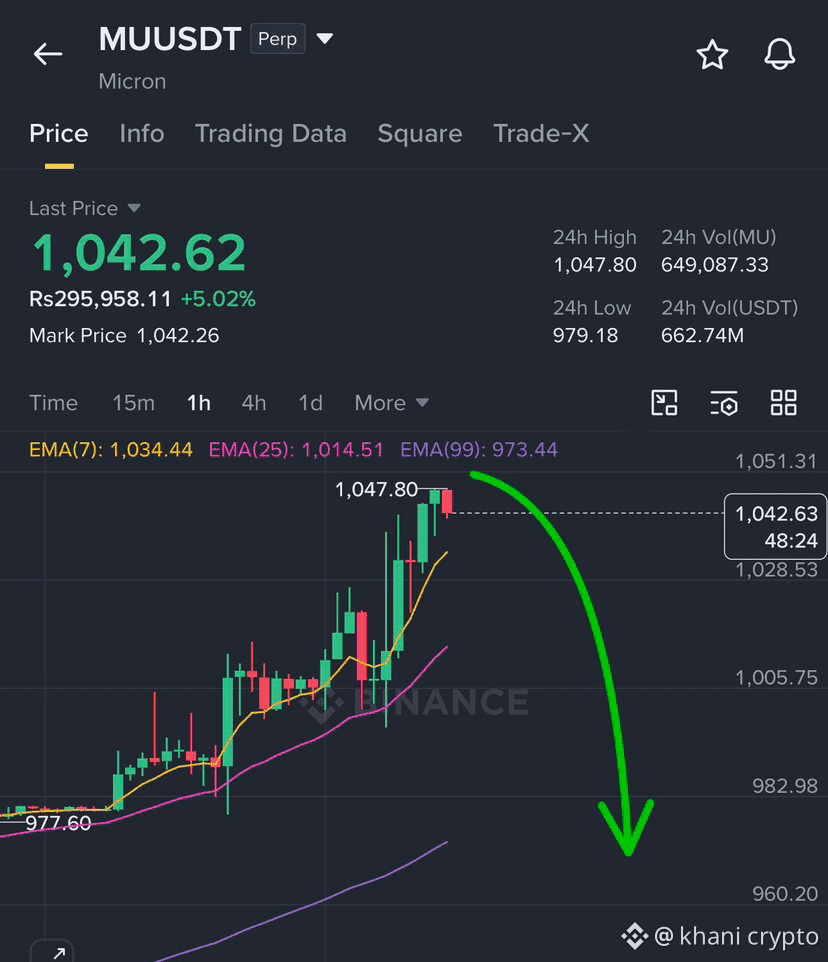
SHORT just popped up on $MU ! ⚔️
🎯 Entry Zone:
1043 – 1047 🔥
📉 Targets:
• 1026
• 1013
• 993 🚀
🛑 Stop Loss:
1071
Looks like selling pressure is ramping up on $MU, with a clear and defined sell zone forming. The bearish targets are already mapped out, but we still need to confirm momentum before any strong moves.
✅ Tight entry zone
✅ Clear cancellation point
✅ Gradual downward targets
⚠️ This is just a technical view and not investment advice. Always manage your capital and risks wisely.
#Crypto #Trading #BinanceSquare #MarketSignal l #Altc
SHORT just popped up on $MU ! ⚔️
🎯 Entry Zone:
1043 – 1047 🔥
📉 Targets:
• 1026
• 1013
• 993 🚀
🛑 Stop Loss:
1071
Looks like selling pressure is ramping up on $MU , with a clear and defined sell zone forming. The bearish targets are already mapped out, but we still need to confirm momentum before any strong moves.
✅ Tight entry zone
✅ Clear cancellation point
✅ Gradual downward targets
⚠️ This is just a technical view and not investment advice. Always manage your capital and risks wisely.
#Crypto #Trading #BinanceSquare #MarketSignal l #Altc
🎯 Entry Zone:
1043 – 1047 🔥
📉 Targets:
• 1026
• 1013
• 993 🚀
🛑 Stop Loss:
1071
Looks like selling pressure is ramping up on $MU , with a clear and defined sell zone forming. The bearish targets are already mapped out, but we still need to confirm momentum before any strong moves.
✅ Tight entry zone
✅ Clear cancellation point
✅ Gradual downward targets
⚠️ This is just a technical view and not investment advice. Always manage your capital and risks wisely.
#Crypto #Trading #BinanceSquare #MarketSignal l #Altc
1
175
·
--
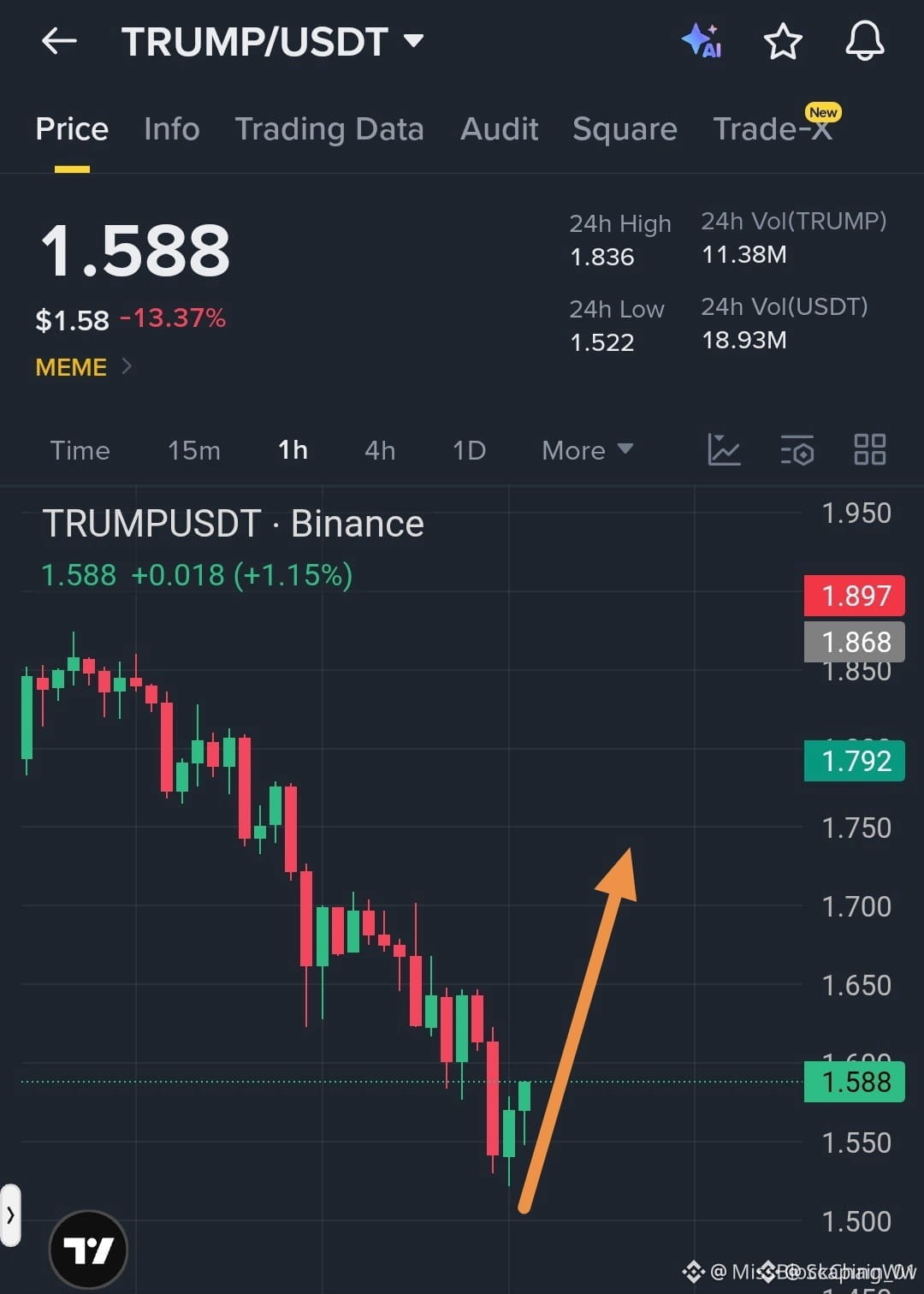
$TRUMP OVERSOLD REVERSAL JUST FLASHED ⚡
Entry: 1.56 - 1.60 🔥
Target: 1.65 / 1.72 / 1.79 🚀
Stop Loss: 1.50 🛑
Buyers are hitting back after the reaction from 1.52 support. The decline stretched hard, and now bullish candles are showing pressure building from the lows. If support holds, momentum can rotate fast toward the listed recovery zones.
Not financial advice. Manage your risk.
#Crypto #Altcoins #Trading #BinanceSquare #MarketSignal
🚀
{future}(TRUMPUSDT)
$TRUMP OVERSOLD REVERSAL JUST FLASHED ⚡
Entry: 1.56 - 1.60 🔥
Target: 1.65 / 1.72 / 1.79 🚀
Stop Loss: 1.50 🛑
Buyers are hitting back after the reaction from 1.52 support. The decline stretched hard, and now bullish candles are showing pressure building from the lows. If support holds, momentum can rotate fast toward the listed recovery zones.
Not financial advice. Manage your risk.
#Crypto #Altcoins #Trading #BinanceSquare #MarketSignal
🚀
Entry: 1.56 - 1.60 🔥
Target: 1.65 / 1.72 / 1.79 🚀
Stop Loss: 1.50 🛑
Buyers are hitting back after the reaction from 1.52 support. The decline stretched hard, and now bullish candles are showing pressure building from the lows. If support holds, momentum can rotate fast toward the listed recovery zones.
Not financial advice. Manage your risk.
#Crypto #Altcoins #Trading #BinanceSquare #MarketSignal
🚀
187

·
--
$ETH : AI REASONING CONTROL HITS 1.3% – EARLY WARNING FOR MARKETS 🔥
OpenAI’s GPT-5.6 Sol system card shows reasoning control rising to 1.3% on long chains, up from 0.4% for the prior flagship. The company treats this as an early signal rather than an alarm, but the trend is consistent across all test datasets.
For traders, this type of data has historically correlated with increased market uncertainty in sectors tied to AI development, including crypto assets like $ETH . The low absolute numbers should not be dismissed when the direction is clear.
Are you factoring AI safety metrics into your crypto risk assessment?
Not financial advice. Always manage your risk.
#ETH #AI #MarketSignal #RiskManagement
🔥
$ETH : AI REASONING CONTROL HITS 1.3% – EARLY WARNING FOR MARKETS 🔥
OpenAI’s GPT-5.6 Sol system card shows reasoning control rising to 1.3% on long chains, up from 0.4% for the prior flagship. The company treats this as an early signal rather than an alarm, but the trend is consistent across all test datasets.
For traders, this type of data has historically correlated with increased market uncertainty in sectors tied to AI development, including crypto assets like $ETH . The low absolute numbers should not be dismissed when the direction is clear.
Are you factoring AI safety metrics into your crypto risk assessment?
Not financial advice. Always manage your risk.
#ETH #AI #MarketSignal #RiskManagement
🔥
OpenAI’s GPT-5.6 Sol system card shows reasoning control rising to 1.3% on long chains, up from 0.4% for the prior flagship. The company treats this as an early signal rather than an alarm, but the trend is consistent across all test datasets.
For traders, this type of data has historically correlated with increased market uncertainty in sectors tied to AI development, including crypto assets like $ETH . The low absolute numbers should not be dismissed when the direction is clear.
Are you factoring AI safety metrics into your crypto risk assessment?
Not financial advice. Always manage your risk.
#ETH #AI #MarketSignal #RiskManagement
🔥
27
Signal or noise? ASTER
Data:
- Price 0.766000
- 24h 13.48%
- Volume 26M USDT
- Range 0.671000 / 0.768000
The +13.48% uptrend has solid volume support. If we hold above the 0.671000 level, the bulls still have the upper hand; a breakout at 0.768000 will be a notable continuation signal.
Real signals tend to survive after a retest. Noise fades away when FOMO dies down. I'm waiting for the market to respond.
#ASTER #MarketSignal
Signal or noise? ASTER
Data:
- Price 0.766000
- 24h 13.48%
- Volume 26M USDT
- Range 0.671000 / 0.768000
The +13.48% uptrend has solid volume support. If we hold above the 0.671000 level, the bulls still have the upper hand; a breakout at 0.768000 will be a notable continuation signal.
Real signals tend to survive after a retest. Noise fades away when FOMO dies down. I'm waiting for the market to respond.
#ASTER #MarketSignal
Data:
- Price 0.766000
- 24h 13.48%
- Volume 26M USDT
- Range 0.671000 / 0.768000
The +13.48% uptrend has solid volume support. If we hold above the 0.671000 level, the bulls still have the upper hand; a breakout at 0.768000 will be a notable continuation signal.
Real signals tend to survive after a retest. Noise fades away when FOMO dies down. I'm waiting for the market to respond.
#ASTER #MarketSignal
255
Log in to explore more content
Join global crypto users on Binance Square
⚡️ Get latest and useful information about crypto.
💬 Trusted by the world’s largest crypto exchange.
👍 Discover real insights from verified creators.
Email / Phone number
Trending Topics
1
#FedRateWatch
1.4M views
6,438 Discussing
2
#ZcashRises6%
35,341 views
531 Discussing
3
#XRPSinks10%
23,249 views
348 Discussing
4
#BitcoinETFsShed$450M
3,879 views
71 Discussing
5
#CircleOpensArcMainnet
11,466 views
238 Discussing
6
#ZcashHoldersBackNU7Upgrade
22,336 views
408 Discussing
7
#MSTRTradingVolumeSurpassesMorganStanley
22,826 views
570 Discussing
8
#BitcoinFalls4%
46,700 views
877 Discussing
9
#SKHynixInTalksToMakeMemoryChipsInUS
19,149 views
353 Discussing
10
#OpenAIDiscussesNewFundingAt$1.2TValuation
4,741 views
57 Discussing