
#liquid
liquid
12,605 views
73 Discussing
Hot
Latest

#SideSwapSuspendsLiquidServices
⚠️ SideSwap Pauses Liquid Services
SideSwap just suspended its Liquid Network services — another reminder that even "decentralized" tools carry operational risk. Always DYOR before trusting a platform with your funds.
🔔 Follow for real-time platform alerts
#SideSwap #Liquid #CryptoNews
⚠️ SideSwap Pauses Liquid Services
SideSwap just suspended its Liquid Network services — another reminder that even "decentralized" tools carry operational risk. Always DYOR before trusting a platform with your funds.
🔔 Follow for real-time platform alerts
#SideSwap #Liquid #CryptoNews



nobody stole a key
Liquid lost 4,019.4 BTC on september 6. about $320 million, out in one peg-out. the federation signed it with keys that were never compromised, and SideSwap says its peg-out key wasn't either.
the hole sat upstream. an inflation bug in Elements. someone minted over 4,000 L-BTC that didn't exist. the software checked those coins, called them valid, and the signers released real $BTC against them.
reserve page before: over 4,200 BTC. after: about 207😄
then the drainer signed a message on chain. we are whitehats. contact us on chain. Ledger's CTO said the obvious back: white hats don't drain a bridge first and ask for contact after.
i've been repeating "not your keys, not your coins" like it's a whole security model. it's half of one. a bridge coin is backed by the code that counts coins. that code can be wrong. every key stays safe the whole time.
lessons:
- the wrapper is a claim, the coin is sitting somewhere else
- ask who signs the release and what convinces them a claim is real
- do this while the bridge is still open
which wrapped or bridged thing are you still holding? name it in the comments and i'll go read what actually backs each one, then post whatever i find in one go.
like it if that saved you an afternoon, follow if you want that post, from a guy who checks nothing until it's already on fire)
#bitcoin #Liquid #exploit
Liquid lost 4,019.4 BTC on september 6. about $320 million, out in one peg-out. the federation signed it with keys that were never compromised, and SideSwap says its peg-out key wasn't either.
the hole sat upstream. an inflation bug in Elements. someone minted over 4,000 L-BTC that didn't exist. the software checked those coins, called them valid, and the signers released real $BTC against them.
reserve page before: over 4,200 BTC. after: about 207😄
then the drainer signed a message on chain. we are whitehats. contact us on chain. Ledger's CTO said the obvious back: white hats don't drain a bridge first and ask for contact after.
i've been repeating "not your keys, not your coins" like it's a whole security model. it's half of one. a bridge coin is backed by the code that counts coins. that code can be wrong. every key stays safe the whole time.
lessons:
- the wrapper is a claim, the coin is sitting somewhere else
- ask who signs the release and what convinces them a claim is real
- do this while the bridge is still open
which wrapped or bridged thing are you still holding? name it in the comments and i'll go read what actually backs each one, then post whatever i find in one go.
like it if that saved you an afternoon, follow if you want that post, from a guy who checks nothing until it's already on fire)
#bitcoin #Liquid #exploit



【Breaking! About 4,000 BTC Transferred, Worth About US$320 Million】
On September 7, 2026, a major security incident occurred on Bitcoin sidechain Liquid Network. About 4,000 BTC were transferred out from related wallets, worth approximately US$320 million.
Even more outrageous, the person who transferred the funds also claimed to be a "white-hat hacker." After the incident, Liquid Network has suspended new transactions, and some platforms have also suspended LBTC deposits and withdrawals.
It should be noted: this was not a hack of the Bitcoin mainnet, but a security issue on the Liquid sidechain.
The biggest question now is:
Will these 4,000 BTC be returned?
#BTC #Bitcoin #Liquid #Crypto $BTC
On September 7, 2026, a major security incident occurred on Bitcoin sidechain Liquid Network. About 4,000 BTC were transferred out from related wallets, worth approximately US$320 million.
Even more outrageous, the person who transferred the funds also claimed to be a "white-hat hacker." After the incident, Liquid Network has suspended new transactions, and some platforms have also suspended LBTC deposits and withdrawals.
It should be noted: this was not a hack of the Bitcoin mainnet, but a security issue on the Liquid sidechain.
The biggest question now is:
Will these 4,000 BTC be returned?
#BTC #Bitcoin #Liquid #Crypto $BTC



SideSwap suspends Liquid services! 4,000 BTC moved out, did $320 million funds go bad?
Today, a major bombshell suddenly appeared in the crypto market.
SideSwap announced:
All swap, peg-in, and peg-out services related to Liquid have been suspended.
The reason is a security incident on the Liquid network.
Around 4,000 BTC was transferred out from the Liquid Federation wallet, worth about $320 million, accounting for 95% of the roughly 4,200 BTC reserves previously held.
What’s even more strange is:
This withdrawal was completed via SideSwap’s Peg-out Authorization Key (PAK).
However, Liquid states:
❌ The PAK itself was not compromised
❌ No other Federation key leaks were found
❌ SideSwap also said its own systems were not breached
Current disclosed information points to:
An Elements software vulnerability → resulting in L-BTC without real BTC backing → exchanged into real BTC through the normal peg-out process.
That means the most concerning possibility isn’t necessarily “private keys were stolen.”
Instead, it’s this:
The system treated fake L-BTC as if it were real L-BTC.
That’s also why Liquid chose to pause the network directly.
The entity claiming to be “white hat” has already contacted Blockstream via on-chain messages, and says that after the vulnerability is fixed and all nodes complete the upgrade, they are willing to return most of the BTC.
So now there are three key questions:
1️⃣ Can the 4,000 BTC ultimately be recovered?
2️⃣ How exactly was the Elements vulnerability exploited?
3️⃣ When will Liquid resume normal operation?
The good news is:
The Bitcoin mainnet itself has not been affected.
But this incident once again reminds the market:
BTC itself is safe ≠ BTC’s Layer 2, cross-chain bridges, custody, and anchoring mechanisms are equally safe.
Especially assets like L-BTC that rely on federation mechanisms—once a problem occurs with the underlying peg, the risk can quickly amplify.
This time, what truly needs attention isn’t whether BTC will drop because of the news, but whether the $320 million worth of BTC can be returned safely in the end.
#BTC #liquid #sideswap暂停liquid服务
Today, a major bombshell suddenly appeared in the crypto market.
SideSwap announced:
All swap, peg-in, and peg-out services related to Liquid have been suspended.
The reason is a security incident on the Liquid network.
Around 4,000 BTC was transferred out from the Liquid Federation wallet, worth about $320 million, accounting for 95% of the roughly 4,200 BTC reserves previously held.
What’s even more strange is:
This withdrawal was completed via SideSwap’s Peg-out Authorization Key (PAK).
However, Liquid states:
❌ The PAK itself was not compromised
❌ No other Federation key leaks were found
❌ SideSwap also said its own systems were not breached
Current disclosed information points to:
An Elements software vulnerability → resulting in L-BTC without real BTC backing → exchanged into real BTC through the normal peg-out process.
That means the most concerning possibility isn’t necessarily “private keys were stolen.”
Instead, it’s this:
The system treated fake L-BTC as if it were real L-BTC.
That’s also why Liquid chose to pause the network directly.
The entity claiming to be “white hat” has already contacted Blockstream via on-chain messages, and says that after the vulnerability is fixed and all nodes complete the upgrade, they are willing to return most of the BTC.
So now there are three key questions:
1️⃣ Can the 4,000 BTC ultimately be recovered?
2️⃣ How exactly was the Elements vulnerability exploited?
3️⃣ When will Liquid resume normal operation?
The good news is:
The Bitcoin mainnet itself has not been affected.
But this incident once again reminds the market:
BTC itself is safe ≠ BTC’s Layer 2, cross-chain bridges, custody, and anchoring mechanisms are equally safe.
Especially assets like L-BTC that rely on federation mechanisms—once a problem occurs with the underlying peg, the risk can quickly amplify.
This time, what truly needs attention isn’t whether BTC will drop because of the news, but whether the $320 million worth of BTC can be returned safely in the end.
#BTC #liquid #sideswap暂停liquid服务

The operator who claimed to be a “white hat” has reportedly sent back about 3,400 BTC to the Liquid Federation wallet, worth approximately $268 million at the time based on the market view. In addition, about 598.5 BTC (about $47 million, about 15% of the amount previously transferred out) remains in the other party’s address.
Cross-verification by Bitcoin.com, The Defiant, and Lookonchain / Odaily indicates that the rollback occurred after Blockstream announced via an on-chain PGP-signed message that “the bridging node has been patched and funds can be safely returned.” Previously, about 3,998.5 BTC had been abnormally minted due to a vulnerability in the Elements software, and were proposed through SideSwap’s legitimate peg-out pathway. The official says that the leak of any keys has not been confirmed. On the Liquid sidechain, operations are still paused; exchange access for LBTC is still suspended; and other assets such as USDT were previously said not to be affected. The Bitcoin mainnet itself has not been implicated.
Set the boundaries clearly: the rollback does not mean the network is fully restored, nor does it mean that 1:1 reserves have been completely replenished—about 600 BTC are still in the other party’s hands, and the official has not publicly characterized this portion as an agreed bounty. First confirm the on-chain numbers, the balance in the federation wallet, and the restart notices; then assess whether the L-BTC peg has returned to normal. Don’t translate “most has been returned” directly into “the event is concluded” or a trading signal.
Market reference (CoinGecko): $BTC about $79,000, and $BNB about $739. Re-check on-chain data and the official position before discussing sentiment.
$BTC $BNB
#Liquid #比特币 #white hat
Not investment advice
Cross-verification by Bitcoin.com, The Defiant, and Lookonchain / Odaily indicates that the rollback occurred after Blockstream announced via an on-chain PGP-signed message that “the bridging node has been patched and funds can be safely returned.” Previously, about 3,998.5 BTC had been abnormally minted due to a vulnerability in the Elements software, and were proposed through SideSwap’s legitimate peg-out pathway. The official says that the leak of any keys has not been confirmed. On the Liquid sidechain, operations are still paused; exchange access for LBTC is still suspended; and other assets such as USDT were previously said not to be affected. The Bitcoin mainnet itself has not been implicated.
Set the boundaries clearly: the rollback does not mean the network is fully restored, nor does it mean that 1:1 reserves have been completely replenished—about 600 BTC are still in the other party’s hands, and the official has not publicly characterized this portion as an agreed bounty. First confirm the on-chain numbers, the balance in the federation wallet, and the restart notices; then assess whether the L-BTC peg has returned to normal. Don’t translate “most has been returned” directly into “the event is concluded” or a trading signal.
Market reference (CoinGecko): $BTC about $79,000, and $BNB about $739. Re-check on-chain data and the official position before discussing sentiment.
$BTC $BNB
#Liquid #比特币 #white hat
Not investment advice
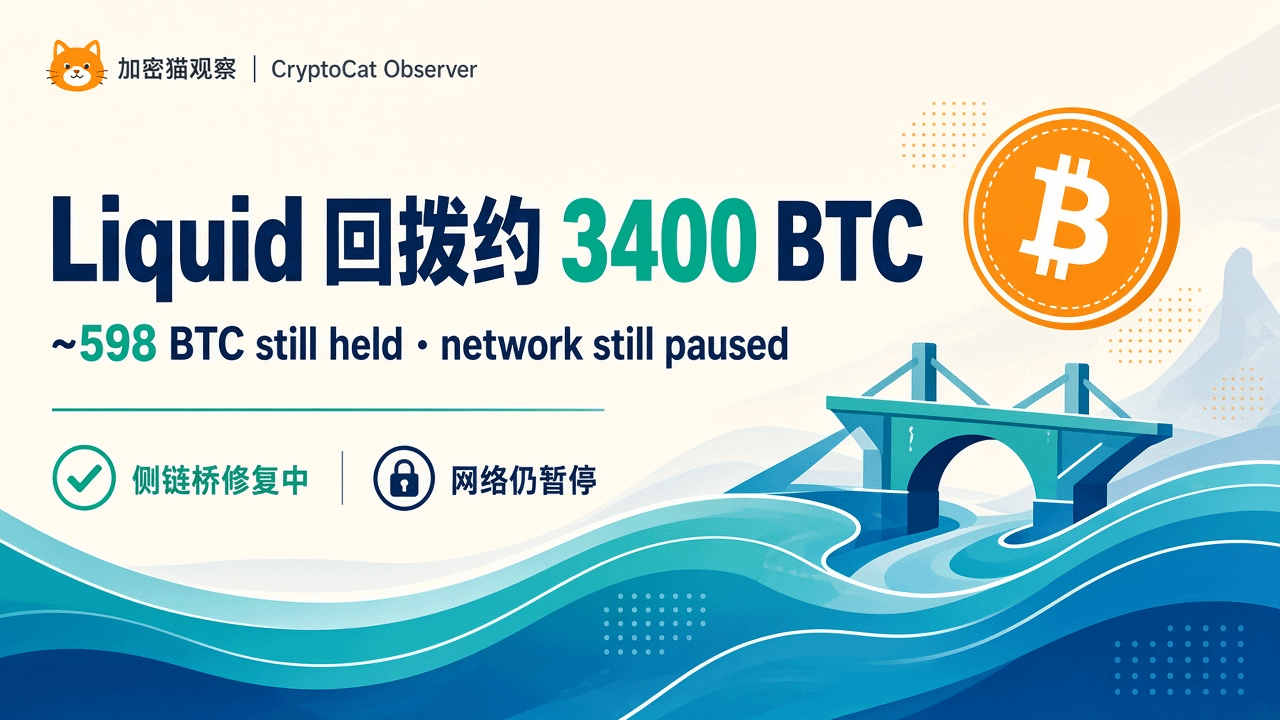


Good news! Liquid Network successfully recovered 3,400 BTC through on-chain negotiations. The white-hat hacker retained nearly 600 BTC (about $47 million). The bridge nodes have already been patched, and this security incident is now over. In the short term, the BTC market may rise as the resolution of the security issue provides a boost to market sentiment. However, those 600 BTC could be sold off at any time, so investors should watch for short-term volatility. Safety first—there’s still a long way to go for the blockchain industry. #Bitcoin #Liquid #Security

Something strange happened with Bitcoin’s Liquid sidechain.
The network stopped its operations after a massive withdrawal.
A group identifying itself as white hats took out 4,000 $BTC .
We’re talking about around $320 million in total.
Those responsible notified Blockstream that they will return almost everything.
The condition is that first they must fix a vulnerability in Elements.
It’s interesting how these security events are handled these days.
What do you think about this kind of intervention?
#Bitcoin #Liquid
The network stopped its operations after a massive withdrawal.
A group identifying itself as white hats took out 4,000 $BTC .
We’re talking about around $320 million in total.
Those responsible notified Blockstream that they will return almost everything.
The condition is that first they must fix a vulnerability in Elements.
It’s interesting how these security events are handled these days.
What do you think about this kind of intervention?
#Bitcoin #Liquid


Don’t rush to shout “returned = over”: the Liquid white-hat storyline has moved one step further, but the network is not yet back online.
According to on-chain monitoring by Galaxy Research head Alex Thorn, the self-proclaimed white-hat side is communicating with Blockstream via OP_RETURN and PGP-encrypted channels, and has made it clear that they will return “most” of the roughly 4,000 $BTC previously transferred only after the vulnerability is patched and all network nodes complete the upgrade. At the time of the incident, those funds were valued at about $320 million. Liquid’s official statement previously said the Federation wallet had been drained of about 4,000 BTC, with reserves falling from around 4,200 to about 207 BTC; sidechain bridging has been suspended, exchanges have paused LBTC deposits and withdrawals, and other assets such as USDT are said to be unaffected for now.
Keep the wording tight: the other party said “most,” not “all”; the return still depends on the patch being deployed and confirmed. Market reference (CoinGecko): $BTC about $79,300, $BNB about $743. First watch official progress and node upgrade updates, and don’t treat the white-hat statement as if the funds have already been recovered.
#Liquid #比特币 #whitehat
Not investment advice
According to on-chain monitoring by Galaxy Research head Alex Thorn, the self-proclaimed white-hat side is communicating with Blockstream via OP_RETURN and PGP-encrypted channels, and has made it clear that they will return “most” of the roughly 4,000 $BTC previously transferred only after the vulnerability is patched and all network nodes complete the upgrade. At the time of the incident, those funds were valued at about $320 million. Liquid’s official statement previously said the Federation wallet had been drained of about 4,000 BTC, with reserves falling from around 4,200 to about 207 BTC; sidechain bridging has been suspended, exchanges have paused LBTC deposits and withdrawals, and other assets such as USDT are said to be unaffected for now.
Keep the wording tight: the other party said “most,” not “all”; the return still depends on the patch being deployed and confirmed. Market reference (CoinGecko): $BTC about $79,300, $BNB about $743. First watch official progress and node upgrade updates, and don’t treat the white-hat statement as if the funds have already been recovered.
#Liquid #比特币 #whitehat
Not investment advice

瑞见未来:
看这种储备从4200降到207的新闻我都心慌,以前追着白帽消息瞎操作全亏光,现在托管着不盯盘反倒安稳,闲下来可以翻翻 他的帖子

A problem has occurred with the Bitcoin sidechain Liquid, resulting in about 4,000 BTC being abnormally withdrawn. The official BTC cross-chain bridge service into and out of Liquid has currently been suspended.
According to reports, this issue is on Liquid’s blockchain explorer, where a large number of invalid blocks have appeared, and the development team is in the process of fixing it. At present, user funds do not appear to be at security risk, but to prevent the problem from spreading, the team has temporarily suspended the cross-chain bridge service to avoid more BTC withdrawals.
The Bitcoin sidechain Liquid mainly provides fast settlement services for trading platforms. This incident has once again sparked discussion about sidechain security. What do you think about this issue with Liquid? Do you think it will affect the Bitcoin ecosystem?
$BTC
#比特币 #Liquid #区块链安全
According to reports, this issue is on Liquid’s blockchain explorer, where a large number of invalid blocks have appeared, and the development team is in the process of fixing it. At present, user funds do not appear to be at security risk, but to prevent the problem from spreading, the team has temporarily suspended the cross-chain bridge service to avoid more BTC withdrawals.
The Bitcoin sidechain Liquid mainly provides fast settlement services for trading platforms. This incident has once again sparked discussion about sidechain security. What do you think about this issue with Liquid? Do you think it will affect the Bitcoin ecosystem?
$BTC
#比特币 #Liquid #区块链安全

# Bitcoin sidechain Liquid has encountered an anomaly, and its cross-chain bridge function has been suspended
According to the latest news, Bitcoin sidechain Liquid experienced an abnormal situation, with about 4,000 BTC being withdrawn abnormally. The official team has already suspended the network's cross-chain bridge function to prevent further expansion of the risk.
As a Layer 2 scaling solution for Bitcoin, Liquid focuses on fast and private transactions and has long drawn the attention of many users in the industry. This incident once again sounds the alarm on security issues in the blockchain sector. When participating in various cross-chain ecosystems, everyone must pay attention to risks and做好 risk control in advance.
$BTC #比特币 #Liquid
According to the latest news, Bitcoin sidechain Liquid experienced an abnormal situation, with about 4,000 BTC being withdrawn abnormally. The official team has already suspended the network's cross-chain bridge function to prevent further expansion of the risk.
As a Layer 2 scaling solution for Bitcoin, Liquid focuses on fast and private transactions and has long drawn the attention of many users in the industry. This incident once again sounds the alarm on security issues in the blockchain sector. When participating in various cross-chain ecosystems, everyone must pay attention to risks and做好 risk control in advance.
$BTC #比特币 #Liquid

According to the official announcement, an abnormal situation occurred today on the Bitcoin sidechain Liquid network, with about 4,000 BTC being withdrawn abnormally. The official team has now suspended the network bridging service. $BTC This incident has once again sparked market discussion about sidechain security. As one of the earlier sidechain projects to launch within the Bitcoin ecosystem, Liquid is mainly dedicated to providing faster transfer speeds and token issuance functions for the Bitcoin ecosystem. This security incident is bound to have a short-term impact on the development of the Bitcoin sidechain ecosystem. The development team is currently investigating the cause of the problem, and we will continue to follow subsequent progress.
#Bitcoin #Liquid
#Bitcoin #Liquid

Liquid suspension: For those holding LBTC, don’t look only at the BTC price
LBTC holders should first confirm the availability of transfers and BTC redemptions; do not treat the “white hat” claim as a signal that the alert can be lifted. What has been verified is an event involving the Liquid sidechain and its federated wallet, not evidence that the Bitcoin mainnet was compromised.
On September 6, Liquid announced that about 4,000 BTC had been withdrawn from the federated wallet, and the team is contacting the relevant parties; bridge nodes have been temporarily shut down, and exchanges have suspended or are preparing to suspend LBTC deposits and withdrawals. As of this verification, no confirmation of returned funds has been obtained.
LBTC represents BTC locked on the Bitcoin network, but it also adds a layer of federated custody and redemption mechanisms. Therefore, even if the BTC price is stable, that does not prove LBTC can be redeemed at any time. The official statement says that other assets on Liquid, such as USDT and DePix, were not affected by this security incident, but it also clearly states that wallet functions will be affected by the suspension: “assets not affected” does not mean “transfers are normal.”
Affected users should temporarily refrain from making new deposits to the Liquid chain, check the announcements of each platform they use one by one, and keep records of balances and transactions; do not enter seed phrases into any so-called “recovery/compensation” page.
Yesterday’s view still has not been confirmed by new trading-day data: “ETF inflows do not equal a breakout confirmation” remains unchanged. The U.S. stock market will be closed on September 7 for Labor Day, and the next trading day is September 8; holiday price fluctuations cannot be described as a new round of ETF buying.
Over the next 24 hours, watch for evidence of returned funds, official remediation updates, and announcements from platforms resuming deposits and withdrawals. Only when reserves are restored, the fix is verified, and redemptions actually resume should the risk assessment be lowered; if additional assets are affected, the warning scope should be expanded.
#比特币 #Liquid #asset security
LBTC holders should first confirm the availability of transfers and BTC redemptions; do not treat the “white hat” claim as a signal that the alert can be lifted. What has been verified is an event involving the Liquid sidechain and its federated wallet, not evidence that the Bitcoin mainnet was compromised.
On September 6, Liquid announced that about 4,000 BTC had been withdrawn from the federated wallet, and the team is contacting the relevant parties; bridge nodes have been temporarily shut down, and exchanges have suspended or are preparing to suspend LBTC deposits and withdrawals. As of this verification, no confirmation of returned funds has been obtained.
LBTC represents BTC locked on the Bitcoin network, but it also adds a layer of federated custody and redemption mechanisms. Therefore, even if the BTC price is stable, that does not prove LBTC can be redeemed at any time. The official statement says that other assets on Liquid, such as USDT and DePix, were not affected by this security incident, but it also clearly states that wallet functions will be affected by the suspension: “assets not affected” does not mean “transfers are normal.”
Affected users should temporarily refrain from making new deposits to the Liquid chain, check the announcements of each platform they use one by one, and keep records of balances and transactions; do not enter seed phrases into any so-called “recovery/compensation” page.
Yesterday’s view still has not been confirmed by new trading-day data: “ETF inflows do not equal a breakout confirmation” remains unchanged. The U.S. stock market will be closed on September 7 for Labor Day, and the next trading day is September 8; holiday price fluctuations cannot be described as a new round of ETF buying.
Over the next 24 hours, watch for evidence of returned funds, official remediation updates, and announcements from platforms resuming deposits and withdrawals. Only when reserves are restored, the fix is verified, and redemptions actually resume should the risk assessment be lowered; if additional assets are affected, the warning scope should be expanded.
#比特币 #Liquid #asset security

The Liquid network “white hat hacker” said that after the vulnerability is fixed, most of the 4,000 BTC will be returned.
#BTC #Blockstream #Liquid
#BTC #Blockstream #Liquid
Blockstream's Liquid sidechain has run into trouble — this is the hardest security news of the weekend.
About 4,000 $BTC (roughly $320 million) were peg-out from a federated wallet. An on-chain OP_RETURN claimed to be a white hat and wrote "contact us on chain". The official response later confirmed a security incident: the funds were sent out through SideSwap's PAK channel, but it said the keys themselves were not stolen; exchanges were notified to pause LBTC deposits and withdrawals, and the bridge nodes were temporarily shut down. USDT, DePix, RWA, and other assets have not been affected so far.
Ledger's CTO publicly questioned the "white hat" narrative — proper disclosure usually reports the vulnerability first and then discusses remediation, rather than moving out nearly 95% of reserves before asking to negotiate. Correspondingly, LBTC has already been burned, and the remaining peg still matches for now, but the key postmortem issue is how the authorization process was bypassed and whether the funds will ultimately be returned.
Current price reference (Binance Vision): $BTC about $80,104, 24h about +0.25%, high about $80,560, low about $79,233. The market has not crashed hard because of this yet; first watch official communications and the return process, and don't take rumors as fact.
$BTC
#比特币 #Liquid #on-chain security
Not investment advice
About 4,000 $BTC (roughly $320 million) were peg-out from a federated wallet. An on-chain OP_RETURN claimed to be a white hat and wrote "contact us on chain". The official response later confirmed a security incident: the funds were sent out through SideSwap's PAK channel, but it said the keys themselves were not stolen; exchanges were notified to pause LBTC deposits and withdrawals, and the bridge nodes were temporarily shut down. USDT, DePix, RWA, and other assets have not been affected so far.
Ledger's CTO publicly questioned the "white hat" narrative — proper disclosure usually reports the vulnerability first and then discusses remediation, rather than moving out nearly 95% of reserves before asking to negotiate. Correspondingly, LBTC has already been burned, and the remaining peg still matches for now, but the key postmortem issue is how the authorization process was bypassed and whether the funds will ultimately be returned.
Current price reference (Binance Vision): $BTC about $80,104, 24h about +0.25%, high about $80,560, low about $79,233. The market has not crashed hard because of this yet; first watch official communications and the return process, and don't take rumors as fact.
$BTC
#比特币 #Liquid #on-chain security
Not investment advice


The Liquid sidechain has just gone through a significant trust test — a massive withdrawal of 4,000 BTC led to the emergency suspension of bridge functionality.
Many people's first reaction was, "Is the bridge broken? Will the assets be lost?" But the core of this event is actually more subtle: when the liquidity channel between a sidechain and the main chain is cut off, everything tied to the chain — whether settlement confirmations, exchange channels, or cross-chain liquidity — enters a kind of "trust freeze" state.
This is not a problem with $BTC the main chain, but a risk characteristic of the Layer 2 architecture itself: verifiability must rely on the availability of the bridging mechanism. Once the bridge becomes unavailable, the verification chain is broken.
For ecosystem participants, this serves as a reminder of a basic fact: in a layered architecture, the security of each layer cannot be assessed in isolation, and the availability of the bridge itself is part of security.
#Bitcoin #Liquid
Many people's first reaction was, "Is the bridge broken? Will the assets be lost?" But the core of this event is actually more subtle: when the liquidity channel between a sidechain and the main chain is cut off, everything tied to the chain — whether settlement confirmations, exchange channels, or cross-chain liquidity — enters a kind of "trust freeze" state.
This is not a problem with $BTC the main chain, but a risk characteristic of the Layer 2 architecture itself: verifiability must rely on the availability of the bridging mechanism. Once the bridge becomes unavailable, the verification chain is broken.
For ecosystem participants, this serves as a reminder of a basic fact: in a layered architecture, the security of each layer cannot be assessed in isolation, and the availability of the bridge itself is part of security.
#Bitcoin #Liquid

What is restaking? Liquid restaking, EigenLayer, and the new yield stack explained
Restaking lets you take the ether you have already staked and put it to work a second time, securing other protocols for extra yield. It is one of the largest ideas in crypto today, and one of the most misunderstood.…
#Learn #Liquid Staking #Staking
Restaking lets you take the ether you have already staked and put it to work a second time, securing other protocols for extra yield. It is one of the largest ideas in crypto today, and one of the most misunderstood.…
#Learn #Liquid Staking #Staking

A Bitcoin sidechain paused this morning.
Cointelegraph said some supposed white hats pulled $320 million in BTC off Liquid, then the chain went quiet. I went straight to $BTC . Figured a hole that size would show up there.
It's around $79,800. Down 0.19%. I locked the phone and made coffee. Opened it again, still 0.19%. MSTR moved more, down about 1.4% at $142.80. Nasdaq is only off 0.29%.
$DASH is the one that actually looks ugly on my screen, about 9.2% down at $67.55. The whole market got about 2.9% smaller. $BTC still has about 59% of it.
#Bitcoin #Liquid #Dash
Cointelegraph said some supposed white hats pulled $320 million in BTC off Liquid, then the chain went quiet. I went straight to $BTC . Figured a hole that size would show up there.
It's around $79,800. Down 0.19%. I locked the phone and made coffee. Opened it again, still 0.19%. MSTR moved more, down about 1.4% at $142.80. Nasdaq is only off 0.29%.
$DASH is the one that actually looks ugly on my screen, about 9.2% down at $67.55. The whole market got about 2.9% smaller. $BTC still has about 59% of it.
#Bitcoin #Liquid #Dash

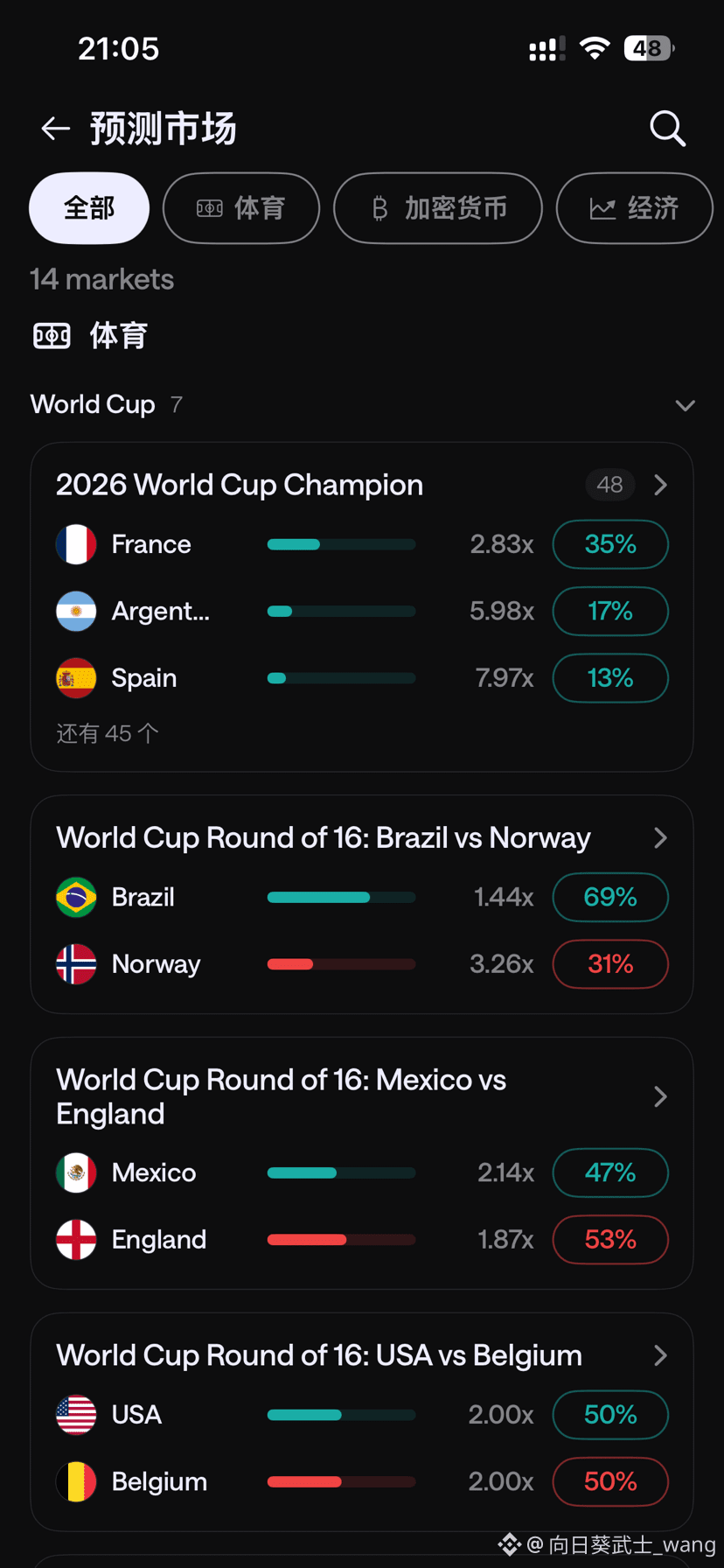
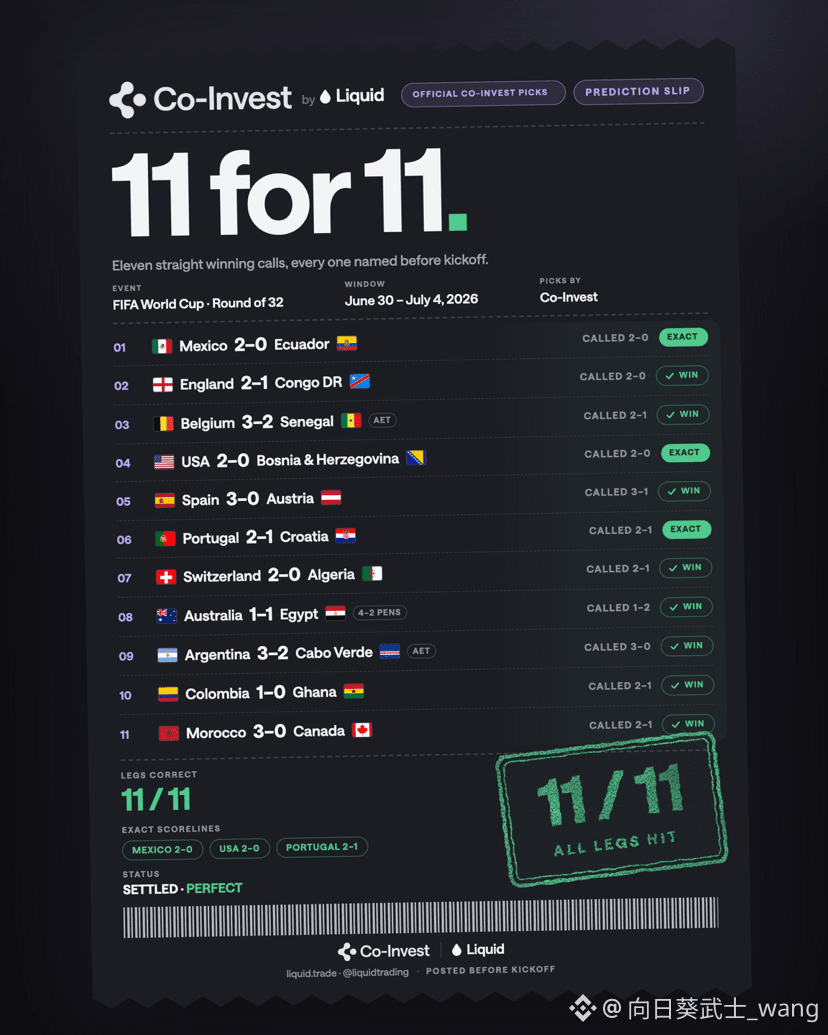
The Liquid United Coinvest World Cup prediction event has maintained an undefeated record so far! Before each match, combining the prediction results provided by Coinvest can greatly improve your win rate 😎#liquid #coinvest
Log in to explore more content