

#hackeralert
hackeralert
1.8M views
1,134 Discussing
Hot
Latest

·
--
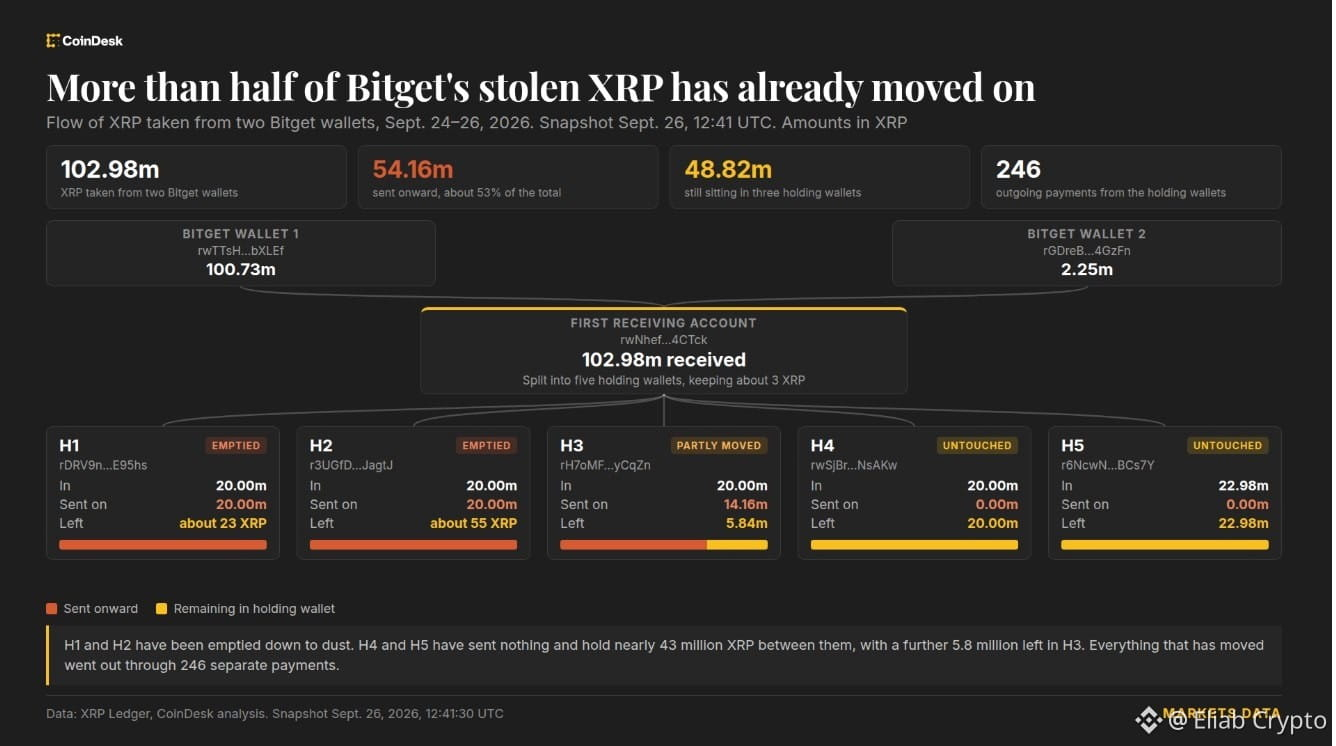
🚨 #BITGET HACKER MOVES $83M IN STOLEN XRP
The attacker has moved around $83M worth of stolen XRP -- and Ripple cannot freeze the funds
Two wallets have been almost completely emptied, while a third is still being drained.
Only about $75M remains across the five original holding wallets
The stolen XRP is moving fast
Where will it go next?
#Bitget #HackerAlert
🚨 #BITGET HACKER MOVES $83M IN STOLEN XRP
The attacker has moved around $83M worth of stolen XRP -- and Ripple cannot freeze the funds
Two wallets have been almost completely emptied, while a third is still being drained.
Only about $75M remains across the five original holding wallets
The stolen XRP is moving fast
Where will it go next?
#Bitget #HackerAlert
The attacker has moved around $83M worth of stolen XRP -- and Ripple cannot freeze the funds
Two wallets have been almost completely emptied, while a third is still being drained.
Only about $75M remains across the five original holding wallets
The stolen XRP is moving fast
Where will it go next?
#Bitget #HackerAlert
3
246

·
--
JUST IN: THE CHINESE HACKER WHO STOLE $370M FROM BITGET EXPRESSES THAT HE NEEDS SUPPORT FROM THOR CHAIN TO LAUNDER THE FUNDS
“I’M VERY WORRIED. LOSING MY ASSETS WOULD CAUSE A LOT OF TROUBLE IN MY LIFE”
#Bitget #HackerAlert
@Square-Creator-0b3444457
JUST IN: THE CHINESE HACKER WHO STOLE $370M FROM BITGET EXPRESSES THAT HE NEEDS SUPPORT FROM THOR CHAIN TO LAUNDER THE FUNDS
“I’M VERY WORRIED. LOSING MY ASSETS WOULD CAUSE A LOT OF TROUBLE IN MY LIFE”
#Bitget #HackerAlert
@FINANCE-JACK
“I’M VERY WORRIED. LOSING MY ASSETS WOULD CAUSE A LOT OF TROUBLE IN MY LIFE”
#Bitget #HackerAlert
@FINANCE-JACK


97

·
--
Bullish
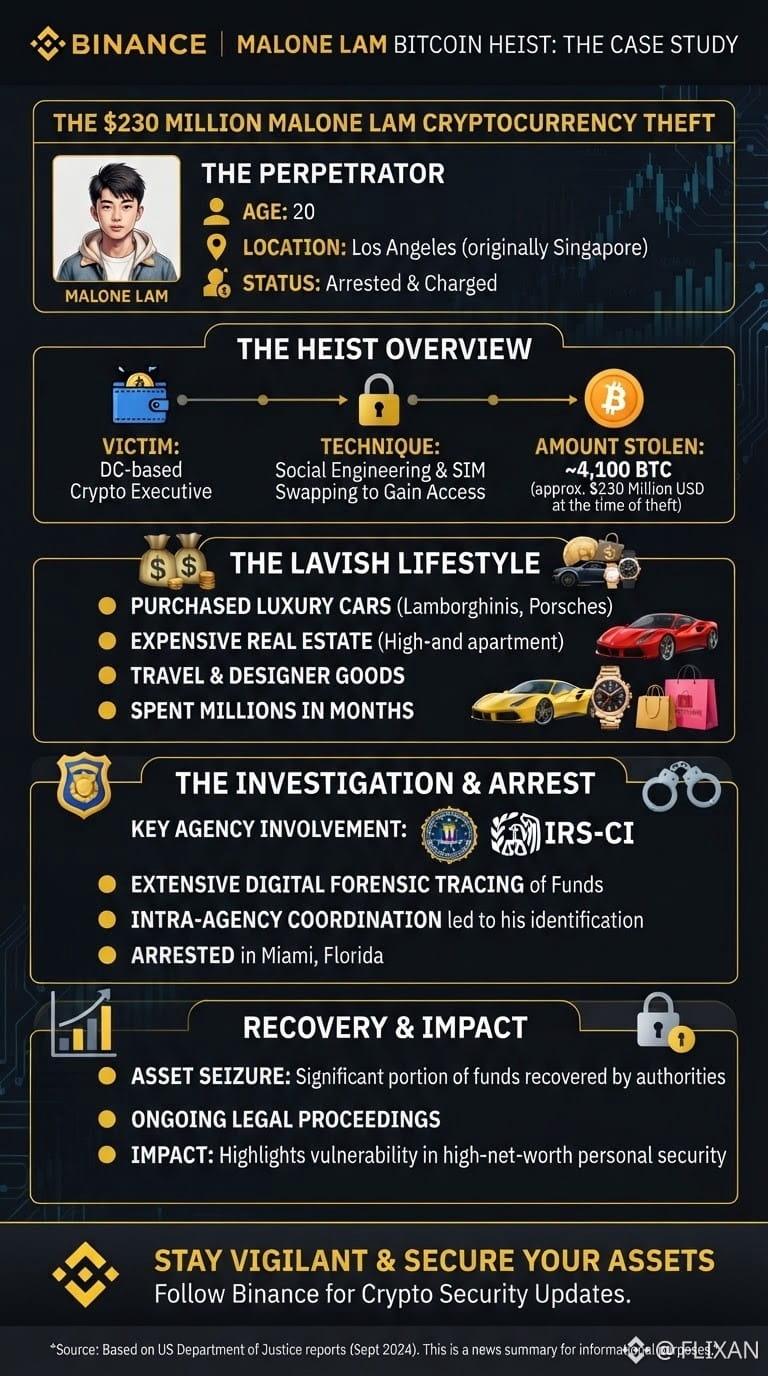
Binance Case Study: The $230M Malone Lam Crypto Heist
The 20-year-old mastermind Malone Lam, originally from Singapore, orchestrated a massive $230M cryptocurrency theft (approx. 4,100 BTC) targeting a Washington D.C. executive. Using social engineering and SIM swapping, they bypassed 2FA to drain funds in minutes. Lam and accomplice Jeandiel Serrano burned millions on luxury cars, real estate, and high-end goods in Los Angeles. FBI and IRS-CI tracked on-chain activity and spending sprees, leading to their arrest in Miami. Recovered assets are being secured, highlighting extreme vulnerabilities in high-net-worth personal crypto security. Use app-based 2FA and hardware wallets to stay protected.
#Bitcoin❗ #HackerAlert $
Binance Case Study: The $230M Malone Lam Crypto Heist
The 20-year-old mastermind Malone Lam, originally from Singapore, orchestrated a massive $230M cryptocurrency theft (approx. 4,100 BTC) targeting a Washington D.C. executive. Using social engineering and SIM swapping, they bypassed 2FA to drain funds in minutes. Lam and accomplice Jeandiel Serrano burned millions on luxury cars, real estate, and high-end goods in Los Angeles. FBI and IRS-CI tracked on-chain activity and spending sprees, leading to their arrest in Miami. Recovered assets are being secured, highlighting extreme vulnerabilities in high-net-worth personal crypto security. Use app-based 2FA and hardware wallets to stay protected.
#Bitcoin❗ #HackerAlert $
The 20-year-old mastermind Malone Lam, originally from Singapore, orchestrated a massive $230M cryptocurrency theft (approx. 4,100 BTC) targeting a Washington D.C. executive. Using social engineering and SIM swapping, they bypassed 2FA to drain funds in minutes. Lam and accomplice Jeandiel Serrano burned millions on luxury cars, real estate, and high-end goods in Los Angeles. FBI and IRS-CI tracked on-chain activity and spending sprees, leading to their arrest in Miami. Recovered assets are being secured, highlighting extreme vulnerabilities in high-net-worth personal crypto security. Use app-based 2FA and hardware wallets to stay protected.
#Bitcoin❗ #HackerAlert $
107


·
--
$STO
{future}(STOUSDT)
🚨 BREAKING:
💰 Bit get founder Gracy Chen confirmed a Sept. 24 breach this week, affecting ~$351.6M from hot and warm wallet infrastructure.
Cold wallets remain secure. Bit get's $464M+ User Protection Fund covers the full loss.
Crypto suffered its largest hack of the year after Bit get lost $350 million in a single attack.
Nearly $2 billion has already been stolen across 300+ crypto hacks in 2026.
Bit get CEO Gracy Chen says North Korean hackers may be behind the exchange's $352M breach, citing IP addresses linked to VPNs used by a DPRK group.
#HackerAlert #BREAKING #CryptoNews
$STO
🚨 BREAKING:
💰 Bit get founder Gracy Chen confirmed a Sept. 24 breach this week, affecting ~$351.6M from hot and warm wallet infrastructure.
Cold wallets remain secure. Bit get's $464M+ User Protection Fund covers the full loss.
Crypto suffered its largest hack of the year after Bit get lost $350 million in a single attack.
Nearly $2 billion has already been stolen across 300+ crypto hacks in 2026.
Bit get CEO Gracy Chen says North Korean hackers may be behind the exchange's $352M breach, citing IP addresses linked to VPNs used by a DPRK group.
#HackerAlert #BREAKING #CryptoNews
🚨 BREAKING:
💰 Bit get founder Gracy Chen confirmed a Sept. 24 breach this week, affecting ~$351.6M from hot and warm wallet infrastructure.
Cold wallets remain secure. Bit get's $464M+ User Protection Fund covers the full loss.
Crypto suffered its largest hack of the year after Bit get lost $350 million in a single attack.
Nearly $2 billion has already been stolen across 300+ crypto hacks in 2026.
Bit get CEO Gracy Chen says North Korean hackers may be behind the exchange's $352M breach, citing IP addresses linked to VPNs used by a DPRK group.
#HackerAlert #BREAKING #CryptoNews


718

·
--
Bullish
The price of THORChain rose by 15% following the CEO of the Bitget platform’s request to ban addresses related to a hack. The price of the THORChain coin increased by more than 15% after Bitget’s CEO formally asked the protocol to block services to addresses linked to a hack worth $351.6 million. On-chain data analyses confirm that the stolen funds were routed through THORChain to carry out cross-chain swaps, increasing the clarity of fund flows on the network and sparking debate about the balance between decentralization and controls to combat illicit activity.
#THORChain #Bitget #HackerAlert #Rune
$RUNE
{future}(RUNEUSDT)
The price of THORChain rose by 15% following the CEO of the Bitget platform’s request to ban addresses related to a hack. The price of the THORChain coin increased by more than 15% after Bitget’s CEO formally asked the protocol to block services to addresses linked to a hack worth $351.6 million. On-chain data analyses confirm that the stolen funds were routed through THORChain to carry out cross-chain swaps, increasing the clarity of fund flows on the network and sparking debate about the balance between decentralization and controls to combat illicit activity.
#THORChain #Bitget #HackerAlert #Rune
$RUNE
#THORChain #Bitget #HackerAlert #Rune
$RUNE
1
17

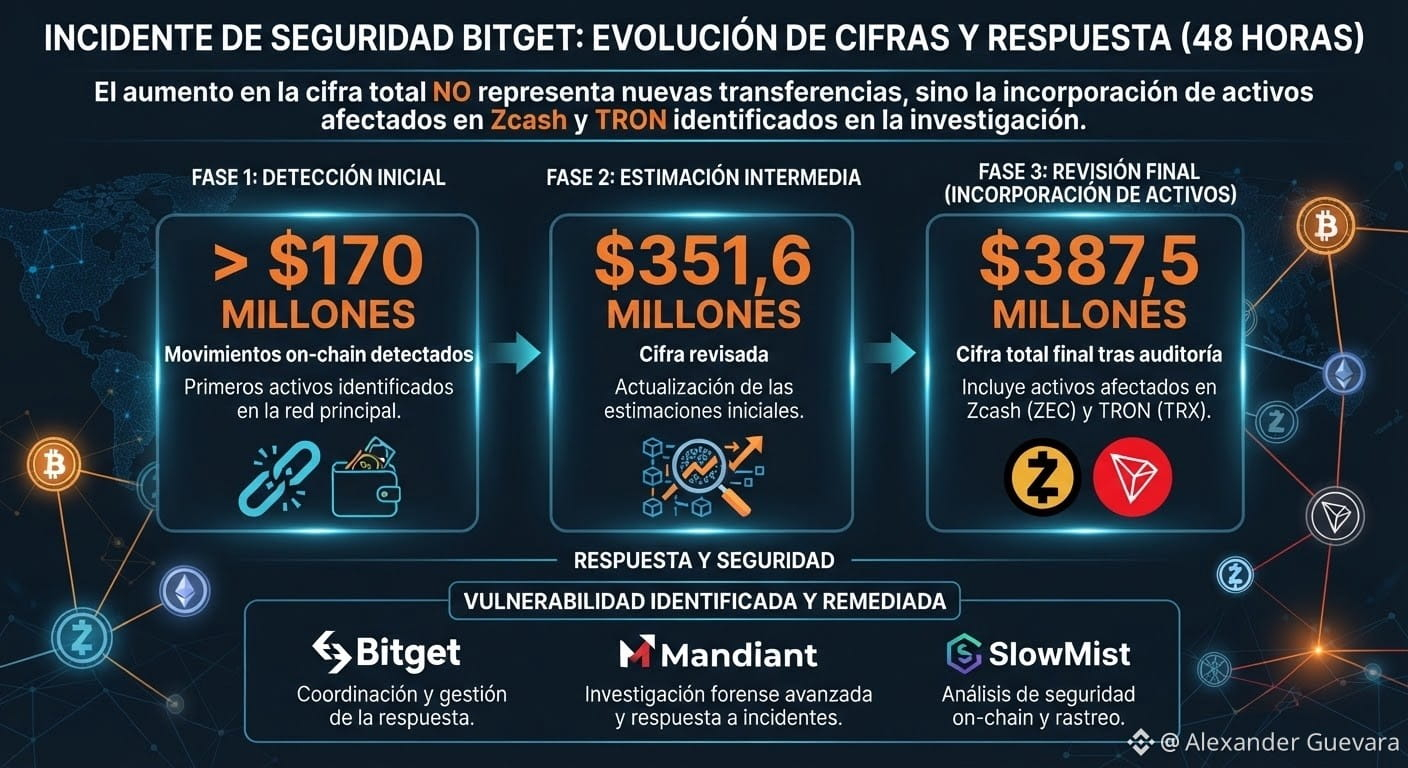
🚨 B1tg3t: from $170M to $387.5M
The B1tg3t case grew in magnitude in just 48 hours.
First, there were more than $170 million in detected on-chain movements. Then came an estimate of $351.6 million and, subsequently, a revised figure of $387.5 million after incorporating affected assets in Zcash and TRON.
But there’s a key detail: the increase in the number does not represent a new wave of transfers, according to B1tg3t.
The company states that the vulnerability was identified and fixed, while Mandiant and SlowMist continue to support the investigation.
📌 #HackerAlert #hackattack #On-chain #ciberseguridad #CircleTetherFreezeBitgetHackerWallet $TRX $ZEC
🚨 B1tg3t: from $170M to $387.5M
The B1tg3t case grew in magnitude in just 48 hours.
First, there were more than $170 million in detected on-chain movements. Then came an estimate of $351.6 million and, subsequently, a revised figure of $387.5 million after incorporating affected assets in Zcash and TRON.
But there’s a key detail: the increase in the number does not represent a new wave of transfers, according to B1tg3t.
The company states that the vulnerability was identified and fixed, while Mandiant and SlowMist continue to support the investigation.
📌 #HackerAlert #hackattack #On-chain #ciberseguridad #CircleTetherFreezeBitgetHackerWallet $TRX $ZEC
The B1tg3t case grew in magnitude in just 48 hours.
First, there were more than $170 million in detected on-chain movements. Then came an estimate of $351.6 million and, subsequently, a revised figure of $387.5 million after incorporating affected assets in Zcash and TRON.
But there’s a key detail: the increase in the number does not represent a new wave of transfers, according to B1tg3t.
The company states that the vulnerability was identified and fixed, while Mandiant and SlowMist continue to support the investigation.
📌 #HackerAlert #hackattack #On-chain #ciberseguridad #CircleTetherFreezeBitgetHackerWallet $TRX $ZEC
Fadel Samaan:
no es chistoso que ahora respalden activo zk0 ,impulsan un mundo sumido en la anarquía , desconfianza y falta de transparencia... una década y no llega la sabiduría o la madurez al mercado cripto.
1
130
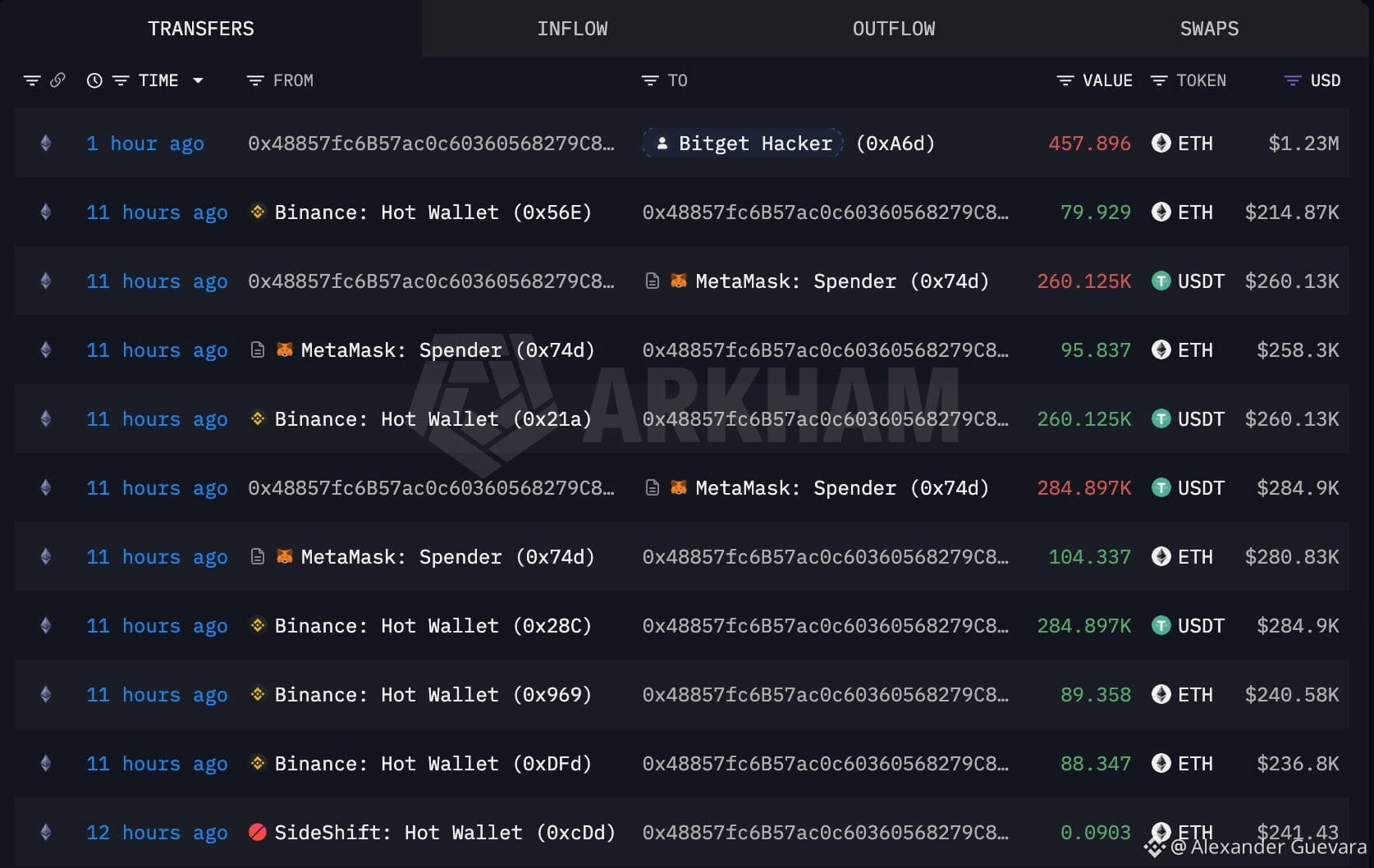
It looks like the hacker of #Bitget withdrew $1.23M from #Binance 11 hours ago.
Wallet 0x4885 withdrew 257.6 $ETH ($692K) and 545K $USDT from #Binance, then swapped the 545K $USDT for 200.2 $ETH.
Then it transferred everything—457.9 $ETH ($1.23M)—to the hacker’s wallet of #Bitget an hour ago.
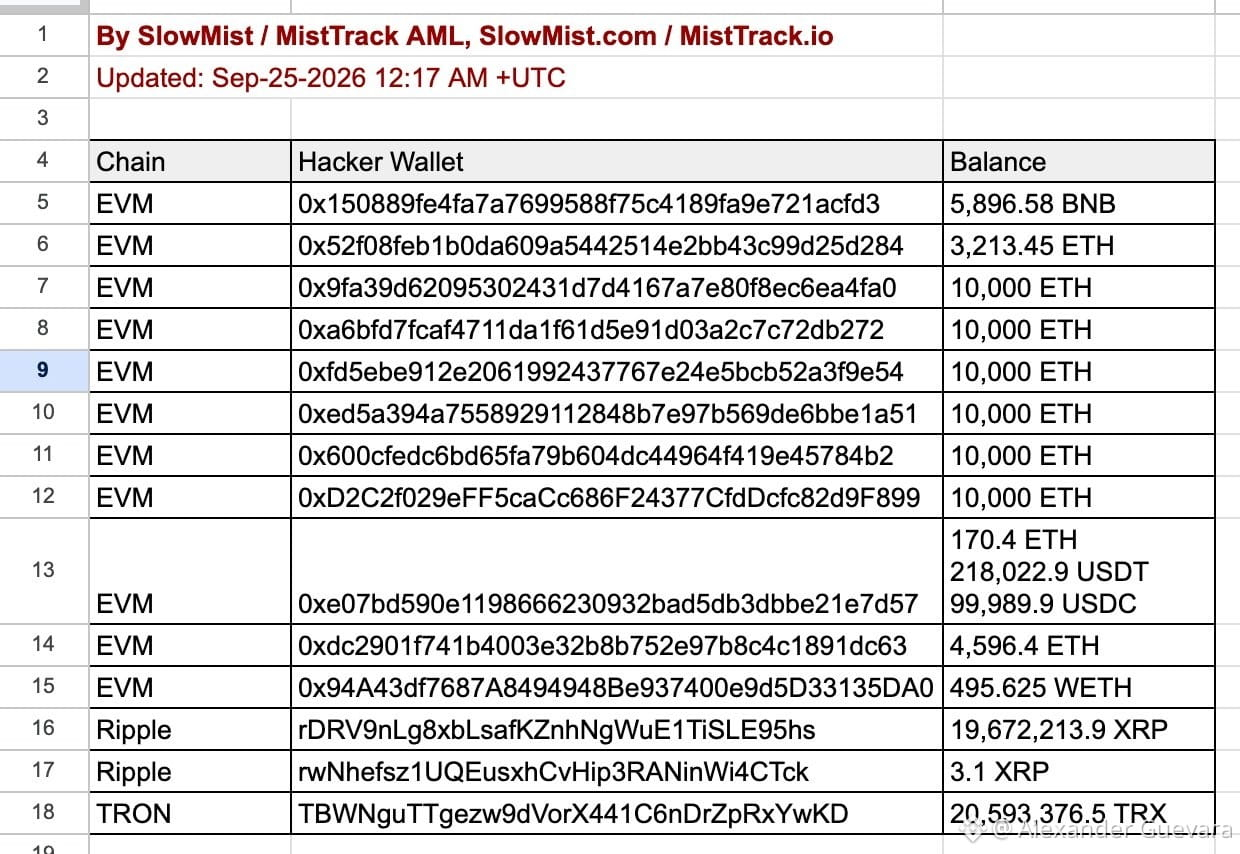
So far, we’ve identified the following addresses associated with the @bitget exploiter that still contain funds. We will continue updating this list. @GracyBitget @xiejiayinBitget @Bitget_zh docs.google.com/spreadsheets/d…
#HackerAlert #Hacked
It looks like the hacker of #Bitget withdrew $1.23M from #Binance 11 hours ago.
Wallet 0x4885 withdrew 257.6 $ETH ($692K) and 545K $USDT from #Binance, then swapped the 545K $USDT for 200.2 $ETH .
Then it transferred everything—457.9 $ETH ($1.23M)—to the hacker’s wallet of #Bitget an hour ago.
So far, we’ve identified the following addresses associated with the @bitget exploiter that still contain funds. We will continue updating this list. @GracyBitget @xiejiayinBitget @Bitget_zh docs.google.com/spreadsheets/d…
#HackerAlert #Hacked
Wallet 0x4885 withdrew 257.6 $ETH ($692K) and 545K $USDT from #Binance, then swapped the 545K $USDT for 200.2 $ETH .
Then it transferred everything—457.9 $ETH ($1.23M)—to the hacker’s wallet of #Bitget an hour ago.
So far, we’ve identified the following addresses associated with the @bitget exploiter that still contain funds. We will continue updating this list. @GracyBitget @xiejiayinBitget @Bitget_zh docs.google.com/spreadsheets/d…
#HackerAlert #Hacked
45

Article
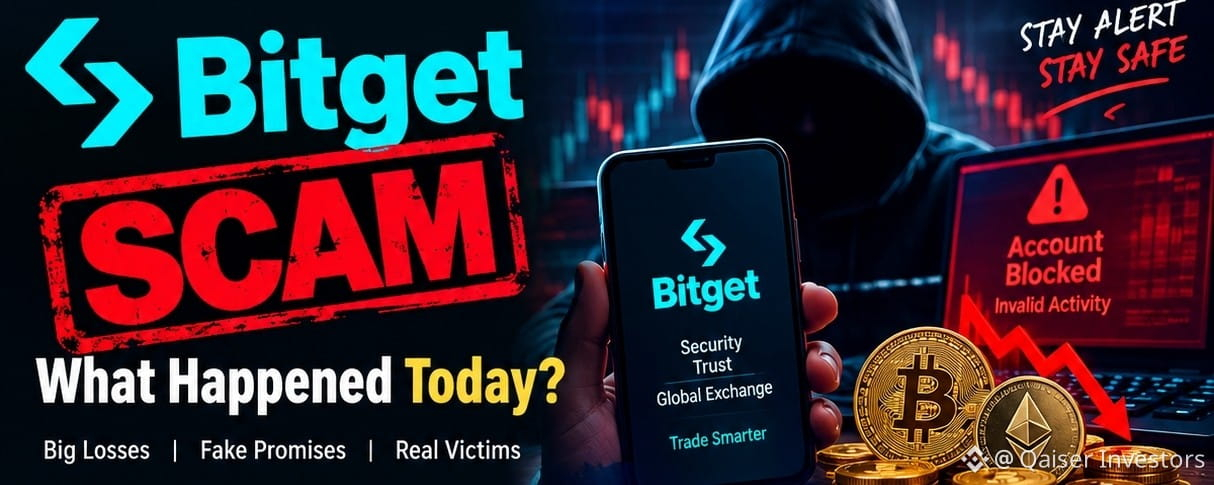
🚨 Bitget Security Incident: What Happened? 💔 The cryptocurrency $BTC community is raising concerns over a reported security incident involving Bitget. With digital assets, security, transparency, and user protection remain essential.On September 24, 2026, Bitget reported unauthorized transfers from some of its hot wallets, affecting approximately $351.6 million in assets. The exchange stated that its cold wallets remained secure and that its User Protection Fund held more than $464 million. Withdrawals were temporarily suspended while a security investigation was conducted, although deposits and trading reportedly continued.
This incident highlights the importance of cybersecurity and transparency in the cryptocurrency industry. Users should remain cautious, follow official Bitget announcements, and avoid fake support accounts or suspicious links.
🔐 Stay Alert. Stay Safe. Trade Responsibly.
#bitget #crypto #HackerAlert #Hacked
🚨 Bitget Security Incident: What Happened? 💔
The cryptocurrency $BTC community is raising concerns over a reported security incident involving Bitget. With digital assets, security, transparency, and user protection remain essential.On September 24, 2026, Bitget reported unauthorized transfers from some of its hot wallets, affecting approximately $351.6 million in assets. The exchange stated that its cold wallets remained secure and that its User Protection Fund held more than $464 million. Withdrawals were temporarily suspended while a security investigation was conducted, although deposits and trading reportedly continued.
This incident highlights the importance of cybersecurity and transparency in the cryptocurrency industry. Users should remain cautious, follow official Bitget announcements, and avoid fake support accounts or suspicious links.
🔐 Stay Alert. Stay Safe. Trade Responsibly.
#bitget #crypto #HackerAlert #Hacked
This incident highlights the importance of cybersecurity and transparency in the cryptocurrency industry. Users should remain cautious, follow official Bitget announcements, and avoid fake support accounts or suspicious links.
🔐 Stay Alert. Stay Safe. Trade Responsibly.
#bitget #crypto #HackerAlert #Hacked
82
·
--
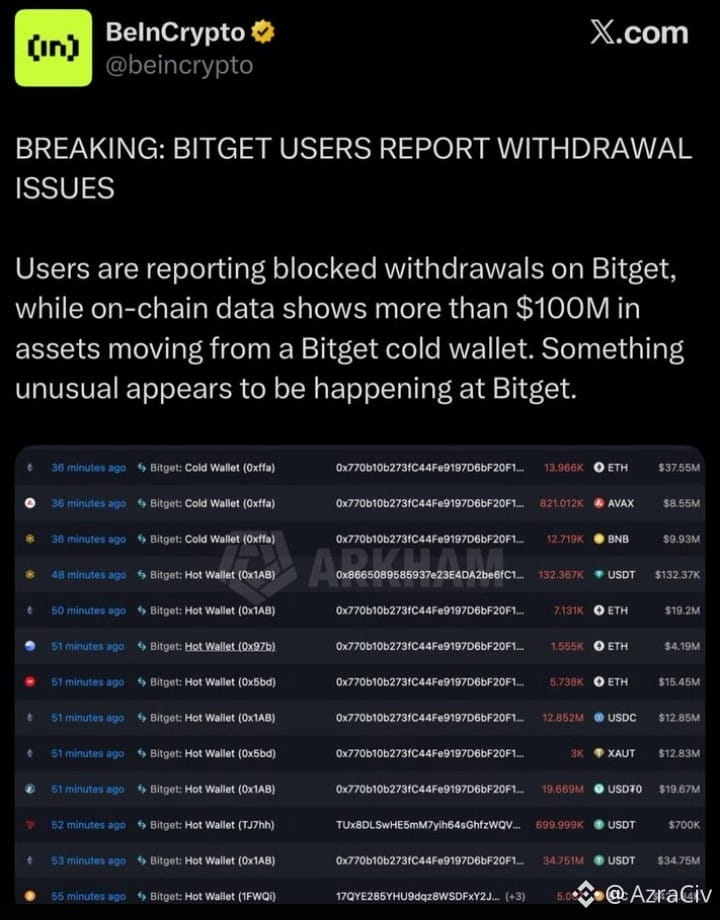
🚨 BREAKING: BITGET HIT BY MASSIVE HACK! 🚨
Bitget has suffered a major security breach, with around $340 MILLION reportedly stolen from its wallets. 💰💀
The attacker moved large amounts of $ETH , USDT, USDC, $AVAX and $BNB , with funds being swapped and moved across chains. 🔥
And here's the part that really matters:
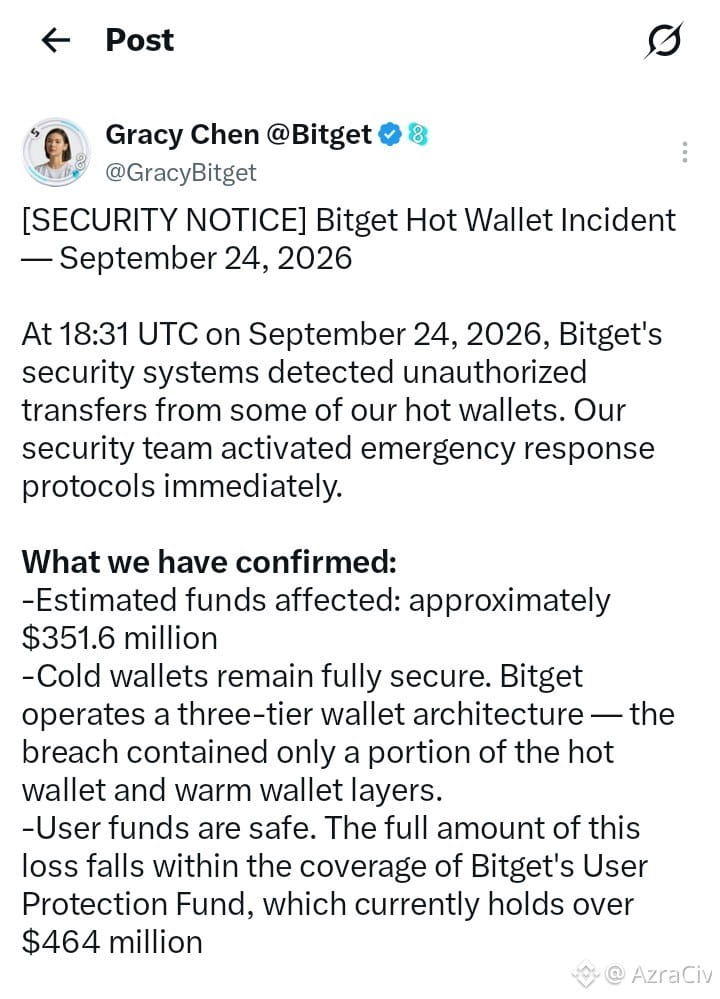
🛡️ Bitget says its User Protection Fund holds more than $450 MILLION.
That means the reported loss could consume a very large portion of that protection fund if the stolen assets have to be fully covered. 😳
Bitget says cold wallets were not affected and that user funds remain protected.
🚫 Withdrawals were suspended while the exchange investigates.
The exact attack vector is still unknown. 🔍
⚠️ The big question now: how much of Bitget's protection fund will ultimately be needed to cover this incident?
{future}(AVAXUSDT)
{future}(BNBUSDT)
#HackerAlert
#BitgetSays$352MAffectedInHack
#BitgetSays
🚨 BREAKING: BITGET HIT BY MASSIVE HACK! 🚨
Bitget has suffered a major security breach, with around $340 MILLION reportedly stolen from its wallets. 💰💀
The attacker moved large amounts of $ETH , USDT, USDC, $AVAX and $BNB , with funds being swapped and moved across chains. 🔥
And here's the part that really matters:
🛡️ Bitget says its User Protection Fund holds more than $450 MILLION.
That means the reported loss could consume a very large portion of that protection fund if the stolen assets have to be fully covered. 😳
Bitget says cold wallets were not affected and that user funds remain protected.
🚫 Withdrawals were suspended while the exchange investigates.
The exact attack vector is still unknown. 🔍
⚠️ The big question now: how much of Bitget's protection fund will ultimately be needed to cover this incident?
#HackerAlert
#BitgetSays$352MAffectedInHack
#BitgetSays
Bitget has suffered a major security breach, with around $340 MILLION reportedly stolen from its wallets. 💰💀
The attacker moved large amounts of $ETH , USDT, USDC, $AVAX and $BNB , with funds being swapped and moved across chains. 🔥
And here's the part that really matters:
🛡️ Bitget says its User Protection Fund holds more than $450 MILLION.
That means the reported loss could consume a very large portion of that protection fund if the stolen assets have to be fully covered. 😳
Bitget says cold wallets were not affected and that user funds remain protected.
🚫 Withdrawals were suspended while the exchange investigates.
The exact attack vector is still unknown. 🔍
⚠️ The big question now: how much of Bitget's protection fund will ultimately be needed to cover this incident?
#HackerAlert
#BitgetSays$352MAffectedInHack
#BitgetSays
4
964

#HackerAlert
🚨 Bitget suffers $351.6 million hack — user funds safe
Crypto exchange Bitget reported a breach of its hot and warm wallets that occurred on September 24 at 18:31 UTC. Attackers infiltrated the wallet infrastructure's backend system, manipulated transaction data, and bypassed the authorization process.
🎯 Key details of the incident:
➡️ Scale of loss: Approximately $351.6 million was stolen. However, cold wallets—where the vast majority of assets are stored—remained completely unaffected.
➡️ Fund security: Exchange CEO Gracy Chen assured that the losses are fully covered by the Bitget User Protection Fund, which currently stands at over $464 million. Client balances will remain intact, although withdrawals have been temporarily suspended.
➡️ Cause: Private keys were not stolen; the issue stemmed from a compromised backend system. The vulnerability has already been contained.
➡️ Perpetrators: On-chain analysts (including Specter and Conor Grogan) point to the involvement of the North Korean Lazarus Group.
⚠️ The exchange promises to publish a detailed report containing a technical analysis and measures to prevent similar attacks within 24 hours.
#HackerAlert
🚨 Bitget suffers $351.6 million hack — user funds safe
Crypto exchange Bitget reported a breach of its hot and warm wallets that occurred on September 24 at 18:31 UTC. Attackers infiltrated the wallet infrastructure's backend system, manipulated transaction data, and bypassed the authorization process.
🎯 Key details of the incident:
➡️ Scale of loss: Approximately $351.6 million was stolen. However, cold wallets—where the vast majority of assets are stored—remained completely unaffected.
➡️ Fund security: Exchange CEO Gracy Chen assured that the losses are fully covered by the Bitget User Protection Fund, which currently stands at over $464 million. Client balances will remain intact, although withdrawals have been temporarily suspended.
➡️ Cause: Private keys were not stolen; the issue stemmed from a compromised backend system. The vulnerability has already been contained.
➡️ Perpetrators: On-chain analysts (including Specter and Conor Grogan) point to the involvement of the North Korean Lazarus Group.
⚠️ The exchange promises to publish a detailed report containing a technical analysis and measures to prevent similar attacks within 24 hours.
🚨 Bitget suffers $351.6 million hack — user funds safe
Crypto exchange Bitget reported a breach of its hot and warm wallets that occurred on September 24 at 18:31 UTC. Attackers infiltrated the wallet infrastructure's backend system, manipulated transaction data, and bypassed the authorization process.
🎯 Key details of the incident:
➡️ Scale of loss: Approximately $351.6 million was stolen. However, cold wallets—where the vast majority of assets are stored—remained completely unaffected.
➡️ Fund security: Exchange CEO Gracy Chen assured that the losses are fully covered by the Bitget User Protection Fund, which currently stands at over $464 million. Client balances will remain intact, although withdrawals have been temporarily suspended.
➡️ Cause: Private keys were not stolen; the issue stemmed from a compromised backend system. The vulnerability has already been contained.
➡️ Perpetrators: On-chain analysts (including Specter and Conor Grogan) point to the involvement of the North Korean Lazarus Group.
⚠️ The exchange promises to publish a detailed report containing a technical analysis and measures to prevent similar attacks within 24 hours.
103
·
--
Bullish
The ASI Alliance confirms that the FET coin conversion tool was compromised; draining the tool and pausing transfer operations led to a signing key leak that resulted in the withdrawal of nearly $1.56 million worth of FET through a token conversion tool. The ASI Alliance has suspended transfer operations and disabled the affected contracts, in parallel with the investigation into the hacking incident.
#FET #ASI #HackerAlert
$FET
{spot}(FETUSDT)
The ASI Alliance confirms that the FET coin conversion tool was compromised; draining the tool and pausing transfer operations led to a signing key leak that resulted in the withdrawal of nearly $1.56 million worth of FET through a token conversion tool. The ASI Alliance has suspended transfer operations and disabled the affected contracts, in parallel with the investigation into the hacking incident.
#FET #ASI #HackerAlert
$FET
#FET #ASI #HackerAlert
$FET
4
328

·
--
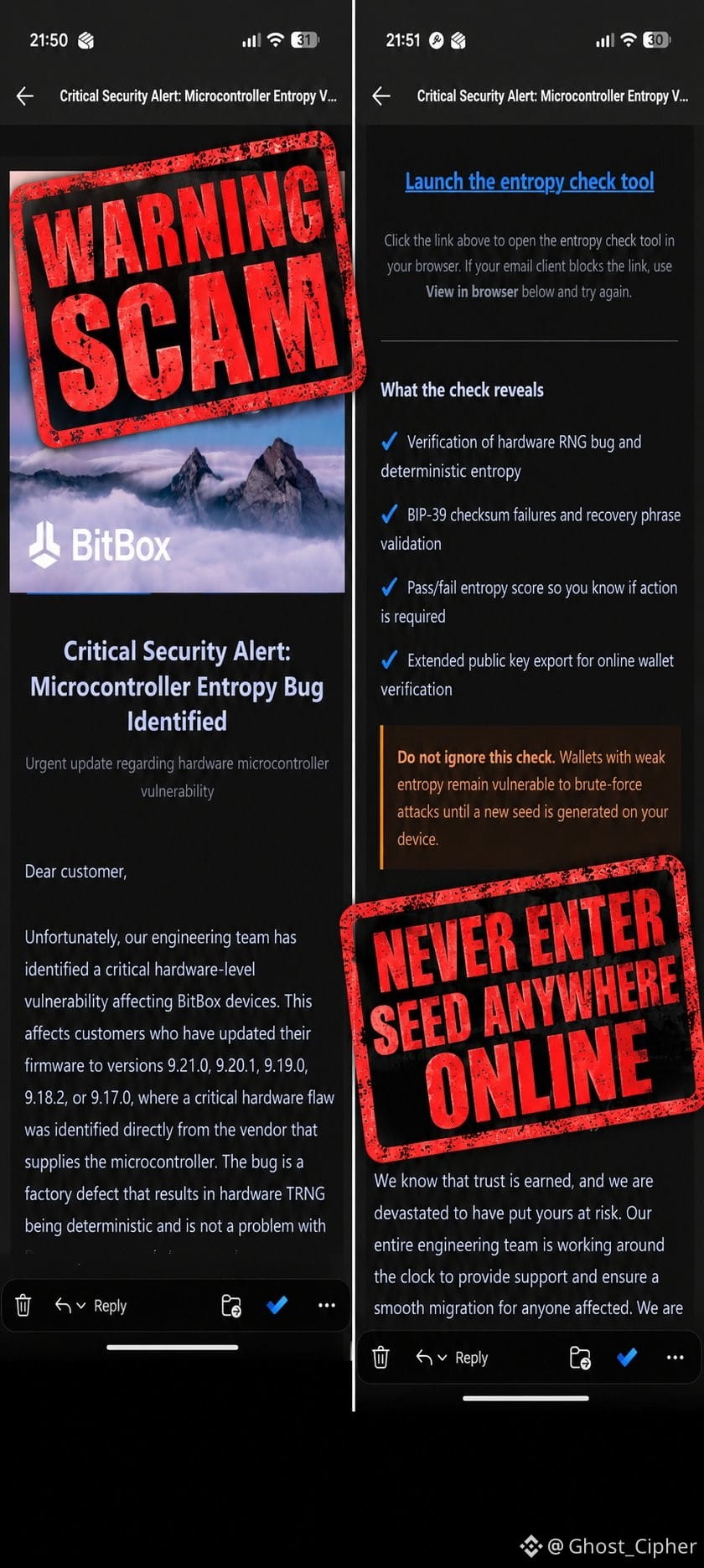
#Bitbox #BTC #HackerAlert
Our preliminary review of the phishing email that was sent to our newsletter subscribers about an hour ago revealed that it is very likely that our newsletter provider has been compromised.
Several other Bitcoin companies were also targeted, and it appears that we all share the same newsletter provider.
We sent a phishing warning to all of our newsletter subscribers, contacted the provider, and reported the phishing domains. Most of the phishing links appear to have already been removed.
We are continuing to actively investigate this situation and will update you once we know more.
$BTC
{spot}(BTCUSDT)
#Bitbox #BTC #HackerAlert
Our preliminary review of the phishing email that was sent to our newsletter subscribers about an hour ago revealed that it is very likely that our newsletter provider has been compromised.
Several other Bitcoin companies were also targeted, and it appears that we all share the same newsletter provider.
We sent a phishing warning to all of our newsletter subscribers, contacted the provider, and reported the phishing domains. Most of the phishing links appear to have already been removed.
We are continuing to actively investigate this situation and will update you once we know more.
$BTC
Our preliminary review of the phishing email that was sent to our newsletter subscribers about an hour ago revealed that it is very likely that our newsletter provider has been compromised.
Several other Bitcoin companies were also targeted, and it appears that we all share the same newsletter provider.
We sent a phishing warning to all of our newsletter subscribers, contacted the provider, and reported the phishing domains. Most of the phishing links appear to have already been removed.
We are continuing to actively investigate this situation and will update you once we know more.
$BTC
374

🔥 Liquid Network Recovers 3,400 BTC After On-Chain Talks: White Hat Holds Remaining 598.5 BTC
In a dramatic turn of events for the crypto security landscape, Bitcoin layer-2 sidechain Liquid Network has recovered the vast majority of funds compromised during a recent exploit, following direct on-chain negotiations with the attacker.
#HackerAlert $BITCOIN
🔥 Liquid Network Recovers 3,400 BTC After On-Chain Talks: White Hat Holds Remaining 598.5 BTC
In a dramatic turn of events for the crypto security landscape, Bitcoin layer-2 sidechain Liquid Network has recovered the vast majority of funds compromised during a recent exploit, following direct on-chain negotiations with the attacker.
#HackerAlert $BITCOIN
In a dramatic turn of events for the crypto security landscape, Bitcoin layer-2 sidechain Liquid Network has recovered the vast majority of funds compromised during a recent exploit, following direct on-chain negotiations with the attacker.
#HackerAlert $BITCOIN
6
#HackerAlert
🔥 $320 million held hostage: hackers drain 95% of Bitcoin from Liquid Network, but promise to return the “most”
The Liquid network (Blockstream’s Bitcoin sidechain) has been at the center of a high-profile incident. Unknown people have withdrawn about 4,000 $BTC (~$320 million) from a pegged wallet — which is almost 95% of all pegged assets on the network.
📊 Key details of the incident:
➡️ Blockchain communication: Communication between Blockstream and hackers occurs directly on-chain using OP_RETURN transactions and PGP-encrypted messages.
➡️ Refund condition: The attackers call themselves “white-hats” and are ready to return the funds, but they have made a clear demand — first the developers must completely close the critical vulnerability. “Please fix the bug first,” they said.
➡️ A spoonful of tar: The hackers said they would return “most” of the funds, which leaves open the question of how much they plan to keep as a “bounty.”
What’s happening now?
Liquid has blocked bridge nodes and paused the network. Security experts note that ordinary ethical hackers rarely withdraw hundreds of millions without warning, but the very fact of entering into dialogue gives hope for a successful resolution of the conflict. There is speculation that the vulnerability could have been found using powerful AI code analysis tools.
Currently, almost all 4,000 $BTC still remain under the control of the hackers. We are waiting for a fix from Blockstream and further movement of funds! ⏳
{future}(BTCUSDT)
#HackerAlert
🔥 $320 million held hostage: hackers drain 95% of Bitcoin from Liquid Network, but promise to return the “most”
The Liquid network (Blockstream’s Bitcoin sidechain) has been at the center of a high-profile incident. Unknown people have withdrawn about 4,000 $BTC (~$320 million) from a pegged wallet — which is almost 95% of all pegged assets on the network.
📊 Key details of the incident:
➡️ Blockchain communication: Communication between Blockstream and hackers occurs directly on-chain using OP_RETURN transactions and PGP-encrypted messages.
➡️ Refund condition: The attackers call themselves “white-hats” and are ready to return the funds, but they have made a clear demand — first the developers must completely close the critical vulnerability. “Please fix the bug first,” they said.
➡️ A spoonful of tar: The hackers said they would return “most” of the funds, which leaves open the question of how much they plan to keep as a “bounty.”
What’s happening now?
Liquid has blocked bridge nodes and paused the network. Security experts note that ordinary ethical hackers rarely withdraw hundreds of millions without warning, but the very fact of entering into dialogue gives hope for a successful resolution of the conflict. There is speculation that the vulnerability could have been found using powerful AI code analysis tools.
Currently, almost all 4,000 $BTC still remain under the control of the hackers. We are waiting for a fix from Blockstream and further movement of funds! ⏳
🔥 $320 million held hostage: hackers drain 95% of Bitcoin from Liquid Network, but promise to return the “most”
The Liquid network (Blockstream’s Bitcoin sidechain) has been at the center of a high-profile incident. Unknown people have withdrawn about 4,000 $BTC (~$320 million) from a pegged wallet — which is almost 95% of all pegged assets on the network.
📊 Key details of the incident:
➡️ Blockchain communication: Communication between Blockstream and hackers occurs directly on-chain using OP_RETURN transactions and PGP-encrypted messages.
➡️ Refund condition: The attackers call themselves “white-hats” and are ready to return the funds, but they have made a clear demand — first the developers must completely close the critical vulnerability. “Please fix the bug first,” they said.
➡️ A spoonful of tar: The hackers said they would return “most” of the funds, which leaves open the question of how much they plan to keep as a “bounty.”
What’s happening now?
Liquid has blocked bridge nodes and paused the network. Security experts note that ordinary ethical hackers rarely withdraw hundreds of millions without warning, but the very fact of entering into dialogue gives hope for a successful resolution of the conflict. There is speculation that the vulnerability could have been found using powerful AI code analysis tools.
Currently, almost all 4,000 $BTC still remain under the control of the hackers. We are waiting for a fix from Blockstream and further movement of funds! ⏳
49

·
--
With the news of $BTC being hacked for $320 million, the market is very likely to shake due to panic... Bearish instruments can already be felt on the horizon☹️
BTC's influence on the crypto market is very large; it is impossible for altcoins not to be affected by the current situation. To prove this assumption, we can look over the next 3 days.
Let's check the waves😁
#HackerNews #HackerAlert #BTCBearish #BTCPumpToday
{future}(BTCUSDT)
With the news of $BTC being hacked for $320 million, the market is very likely to shake due to panic... Bearish instruments can already be felt on the horizon☹️
BTC's influence on the crypto market is very large; it is impossible for altcoins not to be affected by the current situation. To prove this assumption, we can look over the next 3 days.
Let's check the waves😁
#HackerNews #HackerAlert #BTCBearish #BTCPumpToday
BTC's influence on the crypto market is very large; it is impossible for altcoins not to be affected by the current situation. To prove this assumption, we can look over the next 3 days.
Let's check the waves😁
#HackerNews #HackerAlert #BTCBearish #BTCPumpToday
BTC BEARISH DI SEPTEMBER
75%
BTC TETAP BULLISH DI SEPTEMBER
25%
4 votes • Voting closed
214
#Polymarket #HackerAlert
🚨 Polymarket hacked for $2.9 million via frontend: users will be refunded
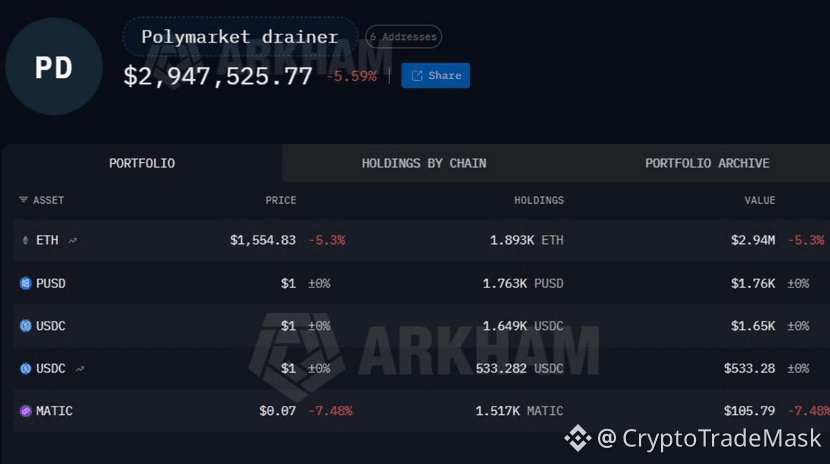
The forecasting platform Polymarket has been hacked. The attackers hacked a third-party vendor and implemented a phishing script into the site's interface. As a result, at least 11 user wallets were affected, from which $2.94 million was withdrawn.
Main:
The threat has been eliminated: The malicious code has already been removed, the platform's smart contracts were not affected.
Compensation: Polymarket officially announced that they will fully refund all victims.
📉 Cryptohacks in June: in brief
This incident added to the statistics of the worst quarter in terms of the number of hacks. In June alone, the crypto market's losses amounted to $74.9 million (29 cases).
Top 3 hacks of the month: Humanity Protocol ($36 million), Secret Network ($4.7 million) and Polymarket ($2.9 million).
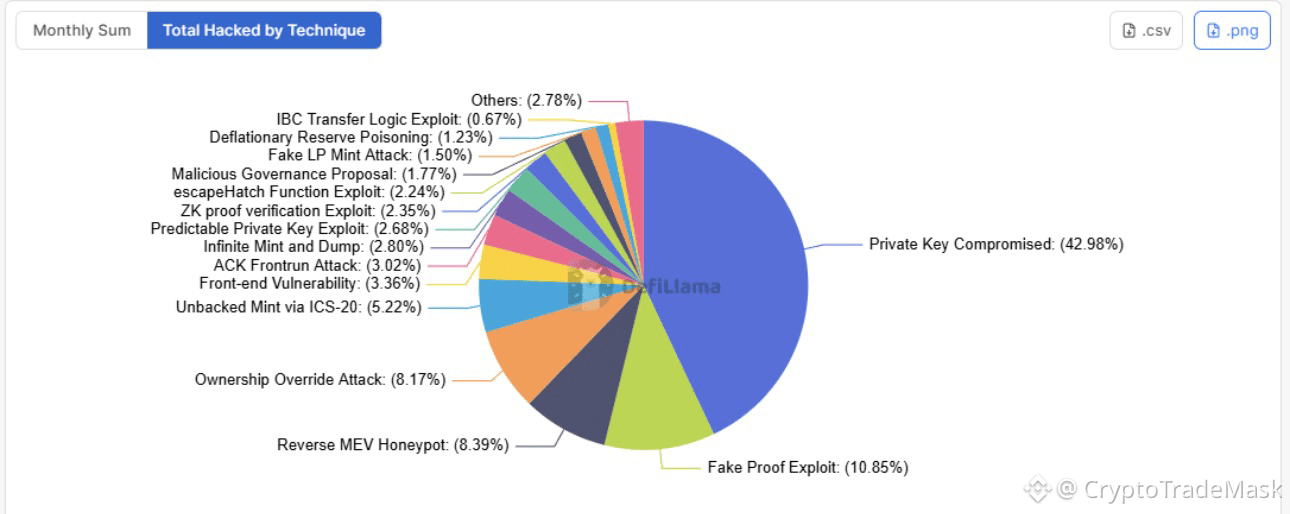
Main vulnerability: 43% of all losses for the month occurred due to compromise of private keys. Despite this, Polymarket holds its ground: the platform's TVL now exceeds $450 million, which is 301% more than last year.
#Polymarket #HackerAlert
🚨 Polymarket hacked for $2.9 million via frontend: users will be refunded
The forecasting platform Polymarket has been hacked. The attackers hacked a third-party vendor and implemented a phishing script into the site's interface. As a result, at least 11 user wallets were affected, from which $2.94 million was withdrawn.
Main:
The threat has been eliminated: The malicious code has already been removed, the platform's smart contracts were not affected.
Compensation: Polymarket officially announced that they will fully refund all victims.
📉 Cryptohacks in June: in brief
This incident added to the statistics of the worst quarter in terms of the number of hacks. In June alone, the crypto market's losses amounted to $74.9 million (29 cases).
Top 3 hacks of the month: Humanity Protocol ($36 million), Secret Network ($4.7 million) and Polymarket ($2.9 million).
Main vulnerability: 43% of all losses for the month occurred due to compromise of private keys. Despite this, Polymarket holds its ground: the platform's TVL now exceeds $450 million, which is 301% more than last year.
🚨 Polymarket hacked for $2.9 million via frontend: users will be refunded
The forecasting platform Polymarket has been hacked. The attackers hacked a third-party vendor and implemented a phishing script into the site's interface. As a result, at least 11 user wallets were affected, from which $2.94 million was withdrawn.
Main:
The threat has been eliminated: The malicious code has already been removed, the platform's smart contracts were not affected.
Compensation: Polymarket officially announced that they will fully refund all victims.
📉 Cryptohacks in June: in brief
This incident added to the statistics of the worst quarter in terms of the number of hacks. In June alone, the crypto market's losses amounted to $74.9 million (29 cases).
Top 3 hacks of the month: Humanity Protocol ($36 million), Secret Network ($4.7 million) and Polymarket ($2.9 million).
Main vulnerability: 43% of all losses for the month occurred due to compromise of private keys. Despite this, Polymarket holds its ground: the platform's TVL now exceeds $450 million, which is 301% more than last year.
1
177


Article
Red alert‼️: Your cold wallet is no longer cold - $70 million vanished without touching a single device!⚠️ Urgent security alert: this is not science fiction. This actually happened.
1- What are cold wallets?
A cold wallet is a physical device, similar to a flash drive. Its only job is to keep your private keys away from the internet. Unlike hot wallets (which are on your phone or browser and stay connected at all times).
Why do people trust them? Because logic says: if the key is not connected to the internet, no hacker can access it. Big investors put their millions there and sleep peacefully. It was considered the impregnable fortress that could not be breached... until August 1, 2026.
Red alert‼️: Your cold wallet is no longer cold - $70 million vanished without touching a single device!
⚠️ Urgent security alert: this is not science fiction. This actually happened.
1- What are cold wallets?
A cold wallet is a physical device, similar to a flash drive. Its only job is to keep your private keys away from the internet. Unlike hot wallets (which are on your phone or browser and stay connected at all times).
Why do people trust them? Because logic says: if the key is not connected to the internet, no hacker can access it. Big investors put their millions there and sleep peacefully. It was considered the impregnable fortress that could not be breached... until August 1, 2026.
1- What are cold wallets?
A cold wallet is a physical device, similar to a flash drive. Its only job is to keep your private keys away from the internet. Unlike hot wallets (which are on your phone or browser and stay connected at all times).
Why do people trust them? Because logic says: if the key is not connected to the internet, no hacker can access it. Big investors put their millions there and sleep peacefully. It was considered the impregnable fortress that could not be breached... until August 1, 2026.
1
2
255
·
--
What really happened with #coldcard It wasn’t an “AI hack”—it was a 2021 firmware bug. The vulnerability was introduced in Coldcard firmware 4.0.0 in March 2021: devices bypassed their hardware random number generator and fell into key generation via software, predictable, seeded with non-secret chip data.  The specific error is in libngu: the guard uses #ifndef MICROPY_HW_ENABLE_RNG, which only checks whether the macro exists, not whether its value is different from zero.  Result: anyone can reproduce the seed candidates offline and derive addresses to compare them with the blockchain—without touching the device.
The figure keeps growing in waves: from an initial 594 BTC to 1.082 BTC (1,196 addresses) on July 31, then 1.158 BTC, and on August 2 a third wave brought the total to ~1.367 BTC (~$89M) from 4,585 addresses;  today people talk about a fourth wave. Coinkite released an emergency firmware on July 31 for all affected models, but installing it doesn’t fix an already-existing seed.  You must generate a new seed and move the funds. #HackerAlert #bitcoin $BTC
What really happened with #coldcard It wasn’t an “AI hack”—it was a 2021 firmware bug. The vulnerability was introduced in Coldcard firmware 4.0.0 in March 2021: devices bypassed their hardware random number generator and fell into key generation via software, predictable, seeded with non-secret chip data.  The specific error is in libngu: the guard uses #ifndef MICROPY_HW_ENABLE_RNG, which only checks whether the macro exists, not whether its value is different from zero.  Result: anyone can reproduce the seed candidates offline and derive addresses to compare them with the blockchain—without touching the device.
The figure keeps growing in waves: from an initial 594 BTC to 1.082 BTC (1,196 addresses) on July 31, then 1.158 BTC, and on August 2 a third wave brought the total to ~1.367 BTC (~$89M) from 4,585 addresses;  today people talk about a fourth wave. Coinkite released an emergency firmware on July 31 for all affected models, but installing it doesn’t fix an already-existing seed.  You must generate a new seed and move the funds. #HackerAlert #bitcoin $BTC
The figure keeps growing in waves: from an initial 594 BTC to 1.082 BTC (1,196 addresses) on July 31, then 1.158 BTC, and on August 2 a third wave brought the total to ~1.367 BTC (~$89M) from 4,585 addresses;  today people talk about a fourth wave. Coinkite released an emergency firmware on July 31 for all affected models, but installing it doesn’t fix an already-existing seed.  You must generate a new seed and move the funds. #HackerAlert #bitcoin $BTC
114

#coldcardexploitattackerscontrol1366btc
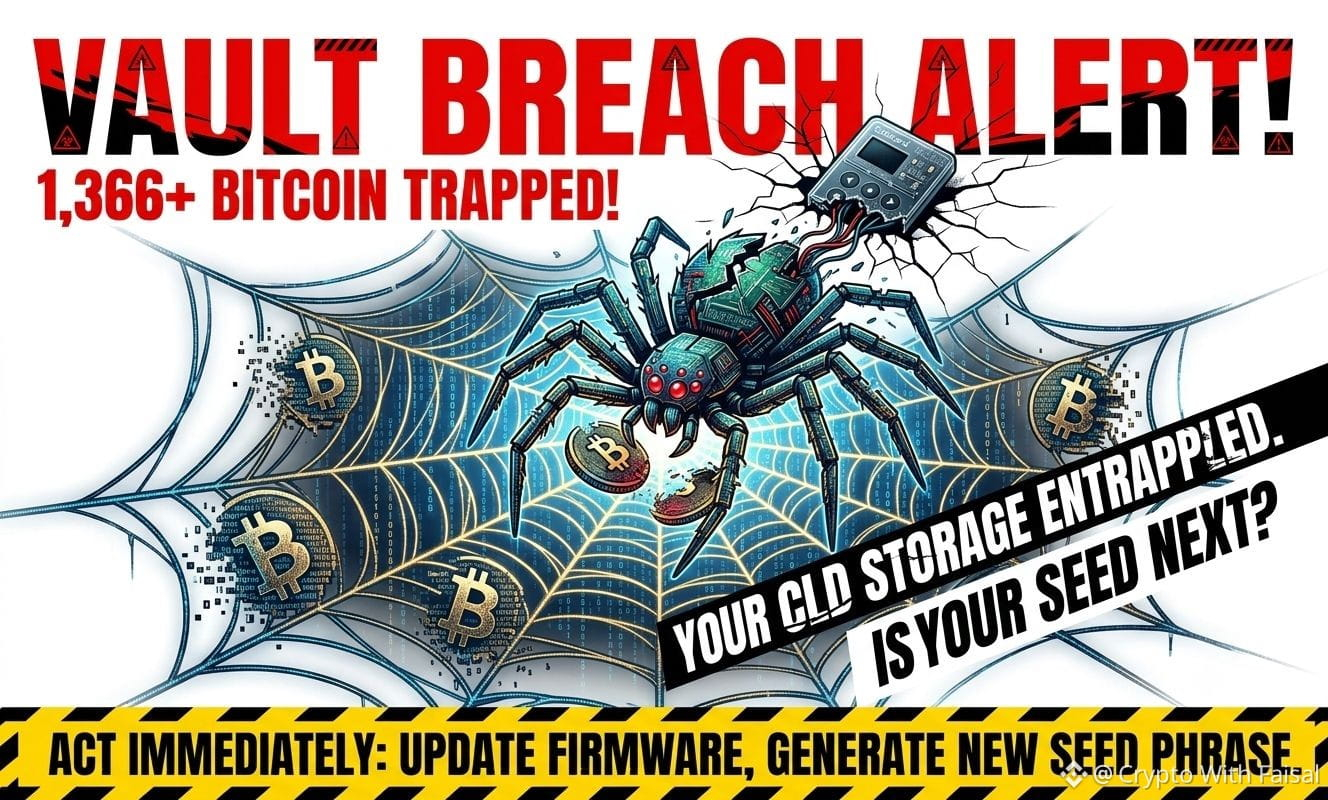
🚨 CRITICAL SECURITY ALERT: EXPANDING EXPLOIT ON COLCARD USERS 🚨
The bleeding hasn't stopped. What began with an alarming 594 BTC drained in under 30 minutes yesterday has now escalated—exploiters currently hold over 1,366.38 BTC under their control!
Analysis from Galaxy Research confirms three distinct waves of attacks so far. The burning question every holder is asking: Is the assault over, or are more breaches incoming? Whether this is a solitary hacker deploying upgraded exploit vectors or multiple attackers capitalizing on legacy vulnerabilities dating back to March 2021, the danger is real.
🛡️ IMMEDIATE ACTION PLAN (PROTECT YOUR ASSETS):
Patch Right Away: Update your device firmware to the latest official release without delay.
Generate a New Seed: Transfer your funds to a completely fresh, uncompromised seed phrase.
Stay Proactive: Cold storage is only as safe as your security hygiene—don't wait until your wallet is drained to take action!
Stay paranoid, stay secure, and protect your holdings! 🔒⚡
Disclaimer: Not financial advice. Always Do Your Own Research (DYOR).
#BTC #Coldcard #HackerAlert
$VELVET
{future}(VELVETUSDT)
$BEAT
{future}(BEATUSDT)
$BTC
{future}(BTCUSDT)
#coldcardexploitattackerscontrol1366btc
🚨 CRITICAL SECURITY ALERT: EXPANDING EXPLOIT ON COLCARD USERS 🚨
The bleeding hasn't stopped. What began with an alarming 594 BTC drained in under 30 minutes yesterday has now escalated—exploiters currently hold over 1,366.38 BTC under their control!
Analysis from Galaxy Research confirms three distinct waves of attacks so far. The burning question every holder is asking: Is the assault over, or are more breaches incoming? Whether this is a solitary hacker deploying upgraded exploit vectors or multiple attackers capitalizing on legacy vulnerabilities dating back to March 2021, the danger is real.
🛡️ IMMEDIATE ACTION PLAN (PROTECT YOUR ASSETS):
Patch Right Away: Update your device firmware to the latest official release without delay.
Generate a New Seed: Transfer your funds to a completely fresh, uncompromised seed phrase.
Stay Proactive: Cold storage is only as safe as your security hygiene—don't wait until your wallet is drained to take action!
Stay paranoid, stay secure, and protect your holdings! 🔒⚡
Disclaimer: Not financial advice. Always Do Your Own Research (DYOR).
#BTC #Coldcard #HackerAlert
$VELVET
$BEAT
$BTC
🚨 CRITICAL SECURITY ALERT: EXPANDING EXPLOIT ON COLCARD USERS 🚨
The bleeding hasn't stopped. What began with an alarming 594 BTC drained in under 30 minutes yesterday has now escalated—exploiters currently hold over 1,366.38 BTC under their control!
Analysis from Galaxy Research confirms three distinct waves of attacks so far. The burning question every holder is asking: Is the assault over, or are more breaches incoming? Whether this is a solitary hacker deploying upgraded exploit vectors or multiple attackers capitalizing on legacy vulnerabilities dating back to March 2021, the danger is real.
🛡️ IMMEDIATE ACTION PLAN (PROTECT YOUR ASSETS):
Patch Right Away: Update your device firmware to the latest official release without delay.
Generate a New Seed: Transfer your funds to a completely fresh, uncompromised seed phrase.
Stay Proactive: Cold storage is only as safe as your security hygiene—don't wait until your wallet is drained to take action!
Stay paranoid, stay secure, and protect your holdings! 🔒⚡
Disclaimer: Not financial advice. Always Do Your Own Research (DYOR).
#BTC #Coldcard #HackerAlert
$VELVET
$BEAT
$BTC
2
4
4.7k
#HackerAlert
🚨 Hacker withdraws $1.66 million from Allbridge Core cross-chain bridge through liquidity manipulation
The Allbridge Core cross-chain platform was attacked, resulting in $1.66 million in cryptocurrency being stolen from liquidity pools on the Solana network.
❓ How the scheme worked:
1. Flash loan: The attacker borrowed $1.12 million in USDC stablecoins and exchanged them for USDT.
2. Price manipulation: The hacker executed a series of 5 “same-asset swaps”, exchanging USDT for USDT. Due to an error in logic, the accounting of both sides of the transaction diverged, which significantly distorted the intra-pool price of the asset.
3. Finale of the attack: The distorted price allowed only 4,000 USDT to be exchanged for $2.24 million USDC. The attacker returned the flash loan and took about $1.66 million in profit.
Current status and consequences:
➡️ Security of funds: Private keys, user wallets, and routes without using liquidity pools were not affected.
➡️ Project actions: Allbridge plans to completely abandon pool exchanges.
➡️ Tracking: The team has already tracked transfers for $1.63 million — the funds were transferred from Solana to a consolidation address on the Ethereum network, after which they were distributed in several directions.
#HackerAlert
🚨 Hacker withdraws $1.66 million from Allbridge Core cross-chain bridge through liquidity manipulation
The Allbridge Core cross-chain platform was attacked, resulting in $1.66 million in cryptocurrency being stolen from liquidity pools on the Solana network.
❓ How the scheme worked:
1. Flash loan: The attacker borrowed $1.12 million in USDC stablecoins and exchanged them for USDT.
2. Price manipulation: The hacker executed a series of 5 “same-asset swaps”, exchanging USDT for USDT. Due to an error in logic, the accounting of both sides of the transaction diverged, which significantly distorted the intra-pool price of the asset.
3. Finale of the attack: The distorted price allowed only 4,000 USDT to be exchanged for $2.24 million USDC. The attacker returned the flash loan and took about $1.66 million in profit.
Current status and consequences:
➡️ Security of funds: Private keys, user wallets, and routes without using liquidity pools were not affected.
➡️ Project actions: Allbridge plans to completely abandon pool exchanges.
➡️ Tracking: The team has already tracked transfers for $1.63 million — the funds were transferred from Solana to a consolidation address on the Ethereum network, after which they were distributed in several directions.
🚨 Hacker withdraws $1.66 million from Allbridge Core cross-chain bridge through liquidity manipulation
The Allbridge Core cross-chain platform was attacked, resulting in $1.66 million in cryptocurrency being stolen from liquidity pools on the Solana network.
❓ How the scheme worked:
1. Flash loan: The attacker borrowed $1.12 million in USDC stablecoins and exchanged them for USDT.
2. Price manipulation: The hacker executed a series of 5 “same-asset swaps”, exchanging USDT for USDT. Due to an error in logic, the accounting of both sides of the transaction diverged, which significantly distorted the intra-pool price of the asset.
3. Finale of the attack: The distorted price allowed only 4,000 USDT to be exchanged for $2.24 million USDC. The attacker returned the flash loan and took about $1.66 million in profit.
Current status and consequences:
➡️ Security of funds: Private keys, user wallets, and routes without using liquidity pools were not affected.
➡️ Project actions: Allbridge plans to completely abandon pool exchanges.
➡️ Tracking: The team has already tracked transfers for $1.63 million — the funds were transferred from Solana to a consolidation address on the Ethereum network, after which they were distributed in several directions.
3
59
Log in to explore more content
Join global crypto users on Binance Square
⚡️ Get latest and useful information about crypto.
💬 Trusted by the world’s largest crypto exchange.
👍 Discover real insights from verified creators.
Email / Phone number
Trending Topics
1
#ZcashETFPostsFirstWeeklyOutflow$93.6M
44,078 views
138 Discussing
2
#GreekPoliceBustCryptoScamRingArrest17
110,863 views
827 Discussing
3
#BitcoinRejectedAt$87K
138,312 views
195 Discussing
4
#FedOctoberRateHikeOddsFallTo17%
138,234 views
1,080 Discussing
5
#NvidiaHitsRecordHighUp2.4%
100,177 views
771 Discussing
6
#CanaryFilesAmendedS1ForPEPEETF
25,548 views
539 Discussing
7
#USRussiaUkraineTalksReportedlyIncludeLukoilOilDeal
38,013 views
511 Discussing
8
#BitcoinParesGainsAfterRallyTo$86.5K
51,288 views
169 Discussing
9
#CerebrasSinksNearly20%OnReportNvidiaToPowerOpenAI
128,662 views
1,156 Discussing
10
#SECProposesCryptoCustodyRules
177,387 views
1,436 Discussing