

#fogo
fogo
10M views
127,846 Discussing
Hot
Latest

{spot}(FOGOUSDT)
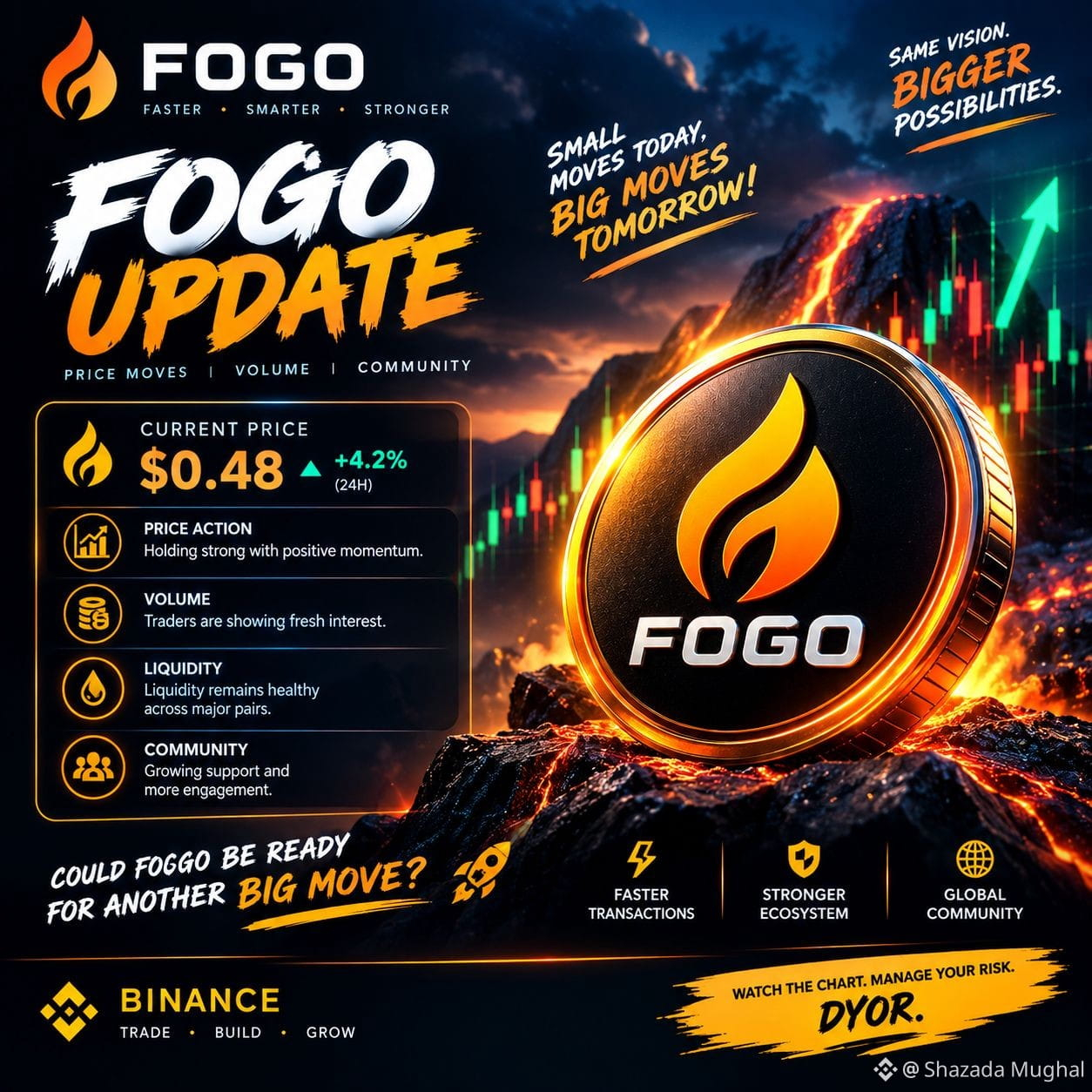
🔥 $FOGO UPDATE
$FOGO is catching attention as traders keep an eye on its price action and market activity. 👀📊
⚡ What to watch: • Price movement & volume
• Liquidity changes
• Sudden volume spikes
• Community momentum
Could FOGO be ready for another big move? 🚀
📌 Watch the chart. Manage your risk. DYOR.
#FOGO #Crypto #Binance #CryptoUpdate #cryptotradingpro
🔥 $FOGO UPDATE
$FOGO is catching attention as traders keep an eye on its price action and market activity. 👀📊
⚡ What to watch: • Price movement & volume
• Liquidity changes
• Sudden volume spikes
• Community momentum
Could FOGO be ready for another big move? 🚀
📌 Watch the chart. Manage your risk. DYOR.
#FOGO #Crypto #Binance #CryptoUpdate #cryptotradingpro
🔥 $FOGO UPDATE
$FOGO is catching attention as traders keep an eye on its price action and market activity. 👀📊
⚡ What to watch: • Price movement & volume
• Liquidity changes
• Sudden volume spikes
• Community momentum
Could FOGO be ready for another big move? 🚀
📌 Watch the chart. Manage your risk. DYOR.
#FOGO #Crypto #Binance #CryptoUpdate #cryptotradingpro
112

·
--
I’m keeping an eye on $FOGO because the development is what interests me most. 🔥
$FOGO
Instead of focusing only on price, I’m watching how the ecosystem is growing, what the team is building, and whether real users and developers keep coming in.
For me, that’s where the long-term potential starts.
#fogo #FOGO #Crypto_Jobs🎯
I’m keeping an eye on $FOGO because the development is what interests me most. 🔥
$FOGO
Instead of focusing only on price, I’m watching how the ecosystem is growing, what the team is building, and whether real users and developers keep coming in.
For me, that’s where the long-term potential starts.
#fogo #FOGO #Crypto_Jobs🎯
$FOGO
Instead of focusing only on price, I’m watching how the ecosystem is growing, what the team is building, and whether real users and developers keep coming in.
For me, that’s where the long-term potential starts.
#fogo #FOGO #Crypto_Jobs🎯
478

·
--
🚨 HEAVY RED CANDLES CAN HIDE THE REAL SIGNAL. 👀
🔴 $FOGO — WEAKNESS WATCH
Don’t ask only:
“Why is it falling?”
Ask:
“Where do buyers finally step in?”
🎯 Support reaction > panic.
#cryptotrading #FOGO #MarketWatch" #PriceActionAnalysis #Binance
🚨 HEAVY RED CANDLES CAN HIDE THE REAL SIGNAL. 👀
🔴 $FOGO — WEAKNESS WATCH
Don’t ask only:
“Why is it falling?”
Ask:
“Where do buyers finally step in?”
🎯 Support reaction > panic.
#cryptotrading #FOGO #MarketWatch" #PriceActionAnalysis #Binance
🔴 $FOGO — WEAKNESS WATCH
Don’t ask only:
“Why is it falling?”
Ask:
“Where do buyers finally step in?”
🎯 Support reaction > panic.
#cryptotrading #FOGO #MarketWatch" #PriceActionAnalysis #Binance
589

·
--
🎯 High-Probability Short: $FOGO Failing to Reclaim Range
Setup: 🔴 SHORT $FOGO (FUTURES)
🎯 Entry: 0.005906
🛑 Stop-Loss: 0.005954 (-0.81%)
✅ Take-Profit: 0.005550 (+6.03%)
⚖️ Risk/Reward: 1:7.4
🔍 Technical Reasoning:
Price broke firmly below the Asian session consolidation low. The breakdown indicates seller initiative, opening the door for continuation into European session lows.
💡 Key Confluences:
• Spot+Futures ✓
• 📊 ATR 1.6% — healthy volatility
• 🚀 Volume ×2.4 above average
🚫 Invalidation Rule: If a 1-hour candle closes above $0.005954 (+0.81%), this bearish thesis is invalidated. Cut position immediately.
💡 Trade Management: Secure 50% profit at Take-Profit target ($0.005550 +6.03%) and move Stop-Loss to Breakeven to eliminate downside risk.
📊 Market Metrics:
• Funding: 0.0050% (Neutral) • Next: 0h 59m
• Open Interest (OI): $2.53M
• 24h Volume: $6.97M
• 24h Range: 0.005854 — 0.006513 (-9.0%)
📈 Strategy Track Record: WR 31% over 935 trades
#FOGO #CryptoTrading #TechnicalAnalysis #BinanceSquare
⚠️ Not financial advice. Always manage your risk.
🎯 High-Probability Short: $FOGO Failing to Reclaim Range
Setup: 🔴 SHORT $FOGO (FUTURES)
🎯 Entry: 0.005906
🛑 Stop-Loss: 0.005954 (-0.81%)
✅ Take-Profit: 0.005550 (+6.03%)
⚖️ Risk/Reward: 1:7.4
🔍 Technical Reasoning:
Price broke firmly below the Asian session consolidation low. The breakdown indicates seller initiative, opening the door for continuation into European session lows.
💡 Key Confluences:
• Spot+Futures ✓
• 📊 ATR 1.6% — healthy volatility
• 🚀 Volume ×2.4 above average
🚫 Invalidation Rule: If a 1-hour candle closes above $0.005954 (+0.81%), this bearish thesis is invalidated. Cut position immediately.
💡 Trade Management: Secure 50% profit at Take-Profit target ($0.005550 +6.03%) and move Stop-Loss to Breakeven to eliminate downside risk.
📊 Market Metrics:
• Funding: 0.0050% (Neutral) • Next: 0h 59m
• Open Interest (OI): $2.53M
• 24h Volume: $6.97M
• 24h Range: 0.005854 — 0.006513 (-9.0%)
📈 Strategy Track Record: WR 31% over 935 trades
#FOGO #CryptoTrading #TechnicalAnalysis #BinanceSquare
⚠️ Not financial advice. Always manage your risk.
Setup: 🔴 SHORT $FOGO (FUTURES)
🎯 Entry: 0.005906
🛑 Stop-Loss: 0.005954 (-0.81%)
✅ Take-Profit: 0.005550 (+6.03%)
⚖️ Risk/Reward: 1:7.4
🔍 Technical Reasoning:
Price broke firmly below the Asian session consolidation low. The breakdown indicates seller initiative, opening the door for continuation into European session lows.
💡 Key Confluences:
• Spot+Futures ✓
• 📊 ATR 1.6% — healthy volatility
• 🚀 Volume ×2.4 above average
🚫 Invalidation Rule: If a 1-hour candle closes above $0.005954 (+0.81%), this bearish thesis is invalidated. Cut position immediately.
💡 Trade Management: Secure 50% profit at Take-Profit target ($0.005550 +6.03%) and move Stop-Loss to Breakeven to eliminate downside risk.
📊 Market Metrics:
• Funding: 0.0050% (Neutral) • Next: 0h 59m
• Open Interest (OI): $2.53M
• 24h Volume: $6.97M
• 24h Range: 0.005854 — 0.006513 (-9.0%)
📈 Strategy Track Record: WR 31% over 935 trades
#FOGO #CryptoTrading #TechnicalAnalysis #BinanceSquare
⚠️ Not financial advice. Always manage your risk.
60

·
--
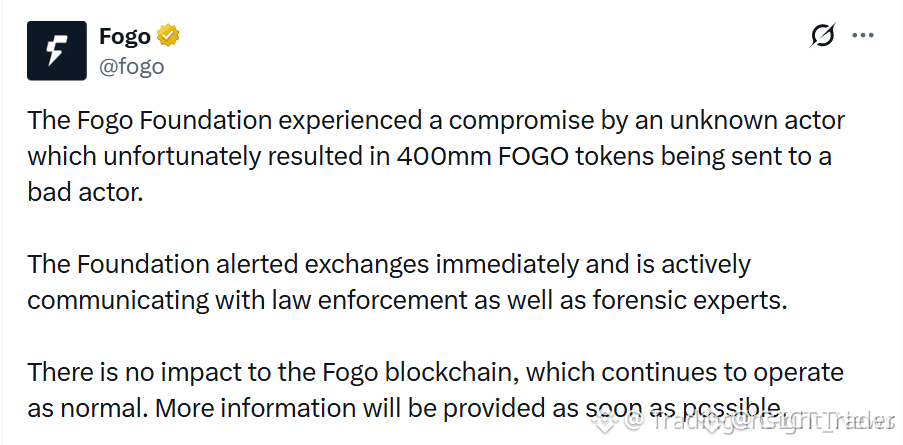
🚨 $FOGO FOUNDATION COMPROMISED WITH 400M TOKENS EXFILTRATED AS LAYER-1 REMAINS INTACT! 💣
🚨 The Fogo Foundation has suffered a major security exploit, with attackers draining approximately 400 million $FOGO tokens valued near $20 million. While forensic investigators and major exchanges move to trace the exploit, the underlying Layer-1 network structure continues to operate normally.
🔍 From a market perspective, foundation wallet breaches create severe overhead supply risks even when protocol execution remains untainted. The critical narrative now shifts to order flow monitoring and whether key liquidity pools can absorb potential secondary dump pressure.
💬 Does this structural supply event impact your thesis on $FOGO , or does core network uptime keep you grounded? 👇
⚠️ Not financial advice. Always manage your risk. 🛡️
🏷️ #FOGO #CryptoSecurity #Layer1 #RiskManagement #MarketStructure
🛡️ 🔍
🚨 $FOGO FOUNDATION COMPROMISED WITH 400M TOKENS EXFILTRATED AS LAYER-1 REMAINS INTACT! 💣
🚨 The Fogo Foundation has suffered a major security exploit, with attackers draining approximately 400 million $FOGO tokens valued near $20 million. While forensic investigators and major exchanges move to trace the exploit, the underlying Layer-1 network structure continues to operate normally.
🔍 From a market perspective, foundation wallet breaches create severe overhead supply risks even when protocol execution remains untainted. The critical narrative now shifts to order flow monitoring and whether key liquidity pools can absorb potential secondary dump pressure.
💬 Does this structural supply event impact your thesis on $FOGO , or does core network uptime keep you grounded? 👇
⚠️ Not financial advice. Always manage your risk. 🛡️
🏷️ #FOGO #CryptoSecurity #Layer1 #RiskManagement #MarketStructure
🛡️ 🔍
🚨 The Fogo Foundation has suffered a major security exploit, with attackers draining approximately 400 million $FOGO tokens valued near $20 million. While forensic investigators and major exchanges move to trace the exploit, the underlying Layer-1 network structure continues to operate normally.
🔍 From a market perspective, foundation wallet breaches create severe overhead supply risks even when protocol execution remains untainted. The critical narrative now shifts to order flow monitoring and whether key liquidity pools can absorb potential secondary dump pressure.
💬 Does this structural supply event impact your thesis on $FOGO , or does core network uptime keep you grounded? 👇
⚠️ Not financial advice. Always manage your risk. 🛡️
🏷️ #FOGO #CryptoSecurity #Layer1 #RiskManagement #MarketStructure
🛡️ 🔍
571

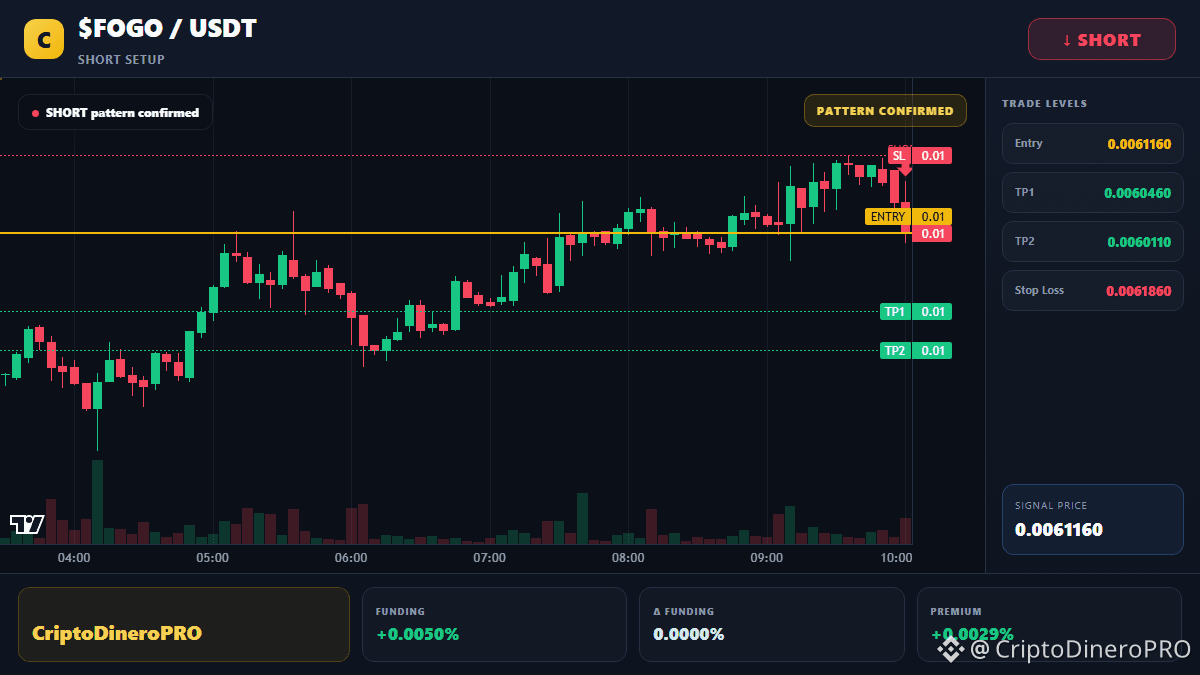

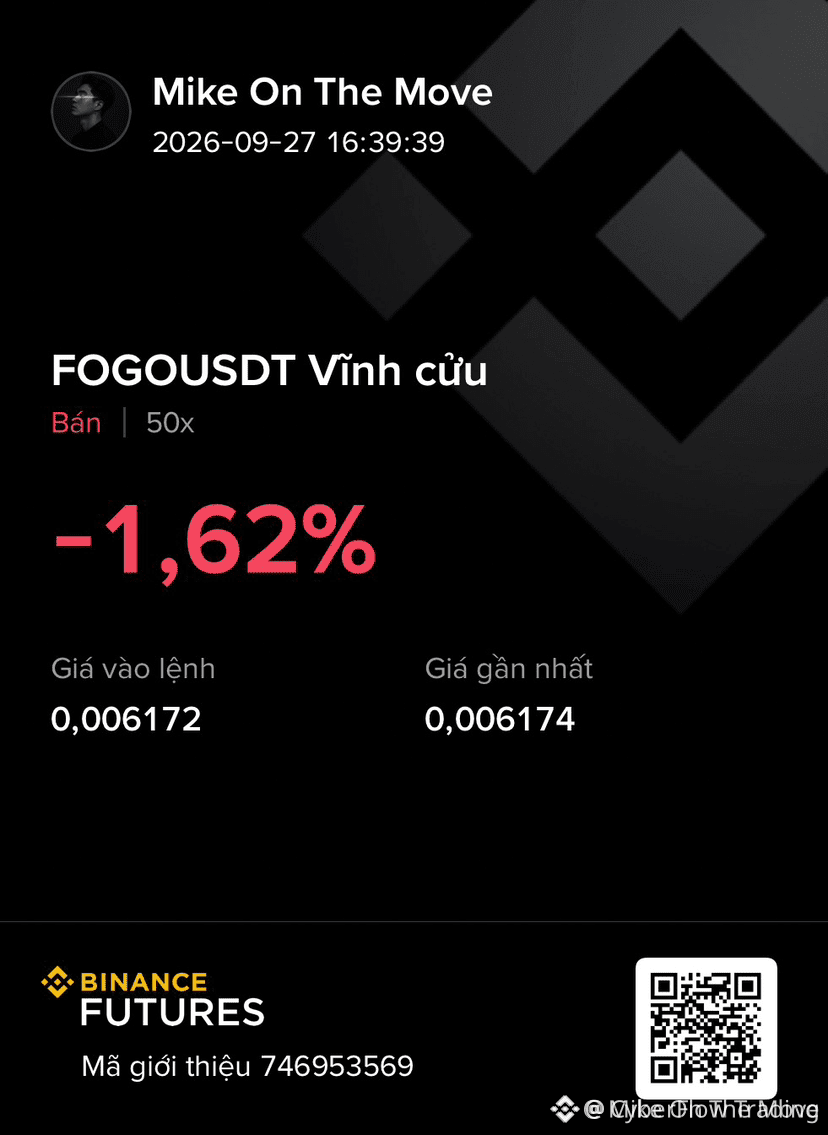
🚨 $FOGO REBOUND IS LOSING STEAM AS BEARS PREPARE FOR A LIQUIDITY SWEEP! 🔻
Entry: 0.00609 - 0.00627 ⚡
Target: 0.00550 🎯
Stop Loss: 0.00670 ⚠️
The recent bounce on $FOGO is running straight into heavy overhead supply, displaying classic signs of buyer exhaustion. 📊 Order flow reflects aggressive distribution at resistance, paving the way for a swift move toward lower liquidity pockets.
📉 Momentum indicators are rolling over as sellers step in to absorb weak upside attempts. With risk clearly defined above the local high, this setup presents a high-conviction short opportunity. 💬 Are you bidding the breakdown here or waiting for support to get wiped out first? 👇
⚠️ Not financial advice. Always manage your risk. 🛡️
🏷️ #FOGO #ShortSetup #Bearish #Crypto
🔻 🎯
🚨 $FOGO REBOUND IS LOSING STEAM AS BEARS PREPARE FOR A LIQUIDITY SWEEP! 🔻
Entry: 0.00609 - 0.00627 ⚡
Target: 0.00550 🎯
Stop Loss: 0.00670 ⚠️
The recent bounce on $FOGO is running straight into heavy overhead supply, displaying classic signs of buyer exhaustion. 📊 Order flow reflects aggressive distribution at resistance, paving the way for a swift move toward lower liquidity pockets.
📉 Momentum indicators are rolling over as sellers step in to absorb weak upside attempts. With risk clearly defined above the local high, this setup presents a high-conviction short opportunity. 💬 Are you bidding the breakdown here or waiting for support to get wiped out first? 👇
⚠️ Not financial advice. Always manage your risk. 🛡️
🏷️ #FOGO #ShortSetup #Bearish #Crypto
🔻 🎯
Entry: 0.00609 - 0.00627 ⚡
Target: 0.00550 🎯
Stop Loss: 0.00670 ⚠️
The recent bounce on $FOGO is running straight into heavy overhead supply, displaying classic signs of buyer exhaustion. 📊 Order flow reflects aggressive distribution at resistance, paving the way for a swift move toward lower liquidity pockets.
📉 Momentum indicators are rolling over as sellers step in to absorb weak upside attempts. With risk clearly defined above the local high, this setup presents a high-conviction short opportunity. 💬 Are you bidding the breakdown here or waiting for support to get wiped out first? 👇
⚠️ Not financial advice. Always manage your risk. 🛡️
🏷️ #FOGO #ShortSetup #Bearish #Crypto
🔻 🎯
28

·
--
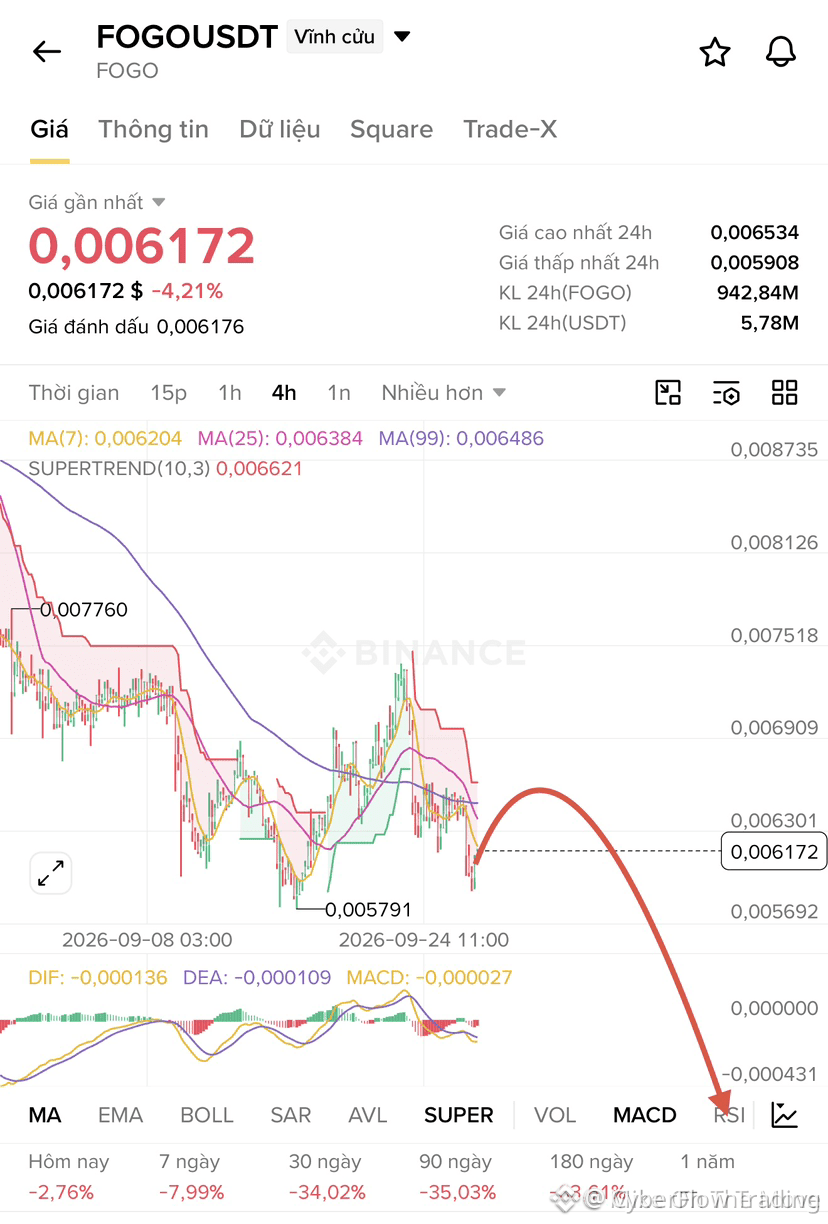
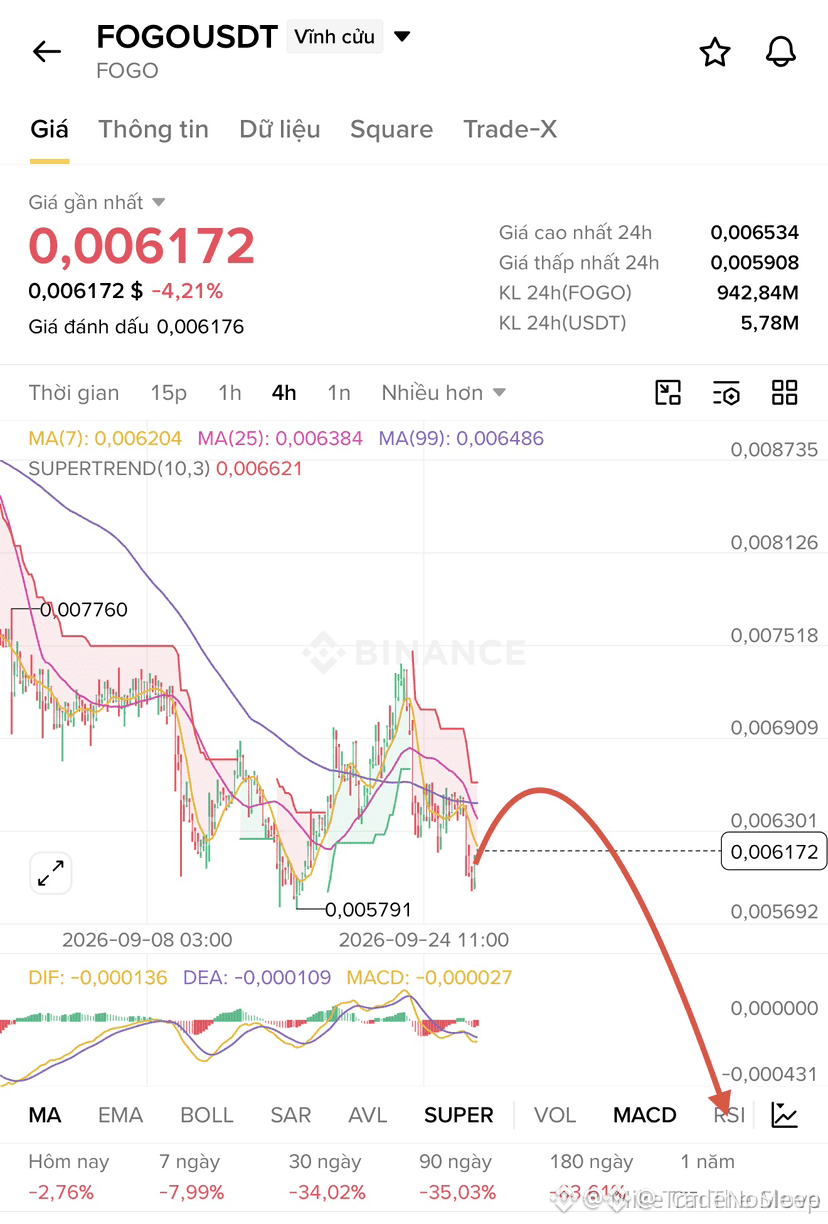
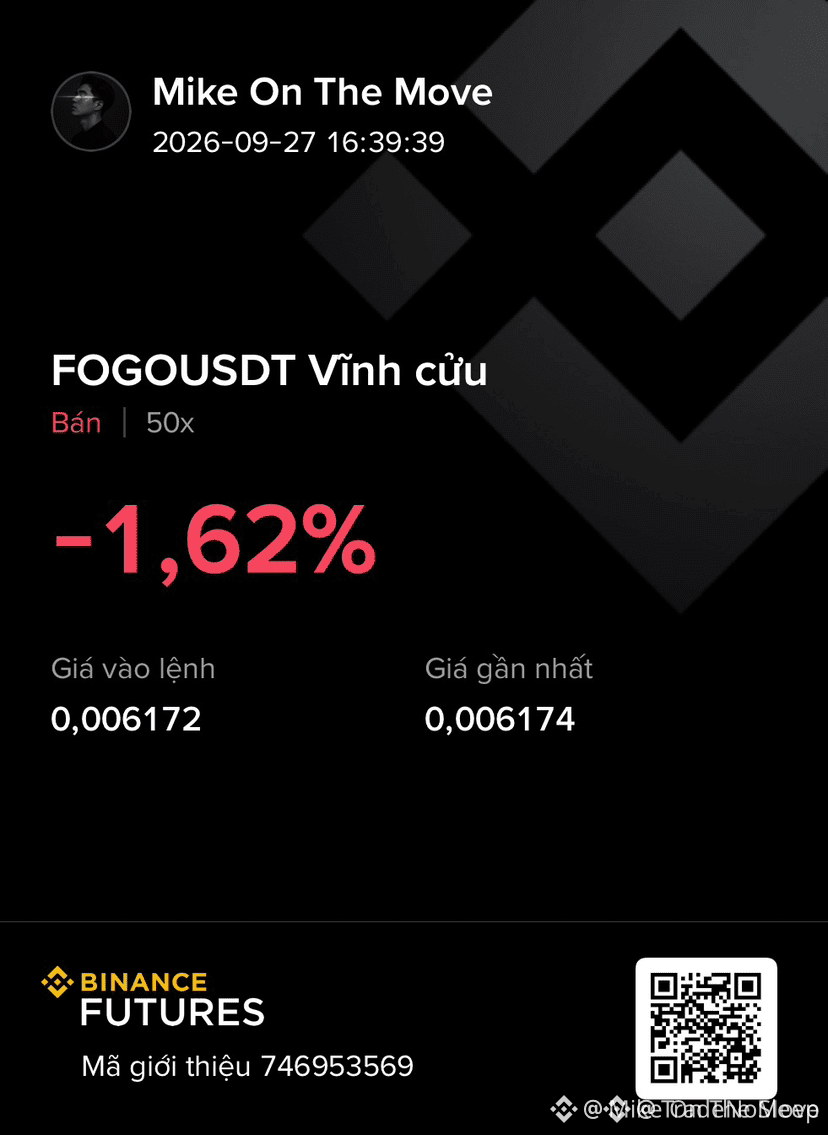
🚨 $FOGO EXHAUSTION SETS IN AS INSTITUTIONAL SELLERS TARGET LOWER LIQUIDITY! 🔻
Entry: 0.00609 - 0.00627 ⚡
Target: 0.00600 - 0.00550 🎯
Stop Loss: 0.00670 ⚠️
The corrective bounce in $FOGO is rapidly losing structural momentum right at local resistance. Smart money appears to be distributing into this weak rally, leaving behind clean sell-side liquidity resting beneath the previous swing low. 📊
With order flow shifting distinctly bearish, a sweep toward deeper demand pockets remains the path of least resistance. 🔍 Market structure favors defensive positioning as sellers defend the premium supply zone. 💬 Are you taking the short entry here or waiting for lower confirmation? 👇
⚠️ Not financial advice. Always manage your risk. 🛡️
🏷️ #FOGO #ShortSetup #Crypto #MarketStructure
🔻 🐻
🚨 $FOGO EXHAUSTION SETS IN AS INSTITUTIONAL SELLERS TARGET LOWER LIQUIDITY! 🔻
Entry: 0.00609 - 0.00627 ⚡
Target: 0.00600 - 0.00550 🎯
Stop Loss: 0.00670 ⚠️
The corrective bounce in $FOGO is rapidly losing structural momentum right at local resistance. Smart money appears to be distributing into this weak rally, leaving behind clean sell-side liquidity resting beneath the previous swing low. 📊
With order flow shifting distinctly bearish, a sweep toward deeper demand pockets remains the path of least resistance. 🔍 Market structure favors defensive positioning as sellers defend the premium supply zone. 💬 Are you taking the short entry here or waiting for lower confirmation? 👇
⚠️ Not financial advice. Always manage your risk. 🛡️
🏷️ #FOGO #ShortSetup #Crypto #MarketStructure
🔻 🐻
Entry: 0.00609 - 0.00627 ⚡
Target: 0.00600 - 0.00550 🎯
Stop Loss: 0.00670 ⚠️
The corrective bounce in $FOGO is rapidly losing structural momentum right at local resistance. Smart money appears to be distributing into this weak rally, leaving behind clean sell-side liquidity resting beneath the previous swing low. 📊
With order flow shifting distinctly bearish, a sweep toward deeper demand pockets remains the path of least resistance. 🔍 Market structure favors defensive positioning as sellers defend the premium supply zone. 💬 Are you taking the short entry here or waiting for lower confirmation? 👇
⚠️ Not financial advice. Always manage your risk. 🛡️
🏷️ #FOGO #ShortSetup #Crypto #MarketStructure
🔻 🐻
16

·
--
Quiet alpha is hiding in $FOGO. 👀
$0.0061, down 5.72% today, with $1.63M traded. The 4h move is worse at -5.9%, RSI sits at 36, and price remains below the 20d and 50d averages.
That’s the ugly part.
But volume is only 1.0x its 20d average, funding is barely +0.005%, and FOGO is still 24% below its 30d high. No leverage frenzy yet. ⚡
I’m watching $0.0060: hold there and I’d sit tight; lose it and I’d wait. $BNB strength won’t hide weak small caps forever.
#FOGO #Crypto
Quiet alpha is hiding in $FOGO . 👀
$0.0061, down 5.72% today, with $1.63M traded. The 4h move is worse at -5.9%, RSI sits at 36, and price remains below the 20d and 50d averages.
That’s the ugly part.
But volume is only 1.0x its 20d average, funding is barely +0.005%, and FOGO is still 24% below its 30d high. No leverage frenzy yet. ⚡
I’m watching $0.0060: hold there and I’d sit tight; lose it and I’d wait. $BNB strength won’t hide weak small caps forever.
#FOGO #Crypto
$0.0061, down 5.72% today, with $1.63M traded. The 4h move is worse at -5.9%, RSI sits at 36, and price remains below the 20d and 50d averages.
That’s the ugly part.
But volume is only 1.0x its 20d average, funding is barely +0.005%, and FOGO is still 24% below its 30d high. No leverage frenzy yet. ⚡
I’m watching $0.0060: hold there and I’d sit tight; lose it and I’d wait. $BNB strength won’t hide weak small caps forever.
#FOGO #Crypto
54
·
--
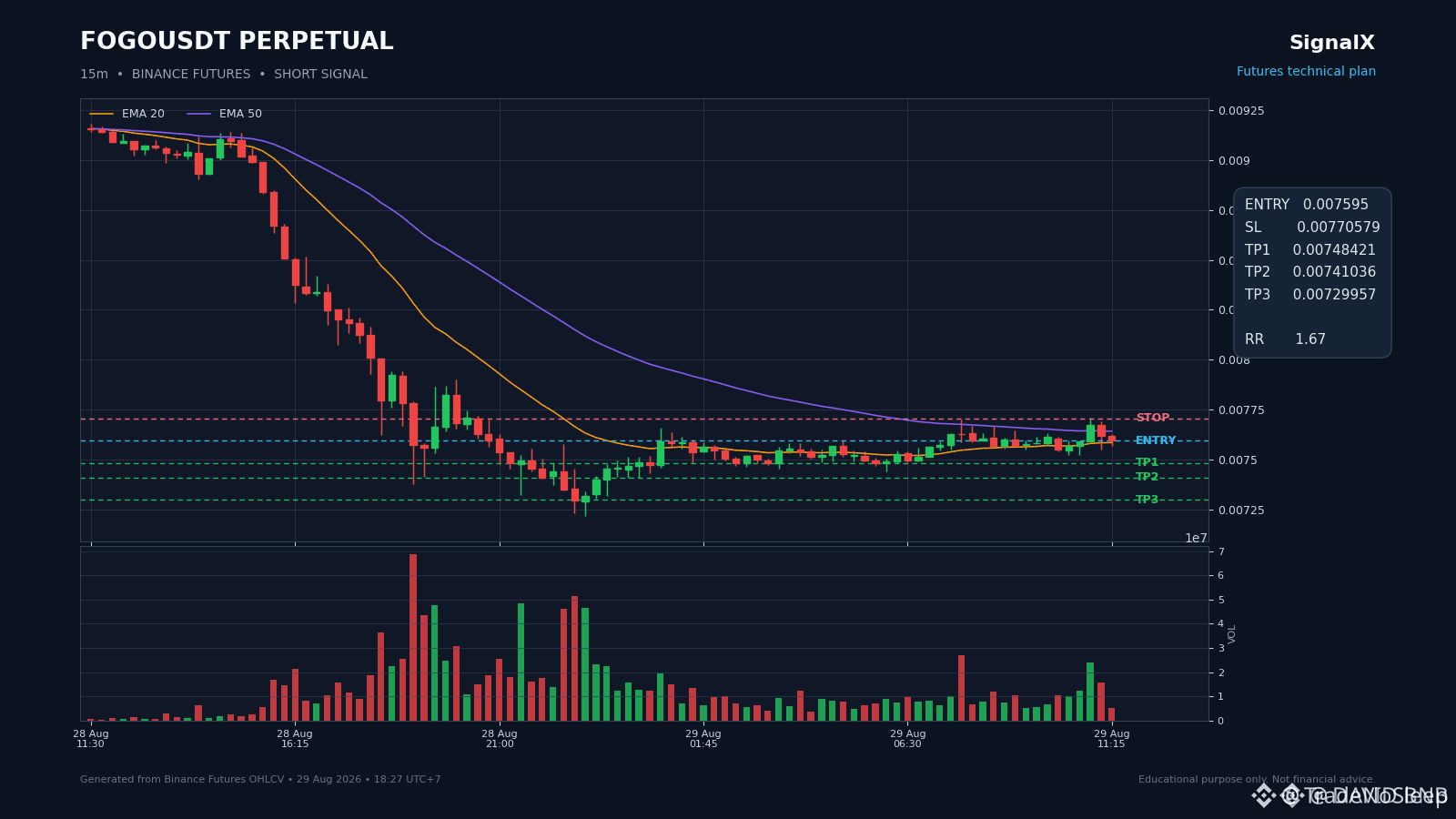
🚨 $FOGO STRUCTURAL REJECTION INCOMING AS BEARS TARGET LOWER LIQUIDITY! 📉
Entry: 0.007595 ⚡
Target: 0.00729957 🎯
Stop Loss: 0.00770579 ⚠️
Price action on $FOGO is adhering cleanly to market structure, presenting a refined distribution footprint near local resistance. 📊 Institutional order flow shows momentum favoring a downside expansion toward key discount demand pools.
🔍 Invalidation sits tightly above the supply zone to preserve a crisp risk profile while smart capital sweeps remaining sell-side liquidity. 📌 Waiting for clear execution triggers ensures high-probability positioning before momentum accelerates. 💬 Are you shorting this structural breakdown or waiting for confirmation? 👇
⚠️ Not financial advice. Always manage your risk. 🛡️
🏷️ #FOGO #ShortSetup #Trading #Crypto #MarketStructure
🐻 📉
🚨 $FOGO STRUCTURAL REJECTION INCOMING AS BEARS TARGET LOWER LIQUIDITY! 📉
Entry: 0.007595 ⚡
Target: 0.00729957 🎯
Stop Loss: 0.00770579 ⚠️
Price action on $FOGO is adhering cleanly to market structure, presenting a refined distribution footprint near local resistance. 📊 Institutional order flow shows momentum favoring a downside expansion toward key discount demand pools.
🔍 Invalidation sits tightly above the supply zone to preserve a crisp risk profile while smart capital sweeps remaining sell-side liquidity. 📌 Waiting for clear execution triggers ensures high-probability positioning before momentum accelerates. 💬 Are you shorting this structural breakdown or waiting for confirmation? 👇
⚠️ Not financial advice. Always manage your risk. 🛡️
🏷️ #FOGO #ShortSetup #Trading #Crypto #MarketStructure
🐻 📉
Entry: 0.007595 ⚡
Target: 0.00729957 🎯
Stop Loss: 0.00770579 ⚠️
Price action on $FOGO is adhering cleanly to market structure, presenting a refined distribution footprint near local resistance. 📊 Institutional order flow shows momentum favoring a downside expansion toward key discount demand pools.
🔍 Invalidation sits tightly above the supply zone to preserve a crisp risk profile while smart capital sweeps remaining sell-side liquidity. 📌 Waiting for clear execution triggers ensures high-probability positioning before momentum accelerates. 💬 Are you shorting this structural breakdown or waiting for confirmation? 👇
⚠️ Not financial advice. Always manage your risk. 🛡️
🏷️ #FOGO #ShortSetup #Trading #Crypto #MarketStructure
🐻 📉
9

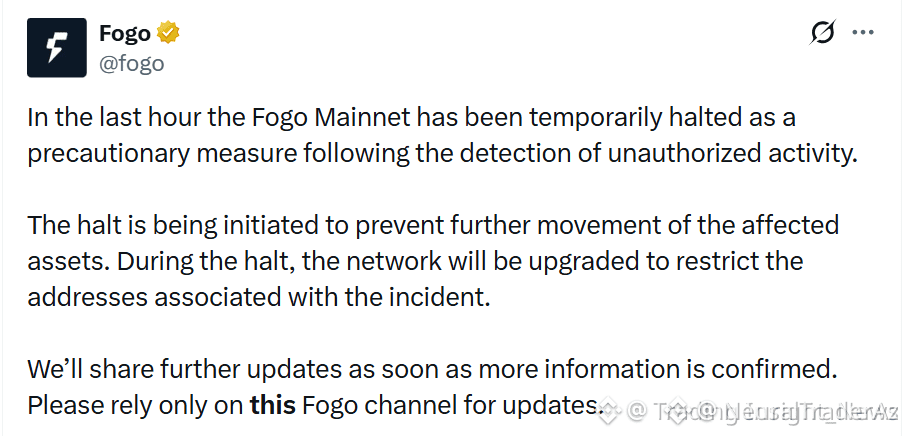
🚨 $FOGO MAINNET HALTED AS INSTITUTIONAL LIQUIDITY LOCKS DOWN AFTER SECURITY BREACH ⚠️
$FOGO has officially frozen state execution across its mainnet following detected unauthorized activity. 🔒 The emergency halt hard-locks on-chain capital and order flow to prevent any further illicit drain of liquidity pools.
While network freezes temporarily disrupt operational volume, targeted protocol upgrades are deploying to isolate blacklisted addresses before state restoration. 🔍 Smart money execution demands standing aside until validator consensus and structural integrity are fully verified. 💬 Does this decisive emergency intervention preserve long-term project credibility, or does state suspension shatter your thesis? 👇
⚠️ Not financial advice. Always manage your risk. 🛡️
🏷️ #FOGO #CryptoSecurity #Mainnet #Crypto
🛡️ 👁️
🚨 $FOGO MAINNET HALTED AS INSTITUTIONAL LIQUIDITY LOCKS DOWN AFTER SECURITY BREACH ⚠️
$FOGO has officially frozen state execution across its mainnet following detected unauthorized activity. 🔒 The emergency halt hard-locks on-chain capital and order flow to prevent any further illicit drain of liquidity pools.
While network freezes temporarily disrupt operational volume, targeted protocol upgrades are deploying to isolate blacklisted addresses before state restoration. 🔍 Smart money execution demands standing aside until validator consensus and structural integrity are fully verified. 💬 Does this decisive emergency intervention preserve long-term project credibility, or does state suspension shatter your thesis? 👇
⚠️ Not financial advice. Always manage your risk. 🛡️
🏷️ #FOGO #CryptoSecurity #Mainnet #Crypto
🛡️ 👁️
$FOGO has officially frozen state execution across its mainnet following detected unauthorized activity. 🔒 The emergency halt hard-locks on-chain capital and order flow to prevent any further illicit drain of liquidity pools.
While network freezes temporarily disrupt operational volume, targeted protocol upgrades are deploying to isolate blacklisted addresses before state restoration. 🔍 Smart money execution demands standing aside until validator consensus and structural integrity are fully verified. 💬 Does this decisive emergency intervention preserve long-term project credibility, or does state suspension shatter your thesis? 👇
⚠️ Not financial advice. Always manage your risk. 🛡️
🏷️ #FOGO #CryptoSecurity #Mainnet #Crypto
🛡️ 👁️
250


·
--
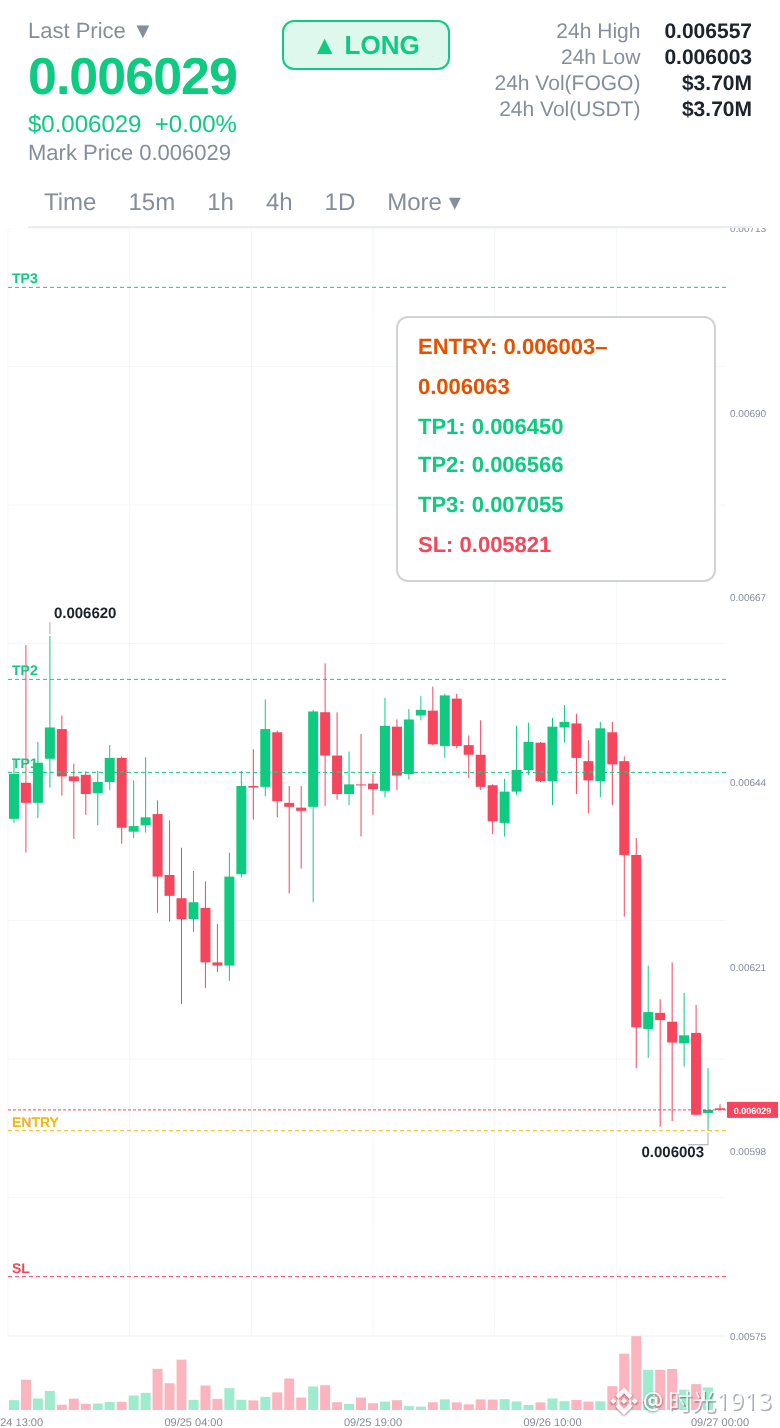
I'm not scared of this FOGO dip — I'm excited
This feels like one of those setups that either works immediately or doesn't.
SETUP — 📈 LONG
Here's what the data shows:
📈 If yes, here's the plan:
📈 Entry: 0.006003 – 0.006063
🛑 Stop: 0.005821
🎯 TP1: 0.006450
🎯 TP2: 0.006566
🎯 TP3: 0.007055
📊 Confidence: 81%
Size into strength, not weakness.
The technicals continue to support the long.
Catalyst Is Here 👉 $FOGO 👈 Move Now
#FOGO $BTC $ETH
I'm not scared of this FOGO dip — I'm excited
This feels like one of those setups that either works immediately or doesn't.
SETUP — 📈 LONG
Here's what the data shows:
📈 If yes, here's the plan:
📈 Entry: 0.006003 – 0.006063
🛑 Stop: 0.005821
🎯 TP1: 0.006450
🎯 TP2: 0.006566
🎯 TP3: 0.007055
📊 Confidence: 81%
Size into strength, not weakness.
The technicals continue to support the long.
Catalyst Is Here 👉 $FOGO 👈 Move Now
#FOGO $BTC $ETH
This feels like one of those setups that either works immediately or doesn't.
SETUP — 📈 LONG
Here's what the data shows:
📈 If yes, here's the plan:
📈 Entry: 0.006003 – 0.006063
🛑 Stop: 0.005821
🎯 TP1: 0.006450
🎯 TP2: 0.006566
🎯 TP3: 0.007055
📊 Confidence: 81%
Size into strength, not weakness.
The technicals continue to support the long.
Catalyst Is Here 👉 $FOGO 👈 Move Now
#FOGO $BTC $ETH
272
·
--
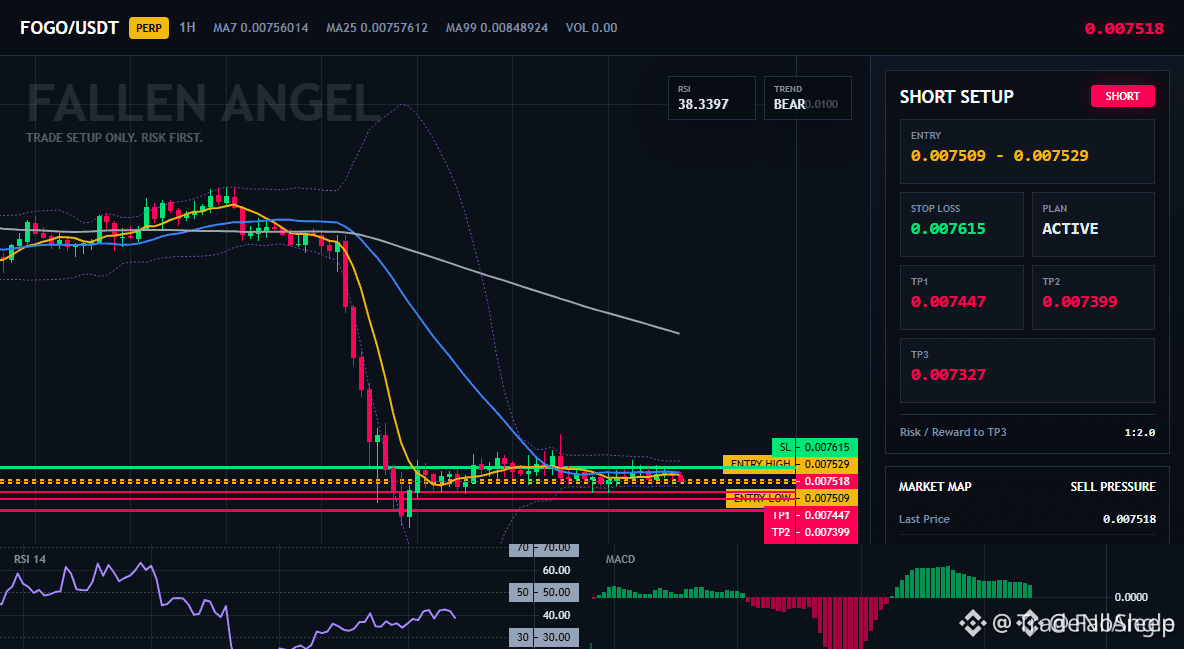
🚨 $FOGO REJECTS SUPPLY ZONE AS SMART MONEY POSITIONS FOR DOWNSTRUCTURE ROTATION! 📉
Entry: 0.00751 - 0.00753 🔻
Target: 0.00733 🎯
Stop Loss: 0.00762 ⚠️
📌 $FOGO has pushed directly into a key premium supply overhead, where aggressive momentum is stalling out. 🔍 Structural order flow indicates institutional mitigation at this level, opening a high-probability vector toward sell-side liquidity pools resting below current market structure.
⚡ With risk tightly anchored above the structural invalidation level, patience remains key as price rotates back into lower demand targets. 💬 Are you shorting this supply rejection or waiting for a deeper breakdown signal? 👇
⚠️ Not financial advice. Always manage your risk. 🛡️
🏷️ #FOGO #ShortSetup #Bearish #MarketStructure #Crypto
🎯 🐻
🚨 $FOGO REJECTS SUPPLY ZONE AS SMART MONEY POSITIONS FOR DOWNSTRUCTURE ROTATION! 📉
Entry: 0.00751 - 0.00753 🔻
Target: 0.00733 🎯
Stop Loss: 0.00762 ⚠️
📌 $FOGO has pushed directly into a key premium supply overhead, where aggressive momentum is stalling out. 🔍 Structural order flow indicates institutional mitigation at this level, opening a high-probability vector toward sell-side liquidity pools resting below current market structure.
⚡ With risk tightly anchored above the structural invalidation level, patience remains key as price rotates back into lower demand targets. 💬 Are you shorting this supply rejection or waiting for a deeper breakdown signal? 👇
⚠️ Not financial advice. Always manage your risk. 🛡️
🏷️ #FOGO #ShortSetup #Bearish #MarketStructure #Crypto
🎯 🐻
Entry: 0.00751 - 0.00753 🔻
Target: 0.00733 🎯
Stop Loss: 0.00762 ⚠️
📌 $FOGO has pushed directly into a key premium supply overhead, where aggressive momentum is stalling out. 🔍 Structural order flow indicates institutional mitigation at this level, opening a high-probability vector toward sell-side liquidity pools resting below current market structure.
⚡ With risk tightly anchored above the structural invalidation level, patience remains key as price rotates back into lower demand targets. 💬 Are you shorting this supply rejection or waiting for a deeper breakdown signal? 👇
⚠️ Not financial advice. Always manage your risk. 🛡️
🏷️ #FOGO #ShortSetup #Bearish #MarketStructure #Crypto
🎯 🐻
18

·
--
Verified
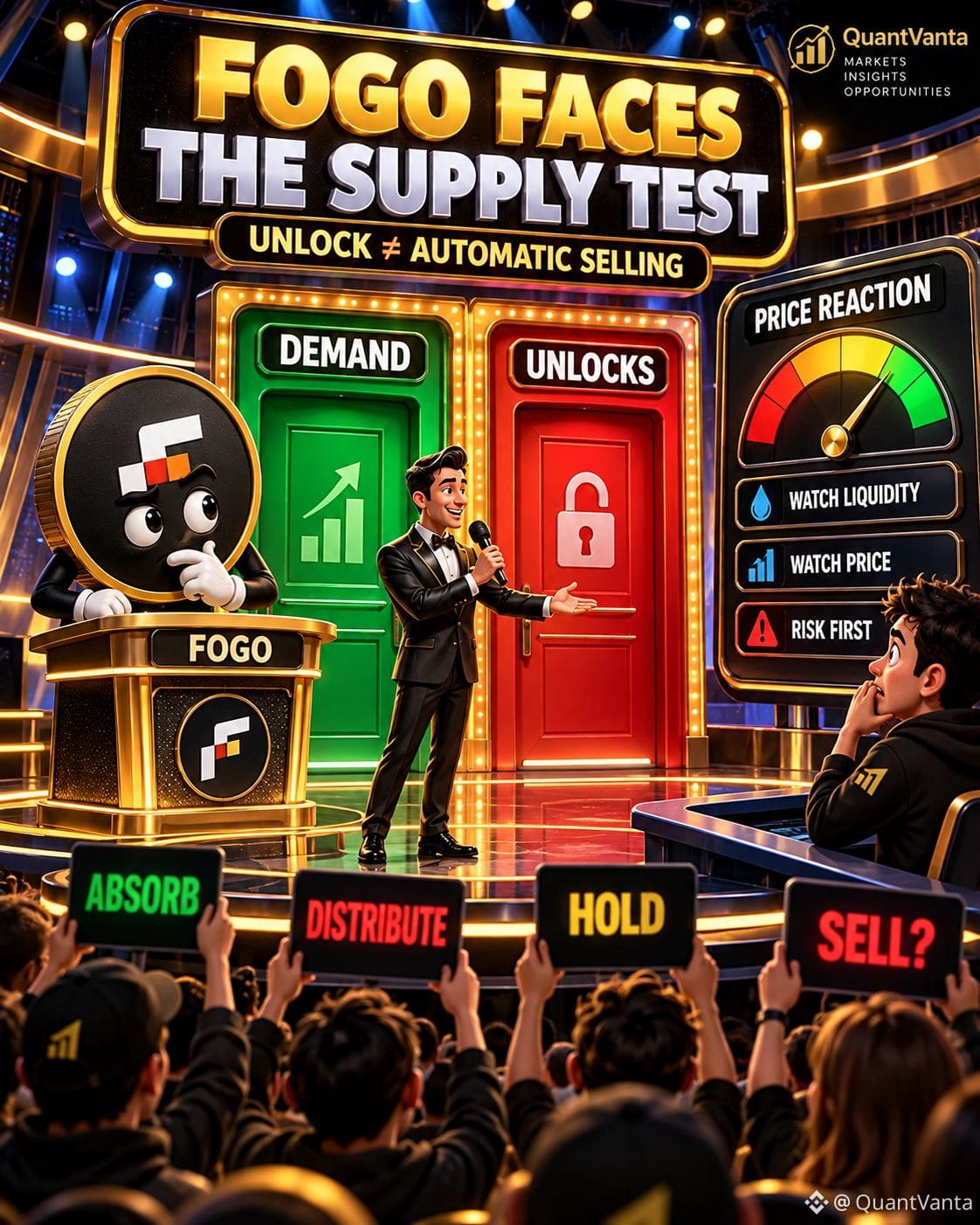
🚨 $FOGO IS AT A SUPPLY TEST AND PRICE IS HOLDING NEAR TODAY’S HIGH
Fogo’s official tokenomics say the institutional-investor unlock starts on September 26.
Here’s the interesting part:
On the latest market snapshot, $FOGO is around $0.0065 and sitting near the top of a roughly $0.00621–$0.00654 intraday range.
📊 LEVELS TO WATCH
🟢 $0.00621 → Today’s downside reference
🔴 $0.00654 → Today’s upside reference
My observation:
The supply event is arriving while price is still pressing the upper edge of the day’s range.
That makes the reaction more important than the headline itself.
If demand absorbs the new supply and price holds above the upper range, momentum can remain constructive.
If $0.00621 breaks, the current intraday structure weakens.
The unlock is scheduled.
The market reaction isn’t.
That’s the test I’m watching. 👀
What matters more here: the new supply or whether buyers can absorb it?
Follow QuantVanta for daily crypto market intelligence.
$FOGO
{future}(FOGOUSDT)
#fogo #crypto #Altcoins #tokenunlocks
🚨 $FOGO IS AT A SUPPLY TEST AND PRICE IS HOLDING NEAR TODAY’S HIGH
Fogo’s official tokenomics say the institutional-investor unlock starts on September 26.
Here’s the interesting part:
On the latest market snapshot, $FOGO is around $0.0065 and sitting near the top of a roughly $0.00621–$0.00654 intraday range.
📊 LEVELS TO WATCH
🟢 $0.00621 → Today’s downside reference
🔴 $0.00654 → Today’s upside reference
My observation:
The supply event is arriving while price is still pressing the upper edge of the day’s range.
That makes the reaction more important than the headline itself.
If demand absorbs the new supply and price holds above the upper range, momentum can remain constructive.
If $0.00621 breaks, the current intraday structure weakens.
The unlock is scheduled.
The market reaction isn’t.
That’s the test I’m watching. 👀
What matters more here: the new supply or whether buyers can absorb it?
Follow QuantVanta for daily crypto market intelligence.
$FOGO
#fogo #crypto #Altcoins #tokenunlocks
Fogo’s official tokenomics say the institutional-investor unlock starts on September 26.
Here’s the interesting part:
On the latest market snapshot, $FOGO is around $0.0065 and sitting near the top of a roughly $0.00621–$0.00654 intraday range.
📊 LEVELS TO WATCH
🟢 $0.00621 → Today’s downside reference
🔴 $0.00654 → Today’s upside reference
My observation:
The supply event is arriving while price is still pressing the upper edge of the day’s range.
That makes the reaction more important than the headline itself.
If demand absorbs the new supply and price holds above the upper range, momentum can remain constructive.
If $0.00621 breaks, the current intraday structure weakens.
The unlock is scheduled.
The market reaction isn’t.
That’s the test I’m watching. 👀
What matters more here: the new supply or whether buyers can absorb it?
Follow QuantVanta for daily crypto market intelligence.
$FOGO
#fogo #crypto #Altcoins #tokenunlocks
1
599

Verified
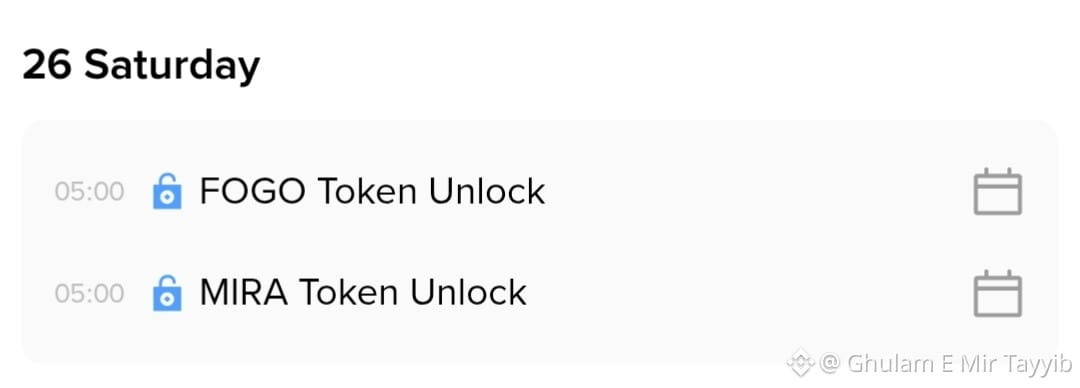
Crypto Calendar — Sep 26, 2026
Today's key events: $FOGO and $MIRA token unlocks, both dropping at 05:00 UTC.
Fresh supply hitting the market often brings short-term volatility, especially if unlock size is large relative to circulating supply. Traders should watch price and volume closely on both today.
Keeping an eye on unlocks or trading through them? 👇
#fogo #Mira #TokenUnlock
{future}(MIRAUSDT)
{future}(FOGOUSDT)
Crypto Calendar — Sep 26, 2026
Today's key events: $FOGO and $MIRA token unlocks, both dropping at 05:00 UTC.
Fresh supply hitting the market often brings short-term volatility, especially if unlock size is large relative to circulating supply. Traders should watch price and volume closely on both today.
Keeping an eye on unlocks or trading through them? 👇
#fogo #Mira #TokenUnlock
Today's key events: $FOGO and $MIRA token unlocks, both dropping at 05:00 UTC.
Fresh supply hitting the market often brings short-term volatility, especially if unlock size is large relative to circulating supply. Traders should watch price and volume closely on both today.
Keeping an eye on unlocks or trading through them? 👇
#fogo #Mira #TokenUnlock
1
617

·
--
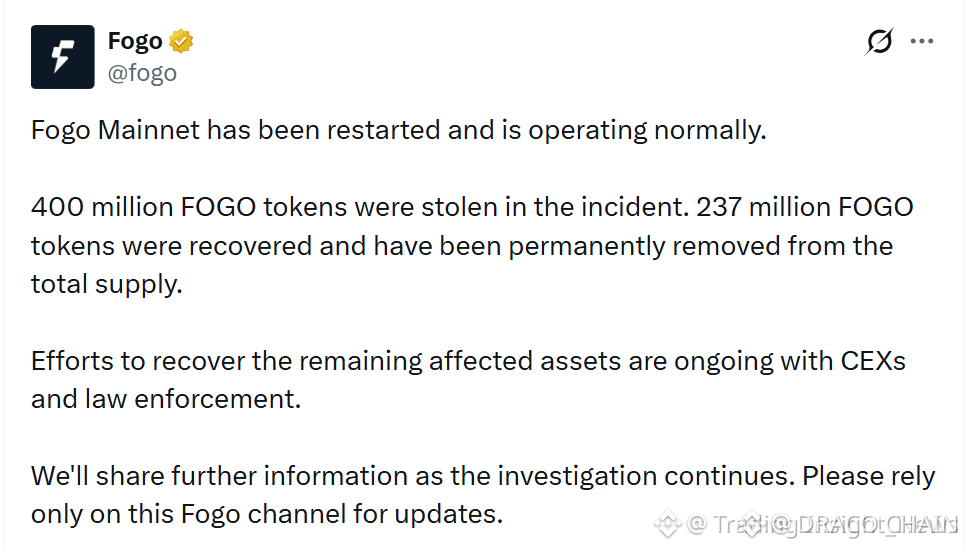
🔥 $FOGO RESTARTS MAINNET AS INSTITUTIONAL RECOVERY DRIVES PERMANENT 237M TOKEN BURN! 🏦
Following a mainnet exploit, $FOGO has officially resumed operations while executing an immediate supply contraction. Out of 400M compromised tokens, security protocols successfully recovered 237M, which will now be permanently removed from circulation to eliminate severe overhang sell pressure. 🔒
This supply side intervention fundamentally reshapes tokenomics by removing toxic float from the order flow dynamic. 📊 While contract security standardizations remain essential for long-term trust, neutralizing over half the exploited assets provides critical stabilization to the market architecture. 💡
🤔 Does this decisive supply burn rebuild structural confidence for $FOGO , or are you waiting for higher timeframe reclaims? 👇
⚠️ Not financial advice. Always manage your risk. 🛡️
🏷️ #FOGO #TokenBurn #Altcoins #Crypto
🔒 🛡️
🔥 $FOGO RESTARTS MAINNET AS INSTITUTIONAL RECOVERY DRIVES PERMANENT 237M TOKEN BURN! 🏦
Following a mainnet exploit, $FOGO has officially resumed operations while executing an immediate supply contraction. Out of 400M compromised tokens, security protocols successfully recovered 237M, which will now be permanently removed from circulation to eliminate severe overhang sell pressure. 🔒
This supply side intervention fundamentally reshapes tokenomics by removing toxic float from the order flow dynamic. 📊 While contract security standardizations remain essential for long-term trust, neutralizing over half the exploited assets provides critical stabilization to the market architecture. 💡
🤔 Does this decisive supply burn rebuild structural confidence for $FOGO , or are you waiting for higher timeframe reclaims? 👇
⚠️ Not financial advice. Always manage your risk. 🛡️
🏷️ #FOGO #TokenBurn #Altcoins #Crypto
🔒 🛡️
Following a mainnet exploit, $FOGO has officially resumed operations while executing an immediate supply contraction. Out of 400M compromised tokens, security protocols successfully recovered 237M, which will now be permanently removed from circulation to eliminate severe overhang sell pressure. 🔒
This supply side intervention fundamentally reshapes tokenomics by removing toxic float from the order flow dynamic. 📊 While contract security standardizations remain essential for long-term trust, neutralizing over half the exploited assets provides critical stabilization to the market architecture. 💡
🤔 Does this decisive supply burn rebuild structural confidence for $FOGO , or are you waiting for higher timeframe reclaims? 👇
⚠️ Not financial advice. Always manage your risk. 🛡️
🏷️ #FOGO #TokenBurn #Altcoins #Crypto
🔒 🛡️
463
·
--
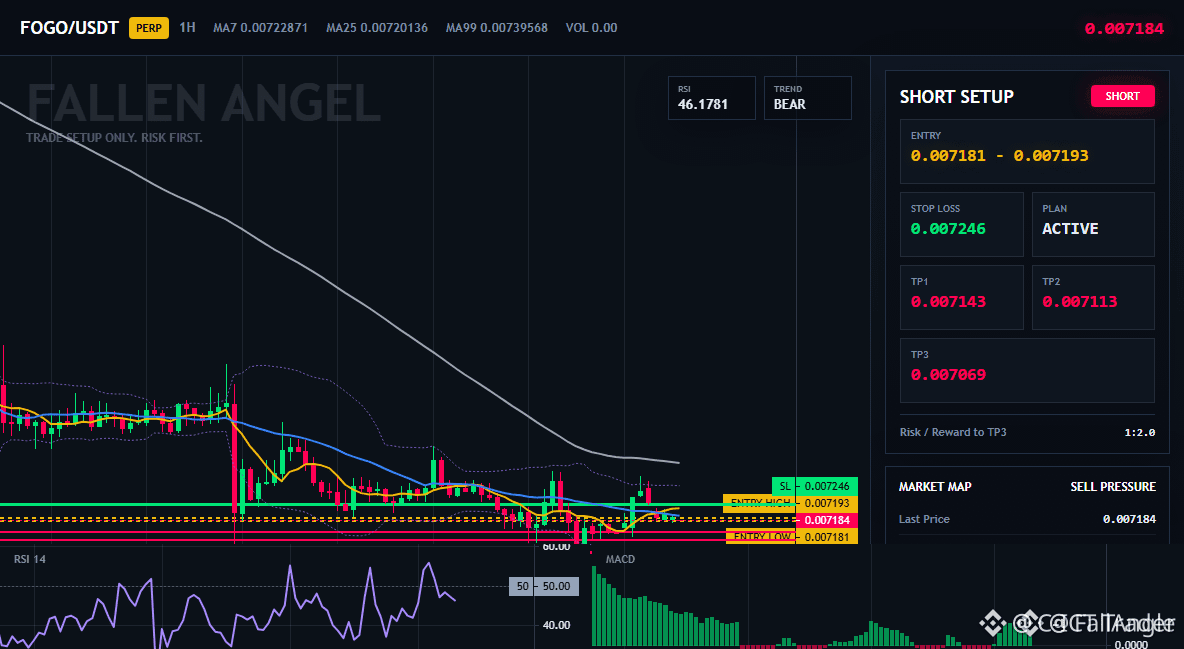
🚨 $FOGO TAPS PREMIUM SUPPLY ZONE FOR INSTITUTIONAL REJECTION! 🔻
Entry: 0.00718 - 0.00719 ⚡
Target: 0.00707 🎯
Stop Loss: 0.00725 ⚠️
📌 $FOGO has officially retested the key overhead supply zone, triggering early signs of buy-side liquidity absorption. Institutional order flow typically sweeps these exact high-timeframe pivot levels to generate sell-side liquidity before expanding downward. 🔍
💡 With invalidation structured strictly above the local pivot at 0.00725, this setup offers an efficient path toward filling the lower structural inefficiency down to 0.00707. Market structure favors disciplined execution as price rotates back toward discount levels. 💬 Are you positioning short at this premium level or waiting for lower high confirmation? 👇
⚠️ Not financial advice. Always manage your risk. 🛡️
🏷️ #FOGO #ShortSetup #MarketStructure #Crypto
🎯 🐻
🚨 $FOGO TAPS PREMIUM SUPPLY ZONE FOR INSTITUTIONAL REJECTION! 🔻
Entry: 0.00718 - 0.00719 ⚡
Target: 0.00707 🎯
Stop Loss: 0.00725 ⚠️
📌 $FOGO has officially retested the key overhead supply zone, triggering early signs of buy-side liquidity absorption. Institutional order flow typically sweeps these exact high-timeframe pivot levels to generate sell-side liquidity before expanding downward. 🔍
💡 With invalidation structured strictly above the local pivot at 0.00725, this setup offers an efficient path toward filling the lower structural inefficiency down to 0.00707. Market structure favors disciplined execution as price rotates back toward discount levels. 💬 Are you positioning short at this premium level or waiting for lower high confirmation? 👇
⚠️ Not financial advice. Always manage your risk. 🛡️
🏷️ #FOGO #ShortSetup #MarketStructure #Crypto
🎯 🐻
Entry: 0.00718 - 0.00719 ⚡
Target: 0.00707 🎯
Stop Loss: 0.00725 ⚠️
📌 $FOGO has officially retested the key overhead supply zone, triggering early signs of buy-side liquidity absorption. Institutional order flow typically sweeps these exact high-timeframe pivot levels to generate sell-side liquidity before expanding downward. 🔍
💡 With invalidation structured strictly above the local pivot at 0.00725, this setup offers an efficient path toward filling the lower structural inefficiency down to 0.00707. Market structure favors disciplined execution as price rotates back toward discount levels. 💬 Are you positioning short at this premium level or waiting for lower high confirmation? 👇
⚠️ Not financial advice. Always manage your risk. 🛡️
🏷️ #FOGO #ShortSetup #MarketStructure #Crypto
🎯 🐻
36

·
--
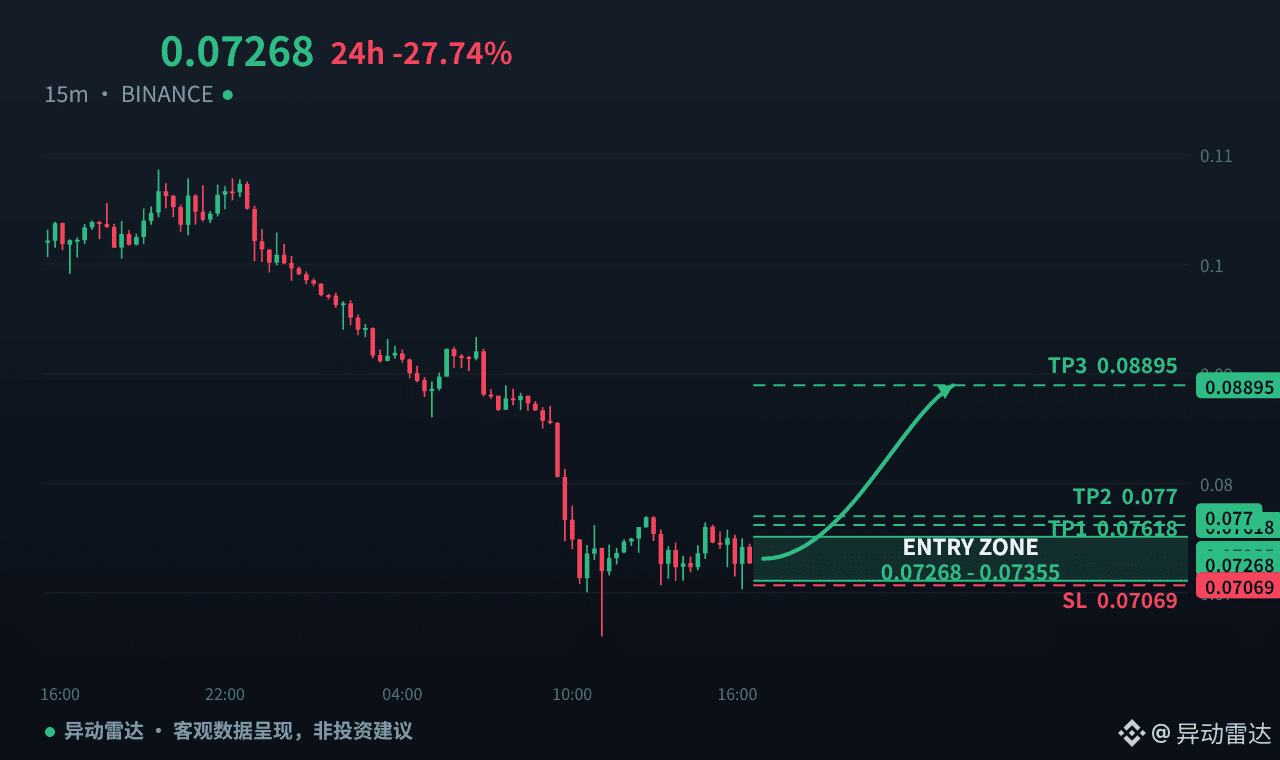
$Lobster Half-hour net buy 3.18 million, volume up to 2.3x
$FOGO half-hour net buy 280k, volume up to 5.2x
💰 Lobster 0.07268 slightly bullish
🟢 Holds above 0.07355
Target 0.07618 / 0.07700 / 0.08895
Stop loss 0.07069
🔴 Breaks below 0.07069
Lower view 0.06600 / 0.06513
🧠 【Qualitative battle from the trader】:The main force uses the large-holder long/short ratio of 1.11 to attempt a long; the active成交比 (active execution ratio) is 0.81, showing that sell orders are taking initiative. In the past ~3.0 hours, the position size is +2.23%. It needs to be maintained to confirm trend continuation. Long and short are still in a tug-of-war; direction is not yet confirmed.
📊 【Candlestick pattern & momentum structure】:Limited data available, so for now treat it as range-bound consolidation; do not pre-judge the structure.
🚀 【Key levels for right-side entries】:Hold above 0.07355 to confirm the right-side signal. Stop loss at 0.07069. Do not enter from the left within the consolidation range.
💡 【Practical execution instructions】:Do not chase longs before it holds with increased volume. Set a stop loss strictly, control position sizing, and refuse to “hold and hope”.
━━━━━━━━━
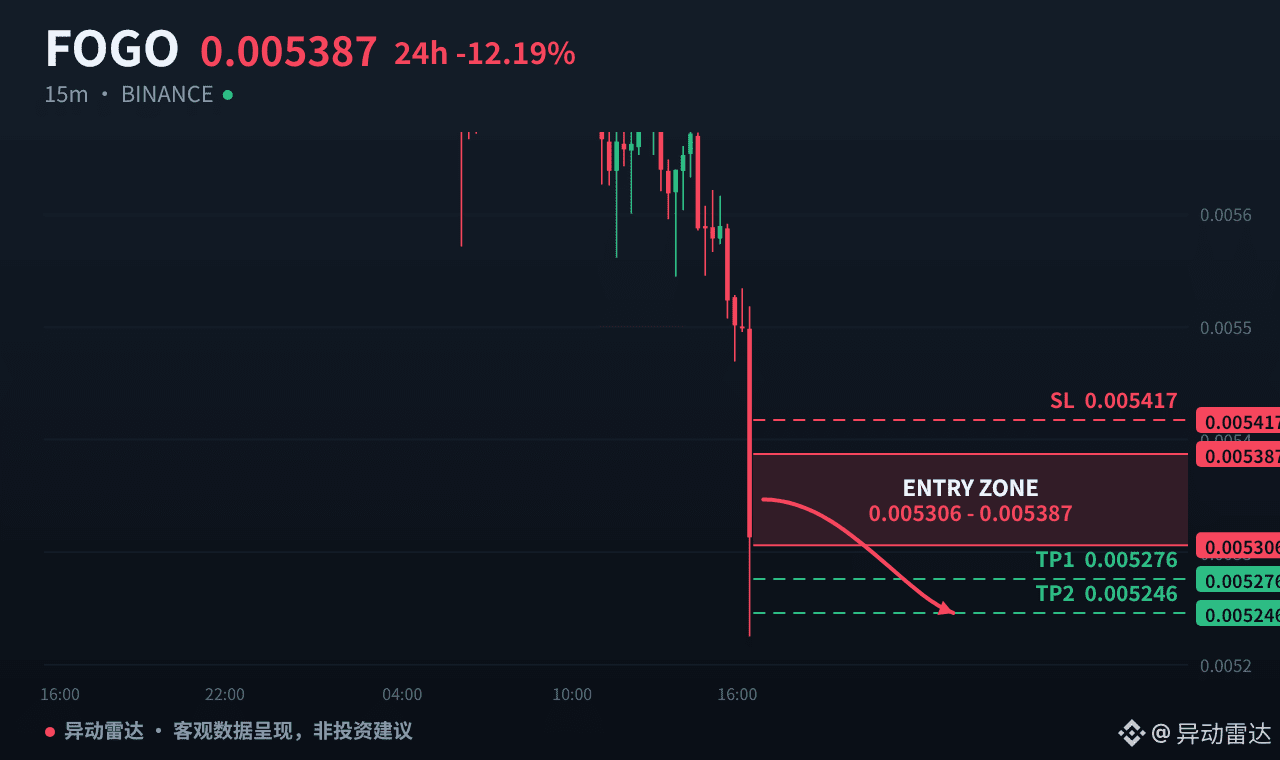
💰 FOGO 0.005387 slightly bearish
🟢 Holds above 0.005417
Target 0.005679 / 0.005731 / 0.005901
Stop loss 0.005306
🔴 Breaks below 0.005306
Lower view 0.005276 / 0.005246
🧠 【Qualitative battle from the trader】:The main force uses the large-holder long/short ratio of 3.31 to apply bearish pressure. The active成交比 is 0.58, indicating that sell orders are taking initiative. In the past ~3.0 hours, the position size is -5.10%. It needs to be maintained to confirm the weakness continuing. Long and short are still in a tug-of-war; direction is not yet confirmed.
📊 【Candlestick pattern & momentum structure】:Limited data available, so for now treat it as range-bound consolidation; do not pre-judge the structure.
🚀 【Key levels for right-side entries】:Break below 0.005306 to confirm the right-side signal. Stop loss at 0.005306. Do not enter from the left within the consolidation range.
💡 【Practical execution instructions】:Do not chase shorts before an effective breakdown. Set a stop loss strictly, control position sizing, and refuse to “hold and hope”.
—
🕒 Data source: 09-28 16:03 (UTC+8) Binance futures market; you can verify it yourself
Objective data presentation, not investment advice—watch for risks.
#龙虾 #FOGO
$Lobster Half-hour net buy 3.18 million, volume up to 2.3x
$FOGO half-hour net buy 280k, volume up to 5.2x
💰 Lobster 0.07268 slightly bullish
🟢 Holds above 0.07355
Target 0.07618 / 0.07700 / 0.08895
Stop loss 0.07069
🔴 Breaks below 0.07069
Lower view 0.06600 / 0.06513
🧠 【Qualitative battle from the trader】:The main force uses the large-holder long/short ratio of 1.11 to attempt a long; the active成交比 (active execution ratio) is 0.81, showing that sell orders are taking initiative. In the past ~3.0 hours, the position size is +2.23%. It needs to be maintained to confirm trend continuation. Long and short are still in a tug-of-war; direction is not yet confirmed.
📊 【Candlestick pattern & momentum structure】:Limited data available, so for now treat it as range-bound consolidation; do not pre-judge the structure.
🚀 【Key levels for right-side entries】:Hold above 0.07355 to confirm the right-side signal. Stop loss at 0.07069. Do not enter from the left within the consolidation range.
💡 【Practical execution instructions】:Do not chase longs before it holds with increased volume. Set a stop loss strictly, control position sizing, and refuse to “hold and hope”.
━━━━━━━━━
💰 FOGO 0.005387 slightly bearish
🟢 Holds above 0.005417
Target 0.005679 / 0.005731 / 0.005901
Stop loss 0.005306
🔴 Breaks below 0.005306
Lower view 0.005276 / 0.005246
🧠 【Qualitative battle from the trader】:The main force uses the large-holder long/short ratio of 3.31 to apply bearish pressure. The active成交比 is 0.58, indicating that sell orders are taking initiative. In the past ~3.0 hours, the position size is -5.10%. It needs to be maintained to confirm the weakness continuing. Long and short are still in a tug-of-war; direction is not yet confirmed.
📊 【Candlestick pattern & momentum structure】:Limited data available, so for now treat it as range-bound consolidation; do not pre-judge the structure.
🚀 【Key levels for right-side entries】:Break below 0.005306 to confirm the right-side signal. Stop loss at 0.005306. Do not enter from the left within the consolidation range.
💡 【Practical execution instructions】:Do not chase shorts before an effective breakdown. Set a stop loss strictly, control position sizing, and refuse to “hold and hope”.
—
🕒 Data source: 09-28 16:03 (UTC+8) Binance futures market; you can verify it yourself
Objective data presentation, not investment advice—watch for risks.
#龙虾 #FOGO
$FOGO half-hour net buy 280k, volume up to 5.2x
💰 Lobster 0.07268 slightly bullish
🟢 Holds above 0.07355
Target 0.07618 / 0.07700 / 0.08895
Stop loss 0.07069
🔴 Breaks below 0.07069
Lower view 0.06600 / 0.06513
🧠 【Qualitative battle from the trader】:The main force uses the large-holder long/short ratio of 1.11 to attempt a long; the active成交比 (active execution ratio) is 0.81, showing that sell orders are taking initiative. In the past ~3.0 hours, the position size is +2.23%. It needs to be maintained to confirm trend continuation. Long and short are still in a tug-of-war; direction is not yet confirmed.
📊 【Candlestick pattern & momentum structure】:Limited data available, so for now treat it as range-bound consolidation; do not pre-judge the structure.
🚀 【Key levels for right-side entries】:Hold above 0.07355 to confirm the right-side signal. Stop loss at 0.07069. Do not enter from the left within the consolidation range.
💡 【Practical execution instructions】:Do not chase longs before it holds with increased volume. Set a stop loss strictly, control position sizing, and refuse to “hold and hope”.
━━━━━━━━━
💰 FOGO 0.005387 slightly bearish
🟢 Holds above 0.005417
Target 0.005679 / 0.005731 / 0.005901
Stop loss 0.005306
🔴 Breaks below 0.005306
Lower view 0.005276 / 0.005246
🧠 【Qualitative battle from the trader】:The main force uses the large-holder long/short ratio of 3.31 to apply bearish pressure. The active成交比 is 0.58, indicating that sell orders are taking initiative. In the past ~3.0 hours, the position size is -5.10%. It needs to be maintained to confirm the weakness continuing. Long and short are still in a tug-of-war; direction is not yet confirmed.
📊 【Candlestick pattern & momentum structure】:Limited data available, so for now treat it as range-bound consolidation; do not pre-judge the structure.
🚀 【Key levels for right-side entries】:Break below 0.005306 to confirm the right-side signal. Stop loss at 0.005306. Do not enter from the left within the consolidation range.
💡 【Practical execution instructions】:Do not chase shorts before an effective breakdown. Set a stop loss strictly, control position sizing, and refuse to “hold and hope”.
—
🕒 Data source: 09-28 16:03 (UTC+8) Binance futures market; you can verify it yourself
Objective data presentation, not investment advice—watch for risks.
#龙虾 #FOGO
15

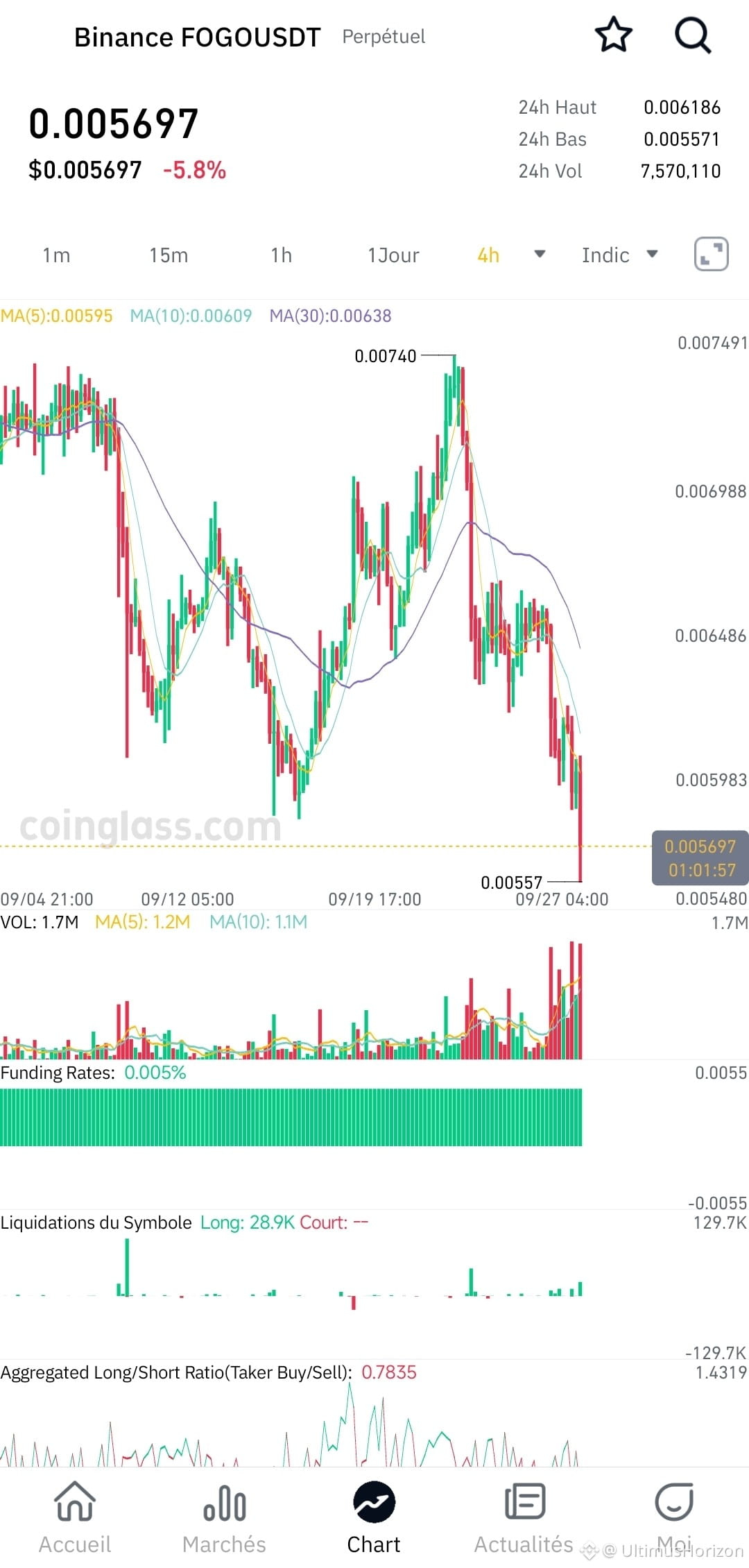
#fogo The project is going through a clear loss of trust phase. The security incident + token unlocks + strong technical sell-off are all factors that heavily weigh on it.
At the moment, it’s closer to a high-risk project that needs very strong evidence (real adoption, greater transparency about the incident, and real usage growth) to regain trust.
Without clear and strong positive catalysts, selling pressure and the downturn may continue in the short to mid term.
In short, my opinion:
The project is not dead, but it is in a defensive and difficult position, and its trust level is low right now. Dealing with it requires extreme caution and strict risk management.
$FOGO
#fogo The project is going through a clear loss of trust phase. The security incident + token unlocks + strong technical sell-off are all factors that heavily weigh on it.
At the moment, it’s closer to a high-risk project that needs very strong evidence (real adoption, greater transparency about the incident, and real usage growth) to regain trust.
Without clear and strong positive catalysts, selling pressure and the downturn may continue in the short to mid term.
In short, my opinion:
The project is not dead, but it is in a defensive and difficult position, and its trust level is low right now. Dealing with it requires extreme caution and strict risk management.
$FOGO
At the moment, it’s closer to a high-risk project that needs very strong evidence (real adoption, greater transparency about the incident, and real usage growth) to regain trust.
Without clear and strong positive catalysts, selling pressure and the downturn may continue in the short to mid term.
In short, my opinion:
The project is not dead, but it is in a defensive and difficult position, and its trust level is low right now. Dealing with it requires extreme caution and strict risk management.
$FOGO

أطيب التمنيات!
From UltimusHorizon
151
·
--
$QNT Today surges 37.7%, with net buys of 65.57 million in half an hour
$FOGO Net buys of 1.09 million in half an hour, and volume expands to 9.3x
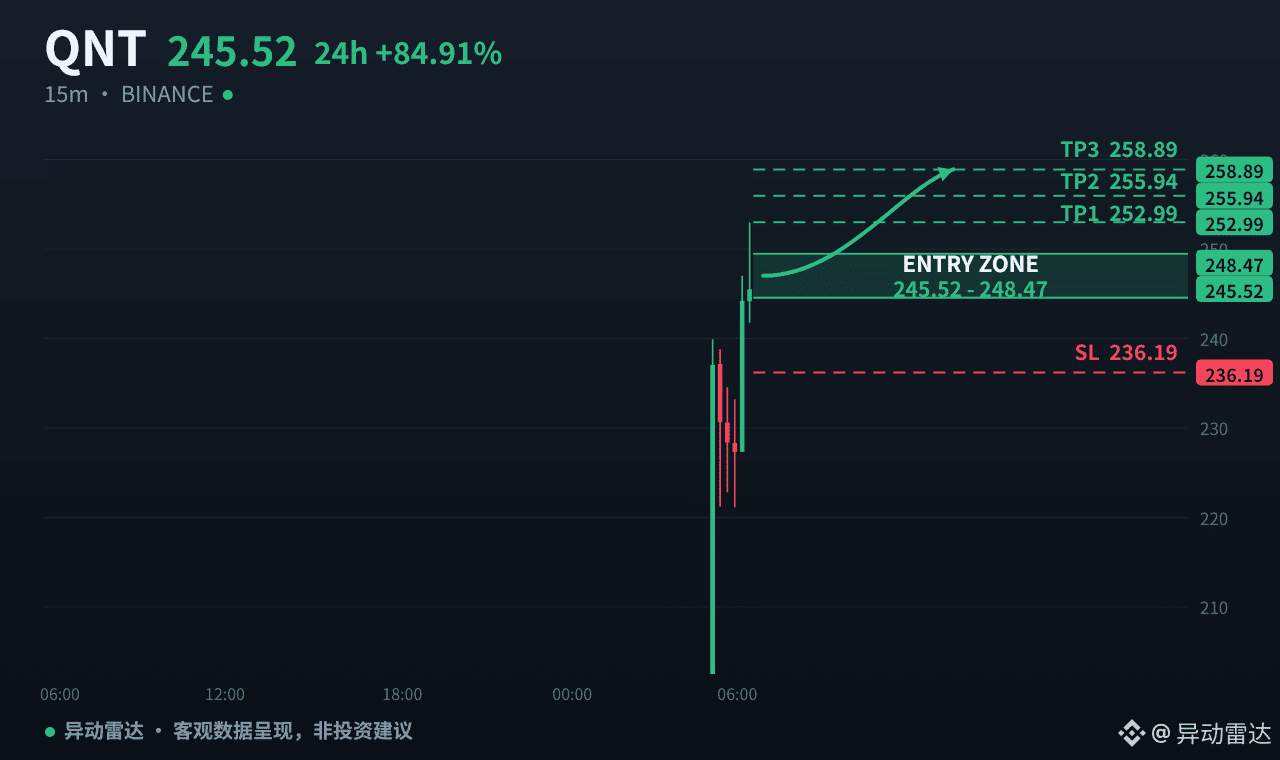
💰 QNT 245.52 BULLISH BIAS
🟢 Hold above 248.47
Targets 252.99 / 255.94 / 258.89
Stop loss 236.19
🔴 Break below 221.13
Watch down to 183.19 / 180.60
🧠 【Trader’s Tug-of-War Qualitative Assessment】: The main force uses the large-holder long/short ratio of 0.51 to attempt a long. The aggressive execution ratio is 1.02, showing a tug-of-war between longs and shorts. Over the past 3.0 hours, the open positions have increased by +22.89%; maintaining this is required to confirm that the trend continues. Longs and shorts are still battling, and the direction has not been confirmed.
📊 【Candlestick Pattern & Momentum Structure】: Limited available data—treat it as range-bound for now; do not pre-judge the structure.
🚀 【Key Price Levels for Right-Side Entries】: If it holds above 248.47, confirm the right-side signal. Stop loss at 236.19. Do not enter from the left side within the consolidation range.
💡 【Practical Trading Execution Instructions】: Do not chase longs before it holds with volume. Strictly place stop loss, control position sizing, and refuse to “hold through” (no averaging down/holding losers).
━━━━━━━━━
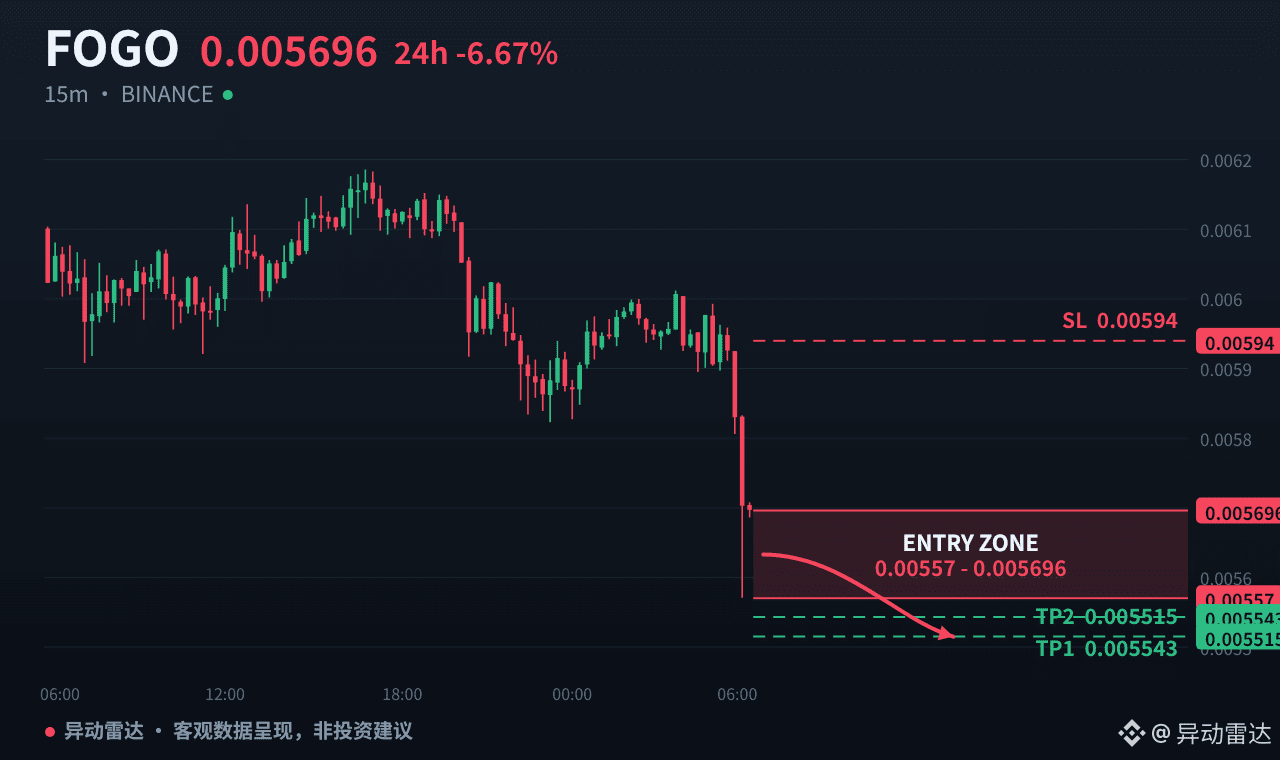
💰 FOGO 0.005696 BEARISH BIAS
🟢 Hold above 0.005724
Targets 0.005940 / 0.005975 / 0.006000
Stop loss 0.005585
🔴 Break below 0.005571
Watch down to 0.005543 / 0.005515
🧠 【Trader’s Tug-of-War Qualitative Assessment】: The large-holder long/short ratio is as high as 3.90, while retail and leveraged longs are blindly catching on the left side near 0.005571. The main force uses a 3.0-hour position-reduction “washing window” of -6.34%, combined with a rapid 5-minute plunge of -3.06% to complete the liquidation for the longs. This is a typical long trap tug-of-war: the high long/short ratio and positive funding rate +0.0050% are currently building up energy for a second leg of liquidation. The main force is precisely harvesting the leveraged positions of those fantasizing about catching the bottom.
📊 【Candlestick Pattern & Momentum Structure】: The half-hour volume surges to 9.3x. Along with a net inflow of 1.0864 million USDT, the passive/active execution ratio is only 0.57, indicating that the huge-volume rebound is entirely a short trap or defensive selling. The current structure is a standard “downtrend continuation” pattern. The 24H drop widens to 6.67%. Above, 0.00594 to 0.006 forms a dense resistance zone like an iron curtain. Volume-price divergence indicates that sellers dominate the order book.
🚀 【Key Price Levels for Right-Side Entries】: The right-side move must come with volume—only after a high-volume break below 0.005571 confirming the downtrend continuation can you chase the short. Set the stop loss locked at 0.00572. Right-side trades only recognize breakout discipline—never guess the bottom. Better to miss than to make a wrong trade.
💡 【Practical Trading Execution Instructions】: Order-book capital flow shows that longs’ resistance is weak. The active execution ratio of 0.57 exposes weak buying. Use a right-side trend-following short strategy: when it breaks below 0.005571, decisively close the position. Stop loss is strictly set at 0.00572. Keep position sizing within 3% of total capital. If it breaks, execute immediately—never hold through. Strictly follow the right-side trading rules like iron.
—
🕒 Data taken from 09-28 06:33 (UTC+8) Binance futures market; you can verify it yourself
Objective data is presented and is not investment advice—watch the risks.
#QNT #FOGO
$QNT Today surges 37.7%, with net buys of 65.57 million in half an hour
$FOGO Net buys of 1.09 million in half an hour, and volume expands to 9.3x
💰 QNT 245.52 BULLISH BIAS
🟢 Hold above 248.47
Targets 252.99 / 255.94 / 258.89
Stop loss 236.19
🔴 Break below 221.13
Watch down to 183.19 / 180.60
🧠 【Trader’s Tug-of-War Qualitative Assessment】: The main force uses the large-holder long/short ratio of 0.51 to attempt a long. The aggressive execution ratio is 1.02, showing a tug-of-war between longs and shorts. Over the past 3.0 hours, the open positions have increased by +22.89%; maintaining this is required to confirm that the trend continues. Longs and shorts are still battling, and the direction has not been confirmed.
📊 【Candlestick Pattern & Momentum Structure】: Limited available data—treat it as range-bound for now; do not pre-judge the structure.
🚀 【Key Price Levels for Right-Side Entries】: If it holds above 248.47, confirm the right-side signal. Stop loss at 236.19. Do not enter from the left side within the consolidation range.
💡 【Practical Trading Execution Instructions】: Do not chase longs before it holds with volume. Strictly place stop loss, control position sizing, and refuse to “hold through” (no averaging down/holding losers).
━━━━━━━━━
💰 FOGO 0.005696 BEARISH BIAS
🟢 Hold above 0.005724
Targets 0.005940 / 0.005975 / 0.006000
Stop loss 0.005585
🔴 Break below 0.005571
Watch down to 0.005543 / 0.005515
🧠 【Trader’s Tug-of-War Qualitative Assessment】: The large-holder long/short ratio is as high as 3.90, while retail and leveraged longs are blindly catching on the left side near 0.005571. The main force uses a 3.0-hour position-reduction “washing window” of -6.34%, combined with a rapid 5-minute plunge of -3.06% to complete the liquidation for the longs. This is a typical long trap tug-of-war: the high long/short ratio and positive funding rate +0.0050% are currently building up energy for a second leg of liquidation. The main force is precisely harvesting the leveraged positions of those fantasizing about catching the bottom.
📊 【Candlestick Pattern & Momentum Structure】: The half-hour volume surges to 9.3x. Along with a net inflow of 1.0864 million USDT, the passive/active execution ratio is only 0.57, indicating that the huge-volume rebound is entirely a short trap or defensive selling. The current structure is a standard “downtrend continuation” pattern. The 24H drop widens to 6.67%. Above, 0.00594 to 0.006 forms a dense resistance zone like an iron curtain. Volume-price divergence indicates that sellers dominate the order book.
🚀 【Key Price Levels for Right-Side Entries】: The right-side move must come with volume—only after a high-volume break below 0.005571 confirming the downtrend continuation can you chase the short. Set the stop loss locked at 0.00572. Right-side trades only recognize breakout discipline—never guess the bottom. Better to miss than to make a wrong trade.
💡 【Practical Trading Execution Instructions】: Order-book capital flow shows that longs’ resistance is weak. The active execution ratio of 0.57 exposes weak buying. Use a right-side trend-following short strategy: when it breaks below 0.005571, decisively close the position. Stop loss is strictly set at 0.00572. Keep position sizing within 3% of total capital. If it breaks, execute immediately—never hold through. Strictly follow the right-side trading rules like iron.
—
🕒 Data taken from 09-28 06:33 (UTC+8) Binance futures market; you can verify it yourself
Objective data is presented and is not investment advice—watch the risks.
#QNT #FOGO
$FOGO Net buys of 1.09 million in half an hour, and volume expands to 9.3x
💰 QNT 245.52 BULLISH BIAS
🟢 Hold above 248.47
Targets 252.99 / 255.94 / 258.89
Stop loss 236.19
🔴 Break below 221.13
Watch down to 183.19 / 180.60
🧠 【Trader’s Tug-of-War Qualitative Assessment】: The main force uses the large-holder long/short ratio of 0.51 to attempt a long. The aggressive execution ratio is 1.02, showing a tug-of-war between longs and shorts. Over the past 3.0 hours, the open positions have increased by +22.89%; maintaining this is required to confirm that the trend continues. Longs and shorts are still battling, and the direction has not been confirmed.
📊 【Candlestick Pattern & Momentum Structure】: Limited available data—treat it as range-bound for now; do not pre-judge the structure.
🚀 【Key Price Levels for Right-Side Entries】: If it holds above 248.47, confirm the right-side signal. Stop loss at 236.19. Do not enter from the left side within the consolidation range.
💡 【Practical Trading Execution Instructions】: Do not chase longs before it holds with volume. Strictly place stop loss, control position sizing, and refuse to “hold through” (no averaging down/holding losers).
━━━━━━━━━
💰 FOGO 0.005696 BEARISH BIAS
🟢 Hold above 0.005724
Targets 0.005940 / 0.005975 / 0.006000
Stop loss 0.005585
🔴 Break below 0.005571
Watch down to 0.005543 / 0.005515
🧠 【Trader’s Tug-of-War Qualitative Assessment】: The large-holder long/short ratio is as high as 3.90, while retail and leveraged longs are blindly catching on the left side near 0.005571. The main force uses a 3.0-hour position-reduction “washing window” of -6.34%, combined with a rapid 5-minute plunge of -3.06% to complete the liquidation for the longs. This is a typical long trap tug-of-war: the high long/short ratio and positive funding rate +0.0050% are currently building up energy for a second leg of liquidation. The main force is precisely harvesting the leveraged positions of those fantasizing about catching the bottom.
📊 【Candlestick Pattern & Momentum Structure】: The half-hour volume surges to 9.3x. Along with a net inflow of 1.0864 million USDT, the passive/active execution ratio is only 0.57, indicating that the huge-volume rebound is entirely a short trap or defensive selling. The current structure is a standard “downtrend continuation” pattern. The 24H drop widens to 6.67%. Above, 0.00594 to 0.006 forms a dense resistance zone like an iron curtain. Volume-price divergence indicates that sellers dominate the order book.
🚀 【Key Price Levels for Right-Side Entries】: The right-side move must come with volume—only after a high-volume break below 0.005571 confirming the downtrend continuation can you chase the short. Set the stop loss locked at 0.00572. Right-side trades only recognize breakout discipline—never guess the bottom. Better to miss than to make a wrong trade.
💡 【Practical Trading Execution Instructions】: Order-book capital flow shows that longs’ resistance is weak. The active execution ratio of 0.57 exposes weak buying. Use a right-side trend-following short strategy: when it breaks below 0.005571, decisively close the position. Stop loss is strictly set at 0.00572. Keep position sizing within 3% of total capital. If it breaks, execute immediately—never hold through. Strictly follow the right-side trading rules like iron.
—
🕒 Data taken from 09-28 06:33 (UTC+8) Binance futures market; you can verify it yourself
Objective data is presented and is not investment advice—watch the risks.
#QNT #FOGO
32
Log in to explore more content
Join global crypto users on Binance Square
⚡️ Get latest and useful information about crypto.
💬 Trusted by the world’s largest crypto exchange.
👍 Discover real insights from verified creators.
Email / Phone number
Trending Topics
1
#GoldFallsTo$4144
1,320 views
39 Discussing
2
#QNTFallsOver40%FromMorningHigh
9,177 views
324 Discussing
3
#KospiFalls2.7%SamsungSKHynixDropOver5%
601 views
93 Discussing
4
#BitgetCEOConfirms$388MStolenInHack
451 views
19 Discussing
5
#BTCFallsBelow$83000
10,539 views
100 Discussing
6
#BitgetDetailsSecurityIncidentTimeline
8,112 views
256 Discussing
7
#BitcoinSpotETFs$2.39BWeeklyNetInflow
3,652 views
22 Discussing
8
#FedProposesPaymentStablecoinRules
34,138 views
618 Discussing
9
#ChinaMayLetAlibabaByteDanceBuyNvidiaChips
35,863 views
657 Discussing
10
#USChinaRelease$30BTariffCutProductLists
3,434 views
51 Discussing