
#crashgold2026
crashgold2026
715 views
5 Discussing
Hot
Latest

·
--

Article
GOLD UNDER MACRO PRESSURE: WHAT IS REALLY DRIVING THE MARKET?Gold is not simply a safe-haven asset. Its valuation reflects the interaction between monetary policy, real interest rates, currency movements, and global capital allocation.
Over the August–October 2026 observation window, these are the four dimensions that matter when assessing the next phase of the gold market.
1. REAL INTEREST RATES: THE OPPORTUNITY COST
US Treasury Inflation-Protected Securities (TIPS) provide an important benchmark for measuring real yields.
Gold offers no contractual interest income. Consequently, rising real yields can increase the opportunity cost of holding bullion, while declining real yields may improve its relative attractiveness.
The relationship is economically relevant, although it is not mechanically inverse at every point in time.
2. US DOLLAR: THE CURRENCY CHANNEL
Gold is internationally quoted in US dollars.
Dollar appreciation can create additional pressure on gold by increasing its cost for non-US buyers. However, currency movements must be assessed alongside real yields and global risk conditions.
3. INVESTMENT FLOWS: FOLLOWING CAPITAL
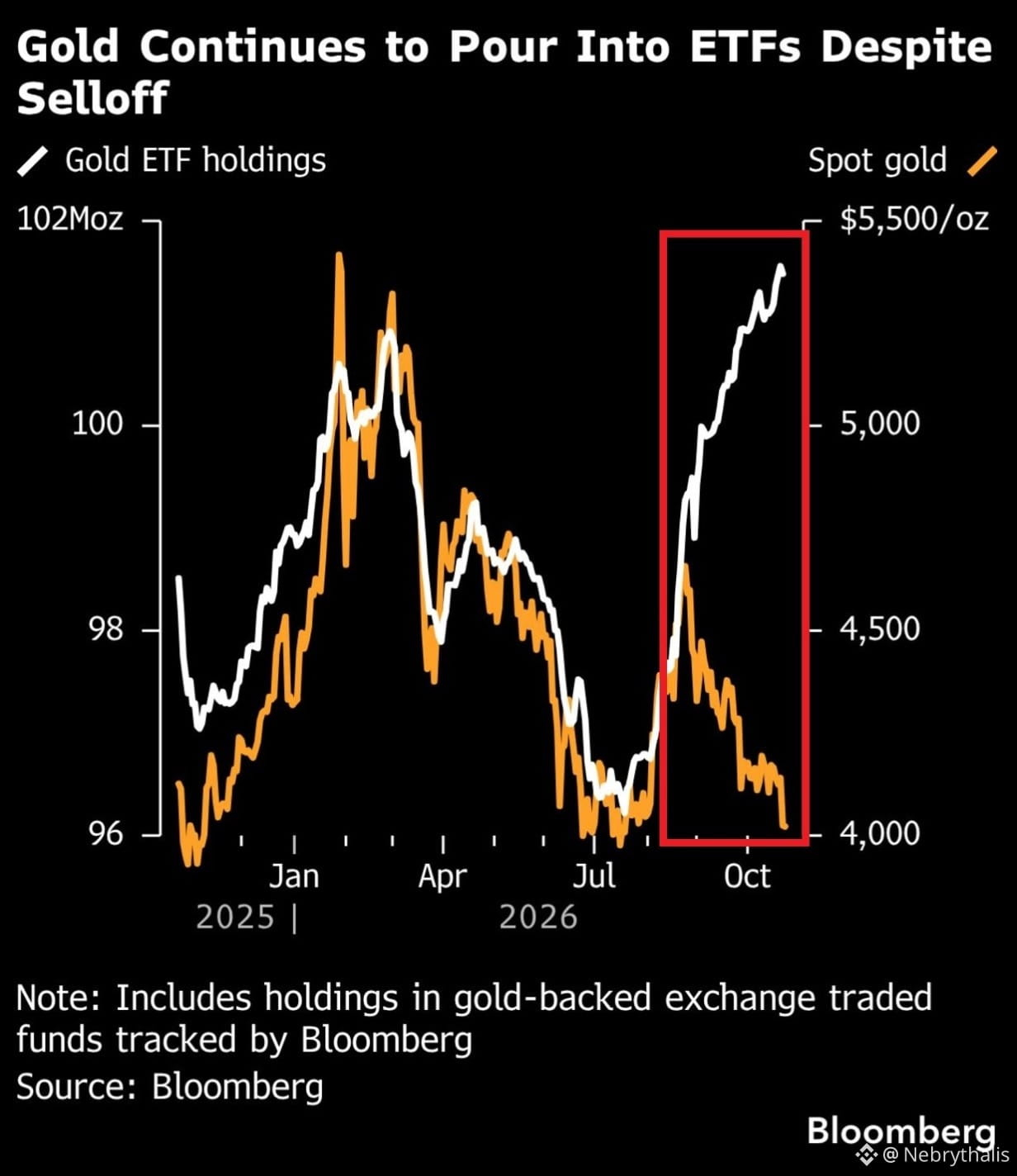
Gold-backed ETF flows provide insight into financial investor positioning.
Unlike price momentum alone, these flows help assess whether institutional investment demand is expanding or contracting.
Central-bank purchases represent another important demand component, although their reporting frequency and timing differ from daily market activity.
4. MONETARY POLICY: THE EXPECTATIONS FACTOR
Markets do not respond exclusively to current interest rates. They continuously reprice expectations about future Federal Reserve policy.
Inflation persistence, employment conditions, Treasury yields, and monetary policy communication can all influence the expected path of real rates.
MARKET IMPLICATION
The critical question is whether monetary conditions are becoming more restrictive or more accommodative for non-yielding assets.
For XAUUSD, the 3,818.50 level remains a reference in my previous bearish outlook.
A sustained break below that area would strengthen the downside scenario. Conversely, a strong recovery and reclaim would require reassessing the bearish thesis.
CONCLUSION
Gold's next major move should be evaluated through the interaction of monetary conditions, currency strength, and investment demand.
Price action identifies the market's direction. Macroeconomic data helps explain the forces behind it.
Research first. Position second.
— NEBRYTHALIS
Sources for empirical verification:
Federal Reserve | FRED | US Treasury | World Gold Council | ICE
$XAUT $BTC $ETH
#CrashGold2026 #Macroeconomic #Bankcentral #ETFGOLD #Binancesystemcrash
GOLD UNDER MACRO PRESSURE: WHAT IS REALLY DRIVING THE MARKET?
Gold is not simply a safe-haven asset. Its valuation reflects the interaction between monetary policy, real interest rates, currency movements, and global capital allocation.
Over the August–October 2026 observation window, these are the four dimensions that matter when assessing the next phase of the gold market.
1. REAL INTEREST RATES: THE OPPORTUNITY COST
US Treasury Inflation-Protected Securities (TIPS) provide an important benchmark for measuring real yields.
Gold offers no contractual interest income. Consequently, rising real yields can increase the opportunity cost of holding bullion, while declining real yields may improve its relative attractiveness.
The relationship is economically relevant, although it is not mechanically inverse at every point in time.
2. US DOLLAR: THE CURRENCY CHANNEL
Gold is internationally quoted in US dollars.
Dollar appreciation can create additional pressure on gold by increasing its cost for non-US buyers. However, currency movements must be assessed alongside real yields and global risk conditions.
3. INVESTMENT FLOWS: FOLLOWING CAPITAL
Gold-backed ETF flows provide insight into financial investor positioning.
Unlike price momentum alone, these flows help assess whether institutional investment demand is expanding or contracting.
Central-bank purchases represent another important demand component, although their reporting frequency and timing differ from daily market activity.
4. MONETARY POLICY: THE EXPECTATIONS FACTOR
Markets do not respond exclusively to current interest rates. They continuously reprice expectations about future Federal Reserve policy.
Inflation persistence, employment conditions, Treasury yields, and monetary policy communication can all influence the expected path of real rates.
MARKET IMPLICATION
The critical question is whether monetary conditions are becoming more restrictive or more accommodative for non-yielding assets.
For XAUUSD, the 3,818.50 level remains a reference in my previous bearish outlook.
A sustained break below that area would strengthen the downside scenario. Conversely, a strong recovery and reclaim would require reassessing the bearish thesis.
CONCLUSION
Gold's next major move should be evaluated through the interaction of monetary conditions, currency strength, and investment demand.
Price action identifies the market's direction. Macroeconomic data helps explain the forces behind it.
Research first. Position second.
— NEBRYTHALIS
Sources for empirical verification:
Federal Reserve | FRED | US Treasury | World Gold Council | ICE
$XAUT $BTC $ETH
#CrashGold2026 #Macroeconomic #Bankcentral #ETFGOLD #Binancesystemcrash
1
267
·
--
$XAU $XAUT | THE 3,818.50 PRICE TEST
The 3,818.50 level is an important reference in my previous outlook. However, reaching this level does not automatically confirm further downside.
Here's what matters:
1. Bearish continuation
A decisive candle close below 3,818.50, followed by a failed attempt to reclaim the level, could indicate further downside pressure.
2. Potential recovery
If buyers defend the area and price closes back above 3,818.50, a short-term recovery becomes a scenario worth monitoring.
3. No confirmation
If price moves sideways around this level, patience remains the better approach.
My strategy: Watch the reaction, wait for confirmation, and manage risk.
One level. Two possible scenarios. No forced predictions.
What do you expect next?
Share your reasoning below.
#CrashGold2026 #ETFGOLD
A. Bullish recovery
B. Bearish continuation
C. SlapCZ 😂
5 day(s) left
2
2k
·
--
Bearish
30D trade $XAU 158.5 USDT
$XAU $XAUT | Gold Market Outlook
Gold is showing signs of bearish pressure, with 3,818.50 emerging as a key downside level to watch.
The focus now is price reaction:
• A decisive break below 3,818.50 could extend the bearish move. • A strong rejection could trigger a short-term recovery. • Until bullish structure returns, downside risk remains relevant.
My view: Cautiously bearish. Confirmation before execution.
The market rewards patience, not prediction.
#CrashGold2026
213
Log in to explore more content
Join global crypto users on Binance Square
⚡️ Get latest and useful information about crypto.
💬 Trusted by the world’s largest crypto exchange.
👍 Discover real insights from verified creators.
Email / Phone number
Trending Topics
1
#BinanceRestores28FiatWithdrawals
25,958 views
496 Discussing
2
#BinanceProcesses$4.65BWithdrawals
72,180 views
312 Discussing
3
#HKMALaunchesSAGEAgenticFinanceProject
0 views
7 Discussing
4
#ETHFalls16.1%InOctober
6,290 views
175 Discussing
5
#BitcoinETFsSee$643MOutflowLargestSinceJune
59 views
8 Discussing
6
#SouthKoreaPlans11%TaxOnUSStockPerpetualFutures
190 views
27 Discussing
7
#BitcoinClosesAbove50WeekMAFor7thStraightWeek
9,241 views
170 Discussing
8
#HongKongEnablesRoundTheClockTokenizedSettlement
602 views
34 Discussing
9
#IndiaRBIAndFIUReviewOverseasCryptoCards
1,548 views
46 Discussing
10
#BitcoinSpotETFsPost$203MWeeklyOutflow
7,373 views
49 Discussing