
#btcvn4
btcvn4
7,232 views
9 Discussing
Hot
Latest

·
--
Article
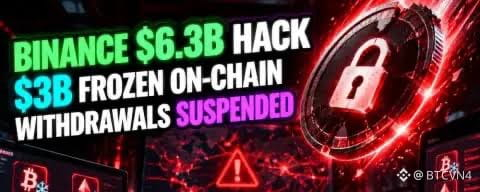
WARNING: BINANCE HAS ADDRESSED THE INCIDENT, BUT A $3 BILLION TIME BOMB IS STILL TICKING!BTCVN4 | MARKET WARNING
Following a shocking security breach involving an estimated $6.3 billion in stolen assets, Binance has taken corrective measures, allocated financial resources to protect users, and begun restoring its operations.
However, in my opinion, we should not rush to conclude that the crisis is over.
Behind this incident, one major risk remains: More than $3 billion in assets are reportedly still under the hackers’ control and have not yet been frozen.
This could become one of the most significant potential sources of selling pressure facing the crypto market in the coming days.
1. Binance Has Addressed the Financial Damage, But Hackers Still Control Massive Amounts of Asset
According to figures reported during the investigation:
Estimated total value of stolen assets: approximately $6.3 billion.Assets reportedly frozen: approximately $3 billion.Assets still controlled by hackers: approximately $3.1–$3.3 billion.Binance has allocated financial resources to protect and compensate affected users.
This highlights two critical issues that must be distinguished:
First: Binance’s financial ability to protect its customers.
Second: The ability to recover the assets stolen by hackers.
Binance may use its own financial resources to compensate users, but that does not mean the remaining stolen assets have disappeared.
And this is precisely what we need to pay attention to.
2. The Real Time Bomb: Billions of Dollars in BTC and ETH Still Held by Hackers
According to publicly reported on-chain analysis, the remaining assets include:
Approximately 18,270 BTC, worth an estimated $1.43 billion.Approximately 511,861 ETH, worth an estimated $1.15 billion.The remaining value consists of other crypto assets.
This is what concerns me the most.
Why?
Because USDT and USDC have mechanisms that allow their issuers to freeze specific addresses under applicable circumstances.
BTC and ETH, on the other hand, are decentralized assets. There is no central issuer that can unilaterally freeze the hackers’ entire balances.
This makes preventing the movement and recovering these assets significantly more difficult.
Hackers could potentially:
Sell directly through cryptocurrency exchanges.Transfer assets through OTC brokers.Distribute funds across multiple wallets.Use cross-chain protocols in attempts to obscure transaction trails.
We must understand that transferring assets does not necessarily mean selling them. However, if these BTC and ETH holdings begin to be liquidated, the market could face significant selling pressure.
3. What Happens If Hackers Start Dumping Their Assets?
I see three scenarios worth monitoring.
SCENARIO 1: Hackers Continue Holding Their Assets
If the hackers’ wallets remain largely inactive, immediate selling pressure may not materialize.
The market could gradually stabilize as Binance restores its operations and investor confidence improves.
SCENARIO 2: Hackers Gradually Liquidate Their Assets
If hackers use OTC transactions or distribute their holdings into smaller transactions, the market could experience prolonged selling pressure.
This may be the hardest scenario to detect because it does not necessarily trigger an immediate crash. Instead, it could gradually weaken BTC and ETH recovery attempts.
SCENARIO 3: Hackers Dump Large Amounts of BTC and ETH
This is the most concerning scenario.
If significant amounts of BTC and ETH enter the market within a short period, especially during periods of weak liquidity, we could witness:
Direct selling pressure on BTC.Significant supply pressure on ETH.Broad weakness across altcoins.Liquidations of leveraged long positions.Panic-driven selling and capital outflows from the market.
The biggest danger is not just the amount of BTC and ETH being sold, but the cascading effect when leveraged positions are liquidated one after another.
4. Could Altseason 2026 Be Delayed Again?
This is something I particularly want to warn the community about.
We have been anticipating a capital rotation from BTC into ETH and altcoins during the 2026 cycle.
However, for a genuine Altseason to take place, the market needs stable liquidity, investor confidence, and a healthy risk appetite.
An event like the Binance hack could disrupt this process.
If hackers begin liquidating their remaining assets, the market could face another wave of corrections.
In particular, altcoins with lower liquidity and high leverage exposure could be hit harder than BTC.
Therefore, I believe we should not rush to declare that Altseason 2026 has officially begun based solely on a few short-term recovery rallies.
5. What Signals Will BTCVN4 Be Monitoring?
Over the coming days, I will be paying close attention to five key indicators:
Hackers’ Wallets: Are there unusual transfers of BTC and ETH to cryptocurrency exchanges?BTC and ETH Exchange Flows: Are exchange inflows increasing abnormally?Trading Volume: Are price declines accompanied by rising selling volume?Funding Rates and Open Interest: Are we seeing widespread deleveraging across the market?Binance: Are withdrawal services, system operations, and Proof of Reserves reporting being restored consistently?
Most importantly, I will not automatically interpret transfers to new wallets as selling activity. We need confirmation from actual on-chain data before drawing conclusions.
6. My Strategy During This Critical Period
I do not believe this is the time to panic-sell every asset.
However, it is also not the right moment to become overly confident and aggressively increase altcoin exposure.
A few important principles:
Limit the use of leverage.Maintain a reasonable cash allocation.Avoid rushing into dip-buying before capital flows stabilize.Monitor BTC and ETH closely before increasing altcoin exposure.Diversify asset storage and avoid relying entirely on a single exchange.
A good investment opportunity does not always need to be bought immediately. Sometimes, protecting capital and waiting for clearer confirmation is the most important decision.
FINAL THOUGHT: DON’T UNDERESTIMATE THE $3 BILLION TIME BOMB!
Binance may have addressed much of the immediate financial risk associated with compensating affected customers.
But the story is not over.
More than $3 billion in assets are reportedly still under the hackers’ control. If these holdings are liquidated, they could trigger a major supply shock and negatively affect the entire crypto market.
I am not claiming that BTC will definitely crash or that Altseason 2026 is over.
But I want the community to understand one thing:
The biggest risk right now is not just the hack that has already happened, but what hackers might do with the assets that have not yet been recovered.
Don’t let expectations of an upcoming Altseason blind you to the market’s warning signals.
Follow the money, manage your risks, and protect your investment gains.
#BTCVN4 – Stay Alert, Protect Your Capital!
#BTC☀ #Binance #Ethereum #CryptoMarket
{future}(BTCUSDT)
{future}(ETHUSDT)
{future}(INJUSDT)
WARNING: BINANCE HAS ADDRESSED THE INCIDENT, BUT A $3 BILLION TIME BOMB IS STILL TICKING!
BTCVN4 | MARKET WARNING
Following a shocking security breach involving an estimated $6.3 billion in stolen assets, Binance has taken corrective measures, allocated financial resources to protect users, and begun restoring its operations.
However, in my opinion, we should not rush to conclude that the crisis is over.
Behind this incident, one major risk remains: More than $3 billion in assets are reportedly still under the hackers’ control and have not yet been frozen.
This could become one of the most significant potential sources of selling pressure facing the crypto market in the coming days.
1. Binance Has Addressed the Financial Damage, But Hackers Still Control Massive Amounts of Asset
According to figures reported during the investigation:
Estimated total value of stolen assets: approximately $6.3 billion.Assets reportedly frozen: approximately $3 billion.Assets still controlled by hackers: approximately $3.1–$3.3 billion.Binance has allocated financial resources to protect and compensate affected users.
This highlights two critical issues that must be distinguished:
First: Binance’s financial ability to protect its customers.
Second: The ability to recover the assets stolen by hackers.
Binance may use its own financial resources to compensate users, but that does not mean the remaining stolen assets have disappeared.
And this is precisely what we need to pay attention to.
2. The Real Time Bomb: Billions of Dollars in BTC and ETH Still Held by Hackers
According to publicly reported on-chain analysis, the remaining assets include:
Approximately 18,270 BTC, worth an estimated $1.43 billion.Approximately 511,861 ETH, worth an estimated $1.15 billion.The remaining value consists of other crypto assets.
This is what concerns me the most.
Why?
Because USDT and USDC have mechanisms that allow their issuers to freeze specific addresses under applicable circumstances.
BTC and ETH, on the other hand, are decentralized assets. There is no central issuer that can unilaterally freeze the hackers’ entire balances.
This makes preventing the movement and recovering these assets significantly more difficult.
Hackers could potentially:
Sell directly through cryptocurrency exchanges.Transfer assets through OTC brokers.Distribute funds across multiple wallets.Use cross-chain protocols in attempts to obscure transaction trails.
We must understand that transferring assets does not necessarily mean selling them. However, if these BTC and ETH holdings begin to be liquidated, the market could face significant selling pressure.
3. What Happens If Hackers Start Dumping Their Assets?
I see three scenarios worth monitoring.
SCENARIO 1: Hackers Continue Holding Their Assets
If the hackers’ wallets remain largely inactive, immediate selling pressure may not materialize.
The market could gradually stabilize as Binance restores its operations and investor confidence improves.
SCENARIO 2: Hackers Gradually Liquidate Their Assets
If hackers use OTC transactions or distribute their holdings into smaller transactions, the market could experience prolonged selling pressure.
This may be the hardest scenario to detect because it does not necessarily trigger an immediate crash. Instead, it could gradually weaken BTC and ETH recovery attempts.
SCENARIO 3: Hackers Dump Large Amounts of BTC and ETH
This is the most concerning scenario.
If significant amounts of BTC and ETH enter the market within a short period, especially during periods of weak liquidity, we could witness:
Direct selling pressure on BTC.Significant supply pressure on ETH.Broad weakness across altcoins.Liquidations of leveraged long positions.Panic-driven selling and capital outflows from the market.
The biggest danger is not just the amount of BTC and ETH being sold, but the cascading effect when leveraged positions are liquidated one after another.
4. Could Altseason 2026 Be Delayed Again?
This is something I particularly want to warn the community about.
We have been anticipating a capital rotation from BTC into ETH and altcoins during the 2026 cycle.
However, for a genuine Altseason to take place, the market needs stable liquidity, investor confidence, and a healthy risk appetite.
An event like the Binance hack could disrupt this process.
If hackers begin liquidating their remaining assets, the market could face another wave of corrections.
In particular, altcoins with lower liquidity and high leverage exposure could be hit harder than BTC.
Therefore, I believe we should not rush to declare that Altseason 2026 has officially begun based solely on a few short-term recovery rallies.
5. What Signals Will BTCVN4 Be Monitoring?
Over the coming days, I will be paying close attention to five key indicators:
Hackers’ Wallets: Are there unusual transfers of BTC and ETH to cryptocurrency exchanges?BTC and ETH Exchange Flows: Are exchange inflows increasing abnormally?Trading Volume: Are price declines accompanied by rising selling volume?Funding Rates and Open Interest: Are we seeing widespread deleveraging across the market?Binance: Are withdrawal services, system operations, and Proof of Reserves reporting being restored consistently?
Most importantly, I will not automatically interpret transfers to new wallets as selling activity. We need confirmation from actual on-chain data before drawing conclusions.
6. My Strategy During This Critical Period
I do not believe this is the time to panic-sell every asset.
However, it is also not the right moment to become overly confident and aggressively increase altcoin exposure.
A few important principles:
Limit the use of leverage.Maintain a reasonable cash allocation.Avoid rushing into dip-buying before capital flows stabilize.Monitor BTC and ETH closely before increasing altcoin exposure.Diversify asset storage and avoid relying entirely on a single exchange.
A good investment opportunity does not always need to be bought immediately. Sometimes, protecting capital and waiting for clearer confirmation is the most important decision.
FINAL THOUGHT: DON’T UNDERESTIMATE THE $3 BILLION TIME BOMB!
Binance may have addressed much of the immediate financial risk associated with compensating affected customers.
But the story is not over.
More than $3 billion in assets are reportedly still under the hackers’ control. If these holdings are liquidated, they could trigger a major supply shock and negatively affect the entire crypto market.
I am not claiming that BTC will definitely crash or that Altseason 2026 is over.
But I want the community to understand one thing:
The biggest risk right now is not just the hack that has already happened, but what hackers might do with the assets that have not yet been recovered.
Don’t let expectations of an upcoming Altseason blind you to the market’s warning signals.
Follow the money, manage your risks, and protect your investment gains.
#BTCVN4 – Stay Alert, Protect Your Capital!
#BTC☀ #Binance #Ethereum #CryptoMarket
CAM CM:
🌹🌹🌹
1
7
1.1k
·
--
Article
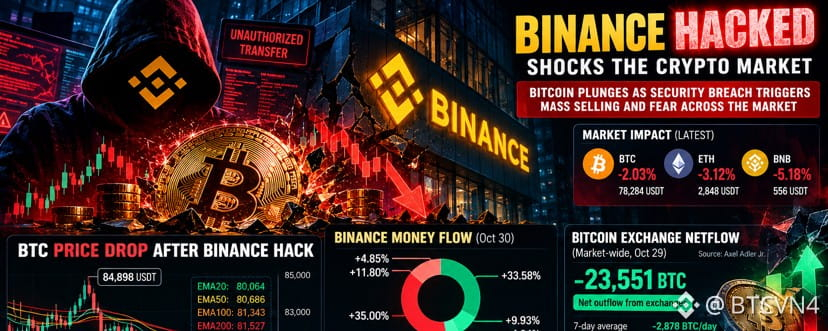
BITCOIN SUDDENLY PLUNGES FOLLOWING THE BINANCE HACK – WHAT ARE THE MONEY FLOWS TELLING US?First of all, BTCVN4 would like to sincerely apologize to the community for the assessment shared in the previous analysis.
In my previous post, I assessed that BTC was in an accumulation phase, with selling pressure showing signs of being absorbed and a relatively high possibility of a new upward move.
That assessment was based on the money flow data available at the time, when large orders on Binance were still showing net buying activity and BTC was maintaining a relatively stable trading range.
However, the serious hacking incident at Binance itself triggered a major shock to market sentiment and selling pressure that I had completely failed to anticipate.
BTCVN4 takes responsibility for an assessment that did not fully account for the risks of such an extraordinary event. I sincerely apologize if my previous analysis created expectations that did not align with actual market developments.
In investing, the most important thing is not to always make the right predictions, but to remain honest with the data and be willing to adjust our views when market conditions change.
Now, let’s take a closer look at what is happening with Bitcoin.
1. MONEY FLOWS HAVE REVERSED: SELLING PRESSURE IS DOMINATING
According to the Binance and OKX data on October 30, BTC was trading around 78,284 USDT.
Three points are particularly noteworthy:
Total selling volume exceeded buying volume by approximately 2,015 BTC.Large orders shifted to net selling, with 873 BTC in net outflows.Medium-sized orders recorded more than 1,139 BTC in net selling.
This shows that money flow conditions have changed significantly in a relatively short period.
It is a clear signal that selling pressure is increasing and market sentiment has deteriorated considerably.
2. BTC MONEY FLOWS ACROSS THE MARKET: AN INTERESTING DIFFERENCE
According to aggregated on-chain data as of October 29:
Daily Netflow: approximately -23,551 BTC.7-day average: approximately -2,878 BTC per day.30-day average: approximately -849 BTC per day.
A negative netflow means that more BTC is being withdrawn from exchanges than deposited, based on the dataset being tracked.
This is an important signal because it does not suggest that the entire market is rushing to deposit BTC onto exchanges for a massive sell-off.
It indicates that the current market situation is much more complicated than simply looking at the decline in BTC’s price.
3. HOW HAS THE BINANCE HACK AFFECTED MARKET SENTIMENT?
A serious security incident at a major exchange like Binance does not only affect assets directly associated with the exchange.
It can also trigger three major ripple effects:
First: Panic and fear.
Investors become concerned about the safety of assets held on centralized exchanges. As a result, they may reduce their risk exposure and sell assets to move into cash or alternative storage solutions.
Second: Liquidity pressure.
When Binance needs to conduct security investigations or temporarily suspend certain deposit and withdrawal services, asset transfers may be disrupted. This can make the market more sensitive to unusual price movements.
Third: Contagion effect.
In the crypto market, sentiment is highly interconnected. An incident involving Binance can undermine investor confidence in the entire crypto market, including assets that are not directly related to the incident.
In my view, this is precisely what makes the current BTC decline different from an ordinary technical correction.
4. TECHNICAL ANALYSIS: BTC HAS LOST ITS SHORT-TERM BULLISH STRUCTURE
BTC Price: approximately 78,284 USDT.EMA20: 80,064 USDT.EMA50: 80,686 USDT.EMA100: 81,343 USDT.EMA200: 81,527 USDT.RSI(6): 32.35.RSI(12): 36.84.RSI(24): 40.04.MACD: -264.39.
Currently, BTC is trading below all major EMA indicators on the 4-hour timeframe.
The negative MACD and weakening RSI indicate that bearish momentum is dominating.
However, BTC has formed a lower candle wick around 76,500 USDT before recovering to approximately 78,300 USDT.
This suggests that buying demand has emerged at lower price levels, but there is not yet enough evidence to confirm that a bottom has formed.
5. KEY PRICE LEVELS TO WATCH
76,500–77,000 USDT: Important Support Zone
If BTC manages to hold this area, the market still has a chance to stabilize following the shock.
79,700–80,100 USDT: First Recovery Zone
BTC needs to reclaim this area to improve its short-term price structure.
80,600–81,500 USDT: Strong Resistance Zone
This area contains the EMA50, EMA100, and EMA200 levels. If BTC recovers toward this zone, trading volume and buying pressure will need to be closely monitored.
84,900 USDT: Further Recovery Target
This level should only be considered if BTC successfully reclaims the lower resistance zones and an upward trend is confirmed.
6. THREE POSSIBLE SCENARIOS FOR BTC IN THE COMING PERIOD
Scenario 1 – Recovery After the Shock
BTC holds the 76,500–77,000 USDT zone, selling pressure gradually decreases, large orders return to net buying, and the price reclaims 80,000 USDT.
In this case, the decline could be viewed as a strong reaction to the incident, followed by a gradual market recovery.
Scenario 2 – Continued Accumulation Within a Wide Range
BTC fluctuates between 76,500 and 80,000 USDT.
Investors need more time to rebuild confidence, while the market needs to absorb the additional supply generated by the incident.
Scenario 3 – Further Downside Correction
BTC breaks below 76,500 USDT, selling pressure continues to dominate, and buying demand proves insufficient to drive a recovery.
In this situation, investors should remain cautious about the possibility of a deeper correction.
7. BTCVN4’S PERSONAL CONCLUSION: SEPARATE EVENT-DRIVEN RISKS FROM THE LONG-TERM MARKET TREND
BTCVN4 still believes that we should not equate a security incident at Binance with a fundamental breakdown of the entire crypto market.
However, this incident has significantly changed the short-term market environment. My previous assessment that BTC was accumulating ahead of another upward move needs to be reassessed.
At this point, BTCVN4 is prioritizing four factors:
Progress in resolving the incident and restoring Binance’s deposit and withdrawal services.BTC money flows across exchanges over the coming days.Whether large orders return to net buying.Whether BTC can hold the 76,500–77,000 USDT support zone and reclaim 80,000 USDT.
BTCVN4 is not rushing to conclude that the market has formed a bottom, but there is also insufficient evidence to confirm that a prolonged market collapse is underway.
Once again, BTCVN4 would like to sincerely apologize to the community for failing to anticipate the shock caused by the Binance hacking incident in the previous analysis.
In investing, nobody can accurately predict every unexpected event. What matters is being honest with the data, identifying risks, and adjusting our strategies when circumstances change.
Thank you all for continuing to follow, support, and share your perspectives.
Let’s remain calm, monitor market developments, manage our capital carefully, and avoid allowing crowd psychology to dictate our investment decisions.
There will always be new opportunities in the market, but protecting capital must always come first.
#BTCVN4
#BinanceSquareFamily #NewsAboutCrypto #bitcoin #Ethereum
{future}(BTCUSDT)
{future}(ETHUSDT)
{future}(LINKUSDT)
BITCOIN SUDDENLY PLUNGES FOLLOWING THE BINANCE HACK – WHAT ARE THE MONEY FLOWS TELLING US?
First of all, BTCVN4 would like to sincerely apologize to the community for the assessment shared in the previous analysis.
In my previous post, I assessed that BTC was in an accumulation phase, with selling pressure showing signs of being absorbed and a relatively high possibility of a new upward move.
That assessment was based on the money flow data available at the time, when large orders on Binance were still showing net buying activity and BTC was maintaining a relatively stable trading range.
However, the serious hacking incident at Binance itself triggered a major shock to market sentiment and selling pressure that I had completely failed to anticipate.
BTCVN4 takes responsibility for an assessment that did not fully account for the risks of such an extraordinary event. I sincerely apologize if my previous analysis created expectations that did not align with actual market developments.
In investing, the most important thing is not to always make the right predictions, but to remain honest with the data and be willing to adjust our views when market conditions change.
Now, let’s take a closer look at what is happening with Bitcoin.
1. MONEY FLOWS HAVE REVERSED: SELLING PRESSURE IS DOMINATING
According to the Binance and OKX data on October 30, BTC was trading around 78,284 USDT.
Three points are particularly noteworthy:
Total selling volume exceeded buying volume by approximately 2,015 BTC.Large orders shifted to net selling, with 873 BTC in net outflows.Medium-sized orders recorded more than 1,139 BTC in net selling.
This shows that money flow conditions have changed significantly in a relatively short period.
It is a clear signal that selling pressure is increasing and market sentiment has deteriorated considerably.
2. BTC MONEY FLOWS ACROSS THE MARKET: AN INTERESTING DIFFERENCE
According to aggregated on-chain data as of October 29:
Daily Netflow: approximately -23,551 BTC.7-day average: approximately -2,878 BTC per day.30-day average: approximately -849 BTC per day.
A negative netflow means that more BTC is being withdrawn from exchanges than deposited, based on the dataset being tracked.
This is an important signal because it does not suggest that the entire market is rushing to deposit BTC onto exchanges for a massive sell-off.
It indicates that the current market situation is much more complicated than simply looking at the decline in BTC’s price.
3. HOW HAS THE BINANCE HACK AFFECTED MARKET SENTIMENT?
A serious security incident at a major exchange like Binance does not only affect assets directly associated with the exchange.
It can also trigger three major ripple effects:
First: Panic and fear.
Investors become concerned about the safety of assets held on centralized exchanges. As a result, they may reduce their risk exposure and sell assets to move into cash or alternative storage solutions.
Second: Liquidity pressure.
When Binance needs to conduct security investigations or temporarily suspend certain deposit and withdrawal services, asset transfers may be disrupted. This can make the market more sensitive to unusual price movements.
Third: Contagion effect.
In the crypto market, sentiment is highly interconnected. An incident involving Binance can undermine investor confidence in the entire crypto market, including assets that are not directly related to the incident.
In my view, this is precisely what makes the current BTC decline different from an ordinary technical correction.
4. TECHNICAL ANALYSIS: BTC HAS LOST ITS SHORT-TERM BULLISH STRUCTURE
BTC Price: approximately 78,284 USDT.EMA20: 80,064 USDT.EMA50: 80,686 USDT.EMA100: 81,343 USDT.EMA200: 81,527 USDT.RSI(6): 32.35.RSI(12): 36.84.RSI(24): 40.04.MACD: -264.39.
Currently, BTC is trading below all major EMA indicators on the 4-hour timeframe.
The negative MACD and weakening RSI indicate that bearish momentum is dominating.
However, BTC has formed a lower candle wick around 76,500 USDT before recovering to approximately 78,300 USDT.
This suggests that buying demand has emerged at lower price levels, but there is not yet enough evidence to confirm that a bottom has formed.
5. KEY PRICE LEVELS TO WATCH
76,500–77,000 USDT: Important Support Zone
If BTC manages to hold this area, the market still has a chance to stabilize following the shock.
79,700–80,100 USDT: First Recovery Zone
BTC needs to reclaim this area to improve its short-term price structure.
80,600–81,500 USDT: Strong Resistance Zone
This area contains the EMA50, EMA100, and EMA200 levels. If BTC recovers toward this zone, trading volume and buying pressure will need to be closely monitored.
84,900 USDT: Further Recovery Target
This level should only be considered if BTC successfully reclaims the lower resistance zones and an upward trend is confirmed.
6. THREE POSSIBLE SCENARIOS FOR BTC IN THE COMING PERIOD
Scenario 1 – Recovery After the Shock
BTC holds the 76,500–77,000 USDT zone, selling pressure gradually decreases, large orders return to net buying, and the price reclaims 80,000 USDT.
In this case, the decline could be viewed as a strong reaction to the incident, followed by a gradual market recovery.
Scenario 2 – Continued Accumulation Within a Wide Range
BTC fluctuates between 76,500 and 80,000 USDT.
Investors need more time to rebuild confidence, while the market needs to absorb the additional supply generated by the incident.
Scenario 3 – Further Downside Correction
BTC breaks below 76,500 USDT, selling pressure continues to dominate, and buying demand proves insufficient to drive a recovery.
In this situation, investors should remain cautious about the possibility of a deeper correction.
7. BTCVN4’S PERSONAL CONCLUSION: SEPARATE EVENT-DRIVEN RISKS FROM THE LONG-TERM MARKET TREND
BTCVN4 still believes that we should not equate a security incident at Binance with a fundamental breakdown of the entire crypto market.
However, this incident has significantly changed the short-term market environment. My previous assessment that BTC was accumulating ahead of another upward move needs to be reassessed.
At this point, BTCVN4 is prioritizing four factors:
Progress in resolving the incident and restoring Binance’s deposit and withdrawal services.BTC money flows across exchanges over the coming days.Whether large orders return to net buying.Whether BTC can hold the 76,500–77,000 USDT support zone and reclaim 80,000 USDT.
BTCVN4 is not rushing to conclude that the market has formed a bottom, but there is also insufficient evidence to confirm that a prolonged market collapse is underway.
Once again, BTCVN4 would like to sincerely apologize to the community for failing to anticipate the shock caused by the Binance hacking incident in the previous analysis.
In investing, nobody can accurately predict every unexpected event. What matters is being honest with the data, identifying risks, and adjusting our strategies when circumstances change.
Thank you all for continuing to follow, support, and share your perspectives.
Let’s remain calm, monitor market developments, manage our capital carefully, and avoid allowing crowd psychology to dictate our investment decisions.
There will always be new opportunities in the market, but protecting capital must always come first.
#BTCVN4
#BinanceSquareFamily #NewsAboutCrypto #bitcoin #Ethereum
Feed-Creator-7da5cefa8:
Đây là thời điểm mua vào phải không xếp
3
4
347
·
--
Article
IS BITCOIN ACCUMULATING BEFORE A NEW RALLY? BIG MONEY FLOWS ARE SENDING A SIGNAL!Bitcoin is currently trading within a relatively narrow range around 80,000–82,000 USDT. What stands out is that despite BTC’s inability to break out, its downside correction has remained relatively limited.
According to BTCVN4’s observations, the market may be entering a phase of selling pressure absorption. If demand continues to hold up and BTC breaks through the nearest resistance zone, a new upward move could be worth watching closely.
However, we need to look at capital flows and technical market structure rather than simply assuming that sideways price action means a rally is coming.
1. LARGE-ORDER FLOWS ARE LEANING TOWARD BUYERS
The total visible buy volume is approximately 15,297 BTC, compared with around 10,906 BTC in sell volume.
This is a noteworthy signal. While BTC continues to trade within a narrow range, large orders show greater buying volume than selling volume.
This is consistent with the possibility that some buyers are absorbing the BTC being sold into the market.
2. TECHNICAL ANALYSIS: BTC IS AT A DECISIVE ZONE
BTC is currently trading around 80,918 USDT.
Key technical indicators to watch:
EMA20: approximately 81,756 USDT.EMA50: approximately 80,809 USDT.EMA100: approximately 77,810 USDT.EMA200: approximately 76,437 USDT.RSI(6), RSI(12), and RSI(24): approximately 43.6, 44.6, and 49.8, respectively.MACD remains in negative territory.
These figures suggest that BTC has not yet confirmed a strong short-term uptrend. The price remains below EMA20, the RSI indicators do not show dominant bullish momentum, and MACD still needs time to improve.
This creates an important equilibrium zone. If buyers can defend the current price structure and push BTC above resistance, the market could transition from consolidation into a stronger recovery.
3. KEY PRICE LEVELS TO WATCH
Support zone: 80,000–80,800 USDT
This is a crucial area in the short term. If BTC continues to hold this zone, the bullish consolidation scenario remains viable.
Resistance zone: 82,300–82,500 USDT
BTC needs to break above this zone with improving trading volume to strengthen the recovery signal. If the price merely touches resistance and reverses, the market may continue moving sideways.
Target zone: 84,000–87,400 USDT
If BTC successfully breaks out, 84,000 USDT could be the next area to test. Beyond that, the previous local high around 87,400 USDT will be an important resistance level to watch.
4. THREE POSSIBLE SCENARIOS FOR BITCOIN IN THE COMING DAYS
Scenario 1: Consolidation followed by a breakout
BTC continues to hold the 80,000–80,800 USDT zone, large-order flows remain net positive, and the price breaks above 82,500 USDT alongside rising trading volume.
This would be a noteworthy signal that BTC may be entering a new recovery phase.
Scenario 2: Continued sideways movement
BTC fluctuates between support and resistance while buying and selling pressure remain evenly matched.
In this case, the market needs more time to absorb supply. Investors should remain patient and wait for confirmation rather than rushing to predict the next move.
Scenario 3: Support breakdown
BTC falls below 80,000 USDT, selling pressure intensifies, and more BTC flows onto exchanges.
If this happens, the bullish accumulation thesis would weaken, and the 77,800–76,400 USDT zone would become important to monitor.
CONCLUSION: BTCVN4 LEANS TOWARD FURTHER CONSOLIDATION, BUT CONFIRMATION IS ESSENTIAL
In BTCVN4’s view, the most important factor right now is not how much BTC has gained in percentage terms, but whether the price can continue holding this critical zone.
If selling pressure continues to be absorbed, BTC maintains its support, and capital flows provide confirmation, a new rally could certainly emerge.
The most reasonable strategy at this stage is to monitor BTC’s reaction around 80,000–80,800 USDT and wait for confirmation of a breakout above 82,300–82,500 USDT, rather than chasing the price simply because a rally is expected.
What do you think? Is BTC quietly absorbing selling pressure ahead of a breakout, or is this merely a temporary bounce before a deeper market correction?
#BTCVN4
#bitcoin #BinanceSquareFamily #news #Ethereum
{future}(BTCUSDT)
{future}(ETHUSDT)
{future}(INJUSDT)
IS BITCOIN ACCUMULATING BEFORE A NEW RALLY? BIG MONEY FLOWS ARE SENDING A SIGNAL!
Bitcoin is currently trading within a relatively narrow range around 80,000–82,000 USDT. What stands out is that despite BTC’s inability to break out, its downside correction has remained relatively limited.
According to BTCVN4’s observations, the market may be entering a phase of selling pressure absorption. If demand continues to hold up and BTC breaks through the nearest resistance zone, a new upward move could be worth watching closely.
However, we need to look at capital flows and technical market structure rather than simply assuming that sideways price action means a rally is coming.
1. LARGE-ORDER FLOWS ARE LEANING TOWARD BUYERS
The total visible buy volume is approximately 15,297 BTC, compared with around 10,906 BTC in sell volume.
This is a noteworthy signal. While BTC continues to trade within a narrow range, large orders show greater buying volume than selling volume.
This is consistent with the possibility that some buyers are absorbing the BTC being sold into the market.
2. TECHNICAL ANALYSIS: BTC IS AT A DECISIVE ZONE
BTC is currently trading around 80,918 USDT.
Key technical indicators to watch:
EMA20: approximately 81,756 USDT.EMA50: approximately 80,809 USDT.EMA100: approximately 77,810 USDT.EMA200: approximately 76,437 USDT.RSI(6), RSI(12), and RSI(24): approximately 43.6, 44.6, and 49.8, respectively.MACD remains in negative territory.
These figures suggest that BTC has not yet confirmed a strong short-term uptrend. The price remains below EMA20, the RSI indicators do not show dominant bullish momentum, and MACD still needs time to improve.
This creates an important equilibrium zone. If buyers can defend the current price structure and push BTC above resistance, the market could transition from consolidation into a stronger recovery.
3. KEY PRICE LEVELS TO WATCH
Support zone: 80,000–80,800 USDT
This is a crucial area in the short term. If BTC continues to hold this zone, the bullish consolidation scenario remains viable.
Resistance zone: 82,300–82,500 USDT
BTC needs to break above this zone with improving trading volume to strengthen the recovery signal. If the price merely touches resistance and reverses, the market may continue moving sideways.
Target zone: 84,000–87,400 USDT
If BTC successfully breaks out, 84,000 USDT could be the next area to test. Beyond that, the previous local high around 87,400 USDT will be an important resistance level to watch.
4. THREE POSSIBLE SCENARIOS FOR BITCOIN IN THE COMING DAYS
Scenario 1: Consolidation followed by a breakout
BTC continues to hold the 80,000–80,800 USDT zone, large-order flows remain net positive, and the price breaks above 82,500 USDT alongside rising trading volume.
This would be a noteworthy signal that BTC may be entering a new recovery phase.
Scenario 2: Continued sideways movement
BTC fluctuates between support and resistance while buying and selling pressure remain evenly matched.
In this case, the market needs more time to absorb supply. Investors should remain patient and wait for confirmation rather than rushing to predict the next move.
Scenario 3: Support breakdown
BTC falls below 80,000 USDT, selling pressure intensifies, and more BTC flows onto exchanges.
If this happens, the bullish accumulation thesis would weaken, and the 77,800–76,400 USDT zone would become important to monitor.
CONCLUSION: BTCVN4 LEANS TOWARD FURTHER CONSOLIDATION, BUT CONFIRMATION IS ESSENTIAL
In BTCVN4’s view, the most important factor right now is not how much BTC has gained in percentage terms, but whether the price can continue holding this critical zone.
If selling pressure continues to be absorbed, BTC maintains its support, and capital flows provide confirmation, a new rally could certainly emerge.
The most reasonable strategy at this stage is to monitor BTC’s reaction around 80,000–80,800 USDT and wait for confirmation of a breakout above 82,300–82,500 USDT, rather than chasing the price simply because a rally is expected.
What do you think? Is BTC quietly absorbing selling pressure ahead of a breakout, or is this merely a temporary bounce before a deeper market correction?
#BTCVN4
#bitcoin #BinanceSquareFamily #news #Ethereum
7
21.9k
·
--
Verified

Article
TODAY IS A SPECIAL DAY FOR INJECTIVE — THE INJ ETF OFFICIALLY ENTERS THE U.S. MARKET!Today, November 5, 2026, could become a memorable milestone in Injective’s journey.
After a long period of anticipation, the Canary Staked INJ ETF (ticker: INJC) has officially been confirmed by Nasdaq for listing today.
{future}(INJUSDT)
⏰ 9:30 PM Vietnam time tonight — the expected start of the regular U.S. trading session — will be the moment we have been waiting for: INJC begins trading on Nasdaq.
This is not just another story about INJ’s price. It is also a step toward bringing Injective closer to the traditional financial system.
Why is this event so important?
1️⃣ Opening another door to traditional capital
Through an ETF, investors can gain exposure to INJ through a conventional brokerage account without necessarily having to purchase, store, or manage crypto tokens themselves.
This could lower the barriers to entry for a broader group of traditional investors.
2️⃣ The ETF could create demand for $INJ
When investors buy more ETF shares and the fund needs to increase its underlying assets, demand for INJ could rise.
In particular, Canary Staked INJ ETF also aims to participate in staking, adding another distinguishing feature compared with products that simply hold the underlying asset.
However, we should remember that ETF inflows do not mean every dollar immediately becomes an INJ purchase on the open market. What matters is the actual amount of INJ held by the fund and how its net assets grow over time.
3️⃣ An important step forward for Injective’s long-term thesis
Injective is developing toward becoming an on-chain financial infrastructure platform, spanning DeFi, real-world asset tokenization (RWA), and solutions for institutions.
An ETF does not automatically prove that this entire thesis has succeeded. But having an ETF listed on Nasdaq is a meaningful step forward in market accessibility.
9:30 PM tonight — what should we watch?
We should not focus solely on whether INJ rises or falls in the first few minutes.
More meaningful data points include:
INJC’s trading volume on its first day.The fund’s net asset value (AUM/NAV).The actual amount of INJ held by the fund.Net inflows over the following days.How INJ reacts as the market absorbs the ETF news.
A busy first trading session may attract attention, but sustained inflows over several days would be stronger evidence of real demand.
BTCVN4’s perspective
I have been following Injective for a long time, and today is truly a special day.
However, I do not believe the ETF launch guarantees an immediate price surge. The market may have already priced in part of the expectation ahead of the event, while short-term volatility will still depend on liquidity, BTC, and broader market sentiment.
What matters most to me is not a single green candle tonight, but whether the ETF can attract sustainable capital and help INJ move closer to its role in on-chain financial infrastructure.
9:30 PM tonight — a new milestone for Injective.
Follow the data, not just the emotions.@Injective
#injective #INJC #crypto #RWA #BTCVN4
{future}(BTCUSDT)
{future}(ETHUSDT)
TODAY IS A SPECIAL DAY FOR INJECTIVE — THE INJ ETF OFFICIALLY ENTERS THE U.S. MARKET!
Today, November 5, 2026, could become a memorable milestone in Injective’s journey.
After a long period of anticipation, the Canary Staked INJ ETF (ticker: INJC) has officially been confirmed by Nasdaq for listing today.
⏰ 9:30 PM Vietnam time tonight — the expected start of the regular U.S. trading session — will be the moment we have been waiting for: INJC begins trading on Nasdaq.
This is not just another story about INJ’s price. It is also a step toward bringing Injective closer to the traditional financial system.
Why is this event so important?
1️⃣ Opening another door to traditional capital
Through an ETF, investors can gain exposure to INJ through a conventional brokerage account without necessarily having to purchase, store, or manage crypto tokens themselves.
This could lower the barriers to entry for a broader group of traditional investors.
2️⃣ The ETF could create demand for $INJ
When investors buy more ETF shares and the fund needs to increase its underlying assets, demand for INJ could rise.
In particular, Canary Staked INJ ETF also aims to participate in staking, adding another distinguishing feature compared with products that simply hold the underlying asset.
However, we should remember that ETF inflows do not mean every dollar immediately becomes an INJ purchase on the open market. What matters is the actual amount of INJ held by the fund and how its net assets grow over time.
3️⃣ An important step forward for Injective’s long-term thesis
Injective is developing toward becoming an on-chain financial infrastructure platform, spanning DeFi, real-world asset tokenization (RWA), and solutions for institutions.
An ETF does not automatically prove that this entire thesis has succeeded. But having an ETF listed on Nasdaq is a meaningful step forward in market accessibility.
9:30 PM tonight — what should we watch?
We should not focus solely on whether INJ rises or falls in the first few minutes.
More meaningful data points include:
INJC’s trading volume on its first day.The fund’s net asset value (AUM/NAV).The actual amount of INJ held by the fund.Net inflows over the following days.How INJ reacts as the market absorbs the ETF news.
A busy first trading session may attract attention, but sustained inflows over several days would be stronger evidence of real demand.
BTCVN4’s perspective
I have been following Injective for a long time, and today is truly a special day.
However, I do not believe the ETF launch guarantees an immediate price surge. The market may have already priced in part of the expectation ahead of the event, while short-term volatility will still depend on liquidity, BTC, and broader market sentiment.
What matters most to me is not a single green candle tonight, but whether the ETF can attract sustainable capital and help INJ move closer to its role in on-chain financial infrastructure.
9:30 PM tonight — a new milestone for Injective.
Follow the data, not just the emotions.@Injective
#injective #INJC #crypto #RWA #BTCVN4
3
245
·
--
Verified
Article
MAJOR NEWS: NASDAQ HAS APPROVED THE LISTING OF THE INJ ETFOn November 3, 2026, a significant development emerged from the regulatory filings of the Canary Staked INJ ETF.
Canary filed Form 8-A with the SEC, registering the ETF shares under Section 12(b) of the Securities Exchange Act of 1934.
And here is the most important part:
NASDAQ HAS APPROVED THE APPLICATION TO LIST THE CANARY STAKED INJ ETF!
Expected ticker: INJC
{future}(INJUSDT)
This is no longer just an ETF rumor. It is a real regulatory milestone in Injective’s journey toward entering the traditional U.S. financial markets.
1. NASDAQ’S LISTING APPROVAL – WHY IS THIS SUCH AN IMPORTANT MILESTONE?
The Injective community has been waiting for an INJ ETF for a long time.
We have witnessed:
The initial ETF filing.Multiple S-1/A amendments.Canary continuing to refine the fund’s structure.The regulatory process gradually moving forward.
And now, Form 8-A confirms that Nasdaq has approved the application to list the ETF shares.
This is a significant step forward.
Nasdaq’s approval indicates that the ETF has cleared an important milestone in the process of preparing its shares for exchange trading.
INJ is moving closer to the gateway of traditional financial markets.
2. CANARY STAKED INJ ETF – MORE THAN JUST A PRICE-TRACKING ETF
One distinctive feature of the Canary Staked INJ ETF is its proposed structure, which directly holds INJ and participates in staking.
According to the prospectus:
🔹 The ETF aims to provide exposure to the price of INJ.
🔹 The fund may stake a large portion of its INJ holdings.
🔹 Investors could gain exposure to INJ through traditional brokerage accounts.
🔹 The creation of new ETF shares could generate actual demand for INJ when fresh capital enters the fund.
This is what makes the ETF particularly interesting from an Injective tokenomics perspective.
If the fund attracts net inflows, demand for INJ could increase.
And if the INJ acquired by the fund is subsequently staked, a portion of the circulating supply could become locked in staking.
However, the actual impact will depend on the ETF’s capital flows after launch.
3. WHAT COULD THIS CHANGE FOR INJ?
In my view, the biggest impact of an ETF is not just its short-term price reaction.
If the INJ ETF officially launches and attracts capital, Injective could benefit from:
🔹 Access to capital from traditional investors.
🔹 Greater visibility in the U.S. financial markets.
🔹 Potential demand for INJ through ETF share creation.
🔹 Increased attention from institutional investors.
🔹 A new catalyst for the RWA narrative and bringing traditional finance on-chain.
In particular, for a project focused on real-world asset tokenization and on-chain financial applications, an ETF could expand its potential investor base.
But we also need to remain realistic:
An ETF does not automatically make INJ’s price rise. Actual capital flows will be the key factor.
4. BTCVN4’S PERSPECTIVE
Honestly, this is one of the milestones the INJ community has been waiting for over a long period.
I believe an ETF could become an important long-term catalyst for Injective.
However, I will not make an investment decision based solely on Nasdaq’s listing approval.
I will be watching:
The official ETF trading date.Fund inflows during the first few days.The actual amount of INJ held by the fund.INJ’s price reaction and the broader crypto market.
If the ETF launches and attracts sustainable capital inflows, that could be the factor that significantly changes INJ’s supply-demand dynamics.
CONCLUSION
NASDAQ HAS APPROVED THE LISTING OF THE CANARY STAKED INJ ETF – A SIGNIFICANT STEP FORWARD IN INJ’S ETF JOURNEY!
The November 3, 2026, Form 8-A filing marks an important development.
From an initial ETF filing, through multiple amendments, to Nasdaq’s approval of the listing application.
Injective is moving closer to gaining access to the traditional U.S. financial markets.
I will continue monitoring updates from the SEC, Canary Capital, and Nasdaq.
The INJ ETF may be approaching its trading debut. But the most important factor will still be actual capital flows after the ETF launches.
What do you think about this milestone? Could the ETF become a catalyst for a new growth cycle for Injective?
$INJ #injective #BTCVN4 #crypto #RWA #BinanceSquare
— BTCVN4
{future}(BTCUSDT)
{future}(ETHUSDT)
MAJOR NEWS: NASDAQ HAS APPROVED THE LISTING OF THE INJ ETF
On November 3, 2026, a significant development emerged from the regulatory filings of the Canary Staked INJ ETF.
Canary filed Form 8-A with the SEC, registering the ETF shares under Section 12(b) of the Securities Exchange Act of 1934.
And here is the most important part:
NASDAQ HAS APPROVED THE APPLICATION TO LIST THE CANARY STAKED INJ ETF!
Expected ticker: INJC
This is no longer just an ETF rumor. It is a real regulatory milestone in Injective’s journey toward entering the traditional U.S. financial markets.
1. NASDAQ’S LISTING APPROVAL – WHY IS THIS SUCH AN IMPORTANT MILESTONE?
The Injective community has been waiting for an INJ ETF for a long time.
We have witnessed:
The initial ETF filing.Multiple S-1/A amendments.Canary continuing to refine the fund’s structure.The regulatory process gradually moving forward.
And now, Form 8-A confirms that Nasdaq has approved the application to list the ETF shares.
This is a significant step forward.
Nasdaq’s approval indicates that the ETF has cleared an important milestone in the process of preparing its shares for exchange trading.
INJ is moving closer to the gateway of traditional financial markets.
2. CANARY STAKED INJ ETF – MORE THAN JUST A PRICE-TRACKING ETF
One distinctive feature of the Canary Staked INJ ETF is its proposed structure, which directly holds INJ and participates in staking.
According to the prospectus:
🔹 The ETF aims to provide exposure to the price of INJ.
🔹 The fund may stake a large portion of its INJ holdings.
🔹 Investors could gain exposure to INJ through traditional brokerage accounts.
🔹 The creation of new ETF shares could generate actual demand for INJ when fresh capital enters the fund.
This is what makes the ETF particularly interesting from an Injective tokenomics perspective.
If the fund attracts net inflows, demand for INJ could increase.
And if the INJ acquired by the fund is subsequently staked, a portion of the circulating supply could become locked in staking.
However, the actual impact will depend on the ETF’s capital flows after launch.
3. WHAT COULD THIS CHANGE FOR INJ?
In my view, the biggest impact of an ETF is not just its short-term price reaction.
If the INJ ETF officially launches and attracts capital, Injective could benefit from:
🔹 Access to capital from traditional investors.
🔹 Greater visibility in the U.S. financial markets.
🔹 Potential demand for INJ through ETF share creation.
🔹 Increased attention from institutional investors.
🔹 A new catalyst for the RWA narrative and bringing traditional finance on-chain.
In particular, for a project focused on real-world asset tokenization and on-chain financial applications, an ETF could expand its potential investor base.
But we also need to remain realistic:
An ETF does not automatically make INJ’s price rise. Actual capital flows will be the key factor.
4. BTCVN4’S PERSPECTIVE
Honestly, this is one of the milestones the INJ community has been waiting for over a long period.
I believe an ETF could become an important long-term catalyst for Injective.
However, I will not make an investment decision based solely on Nasdaq’s listing approval.
I will be watching:
The official ETF trading date.Fund inflows during the first few days.The actual amount of INJ held by the fund.INJ’s price reaction and the broader crypto market.
If the ETF launches and attracts sustainable capital inflows, that could be the factor that significantly changes INJ’s supply-demand dynamics.
CONCLUSION
NASDAQ HAS APPROVED THE LISTING OF THE CANARY STAKED INJ ETF – A SIGNIFICANT STEP FORWARD IN INJ’S ETF JOURNEY!
The November 3, 2026, Form 8-A filing marks an important development.
From an initial ETF filing, through multiple amendments, to Nasdaq’s approval of the listing application.
Injective is moving closer to gaining access to the traditional U.S. financial markets.
I will continue monitoring updates from the SEC, Canary Capital, and Nasdaq.
The INJ ETF may be approaching its trading debut. But the most important factor will still be actual capital flows after the ETF launches.
What do you think about this milestone? Could the ETF become a catalyst for a new growth cycle for Injective?
$INJ #injective #BTCVN4 #crypto #RWA #BinanceSquare
— BTCVN4
5
4.1k
·
--

Article
IS ETH QUIETLY ATTRACTING CAPITAL? WHAT DO THE LATEST 3-DAY FLOWS REVEAL AFTER THE BINANCE INCIDENT?Following the shock caused by the Binance hack, the crypto market has entered a period of heightened volatility. Bitcoin is facing selling pressure, investor sentiment has become more cautious, and capital flows appear to be shifting.
However, when looking at Ethereum, I see a picture that is not entirely bearish.
Some on-chain data suggests that ETH is moving off exchanges, while spot ETH ETF flows continue to face significant outflows.
So, is ETH being accumulated, or is this simply asset movement following the Binance incident?
Let’s take a closer look.
1. ETH EXCHANGE FLOWS: SUPPLY IS SHIFTING
According to recent ETH exchange-flow data:
October 31: approximately $32.07 million in net inflows to exchanges.
November 1: approximately $53.12 million in net inflows.November 2: approximately $2 million in net inflows, with intraday data still incomplete.
In total, this dataset recorded approximately $87.19 million in net ETH inflows to exchanges during the period.
This is a signal worth watching, as ETH held on exchanges may be readily available for trading.
However, TrackWhale data presents a different picture over a 7-day period:
ETH inflows to exchanges: approximately 533,130 ETH.
ETH outflows from exchanges: approximately 674,390 ETH.Netflow: -141,270 ETH, equivalent to approximately $320.81 million.
This suggests that exchange outflows exceeded inflows within TrackWhale’s dataset.
The two data sources are not fully aligned because they use different wallet coverage, address labels, and statistical methodologies.
Therefore, I would not treat a single figure as definitive proof that whales are accumulating ETH.
What matters is whether the net outflow trend continues over the coming days.
2. ETH ETF FLOWS: THE BIGGEST WEAKNESS RIGHT NOW
While on-chain data offers some encouraging signals, ETF flows are creating significant pressure.
That is a significant figure, especially as the market is still dealing with the shock of the Binance security incident.
ETFs are an important channel for measuring demand from traditional investors. Persistent outflows indicate that demand through this channel is currently weak.
However, ETF outflows do not necessarily mean that all corresponding ETH is being sold directly on the spot market. These flows may reflect portfolio rebalancing, profit-taking, or other trading strategies.
In my view, this is the key factor preventing us from becoming overly bullish on ETH in the short term.
3. THE BINANCE INCIDENT MAY BE CHANGING HOW INVESTORS STORE THEIR ASSETS
A major security incident at a centralized exchange does not only affect assets directly related to that exchange.
It can also change investor behavior.
Some users may choose to:
Withdraw ETH to self-custody wallets.Transfer assets to other platforms.Reduce exposure to risky assets.Temporarily move into cash while waiting for the market to stabilize.
Therefore, ETH withdrawals from exchanges during this period must be interpreted carefully.
Exchange outflows do not automatically mean accumulation.
However, if net outflows continue for several days while prices remain stable and ETF flows begin to normalize, that would be a much stronger positive signal.
4. IS ETH BECOMING STRONGER THAN BTC?
This is the question I am particularly interested in.
As BTC remains affected by the Binance incident, ETH may have an opportunity if capital begins rotating into assets with strong fundamentals and ecosystems.
But to confirm that ETH is truly outperforming BTC, I want to see three things:
First: ETH/BTC must improve.
ETH rising alongside BTC is not enough. What matters is relative strength — ETH must outperform BTC over the same period.
Second: ETH ETF flows must stabilize.
If ETFs continue to experience heavy outflows, ETH’s ability to sustain a long-term uptrend will be limited.
Third: On-chain flows must confirm the trend.
ETH exchange outflows should continue, while large inflows to exchanges should not emerge.
If all three factors align, the thesis that ETH is beginning to attract capital again will have a stronger foundation.
5. THREE POSSIBLE SCENARIOS FOR ETH
Bullish Scenario – ETH Begins Attracting Capital
ETH continues to move off exchanges, ETF outflows slow or turn into inflows, and ETH/BTC strengthens.
In this case, ETH could enter a recovery phase and potentially outperform BTC.
Neutral Scenario – Recovery Without Trend Confirmation
On-chain flows show positive signals, but ETF flows remain negative.
ETH may experience a technical rebound, but there is not yet enough evidence to confirm a sustainable uptrend.
Bearish Scenario – Selling Pressure Continues
ETF outflows remain heavy, ETH exchange inflows increase, and ETH/BTC weakens.
In this scenario, the risk of further ETH price declines would increase.
CONCLUSION: ETH HAS AN OPPORTUNITY, BUT THERE IS NOT ENOUGH EVIDENCE TO CONFIRM A NEW BULLISH CYCLE
In my view, current ETH data presents two contrasting sides.
On one hand, TrackWhale data shows that ETH exchange outflows exceeded inflows over the past 7 days. This could support a reduction in available exchange supply.
On the other hand, ETH ETFs have recorded significant outflows over the latest three trading sessions. This is a weakness that cannot be ignored.
With the Binance incident still fresh, capital may be moving for custody and risk-management reasons rather than as part of a new accumulation wave.
Therefore, I am not yet ready to conclude that ETH has entered a strong uptrend against BTC.
But if, over the coming days:
ETH continues to experience net exchange outflows.ETH ETF outflows slow or turn into inflows.ETH/BTC shows clear improvement.
Then this would be a meaningful signal that ETH may be beginning to attract capital again.
The market is changing rapidly. The key is not to predict every move, but to follow the flows, manage risk, and adjust our views when the data confirms a shift.
What do you think? Is ETH quietly accumulating strength to outperform BTC, or is this simply a temporary rebound in a market that remains exposed to significant risks?
#BTCVN4
#Ethereum #BinanceSquareFamily #news #bitcoin
{future}(ETHUSDT)
{future}(BTCUSDT)
{future}(INJUSDT)
IS ETH QUIETLY ATTRACTING CAPITAL? WHAT DO THE LATEST 3-DAY FLOWS REVEAL AFTER THE BINANCE INCIDENT?
Following the shock caused by the Binance hack, the crypto market has entered a period of heightened volatility. Bitcoin is facing selling pressure, investor sentiment has become more cautious, and capital flows appear to be shifting.
However, when looking at Ethereum, I see a picture that is not entirely bearish.
Some on-chain data suggests that ETH is moving off exchanges, while spot ETH ETF flows continue to face significant outflows.
So, is ETH being accumulated, or is this simply asset movement following the Binance incident?
Let’s take a closer look.
1. ETH EXCHANGE FLOWS: SUPPLY IS SHIFTING
According to recent ETH exchange-flow data:
October 31: approximately $32.07 million in net inflows to exchanges.
November 1: approximately $53.12 million in net inflows.November 2: approximately $2 million in net inflows, with intraday data still incomplete.
In total, this dataset recorded approximately $87.19 million in net ETH inflows to exchanges during the period.
This is a signal worth watching, as ETH held on exchanges may be readily available for trading.
However, TrackWhale data presents a different picture over a 7-day period:
ETH inflows to exchanges: approximately 533,130 ETH.
ETH outflows from exchanges: approximately 674,390 ETH.Netflow: -141,270 ETH, equivalent to approximately $320.81 million.
This suggests that exchange outflows exceeded inflows within TrackWhale’s dataset.
The two data sources are not fully aligned because they use different wallet coverage, address labels, and statistical methodologies.
Therefore, I would not treat a single figure as definitive proof that whales are accumulating ETH.
What matters is whether the net outflow trend continues over the coming days.
2. ETH ETF FLOWS: THE BIGGEST WEAKNESS RIGHT NOW
While on-chain data offers some encouraging signals, ETF flows are creating significant pressure.
That is a significant figure, especially as the market is still dealing with the shock of the Binance security incident.
ETFs are an important channel for measuring demand from traditional investors. Persistent outflows indicate that demand through this channel is currently weak.
However, ETF outflows do not necessarily mean that all corresponding ETH is being sold directly on the spot market. These flows may reflect portfolio rebalancing, profit-taking, or other trading strategies.
In my view, this is the key factor preventing us from becoming overly bullish on ETH in the short term.
3. THE BINANCE INCIDENT MAY BE CHANGING HOW INVESTORS STORE THEIR ASSETS
A major security incident at a centralized exchange does not only affect assets directly related to that exchange.
It can also change investor behavior.
Some users may choose to:
Withdraw ETH to self-custody wallets.Transfer assets to other platforms.Reduce exposure to risky assets.Temporarily move into cash while waiting for the market to stabilize.
Therefore, ETH withdrawals from exchanges during this period must be interpreted carefully.
Exchange outflows do not automatically mean accumulation.
However, if net outflows continue for several days while prices remain stable and ETF flows begin to normalize, that would be a much stronger positive signal.
4. IS ETH BECOMING STRONGER THAN BTC?
This is the question I am particularly interested in.
As BTC remains affected by the Binance incident, ETH may have an opportunity if capital begins rotating into assets with strong fundamentals and ecosystems.
But to confirm that ETH is truly outperforming BTC, I want to see three things:
First: ETH/BTC must improve.
ETH rising alongside BTC is not enough. What matters is relative strength — ETH must outperform BTC over the same period.
Second: ETH ETF flows must stabilize.
If ETFs continue to experience heavy outflows, ETH’s ability to sustain a long-term uptrend will be limited.
Third: On-chain flows must confirm the trend.
ETH exchange outflows should continue, while large inflows to exchanges should not emerge.
If all three factors align, the thesis that ETH is beginning to attract capital again will have a stronger foundation.
5. THREE POSSIBLE SCENARIOS FOR ETH
Bullish Scenario – ETH Begins Attracting Capital
ETH continues to move off exchanges, ETF outflows slow or turn into inflows, and ETH/BTC strengthens.
In this case, ETH could enter a recovery phase and potentially outperform BTC.
Neutral Scenario – Recovery Without Trend Confirmation
On-chain flows show positive signals, but ETF flows remain negative.
ETH may experience a technical rebound, but there is not yet enough evidence to confirm a sustainable uptrend.
Bearish Scenario – Selling Pressure Continues
ETF outflows remain heavy, ETH exchange inflows increase, and ETH/BTC weakens.
In this scenario, the risk of further ETH price declines would increase.
CONCLUSION: ETH HAS AN OPPORTUNITY, BUT THERE IS NOT ENOUGH EVIDENCE TO CONFIRM A NEW BULLISH CYCLE
In my view, current ETH data presents two contrasting sides.
On one hand, TrackWhale data shows that ETH exchange outflows exceeded inflows over the past 7 days. This could support a reduction in available exchange supply.
On the other hand, ETH ETFs have recorded significant outflows over the latest three trading sessions. This is a weakness that cannot be ignored.
With the Binance incident still fresh, capital may be moving for custody and risk-management reasons rather than as part of a new accumulation wave.
Therefore, I am not yet ready to conclude that ETH has entered a strong uptrend against BTC.
But if, over the coming days:
ETH continues to experience net exchange outflows.ETH ETF outflows slow or turn into inflows.ETH/BTC shows clear improvement.
Then this would be a meaningful signal that ETH may be beginning to attract capital again.
The market is changing rapidly. The key is not to predict every move, but to follow the flows, manage risk, and adjust our views when the data confirms a shift.
What do you think? Is ETH quietly accumulating strength to outperform BTC, or is this simply a temporary rebound in a market that remains exposed to significant risks?
#BTCVN4
#Ethereum #BinanceSquareFamily #news #bitcoin
3
456
·
--
Article
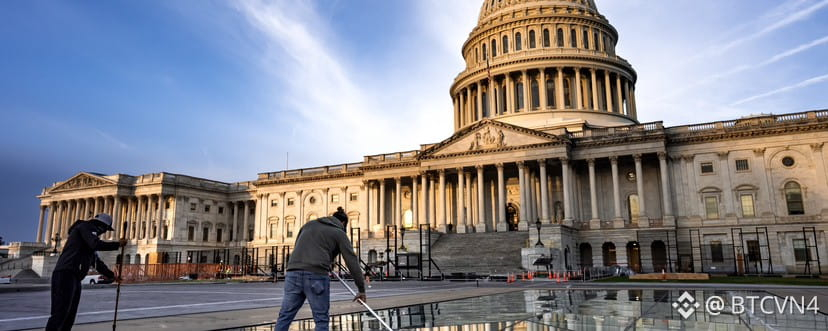
🇺🇸 DEMOCRATS CONTROL BOTH CHAMBERS OF THE U.S. CONGRESS — WHY IS CRYPTO REBOUNDING SO STRONGLY?#BTCVN4 | Market Analysis
A paradox is unfolding in the U.S. financial markets.
The Democratic Party has gained control of both the House and the Senate, while President Donald Trump is still running the White House. Previously, many investors expected the Republicans to continue advancing crypto-friendly policies.
Yet the market has responded with a recovery.
Could this be a positive signal for Bitcoin and altcoins? Or is it just a short-term rebound after the earlier selling pressure?
🇺🇸 DEMOCRATS CONTROL BOTH CHAMBERS OF THE U.S. CONGRESS — WHY IS CRYPTO REBOUNDING SO STRONGLY?
#BTCVN4 | Market Analysis
A paradox is unfolding in the U.S. financial markets.
The Democratic Party has gained control of both the House and the Senate, while President Donald Trump is still running the White House. Previously, many investors expected the Republicans to continue advancing crypto-friendly policies.
Yet the market has responded with a recovery.
Could this be a positive signal for Bitcoin and altcoins? Or is it just a short-term rebound after the earlier selling pressure?
Monnie Baltzer NMKC:
Cảm ơn ad nhiều. Nếu thấy dòng tiền có thay đổi thì ad báo sớm cho ae biết với nhé.
2
3
854
·
--
Partly True
Breaking news: The SEC has approved INJ; only the official announcement remains.
On November 4, 2026, Canary filed a Form 424B3 prospectus. The fund is expected to trade under the ticker INJC.
Noteworthy: The fund is expected to hold and stake INJ; according to the prospectus, under normal conditions, at least 90% of the fund’s INJ will be staked.
A new phase of INJ that BTCVN4 has been waiting for has arrived.
#injective #news #BinanceSquareFamily #etf #BTCVN4
$INJ
{future}(INJUSDT)
$BTC
{future}(BTCUSDT)
$ETH
{future}(ETHUSDT)
Breaking news: The SEC has approved INJ; only the official announcement remains.
On November 4, 2026, Canary filed a Form 424B3 prospectus. The fund is expected to trade under the ticker INJC.
Noteworthy: The fund is expected to hold and stake INJ; according to the prospectus, under normal conditions, at least 90% of the fund’s INJ will be staked.
A new phase of INJ that BTCVN4 has been waiting for has arrived.
#injective #news #BinanceSquareFamily #etf #BTCVN4
$INJ
$BTC
$ETH
2
646
Log in to explore more content
Join global crypto users on Binance Square
⚡️ Get latest and useful information about crypto.
💬 Trusted by the world’s largest crypto exchange.
👍 Discover real insights from verified creators.
Email / Phone number
Trending Topics
1
#BinanceReopensWithdrawalsForMoreAssets
753,580 views
4,094 Discussing
2
#Binance98PercentReplenished
131,461 views
1,523 Discussing
3
#USStocksSlipandCryptoMarketUnderBroadPressure
0 views
12 Discussing
4
#StrategySTRCResumesIssuanceAfterOver170Days
9,761 views
275 Discussing
5
#ADPUSPrivateEmployersAdd86000JobsInOctober
25,349 views
463 Discussing
6
#KazakhstanReportedlyInvests$100MInCryptoFunds
863 views
37 Discussing
7
#SouthKoreaSeeksCryptoTaxDelayUntil2029
14,907 views
185 Discussing
8
#USMidterms-WhatAreMarketsExpecting?
557,737 views
2,773 Discussing
9
#US10YearTreasuryYieldFallsTo4.845%
15,537 views
148 Discussing
10
#ZcashExpectsNU7ToMake$16MSproutZECInaccessible
1,026 views
17 Discussing