
#arnaques
arnaques
104 views
4 Discussing
Hot
Latest

·
--
Article
Crypto theft attacks are succeeding less often. That’s not good newsAttacks targeting <c-7/<crypto holders are succeeding less and less often. And that’s very bad news.
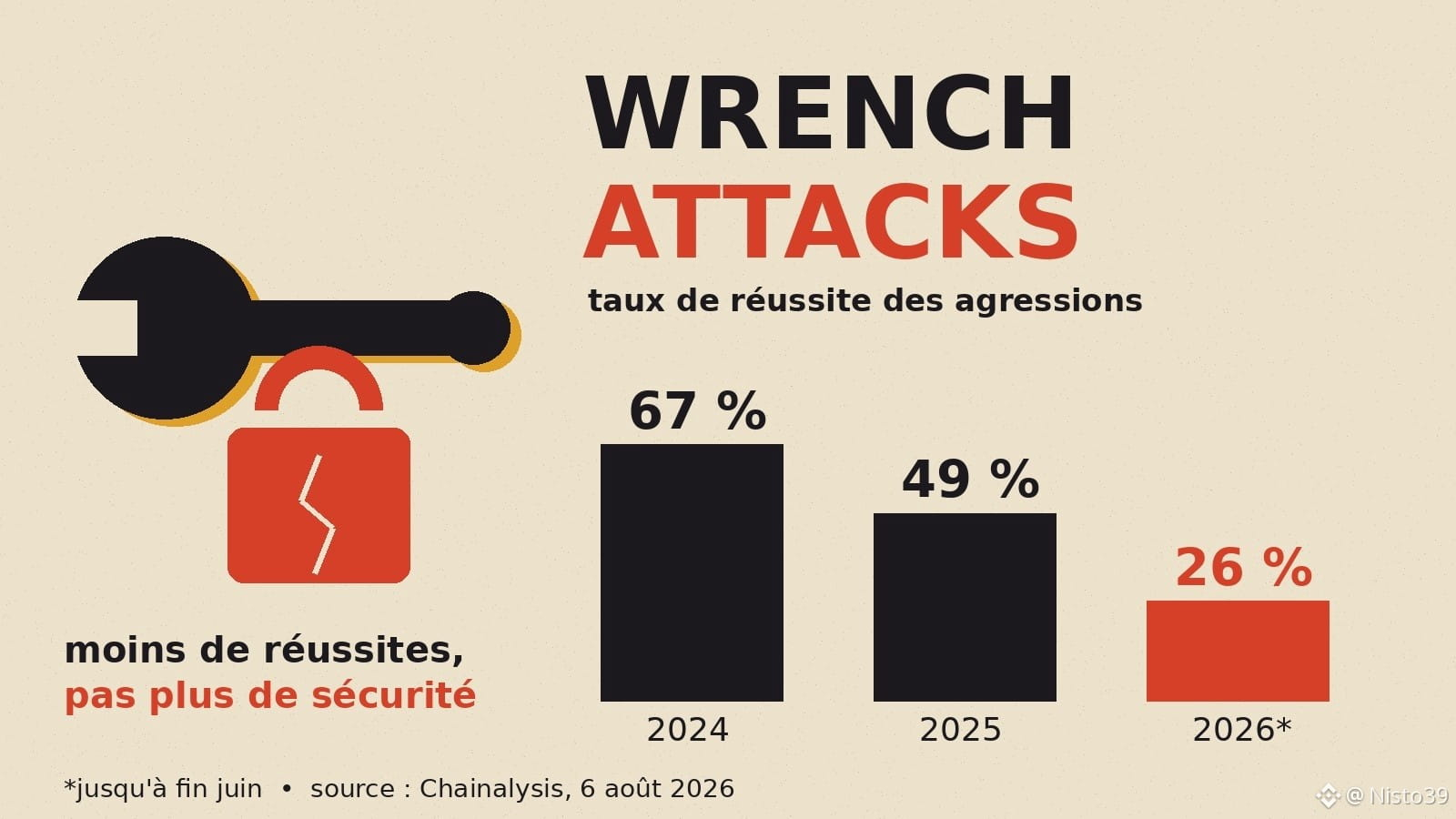
Let me explain with three figures from Chainalysis (August 6, 2026 report) on “wrench attacks”—attacks where they don’t hack your wallet: they come to your home, or kidnap someone, to force you to send them your crypto.
Success rate of reported attempts:
2024: 67% (32 out of 48)
2025: 49% (47 out of 95)
2026, through the end of June: 26% (12 out of 46)
At a glance, that looks like a win. Read correctly, it means more and more crews are striking almost at random, often at the wrong door. Less preparation, more pointless violence.
Crypto theft attacks are succeeding less often. That’s not good news
Attacks targeting <c-7/<crypto holders are succeeding less and less often. And that’s very bad news.
Let me explain with three figures from Chainalysis (August 6, 2026 report) on “wrench attacks”—attacks where they don’t hack your wallet: they come to your home, or kidnap someone, to force you to send them your crypto.
Success rate of reported attempts:
2024: 67% (32 out of 48)
2025: 49% (47 out of 95)
2026, through the end of June: 26% (12 out of 46)
At a glance, that looks like a win. Read correctly, it means more and more crews are striking almost at random, often at the wrong door. Less preparation, more pointless violence.
297
·
--
Article
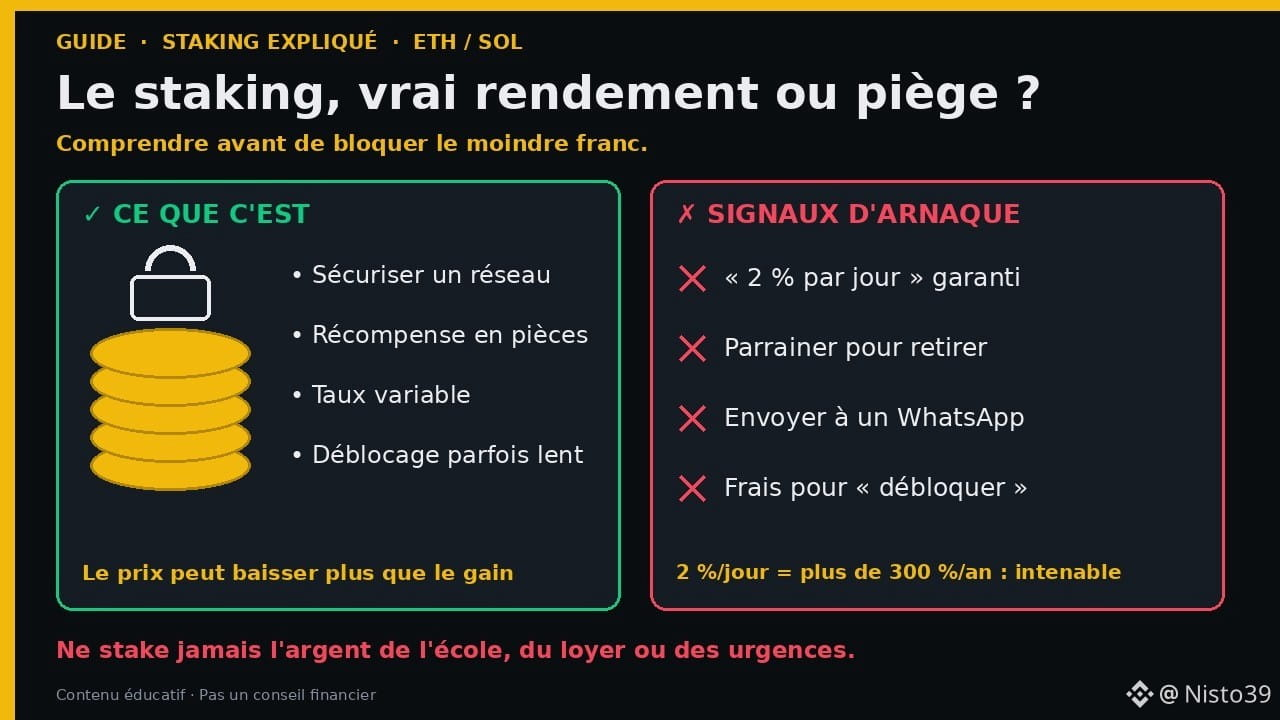
Staking explained: real returns or a trap? (simple ETH / SOL guide)Awa sells doughnuts outside a school in Bobo-Dioulasso. On her phone, an ad promises, “Earn 12% a year while you sleep through staking.” Another message on WhatsApp even promises “2% a day.” Both use the same word. Yet one may be a real mechanism, while the other looks a lot like a scam. Here’s a simple explanation of staking, before you put in even a single franc.
🧱 First: why a blockchain needs “stakers”
• A blockchain has to validate transactions without a central boss. So it needs participants to verify and add blocks.
Staking explained: real returns or a trap? (simple ETH / SOL guide)
Awa sells doughnuts outside a school in Bobo-Dioulasso. On her phone, an ad promises, “Earn 12% a year while you sleep through staking.” Another message on WhatsApp even promises “2% a day.” Both use the same word. Yet one may be a real mechanism, while the other looks a lot like a scam. Here’s a simple explanation of staking, before you put in even a single franc.
🧱 First: why a blockchain needs “stakers”
• A blockchain has to validate transactions without a central boss. So it needs participants to verify and add blocks.
🧱 First: why a blockchain needs “stakers”
• A blockchain has to validate transactions without a central boss. So it needs participants to verify and add blocks.
128
Log in to explore more content
Join global crypto users on Binance Square
⚡️ Get latest and useful information about crypto.
💬 Trusted by the world’s largest crypto exchange.
👍 Discover real insights from verified creators.
Email / Phone number
Trending Topics
1
#BTCReboundsAbove$60KAmidWhaleDipBuying
45,059 views
256 Discussing
2
#SolanaSets2027RoadmapToDoubleComputeCapacity
29,227 views
635 Discussing
3
#CaliforniaNvidiaProbeExaminesPotentialCriminalViolations
7,398 views
91 Discussing
4
#BlackRockLaunchesHKDollarDigitalLiquidityFund
23,997 views
502 Discussing
5
#NvidiaLoses$2.7TrillionInMonthAndAHalf
66,059 views
280 Discussing
6
#GlobalStocksFaceLongestLosingStreakSince2023
515,363 views
3,229 Discussing
7
#BlackRockIBITPostsRecord$541MSingleDayOutflow
83,522 views
173 Discussing
8
#AnthropicPlungesTowardIPOPriceonDay2
280,173 views
2,151 Discussing
9
#TwentyOneCapitalAdds172.25BTC
144,986 views
1,482 Discussing
10
#HKBillWouldExcludeTokenizedDepositsFromVirtualAssets
16,968 views
97 Discussing