
#11665
11665
13 views
3 Discussing
Hot
Latest

·
--
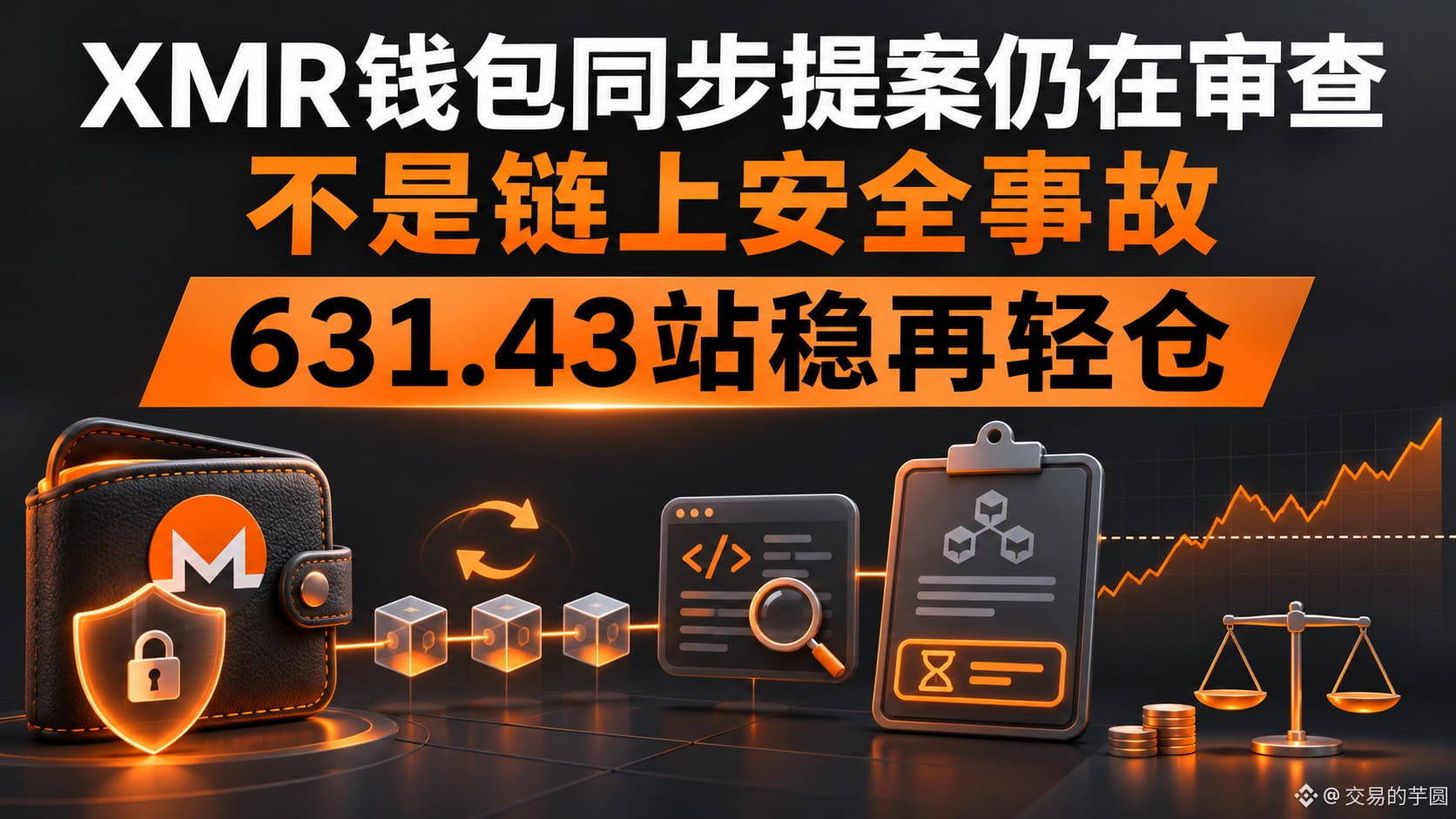
XMR Wallet Sync Proposal Still Under Review | Recovery Speed and Chain Security Are Separate Issues | I’m Still Waiting for Confirmation
My stance is cautious and watchful. Neither Binance Square’s trending topics this round nor its six-hour Most Searched list has an accurate tag directly related to XMR, so it would be wrong to force connections to Monero based on an exchange recovery or interest in other coins. Instead, I’m looking at actual progress in the project’s official repository and keeping code proposals strictly separate from released versions.
PR #11665 in Monero’s official GitHub repository discusses having the wallet first confirm a checkpoint anchor with a node during a fast refresh, then decide whether it can skip block hashes. The scenario described by the developers is this: a wallet configured for the mainnet connects to a testnet node, where the checkpoint does not exist on the node’s chain, yet the wallet uses it as a starting point and scans block by block, slowing the recovery process. A discussion on November 3 further explained the issue and why the wallet cache stores historical block hashes. The page still shows “Open”; approval from one reviewer does not mean the code has been merged, let alone that ordinary users have received a new version. Monero’s official GUI and CLI download pages still list version 0.18.5.4. Calling this proposal an “XMR chain security incident” or saying the “fix is live” would go beyond the evidence.
Why should traders care about this kind of change? Wallet sync efficiency affects the user experience when recovering balances from self-custody wallets and verifying transactions, and could affect the barrier to using Monero over the long term. But it does not change XMR’s issuance, network consensus, or spot supply and demand right now. Technical discussions under project review usually cannot directly explain a fifteen-minute candlestick. External policy developments should be considered separately: on October 30, FATF launched a targeted review of how virtual asset service providers are implementing its standards. The original statement did not name XMR, so it would also be inaccurate to describe this as a new global ban on Monero.
Price action already recorded is more straightforward. When I checked XMR/USD on Kraken, the latest price was about $622.54, with a daily open of $604.35, an intraday low of $596.83, and a high of $631.43. The price rebounded from the open but has yet to hold above the intraday high, so the rise cannot be attributed to this wallet PR, which has not yet been merged. $631.43 is the confirmation level above; $602.20, near the low over the past 24 hours, is a level to watch; and $596.83 is the intraday low. If the price breaks below $596.83 and fails to recover, the short-term bullish outlook is invalidated. Even if it breaks higher, a lack of volume would warrant caution about a pullback.
If I were trading this myself, I would stay out for now and consider only a small spot long position. I would first wait for the price to hold above $631.43 and then defend that level on a retest, along with clear confirmation of a merge or official release progress in the repository. Then I would test the waters with 2% of my total capital. My first target would be $645, where I would sell half; my second target would be $660, where I would close the remaining position. After entry, I would stop out if the price fell below $615. If $596.83 breaks before entry, I would cancel the plan outright. If the project later says it has found a broader wallet reliability issue, I would immediately reassess and close the position. A technical proposal is not a bullish catalyst; position sizing and exit rules should be set out first.
#XMR
This is only my personal market observation and does not constitute investment advice.
13
·
--
XMR Wallet Verification Proposal Reviewed | Still Not Merged or Released | Manage Risk Around $607
My view is that code progress should be treated as a risk-management signal, not a price catalyst. Binance Square’s current trending topics are focused on exchange withdrawals and macro issues, and XMR is absent from the most-searched list for the past six hours. Forcing unrelated tags into the discussion would only confuse readers. On November 2, a new wallet proposal, PR #11665, appeared in Monero’s official code repository: the developer wants the wallet to first confirm a checkpoint anchor with the connected daemon during a fast refresh, then decide whether to skip block hashes. The page currently shows “Open,” and one reviewer has approved it. But “reviewed” does not mean merged, let alone that the official wallet has updated automatically.
The reproduction conditions described in the proposal are quite specific: a wallet marked as a mainnet wallet is connected to a regression-test chain above height 1,000, and fast refresh selects a checkpoint unknown to the daemon. As a result, it scans every block from that height instead of jumping to the recovery height as expected. This suggests that wallet synchronization logic should verify the chain state seen by the node; it does not prove that Monero mainnet has suffered a widespread synchronization incident, nor that “privacy features have been compromised.” Only if the change is later merged, tested, and included in an official release will users have an actionable update path. The official website still lists October 16’s version 0.18.5.4 as the latest CLI and GUI releases, so I won’t prematurely present the code review as a product fix that has already shipped.
The main effects on the crypto market would be through trust and user experience, not a sudden change in XMR supply. If wallet synchronization fails in edge cases, users could misread their balances and transaction status; however, this case currently points to a specific test environment, and the scope of its impact remains subject to the maintainers’ conclusions. On October 30, FATF announced a targeted review of how standards are being implemented in jurisdictions with significant virtual-asset service provider activity. The announcement did not name XMR or introduce an immediate ban; regulatory risk is more likely to show up first in service-provider support and trading liquidity. On October 28, the Federal Reserve held its target interest-rate range at 3.75%–4%, and changes in risk appetite could also drive XMR volatility. Neither external fact can substitute for evidence about the impact of this particular wallet proposal.
On price, the latest Kraken XMR/USD trade I’m seeing is around $606.91, with a 24-hour low of $592.88, a high of $614.90, and an intraday open of $599.12. That’s about 1.3% above the open, but still below the intraday high. An earlier record at 05:11 was around $612; now it’s around $607, indicating an intraday pullback. I did not trade according to my earlier plan, and I won’t portray this price movement as a strategy gain. In the short term, I’m watching whether $602–$604 holds. $614.90 is resistance that needs to be tested, while a drop below $596 would invalidate my short-term recovery view. There is no verifiable direct causal link between the code PR and this price movement.
If I were trading this myself, I would sit out for now and not chase the bounce around $607. The only direction I’d consider is a small spot long, using no more than 2% of total capital. The entry trigger would be a pullback to $602–$604, followed by a 1-hour close back above $604 and a hold there, while the official team has issued no new wallet security alert. Only then would I buy in stages: the first target is $615, where I’d sell half; the second is $625, where I’d sell the rest. The initial stop-loss is $596. If, after entry, the 4-hour candle closes back below $602, or the official team confirms that the issue’s scope has expanded significantly, I’d exit even if the stop-loss hasn’t been hit. If the price surges straight through $615 without pulling back, the setup is not triggered; I’d keep waiting and avoid high leverage.
#XMR
This is only my personal market observation and does not constitute investment advice.

6
Log in to explore more content
Join global crypto users on Binance Square
⚡️ Get latest and useful information about crypto.
💬 Trusted by the world’s largest crypto exchange.
👍 Discover real insights from verified creators.
Email / Phone number
Trending Topics
1
#USMidterms-WhatAreMarketsExpecting?
1,320 views
83 Discussing
2
#USOctoberNFP-AreRateCutsStillPossible
193,988 views
1,453 Discussing
3
#AMDBeatsExpectations-AINarrativeContinues
277 views
44 Discussing
4
#BinanceIncidentReport
116,233 views
977 Discussing
5
#BinanceReopensWithdrawalsForMoreAssets
255,438 views
2,085 Discussing
6
#BinanceHourlyDepositsExceedWithdrawals
113,495 views
1,032 Discussing
7
#SouthKoreaRulingPartyLeaderSeeksCryptoTaxDelay
183 views
15 Discussing
8
#BhutanGelephuCentralBankApprovedToHoldDigitalAssets
8 views
4 Discussing
9
#MorganStanleyAmongFirstBanksToUseDTCCTokenization
798 views
35 Discussing
10
#NasdaqRises0.8%AsChipStocksRebound
652 views
24 Discussing