


The expectations of spot ETFs once again pushed BTC to a new high, breaking through the bottom range of $25,000. At the same time, the BTC ecosystem has also made significant progress, giving birth to native protocols such as Ordinals, Atomics, and PIPE. Innovations in the BTC ecosystem not only bring more possibilities to Bitcoin, but also unique investment opportunities. We are optimistic about the long-term growth of native protocol tokens such as $ATOM, $PIPE, and beta capture of BTC by established layer 2 protocols such as $RIF and $STX .
Spot ETFs reignite market sentiment, BTC ecology deserves attention
The expectations of spot ETFs once again pushed BTC to a new high, breaking through the bottom range of $25,000. On October 16, Cointelegraph reported false information about the SEC’s approval of a spot ETF, causing BTC to surge to nearly $30,000. However, the market did not completely retrace, but consolidated around MA120 before continuing the uptrend. Clearly, we are in a phase of heightened optimism and bullish sentiment in the market has been ignited.
It is worth noting that the BTC ecosystem has made significant progress this year, giving birth to native protocols such as Ordinals, Atomics, and PIPE. The innovation of the BTC ecosystem not only expands the possibilities of Bitcoin, but also contains unique investment opportunities. The performance of related tokens even exceeds that of BTC. Below we will introduce some of the BTC ecological investment opportunities we are paying attention to.
ordinal protocol
Major update to Ordinals protocol, leading token $ORDI surges
On January 21, 2023, Bitcoin developer Casey Rodarmor launched the Ordinals protocol, ushering in a new era of the Bitcoin ecosystem. On October 24, the Ordinals protocol underwent a major update with the release of version 0.10.0, which added features such as batch engraving, metadata addition, and inscription endpoint numbering. Flagship token $ORDI has experienced a significant rally as BTC rises and community activity returns. On November 7, Binance launched $ORDI, triggering a sharp surge with a daily increase of nearly 100%.
Launched earlier this year, the Ordinals protocol has over 38 million inscriptions and the community continues to grow. As the leading token in the Bitcoin ecosystem, $ORDI currently has a market capitalization of approximately $400 million and is yet to be listed on top exchanges such as Coinbase and Upbit, showing potential for further growth. Recently, community members have proposed using $ORDI as the governance token of BRC-20, including community proposal voting and Indexer staking, which may provide real utility for $ORDI and further stimulate purchase demand.
$SATS is listed on multiple exchanges and has a market capitalization of nearly $300 million
Deployed on March 9, 2023, $SATS has a total supply of 21 trillion, equivalent to the number of Bitcoin Satoshis, with a single minting limit of 100 million. It was completed on September 24, half a year later. Of all BRC-20 tokens, $SATS has the largest number of on-chain holding addresses, at nearly 40,000. As a result, $SATS has the largest number of supporters and the widest reach.
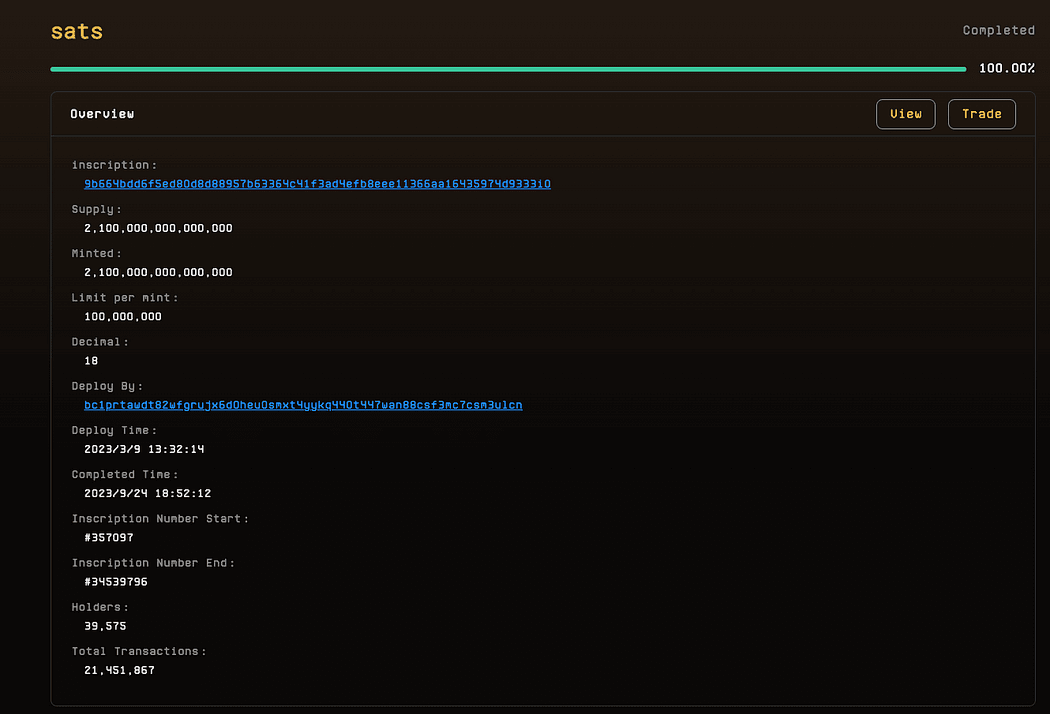
Basic information about $SATS
In the past month, $SATS has soared nearly tenfold and has been listed on Bitget, Kucoin, Gate and other exchanges, with a market capitalization of nearly $300 million. Exchanges are embracing the Bitcoin ecosystem and attracting more attention.
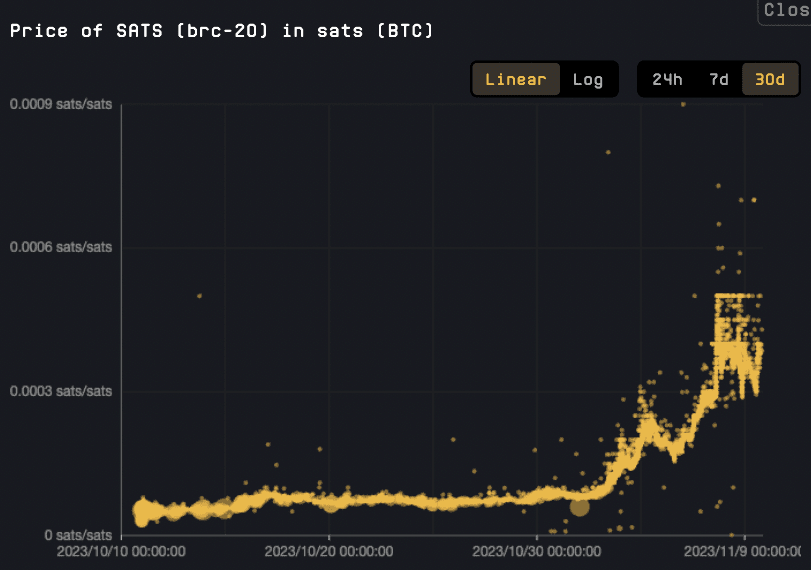
$SATS has surged nearly tenfold in the past month.
BRC-100 unveiled, ready to launch native applications such as DeFi and GameFi
On October 25, the Layer 1 Foundation founded by BRC-20 developer @domodata launched BRC-100. BRC-100 is a scalable decentralized computing protocol based on ordinal theory, designed for decentralized applications on the first layer of Bitcoin, including DeFi, SocialFi, GameFi, etc. BRC-100 is derived from BRC-20 and can be expanded and improved, creating possibilities for applications based on the first layer of Bitcoin.
Although the Ordinals protocol has only been online for 9 months, it has already attracted developers from various fields and communities, spawning numerous applications and gameplay, such as BRC-20, rare satoshis, recursive inscriptions, etc. Protocols and applications that are improved and expanded around Ordinals are constantly emerging, and future developments deserve our continued attention.
Atomic Protocol
Launched on September 17, the Atomics protocol is a simple and flexible protocol designed for minting, transferring and updating digital objects (traditionally known as Bitcoin’s Unspent Transaction Outputs (UTXO)) on blockchain networks. Designed for NFT). Atoms represent a way to organize the creation, transfer, and update of digital objects, essentially forming a chain of digital ownership defined by a few simple rules.
Compared with the Ordinals protocol, the Atomics protocol has a complex design and includes modules such as tokens, NFTs, domains, and containers, providing developers and users with various common functions. Since its launch on September 17, the protocol has gained numerous developers and users and is deployed on wallets, browsers, minting platforms, domain services, and other tools. Mint count has reached tens of thousands, and the protocol continues to grow rapidly.
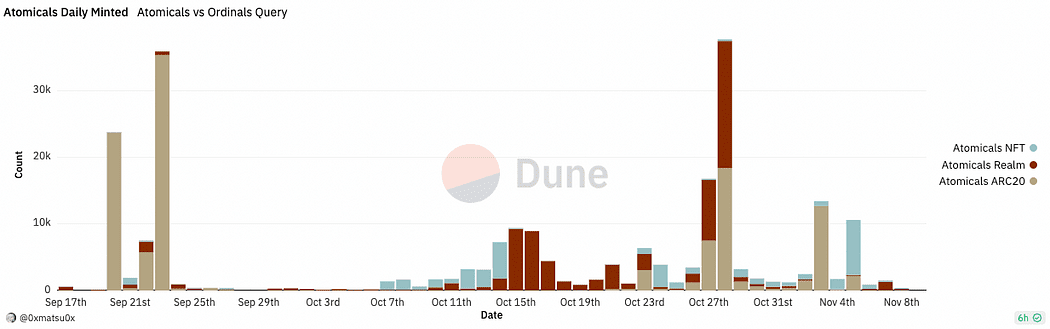
Daily coinage of Atomics
ARC-20 Token
The Atomics Protocol’s ARC-20 token standard solves the problem of representing arbitrary fungible tokens on the Bitcoin network. It uses satoshis to represent deployed tokens. Anyone can deploy and transfer ARC-20 tokens using a UTXO-enabled wallet, with options for direct and decentralized deployment. Additionally, ARC-20 comes with a built-in unique naming system where the first registered token name is permanent.

Some ARC-20 tokens
As the simplest use case for the Atomics protocol, community members have already minted multiple ARC-20 tokens. Among them, $ATOM is the first ARC-20 token born and becomes the representative token of the Atomics protocol. $ATOM has a total supply of 21 million coins and is currently trading at $1.55, which equates to a market cap of approximately $30 million. Compared to $ORDI’s market cap of over $400 million, $ATOM has huge growth potential.
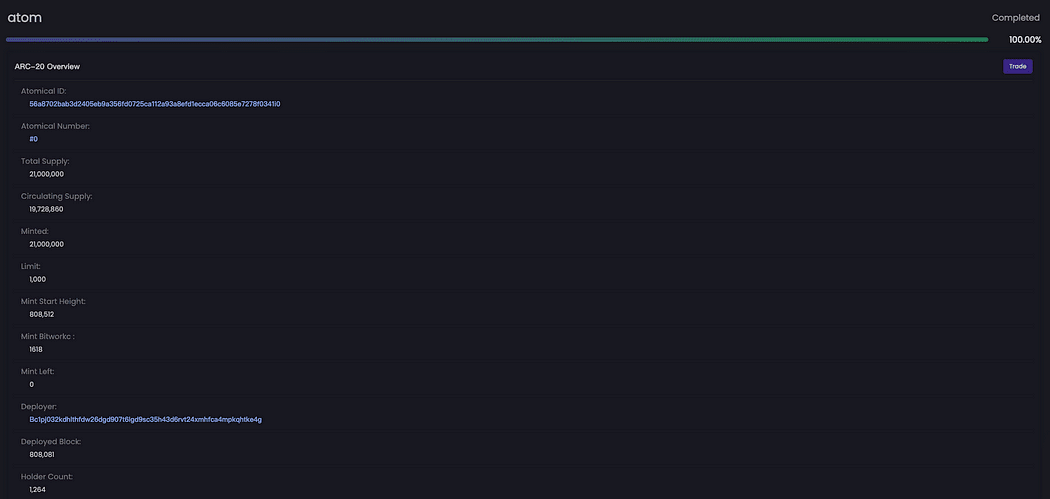
Basic information about $ATOM
NFT
“Atomic Digital Objects” are a new form of NFT that can be minted and transferred on the Bitcoin network. Unlike traditional NFTs, it does not require a centralized service or trusted indexer; instead, it is permanently stored on the Bitcoin blockchain. In addition to immutable content and files, it supports continuous updates, making it suitable for social media, games, and other applications.
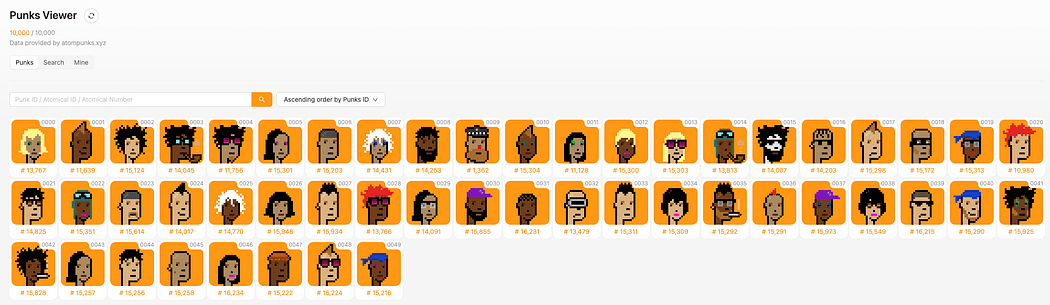
atompunk
Realm name
A realm name is a domain identifier that can be used to correlate network addresses and resource information. It starts with "+" and has at least one letter. Domains do not require any intermediary or centralized registrar, and once claimed, the user owns the domain forever until it is transferred to someone else.
Interestingly, Realms supports building sub-Realms via suffixes, opening up even more applications and possibilities. Recently, there has been a peak in domain casting, with 1, 2, and 3-digit short domain names being quickly seized, totaling more than 30,000 domains.
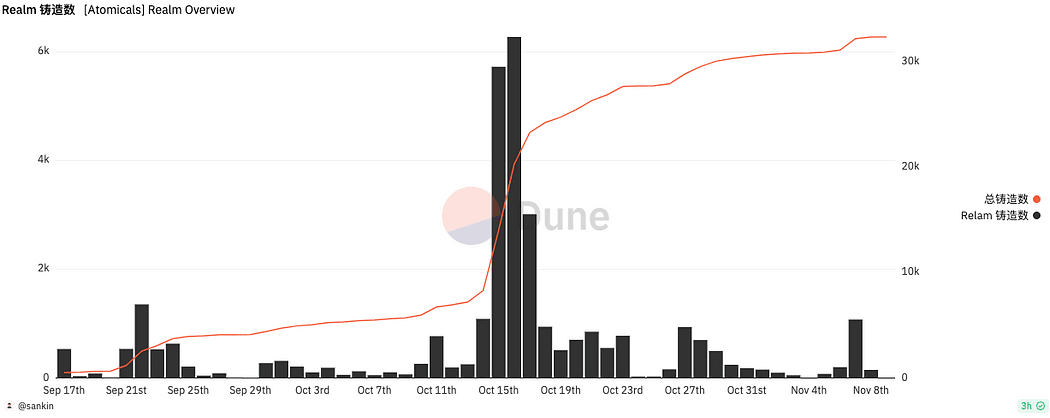
Realms minted quantity
After careful preparation by developers, the Atomics protocol already has relatively mature modules and functions. In just over a month since it was launched, the number of coins minted has reached tens of thousands, and the rapid development is eye-catching. As a competitor of the Ordinals protocol, the Atomics protocol is expected to launch more gameplay and applications in the future, which deserves continued attention.
pipeline agreement
PIPE is a native Bitcoin token protocol inspired by Casey Rodarmor’s RUNES and Ordinals’ BRC-20 protocol. PIPE was primarily developed by the creators of BRC-20 indexer TRAC and, like BRC-20, consists of three functions: deploy, mint, and transfer. The key difference, however, is that the PIPE protocol is based on Bitcoin’s UTXOs, providing greater flexibility by supporting the creation of fungible tokens and NFTs.
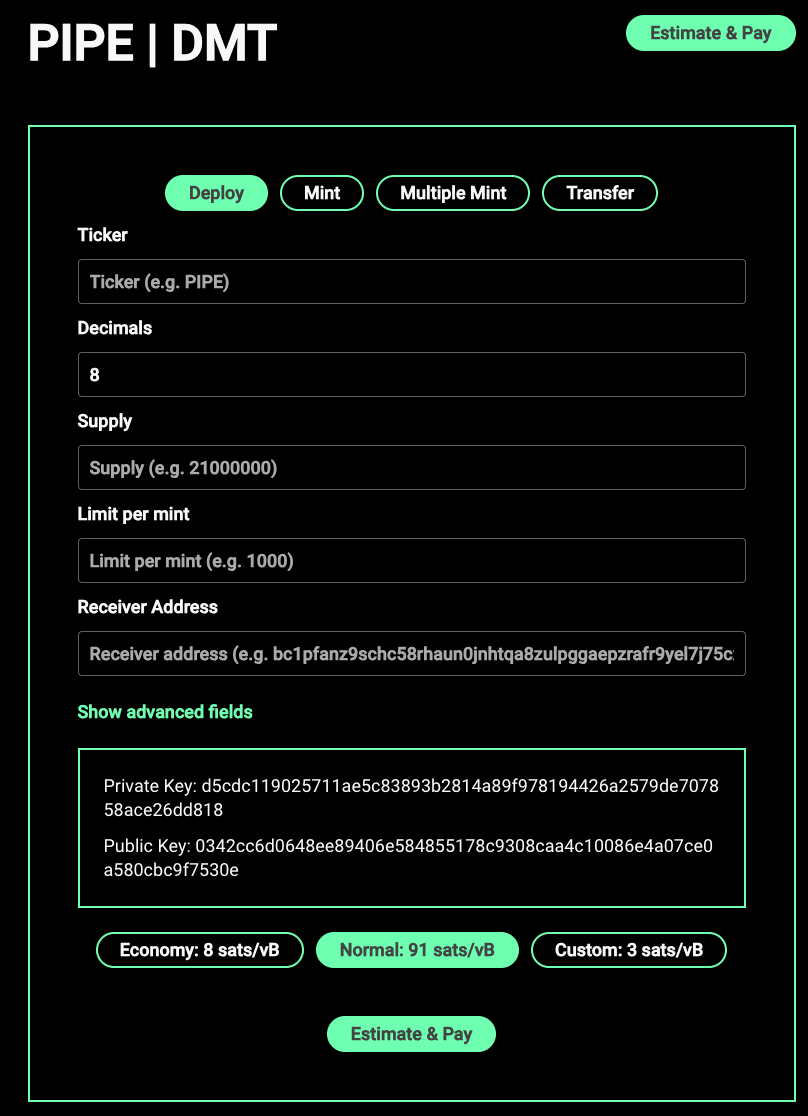
Inscribe3’s PIPE protocol deployment page
The founder of the Ordinals protocol proposed the RUNES protocol, which has not yet been launched and has been controversial due to its inability to conduct decentralized minting. The PIPE protocol builds on the RUNES protocol, adds the functionality of fair minting, and has gained significant community support through its early deployment.
$PIPE is the first token to be deployed and minted, with a total supply of 21 million coins. The current market price is $1.2, giving it a market capitalization of approximately $25 million.
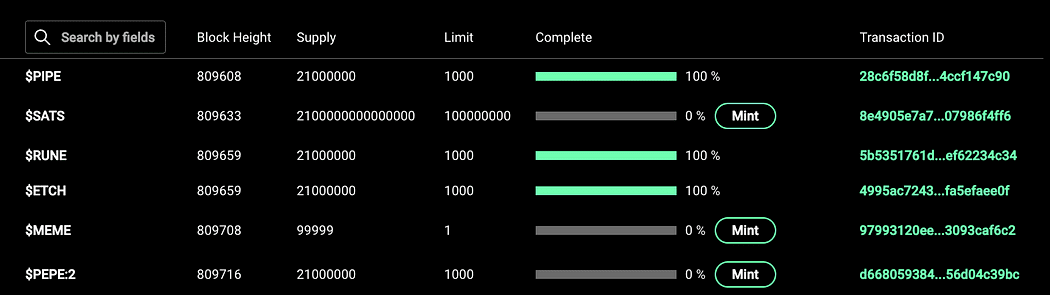
Some PIPE protocol tokens
The PIPE protocol is still in its early stages and various infrastructure elements are still under development. SatsX recently launched minting and transfer capabilities as well as a trading market for the PIPE protocol. Biston Labs has begun testing the Swap function of the PIPE protocol, and the related ecosystem is also continuing to develop.
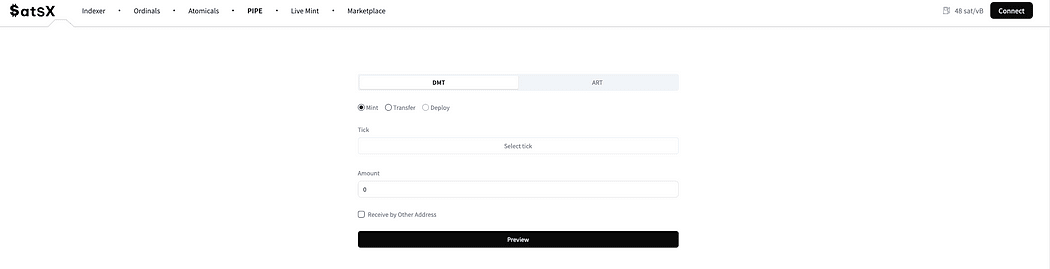
SatsX recently launched minting and transfer capabilities for the PIPE protocol
Sidechains and Layer 2 Protocols
RIF (Rootstock Infrastructure Framework)
Developed and launched by IOV Labs in January 2018, RSK is a Bitcoin sidechain that shares the security and decentralization properties of the Bitcoin network through merged mining. It is also compatible with EVM smart contracts, extending the capabilities of the Bitcoin system without compromising security. RBTC is RSK’s native token and is pegged 1:1 to BTC, with a current circulating supply of 3,334 tokens.

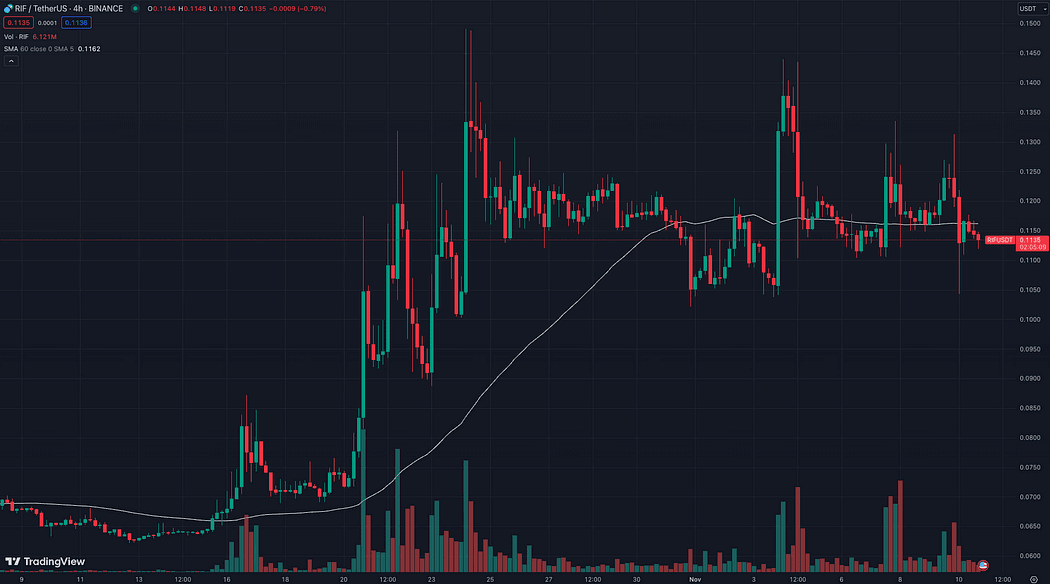
IOV Labs further developed the Rootstock Infrastructure Framework (RIF) based on RSK, which includes infrastructure such as operating systems, domain services, relays, and wallets. RIF aims to help developers build DApps faster and more efficiently through APIs and language libraries. The native token $RIF has doubled in value during its recent uptrend, and Binance has listed $RIF’s perpetual contracts. Despite its significant growth, RIF has a market cap of just $110 million, showing significant upside potential.
stack
Stacks is a blockchain network of DApps and smart contracts based on Bitcoin that functions similarly to sidechains or layer 2 on Bitcoin. It has a relatively complete ecosystem, and its application areas include DeFi, NFT, DAO, etc. STX is the native token used for transactions and smart contract fees.
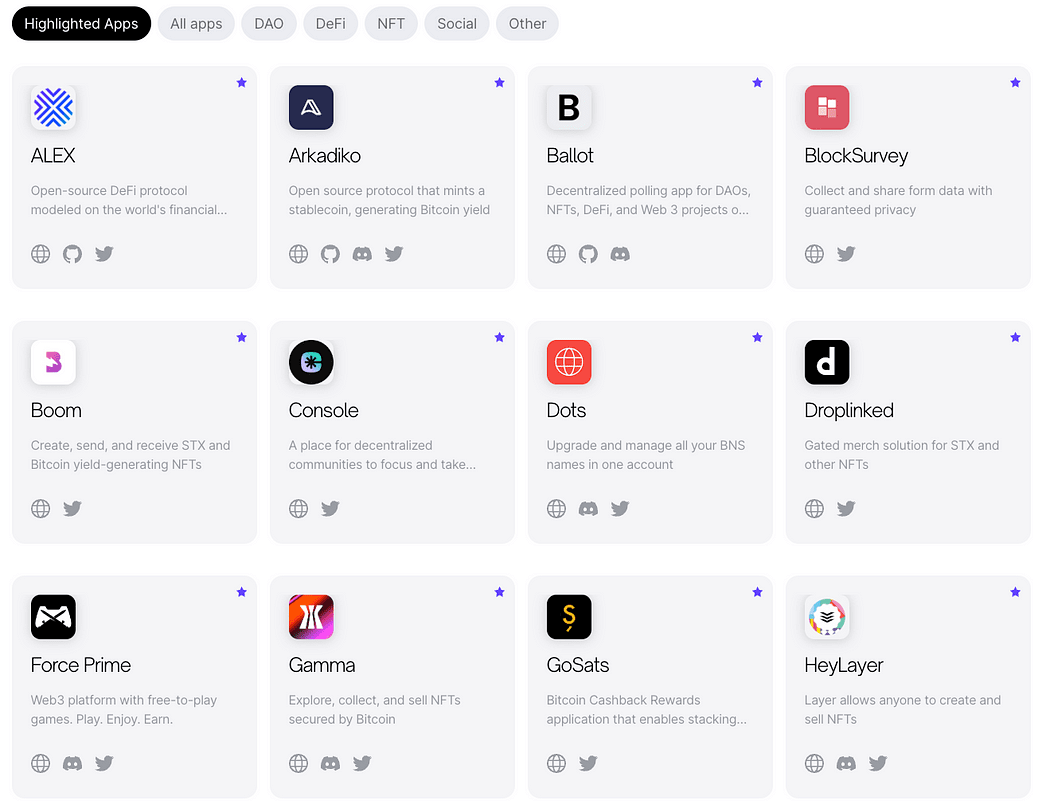
Some apps in the Stacks ecosystem
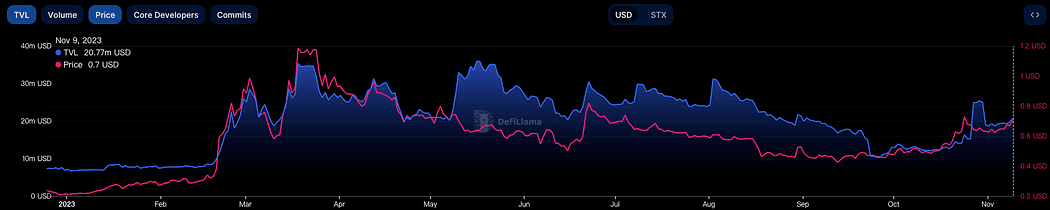
On October 20, Stacks released a developer version of sBTC, allowing developers to build applications using sBTC and test basic functions such as deposits and withdrawals. sBTC on Stacks corresponds 1:1 to BTC on the Stacks layer and can be used for smart contracts in applications such as DeFi and NFT. Stacks plans to release an upgraded version of Nakamoto in the first quarter of 2024, which will significantly enhance network security and operating speed.
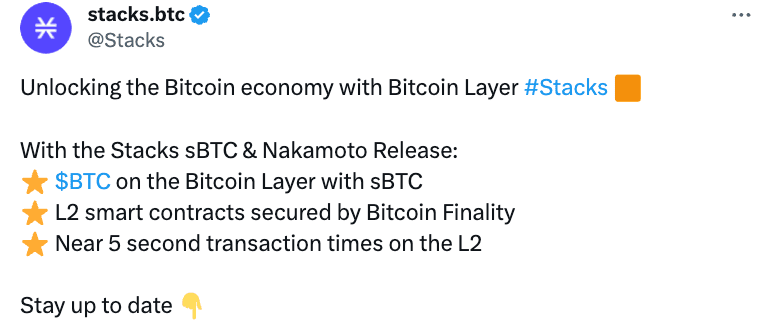
Recently, the price and total value locked (TVL) of STX have rebounded, with TVL exceeding US$20 million and market value reaching US$1 billion. STX is currently the second-layer protocol with the largest market capitalization and the most DApps in the Bitcoin ecosystem. With the completion of the Satoshi Nakamoto upgrade, the STX ecosystem is expected to further explode.
taproot assets
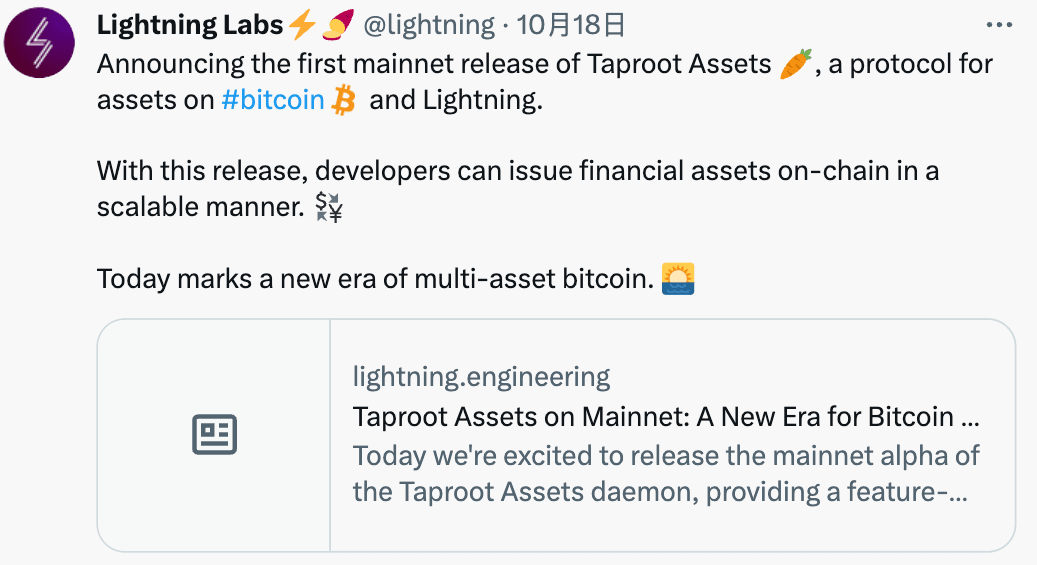
On October 18, Lightning Labs released the Alpha version of the Taproot Assets mainnet, enabling developers to issue and manage stablecoins and other assets on the Bitcoin blockchain, opening up new possibilities for the Bitcoin ecosystem.
Lightning Labs was founded in 2016 and focuses on developing the Lightning Network to solve the problem of slow Bitcoin transaction speeds. The Lightning Network is a layer 2 solution that provides a method for micropayments. Users can conduct off-chain transactions through the Lightning Network payment channel. After the transaction is completed, the channel is closed, and then consolidated and settled on the Bitcoin network, reducing transaction fees and improving the throughput of the Bitcoin network.
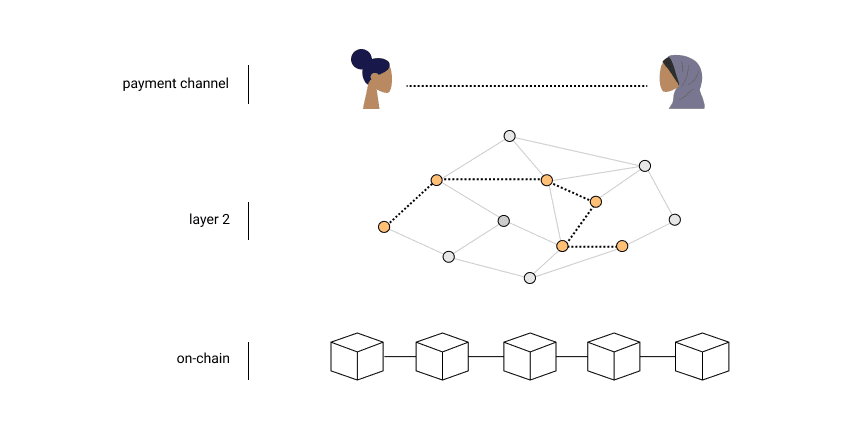
Lightning network diagram
In 2022, Lightning Labs received $70 million in Series B financing from early investors in Tesla and SpaceX, as well as the CEO of Robinhood. The funds are primarily used to build Taro, a multi-asset layer on top of the Bitcoin network. With strong financial and technical capabilities, Lightning Labs aims to build a settlement layer for global currencies on the Bitcoin network to further promote the adoption of Bitcoin at the mainstream level.
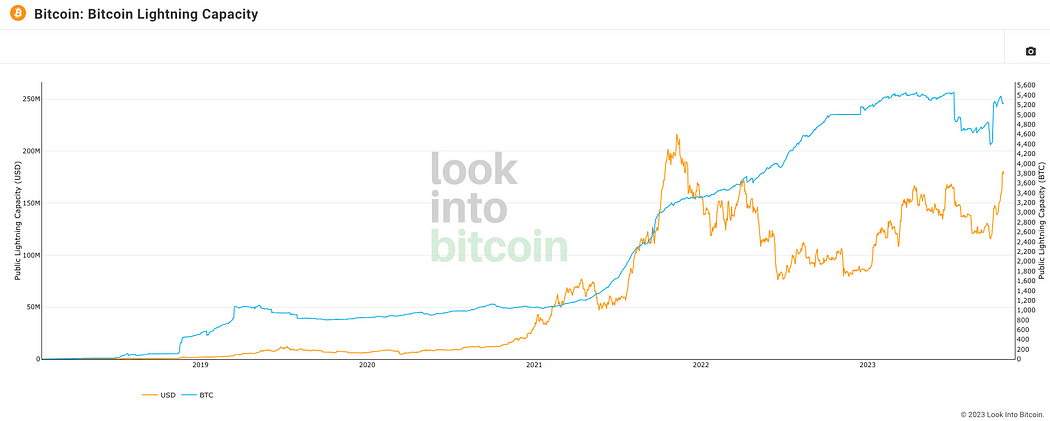
The cumulative BTC held by each node of the Lightning Network has grown steadily.
On October 30, Nostr Assets Protocol was the first to go online on the Taproot Assets mainnet, and simultaneously released the Halloween airdrop tokens $TREAT and $TRICK. The total supply of both tokens is 210 million, with 10,000 tokens of each available for whitelist users to choose from. Around 8,000 addresses have claimed 80 million tokens. It is currently priced at $0.09, with a total float market cap of $7 million and a fully diluted valuation of $38 million. The project team holds the remaining tokens and may introduce more gameplay and use cases in the future.
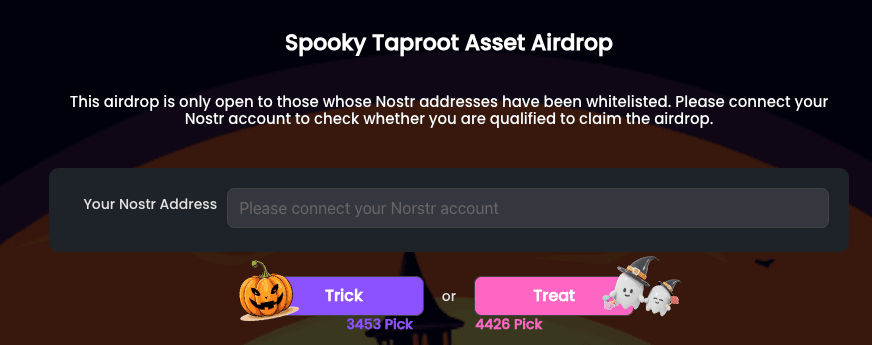
Nostr Assets Protocol releases Halloween airdrop tokens $TREAT and $TRICK
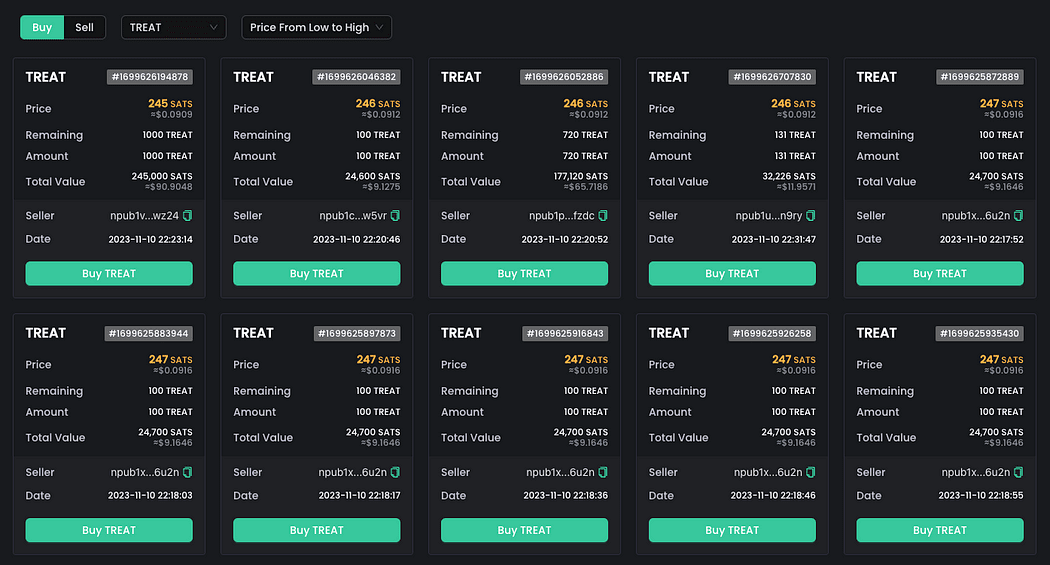
$TREAT is priced at approximately $0.09 on the exchange market
in conclusion
This year, the Bitcoin ecosystem has made great progress, and various native protocols have emerged one after another. This not only brings more possibilities and applications to Bitcoin, but also attracts new members and makes the Bitcoin community more diverse. For now, it's challenging to predict exactly which protocol will ultimately succeed. However, one thing is certain: the Bitcoin ecosystem is at the beginning of a phase of explosive growth, and the future is filled with endless possibilities.
Similar to the 2021 Public Chain Competition, each project has its unique technical characteristics and community culture. The competitive landscape characterized by mutual competition is constantly expanding. Among the leading coins in the BTC ecosystem protocol, $ORDI has reached a market cap of $400 million, while $ATOM and $PIPE have a market cap of approximately $30 million. In the early stages of the ecosystem, we can enter at a very low price. Once the ecosystem develops further, even a diversified investment strategy can generate significant returns.
More importantly, the emergence of BTC ecological protocol tokens provides more choices for BTC investors. In previous bull markets, Bitcoin has typically led the way, followed by inflows into Ethereum and other altcoins. In the current upward trend, BTC and its market share are hitting new highs. BTC is the preferred target for institutional asset allocation, and BTC ecological projects complement institutional investment options. If the BTC spot ETF is approved, BTC ecosystem projects may attract smart money due to their higher resilience, thereby outperforming other altcoins.
We are optimistic about the explosive growth of BTC native protocols such as Ordinals, Atomics, and PIPE, as well as the long-term development of Layer 2 protocols such as Stacks and RIF. We pay close attention to investment opportunities in related tokens.