


In a recent address at the Korea Blockchain Week, Vitalik Buterin, the founder of Ethereum (ETH), highlighted the increasing centralization of Ethereum nodes as one of the most pressing challenges facing the Ethereum network. To combat this issue, Buterin proposed a solution aimed at making node operation more cost-effective and accessible.
Currently, the majority of the 5,901 active Ethereum nodes are operated through centralized web providers such as Amazon Web Services, a situation that many experts believe has put the Ethereum blockchain at risk of centralization. Buterin, speaking at the event, outlined six key issues contributing to Ethereum’s centralization, with a particular emphasis on the importance of nodes in ensuring the long-term decentralization of the blockchain.
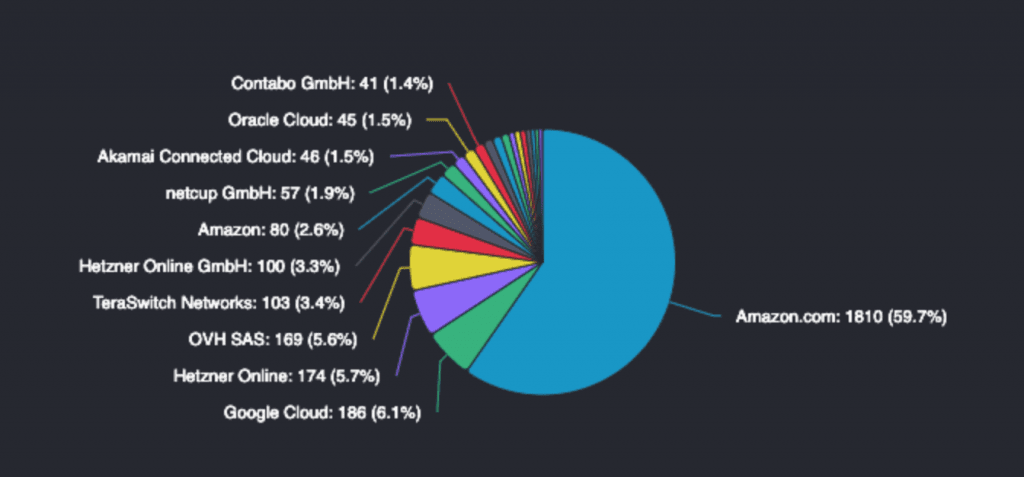 Distributing Ethereum Nodes Away from Web Service Providers | Source: Ethernodes
“One of the six issues we need to address is making it easier for users to run nodes from a technical perspective. Statelessness is an important technology in simplifying this process. Until now, running a node has required hundreds of gigabytes of data,” shared Vitalik Buterin, Ethereum’s co-founder.
Furthermore, Ethereum’s creator stressed that statelessness is essential for reducing reliance on centralized service providers for network verification. According to the Ethereum Foundation, Ethereum cannot achieve true decentralization unless node operators can run on low-cost and simplified hardware.
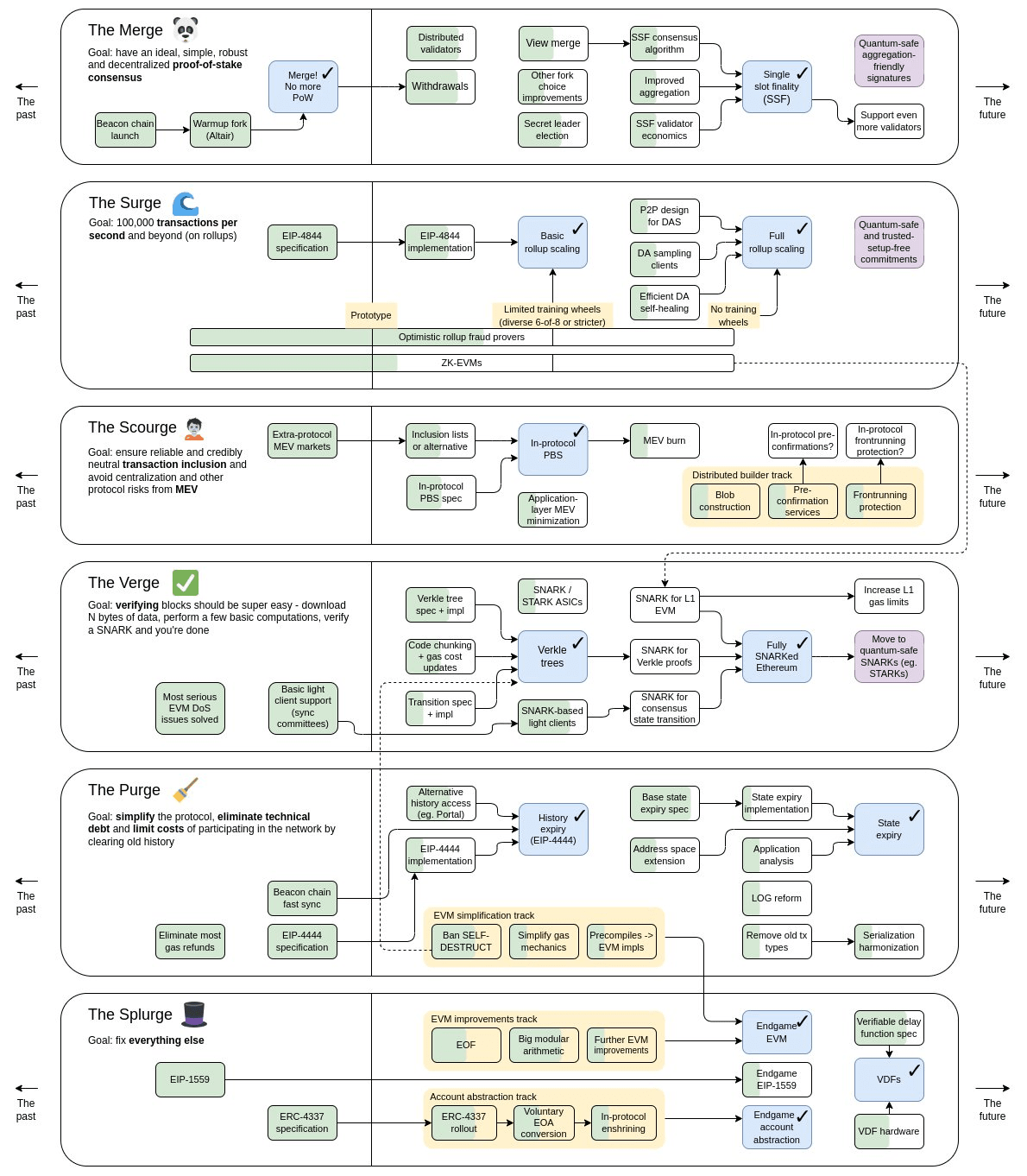
Additionally, Vitalik highlighted statelessness as a crucial element in Ethereum’s development roadmap, revealing that this feature would be implemented as Ethereum transitions through “The Verge” and “The Purge” phases.
“In the long term, I hope that users can maintain fully-verified Ethereum nodes with nothing more than their smartphones, in the literal sense,” the Ethereum founder disclosed.
In addition to these technical considerations, Vitalik expressed concerns about the timeframe for addressing Ethereum’s centralization issues, predicting that it might take up to 10 or even 20 years to resolve these challenges.
Besides statelessness, Ethereum’s co-founder also addressed the need to overcome various obstacles in staking to ensure a more decentralized and secure process.
Notably, Vitalik stressed that the prerequisite issue to tackle immediately is scalability. Currently, Ethereum protocols have been utilizing ZK-rollups to improve network throughput and reduce transaction costs.
ZK-Rollup is an Ethereum Layer 1 scaling solution that employs zero-knowledge proof technology. It allows for the aggregation of a large number of transactions into a Rollup block and generates succinct proofs for off-chain blocks. This significantly reduces gas fees, as verifying proofs is far more cost-effective than re-computation.
Source: https://azcoinnews.com/vitalik-buterins-proposal-targets-improved-decentralization-for-ethereum.html