

暴富暴富2028
63 Posts

暴富暴富2028
Report
Block User
有生之年,比特币破100万刀
5 Following
23 Followers
49 Liked
Posts
·
--
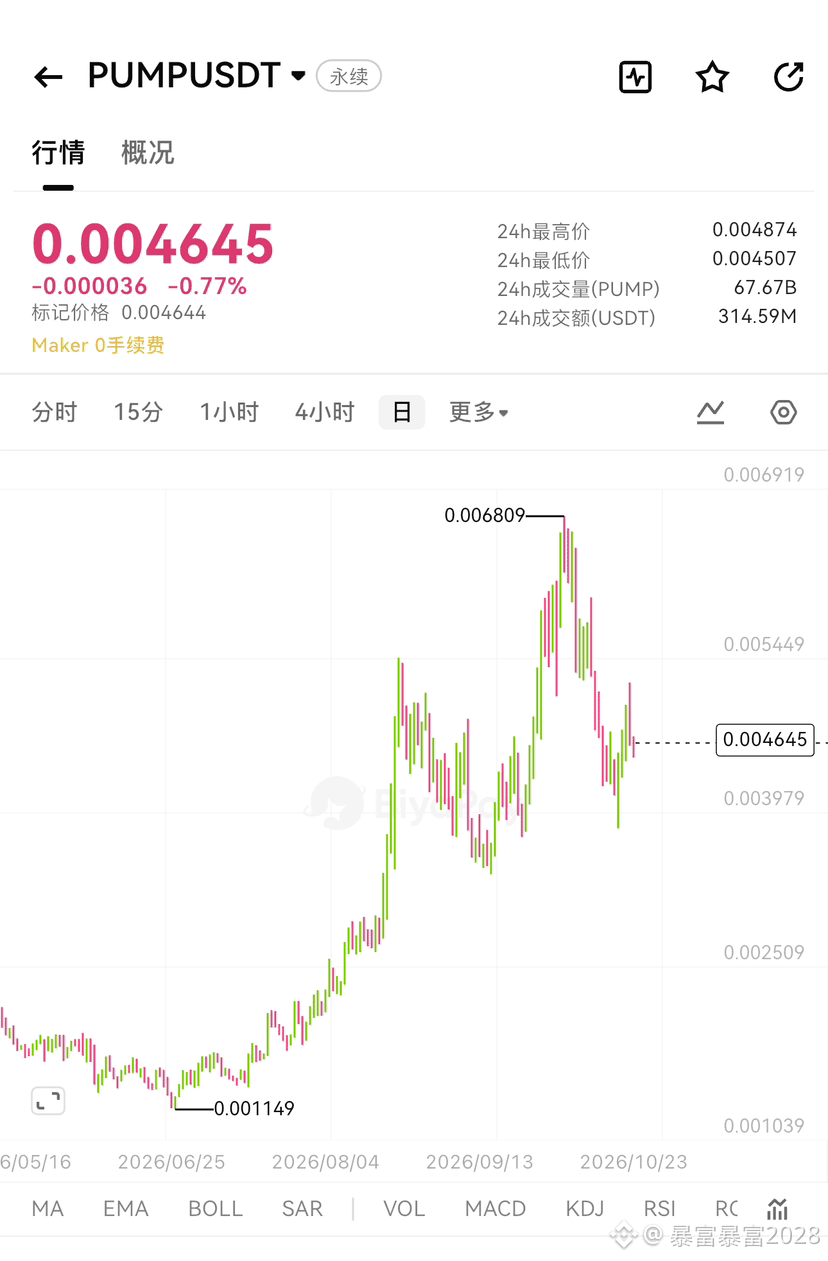
PUMP is a small-cap, high-volatility asset: the pump.fun platform token’s thesis relies on “buybacks and burns funded by fees,” but competition from RobinhoodChain and expectations of token unlocks are weighing on its valuation. When BTC breaks below $81,000, high-beta small caps like PUMP tend to take the hardest wicks—and their rebounds are often the weakest.
Technical framework:
- Support: previous lows and consolidation zones / key weekly levels / areas of high volume in the prior cycle
- Resistance: rebounds into breakdown zones / short-term EMAs / the lower edge of previous consolidations
- Volume: high volume on the way down, low volume on the rebound = a double hit from leverage and unlock expectations
- Relative strength: PUMP/SOL making new lows = platform tokens falling out of favor; PUMP rising while BTC is down = retail speculation
PUMP traders love “buying the dip on the buyback narrative,” but bottoms are identified, not guessed. Don’t just keep PUMP/USDT open. You can put PUMP, SOL, WIF, and DOGE side by side. To track multiple markets, you can check the latest crypto prices on BiyaPay and invest in global assets with USDT, as well as buy products like U.S. and Hong Kong stocks and forex. Compare memes and platform tokens on the same screen to see which stabilizes first.
Strategy:
- If you’re already holding: trim if a rebound fails to reclaim resistance; don’t stubbornly hold through the unlock period
- If you’re on the sidelines: don’t catch a falling knife; wait for selling volume to dry up near the previous low, a lower wick to form, and relative strength to stop falling
- If it breaks below the previous low on high volume: don’t average down—small caps are most dangerous when you keep buying as they fall
- Position size: keep PUMP below 5%
For the medium term, PUMP depends on platform revenue and buyback execution. But today is a day of fading risk appetite. Cash beats PUMP.
1
222
·
--
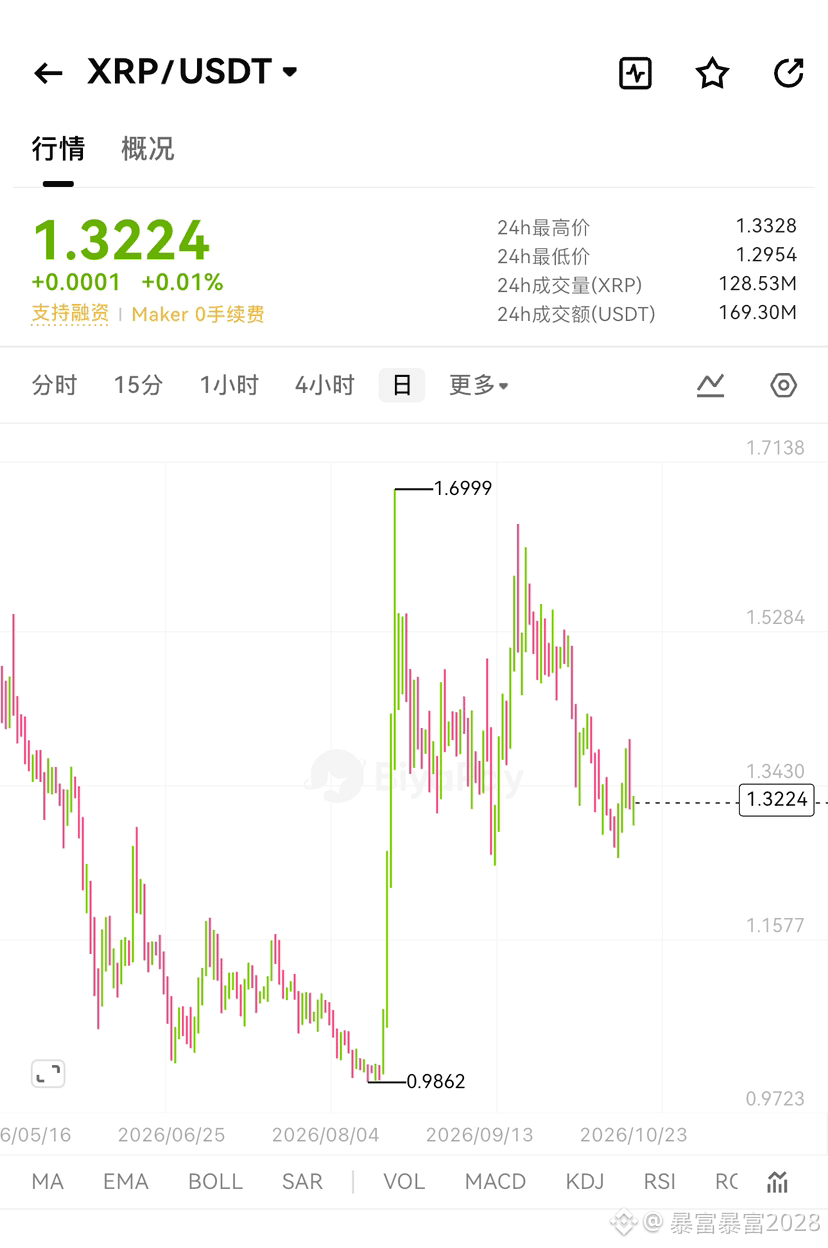
XRP bulls and bears are locked in a tug-of-war: price at 1.33; whale inflows hit 112.4 million, a 7-month high and a short-term sell-pressure signal. But inflows have since eased, XRP is up 30% since August, and the 4H chart is testing descending resistance. On the 22nd, XRP liquidations totaled 7.47 million, less than BTC and ETH.
Structure:
- Support: 1.30 (psychological) / 1.26 (previous low) / 1.20
- Resistance: 1.38–1.40 (breakout zone) / 1.45 / 1.50
- Higher timeframe: Payments + custody + institutional adoption are slow-moving drivers
- Shorter timeframe: If BTC can’t get past 83.3k, XRP is unlikely to rally on its own; holding 1.33 means selling pressure is being absorbed, while a break below 1.30 points to a return to 1.26
XRP is especially vulnerable to getting fooled by bullish headlines. Don’t just keep an XRP/USDT chart open. You can track XRP, BTC, BCH, and ETH together. For a cross-market view, check the latest crypto prices on BiyaPay, invest in global assets using USDT, and buy products like US and Hong Kong stocks and forex—all while keeping payment coins and macro liquidity in view on one screen.
10/23 strategy:
- If already holding: Hold as long as 1.30 holds; reduce if it breaks 1.26 on a close
- If flat: Enter with a small position at 1.30–1.33; stop-loss at 1.286
- Breakout: If the 4H chart holds above 1.38, look for 1.45; a weekly close at 1.40 is needed to open the way to 1.50
- Avoid: Chasing a false breakout at 1.38 or panic-selling at 1.30
XRP is a slow-burn payments coin, not a meme coin. BTC sets the direction today; whale flows are bearish short term but supportive longer term.
255
·
--
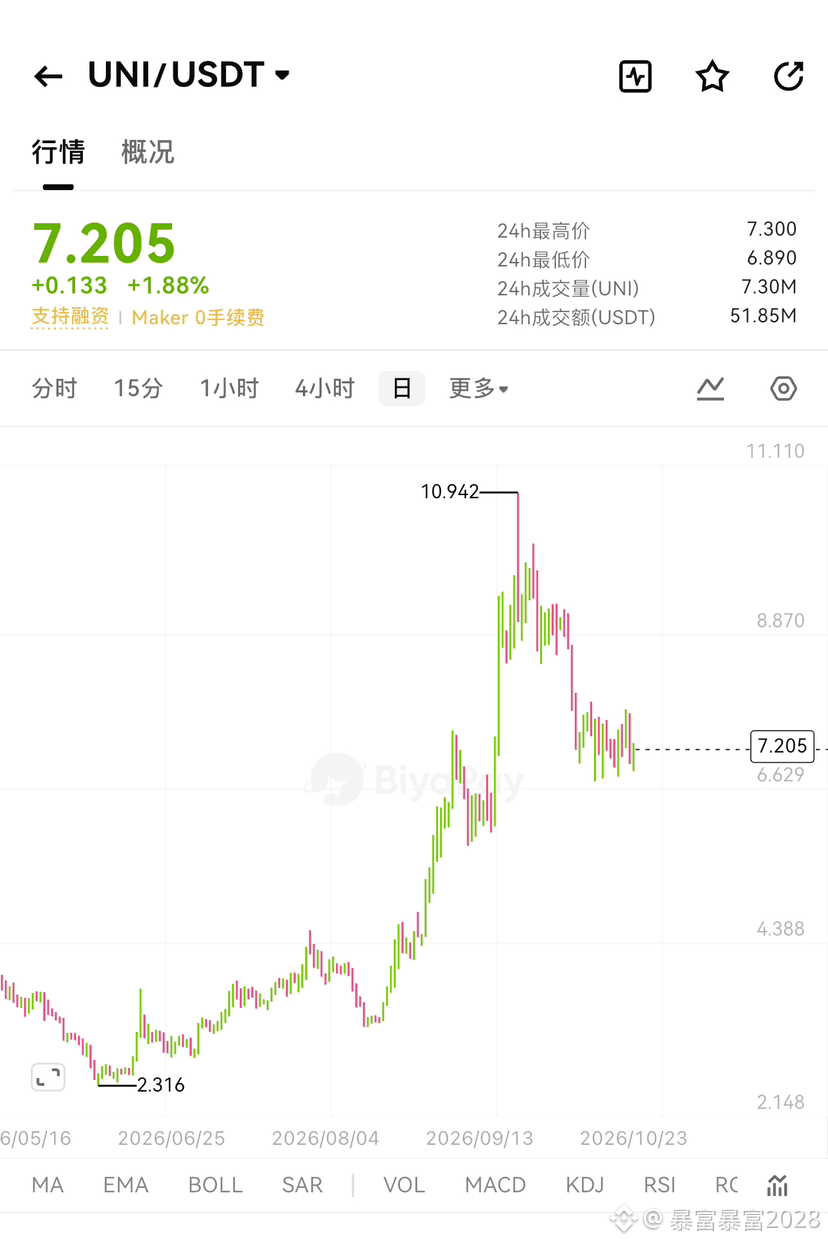
Uniswap is still a weak spot in DeFi: Bitcoin back at 81.6k, ETH below 2,400, and UNI hasn’t bounced more than the market. When macro uncertainty drives risk aversion, blue chips whose value is fee-driven tend to lag. The rebound lacks volume, and UNI/ETH remains weak.
Key levels:
- Support: 7.0 (psychological) / 6.8 / 6.5
- Resistance: 7.31 (previous close) / 7.6 / 8.0
- Structure: Price is below the short-term EMA; if UNI/ETH holds above its low, DeFi is showing resilience. If UNI falls on its own, expectations for revenue are being revised down.
- Catalyst: Futures hedging tools have launched, and short-term hedging demand exceeds buying demand.
Many people only look at UNI/USDT and assume that after a big drop, a rebound is inevitable. You need to compare both UNI/BTC and UNI/ETH. For a complete view, check the latest crypto market prices on BiyaPay, invest in global assets with USDT, and buy products such as U.S. and Hong Kong stocks and forex. Add UNI, ETH, AAVE, and SOL to your watchlist to compare DeFi and L1 side by side and see which stabilizes first.
10/23 strategy:
- If already holding: Don’t sell everything unless 7.0 breaks; reduce your position if it closes below 6.8.
- If flat: Small position in the 7.0–7.2 range, with a stop-loss at 6.82.
- For bulls: If it gets above 7.31 on the 4H chart with volume returning, look for 7.6.
- Avoid: Chasing at 7.25 or panic-selling at 6.95.
For the medium term, UNI depends on DEX volume and Base/Arbitrum, but today the priority is simply to survive. DeFi isn’t dead—it’s being drained by BTC.
252
·
--
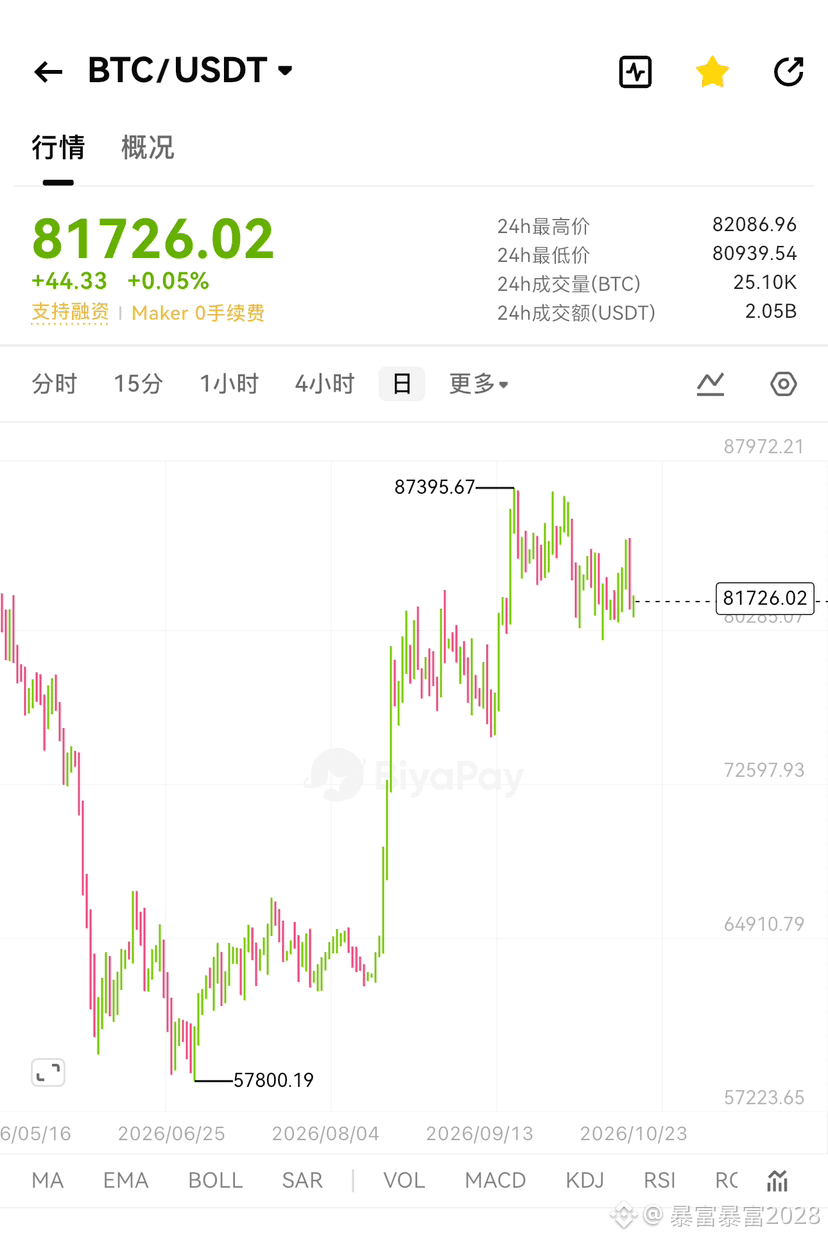
Bitcoin is being pinned down by macro forces: Brent crude broke above 113 overnight, WTI neared 99, and news of attacks in the Middle East plus the Nasdaq’s 2.6% drop the previous day sent risk assets retreating across the board. BTC hit a low of 81,018 before recovering to 81,656 during the European session. On the 22nd, liquidations across the market totaled $458 million, including $418 million in long positions; BTC long liquidations came to $140 million.
Technical outlook:
- Support: 81,000 (today’s low area) / 80,400 / 79,200
- Resistance: 83,300 (resistance at the previous high) / 83,963 / 84,500
- Structure: Price is below the short-term pivot, and the 4H rebound lacks volume. However, spot BTC ETFs saw net inflows of $528.4 million on 10/21: institutions are adding to core holdings while retail leverage gets wiped out.
- Bottom line: This is a recovery after panic-driven long liquidations, not the start of a new major rally.
Many people look only at a single BTC/USDT candlestick and panic when they see a wick. For day-to-day monitoring, you can check the latest cryptocurrency prices on BiyaPay and use USDT to invest in global assets. You can also buy products such as US and Hong Kong stocks and forex. Putting BTC, Brent crude, Nasdaq futures, and the US Dollar Index side by side helps you tell whether it’s “crypto crashing” or “global risk appetite fading.”
Strategy for 10/23:
- Conservative: Look to buy on a lower wick around 81.0–81.3k; stop-loss at 80.6k; target 82.8k.
- Aggressive: Go long if it breaks above 83.3k on strong 15m volume; target 84.0k. Exit on a false breakout.
- Risk: If oil keeps climbing and US stocks are weak before the open, watch 79.2k if 80.4k fails to hold.
- Avoid: Chasing at 82.5k or panic-selling at 80.9k.
BTC hasn’t broken down, but unless it clears 84k, it’s still range-bound. Hold 81k first; talk about a reversal later.
793
·
--
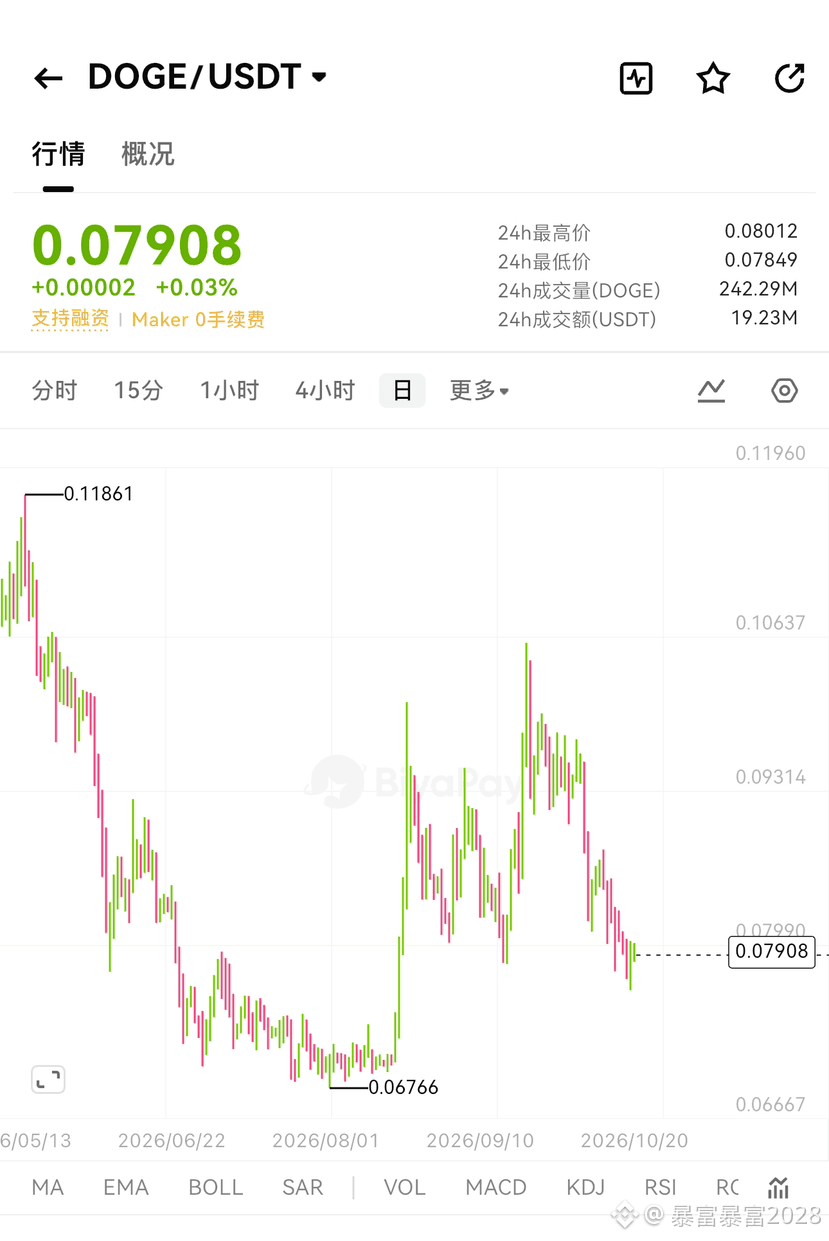
A classic DOGE meme-coin bleed: price 0.07916, down 1.0% in 24h and 6.6% for the week. It falls harder than BTC and its bounces are weak. DOGE has no fundamental cushion—it’s purely driven by “risk appetite + BTC + social sentiment.” With BTC stuck at 81k, DOGE is stuck at 0.079.
Structure:
• Support: 0.0769 (previous low) / 0.075 / 0.070
• Resistance: 0.084 / 0.086 / 0.090
• Volume: high volume on the drop, no volume on the rebound = bullish leverage getting flushed out
• Relative strength: DOGE/BTC making a new low = the meme sector is losing steam; DOGE up while BTC is down = retail investors hyping themselves up
Trading DOGE = sentiment × quote speed. Many people only watch DOGE/USDT, so they completely miss moves across the meme sector. To see the whole picture, check the latest crypto prices on BiyaPay and add DOGE, PEPE, WIF, and SOL to your watchlist, so you can compare sector strength, fund rotation, and intraday moves on one screen.
Approach:
• Don’t chase the upper wick at 0.081. If it pulls back to 0.0769–0.0785 and prints a lower wick, take a small position; stop-loss at 0.0755
• If it closes below 0.075: exit; don’t average down on meme coins
• Bulls: only look for 0.086 if it breaks above 0.084 on strong 15m volume
• Position size: keep DOGE under 5–8%; avoid leverage
Don’t talk about DOGE’s long-term value—just watch sentiment and the order book. During CPI week, focus on survival first and Musk later.
249
·
--
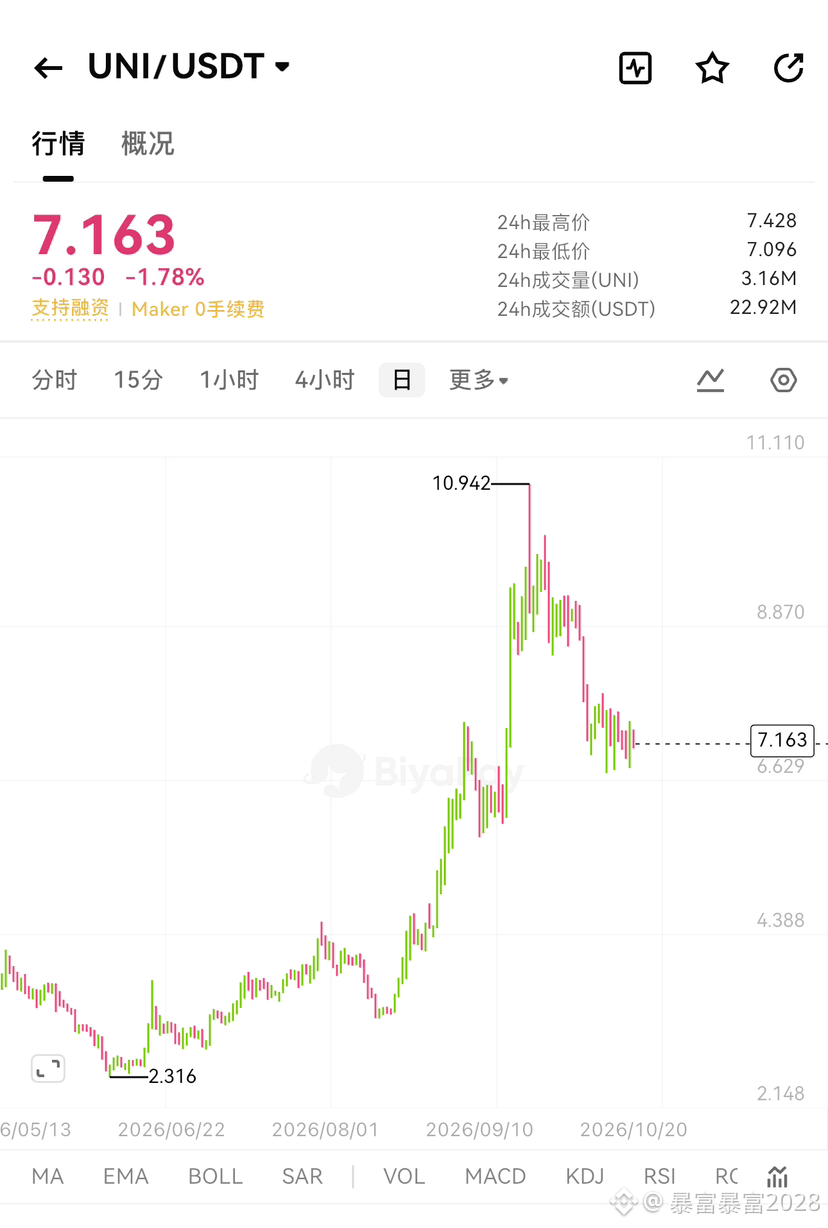
Uniswap is where DeFi is bleeding: price 7.17, 24h -4.0%, weekly -3.4%, weaker than ETH. When macro conditions turn risk-off, DeFi blue chips like UNI, which are driven by fees and trading volume, are often among the first to get cut. On-chain trading volume hasn’t collapsed, but speculative money is pulling out first, and valuations are taking a hit.
Key levels:
• Support: 7.0 (psychological) / 6.8 / 6.5
• Resistance: 7.31 (previous close near the current price) / 7.6 / 8.0
• Structure: Price is below the short-term EMA, and the rebound is on low volume. If UNI/ETH doesn’t make a new low, DeFi is holding up relatively well; if UNI falls on its own, expectations for platform revenue are being marked down.
• Catalyst: The launch of UNI futures gives institutions a hedging tool, but in the short term, “hedging demand > buying demand.”
Many people look at UNI/USDT alone and assume, “It’s fallen so much, it must rebound.” In fact, you need to compare both UNI/BTC and UNI/ETH. You can check the latest cryptocurrency prices on BiyaPay and add UNI, ETH, AAVE, and SOL to your watchlist to compare DeFi and L1 tokens side by side and see which stabilizes first.
Strategy:
• If you’re already holding: Don’t exit everything unless 7.0 breaks; reduce your position if it closes below 6.8.
• If you’re on the sidelines: Take a small position around 7.0–7.2, with a stop-loss at 6.82.
• For bulls: Wait for a 4H close back above 7.31 with volume returning, then look toward 7.6.
• Avoid: Chasing at 7.25 or panic-selling at 6.95.
For the medium term, UNI depends on DEX trading volume, the fee switch, and activity on Base/Arbitrum—but for today, just focus on staying in the game. DeFi isn’t dead; it’s being drained by BTC.
317
·
--
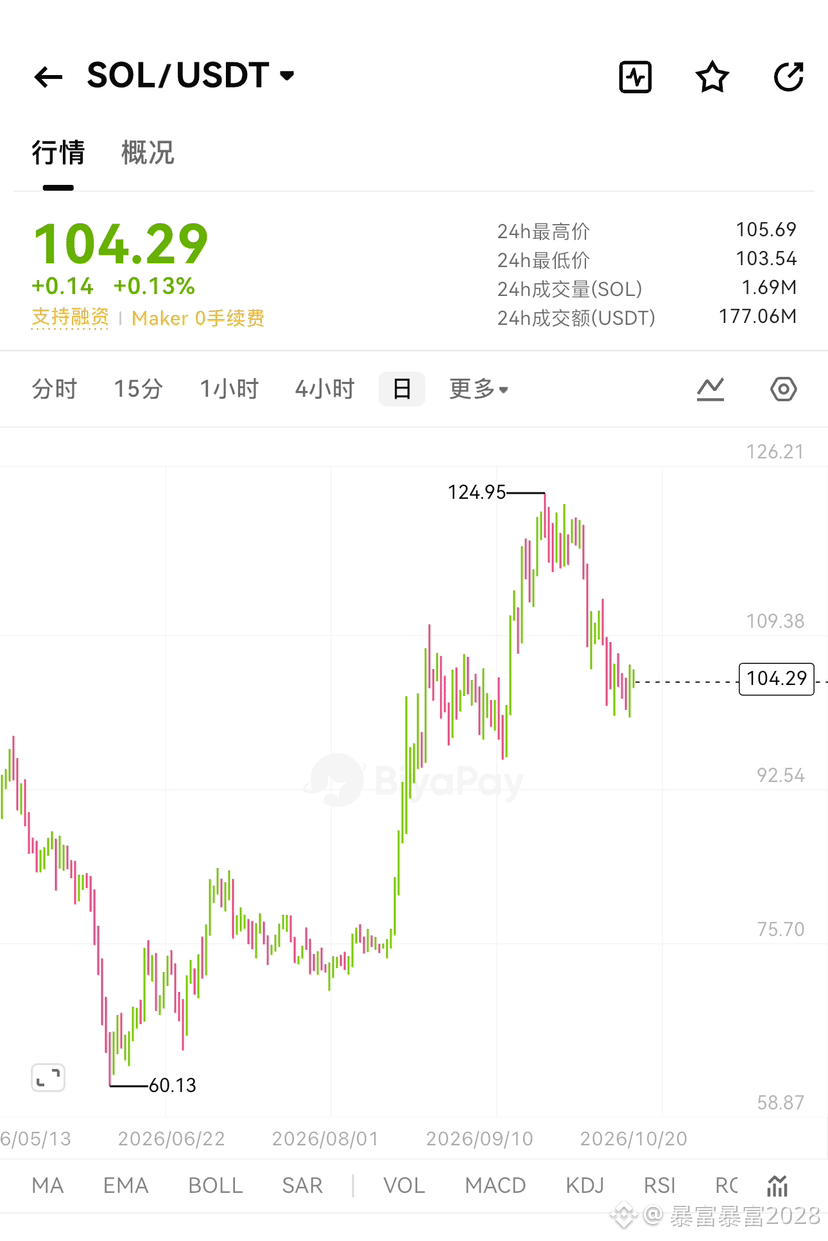
Solana is “recovering but not turning bullish”: price is 104.25; the daily pivot at 104.67 has turned into resistance, with the 50-period EMA at 104.36, S1 at 104.04, and R1 at 105.85. The structure leans bearish, but there’s no accelerating sell-off. Down 3.5% for the week, it’s holding up a little better than ETH, but its high-beta nature remains: whenever Bitcoin turns, SOL is the first to fold.
Structure:
• Support: 100 (psychological and key intraday level) / 97.5 / 94
• Resistance: 104.67 (pivot) / 105.85 / 109.2 (50-day)
• Medium term: The ecosystem, stablecoins, and Payments remain intact. SkyAI selling SOL to fund buybacks is noise, not a trend.
• Short term: If BTC can’t get past 82.3k, SOL will struggle to hold above 105.85; if BTC breaks 80.8k, SOL will test 100 first.
SOL’s biggest risk is “bullish on the weekly chart, all-in today.” Keep an eye on relative strength: if SOL/BTC doesn’t make a new low, funds are still flowing into layer-1s; if SOL is the only one rising while BTC falls, liquidity is insufficient. You can check the latest crypto prices on BiyaPay, with SOL, SUI, HYPE, and DOGE all on one screen, making it easy to see which high-beta asset dives first.
Trading plan:
• Don’t chase the upper wick at 104.5; follow only if 15-minute volume expands and price holds above 105.85.
• If it pulls back to 100–101 and forms a lower wick: use a small position, with a stop at 99.2.
• If it closes below 100: exit longs and wait for 97.5.
• Position size ≤ 12%; don’t treat SOL like BTC.
SOL’s medium-term story isn’t over, but today isn’t the day to charge toward 110. Instead, watch whether high-beta assets are being weighed down alongside Bitcoin by ETF outflows. Keep an eye on 81.7k.
214
·
--
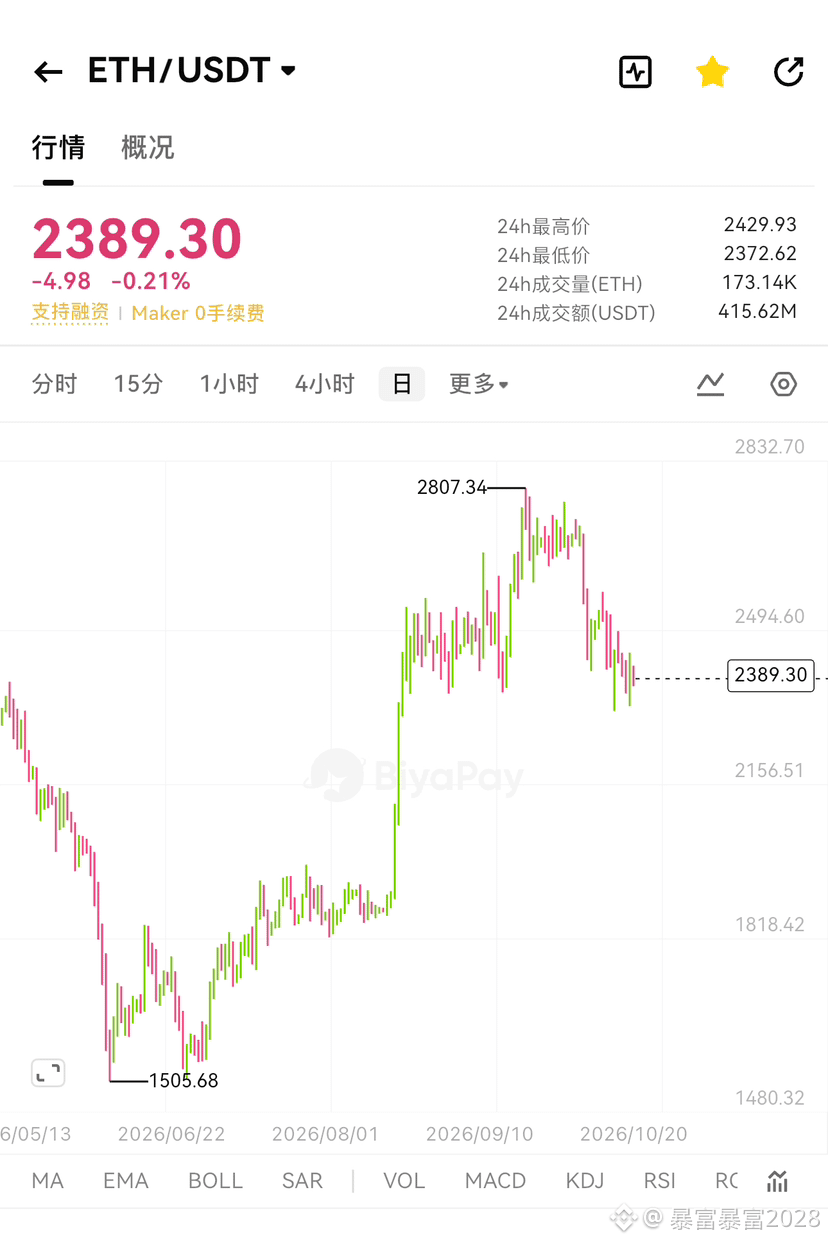
Ethereum is “quick to follow BTC down, but sluggish to follow it up”: price at 2,388, with the daily pivot at 2,398.31 turning into resistance and the 50-period EMA at 2,406.36 capping price; S1 at 2,383.90 and R1 at 2,426.22. ETH ETFs saw $320 million in outflows from ETHA last week; ETH is down 8.53% over 30 days, and ETH/BTC has fallen to 0.02939, showing a clear preference for BTC.
Key levels:
• Support: 2,320 (demand zone) / 2,280 / 2,200
• Resistance: 2,398 (pivot) / 2,426 / 2,476 (R1) / 2,556 (50-day)
• Structure: The lower Bollinger Band is near 2,281. RSI at 24 is oversold, but volume is absent; this isn’t “the sell-off is over”—it’s “buyers haven’t come back.”
• The real issue: JPM Coin going live on mainnet is a slow-moving catalyst and won’t absorb selling pressure in the short term.
The biggest trap with ETH is thinking “it’s fallen a lot, so I should buy.” The real signals are ETH/BTC, gas, the staking queue, and net ETF flows. You can check the latest crypto prices on BiyaPay and track ETH, BTC, SOL, and UNI side by side to quickly see which DeFi/L1 assets are holding up and which are playing catch-up on the downside.
Strategy:
• If already holding: Don’t sell everything unless 2,320 breaks; if it closes below 2,280, reduce your position.
• If on the sidelines: Take a small position at 2,350–2,380, with a stop-loss at 2,318.
• Bullish confirmation: If a 4H candle closes above 2,426 and volume returns, look toward 2,476.
• Avoid: Chasing at 2,400 or panic-selling at 2,315.
The medium-term outlook for ETH depends on L2s, stablecoins, and institutional settlement, but in the short term it first has to get through this “week of ETF outflows.” If BTC can’t hold 80.8k, ETH could head to 2,320 first.
213
·
--
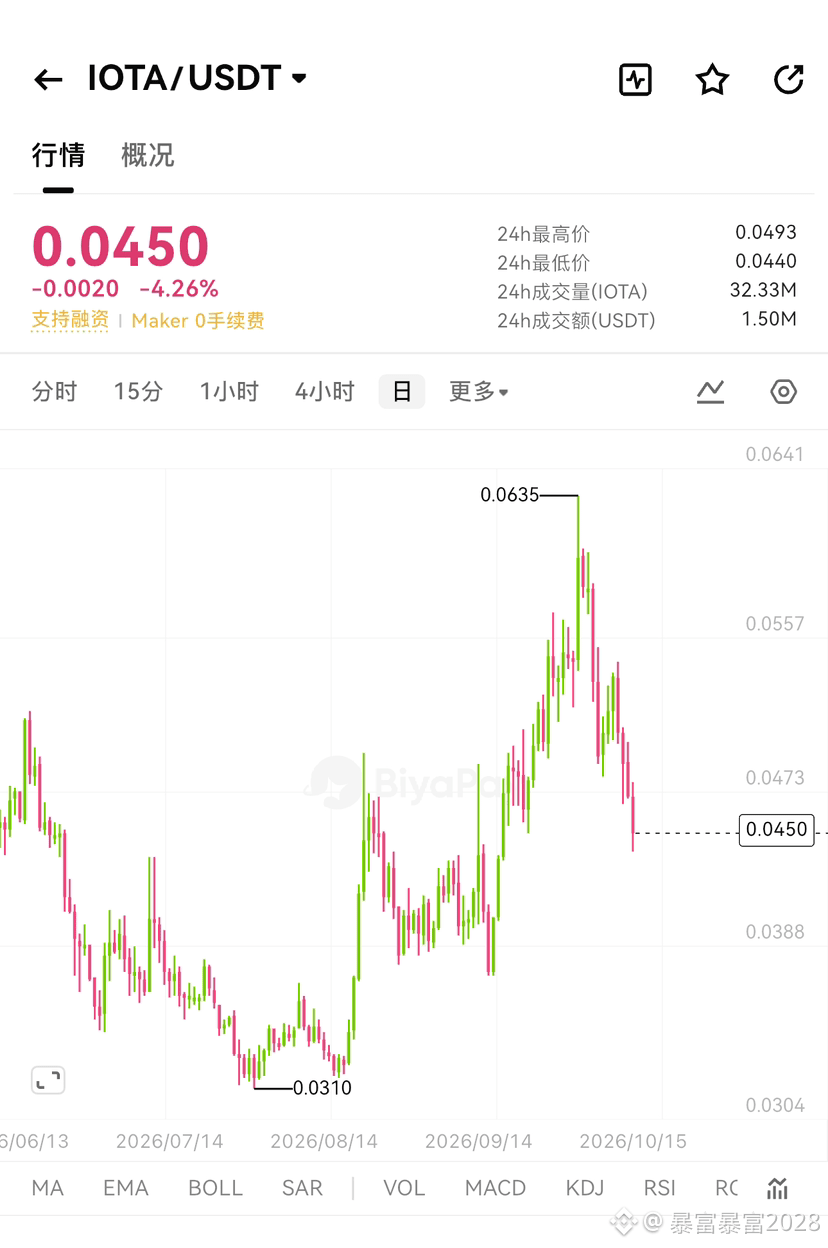
IOTA today is a textbook example of a small-cap altcoin: it doesn’t have the depth of BTC/ETH, and on CPI and liquidation days, buyers pull out fastest while sell orders can sweep through multiple price levels. BTC fell from 84k back to 81k, and assets like IOTA—with an “IoT/L1 narrative + low liquidity”—usually drop harder than SOL and have the weakest bounces.
Structural outlook:
• Support: previous-low consolidation zone / key weekly level / previous high-volume zone
• Resistance: bounce into the breakdown zone / short-term EMA / lower edge of the previous consolidation range
• Volume: for small-cap coins, “order-book depth” is more useful to watch than RSI
• Relative performance: a new low in IOTA/BTC = small-cap alts losing momentum; IOTA dropping on its own = project, token unlock, or liquidity-specific risk
Many people go all-in on IOTA as a “cheap, big-narrative” play, only to get wiped out by a single 8% wick. When watching the market, don’t just look at IOTA/USDT. Put IOTA, SOL, SUI, and DOGE side by side. You can check the latest crypto prices on BiyaPay and see at a glance which high-beta and small-cap coins are plunging first.
10/15 strategy:
• If already holding: trim if it can’t reclaim the short-term moving average on a bounce; don’t stubbornly ride out small-cap volatility
• If on the sidelines: don’t catch a falling knife; wait for shrinking volume at the previous low, a lower wick, and relative strength to stabilize
• If it breaks the previous low on rising volume: don’t average down—small caps are especially vulnerable to “buying more as they keep falling”
• Position size: keep IOTA below 3–5%
The long-term case for IOTA is IoT and enterprise adoption, but today is a “BTC decides who lives, small caps die first” kind of day. Cash beats small caps.
254
·
--
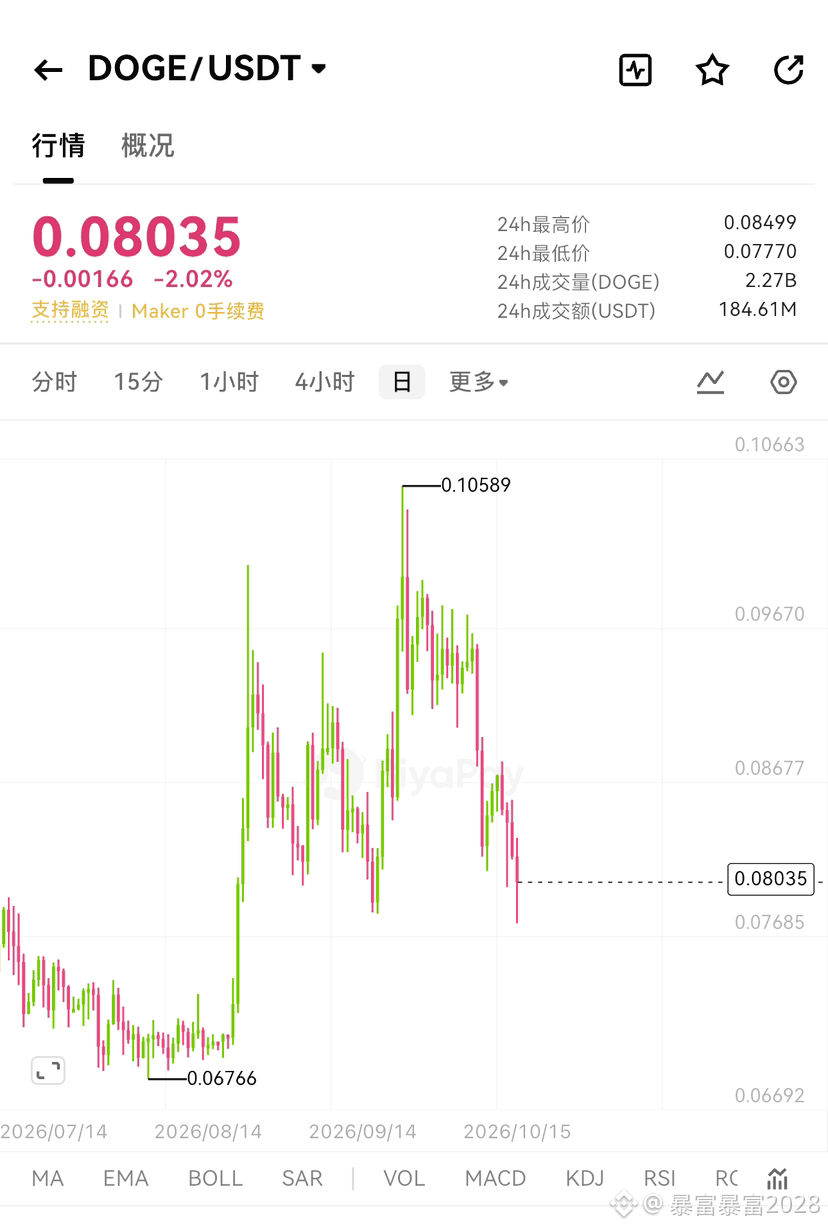
Dogecoin is putting in a classic meme-coin bleed today: price at 0.0818, down 3.02%–6.21% over 24h, with an intraday low of 0.0769. It’s falling harder than BTC and bouncing weakly. DOGE has no fundamental cushion; it’s driven purely by “risk appetite + BTC + social media sentiment.”
Structure:
• Support: 0.0769 (today’s low) / 0.075 / 0.070
• Resistance: 0.084 / 0.086 / 0.090
• Volume: high-volume selloff, low-volume rebound = leveraged longs getting liquidated
• Relative strength: DOGE/BTC at a new low = meme sector losing momentum; DOGE up while BTC is down = retail traders cheering themselves on
Trading DOGE = sentiment × speed of price movement. Many people only watch DOGE/USDT, so they completely miss moves across the meme sector. For the full picture, check the latest crypto prices on BiyaPay and add DOGE, PEPE, WIF, and SOL to your watchlist to compare sector strength, fund rotation, and intraday moves on one screen.
Oct. 15 playbook:
• Don’t chase the upper wick at 0.084. If it pulls back to 0.0769–0.079 and forms a lower wick, enter with a small position; stop-loss at 0.0755
• If it closes below 0.075: exit; don’t average down on a meme coin
• Bulls: only look for 0.086 if the 15m chart breaks above 0.084 on rising volume
• Position size: keep DOGE under 5–8%; avoid leverage
Don’t talk about DOGE’s long-term value—watch sentiment and the order book. On CPI day, focus on survival first, Musk later.
218
·
--
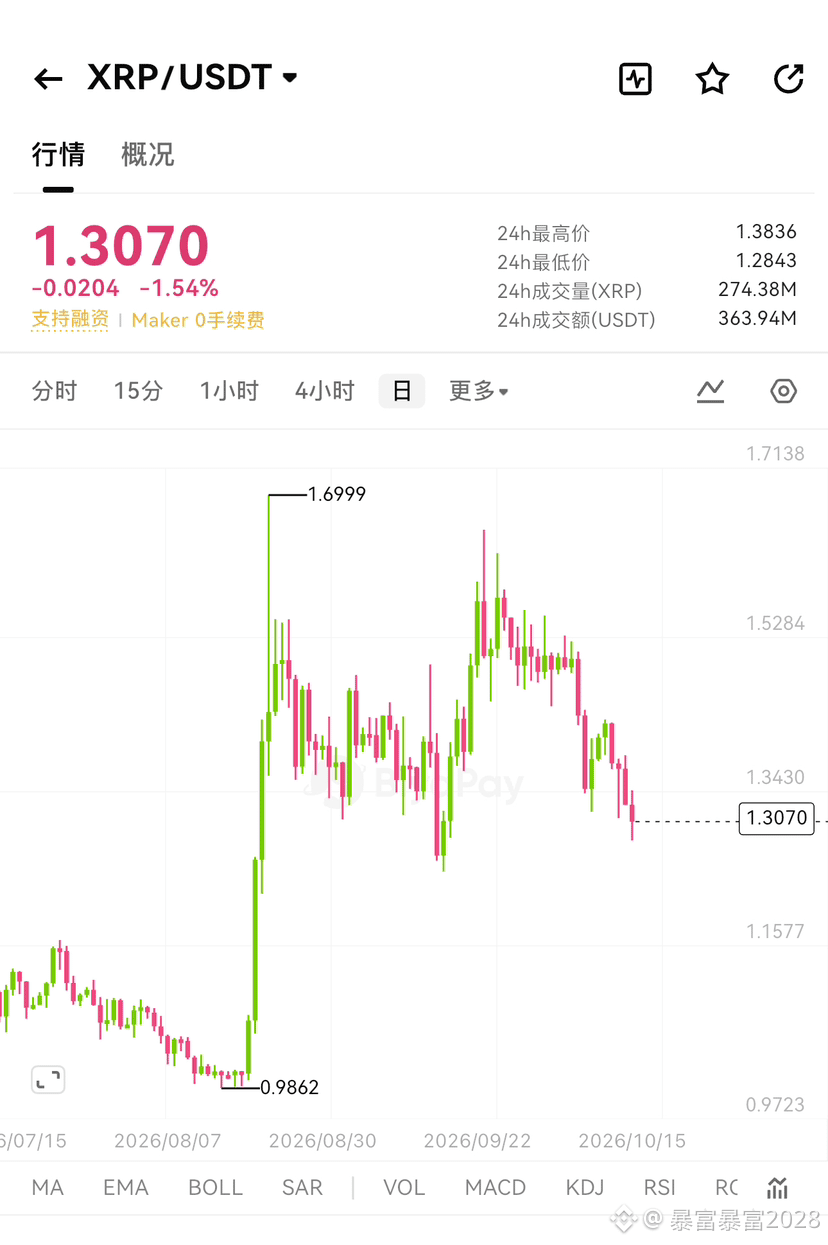
XRP is “down less today, but hasn’t gained momentum”: price at 1.33, down 3.19%–4.82% over 24h, holding up better than ETH/UNI/WLD. The 50-day moving average at 1.425 and the 200-day at 1.28 are pinching price from above and below. The bullish structure is intact, but CPI is weighing on the short term.
Structure:
• Support: 1.30 (today’s low area) / 1.28 (near the 200-day moving average) / 1.25
• Resistance: 1.365 (previous close) / 1.425 (50-day moving average) / 1.50
• Longer-term drivers: payments + ETFs + Asian institutions are slow-moving factors
• Short-term: Bitcoin can’t get past 84k, so XRP is unlikely to rally on its own
XRP is especially prone to being misled by “bullish headlines”: Asian summits, treasury purchases, and ETFs are all slow-moving factors. Don’t just watch XRP/USDT—put XRP, BTC, BCH, and ETH side by side. You can check the latest cryptocurrency prices on BiyaPay and see which payment coin is stronger on one screen.
10/15 strategy:
• If already holding: hold as long as 1.30 holds; reduce if it closes below 1.28
• If on the sidelines: take a small position at 1.30–1.33, with a stop-loss at 1.295
• Breakout: if it holds above 1.365 on the 4-hour chart, look to 1.425; only a weekly close above 1.425 opens the way to 1.50
• Avoid: chasing a false breakout at 1.365 or panic-selling at 1.30
XRP is a slow-and-steady payment coin, not a meme coin. Bitcoin sets the direction today, while XRP waits for ETF inflows and macro factors. Wait for relative strength to become clear before adding to your position.
1
252
·
--
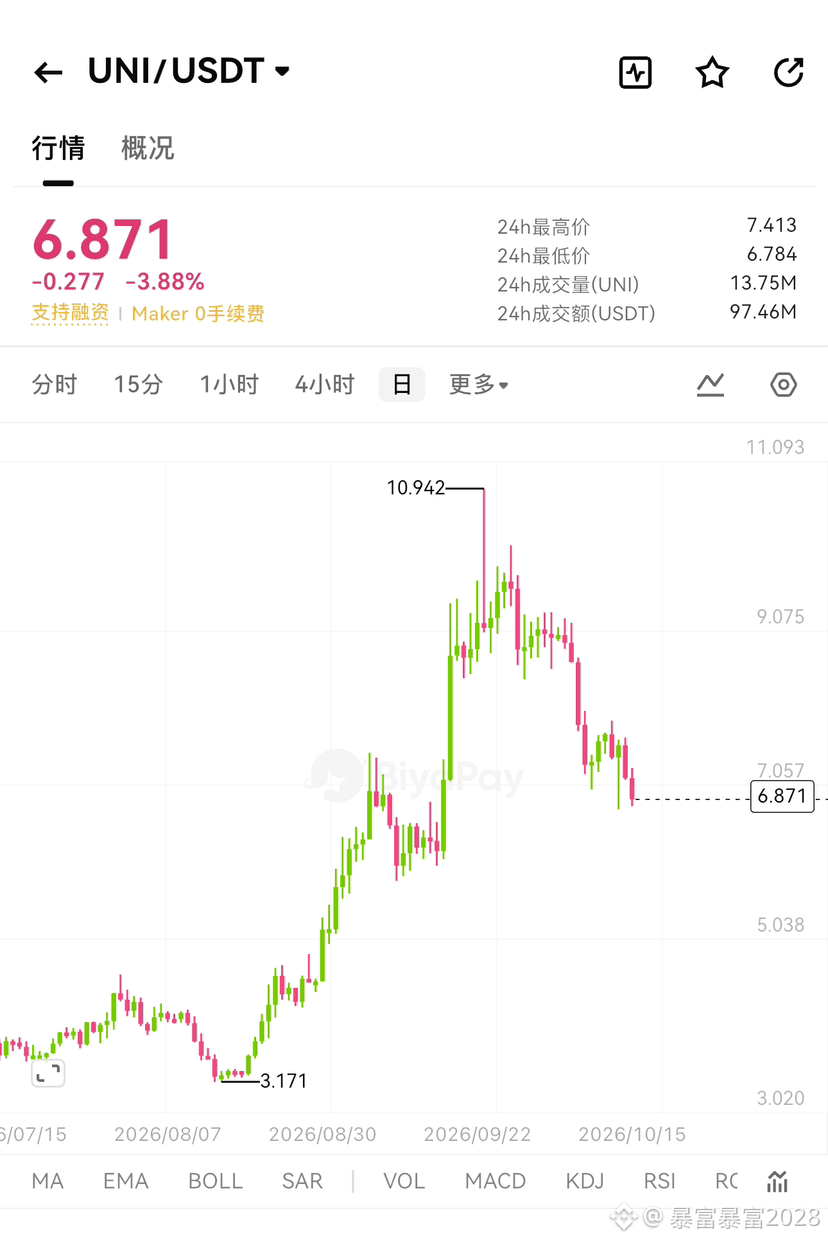
Uniswap is today’s DeFi pain point: price 7.10, down 6.18% over 24h and 9.02% for the week. When macro risk aversion kicks in, DeFi blue chips like UNI—driven by fees and trading volume—are among the first to get sold off. Volume hasn’t collapsed, but speculative money is pulling out first, and valuations are taking a hit.
Key levels:
• Support: previous low zone / weekly pivot / prior high-volume base
• Resistance: bounce back into the breakdown zone / short-term EMA / September consolidation zone
• Structure: price is below the short-term EMA, and the rebound has no volume
• Real signal: if UNI/ETH doesn’t make a new low, DeFi is holding up relatively well; if UNI is plunging on its own, expectations for platform revenue are being revised down
Many people only look at UNI/USDT and assume “after a big drop, a rebound is inevitable.” In reality, you need to compare both UNI/BTC and UNI/ETH. You can check the latest crypto prices on BiyaPay and add UNI, ETH, AAVE, and SOL to your watchlist to compare on one screen which stabilizes first: DeFi or L1.
10/15 strategy:
• If you’re already holding: don’t sell everything if the previous low holds; reduce your position if a candle closes below it
• If you’re on the sidelines: take a small position in the previous-low zone, with a stop-loss 3–5% below the previous low
• For bulls: wait for a 4H close back above resistance with volume returning, then look toward the next level
• Avoid: chasing the rebound or panic-selling at the previous low
For the medium term, UNI depends on DEX trading volume, the fee switch, and activity on Base/Arbitrum—but today, the priority is simply to stay in the game. DeFi isn’t dead; CPI just gave it a knock.
406
·
--
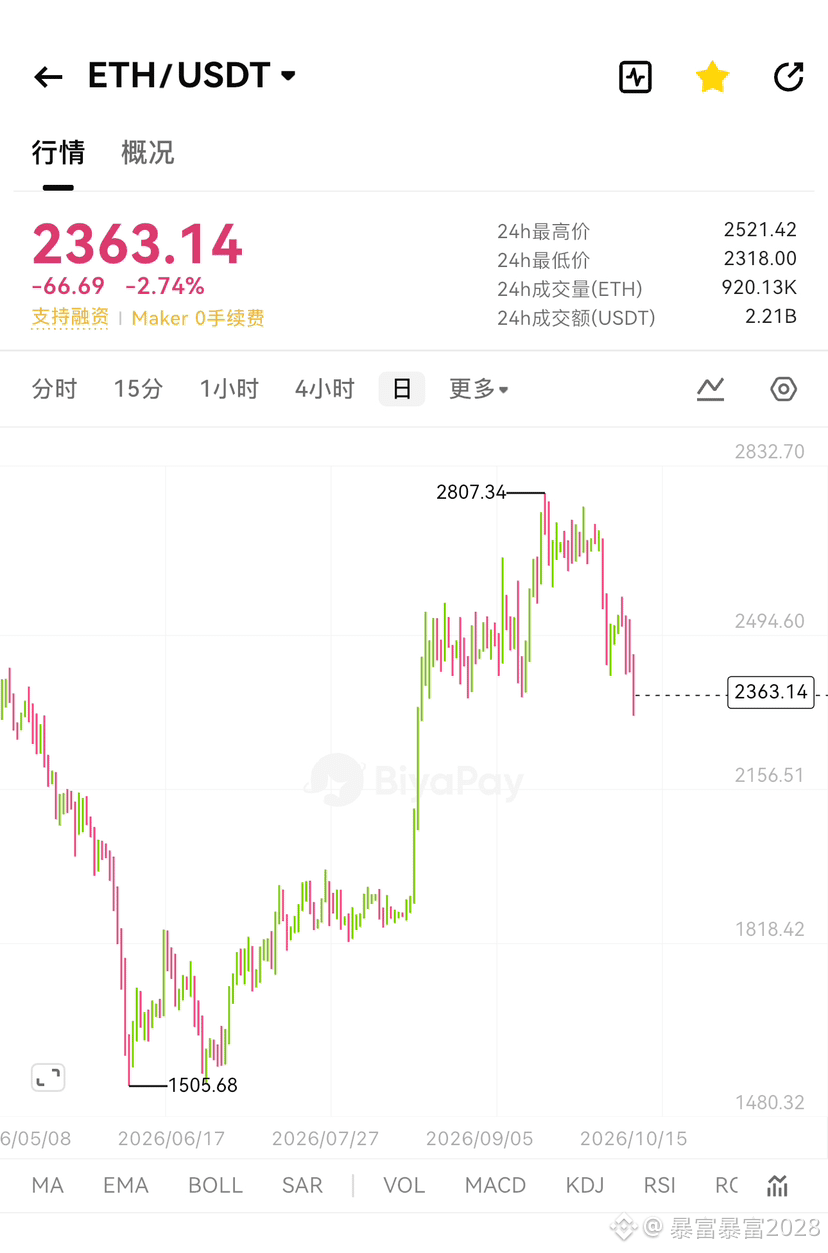
Ethereum was the major asset hit hardest by liquidations today: price 2,350–2,425, Coinbase low 2,313, ETH futures liquidations around 286 million, and open interest at 30 billion—yet its liquidation share is higher than BTC's, despite BTC's 52 billion in open interest. This shows leveraged longs are concentrated and getting rekt.
Key levels:
• Support: 2,313 (today's low) / 2,280 / 2,200
• Resistance: 2,420 / 2,476 (pivot R1) / 2,556 (50-day moving average)
• Structure: Price is below the 50-day moving average, and ETH/BTC keeps weakening = capital is hiding in BTC, not flowing into ETH
• The real issue: It's not that on-chain activity has died; it's a triple hit from “risk appetite + ETF flows + leverage”
The biggest danger with ETH is “buying just because it's fallen a lot.” The real signals are ETH/BTC, gas, the staking queue, and net ETF flows. You can check the latest crypto prices on BiyaPay and put ETH, BTC, SOL, and UNI side by side to see in a second which of DeFi and L1 is holding up and which is catching up on the downside.
Strategy:
• Already holding: Don't sell everything unless 2,313 breaks; if it closes below 2,280, trim further
• Flat: Small position at 2,350–2,380, stop-loss at 2,305
• Bullish confirmation: 4H close above 2,476 + volume returns; watch 2,556
• Avoid: Chasing at 2,420 or panic-selling at 2,300
ETH's medium-term outlook depends on L2 + stablecoins + staking, but in the short term it first has to get through the “CPI liquidation day.” Bitcoin isn't guaranteed to hold 80k; ETH could head to 2,280 first.
245
·
--
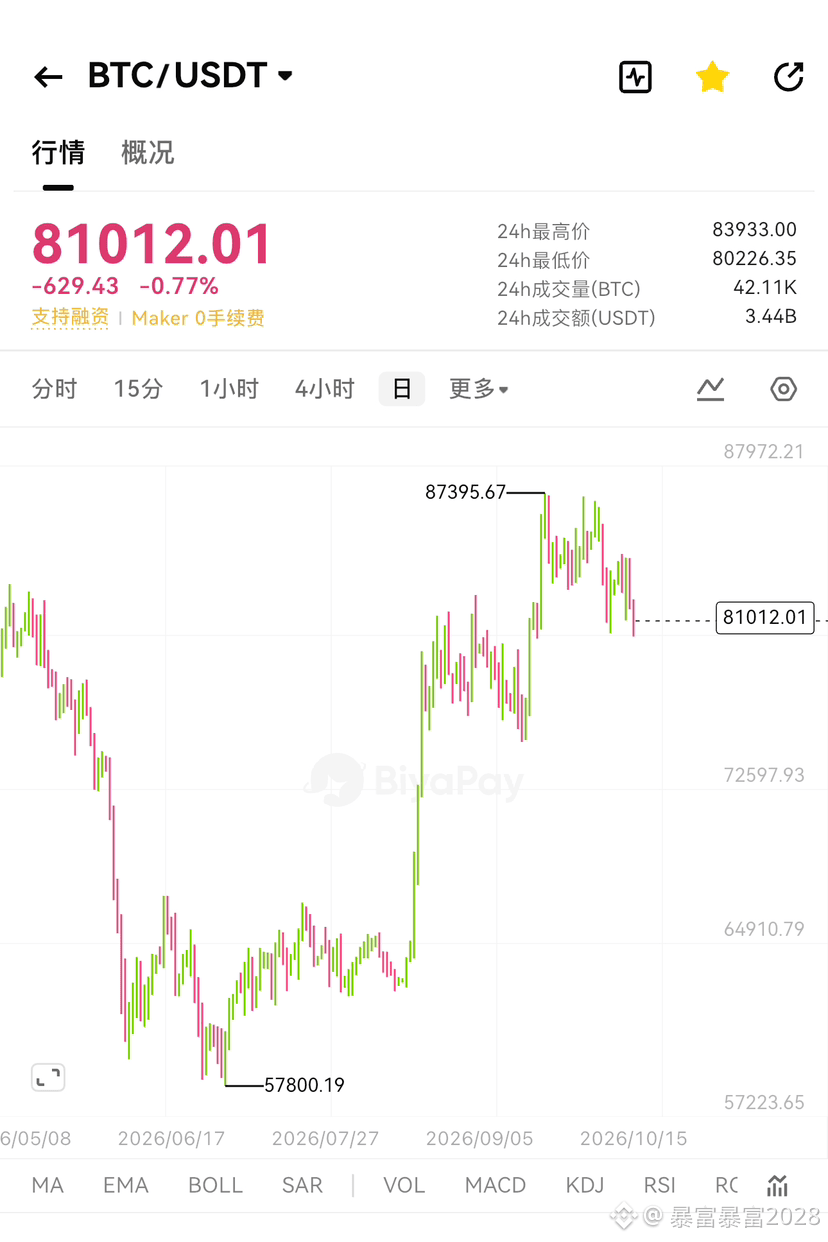
Bitcoin is getting “ground into the floor by macro-driven leverage”: after the early-morning CPI release, it plunged from 84.2k to 80,125, then recovered to around 81,200 during the European session. The 50-day moving average is around 81,164 and the 200-day is at 72,205. The broader structure is intact, but short-term momentum is ugly. Nearly $970 million in positions were liquidated across the market in 24 hours, including about $197 million in BTC longs; ETH liquidations were twice as bad as BTC’s.
Technical levels:
• Support: 80,125 (today’s low) / 78,800 / 76,500
• Resistance: 84,200 (today’s high area) / 85,000 / 87,000
• RSI is 51.9 and the trend is neutral, but the 4H chart shows a “bear-flag bounce,” not a reversal
• Key question: will the psychological 80k level hold? If U.S. stocks sell off again during the New York session, 80k may not hold
Many people only watch a single BTC/USDT candlestick and can get fooled by a wick. For day-to-day monitoring, you can check the latest cryptocurrency prices on BiyaPay and add BTC, ETH, SOL, and XRP to your watchlist. Seeing total market cap, Fear & Greed (extreme fear), and sector strength on one screen is more reliable than opening an exchange’s depth chart on its own.
Strategy:
• Conservative: Look to buy the lower wick around 80.1–80.5k, with a stop at 79.6k and a target of 82.8k
• Aggressive: Go long if price breaks above and holds 84.2k on strong 15m volume; target 85k. Exit on a false breakout
• Risk: CPI + U.S. Treasury yields + a hawkish Fed—treat a bounce as a chance to reduce positions, not add to them
• Avoid: Chasing at 81k or panic-selling at 79.9k
BTC isn’t dead, but the “October new-high narrative” has shifted back to “liquidity-driven pricing.” Hold 80k first, then talk about 85k.
285
·
--
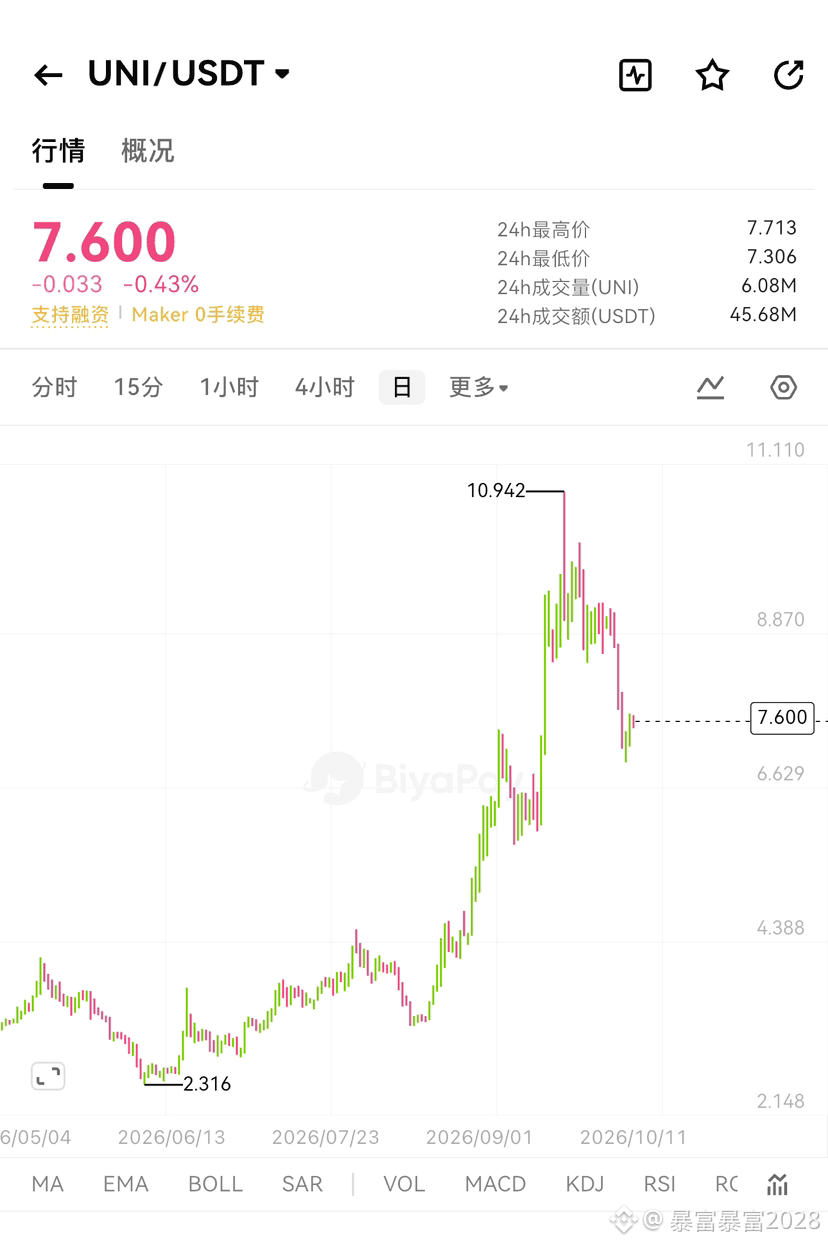
Uniswap is DeFi’s bleeding edge: when macro-driven risk aversion kicks in, DeFi blue chips like UNI—driven by fees and trading volume—are among the first to get cut. Gas fees on Ethereum are low and trading volume is nothing special; UNI has no independent catalyst, so it can only wait for risk appetite to return.
Price levels to watch:
• Support: prior lows / weekly pivot / previous high-volume consolidation zone
• Resistance: rebound into the breakdown zone / short-term EMA / September consolidation range
• Structure: price is below the short-term EMA, and rebounds are on low volume
• Real signal: UNI/ETH not making a new low = DeFi showing relative resilience; UNI falling on its own = lower expectations for platform revenue
Many people look at UNI only against the US dollar and assume “the more it falls, the more it must rebound.” In reality, you need to compare both UNI/BTC and UNI/ETH. You can check the latest crypto prices on BiyaPay and add UNI, ETH, AAVE, and SOL to your watchlist to compare DeFi and L1 tokens side by side and see which stabilizes first.
Strategy:
• Already holding: don’t sell everything if the prior low holds; reduce your position if it closes below that level
• No position: enter with a small position near the prior low, with a stop-loss 3–5% below it
• Bullish: wait for a 4H close back above resistance and volume to return, then look at the next level
• Avoid: chasing rebounds and panic-selling at the prior low
For the medium term, UNI depends on DEX trading volume, fee switches, and activity on Base/Arbitrum—but today, the priority is simply to survive. DeFi isn’t dead; macro just gave it a shove. #uniswap #UNI行情 #DeFi板块 #BiyaPay #CryptoAnalysis
633
·
--
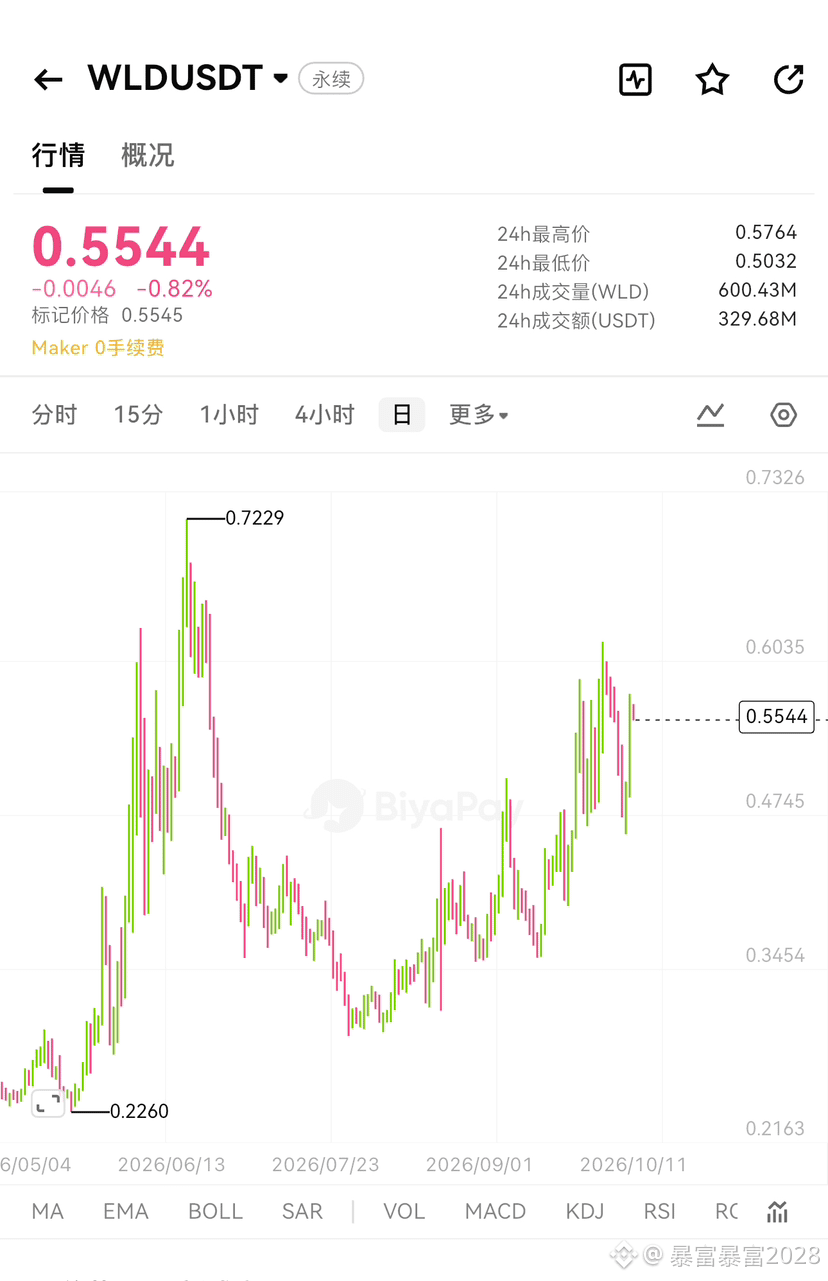
Worldcoin is still a weak high-market-cap sample: the AI narrative is still there, but token unlocks + valuation + macro risk-off are weighing on it. Bitcoin fell from 87k back to 82.8k, and a high-beta coin like WLD usually drops harder and rebounds more weakly.
Structural idea:
• Support: prior low platform / key weekly zone / previous high-volume area
• Resistance: rebound level after breakdown / short-term EMA / lower edge of prior consolidation zone
• Volume: falling on expanding volume, rebound on weak volume = trapped holders cutting positions
• Relative strength: WLD/BTC hitting new lows, WLD/SOL hitting new lows = both the coin and the sector are weak; WLD is weak but RNDR/TAO are stable = unlock-related sentiment is the individual risk
WLD traders love to “buy the AI narrative dip,” but bottoms are seen, not guessed. You can check the latest crypto market trends on BiyaPay and add WLD, RNDR, TAO, and SOL to your watchlist; then it’s easy to tell whether the AI sector is moving in sync on the downside or whether WLD is falling alone.
Strategy:
• If already holding: reduce first if the rebound resistance doesn’t reclaim, don’t stubbornly hold through the unlock period
• If in cash: don’t catch the falling knife; wait for a prior low with shrinking volume + a lower wick + stabilization in relative strength
• If prior low breaks on volume: don’t average down; the WLD unlock period is when buying more as it falls is most dangerous
• Position size: keep it under 5–8%
Long term, WLD depends on AI + identity adoption, but today is just a day of sentiment fading. Cash is more attractive than WLD. #Worldcoin #WLD行情 #AI板块 #BiyaPay #token economics
234
·
--
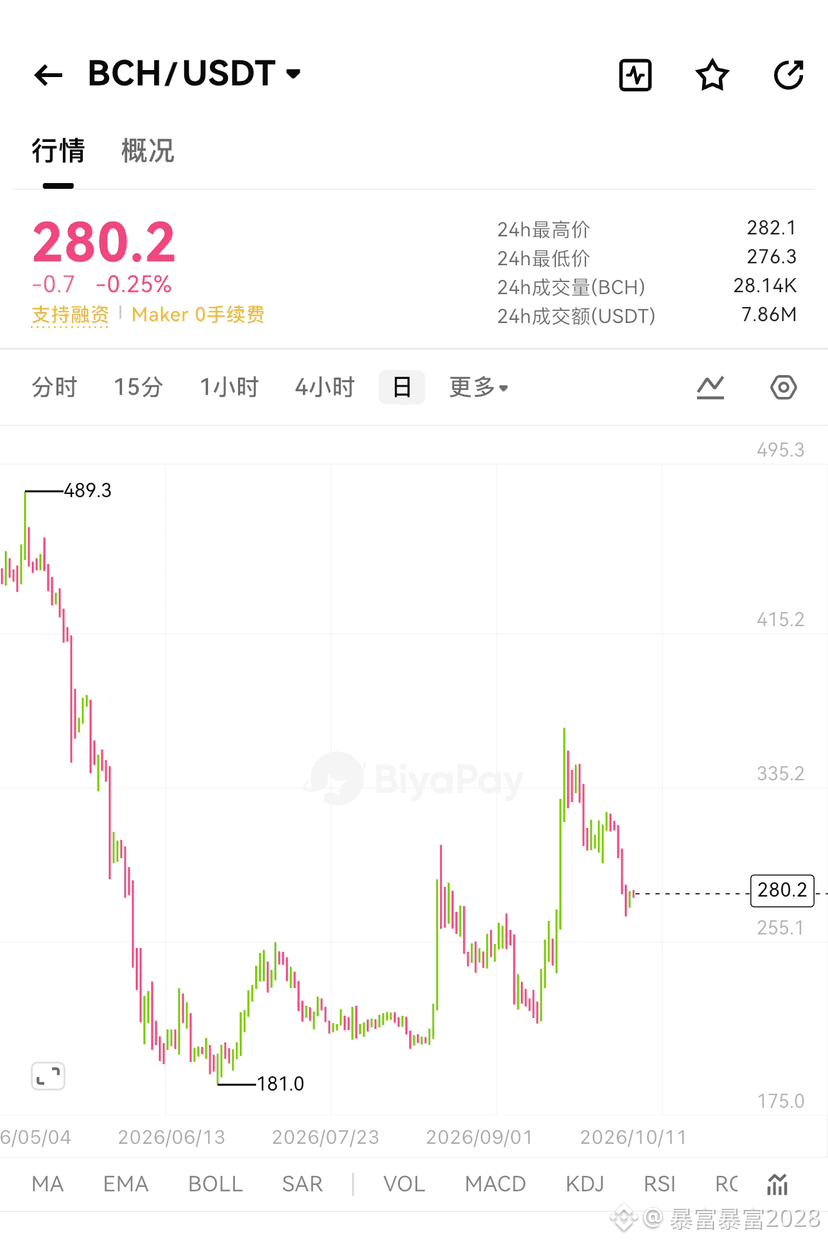
Bitcoin Cash is very “old-school”: price 280.1, up 2.12% over 24h; the weekly chart has pulled back slightly but hasn’t broken down. When macro forces are crushing valuations, BCH has no independent catalyst—it can only wait for BTC to stabilize and funds to spill over into “cheap legacy coins” before it moves.
Structure:
• Support: 272 / 266 / 258
• Resistance: 286 / 296 / 310
• Positioning: Payment narrative < XRP, depth < LTC, beta < SOL; its advantage is that “sentiment buyers” step in around the previous low
• Rhythm: If BTC can hold 82.8k, BCH has support at 272; if BTC breaks 80.4k, BCH will head to 266 first
The biggest risk with BCH is chasing as soon as a “CME/payment revival” headline drops. The real signal is BCH/BTC: a new low in the ratio means funds think it’s too slow; the ratio holding steady while BTC stabilizes raises the odds of a catch-up rally. You can check the latest crypto prices on BiyaPay and put BTC, BCH, LTC, and XRP side by side to compare which payment/legacy blue-chip is stronger.
Approach:
• If already holding: Hold as long as BTC stays above 82.8k; don’t cut BCH as long as it stays above 272
• If out of the market: Start with a small position at 274–280, stop-loss at 270
• Breakout: Only look for 296 if BTC reclaims 85k and BCH breaks above 286 on strong volume
• Don’t: Chase just because BCH rallies 4% on its own
BCH is a slow-moving payment coin. Today’s main characters are BTC and ETF flows. Understand BTC first, then catch BCH’s follow-through. #比特现金 #BCH行情 #加密货币 #BiyaPay #PaymentNarrative
812
·
--
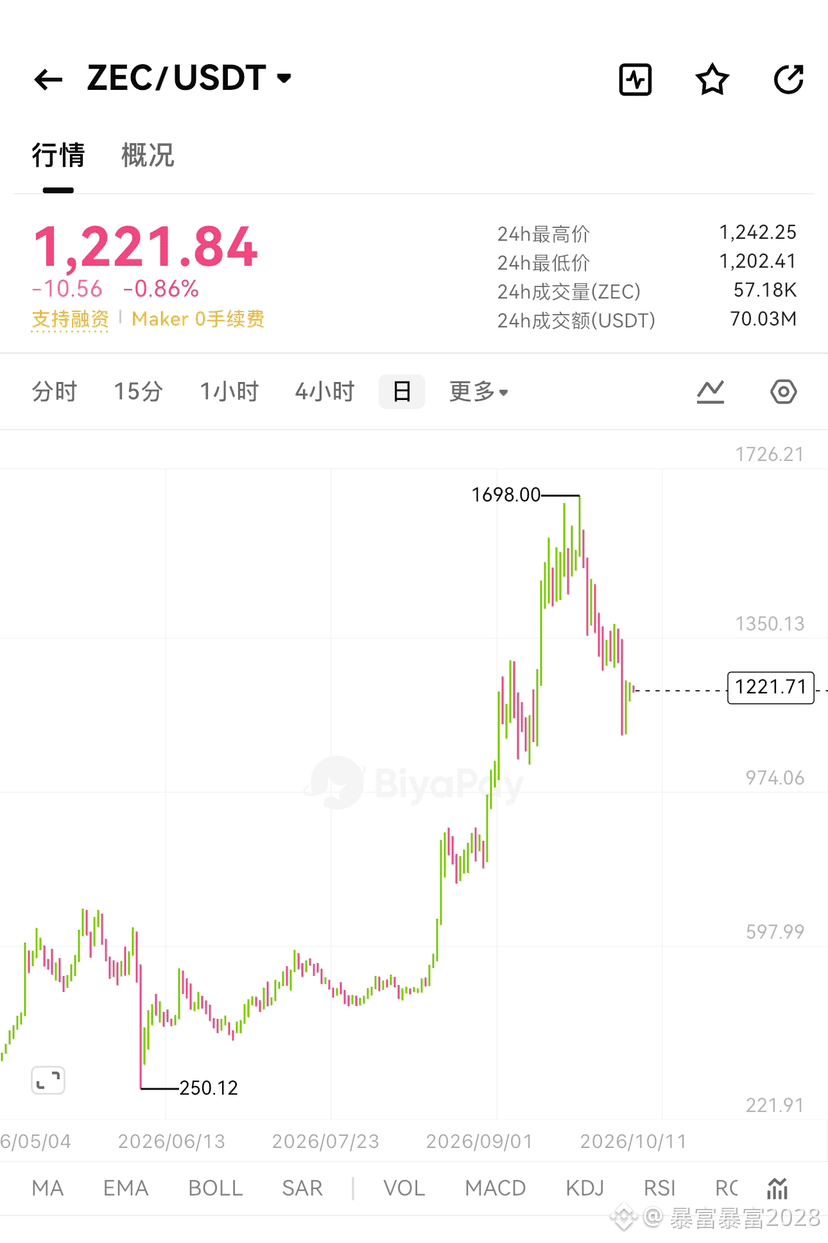
Zcash has a “strong narrative, thin order book”: priced at 1,225, with its 30-day gain still eye-popping. But when macro forces crushed valuations on 10/7, a single wick could sweep 3–5%—more sharply than SOL. Privacy, fixed supply, and regulatory-compliance dynamics underpin the long-term case, but the biggest short-term risks are “crowded longs + poor CEX depth.”
Structure:
• Support: 1,180 / 1,150 / 1,080
• Resistance: 1,260 / 1,300 / 1,360
• Key signals: If ZEC/BTC doesn’t make a new low, buyers are still defending the privacy sector; if ZEC falls on its own, profit-takers are exiting
• Timing: ZEC can find support only if BTC holds 82.8k; if BTC breaks below 80.4k, ZEC will be among the first to see leverage flushed out
Many people treat ZEC as “the next big narrative” and go all in, only to find they can’t take profits. Don’t just watch ZEC/USDT—check the latest crypto prices on BiyaPay, add ZEC, XMR, BTC, and SOL to your watchlist, and compare the strength of privacy coins and major coins side by side.
Strategy:
• If already in profit: Scale out above 1,260–1,300; don’t believe that “privacy coins will go up forever”
• New positions: If it pulls back to 1,180 on declining volume and leaves a lower wick, enter with a small position; stop-loss at 1,162
• Daily close below 1,150: The narrative is cooling off in the short term—don’t try to catch a falling knife
• Position size: ZEC is volatile; keep it below 8–10%
Privacy demand supports ZEC over the medium term, but today macro matters more than the narrative. Understand the market first to hold on to your profits. #Zcash #ZEC行情 #隐私 #BiyaPay #CryptoAnalysis
466
·
--
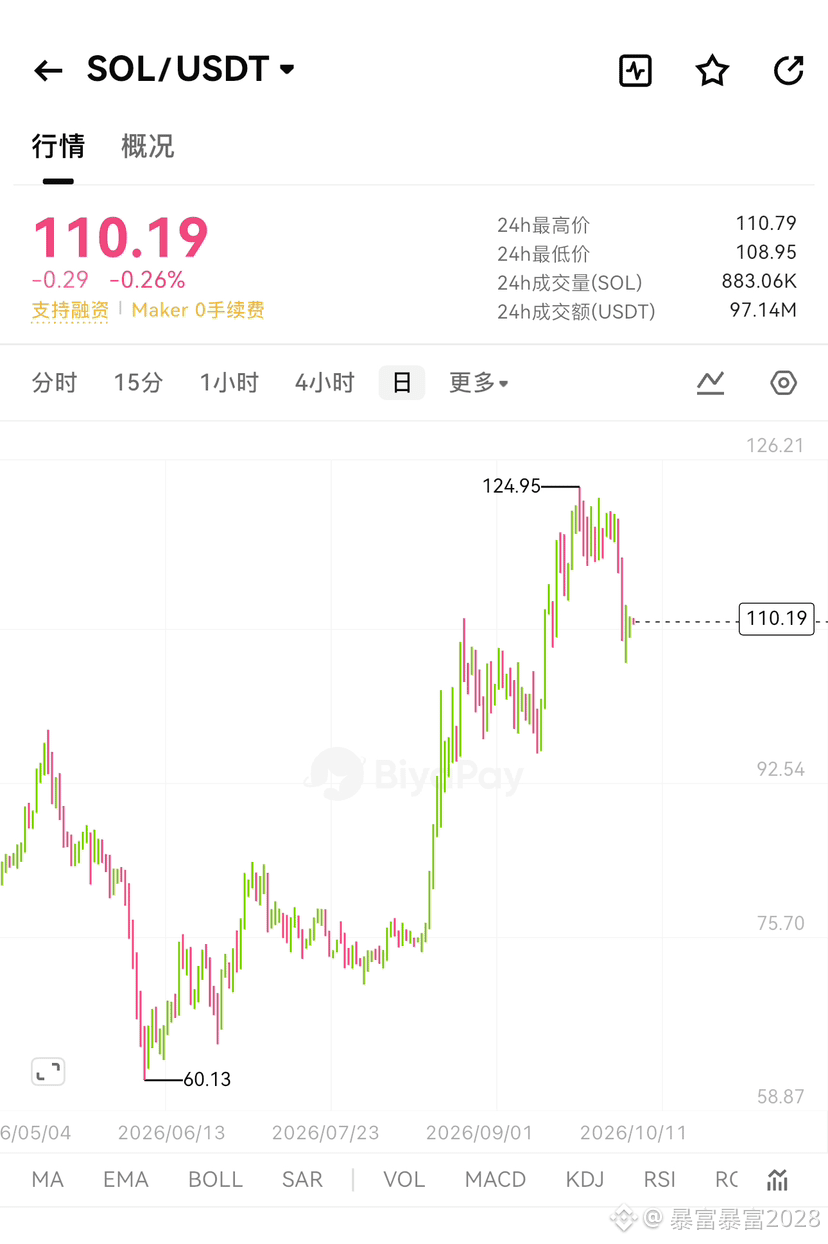
Solana has strong tech upgrades, but cooling capital flows: on 10/9, the mainnet cut its slot time from 400ms to 200ms, and Alpenglow is progressing. But SOL ETFs saw $24.8 million in net outflows last week, ending a 14-week inflow streak. In a macro risk-off environment, high-beta assets get hit first.
Structure:
• Support: 109 / 106 / 103
• Resistance: 112 / 115 / 120
• Medium term: The ecosystem, stablecoins, and Payments remain intact; the monthly chart is still positive
• Short term: ETF outflows + BTC weakness; buying above 110 lacks conviction
SOL’s biggest risk is “a bullish weekly chart, so I go all in today.” When watching the market, put it in a relative-strength context: if SOL/BTC doesn’t make a new low, capital is still in layer-1s; if SOL is the only one in the green while BTC is red, liquidity is insufficient. You can check the latest crypto prices on BiyaPay, with SOL, SUI, HYPE, and PUMP all on one screen, so you can quickly see which high-beta asset dives first.
Strategy:
• Don’t chase upper wicks at 110–112; follow only after a 15-minute candle holds above 112.5 on strong volume
• If it pulls back to 109–110 and prints a lower wick: use a small position, with a stop-loss at 108.5
• If it breaks below 106 at the close: exit longs and wait to reassess at 103
• Position size ≤ 15%; don’t treat SOL like BTC
SOL’s medium-term story isn’t over, but today isn’t about charging toward 120. It’s about “watching whether high beta is being weighed down by ETF outflows along with BTC.” First, keep an eye on whether BTC breaks 85k. #Solana #SOL行情 #加密货币 #BiyaPay #Layer1Sector
332
·
--
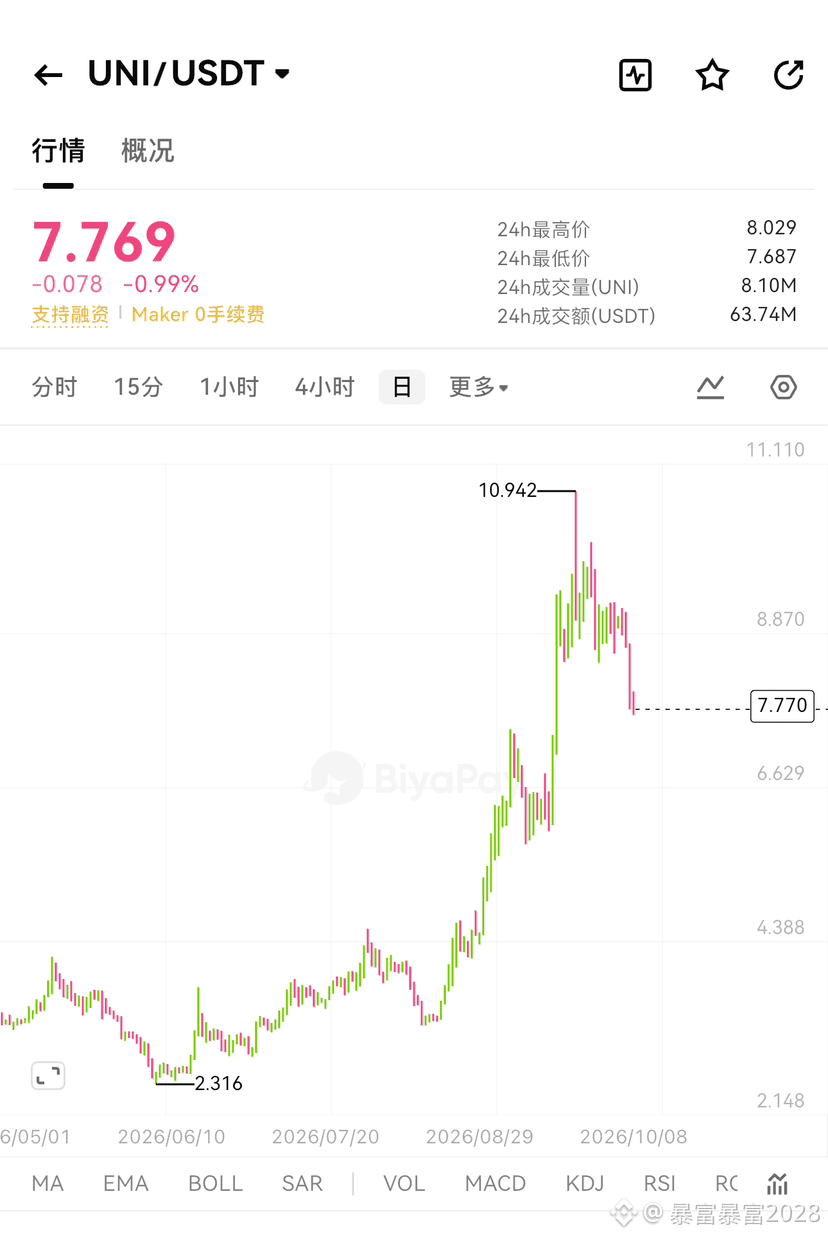
Uniswap is DeFi’s bleeding edge: price at 8.20, down 7.25%–8.8% over 24h, making it one of the weakest large-cap assets outside the top ten. When macro conditions crush risk appetite, DeFi blue chips like UNI, which are driven by fees and trading volume, are among the first to get cut. Trading volume hasn’t collapsed, but speculative money is pulling out first, and valuations are getting hit.
Key levels:
• Support: 8.0 (psychological level + previous low zone) / 7.65 / 7.20
• Resistance: 8.67 / 9.0 / 9.39 (weekly pivot)
• Structure: Price has broken below the short-term EMA, RSI is falling rapidly, and the rebound is on weak volume.
• Real signal: If UNI/ETH doesn’t make a new low, DeFi is holding up relatively well; if UNI alone collapses, expectations for platform revenue are being revised downward.
Many people only look at UNI/USDT and assume, “It’s fallen a lot, so it must bounce.” In reality, you need to compare both UNI/BTC and UNI/ETH. You can check the latest cryptocurrency prices on BiyaPay and add UNI, ETH, AAVE, and SOL to your watchlist to compare DeFi and L1 assets side by side and see which stabilizes first.
Strategy:
• If you’re already holding: Don’t sell everything unless 8.0 breaks; reduce your position if the candle closes below 7.8.
• If you’re on the sidelines: Take a small position around 8.0–8.2, with a stop-loss at 7.78.
• Bullish case: If the 4H candle closes above 8.67 and volume returns, watch 9.0.
• Avoid: Chasing at 8.5 or panic-selling at 7.9.
For the medium term, UNI depends on DEX trading volume, fee switches, and activity on Base/Arbitrum. But for today, the priority is to survive. DeFi isn’t dead; macro just gave it a shove. #Unis #UNI行情 #DeFi板块 #BiyaPay #CryptoAnalysis
817
Log in to explore more content
Join global crypto users on Binance Square
⚡️ Get latest and useful information about crypto.
💬 Trusted by the world’s largest crypto exchange.
👍 Discover real insights from verified creators.
Email / Phone number
Trending Topics
BinancePick
2.5M views
136,552 Discussing
Join #EarningsSeason: Predict Earnings on Binance Pick, Share Your Take on Binance Square!
Binance Square Official
·397 Likes
·336.5k views
EarningsSeason
4.9M views
23,745 Discussing
ElectrumWalletBugLetRogueServersStealFunds
724 views
73 Discussing